Nick Nelson
-
Posts
8,326 -
Joined
-
Last visited
-
Days Won
56
Content Type
Profiles
News
Minnesota Twins Videos
2026 Minnesota Twins Top Prospects Ranking
2022 Minnesota Twins Draft Picks
Minnesota Twins Free Agent & Trade Rumors, Notes, & Tidbits
Guides & Resources
2023 Minnesota Twins Draft Picks
The Minnesota Twins Players Project
2024 Minnesota Twins Draft Picks
2025 Minnesota Twins Draft Pick Tracker
2026 Minnesota Twins Draft Tracker: Picks & Bonuses
Forums
Blogs
Events
Store
Downloads
Gallery
Everything posted by Nick Nelson
-
 Reps from both sides met on Monday, and then again on Tuesday. This represents an exponential quickening of pace following a nearly two-month standstill. And yet, there's no real sense that palpable progress has been made. We only receive so much information publicly, but every leaked detail points to the same depressing reality: obstinate, greedy owners bargaining in bad faith against a players association that's trying to dig up toward an equitable situation. Stories of billionaires crying poor, in the wake of hardships that destroyed careers and lives, strike a very sour note with me and others. Last weekend I watched the greatest series of NFL playoff games in my lifetime. The Vikings weren't there, but are making waves with their front office and coaching shakeup. The Wild are a true powerhouse. The Timberwolves are an emerging force. Every other prominent sports league is putting forth an excellent product, in my market, while Major League Baseball fritters away every shred of good will. They're shutting out legends from their Hall of Fame over subjective, inconsistently-applied moral standards. Barry Bonds, Roger Clemens? Out. David Ortiz, owner of a positive PED test? In. Why? Because he's nice? Don't get me wrong, I love Ortiz and am thrilled to see him recognized, despite the melancholy he evokes as a Twins fan. But the whole thing is so absurd at this point. Major League Baseball's commitment to disregarding an entire era of its history is like a slap in the face to fans like me, who came of age in the late '90s. I was captivated and enthralled by the McGwire/Sosa race. The name "Clemens" is synonymous to me with dominance on the mound. Barry Bonds is the greatest player I've ever witnessed in any sport. Baseball's position on the matter? "Forget about it. Didn't happen." Meanwhile, they can't get out of their own way and settle on a plan to move forward. The game's history is being erased alongside its future while sports fans turn their attention in other directions. Normally at this time of year, I'd be counting down the days until the arrival of those four magical words: pitchers and catchers report. Now I'm counting my grievances against a league that seems utterly intent on alienating its fans.
 -
Dear journal, It's been 56 days since darkness fell upon the world of baseball. We're seeing "signs" of "movement" in negotiations between the league and players. I'm experiencing a compulsion to use air quotes in a very sarcastic manner. Reps from both sides met on Monday, and then again on Tuesday. This represents an exponential quickening of pace following a nearly two-month standstill. And yet, there's no real sense that palpable progress has been made. We only receive so much information publicly, but every leaked detail points to the same depressing reality: obstinate, greedy owners bargaining in bad faith against a players association that's trying to dig up toward an equitable situation. Stories of billionaires crying poor, in the wake of hardships that destroyed careers and lives, strike a very sour note with me and others. Last weekend I watched the greatest series of NFL playoff games in my lifetime. The Vikings weren't there, but are making waves with their front office and coaching shakeup. The Wild are a true powerhouse. The Timberwolves are an emerging force. Every other prominent sports league is putting forth an excellent product, in my market, while Major League Baseball fritters away every shred of good will. They're shutting out legends from their Hall of Fame over subjective, inconsistently-applied moral standards. Barry Bonds, Roger Clemens? Out. David Ortiz, owner of a positive PED test? In. Why? Because he's nice? Don't get me wrong, I love Ortiz and am thrilled to see him recognized, despite the melancholy he evokes as a Twins fan. But the whole thing is so absurd at this point. Major League Baseball's commitment to disregarding an entire era of its history is like a slap in the face to fans like me, who came of age in the late '90s. I was captivated and enthralled by the McGwire/Sosa race. The name "Clemens" is synonymous to me with dominance on the mound. Barry Bonds is the greatest player I've ever witnessed in any sport. Baseball's position on the matter? "Forget about it. Didn't happen." Meanwhile, they can't get out of their own way and settle on a plan to move forward. The game's history is being erased alongside its future while sports fans turn their attention in other directions. Normally at this time of year, I'd be counting down the days until the arrival of those four magical words: pitchers and catchers report. Now I'm counting my grievances against a league that seems utterly intent on alienating its fans. View full article
-
 I'm not sure what you're getting at here. Are... are you saying Luis Arraez should retire because Dee Gordon isn't in the majors anymore at age 33? The same Dee Gordon who was an All-Star at ages 26 & 27? Also, Gordon has a .319 career OBP compared to .374 for Arraez and his OPS is 100 points lower so I'm not sure grouping them together as "light hitting middle infielders" is quite fair. Arraez is an excellent hitter regardless of the lack of power. So you're telling me the Twins had a .675 winning percentage with Arraez at 2B in 2019 & 20. Doesn't sound "disastrous" to me.
 -
The Twins literally won two straight division titles with those two up to the middle. We're just going to ignore that while pointing out a that bad team was slightly worse last year in a 26-game sample with Polanco starting at SS? Hm. Where do you want Arraez to play? I'm perplexed by the idea that getting one of their best hitters into the lineup everyday at his best defensive position is "not good."
-
Say what? Giving prospects playing time is exactly the argument in favor of moving Polanco back to SS. It creates much more playing time for the likes of Miranda, Gordon, and Martin. What prospects are not getting playing time as a result of Polanco moving back to short temporarily? More like, defense isn't everything. The last three years seem to bear that out? The Twins won two divisions and played .600 ball with Polanco at SS in 2019/20. They finished in last place in 2021 with Polanco at 2B, and an all-time great defensive SS signed to replace him. No one's saying these are cause-and-effect situations. But you can't make the argument that a good defensive SS is essential to winning. The contradictory evidence is right in front of you.
-
Notably, they also were among the best teams in the league at preventing runs in 2019 and 2020, and among the worst in 2021.
-
Yep. And now look: Galvis is off the table. You're left with Simmons (no thanks) and Iglesias, coming off a horrible season. What else? That plan was about sacrificing at SS to invest heavily in pitching (I had them signing Verlander and Gray). That's not happening. The big free agent SP splashes are gone. So now it's about sacrificing at SS to invest for pitching in trades, because that's really their only path to finding significant upgrades at either spot. If they go get Story, I'm fully on board and I drop this idea. I just don't see it happening. If this front office has shown anything, it's the ability to make a pivot when things don't go as hoped or planned.
-
I don't see the situations as very comparable. The Twins were forced to move Mauer off catcher. They really had no choice in light of his health and the extreme concussion risks behind the plate. If moving him back there were at all a feasible option it would've merited plenty of discussion. Moving Polanco off SS was much more optional and experimental. It was a shakeup move. I'm dubious of the relatively increased risk to his ankle from moving to another position 20 feet away. Again: he started more than 2 dozen games at SS last year! It's not like they are fiercely opposed to using him there at all.
-
The Twins won 103 games with Jorge Polanco as their starting shortstop. He was an All-Star and 4-WAR player there that year. How many games did Andrelton Simmons win with his historically great UZR last year? He was a sub-replacement level player. We all understand Polanco's defensive deficiencies at short. But they need to be weighed against the benefits of this arrangement. (BTW, Polanco's UZR/150 was really no better at 2B than at SS, if that's the gauge you're using. Bringing up Sano as an equivalent suggests you're not really making a serious argument here.)
-
But are the Twins willing to embrace it? When the offseason resumes, Minnesota's front office will be feeling pressure to address its extensive needs on the pitching staff. But as things stand, they won't be able to dedicate their full attention to this focus. Because as things stand, the Twins don't have a starting shortstop. Nothing even resembling a feasible option or fallback plan. That is, unless they're willing to change their position on Jorge Polanco's ... position. A ready-made starter at shortstop Polanco was the starting shortstop on the American League All-Star team in 2019. Of his 596 games started in the majors, 470 have come at short. He played the position almost exclusively until last year, when he shifted across the diamond to second base. No one would deny this was a successful pivot for Polanco and the Twins. He was never a defensive asset at short, but showed standout ability at second, where he looked increasingly comfortable and natural over time. Polanco was able to shake off his power-sapping ankle issues and recapture his excellent standard of offensive production. As a second baseman, Polanco got his career back on track and then some. He was the team's most valuable player. In light of this development, you can see why the Twins would be reluctant to turn around and reverse course. As Dan Hayes of The Athletic mentioned when I posed the idea on Twitter, "It was not lost on [the Twins] that Polanco’s health was not an issue after early May and that he responded well physically to second base." In Dan's well-informed estimation, moving Polanco back to shortstop is "somewhere around Plan M" for the Twins. And I believe it. But my question is ... should that be the case? Clearly the Twins are not diametrically opposed to playing Polanco at short. He was their primary backup last year and started there 26 times. It's a question of how willing they are to shift him back into regular duties, as a temporary solution to a pressing problem. Maybe the M in "Plan M" stands for... Making the best This Twins front office prides itself on being flexible, adaptable, and opportunistic. Through this lens, when you look at all circumstances, sliding Polanco back to shortstop makes a great deal of sense. Not only does his presence at second base leave a complete void on the shortstop depth chart – it also creates a logjam behind him at second. Luis Arraez is displaced to the point where he looks like a prime trade candidate. Behind him, young talents like Nick Gordon and Jose Miranda have nowhere to play regularly even if they're deserving. Top prospect Austin Martin also might be best suited at second. Moving Polanco back to short for the time being would free up second base for one or several of these players to step in and receive valuable playing time. Meanwhile, it would prevent the front office from having to make a desperation-fueled move to address the shortstop vacancy. What else is out there? The high end of free agency at shortstop has mostly been picked over. The Twins aren't going to sign Carlos Correa and they're probably not going to sign Trevor Story. There are a handful of starting-caliber options remaining, in the Jose Iglesias and Andrelton Simmons mold, but they are not very inspiring. If just a few more names come off the board quickly when free agency fires back up, you're exclusively in backup territory. Trades are an option, of course. But that means giving up assets that you could be using to acquire pitching. Finding a shortstop who's going to pair with Polanco, and give you a better keystone combo than Polanco and Arraez, will be very hard. I say that while being fully aware of the defensive shortcomings yielded by the latter arrangement. If nothing else, moving Polanco back to short would be a temporary fix designed to buy time. Until Royce Lewis demonstrates that he is (or isn't) the franchise's future at shortstop. Until they've had a chance to sort through second basemen like Arraez, Gordon, Miranda, and Martin. Once a better shortstop option comes along, the Twins can move Polanco back to his preferred position across the bag. Is this kind of back-and-forth player shuffling ideal or optimal? No, but "optimal" has sorta gone out the window at this point. Polanco's a veteran with plenty of experience at both middle infield positions. He's answered the call whenever needed. If anyone can handle the disruption it's him, and he'd be doing the team a hell of a solid. Sorting through solutions Even with the limited remaining options to address shortstop, I'm not saying this is the best one. If the Twins can find a viable taker for Josh Donaldson, or get a really good offer for Arraez, that changes the equation by alleviating the infield logjam. Similarly, if they can swing a no-brainer deal for a shortstop like Paul DeJong, I could get behind that. But if the "solution" to their problem is signing someone like Iglesias or Simmons as a stopgap, and then struggling to find at-bats for better players buried on the 2B depth chart behind Polanco ... is that really any better than pivoting back to the 2020 setup? The simplest solution to the front office's current problem at shortstop is right in front of their face. Are they willing to embrace Plan M? MORE FROM TWINS DAILY — Order the Offseason Handbook — Latest Twins coverage from our writers — Recent Twins discussion in our forums — Follow Twins Daily via Twitter, Facebook or email View full article
-
There's a Very Simple Solution to Minnesota's Shortstop Problem
Nick Nelson posted an article in Twins
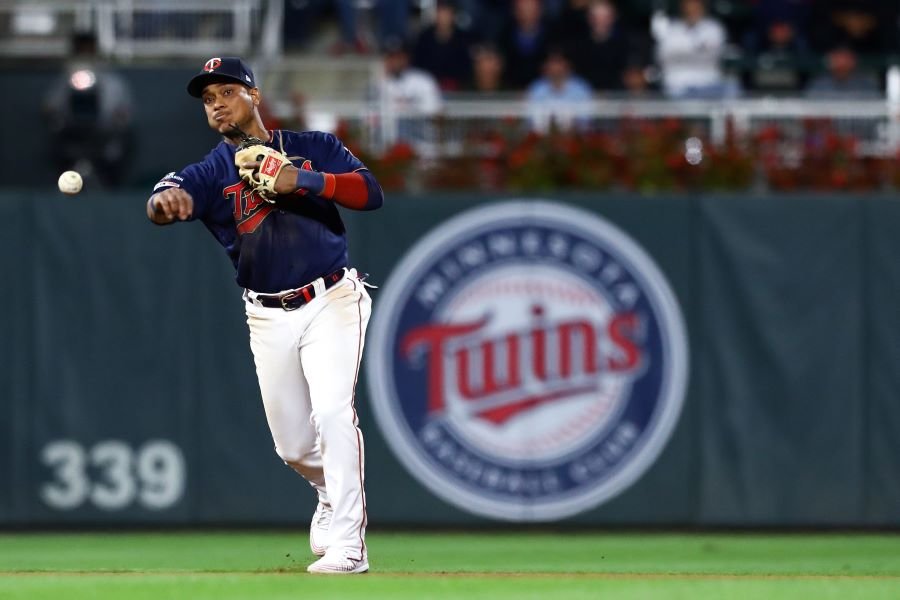 When the offseason resumes, Minnesota's front office will be feeling pressure to address its extensive needs on the pitching staff. But as things stand, they won't be able to dedicate their full attention to this focus. Because as things stand, the Twins don't have a starting shortstop. Nothing even resembling a feasible option or fallback plan. That is, unless they're willing to change their position on Jorge Polanco's ... position. A ready-made starter at shortstop Polanco was the starting shortstop on the American League All-Star team in 2019. Of his 596 games started in the majors, 470 have come at short. He played the position almost exclusively until last year, when he shifted across the diamond to second base. No one would deny this was a successful pivot for Polanco and the Twins. He was never a defensive asset at short, but showed standout ability at second, where he looked increasingly comfortable and natural over time. Polanco was able to shake off his power-sapping ankle issues and recapture his excellent standard of offensive production. As a second baseman, Polanco got his career back on track and then some. He was the team's most valuable player. In light of this development, you can see why the Twins would be reluctant to turn around and reverse course. As Dan Hayes of The Athletic mentioned when I posed the idea on Twitter, "It was not lost on [the Twins] that Polanco’s health was not an issue after early May and that he responded well physically to second base." In Dan's well-informed estimation, moving Polanco back to shortstop is "somewhere around Plan M" for the Twins. And I believe it. But my question is ... should that be the case? Clearly the Twins are not diametrically opposed to playing Polanco at short. He was their primary backup last year and started there 26 times. It's a question of how willing they are to shift him back into regular duties, as a temporary solution to a pressing problem. Maybe the M in "Plan M" stands for... Making the best This Twins front office prides itself on being flexible, adaptable, and opportunistic. Through this lens, when you look at all circumstances, sliding Polanco back to shortstop makes a great deal of sense. Not only does his presence at second base leave a complete void on the shortstop depth chart – it also creates a logjam behind him at second. Luis Arraez is displaced to the point where he looks like a prime trade candidate. Behind him, young talents like Nick Gordon and Jose Miranda have nowhere to play regularly even if they're deserving. Top prospect Austin Martin also might be best suited at second. Moving Polanco back to short for the time being would free up second base for one or several of these players to step in and receive valuable playing time. Meanwhile, it would prevent the front office from having to make a desperation-fueled move to address the shortstop vacancy. What else is out there? The high end of free agency at shortstop has mostly been picked over. The Twins aren't going to sign Carlos Correa and they're probably not going to sign Trevor Story. There are a handful of starting-caliber options remaining, in the Jose Iglesias and Andrelton Simmons mold, but they are not very inspiring. If just a few more names come off the board quickly when free agency fires back up, you're exclusively in backup territory. Trades are an option, of course. But that means giving up assets that you could be using to acquire pitching. Finding a shortstop who's going to pair with Polanco, and give you a better keystone combo than Polanco and Arraez, will be very hard. I say that while being fully aware of the defensive shortcomings yielded by the latter arrangement. If nothing else, moving Polanco back to short would be a temporary fix designed to buy time. Until Royce Lewis demonstrates that he is (or isn't) the franchise's future at shortstop. Until they've had a chance to sort through second basemen like Arraez, Gordon, Miranda, and Martin. Once a better shortstop option comes along, the Twins can move Polanco back to his preferred position across the bag. Is this kind of back-and-forth player shuffling ideal or optimal? No, but "optimal" has sorta gone out the window at this point. Polanco's a veteran with plenty of experience at both middle infield positions. He's answered the call whenever needed. If anyone can handle the disruption it's him, and he'd be doing the team a hell of a solid. Sorting through solutions Even with the limited remaining options to address shortstop, I'm not saying this is the best one. If the Twins can find a viable taker for Josh Donaldson, or get a really good offer for Arraez, that changes the equation by alleviating the infield logjam. Similarly, if they can swing a no-brainer deal for a shortstop like Paul DeJong, I could get behind that. But if the "solution" to their problem is signing someone like Iglesias or Simmons as a stopgap, and then struggling to find at-bats for better players buried on the 2B depth chart behind Polanco ... is that really any better than pivoting back to the 2020 setup? The simplest solution to the front office's current problem at shortstop is right in front of their face. Are they willing to embrace Plan M? MORE FROM TWINS DAILY — Order the Offseason Handbook — Latest Twins coverage from our writers — Recent Twins discussion in our forums — Follow Twins Daily via Twitter, Facebook or email
 -
Dear journal, It's been 49 days since darkness fell upon the world of baseball. Rekindled negotiations between the league and MLBPA last week went nowhere as expected. We're back in a holding pattern with February fast approaching. This sucks. When I wrote to you last I expressed minimal hope for the bargaining session that was about to take place. It turns out my total lack of faith was warranted. Passan's assessment above is being generous. Spring training starting on time is not "in peril," it's out the window. The question now is how far it'll be pushed back, and whether the delays will spill over to the regular season. Just writing that last sentence fills me with dread. This is all so dumb. The game of baseball is incredibly profitable and fans are hungry for it. Reasonable compromises are surely available. Yet there is no evident sense of urgency. The league waited six weeks before making a formal proposal on core economics. The players rejected it, and a week later, are said to be "preparing a response to MLB’s recent proposal to be delivered within days." We're fast closing in on February. "At present, the 'talks' between the parties still amount to theater," writes Ken Rosenthal at The Athletic, "a Kabuki dance of proposals and counter-proposals that neither side is taking seriously." I feel no confidence or optimism. Why would I? There hasn't been one signal to justify a positive attitude toward this process. It sucks. To reference a 20-year-old quote in Rosenthal's article from Bud Selig (the former commissioner who looks remarkably competent in comparison to his successor): "If you remove hope and faith from the mind of a fan, you destroy the fabric of the sport.” View full article
-
 When I wrote to you last I expressed minimal hope for the bargaining session that was about to take place. It turns out my total lack of faith was warranted. Passan's assessment above is being generous. Spring training starting on time is not "in peril," it's out the window. The question now is how far it'll be pushed back, and whether the delays will spill over to the regular season. Just writing that last sentence fills me with dread. This is all so dumb. The game of baseball is incredibly profitable and fans are hungry for it. Reasonable compromises are surely available. Yet there is no evident sense of urgency. The league waited six weeks before making a formal proposal on core economics. The players rejected it, and a week later, are said to be "preparing a response to MLB’s recent proposal to be delivered within days." We're fast closing in on February. "At present, the 'talks' between the parties still amount to theater," writes Ken Rosenthal at The Athletic, "a Kabuki dance of proposals and counter-proposals that neither side is taking seriously." I feel no confidence or optimism. Why would I? There hasn't been one signal to justify a positive attitude toward this process. It sucks. To reference a 20-year-old quote in Rosenthal's article from Bud Selig (the former commissioner who looks remarkably competent in comparison to his successor): "If you remove hope and faith from the mind of a fan, you destroy the fabric of the sport.”
 -
Correct. Which is why Kepler dropped from #3 last year to #9 this year and is ranked behind Polanco, Buxton, and Garver...
- 19 replies
-
- 1
-

-
- byron buxton
- kenta maeda
- (and 3 more)
-
Twins leaders in fWAR since 2018: 1. Jorge Polanco (10.1) 2. Max Kepler (10.0) 3. Nelson Cruz (8.0) 4. Byron Buxton (7.8) 5. Mitch Garver (6.3)
- 19 replies
-
- 2
-
-
- byron buxton
- kenta maeda
- (and 3 more)
-
Correction: he's had 5 solid major-league seasons and 1 great major-league season. I actually think reality here is the opposite: Twins fans have a lower opinion of Kepler than the rest of the league, and they generally underrate his trade value. That contract, for a 28-year-old whose floor is basically "quality regular," is quite appealing.
- 19 replies
-
- 11
-
-
- byron buxton
- kenta maeda
- (and 3 more)
-
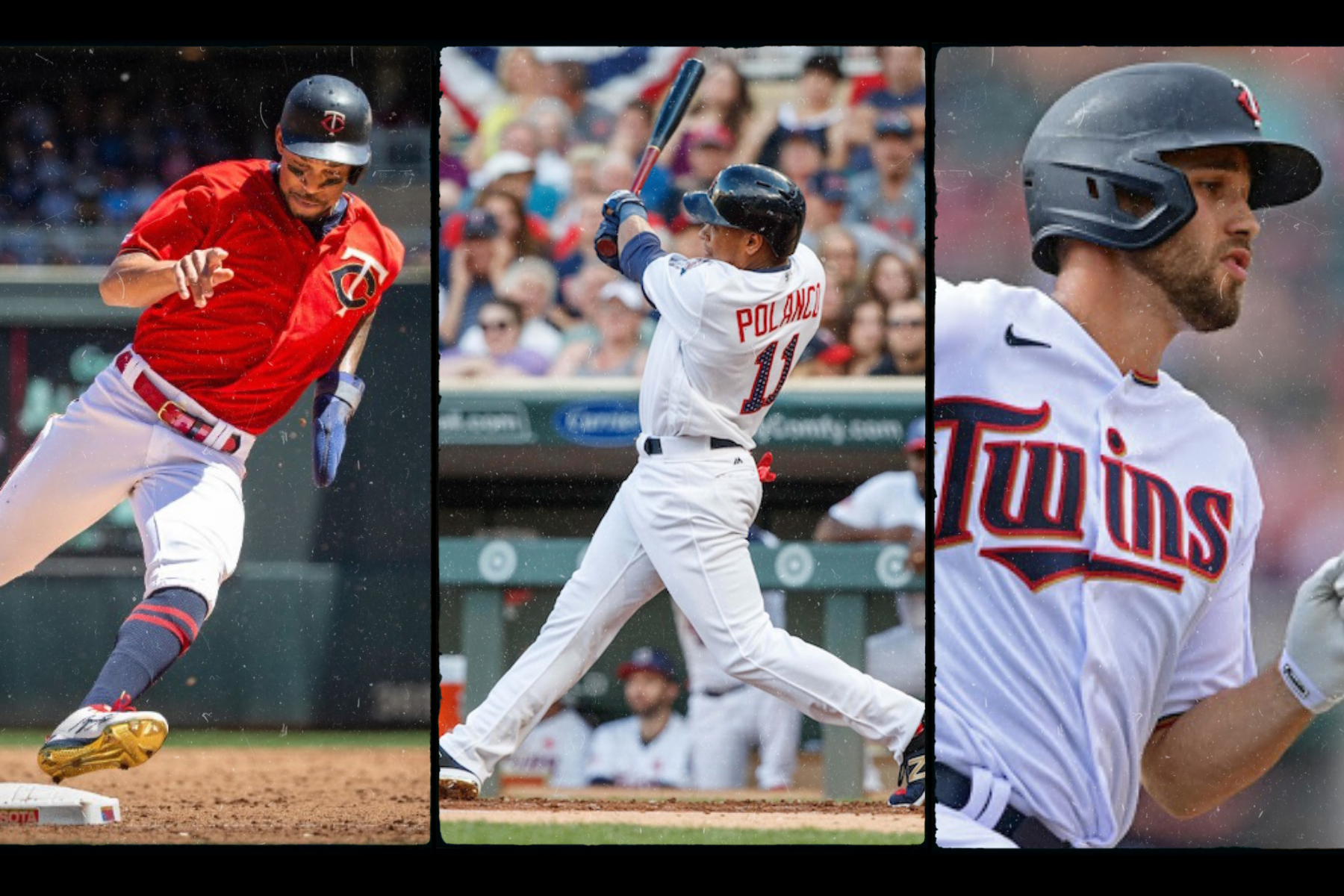 The intent of this list was to answer a question: Which current players in the organization are most indispensable to fulfilling the vision of building a champion? We ranked current MLB players and prospects based on factors like production, age, upside, pedigree, health, contract, and positional scarcity. Here's how the top 20 shakes out for 2022 (click on the player's name to find his writeup): 20. Matt Canterino, RHP 19. Josh Winder, RHP 18. Simeon Woods Richardson, RHP 17. Gilberto Celestino, CF 16. Chase Petty, RHP 15. Jose Miranda, 2B/3B 14. Jhoan Duran, RHP 13. Jordan Balazovic, RHP 12. Trevor Larnach, OF 11. Luis Arraez, UTIL 10. Ryan Jeffers, C 9. Max Kepler, RF 8. Mitch Garver, C 7. Joe Ryan, RHP 6. Bailey Ober, RHP 5. Austin Martin, OF 4. Royce Lewis, SS 3. Alex Kirilloff, 1B/OF 2. Jorge Polanco, 2B 1. Byron Buxton, CF If we're treating Kirilloff as an outfielder and Arraez as an infielder, that breaks down to: 8 pitchers 6 outfielders 4 infielders 2 catchers It's not a bad balance, roughly reflecting the proportions of positions on an MLB roster. However, the Twins do have a few clear areas of weakness and scarcity, as well as some areas of abundance that point to possible trade opportunities. We'll explore these along with other noteworthy observations and takeaways as we break down the list, taking stock of the Twins organization as a whole. Return of the King When I first took a shot at compiling this list, ahead of the 2018 season, Byron Buxton was at the top. At that time he was 24 years old, coming off a breakout season in which he was (mostly) healthy, a fringe MVP contender, and recipient of a Platinum Glove. It all seemed to be coming together. If only we knew. Recurring injuries and progressively diminishing team control have kept Buxton's stock in check since then, to the point where he nearly slipped out of the top 10 in last year's rankings. But all that's transpired since has vaulted him back to the #1 spot at last. While still dealing with his share of injuries in 2021, Buxton proved more than ever he's a rare difference-maker, stacking up against any player in franchise history on a per-rate basis. And after the season, Minnesota opportunistically locked him up. The uniquely team-friendly nature of Buxton's contract extension, which takes him through the entirety of his remaining prime, makes him one of the most valuable assets in all of baseball. The Fall of Maeda In last year's rankings, Kenta Maeda ranked #1. He was an accomplished veteran starter coming off a Cy Young runner-up season, with a highly favorable contract to boot. Maeda was the centerpiece around which the rotation would be built. Maeda didn't appear in this year's rankings. His dramatic drop-off encompasses the rotation's downfall as a whole. The 2021 season really couldn't have done much more to tank Maeda's value: he largely struggled through 21 starts, then underwent elbow surgery late in the season. By the time he returns in 2023, he'll be 35 and in his walk year. His team-friendly contract, with only $3M in guaranteed base salary, means Maeda's absence in 2022 won't hurt the team too much resource-wise, which was a big part of his value. But the Twins were counting on his arm for the coming season, and now they'll be without it, as well as that of José Berríos (#4 in last year's rankings). In a nutshell, this tees up the immense challenge of building a new starting rotation – from two starting pitchers among the top five assets to zero. On the bright side, Bailey Ober and Joe Ryan (#6 and #7 this year) are both under control for the next six years, so if either or both can affirm their early promise, they are poised to become premium commodities. Notably, neither one cost this front office very much to acquire. Power and Parity in the Pitching Pipeline This franchise's success over the next 3-4 years will be heavily dependent on the fruits of a pitching pipeline this front office has been cultivating since it arrived. The disruption of a pandemic stalled progress, but the Twins currently have a huge assortment of high-upside arms nearing MLB-readiness. Those arms are all grouped together around the back end of this top 20 list. The last three players we ranked – Simeon Woods Richardson, Josh Winder, Matt Canterino – are all part of this group, and if we extended the list to 30 or 40, several more would show up: Cole Sands, Blayne Enlow, Louie Varland, Chris Vallimont, Drew Strotman. Maybe even Randy Dobnak and Griffin Jax. By passing up the high end of free agent pitching, the front office has essentially made clear that it's staking itself to this group. If next year's rankings are flush with pitchers from it, that'll be a good sign. If not, then that'll be the most damning strike against this regime yet. Short on Shortstops Around the time I first put these rankings together in 2018, people were wondering if the Twins were filling their system with *too many* shortstops. They'd taken Royce Lewis first overall in the previous draft, adding him to a system that already included Jorge Polanco, Nick Gordon, and Wander Javier (all of whom appeared in that inaugural top 20 ranking). What's happened since shows why it's so damn hard to develop shortstops (and why the great ones are such tremendous commodities). Javier flamed out. Polanco and Gordon have moved to different positions. Lewis is still tenuously considered a shortstop, but the jury is out. Outside of him, the cupboard is now bare. With Andrelton Simmons gone, there's no current occupant at the MLB level, though the Twins will presumably sign someone to a short-term deal. In the system, Lewis sorta stands alone as a high-end prospect with legitimate major-league shortstop potential. Lacking Left-handers One commonality among all eight pitchers to appear on this list – and the next handful of honorable mentions – is that they're all right-handers. The most glaring scarcity in this system, without question, is left-handed pitchers. Were we to extend the list, who would be the top-ranked lefty pitcher? It's an interesting question. Without thinking too deeply about it, it's probably a toss-up between their three top bullpen lefties: Taylor Rogers, Caleb Thielbar and Jovani Moran. But they're all relievers with flaws and limited upside. How much does this particular scarcity matter? Hard to say. The Twins aren't short on high-quality arms in their system, but the most valuable and projectable ones are virtually all right-handers. I wonder to what extent this was intentional, and to what extent the team might try to course-correct and add balance going forward. Top Trade Candidates One of the most pertinent insights to emerge through this exercise is a clear understanding of where the logjams exist and which areas of strength the Twins are most likely to trade from. That analysis feels especially meaningful in this offseason, because the front office essentially has no choice but to leverage the trade market in order to acquire impact talent, with free agency now picked at key positions. For me, this is a pretty simple equation: Which players rank lower on this Twins-specific list than they would in other organizations? From this angle, five names stand out (listed roughly in order of what they'd bring back): Austin Martin Max Kepler Luis Arraez Jose Miranda Gilberto Celestino One could theoretically add Mitch Garver or Ryan Jeffers to this list, although I'm not sure I have enough confidence in either one to feel good about trading the other. Kepler and Celestino are both made somewhat more expandable by the Buxton extension, but the most intriguing redundancy from my view is with Martin, Arraez, and Miranda. With Buxton now entrenched in center, Martin's most likely destinations seem to be second, third, or left. The same can basically said for Arraez and Miranda (though I suspect left field is considered much less desirable for both). Second and third are currently occupied by Jorge Polanco and Josh Donaldson, who are under guaranteed contract for two more years. Trading Donaldson would alleviate this logjam in a big way, but the team's opportunities to do so are much more limited. Martin, Arraez and Miranda are all coveted young players with appealing contract situations. If the Twins want to bring in frontline pitching via trade once the lockdown ends, this would appear to be the path. What strikes you as you review this evaluation of players in the Twins system? Are you feeling good about the state of the franchise? Bad? Share your thoughts in the comments below, and feel free to catch up on past lists for a trip down memory lane: Top 20 Twins Assets: 2018 Top 20 Twins Assets: 2019 Top 20 Twins Assets: 2020 Top 20 Twins Assets: 2021 MORE FROM TWINS DAILY — Order the Offseason Handbook — Latest Twins coverage from our writers — Recent Twins discussion in our forums — Follow Twins Daily via Twitter, Facebook or email
- 19 comments
-
- 2
-
-
- byron buxton
- kenta maeda
- (and 3 more)
-
Over the past couple of weeks, across four installments, we ranked the top 20 players in the Twins organization based on their value toward winning a championship. Today we'll recap that list in search of trends and takeaways, with an eye on assessing how well the franchise is positioned to achieve that ultimate goal with its current collection of assets. The intent of this list was to answer a question: Which current players in the organization are most indispensable to fulfilling the vision of building a champion? We ranked current MLB players and prospects based on factors like production, age, upside, pedigree, health, contract, and positional scarcity. Here's how the top 20 shakes out for 2022 (click on the player's name to find his writeup): 20. Matt Canterino, RHP 19. Josh Winder, RHP 18. Simeon Woods Richardson, RHP 17. Gilberto Celestino, CF 16. Chase Petty, RHP 15. Jose Miranda, 2B/3B 14. Jhoan Duran, RHP 13. Jordan Balazovic, RHP 12. Trevor Larnach, OF 11. Luis Arraez, UTIL 10. Ryan Jeffers, C 9. Max Kepler, RF 8. Mitch Garver, C 7. Joe Ryan, RHP 6. Bailey Ober, RHP 5. Austin Martin, OF 4. Royce Lewis, SS 3. Alex Kirilloff, 1B/OF 2. Jorge Polanco, 2B 1. Byron Buxton, CF If we're treating Kirilloff as an outfielder and Arraez as an infielder, that breaks down to: 8 pitchers 6 outfielders 4 infielders 2 catchers It's not a bad balance, roughly reflecting the proportions of positions on an MLB roster. However, the Twins do have a few clear areas of weakness and scarcity, as well as some areas of abundance that point to possible trade opportunities. We'll explore these along with other noteworthy observations and takeaways as we break down the list, taking stock of the Twins organization as a whole. Return of the King When I first took a shot at compiling this list, ahead of the 2018 season, Byron Buxton was at the top. At that time he was 24 years old, coming off a breakout season in which he was (mostly) healthy, a fringe MVP contender, and recipient of a Platinum Glove. It all seemed to be coming together. If only we knew. Recurring injuries and progressively diminishing team control have kept Buxton's stock in check since then, to the point where he nearly slipped out of the top 10 in last year's rankings. But all that's transpired since has vaulted him back to the #1 spot at last. While still dealing with his share of injuries in 2021, Buxton proved more than ever he's a rare difference-maker, stacking up against any player in franchise history on a per-rate basis. And after the season, Minnesota opportunistically locked him up. The uniquely team-friendly nature of Buxton's contract extension, which takes him through the entirety of his remaining prime, makes him one of the most valuable assets in all of baseball. The Fall of Maeda In last year's rankings, Kenta Maeda ranked #1. He was an accomplished veteran starter coming off a Cy Young runner-up season, with a highly favorable contract to boot. Maeda was the centerpiece around which the rotation would be built. Maeda didn't appear in this year's rankings. His dramatic drop-off encompasses the rotation's downfall as a whole. The 2021 season really couldn't have done much more to tank Maeda's value: he largely struggled through 21 starts, then underwent elbow surgery late in the season. By the time he returns in 2023, he'll be 35 and in his walk year. His team-friendly contract, with only $3M in guaranteed base salary, means Maeda's absence in 2022 won't hurt the team too much resource-wise, which was a big part of his value. But the Twins were counting on his arm for the coming season, and now they'll be without it, as well as that of José Berríos (#4 in last year's rankings). In a nutshell, this tees up the immense challenge of building a new starting rotation – from two starting pitchers among the top five assets to zero. On the bright side, Bailey Ober and Joe Ryan (#6 and #7 this year) are both under control for the next six years, so if either or both can affirm their early promise, they are poised to become premium commodities. Notably, neither one cost this front office very much to acquire. Power and Parity in the Pitching Pipeline This franchise's success over the next 3-4 years will be heavily dependent on the fruits of a pitching pipeline this front office has been cultivating since it arrived. The disruption of a pandemic stalled progress, but the Twins currently have a huge assortment of high-upside arms nearing MLB-readiness. Those arms are all grouped together around the back end of this top 20 list. The last three players we ranked – Simeon Woods Richardson, Josh Winder, Matt Canterino – are all part of this group, and if we extended the list to 30 or 40, several more would show up: Cole Sands, Blayne Enlow, Louie Varland, Chris Vallimont, Drew Strotman. Maybe even Randy Dobnak and Griffin Jax. By passing up the high end of free agent pitching, the front office has essentially made clear that it's staking itself to this group. If next year's rankings are flush with pitchers from it, that'll be a good sign. If not, then that'll be the most damning strike against this regime yet. Short on Shortstops Around the time I first put these rankings together in 2018, people were wondering if the Twins were filling their system with *too many* shortstops. They'd taken Royce Lewis first overall in the previous draft, adding him to a system that already included Jorge Polanco, Nick Gordon, and Wander Javier (all of whom appeared in that inaugural top 20 ranking). What's happened since shows why it's so damn hard to develop shortstops (and why the great ones are such tremendous commodities). Javier flamed out. Polanco and Gordon have moved to different positions. Lewis is still tenuously considered a shortstop, but the jury is out. Outside of him, the cupboard is now bare. With Andrelton Simmons gone, there's no current occupant at the MLB level, though the Twins will presumably sign someone to a short-term deal. In the system, Lewis sorta stands alone as a high-end prospect with legitimate major-league shortstop potential. Lacking Left-handers One commonality among all eight pitchers to appear on this list – and the next handful of honorable mentions – is that they're all right-handers. The most glaring scarcity in this system, without question, is left-handed pitchers. Were we to extend the list, who would be the top-ranked lefty pitcher? It's an interesting question. Without thinking too deeply about it, it's probably a toss-up between their three top bullpen lefties: Taylor Rogers, Caleb Thielbar and Jovani Moran. But they're all relievers with flaws and limited upside. How much does this particular scarcity matter? Hard to say. The Twins aren't short on high-quality arms in their system, but the most valuable and projectable ones are virtually all right-handers. I wonder to what extent this was intentional, and to what extent the team might try to course-correct and add balance going forward. Top Trade Candidates One of the most pertinent insights to emerge through this exercise is a clear understanding of where the logjams exist and which areas of strength the Twins are most likely to trade from. That analysis feels especially meaningful in this offseason, because the front office essentially has no choice but to leverage the trade market in order to acquire impact talent, with free agency now picked at key positions. For me, this is a pretty simple equation: Which players rank lower on this Twins-specific list than they would in other organizations? From this angle, five names stand out (listed roughly in order of what they'd bring back): Austin Martin Max Kepler Luis Arraez Jose Miranda Gilberto Celestino One could theoretically add Mitch Garver or Ryan Jeffers to this list, although I'm not sure I have enough confidence in either one to feel good about trading the other. Kepler and Celestino are both made somewhat more expandable by the Buxton extension, but the most intriguing redundancy from my view is with Martin, Arraez, and Miranda. With Buxton now entrenched in center, Martin's most likely destinations seem to be second, third, or left. The same can basically said for Arraez and Miranda (though I suspect left field is considered much less desirable for both). Second and third are currently occupied by Jorge Polanco and Josh Donaldson, who are under guaranteed contract for two more years. Trading Donaldson would alleviate this logjam in a big way, but the team's opportunities to do so are much more limited. Martin, Arraez and Miranda are all coveted young players with appealing contract situations. If the Twins want to bring in frontline pitching via trade once the lockdown ends, this would appear to be the path. What strikes you as you review this evaluation of players in the Twins system? Are you feeling good about the state of the franchise? Bad? Share your thoughts in the comments below, and feel free to catch up on past lists for a trip down memory lane: Top 20 Twins Assets: 2018 Top 20 Twins Assets: 2019 Top 20 Twins Assets: 2020 Top 20 Twins Assets: 2021 MORE FROM TWINS DAILY — Order the Offseason Handbook — Latest Twins coverage from our writers — Recent Twins discussion in our forums — Follow Twins Daily via Twitter, Facebook or email View full article
-
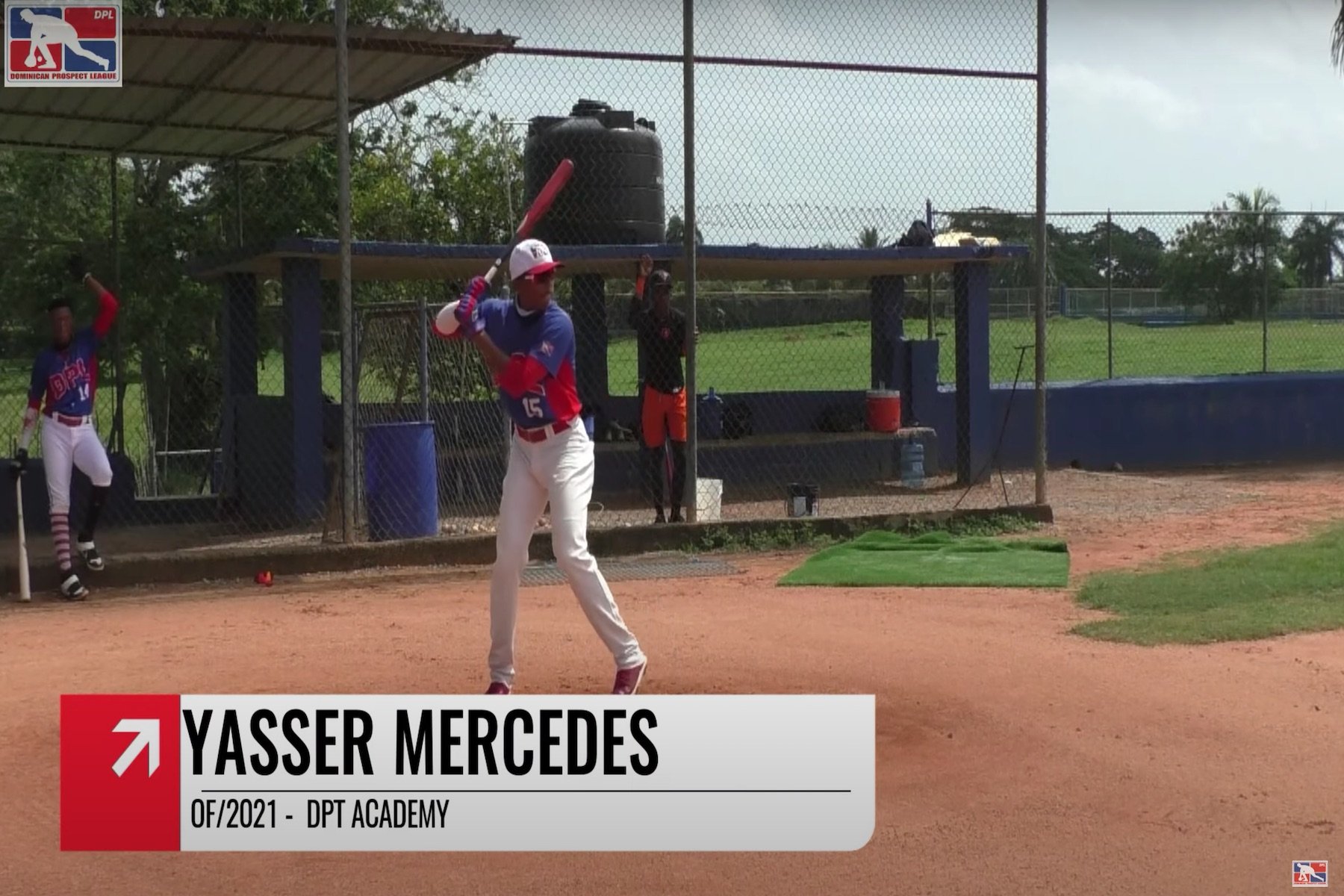 The international market has been a key source of talent in the Twins system, yielding not only big-league players like Jorge Polanco, Max Kepler, and Miguel Sanó, but also several of their current most intriguing prospects. They'll be adding to that pool when the following expected signings become official. The Twins have a $5,721,500 bonus pool for international signings this year and it appears this is how they'll be divvying up a large chunk of it. Yasser Mercedes, OF – Dominican Republic ($1.7 million) DOB: 11/16/2004 (17 years old) 6'3", 180 lbs | Bats R, Throws R Ranked #17 by MLB Pipeline Read our profile on Mercedes The headliner of this year's Twins international class is a big lean outfielder with an impressive and balanced skill set. Speed and defense are considered his biggest strengths currently, leading many to believe he can stick in center field. According to MLB Pipeline, "Mercedes has some of the best tools in this year’s class, but it’s his ability to use those tools in games that’s helped him become one of the most intriguing prospects on the international market." Yilber Herrera, SS – Dominican Republic ($700K) DOB: 1/15/2005 (17 years old) 6'0", 155 lbs | B: S, T: R Ranked #35 by MLB Pipeline Read our profile on Herrera "Think of a young Jorge Polanco. That’s the best way to describe the athletic Herrera." So claims MLB Pipeline's writeup on this switch-hitting shortstop, and this description comes as music to the ears of Twins fans. The Venezuelan infielder is currently known as more of a contact hitter with quick hands, but there is hope he'll start to develop substantial power as he grows into his frame. That's basically the path Polanco took on his way to becoming one of the best slugging middle infielders in the majors. Bryan Acuña , SS – Venezuela ($650K) DOB: 8/11/2005 (16 years old) 5'11", 155 lbs | B: R, T: R Ranked #39 by MLB Pipeline Read our profile on Acuña You probably recognize the last name. Yes, Bryan is the younger brother of Braves superstar Ronald Acuña Jr. He's been on the international scouting radar for sometime, and while he's not viewed as one of the premier talents in this class, it bears noting that his older brother signed with Atlanta for a mere $100K back in 2014. He's currently listed as a shortstop, but Acuña is unlikely to stick there. His bat is expected to be his ticket to advancement; he already has a good feel for hitting and the hope is that he'll add power he muscles up. MORE FROM TWINS DAILY — Order the Offseason Handbook — Latest Twins coverage from our writers — Recent Twins discussion in our forums — Follow Twins Daily via Twitter, Facebook or email
- 25 comments
-
- 7
-
-
- yasser mercedes
- yilber herrera
- (and 1 more)
-
The international signing period officially opens today. The Minnesota Twins have agreed to terms with three players ranked among the top 40 talents in this year's class, and now we know the dollar totals of their agreements. Read on to learn more about Yasser Mercedes, Yilber Herrera, and Bryan Acuña. The international market has been a key source of talent in the Twins system, yielding not only big-league players like Jorge Polanco, Max Kepler, and Miguel Sanó, but also several of their current most intriguing prospects. They'll be adding to that pool when the following expected signings become official. The Twins have a $5,721,500 bonus pool for international signings this year and it appears this is how they'll be divvying up a large chunk of it. Yasser Mercedes, OF – Dominican Republic ($1.7 million) DOB: 11/16/2004 (17 years old) 6'3", 180 lbs | Bats R, Throws R Ranked #17 by MLB Pipeline Read our profile on Mercedes The headliner of this year's Twins international class is a big lean outfielder with an impressive and balanced skill set. Speed and defense are considered his biggest strengths currently, leading many to believe he can stick in center field. According to MLB Pipeline, "Mercedes has some of the best tools in this year’s class, but it’s his ability to use those tools in games that’s helped him become one of the most intriguing prospects on the international market." Yilber Herrera, SS – Dominican Republic ($700K) DOB: 1/15/2005 (17 years old) 6'0", 155 lbs | B: S, T: R Ranked #35 by MLB Pipeline Read our profile on Herrera "Think of a young Jorge Polanco. That’s the best way to describe the athletic Herrera." So claims MLB Pipeline's writeup on this switch-hitting shortstop, and this description comes as music to the ears of Twins fans. The Venezuelan infielder is currently known as more of a contact hitter with quick hands, but there is hope he'll start to develop substantial power as he grows into his frame. That's basically the path Polanco took on his way to becoming one of the best slugging middle infielders in the majors. Bryan Acuña , SS – Venezuela ($650K) DOB: 8/11/2005 (16 years old) 5'11", 155 lbs | B: R, T: R Ranked #39 by MLB Pipeline Read our profile on Acuña You probably recognize the last name. Yes, Bryan is the younger brother of Braves superstar Ronald Acuña Jr. He's been on the international scouting radar for sometime, and while he's not viewed as one of the premier talents in this class, it bears noting that his older brother signed with Atlanta for a mere $100K back in 2014. He's currently listed as a shortstop, but Acuña is unlikely to stick there. His bat is expected to be his ticket to advancement; he already has a good feel for hitting and the hope is that he'll add power he muscles up. MORE FROM TWINS DAILY — Order the Offseason Handbook — Latest Twins coverage from our writers — Recent Twins discussion in our forums — Follow Twins Daily via Twitter, Facebook or email View full article
- 25 replies
-
- 2
-
-
- yasser mercedes
- yilber herrera
- (and 1 more)
-
The Lockout Diaries: Week 6
Nick Nelson replied to Nick Nelson's topic in Twins Daily Front Page News
Thank you! You and me both. -
The Lockout Diaries: Week 6
Nick Nelson replied to Nick Nelson's topic in Twins Daily Front Page News
You forgot to include the link! Great read, very in-depth and thorough: -
 We've reached mid-January and, under normal circumstances, the spring training report date for pitchers and catchers would be about one month away. However, the idea of spring camps firing up on time feels like a pipe dream at this point. MLB and its players association still have yet to engage in serious discussions. On the bright side, that is finally about to change. Jeff Passan of ESPN reported earlier this week that the two sides plan to convene and hold a bargaining session on Thursday for the first time in six weeks. I wish I could say I was confident this meeting would result in rapid action, but I'm not. We all lived through the agony of following "negotiations" during the COVID shutdown in 2020, with proposals from each side repeatedly being scoffed at by the other. I suspect we'll see a similar series of rebuffs in the weeks ahead, with the urgency and stakes growing higher as spring approaches and scores of free agents remain in limbo. I've been using the downtime to fully take stock of the Twins organization as it currently stands, ponder the fallout of trade scenarios, and reminisce on Minnesota teams past. None of these activities serve as fitting substitutes for actual baseball news and the palpable excitement of spring training's approach but ... you work with what you've got. To that end, I've been incredibly impressed by the inventiveness of our Twins Daily writing community. I come here every day and find multiple new articles covering interesting topics despite the total lack of anything happening. It's quite amazing. I've read great stories about potential international signings, and Dereck Rodriguez returning to the Twins, and Jim Kaat's number retirement, and 2022 sleepers to watch, and a mother's perspective on two identical twins who happen to be start relievers, and much more. These are all from the past few days. The passion of fellow Twins fans is helping to keep my impassioned disgust with Rob Manfred and the league at bay, for now. When I helped launch Twins Daily a decade ago (10th anniversary coming up next month!), we envisioned it as exactly this: a refuge for lovers of baseball, even when baseball doesn't love us back. For me, it's been that and more. And it's honestly making a significant difference in my morale as this stupid lockout drags on. There's a good chance I'd have checked out on baseball – at least for the time being – amidst all this stupidity, if not for the writers, readers, and audience here at TD. I'd like to let them know how much I appreciate 'em. But for now I can only tell it to you, dear journal, here in this extremely private, anonymous, discreet setting. Anyway, seeya next week. Hopefully I'll bring news of any substance. I'm not counting on it.
 -
Dear journal, It's been 42 days since darkness fell upon the world of baseball. There's still been no movement toward agreeing on a new deal and reviving the offseason, but at least we have small signs of something resembling progress. We've reached mid-January and, under normal circumstances, the spring training report date for pitchers and catchers would be about one month away. However, the idea of spring camps firing up on time feels like a pipe dream at this point. MLB and its players association still have yet to engage in serious discussions. On the bright side, that is finally about to change. Jeff Passan of ESPN reported earlier this week that the two sides plan to convene and hold a bargaining session on Thursday for the first time in six weeks. I wish I could say I was confident this meeting would result in rapid action, but I'm not. We all lived through the agony of following "negotiations" during the COVID shutdown in 2020, with proposals from each side repeatedly being scoffed at by the other. I suspect we'll see a similar series of rebuffs in the weeks ahead, with the urgency and stakes growing higher as spring approaches and scores of free agents remain in limbo. I've been using the downtime to fully take stock of the Twins organization as it currently stands, ponder the fallout of trade scenarios, and reminisce on Minnesota teams past. None of these activities serve as fitting substitutes for actual baseball news and the palpable excitement of spring training's approach but ... you work with what you've got. To that end, I've been incredibly impressed by the inventiveness of our Twins Daily writing community. I come here every day and find multiple new articles covering interesting topics despite the total lack of anything happening. It's quite amazing. I've read great stories about potential international signings, and Dereck Rodriguez returning to the Twins, and Jim Kaat's number retirement, and 2022 sleepers to watch, and a mother's perspective on two identical twins who happen to be start relievers, and much more. These are all from the past few days. The passion of fellow Twins fans is helping to keep my impassioned disgust with Rob Manfred and the league at bay, for now. When I helped launch Twins Daily a decade ago (10th anniversary coming up next month!), we envisioned it as exactly this: a refuge for lovers of baseball, even when baseball doesn't love us back. For me, it's been that and more. And it's honestly making a significant difference in my morale as this stupid lockout drags on. There's a good chance I'd have checked out on baseball – at least for the time being – amidst all this stupidity, if not for the writers, readers, and audience here at TD. I'd like to let them know how much I appreciate 'em. But for now I can only tell it to you, dear journal, here in this extremely private, anonymous, discreet setting. Anyway, seeya next week. Hopefully I'll bring news of any substance. I'm not counting on it. View full article
-
Top 20 Minnesota Twins Assets of 2022: Part 4 (1-5)
Nick Nelson replied to Nick Nelson's topic in Twins Daily Front Page News
That's not exactly the case -- it's meant to be a mixture of short-term and long-term impact, which is why someone like Chase Petty made the list. But unfortunately the asset value of Maeda (who ranked #1 last year) was really tanked by his injury last year. When he comes back he'll be 35 with one remaining year of control. Not really a guy you can plan around much anymore. This will be discussed a bit more in the wrap-up post next Monday.- 13 replies
-
- 4
-
-
- austin martin
- royce lewis
- (and 3 more)