



Nick Nelson
-
Posts
8,325 -
Joined
-
Last visited
-
Days Won
56
Content Type
Profiles
News
Minnesota Twins Videos
2026 Minnesota Twins Top Prospects Ranking
2022 Minnesota Twins Draft Picks
Minnesota Twins Free Agent & Trade Rumors, Notes, & Tidbits
Guides & Resources
2023 Minnesota Twins Draft Picks
The Minnesota Twins Players Project
2024 Minnesota Twins Draft Picks
2025 Minnesota Twins Draft Pick Tracker
2026 Minnesota Twins Draft Tracker: Picks & Bonuses
Forums
Blogs
Events
Store
Downloads
Gallery
Everything posted by Nick Nelson
-
Risky Business: The 2023 Twins Will Be a Medical Science Experiment
Nick Nelson posted an article in Twins
 Usually, the end of a season like this one – promising but sabotaged to the core by an outrageous abundance of injuries – brings sweet relief. The offseason, theoretically, provides an opportunity for banged-up players to get right and return in the spring at 100% physically. In the cases of many Twins, it's difficult to envision things going so smoothly. Here's a look at seven players – all varying levels of vital to the 2023 outlook – who will have their unusual injury concerns and uncertainties ripple forward into next year. Tyler Mahle, SP No one could seem to figure out what was wrong with Mahle's shoulder this year. Not the Reds, not the Twins, not the pitcher himself ... certainly not any outside observer. His issue was described in different ways at different points – strain, soreness, fatigue, inflammation – but throughout out it all, repeated exams showed no structural damage. So, we don't know what's going on. What we do know is that Mahle's final two attempts to pitch this season saw him induce three swinging strikes on 74 pitches while flashing significantly reduced velocity, getting removed after two innings in each. Now he's got an offseason to rest up and get right. But, what does "getting right" mean when no one could pinpoint what was wrong to begin with? This is one scenario where I feel like the Twins front office and medical staff are getting a bit of an unfair shake. They gambled on Mahle because his scans were clean and he was pitching well at the time. He kept pitching well for a bit. Then the shoulder troubles resurfaced, yet the scans remained clean. Pointing fingers at team doctors is easy but misguided. It's not like they aren't consulting outside specialists at the top of their field. The reality is that for all of our advances, sports medicine remains an inexact and often mysterious science. Mahle is a good example. He's hardly the only one. Byron Buxton, CF I'm not going to act like this is anything new. Buxton, obviously, has to be viewed as an availability question mark heading into every season. But at least last year he didn't carry any blatant health burdens directly into the offseason. In 2021, Buxton played through the end of the schedule and flat-out mashed down the stretch, posting a 1.001 OPS with nine homers after September 1st. His broken hand had healed, and he was seemingly past the hip strain that earlier cost him six weeks. This year, that same hip forced him back to the injured list. That's in addition to a persistent right knee tendinitis, with both trending toward the dreaded "chronic" category of classification. These dark clouds will hover over Buxton, recipient of a new $100 million contract, for the foreseeable future. Outside of an ostensibly minor procedure conducted last week to clean up scar tissue and frayed ligaments in his knee, there's nothing but hope to guide us toward a significantly better outcome for Buxton next year. "What ends up typically happening is the scar tissue and otherwise creates more of that inflammation when you pound on it. So, now let's clear out some of that and hopefully that'll alleviate some of that stress going forward," said chief baseball officer Derek Falvey. Hopefully. Alex Kirilloff, OF/1B Perhaps the most perplexing and inscrutable health situation among many faced by the Twins franchise. In August of 2021, Kirilloff underwent season-ending surgery to address a torn wrist ligament, with the hope that creating more spacing would alleviate the pain experienced while engaging his elite swing. It didn't work. Or at least not for long. Kiriloff battled more pain in spring training and the early season, took a short break, went to Triple-A, dominated for a month, returned to the majors, and then it all came roaring back. The pain, the warped swing mechanics, the endless ground balls. Cortisone injections offered only brief respite from his performance-draining affliction. Thus, Kirilloff and the Twins turned to a last-ditch option: a more invasive surgery that involves "breaking the ulna and shortening it before the insertion of a metal plate and screws," another effort to create space in his wrist. "I really hope it doesn’t get to that," the 24-year-old had lamented earlier in the season. While relatively common for the general population, this procedure is rare for professional athletes and there aren't many past examples to reference. In a recent update to the media, Falvey mentioned that Kirilloff "hasn't ramped up his hitting progression yet," adding that there have been no setbacks or delays but "we just don't want him to hit yet." Kirilloff had undergone the surgery six weeks prior, for whatever that's worth. I want so badly to feel optimistic about Kirilloff because his talent level and upside can be game-changing for this franchise – if only he could tap them for a prolonged period on the field. But it's getting really difficult to find that optimism, and his wayward status creates all sorts of planning headaches for the front office. Royce Lewis, SS Speaking of planning headaches, we have the shortstop position. Lewis showed the makings of a long-term fixture during his brief audition this year, but unfortunately that concluded in late May when he re-tore the very same knee ligament he'd just spent a year rehabbing from reconstructive surgery. In somewhat positive news, he only partially tore the ACL this time, and surgeons put a novel twist on his second knee operation; mentions of a "brace" being involved in this variation led Lucas Seehafer to conclude they employed a technique called lateral tenodesis. While promising in its potential to prevent another injury, Lucas framed this technique as somewhat experimental, adding that "the long-term outcomes for this procedure in the athletic population, and specifically the MLB population, [are] unknown." Even if he's able to come back with a structurally sound, twice-repaired knee ligament, it remains to be seen whether Lewis will be able to maintain the full speed, quickness, and lateral agility that were on display even after his first surgery. Like Kirilloff, Lewis brings much to the table as a building block for this franchise, which makes his uncertainty all the more unfortunate, surfarcing some difficult short-term decisions for the front office with regards to the future at shortstop. Chris Paddack, SP The Twins knew they were taking on risk when they acquired Paddack as the centerpiece of the Taylor Rogers trade, but even in that context, they've pretty much stumbled into a worst-case scenario. Paddack made it through five starts before the partial tear in his UCL, already once repaired via Tommy John surgery, gave way and necessitated to a second TJ procedure. The history of pitchers who have undergone this ligament replacement surgery twice is not the most encouraging. Mike Clevinger, one of the most accomplished pitchers to undergo a Tommy John revision surgery (in November 2020), returned to action this year and while he's managed to throw more than 100 innings, Clevinger is nowhere near his pre-surgery form. There are complicated realities at play with getting this repair a second time that have diminished the rate of success. "On average, the typical TJ revision isn’t as successful as the typical primary TJ,” said Dr. Andrew Cosgarea, an orthopedic surgeon and professor, in a story for the San Diego Union-Tribune. "The first time you drill a hole in the bone it is fresh and clean, but if it happens again you already have a hole there and that hole is filled with scar tissue. … Scar tissue isn’t as healthy as original tissue. It doesn’t have the same blood supply; (it is) not as durable.” Paddack has already acknowledged that he's realistically targeting an August return next year, setting expectations for a 14-month recovery time and reducing the likelihood he'll be able to make a significant impact in 2023. We probably should collectively drop the notion of Paddack pitching in the Twins rotation again before his team control expires after 2024. Kenta Maeda, SP Relatively speaking, Maeda's outlook is less complicated than Paddack's since he's coming off his first Tommy John surgery. However, the veteran righty still hasn't taken the mound 13 months after his own procedure "with a twist" – an internal brace designed to shorten the recovery timetable from the typical 12-16 months down to 9-12. Alas, he'll be nearly 18 months removed by the time he hits the mound again next spring in Ft. Myers. That Maeda didn't make it back this year isn't a big deal – the timing of his surgery late last year was always going to make it tough, and the Twins being out of contention in September rendered it a moot point. The bigger concern here is that he'll be a 35-year-old coming back from significant elbow surgery and a very long layoff, with 173 total innings pitched over the past three seasons. It's hard to foresee him successfully taking on a full starter's workload in his final year under contract, so I'll be curious to see how he fits into the 2022 plan. Josh Winder, SP Winder was limited to 72 innings last year, and will finish near the same total this year, because of recurring "shoulder impingement" issues that he and the club appear unable to fully diagnose or solve. “He’s felt good for periods of time. He’s thrown the ball well for periods of time. There’s no singular reason why we’re looking at this and thinking, ‘Well, this is why this is happening,’ to be honest,” manager Rocco Baldelli said in late July, shortly after Winder had been placed on IL for a second time with what was by then being termed impingement syndrome. “It’s just soreness that keeps creeping back in there.” Winder wouldn't make it back to the big-league mound for another seven weeks after that, and while he was able to return for four starts in September, he wasn't very effective, posting a 5.59 ERA in 19 ⅓ innings. Much like with Mahle, it's difficult to feel confident in an injury clearing up when nobody can get to the bottom of it. Winder, for his part, has suggested he "might just be at a predisposition for this type of injury." Which makes him pretty challenging to plan around, and that's a big hit because he showed the makings of a signature product of this front office's pitching pipeline. The Twins liked him so much they went out of their way to keep him on the Opening Day pitching staff this year. They were envisioning him as an integral part of their rotation mix this year. I don't see how they can keep doing so going forward. An Uncertain Future In the recent media scrum where he updated a litany of injury situations, Falvey remarked on the avalanche of IL stints that buried the team this year, reasoning that – to some extent – you're at the mercy of fate. Like all things in baseball, injuries ebb and flow. "I'm hopeful, for a lot of reasons that this is our spike-up year and that there's some regression built in going forward," Falvey said. A reasonable mindset, from a basic analytical standpoint. And yet, as these seven examples show, many of the dismal developments in the spike-up year that was 2022 could prove thorny going forward.
- 29 comments
-
- 10
-

-
- byron buxton
- tyler mahle
- (and 2 more)
-
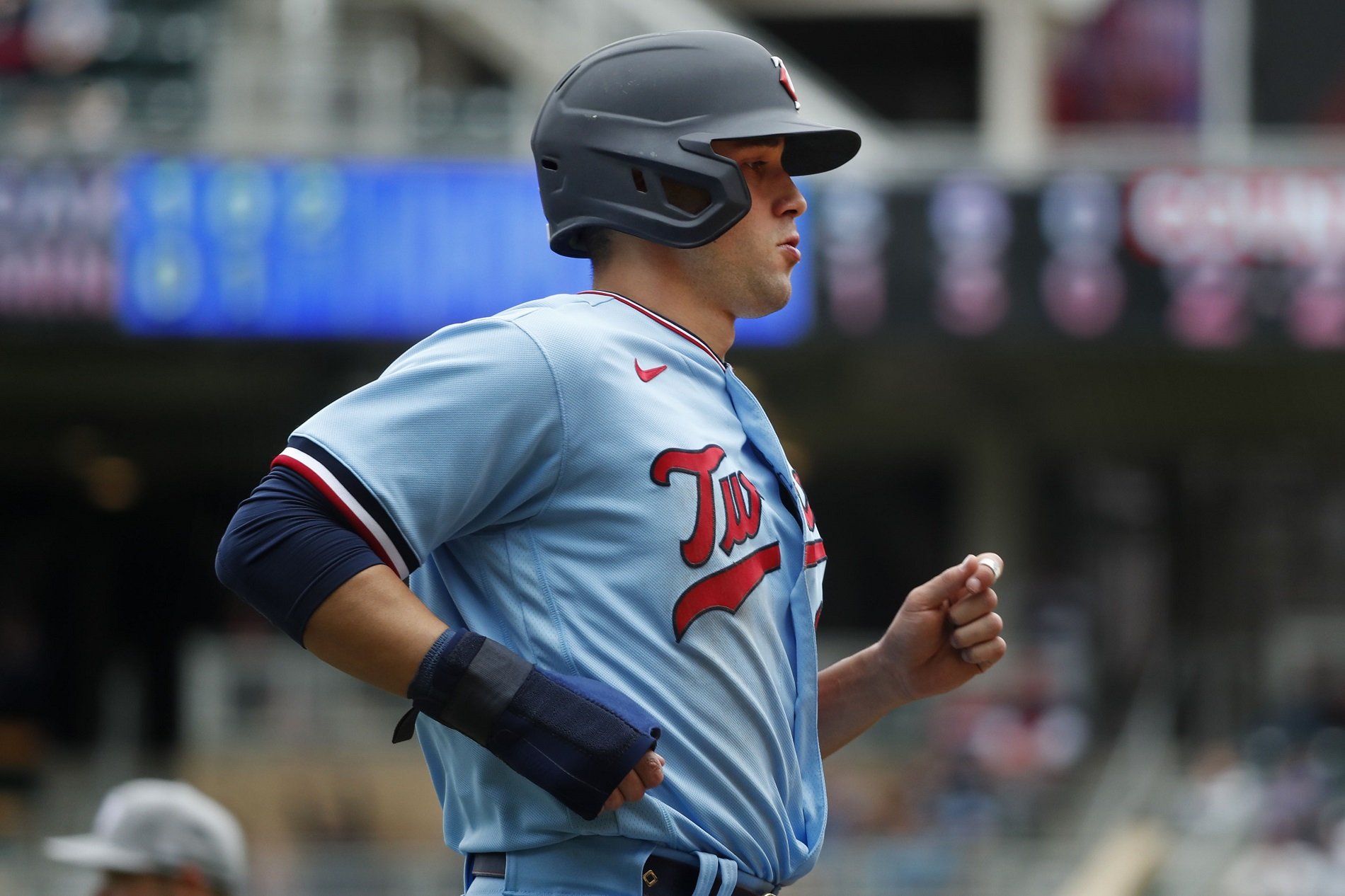
It's no secret: The top imperative for 2023 is a healthier season that enables the Twins to keep their best players on the field more often. Unfortunately, several of this year's injury concerns will spill over into the next thanks to a series of ambiguous, challenging situations afflicting key fixtures in the team's planning. Image courtesy of Bruce Kluckhohn, USA Today Usually, the end of a season like this one – promising but sabotaged to the core by an outrageous abundance of injuries – brings sweet relief. The offseason, theoretically, provides an opportunity for banged-up players to get right and return in the spring at 100% physically. In the cases of many Twins, it's difficult to envision things going so smoothly. Here's a look at seven players – all varying levels of vital to the 2023 outlook – who will have their unusual injury concerns and uncertainties ripple forward into next year. Tyler Mahle, SP No one could seem to figure out what was wrong with Mahle's shoulder this year. Not the Reds, not the Twins, not the pitcher himself ... certainly not any outside observer. His issue was described in different ways at different points – strain, soreness, fatigue, inflammation – but throughout out it all, repeated exams showed no structural damage. So, we don't know what's going on. What we do know is that Mahle's final two attempts to pitch this season saw him induce three swinging strikes on 74 pitches while flashing significantly reduced velocity, getting removed after two innings in each. Now he's got an offseason to rest up and get right. But, what does "getting right" mean when no one could pinpoint what was wrong to begin with? This is one scenario where I feel like the Twins front office and medical staff are getting a bit of an unfair shake. They gambled on Mahle because his scans were clean and he was pitching well at the time. He kept pitching well for a bit. Then the shoulder troubles resurfaced, yet the scans remained clean. Pointing fingers at team doctors is easy but misguided. It's not like they aren't consulting outside specialists at the top of their field. The reality is that for all of our advances, sports medicine remains an inexact and often mysterious science. Mahle is a good example. He's hardly the only one. Byron Buxton, CF I'm not going to act like this is anything new. Buxton, obviously, has to be viewed as an availability question mark heading into every season. But at least last year he didn't carry any blatant health burdens directly into the offseason. In 2021, Buxton played through the end of the schedule and flat-out mashed down the stretch, posting a 1.001 OPS with nine homers after September 1st. His broken hand had healed, and he was seemingly past the hip strain that earlier cost him six weeks. This year, that same hip forced him back to the injured list. That's in addition to a persistent right knee tendinitis, with both trending toward the dreaded "chronic" category of classification. These dark clouds will hover over Buxton, recipient of a new $100 million contract, for the foreseeable future. Outside of an ostensibly minor procedure conducted last week to clean up scar tissue and frayed ligaments in his knee, there's nothing but hope to guide us toward a significantly better outcome for Buxton next year. "What ends up typically happening is the scar tissue and otherwise creates more of that inflammation when you pound on it. So, now let's clear out some of that and hopefully that'll alleviate some of that stress going forward," said chief baseball officer Derek Falvey. Hopefully. Alex Kirilloff, OF/1B Perhaps the most perplexing and inscrutable health situation among many faced by the Twins franchise. In August of 2021, Kirilloff underwent season-ending surgery to address a torn wrist ligament, with the hope that creating more spacing would alleviate the pain experienced while engaging his elite swing. It didn't work. Or at least not for long. Kiriloff battled more pain in spring training and the early season, took a short break, went to Triple-A, dominated for a month, returned to the majors, and then it all came roaring back. The pain, the warped swing mechanics, the endless ground balls. Cortisone injections offered only brief respite from his performance-draining affliction. Thus, Kirilloff and the Twins turned to a last-ditch option: a more invasive surgery that involves "breaking the ulna and shortening it before the insertion of a metal plate and screws," another effort to create space in his wrist. "I really hope it doesn’t get to that," the 24-year-old had lamented earlier in the season. While relatively common for the general population, this procedure is rare for professional athletes and there aren't many past examples to reference. In a recent update to the media, Falvey mentioned that Kirilloff "hasn't ramped up his hitting progression yet," adding that there have been no setbacks or delays but "we just don't want him to hit yet." Kirilloff had undergone the surgery six weeks prior, for whatever that's worth. I want so badly to feel optimistic about Kirilloff because his talent level and upside can be game-changing for this franchise – if only he could tap them for a prolonged period on the field. But it's getting really difficult to find that optimism, and his wayward status creates all sorts of planning headaches for the front office. Royce Lewis, SS Speaking of planning headaches, we have the shortstop position. Lewis showed the makings of a long-term fixture during his brief audition this year, but unfortunately that concluded in late May when he re-tore the very same knee ligament he'd just spent a year rehabbing from reconstructive surgery. In somewhat positive news, he only partially tore the ACL this time, and surgeons put a novel twist on his second knee operation; mentions of a "brace" being involved in this variation led Lucas Seehafer to conclude they employed a technique called lateral tenodesis. While promising in its potential to prevent another injury, Lucas framed this technique as somewhat experimental, adding that "the long-term outcomes for this procedure in the athletic population, and specifically the MLB population, [are] unknown." Even if he's able to come back with a structurally sound, twice-repaired knee ligament, it remains to be seen whether Lewis will be able to maintain the full speed, quickness, and lateral agility that were on display even after his first surgery. Like Kirilloff, Lewis brings much to the table as a building block for this franchise, which makes his uncertainty all the more unfortunate, surfarcing some difficult short-term decisions for the front office with regards to the future at shortstop. Chris Paddack, SP The Twins knew they were taking on risk when they acquired Paddack as the centerpiece of the Taylor Rogers trade, but even in that context, they've pretty much stumbled into a worst-case scenario. Paddack made it through five starts before the partial tear in his UCL, already once repaired via Tommy John surgery, gave way and necessitated to a second TJ procedure. The history of pitchers who have undergone this ligament replacement surgery twice is not the most encouraging. Mike Clevinger, one of the most accomplished pitchers to undergo a Tommy John revision surgery (in November 2020), returned to action this year and while he's managed to throw more than 100 innings, Clevinger is nowhere near his pre-surgery form. There are complicated realities at play with getting this repair a second time that have diminished the rate of success. "On average, the typical TJ revision isn’t as successful as the typical primary TJ,” said Dr. Andrew Cosgarea, an orthopedic surgeon and professor, in a story for the San Diego Union-Tribune. "The first time you drill a hole in the bone it is fresh and clean, but if it happens again you already have a hole there and that hole is filled with scar tissue. … Scar tissue isn’t as healthy as original tissue. It doesn’t have the same blood supply; (it is) not as durable.” Paddack has already acknowledged that he's realistically targeting an August return next year, setting expectations for a 14-month recovery time and reducing the likelihood he'll be able to make a significant impact in 2023. We probably should collectively drop the notion of Paddack pitching in the Twins rotation again before his team control expires after 2024. Kenta Maeda, SP Relatively speaking, Maeda's outlook is less complicated than Paddack's since he's coming off his first Tommy John surgery. However, the veteran righty still hasn't taken the mound 13 months after his own procedure "with a twist" – an internal brace designed to shorten the recovery timetable from the typical 12-16 months down to 9-12. Alas, he'll be nearly 18 months removed by the time he hits the mound again next spring in Ft. Myers. That Maeda didn't make it back this year isn't a big deal – the timing of his surgery late last year was always going to make it tough, and the Twins being out of contention in September rendered it a moot point. The bigger concern here is that he'll be a 35-year-old coming back from significant elbow surgery and a very long layoff, with 173 total innings pitched over the past three seasons. It's hard to foresee him successfully taking on a full starter's workload in his final year under contract, so I'll be curious to see how he fits into the 2022 plan. Josh Winder, SP Winder was limited to 72 innings last year, and will finish near the same total this year, because of recurring "shoulder impingement" issues that he and the club appear unable to fully diagnose or solve. “He’s felt good for periods of time. He’s thrown the ball well for periods of time. There’s no singular reason why we’re looking at this and thinking, ‘Well, this is why this is happening,’ to be honest,” manager Rocco Baldelli said in late July, shortly after Winder had been placed on IL for a second time with what was by then being termed impingement syndrome. “It’s just soreness that keeps creeping back in there.” Winder wouldn't make it back to the big-league mound for another seven weeks after that, and while he was able to return for four starts in September, he wasn't very effective, posting a 5.59 ERA in 19 ⅓ innings. Much like with Mahle, it's difficult to feel confident in an injury clearing up when nobody can get to the bottom of it. Winder, for his part, has suggested he "might just be at a predisposition for this type of injury." Which makes him pretty challenging to plan around, and that's a big hit because he showed the makings of a signature product of this front office's pitching pipeline. The Twins liked him so much they went out of their way to keep him on the Opening Day pitching staff this year. They were envisioning him as an integral part of their rotation mix this year. I don't see how they can keep doing so going forward. An Uncertain Future In the recent media scrum where he updated a litany of injury situations, Falvey remarked on the avalanche of IL stints that buried the team this year, reasoning that – to some extent – you're at the mercy of fate. Like all things in baseball, injuries ebb and flow. "I'm hopeful, for a lot of reasons that this is our spike-up year and that there's some regression built in going forward," Falvey said. A reasonable mindset, from a basic analytical standpoint. And yet, as these seven examples show, many of the dismal developments in the spike-up year that was 2022 could prove thorny going forward. View full article
- 29 replies
-
- 1
-
-
- byron buxton
- tyler mahle
- (and 2 more)
-
 Weekly Snapshot: Mon, 9/26 through Sun, 10/2 *** Record Last Week: 3-3 (Overall: 77-82) Run Differential Last Week: +9 (Overall: +10) Standing: 3rd Place in AL Central (13.0 GB) Last Week's Game Results: Game 154 | MIN 4, CWS 0: Ober Dominates Sox with 10 Ks Game 155 | MIN 8, CWS 4: Heart of the Order Comes Through Game 156 | CWS 4, MIN 3: Late Defensive Lapse Costly in Loss Game 157 | MIN 7, DET 0: Ryan Masterful in Another Shutout Game 158 | DET 3, MIN 2: Missed Opportunities Mount In Motown Game 159 | DET 5, MIN 2: Bats Quiet Again in SWR's Debut NEWS & NOTES Not many of the Twins' injured players are going to make it back this year. But to his credit, Ryan Jeffers did. His rehab and recovery from a fractured thumb to longer than expected, and the catcher position was an offensive black hole in his absence, but ultimately Jeffers did make it back for the end of the season and that means something. Jeffers got plenty of action in his first week back, starting three times and appearing twice as a substitute. He went 3-for-15 with a triple and a couple of RBIs. On Sunday, Jeffers was behind the plate for the major-league debut of pitching prospect Simeon Woods Richardson, who had just completed a stellar season in the minors between Double-A and Triple-A (107.1 IP, 2.77 ERA). Five days removed from his 22nd birthday, the right-hander got the nod for Minnesota's series finale in Detroit, with his hilariously long last name wrapping fully around the No. 78 on his newly minted Twins jersey. It was an altogether strong outing for Woods Richardson, who allowed three runs (two earned) over five innings of work. He settled in pretty nicely after a shaky 29-pitch first inning and showed impressive poise – especially considering he became the youngest pitcher to appear in the majors this year (narrowly edging Ronny Henriquez who was optioned to make room for SWR). HIGHLIGHTS Joe Ryan ended a strong rookie campaign on a high note, with six innings of shutout ball against the Tigers on Friday night. In a season that brought his weaknesses to light – namely, a proneness to homers and vulnerability against high-caliber offenses – Ryan also cemented himself as a quality mid-rotation MLB starter. The flip side to his struggles against postseason teams is that Ryan was sublime when facing lesser lineups. Against sub-.500 competition he went 10-2 with a 2.42 ERA and 10.3 K/9 rate. Let's not act like this doesn't have value. Succeeding to that extent against any major-league lineups is impressive, and in particular Ryan was hyper-effective versus divisional opponents, against whom he finished 10-0 with a 1.23 ERA. He might not be the kind of starter you want toeing the rubber in a postseason game – not in his current state, which isn't to say he can't change that – but at the very least Ryan is proving to be a big regular-season asset. And currently, he is the club's sturdiest long-term asset in the rotation, coming off a mostly healthy and complete season. The same unfortunately cannot be said for Bailey Ober, otherwise he'd be right there in the conversation with Ryan as the stablest building block. Ober's start against Chicago on Tuesday night was just his 10th here in a season that was torpedoed by a major groin injury. But at least the big righty is finishing strong and setting the foundation for a fuller campaign in 2023. Kicking off the final home series at Target Field, Ober delivered the best performance of his young career, striking out 10 over 7 ⅓ shutout innings. The Sox legit had no chance against him as his late release point seemed to be stymying hitters more than ever. When he's been able to take the mound this year, the 27-year-old has been arguably the team's most effective starter, posting a 3.18 ERA, 2.74 FIP and 47-to-10 K/BB ratio with just three home runs allowed in 51 innings. Something to carry forward into next season, even if he won't have much of a workload base to build off in 2023. With Ryan and Ober finishing on high notes, Woods Richardson and Louie Varland getting late-season tastes of the majors, and Josh Winder making it back onto the field for a handful of starts, there are at least some positive youthful signs in a rotation closing out the year with its three top veterans on the injured list. The Twins lineup, meanwhile, is also severely diminished as they play out these final games. But it was nice to see some of the remaining bats step up and carry the load over the past week. Standout performers included Jake Cave (7-for-19, three RBIs) and Matt Wallner (double, homer, and five RBIs). Gio Urshela, who's capping off a solid season with a spectacular September, kept it rolling as the driving force in the offense, finishing the week 10-for-23 with some timely hits in big spots. Urshela has the fifth-best Win Probability Added on the team this year, and since the All-Star break he is second only to Carlos Correa. While the decision of whether or not to tender Urshela a contract in his coming final season of arbitration was once up in the air, his stellar finish probably seals it, although it remains possible the Twins could trade him if there's interest. LOWLIGHTS Nick Gordon's breakthrough season at the plate has been a big positive for the Twins in a year full of negatives. The past week saw him batting third in the lineup several times, albeit failing to live up that billing with a 3-for-20 sample. Regardless, Gordon's ability to hit is no longer really in question. His defensive versatility, on the other hand? The 26-year-old has been pressed into more into more intensive action at second base with Jorge Polanco sidelined, and it hasn't gone very smoothly. Gordon's been very susceptible to misplays at the position, including a costly dropped pop-up on Thursday that led to the decisive run scoring in a 4-3 loss. Looking ahead to next year, some have speculated that Gordon could be considered as a short-term plug at shortstop until Royce Lewis is ready to rejoin the fold. I don't think so. In fact, I genuinely wonder if what they Twins have seen from Gordon as an infielder late in this season will convince them that his future should exclusively be in the outfield. TRENDING STORYLINE At this point, the only remaining Twins storyline of intrigue is Luis Arraez's pursuit of his first batting title – or, as the rest of the baseball world might view it, his quest to deprive Aaron Judge of a triple crown. The Twins helped Arraez's chances over the weekend by sitting him against both of Detroit's left-handed starters. This favorable usage helped the infielder bat .389 (7-for-18) on the week, concluding play on Sunday with a 4-point edge over Judge (.315 to .311) after the latter went 0-for-3 on Sunday. LOOKING AHEAD The Twins have three games remaining, all against right-handed starters, so presumably Arraez will be in there for the entire series against the White Sox, looking to make a closing statement of his own and wrap up the 2022 AL batting title. Judge and the Yankees wrap their season in Texas with three games against the Rangers. MONDAY, 10/3: TWINS @ WHITE SOX – RHP Bailey Ober v. RHP Johnny Cueto TUESDAY, 10/4: TWINS @ WHITE SOX – RHP Josh Winder v. RHP Lucas Giolito WEDNESDAY, 10/5: TWINS @ WHITE SOX – RHP Louie Varland v. RHP Davis Martin
- 14 comments
-
- 5
-
-
- bailey ober
- joe ryan
- (and 3 more)
-
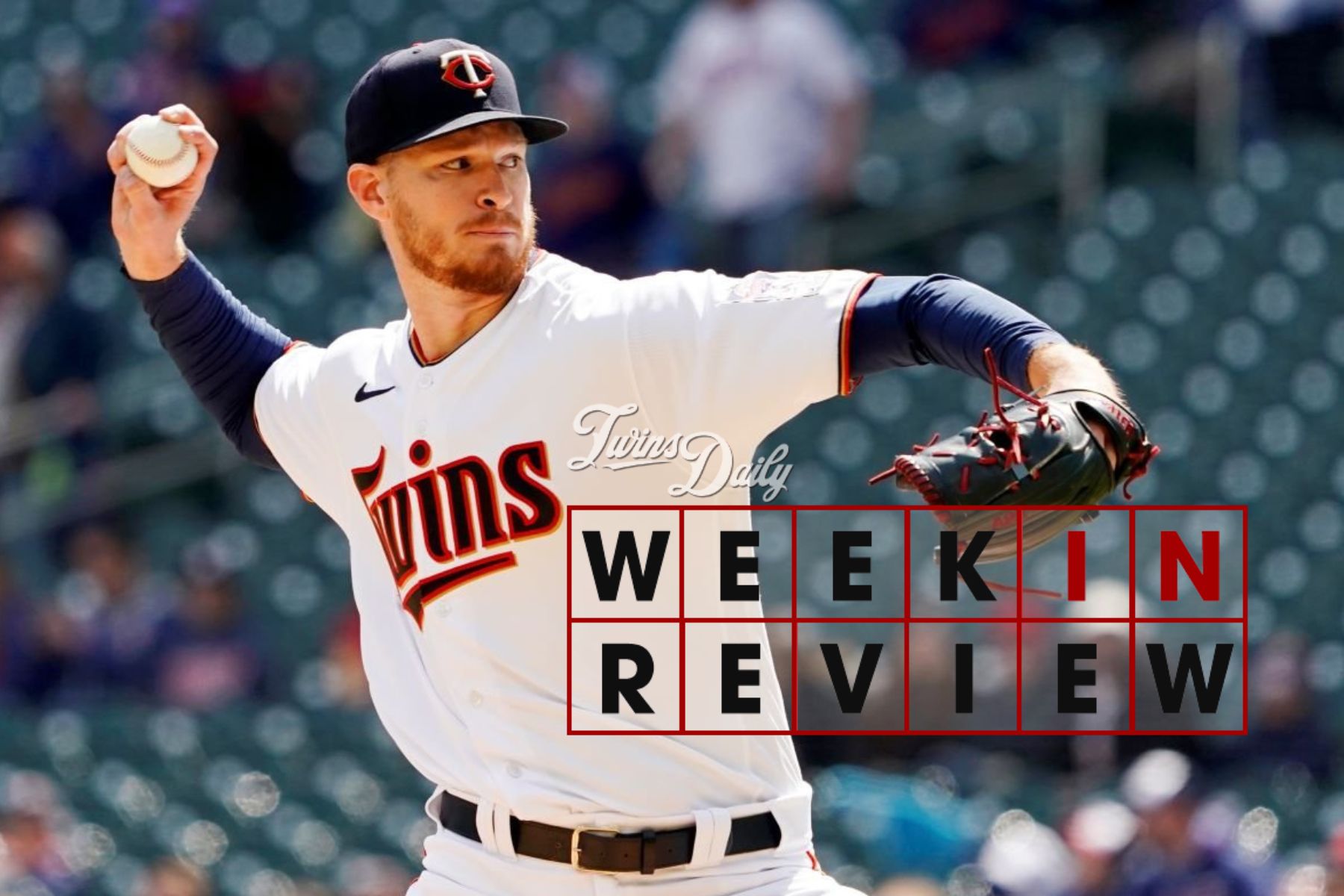
Promising young pitchers worked toward ending their seasons on strong notes and a top prospect debuted as the Twins search for silver linings in playing out the final days of a disappointing season – now guaranteed to conclude with a sub-.500 record. Image courtesy of Nick Wosika-USA TODAY Sports Weekly Snapshot: Mon, 9/26 through Sun, 10/2 *** Record Last Week: 3-3 (Overall: 77-82) Run Differential Last Week: +9 (Overall: +10) Standing: 3rd Place in AL Central (13.0 GB) Last Week's Game Results: Game 154 | MIN 4, CWS 0: Ober Dominates Sox with 10 Ks Game 155 | MIN 8, CWS 4: Heart of the Order Comes Through Game 156 | CWS 4, MIN 3: Late Defensive Lapse Costly in Loss Game 157 | MIN 7, DET 0: Ryan Masterful in Another Shutout Game 158 | DET 3, MIN 2: Missed Opportunities Mount In Motown Game 159 | DET 5, MIN 2: Bats Quiet Again in SWR's Debut NEWS & NOTES Not many of the Twins' injured players are going to make it back this year. But to his credit, Ryan Jeffers did. His rehab and recovery from a fractured thumb to longer than expected, and the catcher position was an offensive black hole in his absence, but ultimately Jeffers did make it back for the end of the season and that means something. Jeffers got plenty of action in his first week back, starting three times and appearing twice as a substitute. He went 3-for-15 with a triple and a couple of RBIs. On Sunday, Jeffers was behind the plate for the major-league debut of pitching prospect Simeon Woods Richardson, who had just completed a stellar season in the minors between Double-A and Triple-A (107.1 IP, 2.77 ERA). Five days removed from his 22nd birthday, the right-hander got the nod for Minnesota's series finale in Detroit, with his hilariously long last name wrapping fully around the No. 78 on his newly minted Twins jersey. It was an altogether strong outing for Woods Richardson, who allowed three runs (two earned) over five innings of work. He settled in pretty nicely after a shaky 29-pitch first inning and showed impressive poise – especially considering he became the youngest pitcher to appear in the majors this year (narrowly edging Ronny Henriquez who was optioned to make room for SWR). HIGHLIGHTS Joe Ryan ended a strong rookie campaign on a high note, with six innings of shutout ball against the Tigers on Friday night. In a season that brought his weaknesses to light – namely, a proneness to homers and vulnerability against high-caliber offenses – Ryan also cemented himself as a quality mid-rotation MLB starter. The flip side to his struggles against postseason teams is that Ryan was sublime when facing lesser lineups. Against sub-.500 competition he went 10-2 with a 2.42 ERA and 10.3 K/9 rate. Let's not act like this doesn't have value. Succeeding to that extent against any major-league lineups is impressive, and in particular Ryan was hyper-effective versus divisional opponents, against whom he finished 10-0 with a 1.23 ERA. He might not be the kind of starter you want toeing the rubber in a postseason game – not in his current state, which isn't to say he can't change that – but at the very least Ryan is proving to be a big regular-season asset. And currently, he is the club's sturdiest long-term asset in the rotation, coming off a mostly healthy and complete season. The same unfortunately cannot be said for Bailey Ober, otherwise he'd be right there in the conversation with Ryan as the stablest building block. Ober's start against Chicago on Tuesday night was just his 10th here in a season that was torpedoed by a major groin injury. But at least the big righty is finishing strong and setting the foundation for a fuller campaign in 2023. Kicking off the final home series at Target Field, Ober delivered the best performance of his young career, striking out 10 over 7 ⅓ shutout innings. The Sox legit had no chance against him as his late release point seemed to be stymying hitters more than ever. When he's been able to take the mound this year, the 27-year-old has been arguably the team's most effective starter, posting a 3.18 ERA, 2.74 FIP and 47-to-10 K/BB ratio with just three home runs allowed in 51 innings. Something to carry forward into next season, even if he won't have much of a workload base to build off in 2023. With Ryan and Ober finishing on high notes, Woods Richardson and Louie Varland getting late-season tastes of the majors, and Josh Winder making it back onto the field for a handful of starts, there are at least some positive youthful signs in a rotation closing out the year with its three top veterans on the injured list. The Twins lineup, meanwhile, is also severely diminished as they play out these final games. But it was nice to see some of the remaining bats step up and carry the load over the past week. Standout performers included Jake Cave (7-for-19, three RBIs) and Matt Wallner (double, homer, and five RBIs). Gio Urshela, who's capping off a solid season with a spectacular September, kept it rolling as the driving force in the offense, finishing the week 10-for-23 with some timely hits in big spots. Urshela has the fifth-best Win Probability Added on the team this year, and since the All-Star break he is second only to Carlos Correa. While the decision of whether or not to tender Urshela a contract in his coming final season of arbitration was once up in the air, his stellar finish probably seals it, although it remains possible the Twins could trade him if there's interest. LOWLIGHTS Nick Gordon's breakthrough season at the plate has been a big positive for the Twins in a year full of negatives. The past week saw him batting third in the lineup several times, albeit failing to live up that billing with a 3-for-20 sample. Regardless, Gordon's ability to hit is no longer really in question. His defensive versatility, on the other hand? The 26-year-old has been pressed into more into more intensive action at second base with Jorge Polanco sidelined, and it hasn't gone very smoothly. Gordon's been very susceptible to misplays at the position, including a costly dropped pop-up on Thursday that led to the decisive run scoring in a 4-3 loss. Looking ahead to next year, some have speculated that Gordon could be considered as a short-term plug at shortstop until Royce Lewis is ready to rejoin the fold. I don't think so. In fact, I genuinely wonder if what they Twins have seen from Gordon as an infielder late in this season will convince them that his future should exclusively be in the outfield. TRENDING STORYLINE At this point, the only remaining Twins storyline of intrigue is Luis Arraez's pursuit of his first batting title – or, as the rest of the baseball world might view it, his quest to deprive Aaron Judge of a triple crown. The Twins helped Arraez's chances over the weekend by sitting him against both of Detroit's left-handed starters. This favorable usage helped the infielder bat .389 (7-for-18) on the week, concluding play on Sunday with a 4-point edge over Judge (.315 to .311) after the latter went 0-for-3 on Sunday. LOOKING AHEAD The Twins have three games remaining, all against right-handed starters, so presumably Arraez will be in there for the entire series against the White Sox, looking to make a closing statement of his own and wrap up the 2022 AL batting title. Judge and the Yankees wrap their season in Texas with three games against the Rangers. MONDAY, 10/3: TWINS @ WHITE SOX – RHP Bailey Ober v. RHP Johnny Cueto TUESDAY, 10/4: TWINS @ WHITE SOX – RHP Josh Winder v. RHP Lucas Giolito WEDNESDAY, 10/5: TWINS @ WHITE SOX – RHP Louie Varland v. RHP Davis Martin View full article
-
I guess that where we seem to differ is that for me, B relates very strongly to A, and A is largely out of their control. Maybe you disagree, but when they've been healthy, I see franchise cornerstone ability in guys like Lewis and Kirilloff. Buxton, Arraez, and Polanco have all been All-Stars in the past few years. Guys like Ober, Winder, Varland, SWR, Canterino ... they look like quality arms to me, but we just haven't been able to see them in extended form yet. Obviously their system took a huge hit this year due to their top position player prospect (Martin) and pitching prospect (Balazovic) oddly tanking and I'm not sure what to make of that, but I'm not ready to write either one off. I'd say the front office is behind schedule on the pitching side but I guess I'm a little more forgiving than most given the timing of the pandemic, which threw every developing pitcher's workload progression out of whack, and the fact that they've shown some results with guys like Duran, Jax, Ryan. I can't stress enough how bad of shape this system was in pitching-wise when the new regime came aboard.
- 54 replies
-
- 1
-
-
- byron buxton
- jorge polanco
- (and 3 more)
-
If you don't build and succeed around your own top draft picks turned top prospects, then what are you going to do? There is no path to contention unless you play in Los Angeles or New York (and even the Dodgers/Yankees are built primarily upon internally developed talent). The Twins can't just compile a championship roster out of free agency. It is not possible in practical terms. They also can't trade for a bunch of value when their best players have the injury issues to which you allude. So what do you suggest if not to get behind the core(s) and hope for better returns?
- 54 replies
-
- 4
-
-
- byron buxton
- jorge polanco
- (and 3 more)
-
I would just like to express my appreciation for this ?
- 54 replies
-
- 2
-
-
- byron buxton
- jorge polanco
- (and 3 more)
-
I can only speak for myself but I don't see this "constant stream," here or elsewhere. I mostly see criticism of the front office as this lost season plays out, which is warranted. Mostly I'm trying to add some counterbalance and perspective. I liked most of the moves they made, when they made them, so I'm not gonna sit here and whine about them in hindsight. If you were expecting more from Correa or Gray, you probably weren't being realistic. Frankly if you were expecting much from the pitching staff, you probably weren't being realistic. Building a great staff out of an essentially empty cupboard is a lot to ask. If the Twins were going to be good, it was gonna need to be driven largely by the 5 guys I wrote about. They came up short and need to be shouldering this season as much as anyone. That's something I don't see people talking enough about. There is 10X more complaining about the Twins signing Dylan Bundy, which had a VASTLY smaller effect on the team's failure than 5 core "everyday" players doing NOTHING in the second half.
- 54 replies
-
- 9
-
-
- byron buxton
- jorge polanco
- (and 3 more)
-
Rotten at the Core: 2022 Twins Were Let Down by Their Own Nucleus
Nick Nelson posted an article in Twins
 So: the front office. They've had more than their fair share of missteps, and it's natural to focus on underwhelming acquisitions like Dylan Bundy, Chris Archer, and Emilio Pagán. But there's a dirty little secret: their two biggest moves of the offseason paid off handsomely. Minnesota traded its best young pitching prospect for a frontline starter in Sonny Gray to stabilize the top of the rotation in the absence of José Berríos. Gray, despite missing time on a few occasions, came through with an excellent season, posting a 3.08 ERA over 119.2 IP while leading all Twins pitchers in fWAR (2.4). By investing modestly in pitching and clearing out Josh Donaldon's salary, the Twins were able to acquire the top free agent on the market late in the offseason. That move also has been successful – Carlos Correa has put together a customarily excellent year, leading the team overall in fWAR (4.1) while slashing .289/.365/.468 through 128 games. True to his rep, Correa's been stepping up his production here in the stretch run. The idea was that those contributions would be meaningful because he'd be melding with a greater veteran core to lead the charge for a contending team. Correa wasn't supposed to carry the load single-handedly, as he mostly has been throughout the second half. He was supposed to be combining powers with the likes of Byron Buxton, Luis Arraez, Jorge Polanco, Max Kepler and Ryan Jeffers. Among position players who are still here, those five led all Twins in fWAR between 2020 and 2021. They are homegrown talents the organization has been cultivating for many years. Three are under long-term contracts – the only extensions this front office has handed out to inherited players from the previous regime. All are in the heart of their prototypical primes, with ages ranging from 25 to 29. These were the building blocks. They've earned that standing. And you know what? The plan was working for a while. As recently as July 13th, the Twins were eight games above .500 at 49-41, and 4 ½ games up in the AL Central. By that point, the five players mentioned above had combined to be worth 10.3 fWAR, and the first two – Buxton and Arraez – were days away from appearing in their first All-Star Game. Since then, the Twins have gone 25-38, with all five combining for 1.6 fWAR in well over a third of the season. That includes 1.2 fWAR from Buxton, who somehow managed to put up .275/.370/.513 in 23 more games before succumbing to his knee and hip injuries – meaning the other four franchise staples have collectively been barely above replacement level over a prolonged stretch of the season where the team experienced a 15-game freefall in the standings. What more is there to say? Yes, injuries are the main headline of this season and they certainly played a big role in the drop-off from this group, but all that aside: the core came up woefully short when it counted most. Again. So the question is: where do we go from here? The front office's strategy was structured around supplementing this tenured nucleus to make a push in 2022-23, while waiting for the next wave – Royce Lewis, Alex Kirilloff, Austin Martin, Brooks Lee – to hopefully take center stage. But none of those players can really be counted on heading into 2023, for various reasons, so the Twins might need to consider making some short-term adjustments. Max Kepler stands out as the clearest candidate to be displanted. He presents quite the conundrum, under contract for one more year at $8.5 million (with a $10 million team option for 2024). On the one hand, he was clearly one of the single biggest culprits in the Twins' implosion, slashing a Sandy Leon-esque .179/.241/.226 since the All-Star break with a negative WPA. Despite showing flashes of greatness at times, Kepler has made a habit out of not showing up for the Twins when they need him. He's a career .056 hitter in the playoffs, with one hit in 18 at-bats. He's been at his absolute worst this year when the team has been forced to rely on him heavily amidst a barrage of injuries. On the other hand, Kepler still has undeniably intriguing traits. He remains an elite defensive right fielder. Before completely unraveling in the second half, he appeared to be on his way to an excellent year, pacing the team in fWAR with 1.6 for the first two months. It's reasonable to think that the new defensive shifting limitations will be positive for his hitting results. And even here in what's clearly been the worst season of his career from a production standpoint ... Kepler's measurables via Statcast are still really, really good: Personally I feel ready to move on from Kepler despite all of the above, especially with Kirilloff, Trevor Larnach, and Matt Wallner all on hand as promising young RF options. The $8.5 million owed to Kepler could be better used elsewhere, and perhaps he'd benefit from a change of scenery as his game stagnates here in Minnesota. The redeeming qualities of his profile make it likely that some team will be open to taking on Kepler and his relatively favorable contract. The Twins might actually be able to get some value in return, although the 29-year-old's bottomed-out stock position doesn't help. Odds of Kepler being traded this offseason could probably be set at around 50:50. Everyone else is much less likely to move. The Twins could possibly find a suitor for Arraez or Polanco. Their contractual situations are even more team-friendly than Kepler's – Arraez has three years of arbitration ahead, while Polanco is owed $7.5 million next year followed by two team options. But to me, the backup options behind both of them are less compelling, and their impact is less replaceable than Kepler's. I don't find my faith in either shaken to the same degree. Jeffers won't be traded, since he's the sole major-league catching depth in the organization. Where he's concerned, the key decision – as Gary Sánchez heads to free agency – is whether the Twins should remain committed to him as their 1A catcher, seeking out a León-esque caddy for the minor timeshare. I'm not sure Jeffers has shown the ability or durability to be viewed as a cornerstone at the position, and at age 25 it's hard to project a lot of additional upside. The Twins will have a lot of spending money available this offseason if they're unable to retain Carlos Correa, with no especially obvious places to spend it. That is, unless they decide to set their sights on top free agent catcher Willson Contreras and completely reshape their future behind the plate. These are the kinds of pivots that need to be on the table as the Twins re-evaluate their fundamental makeup of a roster that has now failed to get it done in back-to-back seasons.
- 54 comments
-
- 7
-
-
- byron buxton
- jorge polanco
- (and 3 more)
-
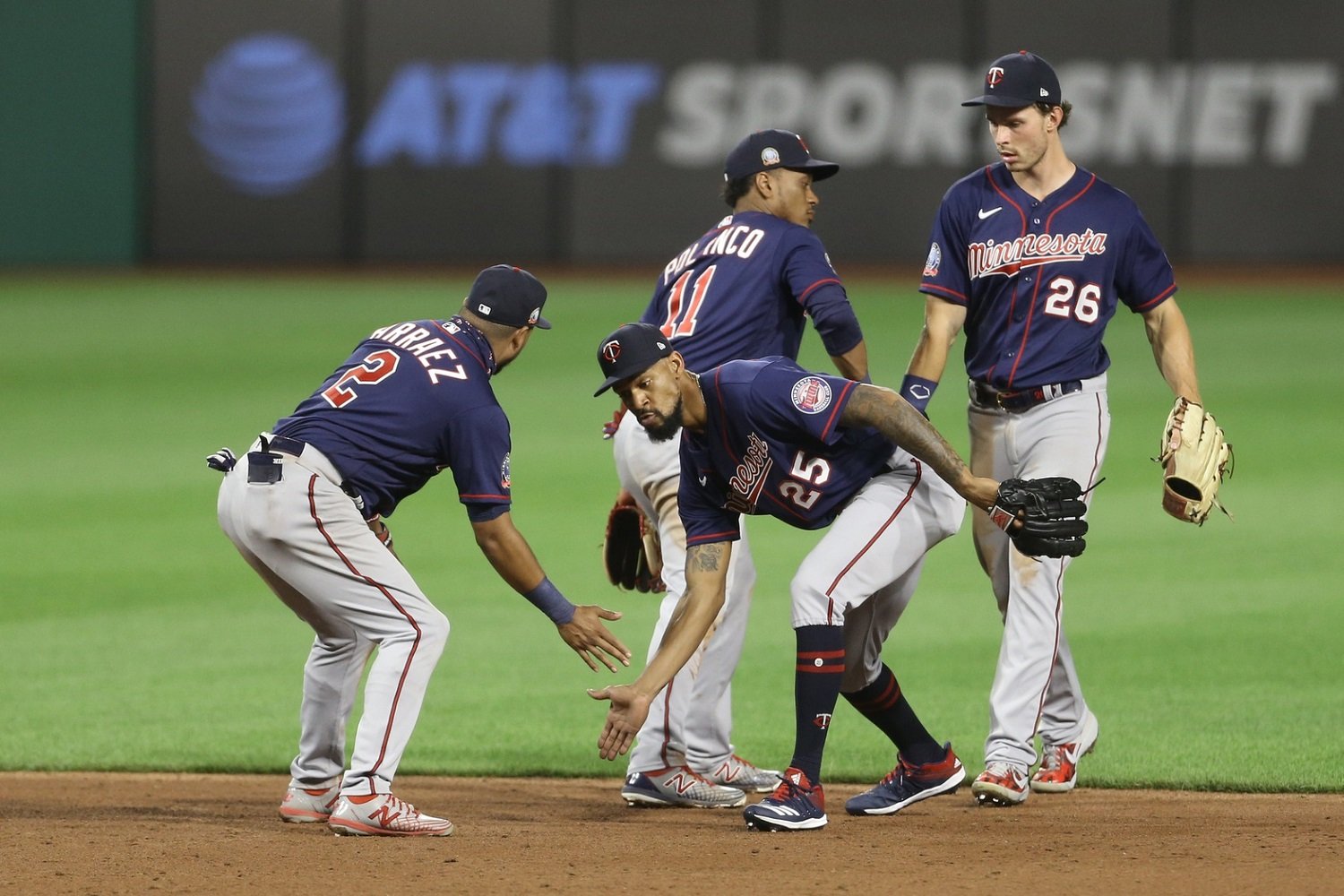
You can't do it without your core. No amount of managerial savvy or front office maneuvering can offset the devastating impact of a foundational core that simply doesn't show up. That will go down as the lasting epitaph for the 2022 Minnesota Twins, who were officially eliminated from division contention over the weekend. Image courtesy of Charles LeClaire, USA Today Sports So: the front office. They've had more than their fair share of missteps, and it's natural to focus on underwhelming acquisitions like Dylan Bundy, Chris Archer, and Emilio Pagán. But there's a dirty little secret: their two biggest moves of the offseason paid off handsomely. Minnesota traded its best young pitching prospect for a frontline starter in Sonny Gray to stabilize the top of the rotation in the absence of José Berríos. Gray, despite missing time on a few occasions, came through with an excellent season, posting a 3.08 ERA over 119.2 IP while leading all Twins pitchers in fWAR (2.4). By investing modestly in pitching and clearing out Josh Donaldon's salary, the Twins were able to acquire the top free agent on the market late in the offseason. That move also has been successful – Carlos Correa has put together a customarily excellent year, leading the team overall in fWAR (4.1) while slashing .289/.365/.468 through 128 games. True to his rep, Correa's been stepping up his production here in the stretch run. The idea was that those contributions would be meaningful because he'd be melding with a greater veteran core to lead the charge for a contending team. Correa wasn't supposed to carry the load single-handedly, as he mostly has been throughout the second half. He was supposed to be combining powers with the likes of Byron Buxton, Luis Arraez, Jorge Polanco, Max Kepler and Ryan Jeffers. Among position players who are still here, those five led all Twins in fWAR between 2020 and 2021. They are homegrown talents the organization has been cultivating for many years. Three are under long-term contracts – the only extensions this front office has handed out to inherited players from the previous regime. All are in the heart of their prototypical primes, with ages ranging from 25 to 29. These were the building blocks. They've earned that standing. And you know what? The plan was working for a while. As recently as July 13th, the Twins were eight games above .500 at 49-41, and 4 ½ games up in the AL Central. By that point, the five players mentioned above had combined to be worth 10.3 fWAR, and the first two – Buxton and Arraez – were days away from appearing in their first All-Star Game. Since then, the Twins have gone 25-38, with all five combining for 1.6 fWAR in well over a third of the season. That includes 1.2 fWAR from Buxton, who somehow managed to put up .275/.370/.513 in 23 more games before succumbing to his knee and hip injuries – meaning the other four franchise staples have collectively been barely above replacement level over a prolonged stretch of the season where the team experienced a 15-game freefall in the standings. What more is there to say? Yes, injuries are the main headline of this season and they certainly played a big role in the drop-off from this group, but all that aside: the core came up woefully short when it counted most. Again. So the question is: where do we go from here? The front office's strategy was structured around supplementing this tenured nucleus to make a push in 2022-23, while waiting for the next wave – Royce Lewis, Alex Kirilloff, Austin Martin, Brooks Lee – to hopefully take center stage. But none of those players can really be counted on heading into 2023, for various reasons, so the Twins might need to consider making some short-term adjustments. Max Kepler stands out as the clearest candidate to be displanted. He presents quite the conundrum, under contract for one more year at $8.5 million (with a $10 million team option for 2024). On the one hand, he was clearly one of the single biggest culprits in the Twins' implosion, slashing a Sandy Leon-esque .179/.241/.226 since the All-Star break with a negative WPA. Despite showing flashes of greatness at times, Kepler has made a habit out of not showing up for the Twins when they need him. He's a career .056 hitter in the playoffs, with one hit in 18 at-bats. He's been at his absolute worst this year when the team has been forced to rely on him heavily amidst a barrage of injuries. On the other hand, Kepler still has undeniably intriguing traits. He remains an elite defensive right fielder. Before completely unraveling in the second half, he appeared to be on his way to an excellent year, pacing the team in fWAR with 1.6 for the first two months. It's reasonable to think that the new defensive shifting limitations will be positive for his hitting results. And even here in what's clearly been the worst season of his career from a production standpoint ... Kepler's measurables via Statcast are still really, really good: Personally I feel ready to move on from Kepler despite all of the above, especially with Kirilloff, Trevor Larnach, and Matt Wallner all on hand as promising young RF options. The $8.5 million owed to Kepler could be better used elsewhere, and perhaps he'd benefit from a change of scenery as his game stagnates here in Minnesota. The redeeming qualities of his profile make it likely that some team will be open to taking on Kepler and his relatively favorable contract. The Twins might actually be able to get some value in return, although the 29-year-old's bottomed-out stock position doesn't help. Odds of Kepler being traded this offseason could probably be set at around 50:50. Everyone else is much less likely to move. The Twins could possibly find a suitor for Arraez or Polanco. Their contractual situations are even more team-friendly than Kepler's – Arraez has three years of arbitration ahead, while Polanco is owed $7.5 million next year followed by two team options. But to me, the backup options behind both of them are less compelling, and their impact is less replaceable than Kepler's. I don't find my faith in either shaken to the same degree. Jeffers won't be traded, since he's the sole major-league catching depth in the organization. Where he's concerned, the key decision – as Gary Sánchez heads to free agency – is whether the Twins should remain committed to him as their 1A catcher, seeking out a León-esque caddy for the minor timeshare. I'm not sure Jeffers has shown the ability or durability to be viewed as a cornerstone at the position, and at age 25 it's hard to project a lot of additional upside. The Twins will have a lot of spending money available this offseason if they're unable to retain Carlos Correa, with no especially obvious places to spend it. That is, unless they decide to set their sights on top free agent catcher Willson Contreras and completely reshape their future behind the plate. These are the kinds of pivots that need to be on the table as the Twins re-evaluate their fundamental makeup of a roster that has now failed to get it done in back-to-back seasons. View full article
- 54 replies
-
- 1
-
-
- byron buxton
- jorge polanco
- (and 3 more)
-
Note: I updated the story to remove the erroneous reference to Lewis hugging Hamilton. Thank you to a reader for pointing it out! When you don't have an editor it is nice to have an audience that can quickly fact-check you. Anyway, point still stands. Lewis is that guy.
-
When you talk to people about Royce Lewis and what makes him special, you will invariably hear about his intangible character and leadership qualities. While difficult to quantify, there is undoubtedly value in having the 'it' factor. Even in another season wrecked by injury, the former No. 1 overall pick is finding ways to show up. Image courtesy of Jeffrey Becker, USA Today Sports In a parallel dimension of the multiverse – where there was no pandemic-ruined season, no ACL tear suffered on a freak offseason incident, no ACL re-tear suffered on an outfield wall collision – Royce Lewis would already be an established MLB player. He finished 2019 in Double-A before all that went down. He's a big-league talent, as we saw in a limited glimpse this year. Alas, just as he was getting going, calamity struck and Lewis had another season wiped out. He never pouted about it. And here as this lost season winds down, it's been noticeable to me how present he's been in the dugout. Whenever the camera flashes down in that direction during a game, you seem to see Lewis – with his whole 12 games of major-league experience – leaning over the railing, smiling, engaged in a conversation with some veteran teammate he's barely shared the field with. Somehow it's like he's been there for years. He's a natural. But as we discussed, Lewis hasn't been there for years. He's been sidetracked and derailed at every turn. So he can relate to anyone trying to savor that moment of triumphant accomplishment. The trials he's gone through give him a unique empathy and relatability to so many players throughout this organization, which is a strength he shares with the manager. I tend to think Lewis is gaining a lot of value from spending so much time around the big-leaguers and soaking in the experience. It will help prepare him for a role he's set to inherit that seems equally unfilled as starting shortstop: the more energetic and active clubhouse leader to counterbalance Byron Buxton's quiet confidence. A genuinely humble former first overall pick who's gained the perspective of going through hell injury-wise, and seems equally comfortable talking to an MVP-caliber veteran or a fringy minor-leaguer. That's Royce Lewis. He can become the connective glue of a clubhouse that figures to soon begin transitioning from a veteran core featuring the likes of Jorge Polanco and Max Kepler to an emerging young wave headlined by Lewis as well as fellow former first-rounders Alex Kirilloff, Trevor Larnach, Brooks Lee, and Austin Martin. The timing of his knee rehab, which will carry over into the 2023 season, makes things a bit challenging, but the Twins would be silly not to make Lewis a central part of their plan. With a central locker location in the clubhouse. [EDITOR'S NOTE; This story was updated to remove a mistaken reference to Royce Lewis and Caleb Hamilton embracing in the dugout. Turns out they just look similar from behind.] View full article
-
In Another Lost Season, Royce Lewis Is Reminding Us Who He Is
Nick Nelson posted an article in Twins
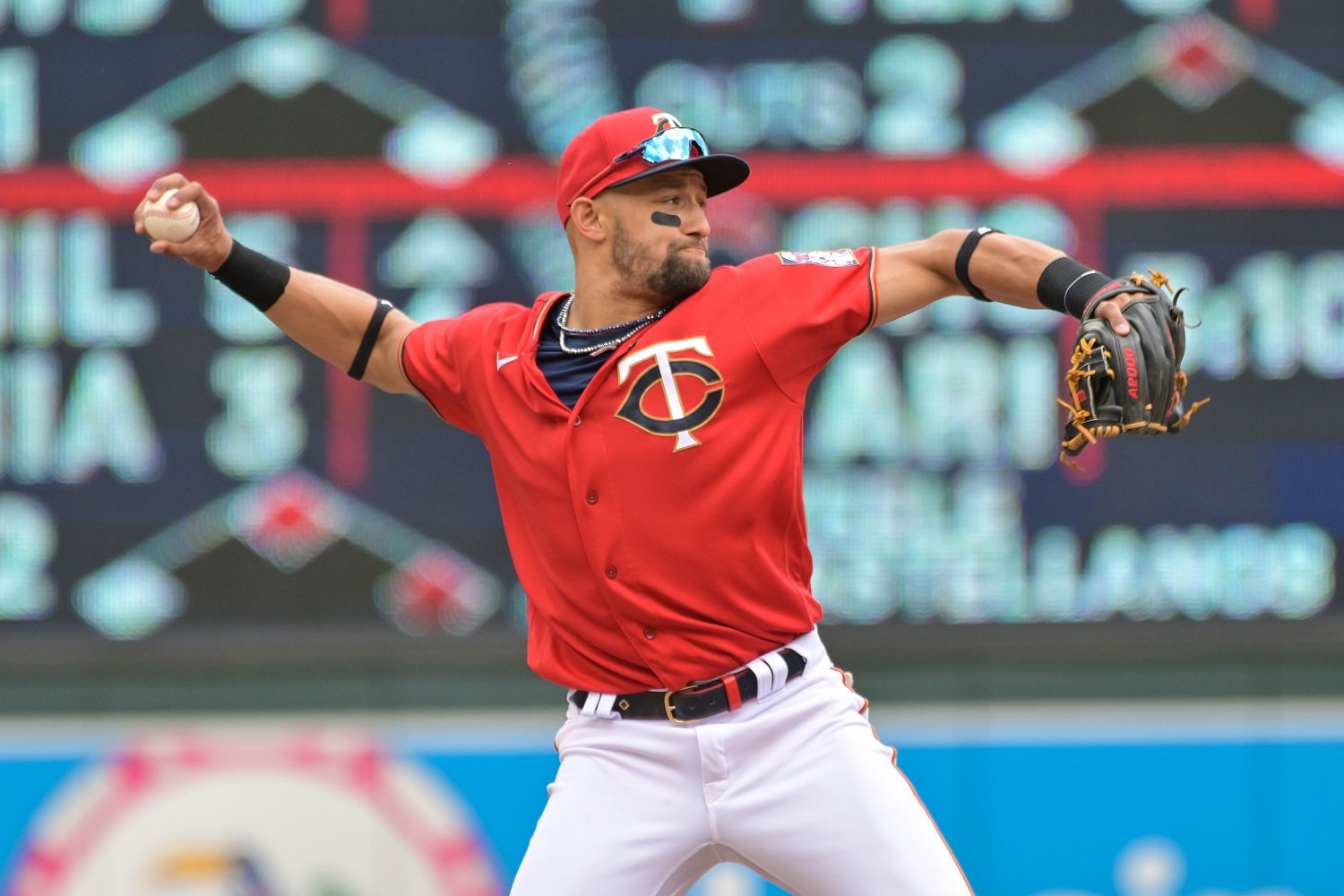 In a parallel dimension of the multiverse – where there was no pandemic-ruined season, no ACL tear suffered on a freak offseason incident, no ACL re-tear suffered on an outfield wall collision – Royce Lewis would already be an established MLB player. He finished 2019 in Double-A before all that went down. He's a big-league talent, as we saw in a limited glimpse this year. Alas, just as he was getting going, calamity struck and Lewis had another season wiped out. He never pouted about it. And here as this lost season winds down, it's been noticeable to me how present he's been in the dugout. Whenever the camera flashes down in that direction during a game, you seem to see Lewis – with his whole 12 games of major-league experience – leaning over the railing, smiling, engaged in a conversation with some veteran teammate he's barely shared the field with. Somehow it's like he's been there for years. He's a natural. But as we discussed, Lewis hasn't been there for years. He's been sidetracked and derailed at every turn. So he can relate to anyone trying to savor that moment of triumphant accomplishment. The trials he's gone through give him a unique empathy and relatability to so many players throughout this organization, which is a strength he shares with the manager. I tend to think Lewis is gaining a lot of value from spending so much time around the big-leaguers and soaking in the experience. It will help prepare him for a role he's set to inherit that seems equally unfilled as starting shortstop: the more energetic and active clubhouse leader to counterbalance Byron Buxton's quiet confidence. A genuinely humble former first overall pick who's gained the perspective of going through hell injury-wise, and seems equally comfortable talking to an MVP-caliber veteran or a fringy minor-leaguer. That's Royce Lewis. He can become the connective glue of a clubhouse that figures to soon begin transitioning from a veteran core featuring the likes of Jorge Polanco and Max Kepler to an emerging young wave headlined by Lewis as well as fellow former first-rounders Alex Kirilloff, Trevor Larnach, Brooks Lee, and Austin Martin. The timing of his knee rehab, which will carry over into the 2023 season, makes things a bit challenging, but the Twins would be silly not to make Lewis a central part of their plan. With a central locker location in the clubhouse. [EDITOR'S NOTE; This story was updated to remove a mistaken reference to Royce Lewis and Caleb Hamilton embracing in the dugout. Turns out they just look similar from behind.]
 -
 Weekly Snapshot: Mon, 9/19 through Sun, 9/25 *** Record Last Week: 1-6 (Overall: 74-79) Run Differential Last Week: -19 (Overall: -1) Standing: 3rd Place in AL Central (12.0 GB) Last Week's Game Results: Game 147 | CLE 11, MIN 4: Guardians Humiliate Twins in Final Match-up Game 148 | KC 5, MIN 4: Bundy Bad, Bats Fizzle After Strong Start Game 149 | KC 5, MIN 2: Offense Lifeless Outside of Wallner's 2 RBIs Game 150 | KC 4, MIN 1: Lifeless Twins Swept by Lowly Royals Game 151 | LAA 4, MIN 2: Twins Can't Overcome Ohtani, Fall to Angels Game 152 | MIN 8, LAA 4: Losing Streak Snapped Behind Bats, Bullpen Game 153 | LAA 10, MiN 3: Halos Pull Away Late to Take Series NEWS & NOTES With contention now firmly out of the picture following a dozen-game slide in the standings over the past three weeks – from tied for first on September 4th to 12 games out on September 25th – the Twins are starting to pack it in and make preparations for the offseason and beyond. Step 1: taking action on Byron Buxton's broken-down body. The team announced on Friday that Buxton will undergo arthroscopic surgery to clean up scar tissue in the right knee that's bothered him for nearly the entire season. The hope is that this procedure, along with several months to rest his ailing hip, will put Buxton in a solid place physically heading into next spring, so he can take another shot at getting through a full season. He finishes 2022 with 92 games played and 382 plate appearances, both the second-highest totals of his career. He also posted 4+ Wins Above Replacement for a second straight year. Another solid yet ultimately unfulfilling campaign. Elsewhere... Sonny Gray went on the injured list with a hamstring strain, which drained his velocity in a brutal Monday start against Cleveland where he allowed four runs in two innings. Very reminiscent to the final start in Chicago from Tyler Mahle (also now confirmed out for the season). Louie Varland was recalled to join the rotation again, probably for the rest of the year. Trevor Megill was activated from COVID IL. Drew Strotman, designated for assignment last weekend, was claimed off waivers by the Texas Rangers. Dereck Rodriguez was outrighted to the Saints. Aaron Sanchez was also DFA'ed. HIGHLIGHTS The only real highlight of this miserable stretch of play was Matt Wallner, who is taking advantage of his late-season audition by showing what he can do with the stick. The 24-year-old found himself in the starting lineup for five of six games and delivered four hits with two doubles, two RBIs, and two walks. On Tuesday in Kansas City, Wallner provided the totality of Minnesota's meager offensive output, driving in two runs with three hits on the way to a 5-2 loss. He's making hard contact and showing the pop that helped produce 27 homers and a .542 slugging percentage between Double-A and Triple-A this season. An especially impressive aspect of Wallner's initial play was how he was keeping the whiffs in check, with only eight strikeouts in his first seven games, but on Friday and Saturday against Los Angeles he went 0-for-7 with six Ks. Growing pains for the young lefty slugger – but that's what these meaningless final games are for. LOWLIGHTS No, the pitching has not been especially good. Losing Gray from an already depleted staff only further diminishes a group that's been doing little to help the cause. Jorge López's complete meltdown on Monday (0.2 IP, 4 H, 2 BB, 4 ER) was beyond discouraging and concerning. But let's be real: the offense is primarily responsible for dragging this team into a humiliating abyss. They scored more than four runs in a game just once all all week, and have done so five times in the entire month of September. Yeah, it hurts to be forced to use Jermaine Palacios – who is 0-for-33 with 15 strikeouts in the month of September – semi-regularly. And obviously it hurts to be without the likes of Byron Buxton and Jorge Polanco. But there are also key players who had been productive and now are just fading away completely. José Miranda went 6-for-25, all of his hits singles, with no RBIs. He is slashing just .261/.328/.384 with five homers in 52 games since the start of August. When Miranda first arrived on the scene, he was an ignitor and catalyst for the Twins offense, mashing homers with frequency and driving in runs reliably. That has since gone completely amiss, though he's continued to bat third or fourth almost everyday (and leadoff on Sunday!). Another underrated culprit in the team's demise, unfortunately: Luis Arraez. His once-firm grasp on the AL batting race has given way and he's now fallen to third, paving way for an Aaron Judge triple crown bid. The hits just continue to not fall for Arraez, who has only two multi-hit games in his past 12 and is batting .237/.256/.237 during this span. That can be how it goes when you don't have any power – his hard-hit rate ranks in the bottom 7% of all MLB hitters – and, as of late, no patience. Arraez has drawn only one walk in the entire month of September, where he has a .302 on-base percentage. His All-Star first half has been followed by a sub-mediocre second half – since the break, Arraez has been worth 0.3 fWAR in 54 games. Although, again, it should be noted that he's clearly playing nowhere near 100% as a hamstring issue hobbles him continuously. He has the second-worst WPA on the team since the start of August. (Miranda is fourth-worst, with Palacios and Mark Contreras occupying the other two spots. Two of those names you'd probably expect.) TRENDING STORYLINE With several players in the late stages of rehab here as this lost season draws to a close, the team must try to balance the value of getting them back on the field to finish on a positive note, versus the value of simply shutting them down and letting them get early starts on their offseasons. They've already chosen the latter path with Buxton and it seems they're inclined to take the same route with Polanco, although he hasn't officially been ruled out. Max Kepler, Ryan Jeffers and Trevor Larnach all have a decent chance to return in the coming week, for whatever that is worth. LOOKING AHEAD There is not an ounce of competitive drama left to extract from this season – even the White Sox, who Twins might have been motivated to spoil in six remaining match-ups, have already taken themselves out of contention. With that said, this is our last full week of Twins baseball until 2023, so try to enjoy these remaining moments. I know I'll be getting out to Target Field one last time for during the final home series against the White Sox, which will feature a trio of internally developed Twins starters who figure to be key parts of next year's plan. TUESDAY, 9/27: WHITE SOX @ TWINS – RHP Lance Lynn v. RHP Bailey Ober WEDNESDAY, 9/28: WHITE SOX @ TWINS – RHP Johnny Cueto v. RHP Josh Winder THURSDAY, 9/29: WHITE SOX @ TWINS – RHP Lucas Giolito vs RHP Louie Varland FRIDAY, 9/30: TWINS @ TIGERS – RHP Joe Ryan v. RHP Drew Hutchison SATURDAY, 10/1: TWINS @ TIGERS – RHP Dylan Bundy v. LHP Tyler Alexander SUNDAY, 10/2: TWINS @ TIGERS – RHP Bailey Ober v. LHP Joey Wentz
- 17 comments
-
- 3
-

-
-
- matt wallner
- luis arraez
- (and 1 more)
-
The book is closed on Minnesota's 2022 postseason chances, and the Twins are sure playing like it. This past week saw an injury-ravaged, undermanned, seemingly disinterested team going through the motions to play out a soul-crushing second half of a sunken season. Image courtesy of Jay Biggerstaff-USA TODAY Sports Weekly Snapshot: Mon, 9/19 through Sun, 9/25 *** Record Last Week: 1-6 (Overall: 74-79) Run Differential Last Week: -19 (Overall: -1) Standing: 3rd Place in AL Central (12.0 GB) Last Week's Game Results: Game 147 | CLE 11, MIN 4: Guardians Humiliate Twins in Final Match-up Game 148 | KC 5, MIN 4: Bundy Bad, Bats Fizzle After Strong Start Game 149 | KC 5, MIN 2: Offense Lifeless Outside of Wallner's 2 RBIs Game 150 | KC 4, MIN 1: Lifeless Twins Swept by Lowly Royals Game 151 | LAA 4, MIN 2: Twins Can't Overcome Ohtani, Fall to Angels Game 152 | MIN 8, LAA 4: Losing Streak Snapped Behind Bats, Bullpen Game 153 | LAA 10, MiN 3: Halos Pull Away Late to Take Series NEWS & NOTES With contention now firmly out of the picture following a dozen-game slide in the standings over the past three weeks – from tied for first on September 4th to 12 games out on September 25th – the Twins are starting to pack it in and make preparations for the offseason and beyond. Step 1: taking action on Byron Buxton's broken-down body. The team announced on Friday that Buxton will undergo arthroscopic surgery to clean up scar tissue in the right knee that's bothered him for nearly the entire season. The hope is that this procedure, along with several months to rest his ailing hip, will put Buxton in a solid place physically heading into next spring, so he can take another shot at getting through a full season. He finishes 2022 with 92 games played and 382 plate appearances, both the second-highest totals of his career. He also posted 4+ Wins Above Replacement for a second straight year. Another solid yet ultimately unfulfilling campaign. Elsewhere... Sonny Gray went on the injured list with a hamstring strain, which drained his velocity in a brutal Monday start against Cleveland where he allowed four runs in two innings. Very reminiscent to the final start in Chicago from Tyler Mahle (also now confirmed out for the season). Louie Varland was recalled to join the rotation again, probably for the rest of the year. Trevor Megill was activated from COVID IL. Drew Strotman, designated for assignment last weekend, was claimed off waivers by the Texas Rangers. Dereck Rodriguez was outrighted to the Saints. Aaron Sanchez was also DFA'ed. HIGHLIGHTS The only real highlight of this miserable stretch of play was Matt Wallner, who is taking advantage of his late-season audition by showing what he can do with the stick. The 24-year-old found himself in the starting lineup for five of six games and delivered four hits with two doubles, two RBIs, and two walks. On Tuesday in Kansas City, Wallner provided the totality of Minnesota's meager offensive output, driving in two runs with three hits on the way to a 5-2 loss. He's making hard contact and showing the pop that helped produce 27 homers and a .542 slugging percentage between Double-A and Triple-A this season. An especially impressive aspect of Wallner's initial play was how he was keeping the whiffs in check, with only eight strikeouts in his first seven games, but on Friday and Saturday against Los Angeles he went 0-for-7 with six Ks. Growing pains for the young lefty slugger – but that's what these meaningless final games are for. LOWLIGHTS No, the pitching has not been especially good. Losing Gray from an already depleted staff only further diminishes a group that's been doing little to help the cause. Jorge López's complete meltdown on Monday (0.2 IP, 4 H, 2 BB, 4 ER) was beyond discouraging and concerning. But let's be real: the offense is primarily responsible for dragging this team into a humiliating abyss. They scored more than four runs in a game just once all all week, and have done so five times in the entire month of September. Yeah, it hurts to be forced to use Jermaine Palacios – who is 0-for-33 with 15 strikeouts in the month of September – semi-regularly. And obviously it hurts to be without the likes of Byron Buxton and Jorge Polanco. But there are also key players who had been productive and now are just fading away completely. José Miranda went 6-for-25, all of his hits singles, with no RBIs. He is slashing just .261/.328/.384 with five homers in 52 games since the start of August. When Miranda first arrived on the scene, he was an ignitor and catalyst for the Twins offense, mashing homers with frequency and driving in runs reliably. That has since gone completely amiss, though he's continued to bat third or fourth almost everyday (and leadoff on Sunday!). Another underrated culprit in the team's demise, unfortunately: Luis Arraez. His once-firm grasp on the AL batting race has given way and he's now fallen to third, paving way for an Aaron Judge triple crown bid. The hits just continue to not fall for Arraez, who has only two multi-hit games in his past 12 and is batting .237/.256/.237 during this span. That can be how it goes when you don't have any power – his hard-hit rate ranks in the bottom 7% of all MLB hitters – and, as of late, no patience. Arraez has drawn only one walk in the entire month of September, where he has a .302 on-base percentage. His All-Star first half has been followed by a sub-mediocre second half – since the break, Arraez has been worth 0.3 fWAR in 54 games. Although, again, it should be noted that he's clearly playing nowhere near 100% as a hamstring issue hobbles him continuously. He has the second-worst WPA on the team since the start of August. (Miranda is fourth-worst, with Palacios and Mark Contreras occupying the other two spots. Two of those names you'd probably expect.) TRENDING STORYLINE With several players in the late stages of rehab here as this lost season draws to a close, the team must try to balance the value of getting them back on the field to finish on a positive note, versus the value of simply shutting them down and letting them get early starts on their offseasons. They've already chosen the latter path with Buxton and it seems they're inclined to take the same route with Polanco, although he hasn't officially been ruled out. Max Kepler, Ryan Jeffers and Trevor Larnach all have a decent chance to return in the coming week, for whatever that is worth. LOOKING AHEAD There is not an ounce of competitive drama left to extract from this season – even the White Sox, who Twins might have been motivated to spoil in six remaining match-ups, have already taken themselves out of contention. With that said, this is our last full week of Twins baseball until 2023, so try to enjoy these remaining moments. I know I'll be getting out to Target Field one last time for during the final home series against the White Sox, which will feature a trio of internally developed Twins starters who figure to be key parts of next year's plan. TUESDAY, 9/27: WHITE SOX @ TWINS – RHP Lance Lynn v. RHP Bailey Ober WEDNESDAY, 9/28: WHITE SOX @ TWINS – RHP Johnny Cueto v. RHP Josh Winder THURSDAY, 9/29: WHITE SOX @ TWINS – RHP Lucas Giolito vs RHP Louie Varland FRIDAY, 9/30: TWINS @ TIGERS – RHP Joe Ryan v. RHP Drew Hutchison SATURDAY, 10/1: TWINS @ TIGERS – RHP Dylan Bundy v. LHP Tyler Alexander SUNDAY, 10/2: TWINS @ TIGERS – RHP Bailey Ober v. LHP Joey Wentz View full article
- 17 replies
-
- 1
-
-
- matt wallner
- luis arraez
- (and 1 more)
-
Seems doubtful since they weren't really doing it before this year (and seemingly turned to it as a response to nobody wanting to come here). Starting pitchers have averaged more innings per start under Rocco than the typical MLB SP during his tenure.
-
Both have a negative Win Probability Added and significantly below-average ERA so that seems like wishful thinking to me. More realistically, if either one was here (or both) and playing like they have, everyone would be complaining that the front office wasn't proactive in moving them.
-
Takes two to tango. I feel like it's been made pretty clear that free agent pitchers generally don't want to come here, so that's not really an avenue for "building the pitching staff." Not sure it realistically is for any mid-market team? If they used the Correa money on pitching, would their outcome have really been any different? Again: signing him (to become their most valuable player) and relying on the internal arms was a measured risk, and a reasonable one. Then they got basically nothing from Paddack, Ober, Winder, Balazovic, or Canterino. Traded for Mahle to alleviate the shortage and got basically nothing from him.
-
With an upgrade atop the rotation shaping up as a clear need at the trade deadline, the division leaders targeted and acquired a frontline starter. They gave up a hefty prospect package to gain extended control, but now this big trade is in danger of blowing up completely after underwhelming performance gave way to a mysterious shoulder injury. Oh, did you think I was referencing Tyler Mahle? No, I'm talking about Frankie Montas. Image courtesy of Jeffrey Becker and Bruce Kluckhohn, USA Today Frankie Montas was one of the hottest names on the market at the trade deadline, and was known to be pursued by Minnesota last offseason. The Yankees acquired him alongside reliever Lou Trivino in exchange for four prospects on August 1st. The results have not been as hoped. Montas posted a 6.35 ERA in eight turns, including just one quality start, before undergoing an MRI on his shoulder this week. He landed on the injured list and there's a pretty good chance he won't pitch again for the Yankees in 2022. Barring further clarity around what's affecting him, Montas figures to be a bit of a question mark heading into next season, too. The Twins can obviously relate. They've gone through a similar ordeal with their own prized deadline pickup. Like Montas, Tyler Mahle had some known shoulder issues when he was acquired. Like Montas, those issues have now grown more problematic, even though – in both cases – MRI results revealed no structural damage, before or after the trades. This is what differentiates the Mahle outcome from, say, the Chris Paddack move, where the Twins accepted a rather extreme level of risk in the name of acquiring extended control of a good starter. That was a measured risk on its own, but it shouldn't be grouped with the one they took on Mahle, who (like Montas) was more typical of a deadline gambit. It's the nature of the beast: as a leveraged buyer in a seller's market, under big pressure to improve, you're going to have to take risks – like ponying up big prospect capital for a talented arm with ambiguous health concerns, or buying high on a breakout All-Star reliever who lacks a convincing track record. Those who constantly advocate for these types of assertive showings from the front office now sound rather toothless when criticizing them in hindsight. While we can all see the overall results have been unsatisfactory – albeit hardly disastrous for a reigning last-place team – this front office was audacious in shaking things up. Isn't that what we want? The big deadline moves. Locking down Byron Buxton with a creative extension. Trading their highest-upside pitching prospect for Sonny Gray. Unloading Josh Donaldson's contract. Signing Carlos Correa to a historic deal (albeit at the expense of investment in pitching). And going back a bit further, let's not forget about trading José Berríos to Toronto at the 2021 deadline, thus letting the Blue Jays sign him to a massive extension while flipping him into one of their breakthrough pitching prospects. That one looks pretty good now. Others don't. And it's beyond valid to criticize the front office for these many moves that haven't panned out, especially those like the Paddack trade, which carried huge red flags from the start. (Although, if we're being honest, they were kinda right about Taylor Rogers, just as they were Berríos?) There's a big gap between "merits criticism" and "needs replacement." I'm not close to the latter point with Derek Falvey or Thad Levine, although changes at various levels of the organization are well warranted. In terms of leadership vision, we've experienced the opposite approach – one characterized by risk aversion and playing it safe. I dare say that's what sunk them last year when their biggest additions were Alex Colomé and JA Happ. As the saying goes, scared money don't make money. Sometimes those bold gambles don't turn out as hoped, and you've got to live with the consequences. It happens even to the Yankees. That won't stop them from staying aggressive and shooting their shots in the future. It shouldn't stop the Twins either, albeit at a different scale given their resources. View full article
-
If You Want Bold and Aggressive Moves, You've Got to Live with the Risk
Nick Nelson posted an article in Twins
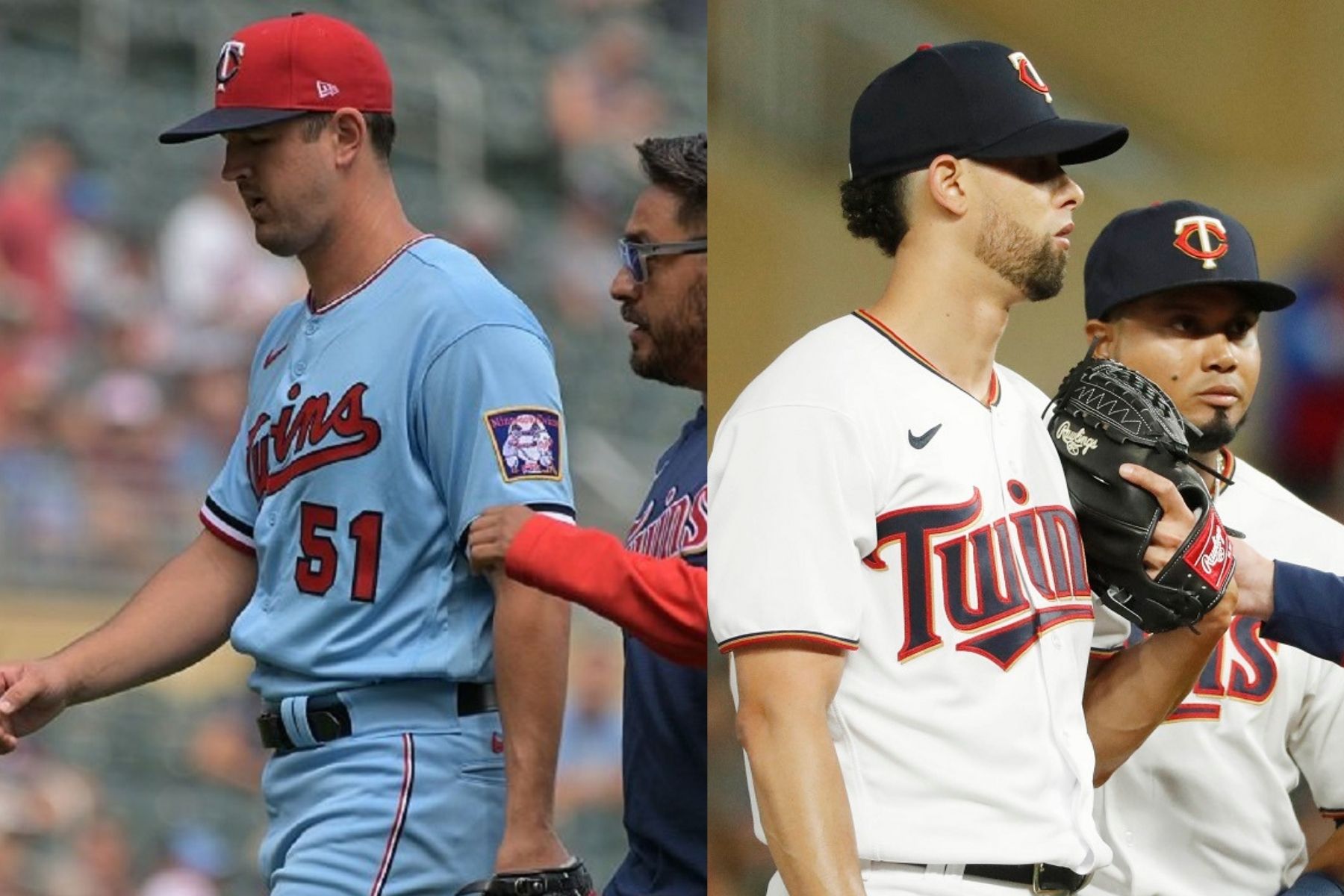 Frankie Montas was one of the hottest names on the market at the trade deadline, and was known to be pursued by Minnesota last offseason. The Yankees acquired him alongside reliever Lou Trivino in exchange for four prospects on August 1st. The results have not been as hoped. Montas posted a 6.35 ERA in eight turns, including just one quality start, before undergoing an MRI on his shoulder this week. He landed on the injured list and there's a pretty good chance he won't pitch again for the Yankees in 2022. Barring further clarity around what's affecting him, Montas figures to be a bit of a question mark heading into next season, too. The Twins can obviously relate. They've gone through a similar ordeal with their own prized deadline pickup. Like Montas, Tyler Mahle had some known shoulder issues when he was acquired. Like Montas, those issues have now grown more problematic, even though – in both cases – MRI results revealed no structural damage, before or after the trades. This is what differentiates the Mahle outcome from, say, the Chris Paddack move, where the Twins accepted a rather extreme level of risk in the name of acquiring extended control of a good starter. That was a measured risk on its own, but it shouldn't be grouped with the one they took on Mahle, who (like Montas) was more typical of a deadline gambit. It's the nature of the beast: as a leveraged buyer in a seller's market, under big pressure to improve, you're going to have to take risks – like ponying up big prospect capital for a talented arm with ambiguous health concerns, or buying high on a breakout All-Star reliever who lacks a convincing track record. Those who constantly advocate for these types of assertive showings from the front office now sound rather toothless when criticizing them in hindsight. While we can all see the overall results have been unsatisfactory – albeit hardly disastrous for a reigning last-place team – this front office was audacious in shaking things up. Isn't that what we want? The big deadline moves. Locking down Byron Buxton with a creative extension. Trading their highest-upside pitching prospect for Sonny Gray. Unloading Josh Donaldson's contract. Signing Carlos Correa to a historic deal (albeit at the expense of investment in pitching). And going back a bit further, let's not forget about trading José Berríos to Toronto at the 2021 deadline, thus letting the Blue Jays sign him to a massive extension while flipping him into one of their breakthrough pitching prospects. That one looks pretty good now. Others don't. And it's beyond valid to criticize the front office for these many moves that haven't panned out, especially those like the Paddack trade, which carried huge red flags from the start. (Although, if we're being honest, they were kinda right about Taylor Rogers, just as they were Berríos?) There's a big gap between "merits criticism" and "needs replacement." I'm not close to the latter point with Derek Falvey or Thad Levine, although changes at various levels of the organization are well warranted. In terms of leadership vision, we've experienced the opposite approach – one characterized by risk aversion and playing it safe. I dare say that's what sunk them last year when their biggest additions were Alex Colomé and JA Happ. As the saying goes, scared money don't make money. Sometimes those bold gambles don't turn out as hoped, and you've got to live with the consequences. It happens even to the Yankees. That won't stop them from staying aggressive and shooting their shots in the future. It shouldn't stop the Twins either, albeit at a different scale given their resources.
 -
The 5 Most Uplifting Developments on the Farm This Year
Nick Nelson posted an article in Minor Leagues
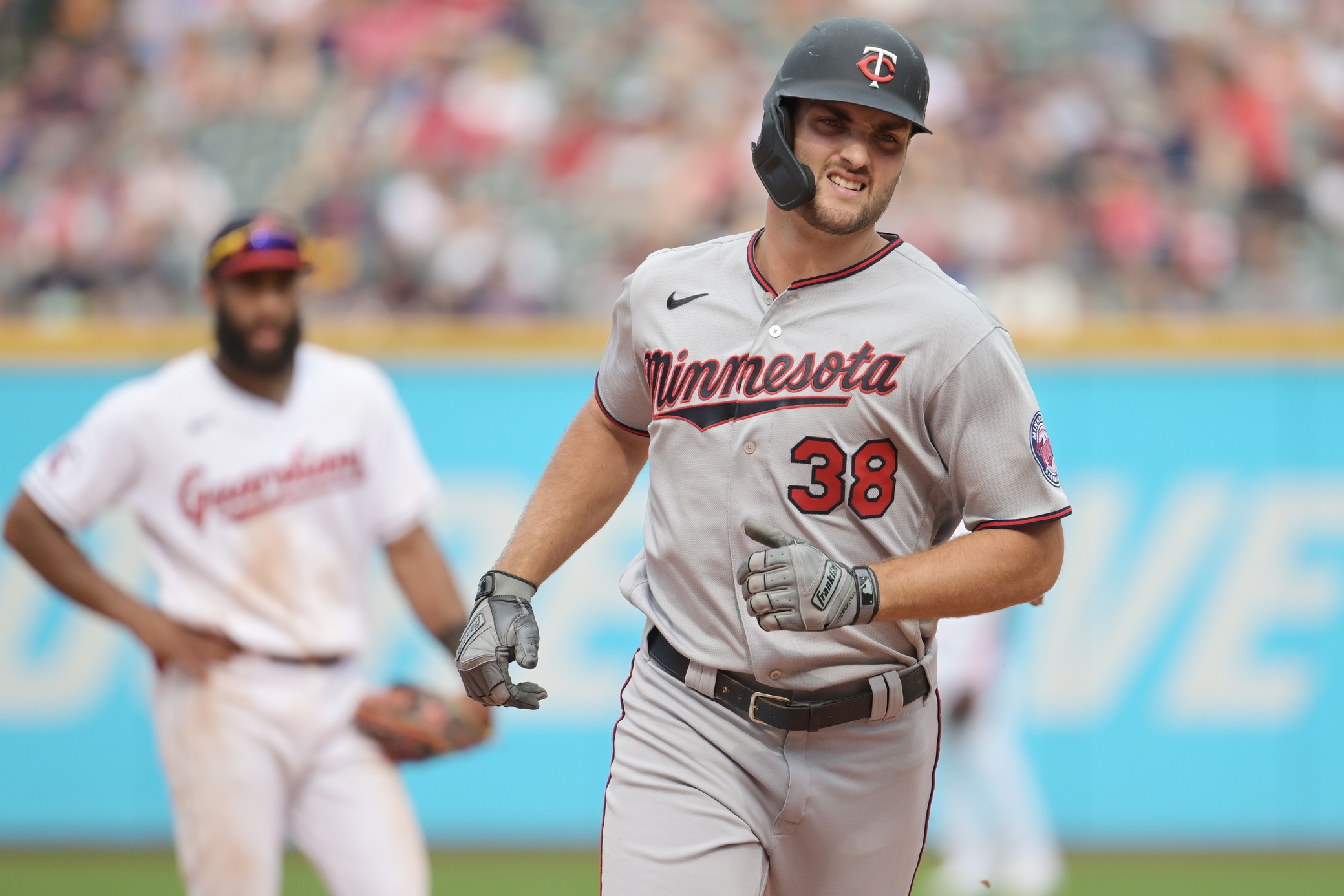 Yesterday we assessed the damage from the most upsetting negative developments in the Twins system this year, with three of the organization's top six prospects experiencing calamitous setbacks that have sent them spiraling out of the Twins' plans. As a chaser to cleanse all those bad vibes, today we'll highlight some hugely positive developments on the farm, each propelling ascendent prospects more directly into the team's future. Best of all, we couldn't limit this list to just three. These five players have tremendously improved their stocks this year, setting the stage to potentially help the major-league team in the very near future (if they haven't already). Louie Varland backs up a big year. We've already seen the early returns on this breakout prospect star. Varland didn't exactly come out of nowhere – he was named the organization's minor-league pitcher of the year in 2021 – but there was still an air of skepticism around him, a former 15th-round draft pick out of a D-II college. Sure, he was amazing in A-ball last year, but plenty of collegiate draft picks have dominated those low levels only to get a reality check in the high minors. For Varland, that check never came. He translated his excellence to Double-A without missing a beat, earning a late-season promotion to Triple-A that quickly turned into a major-league debut. Stepping out under the lights of Yankee Stadium, Varland excelled and made a big impression. Things didn't quite as well his next time out, in Cleveland on Saturday, but this is a guy whose stated goal for this year was to reach St. Paul. He blew past it, and as a consequence, will find himself squarely in the MLB depth picture heading into next season. Matt Wallner mashes past his contact issues. Wallner is another prospect whose monster campaign has already paved the way for a sooner-than-expected MLB debut. And like Varland, he's a local kid, native to Forest Lake, MN. Unlike Varland, Wallner was not a late-round draft pick who emerged from low expectations to achieve top prospect status. He was a bona fide stud coming out of college, selected 39th overall in 2019. But he had his own set of doubts coming into this season, relating mainly to his contact and discipline issues. Even for someone with as much raw power as Wallner, it's really tough to project big-league success for a bat-first player who strikes out 33% of the time and barely walks – at Single-A as a 23-year-old, no less. Would upper-level pitchers chop him to bits? Turns out, it's been the other way around. Wallner obliterated Double-A pitching, posting a .299/.436/.597 slash line with 21 homers in 74 games. That earned him a trip to the Futures Game and a promotion to Triple-A soon after. Wallner got off to a slow start with the Saints, batting .105 with zero extra-base hits in his first 10 games. Then he flipped a switch. Since the beginning of August he's slashing .289/.414/.564. Walks are up, strikeouts are down, and that has a been an overall trend for him this year as he's shown the ability to actively improve his strike zone control and evolve his game. The huge breakout season, combined with desperation for help at the big-league level, led to Wallner getting called up in Cleveland this past weekend. He homered off Shane Bieber in his first MLB game. Wallner felt like a bit of a longshot at this time last year, but now looks like a guy you can confidently write into the team's plans going forward. The idea of both he and Varland, as hometown boys, turning into fixtures for the Twins over the next five years is pretty fun. Simeon Woods Richardson shows his true colors. A former second-round draft pick of the Mets, Woods Richardson has widely been viewed as one of the more prestigious pitching prospects in the minors, making both Baseball America's and MLB.com's Top 100 lists in 2020 and 2021. The Twins were thrilled to get him alongside Austin Martin in the trade that sent José Berríos to Toronto last summer. Looking at his 2021 season in isolation, fans might have been asking ... why? He had a 5.76 ERA in 11 starts with the Blue Jays' Double-A affiliate, and then put up a 6.75 ERA in a brief eight-inning September stint with Wichita. It was a weird year that saw him get aggressively assigned to Double-A at age 20, then take a bunch of time away from his team for the Olympics, where he didn't even pitch. The 6-foot-3, 210 lb right-hander has fully gotten back on track this year. He didn't allow a run in his first four starts en route to a 2.92 ERA over 71 innings at Wichita before moving up to St. Paul in mid-August. There he has continued to excel with a 2.55 ERA in 24 ⅔ frames. Between both levels, Woods Richardson has averaged well over a strikeout per inning, cut down significantly on the walks, and allowed only six home runs in 21 outings. Opponents have batted .206 against him. He's about three years younger than the average player at Triple-A. This reaffirming turnaround from Woods Richardson has been huge for two reasons, both tying to yesterday's article. First, it keeps the Berríos trade looking like a winner even with Martin falling off, and second, it keeps another high-caliber and near-ready pitching prospect in the wings even with Balazovic getting derailed. Emmanuel Rodriguez blossoms into prospect stardom. Unlike the others highlighted in this article, Rodriguez is probably not in line to make an MLB debut in the especially near future. He's a teenager who hasn't appeared above Low-A and his timeline was further delayed by a season-ending knee injury suffered in June. In spite of all that, his performance prior to that injury was so magnificent, and so incredibly encouraging, that he has to be included in this piece. Rodriguez ranked 15th on our preseason top prospects list, characterized as an intriguing yet distant international talent coming off an impressive showing in rookie ball. His follow-up at Single-A left no doubt as to the outfielder's sky-high potential: in 47 games before going down, he slashed .272/.493/.552 with nine homers, 11 steals, and 57 (!) walks. Yes, you read that right – nearly a .500 OBP and more walks than games played from a 19-year-old in the pitcher-friendly Florida State League. Realistically, even if he comes back with gusto next year, Rodriguez is probably looking at a 2024 debut at the earliest, but his spectacular first half puts him in the "blue chip prospect" conversation and that's a hugely positive development for this system. Brooks Lee arrives and thrives. I honestly believe this will go down as THE biggest boost to the farm system over a span of many years: Lee, widely viewed as one of the premier talents in this year's MLB draft, somehow sliding to the Twins at No. 8 overall, where they were more than happy to take him. They may have landed a new franchise player. Quickly signed to a $5.7 million bonus, Lee has handled every assignment so far with aplomb. He went to rookie ball briefly where he batted .353 to earn a promotion to Single-A. Five weeks at Cedar Rapids was enough to convince the Twins he was ready for the next level, so over the weekend, Lee was called up to Wichita, reaching Double-A exactly two months after he was drafted. Touted for his "otherworldly bat-to-ball skills," Lee was one of the top hitters in college, an exceedingly advanced talent, and the Twins could barely contain their excitement when he fell into their laps. "It’s hard to say who made who fall to our pick," said scouting director Sean Johnson, "but regardless of who caused it, [for] the domino to trickle, we’re ecstatic." Their actions have backed up their words. Advanced talent or not, pushing a player to Double-A two months after drafting him makes an aggressive statement. Presumably billed to open back at Wichita in 2023, Lee will be in position to make a case for a big-league promotion next summer. It's almost as if the Twins are planning around that possibility.
- 32 comments
-
- 2
-
-
- louis varland
- matt wallner
- (and 3 more)
-
If the Minnesota Twins are going to bounce back next year, it will take more than savvy offseason moves from the front office. Impact veterans help but, as we've seen with Carlos Correa, they can't do it all. Internal help is crucial. The club was helped greatly this season – and saved perhaps from another all-out disaster – by key rookies making immediate contributions, including Jose Miranda, Jhoan Duran and Joe Ryan. Some positive developments in the minors offer hope that more impact help is soon on the way. Image courtesy of Ken Blaze, USA Today Sports Yesterday we assessed the damage from the most upsetting negative developments in the Twins system this year, with three of the organization's top six prospects experiencing calamitous setbacks that have sent them spiraling out of the Twins' plans. As a chaser to cleanse all those bad vibes, today we'll highlight some hugely positive developments on the farm, each propelling ascendent prospects more directly into the team's future. Best of all, we couldn't limit this list to just three. These five players have tremendously improved their stocks this year, setting the stage to potentially help the major-league team in the very near future (if they haven't already). Louie Varland backs up a big year. We've already seen the early returns on this breakout prospect star. Varland didn't exactly come out of nowhere – he was named the organization's minor-league pitcher of the year in 2021 – but there was still an air of skepticism around him, a former 15th-round draft pick out of a D-II college. Sure, he was amazing in A-ball last year, but plenty of collegiate draft picks have dominated those low levels only to get a reality check in the high minors. For Varland, that check never came. He translated his excellence to Double-A without missing a beat, earning a late-season promotion to Triple-A that quickly turned into a major-league debut. Stepping out under the lights of Yankee Stadium, Varland excelled and made a big impression. Things didn't quite as well his next time out, in Cleveland on Saturday, but this is a guy whose stated goal for this year was to reach St. Paul. He blew past it, and as a consequence, will find himself squarely in the MLB depth picture heading into next season. Matt Wallner mashes past his contact issues. Wallner is another prospect whose monster campaign has already paved the way for a sooner-than-expected MLB debut. And like Varland, he's a local kid, native to Forest Lake, MN. Unlike Varland, Wallner was not a late-round draft pick who emerged from low expectations to achieve top prospect status. He was a bona fide stud coming out of college, selected 39th overall in 2019. But he had his own set of doubts coming into this season, relating mainly to his contact and discipline issues. Even for someone with as much raw power as Wallner, it's really tough to project big-league success for a bat-first player who strikes out 33% of the time and barely walks – at Single-A as a 23-year-old, no less. Would upper-level pitchers chop him to bits? Turns out, it's been the other way around. Wallner obliterated Double-A pitching, posting a .299/.436/.597 slash line with 21 homers in 74 games. That earned him a trip to the Futures Game and a promotion to Triple-A soon after. Wallner got off to a slow start with the Saints, batting .105 with zero extra-base hits in his first 10 games. Then he flipped a switch. Since the beginning of August he's slashing .289/.414/.564. Walks are up, strikeouts are down, and that has a been an overall trend for him this year as he's shown the ability to actively improve his strike zone control and evolve his game. The huge breakout season, combined with desperation for help at the big-league level, led to Wallner getting called up in Cleveland this past weekend. He homered off Shane Bieber in his first MLB game. Wallner felt like a bit of a longshot at this time last year, but now looks like a guy you can confidently write into the team's plans going forward. The idea of both he and Varland, as hometown boys, turning into fixtures for the Twins over the next five years is pretty fun. Simeon Woods Richardson shows his true colors. A former second-round draft pick of the Mets, Woods Richardson has widely been viewed as one of the more prestigious pitching prospects in the minors, making both Baseball America's and MLB.com's Top 100 lists in 2020 and 2021. The Twins were thrilled to get him alongside Austin Martin in the trade that sent José Berríos to Toronto last summer. Looking at his 2021 season in isolation, fans might have been asking ... why? He had a 5.76 ERA in 11 starts with the Blue Jays' Double-A affiliate, and then put up a 6.75 ERA in a brief eight-inning September stint with Wichita. It was a weird year that saw him get aggressively assigned to Double-A at age 20, then take a bunch of time away from his team for the Olympics, where he didn't even pitch. The 6-foot-3, 210 lb right-hander has fully gotten back on track this year. He didn't allow a run in his first four starts en route to a 2.92 ERA over 71 innings at Wichita before moving up to St. Paul in mid-August. There he has continued to excel with a 2.55 ERA in 24 ⅔ frames. Between both levels, Woods Richardson has averaged well over a strikeout per inning, cut down significantly on the walks, and allowed only six home runs in 21 outings. Opponents have batted .206 against him. He's about three years younger than the average player at Triple-A. This reaffirming turnaround from Woods Richardson has been huge for two reasons, both tying to yesterday's article. First, it keeps the Berríos trade looking like a winner even with Martin falling off, and second, it keeps another high-caliber and near-ready pitching prospect in the wings even with Balazovic getting derailed. Emmanuel Rodriguez blossoms into prospect stardom. Unlike the others highlighted in this article, Rodriguez is probably not in line to make an MLB debut in the especially near future. He's a teenager who hasn't appeared above Low-A and his timeline was further delayed by a season-ending knee injury suffered in June. In spite of all that, his performance prior to that injury was so magnificent, and so incredibly encouraging, that he has to be included in this piece. Rodriguez ranked 15th on our preseason top prospects list, characterized as an intriguing yet distant international talent coming off an impressive showing in rookie ball. His follow-up at Single-A left no doubt as to the outfielder's sky-high potential: in 47 games before going down, he slashed .272/.493/.552 with nine homers, 11 steals, and 57 (!) walks. Yes, you read that right – nearly a .500 OBP and more walks than games played from a 19-year-old in the pitcher-friendly Florida State League. Realistically, even if he comes back with gusto next year, Rodriguez is probably looking at a 2024 debut at the earliest, but his spectacular first half puts him in the "blue chip prospect" conversation and that's a hugely positive development for this system. Brooks Lee arrives and thrives. I honestly believe this will go down as THE biggest boost to the farm system over a span of many years: Lee, widely viewed as one of the premier talents in this year's MLB draft, somehow sliding to the Twins at No. 8 overall, where they were more than happy to take him. They may have landed a new franchise player. Quickly signed to a $5.7 million bonus, Lee has handled every assignment so far with aplomb. He went to rookie ball briefly where he batted .353 to earn a promotion to Single-A. Five weeks at Cedar Rapids was enough to convince the Twins he was ready for the next level, so over the weekend, Lee was called up to Wichita, reaching Double-A exactly two months after he was drafted. Touted for his "otherworldly bat-to-ball skills," Lee was one of the top hitters in college, an exceedingly advanced talent, and the Twins could barely contain their excitement when he fell into their laps. "It’s hard to say who made who fall to our pick," said scouting director Sean Johnson, "but regardless of who caused it, [for] the domino to trickle, we’re ecstatic." Their actions have backed up their words. Advanced talent or not, pushing a player to Double-A two months after drafting him makes an aggressive statement. Presumably billed to open back at Wichita in 2023, Lee will be in position to make a case for a big-league promotion next summer. It's almost as if the Twins are planning around that possibility. View full article
- 32 replies
-
- 2
-
-
- louis varland
- matt wallner
- (and 3 more)
-
The 3 Most Upsetting Developments on the Farm This Year
Nick Nelson posted an article in Minor Leagues
 Coming into the 2022 season, Twins Daily ranked Austin Martin, Jordan Balazovic and Matt Canterino as the first, fourth, and sixth best prospects in the organization, respectively. Not only were they high-caliber talents with polish and big upside, but they were all more or less on the precipice of major-league readiness. In each case, things hardly could've gone worse. Whether performance, injury, or a combination, each of these critical assets saw his stock nosedive over the past summer, and it adds another layer of complexity for a front office trying to build its way back to contention. With that said, hope isn't lost for any of these three. Let's take a look at each of their campaigns so far, as things come close to wrapping up here in September. Austin Martin and the power that never came. The prize of last year's José Berríos trade at the deadline, Martin was billed as a near-ready prospect right out of the gates. It was warranted, after he led all of Double-A in on-base percentage during his first pro season. Despite his resounding success, Minnesota sent Martin back to the same level this year, no doubt hoping he'd shore up his biggest weakness from 2022 – an absence of power to complement the excellent OBP – and earn a quick call-up to Triple-A or even the majors. That didn't happen. Martin's power trended the wrong direction this year. After slugging .382 with a .127 ISO and five home runs in 418 PAs between New Hampshire and Wichita, this year he's slugging .317 with an .074 ISO and two home runs in 406 PAs at Wichita. Martin has kept his on-base skills steady, with a .367 OBP despite the crummy .241 average, but his lack of ability to drive the ball with any authority almost renders it moot. Posting a .685 OPS as a 23-year-old in your second turn at Double-A, with no apparent underlying injury, is nothing short of disastrous. Given all the injuries the Twins have faced this season, it's likely Martin would've gotten a chance at some point if he'd even modestly improved his production from a year ago. His drop-off eliminated that possibility and will leave him as something of an afterthought heading into 2023. Martin's going to tank on national prospect lists, where he ranked around #50 by consensus coming into the season. Why you shouldn't lose hope: Martin would hardly be the first player to develop significant power rapidly in his mid-20s. In fact, two "shortstop" prospects who came before him in the Twins system serve as optimistic precedents: Brain Dozier totaled 14 home runs in 317 games through his first three minor-league seasons. Five years later he would set an American League record by launching 42 as a second baseman in 2016. Jorge Polanco hit 35 total home runs total in 598 minor-league games, and could barely muster an XBH in his early days. He hit 33 home runs for the Twins last year. Jordan Balazovic's puzzling struggles in St. Paul. We had Balazovic ranked as the #1 pitcher in the system coming into this year, following a strong campaign at Double-A where he posted a 3.62 ERA and 9.5 K/9 rate as a 22-year-old. Relative to other arms in the system, Balazovic had a more consistent track record and more established workload base, which is why it seemed feasible to envision him playing a significant role in the Twins rotation this year. His abominable performance at Triple-A has done away with that notion entirely. Balazovic started a month late with the Saints due to a knee strain. While he ostensibly put that behind him, staying healthy enough to take the mound each sixth day, he has never seemed right at any point. The right-hander's performance with St. Paul has been beyond awful. In 62 ⅔ innings across 20 appearances, he's 0-6 with a 7.47 ERA. Opponents have slashed .342/.412/.625 against him, as both his walk and home run rates have spiraled out of control. Balazovic has made 19 starts for the Saints and completed five innings ONCE. In late June, Balazovic told Dean Spiros of the Pioneer Press his struggles were "like a puzzle; every day it’s something new." "I’ve never pitched like this,” Balazovic said. “Last year (at Double-A Wichita) my numbers started to get worse in the second half because I was working on stuff. That’s kind of carried over to this season a little bit, but not to where it should be affecting me this bad.” The big 6-foot-5 righty boiled his issues down to consistency and execution, but expressed hope he was getting closer to solving the puzzle. "I’m still hoping for that day," he said, "and I’m hoping that day is tomorrow." It wasn't. The following day he needed 60 pitches to get through 2 ⅔ innings against the Iowa Cubs, allowing five hits (two homers) and two walks. His next time out he coughed up five earned runs in three innings against Omaha. These have been typical results for Balazovic this year, and as a result he's slid down a pitching pipeline hierarchy that's already been depleted by the Chase Petty trade and the development we'll look at next. Why you shouldn't lose hope: Balazovic didn't quite follow through on his "hoping that day is tomorrow" goal, but he might not have been far off? While he bombed in his next two starts, he's been on a bit of a roll ever since, posting a 2.52 ERA and 29-to-11 K/BB ratio with just three homers allowed over 25 innings in his past six starts. Sometimes guys need to experience their worst to unlock their best. Balazovic has plenty of talent to rebound and get back on track. Matt Canterino and the elbow that finally gave way. Canterino's elbow is the only thing that's stood in his way. Drafted 54th overall in 2019 after blowing people away at Rice University for three years, the hard-throwing righty immediately started doing the same to professional hitters. In a 25-inning debut between rookie ball and Low-A, he posted a 1.44 ERA with 31 strikeouts and only eight hits allowed. Then, the pandemic happened and wiped out the 2020 season. In 2021, he was limited to 23 total innings by a forearm strain (he posted a 0.78 ERA when he was able to pitch). This year, his elbow soreness re-emerged and while the Twins continually tried to navigate around it, treating surgery as a last resort, they eventually ran out of options. "It felt like we didn't have anymore stones to turn over," said assistant GM Jeremy Zoll. Unfortunately, the efforts to avoid surgery only delayed it, and now Canterino's prospective impact has also been pushed well down the line. Since he didn't undergo Tommy John until last month, Canterino will likely miss all of next year rehabbing, meaning that by the time he's ready to fully return to the mound, he'll be a 26-year-old with fewer than 100 innings as a pro. It's really difficult to come back from that. Why you shouldn't lose hope: Difficult, but not impossible. The biggest cost of all this lost time would theoretically be missed development for a guy who's barely been able to get in-game reps since being drafted three years ago. For Canterino, I'm not sure it matters as much. He's basically always looked like a guy ready for the majors when he's pitched, with raw stuff that speaks for itself. So long as that stuff remains mostly intact after the surgery, he'll have a chance to get back up to speed quickly and make his long-awaited impact on the bullpen, even if it's not until 2024. Feeling bummed out? I hear you! Make sure to check back tomorrow when I break down the most uplifting developments on the farm for the Twins this year ... Good news: I couldn't manage to limit that list to just three.
- 36 comments
-
- 6
-
-
-
- austin martin
- jordan balazovic
- (and 1 more)
-
If the Minnesota Twins are going to bounce back next year, it will take more than savvy offseason moves from the front office. Impact veterans help but, as we've seen with Carlos Correa, they can't do it all. The Twins were partly derailed this year by a lack of expected contributions from key players in the system, including the following three premier talents. Unfortunately, their setback seasons will cast a shadow forward onto 2023. Image courtesy of Ed Bailey, Wichita Wind Surge (Austin Martin) Coming into the 2022 season, Twins Daily ranked Austin Martin, Jordan Balazovic and Matt Canterino as the first, fourth, and sixth best prospects in the organization, respectively. Not only were they high-caliber talents with polish and big upside, but they were all more or less on the precipice of major-league readiness. In each case, things hardly could've gone worse. Whether performance, injury, or a combination, each of these critical assets saw his stock nosedive over the past summer, and it adds another layer of complexity for a front office trying to build its way back to contention. With that said, hope isn't lost for any of these three. Let's take a look at each of their campaigns so far, as things come close to wrapping up here in September. Austin Martin and the power that never came. The prize of last year's José Berríos trade at the deadline, Martin was billed as a near-ready prospect right out of the gates. It was warranted, after he led all of Double-A in on-base percentage during his first pro season. Despite his resounding success, Minnesota sent Martin back to the same level this year, no doubt hoping he'd shore up his biggest weakness from 2022 – an absence of power to complement the excellent OBP – and earn a quick call-up to Triple-A or even the majors. That didn't happen. Martin's power trended the wrong direction this year. After slugging .382 with a .127 ISO and five home runs in 418 PAs between New Hampshire and Wichita, this year he's slugging .317 with an .074 ISO and two home runs in 406 PAs at Wichita. Martin has kept his on-base skills steady, with a .367 OBP despite the crummy .241 average, but his lack of ability to drive the ball with any authority almost renders it moot. Posting a .685 OPS as a 23-year-old in your second turn at Double-A, with no apparent underlying injury, is nothing short of disastrous. Given all the injuries the Twins have faced this season, it's likely Martin would've gotten a chance at some point if he'd even modestly improved his production from a year ago. His drop-off eliminated that possibility and will leave him as something of an afterthought heading into 2023. Martin's going to tank on national prospect lists, where he ranked around #50 by consensus coming into the season. Why you shouldn't lose hope: Martin would hardly be the first player to develop significant power rapidly in his mid-20s. In fact, two "shortstop" prospects who came before him in the Twins system serve as optimistic precedents: Brain Dozier totaled 14 home runs in 317 games through his first three minor-league seasons. Five years later he would set an American League record by launching 42 as a second baseman in 2016. Jorge Polanco hit 35 total home runs total in 598 minor-league games, and could barely muster an XBH in his early days. He hit 33 home runs for the Twins last year. Jordan Balazovic's puzzling struggles in St. Paul. We had Balazovic ranked as the #1 pitcher in the system coming into this year, following a strong campaign at Double-A where he posted a 3.62 ERA and 9.5 K/9 rate as a 22-year-old. Relative to other arms in the system, Balazovic had a more consistent track record and more established workload base, which is why it seemed feasible to envision him playing a significant role in the Twins rotation this year. His abominable performance at Triple-A has done away with that notion entirely. Balazovic started a month late with the Saints due to a knee strain. While he ostensibly put that behind him, staying healthy enough to take the mound each sixth day, he has never seemed right at any point. The right-hander's performance with St. Paul has been beyond awful. In 62 ⅔ innings across 20 appearances, he's 0-6 with a 7.47 ERA. Opponents have slashed .342/.412/.625 against him, as both his walk and home run rates have spiraled out of control. Balazovic has made 19 starts for the Saints and completed five innings ONCE. In late June, Balazovic told Dean Spiros of the Pioneer Press his struggles were "like a puzzle; every day it’s something new." "I’ve never pitched like this,” Balazovic said. “Last year (at Double-A Wichita) my numbers started to get worse in the second half because I was working on stuff. That’s kind of carried over to this season a little bit, but not to where it should be affecting me this bad.” The big 6-foot-5 righty boiled his issues down to consistency and execution, but expressed hope he was getting closer to solving the puzzle. "I’m still hoping for that day," he said, "and I’m hoping that day is tomorrow." It wasn't. The following day he needed 60 pitches to get through 2 ⅔ innings against the Iowa Cubs, allowing five hits (two homers) and two walks. His next time out he coughed up five earned runs in three innings against Omaha. These have been typical results for Balazovic this year, and as a result he's slid down a pitching pipeline hierarchy that's already been depleted by the Chase Petty trade and the development we'll look at next. Why you shouldn't lose hope: Balazovic didn't quite follow through on his "hoping that day is tomorrow" goal, but he might not have been far off? While he bombed in his next two starts, he's been on a bit of a roll ever since, posting a 2.52 ERA and 29-to-11 K/BB ratio with just three homers allowed over 25 innings in his past six starts. Sometimes guys need to experience their worst to unlock their best. Balazovic has plenty of talent to rebound and get back on track. Matt Canterino and the elbow that finally gave way. Canterino's elbow is the only thing that's stood in his way. Drafted 54th overall in 2019 after blowing people away at Rice University for three years, the hard-throwing righty immediately started doing the same to professional hitters. In a 25-inning debut between rookie ball and Low-A, he posted a 1.44 ERA with 31 strikeouts and only eight hits allowed. Then, the pandemic happened and wiped out the 2020 season. In 2021, he was limited to 23 total innings by a forearm strain (he posted a 0.78 ERA when he was able to pitch). This year, his elbow soreness re-emerged and while the Twins continually tried to navigate around it, treating surgery as a last resort, they eventually ran out of options. "It felt like we didn't have anymore stones to turn over," said assistant GM Jeremy Zoll. Unfortunately, the efforts to avoid surgery only delayed it, and now Canterino's prospective impact has also been pushed well down the line. Since he didn't undergo Tommy John until last month, Canterino will likely miss all of next year rehabbing, meaning that by the time he's ready to fully return to the mound, he'll be a 26-year-old with fewer than 100 innings as a pro. It's really difficult to come back from that. Why you shouldn't lose hope: Difficult, but not impossible. The biggest cost of all this lost time would theoretically be missed development for a guy who's barely been able to get in-game reps since being drafted three years ago. For Canterino, I'm not sure it matters as much. He's basically always looked like a guy ready for the majors when he's pitched, with raw stuff that speaks for itself. So long as that stuff remains mostly intact after the surgery, he'll have a chance to get back up to speed quickly and make his long-awaited impact on the bullpen, even if it's not until 2024. Feeling bummed out? I hear you! Make sure to check back tomorrow when I break down the most uplifting developments on the farm for the Twins this year ... Good news: I couldn't manage to limit that list to just three. View full article
- 36 replies
-
- 1
-
-
- austin martin
- jordan balazovic
- (and 1 more)
-
 Weekly Snapshot: Mon, 9/12 through Sun, 9/18 *** Record Last Week: 4-3 (Overall: 73-73) Run Differential Last Week: +6 (Overall: +18) Standing: 3rd Place in AL Central (6.0 GB) Last Week's Game Results: Game 140 | MIN 6, KC 3: Twins Lose No-No in Ninth, Win Easily Game 141 | MIN 4, KC 0: Gray Leads Shutout with Seven Scoreless Game 142 | MIN 3, KC 2: Bullpen Locks Down Slim Lead for Sweep Game 143 | CLE 4, MIN 3: Twins Can't Hold Onto 3-Run Lead Game 144 | CLE 5, MIN 1: Wallner Homers in Debut, Twins Lose Game 145 | CLE 6, MIN 5: 15-Inning Marathon Yields Same Result Game 146 | MIN 3, CLE 0: Twins Salvage Win Behind Ryan's Brilliance NEWS & NOTES As this lost season winds down, the Twins continue to fittingly be besieged by a never-ending onslaught of injuries. Max Kepler became the latest to join the infirmary pack this past week, with his wrist issue forcing him onto an injured list that already includes fellow planned lineup staples Byron Buxton, Jorge Polanco, Alex Kirilloff, Ryan Jeffers and Trevor Larnach. Polanco, who's been sidelined for weeks by a knee injury, tried to give it a go in a rehab start at St. Paul on Friday night but couldn't make it all the way through, exiting after five innings. He's probably done for the season. Jeffers and Larnach had more encouraging starts to their rehab assignments, and both have a chance to make it back for the final slate of games, for whatever that's worth. As a silver lining to Kepler going down, the IL move did create an opportunity for Matt Wallner, who homered in his major-league debut on Saturday. In this total wreck of a season, it's nice at least to see local boys like Wallner and Louie Varland get these chances – well earned with monster years in the minors. Another young player set to get his first chance: Ronny Henriquez, who was promoted on Sunday despite posting a 5.66 ERA at St. Paul. Not quite as well earned, but they just need bodies on the staff at this point, basically. HIGHLIGHTS The Twins have this going for them: they can still flat-out dominate the Royals. They ran up their winning streak against Kansas City to seven with another sweep at home, suppressing any hint of offensive threat from the woeful Royals lineup. On Monday, Joe Ryan pitched seven innings of no-hit ball before being lifted at 106 pitches. Reliever Jovani Moran nearly completed the feat, but the Royals were finally able to get on the board in the ninth. Sonny Gray looked somehow even more dominant the following night, tossing seven shutout innings of his own. Thursday saw the bullpen step up with a huge string of clutch performances, as five different relievers contributed one shutout inning apiece to maintain a slim one-run lead. Relievers weren't able to hold up quite as well on Friday, following an excellent return to action from Bailey Ober (5 IP, 0 R), but we'll get to that later. After flirting with a no-no in his first start of the week, Ryan turned in one of the finest performances of his career in the second, hurling 7 ⅔ shutout innings against Cleveland. He allowed just three hits and two walks in the highly efficient outing, lowering his ERA to 3.61 in the process. While Ryan has shown his warts this year (namely, a problematic proneness to home runs), he's undoubtedly been one of the team's most successful starters, and is on his way to finishing strong. LOWLIGHTS Plenty of frustration has been aired far and wide about the Twins and their management of the pitching staff. Personally, I don't have a problem with the general philosophy, given their personnel. But it's the complete rigidity of Minnesota's strict adherence to the playbook that gets to me. There's no room for reacting to circumstances, or pushing the boundaries when it's absolutely necessary. Take Friday night for example. The Twins had every reason to set aside their cautionary nature and push Ober a bit in his return to action. He looked great. He was at only 70 pitches through five innings. Most importantly, the bullpen had been run ragged in protecting a tight lead for five innings the previous day, and a double-header was on deck the next. Didn't matter. Ober came out after five innings, as is custom. Rocco Baldelli ran through arguably his four best relievers, all pitching on back-to-backs, and lost anyway. It left essentially no relief ammo for the rest of the weekend, culminating with Dereck Rodriguez pitching four frames in extra innings as the team's season hung by a thread and gave way. Alas, while it's easy to get caught up in the early hooks and shortcomings on the mound, there's no doubt where the blame primarily lies for this team's downfall: an offense woefully unequipped to compete. This team was always built around the strength of its lineup, which has turned into a debilitating weakness here in the late stages of the season. Since the start of August the bullpen has largely been stabilized and the pitching has been fine overall (6th among AL teams in pitching WAR, 8th in ERA). Meanwhile, the offense has fizzled out during this span, ranking 11th in wOBA and 10th in runs scored. The last time the Twins notched double-digit runs in a contest was August 30th against Boston; since then they have averaged 3.4 runs per game, scoring more than four times in just four of 18. With production like that, a 6-12 record is about what you expect. No amount of savvy pitching management or bullpen string-pulling can overcome such a dearth of run scoring. Saturday night epitomized the team's inability to muster anything with the bats. In a grinding 15-inning affair, the Twins could not will themselves to victory despite receiving opportunity after opportunity. They managed only seven hits in 15 innings and went 3-for-21 with runners in scoring position before finally succumbing to their eighth consecutive loss against Cleveland. Astonishing ineptitude. Then again, it's pretty easy to see how we've gotten to this point. You look at their lineup on any given day and it's now filled with minor-leaguers, third-stringers, retreads. Jake Cave batting fifth. Jermaine Palacios drawing daily starts. Billy Hamilton receiving major league at-bats, in an ostensible pennant race. Even (especially?) with all the attrition, it'd be nice to see anyone stepping up other Carlos Correa, whose September surge continued with another excellent week (10-for-28, two homers, two doubles). The most conspicuous under-performer in the lineup at this point might be Luis Arraez, himself battling through a hamstring issue. He went 3-for-14 against Cleveland and is slashing .284/.316/.397 since appearing in the All-Star Game in July. Since the break, Arraez has been worth 0.4 fWAR (tying him with Cave) and he has the worst Win Probability of all position players other than Kyle Garlick, Kepler, and Palacios. Given that I ranked Arraez a month ago as the single most important player to the team's chances in the stretch run, his drop-off – while several others near the top of that list have gone down with injuries – tells the story of this team's downfall in a nutshell. TRENDING STORYLINE Following their flop in Cleveland, the Twins find themselves with about a 1% chance of making the postseason – and that's based merely on historical odds, not accounting for the fact that almost their entire team is injured while their rivals (especially the Guardians) are enjoying much better health. It's over. So what now? What are the focuses for these final three weeks? Aside from playing out the string, the Twins' motivation has been reduced to: Trying to finish with a record above .500. Play spoiler against the White Sox, who now trail Cleveland by 3 ½ games. Have a few injured players get back on the field and finish the season on relatively positive notes. Get a look at some young players to set them up for bigger impacts in 2023. Personally, only the latter two are all that meaningful to me. And in the case of injured players, I think they're probably better off just shutting down the likes of Buxton, Polanco, and Larnach with hopes of getting them as healthy as possible for next spring. With that said, I hope we'll get to see Wallner, Varland, Henriquez, and maybe even Simeon Woods Richardson take the spotlight here in this final stretch. For me, it'll be the only real draw. LOOKING AHEAD Good news for the Twins in their quest to finish above .500, I guess: they've got three more games ahead against Kansas City, who they've defeated in 12 of 16 matchups. Then they'll host the Angels, with a Shohei Ohtani start on the slate for Friday night to kick off the final homestand of the season. MONDAY, 9/19: TWINS @ GUARDIANS – RHP Sonny Gray v. RHP Cal Quantrill TUESDAY, 9/20: TWINS @ ROYALS – RHP Dylan Bundy v. RHP Zack Greinke WEDNESDAY, 9/21: TWINS @ ROYALS – TBD v. LHP Daniel Lynch THURSDAY, 9/22: TWINS @ ROYALS – RHP Josh Winder v. RHP Jonathan Heasley FRIDAY, 9/23: ANGELS @ TWINS – RHP Shohei Ohtani v. RHP Joe Ryan SATURDAY, 9/24: ANGELS @ TWINS – LHP Reid Detmers v. RHP Sonny Gray SUNDAY, 9/25: ANGELS @ TWINS – LHP Jose Suarez v. RHP Dylan Bundy
- 18 comments
-
- 7
-
-
- joe ryan
- luis arraez
- (and 1 more)
