



Nick Nelson
-
Posts
8,327 -
Joined
-
Last visited
-
Days Won
56
Content Type
Profiles
News
Minnesota Twins Videos
2026 Minnesota Twins Top Prospects Ranking
2022 Minnesota Twins Draft Picks
Minnesota Twins Free Agent & Trade Rumors, Notes, & Tidbits
Guides & Resources
2023 Minnesota Twins Draft Picks
The Minnesota Twins Players Project
2024 Minnesota Twins Draft Picks
2025 Minnesota Twins Draft Pick Tracker
2026 Minnesota Twins Draft Tracker: Picks & Bonuses
Forums
Blogs
Events
Store
Downloads
Gallery
Everything posted by Nick Nelson
-
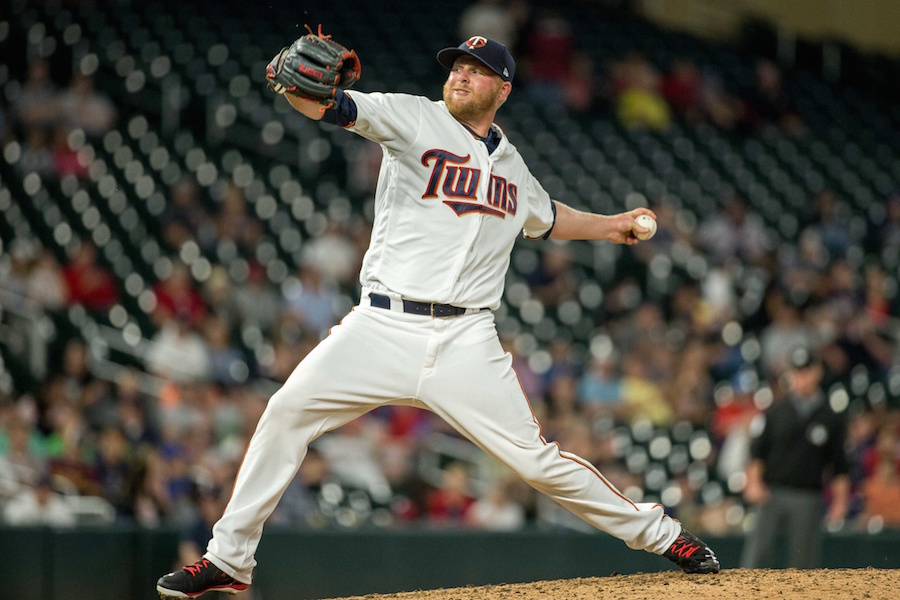 For those who enjoy the human element of the game, there's something special about independent ball. Players in these leagues are a long way from the majors, whether undrafted or trying to make their way back into an MLB system. But they're chasing their dreams, often playing in front of paltry crowds for tiny paychecks. When a guy playing in an independent league is able to catch the attention of a major-league organization and work his way to the bigs, it's always a great story. Rich Hill is the most prominent example in the game today. After washing out of affiliated ball in his mid-30s, he signed with the Long Island Ducks in 2015, where he gained notice from the Boston Red Sox. They signed him, he excelled, and two years later he has a $48 million deal with the Dodgers. The Twins haven't had a success of Hill's magnitude, but they've had some notable hits. Minnesota didn't sign Brandon Kintzler out of an independent league, but the former 40th-round draft pick did spend time playing in the Northern League in 2007 and 2008, then with our local St. Paul Saints in 2009, before latching on with the Brewers and finding his way to the big leagues. He would of course later sign with the Twins and turn into an all-star closer, and now he's in line to be pitching in the playoffs in two months. Kintzler's experience in independent ball is now ancient history, but the Twins have a few players who've been there much more recently. Buddy Boshers caught the team's eye while pitching for Somerset in the Atlantic League and is now a fixture in the Minnesota bullpen. Nik Turley was pitching for that same Somerset club last summer, and inked a minor-league deal with the Twins during the offseason, precipitating a major-league debut this year. Things obviously haven't gone smoothly for the southpaw in his three MLB starts, but he continues to dominate at Rochester and will almost surely get more chances. He could become an asset in the bullpen. Tim Melville may be the next name to watch. The Twins signed him in June from the Long Island Ducks team where Hill re-established himself, and he has been tremendous since joining the Class-AAA Red Wings with a 2.55 ERA and 1.07 WHIP through 60 innings. In his latest start for Rochester on Monday, Melville hurled seven innings of one-hit, one-run ball with nine strikeouts. The 27-year-old right-hander is interesting not just because of his recent journey, but because of his history: he's a former fourth-round pick of the Royals who was once ranked among the organization's best young talents and appeared in Baseball Prospectus' Top 100 prospects in 2010. He has flashed good stuff when healthy, with scouts lauding the spin on his breaking balls, and right now it's shining through. If he can keep it up, he may get a look before the year is over. Will he be the next Rich Hill? Not likely. But Melville has a chance to make a real impact, as Boshers has and Turley hopefully still can. At the very least, the former independent leaguer will be another story worth rooting for.
 -
 'It does suck.' Brian Dozier was blunt in expressing his feelings about the front office's deadline approach, with the decisions to flip Jaime Garcia and Brandon Kintzler symbolizing a white flag of sorts. Dozier's frustration is understandable, the culmination of a career's worth of surrender. The clock is ticking on the veteran second baseman if he's ever going to accomplish anything with the team that drafted and developed him.Since he arrived in the majors in 2012, Dozier has been party to an awful lot of losing. He hasn't sniffed the playoffs in five seasons, and that will now more than likely extend to six. Next year is his last under contract with Minnesota, and given the organization's depth in young middle infielders, it seems unlikely they'll pony up to keep him around. Derek Falvey and Thad Levine are taking a pragmatic big-picture view, but to Dozier, the big picture is this: he's been doing his part – and then some – for half of a decade, and he's barely experienced a hint of serious contention. This year the team spent much of the first half in first place, and made a move toward going for it, then turned around and traded away their rental starter and best reliever. Joe Mauer hasn't been as vocal (say what??), but he can certainly relate to Dozier's discontent. Mauer is the only longer-tenured Twin, whose career at least merits Hall of Fame arguments, and he has not one single postseason victory to show for it. On the one hand, his journey as a hometown kid turned MVP is the stuff of storybooks. On the other hand, the wasting of his generational talents by a team that could never build enough around him to go anywhere... it's kinda heartbreaking. Of course, as far as 2017 is concerned, Dozier and Mauer would both be wise to look inward before directing their angst at the front office. They've been having perfectly solid years, but the Twins need more from them than that, and they have to recognize it. Dozier and Mauer are supposed to be the experienced, veteran cornerstones of the league's youngest lineup, but each has been downright ordinary. Dozier has been his usual self: one of the game's better power-hitting middle infielders, and a fine defender, but not an upper-echelon player. Last year he was vastly better with the bases empty than with men on, and this year the contrast has only been sharper (stats entering Sunday): Bases Empty: 295 PA, .268/.342/.517, 17 HR Runners On: 169 PA, .208/.302/.318, 2 HR Dozier's production with no ducks shouldn't be downplayed, because everything helps. But he hasn't risen to the occasion enough. Overall his performance doesn't amount to anything special; he ranks 13th out of 22 MLB-qualified second basemen in OPS, 14th in WAR. And Mauer? It's still a pleasure to watch the man take an at-bat, and he's been exquisite with the mitt at first, but his offensive results are as pedestrian as ever. He ranks 22nd among 25 qualified MLB first basemen in OPS. He's still a nice enough piece to have in the lineup, but more of a role player than a game-changer, and that doesn't do much for this team right now. Dozier and Mauer have been in the Twins organization for a combined 24 years, and it's commendable if they are adamant about winning before their tenures simultaneously come to an end next year. Is that realistic, though? And does their presence prevent the team from moving forward with a blueprint that, by necessity, doesn't include them? Barring an improbable late-season charge this year, the 2018 season is shaping up as the first in Minnesota's true winning cycle. But for Dozier and Mauer, it will mean a lot more. Will they be able to make a run with the rising core before departing? Click here to view the article
 -
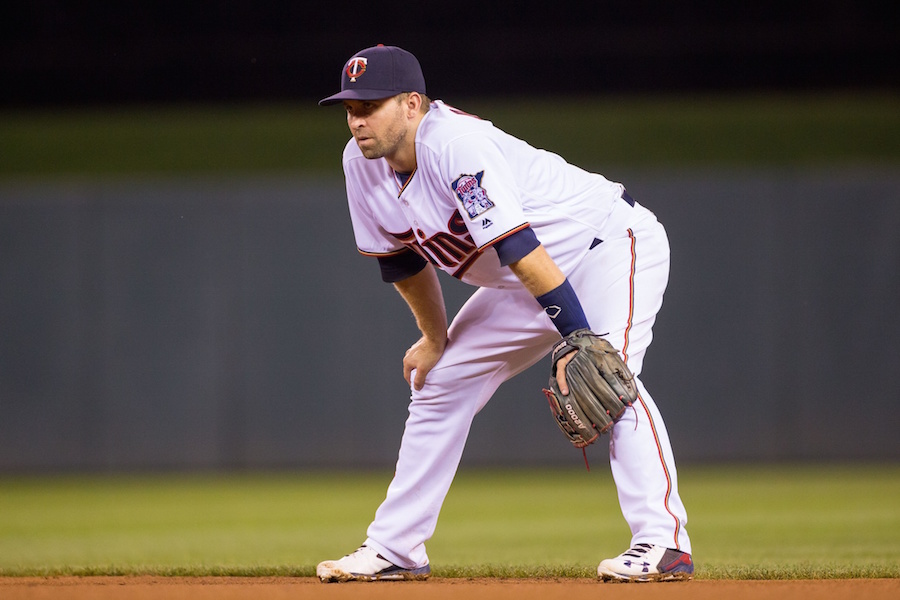 Since he arrived in the majors in 2012, Dozier has been party to an awful lot of losing. He hasn't sniffed the playoffs in five seasons, and that will now more than likely extend to six. Next year is his last under contract with Minnesota, and given the organization's depth in young middle infielders, it seems unlikely they'll pony up to keep him around. Derek Falvey and Thad Levine are taking a pragmatic big-picture view, but to Dozier, the big picture is this: he's been doing his part – and then some – for half of a decade, and he's barely experienced a hint of serious contention. This year the team spent much of the first half in first place, and made a move toward going for it, then turned around and traded away their rental starter and best reliever. Joe Mauer hasn't been as vocal (say what??), but he can certainly relate to Dozier's discontent. Mauer is the only longer-tenured Twin, whose career at least merits Hall of Fame arguments, and he has not one single postseason victory to show for it. On the one hand, his journey as a hometown kid turned MVP is the stuff of storybooks. On the other hand, the wasting of his generational talents by a team that could never build enough around him to go anywhere... it's kinda heartbreaking. Of course, as far as 2017 is concerned, Dozier and Mauer would both be wise to look inward before directing their angst at the front office. They've been having perfectly solid years, but the Twins need more from them than that, and they have to recognize it. Dozier and Mauer are supposed to be the experienced, veteran cornerstones of the league's youngest lineup, but each has been downright ordinary. Dozier has been his usual self: one of the game's better power-hitting middle infielders, and a fine defender, but not an upper-echelon player. Last year he was vastly better with the bases empty than with men on, and this year the contrast has only been sharper (stats entering Sunday): Bases Empty: 295 PA, .268/.342/.517, 17 HR Runners On: 169 PA, .208/.302/.318, 2 HR Dozier's production with no ducks shouldn't be downplayed, because everything helps. But he hasn't risen to the occasion enough. Overall his performance doesn't amount to anything special; he ranks 13th out of 22 MLB-qualified second basemen in OPS, 14th in WAR. And Mauer? It's still a pleasure to watch the man take an at-bat, and he's been exquisite with the mitt at first, but his offensive results are as pedestrian as ever. He ranks 22nd among 25 qualified MLB first basemen in OPS. He's still a nice enough piece to have in the lineup, but more of a role player than a game-changer, and that doesn't do much for this team right now. Dozier and Mauer have been in the Twins organization for a combined 24 years, and it's commendable if they are adamant about winning before their tenures simultaneously come to an end next year. Is that realistic, though? And does their presence prevent the team from moving forward with a blueprint that, by necessity, doesn't include them? Barring an improbable late-season charge this year, the 2018 season is shaping up as the first in Minnesota's true winning cycle. But for Dozier and Mauer, it will mean a lot more. Will they be able to make a run with the rising core before departing?
 -
Article: Twins Need Sagging Bats To Rev It Up
Nick Nelson replied to Nick Nelson's topic in Twins Daily Front Page News
I didn't say that. Only that we can't confidently pencil him in as a future MLB starter. I'm certainly on board with calling him up and beginning to make that determination now though. What's the hold-up? -
Minnesota's decline from early surprise to deadline seller, which began in earnest back in June but culminated last week, can be traced to many causes. Pitching is, of course, tops among them – the Twins rank near the bottom of the league in run prevention, again. But we knew all along that making a go of it this year would require the lineup to perform at a high level and make up for a mediocre-at-best staff. And the way the hitters have failed to rise to that challenge is far more disappointing (and concerning) in my mind.Derek Falvey and Thad Levine have put their plans to replenish the pitching pipeline into action, adding several young arms in recent weeks, but the Twins system now leans lopsidedly in that direction. That's because the top talents have, by and large, already graduated. Nick Gordon (AA) is now the only position player prospect among our preseason Top 10 who is currently above A-ball. Mitch Garver (AAA), Daniel Palka (AAA), Zack Granite (MLB) and LaMonte Wade (AA) were in the Top 20, but none project as star hitters or even necessarily as big-league starters. The Twins are going to need to rely primarily on the core currently in place to carry them forward. It's a young group – youngest in the American League, in fact – so growing pains are expected, but you would hope they'd collectively be gelling right now. They're not. An offense that seemed dynamic on paper, and often looked the part early on, has been woefully unexplosive for several weeks. The Twins haven't scored more than six runs in a game since July 7th, and that doesn't really fly in today's MLB, especially when your pitching staff is crummy. Eddie Rosario is having a nice year, but he is essentially the only member of Minnesota's offensive core riding any kind of momentum into the final two months. We talked last week about the struggles Miguel Sano, Max Kepler and Joe Mauer have been going through lately. Brian Dozier has taken a step back from his prodigious 2016. Jorge Polanco has been a disaster at the plate for most of the season. Byron Buxton certainly hasn't turned any kind of corner as we had hoped. Almost everywhere you look, Twins hitters are failing to take the kinds of steps forward this club desperately needs them to. That isn't good, because the rebuild currently taking place is completely reliant on these players. Even if things come together exceptionally well on the pitching side and Minnesota moves from the bottom of the pack to the middle next year, a powerful offense needs to be the differentiator in making them a true contender. Lately, that unit has been anything but. So from my view, the lineup's ability to get on track and finish strong will be the decisive factor in determining how confident Twins fans can feel in the club to make a legitimate run in 2018. While there's reason for confidence regarding the organization's pitching pipeline, and the front office's ability to keep supplementing it, there's not much they can realistically do on the offensive side. The building blocks are already in place. Will they provide enough support? Click here to view the article
-
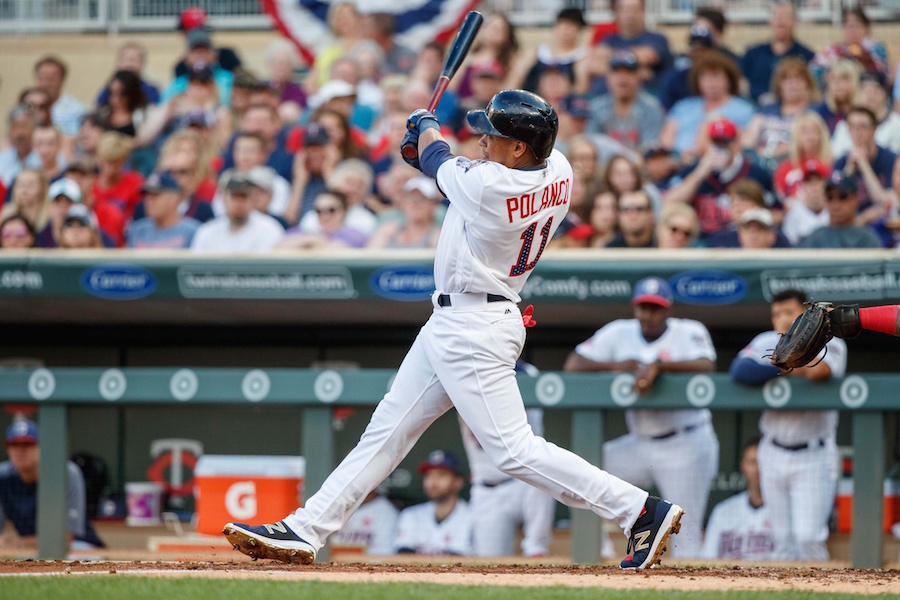 Derek Falvey and Thad Levine have put their plans to replenish the pitching pipeline into action, adding several young arms in recent weeks, but the Twins system now leans lopsidedly in that direction. That's because the top talents have, by and large, already graduated. Nick Gordon (AA) is now the only position player prospect among our preseason Top 10 who is currently above A-ball. Mitch Garver (AAA), Daniel Palka (AAA), Zack Granite (MLB) and LaMonte Wade (AA) were in the Top 20, but none project as star hitters or even necessarily as big-league starters. The Twins are going to need to rely primarily on the core currently in place to carry them forward. It's a young group – youngest in the American League, in fact – so growing pains are expected, but you would hope they'd collectively be gelling right now. They're not. An offense that seemed dynamic on paper, and often looked the part early on, has been woefully unexplosive for several weeks. The Twins haven't scored more than six runs in a game since July 7th, and that doesn't really fly in today's MLB, especially when your pitching staff is crummy. Eddie Rosario is having a nice year, but he is essentially the only member of Minnesota's offensive core riding any kind of momentum into the final two months. We talked last week about the struggles Miguel Sano, Max Kepler and Joe Mauer have been going through lately. Brian Dozier has taken a step back from his prodigious 2016. Jorge Polanco has been a disaster at the plate for most of the season. Byron Buxton certainly hasn't turned any kind of corner as we had hoped. Almost everywhere you look, Twins hitters are failing to take the kinds of steps forward this club desperately needs them to. That isn't good, because the rebuild currently taking place is completely reliant on these players. Even if things come together exceptionally well on the pitching side and Minnesota moves from the bottom of the pack to the middle next year, a powerful offense needs to be the differentiator in making them a true contender. Lately, that unit has been anything but. So from my view, the lineup's ability to get on track and finish strong will be the decisive factor in determining how confident Twins fans can feel in the club to make a legitimate run in 2018. While there's reason for confidence regarding the organization's pitching pipeline, and the front office's ability to keep supplementing it, there's not much they can realistically do on the offensive side. The building blocks are already in place. Will they provide enough support?
 -
Article: Replenishing The Pitching Pipeline
Nick Nelson replied to Nick Nelson's topic in Twins Daily Front Page News
What's given you this impression? Most of the prospects they've acquired are close to the majors, and they haven't given up anyone who would've helped them in 2018. -
The Cleveland Indians went to the World Series last year, and could well return this year, on the strength of a terrific pitching staff. Their exemplary rotation was built through a very distinct strategy, and now their former assistant general manager appears to be implementing the same plan here in Minnesota.Sure, it's great to draft and develop your own arms. But the draft is a known crapshoot, especially where pitchers are concerned (hello, Kohl Stewart and Tyler Jay), so the real key is identifying players in other organizations and getting them at just the right time. Three of Cleveland's top starters were acquired at a point when they were big-league ready, or very close, but had little or no MLB experience Corey Kluber came in a trade with San Diego in 2010, when he was in Double-A. He arrived in the majors the next year. Carlos Carrasco was a Triple-A pitcher for the Phillies when he came over in 2008, and debuted for Cleveland the next year. Trevor Bauer was a 21-year-old with four big-league starts when the Indians got him. The Twins, positioned at the front end of what they hope will be a prolonged winning cycle, should be targeting players at this very stage. And they have been. It actually started a year ago, before Falvey and Thad Levine even arrived. At the 2016 deadline, acting GM Rob Antony sent Eduardo Nunez to San Francisco in a deal that looked good at the time and now looks even better. Adalberto Mejia has made 16 starts for the Twins this year, and he's been their third-best starter. In the Rule 5 draft, Minnesota selected Justin Haley, another prospect on the verge of MLB-readiness, though injuries robbed him of the chance to make an impression and he was recently sent back to Boston. When the Twins traded John Ryan Murphy to Arizona last week, they got back Gabriel Moya, a reliever who was dominating Double-A and could enter the picture very quickly. Then, over the weekend, Jaime Garcia's frantic journey landed him in New York, as the Twins flipped him for two more high-performing minor-league pitchers who are close. Dietrich Enns was pitching in Triple-A, with a 2.29 ERA in seven starts, and Zack Littell was 5-0 with a 2.05 ERA in seven starts at Double-A. The sum result of the Garcia moves is this: Minnesota swapped out a teenager in rookie ball for two pitchers capable of helping in 2018. Their entire strategy has followed this general pattern under Falvey and Levine, and I suspect that if any big deals occur on Monday, we'll see it continue. You're not often going to find a Kluber or Carrasco through this method, unless you have big-time talent to dangle, but even getting a few more Mejias would be hugely helpful for the Twins. Click here to view the article
- 17 replies
-
- 1
-

-
- adalberto mejia
- zack littell
- (and 2 more)
-
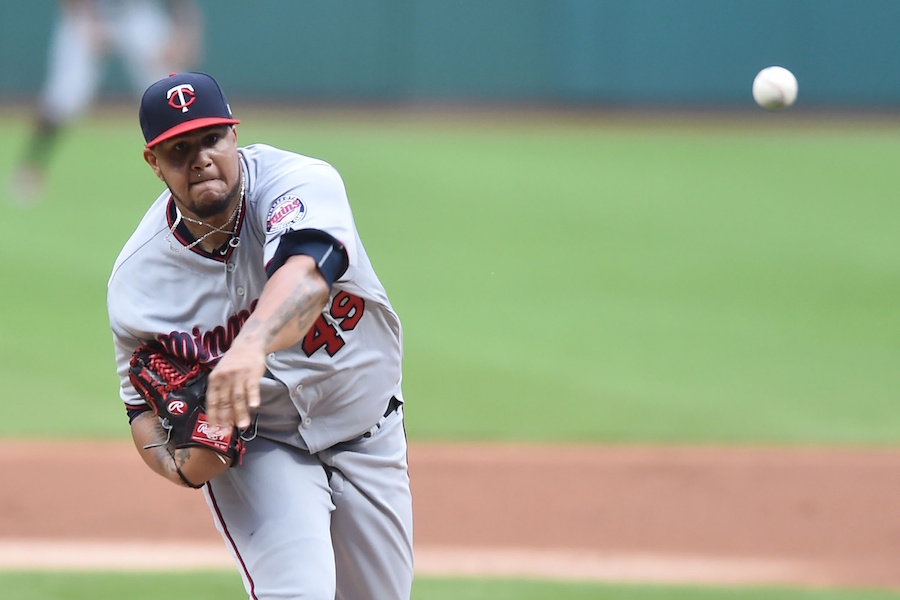 Sure, it's great to draft and develop your own arms. But the draft is a known crapshoot, especially where pitchers are concerned (hello, Kohl Stewart and Tyler Jay), so the real key is identifying players in other organizations and getting them at just the right time. Three of Cleveland's top starters were acquired at a point when they were big-league ready, or very close, but had little or no MLB experience Corey Kluber came in a trade with San Diego in 2010, when he was in Double-A. He arrived in the majors the next year. Carlos Carrasco was a Triple-A pitcher for the Phillies when he came over in 2008, and debuted for Cleveland the next year. Trevor Bauer was a 21-year-old with four big-league starts when the Indians got him. The Twins, positioned at the front end of what they hope will be a prolonged winning cycle, should be targeting players at this very stage. And they have been. It actually started a year ago, before Falvey and Thad Levine even arrived. At the 2016 deadline, acting GM Rob Antony sent Eduardo Nunez to San Francisco in a deal that looked good at the time and now looks even better. Adalberto Mejia has made 16 starts for the Twins this year, and he's been their third-best starter. In the Rule 5 draft, Minnesota selected Justin Haley, another prospect on the verge of MLB-readiness, though injuries robbed him of the chance to make an impression and he was recently sent back to Boston. When the Twins traded John Ryan Murphy to Arizona last week, they got back Gabriel Moya, a reliever who was dominating Double-A and could enter the picture very quickly. Then, over the weekend, Jaime Garcia's frantic journey landed him in New York, as the Twins flipped him for two more high-performing minor-league pitchers who are close. Dietrich Enns was pitching in Triple-A, with a 2.29 ERA in seven starts, and Zack Littell was 5-0 with a 2.05 ERA in seven starts at Double-A. The sum result of the Garcia moves is this: Minnesota swapped out a teenager in rookie ball for two pitchers capable of helping in 2018. Their entire strategy has followed this general pattern under Falvey and Levine, and I suspect that if any big deals occur on Monday, we'll see it continue. You're not often going to find a Kluber or Carrasco through this method, unless you have big-time talent to dangle, but even getting a few more Mejias would be hugely helpful for the Twins.
 -
They were never supposed to be here to begin with. I find it important to remind myself of this as I absorb the massive gut punch delivered by Minnesota's rapid fall from contention in the American League Central. This team, fresh off a 103-loss season, gave us all a hell of a ride by hanging around the top of the division for the better part of four months, and even spending six weeks in first place. This summer has been infinitely more fun than the last for baseball fans. I appreciate that. Still, watching it all come crashing down in spectacular fashion, it's hard not to feel a sense of familiar dread.To go from a half-game out of first place to six games out within the span of eight days is actually quite astounding, made possible by a couple of lousy series against Detroit and Los Angeles while the Indians and Royals have both taken off. At crunch time, these teams are all showing their mettle. I'm not going to take the hack columnist route and call the Twins gutless, or frauds. They've battled in these games, and overperformed like hell to get to this point. But if the front office decides to start flipping core players like Brandon Kintzler, Ervin Santana or even Brian Dozier within the next few days, the players will have no one to blame but themselves. They got a vote of confidence from GM Thad Levine, who went out and acquired one of the best rental starters available, and they immediately flatlined. In three straight games against the (admittedly phenomenal) Dodgers, the Twins took leads and let them slip away. Two of the losses came with their best relievers (Kintzler and Taylor Rogers) on the mound. Repeatedly the offense failed to capitalize on big scoring chances. (The bases-loaded ineptitude has been particularly agonizing.) And, well, that kind of failure is all too recognizable. The Twins have developed a reputation for coming up short in recent years, and after a solid start this season they've fallen right back into that pit. Since moving seven games above .500 by completing a sweep of the Orioles on May 24th, they are 24-33, good for a .421 winning percentage that matches their overall mark from the past six years exactly. Sure, the Twins are now steering for clearer waters after running through a post-break gauntlet, with series against the Athletics, Padres, Rangers and slumping Brewers ahead, but there's not really anything to suggest they'll take advantage in a significant way. The breakout players that powered their early ascent have dropped off almost without exception. Ervin Santana has a 5.46 ERA and and .908 OPS allowed since the beginning of June. Jose Berrios has a 5.79 ERA and (incidentally identical) .908 OPS allowed in July. Miguel Sano is hitting .238/.319/.397 with a 26-to-5 K/BB ratio since the Fourth of July. Max Kepler is at .222/.286/.302 over the same span. Joe Mauer hasn't hit the ball with any kind of authority since returning from a back strain earlier this month; he's managed one extra-base hit (a double) in 38 plate appearances. The blueprint for this team to stay in the postseason mix involved all of these players turning it on in the second half, not turning into pumpkins. Alas, here we are. The Twins have stunned us time and time again with their resilience this summer, and perhaps their biggest surprise is yet to come, but watching them over the course of the past week, it sure feels like they've run out of whatever juice propelled them through the first half. So now Levine and Derek Falvey, taking a big picture view, must concentrate on squeezing whatever juice they can from this roster. It might mean making some hard decisions this weekend, though the team's play over the past week has made them a little easier. Click here to view the article
-
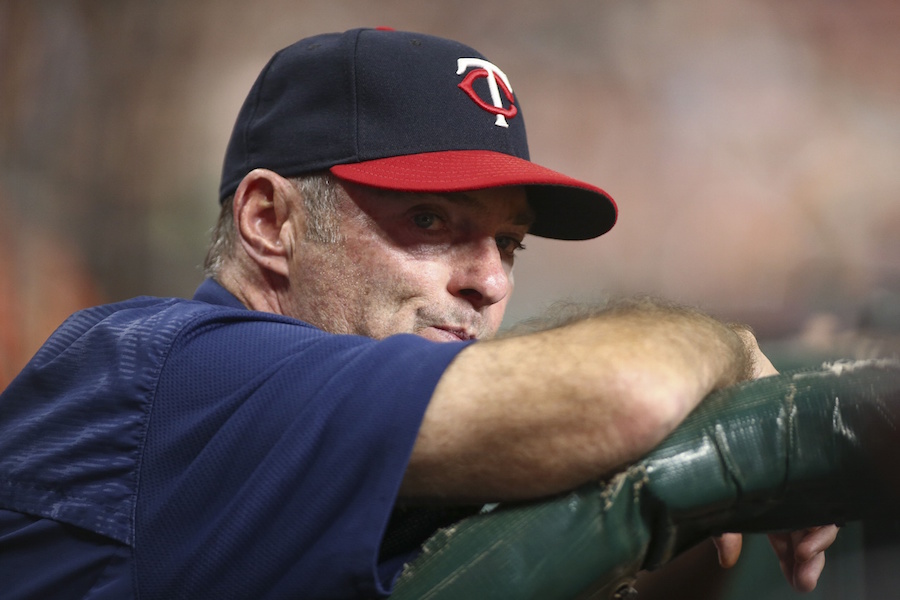 To go from a half-game out of first place to six games out within the span of eight days is actually quite astounding, made possible by a couple of lousy series against Detroit and Los Angeles while the Indians and Royals have both taken off. At crunch time, these teams are all showing their mettle. I'm not going to take the hack columnist route and call the Twins gutless, or frauds. They've battled in these games, and overperformed like hell to get to this point. But if the front office decides to start flipping core players like Brandon Kintzler, Ervin Santana or even Brian Dozier within the next few days, the players will have no one to blame but themselves. They got a vote of confidence from GM Thad Levine, who went out and acquired one of the best rental starters available, and they immediately flatlined. In three straight games against the (admittedly phenomenal) Dodgers, the Twins took leads and let them slip away. Two of the losses came with their best relievers (Kintzler and Taylor Rogers) on the mound. Repeatedly the offense failed to capitalize on big scoring chances. (The bases-loaded ineptitude has been particularly agonizing.) And, well, that kind of failure is all too recognizable. The Twins have developed a reputation for coming up short in recent years, and after a solid start this season they've fallen right back into that pit. Since moving seven games above .500 by completing a sweep of the Orioles on May 24th, they are 24-33, good for a .421 winning percentage that matches their overall mark from the past six years exactly. Sure, the Twins are now steering for clearer waters after running through a post-break gauntlet, with series against the Athletics, Padres, Rangers and slumping Brewers ahead, but there's not really anything to suggest they'll take advantage in a significant way. The breakout players that powered their early ascent have dropped off almost without exception. Ervin Santana has a 5.46 ERA and and .908 OPS allowed since the beginning of June. Jose Berrios has a 5.79 ERA and (incidentally identical) .908 OPS allowed in July. Miguel Sano is hitting .238/.319/.397 with a 26-to-5 K/BB ratio since the Fourth of July. Max Kepler is at .222/.286/.302 over the same span. Joe Mauer hasn't hit the ball with any kind of authority since returning from a back strain earlier this month; he's managed one extra-base hit (a double) in 38 plate appearances. The blueprint for this team to stay in the postseason mix involved all of these players turning it on in the second half, not turning into pumpkins. Alas, here we are. The Twins have stunned us time and time again with their resilience this summer, and perhaps their biggest surprise is yet to come, but watching them over the course of the past week, it sure feels like they've run out of whatever juice propelled them through the first half. So now Levine and Derek Falvey, taking a big picture view, must concentrate on squeezing whatever juice they can from this roster. It might mean making some hard decisions this weekend, though the team's play over the past week has made them a little easier.
 -
We've run through the entire National League, covering the most intriguing trade possibilities in all three divisions, so it's time to turn our attention to the Junior Circuit. Could the Twins work out a beneficial deal with one of the five teams in the AL West?Now that they revived and completed the Jaime Garcia trade, the Twins are probably done shopping for starting pitchers, but the hunt for relief help continues. This will be our focus as we examine buyers and sellers out west. STANDINGS Houston Astros: 66-33 Seattle Mariners: 50-51 (17 GB) Los Angeles Angels: 49-51 (17.5 GB) Texas Rangers: 48-51 (18 GB) Oakland Athletics: 44-55 (22 GB) THE BUYERS The Astros are running away with the division, and are buyers in the sense that they're clearly in championship mode, though it's not clear where they really need to add. Houston has been dominant in pretty much all phases, though obviously you can never have too many bullets. THE SELLERS The Mariners, Angels and Rangers are all closely bunched behind Houston -- albeit WAY behind Houston. Each is a potential player in the wild card race, and hard-pressed to dump key pieces, but none are in position to make a huge splash in pursuit of the playoffs. The A's, meanwhile, are out of it and ready to move any assets. The Mariners The M's recently traded four prospects to acquire reliever David Phelps from the Marlins, so it seems unlikely they'll dismantle their bullpen at this point, despite facing long odds. Steve Cishek is one name to watch: he's on an expiring contract and could be a decent addition at the right price. The Angels The Halos are in the wild-card mix but if they decide to pack up and sell they have a number of relief rentals that might appeal to the Twins. Namely: Bud Norris, Yusmeiro Petit and David Hernandez. All three have been excellent. Minnesota and the Anaheimers of course linked up last year on a deadline deal involving Ricky Nolasco and Hector Santiago. The Rangers Texas is a pivotal deadline player, holding the biggest publicized trade chip in Yu Darvish, who is due to hit free agency at season's end. If they choose to ship out Darvish, it won't be to Minnesota, and there isn't really a bullpen match here unless they then decide to ship out a controllable reliever like Matt Bush or Jeremy Jeffress. The Athletics Oakland has already flipped a pair of its top relievers, sending Ryan Madson and Sean Doolittle to Washington, so the Twins might've missed the boat here. Now, all attention is on Sonny Gray, who is the biggest name being bandied about right now after Darvish (and far more likely to be moved). Gray is controlled through 2019, so he'd fit with the front office's long-term thinking, but would cost an awful lot. SUMMARY You can dream on Darvish or Gray, but the most realistic targets in the AL West are mid-tier relievers like the Angels' trio of Norris, Petit and Hernandez. Click here to view the article
-
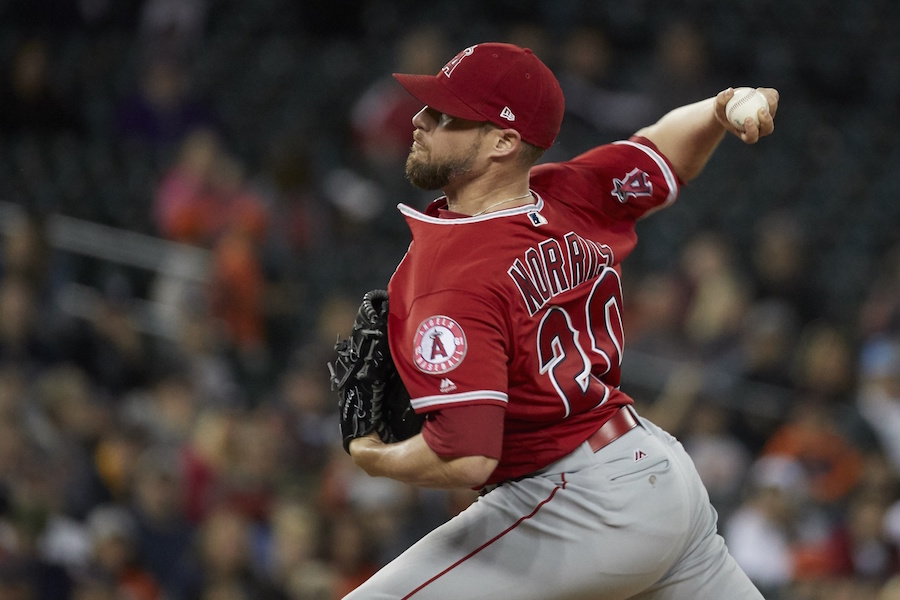 Now that they revived and completed the Jaime Garcia trade, the Twins are probably done shopping for starting pitchers, but the hunt for relief help continues. This will be our focus as we examine buyers and sellers out west. STANDINGS Houston Astros: 66-33 Seattle Mariners: 50-51 (17 GB) Los Angeles Angels: 49-51 (17.5 GB) Texas Rangers: 48-51 (18 GB) Oakland Athletics: 44-55 (22 GB) THE BUYERS The Astros are running away with the division, and are buyers in the sense that they're clearly in championship mode, though it's not clear where they really need to add. Houston has been dominant in pretty much all phases, though obviously you can never have too many bullets. THE SELLERS The Mariners, Angels and Rangers are all closely bunched behind Houston -- albeit WAY behind Houston. Each is a potential player in the wild card race, and hard-pressed to dump key pieces, but none are in position to make a huge splash in pursuit of the playoffs. The A's, meanwhile, are out of it and ready to move any assets. The Mariners The M's recently traded four prospects to acquire reliever David Phelps from the Marlins, so it seems unlikely they'll dismantle their bullpen at this point, despite facing long odds. Steve Cishek is one name to watch: he's on an expiring contract and could be a decent addition at the right price. The Angels The Halos are in the wild-card mix but if they decide to pack up and sell they have a number of relief rentals that might appeal to the Twins. Namely: Bud Norris, Yusmeiro Petit and David Hernandez. All three have been excellent. Minnesota and the Anaheimers of course linked up last year on a deadline deal involving Ricky Nolasco and Hector Santiago. The Rangers Texas is a pivotal deadline player, holding the biggest publicized trade chip in Yu Darvish, who is due to hit free agency at season's end. If they choose to ship out Darvish, it won't be to Minnesota, and there isn't really a bullpen match here unless they then decide to ship out a controllable reliever like Matt Bush or Jeremy Jeffress. The Athletics Oakland has already flipped a pair of its top relievers, sending Ryan Madson and Sean Doolittle to Washington, so the Twins might've missed the boat here. Now, all attention is on Sonny Gray, who is the biggest name being bandied about right now after Darvish (and far more likely to be moved). Gray is controlled through 2019, so he'd fit with the front office's long-term thinking, but would cost an awful lot. SUMMARY You can dream on Darvish or Gray, but the most realistic targets in the AL West are mid-tier relievers like the Angels' trio of Norris, Petit and Hernandez.
 -
But they didn't really "trade and sign" Pavano. They offered arbitration and he accepted to get a one-year deal, which obviously worked out very nicely because he was great in 2010. Only after that did they give him the (ill-advised?) two-year contract. Along those same lines, extending a qualifying offer to Garcia in is an interesting thought, but maybe not palatable given that it's now like 1 yr/$18m
-
Allow me to set the stage. The year is 2011, and a young left-hander by the name of Jaime Garcia is establishing himself as a frontline stud in the St. Louis Cardinals rotation. Fresh off a stellar campaign in 2010 that placed him third in Rookie of the Year balloting, behind Buster Posey and Jason Heyward, the 24-year-old Garcia made 32 starts, posting a 3.56 ERA and recording 13 wins for a second straight year.Wouldn't it be grand if that 2011 version of Garcia could re-emerge? Well, it's not likely. In five years since, he has undergone two major shoulder surgeries – for labrum and rotator cuff tears, then for thoracic outlet syndrome – while aging past 30. But you needn't dream so much to find plenty to like in Garcia, acquired from Atlanta on Monday along with minor-league catcher Anthony Recker, in exchange for 19-year-old Dominican right-hander Huascar Ynoa. It's not a blockbuster. It's not an all-in, pedal-to-the-medal move. It's not even as aggressive as the push as the similarly positioned Royals made on the same day. But there are five reasons I'm feeling really good about this trade for the Twins. 1) Worm burner supreme: Garcia is an absolute ground ball machine He has a 56.4 percent career ground ball rate and has never wavered far from that mark. Whereas the Twins have long been enamored with guys who can "pitch down in the zone," their starters have rarely embodied a true GB pitcher prototype. Garcia annually posts grounder rates that stack up against the league's best. While this isn't necessarily ideal for a team much better in the outfield than the infield defensively, and the lack of strikeouts limits his ceiling, Garcia boasts a high floor. Pitchers who keep the ball on the ground so well don't give up many extra-base hits, and don't often unravel in short starts. (Only once in 18 turns this year has he failed to complete at least five innings.) The Twins were seeking that kind of stability rather than ace upside. They got it. And... 2) The price was right: Minnesota acquired Garcia without giving up much Ynoa was interesting, to be sure. There's a reason the Twins paid a hefty $800,000 to sign him as a 16-year-old in 2014. But he hasn't advanced past rookie ball, didn't rank among Twins Daily's top 20 prospects heading into the season, and hasn't adjusted well to the Appy League, where he has a 5.26 ERA and 1.64 WHIP in six starts. Maybe he fills out, adds more velocity, refines his offspeed stuff, and turns into a quality starter. But he's basically a lotto ticket right now, and in comparison with last week's iteration of the Garcia trade, the Twins are swapping out Nick Burdi – who could be a dominating late-inning reliever in 2019 – for someone who might be a good MLB starter around 2021. For a club at the front end of a winning cycle, that's a good tradeoff. Ynoa was a small price to pay for a starter with Garcia's track record. Part of the reason Derek Falvey and Thad Levine were able to swing it might have been... 3) Ponying up: The Twins are covering all the money Garcia, on a $12 million contract, is owed almost $5 million over the remainder of the season. In the days where they were more conscious of expenses, the Twins might have been inclined to throw in a better prospect in order to get the Braves to foot some of that bill. But by taking all of the salary obligation off Atlanta's ledger, they provided extra motivation to make a deal. It's not any huge investment, but backs up ownership's assertion that the new front office will be given financial flexibility to execute their plans. And for a franchise with the reputation this one has, it is pretty good optically. Speaking of good optics... 4) Message delivered: Falvey and Levine are giving a vote of confidence The Twins are overperforming. No one expected them to be at this point, and objectively, they probably won't hang with the Indians (maybe not even the Royals) over the final two months. But the players on the roster have worked hard to get to this point. They aren't within a couple of games of first place in late July by accident. In going out and getting arguably the best rental starter on the market (outside of Yu Darvish, who may or may not actually be available), the new leaders are sending a message to this group: We believe in you. Here's some help. Now go get it. They are doing so in a responsible way – "measured," to borrow a term from Levine – but Garcia undoubtedly has a chance to make a significant impact, especially in light of what he's replacing. And to that end... 5) Game on: The Twins just got more watchable, and more interesting Assuming Garcia can stay healthy (and that's not the lofty proposition it once was) this team will now have a much better chance of winning each fifth day. He pushes Hector Santiago out of the equation, and whether he takes the place of Bartolo Colon or Kyle Gibson, it's a substantial upgrade. With Garcia joining Ervin Santana, Jose Berrios and Adalberto Mejia, the Twins have a respectable starting four. And in the fifth spot, they at least have possibilities. Gibson seems to be coming around, and Stephen Gonsalves and Fernando Romero are looming in Double-A. From 103 losses to adding for the stretch run. And we're still at the front end of a contention window. Game on. Click here to view the article
-
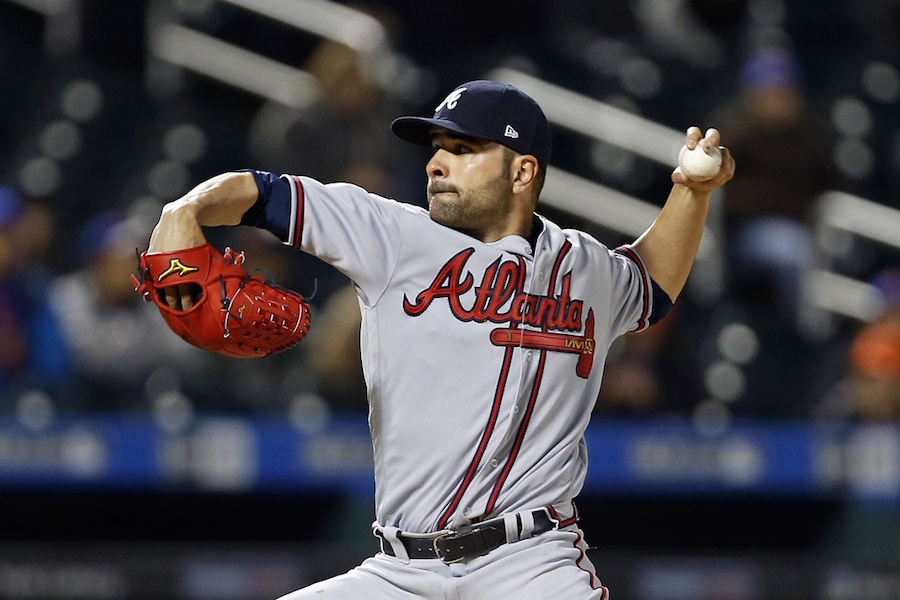 Wouldn't it be grand if that 2011 version of Garcia could re-emerge? Well, it's not likely. In five years since, he has undergone two major shoulder surgeries – for labrum and rotator cuff tears, then for thoracic outlet syndrome – while aging past 30. But you needn't dream so much to find plenty to like in Garcia, acquired from Atlanta on Monday along with minor-league catcher Anthony Recker, in exchange for 19-year-old Dominican right-hander Huascar Ynoa. It's not a blockbuster. It's not an all-in, pedal-to-the-medal move. It's not even as aggressive as the push as the similarly positioned Royals made on the same day. But there are five reasons I'm feeling really good about this trade for the Twins. 1) Worm burner supreme: Garcia is an absolute ground ball machine He has a 56.4 percent career ground ball rate and has never wavered far from that mark. Whereas the Twins have long been enamored with guys who can "pitch down in the zone," their starters have rarely embodied a true GB pitcher prototype. Garcia annually posts grounder rates that stack up against the league's best. While this isn't necessarily ideal for a team much better in the outfield than the infield defensively, and the lack of strikeouts limits his ceiling, Garcia boasts a high floor. Pitchers who keep the ball on the ground so well don't give up many extra-base hits, and don't often unravel in short starts. (Only once in 18 turns this year has he failed to complete at least five innings.) The Twins were seeking that kind of stability rather than ace upside. They got it. And... 2) The price was right: Minnesota acquired Garcia without giving up much Ynoa was interesting, to be sure. There's a reason the Twins paid a hefty $800,000 to sign him as a 16-year-old in 2014. But he hasn't advanced past rookie ball, didn't rank among Twins Daily's top 20 prospects heading into the season, and hasn't adjusted well to the Appy League, where he has a 5.26 ERA and 1.64 WHIP in six starts. Maybe he fills out, adds more velocity, refines his offspeed stuff, and turns into a quality starter. But he's basically a lotto ticket right now, and in comparison with last week's iteration of the Garcia trade, the Twins are swapping out Nick Burdi – who could be a dominating late-inning reliever in 2019 – for someone who might be a good MLB starter around 2021. For a club at the front end of a winning cycle, that's a good tradeoff. Ynoa was a small price to pay for a starter with Garcia's track record. Part of the reason Derek Falvey and Thad Levine were able to swing it might have been... 3) Ponying up: The Twins are covering all the money Garcia, on a $12 million contract, is owed almost $5 million over the remainder of the season. In the days where they were more conscious of expenses, the Twins might have been inclined to throw in a better prospect in order to get the Braves to foot some of that bill. But by taking all of the salary obligation off Atlanta's ledger, they provided extra motivation to make a deal. It's not any huge investment, but backs up ownership's assertion that the new front office will be given financial flexibility to execute their plans. And for a franchise with the reputation this one has, it is pretty good optically. Speaking of good optics... 4) Message delivered: Falvey and Levine are giving a vote of confidence The Twins are overperforming. No one expected them to be at this point, and objectively, they probably won't hang with the Indians (maybe not even the Royals) over the final two months. But the players on the roster have worked hard to get to this point. They aren't within a couple of games of first place in late July by accident. In going out and getting arguably the best rental starter on the market (outside of Yu Darvish, who may or may not actually be available), the new leaders are sending a message to this group: We believe in you. Here's some help. Now go get it. They are doing so in a responsible way – "measured," to borrow a term from Levine – but Garcia undoubtedly has a chance to make a significant impact, especially in light of what he's replacing. And to that end... 5) Game on: The Twins just got more watchable, and more interesting Assuming Garcia can stay healthy (and that's not the lofty proposition it once was) this team will now have a much better chance of winning each fifth day. He pushes Hector Santiago out of the equation, and whether he takes the place of Bartolo Colon or Kyle Gibson, it's a substantial upgrade. With Garcia joining Ervin Santana, Jose Berrios and Adalberto Mejia, the Twins have a respectable starting four. And in the fifth spot, they at least have possibilities. Gibson seems to be coming around, and Stephen Gonsalves and Fernando Romero are looming in Double-A. From 103 losses to adding for the stretch run. And we're still at the front end of a contention window. Game on.
 -
Last week, Seth took a look at the trade landscape in the National League West, calling out some players from the Padres and Giants who could interest Minnesota's front office. Today, we turn our attention to the NL Central.Late last week, the Twins almost completed a deal to acquire Atlanta's Jaime Garcia, but it fell through in the late stages. Though the move didn't go down (not yet anyway), the message was sent: Derek Falvey and Thad Levine are in buy mode, and open to rentals at the right price. As they seek to upgrade the rotation and bullpen, could they find a match in the NL Central? STANDINGS Milwaukee Brewers: 53-48 Chicago Cubs: 51-46 Pittsburgh Pirates: 49-50 (3 GB) St. Louis Cardinals: 47-51 (4.5 GB) Cincinnati Reds: 41-57 (10.5 GB) THE BUYERS The Brewers have been one of baseball's best surprises, outpacing low expectations to lead one of baseball's tougher divisions as we head into late July. They are in Buy Mode. The Cubs, who have already made a big splash by acquiring Jose Quintana from across town, probably aren't done. And the Pirates, making a hard charge after starting slow, are also setting their sights on a postseason berth. THE SELLERS The Reds are clearly open for business, with a few intriguing assets we'll cover below. The Cardinals? Well now that's an interesting one. They have placed first or second in the division for seven straight seasons, but last year finished 16.5 games behind the Cubs, and now they find themselves chasing three clubs. Non-contention is unfamiliar territory for the Cards, and while they're certainly not out of it, frustration is running high and the front office seems inclined to shake things up. The Reds The most interesting name generating trade buzz in Cincy is Raisel Iglesias. He was the Reds' Opening Day starter last year, but moved to the bullpen after dealing with some arm issues and has now settled in as a fearsome closer throwing in the upper 90s. He's only 25, and under team control through 2021, so the price would be exorbitantly high. Looking elsewhere, you won't find much quality on the worst pitching staff in the majors, although there are a few players worth monitoring. Tim Adleman and Scott Feldman are serviceable starters that wouldn't require a top prospect to pry loose, though Feldman is currently on the DL. Among relievers, the Twins might be inquiring on Drew Storen (an impending free agent), Blake Wood, or left-hander Tony Cingrani. One wild card: Zack Cozart. The shortstop has quietly emerged as a top-tier player in the game, combining premium offensive production with stellar D, and he's set to hit the open market at season's end. The Reds are certainly listening on him, and right now the Twins could stand to get better at short. If Minnesota is open to a contract extension, there could be something here, though it's a long shot. The Cardinals The Cardinals probably aren't going to trade current closer Seung-hwan Oh, but they might be inclined to listen on former closer Trevor Rosenthal, who is under contract through next year. His 14.1 K/9 rate ranks fifth among big-league relievers. On the rotation front, Lance Lynn's name has unsurprisingly been popping up in many rumors. The 30-year-old is about to become a free agent, and has been a consistent stud in St. Louis over the years. He missed 2016 due to Tommy John surgery but has bounced back nicely this season. Lynn will have many suitors, some with more urgency than the Twins. SUMMARY It's fun to ponder what dealings between the Twins and Cardinals might look like, but the Reds are the most likely trade partner in the NL Central. Unless the Twins are willing to pony up for Iglesias, they would likely be choosing from a group of mid-rotation starters and middle relievers. Feldman makes a lot of sense, but a trade for him probably would not materialize until August, after the non-waiver deadline. Click here to view the article
-
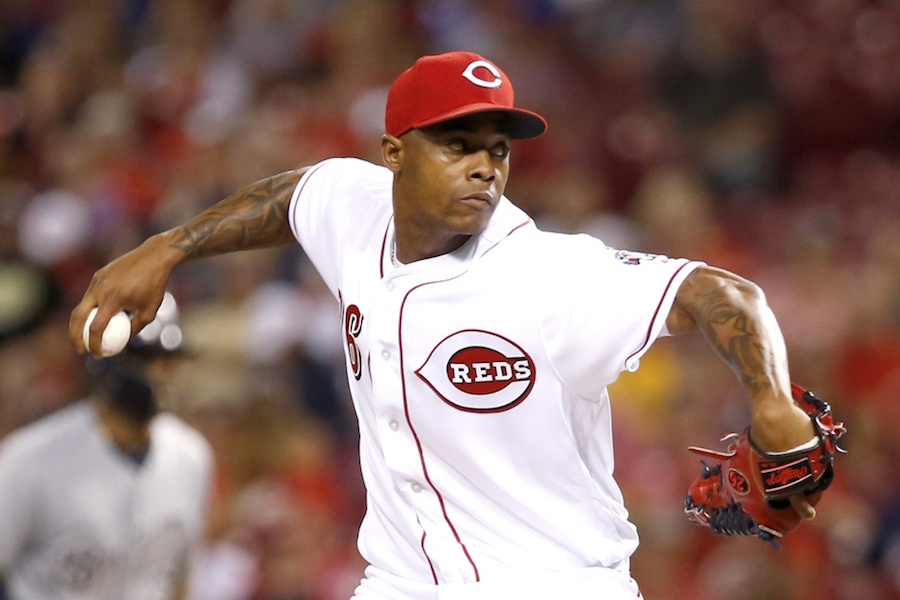 Late last week, the Twins almost completed a deal to acquire Atlanta's Jaime Garcia, but it fell through in the late stages. Though the move didn't go down (not yet anyway), the message was sent: Derek Falvey and Thad Levine are in buy mode, and open to rentals at the right price. As they seek to upgrade the rotation and bullpen, could they find a match in the NL Central? STANDINGS Milwaukee Brewers: 53-48 Chicago Cubs: 51-46 Pittsburgh Pirates: 49-50 (3 GB) St. Louis Cardinals: 47-51 (4.5 GB) Cincinnati Reds: 41-57 (10.5 GB) THE BUYERS The Brewers have been one of baseball's best surprises, outpacing low expectations to lead one of baseball's tougher divisions as we head into late July. They are in Buy Mode. The Cubs, who have already made a big splash by acquiring Jose Quintana from across town, probably aren't done. And the Pirates, making a hard charge after starting slow, are also setting their sights on a postseason berth. THE SELLERS The Reds are clearly open for business, with a few intriguing assets we'll cover below. The Cardinals? Well now that's an interesting one. They have placed first or second in the division for seven straight seasons, but last year finished 16.5 games behind the Cubs, and now they find themselves chasing three clubs. Non-contention is unfamiliar territory for the Cards, and while they're certainly not out of it, frustration is running high and the front office seems inclined to shake things up. The Reds The most interesting name generating trade buzz in Cincy is Raisel Iglesias. He was the Reds' Opening Day starter last year, but moved to the bullpen after dealing with some arm issues and has now settled in as a fearsome closer throwing in the upper 90s. He's only 25, and under team control through 2021, so the price would be exorbitantly high. Looking elsewhere, you won't find much quality on the worst pitching staff in the majors, although there are a few players worth monitoring. Tim Adleman and Scott Feldman are serviceable starters that wouldn't require a top prospect to pry loose, though Feldman is currently on the DL. Among relievers, the Twins might be inquiring on Drew Storen (an impending free agent), Blake Wood, or left-hander Tony Cingrani. One wild card: Zack Cozart. The shortstop has quietly emerged as a top-tier player in the game, combining premium offensive production with stellar D, and he's set to hit the open market at season's end. The Reds are certainly listening on him, and right now the Twins could stand to get better at short. If Minnesota is open to a contract extension, there could be something here, though it's a long shot. The Cardinals The Cardinals probably aren't going to trade current closer Seung-hwan Oh, but they might be inclined to listen on former closer Trevor Rosenthal, who is under contract through next year. His 14.1 K/9 rate ranks fifth among big-league relievers. On the rotation front, Lance Lynn's name has unsurprisingly been popping up in many rumors. The 30-year-old is about to become a free agent, and has been a consistent stud in St. Louis over the years. He missed 2016 due to Tommy John surgery but has bounced back nicely this season. Lynn will have many suitors, some with more urgency than the Twins. SUMMARY It's fun to ponder what dealings between the Twins and Cardinals might look like, but the Reds are the most likely trade partner in the NL Central. Unless the Twins are willing to pony up for Iglesias, they would likely be choosing from a group of mid-rotation starters and middle relievers. Feldman makes a lot of sense, but a trade for him probably would not materialize until August, after the non-waiver deadline.
 -
Is the Twins' bullpen hopeless? It can be easy to feel that way, with the stable of hopeful minor-league reinforcements sabotaged by injuries, and several planned key contributors – such as Ryan Pressly, Matt Belisle and Craig Breslow – scuffling through ugly seasons. But this also ignores the fact that Minnesota features two of the game's better relievers at the back end in Brandon Kintzler and Taylor Rogers, as well as a number of other usable parts. Improving the unit to the point of respectability doesn't need to be an overwhelmingly difficult or costly proposition.It's accurate to say the bullpen has been a considerable weakness for the Twins overall, and yet, per Win Probability Added, they have two of the league's four most valuable firemen. Kintzler ranks third in the AL in WPA, trailing only Andrew Miller and Craig Kimbrel. Rogers is right him behind in fourth place. After those two, it hasn't been very pretty for the Twins. Tyler Duffey and Buddy Boshers look capable, but should probably both be bumped down a notch on the leverage totem pole. One or two more legit late-inning options would make a world of difference for this unit. Help could come from within. Belisle and Pressly have shown signs of pulling it together. Trevor Hildenberger and Alan Busenitz look promising. But if we're being honest, this team needs to add from outside if it wants to be any kind of serious player in the final months. Walking a Fine Line General manager Thad Levine indicated recently that the club will not "be inclined to spend lavishly on short-term assets," preferring to add only controllable players when giving up a significant return. That's the right mindset, at least with regard to supplementing the rotation. The front office should be looking for starters it can keep beyond this year rather than going all-in on an extreme longshot. On the relief side, though, the story is a little different. Such players are volatile commodities, and in the past, Minnesota has been bitten by paying extra for added control with these upgrades. Matt Capps and Kevin Jepsen inescapably come to mind. So the smart bet is for the Twins to find a rental or two for which they won't have to "spend lavishly." It might mean waiting until August; they've had some success there in the past, acquiring players like Jon Rauch and Brian Fuentes in August while giving up little. Or they could get a bit more aggressive and take a cue from the Nationals. Eyes on Washington The Nats laid out the blueprint last week for what a midseason bullpen boost should look like. In a deal with the last-place Athletics, they acquired veterans Sean Doolittle and Ryan Madson. Both are hugely valuable additions, but neither carries the price-inflating closer title. In fact, Washington received the duo on pretty reasonable terms. For their part, the Nationals sent Oakland Blake Treinen, an inconsistent fireballer much more interesting for a team that can patiently work with him than he is for a contender. (Pressly, anyone?) The Nats also packaged a pair of good, yet unspectacular, prospects in 19-year-old left-hander Jesus Luzardo and third baseman Sheldon Neuse. For comps in the Twins system, think Lewis Thorpe and Travis Blankenhorn. Madson and Doolittle both have contracts extending into 2018, which is a little unnerving, but they are a clear cut above the Cappses and Jepsens of the world. Such a deal would fit with Levine's stated desire to bring in help for this year and beyond, while also adding veteran leadership to the pen, and not in the form of Breslisle mediocrity. Every situation is unique, so who knows if the Twins could pull off something similar, but the bottom line here is that "buying" at the deadline doesn't necessarily mean mortgaging the future. With a savvy approach, you can have it both ways, rewarding this upstart group for exceeding expectations and supporting their efforts to overtake a complacent Cleveland club, while still adhering to a responsible big-picture view. Click here to view the article
-
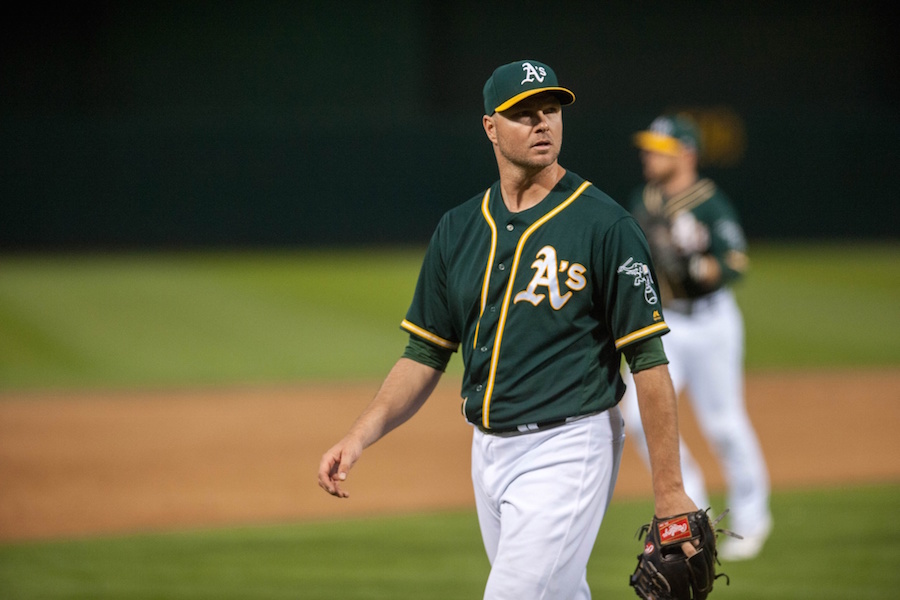 It's accurate to say the bullpen has been a considerable weakness for the Twins overall, and yet, per Win Probability Added, they have two of the league's four most valuable firemen. Kintzler ranks third in the AL in WPA, trailing only Andrew Miller and Craig Kimbrel. Rogers is right him behind in fourth place. After those two, it hasn't been very pretty for the Twins. Tyler Duffey and Buddy Boshers look capable, but should probably both be bumped down a notch on the leverage totem pole. One or two more legit late-inning options would make a world of difference for this unit. Help could come from within. Belisle and Pressly have shown signs of pulling it together. Trevor Hildenberger and Alan Busenitz look promising. But if we're being honest, this team needs to add from outside if it wants to be any kind of serious player in the final months. Walking a Fine Line General manager Thad Levine indicated recently that the club will not "be inclined to spend lavishly on short-term assets," preferring to add only controllable players when giving up a significant return. That's the right mindset, at least with regard to supplementing the rotation. The front office should be looking for starters it can keep beyond this year rather than going all-in on an extreme longshot. On the relief side, though, the story is a little different. Such players are volatile commodities, and in the past, Minnesota has been bitten by paying extra for added control with these upgrades. Matt Capps and Kevin Jepsen inescapably come to mind. So the smart bet is for the Twins to find a rental or two for which they won't have to "spend lavishly." It might mean waiting until August; they've had some success there in the past, acquiring players like Jon Rauch and Brian Fuentes in August while giving up little. Or they could get a bit more aggressive and take a cue from the Nationals. Eyes on Washington The Nats laid out the blueprint last week for what a midseason bullpen boost should look like. In a deal with the last-place Athletics, they acquired veterans Sean Doolittle and Ryan Madson. Both are hugely valuable additions, but neither carries the price-inflating closer title. In fact, Washington received the duo on pretty reasonable terms. For their part, the Nationals sent Oakland Blake Treinen, an inconsistent fireballer much more interesting for a team that can patiently work with him than he is for a contender. (Pressly, anyone?) The Nats also packaged a pair of good, yet unspectacular, prospects in 19-year-old left-hander Jesus Luzardo and third baseman Sheldon Neuse. For comps in the Twins system, think Lewis Thorpe and Travis Blankenhorn. Madson and Doolittle both have contracts extending into 2018, which is a little unnerving, but they are a clear cut above the Cappses and Jepsens of the world. Such a deal would fit with Levine's stated desire to bring in help for this year and beyond, while also adding veteran leadership to the pen, and not in the form of Breslisle mediocrity. Every situation is unique, so who knows if the Twins could pull off something similar, but the bottom line here is that "buying" at the deadline doesn't necessarily mean mortgaging the future. With a savvy approach, you can have it both ways, rewarding this upstart group for exceeding expectations and supporting their efforts to overtake a complacent Cleveland club, while still adhering to a responsible big-picture view.
 -
The gradual downturn of the Twins – now just one game above .500 after a poor showing in Houston over the weekend – has been a story in Minnesota, albeit not necessarily a surprising one. Nationally, the bigger story has been Cleveland's inability to take advantage and pull away in the division.Complacency in Cleveland After a somewhat slow start, it seemed as though the Indians – prohibitive preseason favorites in the AL Central – were turning the corner in mid-June when they came to Target Field and swept a four-game series from the upstart Twins, ending a five-week run for Minnesota in first-place. The Indians seemingly should have taken off at that point, but they didn't. When the Twins came into their house the next weekend and swept, with Cleveland managing only two runs in three games against an abysmal pitching staff, it felt like a big missed opportunity to put the pedal to the metal. Since then, the Indians have gone just 8-8, losing a series at home to the lowly Padres and more recently dropping all three in Oakland against the last-place A's. In Sunday's series finale, Trevor Bauer failed to make it out of the first inning of an eventual 7-3 loss. Cleveland has plenty of talent but also plenty of problems. Their rotation situation isn't too dissimilar from Minnesota's – strong at the top (Corey Kluber and Carlos Carrasco), but beleaguered with injuries and poor performance elsewhere. The enigmatic Bauer joins Josh Tomlin and Danny Salazar as starters who've been unable to contribute as the Indians hoped. Meanwhile, the offense hasn't really clicked, and manager Terry Francona has hinted at concerns about bullpen star Andrew Miller experiencing fatigue. The Indians are almost certain to strike as buyers at the deadline, and could easily hit a groove at any time, but it hasn't happened, and we're heading into late July now. Royals Remaining In The Mix The Royals looked to be making a charge early this month, winning six of seven and temporarily overtaking second place. But they followed up by losing five of six to the Dodgers and Rangers. These are the kinds of swings you'll see from such a thoroughly mediocre team. KC's lineup has ranked among the league's most ineffective and the arms haven't been good enough to make up for it. It'll be interesting to see how the Royals operate over the next couple of weeks. They have a number of key players knocking on the door of free agency – most notably Mike Moustakas, Eric Hosmer and Lorenzo Cain – so they really can't straddle the line as buyers or sellers. Many have speculated that GM Dayton Moore will go all-in, efforting to make a final run with this group, but where does that leave them if they come up short? Kansas City's farm system was ranked 25th out of 30 by John Sickels of Minor League Ball before the season. I question the wisdom of flipping long-term assets at this point. Tame Tigers Things are not going so great in Detroit. The Tigers are eight games below .500 and more or less out of it in the Central. Miguel Cabrera is looking more human than ever at age 34, and the pitching staff is a mess behind Michael Fulmer. Detroit would love to dump Justin Verlander but unsurprisingly he isn't drawing much interest with a 4.66 ERA and $28 million salary. The Tigers do have three players performing quite well – outfielders J.D. Martinez and Justin Upton, and closer Justin Wilson – but Martinez is on an expiring contract and Upton can opt-out after this season, so both figure to be dangled to contenders at the deadline. Wilson too might be shopped, though he's the team's best controllable reliever so it'd take a bounty (Twins, take note). The bottom line is that the Tigers look be non-factors the rest of the way. Winter Comes for the White Sox With Game of Thrones kicking off its seventh season on Sunday night, we can fittingly call Chicago the White Walkers. An all-out rebuilding effort from the front office has systematically removed the lifeblood of this roster, with Chris Sale and Adam Eaton being shipped out before the season and Jose Quintana making his exit last week. In all likelihood, closer David Robertson is next up. What's left is a ghostly group of mostly scrubs, dragging their way to the end of a campaign destined for doom from the start. And Then, There Are The Twins Minnesota remains in second place, barely, after dropping two of three against Houston. The Twins are 7-11 since sweeping the Indians in Cleveland, but remain within two games of first place. Now they will come home, with a chance to do some damage against slumping teams (Detroit and New York) before heading to a LA for a daunting date with the dominating Dodgers. Seeing their flaws, which were clearly on display in Texas over the past few days, it might feel easy to pass the Twins off as also-rans, still living from the fruits of a fast start that's quickly fading into the rearview mirror. But this is much harder to do in light of the circumstances they find themselves in. No team in the AL Central is presently on pace to win even 85 games. That might change, and it might not. If the Indians truly aren't going to get it together and run away with this thing, is Minnesota really going to let them off the hook? The Twins are better positioned to take it from them than any of the three other teams. Click here to view the article
-
 Complacency in Cleveland After a somewhat slow start, it seemed as though the Indians – prohibitive preseason favorites in the AL Central – were turning the corner in mid-June when they came to Target Field and swept a four-game series from the upstart Twins, ending a five-week run for Minnesota in first-place. The Indians seemingly should have taken off at that point, but they didn't. When the Twins came into their house the next weekend and swept, with Cleveland managing only two runs in three games against an abysmal pitching staff, it felt like a big missed opportunity to put the pedal to the metal. Since then, the Indians have gone just 8-8, losing a series at home to the lowly Padres and more recently dropping all three in Oakland against the last-place A's. In Sunday's series finale, Trevor Bauer failed to make it out of the first inning of an eventual 7-3 loss. Cleveland has plenty of talent but also plenty of problems. Their rotation situation isn't too dissimilar from Minnesota's – strong at the top (Corey Kluber and Carlos Carrasco), but beleaguered with injuries and poor performance elsewhere. The enigmatic Bauer joins Josh Tomlin and Danny Salazar as starters who've been unable to contribute as the Indians hoped. Meanwhile, the offense hasn't really clicked, and manager Terry Francona has hinted at concerns about bullpen star Andrew Miller experiencing fatigue. The Indians are almost certain to strike as buyers at the deadline, and could easily hit a groove at any time, but it hasn't happened, and we're heading into late July now. Royals Remaining In The Mix The Royals looked to be making a charge early this month, winning six of seven and temporarily overtaking second place. But they followed up by losing five of six to the Dodgers and Rangers. These are the kinds of swings you'll see from such a thoroughly mediocre team. KC's lineup has ranked among the league's most ineffective and the arms haven't been good enough to make up for it. It'll be interesting to see how the Royals operate over the next couple of weeks. They have a number of key players knocking on the door of free agency – most notably Mike Moustakas, Eric Hosmer and Lorenzo Cain – so they really can't straddle the line as buyers or sellers. Many have speculated that GM Dayton Moore will go all-in, efforting to make a final run with this group, but where does that leave them if they come up short? Kansas City's farm system was ranked 25th out of 30 by John Sickels of Minor League Ball before the season. I question the wisdom of flipping long-term assets at this point. Tame Tigers Things are not going so great in Detroit. The Tigers are eight games below .500 and more or less out of it in the Central. Miguel Cabrera is looking more human than ever at age 34, and the pitching staff is a mess behind Michael Fulmer. Detroit would love to dump Justin Verlander but unsurprisingly he isn't drawing much interest with a 4.66 ERA and $28 million salary. The Tigers do have three players performing quite well – outfielders J.D. Martinez and Justin Upton, and closer Justin Wilson – but Martinez is on an expiring contract and Upton can opt-out after this season, so both figure to be dangled to contenders at the deadline. Wilson too might be shopped, though he's the team's best controllable reliever so it'd take a bounty (Twins, take note). The bottom line is that the Tigers look be non-factors the rest of the way. Winter Comes for the White Sox With Game of Thrones kicking off its seventh season on Sunday night, we can fittingly call Chicago the White Walkers. An all-out rebuilding effort from the front office has systematically removed the lifeblood of this roster, with Chris Sale and Adam Eaton being shipped out before the season and Jose Quintana making his exit last week. In all likelihood, closer David Robertson is next up. What's left is a ghostly group of mostly scrubs, dragging their way to the end of a campaign destined for doom from the start. And Then, There Are The Twins Minnesota remains in second place, barely, after dropping two of three against Houston. The Twins are 7-11 since sweeping the Indians in Cleveland, but remain within two games of first place. Now they will come home, with a chance to do some damage against slumping teams (Detroit and New York) before heading to a LA for a daunting date with the dominating Dodgers. Seeing their flaws, which were clearly on display in Texas over the past few days, it might feel easy to pass the Twins off as also-rans, still living from the fruits of a fast start that's quickly fading into the rearview mirror. But this is much harder to do in light of the circumstances they find themselves in. No team in the AL Central is presently on pace to win even 85 games. That might change, and it might not. If the Indians truly aren't going to get it together and run away with this thing, is Minnesota really going to let them off the hook? The Twins are better positioned to take it from them than any of the three other teams.
 -
Earlier this week, we pondered whether the Minnesota Twins should operate as buyers or sellers at the upcoming trade deadline. You all weighed in with more than 100 comments, with good arguments on both sides. In a recent interview with Mark Feinsand of MLB.com, general manager Thad Levine laid out his thoughts on the matter.Levine explained that the team's surprisingly successful first half won't fundamentally alter the front office's view of where the Twins currently sit in the winning cycle. "We're probably not going to be inclined to spend lavishly on short-term assets," he said, "but we would be very open to spending aggressively on assets that we could use to propel our team forward this year and for years to come." This is something that, I think, we can all agree on in concept. The idea of giving up prospects of any significant value for two-month rentals, particularly in a case where your club clearly is not top-tier, doesn't make much sense. But the Twins could obviously use some controllable assets, especially when it comes to starting pitching. Their needs in that department aren't likely to go away anytime soon. Sure enough, Ken Rosenthal of FOX Sports tweeted on Tuesday that Minnesota is "checking in on controllable starters." That's nice to hear, but of course, such prizes can be difficult to pry. Quality pitching you can lock in is the game's most valued commodity, so the Twins aren't likely to acquire such a player in exchange for their more expendable pieces, like Eddie Rosario or Eduardo Escobar. No, sparking the interest of clubs like the Athletics (Sonny Gray), the White Sox (Jose Quintana) and even the Marlins (Dan Straily) will require at least one top prospect, preferably one who is somewhat far along. Since trading young hurlers like Fernando Romero or Stephen Gonsalves would run contrary to what the Twins are trying to accomplish, there is one candidate whose name stands out. Should the Twins be dangling Nick Gordon in these discussions? The 21-year-old infielder was widely viewed as the organization's best prospect coming into the season, and has solidified his case with a breakthrough campaign at Class-AA Chattanooga. By adding significant power and staying put at shortstop, he has alleviated the doubts that suppressed his ranking on some preseason lists (including ours). Gordon is now a bona fide rising star, and he was the Twins' sole representative at the All Star Futures Game on Sunday. Uber-talented young shortstops are hard to come by, and certainly hard to give up, but Minnesota is better positioned than most. ... Wait a minute, did I just type that sentence? An organization that has notoriously seen a revolving door at the shortstop position – 11 different Opening Day starters in the past 12 years, and rarely an above-average regular at any point during that span – can now afford to part with one of the best shortstop prospects in the game? Well, they kinda could. The Twins have a 24-year-old everyday SS currently in place with Jorge Polanco. Though his play this year has raised plenty of skepticism, he is altogether still pretty inexperienced with room for growth, and they also have Escobar on hand as a viable alternative. Then there is defensive whiz Engelb Vielma knocking on the door at Triple-A. And further down, several teenagers could rise fast, including recent No. 1 overall pick Royce Lewis and big-dollar international signings Wander Javier and Jelfry Marte. As is the nature of such prospects, there is no assurance any of the above players (other than Viema) will stick at short. But no such assurance exists for Gordon, either. Questions about his aptitude on the left side of the diamond aren't going away just because he got rid of his pesky timeshare partner when Vielma moved up to Rochester. It's possible his value will never be higher. Gordon is turning the corner before our eyes and, for now, still looks like a future MLB shortstop. There's a great deal of logic in floating him over the coming weeks in exploratory fashion. It is also possible that Gordon is only beginning to realize his potential and is on his way to major-league stardom – perhaps in the not-too-distant future. To trade away such an asset in for a guy like Straily, who might be no more than a mid-rotation starter for a few years, would be rough in hindsight. These are the stakes in deadline dealings. If you're in Levine's shoes, how are you viewing Gordon and his movability? Click here to view the article
-
 Levine explained that the team's surprisingly successful first half won't fundamentally alter the front office's view of where the Twins currently sit in the winning cycle. "We're probably not going to be inclined to spend lavishly on short-term assets," he said, "but we would be very open to spending aggressively on assets that we could use to propel our team forward this year and for years to come." This is something that, I think, we can all agree on in concept. The idea of giving up prospects of any significant value for two-month rentals, particularly in a case where your club clearly is not top-tier, doesn't make much sense. But the Twins could obviously use some controllable assets, especially when it comes to starting pitching. Their needs in that department aren't likely to go away anytime soon. Sure enough, Ken Rosenthal of FOX Sports tweeted on Tuesday that Minnesota is "checking in on controllable starters." That's nice to hear, but of course, such prizes can be difficult to pry. Quality pitching you can lock in is the game's most valued commodity, so the Twins aren't likely to acquire such a player in exchange for their more expendable pieces, like Eddie Rosario or Eduardo Escobar. No, sparking the interest of clubs like the Athletics (Sonny Gray), the White Sox (Jose Quintana) and even the Marlins (Dan Straily) will require at least one top prospect, preferably one who is somewhat far along. Since trading young hurlers like Fernando Romero or Stephen Gonsalves would run contrary to what the Twins are trying to accomplish, there is one candidate whose name stands out. Should the Twins be dangling Nick Gordon in these discussions? The 21-year-old infielder was widely viewed as the organization's best prospect coming into the season, and has solidified his case with a breakthrough campaign at Class-AA Chattanooga. By adding significant power and staying put at shortstop, he has alleviated the doubts that suppressed his ranking on some preseason lists (including ours). Gordon is now a bona fide rising star, and he was the Twins' sole representative at the All Star Futures Game on Sunday. Uber-talented young shortstops are hard to come by, and certainly hard to give up, but Minnesota is better positioned than most. ... Wait a minute, did I just type that sentence? An organization that has notoriously seen a revolving door at the shortstop position – 11 different Opening Day starters in the past 12 years, and rarely an above-average regular at any point during that span – can now afford to part with one of the best shortstop prospects in the game? Well, they kinda could. The Twins have a 24-year-old everyday SS currently in place with Jorge Polanco. Though his play this year has raised plenty of skepticism, he is altogether still pretty inexperienced with room for growth, and they also have Escobar on hand as a viable alternative. Then there is defensive whiz Engelb Vielma knocking on the door at Triple-A. And further down, several teenagers could rise fast, including recent No. 1 overall pick Royce Lewis and big-dollar international signings Wander Javier and Jelfry Marte. As is the nature of such prospects, there is no assurance any of the above players (other than Viema) will stick at short. But no such assurance exists for Gordon, either. Questions about his aptitude on the left side of the diamond aren't going away just because he got rid of his pesky timeshare partner when Vielma moved up to Rochester. It's possible his value will never be higher. Gordon is turning the corner before our eyes and, for now, still looks like a future MLB shortstop. There's a great deal of logic in floating him over the coming weeks in exploratory fashion. It is also possible that Gordon is only beginning to realize his potential and is on his way to major-league stardom – perhaps in the not-too-distant future. To trade away such an asset in for a guy like Straily, who might be no more than a mid-rotation starter for a few years, would be rough in hindsight. These are the stakes in deadline dealings. If you're in Levine's shoes, how are you viewing Gordon and his movability?
 -
As the Minnesota Twins head into the All-Star break, two games above .500 and very much in the postseason mix, they are coming up on some important decisions that could help shape the final months of this season, and beyond. Above all, they must take a hard look at who they are, and where they're at, then make a critical determination: will they enter the upcoming deadline as buyers or sellers?First, let's quickly take stock of a first half that's been tremendously redeeming for the organization and its fans. Where Things Stand Last season's mess was a painful slog for all involved. The Twins entered the break with a 32-56 record, already long erased from any kind of relevance. Setbacks and struggles were vastly outweighing any positive developments. What a difference a year makes. This season hasn't been without its misfortunes and letdowns, but everywhere you look, there are fun, energizing storylines. Ervin Santana is approximating an ace with his performance; he's already tied his career high with four complete games, giving him more than any other team in the league. Miguel Sano is fulfilling his immense potential, showing prodigious power that makes him a favorite in Monday night's Home Run Derby. Closer Brandon Kintzler will join the two in the All-Star Game on Tuesday, as one of the best current stories in baseball. In 2016, the team's play was characterized by poor fundamentals and losing streaks that extended into agonizing droughts. In 2017, we have seen vastly improved defense and a newfound resilience. A year ago by this time the Twins already had already endured four losing streaks of five or more games; this season it hasn't happened once. Beyond the improved competitiveness, this club has simply been entertaining to watch. Sano hits the baseball as hard as anyone I've ever seen. Jose Berrios is electrifying on the mound. Byron Buxton is turning himself into a human highlight reel by doing things like this and this and and this: Yes, just as Buxton scampered 270 feet from first to home in seemingly the blink of an eye, the Twins have come a long way in 12 months. But are they ready to make a real push for the playoffs? The answer will dictate their strategy over the next three weeks. The Case For Buying Opportunities like this don't necessarily come along often. The Twins are getting career years from players in key spots – namely, at the top of their rotation (Santana) and back end of their bullpen (Kintzler). Given the lack of quality depth in those units, and the lack of future assurance for either, this is a fortuitous alignment that should not go to waste. Any talk of a theoretical timeline in which young players continue to mature and more prospects join in seems to overrate the likelihood of such outcomes reaching fruition, while underrating the value of guys like Santana and Kintzler doing what they are doing. Neither is the prototype for his role. The Twins aren't the prototype for a World Series contender. But they are getting it done, and they continue to do so. The combination of a scrappy young club, finally coming into its own, with a front office showing a refreshing quickness to react and willingness to experiment, builds intrigue over what could happen the rest of the way. More prospects could enter the fold. Perhaps Minnesota catches lightning in a bottle with someone like Dillon Gee or Bartolo Colon. But there's no doubt about this: the Twins need some outside help in order to shore up inhibiting weaknesses. Provided they can acquire players with control extending beyond this year, and can avoid parting with assets critical to their continued emergence, heading into the deadline as buyers doesn't necessitate sacrificing the future. The Case For Selling Derek Falvey and Thad Levine came into their jobs with a big-picture focus. If that meant building the best possible clubs for 2018, 2019, and beyond, then things have certainly played out favorably for them during the first three months. Whereas last year's deadline didn't bring much drama due to lack of attractive saleable parts, this year the Twins have trade chips of legitimate interest to top contenders. Pitching is at a premium, as always, and the Twins have a pair of All-Star arms capable of helping anyone. While the ride has been fun thus far, an analytical front office will recognize that this club is not really equipped for a championship run. Their postseason odds are at 20 percent, they're outperforming their Pythagorean W/L record substantially, and their flaws glare against quality teams. The fact that they're on the fringe of contention, and hardly motivated sellers, gives the Twins leverage in negotiations that didn't exist last year. If they can identify and acquire either young MLB pitchers or prospects on the brink, it's a savvy long-term strategy. Why The Next Two Weeks Will Decide Everything Here's the problem with the savvy strategy mentioned above: if things stay as they are, it is not really an option in practical terms. A reader of Twins Daily might be sold on the wisdom of waving a white flag in order to bolster future odds and supplement the pitching pipeline. But the casual fan, or the actual players who have worked to get to this point? Not so much. This franchise has endured a demoralizing run over the past half-decade, and making moves that optically resemble giving up just won't play. Of course, this could all change over the next two weeks. The Twins come out of the break with a very tough run. They first head to Houston for a three-game series against the American League's best team. We all remember what happened when the Astros came to Target Field. Minnesota follows up that challenge with a homestand against the Yankees and Tigers, two offenses capable of dismantling a weak pitching staff. Afterwards, it's off to Los Angeles for a daunting matchup against the NL's best team, the Dodgers. It's entirely possible that the Twins find themselves well below .500 after running through this gauntlet. At that point, the decision sort of makes itself. So really, if the players in this group want to make a push, they hold their destiny in their own hands. Stay Tuned Make sure to visit Twins Daily regularly over the coming weeks. We promise to cover the deadline – with all its rumors and speculation – more exhaustively than any other spot. Follow us on Twitter for up-to-the-minute updates. And if you aren't already, please join the conversation by creating an account and sharing your own thoughts. Will the Twins act as buyers at the end of the month? It's hard to know right now. But that sure would beat the alternative. Click here to view the article
