



Nick Nelson
-
Posts
8,327 -
Joined
-
Last visited
-
Days Won
56
Content Type
Profiles
News
Minnesota Twins Videos
2026 Minnesota Twins Top Prospects Ranking
2022 Minnesota Twins Draft Picks
Minnesota Twins Free Agent & Trade Rumors, Notes, & Tidbits
Guides & Resources
2023 Minnesota Twins Draft Picks
The Minnesota Twins Players Project
2024 Minnesota Twins Draft Picks
2025 Minnesota Twins Draft Pick Tracker
2026 Minnesota Twins Draft Tracker: Picks & Bonuses
Forums
Blogs
Events
Store
Downloads
Gallery
Everything posted by Nick Nelson
-
 Minnesota's signing of righty reliever Addison Reed to a two-year, $16.25 million contract, which became official on Monday, was stunning for multiple reasons. Yes, it was the first multi-year contract ever given to a free agent reliever by the Twins. But more strikingly, it adds another guaranteed contract to a bullpen that was already somewhat crowded. In fact, Reed may have removed the last vacancy in the unit, and that would leave some surprising names on the outside looking in.As things stand, I think we can safely say that the following pitchers are locks for the Twins bullpen, barring injury: Reed, Fernando Rodney, Zach Duke, Trevor Hildenberger, Taylor Rogers and Ryan Pressly. You might quibble on Pressly but they just signed him for $1.6 million and he's out of options. Despite his disappointing 2017, I don't think they're going to give up on that stuff without at least taking one more long look. So if we're square on those assumptions, then there's one spot remaining in a seven-man bullpen. I might be going out on a limb here, but I suspect that spot is also essentially spoken for and filled. Er, Philled. One thing that is conspicuously amiss in the group of six above is a long reliever who can bridge the gap over several innings after short starts. The highest pitch total in a 2017 outing for anyone in the group was Hildenberger's 40, in his second career appearance, and I suspect the Twins would prefer not to let him approach that number going forward. We haven't heard much on Phil Hughes lately but the most recent reports suggested his recovery was going smoothly and he was amped up to return in 2018. He'll be six months removed from his thoracic outlet revision surgery when he reports to camp. His $13.2 million salary and – more importantly – his (albeit now distant) history of pitching well in the majors make him a sure bet to land on the pitching staff, so long as he's healthy and throwing reasonably well. As I wrote back in early December, bringing Hughes back as a reliever is almost the only option that makes sense. This only feels more true now, given how the rest of the pen is shaping up. So, if that seven-man relief corps is penciled in, it leaves all of these guys out of luck: Tyler Duffey, Alan Busenitz, JT Chargois, Gabriel Moya, Tyler Kinley. Duffey has spent almost the entire past two seasons in the majors, and posted a 3.72 FIP for the Twins in relief last year. Busenitz posted a 1.99 ERA and 0.98 WHIP in 28 appearances as a rookie. Chargois lost his entire season to injury but is one of the organization's top relief prospects, and he's MLB-ready. Moya has been silly good in the minors, and had the highest K-rate of any Minnesota reliever during his brief 2017 debut. Kinley was the Rule 5 pick that the Twins basically sacrificed Nick Burdi and Luke Bard to acquire, though you could argue one or both might have been lost over the course of the offseason anyway. I didn't mention John Curtiss, because I don't think he'll be a viable contender for the Twins bullpen out of camp, but he's on the 40-man roster and has gotten a taste of the majors. Buddy Boshers was designated for assignment to make room for Reed, but if he makes it through waivers he'll still be around. He's spent plenty of time in the majors and has, in my mind, the right profile to get back there. The collection of guys slated to miss out on Opening Day roster spots could basically form an MLB-caliber bullpen in Rochester. I might be exaggerating a little, but not a ton, especially if Chargois is healthy and on his game. We still haven't yet accounted for Dietrich Enns (lefty starter acquired in Jaime Garcia deal, almost assuredly destined for a relief role), Tyler Jay (potentially back on the fast track after a healthy showing in the AFL), or the inevitability that at least a couple from the Gonsalves/Romero/Littell/Jorge pack will drop out as starters. It's a degree of MLB-ready (or very close) depth the franchise hasn't enjoyed in quite some time. And it happens to coincide with bullpens becoming an increased area of focus all around the game. Minnesota certainly isn't rich with proven top-tier relievers – a shortcoming they did address nicely with the Reed signing – but on aggregate, their talent at the position might rival any organization in the league. With just a few more guys turning the corner, the Twins could have themselves a self-styled power pen. Granted, that's a sizable "if" but at least the team is giving itself a whole lot of reasonable "maybes." Click here to view the article
- 105 replies
-
- 7
-

-
- addison reed
- fernando rodney
- (and 3 more)
-
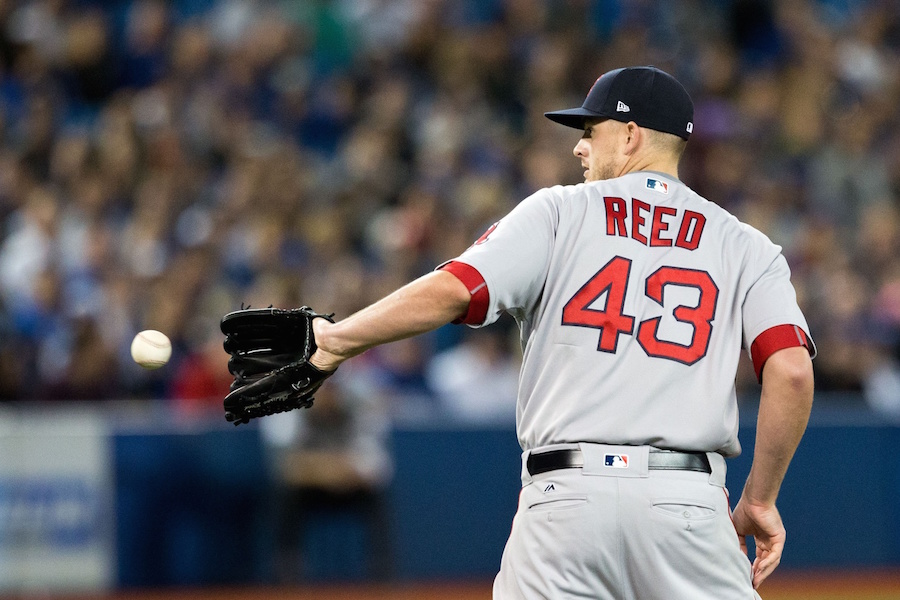 As things stand, I think we can safely say that the following pitchers are locks for the Twins bullpen, barring injury: Reed, Fernando Rodney, Zach Duke, Trevor Hildenberger, Taylor Rogers and Ryan Pressly. You might quibble on Pressly but they just signed him for $1.6 million and he's out of options. Despite his disappointing 2017, I don't think they're going to give up on that stuff without at least taking one more long look. So if we're square on those assumptions, then there's one spot remaining in a seven-man bullpen. I might be going out on a limb here, but I suspect that spot is also essentially spoken for and filled. Er, Philled. One thing that is conspicuously amiss in the group of six above is a long reliever who can bridge the gap over several innings after short starts. The highest pitch total in a 2017 outing for anyone in the group was Hildenberger's 40, in his second career appearance, and I suspect the Twins would prefer not to let him approach that number going forward. We haven't heard much on Phil Hughes lately but the most recent reports suggested his recovery was going smoothly and he was amped up to return in 2018. He'll be six months removed from his thoracic outlet revision surgery when he reports to camp. His $13.2 million salary and – more importantly – his (albeit now distant) history of pitching well in the majors make him a sure bet to land on the pitching staff, so long as he's healthy and throwing reasonably well. As I wrote back in early December, bringing Hughes back as a reliever is almost the only option that makes sense. This only feels more true now, given how the rest of the pen is shaping up. So, if that seven-man relief corps is penciled in, it leaves all of these guys out of luck: Tyler Duffey, Alan Busenitz, JT Chargois, Gabriel Moya, Tyler Kinley. Duffey has spent almost the entire past two seasons in the majors, and posted a 3.72 FIP for the Twins in relief last year. Busenitz posted a 1.99 ERA and 0.98 WHIP in 28 appearances as a rookie. Chargois lost his entire season to injury but is one of the organization's top relief prospects, and he's MLB-ready. Moya has been silly good in the minors, and had the highest K-rate of any Minnesota reliever during his brief 2017 debut. Kinley was the Rule 5 pick that the Twins basically sacrificed Nick Burdi and Luke Bard to acquire, though you could argue one or both might have been lost over the course of the offseason anyway. I didn't mention John Curtiss, because I don't think he'll be a viable contender for the Twins bullpen out of camp, but he's on the 40-man roster and has gotten a taste of the majors. Buddy Boshers was designated for assignment to make room for Reed, but if he makes it through waivers he'll still be around. He's spent plenty of time in the majors and has, in my mind, the right profile to get back there. The collection of guys slated to miss out on Opening Day roster spots could basically form an MLB-caliber bullpen in Rochester. I might be exaggerating a little, but not a ton, especially if Chargois is healthy and on his game. We still haven't yet accounted for Dietrich Enns (lefty starter acquired in Jaime Garcia deal, almost assuredly destined for a relief role), Tyler Jay (potentially back on the fast track after a healthy showing in the AFL), or the inevitability that at least a couple from the Gonsalves/Romero/Littell/Jorge pack will drop out as starters. It's a degree of MLB-ready (or very close) depth the franchise hasn't enjoyed in quite some time. And it happens to coincide with bullpens becoming an increased area of focus all around the game. Minnesota certainly isn't rich with proven top-tier relievers – a shortcoming they did address nicely with the Reed signing – but on aggregate, their talent at the position might rival any organization in the league. With just a few more guys turning the corner, the Twins could have themselves a self-styled power pen. Granted, that's a sizable "if" but at least the team is giving itself a whole lot of reasonable "maybes."
 -
On September 22nd of last season, Fernando Rodney closed out a win for the Diamondbacks and became the third active member of the 300 saves club. That number had stood at two (Francisco Rodriguez and Huston Street) for only a few weeks, because it was earlier in the same month that Joe Nathan officially lost his 'active' status by announcing his retirement. Now, with Rodney aboard as the new Twins closer and with Nathan attending this month's Winter Meltdown as our featured guest, I'm reminded of one of my favorite baseball memories – one which happens to involve both historic relievers.When people ask about the most memorable baseball game I've ever attended, it's an easy answer. The 2009 AL Central tiebreaker against the Detroit Tigers, with its enormously high stakes and staggering momentum shifts, was one of the most intense sporting events I've ever witnessed. To be there in person, alongside 50,000+ other fans for what would prove to be the second-to-last Twins game ever played in the Metrodome, was an exhilarating experience I'll never forget. That night also contained what would go down in my mind as the quintessential Joe Nathan moment. NERVOUS TICKS Being that we all saw it up-close, and on the heels of a highly successful run by Eddie Guardo as Twins closer, Nathan's incredible run in the ninth inning for Minnesota may not get the appreciation it fully deserves. Sure, the save itself – obtained simply by protecting a lead of up to three runs in the final inning – is an overrated stat, and not necessarily a telling one. Plenty of guys have racked up tons of saves without pitching all that brilliantly. But this was certainly not the case for Nathan. From 2004 through 2009, the right-hander was as good as it gets. Rarely in the game's history will you find a seven-year stretch marked by such consistent and convincing dominance. But you wouldn't guess it on the basis of Nathan's mannerisms while pitching. Despite his greatness, he certainly wasn't immune to getting himself into sticky situations, and when that happened, he hardly exuded confidence with his nervous pacing and raspberry-blowing on the mound. However, on the vast majority of occasions, Nathan worked his way out of it, and on that October evening against Detroit he did so in particularly dramatic fashion. THE TRIPLE FIST PUMP In the eighth inning, Matt Guerrier had given up a leadoff homer to Magglio Ordonez that tied the score at 4-4. After a groundout, Guerrier issued back-to-back walks, putting the game in a precarious spot. Joe Nathan time. The Minnesota closer, wrapping up what would prove to be his last stellar campaign as a Twin, came into the game and quickly induced a pop-up, then froze Gerald Laird on a signature hard curveball to escape the inning. The ninth would bring its own theatrics. The Tigers opened with two straight singles, putting runners on the corners with no outs. Due up? The Nos. 2-through-4 hitters Placido Polanco, Ordonez and Miguel Cabrera. Through grit, determination, and a little bit of luck, Nathan got the job done. First, he struck out Polanco – no small feat. Polanco's 6.8% K-rate that year was second-lowest in the majors. One of the best contact hitters of the era was just looking to put something in play, and couldn't do it, as Nathan caught him looking on an inside slider that caught the corner. Then up came Ordonez, setting up one of the most thrilling moments in a thrill ride of a game. Nathan fell behind Ordonez 1-0, then grooved a fastball down the middle. The Detroit right fielder connected didn't get all of it, sending a soft liner directly to shortstop. Orlando Cabrera gloved it and quickly whipped the ball to Michael Cuddyer at first to double off Curtis Granderson, who'd wandered just a bit too far off the bag. Inning over. Tie preserved. RODNEY RUNNING ON FUMES In the bottom half of the inning, in came Rodney, who was actually at the tail end of his first year as a full-time closer, in which he delivered the kind of performance that would become customary: with a 4.40 ERA and 1.47 WHIP, he was hardly great, but good enough when it counted as he converted 37-of-38 saves. In this particular game, Rodney put forth an admirable effort, going three full innings for a beat-up Tigers bullpen. But by the 12th, as he approached 50 pitches, the right-hander wore down and eventually the Twins got to him, with Alexi Casilla singling in Carlos Gomez to propel Minnesota into the playoffs. Rodney took the loss in one of the most memorable Twins games ever. Now, in the twilight of his career, he's joining up. Ironically, Nathan basically did the opposite, joining up with Detroit in 2014 for what was essentially his last burst in the big leagues. In that case it didn't go well (he posted a 4.78 ERA in '14 and made only one appearance in '15 before requiring a second Tommy John surgery). Obviously, we're hoping things play out better in the case of Rodney, who is coming off – by a number of measures – his best season in years. As he inches toward the end of his own career, he has a chance to gain ground on Nathan and other heralded closers ahead of him. It's not unthinkable he could break into the Top 10 in saves before he's done (he needs 68 more to pass another former Twin, Jeff Reardon, who's currently 10th). If Rodney is able to help the Twins back to the postseason this year, it'll be celebrated with imaginary arrows instead of fist pumps, but we'll take them all the same. His résumé will never match up that of Nathan – who stands out especially in contrast as the definition of pure dominance in the ninth – but Rodney certainly now has a chance to end things with a redemptive exclamation point. And if he's not up to the task, the Twins added some valuable insurance over the weekend with the addition of Addison Reed, whose performance over the past couple seasons has been much more reminiscent of Nathan in his prime. Click here to view the article
-
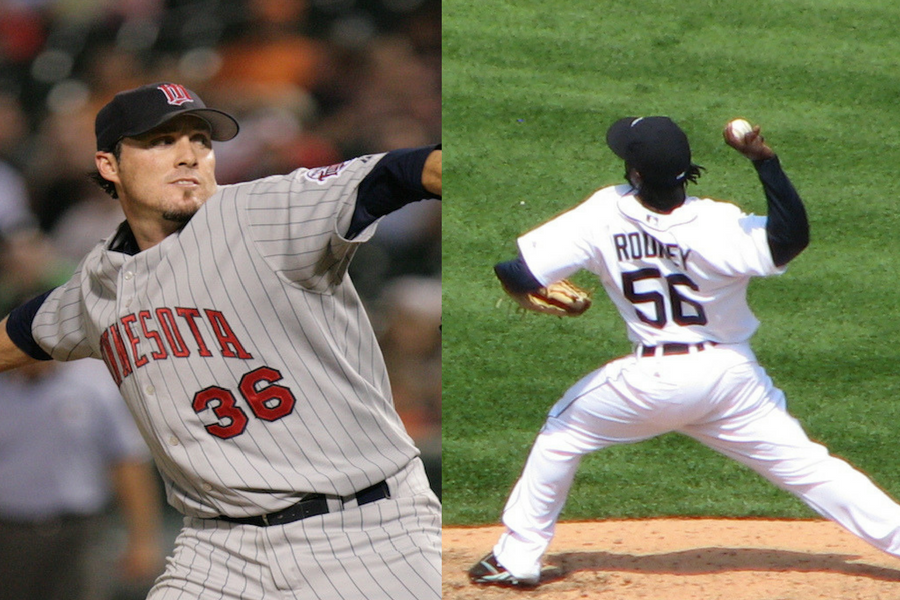 When people ask about the most memorable baseball game I've ever attended, it's an easy answer. The 2009 AL Central tiebreaker against the Detroit Tigers, with its enormously high stakes and staggering momentum shifts, was one of the most intense sporting events I've ever witnessed. To be there in person, alongside 50,000+ other fans for what would prove to be the second-to-last Twins game ever played in the Metrodome, was an exhilarating experience I'll never forget. That night also contained what would go down in my mind as the quintessential Joe Nathan moment. NERVOUS TICKS Being that we all saw it up-close, and on the heels of a highly successful run by Eddie Guardo as Twins closer, Nathan's incredible run in the ninth inning for Minnesota may not get the appreciation it fully deserves. Sure, the save itself – obtained simply by protecting a lead of up to three runs in the final inning – is an overrated stat, and not necessarily a telling one. Plenty of guys have racked up tons of saves without pitching all that brilliantly. But this was certainly not the case for Nathan. From 2004 through 2009, the right-hander was as good as it gets. Rarely in the game's history will you find a seven-year stretch marked by such consistent and convincing dominance. But you wouldn't guess it on the basis of Nathan's mannerisms while pitching. Despite his greatness, he certainly wasn't immune to getting himself into sticky situations, and when that happened, he hardly exuded confidence with his nervous pacing and raspberry-blowing on the mound. However, on the vast majority of occasions, Nathan worked his way out of it, and on that October evening against Detroit he did so in particularly dramatic fashion. THE TRIPLE FIST PUMP In the eighth inning, Matt Guerrier had given up a leadoff homer to Magglio Ordonez that tied the score at 4-4. After a groundout, Guerrier issued back-to-back walks, putting the game in a precarious spot. Joe Nathan time. The Minnesota closer, wrapping up what would prove to be his last stellar campaign as a Twin, came into the game and quickly induced a pop-up, then froze Gerald Laird on a signature hard curveball to escape the inning. The ninth would bring its own theatrics. The Tigers opened with two straight singles, putting runners on the corners with no outs. Due up? The Nos. 2-through-4 hitters Placido Polanco, Ordonez and Miguel Cabrera. Through grit, determination, and a little bit of luck, Nathan got the job done. First, he struck out Polanco – no small feat. Polanco's 6.8% K-rate that year was second-lowest in the majors. One of the best contact hitters of the era was just looking to put something in play, and couldn't do it, as Nathan caught him looking on an inside slider that caught the corner. Then up came Ordonez, setting up one of the most thrilling moments in a thrill ride of a game. Nathan fell behind Ordonez 1-0, then grooved a fastball down the middle. The Detroit right fielder connected didn't get all of it, sending a soft liner directly to shortstop. Orlando Cabrera gloved it and quickly whipped the ball to Michael Cuddyer at first to double off Curtis Granderson, who'd wandered just a bit too far off the bag. Inning over. Tie preserved. RODNEY RUNNING ON FUMES In the bottom half of the inning, in came Rodney, who was actually at the tail end of his first year as a full-time closer, in which he delivered the kind of performance that would become customary: with a 4.40 ERA and 1.47 WHIP, he was hardly great, but good enough when it counted as he converted 37-of-38 saves. In this particular game, Rodney put forth an admirable effort, going three full innings for a beat-up Tigers bullpen. But by the 12th, as he approached 50 pitches, the right-hander wore down and eventually the Twins got to him, with Alexi Casilla singling in Carlos Gomez to propel Minnesota into the playoffs. Rodney took the loss in one of the most memorable Twins games ever. Now, in the twilight of his career, he's joining up. Ironically, Nathan basically did the opposite, joining up with Detroit in 2014 for what was essentially his last burst in the big leagues. In that case it didn't go well (he posted a 4.78 ERA in '14 and made only one appearance in '15 before requiring a second Tommy John surgery). Obviously, we're hoping things play out better in the case of Rodney, who is coming off – by a number of measures – his best season in years. As he inches toward the end of his own career, he has a chance to gain ground on Nathan and other heralded closers ahead of him. It's not unthinkable he could break into the Top 10 in saves before he's done (he needs 68 more to pass another former Twin, Jeff Reardon, who's currently 10th). If Rodney is able to help the Twins back to the postseason this year, it'll be celebrated with imaginary arrows instead of fist pumps, but we'll take them all the same. His résumé will never match up that of Nathan – who stands out especially in contrast as the definition of pure dominance in the ninth – but Rodney certainly now has a chance to end things with a redemptive exclamation point. And if he's not up to the task, the Twins added some valuable insurance over the weekend with the addition of Addison Reed, whose performance over the past couple seasons has been much more reminiscent of Nathan in his prime.
 -
Article: The Time For A Buxton Extension Is Now
Nick Nelson replied to Nick Nelson's topic in Twins Daily Front Page News
Well put!! He also just turned 24. The problem with this "wait and see" approach is that if you wait one more year, and Buxton turns in the kind of 2018 season many of us (including myself) envision, it's a different ballgame this time next year. That's kind of the point with this post, and the other situations referenced. The Twins locked up Dozier ahead of his true breakout, at a time where he hadn't posted an OPS over 762 and was hardly a star yet. Being proactive and anticipating his continued improvement saved them many millions. Meanwhile, Morneau went from laggard to MVP at age 25. How much more could they have saved if they extended him long-term ahead of that 2006 season? I dunno, with all due respect, saying "wait until he proves he's worth a lot of money and then pay him a lot of money" is not shrewd analysis. That kind of simplistic thinking is not what this front office was brought in for. And given that you were advocating not so long ago for trading Buxton and replacing him with Granite, I'm not sure you fully recognize the value Buck already brings and the likelihood that he's going to be a top-tier player in this league. -
This has been an unpredictable saga to say the least. Here in the middle of January, almost every major free agent remains unsigned. Like most other clubs in the league, the Twins are still waiting to make their first truly significant move. The unfamiliar landscape of this offseason is clearly flummoxing both teams and players. The Twins can't control that. But they can control their own house. Which leads me to wonder about the biggest mystery of this mysterious winter: The Twins haven't signed Byron Buxton to a long-term contract extension. In fact, if they've even been discussing it, the secret has been well kept.Entering his final season before the arbitration clock begins, Buxton is reaching a point where the Twins generally lock up their building-block players, for cost assurance if nothing else. DOZIER VU Like, deja vu. Get it? Alright it's dumb but let's get back to the point. It was at this same stage in Brian Dozier's career that the Twins signed him to a four-year contract, which will wrap up this season. Because they timed the extension just ahead of Dozier's true breakout (he was an All Star the following July), the Twins have had him at a bargain the last few years, and will again in 2018. Had they simply run out the thread with Dozier and gone year-to-year in arbitration, he would be costing them almost twice his $9 million salary this year. That was an underrated move by Terry Ryan and Co. They were criticized at the time for failing to buy out any of Dozier's free agency, but that's a shortsighted complaint in my mind. Of course the Twins tried to get another year. But who could blame the second baseman's camp for resisting? He was already giving the team a great deal – if he grew in the way he no doubt believed he would. What Dozier got out of this arrangement was comfort. He received assurance that even if things went unforeseeably amiss, or major injury struck, he'd still be getting nice annual raises. Now, he is set to cash in bigtime. The looming spectre of Dozier's free agency is an unspoken impediment in the front office's talk of sustained long-term winning. It is also evidence of the urgency that Derek Falvey and Thad Levine should feel to hammer out something more substantial with Buxton, and soon. MERCURY RISING There has been no buzz of extension negotiations between Dozier and the Twins. It seems clear that he's intent on testing the open market. Losing him after this year would be a bummer, but not a catastrophe. He'll be into his 30s, and while he's not a guy you replace, Minnesota's system has grown deep in middle infielders. Envisioning a similar scenario with Buxton is far more frightening. Dozier debuted in the major leagues at age 24. Buxton turned 24 less than a month ago, following a season in which he won a Gold Glove and received MVP votes. If he simply plays out his years of team control, he'll be hitting free agency after the 2021 season. At that point he'll be 27 years old, and if his ascent thus far is any indication, it's scary to think how good he'll be. Oh, also: Royce Lewis will theoretically be a fledgling big-leaguer. The Twins need to get something done while they still a fair amount of leverage. RISK MANAGEMENT The same benefit that enticed Dozier – comfort – is magnified in Buxton's case. While Dozier had proven quite durable throughout his pro career, Buxton hasn't enjoyed the same fortune. His brazen aggressiveness in center field, coupled with an ability to hurtle at ungodly speeds, has proven costly. Buck has missed a whole bunch of time, and while 2017 was largely a reprieve from the medley of injuries, it ended with a nasty wall collision in NYC. Buxton and his reps at Jet Sports Management surely recognize the earning potential in his not-too-distant future, but also must weigh his inevitably hazardous style of play. The Twins could offer much peace of mind with a long-term contract that includes a ton of guaranteed money. Perhaps the six-year, $80 million extension that Justin Morneau signed in 2008 could serve as a blueprint. It was a team-friendly pact for the recent MVP, entering his first year of arbitration. But Morneau had taken a fastball to the helmet very early in his major-league career, so he saw the virtues of a safe play. Incidentally, the decision worked out quite well in this case; Morneau earned $29 million in 2011 and 2012 while struggling to return from that fateful 2010 concussion. Had he simply taken an arbitration buyout, a la Dozier, the first baseman would've hit free agency for the first time in the wake of that brain injury. There's a decent chance Buxton will rise quickly to a level that Morneau and Dozier – both undoubtedly all-time Twins greats – could never touch. But as another all-time Twins great and center fielder once said, tomorrow is never promised to any of us. So Buxton has all the reason in the world to be open-minded if the team is approaching with a career-making contract. And on the franchise's end, there should be little hesitance to offer a hell of a lot to make it worth his while. Byron Buxton is a player you go all in on. Click here to view the article
-
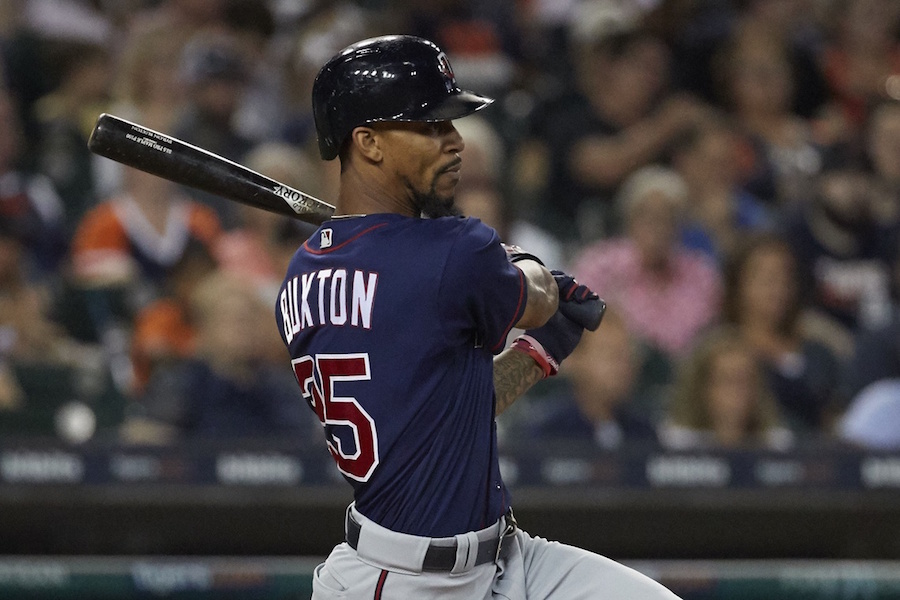 Entering his final season before the arbitration clock begins, Buxton is reaching a point where the Twins generally lock up their building-block players, for cost assurance if nothing else. DOZIER VU Like, deja vu. Get it? Alright it's dumb but let's get back to the point. It was at this same stage in Brian Dozier's career that the Twins signed him to a four-year contract, which will wrap up this season. Because they timed the extension just ahead of Dozier's true breakout (he was an All Star the following July), the Twins have had him at a bargain the last few years, and will again in 2018. Had they simply run out the thread with Dozier and gone year-to-year in arbitration, he would be costing them almost twice his $9 million salary this year. That was an underrated move by Terry Ryan and Co. They were criticized at the time for failing to buy out any of Dozier's free agency, but that's a shortsighted complaint in my mind. Of course the Twins tried to get another year. But who could blame the second baseman's camp for resisting? He was already giving the team a great deal – if he grew in the way he no doubt believed he would. What Dozier got out of this arrangement was comfort. He received assurance that even if things went unforeseeably amiss, or major injury struck, he'd still be getting nice annual raises. Now, he is set to cash in bigtime. The looming spectre of Dozier's free agency is an unspoken impediment in the front office's talk of sustained long-term winning. It is also evidence of the urgency that Derek Falvey and Thad Levine should feel to hammer out something more substantial with Buxton, and soon. MERCURY RISING There has been no buzz of extension negotiations between Dozier and the Twins. It seems clear that he's intent on testing the open market. Losing him after this year would be a bummer, but not a catastrophe. He'll be into his 30s, and while he's not a guy you replace, Minnesota's system has grown deep in middle infielders. Envisioning a similar scenario with Buxton is far more frightening. Dozier debuted in the major leagues at age 24. Buxton turned 24 less than a month ago, following a season in which he won a Gold Glove and received MVP votes. If he simply plays out his years of team control, he'll be hitting free agency after the 2021 season. At that point he'll be 27 years old, and if his ascent thus far is any indication, it's scary to think how good he'll be. Oh, also: Royce Lewis will theoretically be a fledgling big-leaguer. The Twins need to get something done while they still a fair amount of leverage. RISK MANAGEMENT The same benefit that enticed Dozier – comfort – is magnified in Buxton's case. While Dozier had proven quite durable throughout his pro career, Buxton hasn't enjoyed the same fortune. His brazen aggressiveness in center field, coupled with an ability to hurtle at ungodly speeds, has proven costly. Buck has missed a whole bunch of time, and while 2017 was largely a reprieve from the medley of injuries, it ended with a nasty wall collision in NYC. Buxton and his reps at Jet Sports Management surely recognize the earning potential in his not-too-distant future, but also must weigh his inevitably hazardous style of play. The Twins could offer much peace of mind with a long-term contract that includes a ton of guaranteed money. Perhaps the six-year, $80 million extension that Justin Morneau signed in 2008 could serve as a blueprint. It was a team-friendly pact for the recent MVP, entering his first year of arbitration. But Morneau had taken a fastball to the helmet very early in his major-league career, so he saw the virtues of a safe play. Incidentally, the decision worked out quite well in this case; Morneau earned $29 million in 2011 and 2012 while struggling to return from that fateful 2010 concussion. Had he simply taken an arbitration buyout, a la Dozier, the first baseman would've hit free agency for the first time in the wake of that brain injury. There's a decent chance Buxton will rise quickly to a level that Morneau and Dozier – both undoubtedly all-time Twins greats – could never touch. But as another all-time Twins great and center fielder once said, tomorrow is never promised to any of us. So Buxton has all the reason in the world to be open-minded if the team is approaching with a career-making contract. And on the franchise's end, there should be little hesitance to offer a hell of a lot to make it worth his while. Byron Buxton is a player you go all in on.
 -
I mean, I guess if the five teams listed think there's another team in the mix they aren't aware of, it might increase their urgency or at least cause them to rethink what they think they know about his market. But yeah, it's strange that he's out here publicly squashing random rumors.
-
He was also pitching against the best offense in baseball, at the tail of a season where he logged 197 total innings -- his most since 2013. Proclaiming that Darvish is a choke artist on the big stage is pretty flimsy, especially considering how brilliantly he pitched in the NLDS and NLCS.
-
Call it a hot take. I'm fine with that. It's been cold out, and the frozen state of affairs this offseason is only deepening the chill. But I've become convinced that the Twins are destined to sign Yu Darvish. And while it's very possible that my desperation for something – anything – to happen this winter is driving me into delirium, I really don't think it's a totally baseless prognostication. When hundreds of Minnesota baseball diehards congregate at the Winter Meltdown in a couple of weeks, I think we'll all be celebrating the biggest free agency splash in Twins franchise history.What leads me to this conclusion? Well, part of it is wishful thinking, I'll admit. Darvish would be an awesome fit on the Twins and would lift them to serious championship contender status almost instantly. I badly want to see it, so long as the price makes any sense. But there are also plenty of legitimate indications that this could very realistically go down. I'll lay out the two biggest ones, and you can add your own (or dispute mine) in the comments. Only Eyes For Yu The Twins have been openly connected to Darvish throughout the offseason, and GM Thad Levine hasn't been shy about his pursuit. But there've been few other substantive rumors tying Minnesota to any other prominent free agents. A rumbling of trade buzz here and there, sure, but despite their outward interest in adding a frontline starter, the Twins have been conspicuously silent in relation to other free agent starters like Jake Arrieta, Alex Cobb and Lance Lynn. Meanwhile, they've been operating as a team that's gearing up for a big spend. Fernando Rodney and Zach Duke were both low-dollar one year commitments. The Twins have added around $7 million in salary by signing them, but offset part of it by shedding ByungHo Park's contract. So right now they are treading water below $100 million in committed payroll, at a time where they're making their contention push in earnest. Darvish in No Hurry Last week it was reported that Darvish's and his reps had yet to meet with the Twins front office, and that the two sides "don't see it as necessary -- not yet anyway." Many took this as a sign the Twins aren't really in the running for Darvish. We're headlong into January now and there hasn't even been a meeting? Sounds unpromising. But, in my irrationally and unfoundedly optimistic state, I'm clinging to the hypothetical premise I laid out in the forums here at Twins Daily last month: "Here's what is playing out right now – from my hopeful view: Levine has a good enough relationship with Darvish and his agent that the two sides have kept an open line of communication. Thad signaled early on that his interest was very serious, and Darvish's camp indicated that the interest was mutual. So over the past couple of weeks, Darvish has been meeting with other legit suitors to hear their pitches and receive their offers. Now he'll be able to go into a meeting with the Twins knowing full well what else is out there, and what his options are. Meanwhile, Levine will know exactly what kind of bids he's up against. No matter how you look at it, I think Minnesota meeting with Darvish later in the process rather than earlier almost has to be viewed as a good thing... as long as it actually happens." It was a shot in the dark at the time, but nothing that's happened since has made it feel any less plausible. Darvish has met with the Cubs. He's met with the Astros. Neither of those engagements resulted in remotely immediate action, and the Yankees seem to be distantly waiting for the righty's price to drop. The Twins are said to be prepared to offer a "market deal" to Darvish. And as it happens, through all of his courting elsewhere, the realities of his market have become pretty much solidified. It's clear that Minnesota is at least interested in a meeting with Darvish. And while jaded Twins fans love to opt toward the ol' "he's just not that into you" quip, it's kinda silly to think he'd actually be opposed to linking up, given that he evidently hasn't been blown away by any other suitors. It's almost as though Darvish is biding his time, content in the knowledge that his destination is set, and a meeting is merely a formality. What say you? Click here to view the article
-
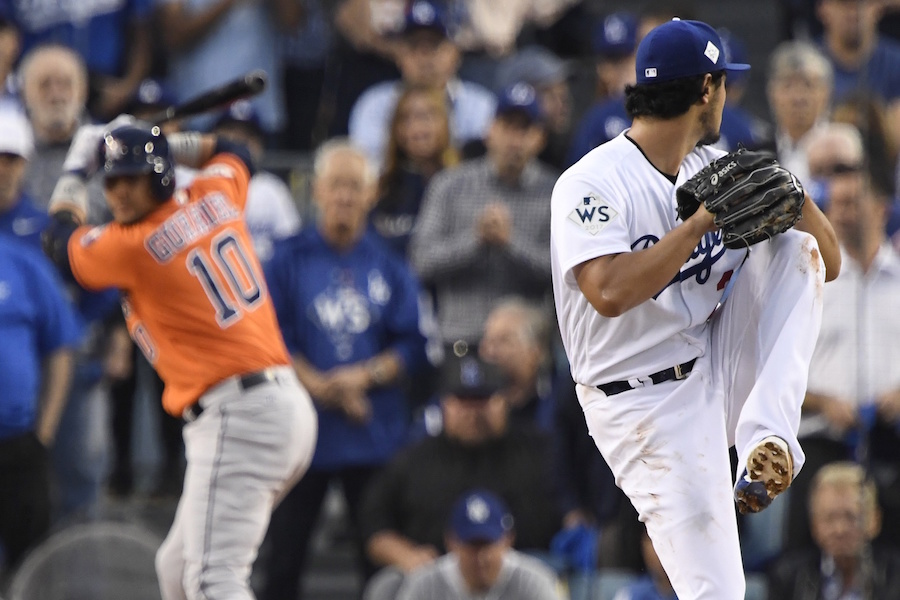 What leads me to this conclusion? Well, part of it is wishful thinking, I'll admit. Darvish would be an awesome fit on the Twins and would lift them to serious championship contender status almost instantly. I badly want to see it, so long as the price makes any sense. But there are also plenty of legitimate indications that this could very realistically go down. I'll lay out the two biggest ones, and you can add your own (or dispute mine) in the comments. Only Eyes For Yu The Twins have been openly connected to Darvish throughout the offseason, and GM Thad Levine hasn't been shy about his pursuit. But there've been few other substantive rumors tying Minnesota to any other prominent free agents. A rumbling of trade buzz here and there, sure, but despite their outward interest in adding a frontline starter, the Twins have been conspicuously silent in relation to other free agent starters like Jake Arrieta, Alex Cobb and Lance Lynn. Meanwhile, they've been operating as a team that's gearing up for a big spend. Fernando Rodney and Zach Duke were both low-dollar one year commitments. The Twins have added around $7 million in salary by signing them, but offset part of it by shedding ByungHo Park's contract. So right now they are treading water below $100 million in committed payroll, at a time where they're making their contention push in earnest. Darvish in No Hurry Last week it was reported that Darvish's and his reps had yet to meet with the Twins front office, and that the two sides "don't see it as necessary -- not yet anyway." Many took this as a sign the Twins aren't really in the running for Darvish. We're headlong into January now and there hasn't even been a meeting? Sounds unpromising. But, in my irrationally and unfoundedly optimistic state, I'm clinging to the hypothetical premise I laid out in the forums here at Twins Daily last month: "Here's what is playing out right now – from my hopeful view: Levine has a good enough relationship with Darvish and his agent that the two sides have kept an open line of communication. Thad signaled early on that his interest was very serious, and Darvish's camp indicated that the interest was mutual. So over the past couple of weeks, Darvish has been meeting with other legit suitors to hear their pitches and receive their offers. Now he'll be able to go into a meeting with the Twins knowing full well what else is out there, and what his options are. Meanwhile, Levine will know exactly what kind of bids he's up against. No matter how you look at it, I think Minnesota meeting with Darvish later in the process rather than earlier almost has to be viewed as a good thing... as long as it actually happens." It was a shot in the dark at the time, but nothing that's happened since has made it feel any less plausible. Darvish has met with the Cubs. He's met with the Astros. Neither of those engagements resulted in remotely immediate action, and the Yankees seem to be distantly waiting for the righty's price to drop. The Twins are said to be prepared to offer a "market deal" to Darvish. And as it happens, through all of his courting elsewhere, the realities of his market have become pretty much solidified. It's clear that Minnesota is at least interested in a meeting with Darvish. And while jaded Twins fans love to opt toward the ol' "he's just not that into you" quip, it's kinda silly to think he'd actually be opposed to linking up, given that he evidently hasn't been blown away by any other suitors. It's almost as though Darvish is biding his time, content in the knowledge that his destination is set, and a meeting is merely a formality. What say you?
 -
In a vacuum, yes. But you on the open market you could acquire a top-tier younger player for Mauer's $23M, and you'd control him for more than one year. These are the primary factors in this evaluation. Mauer plays a position where offense is abundant, and defense is relatively less important, for a restricting price. By no means am I trying to say Joe Mauer is worthless, or not an integral part of the 2018 lineup. This is a big picture type of analysis.
-
Nothing wrong with those takes. They're very reasonable. I personally don't hold Pressly in quite the same regard as Duffey in terms of realistic upside from the bullpen, and I still view May as a quality starter candidate. Just need to see a little more from Busenitz, Littell and Thorpe although they have solid cases no doubt.
-
Eh, I don't really hold it against a guy when he experiences those kinds of issues while operating in a completely unfamiliar role that his body isn't trained for. And those back issues were isolated to 2016 so to me it doesn't qualify him as "injury prone." His health record prior to that season was quite phenomenal. But I'm not assessing based on last year, I'm assessing based on their value to the franchise going forward. I realize this requires a good bit of subjectivity, and I get why people disagree based on 2017 outcomes, but Duffey and May are both highly capable arms under control for 3-4 more years. I think they'll both be big contributors to the staff during that span while Mauer is (hopefully) a marginal 2018 upgrade over what they'd otherwise run out at first base for 2018, and he also occupies about a quarter of their payroll.
-
Question for you: If the Twins suddenly didn't have Mauer available to them, how much worse off are they? Move Sano to first, start Escobar at 3rd, find a DH or just use Grossman. And then you've got an extra 23 mil to spend elsewhere. He's a fine player but he's just not indispensable to the franchise in any way at this point. ? The UCL tear was literally May's first arm injury in his career.
- 55 replies
-
- 2
-
-
- eddie rosario
- miguel sano
- (and 3 more)
-
I'm glad this topic arose, because it was definitely one of the main thinkers that hit me as I compiled the list. First of all, I love Joe Mauer, and he redeemed himself in a big way last year. I'm glad to have him in the lineup. No doubt about that. HOWEVER, I look at it this way: if you could dump him and his $23M salary this year and replace it with, say, Carlos Santana + a $3M reliever, you'd do that 10 out of 10 times, no? Or what if you could sign another solid slugging 1B for a fraction of Santana's price, and then have even more to spend elsewhere? The fact is that an average-ish first baseman in his mid-30s who is extremely expensive -- and whose contract makes him unmoveable -- has little practical value for a team that's trying to build with a big-picture view. Mauer has some uncommon skills -- he's among the best defenders and most disciplined hitters at his position -- but the full package is pretty replaceable. Yes, I'd say more so than Kirilloff, May, Duffey, etc. I didn't really rank beyond 20 but I will say that some of the players who just missed the cut were Garver, Escobar, Thorpe, Rooker, Enlow, and Graterol. Anyone else that people feel deserves consideration? (The question about Dozier playing third is a good one and probably deserving of its own longer thread/discussion)
-
We've reached the top five. Over the past week we have run through our choices for 6-through-10, 11-through-15, and 16-through-20. Now, it's time to round out our rankings of the 20 most valuable Minnesota Twins assets. Looking beyond performance to account for age, contract, and future impact, the idea is to determine which players will be most vital to the team's ongoing success (or, most useful as trade chips). Scroll past the break to learn who we view as the franchise's five most absolutely indispensable players, and why.5. Eddie Rosario, OF (26) Baseball is a game that can sometimes require a frustrating among of patience. For the better part of three seasons in the majors, Rosario tantalized with his immense potential. He had all the physical tools to be a star: good speed, outstanding arm, quick wrists, stunning strength, and – perhaps above all – that aggressive and fiercely competitive edge that often separates the great from the good. For the first 250 games of his career, however, Rosario's output was suppressed by an almost legendary lack of discipline. Entering this past season, the outfielder had drawn only 22 unintentional walks in 828 plate appearances, a mind-boggling 2.6 BB%. He continued to swing away in the early portion of 2017, but somewhere along the way there was an epiphany. Rosario certainly didn't become a patient hitter by any stretch, but he suddenly was laying off those truly unhittable offerings with unprecedented consistency. And then, he was an absolute monster. After putting up a .660 OPS in April, Rosario finished at .810 or above in every following month. He showed a flare for the spectacular: a three-homer game in mid-June, a five-hit effort in July, a two-run homer at Yankee Stadium in the AL Wild Card Game. Knowing Eddie, we can expect plenty more of that sort of bravado over the next four seasons before he's eligible for free agency. 4. Miguel Sano, 3B (24) It feels strange to have Sano outside the top three in these rankings. As recently as July, he was on top of the world – an All-Star, Home Run Derby runner-up, on pace for 35 jacks and 100 RBI... all before his 25th birthday. But since then, it's been a rough go. He hurt his shin in early August and barely played afterward. He missed the team's postseason appearance and subsequently had a titanium rod surgically placed in his leg. His commitment to diet/conditioning was publically called into question by a local columnist, and it wasn't the first time. And more recently, Sano was in the headlines last week for all the wrong reasons. I've always counted myself as a huge Sano fan – I love the enthusiasm, the ferocious cuts, the fiery competitiveness – but even I can't deny that his stock has taken a significant ding, causing him to slide down at least two spots from where he'd have been a few months ago. Sano possesses the rare stuff that superstars and MVPs are made of, but at this point he's got some work to do in order to get back on that trajectory. 3. Jose Berrios, RHP (23) The lean, mean, fireballing machine. A beyond-shaky 2016 arrival in the majors generated plenty of concern around Berrios. Were his spinning frisbee pitches too uncontrollable to keep in the zone (5.4 BB/9)? Would his short stature – often cited by doubters as a fatal flaw while he rocketed through the minors – make him too homer-prone (1.9 HR/9)? It takes us back to the Rosario thing... patience. In 2016, Berrios was an overmatched 22-year-old kid struggling to stay afloat. He was openly determined to erase memories of that inauspicious debut, and in 2017 the right-hander did just that. Sent to the minors to open the year, Berrios torched Triple-A for a month, then burst onto the scene in Minnesota with back-to-back gems in May. He had his ups and downs thereafter, but ultimately Berrios had himself a very strong year, holding opponents to a .239 average and sub-700 OPS while notching nearly a strikeout per inning. He doesn't turn 24 until late May and has been amazingly durable. The Twins can own his services through 2022 at least. 2. Royce Lewis, SS (18) The baseball world was taken by surprise when the Twins selected prep shortstop Royce Lewis with the No. 1 overall pick in June, bypassing multiple players who were widely ranked above him by analysts. Six months later, the decision looks brilliant, not just because the club applied slot savings to load up later in the draft, but also because early evidence makes a good case for Lewis being the best player taken. He went to the rookie-level Gulf Coast League and dominated with his advanced plate approach and blazing speed. Then he made the rare jump straight to Single-A as an 18-year-old, and more than held his own there (.296/.363/.394 in 18 games). Lewis ranked 39th on Baseball America's mid-season Top 100 list, released shortly after he was drafted, and his impressive work the rest of the way will surely move him further up the pre-2018 list. Lewis is still extremely young but has already entered a rapid ascent. His athleticism is off the charts and his Year 1 performance in the pros helps validate his pedigree as a #1 draft choice. It's unknown whether he'll ultimately end up being a shortstop or center fielder, but either way Lewis stands out as one of the game's most prized assets and (thus far) a slam dunk signature addition by the new front office. 1. Byron Buxton, OF (24) The 2011 Twins season was a pit of utter malaise. Colossal expectations that cratered early on, bilateral leg weakness, the Tsuyoshi Nishioka fiasco, Morneau's lingering concussion effects, Matt Capps... it all amounted to a 99-loss campaign that set off a half-decade of misery. And yet... it was all worth it. Because that catastrophe enabled the Twins to land Byron Buxton in the 2012 MLB draft. After being selected second overall, Buxton quickly gained distinction as the No. 1 prospect in baseball. Despite some injury setbacks while rising through the system, he still was in the major leagues by age 21. While his offensive game took a bit longer to acclimate at the highest level than we'd hoped, by the latter half of 2017, Buxton looked like a comfortable, discerning hitter with power and game-changing speed. And he has already established himself as the most valuable defensive player in the league. Buxton impacts games in so many ways, bringing entirely new levels of entertainment and excitement for the viewer. He received MVP votes and a Gold Glove at in his age-23 season, and I'm guessing he'll be getting plenty more of both in the coming seasons. Humble, likable and hardworking, he's a perfect face for the franchise. The Twins own his rights for the next four years, and if they're smart, they are actively working on an extension right now that will keep him around for even longer. Buxton will be the centerpiece of Minnesota's efforts to forge a World Series winner through 2021 at least. You'll find few superior building blocks around the league. OVERALL RANKINGS 20. Alex Kirilloff, OF (20) 19. Trevor May, RHP (28) 18. Wander Javier, SS (18) 17. Jason Castro, C (30) 16. Tyler Duffey, RHP (27) 15. Taylor Rogers, LHP (27) 14. Adalberto Mejia, LHP (24) 13. Nick Gordon, SS (22) 12. Fernando Romero, RHP (23) 11. Trevor Hildenberger, RHP (27) 10. Stephen Gonsalves, LHP (23) 9. Ervin Santana, RHP (35) 8. Brian Dozier, 2B (30) 7. Max Kepler, OF (24) 6. Jorge Polanco, SS (24) 5. Eddie Rosario, OF (26) 4. Miguel Sano, 3B (24) 3. Jose Berrios, RHP (23) 2. Royce Lewis, SS (18) 1. Byron Buxton, OF (24) Click here to view the article
- 55 replies
-
- 2
-
-
- eddie rosario
- miguel sano
- (and 3 more)
-
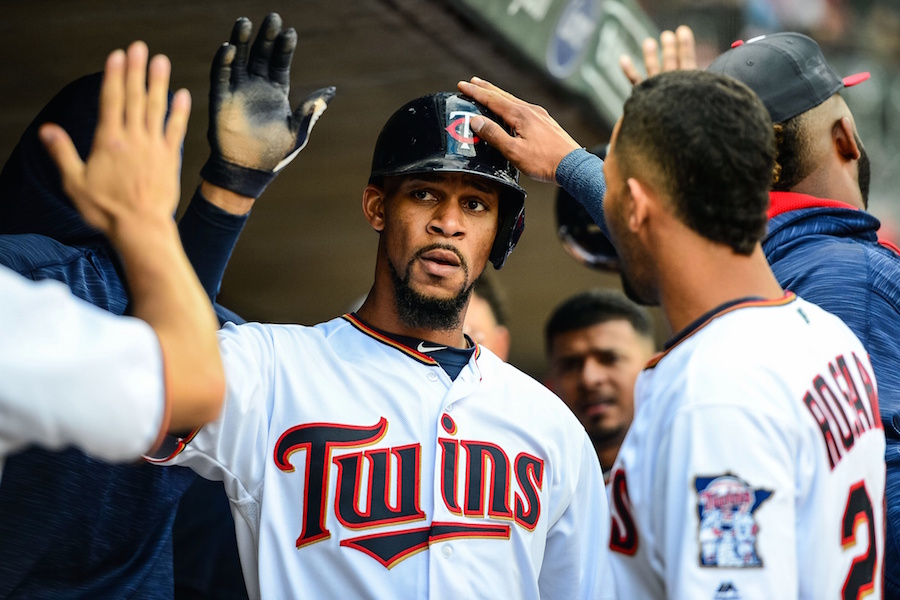 5. Eddie Rosario, OF (26) Baseball is a game that can sometimes require a frustrating among of patience. For the better part of three seasons in the majors, Rosario tantalized with his immense potential. He had all the physical tools to be a star: good speed, outstanding arm, quick wrists, stunning strength, and – perhaps above all – that aggressive and fiercely competitive edge that often separates the great from the good. For the first 250 games of his career, however, Rosario's output was suppressed by an almost legendary lack of discipline. Entering this past season, the outfielder had drawn only 22 unintentional walks in 828 plate appearances, a mind-boggling 2.6 BB%. He continued to swing away in the early portion of 2017, but somewhere along the way there was an epiphany. Rosario certainly didn't become a patient hitter by any stretch, but he suddenly was laying off those truly unhittable offerings with unprecedented consistency. And then, he was an absolute monster. After putting up a .660 OPS in April, Rosario finished at .810 or above in every following month. He showed a flare for the spectacular: a three-homer game in mid-June, a five-hit effort in July, a two-run homer at Yankee Stadium in the AL Wild Card Game. Knowing Eddie, we can expect plenty more of that sort of bravado over the next four seasons before he's eligible for free agency. 4. Miguel Sano, 3B (24) It feels strange to have Sano outside the top three in these rankings. As recently as July, he was on top of the world – an All-Star, Home Run Derby runner-up, on pace for 35 jacks and 100 RBI... all before his 25th birthday. But since then, it's been a rough go. He hurt his shin in early August and barely played afterward. He missed the team's postseason appearance and subsequently had a titanium rod surgically placed in his leg. His commitment to diet/conditioning was publically called into question by a local columnist, and it wasn't the first time. And more recently, Sano was in the headlines last week for all the wrong reasons. I've always counted myself as a huge Sano fan – I love the enthusiasm, the ferocious cuts, the fiery competitiveness – but even I can't deny that his stock has taken a significant ding, causing him to slide down at least two spots from where he'd have been a few months ago. Sano possesses the rare stuff that superstars and MVPs are made of, but at this point he's got some work to do in order to get back on that trajectory. 3. Jose Berrios, RHP (23) The lean, mean, fireballing machine. A beyond-shaky 2016 arrival in the majors generated plenty of concern around Berrios. Were his spinning frisbee pitches too uncontrollable to keep in the zone (5.4 BB/9)? Would his short stature – often cited by doubters as a fatal flaw while he rocketed through the minors – make him too homer-prone (1.9 HR/9)? It takes us back to the Rosario thing... patience. In 2016, Berrios was an overmatched 22-year-old kid struggling to stay afloat. He was openly determined to erase memories of that inauspicious debut, and in 2017 the right-hander did just that. Sent to the minors to open the year, Berrios torched Triple-A for a month, then burst onto the scene in Minnesota with back-to-back gems in May. He had his ups and downs thereafter, but ultimately Berrios had himself a very strong year, holding opponents to a .239 average and sub-700 OPS while notching nearly a strikeout per inning. He doesn't turn 24 until late May and has been amazingly durable. The Twins can own his services through 2022 at least. 2. Royce Lewis, SS (18) The baseball world was taken by surprise when the Twins selected prep shortstop Royce Lewis with the No. 1 overall pick in June, bypassing multiple players who were widely ranked above him by analysts. Six months later, the decision looks brilliant, not just because the club applied slot savings to load up later in the draft, but also because early evidence makes a good case for Lewis being the best player taken. He went to the rookie-level Gulf Coast League and dominated with his advanced plate approach and blazing speed. Then he made the rare jump straight to Single-A as an 18-year-old, and more than held his own there (.296/.363/.394 in 18 games). Lewis ranked 39th on Baseball America's mid-season Top 100 list, released shortly after he was drafted, and his impressive work the rest of the way will surely move him further up the pre-2018 list. Lewis is still extremely young but has already entered a rapid ascent. His athleticism is off the charts and his Year 1 performance in the pros helps validate his pedigree as a #1 draft choice. It's unknown whether he'll ultimately end up being a shortstop or center fielder, but either way Lewis stands out as one of the game's most prized assets and (thus far) a slam dunk signature addition by the new front office. 1. Byron Buxton, OF (24) The 2011 Twins season was a pit of utter malaise. Colossal expectations that cratered early on, bilateral leg weakness, the Tsuyoshi Nishioka fiasco, Morneau's lingering concussion effects, Matt Capps... it all amounted to a 99-loss campaign that set off a half-decade of misery. And yet... it was all worth it. Because that catastrophe enabled the Twins to land Byron Buxton in the 2012 MLB draft. After being selected second overall, Buxton quickly gained distinction as the No. 1 prospect in baseball. Despite some injury setbacks while rising through the system, he still was in the major leagues by age 21. While his offensive game took a bit longer to acclimate at the highest level than we'd hoped, by the latter half of 2017, Buxton looked like a comfortable, discerning hitter with power and game-changing speed. And he has already established himself as the most valuable defensive player in the league. Buxton impacts games in so many ways, bringing entirely new levels of entertainment and excitement for the viewer. He received MVP votes and a Gold Glove at in his age-23 season, and I'm guessing he'll be getting plenty more of both in the coming seasons. Humble, likable and hardworking, he's a perfect face for the franchise. The Twins own his rights for the next four years, and if they're smart, they are actively working on an extension right now that will keep him around for even longer. Buxton will be the centerpiece of Minnesota's efforts to forge a World Series winner through 2021 at least. You'll find few superior building blocks around the league. OVERALL RANKINGS 20. Alex Kirilloff, OF (20) 19. Trevor May, RHP (28) 18. Wander Javier, SS (18) 17. Jason Castro, C (30) 16. Tyler Duffey, RHP (27) 15. Taylor Rogers, LHP (27) 14. Adalberto Mejia, LHP (24) 13. Nick Gordon, SS (22) 12. Fernando Romero, RHP (23) 11. Trevor Hildenberger, RHP (27) 10. Stephen Gonsalves, LHP (23) 9. Ervin Santana, RHP (35) 8. Brian Dozier, 2B (30) 7. Max Kepler, OF (24) 6. Jorge Polanco, SS (24) 5. Eddie Rosario, OF (26) 4. Miguel Sano, 3B (24) 3. Jose Berrios, RHP (23) 2. Royce Lewis, SS (18) 1. Byron Buxton, OF (24)
 -
After running through our rankings for Nos. 11-15 and Nos. 16-20 last week, it's time to break into the Top 10 most valuable assets for the Minnesota Twins. Looking beyond performance to account for age, contract, and future impact, the idea is to determine which players will be most vital to the team's ongoing success (or, most useful as trade chips). Read on past the fold to find out who I picked for spots six through 10, and why.10. Stephen Gonsalves, LHP (23) He doesn't have the same spellbinding upside as Fernando Romero, but Gonsalves ranks a few spots ahead of his fellow top pitching prospect because at this point he seems considerably more likely to reach his ceiling. The left-hander is coming off yet another fantastic season that saw him graduate to Triple-A just one month after his 23rd birthday. In five starts with Rochester, Gonsalves delivered three excellent outings and two clunkers, but this came on the heels of a brilliant 15-start stretch at Chattanooga (8-3, 2.68 ERA, 1.03 WHIP). While he lacks remarkable velocity or breaking stuff, the 6-foot-5 southpaw attacks the zone with a somewhat deceptive release and that's brought him success at pretty much every level. Most importantly, his strong 2017 campaign quieted shoulder concerns that caused him to get a late start to the season. 9. Ervin Santana, RHP (35) Gonsalves might be the future. Santana is the now. He's 35 and only under contract for one or two years, but Erv was easily the best performer on the 2017 staff and has generally been a godsend for the Twins rotation since joining up in July of 2015. Heading into the new season, he's the most reliable and trusted commodity on the staff, although his age, career workload (2,400 innings and counting), and seemingly unsustainable formula (4.02 FIP in 2016/17) cast some doubt on his continued high-end effectiveness. The Twins basically have Santana on a one-year deal for $13.5 million with a team option (automatically activated if he hits 200 innings in 2018). Any team would be beyond ecstatic to get him on such a contract if he were a free agent right now. 8. Brian Dozier, 2B (30) Over the past two seasons – according to the player valuation algorithm at FanGraphs – Dozier has been worth $47 million and $40 million, respectively. The Twins have gotten him for $9 million, total. He's under control for one more year, and still at a huge bargain ($9 million). In retrospect, that spring 2015 contract extension looks pretty damn good, even though it didn't buy out any free agency. The looming reality of FA limits Dozier's value as an asset, which is otherwise immense: top-tier slugging middle infielder, Gold Glove defender, clubhouse leader in every sense of the word. Minnesota might only have one year left with the reigning back-to-back Twins Daily MVP, but they're awfully glad to have that. 7. Max Kepler, OF (24) In 2016, Kepler burst onto the scene with 17 home runs and a .734 OPS as a 23-year-old rookie. That's quite the accomplishment. With his lean and athletic physique, the sky appeared to be the limit, given his transcendent success in Chattanooga the previous season. But in 2017, Kepler stagnated. He posted nearly identical numbers overall and took a step backward against southpaws, going from ugly to unsightly. But while his production didn't improve as we hoped, it was still perfectly solid. Now, he's heading into his third MLB season as a 25-year-old who has flashed glimpses of All-Star potential, while basically establishing his floor as an average MLB corner outfielder. The Twins control his rights through 2022. 6. Jorge Polanco, SS (24) An outsider would glance at Polanco's progression from 2016 to 2017 and assume his stock dropped, with his OPS falling by 30 points. But the real story is a lot more complicated than that. He reached his all-time low point as a pro at the end of July, with his slash line sagging egregiously to .213/.265/.305. He took a few days off for a mental break and returned on August 2nd with a double – his first extra-base hit in a full month. From there, Polanco took off, raking to the tune of .316/.377/.553 with 10 homers and 42 RBI the rest of the way. The amazing surge restored faith in his bat and then some. But perhaps even more importantly, Polanco showed himself to be a credible option at shortstop. His adequacy was very much in doubt following an erratic 2016 debut at the position, but in 2017 the 24-year-old was plenty serviceable, cutting down the mistakes while improving his range and occasionally making legitimately spectacular plays. We'll need to see him sustain both at the plate and in the field before fully buying into his transformation, but right now he looks like a capable shortstop who can bat third in a very good lineup, and that's a hell of a quality asset with four years of control remaining. RANKINGS THUS FAR 20. Alex Kirilloff, OF (20) 19. Trevor May, RHP (28) 18. Wander Javier, SS (18) 17. Jason Castro, C (30) 16. Tyler Duffey, RHP (27) 15. Taylor Rogers, LHP (27) 14. Adalberto Mejia, LHP (24) 13. Nick Gordon, SS (22) 12. Fernando Romero, RHP (23) 11. Trevor Hildenberger, RHP (27) 10. Stephen Gonsalves, LHP (23) 9. Ervin Santana, RHP (35) 8. Brian Dozier, 2B (30) 7. Max Kepler, OF (24) 6. Jorge Polanco, SS (24) Click here to view the article
- 13 replies
-
- 1
-
-
- stephen gonsalves
- ervin santana
- (and 3 more)
-
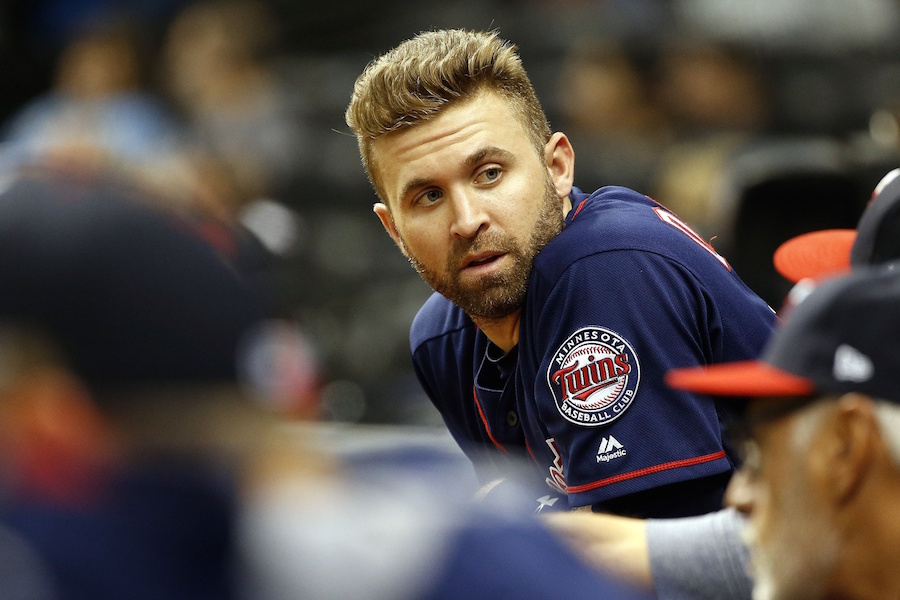 10. Stephen Gonsalves, LHP (23) He doesn't have the same spellbinding upside as Fernando Romero, but Gonsalves ranks a few spots ahead of his fellow top pitching prospect because at this point he seems considerably more likely to reach his ceiling. The left-hander is coming off yet another fantastic season that saw him graduate to Triple-A just one month after his 23rd birthday. In five starts with Rochester, Gonsalves delivered three excellent outings and two clunkers, but this came on the heels of a brilliant 15-start stretch at Chattanooga (8-3, 2.68 ERA, 1.03 WHIP). While he lacks remarkable velocity or breaking stuff, the 6-foot-5 southpaw attacks the zone with a somewhat deceptive release and that's brought him success at pretty much every level. Most importantly, his strong 2017 campaign quieted shoulder concerns that caused him to get a late start to the season. 9. Ervin Santana, RHP (35) Gonsalves might be the future. Santana is the now. He's 35 and only under contract for one or two years, but Erv was easily the best performer on the 2017 staff and has generally been a godsend for the Twins rotation since joining up in July of 2015. Heading into the new season, he's the most reliable and trusted commodity on the staff, although his age, career workload (2,400 innings and counting), and seemingly unsustainable formula (4.02 FIP in 2016/17) cast some doubt on his continued high-end effectiveness. The Twins basically have Santana on a one-year deal for $13.5 million with a team option (automatically activated if he hits 200 innings in 2018). Any team would be beyond ecstatic to get him on such a contract if he were a free agent right now. 8. Brian Dozier, 2B (30) Over the past two seasons – according to the player valuation algorithm at FanGraphs – Dozier has been worth $47 million and $40 million, respectively. The Twins have gotten him for $9 million, total. He's under control for one more year, and still at a huge bargain ($9 million). In retrospect, that spring 2015 contract extension looks pretty damn good, even though it didn't buy out any free agency. The looming reality of FA limits Dozier's value as an asset, which is otherwise immense: top-tier slugging middle infielder, Gold Glove defender, clubhouse leader in every sense of the word. Minnesota might only have one year left with the reigning back-to-back Twins Daily MVP, but they're awfully glad to have that. 7. Max Kepler, OF (24) In 2016, Kepler burst onto the scene with 17 home runs and a .734 OPS as a 23-year-old rookie. That's quite the accomplishment. With his lean and athletic physique, the sky appeared to be the limit, given his transcendent success in Chattanooga the previous season. But in 2017, Kepler stagnated. He posted nearly identical numbers overall and took a step backward against southpaws, going from ugly to unsightly. But while his production didn't improve as we hoped, it was still perfectly solid. Now, he's heading into his third MLB season as a 25-year-old who has flashed glimpses of All-Star potential, while basically establishing his floor as an average MLB corner outfielder. The Twins control his rights through 2022. 6. Jorge Polanco, SS (24) An outsider would glance at Polanco's progression from 2016 to 2017 and assume his stock dropped, with his OPS falling by 30 points. But the real story is a lot more complicated than that. He reached his all-time low point as a pro at the end of July, with his slash line sagging egregiously to .213/.265/.305. He took a few days off for a mental break and returned on August 2nd with a double – his first extra-base hit in a full month. From there, Polanco took off, raking to the tune of .316/.377/.553 with 10 homers and 42 RBI the rest of the way. The amazing surge restored faith in his bat and then some. But perhaps even more importantly, Polanco showed himself to be a credible option at shortstop. His adequacy was very much in doubt following an erratic 2016 debut at the position, but in 2017 the 24-year-old was plenty serviceable, cutting down the mistakes while improving his range and occasionally making legitimately spectacular plays. We'll need to see him sustain both at the plate and in the field before fully buying into his transformation, but right now he looks like a capable shortstop who can bat third in a very good lineup, and that's a hell of a quality asset with four years of control remaining. RANKINGS THUS FAR 20. Alex Kirilloff, OF (20) 19. Trevor May, RHP (28) 18. Wander Javier, SS (18) 17. Jason Castro, C (30) 16. Tyler Duffey, RHP (27) 15. Taylor Rogers, LHP (27) 14. Adalberto Mejia, LHP (24) 13. Nick Gordon, SS (22) 12. Fernando Romero, RHP (23) 11. Trevor Hildenberger, RHP (27) 10. Stephen Gonsalves, LHP (23) 9. Ervin Santana, RHP (35) 8. Brian Dozier, 2B (30) 7. Max Kepler, OF (24) 6. Jorge Polanco, SS (24)
 -
That's a really good way to frame it, and aligns with my mindset putting the list together. If you're curious about the latter, John had actually put together his own trade value rankings in the forums just last week. You can check it out here. I had missed that thread, and when John pointed it out to me I had to chuckle. Pretty crazy that we were struck by almost the exact same idea at about the exact same time.
- 22 replies
-
- 2
-
-
- taylor rogers
- adalberto mejia
- (and 3 more)
-
That's actually not unrelated... there were two relievers in this group, and I don't think I'd have ranked them this highly several years ago. But we've seen a number of relief pitchers get almost unprecedented contracts already this offseason and that's reflective of the way these specialized bullpen roles are growing in value around the game. So I'm glad you mentioned it.
- 22 replies
-
- 1
-
-
- taylor rogers
- adalberto mejia
- (and 3 more)
-
Well he was hardly the consensus #1. We ranked him fourth, plenty of others had him somewhere below first. In any case, all a matter of opinion. I'm sure some would place him more highly on this list. I personally foresee Gordon as a likely Orlando Hudson type 2B in the majors. Very solid piece, no doubt, but also not irreplaceable. And because these rankings are more Twins-centric as opposed to neutral trade value assessments, the org's considerable MI depth plays a factor there too.
- 22 replies
-
- 2
-
-
- taylor rogers
- adalberto mejia
- (and 3 more)
-
Earlier this week, we kicked off our countdown of the Twins franchise's 20 most valuable player assets. Looking beyond performance to account for age, contract, and future impact, the idea is to determine which players will be most vital to the team's ongoing success (or, most useful as trade chips). You can check out our choices for 16 through 20 here. Read on for Nos. 11 through 15.15. Taylor Rogers - LHP (27) Shutdown relievers are becoming increasingly coveted commodities in today's game, and Rogers is well on his way to firmly establishing such a rep. Outside of a brutal two-week stretch following the All-Star break, he was lights-out in 2017, following an impressive rookie showing in '16. Rogers eviscerates left-handed hitters and is effective enough against righties to hold his own in a setup role. He's not flashy and not a star, but figures to be an ongoing staple in the Twins bullpen. He's under team control for four more years and probably won't get expensive at any point. 14. Adalberto Mejia - LHP (24) No one would describe Mejia's rookie campaign in 2017 as a resounding success, but making 21 starts and posting a league-average ERA at the age of 24 is nothing to sneeze at. The big lefty's 10.6% swinging strike rate was highest among Twins starters, and he held opponents to three or fewer runs in all but three of his outings. Granted, lasting deep into games was a serious problem; he pitched past the fifth only six times all year, and never after July 17th. But that issue mainly stemmed from his control issues, which weren't characteristic (he averaged 2.1 BB/9 in the minors) and tend to dissipate with experience. With his big sturdy build and quality stuff, Mejia has the makings of a mid-rotation workhorse, and he will be affordably retainable for the next five years. 13. Nick Gordon - SS (22) The shine of a great first half in Chattanooga wore off as the shortstop hurtled back to Earth in the final months, but Gordon still enjoyed an altogether outstanding season as one of the youngest regulars in the Southern League. He's always been a good contact hitter but this year his line drives started to carry, leading to 46 extra-base hits in 122 games (he previously had 74 in 293 games). We're still waiting for his true breakout season at the plate, and he needs to prove he can stick at shortstop, but the former top draft pick is already knocking on the door at age 22, and his floor looks like a solid big-league starter in the middle infield. 12. Fernando Romero - RHP (23) A year ago at this time I'd have been tempted to place Romero among the top five in these rankings. In fact, that would've held true as recently as this past July, when the big right-hander was dominating Double-A hitters with upper-90s FB velocity from an intimidating frame. More than any other pitcher currently in the organization, his profile screams "ace," and around the All-Star break Romero was making a case for a late-season promotion. Unfortunately, he is once again in a position where he must prove his ability to stay on the mound. Romero's performance nosedived in August, and he was shut down at 125 innings with a shoulder impingement. It's been a frustrating run for the oft-injured starter, who missed almost all of 2014 and 2015, but if he can shed the durability concerns he'll be a rotation building block 11. Trevor Hildenberger - RHP (27) It'd be awfully tough for a pitcher who works strictly as a reliever to crack the organization's top ten most valuable assets, but Hildenberger comes close. He's been almost completely untouchable throughout his minor-league career, and in 2017 as a rookie with the Twins he showed the numbers were no mirage. Lending a season-altering assist to a bullpen that desperately needed late-inning reliability, Hildenberger delivered a 3.21 ERA and 1.05 WHIP over 37 appearances. Sample size be damned, there was nothing artificial about his excellence. Hildenberger rarely touches the 90s, but his quirky sidearm delivery, masterful control and legitimately phenomenal changeup make it work, leading to an ideal combination of grounders and strikeouts. The 27-year-old bears every attribute of a closer or high-leverage fireman for years to come, and is controllable through 2022. RANKINGS THUS FAR 20. Alex Kirilloff, OF (20) 19. Trevor May, RHP (28) 18. Wander Javier, SS (18) 17. Jason Castro, C (30) 16. Tyler Duffey, RHP (27) 15. Taylor Rogers, LHP (27) 14. Adalberto Mejia, LHP (24) 13. Nick Gordon, SS (22) 12. Fernando Romero, RHP (23) 11. Trevor Hildenberger, RHP (27) Click here to view the article
