



Nick Nelson
-
Posts
8,326 -
Joined
-
Last visited
-
Days Won
56
Content Type
Profiles
News
Minnesota Twins Videos
2026 Minnesota Twins Top Prospects Ranking
2022 Minnesota Twins Draft Picks
Minnesota Twins Free Agent & Trade Rumors, Notes, & Tidbits
Guides & Resources
2023 Minnesota Twins Draft Picks
The Minnesota Twins Players Project
2024 Minnesota Twins Draft Picks
2025 Minnesota Twins Draft Pick Tracker
2026 Minnesota Twins Draft Tracker: Picks & Bonuses
Forums
Blogs
Events
Store
Downloads
Gallery
Everything posted by Nick Nelson
-
 Yu Darvish is still out there, and the Twins are still (theoretically) in pursuit. But Jon Heyman reported on Thursday that the right-hander is seeking a deal in the area of seven years and $175 million. Anything approaching those figures would be unrealistic, not to mention irresponsible, for Minnesota to offer. Conventional wisdom says that if they miss out on Darvish, the Twins will turn to one of the market's other top starters such as Jake Arrieta, Alex Cobb or Lance Lynn. But I actually think they might lower their gaze significantly and aim for a starter on a one-year deal. Here's why.First of all, when you look at the upper tier of free agent starters beyond Darvish, there are an awful lot of question marks. Arrieta turns 32 in March and has steadily declined since his Cy Young season in 2015. Cobb has never thrown 180 innings in a campaign and had one of the league's worst swinging strike rates in 2017. Lynn's secondary numbers leave much to be desired. Even in a depressed market, all of these hurlers are likely looking at contracts of at least three years. And while the Twins shouldn't hesitate to take that leap for someone they truly believe in (such as Darvish), committing long-term to a player they harbor serious doubts over would be questionable. Also, there's this: The Twins are going to have a much clearer idea of the long-term outlook for their rotation after the 2018 season. Right now there are so many things up in the air. Such as: * Will Stephen Gonsalves, Fernando Romero, or another of the near-ready top prospects debut and do enough to establish himself as a staple going forward? * Will Phil Hughes bounce back and reassert himself as a credible option for 2019, his last year under contract? * Will Trevor May return from Tommy John surgery at full strength and lock down a rotation spot going forward? (He's under team control for two more years and the Twins might consider an extension if he looks good this summer.) * Will Ervin Santana reach 200 innings, thus guaranteeing his 2019 option? These are but a few of the many moving parts in Minnesota's starting pitching layout, creating a level of ambiguity that makes planning ahead somewhat difficult. There's no such thing as too many quality starters, of course, but you'd better be damn sure you're adding serious quality on any long-term deal. For example, if the Twins exit 2018 feeling pretty good about a rotation that includes Berrios, Romero, Gonsalves, Adalberto Mejia and May, but they're locked into Santana, Hughes and – say – Lynn for close to $50 million total in 2019, that's... far from ideal. If, on the other hand, the Twins identify someone they can sign to a one-year deal and feel reasonably confident in, that leaves them with very convenient flexibility. At the end of 2018, they'll have the option to move on from that player, as well as Kyle Gibson and perhaps Santana. Add in expiring contracts for Joe Mauer and Brian Dozier, and this would potentially give Derek Falvey and Thad Levine free rein to do just about anything they'd like in terms of building the team to their exact specifications. The problem is this: The Twins need to be in win-now mode, and typically you're not going to acquire a high-caliber pitcher on a one-year deal. These are usually reclamation projects or poor performers seeking to recoup value. Then again, this offseason is anything but typical. As spring training draws nearer and desperation mounts, it is entirely possible that a few fairly good pitchers will say screw it and settle for a high-dollar contract for 2018, hoping to pitch well and hit the market again next winter when things theoretically return to a state of normalcy. There are few if any better places for such a starter to land than in Minnesota, where he would work in front of the game's best outfield defense, and with the backing of a high-powered lineup. So let's take a look at a few candidates that might fit this mold. They won't all enthuse you, but I'd suggest they might all be more realistic than Darvish – and more logical than Cobb or Lynn – at this point. Jake Arrieta, RHP He seems to be the No. 2 starter on the market, but Arrieta has drawn shockingly little interest. Most notably, the Cubs have seemingly made little effort to re-sign the 2015 Cy Young winner, and that's pretty troubling. His sagging secondary numbers and velocity make Arrieta an iffy long-term proposition, but what if the Scott Boras client were willing to sign for something like one year, $30 million? Trevor Cahill, RHP Much depends on health here. Cahill was traded to Kansas City following an excellent first half in San Diego but tanked after the move, battling a shoulder impingement issue down the stretch. His numbers as a starter for the Padres (3.69 ERA, .712 OPS, 72-to-24 K/BB in 61 innings) offer hope that he could be a dominant force if his arm is right. In the Offseason Handbook we predicted he would score a one-year, $12 million deal. Even that seems high now. Jaime Garcia, LHP Garcia was a Twin very briefly in late July, and pitched well in his lone start. All in all, 2017 saw the lefty put up the highest fastball velocity and strikeout rate of his career. This was offset, however, by a mediocre 4.41 ERA and a poor finish in New York. He probably expected to be fielding multi-year offers this offseason but it seems clear at this point that if he gets one it won't be for nearly the money he wants. Garcia may be best served to bet on himself with a one-year pact. Familiarity, in addition to the favorable setting, could draw him to Minnesota. It'd be kinda funny if both he and Zack Littell were pitching in the Twins rotation at some point. Jason Vargas, LHP The left-hander has had zero buzz around him in free agency, which is a little odd coming off a season in which he won 18 games and made the All-Star team. Vargas was brutal in the final two months of 2017 (6.49 ERA, 1.53 WHIP) but has been a steadily solid pitcher throughout his career and at 35 would bring the veteran presence factor. Chris Tillman, RHP I can already envision the backlash if the Twins sign Tillman as the final piece in their rotation. And I get it. He was beyond awful last year (7.84 ERA, 1.89 WHIP). But Minnesota has checked in on the right-hander, and I get the sense they view him as a legit option. He'd cost next to nothing ($5 million?), is still under 30, and in 2016 went 16-6 with a 3.77 ERA in 30 starts for the O's. When healthy, Tillman has generally held his own in a very tough division. I'm not saying I'd be inspired by this move, but if the Twins sign him I'll trust that the condition of his arm checked out. Ideally, the savings here would be applied elsewhere. Do you agree with the rationale behind seeking a starter on a one-year deal? Or do you feel it's top tier or bust? Click here to view the article
 -
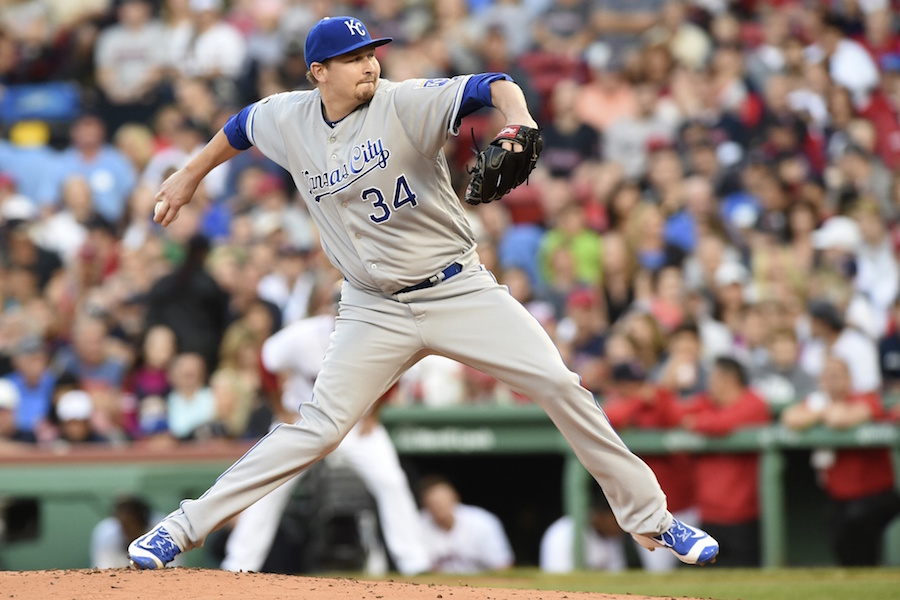 First of all, when you look at the upper tier of free agent starters beyond Darvish, there are an awful lot of question marks. Arrieta turns 32 in March and has steadily declined since his Cy Young season in 2015. Cobb has never thrown 180 innings in a campaign and had one of the league's worst swinging strike rates in 2017. Lynn's secondary numbers leave much to be desired. Even in a depressed market, all of these hurlers are likely looking at contracts of at least three years. And while the Twins shouldn't hesitate to take that leap for someone they truly believe in (such as Darvish), committing long-term to a player they harbor serious doubts over would be questionable. Also, there's this: The Twins are going to have a much clearer idea of the long-term outlook for their rotation after the 2018 season. Right now there are so many things up in the air. Such as: * Will Stephen Gonsalves, Fernando Romero, or another of the near-ready top prospects debut and do enough to establish himself as a staple going forward? * Will Phil Hughes bounce back and reassert himself as a credible option for 2019, his last year under contract? * Will Trevor May return from Tommy John surgery at full strength and lock down a rotation spot going forward? (He's under team control for two more years and the Twins might consider an extension if he looks good this summer.) * Will Ervin Santana reach 200 innings, thus guaranteeing his 2019 option? These are but a few of the many moving parts in Minnesota's starting pitching layout, creating a level of ambiguity that makes planning ahead somewhat difficult. There's no such thing as too many quality starters, of course, but you'd better be damn sure you're adding serious quality on any long-term deal. For example, if the Twins exit 2018 feeling pretty good about a rotation that includes Berrios, Romero, Gonsalves, Adalberto Mejia and May, but they're locked into Santana, Hughes and – say – Lynn for close to $50 million total in 2019, that's... far from ideal. If, on the other hand, the Twins identify someone they can sign to a one-year deal and feel reasonably confident in, that leaves them with very convenient flexibility. At the end of 2018, they'll have the option to move on from that player, as well as Kyle Gibson and perhaps Santana. Add in expiring contracts for Joe Mauer and Brian Dozier, and this would potentially give Derek Falvey and Thad Levine free rein to do just about anything they'd like in terms of building the team to their exact specifications. The problem is this: The Twins need to be in win-now mode, and typically you're not going to acquire a high-caliber pitcher on a one-year deal. These are usually reclamation projects or poor performers seeking to recoup value. Then again, this offseason is anything but typical. As spring training draws nearer and desperation mounts, it is entirely possible that a few fairly good pitchers will say screw it and settle for a high-dollar contract for 2018, hoping to pitch well and hit the market again next winter when things theoretically return to a state of normalcy. There are few if any better places for such a starter to land than in Minnesota, where he would work in front of the game's best outfield defense, and with the backing of a high-powered lineup. So let's take a look at a few candidates that might fit this mold. They won't all enthuse you, but I'd suggest they might all be more realistic than Darvish – and more logical than Cobb or Lynn – at this point. Jake Arrieta, RHP He seems to be the No. 2 starter on the market, but Arrieta has drawn shockingly little interest. Most notably, the Cubs have seemingly made little effort to re-sign the 2015 Cy Young winner, and that's pretty troubling. His sagging secondary numbers and velocity make Arrieta an iffy long-term proposition, but what if the Scott Boras client were willing to sign for something like one year, $30 million? Trevor Cahill, RHP Much depends on health here. Cahill was traded to Kansas City following an excellent first half in San Diego but tanked after the move, battling a shoulder impingement issue down the stretch. His numbers as a starter for the Padres (3.69 ERA, .712 OPS, 72-to-24 K/BB in 61 innings) offer hope that he could be a dominant force if his arm is right. In the Offseason Handbook we predicted he would score a one-year, $12 million deal. Even that seems high now. Jaime Garcia, LHP Garcia was a Twin very briefly in late July, and pitched well in his lone start. All in all, 2017 saw the lefty put up the highest fastball velocity and strikeout rate of his career. This was offset, however, by a mediocre 4.41 ERA and a poor finish in New York. He probably expected to be fielding multi-year offers this offseason but it seems clear at this point that if he gets one it won't be for nearly the money he wants. Garcia may be best served to bet on himself with a one-year pact. Familiarity, in addition to the favorable setting, could draw him to Minnesota. It'd be kinda funny if both he and Zack Littell were pitching in the Twins rotation at some point. Jason Vargas, LHP The left-hander has had zero buzz around him in free agency, which is a little odd coming off a season in which he won 18 games and made the All-Star team. Vargas was brutal in the final two months of 2017 (6.49 ERA, 1.53 WHIP) but has been a steadily solid pitcher throughout his career and at 35 would bring the veteran presence factor. Chris Tillman, RHP I can already envision the backlash if the Twins sign Tillman as the final piece in their rotation. And I get it. He was beyond awful last year (7.84 ERA, 1.89 WHIP). But Minnesota has checked in on the right-hander, and I get the sense they view him as a legit option. He'd cost next to nothing ($5 million?), is still under 30, and in 2016 went 16-6 with a 3.77 ERA in 30 starts for the O's. When healthy, Tillman has generally held his own in a very tough division. I'm not saying I'd be inspired by this move, but if the Twins sign him I'll trust that the condition of his arm checked out. Ideally, the savings here would be applied elsewhere. Do you agree with the rationale behind seeking a starter on a one-year deal? Or do you feel it's top tier or bust?
 -
This puts the Twins in a seriously advantageous position, not only removing barriers in their quest to take the AL Central, but also – potentially – padding their win total for a run at a wild-card spot. As an added note on this, just to provide further context, the Twins will play 57 games this year against the White Sox, Tigers and Royals. That's more than a third of their schedule!
-
Wha? When have championships not been glorified? Why wouldn’t they be?
-
'People ask me what I do in winter when there’s no baseball. I’ll tell you what I do. I stare out the window and wait for spring.' Rogers Hornsby's legendary quote almost always dances through my head around this time of year, as I barricade myself inside from treacherous cold fronts and count down the days to those four glorious words: Pitchers and catchers report. There are always elements of mystery and excitement at play as the off-season winds down, but right now it's all magnified. First, because the team's biggest off-season splash is almost surely yet to come. And second, because the Twins are uniquely positioned to make a run at a division title and more in 2018. The window is wide open, due in large part to very fortuitous (and temporary) outside circumstances.Mariners GM Jerry DiPoto had a pretty wild quote last week. He said that in the game right now, "You could argue there is more competition to get the No. 1 pick in the draft than to win the World Series." And well, there's a lot of truth in that statement, which surely makes MLB Commissioner Rob Manfred bristle. Agent Scott Boras lamented earlier this week that a "non-competitive cancer" is "ruining the fabric of the sport." Dramatic and biased? Yes. But that doesn't mean he's completely off base. The "loser bug" is certainly present in the AL Central, where three teams are making virtually no effort to contend. Ron Gardenhire's Tigers are coming off a season in which they finished last and traded away their best pitcher and hitter. Barring remarkable turnarounds from Miguel Cabrera and Victor Martinez, along with some major rotation breakthroughs, Detroit appears destined for 90-plus losses. It's tough to expect much more from the Royals, who earlier this week dumped slugger Brandon Moss and standout lefty reliever Ryan Buchter in exchange for Jesse Hahn, who sadly has a decent shot at a rotation spot. Earlier in the same day, they'd settled for another year of Alcides Escobar at short, agreeing on a one-year pact. Kansas City may still have another big move or two left in the tank, but seems resigned to its fate as an also-ran in 2018. Keith Law recently ranked the organization's farm system as the worst in the AL while Baseball America pegged it second-worst in baseball. And of course, the White Sox are only one year removed from an epic teardown. They've got plenty of young talent, and could surprise by surpassing low expectations, but Chicago is in no way a legitimate threat in the division. Cleveland remains the de facto favorite, with good reason, but even the Indians haven't done much to separate themselves this off-season. Not yet, anyway. How often is it that three-fifths of your division is simultaneously rebuilding? Not very. And in this case it surely won't last long. The White Sox are already bringing along some of the key youngsters netted in their fire sale. You can't count on KC or Detroit staying down and out for too long. But right now, you can make a case they are the three worst teams in the American League on paper. This puts the Twins in a seriously advantageous position, not only removing barriers in their quest to take the AL Central, but also – potentially – padding their win total for a run at a wild-card spot. Derek Falvey and Thad Levine talk often about looking at the big picture. They won't sacrifice the long-term vision for short-term gains. Many front offices are of the same mind at this time, obviously. But the big picture is this: the division is as ripe for the taking as it has been in years. The league is in a strange state of flux. And the Twins have a coalescing young core that improved by 26 wins last year. I highly doubt the new front office expected to find itself in this position so quickly, but the time to strike is now. Windows don't stay open forever. Click here to view the article
-
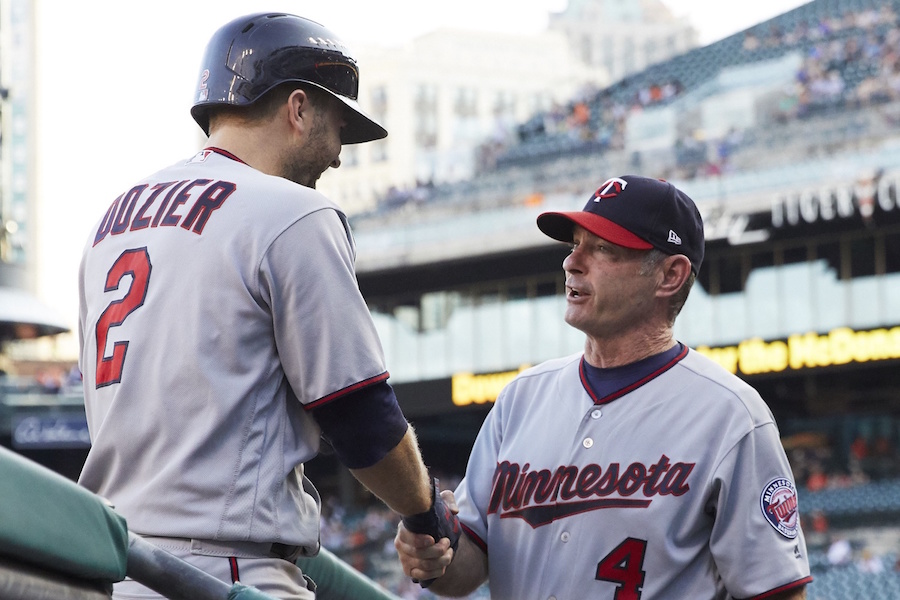 Mariners GM Jerry DiPoto had a pretty wild quote last week. He said that in the game right now, "You could argue there is more competition to get the No. 1 pick in the draft than to win the World Series." And well, there's a lot of truth in that statement, which surely makes MLB Commissioner Rob Manfred bristle. Agent Scott Boras lamented earlier this week that a "non-competitive cancer" is "ruining the fabric of the sport." Dramatic and biased? Yes. But that doesn't mean he's completely off base. The "loser bug" is certainly present in the AL Central, where three teams are making virtually no effort to contend. Ron Gardenhire's Tigers are coming off a season in which they finished last and traded away their best pitcher and hitter. Barring remarkable turnarounds from Miguel Cabrera and Victor Martinez, along with some major rotation breakthroughs, Detroit appears destined for 90-plus losses. It's tough to expect much more from the Royals, who earlier this week dumped slugger Brandon Moss and standout lefty reliever Ryan Buchter in exchange for Jesse Hahn, who sadly has a decent shot at a rotation spot. Earlier in the same day, they'd settled for another year of Alcides Escobar at short, agreeing on a one-year pact. Kansas City may still have another big move or two left in the tank, but seems resigned to its fate as an also-ran in 2018. Keith Law recently ranked the organization's farm system as the worst in the AL while Baseball America pegged it second-worst in baseball. And of course, the White Sox are only one year removed from an epic teardown. They've got plenty of young talent, and could surprise by surpassing low expectations, but Chicago is in no way a legitimate threat in the division. Cleveland remains the de facto favorite, with good reason, but even the Indians haven't done much to separate themselves this off-season. Not yet, anyway. How often is it that three-fifths of your division is simultaneously rebuilding? Not very. And in this case it surely won't last long. The White Sox are already bringing along some of the key youngsters netted in their fire sale. You can't count on KC or Detroit staying down and out for too long. But right now, you can make a case they are the three worst teams in the American League on paper. This puts the Twins in a seriously advantageous position, not only removing barriers in their quest to take the AL Central, but also – potentially – padding their win total for a run at a wild-card spot. Derek Falvey and Thad Levine talk often about looking at the big picture. They won't sacrifice the long-term vision for short-term gains. Many front offices are of the same mind at this time, obviously. But the big picture is this: the division is as ripe for the taking as it has been in years. The league is in a strange state of flux. And the Twins have a coalescing young core that improved by 26 wins last year. I highly doubt the new front office expected to find itself in this position so quickly, but the time to strike is now. Windows don't stay open forever.
 -
Over the weekend, MLB.com unveiled its official list of Top 100 prospects for 2018. This follows rankings from Baseball America and ESPN, both published in the previous week. It's prospect season. So let's aggregate the opinions of all three authoritative sources, in an effort to establish a consensus view on the Twins system and its relative standing as we head into the new season.Here's a weighted rundown of prospects that made appearances on these lists, with thoughts on what we should make of the variance in evaluations: 1. Royce Lewis, SS MLB: 20 | BA: 24 | ESPN: 25 Remarkable consistency among all three outlets. Aside from pitcher, the one position represented most on the top ends of these lists is shortstop, for obvious reasons. Lewis is undoubtedly among the brightest in that field – a rare combination of A+ athleticism and A+ makeup, still barely broaching his potential. The franchise's No. 2 asset is already a top-tier prospect in the game and could graduate to elite status with a strong first full season. 2. Nick Gordon, SS MLB: 80 | BA: 93 | ESPN: 37 The monumental slide Gordon experienced in Baseball America's ranking of Twins prospects, assembled by Mike Berardino of the Pioneer Press, was an attention-grabber. As recently as last July, Gordon had been ranked as the team's top prospect by BA's John Manuel (incidentally, now employed by the Twins). By last week he'd dropped all the way to eighth. Gordon's fall on Baseball America's overall prospect list (compiled by several national prospect writers instead of one local scribe) was not as dramatic – from 60th in January 2017 to 93rd in January of 2018, still the third highest Twin. But MLB.com also slid the infielder way down in its rankings, from 30 to 80. The 2017 season was a tale of two halves for Gordon, who was one of the youngest regulars in the Class-AA Southern League. In his first 61 games he hit .318/.382/.510; in the second 61 he hit .223/.302/.311. Clearly the folks at MLB.com and BA felt that Gordon's second half, along with lingering concerns about his ability to stick at shortstop, turned him from prospect to suspect. This wasn't true of ESPN's Keith Law, who bucked the trend by actually moving Gordon up on his board, from 53 in 2017 to 37 in 2018. While acknowledging he may end up at second, Law believes Gordon's skill set could make him a .300 AVG/.400 OBP guy in the majors, and suggests the sluggish second half only points to a need for the wiry 22-year-old to get bigger and stronger. Certainly feasible. 3. Fernando Romero, RHP MLB: 68 | BA: NR | ESPN: 47 Like with Gordon, Law is higher than others on Romero, and in this case it also seems to be rooted in differing views on what went down in the second half of the 2017 season. A year ago, Twins Daily ranked Romero as our No. 1 Twins prospect, though he was still largely flying under the national radar. He didn't appear on the top overall lists from MLB.com, Baseball America or Baseball Prospectus. Only Law gave him a nod, placing him 65th in his rankings. The oft-injured Romero, who'd never logged even 100 innings in a season previously, put together an excellent first four months of 2017 with a 2.64 ERA through 20 starts, but shortly after he crossed that 100-IP mark, he wore down quickly. Following three straight clunkers in August he was shut down for the season with a shoulder impingement. The right-hander proved last year that when healthy, he can dominate in Double-A, which is one of the biggest hurdles for a pitching prospect to cross. The only question now is his health. ESPN and MLB.com are expressing cautious optimism on that front, whereas Baseball America still isn't buying in. Frankly, I think it'll reflect pretty poorly on them if he manages to hold up for a full season in 2018. In terms of pure stuff Romero is one of the best arms in the high minors. 4. Stephen Gonsalves, LHP MLB: 78 | BA: 97 | ESPN: NR Gonsalves doesn't come close to measuring up with Romero when it comes to stuff, which is why he's behind his fellow hurler in aggregate despite a more successful 2017 campaign. While Romero was breaking down in mid-August at Chattanooga, Gonsalves was getting his feet wet in Rochester following a late promotion to Triple-A. The lanky left-hander's numbers – both this year (3.27 ERA in 110 innings) and overall (2.39 ERA in five minor-league seasons) – placed him on the back end of two lists, but he still hasn't earned his way into Law's esteem. ESPN's prospect guru has always had a rather low opinion of Gonsalves, suggesting after the 2013 draft that his ceiling was that of a "6th starter" because he is "Not projectable, no breaking ball." Apparently that fundamental viewpoint hasn't changed, even as Gonsalves has experienced tremendous success at every level on the way to his Triple-A debut just a month after turning 23. Law has always been one to trust his own assessments, and input from scouting peers, ahead of numbers. He is certainly not alone in his skepticism of Gonsalves' lack of velo and spin. 5. Brent Rooker MLB: NR | BA: 92 | ESPN: NR It was cool to see Rooker sneak onto Baseball America's list. It isn't surprising he failed to make the others – a highly drafted college slugger putting up big numbers in his first turn at the lower levels of affiliated ball is hardly a rarity – but there are many things to love about the 23-year-old, and BA is on board. If you follow Rooker on Twitter or catch any of his quotes and insights about the game, then you know he's a cerebral hitter who's very serious about his craft and embraces the most modernized approaches. There's an extremely high offensive bar for players in his prototype, but with his raw power and superior baseball IQ, Rooker has the attributes to clear it and become a weapon in the middle of the lineup. If he produces the way he's capable of in 2018, he'll be on all three lists next year. 6. Wander Javier MLB: NR | BA: 95 | ESPN: NR Another hidden gem in the Twins system getting some shine exclusively from BA. Their ranking system has a tendency to prioritize raw tools and ceiling above all, which helps explain the athletic teenager's presence on their list. Javier oozes potential, and enjoyed a great season in the Appalachian League, but still hasn't crested a full-season league yet. You don't see too many guys at that stage in these rankings, just because of the vast degree of uncertainty, but it's not hard to understand why Javier would stand out. He was one of the top international prospects out there when the Twins signed him out of the Dominican Republic in 2015 with a record $4 million bonus. He has since done nothing but validate the investment by slashing .301/.386/.497 through two levels of rookie ball. Berardino ranked Javier as the second-best Twins prospect behind Lewis in his listing of the organization's top talent, calling him a "plus runner with plus athleticism" and adding that Javier "shows plenty of range as well as a plus-plus arm at times." Very excited to see this kid take on Single-A. NOTABLE OMISSIONS Last year, Alex Kirilloff appeared in the 90s on both Baseball America's and ESPN's lists. Unsurprisingly, he's now absent from all three after missing the entire 2017 season following Tommy John surgery. Needless to say, he can put himself back on the map quickly with a strong return to the field. Kirilloff is the only prospect who appeared on at least one of these lists last year and completely disappeared, but there are a number of others I might have hoped to see such as Brusdar Graterol, Blayne Enlow and LaMonte Wade. Stay tuned in the coming weeks for in-depth profiles of Twins Daily's choices for the top 20 prospects in the organization for 2018. By the way, if you'd like to read about all of these prospects and many many more, I highly recommend buying a copy of the 2018 Twins Prospect Handbook, compiled by our own Seth Stohs, Tom Froemming and Cody Christie. Click here to view the article
- 34 replies
-
- 2
-

-
- royce lewis
- nick gordon
- (and 2 more)
-
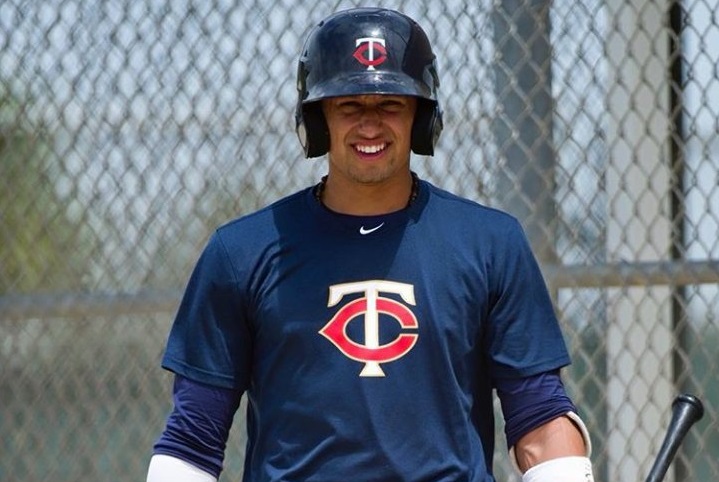 Here's a weighted rundown of prospects that made appearances on these lists, with thoughts on what we should make of the variance in evaluations: 1. Royce Lewis, SS MLB: 20 | BA: 24 | ESPN: 25 Remarkable consistency among all three outlets. Aside from pitcher, the one position represented most on the top ends of these lists is shortstop, for obvious reasons. Lewis is undoubtedly among the brightest in that field – a rare combination of A+ athleticism and A+ makeup, still barely broaching his potential. The franchise's No. 2 asset is already a top-tier prospect in the game and could graduate to elite status with a strong first full season. 2. Nick Gordon, SS MLB: 80 | BA: 93 | ESPN: 37 The monumental slide Gordon experienced in Baseball America's ranking of Twins prospects, assembled by Mike Berardino of the Pioneer Press, was an attention-grabber. As recently as last July, Gordon had been ranked as the team's top prospect by BA's John Manuel (incidentally, now employed by the Twins). By last week he'd dropped all the way to eighth. Gordon's fall on Baseball America's overall prospect list (compiled by several national prospect writers instead of one local scribe) was not as dramatic – from 60th in January 2017 to 93rd in January of 2018, still the third highest Twin. But MLB.com also slid the infielder way down in its rankings, from 30 to 80. The 2017 season was a tale of two halves for Gordon, who was one of the youngest regulars in the Class-AA Southern League. In his first 61 games he hit .318/.382/.510; in the second 61 he hit .223/.302/.311. Clearly the folks at MLB.com and BA felt that Gordon's second half, along with lingering concerns about his ability to stick at shortstop, turned him from prospect to suspect. This wasn't true of ESPN's Keith Law, who bucked the trend by actually moving Gordon up on his board, from 53 in 2017 to 37 in 2018. While acknowledging he may end up at second, Law believes Gordon's skill set could make him a .300 AVG/.400 OBP guy in the majors, and suggests the sluggish second half only points to a need for the wiry 22-year-old to get bigger and stronger. Certainly feasible. 3. Fernando Romero, RHP MLB: 68 | BA: NR | ESPN: 47 Like with Gordon, Law is higher than others on Romero, and in this case it also seems to be rooted in differing views on what went down in the second half of the 2017 season. A year ago, Twins Daily ranked Romero as our No. 1 Twins prospect, though he was still largely flying under the national radar. He didn't appear on the top overall lists from MLB.com, Baseball America or Baseball Prospectus. Only Law gave him a nod, placing him 65th in his rankings. The oft-injured Romero, who'd never logged even 100 innings in a season previously, put together an excellent first four months of 2017 with a 2.64 ERA through 20 starts, but shortly after he crossed that 100-IP mark, he wore down quickly. Following three straight clunkers in August he was shut down for the season with a shoulder impingement. The right-hander proved last year that when healthy, he can dominate in Double-A, which is one of the biggest hurdles for a pitching prospect to cross. The only question now is his health. ESPN and MLB.com are expressing cautious optimism on that front, whereas Baseball America still isn't buying in. Frankly, I think it'll reflect pretty poorly on them if he manages to hold up for a full season in 2018. In terms of pure stuff Romero is one of the best arms in the high minors. 4. Stephen Gonsalves, LHP MLB: 78 | BA: 97 | ESPN: NR Gonsalves doesn't come close to measuring up with Romero when it comes to stuff, which is why he's behind his fellow hurler in aggregate despite a more successful 2017 campaign. While Romero was breaking down in mid-August at Chattanooga, Gonsalves was getting his feet wet in Rochester following a late promotion to Triple-A. The lanky left-hander's numbers – both this year (3.27 ERA in 110 innings) and overall (2.39 ERA in five minor-league seasons) – placed him on the back end of two lists, but he still hasn't earned his way into Law's esteem. ESPN's prospect guru has always had a rather low opinion of Gonsalves, suggesting after the 2013 draft that his ceiling was that of a "6th starter" because he is "Not projectable, no breaking ball." Apparently that fundamental viewpoint hasn't changed, even as Gonsalves has experienced tremendous success at every level on the way to his Triple-A debut just a month after turning 23. Law has always been one to trust his own assessments, and input from scouting peers, ahead of numbers. He is certainly not alone in his skepticism of Gonsalves' lack of velo and spin. 5. Brent Rooker MLB: NR | BA: 92 | ESPN: NR It was cool to see Rooker sneak onto Baseball America's list. It isn't surprising he failed to make the others – a highly drafted college slugger putting up big numbers in his first turn at the lower levels of affiliated ball is hardly a rarity – but there are many things to love about the 23-year-old, and BA is on board. If you follow Rooker on Twitter or catch any of his quotes and insights about the game, then you know he's a cerebral hitter who's very serious about his craft and embraces the most modernized approaches. There's an extremely high offensive bar for players in his prototype, but with his raw power and superior baseball IQ, Rooker has the attributes to clear it and become a weapon in the middle of the lineup. If he produces the way he's capable of in 2018, he'll be on all three lists next year. 6. Wander Javier MLB: NR | BA: 95 | ESPN: NR Another hidden gem in the Twins system getting some shine exclusively from BA. Their ranking system has a tendency to prioritize raw tools and ceiling above all, which helps explain the athletic teenager's presence on their list. Javier oozes potential, and enjoyed a great season in the Appalachian League, but still hasn't crested a full-season league yet. You don't see too many guys at that stage in these rankings, just because of the vast degree of uncertainty, but it's not hard to understand why Javier would stand out. He was one of the top international prospects out there when the Twins signed him out of the Dominican Republic in 2015 with a record $4 million bonus. He has since done nothing but validate the investment by slashing .301/.386/.497 through two levels of rookie ball. Berardino ranked Javier as the second-best Twins prospect behind Lewis in his listing of the organization's top talent, calling him a "plus runner with plus athleticism" and adding that Javier "shows plenty of range as well as a plus-plus arm at times." Very excited to see this kid take on Single-A. NOTABLE OMISSIONS Last year, Alex Kirilloff appeared in the 90s on both Baseball America's and ESPN's lists. Unsurprisingly, he's now absent from all three after missing the entire 2017 season following Tommy John surgery. Needless to say, he can put himself back on the map quickly with a strong return to the field. Kirilloff is the only prospect who appeared on at least one of these lists last year and completely disappeared, but there are a number of others I might have hoped to see such as Brusdar Graterol, Blayne Enlow and LaMonte Wade. Stay tuned in the coming weeks for in-depth profiles of Twins Daily's choices for the top 20 prospects in the organization for 2018. By the way, if you'd like to read about all of these prospects and many many more, I highly recommend buying a copy of the 2018 Twins Prospect Handbook, compiled by our own Seth Stohs, Tom Froemming and Cody Christie.
 -
To be clear, I'm not so much worried about being able to replace Rodney if he's blatantly terrible. They've got plenty of depth to do so. I'm worried about what happens if he's kinda bad. How long does it take the pull the plug if he's blowing a save only here and there, but more than you'd like? Will Molitor be influenced by respect for his track record, or the commitment made to him when he signed? It's always easier to make these calls from afar; much tougher in the manager's chair.
-
But that was because all of these players slugged over .500 from August 20th (Sano's first day out of the lineup after the shinjury) to the end of the season: Dozier, Rosario, Escobar, Polanco, Buxton. Can you really count on that happening again over any prolonged period of time? Especially with the latter 3?
- 41 replies
-
- 2
-
-
- miguel sano
- fernando rodney
- (and 2 more)
-
In the history of baseball, no season has ever gone off without a hitch. To encounter nothing but smooth sailing over the course of six months and 162 games is about as realistic an aspiration as hitting a five-run homer. The better you can foresee and anticipate hurdles coming down the pipeline, the more prepared you'll be to overcome them. With this in mind, here are five predicaments I believe the Twins should be accounting for, if not counting on, in the 2018 season.1 ) Missed Time for Miguel Sano Sano is currently under investigation by MLB for an alleged assault that occurred in 2015 but was revealed publicly only last month. It's unclear if he'll be suspended, but given that the league is needing to toughen up its enforcement of personal conduct violations, I'd think a 20 or even 30 game suspension is not out of the question. Even if Sano avoids such discipline, he's still recovering from a fairly serious surgery. Twins CBO Derek Falvey acknowledged last week that the 24-year-old "won’t necessarily be ready for full workouts when camp opens next month." Who knows how long it will take Sano to get back to full strength and sharpness. Even then, an offseason spent focusing on rehab – rather than the usual conditioning and mobility training – could easily render him more prone to injury. In each of his first two full big-league seasons, Sano has been unable to appear in even 120 games. Hopefully this is the year he makes the jump to 150, but Minnesota must be ready to proceed without him. Having Eduardo Escobar on hand helps with that, though it's probably wishful thinking to expect the same kind of production he provided down the stretch in 2017. Sano is also pegged for significant time at DH. Perhaps that is why I keep hearing rumblings of the team's continued interest in free agent Mike Napoli. 2 ) Quickly Developing Questions at Closer If Fernando Rodney is pitching the way he did last year, when he held opponents to a .582 OPS with a 10.6 K/9 rate and 3.03 FIP, then I won't be concerned if he experiences a few early stumbles in the ninth. Hopefully Paul Molitor won't, either. However, it is far from assured that Rodney will continue at that level of performance. For one thing, he turns 41 in March. And for another, those numbers were all his best since 2014. The only thing that has been consistent for Rodney in his career is his difficulty staying in the strike zone. He's gonna walk people. You can live with that when he's missing tons of bats and holding down a .275 BABIP, but his margin for error is thin. And there are few things more frustrating – for fans, teammates, and especially the manager – than a guy coughing up a late lead because he can't throw strikes. In line behind Rodney are two fantastic control pitchers in Addison Reed and Trevor Hildenberger. A couple of erratic blown saves in early April will turn the heat up quickly. 3 ) Out-of-Options Drama There's always an extra element at play when a fringe player comes to camp with no options remaining. By that point, the individual in question has usually been with the organization for many years. The team that drafted and developed him faces an ultimatum: bring him north or risk losing him on waivers for nothing. Last year, Jorge Polanco's lack of options all but guaranteed him the starting shortstop job, and (fortunately, it turns out) kept him there through a brutal midseason swoon. Michael Tonkin probably earned a bullpen spot out of camp solely because he was out of options. Ditto for Danny Santana as utility man. Those instances didn't work out as nicely as Polanco. The Twins haven't always let a lack of remaining options hold them hostage, and something tells me they won't this spring. Kennys Vargas, in particular, would seem to be at risk, and it's not entirely clear he'd even be claimed if they cut him. But, circling back to Sano's question marks, Vargas is currently the de facto slugging DH in the event of a prolonged absence. Ryan Pressly is also out of options, which probably won't alter the spring dynamic much (I feel he is pretty safe), but could come into play if he struggles early. With his stuff, it'll be tough to sneak him through waivers even if he's in a skid. Maybe, with their substantial bullpen depth, the Twins don't really care. One interesting factoid that surprised me: As far as I can tell, Kyle Gibson is NOT out of options. The Twins first optioned him in 2013, right after adding him to the 40-man, and didn't need to do so again until last May when his abysmal early performance forced the issue. Given that he finished 2017 so strong and will be earning upwards of $4 million this season, one might presume he'd be a lock. I have, for the most part. But this new front office has no deep attachment to him. They saw him turn it around nicely after a terrible first four months last season, but still, those four months – coupled with a 4.59 ERA in four years prior – do him no favors. The Twins seem to be taking a hard-line stance in arbitration with Gibson, the only player they've yet to come to terms with. All signs point to the two sides taking their dispute, over a relatively measly $350K, to a hearing. There's a fair chance the Twins are still going to add one or even two more starters to the mix before camp opens. I've had Gibson written in with pen but after further consideration, maybe it should be pencil. 4 ) Backup Backstop Uncertainty Perhaps the team is fully confident in Mitch Garver's ability to serve as Jason Castro's primary timeshare partner. But they don't have any proof of it. Offensive questions notwithstanding – he batted only .196 in 52 plate appearances with the Twins last year, but raked in Triple-A beforehand – Garver has much to prove defensively. He received high marks for his receiving work in the minors but the big leagues are another story. Last year, despite spending the final six weeks of the season in Minnesota, Garver got only four starts behind the plate. Fifty total innings. If the Twins have similar usage planned for Jason Castro, whose frequent spellings last summer paved the way for Chris Gimenez to log career highs in plate appearances (225) and starts behind the plate (54), then No. 2 catcher is a major role on this team. Garver may very well be up to the task but at this point the Twins have done little to hedge their bets. 5 ) Erv Regression Maybe he's an outlier. Maybe Ervin Santana has a particular skill set that enables his ERA to outperform his FIP (3.32 to 4.16 over the past two seasons). Perhaps he figured out something last year that enabled him to defy probability with a .247 BABIP, lowest in the American League. Prior to 2016, his career ERA (4.16) and FIP (4.26) were nearly identical. And his lifetime BABIP was .288, including .287 through his first two years with the Twins. Santana struck out 19.3% of hitters last year, ranking him 40th in the league. That's a lot of batted balls left to chance, and while he's got a tremendous defense behind him, which suited him well in 2017, it's awfully tough to sustain a .250-range BABIP. Santana has given up more than 300 home runs in his career. He turned 35 last month. He's logged nearly 2,500 innings on his right arm. The man was an absolute joy to watch last year, but by any objective analysis he's almost a lock to regress. It won't necessarily be a gigantic drop-off, but Minnesota can ill-afford to rely on Erv as their No. 1 starter. Right now, they are on track to do so. Click here to view the article
- 41 replies
-
- 2
-
-
- miguel sano
- fernando rodney
- (and 2 more)
-
 1 ) Missed Time for Miguel Sano Sano is currently under investigation by MLB for an alleged assault that occurred in 2015 but was revealed publicly only last month. It's unclear if he'll be suspended, but given that the league is needing to toughen up its enforcement of personal conduct violations, I'd think a 20 or even 30 game suspension is not out of the question. Even if Sano avoids such discipline, he's still recovering from a fairly serious surgery. Twins CBO Derek Falvey acknowledged last week that the 24-year-old "won’t necessarily be ready for full workouts when camp opens next month." Who knows how long it will take Sano to get back to full strength and sharpness. Even then, an offseason spent focusing on rehab – rather than the usual conditioning and mobility training – could easily render him more prone to injury. In each of his first two full big-league seasons, Sano has been unable to appear in even 120 games. Hopefully this is the year he makes the jump to 150, but Minnesota must be ready to proceed without him. Having Eduardo Escobar on hand helps with that, though it's probably wishful thinking to expect the same kind of production he provided down the stretch in 2017. Sano is also pegged for significant time at DH. Perhaps that is why I keep hearing rumblings of the team's continued interest in free agent Mike Napoli. 2 ) Quickly Developing Questions at Closer If Fernando Rodney is pitching the way he did last year, when he held opponents to a .582 OPS with a 10.6 K/9 rate and 3.03 FIP, then I won't be concerned if he experiences a few early stumbles in the ninth. Hopefully Paul Molitor won't, either. However, it is far from assured that Rodney will continue at that level of performance. For one thing, he turns 41 in March. And for another, those numbers were all his best since 2014. The only thing that has been consistent for Rodney in his career is his difficulty staying in the strike zone. He's gonna walk people. You can live with that when he's missing tons of bats and holding down a .275 BABIP, but his margin for error is thin. And there are few things more frustrating – for fans, teammates, and especially the manager – than a guy coughing up a late lead because he can't throw strikes. In line behind Rodney are two fantastic control pitchers in Addison Reed and Trevor Hildenberger. A couple of erratic blown saves in early April will turn the heat up quickly. 3 ) Out-of-Options Drama There's always an extra element at play when a fringe player comes to camp with no options remaining. By that point, the individual in question has usually been with the organization for many years. The team that drafted and developed him faces an ultimatum: bring him north or risk losing him on waivers for nothing. Last year, Jorge Polanco's lack of options all but guaranteed him the starting shortstop job, and (fortunately, it turns out) kept him there through a brutal midseason swoon. Michael Tonkin probably earned a bullpen spot out of camp solely because he was out of options. Ditto for Danny Santana as utility man. Those instances didn't work out as nicely as Polanco. The Twins haven't always let a lack of remaining options hold them hostage, and something tells me they won't this spring. Kennys Vargas, in particular, would seem to be at risk, and it's not entirely clear he'd even be claimed if they cut him. But, circling back to Sano's question marks, Vargas is currently the de facto slugging DH in the event of a prolonged absence. Ryan Pressly is also out of options, which probably won't alter the spring dynamic much (I feel he is pretty safe), but could come into play if he struggles early. With his stuff, it'll be tough to sneak him through waivers even if he's in a skid. Maybe, with their substantial bullpen depth, the Twins don't really care. One interesting factoid that surprised me: As far as I can tell, Kyle Gibson is NOT out of options. The Twins first optioned him in 2013, right after adding him to the 40-man, and didn't need to do so again until last May when his abysmal early performance forced the issue. Given that he finished 2017 so strong and will be earning upwards of $4 million this season, one might presume he'd be a lock. I have, for the most part. But this new front office has no deep attachment to him. They saw him turn it around nicely after a terrible first four months last season, but still, those four months – coupled with a 4.59 ERA in four years prior – do him no favors. The Twins seem to be taking a hard-line stance in arbitration with Gibson, the only player they've yet to come to terms with. All signs point to the two sides taking their dispute, over a relatively measly $350K, to a hearing. There's a fair chance the Twins are still going to add one or even two more starters to the mix before camp opens. I've had Gibson written in with pen but after further consideration, maybe it should be pencil. 4 ) Backup Backstop Uncertainty Perhaps the team is fully confident in Mitch Garver's ability to serve as Jason Castro's primary timeshare partner. But they don't have any proof of it. Offensive questions notwithstanding – he batted only .196 in 52 plate appearances with the Twins last year, but raked in Triple-A beforehand – Garver has much to prove defensively. He received high marks for his receiving work in the minors but the big leagues are another story. Last year, despite spending the final six weeks of the season in Minnesota, Garver got only four starts behind the plate. Fifty total innings. If the Twins have similar usage planned for Jason Castro, whose frequent spellings last summer paved the way for Chris Gimenez to log career highs in plate appearances (225) and starts behind the plate (54), then No. 2 catcher is a major role on this team. Garver may very well be up to the task but at this point the Twins have done little to hedge their bets. 5 ) Erv Regression Maybe he's an outlier. Maybe Ervin Santana has a particular skill set that enables his ERA to outperform his FIP (3.32 to 4.16 over the past two seasons). Perhaps he figured out something last year that enabled him to defy probability with a .247 BABIP, lowest in the American League. Prior to 2016, his career ERA (4.16) and FIP (4.26) were nearly identical. And his lifetime BABIP was .288, including .287 through his first two years with the Twins. Santana struck out 19.3% of hitters last year, ranking him 40th in the league. That's a lot of batted balls left to chance, and while he's got a tremendous defense behind him, which suited him well in 2017, it's awfully tough to sustain a .250-range BABIP. Santana has given up more than 300 home runs in his career. He turned 35 last month. He's logged nearly 2,500 innings on his right arm. The man was an absolute joy to watch last year, but by any objective analysis he's almost a lock to regress. It won't necessarily be a gigantic drop-off, but Minnesota can ill-afford to rely on Erv as their No. 1 starter. Right now, they are on track to do so.
 -
Interesting. I guess I've always presumed this would be the case, so it's easy for me to accept at face value. Seems clear that he is, at the very least, taking this year off. If there's an issue at play here, it may be the handling of how it was announced. Might have just been a slip of the tongue by Levine. If I recall correctly, when Berardino reported Willingham's retirement, Josh's wife got very upset because she felt it was Hammer's news to give. To that end, for whatever it's worth (probably nothing), Perk's wife Alisha 'liked' a tweet I posted earlier today referencing that report and linking to this article.
-
Nathan makes me appreciate the value of great relievers. I'm not sure his "magic" really makes a strong case for the value of the closer role. Joe Nathan -- the most elite of elite bullpen weapons -- converted saves at an 89% clip, which is BTW the best save conversion rate in MLB history. Rodney, despite the giant gulf in talent and ability, has an 82% career rate. So that equates to about one time in 20 opportunities that Rodney will blow a save, in comparison with literally the most effective closer ever. And again, Fernando is at 88% the last two seasons, which is actually a higher conversion rate than Kintzler had with the Twins during that span. And of course, when the playoffs came around, having one of the best closers in the game repeatedly failed to make the difference for MN. Would any of those games have gone differently if Gardy was willing to go to Nathan earlier instead of holding out for the save opportunity? Who knows. Well, he already is a setup guy, and was quite effective in that capacity. Based on his stuff, poise, minor-league track record, and what we've seen thus far in the majors, I have full confidence in him for the eighth or ninth. I'm not sure why it's necessary to "scrutinize" a sample of less than 20 innings, but against the AL Central Hildenberger had a 3.20 ERA, 1.12 WHIP and 21/2 K/BB ¯\_(ツ)_/¯
-
It was a surprising move to the say the least. Despite already having signed two relievers to MLB deals, leading to a crowded bullpen picture, the Twins went out and signed one of the top relief arms on the market to a contract unprecedented in franchise history. What was it about Addison Reed that prompted Minnesota to finally dive into the deep end of the free agency pool?Well, for one thing, Reed was undeniably an excellent value. Maybe it begins and ends with that. You see an opportunity like this, and you don't pass it up. When it comes to strengths that teams seek out in a relief pitcher, Reed checks off pretty much every box. He's relatively young by free agent standards, having turned 29 less than a month ago. He has worked frequently in high leverage, and brings plenty of closing experience. He's been extremely durable; Reed leads baseball with 157 appearances since the start of 2016, and has made at least 55 every year since 2012. And of course, there's the performance. Over the past two seasons, in addition to being baseball's most oft-used reliever, Reed has also been one of its best. Paul Molitor hasn't gotten Yu Darvish (not yet, anyway), but Reed gives him perhaps the most valuable tactical weapon he's ever had on a staff. ACE IN THE HOLE Cleveland's Andrew Miller. New York's Dellin Betances. Houston's Chris Devenski. All around the American League we see the emergence of premier relievers serving in non-closer roles and delivering massive value. Being able to deploy a dominating arm against an opposing team's best hitters, situationally, is at least on the same level of importance as a reliable ninth-inning man. I'd argue more so. The Twins are committed to Fernando Rodney at closer to start the season, and in many ways he is the perfect embodiment of the role's (relative) fungibility. Over the course of his lengthy career Rodney has been an unspectacular relief pitcher by any measure. Yet, he ranks third on the all-time active saves list, and has converted 82% of his career chances, including 88% the last two years. Plugging in Rodney as an inexpensive, yet experienced, short-term closer while making a much larger investment in Reed as the all-purpose late-inning fireman is – in many ways – a decidedly new-age move. GAME CHANGER According to Win Probability Added, which "attempts to measure a player's contribution to a win by figuring the factor by which each specific play made by that player has altered the outcome of a game," Reed has been the fifth most impactful reliever in the majors over the past two seasons. And look at his company in the Top 10: 1. Andrew Miller, NYY/CLE: 8.81 2. Zach Britton, BAL: 8.03 3. Kenley Jansen, LAD: 7.69 4. Brad Hand, SD: 6.14 5. Addison Reed, NYM/BOS: 5.85 6. Craig Kimbrel, BOS: 5.49 7. Wade Davis, KC/CHC: 5.48 8. Raisel Iglesias, CIN: 5.05 9. Shane Greene, DET: 4.47 10. David Robertson, CWS/NYY: 4.36 Now, it should be noted that WPA isn't necessarily a predictive stat. It only tells a story of what's happened. But in this case, it paints a picture of Reed as a pitcher who has consistently delivered with games on the line, drastically altering his teams' fortunes for the better. That's not a Darvish-caliber impact, but over the course of the season, its influence on the W/L ledger should not be downplayed. Of course, Reed continuing to succeed in big spots is reliant on his performance sustaining as it has, and that's no given at the game's most notoriously volatile position. We're also talking about a guy who, prior to 2016, had a 4.01 ERA in 250 major-league innings. But the righty's strengths seemingly make him a good bet to stay on track. TAKING CONTROL During our on-stage Q&A with him at the Winter Meltdown on Saturday, I asked the greatest relief pitcher in Twins history for his impressions of the biggest free agent relief signing in Twins history. Joe Nathan, like many others, went straight to Reed's calling card: control. "I love how aggressive he is in the zone. That's the biggest thing with the bullpen guys, if you're not throwing strikes you don't belong in the bullpen," opined Nathan, whose own success with the Twins was fueled in part by an excellent 7.3% BB rate. Reed has walked only 104 (6.2%) of the 1,669 batters he has faced in his MLB career. Twenty of those were intentional. He has hit six batsmen, and uncorked only 13 total wild pitches. (Last year alone, Trevor Hildenberger drilled four hitters and Ryan Pressly was charged with five wild pitches.) As Parker Hageman noted around the time of the signing, Reed has been in the strike zone more over the last two seasons than any pitcher other than Jansen, who has a strong case for being the best reliever in baseball right now. Reed doesn't have Kenley-type stuff, but it's good enough that he still managed a 2017 swinging strike rate of 13.7%, which would've led all Twins relievers. The ability to make people miss at that frequency, without needing them to chase, is one that inspires a lot of confidence. Conventional thinking says Reed is now next in line for closer duties, should Rodney falter. After all, his pay is commensurate with the role, and he has racked up 125 saves in the majors. But I wonder if the right mindset is to peg Hildenberger as Rodney's fallback in the ninth, and keep Reed as your flexible, strategic bullpen ace for as long as you can. Click here to view the article
-
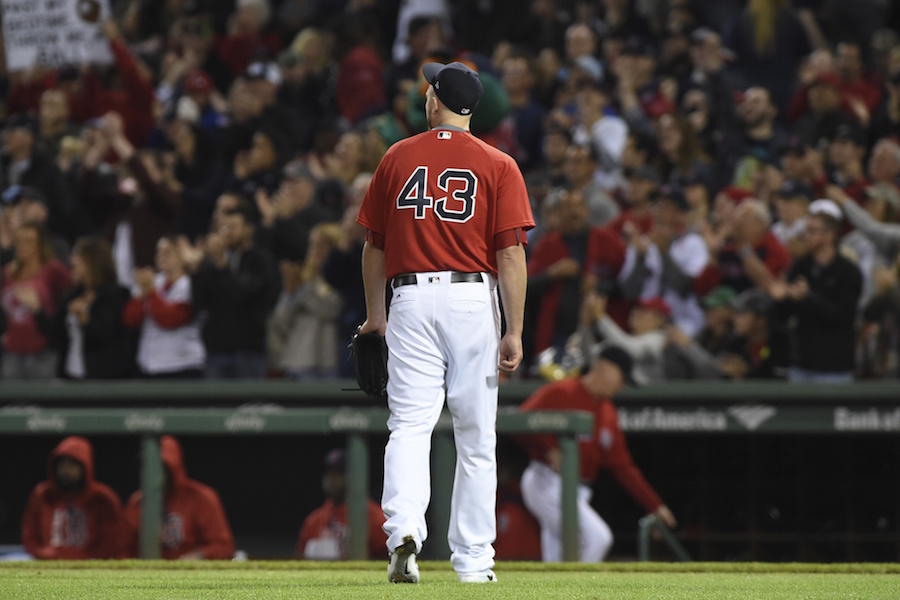 Well, for one thing, Reed was undeniably an excellent value. Maybe it begins and ends with that. You see an opportunity like this, and you don't pass it up. When it comes to strengths that teams seek out in a relief pitcher, Reed checks off pretty much every box. He's relatively young by free agent standards, having turned 29 less than a month ago. He has worked frequently in high leverage, and brings plenty of closing experience. He's been extremely durable; Reed leads baseball with 157 appearances since the start of 2016, and has made at least 55 every year since 2012. And of course, there's the performance. Over the past two seasons, in addition to being baseball's most oft-used reliever, Reed has also been one of its best. Paul Molitor hasn't gotten Yu Darvish (not yet, anyway), but Reed gives him perhaps the most valuable tactical weapon he's ever had on a staff. ACE IN THE HOLE Cleveland's Andrew Miller. New York's Dellin Betances. Houston's Chris Devenski. All around the American League we see the emergence of premier relievers serving in non-closer roles and delivering massive value. Being able to deploy a dominating arm against an opposing team's best hitters, situationally, is at least on the same level of importance as a reliable ninth-inning man. I'd argue more so. The Twins are committed to Fernando Rodney at closer to start the season, and in many ways he is the perfect embodiment of the role's (relative) fungibility. Over the course of his lengthy career Rodney has been an unspectacular relief pitcher by any measure. Yet, he ranks third on the all-time active saves list, and has converted 82% of his career chances, including 88% the last two years. Plugging in Rodney as an inexpensive, yet experienced, short-term closer while making a much larger investment in Reed as the all-purpose late-inning fireman is – in many ways – a decidedly new-age move. GAME CHANGER According to Win Probability Added, which "attempts to measure a player's contribution to a win by figuring the factor by which each specific play made by that player has altered the outcome of a game," Reed has been the fifth most impactful reliever in the majors over the past two seasons. And look at his company in the Top 10: 1. Andrew Miller, NYY/CLE: 8.81 2. Zach Britton, BAL: 8.03 3. Kenley Jansen, LAD: 7.69 4. Brad Hand, SD: 6.14 5. Addison Reed, NYM/BOS: 5.85 6. Craig Kimbrel, BOS: 5.49 7. Wade Davis, KC/CHC: 5.48 8. Raisel Iglesias, CIN: 5.05 9. Shane Greene, DET: 4.47 10. David Robertson, CWS/NYY: 4.36 Now, it should be noted that WPA isn't necessarily a predictive stat. It only tells a story of what's happened. But in this case, it paints a picture of Reed as a pitcher who has consistently delivered with games on the line, drastically altering his teams' fortunes for the better. That's not a Darvish-caliber impact, but over the course of the season, its influence on the W/L ledger should not be downplayed. Of course, Reed continuing to succeed in big spots is reliant on his performance sustaining as it has, and that's no given at the game's most notoriously volatile position. We're also talking about a guy who, prior to 2016, had a 4.01 ERA in 250 major-league innings. But the righty's strengths seemingly make him a good bet to stay on track. TAKING CONTROL During our on-stage Q&A with him at the Winter Meltdown on Saturday, I asked the greatest relief pitcher in Twins history for his impressions of the biggest free agent relief signing in Twins history. Joe Nathan, like many others, went straight to Reed's calling card: control. "I love how aggressive he is in the zone. That's the biggest thing with the bullpen guys, if you're not throwing strikes you don't belong in the bullpen," opined Nathan, whose own success with the Twins was fueled in part by an excellent 7.3% BB rate. Reed has walked only 104 (6.2%) of the 1,669 batters he has faced in his MLB career. Twenty of those were intentional. He has hit six batsmen, and uncorked only 13 total wild pitches. (Last year alone, Trevor Hildenberger drilled four hitters and Ryan Pressly was charged with five wild pitches.) As Parker Hageman noted around the time of the signing, Reed has been in the strike zone more over the last two seasons than any pitcher other than Jansen, who has a strong case for being the best reliever in baseball right now. Reed doesn't have Kenley-type stuff, but it's good enough that he still managed a 2017 swinging strike rate of 13.7%, which would've led all Twins relievers. The ability to make people miss at that frequency, without needing them to chase, is one that inspires a lot of confidence. Conventional thinking says Reed is now next in line for closer duties, should Rodney falter. After all, his pay is commensurate with the role, and he has racked up 125 saves in the majors. But I wonder if the right mindset is to peg Hildenberger as Rodney's fallback in the ninth, and keep Reed as your flexible, strategic bullpen ace for as long as you can.
 -
Is this true? Do you have a source? My understanding was that a player couldn't be placed on the 60-day DL until like one day before the start of the regular season.
-
Good stuff. Thanks.
-
Personally I think it varies. Some guys have runs of bad luck. Others have chronic issues that are predictive. If the Twins assessed Burdi as the latter, then that's that. Maybe his elbow's never going to be able to handle how hard he throws. But plenty of players have gotten past early injury issues to fulfill their potential. You're probably right. I just don't get the thought process really, and can't figure it out. What did they expect to get with the 20th pick in the Rule 5 draft? If they cut one of those guys to sign Addison Reed, fine. But they could've made every move they've made so far with one of Burdi and Bard on the 40-man roster. Why not wait until you have to give them up? Especially Burdi, whose 40-man spot opens up again as soon as the season starts? There's no rule against adding a guy to your roster ahead of the Rule 5 and then dropping him a month later when you sign a free agent, is there? (That's an honest question, maybe there is.)
-
I've always been a big believer in Burdi's arm and think he'll be a stud reliever in the majors pretty quickly if he gets his health straightened out, so maybe I'm irrational on this topic. Perhaps the Twins have real reason to believe he'll never get fully healthy, I dunno.
- 105 replies
-
- 4
-
-
- addison reed
- fernando rodney
- (and 3 more)
-
How is it not? They elected not to add either of those two to the 40-man roster so that they could keep an open spot to draft Kinley, then Burdi and Bard (unsurprisingly, especially in Burdi's case) got taken.
- 105 replies
-
- 3
-
-
- addison reed
- fernando rodney
- (and 3 more)
-
Yep, I think that's the right layout to expect. And it creates a very favorable situation for Pressly to bounce back, because he'll be able to work in more low-leverage situations early on and build confidence.
- 105 replies
-
- 2
-
-
- addison reed
- fernando rodney
- (and 3 more)
-
Yeah, at this point I'm positive May is going to be given every chance to start, which is the right move. They're definitely not going to give up on him. I know the new FO guys are very high on May, and they were impressed by the way he was throwing last year before the injury.
- 105 replies
-
- 10
-
-
- addison reed
- fernando rodney
- (and 3 more)
-
Minnesota's signing of righty reliever Addison Reed to a two-year, $16.25 million contract, which became official on Monday, was stunning for multiple reasons. Yes, it was the first multi-year contract ever given to a free agent reliever by the Twins. But more strikingly, it adds another guaranteed contract to a bullpen that was already somewhat crowded. In fact, Reed may have removed the last vacancy in the unit, and that would leave some surprising names on the outside looking in.As things stand, I think we can safely say that the following pitchers are locks for the Twins bullpen, barring injury: Reed, Fernando Rodney, Zach Duke, Trevor Hildenberger, Taylor Rogers and Ryan Pressly. You might quibble on Pressly but they just signed him for $1.6 million and he's out of options. Despite his disappointing 2017, I don't think they're going to give up on that stuff without at least taking one more long look. So if we're square on those assumptions, then there's one spot remaining in a seven-man bullpen. I might be going out on a limb here, but I suspect that spot is also essentially spoken for and filled. Er, Philled. One thing that is conspicuously amiss in the group of six above is a long reliever who can bridge the gap over several innings after short starts. The highest pitch total in a 2017 outing for anyone in the group was Hildenberger's 40, in his second career appearance, and I suspect the Twins would prefer not to let him approach that number going forward. We haven't heard much on Phil Hughes lately but the most recent reports suggested his recovery was going smoothly and he was amped up to return in 2018. He'll be six months removed from his thoracic outlet revision surgery when he reports to camp. His $13.2 million salary and – more importantly – his (albeit now distant) history of pitching well in the majors make him a sure bet to land on the pitching staff, so long as he's healthy and throwing reasonably well. As I wrote back in early December, bringing Hughes back as a reliever is almost the only option that makes sense. This only feels more true now, given how the rest of the pen is shaping up. So, if that seven-man relief corps is penciled in, it leaves all of these guys out of luck: Tyler Duffey, Alan Busenitz, JT Chargois, Gabriel Moya, Tyler Kinley. Duffey has spent almost the entire past two seasons in the majors, and posted a 3.72 FIP for the Twins in relief last year. Busenitz posted a 1.99 ERA and 0.98 WHIP in 28 appearances as a rookie. Chargois lost his entire season to injury but is one of the organization's top relief prospects, and he's MLB-ready. Moya has been silly good in the minors, and had the highest K-rate of any Minnesota reliever during his brief 2017 debut. Kinley was the Rule 5 pick that the Twins basically sacrificed Nick Burdi and Luke Bard to acquire, though you could argue one or both might have been lost over the course of the offseason anyway. I didn't mention John Curtiss, because I don't think he'll be a viable contender for the Twins bullpen out of camp, but he's on the 40-man roster and has gotten a taste of the majors. Buddy Boshers was designated for assignment to make room for Reed, but if he makes it through waivers he'll still be around. He's spent plenty of time in the majors and has, in my mind, the right profile to get back there. The collection of guys slated to miss out on Opening Day roster spots could basically form an MLB-caliber bullpen in Rochester. I might be exaggerating a little, but not a ton, especially if Chargois is healthy and on his game. We still haven't yet accounted for Dietrich Enns (lefty starter acquired in Jaime Garcia deal, almost assuredly destined for a relief role), Tyler Jay (potentially back on the fast track after a healthy showing in the AFL), or the inevitability that at least a couple from the Gonsalves/Romero/Littell/Jorge pack will drop out as starters. It's a degree of MLB-ready (or very close) depth the franchise hasn't enjoyed in quite some time. And it happens to coincide with bullpens becoming an increased area of focus all around the game. Minnesota certainly isn't rich with proven top-tier relievers – a shortcoming they did address nicely with the Reed signing – but on aggregate, their talent at the position might rival any organization in the league. With just a few more guys turning the corner, the Twins could have themselves a self-styled power pen. Granted, that's a sizable "if" but at least the team is giving itself a whole lot of reasonable "maybes." Click here to view the article
- 105 replies
-
- 7
-
-
- addison reed
- fernando rodney
- (and 3 more)
-
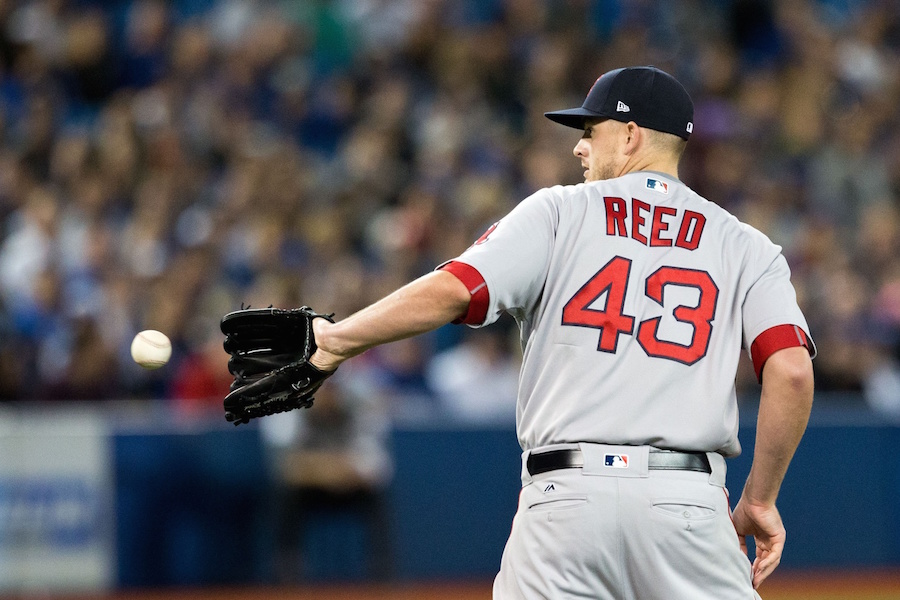 As things stand, I think we can safely say that the following pitchers are locks for the Twins bullpen, barring injury: Reed, Fernando Rodney, Zach Duke, Trevor Hildenberger, Taylor Rogers and Ryan Pressly. You might quibble on Pressly but they just signed him for $1.6 million and he's out of options. Despite his disappointing 2017, I don't think they're going to give up on that stuff without at least taking one more long look. So if we're square on those assumptions, then there's one spot remaining in a seven-man bullpen. I might be going out on a limb here, but I suspect that spot is also essentially spoken for and filled. Er, Philled. One thing that is conspicuously amiss in the group of six above is a long reliever who can bridge the gap over several innings after short starts. The highest pitch total in a 2017 outing for anyone in the group was Hildenberger's 40, in his second career appearance, and I suspect the Twins would prefer not to let him approach that number going forward. We haven't heard much on Phil Hughes lately but the most recent reports suggested his recovery was going smoothly and he was amped up to return in 2018. He'll be six months removed from his thoracic outlet revision surgery when he reports to camp. His $13.2 million salary and – more importantly – his (albeit now distant) history of pitching well in the majors make him a sure bet to land on the pitching staff, so long as he's healthy and throwing reasonably well. As I wrote back in early December, bringing Hughes back as a reliever is almost the only option that makes sense. This only feels more true now, given how the rest of the pen is shaping up. So, if that seven-man relief corps is penciled in, it leaves all of these guys out of luck: Tyler Duffey, Alan Busenitz, JT Chargois, Gabriel Moya, Tyler Kinley. Duffey has spent almost the entire past two seasons in the majors, and posted a 3.72 FIP for the Twins in relief last year. Busenitz posted a 1.99 ERA and 0.98 WHIP in 28 appearances as a rookie. Chargois lost his entire season to injury but is one of the organization's top relief prospects, and he's MLB-ready. Moya has been silly good in the minors, and had the highest K-rate of any Minnesota reliever during his brief 2017 debut. Kinley was the Rule 5 pick that the Twins basically sacrificed Nick Burdi and Luke Bard to acquire, though you could argue one or both might have been lost over the course of the offseason anyway. I didn't mention John Curtiss, because I don't think he'll be a viable contender for the Twins bullpen out of camp, but he's on the 40-man roster and has gotten a taste of the majors. Buddy Boshers was designated for assignment to make room for Reed, but if he makes it through waivers he'll still be around. He's spent plenty of time in the majors and has, in my mind, the right profile to get back there. The collection of guys slated to miss out on Opening Day roster spots could basically form an MLB-caliber bullpen in Rochester. I might be exaggerating a little, but not a ton, especially if Chargois is healthy and on his game. We still haven't yet accounted for Dietrich Enns (lefty starter acquired in Jaime Garcia deal, almost assuredly destined for a relief role), Tyler Jay (potentially back on the fast track after a healthy showing in the AFL), or the inevitability that at least a couple from the Gonsalves/Romero/Littell/Jorge pack will drop out as starters. It's a degree of MLB-ready (or very close) depth the franchise hasn't enjoyed in quite some time. And it happens to coincide with bullpens becoming an increased area of focus all around the game. Minnesota certainly isn't rich with proven top-tier relievers – a shortcoming they did address nicely with the Reed signing – but on aggregate, their talent at the position might rival any organization in the league. With just a few more guys turning the corner, the Twins could have themselves a self-styled power pen. Granted, that's a sizable "if" but at least the team is giving itself a whole lot of reasonable "maybes."

