



Al from SoDak
-
Posts
274 -
Joined
-
Last visited
Content Type
Profiles
News
Minnesota Twins Videos
2026 Minnesota Twins Top Prospects Ranking
2022 Minnesota Twins Draft Picks
Minnesota Twins Free Agent & Trade Rumors, Notes, & Tidbits
Guides & Resources
2023 Minnesota Twins Draft Picks
The Minnesota Twins Players Project
2024 Minnesota Twins Draft Picks
2025 Minnesota Twins Draft Pick Tracker
2026 Minnesota Twins Draft Tracker: Picks & Bonuses
Forums
Blogs
Events
Store
Downloads
Gallery
Everything posted by Al from SoDak
-
1968 Topps and the Minnesota Twins
Al from SoDak commented on Al from SoDak's blog entry in Al from SoDak
Thank you for the education. I honestly didn't know about the issues in Korea during that time frame.- 4 comments
-
- 1
-

-
- rod carew
- harmon killebrew
- (and 1 more)
-
Hey Twins fans! This is the fourth post in my series about Minnesota Twins baseball cards. Please read my first post here for deeper detail on my series. 1968 Topps Game This insert set from the 1960s is unique. It’s a very limited set and like the 1964 Topps Giants seems to contain only the best of the best. The cards measure 2.25” x 3.25” so slightly smaller than today’s standard sized card. The cards resemble a deck of playing cards. The complete set has 33 cards, three of which are Twins players. Each card has a color image of the player, facsimile autograph, and a game outcome. This set contains a second year Rod Carew (#29) after his rookie card in 1967 was a dual card with the Senators’ Hank Allen. Rules for the game can be found at https://www.beckett.com/news/1968-topps-game-baseball/. Seems to me you would go through the cards quickly and maybe there should have been more cards in the set. But I have never played. Maybe I should try to get the full set and play? According to the same Beckett website above, these game cards were inserted within the third series release of the regular Topps baseball cards from 1968. THE BEST Rod Carew and Harmon Killebrew fight for the best Twins card in this subset. Because Rod Carew has no solo rookie card in the 1967 set, I’m going to choose his card as the best simply because it's one of his first stand-alone cards. PERSONAL FAVORITE I’m going with the #5 Killebrew as my personal favorite simply because his outcome was a double and Carew’s was, unfortunately, a ground out. Hey, I’m competitive and would want to win this game! MOST OBSCURE PLAYER Just like my earlier entry about the 1964 Topps Giants set, when there are only three cards in the set, somebody has to be named “most obscure,” at least according to the format I set for this series. So like Camilo Pasucal in the 1964 Topps Giants set, Dean Chance gets named most obscure Twin in this game set because the other two cards show Hall of Famers. But, hey, at least his game outcome was a strike out (which I assume was a positive for a pitcher in this game). Dean Chance was an excellent pitcher. He won the Cy Young Award in 1964 when there was only one winner for all of MLB. His career record was 128-115 with a career ERA of 2.92. Now he did pitch during the year of the pitcher (1968), but that career ERA measures up very well. His career ERA+ was 119. Chance came to the Twins in a December 1966 trade with the Angels; the Twins gave up Pete Cimino, Jimmie Hall, and Don Mincher. The Twins got 13.1 WAR from Chance in three seasons. The trade seems like a win for the Twins as the players they gave up combined for 5.7 WAR for the Angels. While playing for the Twins, he led the American League in innings and starts in 1967, which was also one of two years he made an All-Star team. In December 1969, Chance was traded by the Twins with Bob Miller, Graig Nettles, and Ted Uhlaender for Luis Tiant and Stan Williams. This trade seems like the Twins screwed up both ways. Nettles was obviously great for many years, some contend he is worthy of the Hall of Fame. And some also argue the same for Taint, who the Twins released in 1971. Chance retired after his age 30 season. It was said by Wikipedia and other websites that his body broke down perhaps because of funky wind up where he essentially turned his back the batter. Interestingly, in retirement he was a successful carnival operator and founded the International Boxing Association. I have vague memories of Charley Walters of the St. Paul Pioneer Press writing about Chance and the IBA. If you disagree with my opinions, I would love to see your opinions, criticisms, and suggestions in the comments below. Don’t be too hard on me. Let’s have fun with this!
- 4 comments
-
- 3
-
-
- rod carew
- harmon killebrew
- (and 1 more)
-
MLB promoted these games but not enough. Nor did they showcase them. These prospect games should have been magnified and taken precedence over the regular spring training game. This Twins prospect game seemed like an afterthought. The Fort Myers fans either didn't know about or didn't care about this game. Almost no one there. Made me think I need to plan next year's vacation around this game. From the looks of TV, you could have had a seat in the front row.
- 25 replies
-
- 2
-
-
- david festa
- walker jenkins
- (and 2 more)
-
Starting a new thing. Book reviews!
Al from SoDak commented on BigJoeGun's blog entry in Twins Nation Podcast
Thanks for the review. I'm sure I'll check it out. I'm currently reading Tony Oliva by Thom Henninger. I'm too young to know the intricacies of Tony Oliva's career, but my dad always said he thought Oliva was the best Twins player. This book might support that claim. Too bad about the knees. We will never know what could have been. -
Samuel Deduno was born 7/2/1983 in the Dominican Republic. He was originally signed by the Colorado Rockies in 2003. He signed with the Twins as a free agent in November of 2011. View full player
-
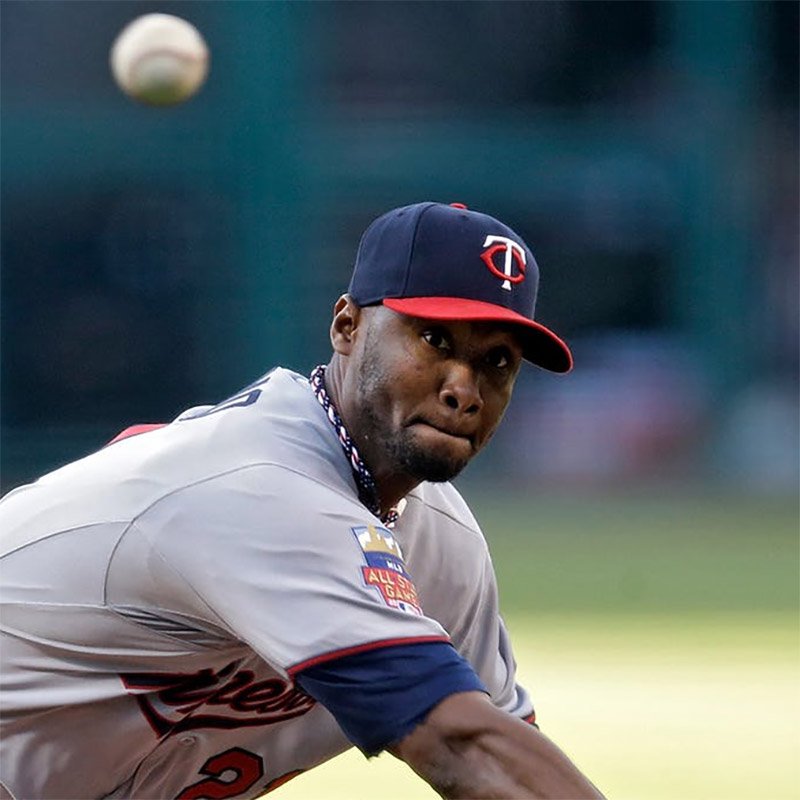 Samuel Deduno was born 7/2/1983 in the Dominican Republic. He was originally signed by the Colorado Rockies in 2003. He signed with the Twins as a free agent in November of 2011.
 -
George Banks was born 9-24-1938 in Pacolet Mills, SC. He was signed in 1957 by the New York Yankees and had minor league success. Banks hit 82 minor league home runs through 1960 (on his way to 223 home runs in 11 minor league seasons). In 1961 the Twins selected him in the Rule 5 draft View full player
-
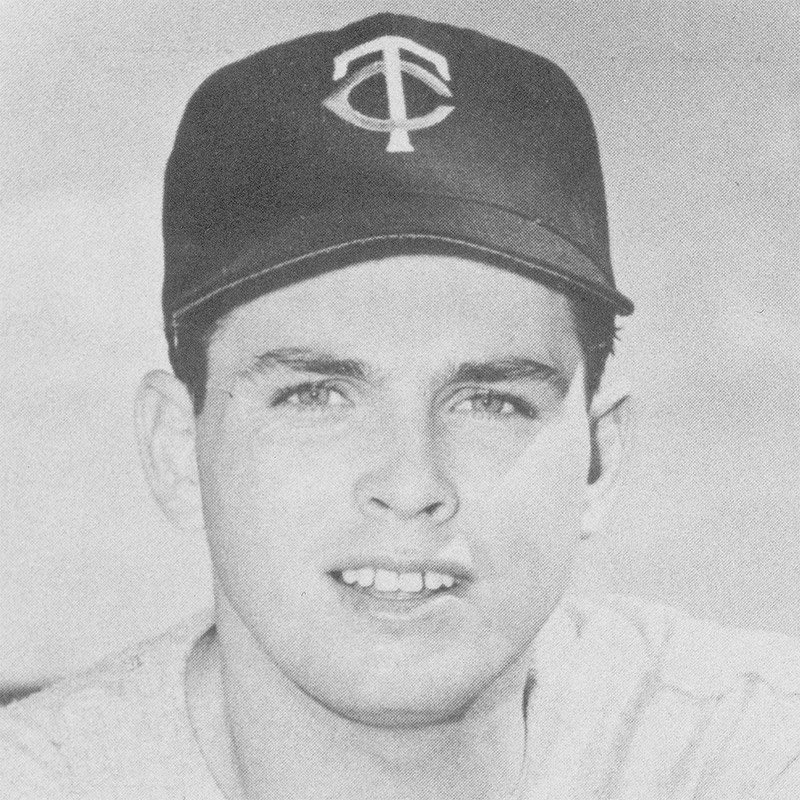 George Banks was born 9-24-1938 in Pacolet Mills, SC. He was signed in 1957 by the New York Yankees and had minor league success. Banks hit 82 minor league home runs through 1960 (on his way to 223 home runs in 11 minor league seasons). In 1961 the Twins selected him in the Rule 5 draft
 -
Hi folks. This is my third post in my series about Minnesota Twins baseball cards. Please read my first post here for deeper detail on my series. 1968 TOPPS The 1968 Topps set is one of my personal favorites which is interesting because I find the look rather ugly, but I really like some of the Twins cards. The set’s cards are standard size, with kind of a burlap looking border. The player’s name is at the bottom with a colored circle showing his team and position. The set has a couple of my favorite multi-player cards ever and Rod Carew’s first stand-alone Topps card (#80) as well as an all-star card (#363). There are a whopping 37 Twins cards in the set. THE BEST With this set, I might run into a problem for my personal choice of best and favorite. There are more than a few cards to choose from that fit both categories. As far as value, both the #490 Super Stars card with Harmon Killebrew, Willie Mays and Mickey Mantle, and the #480 Manager’s Dream card with Tony Oliva, Chico Cardenas, and Roberto Clemente rank high. I don’t always want to equate value with best, but in this case my choice for best card has to be the Super Stars card. The card has three Hall of Famers who as a group hit 1,769 home runs. Three of the top 18 HR hitters ever…on one card!! Quite a bit of firepower on one single card. PERSONAL FAVORITE For my personal favorite I am going to select the Rod Carew (#80). You just got to love Rod Carew’s first solo card. I like the pose and the Topps rookie cup. Like I said in a previous post about Tony Oliva, Carew just looks so young here. And like my statement above about firepower on a single card, the AL RBI Leaders card also has three Hall of Famers in Carl Yastrzemski, Harmon Killebrew, and Frank Robinson. I really like these types of leader cards with multiple Hall of Famers. This card represents 1,611 career home runs and 5,240 career RBI. A lot of history there. I’m going to choose the Carew as my favorite Twins card in the set, but I really, really like that Super Stars card above as well. MOST OBSCURE PLAYER Cal Ermer did manage a major league baseball team, but only briefly. He previously had a very limited playing career. He went 0-3 in his lone MLB game for the Senators in 1947, was a long-time coach and manager in the Senators/Twins organization, who ended up managing the Twins for part of 1967 and all of 1968. I thought he was the right choice for most obscure player/coach in the 1968 Twins set, but then I read about right-handed pitcher Moe Ogier. Maurice “Moe” Ogier appeared on a dual rookie card (#589) with Ron Clark. Mr. Ogier made the 1968 Twins opening day roster but was sent to the minor leagues shortly thereafter to make room for Jim Kaat after Kaat was activated from the disabled list for an elbow injury dating to the prior season. Ogier didn’t pitch that season – or ever – in the major leagues. Ogier played six years in the Twins minor league system. His record was 36-37. His minor league strikeout numbers were rather good especially for that era, but his WHIP was also high. He pitched later in the Angels and Padres systems. He never made the majors, but he did have this baseball card. While researching this post, I learned a new phrase that I had not heard before – phantom ballplayer. According to Wikipedia, a phantom ballplayer is a player who spent time on an active roster but never appeared in a game. That sounds to me like a definition for obscure. Moe Ogier is the choice here. If you disagree with my opinions, I would love to see your opinions, criticisms, and suggestions in the comments below. Don’t be too hard on me. Let’s have fun with this!
- 2 comments
-
- 5
-
-

-
- harmon killebrew
- rod carew
- (and 3 more)
-
Four Twins Position Players Optioned
Al from SoDak replied to Seth Stohs's topic in Twins Daily Front Page News
The depth seems way way better that 10-15 years ago. Seriously depth is important.- 25 replies
-
- 17
-
-
- austin martin
- emmanuel rodriguez
- (and 2 more)
-
1964 Topps Giants and the Minnesota Twins
Al from SoDak commented on Al from SoDak's blog entry in Al from SoDak
I realized today I like Oliv'a 1973 quite a bit. Maybe he's just photogenic.- 8 comments
-
- 1
-
-
- tony oliva
- harmon killebrew
- (and 1 more)
-
1964 Topps Giants and the Minnesota Twins
Al from SoDak commented on Al from SoDak's blog entry in Al from SoDak
My plan is to only do a post for years where I have all the cards. I'm guessing you might be referring to the the 1965 Topps Oliva card which, of the top of my head, may be Oliva's best. Alas, I do not have all the 65 cards so I am skipping that year for now.- 8 comments
-
- 1
-
-
- tony oliva
- harmon killebrew
- (and 1 more)
-
You Helped Design My Man Cave
Al from SoDak commented on IndianaTwin's blog entry in Un/Necessary Sports Drivel
Looks good. My Twins Daily card series started as a similar thought to yours; how to display some of my Twins cards. I have a 35 card display case. I have been rotating through Twins sets from different years in the case. So then I decided to write about some of those years. -
Hi folks. I am a collector of Twins baseball cards. About 10-15 years ago, I made it a goal to get at least one card from every Twins player who had a card. That goal seems to have morphed into getting each Twins card for every Topps set (and a few other brands here and there). I currently have more than 2,400 cards from about 750 unique players. This is my second post in my series about Minnesota Twins baseball cards. Please read my first post here for deeper detail on my series. 1964 TOPPS GIANTS This unique set from the 1960s is super cool. It’s short and sweet with only the best players. The cards are 3.125” x 5.25.” Because of their size, they really get your attention. Each card has a full color image of the player. There is a baseball at the bottom with the player’s name, team, and position. To my knowledge, this 1964 set contains the first stand-alone Tony Oliva card (#44). As I said above, the set contains an extremely limited number of cards. There are only three Twins cards. THE BEST Tony Oliva and Harmon Killebrew fight for the best card here. Oliva looks so young. Harmon’s picture shows him holding two bats, one of which has the number 29 on the knob. That’s too early for Rod Carew. Depending on when the picture was taken, that’s likely the bat of Wally Post. Because it’s his first stand-alone card, I’m going with the Tony Oliva as the best Twins card in the 1964 Topps Giants set. PERSONAL FAVORITE In 2023, my son and I attended the National Sports Card Convention in Chicago. It was quite the experience – overwhelming. We had a wonderful time. One of my purchases was the graded Harmon Killebrew (#38) below. For that reason and the memories made, that is my personal favorite of the 1964 Topps Giants. MOST OBSCURE PLAYER Well, when there are only three cards in the set, somebody has to be “most obscure.” By the process of elimination, the great Camilo Pascual (#32) is the choice for the most obscure. After all, the other two players are in the Hall of Fame. Pascual came to the Twins when the Washington Senators moved to Minnesota. Washington was famous for signing Cuban players, of which Camilo was one of many. He was a very good pitcher with a career spanning 18 years. He started his career in Washington in 1954, continued with six years in Minnesota, then finished up with the new Washington franchise, Cincinnati, the Dodgers and Cleveland. He was a five-time all-star and received MVP votes in two years. While playing for the Twins, he led the American League in strikeouts three times (1961-63), complete games twice (1962-63), and shoutouts twice (1961-62). He was a great player. According to Wikipedia, Pascual had a devastating curveball which Ted Williams called, “The most feared curveball in the American League for 18 years.” Camilo was no slouch at the plate, batting .205 in his career. He is one of only two pitchers to hit two grand slams. After his playing career he served as a coach and scout including being the Twins pitching coach from 1978-80. Pascual is in the Cuban Baseball Hall of Fame, the Caribbean Baseball Hall of Fame, and the Minnesota Twins Hall of Fame. If you disagree with my opinions, I would love to see your opinions, criticisms, and suggestions in the comments below. Don’t be too hard on me. Let’s have fun with this!
-
Hi folks. I am Al from SoDak. I have been reading Twins Daily since its inception and always thought of contributing. Well, here I go. I am a collector of Twins baseball cards. About 10-15 years ago, I made it a goal to get at least one card from every Twins player who had a card. That goal seems to have morphed into getting each Twins card for every Topps set (and a few other brands here and there). I currently have more than 2,400 cards from about 750 unique players. I have a plan for a series of posts to review and comment on each year’s set of Twins cards. But by no means will this be completed in one initial post. I plan to cover each year in order of the years I have completed. So, I will start with my first completed set (1963 Topps) and go forward to other completed sets. As I continue with my series, I will continue with my collecting. Hopefully when I get the most recent set, I will have more of the earlier sets completed and can loop back and comment on those. Hopefully we all find this an interesting exercise. To start with I am going to give my opinion of the best card. This will likely be one of the most expensive cards but not necessarily the most expensive. I don’t want to have too many Killebrews, Olivas, Carews, etc. I will also give my opinion of my personal favorite card. This might be based on the look of the card, or a story behind the card or player. Finally, I will discuss the card of the most obscure player in my opinion. This will hopefully include a little research and history of this player so that we can learn more about lesser-known players. I anticipate the obscure player part ending up as the most detailed and longest part of the post. We’ll see how this goes. 1963 TOPPS This colorful set is one my favorites from the 1960s. The cards are 2.5” x 3.5” which has been the standard card size since 1957. Each card contains a larger color image of the player with a smaller black and white picture within a circle at the bottom of the card. The player’s name, team and position are on a colorful thick border at the bottom. The league leader cards and many of the rookie cards are of the notorious “floating head” design. This 1963 set contains the Tony Oliva #228 rookie card amongst its 33 Twins cards. THE BEST Many sources list the Oliva rookie card and Harmon Killebrew #500 as the most expensive Twins cards in the set. The Oliva card is of the often ridiculed “floating heads” design, so I am going to lean to the Harmon Killebrew card the best card. Hopefully this doesn’t start a trend of too many Killebrews. PERSONAL FAVORITE I like the Bob Allison #75 where he is shown in a solid batting pose. Jim Kaat (#165) stares down the camera at the start of a wind-up. To me, that’s a good card and made better by the fact that I was able to get mine autographed at TwinsFest a few years back. I also like that the AL Home Run Leaders #4 has Killebrew front and center as the top dog from 1962. The autograph on the good-looking Jim Kaat card puts that card on top for me as my personal favorite. MOST OBSCURE PLAYER My choice as the most obscure Twins player included in the 1963 Topps baseball card set is George Banks (card #564). Interestingly, the Twins had five rookie cards included in the 1963 Topps set. Four of those cards were like the Oliva rookie with “floating heads” design, but one rookie player got his own card – yes, Mr. Banks. Why? Well, he was signed in 1957 by the New York Yankees and had minor league success. George Banks hit 82 minor league home runs through 1960 (on his way to 223 home runs in 11 minor league seasons). In 1961 the Twins selected him in the Rule 5 draft, the mechanism that led to the Twins obtaining Shane Mack and Johan Santana (trade) many years later. George Banks played mainly 3rd Base and Outfield. He played a total of five seasons in MLB, splitting his time between Minnesota and Cleveland. He was a piece in a key trade – He and Lee Stange were traded to Cleveland for Mudcat Grant who we all know won 21 games in the World Series year of 1965. Mudcat won Game 6 nearly all by himself. He led the Twins to a 5-1 win in this elimination game. He allowed only six hits and was also a force in the batter’s box with a 3-run home run. Banks could never match his minor league prowess in the big leagues. His WAR was 0.3. He only got 203 at bats in MLB. He played 63 games in 1963, but only 25 in 1964. After the trade he played in a total of 17 games over parts of three seasons in Cleveland. But George Banks did have a nice 1963 rookie card. The card shows him squaring to bunt which contrasts with his minor league propensity to his home runs. Love it! So there it is. My first entry in what could end up being a long series about baseball cards and the Minnesota Twins. Hopefully I get some positive feedback, encouragement, and views to keep me motivated. If you disagree with my opinions, I would love to see your opinions, criticisms, and suggestions in the comments below. Don’t be too hard on me. Let’s have fun with this!
- 6 comments
-
- 8
-
-
-
- harmon killebrew
- bob allison
- (and 1 more)
-
I really like this kind of content. It explains in detail things baseball fans take for granted. It is fit for a site like The Athletic. Great job.
- 13 replies
-
- 3
-
-
- target field
- bally sports
- (and 2 more)
-
Article: Week in Review: No Letting Up
Al from SoDak replied to Nick Nelson's topic in Twins Daily Front Page News
They are going to win the World Series this year. I said it. Only injuries can derail them. -
I was also thinking of the turtle when Cron came up.
-
Best Starting pitchers Twins
Al from SoDak commented on mikelink45's blog entry in mikelink45's Blog
I like your work. Before reading I would have said Santana, Blyleven, Viola, either Perry or Pascual, Kaat, Radke (check your spelling). I love your comment, "Johan Santana 8 mostly under-utilized years." What could he have been if inserted as a starter sooner? And how bad were the results of that trade? I was hoping for a better return that Viola.- 2 comments
-
- 1
-
-
- mudcat grant
- pascual
- (and 2 more)
-
The best First Baseman in Twins history
Al from SoDak commented on mikelink45's blog entry in mikelink45's Blog
Your breakdown by decades narrows the field. I really think of Killebrew, Carew, and Mauer as something other than first basemen, so I would not choose any of them. All three are obviously great baseball players, but I don't think of them as first basemen. Next cut...Mientkiewicz was awesome, one of my favorites for those early 2000s teams, but simply not as good as Hrbek or Morneau. I lean toward Hrbek, but the 1980s Twins are when I really started paying attention to the Twins. Am I just choosing that era and Hrbek nostalgically? Morneau seems like he had better annual numbers but for a shorter period of time. My deciding factor will be World Series championships--therefore Hrbek is the man!
