



Al from SoDak
-
Posts
274 -
Joined
-
Last visited
Content Type
Profiles
News
Minnesota Twins Videos
2026 Minnesota Twins Top Prospects Ranking
2022 Minnesota Twins Draft Picks
Minnesota Twins Free Agent & Trade Rumors, Notes, & Tidbits
Guides & Resources
2023 Minnesota Twins Draft Picks
The Minnesota Twins Players Project
2024 Minnesota Twins Draft Picks
2025 Minnesota Twins Draft Pick Tracker
2026 Minnesota Twins Draft Tracker: Picks & Bonuses
Forums
Blogs
Events
Store
Downloads
Gallery
Everything posted by Al from SoDak
-
Forgotten Twins All-Stars: Gary Ward
Al from SoDak replied to Al from SoDak's topic in Twins Daily Front Page News
Glad you liked it! -
Well, baseball fans, the Major League Baseball All-Star Game is on the horizon. The 2024 game will be played July 16 at Globe Life Park in Arlington, Texas, home of the Texas Rangers. At this point in many baseball seasons, I fondly reminisce about past obscure Twins All-Star selections. Today, I’d like to remember the 1983 All-Star representative of the Twins, outfielder Gary Ward. Gary Ward was born in Compton, California, on December 6, 1953. The Twins signed him in 1972 as an amateur free agent. His first year of minor league ball in 1973 was spent in Low-A Geneva, New York, where he showed immediate potential by being one of the better hitters on the team. From there, Ward began the slow progression up the minor league system with stops at Class-A Wisconsin Rapids, two years at Double-A Orlando, and three seasons at Triple-A, first at Tacoma and then Toledo. He always produced a modest batting average, a decent walk rate, and some power. Gary Ward debuted with the Twins on September 3, 1979, in a home game against the Kansas City Royals. He came in as a pinch runner at the bottom of the eighth inning but could not score, and the Twins ultimately lost 1-0. Ward’s first hit came on September 23 against the Milwaukee Brewers. He was used as a pinch hitter in the seventh inning and walked. His first hit came in the top of the ninth; it was a single. But that was the only base runner for the Twins in the ninth, and they lost 8-7. The 1980 season saw Ward get only 46 plate appearances with the Twins during a September call-up. Ward got his first home run on September 18 against the Brewers. The homer came against Mike Caldwell. But more noteworthy, that home run was part of Ward hitting for the cycle in only his 14th career game. He is the quickest player in MLB history ever to achieve this trivial rarity (in a game just four days earlier, Ward had a single, double, and triple but could not get the home run.). That September, Ward had a phenomenal 1.269 OPS in 46 plate appearances to put himself on the radar for 1981. In 1981, Ward was with the big club for the entire season. He hit .264/.325/.359. His season was good enough for him to place ninth in Rookie of the Year balloting. In 1982, Ward finally received full playing time, mostly in left field, and hit .284/343/.447. He also was selected as the American League Player of the Week twice that season. 1983 was the breakout season for Gary Ward. He started all 81 games before the All-Star break. At the break, he was hitting .289/.328/.488, good enough for a .816 OPS. He had 15 home runs and 52 RBI. It was a great first half and he was rewarded with an All-Star selection. Ward got one at-bat in the All-Star Game. Unfortunately for Ward and Twins fans, Ward went 0-1. He flew out to center field against Dave Dravecky in the fifth inning in the American League’s 13-3 win. Ward’s numbers slipped a little in the second half, but he finished the 1983 season with 4.2 bWAR, good enough for second on the team to John Castino. Ward’s defense was also very good, leading the American League left fielders in putouts and assists. His 24 assists were the most by an American League outfielder since 1944. By the end of 1983, the Twins had promising outfielders – Ward, Tom Brunansky, Mickey Hatcher, a collection of center fielders, and an intriguing minor league prospect named Kirby Puckett, who finished the season at Triple-A. One thing the Twins teams of the early 80s did not have enough of was quality pitching, specifically starting pitching. They had future ace Frank Viola but little else. So, they dealt from their outfield depth to acquire two legitimate Major League starters. All-Star Gary Ward was sent to the Texas Rangers for Mike Smithson and John Butcher. While they weren’t future Hall of Famers or All-Stars, they ate innings. They started 36 and 34 games in 1984 with ERA+ of 114 and 122. They both started 30+ games again in 1985, with Smithson doing so again in 1986. Again, nothing phenomenal, but it helped fill a gaping hole. Gary Ward’s career with the Twins lasted five seasons, with his most extensive playing time coming from 1981 to 1983. After the trade, he was an above-average major league hitter, posting a total OPS+ of 111 in three seasons in Texas. He also made his second All-Star team in 1985 (again going 0-1). He signed as a free agent with the New York Yankees after the 1986 season, then finished his career with the Detroit Tigers. Ward’s career slash line was .276/.328/.425. He had 130 home runs and 597 runs batted in. His career OPS+ was 105. Gary Ward had a son, Daryle, born in June of 1975, while Gary played for Double-A Orlando of the Southern League. Daryle Ward followed in his father’s footsteps and became a Major League Baseball player. Not only that, he, Daryle, also hit for the cycle in a game for Pittsburgh in 2004. The Wards were the first father-son tandem to hit for the cycle in MLB history. (They have since been joined by Hall of Famer Craig Biggio and his son, Cavan.) After baseball, Gary Ward served as a minor league coach for many seasons in the White Sox organization. Gary Ward was a quality player for the Minnesota Twins, earning an All-Star berth. But I also remember him fondly for the return he provided when traded. The Twins’ starting pitching was bad in 1983. Mike Smithson and John Butcher had their best seasons in Minnesota in 1984. They helped turn the corner and make the team more competitive. They did not help win the 1987 World Series, but it seemed like their arrival was a small signal that maybe things were improving. Mike Smithson played in 1987 but contributed little to the World Series championship (he threw 109.0 innings with a 5.94 ERA and was left off the postseason roster). John Butcher was traded in 1986, so not at all around for the championship season. Smithson’s ERA+ was 97 in four seasons. Butcher’s ERA+ was 96 in over two seasons. So, while neither was great, they were exactly what was needed at the time – just dependable major league pitchers. And we have Gary Ward to thank for them. View full article
-
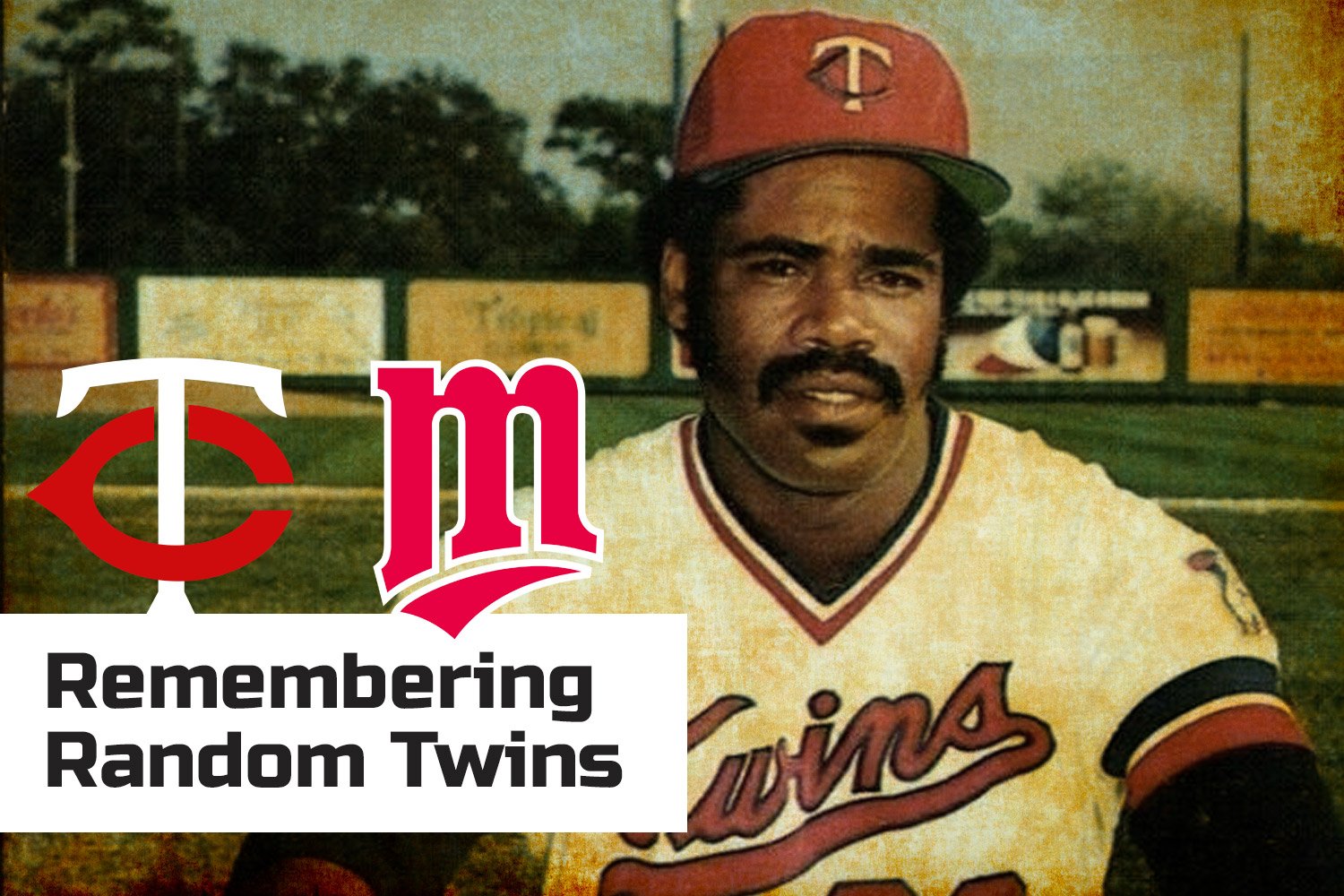 Gary Ward was born in Compton, California, on December 6, 1953. The Twins signed him in 1972 as an amateur free agent. His first year of minor league ball in 1973 was spent in Low-A Geneva, New York, where he showed immediate potential by being one of the better hitters on the team. From there, Ward began the slow progression up the minor league system with stops at Class-A Wisconsin Rapids, two years at Double-A Orlando, and three seasons at Triple-A, first at Tacoma and then Toledo. He always produced a modest batting average, a decent walk rate, and some power. Gary Ward debuted with the Twins on September 3, 1979, in a home game against the Kansas City Royals. He came in as a pinch runner at the bottom of the eighth inning but could not score, and the Twins ultimately lost 1-0. Ward’s first hit came on September 23 against the Milwaukee Brewers. He was used as a pinch hitter in the seventh inning and walked. His first hit came in the top of the ninth; it was a single. But that was the only base runner for the Twins in the ninth, and they lost 8-7. The 1980 season saw Ward get only 46 plate appearances with the Twins during a September call-up. Ward got his first home run on September 18 against the Brewers. The homer came against Mike Caldwell. But more noteworthy, that home run was part of Ward hitting for the cycle in only his 14th career game. He is the quickest player in MLB history ever to achieve this trivial rarity (in a game just four days earlier, Ward had a single, double, and triple but could not get the home run.). That September, Ward had a phenomenal 1.269 OPS in 46 plate appearances to put himself on the radar for 1981. In 1981, Ward was with the big club for the entire season. He hit .264/.325/.359. His season was good enough for him to place ninth in Rookie of the Year balloting. In 1982, Ward finally received full playing time, mostly in left field, and hit .284/343/.447. He also was selected as the American League Player of the Week twice that season. 1983 was the breakout season for Gary Ward. He started all 81 games before the All-Star break. At the break, he was hitting .289/.328/.488, good enough for a .816 OPS. He had 15 home runs and 52 RBI. It was a great first half and he was rewarded with an All-Star selection. Ward got one at-bat in the All-Star Game. Unfortunately for Ward and Twins fans, Ward went 0-1. He flew out to center field against Dave Dravecky in the fifth inning in the American League’s 13-3 win. Ward’s numbers slipped a little in the second half, but he finished the 1983 season with 4.2 bWAR, good enough for second on the team to John Castino. Ward’s defense was also very good, leading the American League left fielders in putouts and assists. His 24 assists were the most by an American League outfielder since 1944. By the end of 1983, the Twins had promising outfielders – Ward, Tom Brunansky, Mickey Hatcher, a collection of center fielders, and an intriguing minor league prospect named Kirby Puckett, who finished the season at Triple-A. One thing the Twins teams of the early 80s did not have enough of was quality pitching, specifically starting pitching. They had future ace Frank Viola but little else. So, they dealt from their outfield depth to acquire two legitimate Major League starters. All-Star Gary Ward was sent to the Texas Rangers for Mike Smithson and John Butcher. While they weren’t future Hall of Famers or All-Stars, they ate innings. They started 36 and 34 games in 1984 with ERA+ of 114 and 122. They both started 30+ games again in 1985, with Smithson doing so again in 1986. Again, nothing phenomenal, but it helped fill a gaping hole. Gary Ward’s career with the Twins lasted five seasons, with his most extensive playing time coming from 1981 to 1983. After the trade, he was an above-average major league hitter, posting a total OPS+ of 111 in three seasons in Texas. He also made his second All-Star team in 1985 (again going 0-1). He signed as a free agent with the New York Yankees after the 1986 season, then finished his career with the Detroit Tigers. Ward’s career slash line was .276/.328/.425. He had 130 home runs and 597 runs batted in. His career OPS+ was 105. Gary Ward had a son, Daryle, born in June of 1975, while Gary played for Double-A Orlando of the Southern League. Daryle Ward followed in his father’s footsteps and became a Major League Baseball player. Not only that, he, Daryle, also hit for the cycle in a game for Pittsburgh in 2004. The Wards were the first father-son tandem to hit for the cycle in MLB history. (They have since been joined by Hall of Famer Craig Biggio and his son, Cavan.) After baseball, Gary Ward served as a minor league coach for many seasons in the White Sox organization. Gary Ward was a quality player for the Minnesota Twins, earning an All-Star berth. But I also remember him fondly for the return he provided when traded. The Twins’ starting pitching was bad in 1983. Mike Smithson and John Butcher had their best seasons in Minnesota in 1984. They helped turn the corner and make the team more competitive. They did not help win the 1987 World Series, but it seemed like their arrival was a small signal that maybe things were improving. Mike Smithson played in 1987 but contributed little to the World Series championship (he threw 109.0 innings with a 5.94 ERA and was left off the postseason roster). John Butcher was traded in 1986, so not at all around for the championship season. Smithson’s ERA+ was 97 in four seasons. Butcher’s ERA+ was 96 in over two seasons. So, while neither was great, they were exactly what was needed at the time – just dependable major league pitchers. And we have Gary Ward to thank for them.
 -
I collect any Twins Topps cards. Happy to see Funderburk included as I went to the Caravan last winter with no cards of his for him to autograph.
- 1 reply
-
- 1
-

-
- royce lewis
- kody funderburk
- (and 5 more)
-
The Minnesota Twins drafted Brian Duensing in the 2005 MLB Draft in round three. He had an impressive career at the University of Nebraska, where he became known for his stellar postseason performances. The Cornhuskers reached the College World Series during two of his three seasons there. They have not been back since. While still working his way up through the minors, Duensing earned a bronze medal with Team USA at the Beijing Olympics in 2008. He made one appearance during the tournament, pitching 3.1 scoreless innings in a win over Canada. While in China, Duensing kept a blog to provide fans with his insight into the games. Other players with Twins connections on the 2008 US Olympic squad were Terry Tiffee (2004-06) and Kevin Jepsen (2015-16). He allowed two runs while eating three innings during a blowout against the Chicago White Sox during his Major League debut on April 10, 2009. The Twins immediately sent him back to Rochester to bring up a fresh arm, but he returned in early July and stuck around for the season. Minnesota was using him mostly in long relief, but he eventually shifted to the rotation and made his first start on August 22nd. Duensing was brilliant after getting moved to the rotation, posting a 2.64 ERA over eight starts down the stretch. He completed seven innings three times and tossed 6.1 shutout innings in a key win against Detroit on September 18th. Ron Gardenhire gave his rookie lefty the ball in game one of the 2009 ALDS, but part of that was because the team was simply out of options. Carl Pavano had started game 162 on three days rest, and Scott Baker pitched the AL Central tiebreaker game against the Tigers. This left Duensing and Nick Blackburn as the team’s two options. He was tagged for five runs over 4.2 innings in the Twins game one loss. Blackburn gave them a great performance in game two, but Minnesota lost in extras after Joe Nathan blew a save in the ninth inning. Carl Pavano allowed two runs over seven innings in game three, but the Twins' bats went down quietly, and the sweep was complete. Duensing began 2010 in the bullpen, and he was brilliant. Through the All-Star break, he had a 1.62 ERA through 38 appearances. Opponents were slashing .187/.257/.295 (.552) against him, and he was filling whatever role Gardenhire needed. Duensing got more than three outs seven times, lasting as long as three innings. He also served as a lefty specialist when needed, facing only one batter on four occasions. They moved him back into the rotation in late July, and Duensing posted a 3.08 ERA over 13 starts in the second half. But like many things within the Twins organization, things just fell apart for Duensing after the 2010 season. He posted a 5.19 ERA over 270.2 innings between 2011 and 2012, jumping between roles in the rotation and the bullpen. The southpaw began to find some success again as a full-time lefty specialist in the following years, putting up a 3.84 ERA over 190 appearances (164.0 IP) from 2013-15. Duensing posted a 4.05 ERA over 14 relief appearances with the Orioles in 2016, spending some time on the injured list with elbow inflammation. He was healthy enough to make Baltimore’s playoff roster that fall, striking out the only batter he faced during the Orioles' 11-inning loss against Toronto in the 2016 AL Wild Card Game. The defending champion Cubs signed Duensing that offseason, and he recorded an impressive 2.74 ERA over 68 relief appearances. Duensing allowed just one run over 5.1 innings during the 2017 postseason and was the winning pitcher in game five of the 2017 NLDS. Chicago fell to the Dodgers in the NLCS. The Cubs rewarded him with a two-year deal, but he was designated for assignment after a subpar 2018 season and never pitched in the Majors again. Over parts of ten seasons in the big leagues, Duensing was 46-38 with a 4.19 ERA and two saves. He made 61 career starts, all coming with the Twins. View full player
-
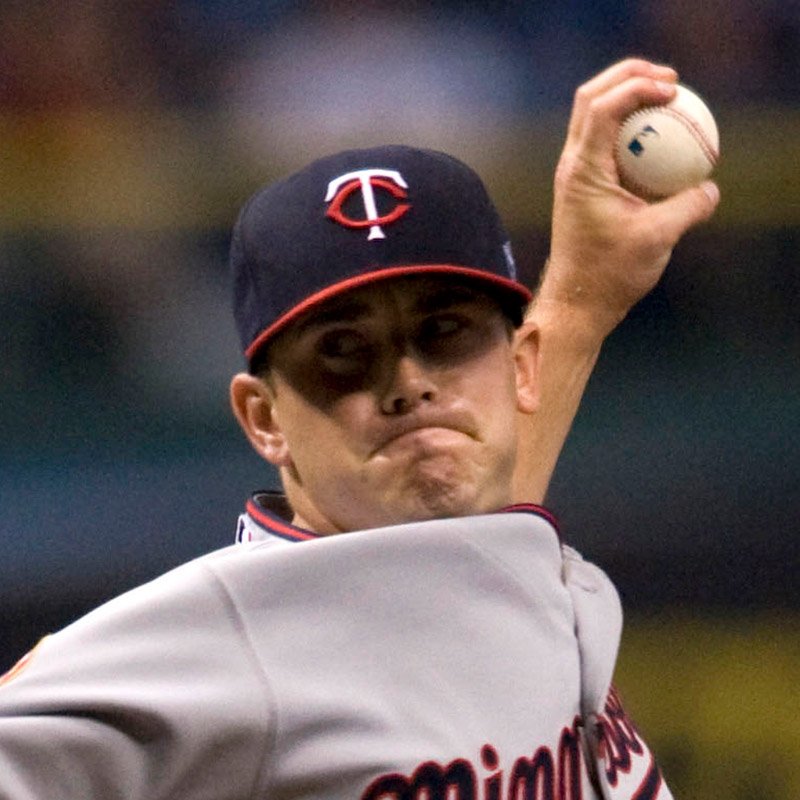 The Minnesota Twins drafted Brian Duensing in the 2005 MLB Draft in round three. He had an impressive career at the University of Nebraska, where he became known for his stellar postseason performances. The Cornhuskers reached the College World Series during two of his three seasons there. They have not been back since. While still working his way up through the minors, Duensing earned a bronze medal with Team USA at the Beijing Olympics in 2008. He made one appearance during the tournament, pitching 3.1 scoreless innings in a win over Canada. While in China, Duensing kept a blog to provide fans with his insight into the games. Other players with Twins connections on the 2008 US Olympic squad were Terry Tiffee (2004-06) and Kevin Jepsen (2015-16). He allowed two runs while eating three innings during a blowout against the Chicago White Sox during his Major League debut on April 10, 2009. The Twins immediately sent him back to Rochester to bring up a fresh arm, but he returned in early July and stuck around for the season. Minnesota was using him mostly in long relief, but he eventually shifted to the rotation and made his first start on August 22nd. Duensing was brilliant after getting moved to the rotation, posting a 2.64 ERA over eight starts down the stretch. He completed seven innings three times and tossed 6.1 shutout innings in a key win against Detroit on September 18th. Ron Gardenhire gave his rookie lefty the ball in game one of the 2009 ALDS, but part of that was because the team was simply out of options. Carl Pavano had started game 162 on three days rest, and Scott Baker pitched the AL Central tiebreaker game against the Tigers. This left Duensing and Nick Blackburn as the team’s two options. He was tagged for five runs over 4.2 innings in the Twins game one loss. Blackburn gave them a great performance in game two, but Minnesota lost in extras after Joe Nathan blew a save in the ninth inning. Carl Pavano allowed two runs over seven innings in game three, but the Twins' bats went down quietly, and the sweep was complete. Duensing began 2010 in the bullpen, and he was brilliant. Through the All-Star break, he had a 1.62 ERA through 38 appearances. Opponents were slashing .187/.257/.295 (.552) against him, and he was filling whatever role Gardenhire needed. Duensing got more than three outs seven times, lasting as long as three innings. He also served as a lefty specialist when needed, facing only one batter on four occasions. They moved him back into the rotation in late July, and Duensing posted a 3.08 ERA over 13 starts in the second half. But like many things within the Twins organization, things just fell apart for Duensing after the 2010 season. He posted a 5.19 ERA over 270.2 innings between 2011 and 2012, jumping between roles in the rotation and the bullpen. The southpaw began to find some success again as a full-time lefty specialist in the following years, putting up a 3.84 ERA over 190 appearances (164.0 IP) from 2013-15. Duensing posted a 4.05 ERA over 14 relief appearances with the Orioles in 2016, spending some time on the injured list with elbow inflammation. He was healthy enough to make Baltimore’s playoff roster that fall, striking out the only batter he faced during the Orioles' 11-inning loss against Toronto in the 2016 AL Wild Card Game. The defending champion Cubs signed Duensing that offseason, and he recorded an impressive 2.74 ERA over 68 relief appearances. Duensing allowed just one run over 5.1 innings during the 2017 postseason and was the winning pitcher in game five of the 2017 NLDS. Chicago fell to the Dodgers in the NLCS. The Cubs rewarded him with a two-year deal, but he was designated for assignment after a subpar 2018 season and never pitched in the Majors again. Over parts of ten seasons in the big leagues, Duensing was 46-38 with a 4.19 ERA and two saves. He made 61 career starts, all coming with the Twins.
 -
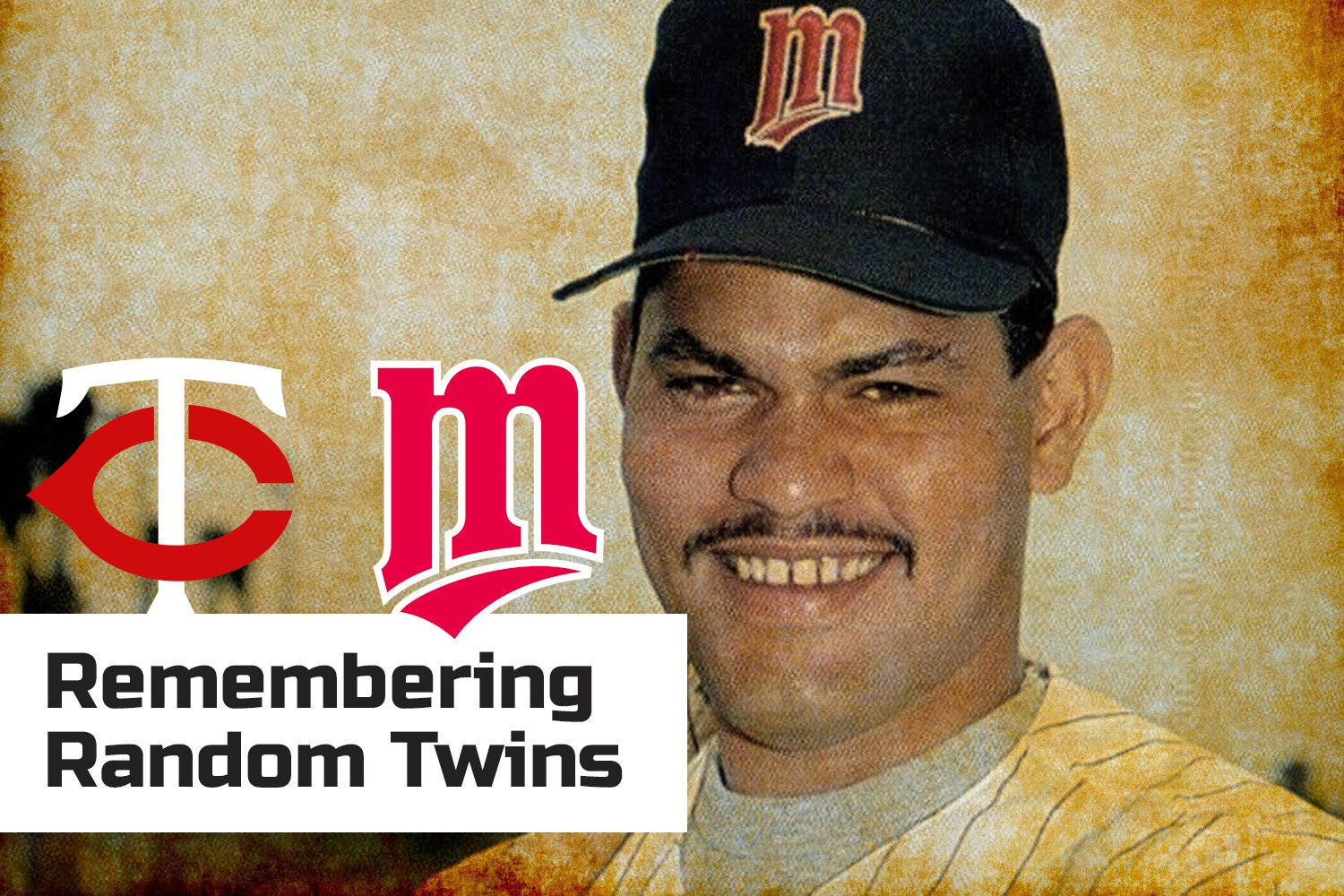 I believe all optimistic baseball fans do what I am about to describe. In the low points of a franchise’s history, the optimists want to hold out hope for something positive, cheer for the newest player, anything to give them reasons to hope or believe in a brighter future. I believe optimistic fans do so to the point that they convince themselves that an average player is better than his numbers suggest; a player might be perceived as good simply because there are too many subpar players surrounding him. That’s how I feel about Pedro Muñoz and his Minnesota Twins tenure. He was a supremely average player in his peak seasons of 1992-95 who seemed better than he really was solely because those Twins teams were on a downward spiral toward ineptitude at that time. Pedro Javier Muñoz Gonzalez was born September 19, 1968, in Ponce, Puerto Rico. He was signed as an undrafted free agent by the Toronto Blue Jays on May 31, 1985. Toronto was ahead of the curve in signing players from Latin America. They often seemed to have a stable supply of new, young Latin Americans coming through their development pipeline, including All-Stars Dámaso García, Alfredo Griffin, Tony Fernández, and 1987 AL MVP George Bell. Pedro Muñoz was another of those players signed from Latin America. For the whole Muñoz story, we need to look back at the 1990 offseason. The Twins had obtained lightning in a bottle by signing John Candelaria before the 1990 season for $500,000. For context, the minimum Major League Baseball salary for 1990 was $100,000. The left-handed pitcher was an excellent starting pitcher for Pittsburgh early in his career. He was an All-Star in his second full season with the Pirates and so good he earned Cy Young and Most Valuable Player votes. From 1975 to 1986, his ERA+ was greater than 100 in all but one season. From 1987 to 1989, his performance suffered from injuries, personal matters, and off-the-field issues. The Twins gambled and signed him on the cheap in 1990 and put him in the bullpen. He had a great half-season. His Twins career consisted of 34 games with only one start. His record was 7-3 with 44 strikeouts in 58.1 innings. His ERA+ was 123. With 1990 being a disastrous season for the Twins, they took the opportunity to cash in on their offseason find and traded Candelaria while he was hot. Near the trade deadline, on July 27, 1990, Candelaria was traded to Toronto for second baseman Nelson Liriano and outfielder Pedro Muñoz. 1990 was a bad season for the Minnesota Twins. They had little to no pitching. Their record was 47-52 on the day they acquired Pedro Muñoz. They were 6th in the American League West, 15 games behind Oakland. Things deteriorated even further with a nine-game losing streak in August, lowering them to last place and 24 games behind Oakland. With the season being a failure, September offered a chance to look at the youngsters with the expansion of rosters. Muñoz debuted on September 1, at 21, and mainly played every day in September, hitting .271/.281/.341. He showed little patience (two walks) and little power (five extra-base hits) in 90 plate appearances. We all know the 1991 Twins team was special, but they were a little slow getting going. The outfielders were Dan Gladden, Kirby Puckett, and Shane Mack, with Randy Bush and Gene Larkin providing depth. Later in the season, Jarvis Brown was often used as a pinch runner and defensive replacement. Because of the team’s slow start (14-15 through May 10) and Muñoz batting .408 at Triple-A Portland, he was called up on May 11, 1991, and the seldom-used Carmen Castillo was released. Very interestingly, the Star Tribune’s summary of the Pedro Muñoz call-up mentioned the likelihood that Gladden and Mack would be those whose playing time would be most affected. That did not prove to be accurate, as Gladden continued to play nearly every day. Mack also continued to play almost every day but was used as a defensive replacement in nine games from May 11 to June 13. However, a funny thing happened. During that month, Mack batted .310/.365/.466, proving his worth. Muñoz then became the part-time player and defensive replacement and then landed on the disabled list with a sprained thumb on July 15. Muñoz came back in September to lesser usage, often as a defensive replacement. For the season, he had 151 plate appearances and improved from the prior season to .283/.327/.500. He had 15 extra-base hits and an OPS+ of 121. Ultimately, that performance was not enough to force his way onto the postseason roster. He would have to watch the 1991 Fall Classic. After 1991, the continual budget constraints of the Minnesota Twins reared their head. Jack Morris opted out of his contract, making him a free agent who would ultimately sign with Toronto. More importantly for this article, the Twins released Gladden about two months after the World Series. Pedro Muñoz essentially replaced Gladden at the MLB minimum salary. Muñoz played in 127 games in 1992, getting 439 plate appearances. This was the most extensive action of his career. With this big opportunity, he hit .270/.298/.409 with 12 home runs and 71 RBI. He had an OPS+ of 96. Was this a promising start? Muñoz’s 1993 season was worse. In 354 plate appearances, his slash line was .233/.294/.393. His OPS+ dropped to 83. Muñoz’s 1994 and 1995 seasons were better, but the Twins were worse. The team hit a low point in 1995. Their winning percentage of .389 was their worst of the decade. During those two seasons, Muñoz hit a combined .298/.342/.497. He played only 179 games but had 29 home runs and 94 RBI. His combined OPS+ for those two seasons was 114. Muñoz signed as a free agent with Oakland in 1996. I would call this a salary dump as Terry Ryan said he wanted Muñoz back, but not at his 1995 salary. His Twins salary in 1995 was $725,000, and his Oakland salary in 1996 was $595,000. His 1996 season with Oakland was unremarkable. He signed a minor league deal with Detroit in 1997 but never reappeared in MLB or even the minor leagues. That was the last of Muñoz in American baseball. Muñoz’s career slash was .273/.315/.444. His cumulative WAR was -1.3, and his OPS+ was a completely average 100. His Minnesota years produced an OPS+ of 102, but he was never a significant star. In fact, I can’t find anything to make me recall why I thought he was anything better than an average player, even during the dark times of the mid-1990s. Thankfully, since Muñoz’s last season in 1995, the Twins have only recorded a worse winning percentage once, that being in 2016. The Twins were awfully bad during Muñoz’s career. I wish his tenure could have been better for Muñoz, the Twins, and their fans.
 -
If a team is terrible, even mediocre players stand out in the eyes of fans. Say hello to Pedro Muñoz and the mid-1990s Twins. Image courtesy of © Rex Perry / The Tennessean / USA TODAY NETWORK I believe all optimistic baseball fans do what I am about to describe. In the low points of a franchise’s history, the optimists want to hold out hope for something positive, cheer for the newest player, anything to give them reasons to hope or believe in a brighter future. I believe optimistic fans do so to the point that they convince themselves that an average player is better than his numbers suggest; a player might be perceived as good simply because there are too many subpar players surrounding him. That’s how I feel about Pedro Muñoz and his Minnesota Twins tenure. He was a supremely average player in his peak seasons of 1992-95 who seemed better than he really was solely because those Twins teams were on a downward spiral toward ineptitude at that time. Pedro Javier Muñoz Gonzalez was born September 19, 1968, in Ponce, Puerto Rico. He was signed as an undrafted free agent by the Toronto Blue Jays on May 31, 1985. Toronto was ahead of the curve in signing players from Latin America. They often seemed to have a stable supply of new, young Latin Americans coming through their development pipeline, including All-Stars Dámaso García, Alfredo Griffin, Tony Fernández, and 1987 AL MVP George Bell. Pedro Muñoz was another of those players signed from Latin America. For the whole Muñoz story, we need to look back at the 1990 offseason. The Twins had obtained lightning in a bottle by signing John Candelaria before the 1990 season for $500,000. For context, the minimum Major League Baseball salary for 1990 was $100,000. The left-handed pitcher was an excellent starting pitcher for Pittsburgh early in his career. He was an All-Star in his second full season with the Pirates and so good he earned Cy Young and Most Valuable Player votes. From 1975 to 1986, his ERA+ was greater than 100 in all but one season. From 1987 to 1989, his performance suffered from injuries, personal matters, and off-the-field issues. The Twins gambled and signed him on the cheap in 1990 and put him in the bullpen. He had a great half-season. His Twins career consisted of 34 games with only one start. His record was 7-3 with 44 strikeouts in 58.1 innings. His ERA+ was 123. With 1990 being a disastrous season for the Twins, they took the opportunity to cash in on their offseason find and traded Candelaria while he was hot. Near the trade deadline, on July 27, 1990, Candelaria was traded to Toronto for second baseman Nelson Liriano and outfielder Pedro Muñoz. 1990 was a bad season for the Minnesota Twins. They had little to no pitching. Their record was 47-52 on the day they acquired Pedro Muñoz. They were 6th in the American League West, 15 games behind Oakland. Things deteriorated even further with a nine-game losing streak in August, lowering them to last place and 24 games behind Oakland. With the season being a failure, September offered a chance to look at the youngsters with the expansion of rosters. Muñoz debuted on September 1, at 21, and mainly played every day in September, hitting .271/.281/.341. He showed little patience (two walks) and little power (five extra-base hits) in 90 plate appearances. We all know the 1991 Twins team was special, but they were a little slow getting going. The outfielders were Dan Gladden, Kirby Puckett, and Shane Mack, with Randy Bush and Gene Larkin providing depth. Later in the season, Jarvis Brown was often used as a pinch runner and defensive replacement. Because of the team’s slow start (14-15 through May 10) and Muñoz batting .408 at Triple-A Portland, he was called up on May 11, 1991, and the seldom-used Carmen Castillo was released. Very interestingly, the Star Tribune’s summary of the Pedro Muñoz call-up mentioned the likelihood that Gladden and Mack would be those whose playing time would be most affected. That did not prove to be accurate, as Gladden continued to play nearly every day. Mack also continued to play almost every day but was used as a defensive replacement in nine games from May 11 to June 13. However, a funny thing happened. During that month, Mack batted .310/.365/.466, proving his worth. Muñoz then became the part-time player and defensive replacement and then landed on the disabled list with a sprained thumb on July 15. Muñoz came back in September to lesser usage, often as a defensive replacement. For the season, he had 151 plate appearances and improved from the prior season to .283/.327/.500. He had 15 extra-base hits and an OPS+ of 121. Ultimately, that performance was not enough to force his way onto the postseason roster. He would have to watch the 1991 Fall Classic. After 1991, the continual budget constraints of the Minnesota Twins reared their head. Jack Morris opted out of his contract, making him a free agent who would ultimately sign with Toronto. More importantly for this article, the Twins released Gladden about two months after the World Series. Pedro Muñoz essentially replaced Gladden at the MLB minimum salary. Muñoz played in 127 games in 1992, getting 439 plate appearances. This was the most extensive action of his career. With this big opportunity, he hit .270/.298/.409 with 12 home runs and 71 RBI. He had an OPS+ of 96. Was this a promising start? Muñoz’s 1993 season was worse. In 354 plate appearances, his slash line was .233/.294/.393. His OPS+ dropped to 83. Muñoz’s 1994 and 1995 seasons were better, but the Twins were worse. The team hit a low point in 1995. Their winning percentage of .389 was their worst of the decade. During those two seasons, Muñoz hit a combined .298/.342/.497. He played only 179 games but had 29 home runs and 94 RBI. His combined OPS+ for those two seasons was 114. Muñoz signed as a free agent with Oakland in 1996. I would call this a salary dump as Terry Ryan said he wanted Muñoz back, but not at his 1995 salary. His Twins salary in 1995 was $725,000, and his Oakland salary in 1996 was $595,000. His 1996 season with Oakland was unremarkable. He signed a minor league deal with Detroit in 1997 but never reappeared in MLB or even the minor leagues. That was the last of Muñoz in American baseball. Muñoz’s career slash was .273/.315/.444. His cumulative WAR was -1.3, and his OPS+ was a completely average 100. His Minnesota years produced an OPS+ of 102, but he was never a significant star. In fact, I can’t find anything to make me recall why I thought he was anything better than an average player, even during the dark times of the mid-1990s. Thankfully, since Muñoz’s last season in 1995, the Twins have only recorded a worse winning percentage once, that being in 2016. The Twins were awfully bad during Muñoz’s career. I wish his tenure could have been better for Muñoz, the Twins, and their fans. View full article
-
Hi folks. I want to start off this week’s blog entry with a note that this summer is setting up to be crazy. I know I will not have posts the next few weeks, and not sure about the frequency for later in the summer. It’s my intent to keep my series going, but it’s just harder to find the time at this point. I just said in my last blog post (about 1988 Topps) I like simple, clean, crisp designs in baseball cards. The 1989 Topps design fits that theme. The 1989 set is above average for me; I’d give it an A-. I am a fan of the simple front with the team’s name in script form plus then the player’s name on a wavy banner. The Twins cards feature the team’s name and player name banner in a light shade of blue. The player’s name is black and capitalized within the banner. The front of the card has a white border. The back features a black border and red background. The player’s name, position, and biographic information are at the top with the card number. The middle of the back has the player’s statistics, and the bottom features a fact about the player. These factoids are better within this 1989 set, at least in my judgment, when compared to other years. Maybe that’s just because the team had recently won a World Series and there were more good facts from which to choose. The 1989 Topps base set has 792 cards. The Topps Traded set has 132 cards. There are 29 Twins cards in the base set. The Topps Traded set has three Twins cards. The base set has a rookie card of Hall of Fame starting pitcher Randy Johnson. The traded set is highlighted by a rookie card of the kid, Ken Griffey, Jr. There are no prominent Twins rookie cards in either the base set or the traded set. MOST OBSCURE PLAYER As I said above, there really are not any rookie cards of Twins players in 1989 Topps. And many of the players were around in 1987, so not a lot of new players. Generally, that’s who ends up as my choice for most obscure player – rookies or players new to the organization. I ended up choosing relief pitcher Germán González (#746) as the most obscure Twins player in 1989 Topps. There were not a lot of other options. Germán González, from Venezuela, was signed by the Twins as a free agent in 1986 when he was already 24 years old. He played for Class A Kenosha in 1987 and started the 1988 season with Class AA Orlando. He showed enough to skip AAA and get called to Major League Baseball. He debuted on August 5, 1988. He gave up no runs in his first seven appearances. Through 14 games he still had a phenomenal ERA of 0.96. However, he was hit hard in his 15th game but was still able to end the season with an ERA of 3.38. González finished 1998 with one save and no decisions. In 1989, he pitched in April and May, then only a little in July and September. He never reappeared in Major League Baseball. He finished his career with a 3-2 record, 4.11 ERA, and 44 strikeouts in 50.1 career innings. His career WAR was 0.2. THE BEST For my choice for best Twins card for any given year, I start by looking at values. I don’t always pick the most valuable; I like to find an additional reason or two to justify why I select a card as the best Twins card in a set. In 1989, one of the most valuable was the Kirby Puckett All-Star card (#403). Puckett’s picture on this All-Star card is better than his picture on his base card. But the note on the back was what clinched it for me as best Twins card in 1989 Topps. Puckett’s 234 hits in 1988 were the most by a right-handed batter in either league since 1937 and the most in the American League since 1925. According to my research, both facts are still accurate through the 2023 season. So, yes, if no AL hitter surpasses 234 hits in 2024, we will be able to say Puckett has the most hits by a right-handed AL player in the last 100 years. PERSONAL FAVORITE My favorite Twins card of 1989 was of a Twins player who was not active at that point. 1989 Topps contains a subset of five Turn Back the Clock cards, one of which features Hall of Famer, and Twins great, Tony Oliva (#665). Like the Puckett card above, one of the contributing factors to my choosing this as my favorite Twins card of 1989 Topps is because of the informational notes on the back of the card. The Turn Back the Clock concept looks back 25 seasons. In 1964, Oliva had 217 hits, which was the most in either major league. It also set a rookie record. He was the AL batting champion in his first season (and will be again in his second season). He also had a rookie record 374 total bases which broke a record set by Joe DiMaggio. Wow, what a great start! But another reason Oliva’s 1989 Turn Back the Clock card is a favorite is that the picture on the card implies he had a 1964 Topps base card. He did, but he shared it with Jay Ward. Oliva did not have a 1964 stand-alone card. Although Topps did use the same picture from 1964 for the 1989 Turn Back the Clock card (see the 1964 shared card below for comparison). What are your favorite Topps cards from 1989? What memories do you have of Germán González? I’d love to see your opinions, thoughts, or comments below. Go Twins!
-
Bob Randall was capable of many things but hitting home runs wasn't one of them. Most Twins fans of a certain age, let’s say 45 and above, know that utility infielder and two-time World Series Champion Al Newman never hit a home run in his five seasons with the Twins. He had one home run with the Montreal Expos in 1986, but that was it for his career. During Newman’s career in Minnesota, much was made about how he was the longest homerless streak ever. I have not been able to verify if that is true or if it still stands. Anyway, all of that led me to this question. Which Twin has the most plate appearances but only one home run? Ladies and gentlemen, let me introduce 1970s second baseman Bob Randall. Robert Lee Randall was born June 10, 1948, in Norton, Kansas, a small town in north central Kansas almost 300 miles west of Lawrence and the University of Kansas. He graduated from a nearby high school in Gove, Kansas. According to Patrick Reusse’s book Tales from the Minnesota Sports Beat, Randall’s senior class consisted of only four boys. Randall was quoted, “The senior prom was a bummer.” After high school, Randall attended and graduated from Kansas State University. The right-handed hitting Randall was drafted by the Los Angeles Dodgers three different times: 55th round in 1966, 7th round in 1968, and 2nd round in 1969. He played well in the minor leagues, leading his league thrice in hits. He spent two-plus years with the Triple-A Albuquerque Dukes. Still, he could not break into Major League Baseball because the Dodgers had the young Davey Lopes, an established second baseman who would become a four-time All-Star and a Gold Glove winner. So, without a real need for a second baseman, the Dodgers traded Randall after the 1975 season to the Twins for Danny Walton, a sparingly used outfielder and first baseman. The trade and new manager Gene Mauch’s decision to move incumbent second baseman Rod Carew to first base created an opportunity for Randall. His first year was his best season, and this was when he hit his first and only career home run. That homer came in the third inning of a June 23rd loss against the Chicago White Sox, the second game of a doubleheader. The pitcher was the unremarkable Chris Knapp. Throughout his Twins career, Randall was a hustling, scrappy player. He played significant time immediately in that first season of 1976, then filled a platoon role with the left-handed hitting Rob Wilfong in 1977 and 1978. In 1979 he had limited action, playing in only 80 games and getting 199 at-bats. In a rare sequence of events in 1980, Randall was released at the end of spring training and was made a coach. But on May 16, he resigned with the Twins, got into five games, went 3 for 15, and was released again. The Twins resigned Randall again on June 18, but he did not appear in a game and was released for the final time on July 16, 1980. For his career, Randall batted .257/.310/.311. He had that lone home run and 91 runs batted in. His OPS+ was 74. His best season was 1976, which was less than stellar, and he was unable to replicate that in the following four seasons. His career WAR was 3.8. 1981 Randall was hired as an assistant baseball coach at Iowa State University. The head coach at that time was Larry Corrigan, a former Twins minor leaguer, later a scout, and ultimately the scouting director. When Corrigan left Iowa State after 1984, Randall was promoted to head coach, where he served 11 seasons until 1995, compiling a middling record of 309-311. After the 1995 college baseball season, his home state of Kansas came calling. An excellent article in the Iowa State Daily about Randall’s tenure in Ames and how it ended. It sounds like he was a low-paid, quality coach who moved on to be closer to home, continue doing what he loved, and work for a better-funded athletic department. Seems like a no-brainer. He was hired as head baseball coach at Kansas University, where he remained for seven seasons until 2002. His record was 166-213. Bob Randall may have had little power, but he had enough ability and hustle to play Major League Baseball for five seasons. He then went on to an even more impressive college coaching career, where he shaped and mentored countless athletes, a few future MLB players, and many future husbands, fathers, and businessmen. I’m sure that is his biggest legacy. He only hit that one home run as a Twin, but it’s more than Al Newman can say. View full article
-
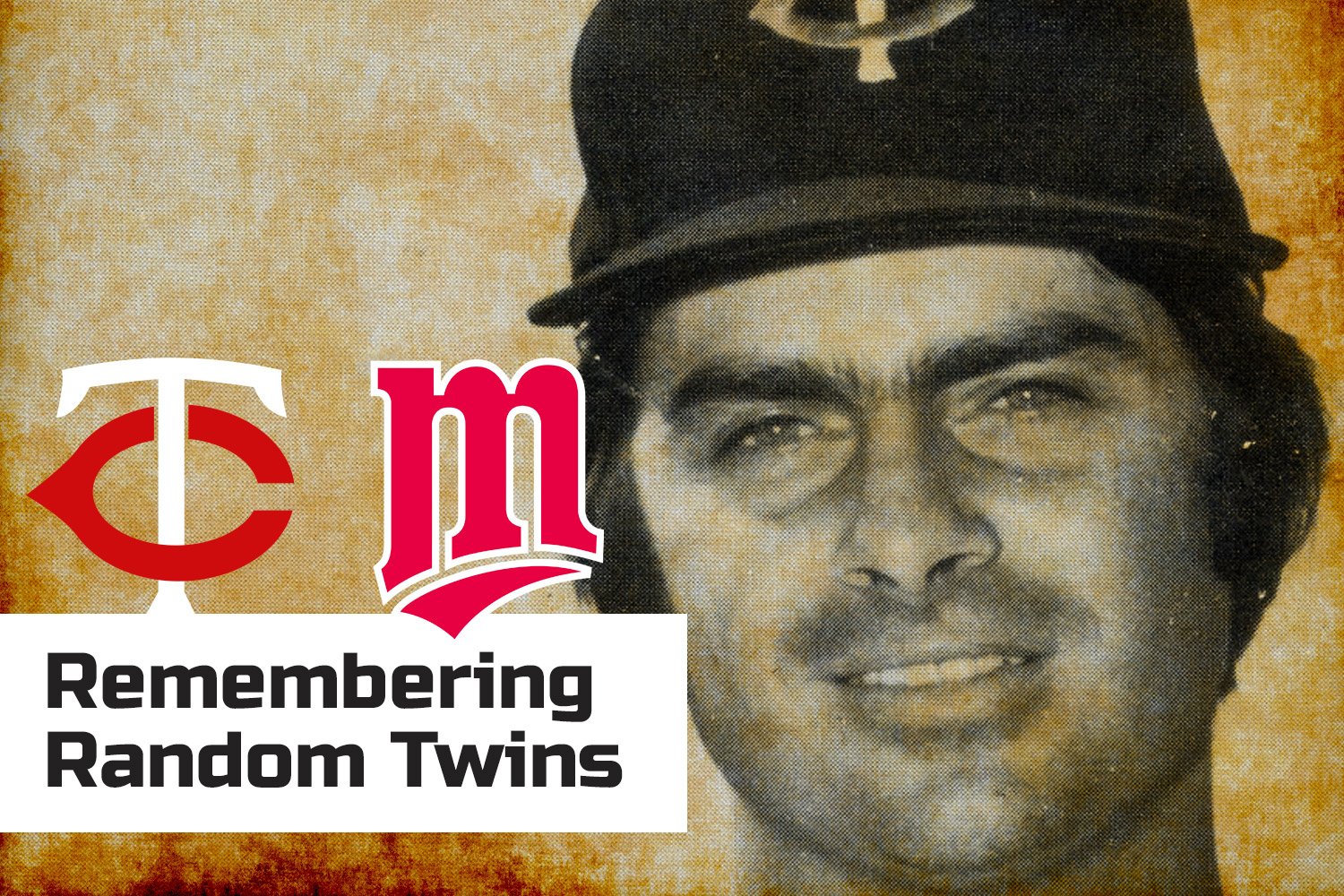 Most Twins fans of a certain age, let’s say 45 and above, know that utility infielder and two-time World Series Champion Al Newman never hit a home run in his five seasons with the Twins. He had one home run with the Montreal Expos in 1986, but that was it for his career. During Newman’s career in Minnesota, much was made about how he was the longest homerless streak ever. I have not been able to verify if that is true or if it still stands. Anyway, all of that led me to this question. Which Twin has the most plate appearances but only one home run? Ladies and gentlemen, let me introduce 1970s second baseman Bob Randall. Robert Lee Randall was born June 10, 1948, in Norton, Kansas, a small town in north central Kansas almost 300 miles west of Lawrence and the University of Kansas. He graduated from a nearby high school in Gove, Kansas. According to Patrick Reusse’s book Tales from the Minnesota Sports Beat, Randall’s senior class consisted of only four boys. Randall was quoted, “The senior prom was a bummer.” After high school, Randall attended and graduated from Kansas State University. The right-handed hitting Randall was drafted by the Los Angeles Dodgers three different times: 55th round in 1966, 7th round in 1968, and 2nd round in 1969. He played well in the minor leagues, leading his league thrice in hits. He spent two-plus years with the Triple-A Albuquerque Dukes. Still, he could not break into Major League Baseball because the Dodgers had the young Davey Lopes, an established second baseman who would become a four-time All-Star and a Gold Glove winner. So, without a real need for a second baseman, the Dodgers traded Randall after the 1975 season to the Twins for Danny Walton, a sparingly used outfielder and first baseman. The trade and new manager Gene Mauch’s decision to move incumbent second baseman Rod Carew to first base created an opportunity for Randall. His first year was his best season, and this was when he hit his first and only career home run. That homer came in the third inning of a June 23rd loss against the Chicago White Sox, the second game of a doubleheader. The pitcher was the unremarkable Chris Knapp. Throughout his Twins career, Randall was a hustling, scrappy player. He played significant time immediately in that first season of 1976, then filled a platoon role with the left-handed hitting Rob Wilfong in 1977 and 1978. In 1979 he had limited action, playing in only 80 games and getting 199 at-bats. In a rare sequence of events in 1980, Randall was released at the end of spring training and was made a coach. But on May 16, he resigned with the Twins, got into five games, went 3 for 15, and was released again. The Twins resigned Randall again on June 18, but he did not appear in a game and was released for the final time on July 16, 1980. For his career, Randall batted .257/.310/.311. He had that lone home run and 91 runs batted in. His OPS+ was 74. His best season was 1976, which was less than stellar, and he was unable to replicate that in the following four seasons. His career WAR was 3.8. 1981 Randall was hired as an assistant baseball coach at Iowa State University. The head coach at that time was Larry Corrigan, a former Twins minor leaguer, later a scout, and ultimately the scouting director. When Corrigan left Iowa State after 1984, Randall was promoted to head coach, where he served 11 seasons until 1995, compiling a middling record of 309-311. After the 1995 college baseball season, his home state of Kansas came calling. An excellent article in the Iowa State Daily about Randall’s tenure in Ames and how it ended. It sounds like he was a low-paid, quality coach who moved on to be closer to home, continue doing what he loved, and work for a better-funded athletic department. Seems like a no-brainer. He was hired as head baseball coach at Kansas University, where he remained for seven seasons until 2002. His record was 166-213. Bob Randall may have had little power, but he had enough ability and hustle to play Major League Baseball for five seasons. He then went on to an even more impressive college coaching career, where he shaped and mentored countless athletes, a few future MLB players, and many future husbands, fathers, and businessmen. I’m sure that is his biggest legacy. He only hit that one home run as a Twin, but it’s more than Al Newman can say.
 -
If you have seen my previous posts in this series, you may have noticed a trend. I like simple, clean crisp designs in baseball cards. And the 1988 Topps design certainly fits my preference. However, I would say it’s good not great. Above average is what I would say about 1988 Topps. (Someday I need to define my rankings better. I feel like I say good or bad and like or dislike too often.) The 1988 Topps design shows the team’s name in capital letters centered at the top and behind the player image. In the case of the Twins players, the team lettering is yellow. The Twins cards feature the player’s name in an orange diagonal banner in the lower right of the card. That’s it for the fronts. Quite simple. The backs have an orange background with card number, player name, position, and biographical information at the top. The central part of the back has the player’s career statistics. The bottom of the back has some player trivia unless the player statistics cover too many years. The 1988 Topps base set has the same number of cards as 1986 and 1987 – 792 cards. The Topps Traded set has 132 cards, also the same as 1986 and 1987. There are 32 Twins cards in the base set. While the 1987 Topps Traded set had nine Twins cards, the 1988 Traded set has only one, that of the player who shall not be named. The base set has a rookie card of Hall of Fame starting pitcher Tom Glavine. Gene Larkin is probably the best Twins rookie card. The traded set has more key rookie cards than the base set with the best being that of Hall of Fame second baseman Roberto Alomar. I feel like this set has fewer plain old head shots and a greater number of action pictures. I prefer it that way. Please keep in mind that this article frequently mentions and provides details of the 1987 season. This is because 1988 baseball cards are mostly of 1987 players. MOST OBSCURE PLAYER In 1988, the Twins were, of course, coming off the 1987 World Series victory. Therefore, I don’t think there are many players in the 1988 Topps baseball card sets that qualify as obscure. I really only gave serious consideration for most obscure Twins player in 1988 Topps to back up catcher Tom Nieto and back up outfielder Mark Davidson. As you can see below, I chose Davidson (#19). In 1987, bullpens were much smaller – many times only five pitchers deep. This allowed teams to employ more positional backups than they do today. For instance, the Twins carried three catchers for much of 1987, including Nieto. There was also enough room on the roster for two or three extra outfielders. In 1987, Davidson was one of those. Rosters today have only four bench players, so things in 1987 were much different. Anyway, Mark Davison was drafted in the 11th round of the 1982 Major League Baseball June Draft. He played three seasons for the Twins. In 1987 and 1988 he played 102 and 100 games, respectively. Those appearances were often as a defensive replacement late in games. He was a particularly good defensive outfielder. His statistics in three seasons with the Twins were .219/.283/.287. He hit two home runs and had 26 RBI. He also stole 14 bases. His WAR was -0.5 and his OPS+ was a paltry 54. The Twins traded Davidson to Houston during the 1989 season for Greg Johnson, who never panned out. Davidson played three nondescript seasons with the Astros. In the 1987 postseason, Davidson got into three games with only one plate appearance. In game 3 of the American League Championship series, he appeared as a pinch runner for Sal Butera in the 7th inning and was thrown out at home on a fielder’s choice. That was the Twins lone loss in that series. He later appeared as a defensive replacement in game 1 of the World Series, a 10-1 Twins win. His last game action of the 1987 postseason was a game 4 loss at St. Louis. He pinch hit in the 9th inning for the pitcher. He flew out to center field in a 7-2 loss to the Cardinals. THE BEST I don’t always select the most valuable Twins card in any set as the best, but in the 1988 Topps set I just like the Kirby Puckett base card (#120). He shows a stance where he is ready and poised to do something awesome. In 1988, Kirby would go on to the lead the American League in hits with 234. He was 3rd in voting for the Most Valuable Player behind José Canseco and Mike Greenwell. PERSONAL FAVORITE For the 1988 Topps set, I am going to cheat and select two cards as my personal co-favorite cards. I love card number 609, the Twins Team Leader card because it shows a couple of my favorite players, Gary Gaetti and Ken Hrbek. But better yet, the back has records some of the important statistics of the 1987 World Series winners. Every name, a Twins legend. My second co-favorite card of 1988 is the unique record breaker card featuring Hall of Famer Phil Niekro and Joe Niekro commemorating the pair breaking the record for pitching wins for a set of brothers. It is noteworthy that the Niekro brothers broke a record held by another former Twin, Jim Perry, and his Hall of Fame brother, Gaylord Perry. These sets of brothers ended up with remarkably similar statistics. One of each set up brothers made the Hall of Fame (Phil and Gaylord). The Hall of Famers ended up within four wins of each other and their brothers finished separated by only six wins. The Niekros career win total was 539 versus 529 for the Perrys. Phil Niekro 318 wins Joe Niekro 221 wins Gaylord Perry 314 wins Jim Perry 215 wins The Perrys each won a Cy Young Award (Gaylord won two but Jim’s came with the Twins in 1970). Having said all that, Joe Niekro was the only one to win a World Series and that was with the Twins in 1987! What are your favorite Topps cards from 1988? I’d love to see your opinions, thoughts, or comments below. Go Twins!
- 4 comments
-
- 4
-
-
- mark davidson
- kirby puckett
- (and 3 more)
-
Allan Anderson, The Forgotten ERA Title Winner
Al from SoDak replied to Al from SoDak's topic in Twins Daily Front Page News
I didn't remeber that. Thanks for the refresher. -
When you think of the great pitching performances of Minnesota Twins history, it's unlikely the first person who comes to mind is the 1988 American League ERA leader, Allan Anderson. Maybe it’s just me, but when I think of the Minnesota Twins and their history, I think first of offense – batting titles, power hitters, M&M boys, and Bomba Squad. That’s not to say they have had continuous terrible pitching. Over 60-plus years, a franchise is bound to have years when pitching is above average. Any team should be able to produce numerous memorable pitchers over more than 60 years. The Twins have had Kaat, Blyleven, Viola, Radke, Santana, and others. But the Twins had the American League leader in earned run average in 1988 who gets lost in history and I don’t hear his name often. Let’s look deeper at the career of left-handed starting pitcher Allan Anderson. Allan Anderson was born on January 7, 1964, in Lancaster, Ohio. In high school, Anderson was a flame-throwing left-handed pitcher, throwing four no-hitters, including two in back-to-back games, and getting the attention of major league scouts. The Twins drafted Anderson after high school in the 2nd round of the 1982 Major League Baseball June Amateur Draft. The future looked bright. However, that was about to change. In 1983, his first year in professional baseball, he tore an elbow ligament while with the Class A Wisconsin Rapid Twins, which probably altered his career to a significant extent. The flame thrower would be forced to rely on control and changing speeds to be effective. He had a great year with the Class A Visalia Oaks in 1984, followed by a good year and a half with the AAA Toledo Mud Hens in 1985 and 1986, earning a call to MLB. On June 11, 1986, Anderson made his major league debut with the Minnesota Twins against the Texas Rangers. It was excellent. He pitched an unheard-of (at least by today’s standards) 10 innings, giving up single runs in the 1st and 3rd innings before settling in and holding Texas scoreless for the rest of his outing. Unfortunately, he was matched up against the rubber-armed knuckleballer, Charlie Hough. Hough went 13 innings and gave up only two runs. The Rangers finally broke for four runs in the 16th inning off the Twins bullpen to win the game 6-2. Anderson finished his first season with ten starts in 21 games, with a 3-6 record and a 5.55 ERA. In 1987, Anderson was a candidate to make the Twins starting rotation but suffered a back injury in spring training. After recovering from the injury, he began the season with the AAA Portland Beavers. It was an up-and-down season from there. He pitched for the Twins sparingly in May and June but was ineffective and returned to Portland. He turned his season around and had a good August, but it was too little too late as he did not return to pitch for the Twins during that regular season or postseason. He was forced to sit and watch the 1987 heroics. 1988 is when Anderson finally put it all together. After three starts and one complete game with AAA Portland, he returned to the Twins on April 28, 1998. He started that day’s game against Baltimore and got the win, pitching 6.1 innings and allowing two runs. From there, he took a regular spot in the rotation and started 30 games. He had three complete games. He had a personal six-game winning streak from July 24 to August 22. He was good and consistent all season. His ERA reached as high as 4.50 after a June 5 start. From there, it decreased consistently in almost every game. He capped off the season with a three-hit shutout against Oakland on September 27, dropping his ERA to 2.45, the best in the American League. He finished the season with a 16-9 record. He pitched 202.1 innings but had only 83 strikeouts – a likely byproduct of the earlier elbow injury and his transition to soft-tossing control pitcher. Anderson had a stellar season with 16 wins and a 2.45 ERA. However, he was overshadowed by his teammate, Frank Viola, who won the 1988 AL Cy Young Award. Anderson received no Cy Young support. Voters nationally were probably too enamored with Viola to appreciate Anderson’s career year. 1989 was a good follow-up season. He was selected as the opening-day starter, winning 17 games, pitched 196.2 innings, and had a 3.80 ERA. Again, his strikeouts were limited – only 69. Sometime in 1989, he tore a labrum in his shoulder, and that injury showed its effects in the following seasons. In 1990, he took the ball for a fair number of innings (188.2), but his other numbers worsened. His record dipped to 7-18, and his ERA ballooned to 4.53. 1991 was another struggle with a 5-11 record and 4.96 ERA. He pitched almost all of 1991 with the Twins – there was a short demotion to AAA – but he was left off the postseason roster again. So, despite his career from 1986 to 1991, all with the Twins, he was not part of playoffs or World Series in either season. After the 1991 season, Anderson became a free agent and signed with the New York Yankees, but he never returned to MLB. He later had minor league stints in the Texas and Cleveland organizations before retiring after the 1993 season. His overall career line was 49 wins, 54 losses, 818.2 innings pitched, 4.11 ERA, and an ERA+ of 102. His outstanding 1988 season saw him achieve an ERA+ of 166! After retiring from baseball in 1994, Anderson served as a pitching coach in the Texas Rangers minor league system. He is now a firefighter, real estate agent, and auctioneer. I will never forget Anderson’s 1986 MLB debut, as I recall listening to the game on WCCO. I could not sleep listening to that marathon. Wow, a 10-inning debut! Thankfully, there was no school in June, so I’m sure I slept in and talked about it the next day while playing wiffle ball with my friends. Allan Anderson didn’t have the longest or most distinguished career in the Minnesota Twins history, but he is memorable to me for his 1986 MLB debut and the 1988 ERA title. View full article
-
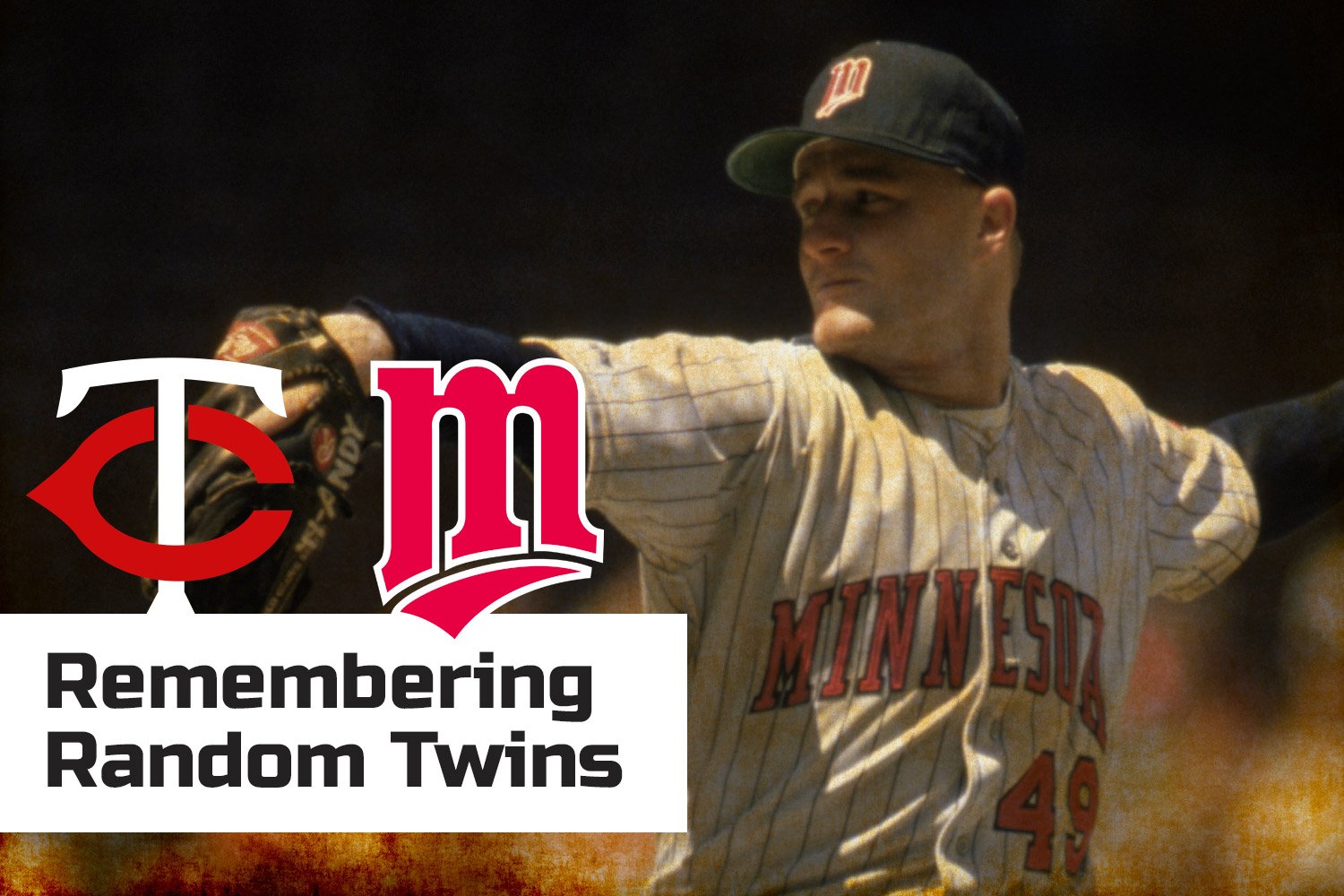 Maybe it’s just me, but when I think of the Minnesota Twins and their history, I think first of offense – batting titles, power hitters, M&M boys, and Bomba Squad. That’s not to say they have had continuous terrible pitching. Over 60-plus years, a franchise is bound to have years when pitching is above average. Any team should be able to produce numerous memorable pitchers over more than 60 years. The Twins have had Kaat, Blyleven, Viola, Radke, Santana, and others. But the Twins had the American League leader in earned run average in 1988 who gets lost in history and I don’t hear his name often. Let’s look deeper at the career of left-handed starting pitcher Allan Anderson. Allan Anderson was born on January 7, 1964, in Lancaster, Ohio. In high school, Anderson was a flame-throwing left-handed pitcher, throwing four no-hitters, including two in back-to-back games, and getting the attention of major league scouts. The Twins drafted Anderson after high school in the 2nd round of the 1982 Major League Baseball June Amateur Draft. The future looked bright. However, that was about to change. In 1983, his first year in professional baseball, he tore an elbow ligament while with the Class A Wisconsin Rapid Twins, which probably altered his career to a significant extent. The flame thrower would be forced to rely on control and changing speeds to be effective. He had a great year with the Class A Visalia Oaks in 1984, followed by a good year and a half with the AAA Toledo Mud Hens in 1985 and 1986, earning a call to MLB. On June 11, 1986, Anderson made his major league debut with the Minnesota Twins against the Texas Rangers. It was excellent. He pitched an unheard-of (at least by today’s standards) 10 innings, giving up single runs in the 1st and 3rd innings before settling in and holding Texas scoreless for the rest of his outing. Unfortunately, he was matched up against the rubber-armed knuckleballer, Charlie Hough. Hough went 13 innings and gave up only two runs. The Rangers finally broke for four runs in the 16th inning off the Twins bullpen to win the game 6-2. Anderson finished his first season with ten starts in 21 games, with a 3-6 record and a 5.55 ERA. In 1987, Anderson was a candidate to make the Twins starting rotation but suffered a back injury in spring training. After recovering from the injury, he began the season with the AAA Portland Beavers. It was an up-and-down season from there. He pitched for the Twins sparingly in May and June but was ineffective and returned to Portland. He turned his season around and had a good August, but it was too little too late as he did not return to pitch for the Twins during that regular season or postseason. He was forced to sit and watch the 1987 heroics. 1988 is when Anderson finally put it all together. After three starts and one complete game with AAA Portland, he returned to the Twins on April 28, 1998. He started that day’s game against Baltimore and got the win, pitching 6.1 innings and allowing two runs. From there, he took a regular spot in the rotation and started 30 games. He had three complete games. He had a personal six-game winning streak from July 24 to August 22. He was good and consistent all season. His ERA reached as high as 4.50 after a June 5 start. From there, it decreased consistently in almost every game. He capped off the season with a three-hit shutout against Oakland on September 27, dropping his ERA to 2.45, the best in the American League. He finished the season with a 16-9 record. He pitched 202.1 innings but had only 83 strikeouts – a likely byproduct of the earlier elbow injury and his transition to soft-tossing control pitcher. Anderson had a stellar season with 16 wins and a 2.45 ERA. However, he was overshadowed by his teammate, Frank Viola, who won the 1988 AL Cy Young Award. Anderson received no Cy Young support. Voters nationally were probably too enamored with Viola to appreciate Anderson’s career year. 1989 was a good follow-up season. He was selected as the opening-day starter, winning 17 games, pitched 196.2 innings, and had a 3.80 ERA. Again, his strikeouts were limited – only 69. Sometime in 1989, he tore a labrum in his shoulder, and that injury showed its effects in the following seasons. In 1990, he took the ball for a fair number of innings (188.2), but his other numbers worsened. His record dipped to 7-18, and his ERA ballooned to 4.53. 1991 was another struggle with a 5-11 record and 4.96 ERA. He pitched almost all of 1991 with the Twins – there was a short demotion to AAA – but he was left off the postseason roster again. So, despite his career from 1986 to 1991, all with the Twins, he was not part of playoffs or World Series in either season. After the 1991 season, Anderson became a free agent and signed with the New York Yankees, but he never returned to MLB. He later had minor league stints in the Texas and Cleveland organizations before retiring after the 1993 season. His overall career line was 49 wins, 54 losses, 818.2 innings pitched, 4.11 ERA, and an ERA+ of 102. His outstanding 1988 season saw him achieve an ERA+ of 166! After retiring from baseball in 1994, Anderson served as a pitching coach in the Texas Rangers minor league system. He is now a firefighter, real estate agent, and auctioneer. I will never forget Anderson’s 1986 MLB debut, as I recall listening to the game on WCCO. I could not sleep listening to that marathon. Wow, a 10-inning debut! Thankfully, there was no school in June, so I’m sure I slept in and talked about it the next day while playing wiffle ball with my friends. Allan Anderson didn’t have the longest or most distinguished career in the Minnesota Twins history, but he is memorable to me for his 1986 MLB debut and the 1988 ERA title.
 -
The 1962 Topps set is a vintage, classic set of baseball cards. I don’t care for it very much but there’s no mistaking the wood-grain border of the set. Some people love the design, and some hate it. Perhaps enough collectors love them that 25 years later Topps was at least inspired by 1962 in the 1987 design. The 1987 design is identifiable and distinct when compared to other sets of the 80s. Let’s take a closer look at the Minnesota Twins cards in the 1987 Topps and Topps Traded baseball card sets. The 1987 cards feature the aforementioned wood-grain borders. The design includes the team logo in the upper left corner, a player nameplate in a lower right box, and the Topps logo in the lower left. The Twins cards feature the player’s name in a navy-blue box. I don’t like the wood grain border but otherwise 1987 is a clean, crisp design in my judgment. The backs have the player’s name and position in capital letters at the top against a darker blue background, then the player’s career statistics against a yellow background, followed by a piece of trivia. The entire back is set against a gray card stock background. At the very bottom is the player’s biographical information again with a yellow background. The 1987 Topps sets are the same size as 1986 – 792 cards in the base set and 132 cards in the Traded set. There are 28 Twins cards in the base set. Of the 132 cards in the Traded set, a disproportionate nine of those are Twins cards. Perhaps the significant number of offseason acquisitions for this the World Series year – Juan Berenguer, Dan Gladden, Al Newman, Jeff Reardon, Les Straker and others – contributed to the abundance of Twins cards for this set. The base set has rookie cards of Hall of Famer Barry Larkin as well the rookie cards of a handful of suspected steroid users who some say are Hall of Fame worthy – Barry Bonds, Mark McGwire (or not), Rafael Palmeiro, and the uber-talented Bo Jackson who was cursed with injuries. Rookie cards for Twins players in the main Topps set are Allan Anderson and manager Tom Kelly. The Traded set has a Gene Larkin rookie card. The set contains a large amount of straight-up head shots and, at least to me, a lesser number of action shots. MOST OBSCURE PLAYER After considering six players in the 1987 sets for the potential of being Mr. Most Obscure Twin, I selected Ray Fontenot (#124). Some Twins fans might consider Ray Fontenot a hero, savior, or I don’t know what. Not because of what he did, but because of who he replaced. Fontenot was a left-handed reliever who was drafted in the 34th round the Texas Rangers, He was later traded to the Yankees and the Cubs. What makes him a significant part of Twins history (although he probably remains obscure) is that he and George Frazier (and a minor leaguer) were traded to the Twins (with a minor leaguer) for failed closer, and fan whipping boy, Ron Davis. Fontenot was acquired on August 13, 1986, pitched 16.1 to the tune of a 9.92 ERA. The Twins released him that offseason and he never reappeared in Major League Baseball, but at least we were done with Ron Davis. THE BEST The most valuable Twins card in the 1987 Topps set is that of outfielder, former first round draft pick, and future General Manger of the Oakland A’s, Mr. Moneyball, Billy Beane (#114). It’s Beane’s first and only Topps card. Beane came to the Twins in a January 1986 trade with the New York Mets for second baseman Tim Teufel (with minor leaguers going both ways). I would say the Twins lost that trade. Beane a former first round draft pick did have a five-hit game for the Twins making some briefly think, “Here we go!” But he just never produced anything similar again. Teufel had some good seasons with the Mets and helped win a World Series in 1986. Billy Beane famously went on to be a special General Manager, Executive Vice President, senior advisor, and minority owner of the Oakland Athletics. His against the grant thoughts and processes led the underfunded Athletics to many division championships no one would have thought possible. Most organizations followed his revolutionary thinking which changed the way every team scouts and prepares. I don’t think it’s a stretch to say he probably will be selected to the Hall of Fame one day. PERSONAL FAVORITE For my personal favorite Twins 1987 Topps, I choose the Twins Hall of Famer Kent Hrbek (#430). Hrbek was my choice in 1986 as well. For me it was hard to select a favorite because there are just too many close-up head shots of players. I prefer actions shots. This Hrbek card looks awesome. I think he’s coming in on a foul ball which was all know he always caught, except maybe at the old timers game. ODDITIES Hey, let’s not make this too long, but I have two quick observations when looking at Twins cards and 1987 Topps. First, doesn’t Kirby Puckett’s All-Star card (#611) look like his picture was taken three years prior to his regular, base card (#450). He looks skinnier and younger, at least in my judgment. Secondly, look at Frank Pastore’s 1986 and 1987 cards. They look almost like reverse negatives. Same look, same jacket, just from the opposite side. Hat looks the same, hair looks the same, background looks similar. Maybe they were taken the same day and just used in different years. That just struck me as odd and worthy of mention. I don’t like the 1987 Topps set design and that is simply because of the wood-grain borders. However, I completely love everything else about the design. I love simplicity and this set has it. I just don’t like the borders. Even though the 1987 Topps baseball cards are not my favorite, I can’t say I don’t remember the design – it’s distinct and memorable. Which is better, 1962 or 1987? I’d love to see your opinions, thoughts, or comments below. Go Twins!
-
Hey, thanks for this. Certainly an interesting write-up. Wish they could have gone 5-0!
-
I couldn't find anything about where he is/what he does now. I always try to find that but found nothing for Merritt.
-
During the late 1960s, the Minnesota Twins were fortunate to have a deep stable of exceptionally good starting pitching. There was another lesser-known pitcher who more than held his own: left-hander Jim Merritt. James Joseph Merritt was born December 9, 1943, in Altadena, California. He attended and played baseball for two different high schools in southern California – West Covina and Edgewood. Merritt was a huge Dodger fan after the team relocated from Brooklyn. SABR said, “Jim fulfilled every boy’s dream when the Dodgers hired him as batboy and clubhouse attendant. Though the job forced him to forgo his senior year of baseball, he enjoyed some added perks. ‘I used to listen [to pitchers] all I could when I worked for the Dodgers.’ He had up-close and personal conversations about pitching with hurlers like fellow lefties Sandy Koufax and Ron Perranoski, as well as Don Drysdale.” Merritt’s high school job must have shown something, or at least been positive, as he was signed by his favorite team and former employer, the Los Angeles Dodgers. But shortly after that, the Twins had to step in and alter his fairy tale. The Twins selected Merritt under the first-year draft rule of the 1961 Rule V draft. Merritt was great in the minor leagues, often leading or amongst the leaders of his league in wins, innings, and strikeouts. Merritt debuted for the Twins on August 2, 1965. His line was 8.2 innings pitched, eight hits, six strikeouts, and one walk, and he gave up five runs, four of which were earned. The one walk was a prelude to the career of an excellent control pitcher. The Twins won the game with a walk-off home run by Jimmie Hall off future Hall of Famer Jim Palmer, who was pitching in relief while just starting his career. Merritt won his next two starts, including a 10-hit complete game on August 12 against the Yankees. Jim Merritt appeared twice in the 1965 World Series in games 3 and 7 against his hometown Los Angeles Dodgers. Unfortunately for the Twins and their fans the Twins lost both those games. In game 3, he gave up one earned run in two innings, allowing the deficit to grow from 3-0. That did not hurt much as the final score stayed at 4-0. The Twins could never get anything going offensively, only getting five hits off Claude Osteen in his complete game. In game 7, Merritt gave up no runs in 1.1 innings, but that did not stop the Twins from dropping game 7 to the Dodgers and losing the tightly contested World Series. The Twins were shut out in three World Series games in 1965, and Merritt pitched in two of those losses. There’s not much a pitcher can do when an offense does not score. Merritt’s record with the Twins finished at only 37-41. He started 89 games and appeared in 33 more. But his other numbers paint a picture of a pretty valuable pitcher. 3.03 ERA and ERA+ of 112. He had six shutouts, walked only 1.8 per 9 innings, and had an extremely low WHIP of 1.046. His 0.993 WHIP in 1968, the year of the pitcher, was good for second-best in the American League. His 6.5 WAR in 1967 was the best in the American League for pitchers. After the 1968 season, Merritt was traded to the Cincinnati Reds for the slick-fielding shortstop Leo Cárdenas. Both players were exceptionally good for their new teams, each making an All-Star Game and receiving votes for major awards. According to Baseball Reference WAR, the Twins won the trade, with Cárdenas contributing 11.1 WAR for the Twins in three seasons to Merritt’s 2.8 WAR for the Reds in four seasons. Cárdenas finished 12th in 1969 voting for Most Valuable Player and was an All-Star in 1971. His slash line for the Twins was .263/.325/.394. He hit 39 home runs. After the 1971 season, Cárdenas was traded to the Angels. Merritt had a 39-32 record in four seasons with the Reds. He was great in 1969 and 1970, then fizzled out in his last two seasons with an apparent arm injury in late 1970. He went 17-9 in 1969 and was even better in 1970 when he won 20 games, was selected to the All-Star Game (he gave up only one hit in two innings; it was to former teammate Harmon Killebrew), and finished fourth in the voting for the Cy Young Award. He was later traded to the Texas Rangers, where he finished his career in 1975. Jim Merritt finished his career with 81 wins and 86 losses, a 3.65 ERA, 932 strikeouts, and only 322 walks in 1,483 innings. His ERA+ was 99. He was a very good pitcher for four years. From 1967-1970, he produced a 62-44 record while pitching 951 innings. He ran into arm problems late in 1970 and was never the same pitcher. He threw only 311 innings from 1971-1975 and was out of baseball after his age-32 season. With today’s medical knowledge and surgeries, who knows what his career could have been? View full article
-
Jim Merritt, A Forgotten Starter From Some Great 1960s Twins Teams
Al from SoDak posted an article in History
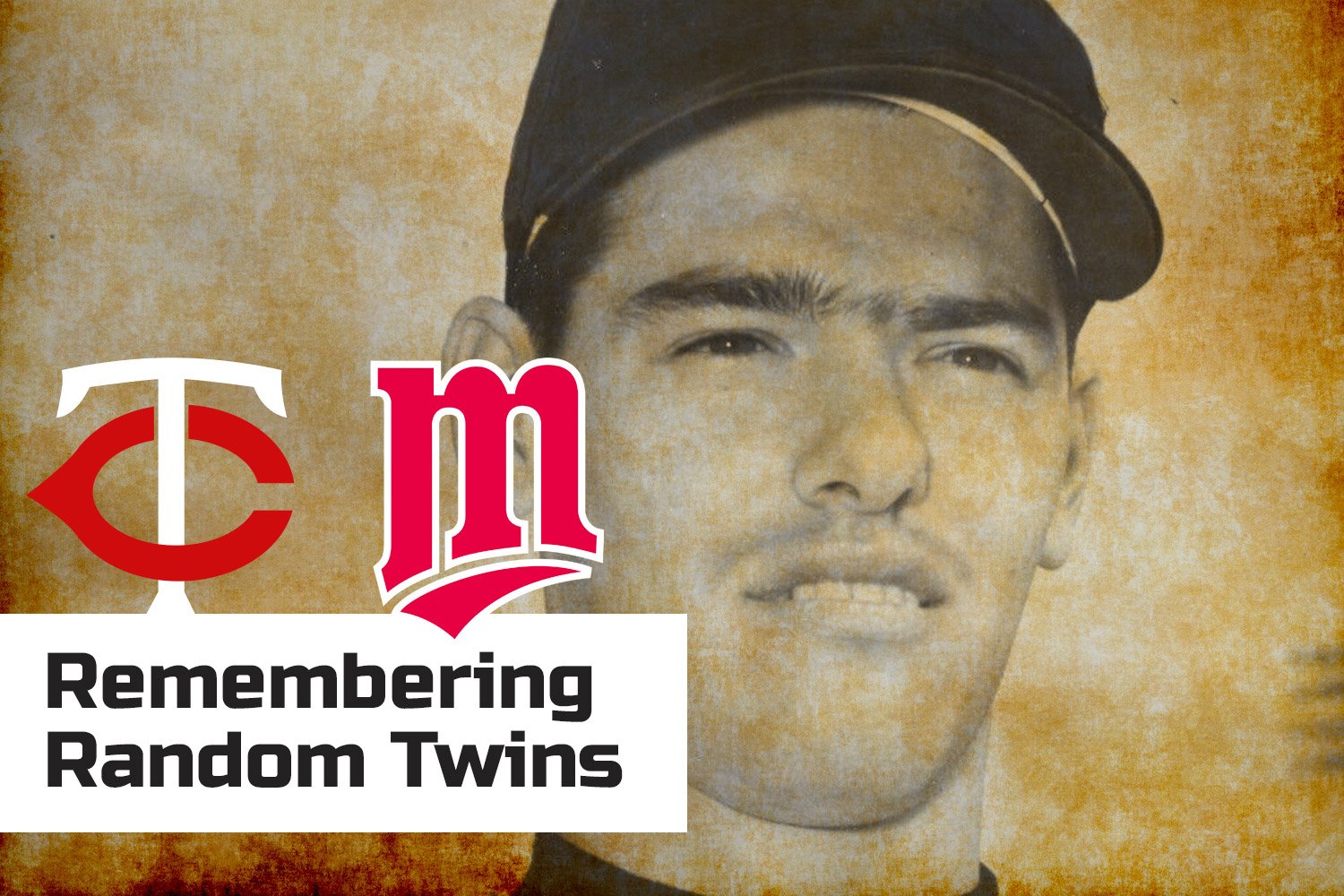 James Joseph Merritt was born December 9, 1943, in Altadena, California. He attended and played baseball for two different high schools in southern California – West Covina and Edgewood. Merritt was a huge Dodger fan after the team relocated from Brooklyn. SABR said, “Jim fulfilled every boy’s dream when the Dodgers hired him as batboy and clubhouse attendant. Though the job forced him to forgo his senior year of baseball, he enjoyed some added perks. ‘I used to listen [to pitchers] all I could when I worked for the Dodgers.’ He had up-close and personal conversations about pitching with hurlers like fellow lefties Sandy Koufax and Ron Perranoski, as well as Don Drysdale.” Merritt’s high school job must have shown something, or at least been positive, as he was signed by his favorite team and former employer, the Los Angeles Dodgers. But shortly after that, the Twins had to step in and alter his fairy tale. The Twins selected Merritt under the first-year draft rule of the 1961 Rule V draft. Merritt was great in the minor leagues, often leading or amongst the leaders of his league in wins, innings, and strikeouts. Merritt debuted for the Twins on August 2, 1965. His line was 8.2 innings pitched, eight hits, six strikeouts, and one walk, and he gave up five runs, four of which were earned. The one walk was a prelude to the career of an excellent control pitcher. The Twins won the game with a walk-off home run by Jimmie Hall off future Hall of Famer Jim Palmer, who was pitching in relief while just starting his career. Merritt won his next two starts, including a 10-hit complete game on August 12 against the Yankees. Jim Merritt appeared twice in the 1965 World Series in games 3 and 7 against his hometown Los Angeles Dodgers. Unfortunately for the Twins and their fans the Twins lost both those games. In game 3, he gave up one earned run in two innings, allowing the deficit to grow from 3-0. That did not hurt much as the final score stayed at 4-0. The Twins could never get anything going offensively, only getting five hits off Claude Osteen in his complete game. In game 7, Merritt gave up no runs in 1.1 innings, but that did not stop the Twins from dropping game 7 to the Dodgers and losing the tightly contested World Series. The Twins were shut out in three World Series games in 1965, and Merritt pitched in two of those losses. There’s not much a pitcher can do when an offense does not score. Merritt’s record with the Twins finished at only 37-41. He started 89 games and appeared in 33 more. But his other numbers paint a picture of a pretty valuable pitcher. 3.03 ERA and ERA+ of 112. He had six shutouts, walked only 1.8 per 9 innings, and had an extremely low WHIP of 1.046. His 0.993 WHIP in 1968, the year of the pitcher, was good for second-best in the American League. His 6.5 WAR in 1967 was the best in the American League for pitchers. After the 1968 season, Merritt was traded to the Cincinnati Reds for the slick-fielding shortstop Leo Cárdenas. Both players were exceptionally good for their new teams, each making an All-Star Game and receiving votes for major awards. According to Baseball Reference WAR, the Twins won the trade, with Cárdenas contributing 11.1 WAR for the Twins in three seasons to Merritt’s 2.8 WAR for the Reds in four seasons. Cárdenas finished 12th in 1969 voting for Most Valuable Player and was an All-Star in 1971. His slash line for the Twins was .263/.325/.394. He hit 39 home runs. After the 1971 season, Cárdenas was traded to the Angels. Merritt had a 39-32 record in four seasons with the Reds. He was great in 1969 and 1970, then fizzled out in his last two seasons with an apparent arm injury in late 1970. He went 17-9 in 1969 and was even better in 1970 when he won 20 games, was selected to the All-Star Game (he gave up only one hit in two innings; it was to former teammate Harmon Killebrew), and finished fourth in the voting for the Cy Young Award. He was later traded to the Texas Rangers, where he finished his career in 1975. Jim Merritt finished his career with 81 wins and 86 losses, a 3.65 ERA, 932 strikeouts, and only 322 walks in 1,483 innings. His ERA+ was 99. He was a very good pitcher for four years. From 1967-1970, he produced a 62-44 record while pitching 951 innings. He ran into arm problems late in 1970 and was never the same pitcher. He threw only 311 innings from 1971-1975 and was out of baseball after his age-32 season. With today’s medical knowledge and surgeries, who knows what his career could have been?
 -
Too many Topps sets lack character and are rather bland, hard to differentiate year over year. That’s my problem with the sets from the late 1970s. At least to me, those designs are difficult to set apart in my head, and I have a tough time remembering which design is which year. Let’s take a closer look at the distinct, easily recognizable 1986 Topps and Topps Traded sets. The top of the 1986 cards features a black box background and the team’s name in block lettering. In the case of the Twins, the team’s name has a red font. The bottom and side borders are white. The player’s name is in capital letters at the bottom and there is a small circle in the lower left with the player’s position. The color of the circle matches the color of the team’s name. Exceptionally clean and concise. The backs (I will include one example below upon the recommendation of IndianaTwin) have the player name in block lettering at the top, the biographical information just below the name, then the player’s statistics, then some player highlights or “Talkin’ Baseball” team trivia at the bottom. All of this is against a red background. There are a whopping 792 cards in the 1986 Topps baseball card set plus an additional 132 cards in the Topps Traded. There are 27 Twins cards in the two sets. The Traded set has rookie cards of Hall of Famer Barry Bonds, as well as others who looked like they might make the Hall – Jose Canseco and Bo Jackson. Neither made the Hall for different reasons. Rookie cards for Twins player in the main Topps set are Frank Eufemia and a player to be discussed later. The pictures in this set have plenty of action shots and a few straight-up head shots. MOST OBSCURE PLAYER After researching the players in this set, I considered five who might be called the most obscure Twins player in the set, including Frank Pastore (who had a very prophetic death), Frank Eufemia, Pete Filson, and Mike Stenhouse. In the end, I selected a player for whom I simply have no memory, Mr. Mark Brown (#451). Mark Brown was a 6th round draft pick in 1980 for the Baltimore Orioles. He made it to the majors for the Orioles in 1984 pitching in nine games, winning one. Brown was traded to the Twins after the 1984 season for Brad Havens. For the Twins, Brown had no decisions, pitched only 15.2 innings in six games in relief, had an ERA of 6.89, and a WHIP of 1.878. His career WAR was -0.1. He wasn’t particularly good, but he also wasn’t given a very extensive chance and was unable to stick in MLB after his age 25 season. THE BEST The best and apparently most valuable Twins card in the 1986 Topps set is that of Hall of Famer, and longtime broadcaster, Bert Blyleven (#445). I like that it’s an action shot, a look of determination on his clean-shaven face. For many years, the Twins had a no beard policy including when Blyleven returned to the Twins in the August 1985 trade from Cleveland. Bert complied with policy and shaved his beard and appeared without a beard for at least the rest of the 1985 season. Then in 1986 he played with a beard and was fined $50 per game. Bert preferred the beard, so he simply paid the team fine. In am unable to verify when, but at some point, the policy was rescinded. My memory says the fines did not exist in the World Series year of 1987. PERSONAL FAVORITE For my personal favorite Twins 1986 Topps, I choose the Twins Hall of Famer Kent Hrbek (#430). To me there’s a certain air of confidence or swagger or arrogance that makes it look like a home run is sure to follow. It’s a semi-action shot that really captures a potential moment. Who really knows what happened next, but I’m confident it was something good for the Twins. I like the 1986 Topps set design. It’s a plain design that somehow gets your attention. I think that might be because of the black background at the top, the team’s name in block lettering, and the all caps player name at the bottom. It’s super basic but it just works for me. I’d love to see any of your thoughts and comments below. Go Twins!
- 2 comments
-
- 2
-
-
- frank pastore
- mark brown
- (and 2 more)
-
Thanks for the positive reinforcement
-
Yeah, interesting career. Here forever. Never seemed great, but never seemed out of place.
-
Thanks for the comment. I've struggled with how random the players should be. I don't want to make them so random that nobody wants to read it. I'll try to do better.
-
Randy Bush Maximized A Minimal Role For 12 Seasons With The Twins
Al from SoDak posted an article in History
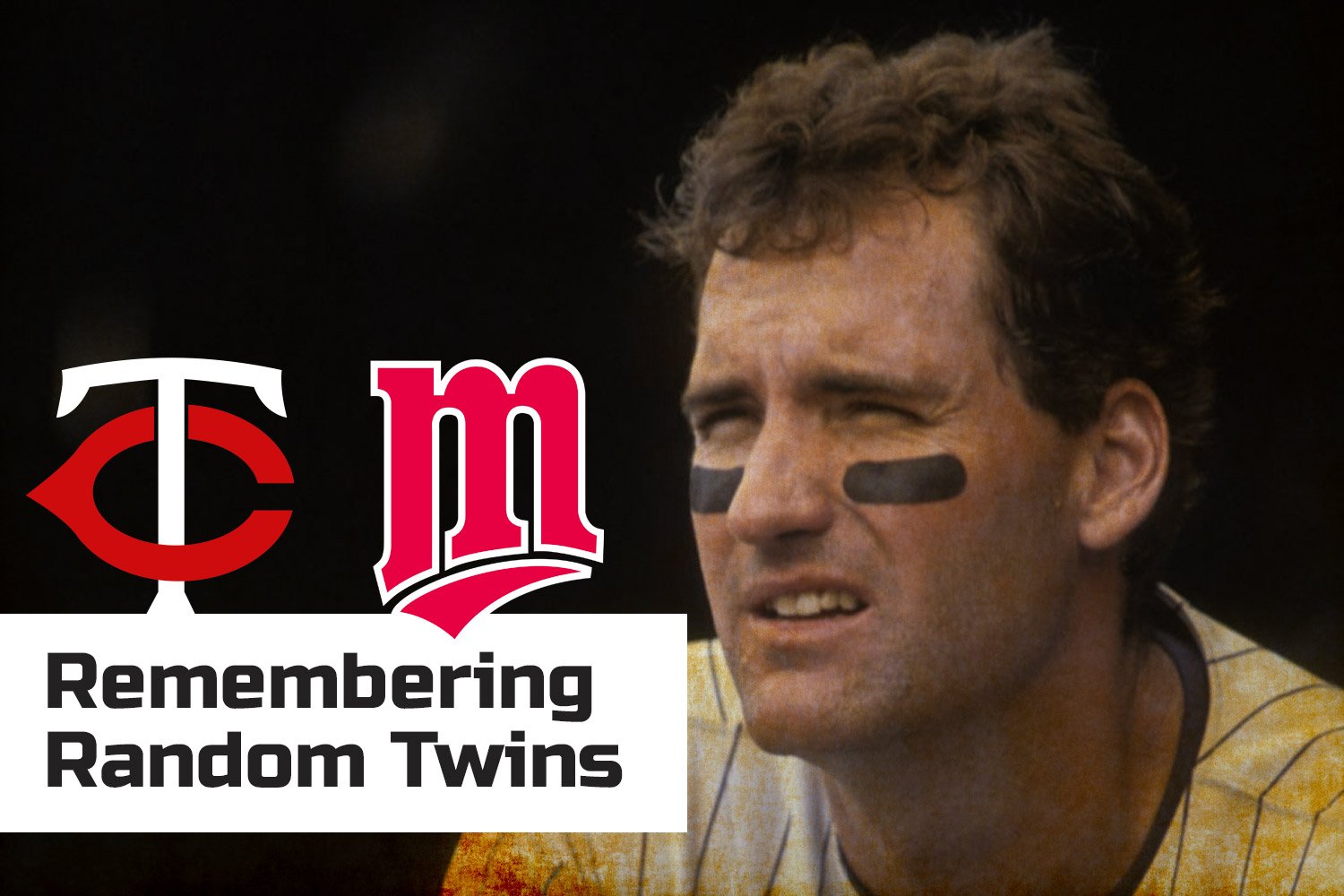 Twins Hall-of-Famer and hometown kid Kent Hrbek fits into both of these groups, too. As such, much has been written and said about Mr. Hrbek. Perhaps that is why Randy Bush is often overlooked, but not today. Today we take a closer look at Bush. Robert Randall Bush was born in Dover, Delaware on October 5, 1958. (Here on Twins Daily, Thiéres Rabelo named Randy Bush the best-ever Twins player from the state of Delaware.) He attended the University of New Orleans, playing only one season but leaving his mark. He batted .369 with a team-leading 18 home runs, 77 runs batted in, and a slugging percentage of .764. That one season would later be enough to merit his selection to the school’s Hall of Fame. A more immediate effect was that his one season at UNO got the attention of the Major League Baseball teams, specifically the Minnesota Twins, who drafted Bush in the second round of the 1979 MLB draft. After being drafted and signed by the Twins, Bush always even-keeled and played in AA Orlando and AAA Toledo from 1979 to 1982. Foreshadowing his Twins’ future, he usually did not play full-time, but he always played well enough to contribute to the team. He played left field, right field, first base, and was a designated hitter. The one season Bush was granted extensive playing time – as an outfielder in 1981 with Orlando – he proved his worth by batting .291/.404/.494 with 22 home runs and 94 runs batted in. He debuted with the Twins on May 1, 1983. He struck out in his only plate appearance. His first hit came four days later against the Boston Red Sox. He had to wait a bit longer for his first home run, which came on September 6, 1982, in game two of a doubleheader. Bush pinch-hit (of course) for Gary Ward and hit a home run against Charlie Hough in an 11-7 loss. He homered again the next day and then had a two-home run game on September 20 against Toronto. The stoic, calm Bush was in the big leagues to stay. Once with the Twins, Bush continued his role from the minor leagues as a bench player who filled in when others were hurt or needed rest. He played occasional outfield or first base but was mainly used as a designated hitter, then as a pinch hitter in later years. He had over 400 plate appearances only four times in his career, with a high of 466 in 1988. Conversely, he had six seasons with less than 300 plate appearances. Bush had a reputation as a great pinch-hitter. In truth, he had some great years and some less-than-stellar years, which we can attribute to small sample sizes. Bush’s career slash line as a pinch hitter was .242/.346/.353. His overall pinch-hitting OPS was a pedestrian .699, but he did have three seasons where his pinch-hitting OPS was over 1.000. 1984, 25 Plate Appearances, .400/.440/.600 1986, 32 Plate Appearances, .433/.469/.700 1991, 43 Plate Appearances, .382/.500/.618 I’m certain his performance in the 1991 championship year solidified his reputation as a great pinch-hitter. During that season, Bush tied an American League record with seven pinch hits in a season consecutively. That record still stands and is shared with Bill Stein of the Rangers in 1981 and Ross Gload of the White Sox in 2006. Despite his limited use, Bush had some highlights with the Twins. He hit over ten home runs in six different seasons of his career. He drove in eight runs in one game versus Texas on May 20, 1989, with three hits, including two home runs. He was fifth in the American League with seven triples in 1986. Surprisingly, Bush was fifth in the AL in 1988 with 14 intentional walks (behind Wade Boggs, Mike Greenwell, Greg Brock, and George Brett). Bush hit 96 career home runs, all of which came against right-handed batters. That is an MLB record for most home runs exclusively against only pitchers of a certain handedness. His career slash line was .251/.334/.413. He had a career OPS+ of 102. In the postseason, Bush played much more extensively in 1987 than in 1991. He started four games at DH against the Tigers in the American League Championship Series with an OPS of .864, a triple amongst his three hits, and one RBI. He also had three stolen bases. In the World Series, he started once at DH and appeared as a pinch-hitter in three other games. In those games, his OPS was only .500, with one hit in six plate appearances. But he started game two at DH and went 1 for 3 with a bases-loaded double, 2 RBI, and a run scored on an epic slide as the Twins blew the game open in the fourth inning. In 1991, Chili Davis was the designated hitter, so Bush did not play at all in the ALCS against Toronto, but he did get three pinch-hit opportunities in the World Series against Atlanta. He appeared in two of the losses in Atlanta and could not reach base in either game. As we all know, game seven of the 1991 World Series was the epic pitcher's duel between Jack Morris and John Smoltz that went scoreless through nine innings. Despite that, both teams had plenty of base runners and opportunities. Randy Bush was used as a pinch-hitter for Greg Gagne leading off the eighth inning. He got a hit and was immediately replaced by pinch-runner Al Newman. After Dan Gladden popped out, Chuck Knoblauch singled with Newman going to third base. Things were looking promising with Kirby Puckett and Kent Hrbek coming up next. The Braves intentionally walked Puckett, leading to Hrbek lining out to Mark Lemke for an unassisted double play. That was the end of Bush’s influence on this game. We all know how the game ended – Gene Larkin’s pinch-hit single over the heads of drawn-in outfielders Brian Hunter and Ron Gant to score Gladden. Bush played twelve years with the Twins from 1982 to 1993. He never played for another MLB team. In fact, of players who have played only for the Twins, the only ones to compile more seasons than Randy Bush are Tony Oliva (15), Joe Mauer (15), and Kent Hrbek (14). Three others can match Bush’s 12 seasons with the Twins and only the Twins. They are Kirby Puckett, Brad Radke, and Glen Perkins. That’s a very narrow and select group from Minnesota Twins history. Randy Bush returned to the University of New Orleans to coach from 2000 to 2004, with a record of 144-145. UNO won a conference title in 2000. Since 2005, Bush has served various roles with the Chicago Cubs, often as an assistant general manager. He received a third World Series ring from the 2016 Cubs victory. In addition to the University of New Orleans Hall of Fame, Bush has been inducted into the Eastern Shore Baseball Hall of Fame. When Bush returned from his full-time work in the Cubs front office after the 2021 season, MLB Trade Rumors quoted him as saying, “I honestly feel like the luckiest guy in the world with all the blessings I’ve had in my baseball life. It’s been unbelievable.” Bush was part of the 1982 rookie class that included Kent Hrbek, Gary Gaetti, Frank Viola, Tim Laudner, Tom Brunansky, and even coach/manager Tom Kelly. In Kent Hrbek’s Tales from the Minnesota Twins Dugout, Hrbek calls Bush one of his best friends in baseball. Bush was also one of the seven players who appeared on both World Series-winning teams, along with Kirby Puckett, Kent Hrbek, Greg Gagne, Dan Gladden, Al Newman, and Gene Larkin. Randy Bush always seemed calm, emotionless, and ready to do whatever it took to help the Twins win. In later years, when he was almost exclusively a pinch hitter, he never seemed to be overwhelmed by any situation. He never looked nervous. Randy Bush was just a perfect bench player who helped his teams reach the mountaintop twice. In my book, that makes him a legend.

