

Twins Video
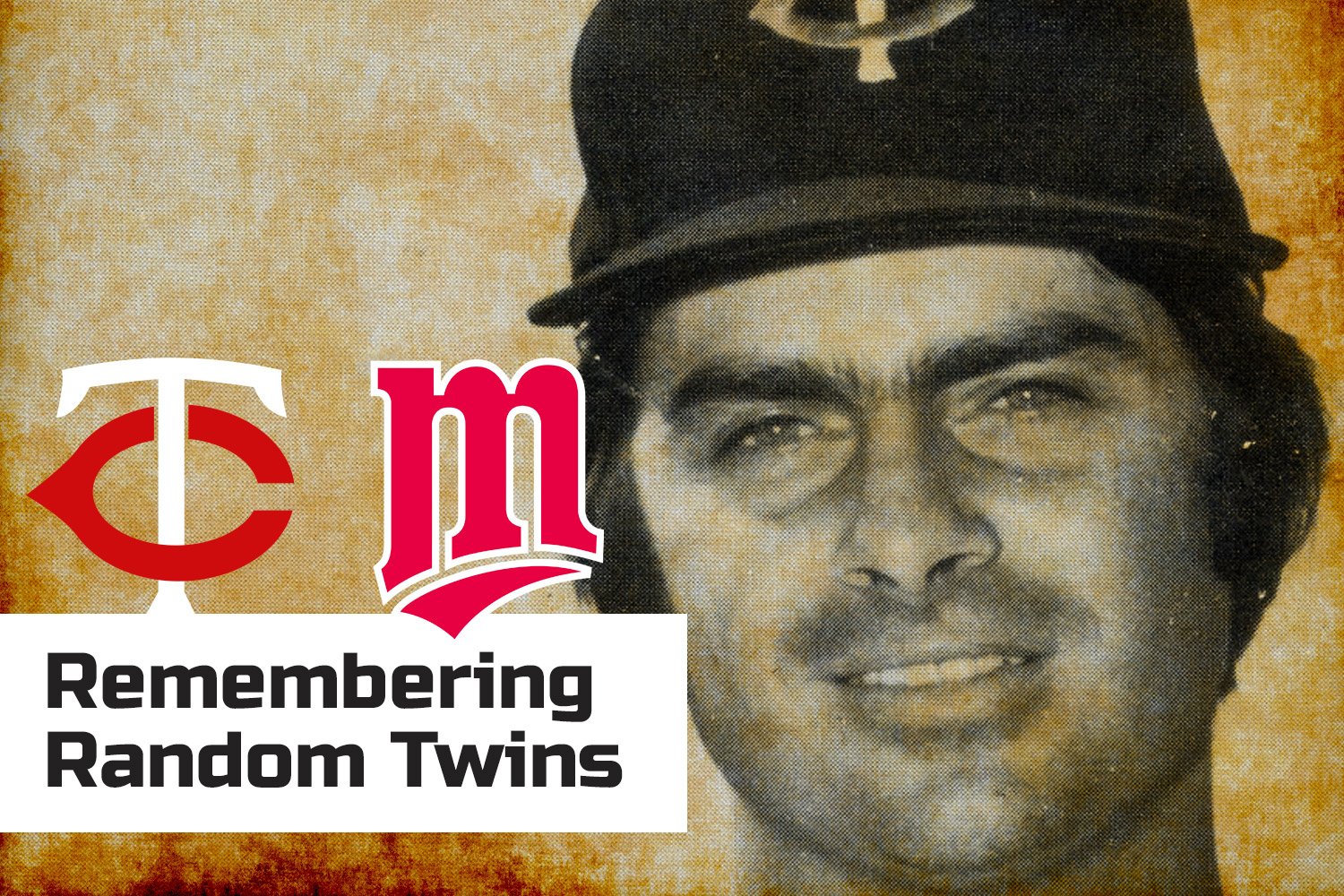
Most Twins fans of a certain age, let’s say 45 and above, know that utility infielder and two-time World Series Champion Al Newman never hit a home run in his five seasons with the Twins. He had one home run with the Montreal Expos in 1986, but that was it for his career. During Newman’s career in Minnesota, much was made about how he was the longest homerless streak ever. I have not been able to verify if that is true or if it still stands. Anyway, all of that led me to this question. Which Twin has the most plate appearances but only one home run? Ladies and gentlemen, let me introduce 1970s second baseman Bob Randall.
Robert Lee Randall was born June 10, 1948, in Norton, Kansas, a small town in north central Kansas almost 300 miles west of Lawrence and the University of Kansas. He graduated from a nearby high school in Gove, Kansas. According to Patrick Reusse’s book Tales from the Minnesota Sports Beat, Randall’s senior class consisted of only four boys. Randall was quoted, “The senior prom was a bummer.”
After high school, Randall attended and graduated from Kansas State University.
The right-handed hitting Randall was drafted by the Los Angeles Dodgers three different times: 55th round in 1966, 7th round in 1968, and 2nd round in 1969. He played well in the minor leagues, leading his league thrice in hits. He spent two-plus years with the Triple-A Albuquerque Dukes. Still, he could not break into Major League Baseball because the Dodgers had the young Davey Lopes, an established second baseman who would become a four-time All-Star and a Gold Glove winner. So, without a real need for a second baseman, the Dodgers traded Randall after the 1975 season to the Twins for Danny Walton, a sparingly used outfielder and first baseman.
The trade and new manager Gene Mauch’s decision to move incumbent second baseman Rod Carew to first base created an opportunity for Randall. His first year was his best season, and this was when he hit his first and only career home run. That homer came in the third inning of a June 23rd loss against the Chicago White Sox, the second game of a doubleheader. The pitcher was the unremarkable Chris Knapp. Throughout his Twins career, Randall was a hustling, scrappy player. He played significant time immediately in that first season of 1976, then filled a platoon role with the left-handed hitting Rob Wilfong in 1977 and 1978. In 1979 he had limited action, playing in only 80 games and getting 199 at-bats. In a rare sequence of events in 1980, Randall was released at the end of spring training and was made a coach. But on May 16, he resigned with the Twins, got into five games, went 3 for 15, and was released again. The Twins resigned Randall again on June 18, but he did not appear in a game and was released for the final time on July 16, 1980.
For his career, Randall batted .257/.310/.311. He had that lone home run and 91 runs batted in. His OPS+ was 74. His best season was 1976, which was less than stellar, and he was unable to replicate that in the following four seasons. His career WAR was 3.8.
1981 Randall was hired as an assistant baseball coach at Iowa State University. The head coach at that time was Larry Corrigan, a former Twins minor leaguer, later a scout, and ultimately the scouting director. When Corrigan left Iowa State after 1984, Randall was promoted to head coach, where he served 11 seasons until 1995, compiling a middling record of 309-311. After the 1995 college baseball season, his home state of Kansas came calling. An excellent article in the Iowa State Daily about Randall’s tenure in Ames and how it ended. It sounds like he was a low-paid, quality coach who moved on to be closer to home, continue doing what he loved, and work for a better-funded athletic department. Seems like a no-brainer. He was hired as head baseball coach at Kansas University, where he remained for seven seasons until 2002. His record was 166-213.
Bob Randall may have had little power, but he had enough ability and hustle to play Major League Baseball for five seasons. He then went on to an even more impressive college coaching career, where he shaped and mentored countless athletes, a few future MLB players, and many future husbands, fathers, and businessmen. I’m sure that is his biggest legacy.
He only hit that one home run as a Twin, but it’s more than Al Newman can say.
Do you approve of the job Derek Shelton is doing as Twins manager?

Are you interested in Twins history? Then check out the Minnesota Twins Players Project, a community-driven project to discover and collect great information on every player to wear a Twins uniform!
View The Players Project





Recommended Comments
Create an account or sign in to comment
You need to be a member in order to leave a comment
Create an account
Sign up for a new account in our community. It's easy!
Register a new accountSign in
Already have an account? Sign in here.
Sign In Now