Al from SoDak
-
Posts
274 -
Joined
-
Last visited
Content Type
Profiles
News
Minnesota Twins Videos
2026 Minnesota Twins Top Prospects Ranking
2022 Minnesota Twins Draft Picks
Minnesota Twins Free Agent & Trade Rumors, Notes, & Tidbits
Guides & Resources
2023 Minnesota Twins Draft Picks
The Minnesota Twins Players Project
2024 Minnesota Twins Draft Picks
2025 Minnesota Twins Draft Pick Tracker
2026 Minnesota Twins Draft Tracker: Picks & Bonuses
Forums
Blogs
Events
Store
Downloads
Gallery
Everything posted by Al from SoDak
-
 Yeah, "shock" is a good word. I distinctly remember hearing about the trade. I was standing in line at the Met Center on a Saturday morning for Bruce Sprinsteen concert tickets. We had a newspaper to pass the time. All of us said, "What the hell?" And by all of us, I mean everybody near us in line. Herr was a good player. It maybe could have been a win/win trade, but Herr did not want to be in Minnesota.
- 10 replies
-
- 2
-

-
- tom brunansky
- kent hrbek
- (and 5 more)
-
Thanks for reading and for the for the positive comment. I used to love litening on the radio.
-
Tom Brunansky came to the Twins at their low point and helped see them to their highest. The Minnesota Twins bottomed out in the early 1980s. However, as most readers will know, the Twins were acquiring and cultivating a significant amount of young talent who would be instrumental in winning the 1987 World Series. In 1982, they had a promising group of six young players, five of whom would become All-Stars. The Bloomington native first baseman Kent Hrbek. The gritty third baseman, Gary Gaetti. Frank Viola is a future ace starting pitcher. A hometown catcher, Tim Laudner. A great team player, Randy Bush. Early in 1982, an outfielder from southern California rounded out that group after being added from outside the organization. Let’s reflect on fan-favorite Tom Brunansky. Thomas Andrew Brunansky was born August 20, 1960, in West Covina, California, a suburb east of Los Angeles in the San Gabriel Valley. As a 13-year-old, Tom led his Pony League team to a World Series championship. He was the youngest player on the team. The Angels organization drafted Brunansky out of high school in the first round of the 1978 Amateur Draft. Brunansky worked his way up through the Angels minor league system and made the big-league squad on Opening Day 1981 as a 20-year-old in his fourth season. He started in left field against the Seattle Mariners, batted seventh, and went 1-4 with a run scored and a stolen base. His hit was a sixth-inning single off Glenn Abbott. The Angels won 6-2. Amazingly, he hit his first two home runs two days later, finishing that game with four RBI. Unfortunately, he soon tore ligaments in his thumb and played no more major league games in 1981. By the start of the 1982 season, the Angels were loaded with proven outfielders. Fred Lynn (nine-time All-Star, 1975 MVP, 1975 Rookie of the Year) and Brian Downing (one-time All-Star, three-time top 20 MVP finisher) played for the Angels in 1981. Over that winter, they signed Reggie Jackson (Hall of Famer, 14-time All-Star, 1973 MVP, and a member of the 500 home run club) as a free agent, which made the young Brunansky expendable. On May 12, 1982, Brunansky was traded to Minnesota along with pitcher Mike Walters for veteran relief pitcher and former All-Star Doug Corbett and starting second baseman Rob Wilfong. This was when the Twins were trading any veterans of any value. Starting in 1981 and going through 1983, the Twins also traded away Ken Landreaux, Jerry Koosman, Roy Smalley, Butch Wynegar, Gary Ward, and many others. Many players on the 1982 Twins were upset with the Twins trading away proven major leaguers. Ron Davis, of all people, was outspoken about trading Corbett and Wilfong. He was quoted in the Minneapolis Star Tribune, “Trade the owner,” speaking of Calvin Griffith. Many in the Twins clubhouse thought the trade was a salary dump. However, the players sent to the Angels did not provide overwhelming value in California. The former All-Star reliever, Corbett, was not bad. He had a 111 ERA+ in five seasons with the Angels and a WAR of 1.6. Wilfong also played five seasons with the Angels but had a poor 65 OPS+ with the bat, but somehow accumulated a WAR of 2.3. I would say the Twins won that trade. In short order, Brunansky proved to be a valuable addition. Bruno played every game of the 1982 season after being acquired by the Twins. He finished with 20 home runs and hit .272/.377/.471. He would go on to hit at least 20 home runs in each of his six seasons with the Twins. His batting numbers during his Twins tenure were .250/.330/.452 with 163 home runs and 469 RBI. He was a very good middle-of-the-order hitter and a decent right fielder. Brunansky also proved to be super durable, playing at least 150 games each season in the Twins uniform. 1985 was one of Brunansky’s best seasons, and his first half was excellent. Before the All-Star break, he batted .265/.358/.508 for an OPS of .867. He had 19 home runs and 56 RBI before the break. He was selected to the American League’s All-Star team and had the honor of the play at home in the Metrodome. Brunansky participated in the first home run contest as part of the festivities. I actually attended that 1985 event. I remember that inside the park, they promoted the home run contest to be an AL vs NL battle. So, while Dave Parker hit the most home runs, the AL won the event behind Brunansky hitting his dingers as the last participant, like the bottom of the ninth, except I think they played two "innings" with each player batting twice and getting ten swings per round or “inning.” In the actual All-Star Game the next day, Brunansky went in to play right field in the seventh inning. He got up to bat once in the bottom of the eighth inning against future Twins closer Jeff Reardon of the Montreal Expos. Brunansky grounded out to shortstop. Each of the six players mentioned at the top of this story played on the 102-loss 1982 team, and each was with the Twins five years later and was instrumental when they won it all in 1987. Tom Brunansky contributed greatly to the upset over the Detroit Tigers in the American League Championship Series by hitting .412 with two home runs and nine RBI in the five-game series. Brunansky reportedly finished second to teammate Garry Gaetti for ALCS MVP. In Game One, he had two doubles and three RBIs in an 8-5 Twins win. His two-run double in the bottom of the eighth inning gave the Twins a little breathing room. In Game Two, Brunansky doubled in a run and scored a run at the bottom of the second to help the Twins get even after an early two-run deficit. He walked and scored in the fourth. The Twins won again 6-3. He had a two-run home run in the Game Three loss. Bruno had a couple walks in the Twins Game Four 5-3 victory. In the Game Five clincher in Detroit, the Twins jumped out to a 4-run lead in the second inning, during which Brunansky had a two-run double. He also had a home run in the three-run ninth inning when the Twins put the game away. Brunansky’s performance in the World Series victory over the St. Louis Cardinals was less remarkable, as he hit only .200 with two RBI. He drove in the lone run in the 3-1 Game Three loss. He then contributed to the big Game Six win, which tied the series. He had a single and scored in the bottom of the fifth, which tied the score after an early deficit and drove in a run with a groundout in the eighth inning. The Twins would win 11-5 to tie the series, then won Game Seven for the first championship in Minnesota Twins history. While the 1987 championship was fantastic, the Twins came down from that high with a poor start in 1988. After starting 4-10, Andy MacPhail did the unthinkable – he traded one of the core team members, one of that group of six from 1982. Tom Brunansky was traded to St. Louis for Tom Herr, which can only be described as a disaster. In Kent Hrbek and Dennis Brackin’s 2007 book Tales from the Minnesota Twins Dugout, Hrbek called the day they traded Brunansky “one of the most mystifying events I’ve ever been associated with…I still don’t get it.” The Twins not only got rid of an immensely popular, heart-and-soul player, but Herr apparently never wanted to be here. In a 2021 post on STLRedbirds.com, Tom Herr explained the trade and his reaction. “The shock of the trade bothered me more than anything…It really hit me out of the blue. I can remember getting on the plane to fly to Minneapolis and crying like a baby. It was hard to go through. Looking back on it, I didn’t handle it very well. I kept looking back instead of forward. I was looking at it more that the Cardinals didn’t want me than that the Twins wanted me. If I had put a more positive spin on it, I would have reacted better.” Brunansky played well for St. Louis, continuing his consistent 20 home runs and 80 RBI production. However, by 1990, the Cardinals felt they needed an elite relief pitcher, so Brunansky was traded for future Hall of Famer Lee Smith in a one-for-one deal that sent him to Boston, where he played most of three seasons and continued putting up similar numbers. He later played for Milwaukee in 1993 and part of 1994, but that time in Milwaukee was not up to his usual standards. The Brewers traded him back to the Red Sox in June of 1994 when he finished the season, which would be his last. That last half-season with the Red Sox was much better than his time in Milwaukee. I’m sure he was proud to finish out his career with a respectable OPS+ of 98 with Boston (with the Brewers, he had posted a low OPS+ of 58 in 1993, then a paltry 34 OPS+ in the first part of 1994). Brunansky’s career numbers were .245/.327/.434. His batting average was a little low for his era, but he walked a lot. His career OPS+ was 106, so a little better than average. He had 919 career RBI. He hit 271 home runs, including being in the top ten of his league three times, all with the Twins (28 in 1983, 32 in 1984, 32 in 1987). His 271 career home runs are 208th all-time. (Interestingly, two other teammates from that 1982 group finished even higher on that all-time home run list; Hrbek’s 293 home runs are 169th all-time, while Gaetti’s 360 are 87th. What a group!) After his playing career, Brunansky coached high school baseball in California before being hired by the Twins in 2010 as a minor league hitting coach. In 2013, he was hired by the big-league club and was the Twins hitting coach for four seasons. Following his dismissal from the Twins, he was an assistant coach at the University of St. Katherine in San Marcos, California. He was no longer listed as a coach on the team’s website for the 2024 season. I still see the 1987 team as a really entertaining group of guys that grew into a championship ball club. They all got along, loved having fun and playing the game, and had learned to play it well together. Apparently, that makes the Twins teams of that era a little unique. In Tales from the Minnesota Twins Dugout, Hrbek reported about the togetherness and goofiness of the Twins teams of the 1980s and specifically 1987. Hrbek said, “Brunansky assumed all teams had fun and enjoyed the game and each other the way we did. But when he was traded, he found out otherwise.” I would guess Hrbek and other Twins players had the same assumption before Brunansky’s experience. Tom Brunansky was loved by fans and teammates alike. I think it’s fair to say all Twins fans of the era wished MacPhail had kept the core pieces together a little longer. They were a fun group, and they were good at baseball—good enough to become World Series champions, thanks in part to Tom Brunansky. View full article
- 10 replies
-
- 3
-
-
- tom brunansky
- kent hrbek
- (and 5 more)
-
Tom Brunansky, A Fan Favorite And World Champion Minnesota Twin
Al from SoDak posted an article in History
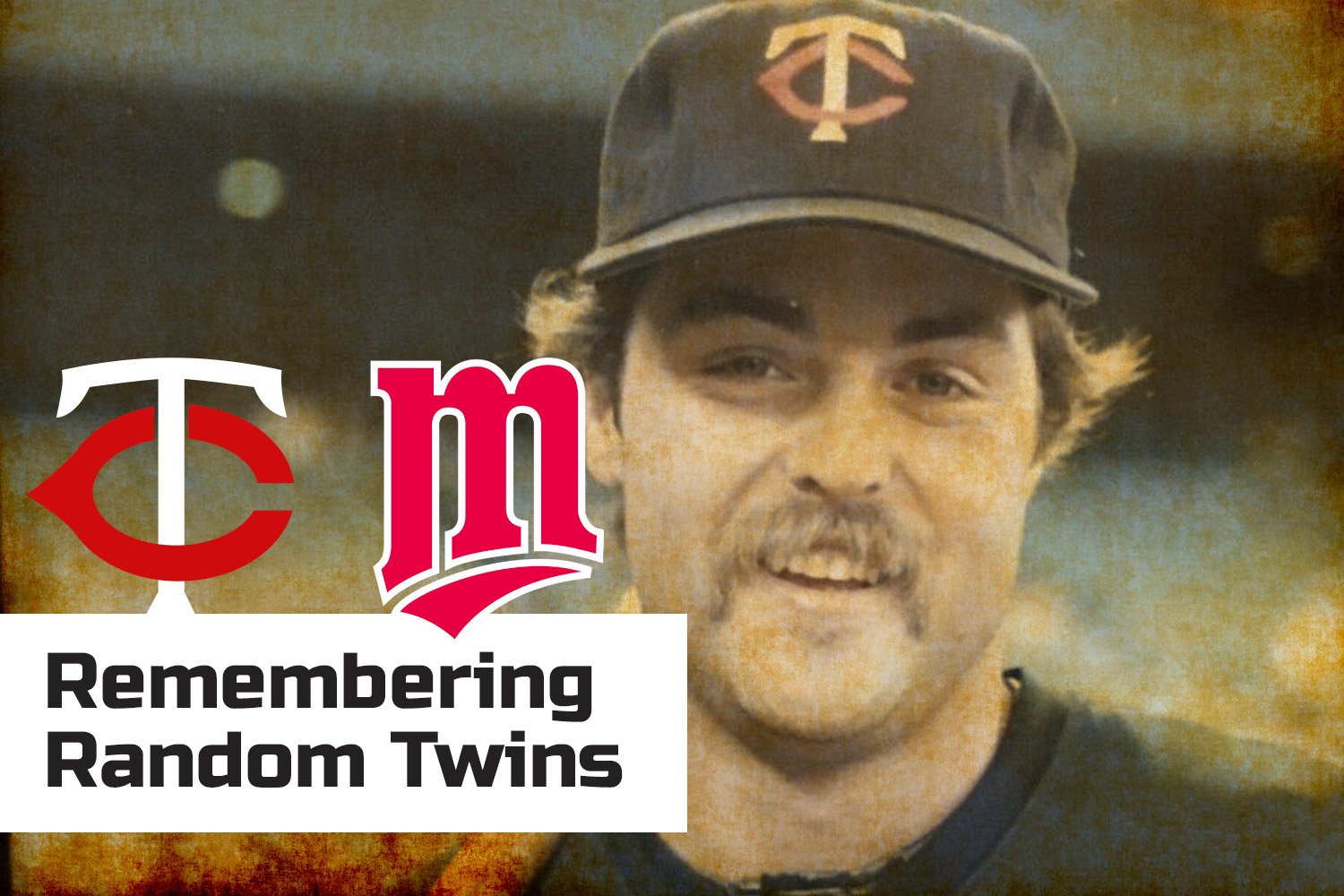 The Minnesota Twins bottomed out in the early 1980s. However, as most readers will know, the Twins were acquiring and cultivating a significant amount of young talent who would be instrumental in winning the 1987 World Series. In 1982, they had a promising group of six young players, five of whom would become All-Stars. The Bloomington native first baseman Kent Hrbek. The gritty third baseman, Gary Gaetti. Frank Viola is a future ace starting pitcher. A hometown catcher, Tim Laudner. A great team player, Randy Bush. Early in 1982, an outfielder from southern California rounded out that group after being added from outside the organization. Let’s reflect on fan-favorite Tom Brunansky. Thomas Andrew Brunansky was born August 20, 1960, in West Covina, California, a suburb east of Los Angeles in the San Gabriel Valley. As a 13-year-old, Tom led his Pony League team to a World Series championship. He was the youngest player on the team. The Angels organization drafted Brunansky out of high school in the first round of the 1978 Amateur Draft. Brunansky worked his way up through the Angels minor league system and made the big-league squad on Opening Day 1981 as a 20-year-old in his fourth season. He started in left field against the Seattle Mariners, batted seventh, and went 1-4 with a run scored and a stolen base. His hit was a sixth-inning single off Glenn Abbott. The Angels won 6-2. Amazingly, he hit his first two home runs two days later, finishing that game with four RBI. Unfortunately, he soon tore ligaments in his thumb and played no more major league games in 1981. By the start of the 1982 season, the Angels were loaded with proven outfielders. Fred Lynn (nine-time All-Star, 1975 MVP, 1975 Rookie of the Year) and Brian Downing (one-time All-Star, three-time top 20 MVP finisher) played for the Angels in 1981. Over that winter, they signed Reggie Jackson (Hall of Famer, 14-time All-Star, 1973 MVP, and a member of the 500 home run club) as a free agent, which made the young Brunansky expendable. On May 12, 1982, Brunansky was traded to Minnesota along with pitcher Mike Walters for veteran relief pitcher and former All-Star Doug Corbett and starting second baseman Rob Wilfong. This was when the Twins were trading any veterans of any value. Starting in 1981 and going through 1983, the Twins also traded away Ken Landreaux, Jerry Koosman, Roy Smalley, Butch Wynegar, Gary Ward, and many others. Many players on the 1982 Twins were upset with the Twins trading away proven major leaguers. Ron Davis, of all people, was outspoken about trading Corbett and Wilfong. He was quoted in the Minneapolis Star Tribune, “Trade the owner,” speaking of Calvin Griffith. Many in the Twins clubhouse thought the trade was a salary dump. However, the players sent to the Angels did not provide overwhelming value in California. The former All-Star reliever, Corbett, was not bad. He had a 111 ERA+ in five seasons with the Angels and a WAR of 1.6. Wilfong also played five seasons with the Angels but had a poor 65 OPS+ with the bat, but somehow accumulated a WAR of 2.3. I would say the Twins won that trade. In short order, Brunansky proved to be a valuable addition. Bruno played every game of the 1982 season after being acquired by the Twins. He finished with 20 home runs and hit .272/.377/.471. He would go on to hit at least 20 home runs in each of his six seasons with the Twins. His batting numbers during his Twins tenure were .250/.330/.452 with 163 home runs and 469 RBI. He was a very good middle-of-the-order hitter and a decent right fielder. Brunansky also proved to be super durable, playing at least 150 games each season in the Twins uniform. 1985 was one of Brunansky’s best seasons, and his first half was excellent. Before the All-Star break, he batted .265/.358/.508 for an OPS of .867. He had 19 home runs and 56 RBI before the break. He was selected to the American League’s All-Star team and had the honor of the play at home in the Metrodome. Brunansky participated in the first home run contest as part of the festivities. I actually attended that 1985 event. I remember that inside the park, they promoted the home run contest to be an AL vs NL battle. So, while Dave Parker hit the most home runs, the AL won the event behind Brunansky hitting his dingers as the last participant, like the bottom of the ninth, except I think they played two "innings" with each player batting twice and getting ten swings per round or “inning.” In the actual All-Star Game the next day, Brunansky went in to play right field in the seventh inning. He got up to bat once in the bottom of the eighth inning against future Twins closer Jeff Reardon of the Montreal Expos. Brunansky grounded out to shortstop. Each of the six players mentioned at the top of this story played on the 102-loss 1982 team, and each was with the Twins five years later and was instrumental when they won it all in 1987. Tom Brunansky contributed greatly to the upset over the Detroit Tigers in the American League Championship Series by hitting .412 with two home runs and nine RBI in the five-game series. Brunansky reportedly finished second to teammate Garry Gaetti for ALCS MVP. In Game One, he had two doubles and three RBIs in an 8-5 Twins win. His two-run double in the bottom of the eighth inning gave the Twins a little breathing room. In Game Two, Brunansky doubled in a run and scored a run at the bottom of the second to help the Twins get even after an early two-run deficit. He walked and scored in the fourth. The Twins won again 6-3. He had a two-run home run in the Game Three loss. Bruno had a couple walks in the Twins Game Four 5-3 victory. In the Game Five clincher in Detroit, the Twins jumped out to a 4-run lead in the second inning, during which Brunansky had a two-run double. He also had a home run in the three-run ninth inning when the Twins put the game away. Brunansky’s performance in the World Series victory over the St. Louis Cardinals was less remarkable, as he hit only .200 with two RBI. He drove in the lone run in the 3-1 Game Three loss. He then contributed to the big Game Six win, which tied the series. He had a single and scored in the bottom of the fifth, which tied the score after an early deficit and drove in a run with a groundout in the eighth inning. The Twins would win 11-5 to tie the series, then won Game Seven for the first championship in Minnesota Twins history. While the 1987 championship was fantastic, the Twins came down from that high with a poor start in 1988. After starting 4-10, Andy MacPhail did the unthinkable – he traded one of the core team members, one of that group of six from 1982. Tom Brunansky was traded to St. Louis for Tom Herr, which can only be described as a disaster. In Kent Hrbek and Dennis Brackin’s 2007 book Tales from the Minnesota Twins Dugout, Hrbek called the day they traded Brunansky “one of the most mystifying events I’ve ever been associated with…I still don’t get it.” The Twins not only got rid of an immensely popular, heart-and-soul player, but Herr apparently never wanted to be here. In a 2021 post on STLRedbirds.com, Tom Herr explained the trade and his reaction. “The shock of the trade bothered me more than anything…It really hit me out of the blue. I can remember getting on the plane to fly to Minneapolis and crying like a baby. It was hard to go through. Looking back on it, I didn’t handle it very well. I kept looking back instead of forward. I was looking at it more that the Cardinals didn’t want me than that the Twins wanted me. If I had put a more positive spin on it, I would have reacted better.” Brunansky played well for St. Louis, continuing his consistent 20 home runs and 80 RBI production. However, by 1990, the Cardinals felt they needed an elite relief pitcher, so Brunansky was traded for future Hall of Famer Lee Smith in a one-for-one deal that sent him to Boston, where he played most of three seasons and continued putting up similar numbers. He later played for Milwaukee in 1993 and part of 1994, but that time in Milwaukee was not up to his usual standards. The Brewers traded him back to the Red Sox in June of 1994 when he finished the season, which would be his last. That last half-season with the Red Sox was much better than his time in Milwaukee. I’m sure he was proud to finish out his career with a respectable OPS+ of 98 with Boston (with the Brewers, he had posted a low OPS+ of 58 in 1993, then a paltry 34 OPS+ in the first part of 1994). Brunansky’s career numbers were .245/.327/.434. His batting average was a little low for his era, but he walked a lot. His career OPS+ was 106, so a little better than average. He had 919 career RBI. He hit 271 home runs, including being in the top ten of his league three times, all with the Twins (28 in 1983, 32 in 1984, 32 in 1987). His 271 career home runs are 208th all-time. (Interestingly, two other teammates from that 1982 group finished even higher on that all-time home run list; Hrbek’s 293 home runs are 169th all-time, while Gaetti’s 360 are 87th. What a group!) After his playing career, Brunansky coached high school baseball in California before being hired by the Twins in 2010 as a minor league hitting coach. In 2013, he was hired by the big-league club and was the Twins hitting coach for four seasons. Following his dismissal from the Twins, he was an assistant coach at the University of St. Katherine in San Marcos, California. He was no longer listed as a coach on the team’s website for the 2024 season. I still see the 1987 team as a really entertaining group of guys that grew into a championship ball club. They all got along, loved having fun and playing the game, and had learned to play it well together. Apparently, that makes the Twins teams of that era a little unique. In Tales from the Minnesota Twins Dugout, Hrbek reported about the togetherness and goofiness of the Twins teams of the 1980s and specifically 1987. Hrbek said, “Brunansky assumed all teams had fun and enjoyed the game and each other the way we did. But when he was traded, he found out otherwise.” I would guess Hrbek and other Twins players had the same assumption before Brunansky’s experience. Tom Brunansky was loved by fans and teammates alike. I think it’s fair to say all Twins fans of the era wished MacPhail had kept the core pieces together a little longer. They were a fun group, and they were good at baseball—good enough to become World Series champions, thanks in part to Tom Brunansky.
- 10 comments
-
- 3
-
-

-
- tom brunansky
- kent hrbek
- (and 5 more)
-
Loved this article. Yes, Walter Johnson was awesome and deserves to be remembered. You're right, the Twins should claim them. There are others. Players who made the Hall of Fame. Goose Goslin. Joe Cronin. Sam Rice. There are many more. They are even listed on the Twins official website https://www.mlb.com/twins/history/baseball-hall-of-famers
- 16 replies
-
- 8
-
-
- walter johnson
- clark griffith
- (and 1 more)
-
I actually attended the 1985 event. It was a free, low-key afternoon event. My Dad heard about it on the radio on his drive to work. He called from work saying if I could find a friend to go with he would drive us there over his lunch hour. It was explained (I won't say advertised) as a practice session for the All-Stars. I would say the dome was less than half full. The home run contest was at the end and seemed like an afterthought. My recollection is that inside the park they promoted it as an AL vs NL battle. So while Dave Parker hit the most home runs, the AL won the event behind Brunansky hitting his dingers as the last participant, like the bottom of the 9th, except I think they played two "innings." Each batter getting up twice. A fun free event in 1985. Now I wouldn't want to pay the ticket price.
-
I will add them to the list of potential subjects. Thanks.
-
Catchers can be a little different. Yogi Berra’s quotes (“Nobody goes there anymore, it’s too crowded.”) Bob Uecker’s humor (“The way to catch a knuckleball is wait until it stops rolling, then pick it up.”) Rick Dempsey dressing up as a fat guy and sliding around the field in a rain delay (look up Rick Dempsey rain delay on YouTube). As many have said, you must be a little unique to be a catcher. Let’s take a look back at a member of the 1991 World Series championship team, number 0, Junior Ortiz (or was it Joe?). Adalberto “Junior” Oritz Colón was born October 24, 1959, in Humacao, Puerto Rico. The Pittsburgh Pirates signed Junior Ortiz as an undrafted free agent on January 19, 1977. He made his Major League debut on September 20, 1982, as a defensive replacement in the 8th inning. His first hit came ten days later, on September 30, a single against future Hall of Famer and former Twin Jim Kaat of the Cardinals. That 1982 Pittsburgh team also included future Twin and future teammate Brian Harper. Ortiz was traded to the New York Mets in early 1983 but was reacquired by the Pirates in the 1984 Rule 5 Draft. He played the next five seasons for the Pirates, batting .267/.320/.332 in a mostly backup capacity, first to future five-time All-Star and four-time Gold Glove winner Tony Peña, and later to another Gold Glover, Mike Lavalliere. (Peña and Lavalliere were traded for each other just prior to the 1987 season, with Andy Van Slyke also going to Pittsburgh with Lavalliere). The Minnesota Twins acquired Junior Ortiz in an April 1990 trade that sent Mike Pomeranz (yes, the former KARE news anchor) to Pittsburgh after Tim Laudner abruptly left the team near the end of spring training to ponder his future. Oritz was considered a good defensive catcher with a decent arm who could replace Laudner. Unproven Lenny Webster was sent to the minor leagues for depth. Greg Olson had left the Twins and signed as a free agent with the Braves and was not an option. And Orlando Mercado and his abysmally bad -16 OPS+ from 1989 was not an option. Ortiz was acquired as an experienced Major League backup to incumbent Brian Harper. Fortunately for the Twins, Junior Ortiz had the best season in 1990. He was even used as a Designated Hitter three times. “Best” is a term I use loosely. While his .335 batting average and .384 on-base percentage were good, his .388 slugging percentage was less than ideal. His OPS+ was above average at 112, but he hit zero home runs and had only 18 RBI. His 1991 season was not as good; he batted .209/.293/.261. His OPS+ was just 52. Once again, he had no home runs. His RBI total decreased to 11. Junior’s best game for the Twins probably came on June 18, 1990, against Texas. Ortiz had four hits and three RBI against Bobby Witt and the Rangers Bullpen in an 8-6 loss. This was during an astounding 18-game stretch for Ortiz when he hit .482/.517/.554. Ortiz was a positive bench player. The Minneapolis Star Tribune reported on February 23, 1991, that Ortiz saw the potential of the 1991 team, saying, “We’re just so much better than people think. I think we are going to win this thing. I mean the whole thing. You’ll see.” Wow. What a prognosticator! Junior Ortiz played in six games in the 1991 playoffs and World Series. He was the starting catcher in each game started by pitcher Scott Erickson. (At some point, he became Scott Erickson’s personal catcher. He caught 28 of Erickson’s 32 starts that season.) Ortiz got eight at-bats in the American League Championship Series and World Series with one hit, a single in the sixth inning of Game Three of the World Series, a loss. He had an RBI groundout in the Game Five blowout loss. He also came in three times as a defensive replacement. His defense was perfect in both series – no errors, no stolen bases allowed, no passed balls. A reader requested more stories about goofballs and characters who have played for the Minnesota Twins. Junior Ortiz was one of the first to come to mind, probably because of the Junior/Joe mystery. This occurred in mid-August 1991. He felt he was struggling more than normal with the bat (although the game logs don’t show a huge drop-off at that time), so Junior decided to become a new person, “Joe.” Below are snippets I found about that conundrum, all from the Minneapolis Star Tribune. On August 12, Ortiz shaved his beard and said he was changing his name from Junior to Joe because he was hitting so poorly (under .240). He said, “Plus, with no beard, I have better bat speed and can move better. I look better, too, huh?” More from the Star Tribune on August 14, Oritz said, “Since I changed my name to Joe, we’re 2-0. I miss Junior, even though he was a jerk. He was a nice guy with a bad attitude. I think Joe’s a nice guy and doesn’t stutter as much.” Junior was a stutterer. “The only thing I’m worried about is how Erickson will like Joe catching him.” August 15, Ortiz said, “It was something I had to do. It was up to me to get things turned around and ensure we win the pennant. This could do it.” While shaving his beard, Ortiz left the mustache because “Don’t worry about the mustache. I look so good now. If I do that, I’ll just look like any other ugly person.” August 16, "I was struggling, I was hitting so bad, I said, 'I'm going to change everything,'" Ortiz recounted. "So, I shaved my beard and changed my name to Joe. It didn't work. I was still terrible." On August 21, it was reported that Ortiz changed his name back and got two hits in his first game back as Junior. He also scored two runs, walked, and picked off a runner at first base. That was apparently the end of the Joe experiment. Whatever he did, the Twins, of course, did win the World Series that season. Was it Ortiz’s spring training prediction, his change to Joe, or was it something else? After playing for the Twins, Ortiz finished his career with two seasons in Cleveland and one in Texas. He was traded in December 1994, during the baseball strike, to the White Sox. The strike was not resolved when the 1995 season was scheduled to begin, and the owners agreed to try replacement players. Ortiz, whose time in baseball was winding down, agreed to be a replacement player. However, when the situation was resolved in early April, Ortiz was sent to the minor leagues and never returned to play Major League Baseball (Blackballed or just not good enough?). His career numbers were .256/.305/.305, five home runs, 186 runs batted in, and an OPS+ of 70. His career bWAR was actually negative, -0.3. Junior Ortiz was a complementary and fun ballplayer. He was not great but good enough to be on a championship team. Based on what I have read of him, he seems like an optimistic team player, a little goofy but someone who would be good in the clubhouse and a likable teammate. Baseball has always had a few goofballs, and I, for one, would like to see more players like Junior Ortiz. View full article
-
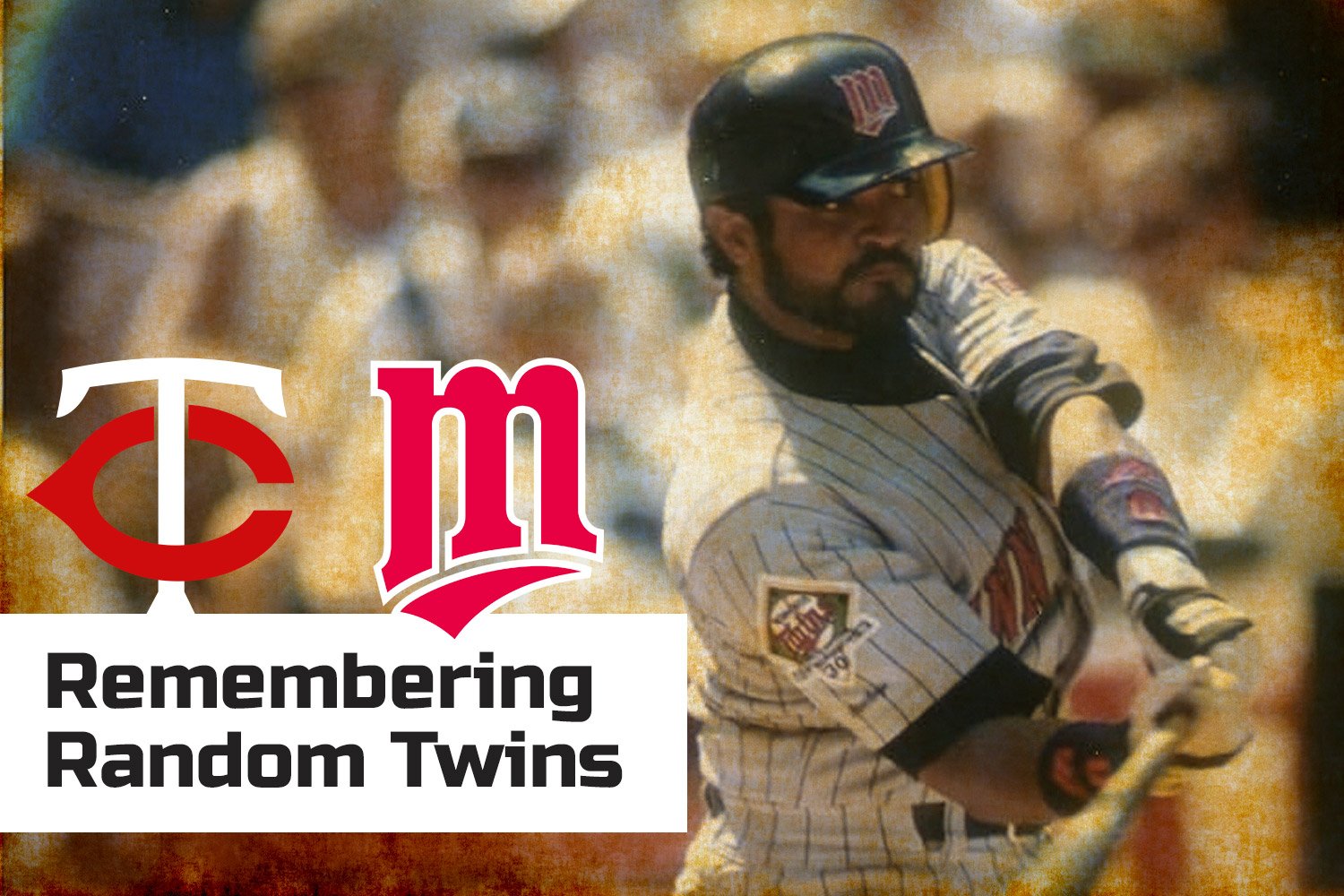 Adalberto “Junior” Oritz Colón was born October 24, 1959, in Humacao, Puerto Rico. The Pittsburgh Pirates signed Junior Ortiz as an undrafted free agent on January 19, 1977. He made his Major League debut on September 20, 1982, as a defensive replacement in the 8th inning. His first hit came ten days later, on September 30, a single against future Hall of Famer and former Twin Jim Kaat of the Cardinals. That 1982 Pittsburgh team also included future Twin and future teammate Brian Harper. Ortiz was traded to the New York Mets in early 1983 but was reacquired by the Pirates in the 1984 Rule 5 Draft. He played the next five seasons for the Pirates, batting .267/.320/.332 in a mostly backup capacity, first to future five-time All-Star and four-time Gold Glove winner Tony Peña, and later to another Gold Glover, Mike Lavalliere. (Peña and Lavalliere were traded for each other just prior to the 1987 season, with Andy Van Slyke also going to Pittsburgh with Lavalliere). The Minnesota Twins acquired Junior Ortiz in an April 1990 trade that sent Mike Pomeranz (yes, the former KARE news anchor) to Pittsburgh after Tim Laudner abruptly left the team near the end of spring training to ponder his future. Oritz was considered a good defensive catcher with a decent arm who could replace Laudner. Unproven Lenny Webster was sent to the minor leagues for depth. Greg Olson had left the Twins and signed as a free agent with the Braves and was not an option. And Orlando Mercado and his abysmally bad -16 OPS+ from 1989 was not an option. Ortiz was acquired as an experienced Major League backup to incumbent Brian Harper. Fortunately for the Twins, Junior Ortiz had the best season in 1990. He was even used as a Designated Hitter three times. “Best” is a term I use loosely. While his .335 batting average and .384 on-base percentage were good, his .388 slugging percentage was less than ideal. His OPS+ was above average at 112, but he hit zero home runs and had only 18 RBI. His 1991 season was not as good; he batted .209/.293/.261. His OPS+ was just 52. Once again, he had no home runs. His RBI total decreased to 11. Junior’s best game for the Twins probably came on June 18, 1990, against Texas. Ortiz had four hits and three RBI against Bobby Witt and the Rangers Bullpen in an 8-6 loss. This was during an astounding 18-game stretch for Ortiz when he hit .482/.517/.554. Ortiz was a positive bench player. The Minneapolis Star Tribune reported on February 23, 1991, that Ortiz saw the potential of the 1991 team, saying, “We’re just so much better than people think. I think we are going to win this thing. I mean the whole thing. You’ll see.” Wow. What a prognosticator! Junior Ortiz played in six games in the 1991 playoffs and World Series. He was the starting catcher in each game started by pitcher Scott Erickson. (At some point, he became Scott Erickson’s personal catcher. He caught 28 of Erickson’s 32 starts that season.) Ortiz got eight at-bats in the American League Championship Series and World Series with one hit, a single in the sixth inning of Game Three of the World Series, a loss. He had an RBI groundout in the Game Five blowout loss. He also came in three times as a defensive replacement. His defense was perfect in both series – no errors, no stolen bases allowed, no passed balls. A reader requested more stories about goofballs and characters who have played for the Minnesota Twins. Junior Ortiz was one of the first to come to mind, probably because of the Junior/Joe mystery. This occurred in mid-August 1991. He felt he was struggling more than normal with the bat (although the game logs don’t show a huge drop-off at that time), so Junior decided to become a new person, “Joe.” Below are snippets I found about that conundrum, all from the Minneapolis Star Tribune. On August 12, Ortiz shaved his beard and said he was changing his name from Junior to Joe because he was hitting so poorly (under .240). He said, “Plus, with no beard, I have better bat speed and can move better. I look better, too, huh?” More from the Star Tribune on August 14, Oritz said, “Since I changed my name to Joe, we’re 2-0. I miss Junior, even though he was a jerk. He was a nice guy with a bad attitude. I think Joe’s a nice guy and doesn’t stutter as much.” Junior was a stutterer. “The only thing I’m worried about is how Erickson will like Joe catching him.” August 15, Ortiz said, “It was something I had to do. It was up to me to get things turned around and ensure we win the pennant. This could do it.” While shaving his beard, Ortiz left the mustache because “Don’t worry about the mustache. I look so good now. If I do that, I’ll just look like any other ugly person.” August 16, "I was struggling, I was hitting so bad, I said, 'I'm going to change everything,'" Ortiz recounted. "So, I shaved my beard and changed my name to Joe. It didn't work. I was still terrible." On August 21, it was reported that Ortiz changed his name back and got two hits in his first game back as Junior. He also scored two runs, walked, and picked off a runner at first base. That was apparently the end of the Joe experiment. Whatever he did, the Twins, of course, did win the World Series that season. Was it Ortiz’s spring training prediction, his change to Joe, or was it something else? After playing for the Twins, Ortiz finished his career with two seasons in Cleveland and one in Texas. He was traded in December 1994, during the baseball strike, to the White Sox. The strike was not resolved when the 1995 season was scheduled to begin, and the owners agreed to try replacement players. Ortiz, whose time in baseball was winding down, agreed to be a replacement player. However, when the situation was resolved in early April, Ortiz was sent to the minor leagues and never returned to play Major League Baseball (Blackballed or just not good enough?). His career numbers were .256/.305/.305, five home runs, 186 runs batted in, and an OPS+ of 70. His career bWAR was actually negative, -0.3. Junior Ortiz was a complementary and fun ballplayer. He was not great but good enough to be on a championship team. Based on what I have read of him, he seems like an optimistic team player, a little goofy but someone who would be good in the clubhouse and a likable teammate. Baseball has always had a few goofballs, and I, for one, would like to see more players like Junior Ortiz.
 -
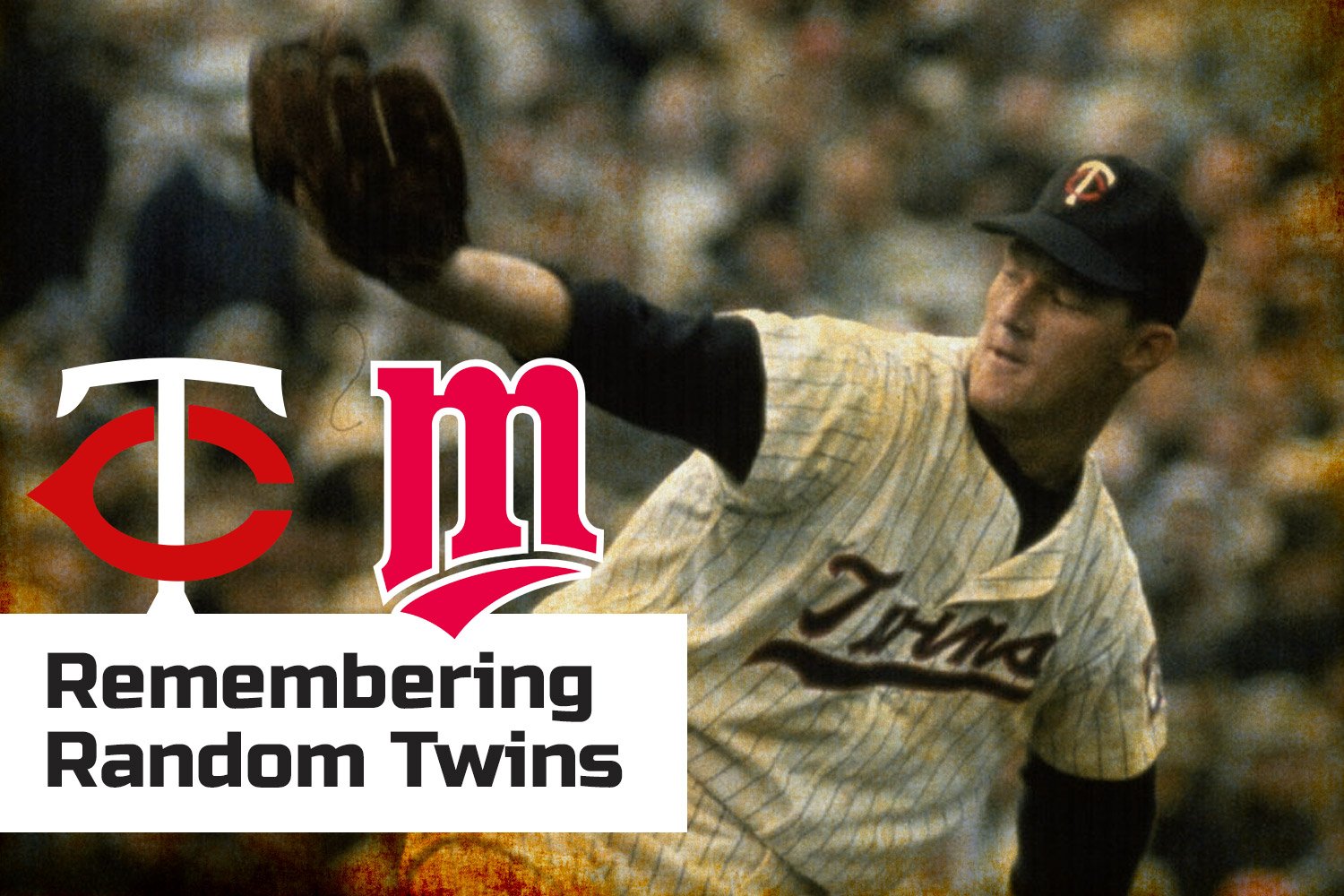 This entry into this series of articles, Remembering Random Twins, requires an explanation. Jim Kaat is the subject of this piece, but not how you would think. Kaat is an all-time great Twin, a Hall of Famer, and one of the best players to wear the Twins uniform. Kaat pitched for six teams in his 25-year career, won 283 games, was a three-time All-Star, and a 16-time Gold Glove winner. He helped the 1982 St. Louis Cardinals win the World Series as a 43-year-old relief pitcher. Kaat’s 190 wins are the most in Twins history and second most in Washington/Minnesota franchise history after only Walter Johnson. After his playing career, Kaat served briefly as pitching coach for player/manager Pete Rose and the Cincinnati Reds in 1984 and 1985. But Kaat’s true post-career calling was as a baseball broadcaster. He was a brilliant analyst for the Twins, Yankees, and national baseball outlets such as CBS, NBC, ESPN, and MLB Network. He retired from broadcasting in 2022. Despite all that, I want to talk about his expertise on the golf course. Jim Kaat was born November 7, 1938, in Zeeland, Michigan, a community settled by Dutch immigrants in 1847, driven by a desire for religious freedom. (As he and fellow Dutchman, fellow Twin, and fellow Hall of Famer Bert Blyleven are known to say, “If you ain’t Dutch, you ain’t much.”). But, surprisingly, for this article, golf was not a part of Kaat’s upbringing. He didn’t start golfing until the early 1960s – Kaat’s early 30s. Another Minnesota professional athlete, Vikings placekicker Fred Cox, introduced him to the sport. Because left-handed clubs were hard to come by, Kaat began playing golf right-handed. It wasn’t until 1994 that he started playing left-handed. Playing left-handed was a suggestion by a playing companion of Kaat’s while Kaat struggled with his short game, specifically chipping. He quickly became a better golfer, hitting from the left side as he could hit the ball further. In December of 2013, Jim Kaat was 75 years old. Golf Digest reported that on December 7, 2013, Kaat "shot his age" (referring to an 18-hole score less than or equal to the golfer's age) at McArthur Golf Club in Hobe Sound, Florida, while playing right-handed. He had previously accomplished that rare feat three times while playing left-handed. To shoot under 75 for any golfer is quite an achievement. And to have done so at his age, plus three other times left-handed (at ages 70, 74, and 75), is simply unfathomable. Golf Digest speculated that he was the first golfer to have “shot his age” from both sides. At the time of the Golf Digest article, Kaat’s golf handicap was six as a left-hander and ten or so from the right side. Keep in mind he was 75 at this time. Globalgolfpost.com reported in 2022 that Kaat has made three holes-in-one in his life. How can one guy have so much athletic ability? It’s a little unfair, don’t you think? Thank you to Golf Digest for most of the golf content in this article. I encourage you to click the link and read their full story about Kaat’s golf abilities and accomplishments.
 -
We all know about Jim Kaat's accomplishments on the diamond, but are you aware he's also an outstanding, ambidextrous golfer? This entry into this series of articles, Remembering Random Twins, requires an explanation. Jim Kaat is the subject of this piece, but not how you would think. Kaat is an all-time great Twin, a Hall of Famer, and one of the best players to wear the Twins uniform. Kaat pitched for six teams in his 25-year career, won 283 games, was a three-time All-Star, and a 16-time Gold Glove winner. He helped the 1982 St. Louis Cardinals win the World Series as a 43-year-old relief pitcher. Kaat’s 190 wins are the most in Twins history and second most in Washington/Minnesota franchise history after only Walter Johnson. After his playing career, Kaat served briefly as pitching coach for player/manager Pete Rose and the Cincinnati Reds in 1984 and 1985. But Kaat’s true post-career calling was as a baseball broadcaster. He was a brilliant analyst for the Twins, Yankees, and national baseball outlets such as CBS, NBC, ESPN, and MLB Network. He retired from broadcasting in 2022. Despite all that, I want to talk about his expertise on the golf course. Jim Kaat was born November 7, 1938, in Zeeland, Michigan, a community settled by Dutch immigrants in 1847, driven by a desire for religious freedom. (As he and fellow Dutchman, fellow Twin, and fellow Hall of Famer Bert Blyleven are known to say, “If you ain’t Dutch, you ain’t much.”). But, surprisingly, for this article, golf was not a part of Kaat’s upbringing. He didn’t start golfing until the early 1960s – Kaat’s early 30s. Another Minnesota professional athlete, Vikings placekicker Fred Cox, introduced him to the sport. Because left-handed clubs were hard to come by, Kaat began playing golf right-handed. It wasn’t until 1994 that he started playing left-handed. Playing left-handed was a suggestion by a playing companion of Kaat’s while Kaat struggled with his short game, specifically chipping. He quickly became a better golfer, hitting from the left side as he could hit the ball further. In December of 2013, Jim Kaat was 75 years old. Golf Digest reported that on December 7, 2013, Kaat "shot his age" (referring to an 18-hole score less than or equal to the golfer's age) at McArthur Golf Club in Hobe Sound, Florida, while playing right-handed. He had previously accomplished that rare feat three times while playing left-handed. To shoot under 75 for any golfer is quite an achievement. And to have done so at his age, plus three other times left-handed (at ages 70, 74, and 75), is simply unfathomable. Golf Digest speculated that he was the first golfer to have “shot his age” from both sides. At the time of the Golf Digest article, Kaat’s golf handicap was six as a left-hander and ten or so from the right side. Keep in mind he was 75 at this time. Globalgolfpost.com reported in 2022 that Kaat has made three holes-in-one in his life. How can one guy have so much athletic ability? It’s a little unfair, don’t you think? Thank you to Golf Digest for most of the golf content in this article. I encourage you to click the link and read their full story about Kaat’s golf abilities and accomplishments. View full article
-
Billy Martin, For Good And Bad, Was A Legendary Baseball Personality
Al from SoDak posted an article in History
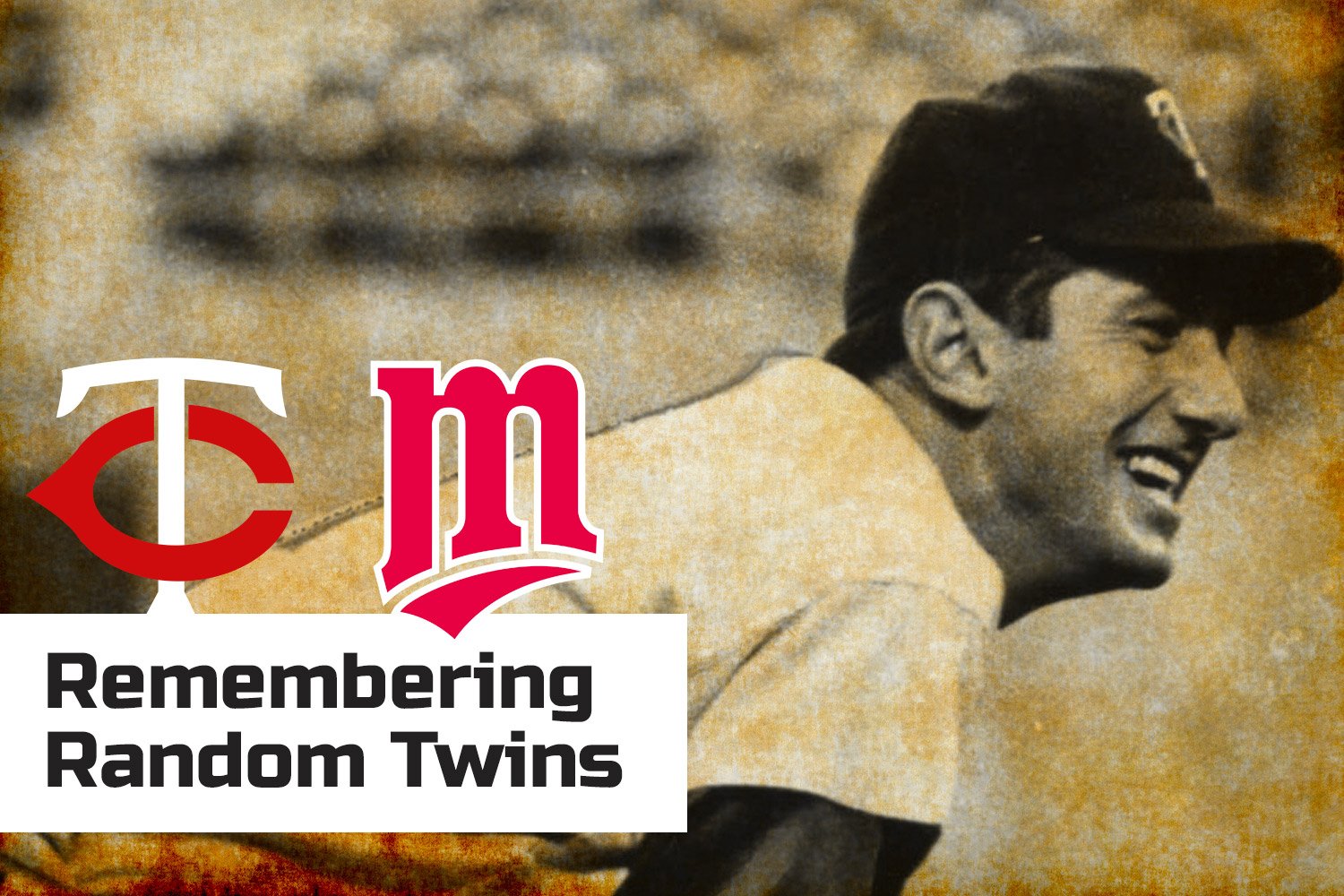 Billy Martin played for the New York Yankees in the 1950s and was part of five championship teams. From 1957 to 1961, he bounced from Kansas City Athletics to the Detroit Tigers, the Cleveland Indians, the Cincinnati Reds, the Milwaukee Braves, and then to Minnesota. Martin had an eight-year stay in Minnesota in the 1960s, first as a player in 1961 and then later as a scout, coach, and manager. After guiding the Twins, he managed the Tigers, Rangers, Yankees, and A’s at different points. He managed the Yankees five separate times. Alfred Manuel “Billy” Martin was born May 16, 1928, in Berkeley, California. His father abandoned the family when Billy was eight months old. His mother taught him to stick up for himself. Billy also spent time in amateur boxing in the San Francisco area. His mother’s feistiness and the youth boxing background stuck with him throughout his entire life, contributing to his combative nature. After high school, Martin played minor league ball on the West Coast, eventually working his way to the Oakland Oaks of the Pacific Coast League, where Hall of Famer Casey Stengel managed him. Martin played infield and was most often utilized as a second baseman, which was the case throughout his playing career. He was a good defensive infielder and could hit a little. After the 1949 season, Martin was sold to the New York Yankees (Stengel had been hired as manager of the Yankees in 1949). The Yankees of the 50s were a powerhouse with Hall of Famer players Yogi Berra, Mickey Mantle, and Whitey Ford. As stated above, Billy was part of five World Series-winning teams (1950, 1951, 1952, 1953, and 1956). He missed the 1954 season while serving in the military—Martin was an All-Star in 1953. After being traded from the Yankees and bouncing around with five other teams, Martin landed with the Twins after a June 1961 trade with the Milwaukee Braves. The Braves received infielder Billy Consolo. Martin finished the 1961 season with the Twins hitting .245/.275/.341 in 108 games. He had six home runs and 36 RBI. That was the end of Billy’s playing career, as the Twins released Martin just before the 1962 season. His career numbers were .257/.300/.369. He hit 64 home runs, had 333 RBI, and an OPS+ of 81. The Twins hired him as a scout, which he did through 1964, but that was not the proper fit for the feisty former player; he was meant to be a manager. He needed to be on the field. He served as third base coach from 1965 to May of 1968 when the Twins assigned him to manage their Triple-A ball club in Denver. In 1969, after the Twins had underperformed since the 1965 AL Championship season, the Twins dismissed Cal Ermer and hired Billy Martin as the team’s fourth manager. In addition to his feisty and fiery leadership, Martin was extremely aggressive as a manager and wanted his players to play that way. He emphasized the running game, taking the extra base, and stealing. He famously encouraged young Rod Carew to steal and taught Carew the art of stealing home. It was so successful that Carew stole home seven times in 1969, tying a Major League record set by Pete Reiser. That record still stands. Miscbasbeball.wordpress.com has a great excerpt from Rod Carew’s autobiography, Carew, about stealing home, some of which I used below. Check the miscbaseball link for the full story. Baseball Almanac lists Carew’s 17 career steals of home as 14th most all-time. Almost all the players ahead of Carew on this list played the vast majority of their careers during the Deadball era (pre-1920), with the limited exceptions of Frankie Frisch and Jackie Robinson. Martin’s aggressiveness led to the Twins stealing 115 bases in 1969, their most since moving from Washington. However, the 1976 squad passed that number and has since been surpassed six more times. Billy Martin’s 1969 team had an excellent record, going 97-65 and finishing first in the newly formed American League West division. They went to the first American League Championship Series but were swept by the Baltimore Orioles. Despite the win-loss record and Division Championship, 1969 was tumultuous. I’m sure longtime fans know of Martin’s battles with players and management, which I won’t rehash here. Those battles, and probably just Martin’s abrasive attitude in general, led to his termination just after the playoff loss to Baltimore. After his Twins career, Martin was hired by Detroit in 1971. He managed three seasons and had a record of 248-203. The Tigers fired Martin late in the 1973 season after disagreements between Martin and the general manager. After Martin’s dismissal in Detroit, the owner of the Texas Rangers quickly jumped at the chance to hire him. Martin managed parts of three seasons in Texas starting in late 1973. He had a 137-141 record. By mid-1975, Texas had a new owner, some higher-priced free agents, and an underwhelming record. Martin was fired. On August 1, 1975, George Steinbrenner hired Billy Martin, starting a chaotic relationship. The Yankees lost the World Series in 1976 but won it all in 1977 for Martin’s one and only managerial championship. He was forced to resign in July of 1978 but was rehired in 1979. He was fired at the end of the 1979 season as the Yankees missed the playoffs. In 1980, Billy Martin returned home to lead the Oakland A’s. His aggressiveness, combined with Rickey Henderson’s ability, resulted in Henderson stealing bases at a ridiculous rate. Henderson broke the single-season stolen base mark with 130 steals in 1982. After some success in 1980 and 1981, Oakland played poorly in 1982, and Martin was fired. Billy returned to the Yankees in 1983 and served as manager again in 1985 and 1987. Steinbrenner fired Billy each of those three times. After his last dismissal, Martin stayed with the Yankees as a special consultant. Billy Martin died on Christmas Day 1989 in an automobile crash. Throughout his life, Billy Martin battled with alcohol. Alcohol was reported to be a factor in the accident, although it’s unclear whether Martin or his friend was the driver. Billy Martin was one of a kind. He was a fiery leader who quickly brought out the best in teams and players, but at the same time, his presence and influence seemed to burn out quickly as others tired of his abrasive personality. SABR summarized, “During his tenure as a major-league manager, Martin’s off-field exploits were legendary; he got into fights with team officials, bar patrons, a cab driver, a marshmallow salesman, various fans, and two of his pitchers.” Billy Martin’s chapter in Minnesota during the 1960s was like everywhere else – successful but short-lived and left fans wondering what could have been.
- 6 comments
-
- 3
-
-
- billy martin
- remembering random twins
- (and 1 more)
-
Billy Martin had a long career in baseball as a player, scout, coach, and manager. He was loud, aggressive, irritable, and passionate about baseball. Billy Martin played for the New York Yankees in the 1950s and was part of five championship teams. From 1957 to 1961, he bounced from Kansas City Athletics to the Detroit Tigers, the Cleveland Indians, the Cincinnati Reds, the Milwaukee Braves, and then to Minnesota. Martin had an eight-year stay in Minnesota in the 1960s, first as a player in 1961 and then later as a scout, coach, and manager. After guiding the Twins, he managed the Tigers, Rangers, Yankees, and A’s at different points. He managed the Yankees five separate times. Alfred Manuel “Billy” Martin was born May 16, 1928, in Berkeley, California. His father abandoned the family when Billy was eight months old. His mother taught him to stick up for himself. Billy also spent time in amateur boxing in the San Francisco area. His mother’s feistiness and the youth boxing background stuck with him throughout his entire life, contributing to his combative nature. After high school, Martin played minor league ball on the West Coast, eventually working his way to the Oakland Oaks of the Pacific Coast League, where Hall of Famer Casey Stengel managed him. Martin played infield and was most often utilized as a second baseman, which was the case throughout his playing career. He was a good defensive infielder and could hit a little. After the 1949 season, Martin was sold to the New York Yankees (Stengel had been hired as manager of the Yankees in 1949). The Yankees of the 50s were a powerhouse with Hall of Famer players Yogi Berra, Mickey Mantle, and Whitey Ford. As stated above, Billy was part of five World Series-winning teams (1950, 1951, 1952, 1953, and 1956). He missed the 1954 season while serving in the military—Martin was an All-Star in 1953. After being traded from the Yankees and bouncing around with five other teams, Martin landed with the Twins after a June 1961 trade with the Milwaukee Braves. The Braves received infielder Billy Consolo. Martin finished the 1961 season with the Twins hitting .245/.275/.341 in 108 games. He had six home runs and 36 RBI. That was the end of Billy’s playing career, as the Twins released Martin just before the 1962 season. His career numbers were .257/.300/.369. He hit 64 home runs, had 333 RBI, and an OPS+ of 81. The Twins hired him as a scout, which he did through 1964, but that was not the proper fit for the feisty former player; he was meant to be a manager. He needed to be on the field. He served as third base coach from 1965 to May of 1968 when the Twins assigned him to manage their Triple-A ball club in Denver. In 1969, after the Twins had underperformed since the 1965 AL Championship season, the Twins dismissed Cal Ermer and hired Billy Martin as the team’s fourth manager. In addition to his feisty and fiery leadership, Martin was extremely aggressive as a manager and wanted his players to play that way. He emphasized the running game, taking the extra base, and stealing. He famously encouraged young Rod Carew to steal and taught Carew the art of stealing home. It was so successful that Carew stole home seven times in 1969, tying a Major League record set by Pete Reiser. That record still stands. Miscbasbeball.wordpress.com has a great excerpt from Rod Carew’s autobiography, Carew, about stealing home, some of which I used below. Check the miscbaseball link for the full story. Baseball Almanac lists Carew’s 17 career steals of home as 14th most all-time. Almost all the players ahead of Carew on this list played the vast majority of their careers during the Deadball era (pre-1920), with the limited exceptions of Frankie Frisch and Jackie Robinson. Martin’s aggressiveness led to the Twins stealing 115 bases in 1969, their most since moving from Washington. However, the 1976 squad passed that number and has since been surpassed six more times. Billy Martin’s 1969 team had an excellent record, going 97-65 and finishing first in the newly formed American League West division. They went to the first American League Championship Series but were swept by the Baltimore Orioles. Despite the win-loss record and Division Championship, 1969 was tumultuous. I’m sure longtime fans know of Martin’s battles with players and management, which I won’t rehash here. Those battles, and probably just Martin’s abrasive attitude in general, led to his termination just after the playoff loss to Baltimore. After his Twins career, Martin was hired by Detroit in 1971. He managed three seasons and had a record of 248-203. The Tigers fired Martin late in the 1973 season after disagreements between Martin and the general manager. After Martin’s dismissal in Detroit, the owner of the Texas Rangers quickly jumped at the chance to hire him. Martin managed parts of three seasons in Texas starting in late 1973. He had a 137-141 record. By mid-1975, Texas had a new owner, some higher-priced free agents, and an underwhelming record. Martin was fired. On August 1, 1975, George Steinbrenner hired Billy Martin, starting a chaotic relationship. The Yankees lost the World Series in 1976 but won it all in 1977 for Martin’s one and only managerial championship. He was forced to resign in July of 1978 but was rehired in 1979. He was fired at the end of the 1979 season as the Yankees missed the playoffs. In 1980, Billy Martin returned home to lead the Oakland A’s. His aggressiveness, combined with Rickey Henderson’s ability, resulted in Henderson stealing bases at a ridiculous rate. Henderson broke the single-season stolen base mark with 130 steals in 1982. After some success in 1980 and 1981, Oakland played poorly in 1982, and Martin was fired. Billy returned to the Yankees in 1983 and served as manager again in 1985 and 1987. Steinbrenner fired Billy each of those three times. After his last dismissal, Martin stayed with the Yankees as a special consultant. Billy Martin died on Christmas Day 1989 in an automobile crash. Throughout his life, Billy Martin battled with alcohol. Alcohol was reported to be a factor in the accident, although it’s unclear whether Martin or his friend was the driver. Billy Martin was one of a kind. He was a fiery leader who quickly brought out the best in teams and players, but at the same time, his presence and influence seemed to burn out quickly as others tired of his abrasive personality. SABR summarized, “During his tenure as a major-league manager, Martin’s off-field exploits were legendary; he got into fights with team officials, bar patrons, a cab driver, a marshmallow salesman, various fans, and two of his pitchers.” Billy Martin’s chapter in Minnesota during the 1960s was like everywhere else – successful but short-lived and left fans wondering what could have been. View full article
- 6 replies
-
- 1
-
-
- billy martin
- remembering random twins
- (and 1 more)
-
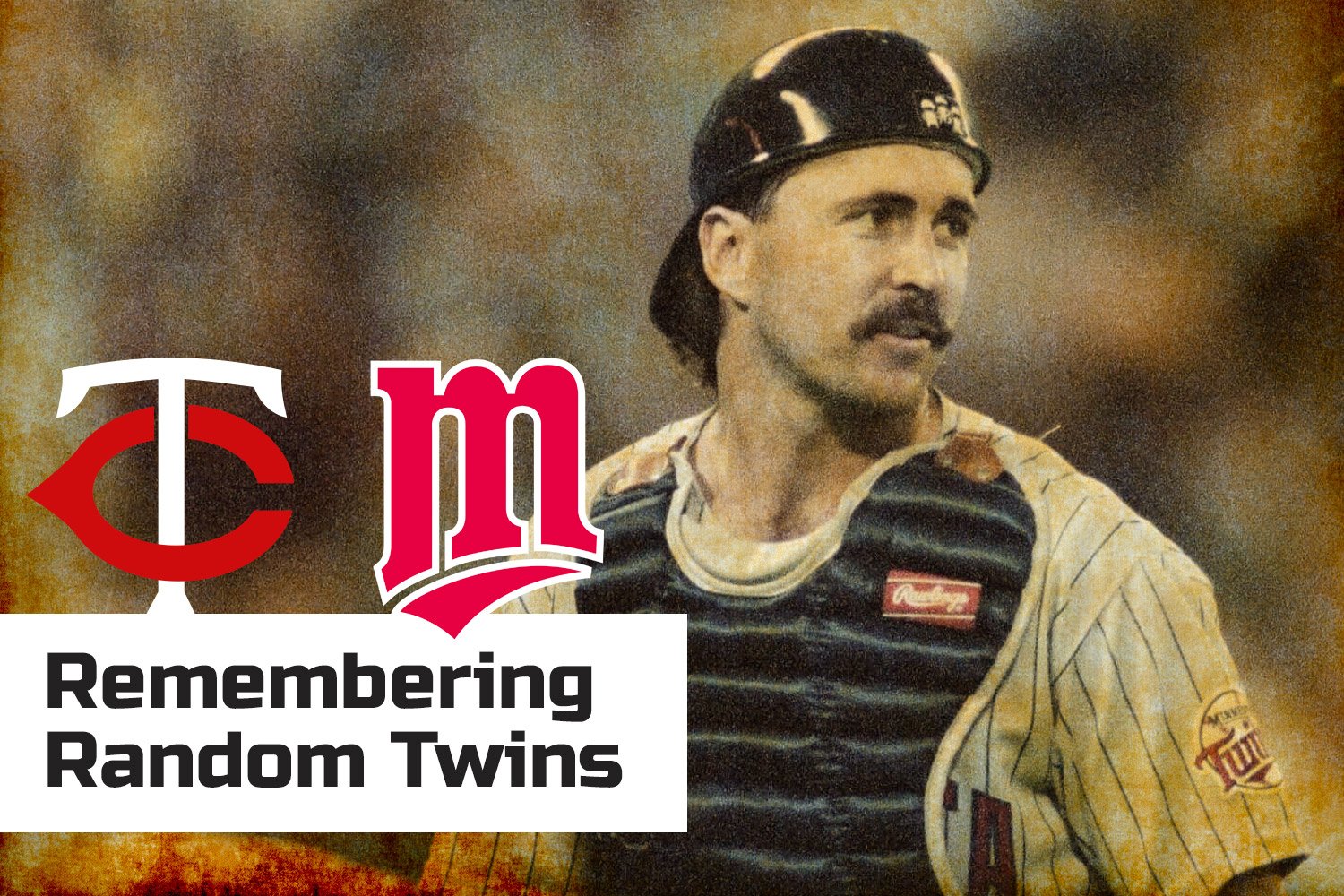 Some will dispute this, but I don’t hear enough people talking about Brian Harper. I agree with mikelink45’s blog about the best catchers in Twins history. It’s an excellent summary and list of the best Twins catchers. Earl Battey was with the early Twins and a five-time All-Star. Butch Wynegar placed second in the 1976 Rookie of the Year voting behind the phenomenon Mark “the Bird” Fidrych and was an All-Star his first two years. AJ Pierzynski made one All-Star team with the Twins and was part of their resurgence in the early 2000s. Of course, there’s Mauer. I also feel one-time All-Star Tim Laudner is remembered and admired more than Harper, probably because he played for the Twins longer, was the starter on the 1987 World Series team, and is a current member of their pre-and post-game shows on Bally Sports North, which keeps him fresh in Twins fans’ minds. I don’t want to slight any of those, but Brian Harper was a valuable player. The California Angels drafted Brian Harper in the fourth round of the 1977 amateur draft. In those days, the Angels invested heavily in big-dollar free agents. Despite Harper playing well in the minor leagues, he never received an extensive opportunity with the Angels. For instance, in 1981, he batted .350/.389/.618 for Triple-A Salt Lake City with 28 home runs and 122 runs batted in, but he only played in four games with the Angels. During that season, he played catcher, first base, and outfield. In 1981, the Angels had future Hall of Famer and former MVP and former Twin Rod Carew at first base, former MVP Fred Lynn, former MVP and future Twin Don Baylor, and former Twin Dan Ford in the outfield. In 1982, they signed four-time All-Star and seven-time Gold Glove catcher Bob Boone and future Hall of Famer outfielder Reggie Jackson. With a surplus at Harper’s positions, the Angels traded him to Pittsburgh in 1981, where he was mostly a pinch hitter and outfielder (he played two games as a catcher). He was later traded to St. Louis in 1984 when he received almost no opportunity. Detroit and Oakland subsequently signed him in relatively minor moves before signing with the Twins as a free agent on January 4, 1988. Harper did not make the opening day squad for the Twins in 1998. He started the season at Triple-A and was phenomenal for two months. He slashed .353/.403/.653 with 13 home runs and 42 batted in. The sizzling-hot Harper was called to the Twins on May 29, played 60 games, mostly at catcher, and batted .295/.344/.428. By 1989, he was the main catcher and continued in that role until 1993. During his six seasons in Minnesota, he hit .306/.342/.431 with 48 home runs and 346 runs batted in. His OPS+ was 110. During Harper’s tenure, the Twins went from worst to first and made it to the 1991 World Series. Brian Harper was excellent in that series. His statistics showed he hit .381/.435/.476 with two doubles. His defense was better than he was given credit for. He had a great play in Game Four, receiving a throw, blocking the plate, absorbing a freight train, and tagging out Lonnie Smith. Then, in the top of the 8th inning in the deciding game seven, Harper teamed up with first baseman Kent Hrbek when the bases were loaded with only one out to execute an outstanding and critical 3-2-3 double play. Ultimately, Harper and Smith acknowledged the hard-fought series, some say the best World Series ever, with a handshake before game seven. In his career, Brian Harper was nearly impossible to strike out. In 1990 and 1992, he struck less frequently than any other player in the American League and placed second on that list in 1993. His career at-bat per strikeout rate is currently 213th best in MLB history. 213th may not seem great, but more than 23,000 players have played in the major leagues, so he’s in the top one percent in strikeout rate of all players who ever played. Harper’s 16.76 at-bats per strikeout is almost exactly equal to the absolute immortal Ty Cobb (16.86). For context, a notable contemporary with a lower strikeout rate, but not by much, was Tony Gwynn (ranked 92nd), with one strikeout every 21.40 at-bats. It’s an interesting list to look at, and I encourage you to do so. Reviewing the list of those batters better than Harper in the strikeout frequency, almost all the players preceded Harper by 50 years or more. It was a different game then. For context, Harper’s at-bat per strikeout rate was much better than the Twins who led the AL in batting average Tony Oliva (9.77 at bats per strikeout), Rod Carew (9.06 at bats per strikeout), Kirby Puckett (not in the top 1,000), and Joe Mauer (also not in the top 1,000). Brian Harper also did not draw many walks. Somehow, he walked less often than he struck out, finishing his career with 133 walks (compared to 188 strikeouts) in 3386 plate appearances. We don’t see those kinds of numbers today. I wonder if he would have had a place in today’s game. My specific memory of Harper is that he would quickly get two strikes against him, but he then would fight off foul balls, take pitches to get deep into the count, and frequently end up with a hit. A decade later, AJ Pierzynski (904th on at bat per strikeout list) was similar to Harper. Likewise, Pierzynski rarely walked – only 308 times in his 19-year career. Brian Harper left the Twins after the 1993 season, signing as a free agent with Milwaukee, but he never achieved the same success anywhere else. He only played 64 games with the Brewers in the strike-shortened 1994 season with an 81 OPS+, then two games with Oakland in 1995. And that was it; his playing career was over. It’s fair to say Brian Harper is a player whose only good seasons were with the Minnesota Twins. After his playing career, Harper held various coaching and management positions for the Angels, Giants, Cubs, and Tigers. I always loved watching Brian Harper. As a batter, the way he battled and fouled off pitches until he got what he wanted was impressive. He was always known as a hitter, but I contend his defense was not horrendous. In 11 seasons as a catcher, his caught-stealing percentage was 31 percent when the league average was 34 percent. Harper came to the Twins in a brief down period but helped them rebound quickly and win the 1991 World Series. For that, he will always have a place in Twins history.
 -
Joe Mauer’s recent induction into the National Baseball Hall of Fame made me think about some of the better catchers in Twins history. One of their better catchers doesn’t get the recognition he deserves. Some will dispute this, but I don’t hear enough people talking about Brian Harper. I agree with mikelink45’s blog about the best catchers in Twins history. It’s an excellent summary and list of the best Twins catchers. Earl Battey was with the early Twins and a five-time All-Star. Butch Wynegar placed second in the 1976 Rookie of the Year voting behind the phenomenon Mark “the Bird” Fidrych and was an All-Star his first two years. AJ Pierzynski made one All-Star team with the Twins and was part of their resurgence in the early 2000s. Of course, there’s Mauer. I also feel one-time All-Star Tim Laudner is remembered and admired more than Harper, probably because he played for the Twins longer, was the starter on the 1987 World Series team, and is a current member of their pre-and post-game shows on Bally Sports North, which keeps him fresh in Twins fans’ minds. I don’t want to slight any of those, but Brian Harper was a valuable player. The California Angels drafted Brian Harper in the fourth round of the 1977 amateur draft. In those days, the Angels invested heavily in big-dollar free agents. Despite Harper playing well in the minor leagues, he never received an extensive opportunity with the Angels. For instance, in 1981, he batted .350/.389/.618 for Triple-A Salt Lake City with 28 home runs and 122 runs batted in, but he only played in four games with the Angels. During that season, he played catcher, first base, and outfield. In 1981, the Angels had future Hall of Famer and former MVP and former Twin Rod Carew at first base, former MVP Fred Lynn, former MVP and future Twin Don Baylor, and former Twin Dan Ford in the outfield. In 1982, they signed four-time All-Star and seven-time Gold Glove catcher Bob Boone and future Hall of Famer outfielder Reggie Jackson. With a surplus at Harper’s positions, the Angels traded him to Pittsburgh in 1981, where he was mostly a pinch hitter and outfielder (he played two games as a catcher). He was later traded to St. Louis in 1984 when he received almost no opportunity. Detroit and Oakland subsequently signed him in relatively minor moves before signing with the Twins as a free agent on January 4, 1988. Harper did not make the opening day squad for the Twins in 1998. He started the season at Triple-A and was phenomenal for two months. He slashed .353/.403/.653 with 13 home runs and 42 batted in. The sizzling-hot Harper was called to the Twins on May 29, played 60 games, mostly at catcher, and batted .295/.344/.428. By 1989, he was the main catcher and continued in that role until 1993. During his six seasons in Minnesota, he hit .306/.342/.431 with 48 home runs and 346 runs batted in. His OPS+ was 110. During Harper’s tenure, the Twins went from worst to first and made it to the 1991 World Series. Brian Harper was excellent in that series. His statistics showed he hit .381/.435/.476 with two doubles. His defense was better than he was given credit for. He had a great play in Game Four, receiving a throw, blocking the plate, absorbing a freight train, and tagging out Lonnie Smith. Then, in the top of the 8th inning in the deciding game seven, Harper teamed up with first baseman Kent Hrbek when the bases were loaded with only one out to execute an outstanding and critical 3-2-3 double play. Ultimately, Harper and Smith acknowledged the hard-fought series, some say the best World Series ever, with a handshake before game seven. In his career, Brian Harper was nearly impossible to strike out. In 1990 and 1992, he struck less frequently than any other player in the American League and placed second on that list in 1993. His career at-bat per strikeout rate is currently 213th best in MLB history. 213th may not seem great, but more than 23,000 players have played in the major leagues, so he’s in the top one percent in strikeout rate of all players who ever played. Harper’s 16.76 at-bats per strikeout is almost exactly equal to the absolute immortal Ty Cobb (16.86). For context, a notable contemporary with a lower strikeout rate, but not by much, was Tony Gwynn (ranked 92nd), with one strikeout every 21.40 at-bats. It’s an interesting list to look at, and I encourage you to do so. Reviewing the list of those batters better than Harper in the strikeout frequency, almost all the players preceded Harper by 50 years or more. It was a different game then. For context, Harper’s at-bat per strikeout rate was much better than the Twins who led the AL in batting average Tony Oliva (9.77 at bats per strikeout), Rod Carew (9.06 at bats per strikeout), Kirby Puckett (not in the top 1,000), and Joe Mauer (also not in the top 1,000). Brian Harper also did not draw many walks. Somehow, he walked less often than he struck out, finishing his career with 133 walks (compared to 188 strikeouts) in 3386 plate appearances. We don’t see those kinds of numbers today. I wonder if he would have had a place in today’s game. My specific memory of Harper is that he would quickly get two strikes against him, but he then would fight off foul balls, take pitches to get deep into the count, and frequently end up with a hit. A decade later, AJ Pierzynski (904th on at bat per strikeout list) was similar to Harper. Likewise, Pierzynski rarely walked – only 308 times in his 19-year career. Brian Harper left the Twins after the 1993 season, signing as a free agent with Milwaukee, but he never achieved the same success anywhere else. He only played 64 games with the Brewers in the strike-shortened 1994 season with an 81 OPS+, then two games with Oakland in 1995. And that was it; his playing career was over. It’s fair to say Brian Harper is a player whose only good seasons were with the Minnesota Twins. After his playing career, Harper held various coaching and management positions for the Angels, Giants, Cubs, and Tigers. I always loved watching Brian Harper. As a batter, the way he battled and fouled off pitches until he got what he wanted was impressive. He was always known as a hitter, but I contend his defense was not horrendous. In 11 seasons as a catcher, his caught-stealing percentage was 31 percent when the league average was 34 percent. Harper came to the Twins in a brief down period but helped them rebound quickly and win the 1991 World Series. For that, he will always have a place in Twins history. View full article
-
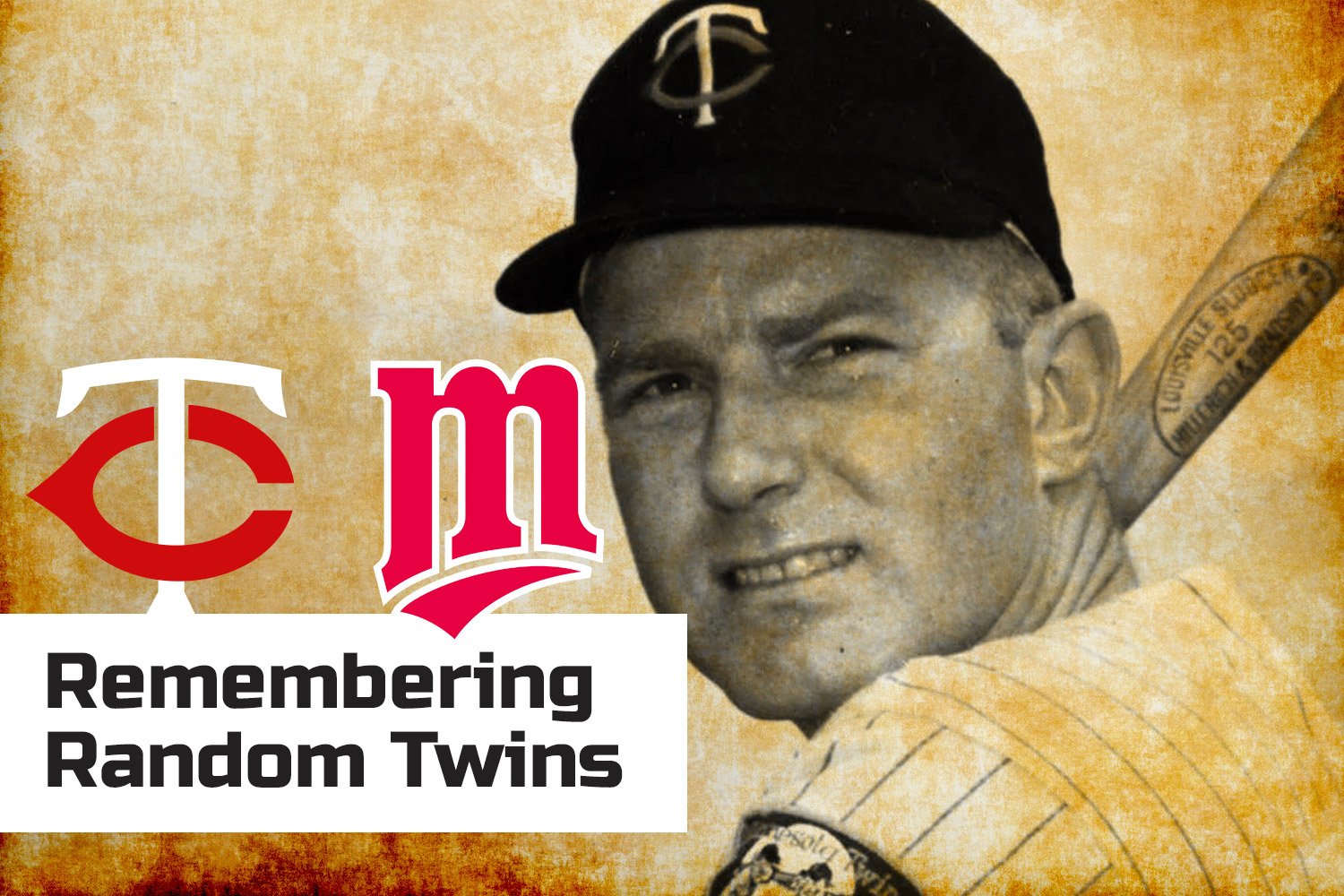 The All-Star Game was held recently, and it always makes me recall past Twins who were good enough and fortunate enough to be selected for this showcase. I am of the age that I became a Twins fan in the early 1980s. I feel knowledgeable about Twins players and events that have happened since then, but less so about the early years of the team, especially if the player involved is not Tony, the Killer, or Carew. Today, I will learn about and discuss one-time All-Star (or was it two-time All-Star?) Rich Rollins. Richard John Rollins was born on April 16, 1938, in Mount Pleasant, Pennsylvania, near Pittsburgh, but soon moved to the Cleveland area. He played collegiately for Kent State in Ohio. In college, he played primarily second base and was named all-conference three times. After college, he received interest from only one major league team, the Washington Senators. He had a tryout and was subsequently signed as an amateur free agent before the 1960 season (a few years before a Major League Draft was instituted). Rollins played two years in the minor leagues in 1960 and 1961. He was called up to the Twins in their inaugural season of 1961 and debuted on June 16, 1961, against the White Sox. He played third base and went 1-4 at the plate. He singled in the eighth inning against future Hall of Famer Early Wynn. The Twins won the game 6-1. Rollins played only 13 games for the Twins that season, but things would improve in 1962. 1962 was a wonderful year for Rich Rollins. He started the season going 2-3 in his first game and never looked back. His hot start kept him in the lineup virtually every day. At the end of April, he batted .354/.429/.631 for an OPS of 1.059. Those numbers were unsustainable for almost everyone, and he did, in fact, go down, but at the first All-Star break, he was still hitting .318/.390/.500 for an OPS of .890. I say first All-Star break because for four years, from 1959 to 1962, there were two All-Star Games. In 1962, they were held on July 10 and July 30. Money was the motivation for the second All-Star Game. Most proceeds from the second game were invested into the players' pension fund. However, after a short four years, players and owners decided to scrap the second game because it diluted the exclusivity of being an All-Star and lowered the spectacle of the game itself. The pension and how it was funded were major issues going forward, especially after Marvin Miller was hired as executive director of the Major League Baseball Players Association in 1966. There was a players’ strike in 1972, which largely revolved around the pension topic. Back to Rich Rollins. He was so good in the first half of 1962 that he earned the most All-Star Game votes of any American League player. He started at third base (ahead of future Hall of Famer Brooks Robinson) in the first All-Star Game of 1962 and batted leadoff. He went 1-2, was hit by a pitch, and scored the lone run in a 3-1 National League win. He scored on a sacrifice fly by Roger Maris. The hit was against Bob Purkey, a 23-game winner that season for the Cincinnati Reds. In 1962’s second All-Star Game 20 days later, Rollins again played third and led off in the American League’s 9-4 win. Rollins was 1-3 with a first-inning single against future Twins pitching coach Johnny Podres. Rollins finished the 1962 season at .298/.374/.428 and received enough MVP votes to place eighth. He finished 10th in batting average in the American League. The 1962 season was also memorable for Rollins outside of baseball. The fascinating story is presented on Rollins' biography at Sabr.org and before that by Seth Boster, “Rich Rollins: Minnesota Twins’ Least Likely (and most grateful) All-Star” in the Pioneer Press. “I was rooming in Minneapolis in ’62. One o’clock at night, I get this knock on the door. I’m up reading a book; I’m the only one in the apartment, and this gal is at the door in tears, and her father had just been killed in an automobile accident. She just needed someone to talk to. She knocked on the door, and we went out for coffee. We returned at 3 a.m., and that was the first time I met her.” On February 9, 1963, Rollins and former United Airlines stewardess Lynn Maher of Newport Beach, California, were married. They had six children. Rollins’ baseball career continued with quality play in 1963 and 1964, hitting a combined .288/.346/.424. He had a career-high ten home runs in 1964. However, his numbers began to dip in 1965 despite continued regular usage. He started the season slow but managed to play 140 games with 522 plate appearances, but his numbers dropped to .249/.309/.333. By the 1965 World Series, the Twins decided to utilize another option at third base, and Rollins was limited to three pinch-hitting opportunities. He had one walk, no hits, and scored no runs. Harmon Killebrew was the other third-base option. Killebrew started all seven games at third base despite starting only 40 games at third in the regular season. In 1966, Rich Rollins was part of a Twins lineup that tied a major league record. The team blasted five home runs in the seventh inning of a June 9th game against the Kansas City Athletics. The Twins were losing 4-3 when the seventh inning began. After an Earl Battey single, Rollins hit a one-out home run. Zoilo Versalles immediately followed Rollins’ home run with another. Then Sandy Valdespino grounded out. But after Valdespino, Tony Oliva, Don Mincher, and Harmon Killebrew all hit dingers for five home runs in the inning. That AL record has been matched twice, by the Yankees in 2000 and the Astros in 2002. (Interestingly, the feat of five home runs in an inning has occurred five times in the National League, with four coming against the Cincinnati Reds in 1939, 1949, 1961, and 2006.) Rollins’ numbers from 1966 to 1968 continued a downward slide. After the 1968 season, there was an expansion draft as the Seattle Pilots and Kansas City Royals entered the American League. Seattle selected Rollins as the 26th pick in the AL draft. (The Montreal Expos and San Diego Padres entered the National League simultaneously. With the leagues being separate then, there were two separate expansion drafts for each league.) Rollins played 58 games for Seattle in 1969 and hit .225/.270/.326. He finished his career in 1970 with the Brewers (who moved from Seattle after a single season) and Cleveland. As such, he was able to finish his career at home. During his ten-year major league career, Rollins batted .269/.328/.388 with 77 home runs, 399 RBI, and an OPS+ of 98. Rollins was in the top ten in batting average in 1962 and 1963. He led the AL in triples with 10 in 1964. At his peak, Rollins was good enough to garner MVP votes in two seasons (eighth in 1962 and 21st in 1963). After his playing career, Rollins ran baseball camps, was a minor league instructor, opened a baseball school in Rochester (MN), served as a scout for the Cleveland Indians, worked for the Indians tickets sales department, and then actually worked for the NBA’s Cleveland Cavaliers. Rollins was inducted into the Pennsylvania Sports Hall of Fame in 1976. Much of this information is summarized in the SABR article linked above. Those who want a deeper dive into Rich Rollins should check that out. Rich Rollins and Minnesota came to Major League Baseball at the same time. He had great seasons in 1962 and 1963 and played on the 1965 World Series team. Unfortunately, he and the Twins did not win the 1965 Series, but he was a talented player on some good teams. I know fans of that era remember him fondly and appreciate his contributions to the Twins’ early successes.
 -
Rich Rollins was one of the original Minnesota Twins, debuting in the team's 1961 season. The All-Star Game was held recently, and it always makes me recall past Twins who were good enough and fortunate enough to be selected for this showcase. I am of the age that I became a Twins fan in the early 1980s. I feel knowledgeable about Twins players and events that have happened since then, but less so about the early years of the team, especially if the player involved is not Tony, the Killer, or Carew. Today, I will learn about and discuss one-time All-Star (or was it two-time All-Star?) Rich Rollins. Richard John Rollins was born on April 16, 1938, in Mount Pleasant, Pennsylvania, near Pittsburgh, but soon moved to the Cleveland area. He played collegiately for Kent State in Ohio. In college, he played primarily second base and was named all-conference three times. After college, he received interest from only one major league team, the Washington Senators. He had a tryout and was subsequently signed as an amateur free agent before the 1960 season (a few years before a Major League Draft was instituted). Rollins played two years in the minor leagues in 1960 and 1961. He was called up to the Twins in their inaugural season of 1961 and debuted on June 16, 1961, against the White Sox. He played third base and went 1-4 at the plate. He singled in the eighth inning against future Hall of Famer Early Wynn. The Twins won the game 6-1. Rollins played only 13 games for the Twins that season, but things would improve in 1962. 1962 was a wonderful year for Rich Rollins. He started the season going 2-3 in his first game and never looked back. His hot start kept him in the lineup virtually every day. At the end of April, he batted .354/.429/.631 for an OPS of 1.059. Those numbers were unsustainable for almost everyone, and he did, in fact, go down, but at the first All-Star break, he was still hitting .318/.390/.500 for an OPS of .890. I say first All-Star break because for four years, from 1959 to 1962, there were two All-Star Games. In 1962, they were held on July 10 and July 30. Money was the motivation for the second All-Star Game. Most proceeds from the second game were invested into the players' pension fund. However, after a short four years, players and owners decided to scrap the second game because it diluted the exclusivity of being an All-Star and lowered the spectacle of the game itself. The pension and how it was funded were major issues going forward, especially after Marvin Miller was hired as executive director of the Major League Baseball Players Association in 1966. There was a players’ strike in 1972, which largely revolved around the pension topic. Back to Rich Rollins. He was so good in the first half of 1962 that he earned the most All-Star Game votes of any American League player. He started at third base (ahead of future Hall of Famer Brooks Robinson) in the first All-Star Game of 1962 and batted leadoff. He went 1-2, was hit by a pitch, and scored the lone run in a 3-1 National League win. He scored on a sacrifice fly by Roger Maris. The hit was against Bob Purkey, a 23-game winner that season for the Cincinnati Reds. In 1962’s second All-Star Game 20 days later, Rollins again played third and led off in the American League’s 9-4 win. Rollins was 1-3 with a first-inning single against future Twins pitching coach Johnny Podres. Rollins finished the 1962 season at .298/.374/.428 and received enough MVP votes to place eighth. He finished 10th in batting average in the American League. The 1962 season was also memorable for Rollins outside of baseball. The fascinating story is presented on Rollins' biography at Sabr.org and before that by Seth Boster, “Rich Rollins: Minnesota Twins’ Least Likely (and most grateful) All-Star” in the Pioneer Press. “I was rooming in Minneapolis in ’62. One o’clock at night, I get this knock on the door. I’m up reading a book; I’m the only one in the apartment, and this gal is at the door in tears, and her father had just been killed in an automobile accident. She just needed someone to talk to. She knocked on the door, and we went out for coffee. We returned at 3 a.m., and that was the first time I met her.” On February 9, 1963, Rollins and former United Airlines stewardess Lynn Maher of Newport Beach, California, were married. They had six children. Rollins’ baseball career continued with quality play in 1963 and 1964, hitting a combined .288/.346/.424. He had a career-high ten home runs in 1964. However, his numbers began to dip in 1965 despite continued regular usage. He started the season slow but managed to play 140 games with 522 plate appearances, but his numbers dropped to .249/.309/.333. By the 1965 World Series, the Twins decided to utilize another option at third base, and Rollins was limited to three pinch-hitting opportunities. He had one walk, no hits, and scored no runs. Harmon Killebrew was the other third-base option. Killebrew started all seven games at third base despite starting only 40 games at third in the regular season. In 1966, Rich Rollins was part of a Twins lineup that tied a major league record. The team blasted five home runs in the seventh inning of a June 9th game against the Kansas City Athletics. The Twins were losing 4-3 when the seventh inning began. After an Earl Battey single, Rollins hit a one-out home run. Zoilo Versalles immediately followed Rollins’ home run with another. Then Sandy Valdespino grounded out. But after Valdespino, Tony Oliva, Don Mincher, and Harmon Killebrew all hit dingers for five home runs in the inning. That AL record has been matched twice, by the Yankees in 2000 and the Astros in 2002. (Interestingly, the feat of five home runs in an inning has occurred five times in the National League, with four coming against the Cincinnati Reds in 1939, 1949, 1961, and 2006.) Rollins’ numbers from 1966 to 1968 continued a downward slide. After the 1968 season, there was an expansion draft as the Seattle Pilots and Kansas City Royals entered the American League. Seattle selected Rollins as the 26th pick in the AL draft. (The Montreal Expos and San Diego Padres entered the National League simultaneously. With the leagues being separate then, there were two separate expansion drafts for each league.) Rollins played 58 games for Seattle in 1969 and hit .225/.270/.326. He finished his career in 1970 with the Brewers (who moved from Seattle after a single season) and Cleveland. As such, he was able to finish his career at home. During his ten-year major league career, Rollins batted .269/.328/.388 with 77 home runs, 399 RBI, and an OPS+ of 98. Rollins was in the top ten in batting average in 1962 and 1963. He led the AL in triples with 10 in 1964. At his peak, Rollins was good enough to garner MVP votes in two seasons (eighth in 1962 and 21st in 1963). After his playing career, Rollins ran baseball camps, was a minor league instructor, opened a baseball school in Rochester (MN), served as a scout for the Cleveland Indians, worked for the Indians tickets sales department, and then actually worked for the NBA’s Cleveland Cavaliers. Rollins was inducted into the Pennsylvania Sports Hall of Fame in 1976. Much of this information is summarized in the SABR article linked above. Those who want a deeper dive into Rich Rollins should check that out. Rich Rollins and Minnesota came to Major League Baseball at the same time. He had great seasons in 1962 and 1963 and played on the 1965 World Series team. Unfortunately, he and the Twins did not win the 1965 Series, but he was a talented player on some good teams. I know fans of that era remember him fondly and appreciate his contributions to the Twins’ early successes. View full article
-
Les Straker literally came out of nowhere in 1987. He pitched fine during the season but unexpectedly worked his way into becoming the third starter in the playoffs, helping the Twins win the 1987 World Series. Then, just as quickly, he was gone. Les Straker was born on October 10, 1959, in Venezuela. The Cincinnati Reds signed him in 1977. Straker pitched seven years in the Reds minor league system but struggled in 1981 and 1983 in AA. He was granted free agency after the 1983 season, signed shortly after that with the Oakland A’s, and again was mediocre at AA in 1984. Since the Twins always needed pitching, they signed Straker before the 1985 season. Something changed in 1985, as he was downright good for AA Orlando. In 1986, he had a decent season for AAA Toledo, setting himself up for a 1987 that no one could have seen coming. Straker made the Twins out of spring training in 1987 and began the season as the fifth starter. He was only the 40th native Venezuelan to make it to Major League baseball. (Much has changed as nearly 400 more Venezuelans have debuted since Straker in 1987.) In 1987, the Twins went 11-20 in his 31 appearances (26 starts). His record was 8-10 with an ERA of 4.37. His statistics suggest he was a fairly average pitcher, ending the year with a 106 ERA+. The Twins used 12 starting pitchers in 1987. Through the process of attrition, Straker seemed to outlast the other Twins starting pitchers (minus Viola and Blyleven) to the point that he earned the nod as the third starter for the postseason. He started game three of the American League Champion Series against the Detroit Tigers on his 28th birthday. It did not go well for him. He gave up five runs in 2.2 innings pitched, with all five in the third inning. However, he did not get the loss as Dan Schatzeder came in and offered 3.1 innings of shutout baseball, and the lineup rallied to take a 6-5 lead in the 7th inning. Sadly, Jeff Reardon could not hold the lead, and the Twins lost 7-6. But that was their only loss of the five-game series. The Twins’ batters were hot, scoring 34 runs in the five games and beating the Tigers four games to one to advance to the World Series for only the second time in team history. In the World Series against the St. Louis Cardinals, Straker started games 3 and 6, making him the first Venezuelan to pitch in the World Series. Ironically, the Twins lost the game he pitched well and won the game he pitched poorly. Straker threw six innings in game three in St. Louis, allowing no runs on four hits and two walks. He left with the lead as the offense scratched across a single run in the top of the sixth. The bullpen could not hold the lead as Juan Berenguer allowed three runs in only one-third of an inning, and the Cardinals won 3-1. Game six was a poor performance by Straker. He gave up four runs in three innings. This time, the bullpen was much better. Berenguer, Schatzeder, and Reardon allowed only one run in six innings. Then the offense came alive with Don Baylor’s first Twins home run and Kent Hrbek’s grand slam. The Twins won 11-5. As we know, they also won game seven in their first World Series championship. In 1988, Straker again started the season as a Twins’ starting rotation member. His 1988 statistics seem similar to, if not better than, 1987. However, he was injured and did not pitch between June 13 and September 4. He pitched for the Twins’ AAA Portland team in 1989, winning eight games with a 4.26 ERA. He moved on in 1990 but pitched only 6.2 innings for Montreal’s AAA team. And that was the end. He was done at 30 years old. His career record was 10-15. I wonder how many World Series starting pitchers won only ten games in their entire playing career. Since 2004, Straker has continued to contribute to the sport he loves. He has served as a pitching coach in the Phillies minor league system, specifically working with their Venezuelan and Dominican Summer League teams. This role allows him to share his knowledge and experience with young players, helping them develop their skills and reach their potential. Les Straker was a late bloomer who bloomed at the right time for him and the Twins, allowing them to create history together in 1987. View full player
-
 Les Straker literally came out of nowhere in 1987. He pitched fine during the season but unexpectedly worked his way into becoming the third starter in the playoffs, helping the Twins win the 1987 World Series. Then, just as quickly, he was gone. Les Straker was born on October 10, 1959, in Venezuela. The Cincinnati Reds signed him in 1977. Straker pitched seven years in the Reds minor league system but struggled in 1981 and 1983 in AA. He was granted free agency after the 1983 season, signed shortly after that with the Oakland A’s, and again was mediocre at AA in 1984. Since the Twins always needed pitching, they signed Straker before the 1985 season. Something changed in 1985, as he was downright good for AA Orlando. In 1986, he had a decent season for AAA Toledo, setting himself up for a 1987 that no one could have seen coming. Straker made the Twins out of spring training in 1987 and began the season as the fifth starter. He was only the 40th native Venezuelan to make it to Major League baseball. (Much has changed as nearly 400 more Venezuelans have debuted since Straker in 1987.) In 1987, the Twins went 11-20 in his 31 appearances (26 starts). His record was 8-10 with an ERA of 4.37. His statistics suggest he was a fairly average pitcher, ending the year with a 106 ERA+. The Twins used 12 starting pitchers in 1987. Through the process of attrition, Straker seemed to outlast the other Twins starting pitchers (minus Viola and Blyleven) to the point that he earned the nod as the third starter for the postseason. He started game three of the American League Champion Series against the Detroit Tigers on his 28th birthday. It did not go well for him. He gave up five runs in 2.2 innings pitched, with all five in the third inning. However, he did not get the loss as Dan Schatzeder came in and offered 3.1 innings of shutout baseball, and the lineup rallied to take a 6-5 lead in the 7th inning. Sadly, Jeff Reardon could not hold the lead, and the Twins lost 7-6. But that was their only loss of the five-game series. The Twins’ batters were hot, scoring 34 runs in the five games and beating the Tigers four games to one to advance to the World Series for only the second time in team history. In the World Series against the St. Louis Cardinals, Straker started games 3 and 6, making him the first Venezuelan to pitch in the World Series. Ironically, the Twins lost the game he pitched well and won the game he pitched poorly. Straker threw six innings in game three in St. Louis, allowing no runs on four hits and two walks. He left with the lead as the offense scratched across a single run in the top of the sixth. The bullpen could not hold the lead as Juan Berenguer allowed three runs in only one-third of an inning, and the Cardinals won 3-1. Game six was a poor performance by Straker. He gave up four runs in three innings. This time, the bullpen was much better. Berenguer, Schatzeder, and Reardon allowed only one run in six innings. Then the offense came alive with Don Baylor’s first Twins home run and Kent Hrbek’s grand slam. The Twins won 11-5. As we know, they also won game seven in their first World Series championship. In 1988, Straker again started the season as a Twins’ starting rotation member. His 1988 statistics seem similar to, if not better than, 1987. However, he was injured and did not pitch between June 13 and September 4. He pitched for the Twins’ AAA Portland team in 1989, winning eight games with a 4.26 ERA. He moved on in 1990 but pitched only 6.2 innings for Montreal’s AAA team. And that was the end. He was done at 30 years old. His career record was 10-15. I wonder how many World Series starting pitchers won only ten games in their entire playing career. Since 2004, Straker has continued to contribute to the sport he loves. He has served as a pitching coach in the Phillies minor league system, specifically working with their Venezuelan and Dominican Summer League teams. This role allows him to share his knowledge and experience with young players, helping them develop their skills and reach their potential. Les Straker was a late bloomer who bloomed at the right time for him and the Twins, allowing them to create history together in 1987.
 -
Jimmie Hall was a left-handed hitting outfielder who burst on the scene in 1963 and helped the Twins reach the World Series in 1965, but faded quickly and was traded for a future ace starting pitcher. Jimmie Hall was born March 7, 1938, in Mount Holly, NC, a small farm town northwest of Charlotte. In high school, Jimmie excelled on the baseball field but planned to work in a cotton mill or become a service station attendant. In what some would call an unusual twist, Jimmie’s father encouraged him to continue with baseball. I find it odd that a parent would do that in the 1950s when the average annual salary for all jobs in the US was in the $3,500 range. Major League Baseball players only averaged around $15,000 in 1956, the year he graduated from high school. So, baseball players earned more than the average American, but their careers were short, and I would expect a parent to push their child into a more long-term profession. But, hey, there’s always a chance his dad was just a big baseball fan and liked the possibility of his son being a big leaguer. Hall was signed by the Washington Senators in 1956 and played in the minor leagues until 1962. Overall, his statistics over those years look good, not great. But he methodically moved up the Senators’ and Twins’ minor league systems. His progress stalled a little in 1961 and 1962 when he served in the Army, which limited him to 54 games combined in those two seasons. He attended spring training in 1963, worked hard, had a great spring, and surprised everyone by making the opening day roster. Hall’s 1963 season started as the backup to center fielder Lenny Green until Green was injured in mid-June, giving Hall a chance. Hall took the opportunity and did not look back. During limited action in 46 games leading up to Green’s injury, Hall batted .185 with two home runs. He went on a tear and finished with 33 home runs in 1963, breaking an American League rookie record set by Hall of Famer Ted Williams in 1939. Hall improved as the season progressed, hitting 13 homers in August alone. Hall slashed .260/.342/.521 for the season, enough for third in the Rookie of the Year voting. Hall was part of a powerful Twins outfield that year with Harmon Killebrew (45 HR) and Bob Allison (35 HR). Hall’s promising career continued in 1964 and 1965, with him making the All-Star game each season. On May 2, 1964, the Twins became the third club in history to hit four consecutive home runs in the same inning. Tony Oliva, Bob Allison, Jimmie Hall, and Harmon Killebrew all went deep in the 11th inning, turning the tie into a 7-3 victory against the Kansas City A’s. In 1965, Hall was one of six Twins selected to the All-Star game played at home in Metropolitan Stadium. Jimmie’s first three years were great. His overall slash line for 1963-65 was .276/.342/.488. He had a decent batting average, drew several walks, and hit with power. His OPS+ in those three seasons was 136, 124, and 124, respectively. Despite Hall being an All-Star selection in 1965, his batting had slipped in the second half of the season. When the Twins won the AL pennant, manager Sam Mele decided to platoon the left-handed hitter in the World Series. Hall only played two of seven World Series games because of the Los Angeles Dodgers left-handed starters Sandy Koufax and Claude Osteen, who started five games in the series. In seven at-bats, Hall batted .143/.250/.143. His primary replacement, Joe Nossek, hit .200/.200/.200 in 20 at-bats – so not much better, but Koufax, in particular, was an absolute nightmare against anybody in the 1960s. It appears that Manager Mele’s decision to sit Hall against left-handed pitchers had merit. Hall went .296/.361/.493 against right-handed pitchers in 1965 but only .240/.272/.333 against lefties. As far as whether Hall would have made a difference in the series, we’ll never know. Hall’s performance began to slide in 1966 and 1967. Many have speculated that the downturn in Jimmie’s play can be attributed to being hit in the face with a pitch in May 1964. Others point to statistics that said Hall struggled against left-handed pitchers (his career slash line against left-handed pitchers was .187/.234/.272). Maybe it was a combination of both? Regardless of the reason, the Twins traded Hall to the Angels before 1967, Pete Cimino and Don Mincher in exchange for Dean Chance and infielder Jackie Hernandez. Chance was a front-line starting pitcher for the Twins for three seasons as Hall bottomed out. The Angels traded Hall to Cleveland in 1968. He quickly bounced around to the Yankees, Cubs, and Braves, never finding another fit. From 1968-70, he had only 618 plate appearances total and slashed .208/.277/.297. It was vastly different from the first few years of his career. He last played Major League Baseball in 1970. His final career numbers were rather good overall. He hit .254/.321/.434, hit 121 home runs and finished with an OPS+ of 112. The excellent early seasons certainly overshadowed the later not-so-great years. Outside of baseball, Hall served as a radio play-by-play announcer for the Gaston College basketball team during the 1967-68 offseason in his home state of North Carolina. After retiring from the game, he made his living as a truck driver and a woodworker. Hall distanced himself from baseball to the extent that he did not accept an invitation in 2005 to return to Minnesota, where he would have been honored and celebrated with the 1965 team on the 40th anniversary of their World Series appearance. He appears to still live in North Carolina. Jimmie came through the minor leagues slowly, debuted at 25, and came on with a flourish, but after a few great years, his star began to diminish, and he was out of baseball at 32. The way he came out swinging, I’m sure Hall and fans hoped for more over a longer period, but it was just not meant to be. Despite the overall good numbers, I still feel that his career left fans with a sense of what could have been. View full player
-
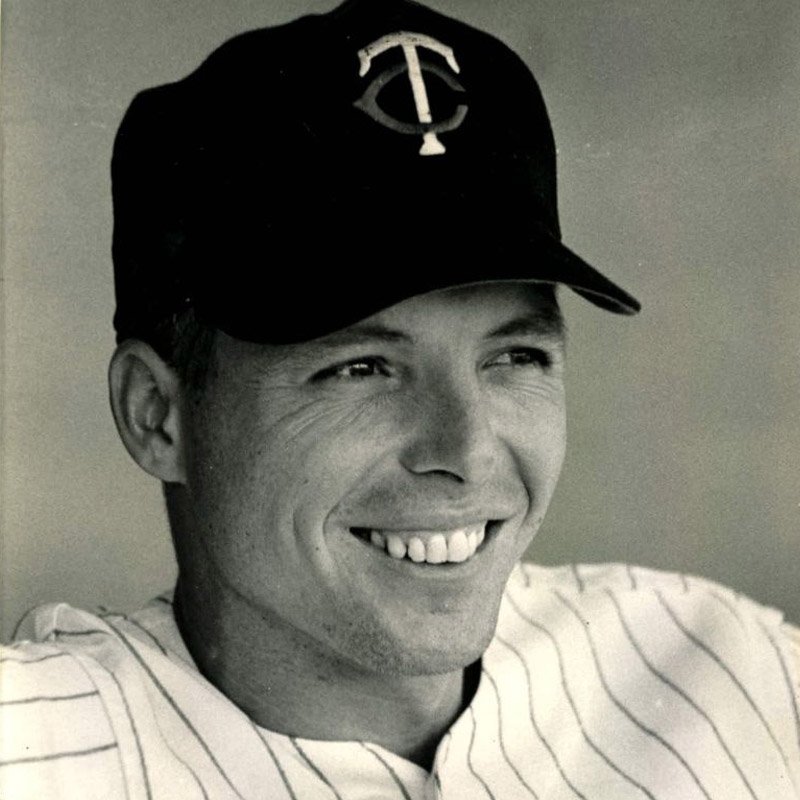 Jimmie Hall was a left-handed hitting outfielder who burst on the scene in 1963 and helped the Twins reach the World Series in 1965, but faded quickly and was traded for a future ace starting pitcher. Jimmie Hall was born March 7, 1938, in Mount Holly, NC, a small farm town northwest of Charlotte. In high school, Jimmie excelled on the baseball field but planned to work in a cotton mill or become a service station attendant. In what some would call an unusual twist, Jimmie’s father encouraged him to continue with baseball. I find it odd that a parent would do that in the 1950s when the average annual salary for all jobs in the US was in the $3,500 range. Major League Baseball players only averaged around $15,000 in 1956, the year he graduated from high school. So, baseball players earned more than the average American, but their careers were short, and I would expect a parent to push their child into a more long-term profession. But, hey, there’s always a chance his dad was just a big baseball fan and liked the possibility of his son being a big leaguer. Hall was signed by the Washington Senators in 1956 and played in the minor leagues until 1962. Overall, his statistics over those years look good, not great. But he methodically moved up the Senators’ and Twins’ minor league systems. His progress stalled a little in 1961 and 1962 when he served in the Army, which limited him to 54 games combined in those two seasons. He attended spring training in 1963, worked hard, had a great spring, and surprised everyone by making the opening day roster. Hall’s 1963 season started as the backup to center fielder Lenny Green until Green was injured in mid-June, giving Hall a chance. Hall took the opportunity and did not look back. During limited action in 46 games leading up to Green’s injury, Hall batted .185 with two home runs. He went on a tear and finished with 33 home runs in 1963, breaking an American League rookie record set by Hall of Famer Ted Williams in 1939. Hall improved as the season progressed, hitting 13 homers in August alone. Hall slashed .260/.342/.521 for the season, enough for third in the Rookie of the Year voting. Hall was part of a powerful Twins outfield that year with Harmon Killebrew (45 HR) and Bob Allison (35 HR). Hall’s promising career continued in 1964 and 1965, with him making the All-Star game each season. On May 2, 1964, the Twins became the third club in history to hit four consecutive home runs in the same inning. Tony Oliva, Bob Allison, Jimmie Hall, and Harmon Killebrew all went deep in the 11th inning, turning the tie into a 7-3 victory against the Kansas City A’s. In 1965, Hall was one of six Twins selected to the All-Star game played at home in Metropolitan Stadium. Jimmie’s first three years were great. His overall slash line for 1963-65 was .276/.342/.488. He had a decent batting average, drew several walks, and hit with power. His OPS+ in those three seasons was 136, 124, and 124, respectively. Despite Hall being an All-Star selection in 1965, his batting had slipped in the second half of the season. When the Twins won the AL pennant, manager Sam Mele decided to platoon the left-handed hitter in the World Series. Hall only played two of seven World Series games because of the Los Angeles Dodgers left-handed starters Sandy Koufax and Claude Osteen, who started five games in the series. In seven at-bats, Hall batted .143/.250/.143. His primary replacement, Joe Nossek, hit .200/.200/.200 in 20 at-bats – so not much better, but Koufax, in particular, was an absolute nightmare against anybody in the 1960s. It appears that Manager Mele’s decision to sit Hall against left-handed pitchers had merit. Hall went .296/.361/.493 against right-handed pitchers in 1965 but only .240/.272/.333 against lefties. As far as whether Hall would have made a difference in the series, we’ll never know. Hall’s performance began to slide in 1966 and 1967. Many have speculated that the downturn in Jimmie’s play can be attributed to being hit in the face with a pitch in May 1964. Others point to statistics that said Hall struggled against left-handed pitchers (his career slash line against left-handed pitchers was .187/.234/.272). Maybe it was a combination of both? Regardless of the reason, the Twins traded Hall to the Angels before 1967, Pete Cimino and Don Mincher in exchange for Dean Chance and infielder Jackie Hernandez. Chance was a front-line starting pitcher for the Twins for three seasons as Hall bottomed out. The Angels traded Hall to Cleveland in 1968. He quickly bounced around to the Yankees, Cubs, and Braves, never finding another fit. From 1968-70, he had only 618 plate appearances total and slashed .208/.277/.297. It was vastly different from the first few years of his career. He last played Major League Baseball in 1970. His final career numbers were rather good overall. He hit .254/.321/.434, hit 121 home runs and finished with an OPS+ of 112. The excellent early seasons certainly overshadowed the later not-so-great years. Outside of baseball, Hall served as a radio play-by-play announcer for the Gaston College basketball team during the 1967-68 offseason in his home state of North Carolina. After retiring from the game, he made his living as a truck driver and a woodworker. Hall distanced himself from baseball to the extent that he did not accept an invitation in 2005 to return to Minnesota, where he would have been honored and celebrated with the 1965 team on the 40th anniversary of their World Series appearance. He appears to still live in North Carolina. Jimmie came through the minor leagues slowly, debuted at 25, and came on with a flourish, but after a few great years, his star began to diminish, and he was out of baseball at 32. The way he came out swinging, I’m sure Hall and fans hoped for more over a longer period, but it was just not meant to be. Despite the overall good numbers, I still feel that his career left fans with a sense of what could have been.
 -
Mickey Hatcher could be described as a goofball, a gamer, a fan favorite, and colorful, but above all else he was a decent major league hitter. Michael Vaughn Hatcher was born on March 15, 1955, in Ohio. An article at The Oklahoman states that he chose the nickname Mickey after his idol, another player you might have heard of—Mickey Mantle. At some point, his family moved west, and he graduated from high school in Mesa, AZ. After high school, he attended Mesa Community College, where he was selected as an All-American twice in both baseball and football. Mickey Hatcher attended the University of Oklahoma, playing football and baseball. On the gridiron, he was a punter and a wide receiver. He punted 64 times in 1976 with an average length of 38.5 yards and was part of a Fiesta Bowl squad where Oklahoma won 41-7 over Wyoming. They finished the year ranked #5 in the AP Poll. I could not locate any statistics on his capabilities as a wide receiver. On the baseball field, he hit .356 and slugged .586 in 1977. The Dodgers drafted Hatcher in the 5th round of the 1977 draft. He worked his way up the minor leagues and debuted with the Dodgers on August 3, 1979. He got little opportunity in his first two seasons in Los Angeles. After the 1980 season, Hatcher was the centerpiece of a trade with the Twins, which included minor leaguers Matthew Reeves and Kelly Snider for Ken Landreaux, the lone Twins All-Star representative for the 1980 season. I’m guessing the trade was a circumstance of old Calvin Griffith not wanting to pay Landreaux. The Dodgers got the best of that trade. Reeves and Snider never made it to Major League Baseball. Hatcher played six seasons for the Twins, accumulating a 3.7 WAR. During his tenure, he hit .284/.315/.383. Landreaux played to 8.5 WAR in seven seasons for the Dodgers. Hatcher seemed like a decent player on the bad Twins teams of the early 80s. He was a one-tool player – he could hit for average but had limited power and was not fast. He was also not a great fielder; at least one fan thought he would hurt himself one day by running into a fence. Despite his lack of speed, he surprisingly played 99 games in center field in 1981, but he eventually settled in as the primary left fielder for the next few years. He had 37 RBI in 1981, which somehow led the team. We all know the 81 team was bad, and the strike limited the Twins to 110 games, but wow! Prorated to a 162-game season, 37 RBI only equates to 54. Yep, that was a bad team. His most extensive action came in 1984 when he batted .302/.342/.406 with 69 RBI. In 1985, Hatcher had a hit in nine consecutive plate appearances (including three doubles), which is still a Twins record. Before the 1987 season, the young Twins seemed to be growing into a better team. Unfortunately for Hatcher, during the offseason, the Twins sought a leadoff hitter with some speed and traded for Dan Gladden near the end of Spring Training. Kirby Puckett had hit primarily first in the lineup in 1986, but the Gladden trade allowed Puckett to slide permanently into the number three spot in the lineup. It was a sound plan to the detriment of Hatcher’s time in Minnesota. The Twins released Hatcher, but his old Dodgers team called and signed him shortly after. Hatcher’s release prevented him from participating in the Twins’ 1987 World Series victory, and his prior trade to the Twins had caused him to narrowly miss the Dodgers’ 1981 championship. Things did not seem to go his way. If he was disappointed about missing the ’81 and ’87 World Series championships, circumstances started to turn in his favor in the 1988 season. He won a World Series with the Dodgers in 1988, beating the heavily favored Oakland A’s. Jose Canseco hit a grand slam off the center field camera in the 2nd inning of game one to put the A’s up 4-2 and seemingly send the favored Oakland squad to victory. Still, the Dodgers came back and capped it off with the epic Kirk Gibson pinch-hit home run off Dennis Eckersley. (Earlier in 1988, the term “walk-off” was coined by Mr. Eckersley to mean any home run that wins a game and is hit so far, all you can do as a pitcher is walk off the mound.) It seemed like that Gibson home run catapulted the Dodgers to the championship – the A’s won only game three. Hatcher had played minimally during the season, but manager Tommy Lasorda inserted him during the series, which paid off. Hatcher’s World Series was great, hitting .368/.400/.737 with huge first-inning home runs in games 1 and 5. If not for Orel Hershiser’s magical season and postseason in 1988, maybe Hatcher would have been the World Series MVP. I’d say things worked out well for Mr. Hatcher. View full player
- 1 reply
-
- 1
-
-
 Mickey Hatcher could be described as a goofball, a gamer, a fan favorite, and colorful, but above all else he was a decent major league hitter. Michael Vaughn Hatcher was born on March 15, 1955, in Ohio. An article at The Oklahoman states that he chose the nickname Mickey after his idol, another player you might have heard of—Mickey Mantle. At some point, his family moved west, and he graduated from high school in Mesa, AZ. After high school, he attended Mesa Community College, where he was selected as an All-American twice in both baseball and football. Mickey Hatcher attended the University of Oklahoma, playing football and baseball. On the gridiron, he was a punter and a wide receiver. He punted 64 times in 1976 with an average length of 38.5 yards and was part of a Fiesta Bowl squad where Oklahoma won 41-7 over Wyoming. They finished the year ranked #5 in the AP Poll. I could not locate any statistics on his capabilities as a wide receiver. On the baseball field, he hit .356 and slugged .586 in 1977. The Dodgers drafted Hatcher in the 5th round of the 1977 draft. He worked his way up the minor leagues and debuted with the Dodgers on August 3, 1979. He got little opportunity in his first two seasons in Los Angeles. After the 1980 season, Hatcher was the centerpiece of a trade with the Twins, which included minor leaguers Matthew Reeves and Kelly Snider for Ken Landreaux, the lone Twins All-Star representative for the 1980 season. I’m guessing the trade was a circumstance of old Calvin Griffith not wanting to pay Landreaux. The Dodgers got the best of that trade. Reeves and Snider never made it to Major League Baseball. Hatcher played six seasons for the Twins, accumulating a 3.7 WAR. During his tenure, he hit .284/.315/.383. Landreaux played to 8.5 WAR in seven seasons for the Dodgers. Hatcher seemed like a decent player on the bad Twins teams of the early 80s. He was a one-tool player – he could hit for average but had limited power and was not fast. He was also not a great fielder; at least one fan thought he would hurt himself one day by running into a fence. Despite his lack of speed, he surprisingly played 99 games in center field in 1981, but he eventually settled in as the primary left fielder for the next few years. He had 37 RBI in 1981, which somehow led the team. We all know the 81 team was bad, and the strike limited the Twins to 110 games, but wow! Prorated to a 162-game season, 37 RBI only equates to 54. Yep, that was a bad team. His most extensive action came in 1984 when he batted .302/.342/.406 with 69 RBI. In 1985, Hatcher had a hit in nine consecutive plate appearances (including three doubles), which is still a Twins record. Before the 1987 season, the young Twins seemed to be growing into a better team. Unfortunately for Hatcher, during the offseason, the Twins sought a leadoff hitter with some speed and traded for Dan Gladden near the end of Spring Training. Kirby Puckett had hit primarily first in the lineup in 1986, but the Gladden trade allowed Puckett to slide permanently into the number three spot in the lineup. It was a sound plan to the detriment of Hatcher’s time in Minnesota. The Twins released Hatcher, but his old Dodgers team called and signed him shortly after. Hatcher’s release prevented him from participating in the Twins’ 1987 World Series victory, and his prior trade to the Twins had caused him to narrowly miss the Dodgers’ 1981 championship. Things did not seem to go his way. If he was disappointed about missing the ’81 and ’87 World Series championships, circumstances started to turn in his favor in the 1988 season. He won a World Series with the Dodgers in 1988, beating the heavily favored Oakland A’s. Jose Canseco hit a grand slam off the center field camera in the 2nd inning of game one to put the A’s up 4-2 and seemingly send the favored Oakland squad to victory. Still, the Dodgers came back and capped it off with the epic Kirk Gibson pinch-hit home run off Dennis Eckersley. (Earlier in 1988, the term “walk-off” was coined by Mr. Eckersley to mean any home run that wins a game and is hit so far, all you can do as a pitcher is walk off the mound.) It seemed like that Gibson home run catapulted the Dodgers to the championship – the A’s won only game three. Hatcher had played minimally during the season, but manager Tommy Lasorda inserted him during the series, which paid off. Hatcher’s World Series was great, hitting .368/.400/.737 with huge first-inning home runs in games 1 and 5. If not for Orel Hershiser’s magical season and postseason in 1988, maybe Hatcher would have been the World Series MVP. I’d say things worked out well for Mr. Hatcher.