



Al from SoDak
-
Posts
274 -
Joined
-
Last visited
Content Type
Profiles
News
Minnesota Twins Videos
2026 Minnesota Twins Top Prospects Ranking
2022 Minnesota Twins Draft Picks
Minnesota Twins Free Agent & Trade Rumors, Notes, & Tidbits
Guides & Resources
2023 Minnesota Twins Draft Picks
The Minnesota Twins Players Project
2024 Minnesota Twins Draft Picks
2025 Minnesota Twins Draft Pick Tracker
2026 Minnesota Twins Draft Tracker: Picks & Bonuses
Forums
Blogs
Events
Store
Downloads
Gallery
Everything posted by Al from SoDak
-
 Randy Bush fits into a couple of memorable groups of Twins players held in high esteem by the fan base: the 1982 rookies, and the seven players who were part of both World Series championship teams in 1987 and 1991. Twins Hall-of-Famer and hometown kid Kent Hrbek fits into both of these groups, too. As such, much has been written and said about Mr. Hrbek. Perhaps that is why Randy Bush is often overlooked, but not today. Today we take a closer look at Bush. Robert Randall Bush was born in Dover, Delaware on October 5, 1958. (Here on Twins Daily, Thiéres Rabelo named Randy Bush the best-ever Twins player from the state of Delaware.) He attended the University of New Orleans, playing only one season but leaving his mark. He batted .369 with a team-leading 18 home runs, 77 runs batted in, and a slugging percentage of .764. That one season would later be enough to merit his selection to the school’s Hall of Fame. A more immediate effect was that his one season at UNO got the attention of the Major League Baseball teams, specifically the Minnesota Twins, who drafted Bush in the second round of the 1979 MLB draft. After being drafted and signed by the Twins, Bush always even-keeled and played in AA Orlando and AAA Toledo from 1979 to 1982. Foreshadowing his Twins’ future, he usually did not play full-time, but he always played well enough to contribute to the team. He played left field, right field, first base, and was a designated hitter. The one season Bush was granted extensive playing time – as an outfielder in 1981 with Orlando – he proved his worth by batting .291/.404/.494 with 22 home runs and 94 runs batted in. He debuted with the Twins on May 1, 1983. He struck out in his only plate appearance. His first hit came four days later against the Boston Red Sox. He had to wait a bit longer for his first home run, which came on September 6, 1982, in game two of a doubleheader. Bush pinch-hit (of course) for Gary Ward and hit a home run against Charlie Hough in an 11-7 loss. He homered again the next day and then had a two-home run game on September 20 against Toronto. The stoic, calm Bush was in the big leagues to stay. Once with the Twins, Bush continued his role from the minor leagues as a bench player who filled in when others were hurt or needed rest. He played occasional outfield or first base but was mainly used as a designated hitter, then as a pinch hitter in later years. He had over 400 plate appearances only four times in his career, with a high of 466 in 1988. Conversely, he had six seasons with less than 300 plate appearances. Bush had a reputation as a great pinch-hitter. In truth, he had some great years and some less-than-stellar years, which we can attribute to small sample sizes. Bush’s career slash line as a pinch hitter was .242/.346/.353. His overall pinch-hitting OPS was a pedestrian .699, but he did have three seasons where his pinch-hitting OPS was over 1.000. 1984, 25 Plate Appearances, .400/.440/.600 1986, 32 Plate Appearances, .433/.469/.700 1991, 43 Plate Appearances, .382/.500/.618 I’m certain his performance in the 1991 championship year solidified his reputation as a great pinch-hitter. During that season, Bush tied an American League record with seven pinch hits in a season consecutively. That record still stands and is shared with Bill Stein of the Rangers in 1981 and Ross Gload of the White Sox in 2006. Despite his limited use, Bush had some highlights with the Twins. He hit over ten home runs in six different seasons of his career. He drove in eight runs in one game versus Texas on May 20, 1989, with three hits, including two home runs. He was fifth in the American League with seven triples in 1986. Surprisingly, Bush was fifth in the AL in 1988 with 14 intentional walks (behind Wade Boggs, Mike Greenwell, Greg Brock, and George Brett). Bush hit 96 career home runs, all of which came against right-handed batters. That is an MLB record for most home runs exclusively against only pitchers of a certain handedness. His career slash line was .251/.334/.413. He had a career OPS+ of 102. In the postseason, Bush played much more extensively in 1987 than in 1991. He started four games at DH against the Tigers in the American League Championship Series with an OPS of .864, a triple amongst his three hits, and one RBI. He also had three stolen bases. In the World Series, he started once at DH and appeared as a pinch-hitter in three other games. In those games, his OPS was only .500, with one hit in six plate appearances. But he started game two at DH and went 1 for 3 with a bases-loaded double, 2 RBI, and a run scored on an epic slide as the Twins blew the game open in the fourth inning. In 1991, Chili Davis was the designated hitter, so Bush did not play at all in the ALCS against Toronto, but he did get three pinch-hit opportunities in the World Series against Atlanta. He appeared in two of the losses in Atlanta and could not reach base in either game. As we all know, game seven of the 1991 World Series was the epic pitcher's duel between Jack Morris and John Smoltz that went scoreless through nine innings. Despite that, both teams had plenty of base runners and opportunities. Randy Bush was used as a pinch-hitter for Greg Gagne leading off the eighth inning. He got a hit and was immediately replaced by pinch-runner Al Newman. After Dan Gladden popped out, Chuck Knoblauch singled with Newman going to third base. Things were looking promising with Kirby Puckett and Kent Hrbek coming up next. The Braves intentionally walked Puckett, leading to Hrbek lining out to Mark Lemke for an unassisted double play. That was the end of Bush’s influence on this game. We all know how the game ended – Gene Larkin’s pinch-hit single over the heads of drawn-in outfielders Brian Hunter and Ron Gant to score Gladden. Bush played twelve years with the Twins from 1982 to 1993. He never played for another MLB team. In fact, of players who have played only for the Twins, the only ones to compile more seasons than Randy Bush are Tony Oliva (15), Joe Mauer (15), and Kent Hrbek (14). Three others can match Bush’s 12 seasons with the Twins and only the Twins. They are Kirby Puckett, Brad Radke, and Glen Perkins. That’s a very narrow and select group from Minnesota Twins history. Randy Bush returned to the University of New Orleans to coach from 2000 to 2004, with a record of 144-145. UNO won a conference title in 2000. Since 2005, Bush has served various roles with the Chicago Cubs, often as an assistant general manager. He received a third World Series ring from the 2016 Cubs victory. In addition to the University of New Orleans Hall of Fame, Bush has been inducted into the Eastern Shore Baseball Hall of Fame. When Bush returned from his full-time work in the Cubs front office after the 2021 season, MLB Trade Rumors quoted him as saying, “I honestly feel like the luckiest guy in the world with all the blessings I’ve had in my baseball life. It’s been unbelievable.” Bush was part of the 1982 rookie class that included Kent Hrbek, Gary Gaetti, Frank Viola, Tim Laudner, Tom Brunansky, and even coach/manager Tom Kelly. In Kent Hrbek’s Tales from the Minnesota Twins Dugout, Hrbek calls Bush one of his best friends in baseball. Bush was also one of the seven players who appeared on both World Series-winning teams, along with Kirby Puckett, Kent Hrbek, Greg Gagne, Dan Gladden, Al Newman, and Gene Larkin. Randy Bush always seemed calm, emotionless, and ready to do whatever it took to help the Twins win. In later years, when he was almost exclusively a pinch hitter, he never seemed to be overwhelmed by any situation. He never looked nervous. Randy Bush was just a perfect bench player who helped his teams reach the mountaintop twice. In my book, that makes him a legend. View full article
 -
1983 Fleer and the Minnesota Twins
Al from SoDak commented on Al from SoDak's blog entry in Al from SoDak
Yeah showing the is probably a good recommendation -
Today I’m talking about the first non-Topps set in my blog series about baseball cards. Topps had a baseball card monopoly from 1956 to 1980. In the early 80s competitors were allowed into the baseball card world and Donruss and Fleer were the first two to jump in. This post is about a set I originally dismissed but have come to appreciate – 1983 Fleer. The design of 1983 Fleer baseball is better than I originally thought in 1983. I have come to like the gray borders, the straightforward design, and the colorful team logo in the lower left corner. To the right of the logo, still on the bottom of the card are the player’s name and position. It’s an uncomplicated design that works for me. I also feel like the pictures are better than the late 70s Topps cards. I suppose that should be the case. The middle back of the card contains the player’s career statistics set against a white background. The top of the card has a brownish orange background with the player’s name, position, card number, and small head shot of the player. The back’s bottom has the same brown/orange background with the player’s biographical information and a “did you know” nugget of trivia. There are 660 cards in the 1983 Fleer baseball card set including 24 Twins cards. The set has rookie cards of Hall of Famers Ryne Sandberg, Wade Boggs, and Tony Gwynn plus Twins greats Gary Gaetti and Frank Viola. The pictures are almost all portrait or head shots with very few action shots. The checklist organizes all teams in order of prior year finish then alphabetically by player. The St. Louis Cardinals, who won the prior year’s World Series are the first group, then their opponent in the fall classic, the Milwaukee Brewers, are the second team. The Twins players are the last regular cards in the set because of their horrendous 102-loss season in 1982. The only cards after the #628 for Al Williams are some SuperStar Specials cards and team checklists. MOST OBSCURE PLAYER After looking at all the cards in the set, I legitimately produced nine cards where I thought the player had an argument for the most obscure player in the set. I eventually narrowed that to one player, but three others are worth a quick mention. #624 Jesus Vega. Vega played three seasons, all with the Twins, and was not a particularly good ballplayer. The back up 1B/DH/corner outfielder had only 236 at bats in three seasons. He finished with a WAR of -1.1 and an OPS+ of 65. #619 Jeff Little. He played one of his two MLB seasons with the Twins. His statistics are not that terrible – 0.0 WAR, 3 wins in 55 innings, 101 ERA+. But he was done after his age 27 season, and I could not find a reason. Seems like he deserved a longer leash, but maybe he simply chose to move on with his life. #611 Lenny Faedo. Maybe Faedo wasn’t as obscure or bad as the others, but the 1978 first round draft pick finished his career with only 529 at bats and produced a WAR of -0.2 and 64 OPS+. He had only one year with more than 200 at bats. Despite those three honorable mentions and their qualifications, I chose the #612 card of Terry Felton. I just felt like I could not go through this period of Minnesota Twins history and not mention Mr. Felton. He owns a dubious Major League Baseball record. His 0-16 pitching record happens to be the most losses in MLB history without achieving a win. His ERA+ was 78 over parts of 4 seasons, all with the Twins. His career WAR was -1.9 and he pitched 138.1 innings. Felton’s BR Bullpen page on Baseball Reference indicates his big problems were a lack of control and too many home runs; that seems like a bad combination. THE BEST The best Twins card in the 1983 Fleer set is a combo card of a local Hall of Famer and a local youngster who would have his jersey number retired by the Twins years later. I nominate the #633 SuperStar Specials card – Mr. Vet and Mr. Rookie. It’s St. Paul’s Dave Winfield and Bloomgton’s Kent Hrbek. I’ve said it before in this blog series and it applies here again – I really like combo cards. The completed careers of Winfield and Hrbek add up to 4,859 hits, 758 home runs, and 2,919 runs batted in. Those are impressive numbers from two local boys. PERSONAL FAVORITE For my personal favorite 1983 Fleer card, I’m going with two rookie cards from two fan favorites who contributed mightily to the 1987 World Series championship. The picture of one of those cards is gritty with pine tar and a 1980s mustache; the other is more pretty than gritty. Yes, it’s the 1987 ALCS MVP (#613 Gary Gaetti) and the 1987 World Series MVP (#625 Frank Viola). We couldn’t have won it without these guys who were mere youngsters in 1983. Does anyone know why Gaetti is shown wearing number 2? His Baseball Reference page confirms he never wore 2 at least in the regular season. It must have been in spring training, but I can’t find proof of that. Baseball Reference says John Castino wore #2 from 1979-84. It also says Glenn Adams wore #8 from 1977-81. So, I can understand that Gaetti might not have worn #8, in the minor leagues or spring training, until after 1981, but the card is from 1983. Even if we can find a reason he didn’t wear #8 in those years, Castino still had #2 until 1984. What’s the deal? All these years later I look at the design and my opinion has changed. The design is better than I remember. I like it – both the front and the back. Just a nice, basic design. I originally disliked the design primarily because of the gray border, but it doesn’t seem to bother me today. I’d love to see any of your thoughts and comments below. Go Twins!
- 6 comments
-
- 2
-

-
- terry felton
- kent hrbek
- (and 2 more)
-
The Minnesota Twins have had more than 1,000 players in their history. Here at Remembering Random Twins, we try to learn more about some of the lesser-known Twins players. Today, let's look at the career of Twins third baseman Eric Soderholm. @mikelink45 had a blog post here on Twin Daily in 2019 about the best third basemen in Twins history and presented 11 choices who could be considered at least one of the best. Of those 11, Eric Soderholm is easily the one on the list that I know the least about. Eric Soderholm was born September 24, 1948, in Cortland, New York. After graduating from high school, he attended South Georgia College in Douglas, Georgia, and had a very successful baseball career. Soderholm was originally drafted in the 11th round of the June 1967 Major League Draft by the Kansas City Athletics. He did not sign and returned to South Georgia College for another season. Soderholm was then selected with the first overall pick by the Twins in the secondary phase of the draft (January 1968). For those who don’t remember, the January draft was for players who had graduated from school after the June draft, which was timed to coincide with the most common graduation date for high schools and colleges. That secondary January draft existed from 1966 to 1987. (Famously, Kirby Puckett was a top choice in the January 1982 draft.) After working methodically through the minor league system, Soderholm debuted for the Twins on September 3, 1971, in a win against Oakland. He went 1-4 with a home run, a walk, and two runs scored. From 1971 to 1975, Soderholm batted .257/.336/.389 in five years with the Twins. He hit 36 home runs and accumulated a WAR of 10.1. That’s a rather good five-year stretch. In August of 1975, Soderholm injured his knee. He missed the rest of 1975 and all of 1976. That was it for his Twins career. After the 1976 season, he was released by the Twins and signed with the Chicago White Sox. Soderholm made an immediate impact with the White Sox in 1977, batting .280 with 25 home runs, and was named the American League Comeback Player of the Year by the Sporting News. He followed that up with another 20-home run season in 1978. He later played with the Texas Rangers and New York Yankees. The only playoff team for which he played was the 1980 Yankees. He had one postseason hit in six plate appearances as the Yankees’ designated hitter, and the Kansas City Royals swept the Yankees. Those playoff games were his last games in Major League Baseball. In addition to providing some pop with the bat, Soderholm profiled as a good fielding defensive third basemen, appearing on some leader lists in his career, including ninth in defensive WAR in 1975 (among all positions), first in fielding percentage in 1977 (among 3B), first in range factor in 1979 (among 3B), and 37th in career Total Zone Runs as a third basemen right behind Josh Donaldson. Baseball-Reference lists Danny Valencia and Trevor Plouffe as two players whose careers are most similar to Eric Soderholm in all of MLB history. Baseball-Reference also lists players most similar by age, and again, other Twins show up – Willi Castro (age 26), Dave Hollins (28), and Marwin Gonzalez (29 and 30). That should give more recent Twins fans an idea of Soderholm’s abilities as a ball player. After his baseball career, Soderholm had two separate and vastly different careers. First was as a ticket broker which was all about money, money, money. How much money could be made by reselling sports and concert tickets? That would appear to be a fast-paced, hectic career. But that life and career did not fulfill Soderholm, and he pulled a complete reversal. With his daughter's help, Soderholm turned to healing, yoga, meditation, and teaching all of that at SoderWorld, a healing arts center in the western Chicago suburb of Willowbrook. “It’s so rewarding. I’m actually more proud of building this place than I am of playing nine years in the big leagues.’’ Quite a transformation. I’m too young to remember Eric Soderholm’s playing career. After a bit of research, I would say he appears to have been a good all-around third baseman for a handful of years, but he may be underrated in Twins history. I don’t think he’s the best third baseman in Twins history by any means, but after Harmon Killebrew, Gary Gaetti, and Corey Koskie, I could see an argument for him anywhere else in the top ten. Am I the only one who just doesn’t know about him? Castino, Rollins, and Cubbage are others that I am too young to remember, but I feel like I have a basic level of knowledge of their careers, which I couldn’t have said about Soderholm prior to this article. What do others remember of Eric Soderholm? Was he good? Should he be remembered more? I would love to hear any comments, recollections, or stories below. View full article
-
Who Here Even Remembers Twins Third Baseman Eric Soderholm?
Al from SoDak posted an article in History
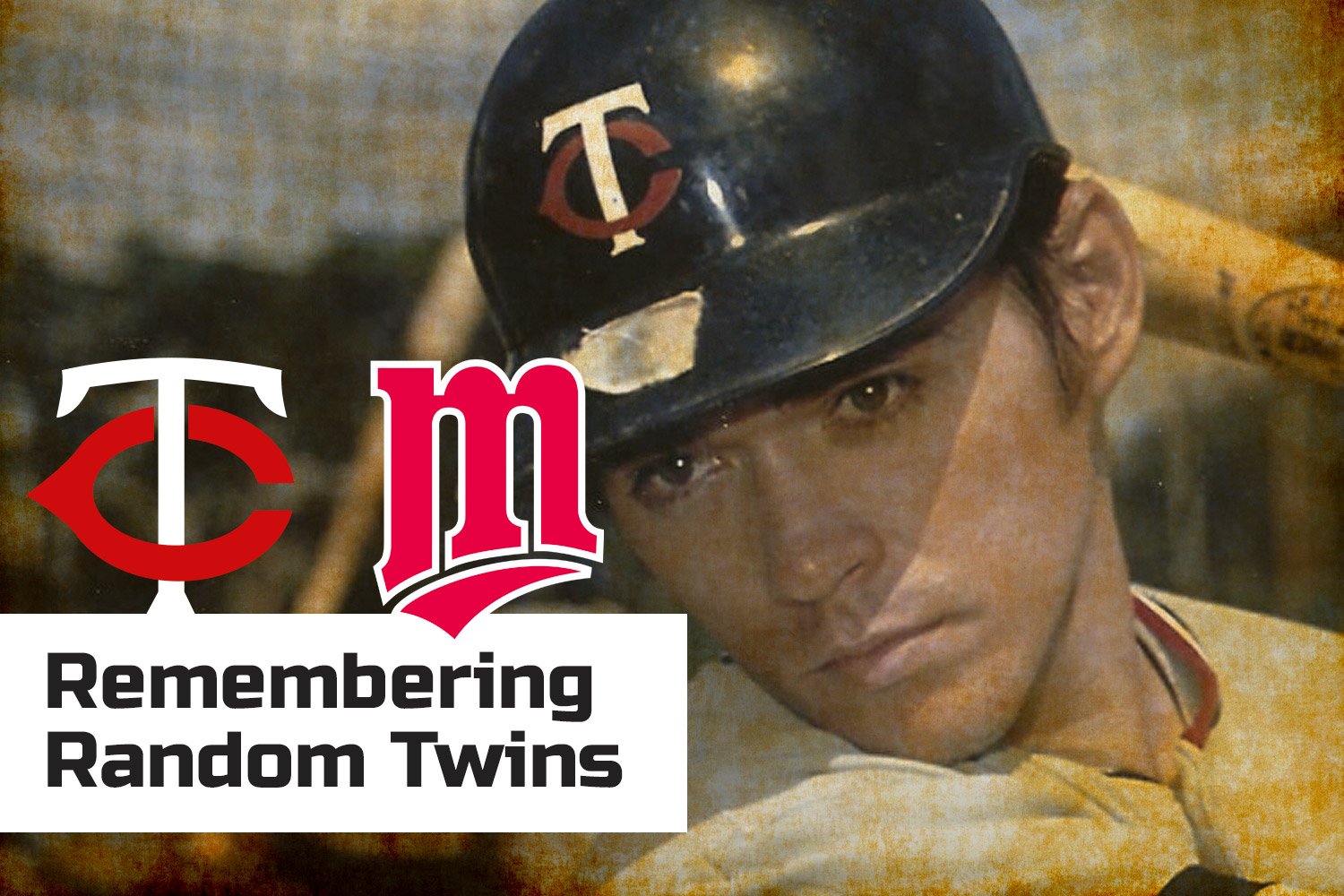 @mikelink45 had a blog post here on Twin Daily in 2019 about the best third basemen in Twins history and presented 11 choices who could be considered at least one of the best. Of those 11, Eric Soderholm is easily the one on the list that I know the least about. Eric Soderholm was born September 24, 1948, in Cortland, New York. After graduating from high school, he attended South Georgia College in Douglas, Georgia, and had a very successful baseball career. Soderholm was originally drafted in the 11th round of the June 1967 Major League Draft by the Kansas City Athletics. He did not sign and returned to South Georgia College for another season. Soderholm was then selected with the first overall pick by the Twins in the secondary phase of the draft (January 1968). For those who don’t remember, the January draft was for players who had graduated from school after the June draft, which was timed to coincide with the most common graduation date for high schools and colleges. That secondary January draft existed from 1966 to 1987. (Famously, Kirby Puckett was a top choice in the January 1982 draft.) After working methodically through the minor league system, Soderholm debuted for the Twins on September 3, 1971, in a win against Oakland. He went 1-4 with a home run, a walk, and two runs scored. From 1971 to 1975, Soderholm batted .257/.336/.389 in five years with the Twins. He hit 36 home runs and accumulated a WAR of 10.1. That’s a rather good five-year stretch. In August of 1975, Soderholm injured his knee. He missed the rest of 1975 and all of 1976. That was it for his Twins career. After the 1976 season, he was released by the Twins and signed with the Chicago White Sox. Soderholm made an immediate impact with the White Sox in 1977, batting .280 with 25 home runs, and was named the American League Comeback Player of the Year by the Sporting News. He followed that up with another 20-home run season in 1978. He later played with the Texas Rangers and New York Yankees. The only playoff team for which he played was the 1980 Yankees. He had one postseason hit in six plate appearances as the Yankees’ designated hitter, and the Kansas City Royals swept the Yankees. Those playoff games were his last games in Major League Baseball. In addition to providing some pop with the bat, Soderholm profiled as a good fielding defensive third basemen, appearing on some leader lists in his career, including ninth in defensive WAR in 1975 (among all positions), first in fielding percentage in 1977 (among 3B), first in range factor in 1979 (among 3B), and 37th in career Total Zone Runs as a third basemen right behind Josh Donaldson. Baseball-Reference lists Danny Valencia and Trevor Plouffe as two players whose careers are most similar to Eric Soderholm in all of MLB history. Baseball-Reference also lists players most similar by age, and again, other Twins show up – Willi Castro (age 26), Dave Hollins (28), and Marwin Gonzalez (29 and 30). That should give more recent Twins fans an idea of Soderholm’s abilities as a ball player. After his baseball career, Soderholm had two separate and vastly different careers. First was as a ticket broker which was all about money, money, money. How much money could be made by reselling sports and concert tickets? That would appear to be a fast-paced, hectic career. But that life and career did not fulfill Soderholm, and he pulled a complete reversal. With his daughter's help, Soderholm turned to healing, yoga, meditation, and teaching all of that at SoderWorld, a healing arts center in the western Chicago suburb of Willowbrook. “It’s so rewarding. I’m actually more proud of building this place than I am of playing nine years in the big leagues.’’ Quite a transformation. I’m too young to remember Eric Soderholm’s playing career. After a bit of research, I would say he appears to have been a good all-around third baseman for a handful of years, but he may be underrated in Twins history. I don’t think he’s the best third baseman in Twins history by any means, but after Harmon Killebrew, Gary Gaetti, and Corey Koskie, I could see an argument for him anywhere else in the top ten. Am I the only one who just doesn’t know about him? Castino, Rollins, and Cubbage are others that I am too young to remember, but I feel like I have a basic level of knowledge of their careers, which I couldn’t have said about Soderholm prior to this article. What do others remember of Eric Soderholm? Was he good? Should he be remembered more? I would love to hear any comments, recollections, or stories below.
 -
1982 Topps and the Minnesota Twins
Al from SoDak commented on Al from SoDak's blog entry in Al from SoDak
I'm happy there are some out there reading the series and getting enjoyment from it!! -
Alright folks, today we are going to talk about the 1982 Topps and Topps Traded baseball card sets. Some of you who have been following my blog series may wonder, why did he skip 1981. The reason is that I set a rule for myself and said if I do not have all Twins cards in a particular set, I would not write about it until I complete that set. So, 1981 will have to wait for a future blog post. On another note, this week you’re getting the bonus of the 1982 Topps Traded set. I simply thought this small set completes the 1982 Topps package and that they should stand together. I am fan of the 1982 Topps design. The design is the same for the standard set as well as the Traded set. The team’s name is listed near the bottom of the card with the player’s name under the team name. There are two colored stripes down the left side of the card which round the lower left corner and go partially across the bottom until they run into the team and player names. The outside line color coincides with the player’s name and the inside line is the same color as the team name. Additionally, the outside line includes the player’s position on the bottom after it rounds the corner. While I like that design, I do not like that the color seems random and unconnected to the team’s color scheme. In the case of the Twins cards, the colors are orange and brown. I would have chosen blue and red, but many other teams also have questionable color choices. Despite that critique, I still like the design. There are 792 cards in the 1982 Topps baseball card set including 26 Twins cards. The set has the rookie card of Cal Ripken, Jr., as well as future Twin Tom Brunansky. Ripken’s rookie is with two others and labeled as Orioles Futures Stars. The set contains a similar Twins card which we will highlight below. The Traded set has 132 cards featuring six Twins players. The pictures are almost all portrait shots of the players, but the quality of the pictures is getting a little better as years go by and in judgment these portrait shots have improved since the sets of the prior decade. This week I was indecisive and have some ties for most obscure player and best card. MOST OBSCURE PLAYER My selections for the most obscure Twins players in the 1982 Topps baseball sets are Chuck Baker (#253) and Randy Johnson (#51T) This is Chuck Baker’s lone Topps card as a Twin. He was a backup infielder who played only one of his three MLB seasons with the Twins. For the Twins, he had only 66 at bats and 12 hits. Noteworthy is that three of those 12 hits were triples. Baker only played an entire game nine times that season. Most of his action looks like a late game defensive replacement. Baker was drafted four times by four organizations, the first by the Twins in the 36th round of the 1971 draft but did not sign. He signed in 1975 after being drafted in the second round by the Padres. Baker came to the Twins in December of 1980 in a trade for outfield Dave Edwards. Randy Johnson, who played only one season with the Twins (and one with the White Sox), is an obscure player who many probably don’t remember. But he has always stuck in my brain. The first year the Twins played at the Metrodome, 1982, I was young and impressionable and Johnson, a designated hitter, started scorching hot in that his age 23 season. Johnson’s great April must have been a time I was paying attention and for some reason that month was etched into my memory. Baseball Reference games logs show he hit 10 home runs in his career, all with the Twins in 1982. But more to the point, five of those home runs came in April. At the end of April, he had an exceptional slash line of .393/.449/.738. His OPS was 1.187. For many years after 1982 and before the internet, I would occasionally remember Johnson and wonder what ever happened to him. Turns out he just wasn’t very good, the Twins let him go, and he never reappeared in MLB. He was out of minor league baseball after the 1985 season when he was only 26 years of age. THE BEST Alright, the best card of 1982 is an easy one for me, well easy two. It’s Kent Hrbek’s official rookie card (#766) and other rookie year card (#44T). Like probably most everyone, my favorite would be his first stand-alone card (#44T). However, that one is in the Traded set, so it’s not considered his true rookie card. The true rookie card is the #766 Future Stars card which also features long-time catcher Tim Laudner and short-time shortstop Lenny Faedo. I hope to get Hrbek’s autograph someday on the Future Stars card along with Laudner’s. PERSONAL FAVORITE I love the picture and stance of Butch Wynegar (#222). It’s of the style of the 1971 Roberto Clemente (which is a favorite of many collectors) and the 1972 card of Twins superstar Harmon Killebrew. Wynegar is kind of mid swing with the bat aimed at the camera. I guess I just think it’s a cool pose which is the single reason it’s my favorite Twins card in the 1982 set. I think the 1982 Topps cards are a pretty good design. As a group I can say I definitely like the early 80s designs better than the late 70s. We’ll see if this trend continues. Does anybody out there have a player to them like Randy Johnson was to me, someone who made a distinct impression upon you that made you think he was better than he actually was? Do you like the Clemente/Killebrew/Wynegar bat pose? I would appreciate any comments or opinions below. Thanks for reading. Go Twins!
- 6 comments
-
- 6
-
-
- chuck baker
- kent hrbek
- (and 2 more)
-
Yeah, considered writing about the Big Train. Maybe later.
-
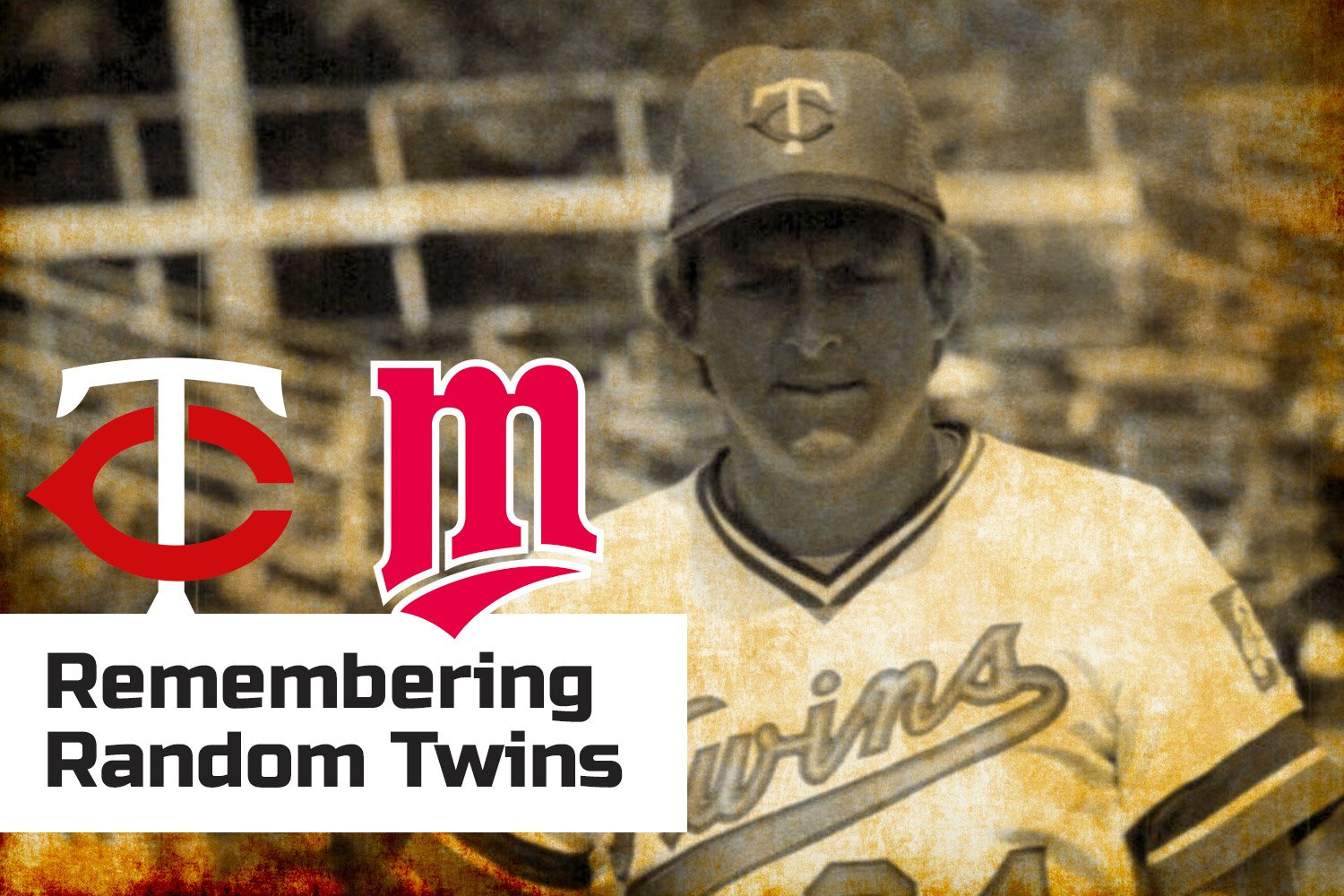 Don Cooper was born in New York City on January 15, 1956. From an early age, he always wanted to play baseball. Cooper was quoted, “My focus from the third grade up was that, ‘I’m playing Major League Baseball.’ That was my dream, and that’s what I always sought after. I was blessed enough to get that dream fulfilled.” He continued with that spirit and determination through high school in New York City and pitched collegiately at the New York Institute of Technology. After college, the New York Yankees drafted Cooper in the 17th round of the 1978 Major League Baseball Amateur Draft. He pitched in the Yankees' minor league system from 1978 to 1980, throwing a no-hitter in August 1978, only a couple of months after being drafted. The Twins obtained Cooper via the 1980 Rule 5 draft. He was primarily a relief pitcher during his MLB career, starting only three games. Cooper’s tenure with the Twins started in 1981. He logged a 1-5 record that season. His lone win came on September 2, 1981, a comeback victory against the Yankees. He entered the game in the 8th inning with the Twins trailing 3-2. Cooper got the final five outs while allowing one hit and no runs. In the bottom of the inning, the offense got to work, taking the lead by scoring two runs on a Mickey Hatcher RBI triple and a sacrifice bunt. After the 1981 season, Cooper only recorded one last MLB decision – a loss for the Twins in 1982. After the 1982 season, the Twins traded Cooper to Toronto for Dave Baker, an uninspiring third base prospect who played two seasons for the AAA Toledo Mud Hens but never impressed enough to appear in a game for the Twins. Cooper played sparingly for the Blue Jays one season and then finished his career in 1985 with his hometown New York Yankees. His career statistics include a 1-6 record, 5.27 ERA, and 47 strikeouts in 85.1 innings. Overall, he had a negative WAR of -0.3. So, what’s so great about Don Cooper that makes him worthy of this write-up? "I love being part of young people’s lives, helping them achieve the dreams they’re dreaming about. That’s what I’m into." - Don Cooper, 2018. In 1988, Don Cooper began a 32-year career with the Chicago White Sox organization. He made his way through their minor league system, serving as pitching coach at both levels of single A, then at AA and AAA, plus about eight years as the minor league pitching coordinator for the organization. In 2002, he returned to the big leagues, this time as a coach. He served as the White Sox pitching coach for an incredible 18+ seasons. He also served as interim manager for the last two games of the 2011 season after Ozzie Guillen was let go; he went 1-1. Cooper was pitching coach at the big-league level for four managers (Jerry Manuel, Ozzie Guillen, Robin Ventura, and Rick Renteria) and two general managers (Ken Williams and Rick Hahn). His total 32-year career at all levels of the organization includes two additional general managers of the White Sox organization (Larry Himes and Ron Schueler). That’s an incredible run. He must have been very well thought of to serve that many different major league field managers and organizational general managers. During his time as pitching coach with the White Sox, Don Cooper worked with all-star pitchers Mark Buehrle, Esteban Loaiza, Jon Garland, Bobby Jenks, Jose Contreras, Matt Thornton, Chris Sale, Jake Peavy, Jesse Crain (Twins legend), Jose Quintana, and Lucas Giolito. Of course, the Chicago White Sox ended their 87-year drought and won the 2005 World Series when they swept the Astros largely behind great starting pitching. Each starting pitcher threw at least seven innings. In addition, Buehrle and former Twins legend Philip Humber threw perfect games under Cooper’s tutelage. Buehrle had a regular no-hitter in 2007, and Giolito also threw a no-hitter in 2020. Cooper also helped Esteban Loaiza to a 20-win campaign in 2003. They say, “Find something you love to do, and you’ll never work a day in your life.” Don Cooper embodies that saying with a 10-year pitching career and then a 32-year coaching career in the White Sox organization. According to the saying, Cooper never worked a day in his life. Good for him. I’m sure we can all appreciate and admire that.
 -
Mr. Don Cooper played parts of two seasons for the Twins in the early 1980s. While he had an ordinary pitching career with the Twins, he made a bigger mark later as a coach for one of the Twins’ most fierce rivals. Don Cooper was born in New York City on January 15, 1956. From an early age, he always wanted to play baseball. Cooper was quoted, “My focus from the third grade up was that, ‘I’m playing Major League Baseball.’ That was my dream, and that’s what I always sought after. I was blessed enough to get that dream fulfilled.” He continued with that spirit and determination through high school in New York City and pitched collegiately at the New York Institute of Technology. After college, the New York Yankees drafted Cooper in the 17th round of the 1978 Major League Baseball Amateur Draft. He pitched in the Yankees' minor league system from 1978 to 1980, throwing a no-hitter in August 1978, only a couple of months after being drafted. The Twins obtained Cooper via the 1980 Rule 5 draft. He was primarily a relief pitcher during his MLB career, starting only three games. Cooper’s tenure with the Twins started in 1981. He logged a 1-5 record that season. His lone win came on September 2, 1981, a comeback victory against the Yankees. He entered the game in the 8th inning with the Twins trailing 3-2. Cooper got the final five outs while allowing one hit and no runs. In the bottom of the inning, the offense got to work, taking the lead by scoring two runs on a Mickey Hatcher RBI triple and a sacrifice bunt. After the 1981 season, Cooper only recorded one last MLB decision – a loss for the Twins in 1982. After the 1982 season, the Twins traded Cooper to Toronto for Dave Baker, an uninspiring third base prospect who played two seasons for the AAA Toledo Mud Hens but never impressed enough to appear in a game for the Twins. Cooper played sparingly for the Blue Jays one season and then finished his career in 1985 with his hometown New York Yankees. His career statistics include a 1-6 record, 5.27 ERA, and 47 strikeouts in 85.1 innings. Overall, he had a negative WAR of -0.3. So, what’s so great about Don Cooper that makes him worthy of this write-up? "I love being part of young people’s lives, helping them achieve the dreams they’re dreaming about. That’s what I’m into." - Don Cooper, 2018. In 1988, Don Cooper began a 32-year career with the Chicago White Sox organization. He made his way through their minor league system, serving as pitching coach at both levels of single A, then at AA and AAA, plus about eight years as the minor league pitching coordinator for the organization. In 2002, he returned to the big leagues, this time as a coach. He served as the White Sox pitching coach for an incredible 18+ seasons. He also served as interim manager for the last two games of the 2011 season after Ozzie Guillen was let go; he went 1-1. Cooper was pitching coach at the big-league level for four managers (Jerry Manuel, Ozzie Guillen, Robin Ventura, and Rick Renteria) and two general managers (Ken Williams and Rick Hahn). His total 32-year career at all levels of the organization includes two additional general managers of the White Sox organization (Larry Himes and Ron Schueler). That’s an incredible run. He must have been very well thought of to serve that many different major league field managers and organizational general managers. During his time as pitching coach with the White Sox, Don Cooper worked with all-star pitchers Mark Buehrle, Esteban Loaiza, Jon Garland, Bobby Jenks, Jose Contreras, Matt Thornton, Chris Sale, Jake Peavy, Jesse Crain (Twins legend), Jose Quintana, and Lucas Giolito. Of course, the Chicago White Sox ended their 87-year drought and won the 2005 World Series when they swept the Astros largely behind great starting pitching. Each starting pitcher threw at least seven innings. In addition, Buehrle and former Twins legend Philip Humber threw perfect games under Cooper’s tutelage. Buehrle had a regular no-hitter in 2007, and Giolito also threw a no-hitter in 2020. Cooper also helped Esteban Loaiza to a 20-win campaign in 2003. They say, “Find something you love to do, and you’ll never work a day in your life.” Don Cooper embodies that saying with a 10-year pitching career and then a 32-year coaching career in the White Sox organization. According to the saying, Cooper never worked a day in his life. Good for him. I’m sure we can all appreciate and admire that. View full article
-
The 1980 Topps baseball card set is better than the average set of that era. To me it’s not great, but better than average. The design consists of a banner in the upper left corner with the player’s position. The upper right corner has the player’s name. The bottom right has another, larger banner with the team’s name. Each card also has a facsimile autograph of the player. The pictures are rather bland in my opinion with a mix of portraits and action shots. Some of the action shots are not well done. See the Mike Cubbage card (#503). There are 726 cards in the 1980 Topps baseball card set including 27 Twins cards. MOST OBSCURE PLAYER My choice for most obscure Twins player in the 1980 Topps baseball set pitched for five seasons in Major League Baseball with two of those coming with the Twins. His son also played Major League Baseball and is a trivia answer/footnote in history. Mike Bacsik (#453) is my choice for most obscure Twin in this year’s set. Right-handed pitcher Michael James Bacsik was drafted in the 55th round of the 1970 MLB draft by the Baltimore Orioles. He debuted with the Texas Rangers in June of 1975. He started three games in 1975, then never started another. He pitched only 73 games over five seasons with a career high of 31 games with the Twins in 1979. His career record was 8-6 with an ERA of 4.43. He pitched 172.2 innings and finished with a career WAR of -0.9. Bacsik’s story gets interesting when we introduce his son, Michael Joseph Bacsik. Michael Jospeh also pitched in Major League Baseball. He was a left-handed pitcher with similar numbers to his father. He had a 10-13 career record over five seasons. He had a 5.46 ERA over 216.0 innings during the steroid era. His career WAR was -0.5. The younger Bacsik’s claim to fame is that he gave up the record-breaking 756th home run of Barry Bonds’s career. Wikipedia has a great note about this. While the son did give up number 756 to Bonds, the father was one of 30 pitchers to pitch to Hank Aaron after Aaron had achieved 755 home runs. The younger Bacsik would comment in 2007, "If my dad had been gracious enough to let Hank Aaron hit a home run, we both would have given up 756.” Mike Bacsik the Twin, last pitched in Major League Baseball in 1980. He went to spring training in 1981 with Seattle but was released in late March. THE BEST Well Rod Carew was now gone to the Angels. The Twins were going downhill before bottoming out in 1982. There are just not a lot of great players or cards during that point in Twins History. There are no 1980 Topps Twins cards of any value. So, my choice for the best Twins card of this year is going to be that of Ken Landreaux in what was to be his lone All-Star season. During 1980, Landreaux hit .281/.334/.417. He had 7 home runs and 62 RBIs. For the 1980 Twins, that performance was enough to be selected to the All-Star game. Unbelievably, his WAR was actually ninth among Twins batters who played more than 100 games that season. For those wondering, no, his first half numbers were not far superior to his second half. So why was he selected to the All-Star game? I suspect the notoriety of having a 31-game hitting streak in April and May was the main reason for his being named the Twins All-Star representative that season. PERSONAL FAVORITE My favorite 1980 Twins card in the Topps set is probably an unusual choice. It’s not a superstar or even a long-tenured Twin. It’s a card where I just simply like the picture. Behold the #218 card of Jose Morales. Above we talked about the father and son Mike Bacsik tandem who both pitched in Major League Baseball. Here we have catcher Jose Manuel Morales who played for the Twins from 1978-1980, but he is not related to catcher Jose Guillermo Morales who played for the Twins from 2007-2010. Anyway, the Morales 1980 Topps card. Love the picture. Red Hat. Two Bats. Collared shirt over a tee shirt under a jersey. Mustache, eyebrows, sideburns. There’s a lot to take in. So that’s my review of the Minnesota Twins in the 1980 Topps baseball card set. There’s not a lot of big names for the Twins in this set. But I do think the design and style of 1980 cards may be the best since 1975. What do you all think? I would love to see your opinions and comments below. Go Twins.
- 2 comments
-
- 1
-
-
- mike cubbage
- mike bacsik
- (and 2 more)
-
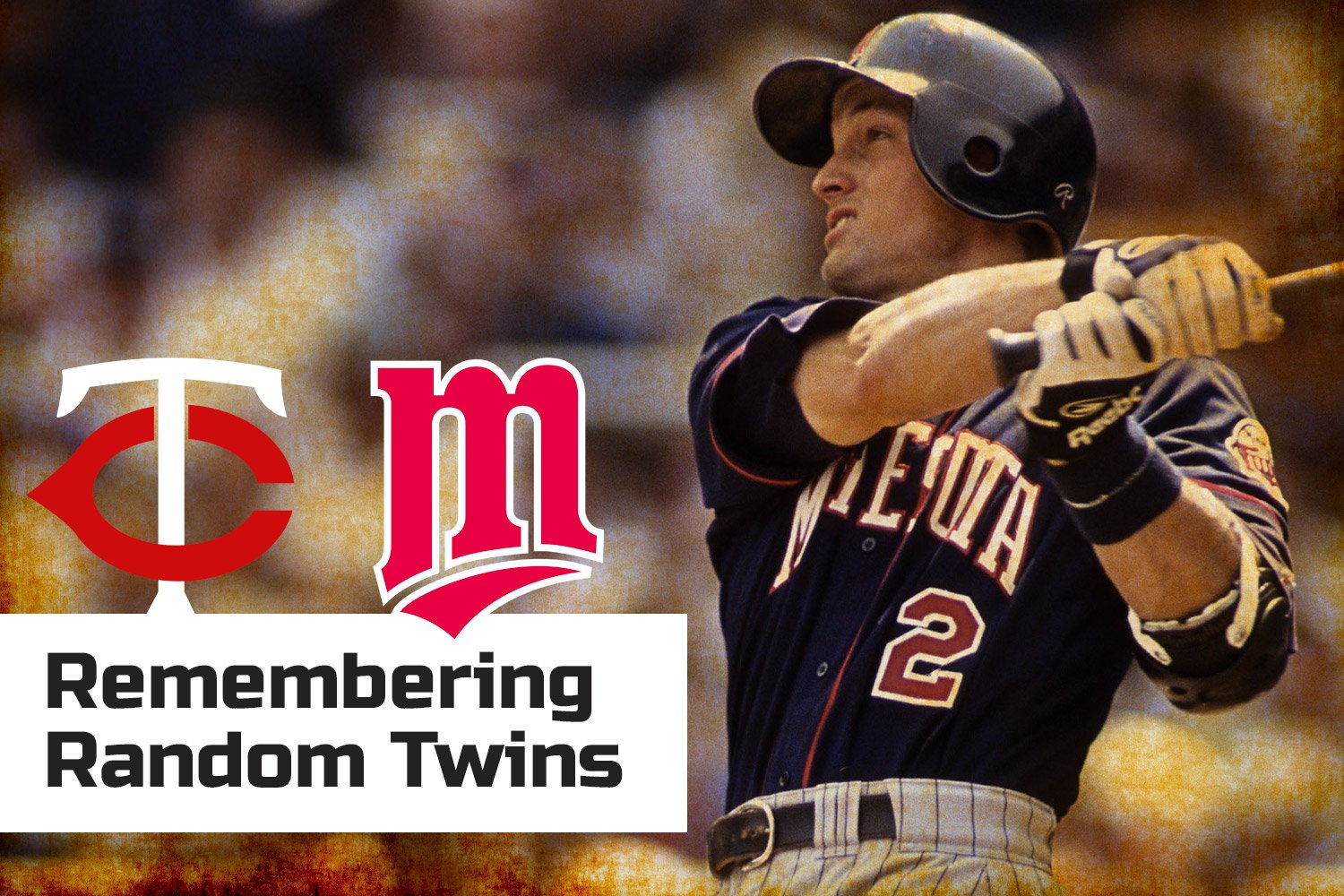 Pat Meares seemed like a capable player in the post-1991 World Series era. He came up and performed admirably with the Twins for six seasons, and when he became too expensive, he signed with…the Pittsburgh Pirates. Patrick James Meares was born September 6, 1968, in Salina, Kansas. He grew up in Salina and graduated from Salina Sacred Heart High School, which did not have a baseball team. However, Meares was a three-sport high school athlete who played football, basketball, and golf. Meares’ strong play in American Legion ball was enough to get the attention of coach Gene Stephenson at Wichita State University, so after graduation, he made the short 90-mile trek to attend college and play baseball at Wichita State. The Wichita State Shockers were an absolute powerhouse in NCAA baseball from 1980-2009. In those 30 years, they failed to make the postseason only three times. In 15 years, from 1982-1996, Wichita State went to the College World Series seven times. Meares played on College World Series teams in 1988 and 1989. In 1989, he batted .429 and hit a home run in the championship game won by Wichita State. Meares was selected to the all-tournament team. 1989 is the only championship won by the Shockers to date. Pat Meares was selected to the Kansas Baseball Hall of Fame for his distinguished college and pro careers in 2012. The Minnesota Twins drafted the shortstop in the 12th round of the 1990 Major League Amateur Draft. In four years in the minor leagues, Meares played at each of the four minor league levels, showing an ability to play shortstop and hit for a decent average. In 1993, he started the season with AAA Portland and hit .296/.345/.389 in only 18 games. In the previous offseason, Greg Gagne had vacated the shortstop position, leaving after 1992 to sign a three-year contract for $10 million with the Kansas City Royals. The Twins had prioritized resigning Kirby Puckett after the 1992 season, and as we all know, spending money has never been a forte of the Twins, and the 1990s were no exception. Therefore, there was no room in the budget for Gagne. The Twins’ answer to replacing Gagne was awarded the opening-day shortstop assignment to Scott Leius. Unfortunately, the 1991 World Series hero tore his rotator cuff and was done after only ten games. Utility man Jeff Reboulet started at shortstop for the next two weeks. Meares finally debuted on May 5, 1993, with his first start coming on May 9. From that point forward, Meares essentially replaced Gagne for the remainder of the season and became the primary shortstop for the following five seasons. That’s no small feat. How many shortstops have played that long for the Twins? Off the top of my head, my guesses are Zoilo, Smalley, Gagne, Meares, Guzman, and hopefully Correa. During his time with the Twins, Meares batted .265/.301/.386. He had 41 home runs and 303 RBI. In his tenure, the Twins were the victims of Yankees’ pitcher David Wells throwing the 15th perfect game in Major League history. The lineup that day was not particularly inspiring, with only three batters, including Meares, with an OPS over .700. It was a Sunday afternoon game, so Tom Kelly emptied the bench as he tended to do. Brent Gates batted second. Jon Shave batted seventh. Both had batting averages of sub-.150. But it was Meares who, unfortunately, was the final out with a fly to right. The Twins have always been frugal, but the mid to late 1990s seemed especially so. In line with their thinking at the time, and with the newly acquired Cristian Guzman (from the Chuck Knoblauch trade) waiting in the wings, although not necessarily ready, the Twins declined to resign Meares after the 1998 season. He signed a one-year $1.5 million contract just before spring training in 1999. Then, in April of 1999, the Pirates hastily offered a 4-year contract extension for $15 million, to which Meares agreed. That contract did not age well. Meares injured his left hand in 2000 and rarely played after that. Meares also had a grievance against the Pirates, which he later dropped. After a settlement, he retired without playing out the full term of the contract. A few Pirates blogs rate his contract as terrible and one of the worst in Pirates' history. I wish I could remember or cite an interesting Pat Meares anecdote. I just thought he was a talented player on bad teams, but I don’t remember and can’t find any interesting stories about him. If I had a word to describe his personality – and this is my judgment from extremely far away – I would say stoic. He just seemed like a good player without a lot of flash who was there to play baseball. Worse things can be said about a ballplayer.
 -
Pat Meares was a decent major league player cursed to play for two bad 1990s franchises. What did he do to deserve that? Pat Meares seemed like a capable player in the post-1991 World Series era. He came up and performed admirably with the Twins for six seasons, and when he became too expensive, he signed with…the Pittsburgh Pirates. Patrick James Meares was born September 6, 1968, in Salina, Kansas. He grew up in Salina and graduated from Salina Sacred Heart High School, which did not have a baseball team. However, Meares was a three-sport high school athlete who played football, basketball, and golf. Meares’ strong play in American Legion ball was enough to get the attention of coach Gene Stephenson at Wichita State University, so after graduation, he made the short 90-mile trek to attend college and play baseball at Wichita State. The Wichita State Shockers were an absolute powerhouse in NCAA baseball from 1980-2009. In those 30 years, they failed to make the postseason only three times. In 15 years, from 1982-1996, Wichita State went to the College World Series seven times. Meares played on College World Series teams in 1988 and 1989. In 1989, he batted .429 and hit a home run in the championship game won by Wichita State. Meares was selected to the all-tournament team. 1989 is the only championship won by the Shockers to date. Pat Meares was selected to the Kansas Baseball Hall of Fame for his distinguished college and pro careers in 2012. The Minnesota Twins drafted the shortstop in the 12th round of the 1990 Major League Amateur Draft. In four years in the minor leagues, Meares played at each of the four minor league levels, showing an ability to play shortstop and hit for a decent average. In 1993, he started the season with AAA Portland and hit .296/.345/.389 in only 18 games. In the previous offseason, Greg Gagne had vacated the shortstop position, leaving after 1992 to sign a three-year contract for $10 million with the Kansas City Royals. The Twins had prioritized resigning Kirby Puckett after the 1992 season, and as we all know, spending money has never been a forte of the Twins, and the 1990s were no exception. Therefore, there was no room in the budget for Gagne. The Twins’ answer to replacing Gagne was awarded the opening-day shortstop assignment to Scott Leius. Unfortunately, the 1991 World Series hero tore his rotator cuff and was done after only ten games. Utility man Jeff Reboulet started at shortstop for the next two weeks. Meares finally debuted on May 5, 1993, with his first start coming on May 9. From that point forward, Meares essentially replaced Gagne for the remainder of the season and became the primary shortstop for the following five seasons. That’s no small feat. How many shortstops have played that long for the Twins? Off the top of my head, my guesses are Zoilo, Smalley, Gagne, Meares, Guzman, and hopefully Correa. During his time with the Twins, Meares batted .265/.301/.386. He had 41 home runs and 303 RBI. In his tenure, the Twins were the victims of Yankees’ pitcher David Wells throwing the 15th perfect game in Major League history. The lineup that day was not particularly inspiring, with only three batters, including Meares, with an OPS over .700. It was a Sunday afternoon game, so Tom Kelly emptied the bench as he tended to do. Brent Gates batted second. Jon Shave batted seventh. Both had batting averages of sub-.150. But it was Meares who, unfortunately, was the final out with a fly to right. The Twins have always been frugal, but the mid to late 1990s seemed especially so. In line with their thinking at the time, and with the newly acquired Cristian Guzman (from the Chuck Knoblauch trade) waiting in the wings, although not necessarily ready, the Twins declined to resign Meares after the 1998 season. He signed a one-year $1.5 million contract just before spring training in 1999. Then, in April of 1999, the Pirates hastily offered a 4-year contract extension for $15 million, to which Meares agreed. That contract did not age well. Meares injured his left hand in 2000 and rarely played after that. Meares also had a grievance against the Pirates, which he later dropped. After a settlement, he retired without playing out the full term of the contract. A few Pirates blogs rate his contract as terrible and one of the worst in Pirates' history. I wish I could remember or cite an interesting Pat Meares anecdote. I just thought he was a talented player on bad teams, but I don’t remember and can’t find any interesting stories about him. If I had a word to describe his personality – and this is my judgment from extremely far away – I would say stoic. He just seemed like a good player without a lot of flash who was there to play baseball. Worse things can be said about a ballplayer. View full article
-
Welcome to my review of the 1979 Topps baseball card set and the Minnesota Twins player cards in that set. Once again, Rod Carew is the Twins lone superstar from that era. Mr. Carew will make an appearance later in this post. When it comes to my review of any of the late 1970s Topps cards, I have come to the realization that I am not a fan of the design of most years. Some years are better than others, of course. But I have also come to recognize that my opinion is probably clouded by two things. I am a little too young to have been fully invested in those Twins teams of the late 1970s. Secondly, the teams were just not that great. And those two things might have been a chicken and egg thing. Was I not that interested because they were bad, or was I just too young? For me, this design fits the “just OK” category. I find the design and pictures to be simple, some might say boring. The bottom of the card lists the player’s name and position. Under that is a banner with the player’s team. There are 726 cards in the set with 29 Twins cards. MOST OBSCURE PLAYER Throughout my blog series of Topps baseball cards and Twins players, I hope I have not offended anyone by using the phrase “most obscure.” Obviously, these guys I select as the most obscure are far more accomplished than I. But reviewing each year’s players is captivating to me in that some players appear only briefly then fade from our memories. I try to do somewhat of an internet dive and try to figure out what happened to that player and where they went. When I select the most obscure, if I have a few choices, I tend to go with the player who has an interesting story. My choice as the most obscure Twins Player in the 1979 set is local, so if anyone who knows him reads this, I mean no disrespect. For 1979, I chose Gery Serum’s card (#627) as the most obscure Twins player in the Topps set. As an aside, where the heck is that field in the background of the picture? That looks worse than any rec league field that I played on or that my son plays on nowadays. Sandlots are fine, but shouldn’t a professional be playing on a better field? Gary Serum is an Upper Midwesterner. He was born in Fargo, ND. He graduated high school in Alexandria, MN. For college, he first attended Moorhead State University then St. Cloud State University. The Twins signed Serum after college as an amateur free agent. Despite being a free agent, Serum quickly worked his way through the Twins’ minor league system and by 1977 he was called up to the Twins and first appeared on July 22. He played the full season in 1978 for the Twins pitching 184.1 innings with a record of 9-9 including six complete games and one shutout. He pitched part of 1979 for the Twins then never played Major League Baseball again. After his playing career, Serum opened a restaurant in Anoka, MN, so go check it out. I’m sure many of you have. THE BEST Once again, the most valuable Twins card in the 1979 Topps set is a Rod Carew card, the #1 Batting Leaders card with Dave Parker. I do like combo cards. But let’s also acknowledge Mr. Carew’s other last card as a Twin. His base card (#300) is an all-star card. And it’s the end of an era. Carew was traded to the Angels in February of 1979. The all-star card has a simple difference from the regular base card in that it has another banner on the card labeling the player as an all-star. For some reason, for me personally, that upgrades the card quite a bit over the plain 1979 Topps base card. It seems like a small thing that would not affect my opinion, but for me it makes the card much more compelling than a regular base card and simply better overall. So, those two Carew cards kind of tie for me as the best of 1979. PERSONAL FAVORITE I know I mentioned an autographed Dave Goltz in my 1978 blog entry. Here I am again. But wait, there’s a good reason. As I looked at this card (#27), I thought the player’s face/picture/stance/something was familiar to me. I thought he looked like another player from another era. After not too long I realized a likeness to Mr. Ebby Calvin “Nuke” LaLoosh from my favorite baseball movie Bull Durham. I’m sure most of you will think I’m nuts. But let me know, is there any resemblance? Is it the way he wears the hat, the striping on the sleeves, or the blue long-sleeved undershirt? Maybe the V-neck? While I was digging for a picture for Nuke, I came across a USA Today article about the real-life inspiration for the Nuke character – Steve Dalkowski. It’s worth a read. His numbers were crazy. So, I’m going with my signed 1979 Dave Goltz card as my favorite Twin in the 1979 Topps set exclusively because of my probably incorrect perception that he looks like the fictional character Nuke LaLoosh and that I loved that movie and have seen it too many times. What do you all think? Does anyone know Gary Serum or his restaurant? What do you all think of Nuke LaLoosh and Bull Durham? I would love to see your opinions, comments, or stories below. Go Twins.
- 6 comments
-
- 3
-
-
- rod carew
- gary serum
- (and 1 more)
-
1978 Topps and the Minnesota Twins
Al from SoDak commented on Al from SoDak's blog entry in Al from SoDak
Whoopsie, I see I posted the wrong Dave Goltz auto. Here's the 1978. -
"Where you can ride 2 elite pitchers," exactly. There were times +/- 15 years ago where the Twins had the opposite. Baker, Bonser, Blackburn, Slowey, Perkins, Pavano, post elbow surgery Liriano, All these pitchers were fine in the regular season. There was no dud of a 4th or 5th starter. But once the playoffs started, you never felt like the Twins had the starting pitching advantage. It's a different game in the playoffs because of the frequency of off days.
-
Les Straker literally came out of nowhere in 1987. He pitched fine during the season but unexpectedly worked his way into becoming the third starter in the playoffs, helping the Twins win the 1987 World Series. Then, just as quickly, he was gone. Les Straker was born on October 10, 1959, in Venezuela. The Cincinnati Reds signed him in 1977. Straker pitched seven years in the Reds minor league system but struggled in 1981 and 1983 in AA. He was granted free agency after the 1983 season, signed shortly after that with the Oakland A’s, and again was mediocre at AA in 1984. Since the Twins always needed pitching, they signed Straker before the 1985 season. Something changed in 1985, as he was downright good for AA Orlando. In 1986, he had a decent season for AAA Toledo, setting himself up for a 1987 that no one could have seen coming. Straker made the Twins out of spring training in 1987 and began the season as the fifth starter. He was only the 40th native Venezuelan to make it to Major League baseball. (Much has changed as nearly 400 more Venezuelans have debuted since Straker in 1987.) In 1987, the Twins went 11-20 in his 31 appearances (26 starts). His record was 8-10 with an ERA of 4.37. His statistics suggest he was a fairly average pitcher, ending the year with a 106 ERA+. The Twins used 12 starting pitchers in 1987. Through the process of attrition, Straker seemed to outlast the other Twins starting pitchers (minus Viola and Blyleven) to the point that he earned the nod as the third starter for the postseason. He started game three of the American League Champion Series against the Detroit Tigers on his 28th birthday. It did not go well for him. He gave up five runs in 2.2 innings pitched, with all five in the third inning. However, he did not get the loss as Dan Schatzeder came in and offered 3.1 innings of shutout baseball, and the lineup rallied to take a 6-5 lead in the 7th inning. Sadly, Jeff Reardon could not hold the lead, and the Twins lost 7-6. But that was their only loss of the five-game series. The Twins’ batters were hot, scoring 34 runs in the five games and beating the Tigers four games to one to advance to the World Series for only the second time in team history. In the World Series against the St. Louis Cardinals, Straker started games 3 and 6, making him the first Venezuelan to pitch in the World Series. Ironically, the Twins lost the game he pitched well and won the game he pitched poorly. Straker threw six innings in game three in St. Louis, allowing no runs on four hits and two walks. He left with the lead as the offense scratched across a single run in the top of the sixth. The bullpen could not hold the lead as Juan Berenguer allowed three runs in only one-third of an inning, and the Cardinals won 3-1. Game six was a poor performance by Straker. He gave up four runs in three innings. This time, the bullpen was much better. Berenguer, Schatzeder, and Reardon allowed only one run in six innings. Then the offense came alive with Don Baylor’s first Twins home run and Kent Hrbek’s grand slam. The Twins won 11-5. As we know, they also won game seven in their first World Series championship. In 1988, Straker again started the season as a Twins’ starting rotation member. His 1988 statistics seem similar to, if not better than, 1987. However, he was injured and did not pitch between June 13 and September 4. He pitched for the Twins’ AAA Portland team in 1989, winning eight games with a 4.26 ERA. He moved on in 1990 but pitched only 6.2 innings for Montreal’s AAA team. And that was the end. He was done at 30 years old. His career record was 10-15. I wonder how many World Series starting pitchers won only ten games in their entire playing career. Since 2004, Straker has continued to contribute to the sport he loves. He has served as a pitching coach in the Phillies minor league system, specifically working with their Venezuelan and Dominican Summer League teams. This role allows him to share his knowledge and experience with young players, helping them develop their skills and reach their potential. Les Straker was a late bloomer who bloomed at the right time for him and the Twins, allowing them to create history together in 1987. View full article
-
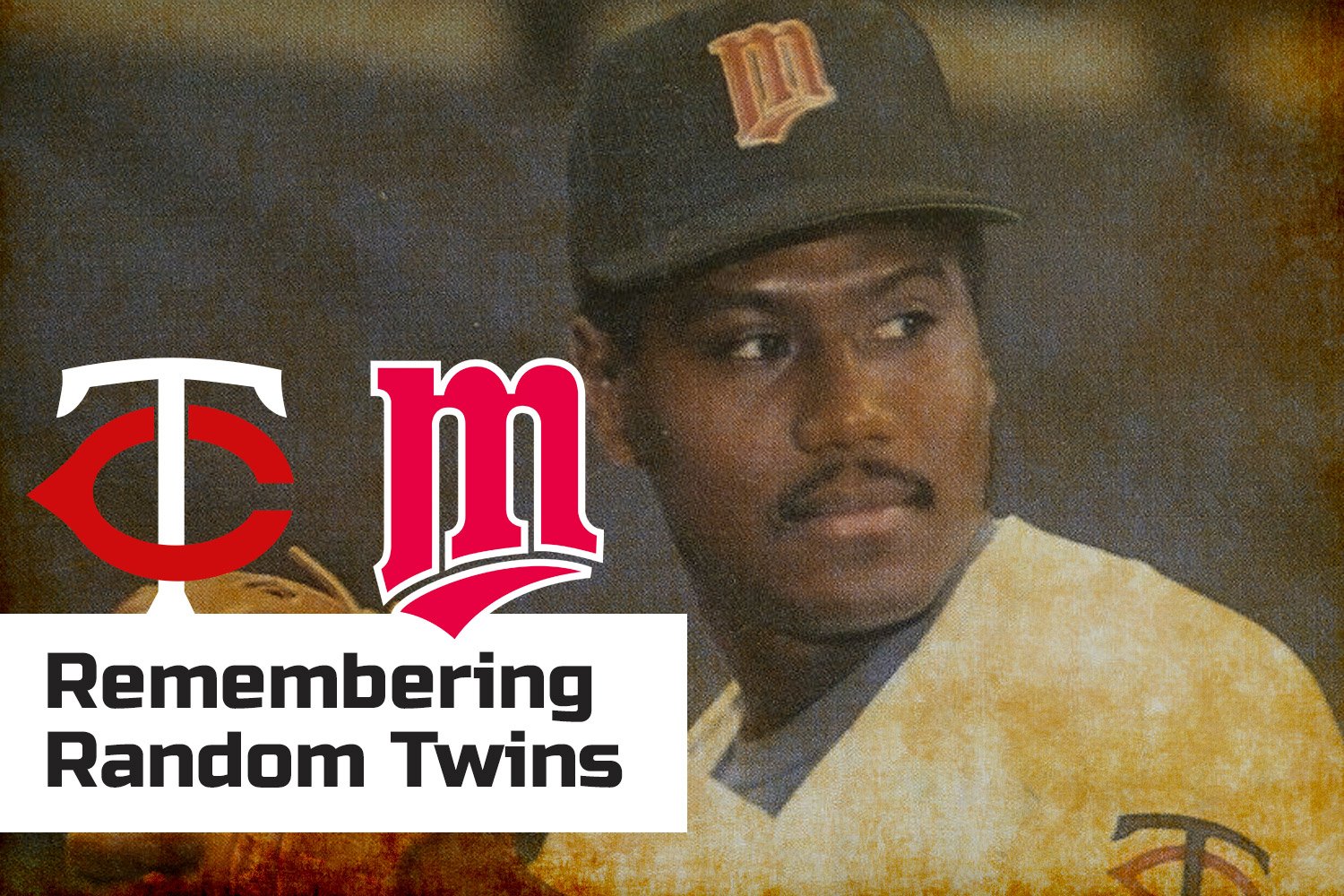 Les Straker was born on October 10, 1959, in Venezuela. The Cincinnati Reds signed him in 1977. Straker pitched seven years in the Reds minor league system but struggled in 1981 and 1983 in AA. He was granted free agency after the 1983 season, signed shortly after that with the Oakland A’s, and again was mediocre at AA in 1984. Since the Twins always needed pitching, they signed Straker before the 1985 season. Something changed in 1985, as he was downright good for AA Orlando. In 1986, he had a decent season for AAA Toledo, setting himself up for a 1987 that no one could have seen coming. Straker made the Twins out of spring training in 1987 and began the season as the fifth starter. He was only the 40th native Venezuelan to make it to Major League baseball. (Much has changed as nearly 400 more Venezuelans have debuted since Straker in 1987.) In 1987, the Twins went 11-20 in his 31 appearances (26 starts). His record was 8-10 with an ERA of 4.37. His statistics suggest he was a fairly average pitcher, ending the year with a 106 ERA+. The Twins used 12 starting pitchers in 1987. Through the process of attrition, Straker seemed to outlast the other Twins starting pitchers (minus Viola and Blyleven) to the point that he earned the nod as the third starter for the postseason. He started game three of the American League Champion Series against the Detroit Tigers on his 28th birthday. It did not go well for him. He gave up five runs in 2.2 innings pitched, with all five in the third inning. However, he did not get the loss as Dan Schatzeder came in and offered 3.1 innings of shutout baseball, and the lineup rallied to take a 6-5 lead in the 7th inning. Sadly, Jeff Reardon could not hold the lead, and the Twins lost 7-6. But that was their only loss of the five-game series. The Twins’ batters were hot, scoring 34 runs in the five games and beating the Tigers four games to one to advance to the World Series for only the second time in team history. In the World Series against the St. Louis Cardinals, Straker started games 3 and 6, making him the first Venezuelan to pitch in the World Series. Ironically, the Twins lost the game he pitched well and won the game he pitched poorly. Straker threw six innings in game three in St. Louis, allowing no runs on four hits and two walks. He left with the lead as the offense scratched across a single run in the top of the sixth. The bullpen could not hold the lead as Juan Berenguer allowed three runs in only one-third of an inning, and the Cardinals won 3-1. Game six was a poor performance by Straker. He gave up four runs in three innings. This time, the bullpen was much better. Berenguer, Schatzeder, and Reardon allowed only one run in six innings. Then the offense came alive with Don Baylor’s first Twins home run and Kent Hrbek’s grand slam. The Twins won 11-5. As we know, they also won game seven in their first World Series championship. In 1988, Straker again started the season as a Twins’ starting rotation member. His 1988 statistics seem similar to, if not better than, 1987. However, he was injured and did not pitch between June 13 and September 4. He pitched for the Twins’ AAA Portland team in 1989, winning eight games with a 4.26 ERA. He moved on in 1990 but pitched only 6.2 innings for Montreal’s AAA team. And that was the end. He was done at 30 years old. His career record was 10-15. I wonder how many World Series starting pitchers won only ten games in their entire playing career. Since 2004, Straker has continued to contribute to the sport he loves. He has served as a pitching coach in the Phillies minor league system, specifically working with their Venezuelan and Dominican Summer League teams. This role allows him to share his knowledge and experience with young players, helping them develop their skills and reach their potential. Les Straker was a late bloomer who bloomed at the right time for him and the Twins, allowing them to create history together in 1987.
 -
1978 Topps and the Minnesota Twins
Al from SoDak commented on Al from SoDak's blog entry in Al from SoDak
Thanks for reading and the encouragement -
Welcome to my review of the 1978 Topps baseball card set and the Minnesota Twins. There really are not any Twins superstars in this set other than Rod Carew. It’s easy to see how the Twins weren’t world beaters in the late 1970s. In my judgment, the 1978 Topps baseball card design is one of their better designs during the late 1970s. I like the script team name in the lower left corner, the small baseball in the upper right corner listing the player’s position, and the player’s name at the bottom of the card in plain black. It’s a straightforward design that works well in my opinion. It’s not busy and the result is a focus on the player picture. There are 726 cards in the set with 28 Twins cards. My focus here is on Twins cards, but I will mention the set has the rookie cards of two local boys who later played for the Twins, each of whom were inducted in the Hall of Fame – Jack Morris and Paul Molitor. Each shares their rookie cards with three other players. The Molitor card famously includes a second Hall of Famer, Alan Trammell. MOST OBSCURE PLAYER During a preliminary review, I narrowed it to five options of who could be the most obscure Twin in 1978 Topps set, but four of those players played four years or more. While not great or even good, those four did manage to play at least four years in Major League Baseball. Bob Gorinski only played one season and he has only one Topps card, so he seems the obvious choice as the most obscure Twins player represented in the 1978 Topps set. Gorinski was a first-round pick of the Twins in the 1970 draft out of high school in Pennsylvania. He was picked 22nd ahead of a couple relief pitching Hall of Famers – Goose Gossage and Bruce Sutter – who were each chosen a round later. Gorinski slowly worked his way up the Twins’ minor league system. Baseball Reference shows he played part of the 1975 for the White Sox AAA affiliate, but I cannot find details on how he got there. In 1976 he was back with the Twins AAA affiliate in Tacoma. According to Wikipedia, Gorinski led his league in home runs in 1970, 1972, 1974, and 1976. Seven years after being drafted, Gorinski finally debuted with the Twins on April 10, 1977. He played 54 games that season as a backup corner outfielder. He batted an underwhelming .195/.226/.322 and hit three home runs. He never appeared in Major League Baseball after that season. THE BEST Here we go again with the obvious choice of Rod Carew as the best card in this set. There just are not a lot of Twins stars in this era. But is Carew’s card really the choice as best Twins card in the set? What if there is a 1978 Topps Twins card showing a rookie who might make and probably should make the Hall of Fame? Shouldn’t that card be the best Twins card of the 1978 set? Well, I believe Lou Whitaker should and will make the Hall of Fame someday. Yes, he never played for the Twins, but he does share his rookie card with Sam Perlozzo of the Twins and two others. Anytime you have a rookie card of a Hall of Famer or potential Hall of Famer, you have to say that’s a special card. We’ll see if Mr. Whitaker is ever selected. The Perlozzo/Whitaker rookie card is my choice for best Twins card of the set. PERSONAL FAVORITE I have two options for my personal favorite Twins cards in the 1978 Topps set. I have an autographed Dave Goltz card in my collection. Anytime I have a signed card, it’s got to be in the running for a personal favorite card of mine in any particular set. However, I’m going in a different direction for my 1978 selection as my personal favorite card. Gene Mauch was a backup infielder for nine MLB seasons and six franchises. He later had an extensive managerial career of 26 years. His 1978 Topps card shows pictures of him as a player and many years later as the manager of the Twins. I love that the back of the card has his statistics as a player. I can’t say with certainty, but suspect this will be the only time in my blog series about baseball cards where I will select a manager as my favorite Twins card of that year. I would say the 1978 Topps set is better than 1977, which I deemed better than 1976. What do you all think? Does anyone have any memories of Bob Gorinski? I would love to see your opinions and comments below. Go Twins.
- 4 comments
-
- 1
-
-
- rod carew
- bob gorinski
- (and 2 more)
-
Veeck's guy was Eddie Gaedel. 1 plate appearance. Career OBP...1.000.
-
This is the main reason I wrote this. Players come and go. But some are so great for such a short period of time. I find that interesting.
-
Jimmie Hall was a left-handed hitting outfielder who burst on the scene in 1963 and helped the Twins reach the World Series in 1965, but faded quickly and was traded for a future ace starting pitcher. Image courtesy of Brock Beauchamp Jimmie Hall was born March 7, 1938, in Mount Holly, NC, a small farm town northwest of Charlotte. In high school, Jimmie excelled on the baseball field but planned to work in a cotton mill or become a service station attendant. In what some would call an unusual twist, Jimmie’s father encouraged him to continue with baseball. I find it odd that a parent would do that in the 1950s when the average annual salary for all jobs in the US was in the $3,500 range. Major League Baseball players only averaged around $15,000 in 1956, the year he graduated from high school. So, baseball players earned more than the average American, but their careers were short, and I would expect a parent to push their child into a more long-term profession. But, hey, there’s always a chance his dad was just a big baseball fan and liked the possibility of his son being a big leaguer. Hall was signed by the Washington Senators in 1956 and played in the minor leagues until 1962. Overall, his statistics over those years look good, not great. But he methodically moved up the Senators’ and Twins’ minor league systems. His progress stalled a little in 1961 and 1962 when he served in the Army, which limited him to 54 games combined in those two seasons. He attended spring training in 1963, worked hard, had a great spring, and surprised everyone by making the opening day roster. Hall’s 1963 season started as the backup to center fielder Lenny Green until Green was injured in mid-June, giving Hall a chance. Hall took the opportunity and did not look back. During limited action in 46 games leading up to Green’s injury, Hall batted .185 with two home runs. He went on a tear and finished with 33 home runs in 1963, breaking an American League rookie record set by Hall of Famer Ted Williams in 1939. Hall improved as the season progressed, hitting 13 homers in August alone. Hall slashed .260/.342/.521 for the season, enough for third in the Rookie of the Year voting. Hall was part of a powerful Twins outfield that year with Harmon Killebrew (45 HR) and Bob Allison (35 HR). Hall’s promising career continued in 1964 and 1965, with him making the All-Star game each season. On May 2, 1964, the Twins became the third club in history to hit four consecutive home runs in the same inning. Tony Oliva, Bob Allison, Jimmie Hall, and Harmon Killebrew all went deep in the 11th inning, turning the tie into a 7-3 victory against the Kansas City A’s. In 1965, Hall was one of six Twins selected to the All-Star game played at home in Metropolitan Stadium. Jimmie’s first three years were great. His overall slash line for 1963-65 was .276/.342/.488. He had a decent batting average, drew several walks, and hit with power. His OPS+ in those three seasons was 136, 124, and 124, respectively. Despite Hall being an All-Star selection in 1965, his batting had slipped in the second half of the season. When the Twins won the AL pennant, manager Sam Mele decided to platoon the left-handed hitter in the World Series. Hall only played two of seven World Series games because of the Los Angeles Dodgers left-handed starters Sandy Koufax and Claude Osteen, who started five games in the series. In seven at-bats, Hall batted .143/.250/.143. His primary replacement, Joe Nossek, hit .200/.200/.200 in 20 at-bats – so not much better, but Koufax, in particular, was an absolute nightmare against anybody in the 1960s. It appears that Manager Mele’s decision to sit Hall against left-handed pitchers had merit. Hall went .296/.361/.493 against right-handed pitchers in 1965 but only .240/.272/.333 against lefties. As far as whether Hall would have made a difference in the series, we’ll never know. Hall’s performance began to slide in 1966 and 1967. Many have speculated that the downturn in Jimmie’s play can be attributed to being hit in the face with a pitch in May 1964. Others point to statistics that said Hall struggled against left-handed pitchers (his career slash line against left-handed pitchers was .187/.234/.272). Maybe it was a combination of both? Regardless of the reason, the Twins traded Hall to the Angels before 1967, Pete Cimino and Don Mincher in exchange for Dean Chance and infielder Jackie Hernandez. Chance was a front-line starting pitcher for the Twins for three seasons as Hall bottomed out. The Angels traded Hall to Cleveland in 1968. He quickly bounced around to the Yankees, Cubs, and Braves, never finding another fit. From 1968-70, he had only 618 plate appearances total and slashed .208/.277/.297. It was vastly different from the first few years of his career. He last played Major League Baseball in 1970. His final career numbers were rather good overall. He hit .254/.321/.434, hit 121 home runs and finished with an OPS+ of 112. The excellent early seasons certainly overshadowed the later not-so-great years. Outside of baseball, Hall served as a radio play-by-play announcer for the Gaston College basketball team during the 1967-68 offseason in his home state of North Carolina. After retiring from the game, he made his living as a truck driver and a woodworker. Hall distanced himself from baseball to the extent that he did not accept an invitation in 2005 to return to Minnesota, where he would have been honored and celebrated with the 1965 team on the 40th anniversary of their World Series appearance. He appears to still live in North Carolina. Jimmie came through the minor leagues slowly, debuted at 25, and came on with a flourish, but after a few great years, his star began to diminish, and he was out of baseball at 32. The way he came out swinging, I’m sure Hall and fans hoped for more over a longer period, but it was just not meant to be. Despite the overall good numbers, I still feel that his career left fans with a sense of what could have been. View full article
-
Jimmie Hall Helped The Twins To A World Series, Then Faded To Obscurity
Al from SoDak posted an article in History
 Jimmie Hall was born March 7, 1938, in Mount Holly, NC, a small farm town northwest of Charlotte. In high school, Jimmie excelled on the baseball field but planned to work in a cotton mill or become a service station attendant. In what some would call an unusual twist, Jimmie’s father encouraged him to continue with baseball. I find it odd that a parent would do that in the 1950s when the average annual salary for all jobs in the US was in the $3,500 range. Major League Baseball players only averaged around $15,000 in 1956, the year he graduated from high school. So, baseball players earned more than the average American, but their careers were short, and I would expect a parent to push their child into a more long-term profession. But, hey, there’s always a chance his dad was just a big baseball fan and liked the possibility of his son being a big leaguer. Hall was signed by the Washington Senators in 1956 and played in the minor leagues until 1962. Overall, his statistics over those years look good, not great. But he methodically moved up the Senators’ and Twins’ minor league systems. His progress stalled a little in 1961 and 1962 when he served in the Army, which limited him to 54 games combined in those two seasons. He attended spring training in 1963, worked hard, had a great spring, and surprised everyone by making the opening day roster. Hall’s 1963 season started as the backup to center fielder Lenny Green until Green was injured in mid-June, giving Hall a chance. Hall took the opportunity and did not look back. During limited action in 46 games leading up to Green’s injury, Hall batted .185 with two home runs. He went on a tear and finished with 33 home runs in 1963, breaking an American League rookie record set by Hall of Famer Ted Williams in 1939. Hall improved as the season progressed, hitting 13 homers in August alone. Hall slashed .260/.342/.521 for the season, enough for third in the Rookie of the Year voting. Hall was part of a powerful Twins outfield that year with Harmon Killebrew (45 HR) and Bob Allison (35 HR). Hall’s promising career continued in 1964 and 1965, with him making the All-Star game each season. On May 2, 1964, the Twins became the third club in history to hit four consecutive home runs in the same inning. Tony Oliva, Bob Allison, Jimmie Hall, and Harmon Killebrew all went deep in the 11th inning, turning the tie into a 7-3 victory against the Kansas City A’s. In 1965, Hall was one of six Twins selected to the All-Star game played at home in Metropolitan Stadium. Jimmie’s first three years were great. His overall slash line for 1963-65 was .276/.342/.488. He had a decent batting average, drew several walks, and hit with power. His OPS+ in those three seasons was 136, 124, and 124, respectively. Despite Hall being an All-Star selection in 1965, his batting had slipped in the second half of the season. When the Twins won the AL pennant, manager Sam Mele decided to platoon the left-handed hitter in the World Series. Hall only played two of seven World Series games because of the Los Angeles Dodgers left-handed starters Sandy Koufax and Claude Osteen, who started five games in the series. In seven at-bats, Hall batted .143/.250/.143. His primary replacement, Joe Nossek, hit .200/.200/.200 in 20 at-bats – so not much better, but Koufax, in particular, was an absolute nightmare against anybody in the 1960s. It appears that Manager Mele’s decision to sit Hall against left-handed pitchers had merit. Hall went .296/.361/.493 against right-handed pitchers in 1965 but only .240/.272/.333 against lefties. As far as whether Hall would have made a difference in the series, we’ll never know. Hall’s performance began to slide in 1966 and 1967. Many have speculated that the downturn in Jimmie’s play can be attributed to being hit in the face with a pitch in May 1964. Others point to statistics that said Hall struggled against left-handed pitchers (his career slash line against left-handed pitchers was .187/.234/.272). Maybe it was a combination of both? Regardless of the reason, the Twins traded Hall to the Angels before 1967, Pete Cimino and Don Mincher in exchange for Dean Chance and infielder Jackie Hernandez. Chance was a front-line starting pitcher for the Twins for three seasons as Hall bottomed out. The Angels traded Hall to Cleveland in 1968. He quickly bounced around to the Yankees, Cubs, and Braves, never finding another fit. From 1968-70, he had only 618 plate appearances total and slashed .208/.277/.297. It was vastly different from the first few years of his career. He last played Major League Baseball in 1970. His final career numbers were rather good overall. He hit .254/.321/.434, hit 121 home runs and finished with an OPS+ of 112. The excellent early seasons certainly overshadowed the later not-so-great years. Outside of baseball, Hall served as a radio play-by-play announcer for the Gaston College basketball team during the 1967-68 offseason in his home state of North Carolina. After retiring from the game, he made his living as a truck driver and a woodworker. Hall distanced himself from baseball to the extent that he did not accept an invitation in 2005 to return to Minnesota, where he would have been honored and celebrated with the 1965 team on the 40th anniversary of their World Series appearance. He appears to still live in North Carolina. Jimmie came through the minor leagues slowly, debuted at 25, and came on with a flourish, but after a few great years, his star began to diminish, and he was out of baseball at 32. The way he came out swinging, I’m sure Hall and fans hoped for more over a longer period, but it was just not meant to be. Despite the overall good numbers, I still feel that his career left fans with a sense of what could have been.
 -
Review of “Tony Oliva: The Life and Times of a Minnesota Twins Legend”
Al from SoDak commented on BigJoeGun's blog entry in Twins Nation Podcast
I'm literally in the middle of reading this book right now. Makes you wonder what could have been.

