


Twins Video
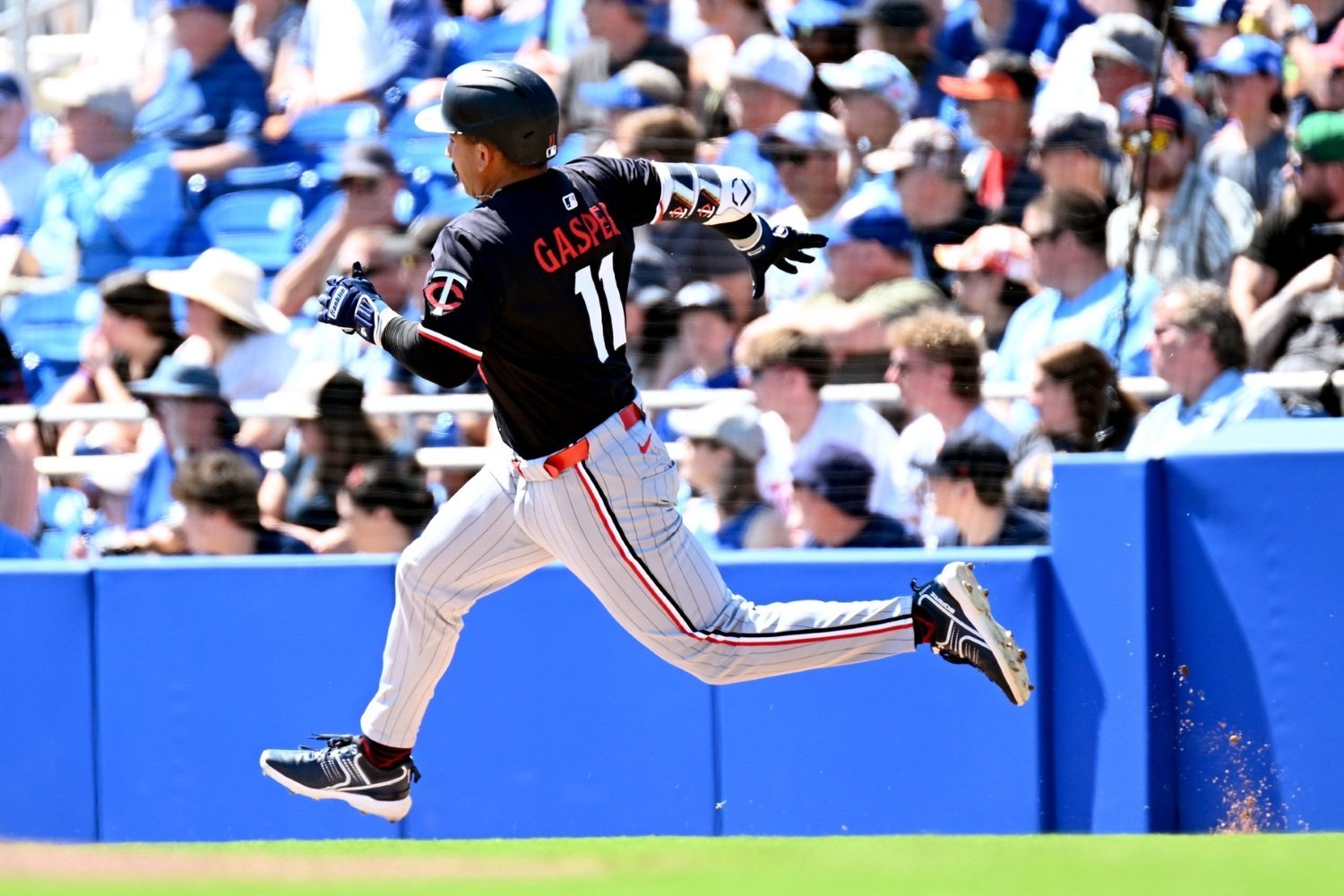
In recent seasons, Mickey Gasper has epitomized the “Quadruple-A” archetype, by absolutely mashing at Triple-A stops but struggling to stick in the big leagues. Since the start of 2024, Gasper has posted a staggering .338/.450/.581 line over 102 minor-league games, with 18 home runs. That ranks second among all batters with at least 300 minor-league plate appearances. That level of success in the upper minors should translate to big-league success, but it hasn’t happened for Gasper.
Despite earning his first Opening Day roster spot with Minnesota this spring, he’s managed only a .176/.282/.206 slash line across 17 games in the majors, collecting his first career hit on March 29 in St. Louis. Last season, the Red Sox used him sparingly during his first taste of the big leagues. In 13 games, he went 0-for-18, with eight strikeouts and four walks. His journey highlights the peril of becoming a so-called “Quad-A player.”
The Quad-A Conundrum and Gasper’s Case
“Quad-A” (or “4A”) refers to players who hit the cover off the ball against Triple-A pitching, yet falter against major-league competition—often due to issues with pitch recognition, timing, or adjusting to superior velocity and breaking stuff. While some executives argue the label is pejorative, many acknowledge a clear gap between success in the highest minors and sustainability in MLB.
The Yankees initially selected Gasper in the 27th round of the 2018 MLB Draft. He worked his way through New York's farm system before the Red Sox selected him in the 2023 minor-league phase of the Rule 5 draft. Gasper exploded at Triple-A in 2024, slashing .402/.515/.664 over 40 games before his first call-up. He had little left to prove in the high minors, and Boston needed catching depth at the big-league level.
Over parts of the last two seasons, he’s had the second-best OPS among minor-league players because of his patient approach at the plate and his ability to punish baseballs when getting ahead in the count. His approach has produced an 18.2 BB% compared to a 15.9 K% this year, demonstrating plate discipline unmatched by most peers at Triple A. However, those numbers haven’t translated to his time with the Twins. His walk rate was nearly eight points lower with the Twins, and his strikeout rate was over seven points higher.
The Danger of Becoming a Quad-A Player
Long a gatekeeper role, the Quad-A label can cement a player’s status as organizational depth, rather than a true big-league contributor. Teams may hesitate to offer extended opportunities, fearing limited upside despite minor-league dominance. Repeated shuttle trips can erode confidence and stall development for players like Gasper. Plus, teams like the Twins have younger players whom they may view as having more long-term upside.
Investing roster spots in Quad-A hopefuls carries opportunity costs, as younger prospects may be forced to stay in the minors. Front offices must balance rewarding minor-league excellence with realistic assessments of a player’s ability to adjust in the majors, where scouting and analytics increasingly expose weaknesses.
Breaking the Quad-A Mold
While some succumb to the 4A trap, others break through. Here are four ways to bridge the gap:
1. Refine In-Game Plate Discipline: Gasper has been known for his approach at Triple A, with the ability to draw walks and hit for power. Those skills haven’t translated to the big-league level. Emphasizing two-strike hitting strategies (shorter swings, choking up) can turn foul balls into productive at-bats. Pitchers at the highest level have unbelievable breaking pitches, and players need to be able to adjust.
2. Develop a Power-to-Contact Balance: Minor mechanical tweaks to reduce uppercut swings and shifting to a more direct path can boost contact rates, without sacrificing disproportionate amounts of pop. Statistical models can pinpoint optimal swing planes for each player to maximize big-league hard-contact ratios. Five of Gasper’s six hits have come on fastballs, so he must prove he can hit offspeed offerings.
3. Having a Standout Tool: Some players can forge a career from one strong tool. The Twins are seeing that with DaShawn Keirsey Jr. this season. He has fallen into the trap of being a Quad-A player over the last two seasons. However, his speed has allowed him to fill the late-inning role of pinch-runner or defensive replacement. Gasper has gotten on base nearly 40% of the time in the minors, a skill that could keep him on a big-league roster—if he can demonstrate its viability against that level of competition.
4. Versatility and Defensive Value: Learning additional infield positions or outfield spots increases roster appeal. Gasper has shown some flexibility by playing first base, second base, catcher, and left field with the Twins this season. Multiple Quad-A players have parlayed utility roles into extended stays by offering defensive flexibility alongside offense.
Gasper’s story is both inspiring and cautionary: a switch-hitter who tore through Triple A, only to find big-league pitching a formidable barrier. But by refining his approach, embracing his strongest tool, and adding defensive value, he and other Quad-A aspirants can rewrite the script. Success at baseball’s highest level demands more than raw numbers in the minors. It requires adaptation, consistency, and a willingness to evolve. With those tools, the next time Gasper’s name appears on a Twins lineup card, he may finally stick.
Can Gasper break free of the Quad-A label? Leave a comment and start the discussion.
Do you approve of the job the Twins front office is doing?

Interested in learning more about the Minnesota Twins' top prospects? Check out our comprehensive top prospects list that includes up-to-date stats, articles and videos about every prospect, scouting reports, and more!
View Twins Top Prospects





Recommended Comments
Create an account or sign in to comment
You need to be a member in order to leave a comment
Create an account
Sign up for a new account in our community. It's easy!
Register a new accountSign in
Already have an account? Sign in here.
Sign In Now