


Twins Video
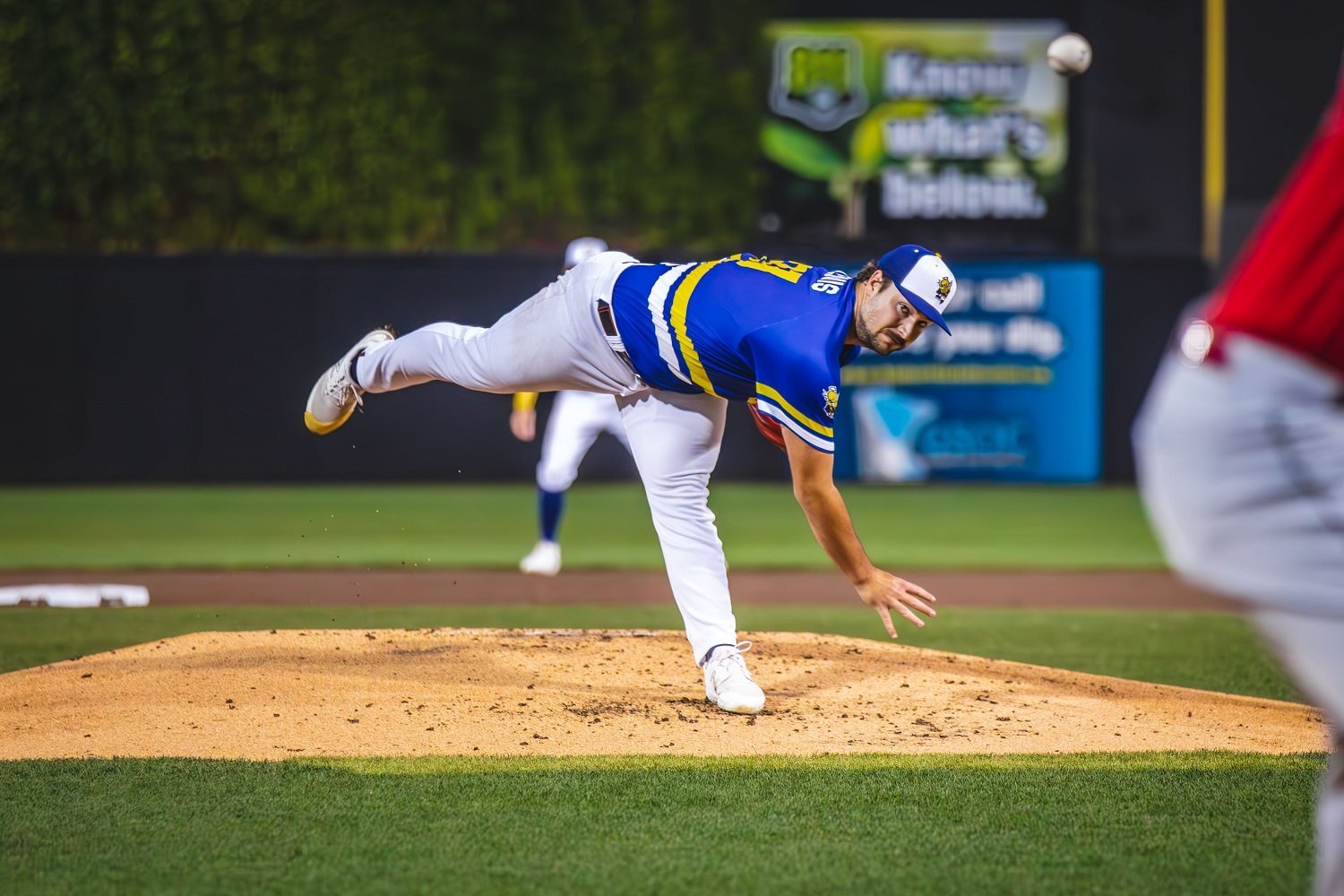
When the Minnesota Twins selected Cory Lewis in the ninth round of the 2022 MLB Draft, few evaluators thought he'd develop into one of the organization's top pitching prospects. But for those who had followed his career at the University of California, Santa Barbara, there was intrigue. Lewis had an unorthodox delivery and a deep pitch mix, which included a knuckleball—an unusual weapon in the modern game. In the years since, he’s risen steadily through the minor-league ranks, and as he embraces his unique identity like never before, 2025 has become a pivotal year.
Lewis made his professional debut in 2023, splitting time between Low-A Fort Myers and High-A Cedar Rapids. He impressed with his command, poise, and cerebral approach on the mound. In 22 starts, he posted a 2.49 ERA, with a 28.6% strikeout rate and an 8.0% walk rate. By the end of 2024, he had pitched his way to Triple-A St. Paul. His strikeout rate remained near 28%, and he had a 2.51 ERA with a 1.31 WHIP. In many other systems, his rise might have been a headline story. But in Minnesota’s prospect-rich pipeline, he played second fiddle to Zebby Matthews, whose meteoric ascent and dominant performance drew much of the praise.
Leaning into the Weird
One of the unique aspects of Lewis’s profile is that knuckleball. In an era dominated by high-octane velocity and wipeout sliders, Lewis has leaned into the unexpected. Last season, he threw the knuckler just 9.4% of the time, an occasional wrinkle to throw hitters off balance. This year, that number has skyrocketed to 29.9%.
The Twins’ player development staff worked with Lewis over the offseason, encouraging him to embrace his individuality on the mound. The goal wasn’t just to be different for the sake of it, but to weaponize the unpredictability of the knuckleball in a way that could open up his entire arsenal. It is the hardest version of the pitch ever seen at the professional level, averaging 83.7 mph. For reference, former Twin R.A. Dickey topped out at 77.3 mph with his knuckleball, and that was considered a faster version of the pitch at the time.
“Cory has always missed a ton of bats and has really good stuff,” said Twins farm director Drew MacPhail. “On top of that, the knuckleball, which is probably his best pitch. We definitely talked to him about upping that a little bit. I think there is also an element there where the catchers are sometimes a little nervous to call it, because it is so nasty and it’s a hard pitch to catch.”
Along with throwing the knuckleball more frequently, Lewis has added a cutter to his repertoire. It gives him another option to stay off barrels without having to rely heavily on his slider, curveball, or changeup. These three pitches haven’t consistently graded as above-average during his time in the minors. The early returns have shown that batters are having a tougher time tracking him.
Through 11 starts, Lewis has increased his O-Swing%, the percentage of pitches chased outside the strike zone, from 20.0% in 2024 to 26.7% in 2025. It’s a promising sign that the new mix is disrupting hitters’ timing and approaches, especially if the knuckleball keeps them guessing. In one recent start, he leaned especially hard into the knuckler, with sensational results.

Growing Pains in Real Time
With any significant change, there are growing pains, and Lewis is experiencing them in full. Despite the improved chase rate, his overall control has suffered. His Zone% has dropped to just 41.4%, meaning he’s throwing fewer pitches in the strike zone. That lack of command has contributed to an elevated walk rate of 15.1%, a notable jump from the 12.1% he posted last season.
“I think with Cory, as hitters get better themselves at the upper levels and become a little more refined, chase a little less,” MacPhail said. “Cory has always had an inflated walk rate along with [the] really gaudy strikeout numbers. I think at Triple-A, you’ve seen that walk rate really bloom. In Cory’s case, I think it is about getting in the zone a little more, which is not the easiest thing to do when you are throwing a really nasty knuckleball.”
Hittability has also been an issue. Batters are slashing an eye-popping .333/.441/.567 against Lewis in 2025. He’s surrendered 19 extra-base hits in just 11 starts, including seven home runs. Perhaps most concerning is how right-handed hitters have handled him. Despite being a righty himself, Lewis has allowed a 1.077 OPS to same-sided batters.
His strikeout rate, which had lived comfortably in the upper 20s through his first two professional seasons, has dipped to 22.9%. When combined with the walk rate and the inflated power numbers, the result is a 6.32 FIP, nearly 2.50 runs higher than last season. That’s not the type of production fans associate with a rising prospect. But dig a little deeper, and there’s reason to think the surface numbers may not tell the whole story.
A Matter of Time?
There’s a glaring number in Lewis’s profile this year that suggests a significant amount of misfortune: a .422 batting average on balls in play. That’s nearly 90 points higher than his actual batting average allowed, and significantly above league norms. It suggests that he may have been snakebitten by weak but unplayable contact, failures in defensive positioning, or even sequencing.
The Twins have been careful with Lewis, keeping him in the rotation at Triple-A despite the struggles. Their commitment indicates they still see the bigger picture, one in which a knuckleballer with a complementary pitch mix could carve out a niche role, either as a backend starter or a swingman.
The focus now is on refinement. Lewis is still adjusting to the knuckleball-heavy plan. It can take time to develop a feel for that pitch and an understanding of when to use it most effectively. The added cutter is promising, but it, too, is in the early stages of usage and development. For a team that has historically leaned into traditional pitching development paths, Lewis stands out. He’s not overpowering. He’s not textbook. But he’s carving out something unique, and for a player taken in the 9th round, that itself is impressive.
What Comes Next?
Lewis likely won’t be knocking on the big-league door in the next month or two. But his willingness to evolve and experiment bodes well for his long-term viability. The Twins have made it clear they’re not afraid to try unconventional methods if the player buys in, and Lewis is all-in on his new identity.
If he can rein in the control and keep missing bats while cutting down on the hard contact, his next transformation could be even more meaningful: from intriguing prospect to legitimate MLB contributor. For now, he remains one of the more fascinating arms in the organization. He’s part pitcher, part mad scientist, and all-in on redefining what success can look like on the mound.
Do you approve of Twins ownership?

Interested in learning more about the Minnesota Twins' top prospects? Check out our comprehensive top prospects list that includes up-to-date stats, articles and videos about every prospect, scouting reports, and more!
View Twins Top Prospects





Recommended Comments
Create an account or sign in to comment
You need to be a member in order to leave a comment
Create an account
Sign up for a new account in our community. It's easy!
Register a new accountSign in
Already have an account? Sign in here.
Sign In Now