


Twins Video
AN EXPLOSIVE OFFENSE
Opposing pitchers will feel like they're stepping through a minefield as they attempt to navigate Minnesota's relentless lineup. There is legitimate 20-30 home run potential at every position other than catcher, and even there, the Twins are better equipped offensively than most.
This unit offers elite potential, and while it's not too hard to envision them falling short amidst a sea of strikeouts and sinking OBPs, the Twins will at the very least be a formidably powerful bunch. Baseball Prospectus' PECOTA system projects Minnesota to score the sixth-most runs in the American League (739), with nine different players reaching double-digit homers.
If things break right in a few places, it's not at all difficult to envision this club setting a modern franchise record for home runs, surpassing the 2017 team's total of 206, and even challenging those historical mid-60s squads led by Harmon Killebrew, Bob Allison and Jimmie Hall (225, in 1963, is the mark to beat).
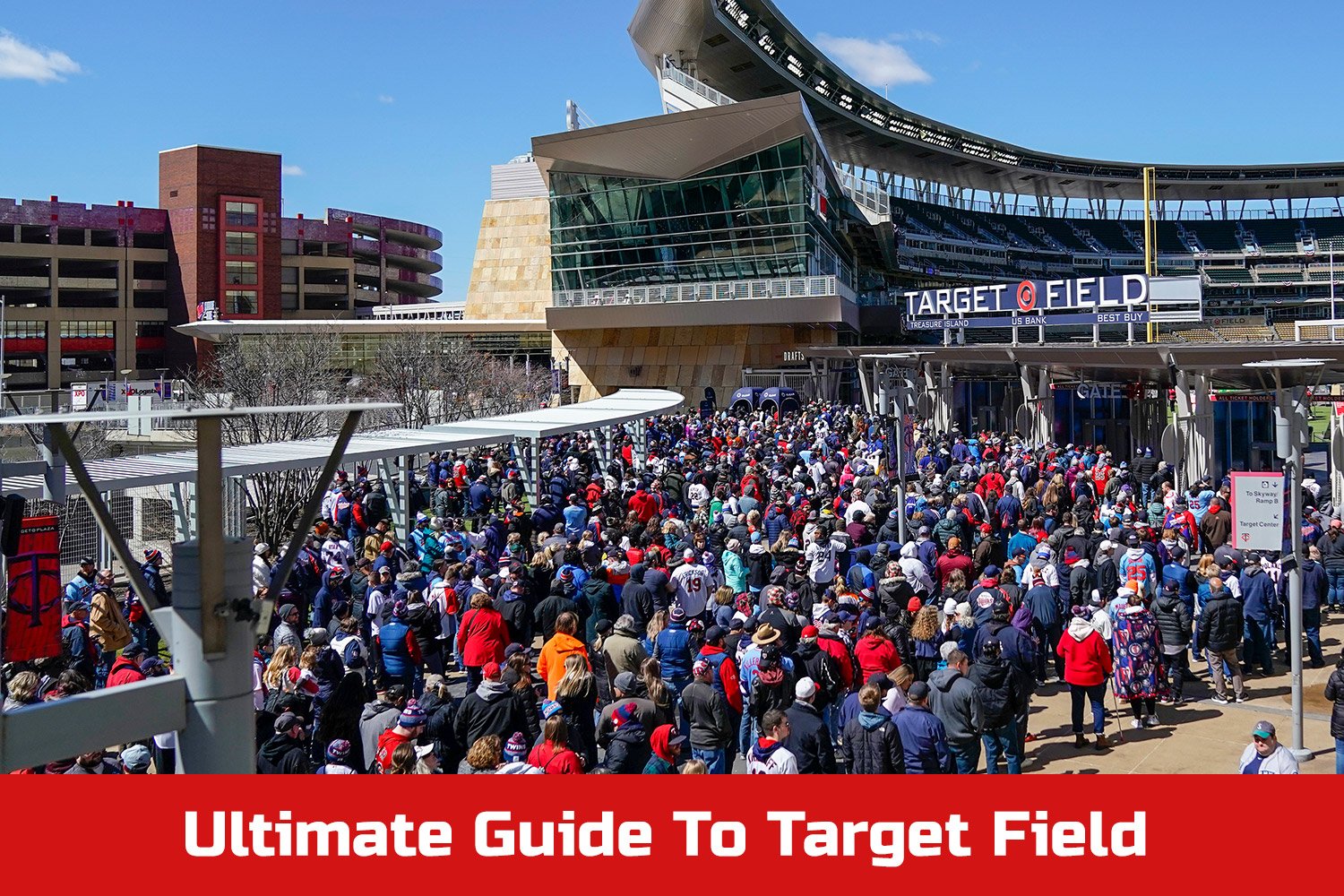
Beyond the massive upside of the offense, what's most tantalizing here is the entertainment value it's poised to deliver. On any particular night at Target Field, attendees could be in for a memorable show. The sheer spectacle of Nelson Cruz uncorking a rocket to the third deck (he consistently ranks among the MLB leaders in exit velocity) or Byron Buxton racing around the bases (he's the single fastest runner in baseball, per Statcast) or Willians Astudillo doing... Willians Astudillo things is worth the price of admission.
I think back to those lifeless days last summer when Eddie Rosario and Eduardo Escobar often seemed to be the only pulse in the lineup, and I'm heartened by how far we've come. Granted, injuries are bound to take their tolls, and several hitters – such as Buxton, Jonathan Schoop and Max Kepler – need to prove themselves on varying levels. But there's enough depth here, especially with the late addition of mega-utilityman Marwin Gonzalez, to cover up for quite a few misfires.
A FOREBODING ROTATION
Let's start here: It is not beyond reason that this could be the best, most competitive Twins rotation to come along in quite a while.
Jose Berrios and Kyle Gibson were legit upper-echelon pitchers last year. Both have the kinds of bat-missing stuff, plus healthy arms, to warrant confidence. Michael Pineda is a big, gas-throwing force – a former All-Star rookie with a career 3.60 FIP and 1.19 WHIP. Martin Perez has established a firm rep as a stable, perfectly adequate back-end starter – and that outlook now feels almost pessimistic with the way he's thrown this spring. Jake Odorizzi, even if he merely replicates last year's career-worst results, is insanely good for a fifth starter.
So, if the Twins are able to prance their way through the minefield with no detonations, they could find themselves looking pristine on the other side. In terms of realistic one-through-five upside, I can't remember a better group.
But this landscape, it is riddled with lurking danger.
Berrios looks as strong as ever heading into the campaign. But the same can't be said for his counterpart atop the rotation.
By his own admission, Gibson hadn't quite gotten back all the weight and strength he wanted by the time he made his final spring start last Friday. He also got absolutely crushed by the Red Sox in said outing. While he's been damn good for the past year-and-a-half, Gibson hardly has the long-term track record to earn unflinching confidence.
Even at his best, Pineda has never quite fulfilled his obviously immense potential, and pitchers in their first year off Tommy John have an uninspiring history. Perez, for all the spring buzz, has posted a better-than-average ERA once in the past five seasons, and was a disaster last year. Odorizzi has been trending the wrong direction for a while now, with his ERA+ going from 117 to 108 to 100 to 97.
So that's a fair amount of ominous risk even before you account for the inevitability of injuries. Step very carefully.
In case of emergency, the reinforcements are ripe with reservations. Stephen Gonsalves and Kohl Stewart both showed glimmers of promise while finishing strong last year, but neither was all that impressive overall. Zack Littell had a roundly rough go in the majors, but he was a 22-year-old second-tier prospect. Lewis Thorpe has yet to get his first shot in the big leagues, but the Twins aren't shy in their ample belief in him, and his minor-league numbers seem to validate it.
Some expressed disappointment with Minnesota's offseason approach to the rotation, and I get it. But personally I'm a fan. The only player they added is a 27-year-old with optional control beyond this year, and they've maintained total flexibility going forward, with plenty of capable young arms to sort through in the months ahead.
Plus, they've got an innovative new pitching coach on hand whose positive impact is already generating spring buzz.
A VOLATILE BULLPEN
If you should ever find yourself in an actual minefield, you are advised to get down on your hands and knees, gently probing every inch as you proceed very slowly, and very carefully.
Rocco Baldelli might want to master his army crawl for the late innings.
The rookie manager's complete lack of experience pulling bullpen strings is compounded by a unit that's direly short on truly safe bets, and even shorter on proven depth. While the Twins can feel good about their bona fide relief ace Taylor Rogers, the lanky lefty is followed by varying degrees of ambiguity.
Minnesota's lone offseason addition, Blake Parker, has looked good after drawing minimal interest on the open market. Trevor May has the stuff to dominate at the end of games, but has thrown 68 innings total over the past three seasons. Trevor Hildenberger was Mr. Reliable for his first year's worth of games in a Twins uniform, then a total mess in the 2018 second half. Adalberto Mejia is essentially the sixth starter filling a long-relief role. Ryne Harper is a 30-year-old who's never thrown a pitch in the majors.
Opening on the Injured List are Addison Reed, Matt Magill and Gabriel Moya. It says a lot that Reed feels like the least plausible member of that trio to return and make an impact. His unraveling and the (in hindsight) baffling trade of Ryan Pressly last summer have drastically lessened the bullpen's firepower.
And in the minors? Fernando Romero is the pivotal figure, of course. The Twins hoped he'd be a weapon out of their bullpen from the get-go, but his spring performance made it apparent he's not ready. Hopefully he'll be able to join up relatively early but it's tough to say how long his acclimation in Rochester might take. Beyond Romero, there are a handful of marginal big-league talents to fall back on, but no savior-type looming.
The good news, I suppose, is that it's easier to add in-season help for the bullpen than perhaps any other position. The front office has plenty of financial flexibility and prospect capital to make things happen. At a time where roughly half the league has no real aspiration to contend, the supply/demand ratio should be favorable.
But as I look ahead to a season for which I'm mostly giddy with excitement, I can't help but feel apprehension about the spectre of April and May leads evaporating repeatedly, impeding Minnesota's efforts to take advantage of a weakened Cleveland club out of the gates.
LOOKING AHEAD
It'll be great if the Twins are finally able to leapfrog the Indians in the AL Central and capture their first division title in almost a decade. It's really not all that unlikely an outcome, especially when you factor in Cleveland's early injury woes, and their wavering commitment to firmly retaining their grasp (they were reportedly STILL talking about trading one of their linchpin starters earlier this month).
But, realistically, expectations need to be kept in check. This team is led by a 37-year-old manager with zero experience in the role. He is aided by two pitching instructors who've never even been on major-league coaching staffs. Minnesota's outlook is dependent on a variety of breakout and bounceback candidates who mostly lack stable track records. Multiple building-block prospects are still a year or two away.
The path ahead is a precarious one. But the Twins will embark upon it with a combination of pure power (both hitting and pitching) and analytical prowess like we've never seen before.
One way another, I'm expecting plenty of boom. Hopefully much more of the good kind.
***
You can learn about the 2019 team's outlook and depth at every position by perusing the position analysis articles below. And, of course, check back in to Twins Daily each day all season for unparalleled coverage of your favorite team. This is gonna be a fun one.
Position-by-Position Analysis for the 2019 Twins
Twins 2019 Position Analysis: Catcher
Twins 2019 Position Analysis: First Base
Twins 2019 Position Analysis: Second Base
Twins 2019 Position Analysis: Third Base
Twins 2019 Position Analysis: Shortstop
Twins 2019 Position Analysis: Left Field
Twins 2019 Position Analysis: Center Field
Twins 2019 Position Analysis: Right Field
Twins 2019 Position Analysis: Designated Hitter
Twins 2019 Position Analysis: Starting Pitcher
Twins 2019 Position Analysis: Relief Pitcher





Recommended Comments
Create an account or sign in to comment
You need to be a member in order to leave a comment
Create an account
Sign up for a new account in our community. It's easy!
Register a new accountSign in
Already have an account? Sign in here.
Sign In Now