
Jump to content
Twins Daily
  • Create Account
  • Twins News & Analysis

    Pitcher Injuries are Plaguing the Game. Are the Twins Different, or Due?


    Peter Labuza

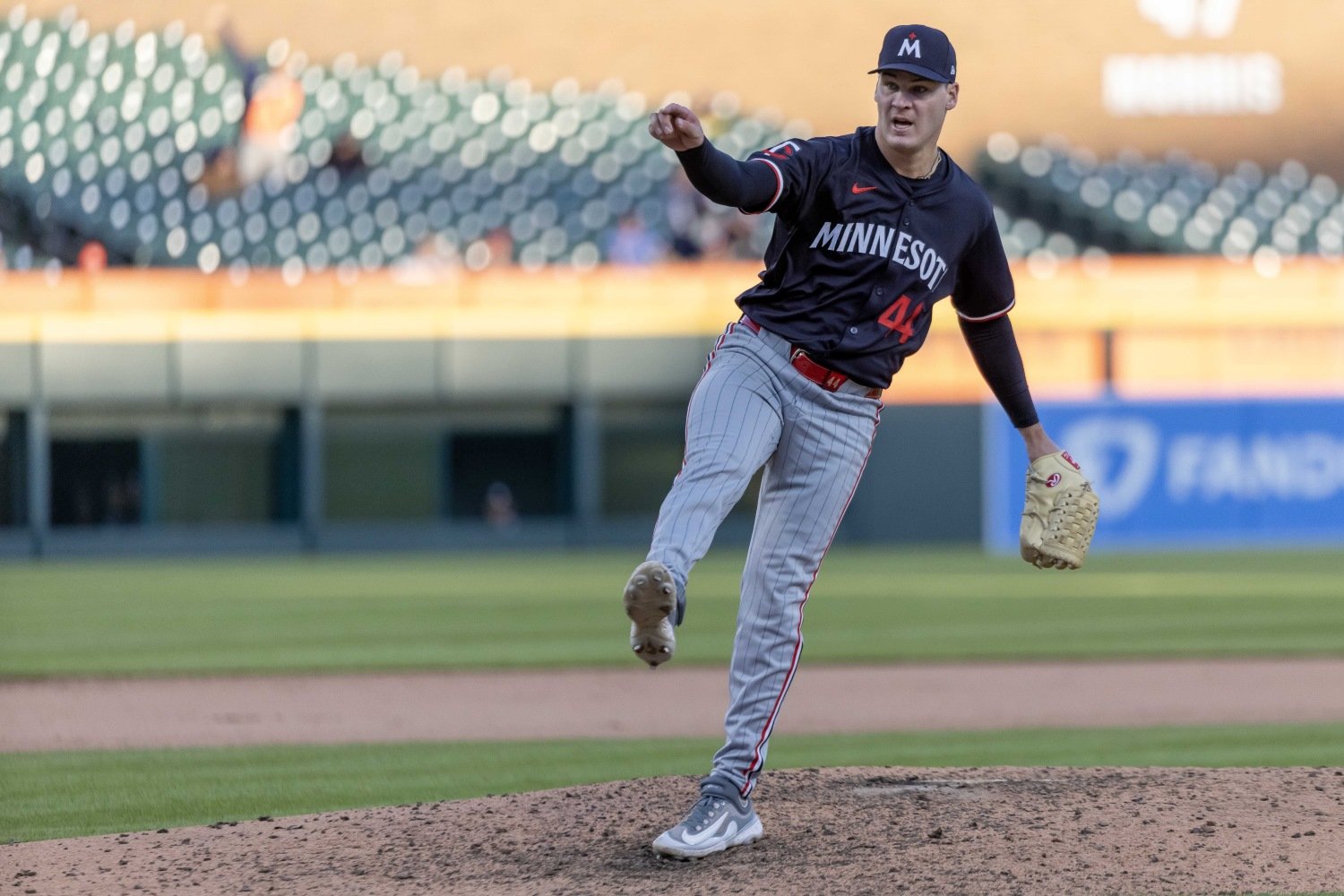
    Tommy John injuries have become more common as pitchers prize and optimize velocity. As Pete Maki pushes the same for both starters and relievers, are the Twins due to lose an arm?

    Image courtesy of © David Reginek-USA TODAY Sports

    Twins Video

    Beyond major betting scandals and uniforms ripping apart, one other story has dominated the start of the Major League Baseball season: pitching injuries. A recent slew of stories—from Ben Lindbergh, Lindsey Adler, and even an anonymous MLB pitcher—has covered the string of star pitchers who have lost significant time to elbow trouble, including Gerrit Cole, Shane Bieber, and top Marlins prospect Eury Pérez. That’s on top of major pitchers out before the season began, including Shohei Ohtani, Sandy Alcántara, and Jacob deGrom. Tyler Glasnow discussed the issue on Sunday Night Baseball on ESPN.

    The issue has become part of a cold war between owners and players. Tony Clark, head of the Major League Baseball Players Association, issued a statement blaming new rule changes that were implemented without any player votes. The league fired back, noting the mounds of research that suggest other issues are at play.

    Whatever the causes, Twins fans might be relieved to see that the list of injured pitchers has not included any of their top starters. That. however, invites the question: have the Twins found a way to improve their pitchers without sustaining injury? Or should we brace ourselves to see Pablo López or Bailey Ober walking off the mound grabbing their arm with a year-long recovery timeline?

    Most Twins fans may scoff at the idea that the team has not been plagued with injuries. Since 2020, the Twins have had six pitchers suffer major injuries that essentially ended their seasons. But most of them come with an asterisk. Anthony DeSclafani came over as damaged goods (and arguably as a necessary part of the financial balancing act to make the Jorge Polanco trade happen). The same could be said of Tyler Mahle and Chris Paddack, who each had significant injury histories and weren't yet out of the woods with regard to previous issues when the team traded for them. One might ask why the Twins acquired pitchers who were so plainly due for injury, but the team's pitching development approach did not cause those issues. 

    That leaves two notable injuries: Kenta Maeda and reliever José De León. After pitching to a Cy Young runner-up finish in the shortened 2020 season, Maeda saw diminished velocity throughout 2021 before requiring an internal brace repair after 21 starts. That said, Maeda was injury-prone throughout his career, and the Los Angeles Dodgers had in part designed his contract with such risk in mind. That only leaves De León, a reliever who pitched 17 1/3 innings for Minnesota in 2023, who came to the team as a minor-league free agent at the start of the season. While it was a frustrating injury, this was not the same as a top-line starter.

    Part of the interest here is the fact that Twins pitching philosophy has significantly changed with Pete Maki becoming the full-time pitching coach following the departure of Wes Johnson. The talk of the town in Spring Training in 2022 was the added velocity from every pitcher, which not only carried throughout last season but has continued since, on both fastballs and off-speed pitches. Many of the top pitchers have visited Driveline, which others see as a culprit.

    FASTBALL 2021 2022 2023 2024
    Pablo López 93.4 92.7 94.8 94.7
    Joe Ryan 91.2 92 92.3 93.4
    Bailey Ober 92.3 91.5 91.3 90.4
    Louie Varland MiLB 92.4 92.8 93.3
    Chris Paddack 94.8 93 95.5 94.6
    Caleb Thielbar 91.3 92.8 93.1 N/A
    Griffix Jax MiLB 95.4 96.2 96.4
    Jhoan Duran MiLB 100.8 101.8 N/A
             
    BREAKING 2021 2022 2023 2024
    Pablo López 80.2 80.9 83.7 83.3
    Joe Ryan 78.1 80.1 80.3 84.4
    Bailey Ober 79.1 80.8 80.1 79.4
    Louie Varland MiLB 83.3 83.9 84.6
    Chris Paddack 78.7 77.3 83.5 83
    Caleb Thielbar 77.5 77.2 78.4 N/A
    Griffix Jax MiLB 86.1 86.7 88.5
    Jhoan Duran MiLB 88 87.7 N/A
             
    Blue refers to former Team      

    While the causes of more pitcher injuries are myriad, velocity is seen as a top culprit. Pitchers—from high school to All Stars—are now almost entirely focused on velocity as a central goal. As one anonymous pitching coach told The Athletic, “Pitchers and analysts pursue velo. The pitchers that don’t do this retire. The ones that stay take on some injury risk to avoid working at Costco.”  

    So what does that mean for the Twins’ staff? Last year, the staff avoided any major injuries; the most notable one was Joe Ryan’s groin strain. And while the bullpen is slightly depleted to begin the year, no one’s injury has hinted at likely heading for Tommy John. 

    So perhaps Maki is doing things differently. In an article about López’s more effective and elite sweeper, the pitcher suggested it was more the grip than any other changes. “The seams are doing the work for you.” Ryan also worked over the offseason to change his grip and find more velocity. Others have suggested some warning signs, however.

    For Maki’s part, he has said in interviews that his goal is not to reach for high velocity. "I think we are still a pitch to contact [organization]…The whole pitch to contact, and wanting misses, and wanting strikeouts, that coexists together for us.” But the Twins, so far, are acting as a strikeout team, ranking 1st in the majors for strikeouts per nine innings and third-lowest in xFIP. And even if they're not reaching for it, the Twins throw the fifth-hardest fastballs (four-seamers and sinkers) in MLB so far this year--and that's with Durán on the injured list.

    Maybe there's one explanation worth considering, though we can't come anywhere near calling it conclusive: The Twins throw fast fastballs, but they also throw very few fastballs. So far this season, only the Red Sox (who recently hired Justin Willard away from the Twins to act as their director of pitching) have thrown fewer heaters than Minnesota. If velocity is the enemy, leaning on your breaking stuff might not just be about piling up whiffs at the risk of extra walks. It might be a way to protect your arm, too.

    Pitcher injuries are no fun, even when they happen to opponents. It's more fun to see the Twins crush Shane Bieber than not to see him at all. But the bigger worry is whether there is a ticking time bomb. The Twins' pitching and training staff should be carefully monitoring these arms. With very little depth this season, one Tommy John surgery could cost the entire season.

    Follow Twins Daily For Minnesota Twins News & Analysis

    Recent Twins Articles

    Recent Twins Videos

    Twins Top Prospects

    Marek Houston

    Cedar Rapids Kernels - A+, SS
    The 22-year-old went 2-for-5 on Friday night, his fourth straight multi-hit game. Heading into the week, he was hitting .246/.328/.404 (.732). Four games later, he is hitting .303/.361/.447 (.808).

    User Feedback

    Recommended Comments

    Featured Comments

    It used to be the curving balls were the cause of injury.  And kids were told not to throw a curve or one of its equivalents because it was bad for the arm.  I do believe we have gone overboard in our quest for speed.  Not everyone is a Nolan Ryan or Bob Feller or Walter Johnson. But the blame on the pitch clock is ridiculous.  In the 1920s and 1930s the average time for a game was less than two hours!  Were the pitchers walking around the mound, staring and using the resin bag and delaying so they would not get injured?  To be that fast it was get the ball, throw the ball.  Even by the 1980s the games were barely over 2 1/2 hours and some of that was the delay with the advent of more RP.  

    We have always had pitcher injuries - like Bob Grim who won 20 for the Yankees and then had arm trouble.  No one had the idea of what to do so they made him a relief pitcher.

    Mark Fydrich (Big Bird) was a favorite and he went down and we lost a potentially great career.

    The reason the Tommy John surgery was so important was the fact that we have always been losing pitchers to the various versions of the injury, but until Tommy (who should be in the HOF) we did not have a name or a solution.

    Gary Nolan, Don Gullett, Dick Radatz, Smoky Joe Wood, Mark Prior and more lost their careers to arm trouble..


    https://www.nbcsports.com/mlb/news/the-long-sad-history-of-injured-pitchers This article follows the history of arm trouble - " In 1910, Ford at age 27 came to play for the New York Yankees and he went 26-6 with a 1.65 ERA and 209 strikeouts in 299 2/3 innings. " "Russ Ford soon suffered from, yep, “arm fatigue.” What’s that? His arm hurt. He had a good second year, but by his third he led the league in losses. They Yankees dumped him after the next year."

    "Tommy Thomas at age 27 won 19 games with a 2.98 ERA for the Chicago White Sox. He led all pitchers in WAR. Three years later, he blew out his elbow," 

    Bill James of the Boston Braves won 26 then came down with arm fatigue and career ended.  


    I'm glad you know all the answers.  Perhaps you should be hired by MLB to help solve this crisis lol.  Seriously though I've heard many major league pitchers from the past say there is too much emphasis on spin rates and sweepers and not pitching.  As one pitcher said, give me a pitcher not a thrower.  Plus he mentioned pitchers don't take enough time off during the off season to rest up their bodies.  Who knows for sure what the answer is.

    MLB could do a number of items to reduce injury risk. First, they could raise the seams as this would enable more ball movement with less stress. Second, make it harder to hit home runs by deadening the ball. Three, raise the pitching mound. Changes that were made to increase offense resulted in pitchers adjusting by adding velocity and spin to be more effective. Youth sports is also part of the problem. In order to be drafted, players need to be playing baseball year round (or at least 9 months of the year). 

    I've been working on a spreadsheet for Favline pitching acquisitions as I'm curious that I thought I was picking up a pattern of age and body type in their selections. Sure enough, they have a type.

    I'm traveling and don't have it in front of me, and I'm certainly not done with the research but some patterns are very strong.

    The average pitcher acquired by Favline (from memory) is about 6' 2 1/4“, 215 lbs and on the older side. We know their proclivity for college arms and I believe it's part of the plan. There are some notable exceptions, like a Raya, but he is truly an outlier size wise.  Probably 90% are within 2 inches and 20 lbs of the average. I'll post a plot when I get back off the road.

    While I believe the college pitcher angle is mainly aligned with trying to get their best years as controllable arb years the arm health is almost certainly part of the equation. Many have already had their Tommy John and there is much more information available on the arm in general.

    I'm convinced they believe it is a risk to invest in non-optimum body types and this is why. I'm really just starting with the research but it's a very interesting topic.

    Very interesting article Peter. Twins have been pretty fortunate as far as serious pitching injuries. Almost all our problems have been inherited. I was going to mention Maeda but you explained that he had injury problems before, LAD limiting him to primary BP. The Twin got Maeda with the intent to extend him solely as a SP. Even though a shortened '20 season,  Maeda got TJ.

    But in general, the Twins have been good at limiting their SPs' innings, which only leads to minor injuries & times of inefficiency (which IMO could be bettered). 

    I agree with Mike that I doubt that the pitch clock has any effect on arm injuries. IMO the balls are too smooth, which pitchers have to grip harder & IMO could provoke arm injuries. IMO the balls could be universally scuffed up, They could implement this together with the electronic strike calls. 

    3 hours ago, Eris said:

    MLB could do a number of items to reduce injury risk. First, they could raise the seams as this would enable more ball movement with less stress. Second, make it harder to hit home runs by deadening the ball. Three, raise the pitching mound. Changes that were made to increase offense resulted in pitchers adjusting by adding velocity and spin to be more effective. Youth sports is also part of the problem. In order to be drafted, players need to be playing baseball year round (or at least 9 months of the year). 

    The question is if the pitchers would actually back off of what they're doing now or if they'd just keep throwing max effort and the pitches would just be even better and it'd be even harder to hit. I don't think you'd see a significant reduction in velocity, and that's the leading problem in stress on arms.

    I think fixing this issue comes down to convincing teams and players to quit throwing max effort so frequently. I'm not sure how you convince guys to do that when it's well known that it's a significant advantage in getting hitters out. And getting hitters out is what gets kids drafted and guys paid. It's also what keeps baseball execs and coaches employed. Who's going to be the first team to take a chance on backing off velocity to hopefully save arms while taking the chance the slower pitches don't just lead to them all getting fired because their pitchers aren't successful enough?

    It's not an easy problem to solve. It's putting the toothpaste back in the tube. Convincing people to take a step back is not easy.

    Pitchers! Hell, position players are getting hurt all of the time as wwell.i just don't remember this level of injuries in the old days (1960's - 70's) .. Maybe there is too much weight training. Bigger muscles but same old ligaments and soft tissue.) Just saying ..


    Create an account or sign in to comment

    You need to be a member in order to leave a comment

    Create an account

    Sign up for a new account in our community. It's easy!

    Register a new account

    Sign in

    Already have an account? Sign in here.

    Sign In Now

×
×
  • Create New...