


Twins Video
By his own admission, Kepler’s ultimate goal was never to hit ground balls. He wanted a level swing. One, he said, that imparted backspin on the ball to help it carry.
While batted balls can certainly travel with different variations of spin (back, top, side) more recent research has found that concepts like chopping or cutting a ball to create that spin is a fool’s errand. In fact, physics show that more spin can even suppress the distance, regardless of spin direction. The end goal, as Twins hitting coach James Rowson so eloquently put it in his instructional video, should be to hit the ball square.
In 2018 Kepler would post the highest launch angle average of his career (15.2 degrees) but also learned the lesson that if you hit too many balls into the vast wasteland of the middle of the ballpark, many of those can be tracked down. Target Field was especially unforgiving for him when he wasn’t pulling the ball.
“Last year I tried to work on my swing mechanically, and that’s the result I got, popping up a lot of balls,” Kepler said. “One of the lowest batting averages on balls in play, someone brought that up.”
He hit .203 on fly balls well below the league’s .283 average on fly balls, so you can see how that can grind. You find the money part of the barrel only to watch another well-struck ball land in a welcoming center fielder’s glove. Kepler acknowledged it was frustrating but resigned himself to concentrate on the process, not the results.
The thing the Minnesota Twins evaluators enjoyed about Kepler’s 2018 season was his ability to make consistent solid contact. He finished the year just behind Joe Mauer and Miguel Sano in terms of average exit velocity. They figured it wouldn’t take much to tweak that into improved production.
The Twins worked with him on his bat path into the zone (trying not to be as steep into the swing zone), his posture including straightening up in his stance, and had him close his front side up a bit.

All the moves have aided in his increased power production but one element has been more of a catalyst for the home run totals. Removing the wider front leg starting point helps keep from cutting himself off and frees him up to pull the ball more. Watch his front leg travel inward a longer distance in 2018:

With momentum carrying toward home plate, this limited his ability to turn and open up on a pitch effectively. This is why he hit more of his hard hit balls to center instead of pulling them. You might also notice is occasional toe tap he implements in 2019 as well. With the shortened stance, this helps him stay back instead of aggressively attacking the pitch and pulling it foul.
Even with a vow of returning to his previous methods and avoid getting caught in a launch angle-centric trap, Kepler entered 2019 hitting the ball in a very similar manner that he did the year before -- in the air. The difference was that rather than sending the balls with premium contact into the big part of the field, with adjusting his set-up, Kepler started to pull the ball:

After pulling all balls in play 48% of the time last year, he’s yanking 64% of balls in play this season. That shift in approach has led to more power and the added home runs has inflated in that average on fly balls to .342.
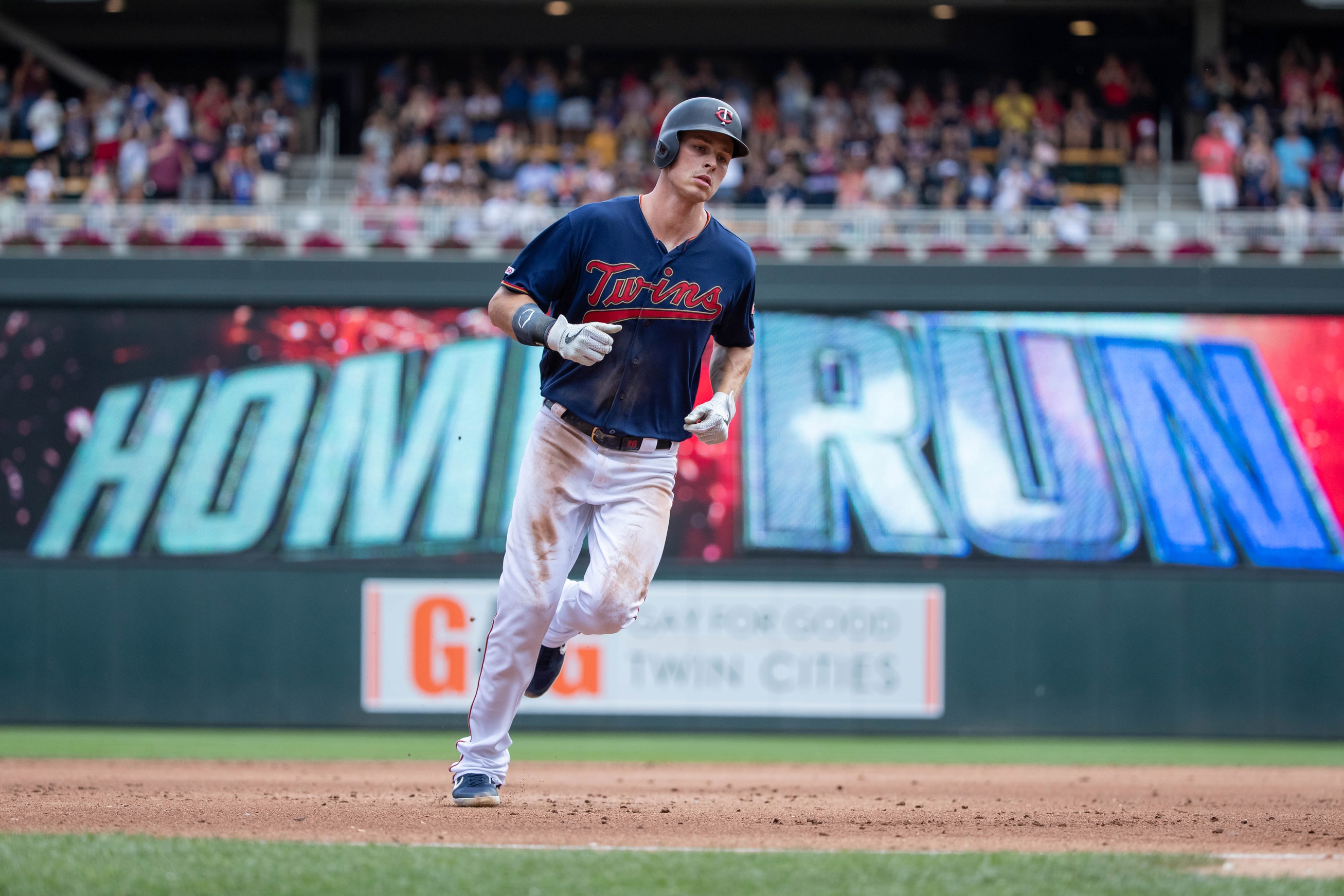
Now, after hitting a career-best 28th home run of the season, Kepler has increased his home run percentage to 6.4 percent -- one of the top 15 home run rates in baseball. It must be far more satisfying watching those balls disappear over the fence instead of into an outfielder's glove.





Recommended Comments
Create an account or sign in to comment
You need to be a member in order to leave a comment
Create an account
Sign up for a new account in our community. It's easy!
Register a new accountSign in
Already have an account? Sign in here.
Sign In Now