


Twins Video
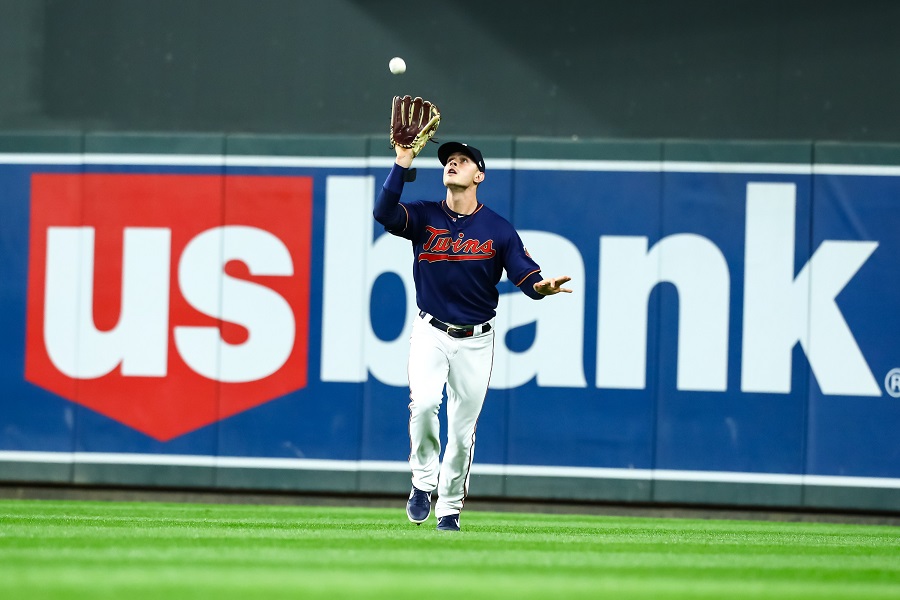
Kepler was the leadoff hitter in Tuesday’s Grapefruit League tilt against the Braves, and on the first pitch he saw from Atlanta’s Ian Anderson, he pulled a fly ball in the air. It was a relatively lazily hit ball, and went for an out, but that was a good sign. Kepler is at his best when he’s getting aggressive in early and advantageous counts. That can be said of most hitters, to one degree or another, but given Kepler’s baseline talent and the swing he has built, it’s especially important for him,
Last month, our Cody Pirkl highlighted some of the troubling trends and numbers that emerged for Kepler in 2020, and talked about why that makes 2021 especially important. Kepler’s numbers against left-handed pitchers, in an extremely small sample, were lousy. He also saw a drop in quality of contact, overall (though he still hit the ball in the air and generated hard contact at above-average rates). As Cody discussed, and as my previous findings about the staying power of left-hitting corner outfielders hint, that could lead one to wonder whether Kepler remains the right fielder of this team’s medium-term future.
Take a more granular look at his strange, shortened season, though, and it’s easy to see a path back to brilliance for the 28-year-old slugger. Consider his swing rates on the first pitch, or with either a 1-0 or an 0-1 count, for each full season of his career.

After finding the key to unlock his power potential in 2019, Kepler went right back to the way he’d previously approached early counts within at-bats in 2020. It didn’t work.
This helps explain the slight uptick in his strikeout rate, because he simply faced more deep counts. Kepler actually made contact on a higher percentage of two-strike swings in 2020 than in 2019, when he struck out less often. This is a place where it’s important to think mathematically: The (minor) problem of Kepler’s rising strikeout rate is in the denominator, not the numerator. We often neglect the denominator when thinking about such things.
To the extent that Kepler’s power went missing in 2020, we can also trace that back to his inability to attack early in the count. A swing with two strikes is, necessarily, a bit defensive. A swing by a hitter whose attention is divided—who is thinking too hard, and perhaps emphasizing patience too much—can be similarly conservative, even early in a count, when there’s really nothing to lose. When Kepler did get into good hitter’s counts in 2020, he was as aggressive as ever, and produced better results, too. (Don’t get intimidated by xwOBA, below. You can easily find places to read about what it means, but here, consider it a shorthand for hitting the ball hard and getting it off the ground, without losing contact in the bargain.)

There might be psychological reasons why Kepler was less assertive early in counts in 2020, ranging from trying to balance too complex an approach to the understandable, vague distraction under which we have all lived for the past year. There might, too, have been lingering physical reasons, related to the shoulder injury that hampered him late in 2019. In either case, though, the cure is the same: head into 2021 fully healthy, ready to attack the first strike opposing hurlers are foolish enough to throw. If he does that, Kepler has a good chance to be an All-Star.
MORE FROM MATTHEW
- Taylor Rogers' Slider is Back, Baby
- Which Pitch Should Kenta Maeda Add in 2021?
- Alex Kirilloff, and the Truth About Scott Boras and Contract Extensions
- A Good Comp for Jhoan Duran and His Splinker
- How Well Could the Twins Hide Luis Arraez in the Field?
- The Biggest Red Flag for Byron Buxton's Bat





Recommended Comments
Create an account or sign in to comment
You need to be a member in order to leave a comment
Create an account
Sign up for a new account in our community. It's easy!
Register a new accountSign in
Already have an account? Sign in here.
Sign In Now