


Jump to content
Twins Daily
  • Create Account
  • Twins News & Analysis

    Anatomy of an Implosion: Understanding Jorge Alcalá’s Collapse in Twins Loss


    Cody Christie

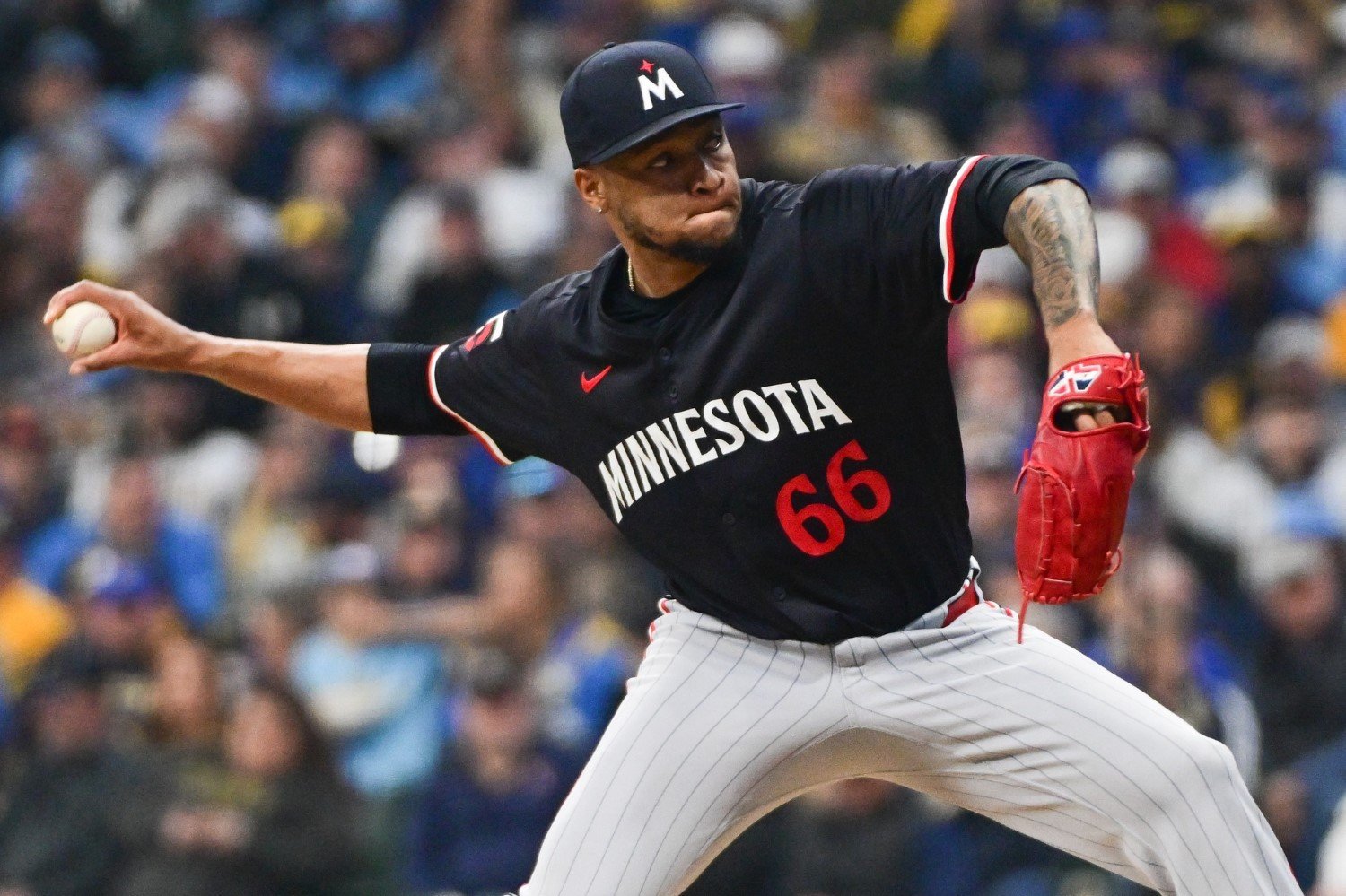
    Jorge Alcalá had a chance to put the Twins in position to sweep a four-game series against the defending World Series champs. Instead, he had one of the worst relief outings of the season. What went wrong?

    Image courtesy of Benny Sieu-USA TODAY Sports

    Twins Video

    In baseball, relievers are often the unsung heroes of a team. Their job is to protect leads, keep games close, and put out fires. For many relievers, including Jorge Alcalá, most outings are routine—composed of high-pressure situations where they deliver a crucial out or escape a jam. But even the best can have a blow-up appearance where everything seems to go wrong. How does this happen?

    The Nature of Relief Pitching
    Relief pitchers like Alcalá operate under unique constraints. Unlike starting pitchers, who can settle into a game over multiple innings, relievers typically have to be sharp from their first pitch. They may only have a handful of pitches to make an impact, and the margin for error is incredibly slim.

    Alcalá, a right-handed pitcher known for his electric fastball and sharp slider, has generally been effective for the Twins. His ability to mix power with movement makes him a tough assignment for hitters. But the same qualities that make him dominant can also contribute to a disastrous outing when things don't go as planned.

    What Can Go Wrong?
    1. Loss of Command: Command is the ability to locate pitches not just within the strike zone, but to specific areas where the batter is less likely to make strong contact. When Alcalá loses command, he may miss his spots, leaving pitches over the heart of the plate. In these situations, even average hitters can capitalize and punish him with extra-base hits or home runs. Lefties have been especially likely to do this throughout his career.

    2. Mechanical Issues: Even small deviations in a pitcher’s mechanics can lead to a loss of velocity, movement, or control. Alcalá’s effectiveness is tied to his ability to repeat his delivery consistently. If his arm slot drops or his timing is off, his pitches might not break as sharply or arrive as quickly, making him more hittable.

    3. Poor Pitch Selection: Pitch selection is a collaborative effort between the pitcher and catcher. If they choose the wrong pitch in a critical situation, it can lead to disaster. For instance, if Alcalá opts for a fastball when the hitter is sitting on it, or if he throws a slider that doesn’t break enough, it could result in hard contact or even a home run. The battery has to work together to intuit and respond not only to the batter's expectation, but to the trends they each perceive in the pitcher's feel for their offerings.

    4. Bad Luck: Baseball is a sport where luck plays a significant role. A well-located pitch can still result in a hit due to a blooper or a well-placed ground ball that finds a hole in the infield. In some cases, Alcalá may execute his pitches perfectly, but a combination of bad luck and defensive misplays can lead to an inning spiraling out of control.

    5. Situational Pressure: Relievers often enter games with runners on base and no margin for error. The pressure can amplify the difficulty of their task. If Alcalá allows runners to reach base, even a single mistake can turn into a multi-run inning. The pressure to be perfect can sometimes lead to overthrowing, resulting in a loss of command or mechanical breakdowns.

    So, which of these characteristics played out in Sunday's implosion?

    Batter 1: Leody Taveras gets a fastball low in the zone and puts a solid swing on it. 

    AD_4nXdsDKnYZ0kHK55-pVfKv3ECvMypIyYIcVPER1QxnMruIJpNGEFZ_LrFvHjY1XySSl4GNr7C7gzfjR8tcHqEyGeecnQCA9KqFk46J0bT0cdOUSmbjEAgUNyBHzDnioDv94v0O4SLM_U0Icb1vn5CTnarrtw9?key=iPVzQlXiI8MSpZMRM70uXw

    Batter 2: Marcus Semien sits on a fastball for a double, while nearly doubling Texas’s win probability. 

    AD_4nXctxdcD6yPy170JXpQfHIYcXjKaWXE743tqAg2UQvhBuANBEFuts1nxKw224FcWaZa8xtxy1ZtBWc2pLgB7ng5KOXMW0zCIBBtGLWuZSdrBsETq4iX_ojIWK6sB6tpxnx_GQswuoDkImOTd6IE5Tpy_b5IV?key=iPVzQlXiI8MSpZMRM70uXw

    Batter 3: Like Semien, Corey Seager is waiting on the first-pitch offering and smashes a run-scoring double to right field.

    AD_4nXe6A4uzfNjceKzGnDM3GEB14BzU74513L2YY7dVJclIBSrn66V92MDjbhvXsbDHevJIHcKsg8PPTW19Jv9QEzK_yJoSS1oNPsxpAFFg0pq37L4kDdr-LucKrhJYpxwQ2xYWlPxeT2hRWB1xzgfBCg2bTEOv?key=iPVzQlXiI8MSpZMRM70uXw


    Batters 4 and 5: Josh Smith flew out on two fastballs from Alcalá, but Adolis García stepped in and crushed a game-tying two-run homer. Alcalá fell behind with two pitches below the zone before leaving a fastball up.

    AD_4nXc6DBPdDCGioccbznTxkzjr1ModCDmpt8mqanD_4QuKM1_i7USDWbKo9kASAYsDQpGymLyz2qWmHd5OKgSAebGSAjfD8XEqGvkcIzG6SMC73OdEp03W4zRBmU6-jjmmCmfRx-QeJd0DhDKKrmmIRMb91pob?key=iPVzQlXiI8MSpZMRM70uXw

    Batters 6 and 7: Alcalá struck out Nathaniel Lowe in a tough, six-pitch at-bat that saw him work the count full before swinging through a slider. Josh Jung sat on deck and saw Alcalá’s entire repertoire of pitches, before getting a fastball up in the zone. 

    AD_4nXcmBWqUSwl57HTAIyYdDFhtHNZ0Y2FSFHPCiyxyJunXQLVf4PmAwKlcXQjkXqSp_xDmJDAuXiXzzynDDlfuubuczVPMplHavIJzGQJjp847fxuNDM8IssY7O4zoafWrao3_EgXUX2DiMcpmPte3UbS7kpHk?key=iPVzQlXiI8MSpZMRM70uXw


    Breakdown
    It seems fair to say that a mixture of the factors listed above contributed to this rapid unraveling. Alcalá's location wasn't good enough, though not for any obvious mechanical reason. Against some tough hitters, he simply didn't execute well enough. The pitch selection was questionable in places, though trying the first-pitch changeup to the notoriously eager first-pitch swinger in Seager made sense. He just didn't command that offering well enough. In hindsight, ahead 1-2 on Jung, another slider was in order, but if the fastball had been a few inches higher, the ugly result probably would have turned into a happy one. For that matter, the fastball García hit out of the park was in an almost perfect spot, and in that way, bad luck also intruded on the outing.

    The Ripple Effect of a Bad Outing
    One bad outing can have ripple effects beyond the immediate game. For the team, it can mean a demoralizing loss, especially if they were in a position to win. For the reliever, it can shake confidence and lead to overcompensation in future outings, further impacting performance. Managers and pitching coaches must then work to rebuild that confidence, possibly giving the reliever a lower-leverage situation in the next appearance to regain their rhythm.

    Alcalá, like any other good reliever, is not immune to having a blowup. While it can be frustrating for fans and painful for the team, it's essential to understand the various factors that can contribute to such an event. From mechanical issues and loss of command to bad luck and situational pressures, a myriad of elements can align to turn a typically dominant reliever's outing into a nightmare.

    The true measure of a reliever like Alcalá isn’t just their ability to deliver in high-pressure situations, but also their capacity to bounce back from an occasion on which they fail to do so. In the end, these moments of adversity can help build resilience and, ultimately, make them better pitchers in the long run.

    Follow Twins Daily For Minnesota Twins News & Analysis

    Recent Twins Articles

    Recent Twins Videos

    Twins Top Prospects

    Riley Quick

    Fort Myers Mighty Mussels - A, RHP
    In his second professional outing, Quick went three innings. He gave up no runs and no hits. He walked three and had five strikeouts.

    User Feedback

    Recommended Comments


    Featured Comments

    2 hours ago, IndianaTwin said:

    I wasn't able to watch/listen, but from the sounds of things, giving up five runs in nine innings is about what they might have expected with the overall pitching performance from the team. It's just unfortunate (and much more noticeable) when it happens in the way it did. 

    I am not a big believer in the theory some losses are better/worse than others, but situationally, this loss was tough.  Trailing Cleveland by 2 games, seeing Cleveland lose, than giving up a big lead in 7th, failing to score in the 10th, then losing on a quirky play in the bottom of the 10th.

    Considering what we've heard from Duran, it's unlikely Alcala does much of his own pitch calling. Jeffers is apparently using a middle-middle target technique on glove placement to get more strikes.

    Tavaras - First pitch .410 xwOBA (worst spot to throw) vs. changeup -3. Second pitch .323 (avg. spot to throw) vs. fastball -8. Tavaras struggles to hit fastballs, and the pitch he got a hold of was in a spot he's not strong this year. Good pitch.

    Semien - Only pitch .293 xwOBA (okay zone, but too high, too close to middle/middle where he's .411 xwOBA) vs. fastball +7. Throwing Semien a fastball was a poor choice. Semien is like Larnach in his ability to rake 4 seamers. Not keeping it further away from middle/middle was also bad. Terrible pitch.

    Seagar - Only pitch .580 xwOBA (terrible spot. Absolutely must stay out of the middle for Seager) vs. changeup +3. Seager is strong against most pitches this year, historically, the changeup has given him a bit of difficulty. He's consistently bad against sliders. Terrible pitch.

    Garcia - 1st pitch .195 xwOBA (okay spot. weak zone for Garcia, but too far out.) vs. fastball -8. 2nd pitch (okay spot, too low after the first pitch was so far out of the zone) vs. sinker -4. 3rd pitch .357 xwOBA (poor location, Garcia has hit pitches up there quite well) vs. fastball -8. 2-0 fastball outside the zone, but still in a spot Garcia hits well is a bad pitch.

    I can go on, I suppose, but it seems like pretty poor pitch selection and poor locations. Not sure who made the pitch calls or where they asked Alcala to put the balls, but if Alcala put them where he was asked, the person calling the game needs some better memory on scouting.

    8 hours ago, MinnInPa said:

    not Alcala related ..but, is anyone else frustrated/annoyed by the run on contact when we have runners at 3rd base. numerous times this year the runner is pegged out easily at  home when the ball is hit to a drawn in infielder.. i know there would be an easy out at first..but , id still rather have the guy on 3rd base

    What irritates me the most is Julien’s complete lack of effort.  Basically flat footed on contact, and not even a thought of attempting to slide to evade the tag or force a dropped ball.  Or, the smartest thing he could done there, would be get in a rundown and give the other runner a chance to get into scoring position.  Instead, he just gave up on the play.

    I’d have had him on his way back to the minors before the bottom half of the 10th was over.

    Putting that call on there was idiotic.  A competent base runner on third that can move a little bit?  Sure.  But, I could pull a random middle aged person out of their chair after an 8 hour day at our office, and they could’ve gotten down the line faster and provided better effort.

    Back to Alcala, they should’ve gotten some ready to get him out of there after Garcia’s home run.  Inexcusable to let him give Texas the lead there.

    I don’t suggest this was part of Sunday’s game. But an umpire’s strike zone can lead to an implosion. We saw that with a more seasoned pitcher earlier (Yates) earlier in the series. He was potentially squeezed out of a couple pitches and that imploded into a crooked number for us. I’m not sure what you do there. Alcalá lost the lead in under 10 pitches. You just don’t anticipate that. But the team didn’t give up, Santana hits a 9th inning home run to still give us a chance. If you would have said going into the series that we would take 3 of 4, I would have been happy. It’s just the way the loss occurred that leaves the sour taste.

    22 hours ago, Beast said:

    What irritates me the most is Julien’s complete lack of effort.  Basically flat footed on contact, and not even a thought of attempting to slide to evade the tag or force a dropped ball.  Or, the smartest thing he could done there, would be get in a rundown and give the other runner a chance to get into scoring position.  Instead, he just gave up on the play.

    I’d have had him on his way back to the minors before the bottom half of the 10th was over.

    Putting that call on there was idiotic.  A competent base runner on third that can move a little bit?  Sure.  But, I could pull a random middle aged person out of their chair after an 8 hour day at our office, and they could’ve gotten down the line faster and provided better effort.

    Back to Alcala, they should’ve gotten some ready to get him out of there after Garcia’s home run.  Inexcusable to let him give Texas the lead there.

    You are correct in that when the contact play is on and you are a dead duck your job is to get into a rundown so other runners can advance. But this team is fundamentally not sound and these types of mistakes happen nearly every game. Alcala had a rough game but nobody is talking about the errors we’ve made to end the last two games. 

    Odd. Last night, as the Twins rallied in the 7th, they put 3 consecutive hitters on base to start the inning. Somehow, the Atlanta manager was able to, from not having anyone warming, get a new pitcher ready and in the game to face the Twins 4th hitter, Eddie Julien. 

    I've been told that's impossible. 

    For the record, the new reliever gave up a double to Julien, but retired 3 consecutive hitters after that, stranding Julien and preserving the lead.


    Create an account or sign in to comment

    You need to be a member in order to leave a comment

    Create an account

    Sign up for a new account in our community. It's easy!

    Register a new account

    Sign in

    Already have an account? Sign in here.

    Sign In Now

×
×
  • Create New...


