Jump to content
Twins Daily
  • Create Account
  • Twins News & Analysis

    How Will Derek Falvey Improve Twins Pitching


    Parker Hageman

    When the Minnesota Twins hired Derek Falvey to rebuild the organization, the most significant task to tackle was to improve the pitching.

    Pitching is one of the most important facets of baseball and being able to reach into one’s own minor league system for more talent is crucial to long-term success. For the Twins, numerous high draft pick arms have stalled out. While there are several graduates like Kyle Gibson or contributors like Jose Berrios or Tyler Duffey, the development pipeline has been rather scarce when it comes to providing Major League-ready pitching. In response, the Twins have had to spend big on free agent pitchers like Ricky Nolasco, Phil Hughes and Ervin Santana.

    How exactly does Derek Falvey intend on improving the broken system?

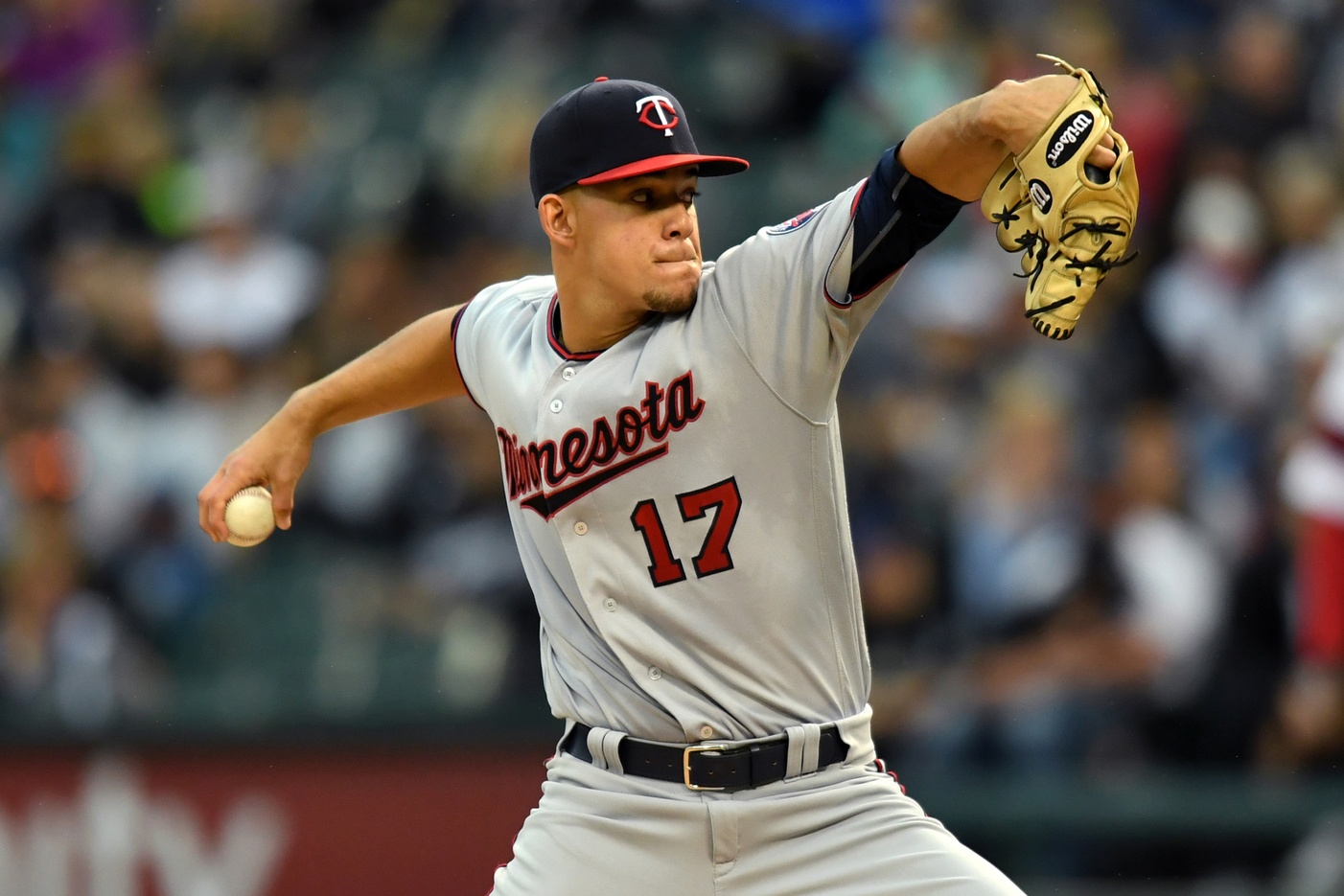
    Image courtesy of Patrick Gorski // USA Today

    Twins Video

    Here is just one example of how the organization can and will change.

    Across America weighted ball training has become an integral part in pitching development. Out east, Eric Cressey’s Cressey Performance Center has used those training methods since 2007. Down south, just outside of Houston, Ron Wolforth’s Texas Baseball Ranch has launched and re-established the careers of numerous arms, including the resurrection of Scott Kazmir. In Seattle, Driveline Baseball’s Kyle Boddy has made weighted ball training a household name. At baseball training centers everywhere in between young pitchers are picking up heavy spheres and throwing them in the name of velocity.

    Major League Baseball’s evolutionary process moves at a glacial pace and pro teams are slow to embrace change. MLB.com’s Lindsay Berra pointed out in December, organizations such as the Dodgers and Indians have tapped into the benefits of the systems designed by Cressey, Wolforth, Boddy and company. Still, there are some teams who have flat out refused to allow their pitchers to participate in those kinds of workouts. Perhaps not surprising, as recently as last year the Twins have reportedly discouraged some of their prospects from throwing heavy baseballs, suggesting that the practice can lead to more arm injuries despite the science saying otherwise.

    Thanks to new leadership, that mentality will change.

    Falvey arrived in Minnesota touting “evidence-based practices” at his introductory press conference, signaling that the days of discouraging new methods for unfounded reasons are over. His time with Cleveland’s player development system -- a more forward-thinking front office by comparison -- enlightened him to the benefits of working with weighted baseballs and other programs not necessarily on the mainstream radar. That said, even with the successful track record Falvey was not so quick to say that the Twins would be distributing heavy baseballs across the organization tomorrow.

    “Everything has to be individualized,” Falvey told Twins Daily. “I think what we need to do if find out what systems work for some of our players, what they are already doing. We need to learn what they are doing now and ask how do we build toward a vision and if that vision means a different type of arm care, or maybe a different type of velocity and growth, we’ll employ those tools for those players. I never like to shut the door on any of those systems. I like to evaluate them and see where they fit within the mix of what we are doing.”

    To be clear, this is not about weighted balls. Throwing weighted baseballs is not a magic elixir that is going to help someone’s arm suddenly from throwing pooh to pumping one-oh-two. What Falvey is saying is about more than that. For the Twins front office, this is about a bold step in exploring new methodologies for improving performance -- not restricting ideas based on gut feelings about a practice.

    In 2015 Cleveland’s minor league pitching coordinator Ruben Niebla provided a peek behind the Indians’ development curtain. One of their organization’s main objectives was to help their pitchers reach their maximum velocity in the minor leagues. In order to do so, Niebla told Fox Sports that they try to “enhance our pitchers’ flexibility, explosion, and athleticism” overall and feed the arm through various long-toss, symmetry bands and weighted ball programs. More importantly, Cleveland did not have a one-size-fits-all program in place in order to achieve their objective; they learned from Trevor Bauer’s experience with the Arizona Diamondbacks, who bristled at Bauer’s unorthodox conditioning and pre-game warm-up routine, that pushing a prospect into a team-mandated regimen can have backlash. Individualization is key.

    Furthermore, Niebla said that Cleveland emphasized building strength in their pitchers, which means dabbling in some powerlifting. That’s why in the offseason, Bauer can be found at Driveline’s squat rack or Corey Kluber deadlifting at Cressey Performance. Other flamethrowing pitchers like Aroldis Chapman and White Sox prospect Micheal Kopech both owe part their eye-popping radar gun readings to their adherence of lifting heavy things. The Twins, on the other hand, historically haven’t pushed their pitchers in that direction. Locally, you will find stories about Trevor May’s yoga practice or Glen Perkins’ avoidance of weight lifting.

    That doesn’t mean that one or the other is better.

    ”Ultimately we’re going to blend some of the things I think we do well here with maybe some of things that I felt was part of developing in Cleveland over time,” said Falvey. “I talked to [pitching coordinator] Eric Rasmussen about it and [Director of Minor League Operations] Brad Steil and what we are going to do in the minor leagues and I think we’re going to open the doors to new ideas that haven’t existed here in this organization before but I have every expectation that there is an embracing of that conversation.”

    In addition to the physical contributions of the player, Falvey also believes that leveraging data -- even at the lowest levels (an area in which the Twins might actually already have a head start) -- will help improve pitching development. Understanding through the numbers what works best for them and what they may need to improve upon quickly.

    Baseball is enamored by its new tool, StatCast, and the data it has produced at the Major League level. That left teams wanted to measure and analyze pitching prospects with the same lens so they have installed the Trackman systems in their minor league parks. One significant credit to Terry Ryan’s leadership was the Twins got ahead of the industry when they installed the same system in their top four minor league affiliates, providing the same velocity, spin rate and other metadata as their big league counterpart.

    “I can’t speak to how it was utilized in the past [in Minnesota] but I do know how we used it in Cleveland,” Falvey said, “and I felt that it was really something that was a difference maker for us.”

    How big of a difference maker can that be? So much so that the Los Angeles Dodgers, the second largest employer in the state of California, have created a “Pitching Department” which consists of six people including three former pitchers and an ex-Driveline Baseball medical expert dedicated to researching the hell out of it. Fangraphs’ David Laurila recently interviewed Brandon Gomes, a former pitcher added to that staff, who discussed how they will leverage that data.

    “The biggest thing is to understand the characteristics,” Gomes said. “It might be, ‘Hey, this guy has elite carry, so we want to look at pitching in this part of the zone.’ Or maybe it’s, ‘This is a power-sinker guy, so we want this,’ or, ‘He has an above-average slider, so he should use it more than he’s currently using it.’ Those kind of avenues. Nothing overly new, but we’re implementing it in a slightly different way.”

    Pitchers are not always certain about their identity. They may feel certain pitches are behaving one way when they are not. Providing them with the concrete data will give the a better direction or a quicker understand of what makes them successful.

    Training systems and data analysis improvements aside, player development comes back to the individual and Falvey places great emphasis on the human side as well. In his vision, there will be more communication and dialogue between the front office and the players.

    “It is a two-way conversation,” he said in regards to handling a player’s career. ”You go to a player and you talk about who do you want to be. How do you want to develop? All these guys have goals. All these guys want to be big league pitchers. What’s that look like?”

    It is honesty.

    “Let’s not be afraid to have a candid conversation about that. Let’s not be afraid to have some feedback on here’s where you are and here’s where you want to be. There’s a gap, how do we close the gap? And not focus on limitations but focus on opportunities to build and grow and develop. Build goals.”

    You could take that entire last statement from Falvey and apply it to the redevelopment of the pitching pipeline overall. Build goals not only applies for the individual, but for the team as whole. As Falvey said himself, there is a gap, a gap for where the Twins are as an organization when it comes to developing talent and where they want to be. How do they close that gap?

    It is not an easy nor quick fix but Falvey appears to have the right plan in the works.

    Follow Twins Daily For Minnesota Twins News & Analysis

    Recent Twins Articles

    Recent Twins Videos

    Twins Top Prospects

    Marek Houston

    Cedar Rapids Kernels - A+, SS
    The 22-year-old went 2-for-5 on Thursday night, his third straight multi-hit game. Heading into the week, he was hitting .246/.328/.404 (.732). Three games later, he is hitting .296/.359/.437 (.796).

    User Feedback

    Recommended Comments


    Featured Comments

    If the other Major League teams are also going to be employing these new training techniques won't the Twins at best only be preserving their current standing relative to the rest of the clubs? (Which was last, 130 runs worse than anybody else) I would cast my vote for finding some more successful pitchers somewhere.

    Edited by Teflon

    I am definitely most interested in the pitching development. I remember multiple tweets and articles saying Falvey had his fingerprints all over the Indians MLB staff and minors.


    The Indians were bottom 10 in MLB pitching from 2009-2012. Top 15 in 2013 and top 10 the last three years. I hope it doesn't take that long for the Twins pitching to turn around due to the young offensive core mostly already being in place. Either way, we all know things need to change. Hopefully we see the benefits ASAP.

    I think Falvey is a great add. To Brock's point, a guy like Kohl is a good litmus test. But for the franchise to turn a corner, we are going to need several of Berrios, Romero, Gonsalves, Stewart, and unnamed top pick next year to develop into good pitchers. Sounds like we have the right guy.


    It makes sense in a way... before a batter heads to the plate he's in the on-deck circle taking practice swings - with what? One or more heavier bats. Then he picks up his bat and it's lighter. the muscles get used to the heavier bat.


    Is it legal for pitchers to be throwing a heavier baseball during warm-ups before a game, in the bullpen and between innings? Would they want to? Would it help?

    I'm not sure I would want a pitcher warming up with a weighted ball.  That might seriously impact the angle the ball come to the plate.  Between games, I think it might be very beneficial for strengthening the arm, but not during a game.  Hitting a ball and throwing a ball are two very different muscle memory functions.


    He's not a poor defensive catcher at all, and for a catcher he is only a slightly below average hitter.

    The stats say different.   below average arm, way below average stolen base %.  J Ryan Murphy was bounced down to AAA for poor hitting...but basically hitting like Castro's average the past three years.   And JR is a better defensive catcher AND actually a better pitch framer.  (And I'm NOT a JR Murphy fan)


    The stats say different.   below average arm, way below average stolen base %.  J Ryan Murphy was bounced down to AAA for poor hitting...but basically hitting like Castro's average the past three years.   And JR is a better defensive catcher AND actually a better pitch framer.  (And I'm NOT a JR Murphy fan)

    John Ryan Murphy had a .413 OPS last season. When he was demoted in May, his OPS was a laughably bad .219.


    Jason Castro has a career .699 OPS. In 2016, his OPS was .684. His three season OPS was .660.


    Murphy's framing was -0.07 calls per game last season according to StatCast.


    Castro was +0.92 calls per game.


    So, no, not the same thing at all.


    I think he is in a holding pattern. See if Berrios is the real deal, if May can start. We still have Santana. Gibson could rebound. We have Hughes under contract. And need to have a good looksee at Gonsalves and Stewart and a few others.


    And, supposedly, there is a whole hsot of bullpen arms that have to be better than the ones we currently have on the roster.


    It is rebuilding time. This year is critical. The offense has to find its place. People are playing for jobs. He has shown that he is not afraid to cut salary. And if you are a prospect, the world is yours if you show your stuff and work with the Twins system.


    But there will be a lot of empty seats at Target Field and closed concession stands.


    Weighted ball training sounds fantastic. I also wonder what is the ideal hand or finger size for throwing certain pitches, like how we read about Berrios tipping his change or maybe certain other pitchers should give up on their split finger.

    I'm most encouraged by Falvey's language when it comes to individual goals and honest two-way communication about how to "close the gap." Thinking hard, I can't honestly recall a single in-depth article or interview where either a Twins pitching prospect or a Twins baseball person discussed having a development plan or training regimen customized for a player as part of an organizational initiative. 


    Maybe the beat writers don't explore these things. But I think it's safe to say we're going to see some positive changes on the development front. Good news, and terrific article, Parker. Thank you once again.

    I'm most encouraged by Falvey's language when it comes to individual goals and honest two-way communication about how to "close the gap." Thinking hard, I can't honestly recall a single in-depth article or interview where either a Twins pitching prospect or a Twins baseball person discussed having a development plan or training regimen customized for a player as part of an organizational initiative. 


    Maybe the beat writers don't explore these things. But I think it's safe to say we're going to see some positive changes on the development front. Good news, and terrific article, Parker. Thank you once again.

    This goes back to the part of the interview I really liked where he talks about a pitcher's best pitch and maybe not using it as much as he should, or that a pitcher's perspective on a pitch working or not working may be skewed and the information gathered may show otherwise. Coaching and player development should always be geared to each player on a personal level.

    Apologies for not finding this article sooner (and hat tip to Driveline for sending it out).


    Any Twins fans that want some insight into exactly what the Driveline model looks like should read some articles here:

    https://www.drivelinebaseball.com/blog/


    If you want a quicker view of Driveline weighted balls, Jaeger Sports (long-toss), Texas Baseball Ranch (full body focus), and Arizona Baseball Ranch (band training), then I did a summary article about the Cleveland Indians here:

    http://waitingfornextyear.com/2016/01/cleveland-indians-player-development/


    I see many comments above talking about the need to draft and develop better. You are absolutely correct. I cannot speak to Falvey's ability to draft. However, you are going to develop talent - particularly pitchers - better now.


    I look forward to some great games against our clubs in the future years. Enjoy the ride.


    Weighted ball training sounds fantastic. I also wonder what is the ideal hand or finger size for throwing certain pitches, like how we read about Berrios tipping his change or maybe certain other pitchers should give up on their split finger.

    I've already seen more weighted balls in Twins camp the past two weekends than I have in camp over the past 5 years combined.

    I've already seen more weighted balls in Twins camp the past two weekends than I have in camp over the past 5 years combined.

    Any talk anywhere of using weighted balls for fielders? Seems that it could help the guys that sre deemed not to have good enough arms to play SS of 3B. Or weak armed OF's. Just have not heard anything on that front.


    Create an account or sign in to comment

    You need to be a member in order to leave a comment

    Create an account

    Sign up for a new account in our community. It's easy!

    Register a new account

    Sign in

    Already have an account? Sign in here.

    Sign In Now

×
×
  • Create New...