


Jump to content
Twins Daily
  • Create Account
  • Twins News & Analysis

    Did Derek Falvey Complete the Twins Pitching Pipeline?

    Assessing what was built, what failed, and what might still be coming for the Twins after parting ways with Derek Falvey.

    Cody Christie
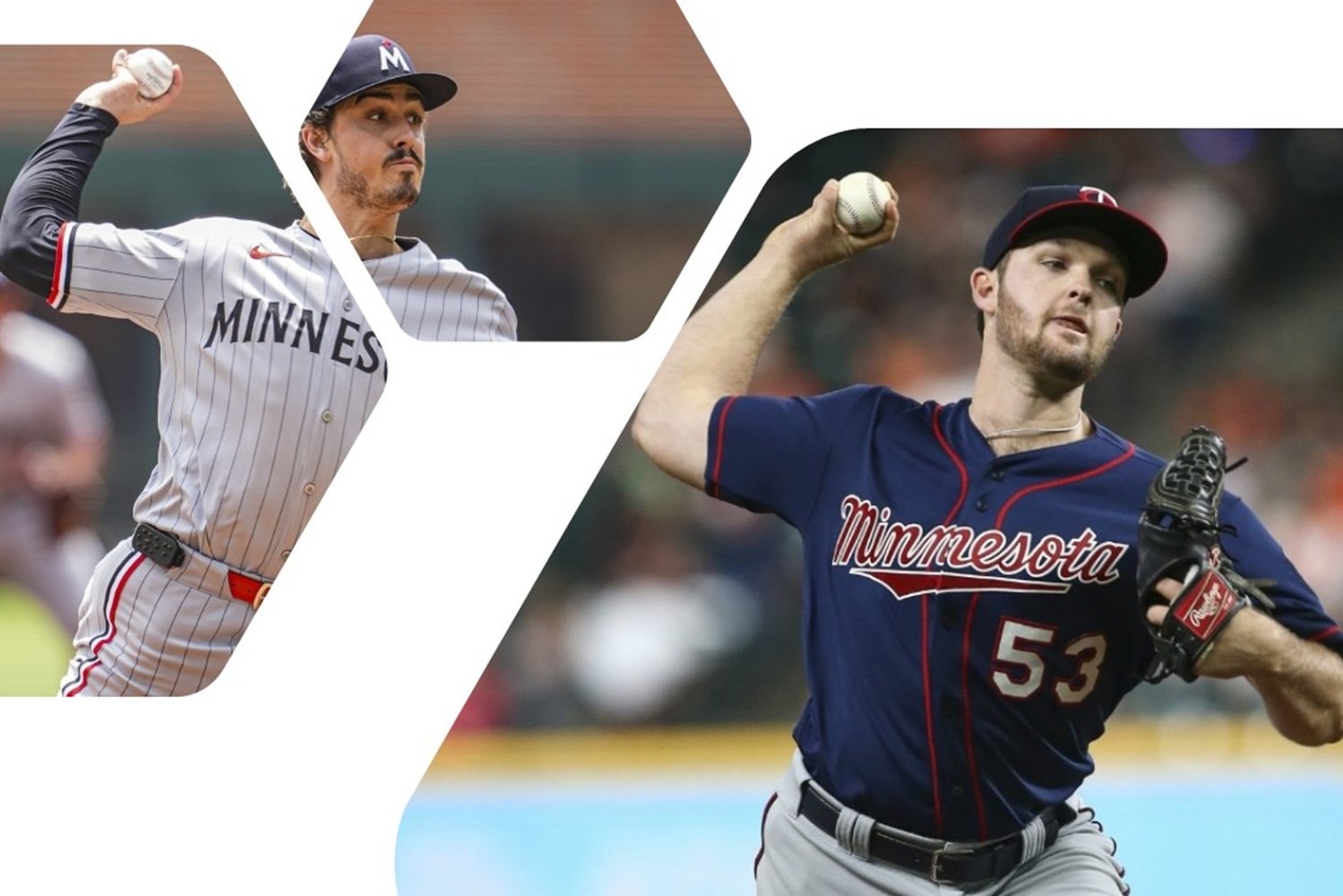
    Image courtesy of © Troy Taormina-USA TODAY Sports (Stewart), Dale Zanine-Imagn Images (Ryan)

    Twins Video

    The Minnesota Twins and Derek Falvey mutually agreed to part ways last week, bringing an end to an era defined equally by long-term vision and by uneven results. Falvey arrived with a reputation as a process-driven executive who believed in infrastructure, development, and patience. His departure opens the door to reflection on what actually changed during his tenure, especially in the area most closely tied to his reputation when he was hired.

    When the Twins brought in Falvey prior to the 2017 season, they were not just hiring a new voice: they were hiring a philosophy. Falvey came from Cleveland’s front office, where he was widely viewed as one of the architects of a pitching pipeline that seemed to endlessly produce big-league-caliber starters. Cleveland stayed perennially competitive by developing arms internally, turning mid-round draft picks and overlooked prospects into reliable rotation pieces.

    Meanwhile, the Twins were seen as an organization lagging behind in player development, particularly when it came to pitching. Years of conservative approaches, limited data use, and inconsistent development plans left the organization scraping by with soft-tossers and mid-level veteran pickups. Falvey was charged with modernizing the system and building something sustainable, from overhauling coaching philosophies to investing in technology and process at every level of the minors. The goal was not quick fixes, but a pipeline that could consistently supply the major-league roster.

    Understanding where the pitching pipeline started is critical to evaluating where it ended. When Falvey arrived, leading into the 2017 season, the Twins' top pitching prospects included Stephen Gonsalves, Fernando Romero, Tyler Jay, Kohl Stewart, and Felix Jorge. That group generated some optimism in ranking circles, but had very little lasting impact at the major-league level. None of them became long-term contributors, and several struggled just to reach the big leagues. The cupboard was bare, and that reality meant any meaningful pitching pipeline would take years to build.

    There were legitimate successes in player development during the Falvey era. Bailey Ober emerged as a mid-round pick who added velocity and refined his command to become a dependable starter. David Festa and Zebby Matthews followed similar paths, pushing themselves into the team’s future plans after entering pro ball without much fanfare. The Twins also showed an ability to creatively deploy arms. Jhoan Duran, Griffin Jax, and Louis Varland all transitioned to bullpen roles and became dominant late-inning options.

    Joe Ryan may ultimately stand as the biggest success story of the Falvey regime, even though he was not drafted by the organization. When the Twins acquired him for Nelson Cruz’s expiring contract, few evaluators saw more than a potential mid-rotation starter. Minnesota refined his pitch usage, helped him better understand how to attack hitters, and put him in a position to maximize his strengths. The result was an All-Star-caliber arm and a pitcher who became a rotation anchor, highlighting how the organization could add outside talent and still meaningfully elevate it through development.

    The story of the pitching pipeline may not be finished yet. Minnesota’s 2025 trade deadline sell-off brought a wave of new arms into the organization, including Kendry Rojas, Mick Abel, Ryan Gallagher, Sam Armstrong, Garrett Horn, Taj Bradley, and Geremy Villoria. Some of these pitchers could play a role as soon as 2026, while others represent longer-term bets that will take years to fully evaluate. Falvey’s lasting legacy in Minnesota may forever be tied to the results of the 2025 trade deadline selloff.

    That depth is also reflected in the current prospect rankings. Minnesota’s system is now crowded with pitching talent such as Connor Prielipp, Dasan Hill, Andrew Morris, Charlee Soto, Riley Quick, Marco Raya, James Ellwanger, and C.J. Culpepper. Some of these arms will develop into starters, some will thrive in relief, and others will never make it out of the minors. That uncertainty is the nature of pitching development, but the volume of talent is notable compared to where things stood when Falvey arrived.

    In the end, Derek Falvey’s pitching legacy with the Twins is less about a finished product and more about a transformation in progress. The organization he inherited had little margin for error and almost no internal pitching depth. By the time he exited, Minnesota had reshaped how it identifies, develops, and deploys arms throughout the system. That shift represents meaningful progress, even if the results did not always align with expectations.

    The difficulty with judging a pitching pipeline is that timelines rarely cooperate. Arms take years to develop, and many of the pitchers most closely tied to Falvey’s vision are still working their way through the minors. Some will become contributors, others will not, but the volume of talent and variety of profiles now in the system suggest a healthier foundation than what existed a decade ago. If nothing else, they've had more ammunition to make trades over the last handful of years, as Falvey's pipeline has produced pitchers other teams want. That Falvey's conservatism in the trade market left some of that value untapped is a strike against him, but at least he created those opportunities. Duran, Jax and Varland were key pieces of the 2025 fire sale and brought back much of the young talent mentioned above. The team's work to identify and begin the development of Chase Petty allowed them to swap him for Sonny Gray in the 2021-22 offseason.

    Whether Falvey ultimately succeeded may depend on what happens next. If the Twins begin to regularly graduate starters and high-leverage relievers from the current crop of prospects, his tenure will look far more favorable in hindsight. If those arms stall or flame out, the criticism will remain that the pipeline was never fully delivered. For now, Falvey leaves behind a system that is better positioned than the one he found, even if the final verdict on his pitching legacy is still years away.


    So did Falvey complete the Twins’ pitching pipeline, or did he simply lay the foundation for someone else to finish the job? Add a comment and start the discussion.

    Follow Twins Daily For Minnesota Twins News & Analysis

    Recent Twins Articles

    Recent Twins Videos

    Twins Top Prospects

    Marek Houston

    Cedar Rapids Kernels - A+, SS
    The 22-year-old went 2-for-5 on Friday night, his fourth straight multi-hit game. Heading into the week, he was hitting .246/.328/.404 (.732). Four games later, he is hitting .303/.361/.447 (.808).

    User Feedback

    Recommended Comments


    Featured Comments

    4 hours ago, Cris E said:

    Bonkers. You measure the outcomes from all sources because people don't develop on schedules and injuries happen when they happen and you still need to field a team year after year. There's no trophy for best minor league pitching pipeline except among the prospect hounds, and no one cares about it anyway.  Quick, without looking it up, who had the best minor league pitching pipeline in 2022?  2012?  

    Pointless rationalization. Of course you need outcomes from all sources. I credited Falvey for acquiring pitching. My point is when you go outside the organization, you give up assets. 

    And don't give me this development schedule bs. It's been 9 years and the only starter they produced is Bailey Ober, who is a mid rotation guy at best. 

    What teams had the best pipeline in a given year couldn't be more irrelevant. The subject is the Twins pipeline over the last 9 years and it isn't good. That's why we had a fire sale to bring in more pitching prospects, while home grown prospects have stalled.

    Name an organization that produces enough of their own starters to meet your definition of successful. You  get Cleveland, but after that the closest I can find is PIT or possibly SEA.Go through the rest of baseball and let me know who the third might be.  The ultimate models that everyone says we should be following, MIL and TAM, are constantly churning pitching prospects to keep the roster full of talent. It's what well-run programs do.

    EDIT: It's worth pointing out that the Twins are just like those three squads in other respects, in that they've had trouble assembling enough offense and three of the four have had sporadic playoff appearances with little success.

    6 hours ago, TopGunn#22 said:

    As you pointed out Cody, "pipelines" rarely have a linear progression, making them easy to evaluate.  Are there more talented pitchers in the Twins organization NOW than before Derek Falvey arrived.  Absolutely.  But there has been little to hang your hat on from a "development" standpoint in the rotation.

    Ryan, Lopez, Gray...all traded for.  Guys like Bradley, Mick Abel, Rojas...all traded for and still developing.  Matthews, SWR, Festa, Prielipp, Dasan Hill, Charley Soto...all still developing.  What the Falvey era WAS able to do quite effectively, was identify SP prospects who, for whatever reason, health, limited pitch repertoire, stamina, were deemed not going to cut it as a SP and who became excellent bullpen arms, led by Duran and Jax and most recently, Varland. 

    The most successful low revenue teams have acquired half of the pitching as prospects.  While I think it's note worthy to differentiate so that we can judge their drafting, I don't think it makes sense to suggest their effort to build a pipeline is somehow diminished because they didn't draft them all.  If you go back a few years, Cleveland's had years where half or more of their best pitchers were acquired as prospects.  In 2017, they had 8 pitchers that produced 1.5 WAR , five of them were acquired as prospects on one was drafted.

    Corey Kluber         AaP
    Carlos Carrasco    AaP
    Trevor Bauer         AaP
    Andrew Miller       Trade for established player
    Danny Salazar       Intl
    Mike Clevinger      AaP
    Josh Tomlin          Drafted
    Bryan Shaw          AaP

    The 2025 Brewers had 6 pitchers with 1.5 WAR and four of them were acquired as prospects.

    The 99 win 2023 Rays had a staff that was mostly acquired as prospects.  That team only had 3 pitchers with more than 1.5 WAR but they had a bunch of guys in the pen that contributed.  Among their top 10 pitcher by WAR, eight of them were acquired as prospects.

    Zach Eflin                   FA

    Tyler Glasnow           AaP

    Shane McClanahan   Drafted

    Drew Rasmussen      AaP

    Shawn Armstrong    AaP

    Pete Fairbanks          AaP

    Kevin Kelly                 AaP

    Robert Stephenson   AaP

    Zack Littell                 AaP

    Colin Poche                AaP


    1 hour ago, NYCTK said:

    Andrew Morris didn't make top 100 because he's never been highly regarded as a prospect. Zebby DID make Top 100 lists. 

    One of the reasons Morris didn't make those lists is based on age and "projection". Zebby made Baseball America's Top 100 once, pre-2025 after rocketing up the minors (3 levels in one season) in 2024 at age 24. B-Ref doesn't have him on any other prospect rankings (though I'm sure there's more than a few they don't pick up, like ESPN) Festa was picked for the Futures game, so clearly someone thought he was a highly regarded prospect, but wasn't landing on lists either.

    There's always bias against older players in prospect lists and as long as the Twins continue to focus more on college pitchers in the draft, they're going to be less represented on these lists. it's just reality.

    31 minutes ago, se7799 said:

    TD’ers love the term pipeline.  Sorry, just a funny observation.

    Yep I’m thinking it is being used on purpose by the writers as it never fails to get a reaction, even though nobody really knows precisely what it is 😀

    2 hours ago, Major League Ready said:

    The 99 win 2023 Rays had a staff that was mostly acquired as prospects. 

    Zach Eflin                   FA

    Tyler Glasnow           AaP

    Shane McClanahan   Drafted

    Drew Rasmussen      AaP

    Shawn Armstrong    AaP

    Pete Fairbanks          AaP

    Kevin Kelly                 AaP

    Robert Stephenson   AaP

    Zack Littell                 AaP

    Colin Poche                AaP


    To be fair, when Zack Littell was acquired from Boston Tampa Bay became his fourth major league team. He was in his age-27 year and appeared in about 175 major league games. Not exactly a prospect.

    Are these people we should consider prospects? If so, then some of the Twins names previously discarded as too old should definitely qualify.

    Rasmussen had appeared in 27 games over two seasons with Milwaukee and was 25.  

    Shawn Armstrong was 32, on his second go-round with TB, and had appeared in over 150 games before his first time with TB.

    Fairbanks only had 39 games in the majors before TB acquired him in 2019, but he was 25 years old.

    Kelly similarly came up as a 25-yr-old rookie in 2023.

    Stephenson was acquired by TB in 2023 at age 30, with over 230 ML games.

    Poche did come up as a rookie and after missing two years with an injury finally played a role at age 28.

    So I respect Tampa Bay for finding pitchers and making them perform better, but not many of these guys were acquired as true prospects as others are defining them. They were mostly other team's prospects who had flamed out (or in Littell's case, flamed the manager on the mound) and they were able to get more out of them.


    2 hours ago, Major League Ready said:

    The most successful low revenue teams have acquired half of the pitching as prospects.  While I think it's note worthy to differentiate so that we can judge their drafting, I don't think it makes sense to suggest their effort to build a pipeline is somehow diminished because they didn't draft them all.  If you go back a few years, Cleveland's had years where half or more of their best pitchers were acquired as prospects.  In 2017, they had 8 pitchers that produced 1.5 WAR , five of them were acquired as prospects on one was drafted.

    Corey Kluber         AaP
    Carlos Carrasco    AaP
    Trevor Bauer         AaP
    Andrew Miller       Trade for established player
    Danny Salazar       Intl
    Mike Clevinger      AaP
    Josh Tomlin          Drafted
    Bryan Shaw          AaP

    The 2025 Brewers had 6 pitchers with 1.5 WAR and four of them were acquired as prospects.

    The 99 win 2023 Rays had a staff that was mostly acquired as prospects.  That team only had 3 pitchers with more than 1.5 WAR but they had a bunch of guys in the pen that contributed.  Among their top 10 pitcher by WAR, eight of them were acquired as prospects.

    Zach Eflin                   FA

    Tyler Glasnow           AaP

    Shane McClanahan   Drafted

    Drew Rasmussen      AaP

    Shawn Armstrong    AaP

    Pete Fairbanks          AaP

    Kevin Kelly                 AaP

    Robert Stephenson   AaP

    Zack Littell                 AaP

    Colin Poche                AaP


    I fully agree with your assessment, but there are flaws in it that need to be pointed out as many of the players you mentioned that were AaP spent many years on other teams prior to joining the 2023 Rays.  Eflin spent 7 years in Philly, Glasnow spend 2 1/2 years in Pittsburgh, Littell spend 3 years as a Twin, Armstrong spent over 7 years with 3 teams before coming to TB, Stephenson spent over 7 years with 3 different teams.  I could maybe give you Fairbanks as he started in Texas but was traded in his first year in the majors to TB.  In looking at your 2017 Cleveland reference, I only found Shaw that played for Arizona for a little over a year before coming over to Cleveland.  I used baseball reference as my tool.  I think Cleveland is the better example as the Rays are more apt at turning around reclamation projects from other organizations (Eflin and Littell are great examples).

    6 hours ago, Cris E said:

    So what? A one year grade of the farm teams is no measure for nine years of history. Many of the best pitching moves Falvey made were never prospects (eg Grey, Stewart, Lopez) plus Law is talking about 2025 so that excludes everyone that's ever graduated to the majors (Ryan, Duran, Jax, Ober, etc.)  

    You missed the point, the focus is the symmetry, i.e. the farm is in roughly the same shape upon exit as it was when Falvey entered the organization. I'm sure other publications might disagree, whatever, we're talking about a decade at the helm with two good seasons from a single SP who may or may not be cooked at this point and a couple relief (albeit one elite) arms. The fact that you even have to mention Brock Stewart amongst the greatest hits collection kinda says it all. 

    Is the pitching better overall compared to nine years ago? Again, it's good when you produce your own guys, but most teams don't and being able to find arms from all sources is the game at hand. Very few teams do what you are dreaming of here, and ignoring the actual performance at the major league level is baffling.

    15 hours ago, big dog said:

    So I respect Tampa Bay for finding pitchers and making them perform better, but not many of these guys were acquired as true prospects as others are defining them. They were mostly other team's prospects who had flamed out (or in Littell's case, flamed the manager on the mound) and they were able to get more out of them.

    15 hours ago, Western SD Fan said:

    I fully agree with your assessment, but there are flaws in it that need to be pointed out as many of the players you mentioned that were AaP spent many years on other teams prior to joining the 2023 Rays. 

    Don't get hung up on the word Prospect any more than the Pipeline mirage. Finding arms that you can get good use out of is the goal, and purity tests for sources are a distraction. Traded for at 21 vs 25, already reached A+ or AAA, original round drafted in, it's probably best to not have a single source so that if anything happens (like Wes Johnson getting hired away) you won't miss a beat.  

    17 minutes ago, Cris E said:

    Is the pitching better overall compared to nine years ago? Again, it's good when you produce your own guys, but most teams don't and being able to find arms from all sources is the game at hand. Very few teams do what you are dreaming of here, and ignoring the actual performance at the major league level is baffling.

    I do think it's better than 9 years ago; we were desperate for starting pitching back when Falvey started; we had an unproven Berrios, an inconsistent Gibson, and an old Santana and after that it was desperation time with guys like Colon, Meija, etc. Hughes was cooked, and there wasn't a lot in the farm system that were options as starters. (the bullpen had guys however)

    Looking around now, we have more strength in the MLB rotation and a lot more realistic options in the high minors with more coming along. Not all of them are going to pan out, but there's a lot more realistic options to try and make the leap, players that other teams want in trades, etc.

    There's also more guys to turn into relievers too.

    It's not awesome (unless a couple of guys like Matthews, Morris, Festa, Bradley, Abel, or Bradley turn into the next Ober/Ryan/SWR) but it's better, IMHO.

    And Twins fans are told to be excited about the "prospects" who either flop or regression in the majors. 

    Helluva pipeline!  Couldn't even piece together a semblance of a bullpen with the supposed strength of the pitching. And we're how many years since the last prospect "hit"? (Jeffers is now 6 years...)

    Author needs a remedial engineering course.  A sewer pipe isn't a "pipeline"...

    On 2/4/2026 at 2:05 PM, TJSweens said:

    Pointless rationalization. Of course you need outcomes from all sources. I credited Falvey for acquiring pitching. My point is when you go outside the organization, you give up assets. 

    And don't give me this development schedule bs. It's been 9 years and the only starter they produced is Bailey Ober, who is a mid rotation guy at best. 

    What teams had the best pipeline in a given year couldn't be more irrelevant. The subject is the Twins pipeline over the last 9 years and it isn't good. That's why we had a fire sale to bring in more pitching prospects, while home grown prospects have stalled.

    "Liked" because you're 💯 percent correct. 

    Hate it because you're 💯 percent correct...

    On 2/4/2026 at 5:43 PM, Linus said:

    Yep I’m thinking it is being used on purpose by the writers as it never fails to get a reaction, even though nobody really knows precisely what it is 😀

    Yes, you are correct, unfortunately but I agree. Happens every time.  Unfortunately, it seems more about reactions than actual good content.  And not to offend anybody, but the same writers and moderators and commentators get so angry at the Twins for prioritizing $$$ over winning.  While Twins Daily puts $$$ over actual content and most don’t see it’s the same thing.  


    Create an account or sign in to comment

    You need to be a member in order to leave a comment

    Create an account

    Sign up for a new account in our community. It's easy!

    Register a new account

    Sign in

    Already have an account? Sign in here.

    Sign In Now

×
×
  • Create New...

