


Twins Video
On June 19, I wrote a piece on Louie Varland and his struggles with giving up an unpalatable amount of home runs. The primary determination was that Varland gave up so many home runs due to poor pitch placement and subpar pitch mix. Varland is a young pitcher not expected to be a main contributor for the 2023 Twins. So, the Twins optioned Varland to Triple-A to let him iron out the most significant flaw in his game before reappearing at the Major League level.
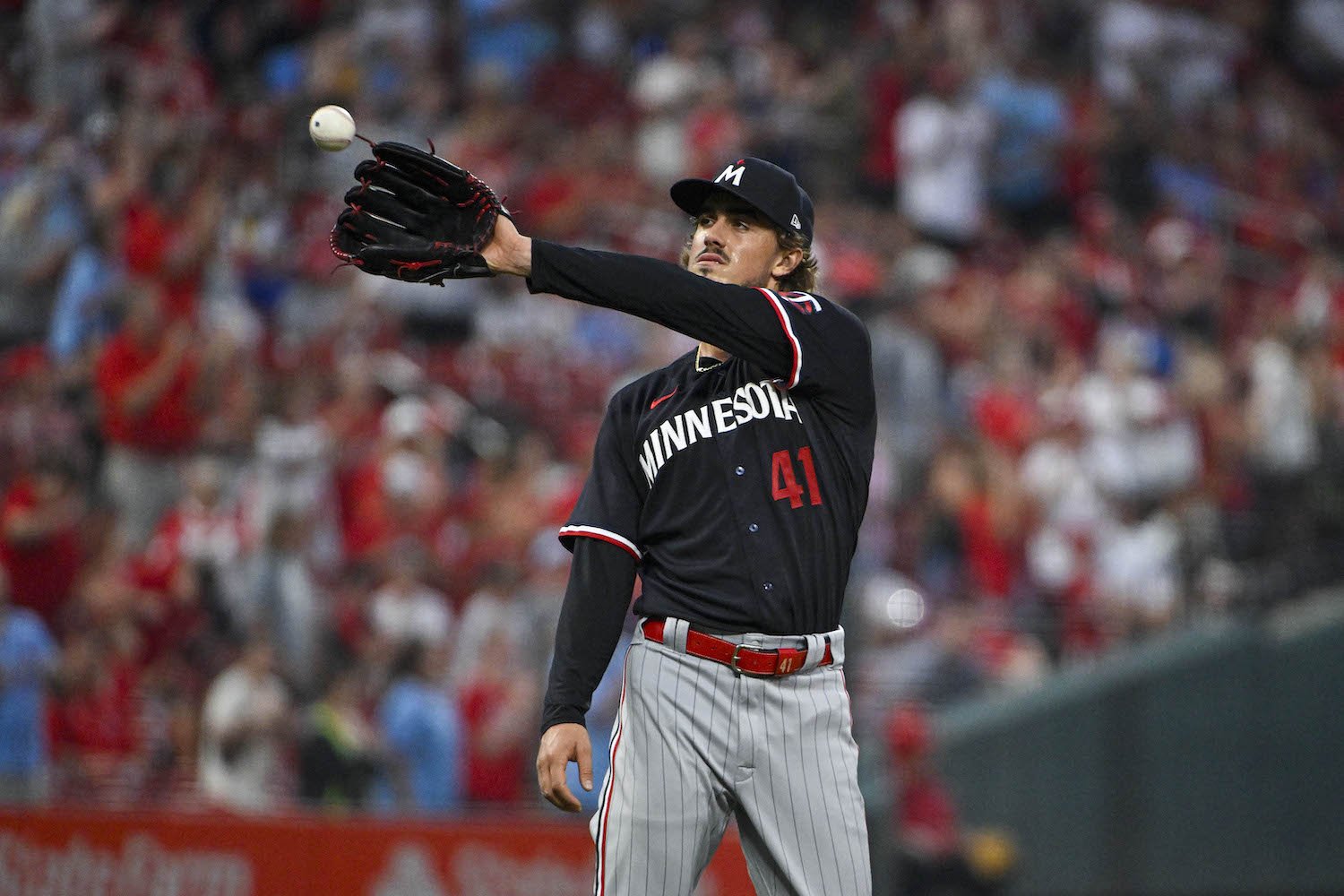
Roughly one and a half months later, we are at a similar spot with another young Twins pitcher, Joe Ryan. Through his last seven starts and 32.1 innings pitched, Ryan has given up 16 home runs. Ryan has been so flawed that, as Aaron Gleeman of The Athletic noted, Ryan set a new Twins record over his dreadful seven-start stretch.
When a starting pitcher who is traditionally very efficient is struggling, it's hard to pin it down to specific reasons, let alone one reason. Even so, watching Ryan struggle to such an intense degree over his last seven starts, some alarming tendencies are standing out. What are they? Well, let's take a look.
Possible Reason For Ryan's Recent Poor Performance: Poor Pitch Selection and Bad Sequencing?
The main reason why Ryan is struggling so intensely could be because he only has two effective pitches.
Ryan's fastball is undoubtedly his best pitch, moving 11 inches towards right-handed batters, four inches better than league average, while dropping 17 inches, two inches better than league average.
Ryan's fastball, which he throws 57.6% of the time, was dominant earlier in the season, exemplified in the nine-inning shutout he threw against the Boston Red Sox on June 22. Ryan attacked the zone, throwing his "rising fastball" middle up and up and in on hitters of both handednesses with the same efficacy.
Watching Ryan pitch when he can dissect the opposing team's lineups with his fastball is a beautiful sight. Sadly, we have not had that experience for quite some time now.
Another potential reason why Ryan's performance has fallen off such a cliff is that hitting coaches and hitters themselves may have caught on to Ryan's fastball. Typically, pitchers can adjust when this phenomenon occurs, but Ryan's offspeed pitches aren't good enough to complement his compromised fastball.
The combination of Ryan's fastball no longer being as effective as it once was and his offspeed pitches not being effective enough to counteract when his fastball isn't working is why Ryan is beginning to look like a landmine waiting to explode every time he takes the mound.
To further illustrate Ryan's struggles, here are Ryan's numbers over his last seven starts compared to the league average this season:
Earned Runs Allowed (ERA)
- Ryan - 8.63
- League Average - 4.31
Fielding Independent Pitching (FIP)
- Ryan - 8.10
- League Average - 4.31
Batting Average on Balls In Play (BABIP)
- Ryan - .413
- League Average - .295
Home Runs per 9 Innings (HR/9)
- Ryan - 4.73
- League Average - 1.20
Home Run to Fly Ball Ratio (HR/FB)
- Ryan - 32.1%
- League Average - 12.5%
Admittedly, all of these statistics and Ryan's overall trend is alarming, but what is most discouraging is Ryan's HR/FB ratio of 32.1%. Over this dreadful seven-game stretch, Ryan has given up a home run on nearly one-third of every flyball he produced. This occurrence is especially discerning when considering that Ryan is a flyball pitcher, inducing flyballs or line drives in 67.3% of balls put in play off him.
This upcoming statement is hyperbolic, but like Varland earlier this season, if Ryan cannot strike a hitter out, he is essentially pitching a glorified version of batting practice by Major League Baseball pitching standards.
How Can Ryan Resolve This?
The simple answer is to develop better off-speed pitches, particularly off-speed pitches that are more effective when facing right-handed hitters.
To explain what I mean more in-depth, let's look at Ryan's splits this season:
When Facing Left-Handed Hitters - 245 Batters Faced (BF), 46 H, 59 SO, 17 BB, 7 HR, 1.06 WHIP
When Facing Right-Handed Hitters - 278 BF, 72 H, 93 SO, 8 BB, 18 HR, 1.20 WHIP
Ryan has given up 11 more home runs to right-handed hitting batters while facing only 33 more this season. How could that be? The answer is likely subpar secondary pitch selection in certain situations.
When facing right-handed hitters, also known as same-handed hitters, Ryan throws a mix of his fastball, split-finger, sweeper, and slider. While this is technically a four-pitch mix, Ryan almost exclusively uses his fastball and split-finger.
Like most pitchers, Ryan's fastball works best when his other off-speed pitches complement it, but the off-speed pitch Ryan tends to throw most is his split-finger.
Ryan throws his split-finger 28% of the time, 18 percentage points more than his sweeper and 24.5 percentage points more than his slider.
Essentially, Ryan's sequence to same-handed hitters is working his fastball up in the middle of the zone and up in and in the zone and complements it by throwing his split-finger down, usually down and in but sometimes down and away depending on the hitter and situation at hand.
Ryan's approach appears to need fixing, and with Ryan struggling with his command over his last seven starts, his fastball and split-finger are getting struck and over the fence at an alarming rate by right-handed hitters.
A way to fix this issue would be for Ryan to use his sweeper and slider more. Although this is an easy fix, there is likely a reason why Ryan rarely uses his sweeper and slider. Could it be because pitching coach Pete Maki tells Ryan and the catcher calling his game to use his fastball and split-finger a combined 85.8% of the time? Possibly. But since we are on the outside, we will only truly know if it gets reported by someone with the Twins or if they leak or share that information with reliable reporters.
Another possible option is that Ryan doesn't trust his sweeper or slider. Although Ryan doesn't use his sweeper or slider often, other Twins starting pitchers do. Here is how often other Twins starting pitchers use their sweeper or sliders:
- Sonny Gray - Sweeper (18.7%)
- Pablo López - Sweeper (20.9%)
- Kenta Maeda - Slider (35.8%)
- Bailey Ober - Slider (21.1%)
On average, the Twins' four other starting pitchers use their sliders or sweepers 24.1% of the time, while Ryan uses his a combined 7.4% of the time.
Considering Ryan's sweeper and slider are average if not slightly above average, it would likely be in the Twins and Ryan's best interest to jump his combined sweeper and slider usage from where it sits right now at 7.4% to how often López, Gray, and Ober use theirs, which hovers around 20.2% of the time.
Ryan uses his fastball and split-finger to such an extreme extent that hitters on both sides of the plate can essentially scoff at his sweeper and slider as they know his fastball or split-finger will come eventually, as the odds are 85.8% in favor of that happening.
Mixing Ryan's questionable pitch mix selection with it being likely that he is close to being if not already, burnt out as he hasn't missed a start and we are in the "dog days" of the Major League season, it is possible that a paradoxically appropriate perfect storm has occurred and Ryan is suffering from it.
On August 2, the Twins placed Ryan on the 15-day IL with a left groin strain. Ryan's injury could have played an undetermined role in his struggles, but much of what has been happening with Ryan has been alarming, whether an injury is present.
Increasing the usage of certain pitches this late into the season is arduous, and, likely, Ryan doesn't think his sweeper and slider should be used more than it is currently.
Over the past seven starts, Ryan still has a Strikeout Percentage (K%) of 33.1%, 10.4 percentage points higher than the league average, and a Walk Percentage (BB%) of 6.4%, 2.2 percentage points better than the league average.
Adding a high strikeout rate and low walk-out to the concept of regression to the mean itself, Ryan likely won't struggle as much as he has over his last seven starts. Will Ryan be able to return to his early season form? That is yet to be determined, but drastic changes in his approach are necessary to fix the monumental struggle he has endured since his June 27 start against the Atlanta Braves.
What do you think Ryan needs to do to alleviate his immense struggles? Are you concerned about his future? Comment below.






Recommended Comments
Create an account or sign in to comment
You need to be a member in order to leave a comment
Create an account
Sign up for a new account in our community. It's easy!
Register a new accountSign in
Already have an account? Sign in here.
Sign In Now