Jump to content
Twins Daily
  • Create Account

Recommended Posts

Posted

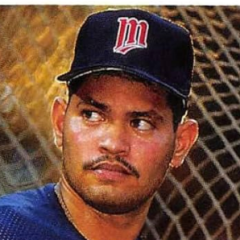
Roy Frederick Smalley III (Roy Smalley) was born October 25, 1952, in Los Angeles, into a baseball family. His father, Roy Smalley, Jr., was a major league shortstop, as was his uncle, Gene Mauch, who also later managed 26 seasons, five with the Twins. Roy Federick Smalley, Jr. played 11 seasons from 1948 to 1958 with the Chicago Cubs (where he preceded Ernie Banks), Milwaukee Braves, and Philadelphia Phillies. He batted .227/.300/.360 with 61 home runs and 305 runs batted in during his career. He was known for his strong but wild throwing arm. Roy was a teammate of second baseman Wayne Terwilliger with the Cubs from 1949-1951. Many will remember the beloved “Twig,” who served as a Twins coach from 1986 to 1994, and one of the players he coached was his former double-play partner’s son, Roy III.

With the MLB pedigree, Roy was brought up in a baseball household and became very good, easily getting the attention of scouts. So much so that he was drafted five times. The first time was after high school, but instead, he chose to attend college, first at Los Angeles City College, then at the University of Southern California. He played two seasons with USC, where he was an All-American and a key piece on back-to-back national championship teams. Following his junior season, he was selected in the first round of the MLB draft by the Texas Rangers. This time, he decided to turn pro and signed with the Rangers. 

Smalley played parts of two seasons in the minor leagues before debuting with the Rangers on April 30, 1975, as a 22-year-old. He came in during the fourth inning to replace Toby Harrah, who had been hit by a pitch. Smalley got up to bat three times, did not record a hit, but did get an RBI with a fielder’s choice. The Rangers beat the White Sox 8-2. The following day, Smalley started and got his first two hits, both singles, in another Texas win over the Sox. Those first two hits came off former Twin and future Hall of Famer Jim Kaat. Smalley’s first home run would come on May 11 at Detroit. Smalley hit the home run in the ninth inning of an 11-7 win for the Rangers.

In Smalley’s second season, unbeknownst to him, trouble was brewing in Minnesota. Star pitcher Bert Blyleven had requested a trade over an intense salary dispute with the Twins. His relationship with new manager Gene Mauch, Smalley’s uncle, was also contentious. Owner Calvin Griffith had previously turned down multiple trade offers. Still, finally, on June 1, 1976, Blyleven and shortstop Danny Thompson (who was battling leukemia) were traded to Texas for Smalley, pitchers Bill Singer and Jim Gideon, and third baseman Mike Cubbage. 

Losing Blyleven was inevitable. He had the salary dispute (as many Twins did in the 1970s), the new manager, and was just frustrated and unhappy. The Twins did well in dealing with him for the package they received from Texas. Blyleven pitched very well in parts of only two seasons in Texas, while Smalley would be the Twins starting shortstop for most of the next seven seasons. The Twins also got five useful seasons from Cubbage. Tragically, Danny Thompson succumbed to his ailment and passed away after the 1976 season (I don’t know what more to say about this; he deserves his write-up about his life and career).

During what would turn out to be his first stint in Minnesota, Smalley hit .263 with 70 home runs and 349 runs batted in, and this period included Smalley’s incredible first half in 1979 when he was selected as the starting shortstop for the All-Star Game. Smalley’s statistics in the first half 1979 included a slash line of .341/.424/.535 for a .959 OPS. He had 15 home runs at the break, with 65 runs batted in. In the All-Star Game, Smalley batted leadoff for the American League. He went 0-3 and was walked intentionally in the American League’s 7-6 loss to the National League. He cooled off in the second half of the season but still finished 16th in Most Valuable Player voting.

Smalley continued as a good-hitting shortstop in 1980 and 1981 but battled injuries (and a strike), playing only 133 and 56 games, respectively. By 1982, the Twins were tearing down the roster and rebuilding with rookies all over the field. Smalley saw the writing on the wall, and just four games into the 1982 season, the Twins traded him to the New York Yankees for Paul Boris, Ron Davis, and Greg Gagne. Smalley was worth 6.1 WAR with the Yankees. Despite the abysmal Ron Davis, the Twins still won that trade because Gagne became an essential piece of their 1987 and 1991 World Series championship teams. Gagne was a great fielder and had a little pop with the bat, hitting 111 home runs in his career. Gagne alone achieved a 17.9 WAR with the Twins. In Tales from the Minnesota Twins Dugout, Kent Hrbek said, “Getting Gagne made it one of the best trades in Twins History.”

Smalley played parts of three seasons in New York. While he had been almost exclusively a shortstop with the Twins, the Yankees began using him at third base and shortstop. He became more of a utility player. He hit .261/.340/.426 for the Yankees with 45 home runs and 155 runs batted in. He was traded to the White Sox in July of 1984. His half-season in Chicago was, is it too harsh to say, a disaster. He hit only .170 with an OPS of .574.

Just before the 1985 season, Smalley was traded back to Minnesota for Ron Scheer and Randy Johnson. I call this trade a win for the Twins again – the third winning trade involving Smalley. While Smalley’s career was winding down, he still provided 2.1 WAR. He was a valuable backup infielder, designated hitter, and pinch hitter on the 1987 World Series team. Scheer never made it to MLB. Randy Johnson, who had played parts of two MLB seasons, never played at the major league level after the trade.

Smalley did not play in the 1987 American League Championship Series; however, he did appear in four World Series games – each time being used as a pinch hitter. He was 1-4 with a double and two walks – an impressive .750 on-base percentage. His pinch-hit walk in the sixth inning of the deciding Game Seven came when the game was tied. Smalley’s walk filled the bases. Two batters later, Greg Gagne’s infield single drove in what proved to be the winning run. That was Smalley’s final game. He retired that offseason. 

For his career, Roy Smalley III hit .257/.345/.395. His OPS+ was 103. He hit 163 home runs and had 694 runs batted in – all good numbers for a shortstop of his era.

After finishing his playing career, Smalley has been a financial advisor and has been involved in various businesses. He has served on the Board of Directors for Pitch in for Baseball & Softball, a non-profit dedicated to collecting and distributing new and gently used baseball and softball equipment. 

Roy Smalley has been part of the Twins' television broadcasts for 22 years. He has been an analyst during games and on their pre-and post-game shows. 

Smalley is in the USC Athletic Hall of Fame and the College Baseball Hall of Fame.

Roy Smalley’s Major League Baseball career resembles a roller coaster. First-round draft pick, traded four times, was an All-Star on bad teams, a veteran player jettisoned on a rebuilding team, and a part-time player on a World Series-winning team. But after all the ups and downs, what a way to finish!


View full player

  • 3 weeks later...
Posted

Roy Smalley was articulate enough that the national media was constantly quoting him in the lead-up to. and during, the 1987 World Series, even though he was a part-time player.  And then the Twins did win the 7th game on his birthday.  Not a bad way to end your playing career.  

Posted
21 hours ago, Longdistancetwins said:

Roy Smalley was articulate enough that the national media was constantly quoting him in the lead-up to. and during, the 1987 World Series, even though he was a part-time player.  And then the Twins did win the 7th game on his birthday.  Not a bad way to end your playing career.  

Ha! I wrote it, but didn't put two and two together that the clincher was on his birthday. 

Create an account or sign in to comment

You need to be a member in order to leave a comment

Create an account

Sign up for a new account in our community. It's easy!

Register a new account

Sign in

Already have an account? Sign in here.

Sign In Now
The Twins Daily Caretaker Fund

You all care about this site. The next step is caring for it. We’re asking you to caretake this site so it can remain the premier Twins community on the internet.

×
×
  • Create New...