The Great Hambino
-
Posts
2,297 -
Joined
-
Last visited
-
Days Won
7
Content Type
Profiles
News
Minnesota Twins Videos
2026 Minnesota Twins Top Prospects Ranking
2022 Minnesota Twins Draft Picks
Minnesota Twins Free Agent & Trade Rumors, Notes, & Tidbits
Guides & Resources
2023 Minnesota Twins Draft Picks
The Minnesota Twins Players Project
2024 Minnesota Twins Draft Picks
2025 Minnesota Twins Draft Pick Tracker
2026 Minnesota Twins Draft Tracker: Picks & Bonuses
Forums
Blogs
Events
Store
Downloads
Gallery
Everything posted by The Great Hambino
-
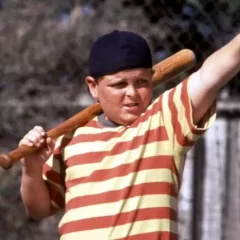 On the bright side, he's getting lots of reps
 -
Bingo, that was retained from the original script
-
"Producer Robert Lorenz said that while the script was originally set in Minnesota, he chose Michigan as the final setting because Kowalski is a retired car plant worker"
-
Fun fact: Gran Torino was originally written to take place in Minneapolis. Which I guess makes it another thing Detroit took from us
-
ChiSox (Gómez) v Twins (Matthews): 9/3, 6:40pm
The Great Hambino replied to Squirrel's topic in Archived Game Threads
Maybe they're counting all the raccoons currently taking up residence in the upper deck -
ChiSox (Gómez) v Twins (Matthews): 9/3, 6:40pm
The Great Hambino replied to Squirrel's topic in Archived Game Threads
There are now three teams with worse records than the Twins The Twins are now 0-4 in second half series against those teams -
ChiSox (Gómez) v Twins (Matthews): 9/3, 6:40pm
The Great Hambino replied to Squirrel's topic in Archived Game Threads
His stuff should be playing for the Nippon Ham Fighters Instead he'll be the 8th inning setup man next year -
ChiSox (Gómez) v Twins (Matthews): 9/3, 6:40pm
The Great Hambino replied to Squirrel's topic in Archived Game Threads
I think they're all low leverage relievers -
ChiSox (Gómez) v Twins (Matthews): 9/3, 6:40pm
The Great Hambino replied to Squirrel's topic in Archived Game Threads
It's not even the best Longest Yard -
ChiSox (Gómez) v Twins (Matthews): 9/3, 6:40pm
The Great Hambino replied to Squirrel's topic in Archived Game Threads
I wonder how they compare to the other MLB TV teams for ad sales -
ChiSox (Gómez) v Twins (Matthews): 9/3, 6:40pm
The Great Hambino replied to Squirrel's topic in Archived Game Threads
I've noticed that too For a bit I thought Progressive bought some exclusivity, but they clearly have some ads (Go Blaze!) so, yeah, probably can't sell em. That's not good -
ChiSox (Gómez) v Twins (Matthews): 9/3, 6:40pm
The Great Hambino replied to Squirrel's topic in Archived Game Threads
Yeah, it's been a whole five days since Rocco let Zebby into the 7th -
ChiSox (Gómez) v Twins (Matthews): 9/3, 6:40pm
The Great Hambino replied to Squirrel's topic in Archived Game Threads
It's too bad the Twins got rid of Jose De Leon. He could've asked his uncle Juan Ponce -
ChiSox (Gómez) v Twins (Matthews): 9/3, 6:40pm
The Great Hambino replied to Squirrel's topic in Archived Game Threads
I thought they did recently Either way, that comment did not age well -
ChiSox (Gómez) v Twins (Matthews): 9/3, 6:40pm
The Great Hambino replied to Squirrel's topic in Archived Game Threads
@USAFChief you better sit down for this: They didn't run the contact play - not even with Buck at third -
ChiSox (Gómez) v Twins (Matthews): 9/3, 6:40pm
The Great Hambino replied to Squirrel's topic in Archived Game Threads
Great oppo triple Buck! That rightfielder's effort was less great -
ChiSox (Gómez) v Twins (Matthews): 9/3, 6:40pm
The Great Hambino replied to Squirrel's topic in Archived Game Threads
Every time I flip on a game, it seems like Austin Martin is doing something. Usually it's bad, but this time it was good! -
For poos and giggles, here's the list based on RField from Baseball Reference, along with the number of games with the Twins 10. Trevor Plouffe -27; 723 games 9. Eduardo Escobar -33; 671 (an example of what I mentioned before of versatility getting penalized) 8. Oswaldo Arcia -33; 251 7. Brendan Harris -34; 296 6. Delmon Young -36; 497 5. Jason Kubel -40; 798 4. Miguel Sano -42; 694 3. Jorge Polanco -42; 832 2. Luis Rivas -51; 565 1. Michael Cuddyer -71; 1,139 I suppose I should've taken out the games they didn't play in the field, but I didn't feel like doing that
- 19 replies
-
- 3
-

-

-
- michael cuddyer
- justin morneau
- (and 6 more)
-
White Sox 12, Twins 3: Woof.
The Great Hambino replied to Steven Trefz's topic in Twins Daily Front Page News
You think so? Guys ultimately get measured against their era. Standards change, thresholds change as the game changes. It's not like they've stopped electing pitchers to the Hall. Sabathia just got in first ballot, and I'd consider him to be an average HOFer (not that there's anything wrong with that) Every once in a while someone falls through the cracks because the standards hadn't adjusted yet (like what happened to Johan, or what will happen to deGrom), but that's what the old timers committees are for- 94 replies
-
- 1
-
-
- simeon woods richardson
- byron buxton
- (and 2 more)
-
If I'm totally honest, I'm trading both of them because I don't think that there is a path to being competitive in 2026. However, I tried to craft something that would be as close to competitive as I could reasonably get within what I think are realistic constraints - things the front office might actually do. In this scenario, I would be trading Ryan (better return than Pablo) for a lineup-worthy bat that can contribute immediately (plus prospects). I would want someone with more control than Ryan because whatever you think their chances are of contending in 2026, their chances are certainly better further down the road given where their roster currently sits. Because I believe the lineup needs more help than the rotation (any chance for competitiveness relies on a LOT of coin flips working in their favor on the position player side), I see this as a better allocation of resources that could help now as well as in the future. Maybe the right partner isn't out there for this, but this trade of Ryan would have to be done in the offseason since that's when they could potentially find a partner willing to trade a major-league quality bat if they had a glut at a certain position and needed pitching - sort of how Arraez and Lopez were traded for each other. Strength for a strength. I don't think that trade works during the season because the contender that would be trading for Ryan isn't going be as willing to subtract from their lineup in the middle of a pennant race. I was trying to keep it within the realm of what I think might actually happen. I'd love to see them pour $100MM worth of free agents into the roster, but that isn't realistic. Just as I don't think it's realistic for them to trade prospects for a reliever, or to retain their most valuable trade chips so their value withers away to nothing in the name of an unrealistic chance at contention. By trading Ryan for some immediate lineup help, they could perhaps walk that fine line. I admit it's a reach, but realistic contention next year, in my opinion, is a reach. They have no margin for error if they try to pull this off on the budget they'll likely have to work with
-
I briefly thought about that event (I'm assuming this was before the Friday Padres game?) but life got in the way. Sounds like it went exactly how I thought it would. But did he really say he's waiting for the ownership situation to finalize? And then he'll start ... what, exactly? Picking a direction? Updating his resume? Doesn't sound good for those hoping for a competitive 2026
-
If they were planning on using their prospect pool to acquire relievers in trade, they wouldn't have dealt the entire bullpen in the first place - especially not Varland. They're not going to turn around and make the same trades in reverse just a couple months later. If you want to realistic plan for rebuilding the bullpen, I think you have to limit it to internal development and free agents. I'm on record what I think about the viability of this plan, but I'll play along here. First, the rotation needs to be sorted out, since the excess from that process will be your internal bullpen options. Lopez/Ryan (they're not keeping both, so let's split the difference and say they keep one and the other brings back some hitting), Ober, Matthews, SWR, Bradley are the leaders in the clubhouse for the opening day rotation. From there, you need to identify who of your excess starters you want to keep developing as such to be the next men up from St Paul, and who maybe profiles better as a reliever. Abel and Rojas to me are locks to at least continue to be developed as starters - probably Culpepper too - while I think some of the guys with arm talent but injury issues should be sent to reliever bootcamp immediately. There, I'm thinking Prielipp and Festa. Even if they still have starter potential, if the goal is to be competitive next year, then you can't just wait on the rotation sorting itself out. Some have to go to the pen straight away. And putting the injury risks in the bullpen just seems like a smart way to play the odds. Hopefully in short bursts their stuff plays up to something approximating closer/primary setup man results. And you're going to need to find some relievers of that caliber from your starter prospects right away, because you're not finding that in the current bullpen options. Sands and Funderburk (if you're relying on Topa, you're not competitive) may very well be able to fill bullpen roles, but not to be one of your top 3 high-leverage shutdown relievers. So we now have 4 relievers in Sands, Funderburk, Prielipp, and Festa. That leaves 4 spots that need to be filled either from free agency or whomever is left behind in the starter development race. If you get a couple free agents, at least one has to be of the closer/primary setup variety - and historically the results of that are mixed at best. Internally, that leaves guys like Raya, Morris, Adams, Ohl, and who else - is Canterino still alive? - that you're hoping can swiftly transition from starter development to being an effective piece of the bullpen. And that's why building a competitive bullpen for next year is really a tough needle to thread - you have to identify the guys you want to transition from starter AND they have to become effective in their new role in a short time frame. You can't wait until June to identify them as you might already be out of contention by then, and it's a pretty tall ask to expect multiple prospects to go from starter to effective reliever immediately. Even the recent success stories like Duran, Jax, and Varland didn't make the switch overnight. It will probably take some time. Anyway, that's my best shot at a realistic (again, I don't think keeping all the starters and dealing prospects for relievers is realistic) bullpen for 2026
-
Good point about penalizing longevity. Derek Jeter is massively overrated as a defender (he coasted a long way on reputation due to one heads up play in the playoffs and a purdy-looking jump throw), but is he the worst fielder of all time (as fielding runs in the bWAR calculation would suggest)? No, not by a long shot. In his case, it just means he was allowed to stay at SS for waaaaaaay too long. I think it also penalizes, in a way, versatility. Playing a position that is not your finest in order to help the team put its best lineup out there has some value that I think could be captured in some way. I'm thinking about Cuddyer here
- 19 replies
-
- 2
-
-
- michael cuddyer
- justin morneau
- (and 6 more)
-
ChiSox (Martin) v Twins (SWR): 9/2, 6:40pm CT
The Great Hambino replied to Squirrel's topic in Archived Game Threads
At least you got a souvenir