



The Great Hambino
-
Posts
2,297 -
Joined
-
Last visited
-
Days Won
7
Content Type
Profiles
News
Minnesota Twins Videos
2026 Minnesota Twins Top Prospects Ranking
2022 Minnesota Twins Draft Picks
Minnesota Twins Free Agent & Trade Rumors, Notes, & Tidbits
Guides & Resources
2023 Minnesota Twins Draft Picks
The Minnesota Twins Players Project
2024 Minnesota Twins Draft Picks
2025 Minnesota Twins Draft Pick Tracker
2026 Minnesota Twins Draft Tracker: Picks & Bonuses
Forums
Blogs
Events
Store
Downloads
Gallery
Everything posted by The Great Hambino
-
 They also signed up for an arrangement where the Pohlads retain full say and are under no obligation to put any weight on limited partner opinion. Their voice in the room is only as loud as the Pohlads choose to allow it to be. I really don't think they invest their REAL money, as you put it, without understanding that. Which makes me think they're more likely than not on board with the Pohlads' vision. Such an arrangement is also the only way they were going to get any sort of ownership of a major sports franchise. They're limited partners instead of full owners because that's what they can afford. The amount of money they put together wouldn't even be able to purchase an MLS team. They're not in a position to be able to dictate operations, and they knew that going in. If they weren't okay with that, then there's plenty of other business opportunities at that price point where they'd have more of a say I'm expecting the worst and hoping for the best. And by best, I mean the Pohlads putting the team back on the market post-CBA
 -
Road to a Rebound: Trevor Larnach
The Great Hambino replied to Nick Nelson's topic in Twins Daily Front Page News
This is a good point that I think might also apply to the idea of moving Larnach (or Wallner) to 1B. They've been observing these guys for years and have a much better idea than we do about what these guys can or can't do. Given the general lack of in-house 1B options under this regime, if they thought they could successfully transition either of them to 1B, they probably already would've by now - or at least would already be in the process of doing so. Or maybe Falvey just really loves treating the position like a fantasy football player streaming defenses and kickers -
It's all a mystery until we actually know who these limited partners are and what they want, but I'm not ready to assume that their first priority is winning, or that it's even a priority at all. In fact, if their priority is return on investment, then the quickest way to achieve that is to significantly reduce costs, especially since a sizable chunk of their revenue (national media deals) is fixed. As the Pirates, have shown us, you don't have to even try to win to be profitable in MLB. Furthermore, the Pohlads still control over half the board, so they only have as much of a say in operations as the Pohlads allow them to have. Besides, Joe's line about these groups "aligning with Pohlad family values" has me even more skeptical that winning is their first priority. And even if winning was their top priority, what are they going to do about it, ask for their money back? Not when the potential for rapid franchise valuation growth exists if the new CBA and subsequent media contracts settle in a manner that's beneficial to small/mid market teams. Again, it's all speculation at this point, but from what I see, I see more reasons to be pessimistic (I prefer realistic) than optimistic about the team's plans for 2026 stemming from this arrangement. If I'm trying to find a reason to be optimistic, I would look at the potential of ESPN acquiring MLB.tv rights and the Twins' local broadcast rights along with it. Manfred REALLY wants as many teams under that umbrella as possible to make his media vision work, so I could see them making the arrangement pretty lucrative for the teams who've granted them their local rights to entice other teams to join the fold. That theory has about as many unknowns as the limited parter situation, but I think there's a plausible scenario where it works in the Twins' favor - assuming they don't just pocket the additional revenue that could come from it.
- 63 replies
-
- 4
-

-
- byron buxton
- pablo lopez
- (and 4 more)
-
I made it to the end. What do I win? Can the Blue Jays recover from this? What a gut punch of a loss They started treating Ohtani like a 15 year old with a forged birth certificate in the Little League World Series, only this is the actual World Series. Nine times on base. He is unreal. I'm sure he'll pitch lights out tomorrow
-
Very interesting decision to walk Betts to load the bases there (obvi walking Shohei was automatic). Does gaining the platoon advantage outweigh putting yourself in a spot where you lose with a walk or HBP? I don't know what to think about that. Either way, it worked and we go to lucky 13 Edit: nevermind, that was the 13th. It's way past my bedtime
-
Blue Jays are finding all sorts of interesting ways to give away outs tonight. This one will really hurt if they can't pull out the win
-
Now both teams have been thrown out on a wacky play at third as well as thrown out by a country mile at home in this game. If you like aggressive baserunning, this is a game for you
-
Maybe they're trying to tucker him out for his start tomorrow by making him constantly trot around the bases
-
Just your run of the mill 6-3-5 to get out of the inning for Varland
-
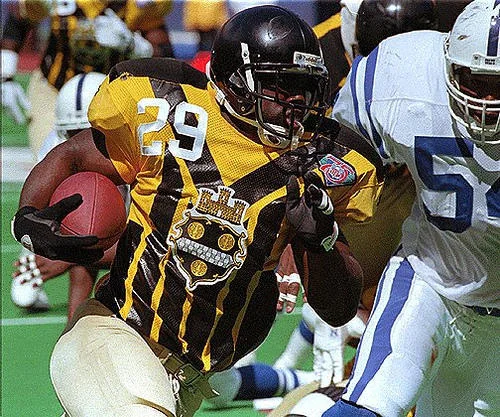
It's like they looked at the 1994 version of this throwback and thought, "All right, how can we make this worse?"
-
Looking Back at the 2019 Twins Draft Class
The Great Hambino replied to Cody Christie's topic in Twins Daily Front Page News
I think international free agents likely account for the difference. Many of them are pros at 16. In fact, there's an entire class of rookie ball devoted almost solely to them. If they are being counted in the study, then the differential between drafted players and minor leaguers is plausible to me- 47 replies
-
- 2
-
-
- keoni cavaco
- matt wallner
- (and 7 more)
-
Okay, you caught me. I'm actually 97 years old; I just wanted the kids to think I was cool
- 59 replies
-
- 3
-

-
-
- carlos correa
- roy smalley
- (and 3 more)
-
I do think that's the best case for Gagne. I was too young to really watch Gagne and not yet alive to watch Smalley. But in terms of defensive runs saved over the stretches I mentioned above, Smalley was pretty good on D (14 defensive runs saved), but Gagne was truly excellent (58! DRS). That's a bigger gap than I was expecting
- 59 replies
-
- 2
-
-
- carlos correa
- roy smalley
- (and 3 more)
-
Think: Dodgers in 5. The pitching is just too dominant (the lineup's not too bad either), but I think the Jays find a way to get one with the firepower they have in the lineup. Want: Blue Jays in 7. Like any red-blooded American I'm cheering for the Canadian underdog, and game sevens rock. Plus, I'll be in Chicago for the Ireland-New Zealand rugby match the day of Game 7 (my brother lives there and my dad, uncle, and cousin all played rugby, so it's turned into a nice little family weekend) and a World Series game 7 would serve as a nice nightcap. Coulda really gotten interesting if the Cubs had gone on a run, but oh well
- 30 replies
-
- 3
-
-
- game thread
- dodgers
- (and 2 more)
-
I'm sure I'm in the minority here, but I think team accomplishments oftentimes get weighted too heavily when putting together individual lists (don't get me started about Eli Manning - that's a rant for another day). Was Gagne really better than Smalley just because his prime years coincided with perhaps the best stretch of time to be a Twin while Smalley's prime happened to coincide with general mediocrity? Or put another way, if their Twin primes are swapped - 1976-80 Smalley (18.1 bWAR and an all-star game) and 1987-91 Gagne (15.6 bWAR) swap places - do the Twins fail to win those World Series? I don't think so. Are the late 70's Twins all of a sudden better? Probably not. I'm not saying the WAR totals are some sort of definitive mic drop in the discussion or anything like that. For me, WAR is a starting point for lists like this, not an ending point. I just think team successes should only provide weight for a player to the extent of his own actual performance in those seasons, especially those postseasons. Gagne in the postseason for the Twins, for what it's worth, posted a .675 OPS (or a .213 BA with 10 RBI in 96 PA, if that's more your flavor), had a 22:5 SO:BB ratio, and had a negative WPA in all four playoff series, though he did have a few key home runs. Ultimately it's pretty close to me. I would go with Smalley over Gagne, but it's close enough that reasonable minds can certainly differ. But if Gagne is your choice, "2 rings" isn't any sort of definitive mic drop either.
- 59 replies
-
- 2
-
-
- carlos correa
- roy smalley
- (and 3 more)
-
Hunter declining to interview is a red flag, but I'm not sure it's against Falvey. It's just a rumor, but this article suggests that ownershp is the real red flag: "From more than one source, I personally have been told that candidates have expressed interest in the Twins roster and front office, that Derek Falvey can make things work. However, ownership being a “mess” has become a recurring hurdle throughout the process, so far." I know, a blog rumor wouldn't exactly hold up as evidence in a court of law. Maybe the "multiple sources" are Falvey and Zoll, for all I know. But there's a decent chance there's at least some truth to it. I'm not saying it isn't against Falvey, but it could just as easily be about ownership (all of the above is certainly also on the table).
-
Chargers @ Vikings 10/23/25
The Great Hambino replied to nicksaviking's topic in Minnesota Vikings Talk
I'm not sure I'm ready to dive into the deep end of this pool quite just yet ... but the Texans trade was weird at the time and seems even weirder now. There's a reason most trades of picks (not vet for a pick, I'm talking a straight up pick swap) happen during the draft right before the pick gets made. Usually, the team trading down is on the clock when the trade is made official. This is because the team trading up needs to know that the player they're targeting is actually available. But the Texans trade happened in March. It didn't really make sense in a vacuum; something else must've fallen apart. A move for Maye does seem like the most plausible next step, but that - or whatever else it was - obviously didn't materialize. Then on draft night, they traded up targeting Turner specifically, like a team usually would. I don't blame them - at the time, he was neck-and-neck with Jared Verse for my favorite defensive player in the draft. In hindsight, that's not looking like too hot a choice, but at least that one did make sense in a vacuum. You generally are paying a premium when you trade up because you think your target is worth it. But the way it ended up working out, Kwesi effectively paid the premium twice to end up with Turner. There's no way that was the actual plan; Plan A had to have fallen through, and it feels like they've been scrambling to make up for it ever since. That offseason had been going great in terms of player acquisition before the draft, but we might look back on that chain of trades as an inflection point; acquisitions haven't really been going to plan ever since. The 2025 free agent crop has not been receiving passing marks, and while the 2025 draft is obviously too early to tell, I don't think anyone would say that the crop has blown expectations out of the water. I don't think they're doomed. The NFL cap is a funny thing. The Vikings looked doomed on that front post-Cousins, but they didn't fall apart. The Saints turned finding cap space out of thin air into an art form (they might be paying for that now, but they extended a semi-competitive window way further than it seemed like they could). But they're back to having to thread that needle all over again. They have options - there are currently six guys that could generate eight-figure cap savings with a post-June 1 cut next season (O'Neill, Greenard, Hockenson, Van Ginkel, Hargrave, Kelly). They obviously won't cut all of them, and some could be painful, but they're not doomed. Unless JJ isn't the guy. Then they're screwed. No pressure kid! -
Chargers @ Vikings 10/23/25
The Great Hambino replied to nicksaviking's topic in Minnesota Vikings Talk
Al Michaels, you cheeky monkey -
Chargers @ Vikings 10/23/25
The Great Hambino replied to nicksaviking's topic in Minnesota Vikings Talk
It looked like they'd run the fire drill perfectly. But ... SHORT?? This is not their night -
Chargers @ Vikings 10/23/25
The Great Hambino replied to nicksaviking's topic in Minnesota Vikings Talk
Will the Thrill -
Chargers @ Vikings 10/23/25
The Great Hambino replied to nicksaviking's topic in Minnesota Vikings Talk
Justin Jefferson has entered the chat -
Chargers @ Vikings 10/23/25
The Great Hambino replied to nicksaviking's topic in Minnesota Vikings Talk
No A for effort on that TD -
Chargers @ Vikings 10/23/25
The Great Hambino replied to nicksaviking's topic in Minnesota Vikings Talk
What did he ever do to you?!?! -
Chargers @ Vikings 10/23/25
The Great Hambino replied to nicksaviking's topic in Minnesota Vikings Talk
It'll be a minor miracle if Wentz gets through this game. Already at least 3 near-disaster plays -
Chargers @ Vikings 10/23/25
The Great Hambino replied to nicksaviking's topic in Minnesota Vikings Talk
They're really putting the MID in "coverage over the middle"
