



Cody Schoenmann
-
Posts
768 -
Joined
-
Last visited
-
Days Won
1
Content Type
Profiles
News
Minnesota Twins Videos
2026 Minnesota Twins Top Prospects Ranking
2022 Minnesota Twins Draft Picks
Minnesota Twins Free Agent & Trade Rumors, Notes, & Tidbits
Guides & Resources
2023 Minnesota Twins Draft Picks
The Minnesota Twins Players Project
2024 Minnesota Twins Draft Picks
2025 Minnesota Twins Draft Pick Tracker
2026 Minnesota Twins Draft Tracker: Picks & Bonuses
Forums
Blogs
Events
Store
Downloads
Gallery
Everything posted by Cody Schoenmann
-
 Image courtesy of Steven Bisig-Imagn Images On Jan. 29, 2024, the Minnesota Twins traded fan-favorite infielder Jorge Polanco to the Seattle Mariners for starting pitcher Anthony DeSclafani, reliever Justin Topa, right-handed hitting prospect Gabriel Gonzalez, and right-handed pitching prospect Darren Bowen. Despite being undeserving of the "blockbuster" tag, the swap between Minnesota and Seattle served as both organization's most notable transactions two offseasons ago, with expectations of Polanco, DeSclafani, and Topa playing significant roles for their respective playoff-seeking clubs. Unfortunately, the trade's desired results did not come to fruition. Polanco struggled at the plate and in the field for Seattle, evidenced by him generating a substandard 92 wRC+ over 469 plate appearances and a -10 Outs Above Average (OAA). After undergoing forearm flexor tendon surgery, DeSclafani didn't throw a single pitch for Minnesota. Topa also battled significant injuries, resulting in the expected mid-to-high-leverage reliever tossing only 2 ⅓ innings for the already eliminated-from-playoff-contention Twins in late September. Gonzalez and Bowen also struggled at High-A Cedar Rapids last season, looking like a shell of the prospects they were in Seattle's system a season prior. Topa, Gonzalez, and Bowen remained with Minnesota, hoping to rebound from their lackluster 2024 campaigns. DeSclafani eventually departed from the Twins, going unsigned last offseason before agreeing to a minor league contract with the New York Yankees earlier this month. Polanco also reached free agency last offseason after the Mariners declined his $12 million team option. However, the veteran infielder somewhat surprisingly re-signed with Seattle in early February, agreeing to a one-year, $7 million deal with a vesting option for 2026. A once-exciting trade between Seattle and Minnesota quickly became a sunk-cost circumstance, with both organizations attempting to squeeze whatever minimal value remained from the players. Much to the surprise of both organizations, however, the petals of the once-detested deal have come to bloom a season later than expected. Polanco has evolved into one of baseball's best hitters this season, generating a 183 wRC+ over 126 plate appearances. Seattle has also mitigated his defensive shortcomings, starting the 31-year-old almost exclusively at designated hitter. Alongside star position players Cal Raleigh, Julio Rodriguez, and Randy Arozarena, Polanco's superb swing has guided Seattle to a one-and-a-half-game lead over the Texas Rangers in the AL West. Simultaneously, Topa has been a steady force in Minnesota's bullpen, generating 1.84 ERA and 2.90 FIP over 14 ⅔ innings pitched. The 34-year-old right-handed pitcher has grown into the mid-to-high leverage reliever the Twins hoped he would last season, resulting in the club finally generating value from the deal at the major league level. Gonzalez and Bowen are also finding their fitting at their respective minor league levels. Over 152 plate appearances at High-A, Gonzalez is hitting .319/.375/.526 with 43 hits, 12 walks, and a 145 wRC+. Last season's power outage also appears to be resolved for the 21-year-old, evidenced by him hitting five home runs (the same amount he hit at High-A last season) over 163 fewer plate appearances. Still sporting a plus eye at the plate, evidenced by his 13.8% strikeout rate, the former Top 100 prospect could quickly find himself climbing back up Twins' top prospect rankings list after undergoing a significant tumble last season. Bowen is thriving this season, too, manufacturing a 2.89 ERA over 28 innings pitched at Double-A. The 24-year-old's peripherals (6.03 FIP, 97.5% left on base rate, and an underwhelming 19.5% strikeout rate) suggest he is beneficiary of luck falling on his side early this season. However, considering his early season success and impressive fastball-slider combination, Bowen could eventually contribute to the parent club, even if it occurs as a reliever. Nevertheless, after initially looking like a defective deal, Seattle and Minnesota are finally benefitting from their late January 2024 swap, even though it's occurring a season later than expected. View full article
 -
Image courtesy of © Bruce Kluckhohn-Imagn Images Late last offseason, Minnesota Twins Executive Vice President Joe Pohlad greenlit extra spending room for President of Baseball and Business Operations Derek Falvey, allowing the long-time Twins decision-maker to sign veterans Danny Coulombe, Harrison Bader, and Ty France to one-year contracts worth a combined $10.5 million. Adding Coulombe, Bader, and France served a last-minute effort to improve the club at depth-deficient areas, and less than two months into the season, all three investments are providing excess value. Over 39 games, the trio of Coulombe, Bader, and France have generated the following Wins Above Replacement at FanGraphs (fWAR): Coulombe: 0.7 fWAR Bader: 1.3 fWAR France: 0.4 fWAR Highlighted by Coulombe's lockdown efforts in the bullpen, Bader's platinum glove-deserving outfield defense, and France's steady effort at first base and the plate, the Twins trio of offseason additions have become positive contributors who look to be part of the core that attempts to return the organization to the postseason this October. Now, significant debate exists over how much money one win-above-replacement is worth. The Athletic's Eno Sarris has speculated that it is worth roughly $12 million. FanGraphs's Dan Szymborski has professed it's worth roughly $5 million. Twins Daily's John Bonnes thinks it's worth about $8 million, and Brock Beauchamp swears it's now worth over $8 million (if you couldn't tell, Twins Daily's finest discussed this very topic in their Slack channel). Nevertheless, the trio of Coulombe, Bader, and France have already outplayed their contracts from a dollars-to-fWAR perspective. According to FanGraphs's Value resource, the trio of veterans' early-season performances have been worth the following monetary figures: Coulombe: $5.5 million Bader: $10.1 million France: $3.1 million That being the case, Coulombe has outplayed his one-year, $3 million contract by $2.5 million; Bader has outplayed his one-year, $6.5 million contract by $3.6 million, and France has outplayed his one-year, $1 million contract by $2.1 million. Considering France has posted a 115 wRC+ over 157 plate appearances while demonstrating improved defense at first base, it is unsurprising that he already nearly tripled the value of his one-year, $1 million deal. However, the fact that the club has squeezed out this much value from a mid-to-high leverage left-handed reliever and assumed fourth outfielder illustrates the commensal nature of the three contracts the Twins front office allocated late last offseason. The first WAR earned is not what teams pay big dollars for. The real "profit" manifests when players become worth 2.0-or-3.0 WAR. It is nearly impossible for relievers to become worth 2.0-or-3.0 WAR unless they are last season's version of Emmanuel Clase or 2016 Zack Britton. That said, Coulombe could reasonably earn over 1.0 WAR this season, which would be significant value for Minnesota. Given Bader and France's hot start to the season, there is reason to believe both position players will accumulate a 2.0-to-3.0 WAR season. The club has already received plus value from the two position player veterans. That said, if they keep performing at the rate they have to begin their 2025 campaigns, the Twins could be the recipient of three of MLB's most profitable one-year deals from last offseason's free agency cycle. View full article
- 46 replies
-
- 2
-

-
- danny coulombe
- harrison bader
- (and 1 more)
-
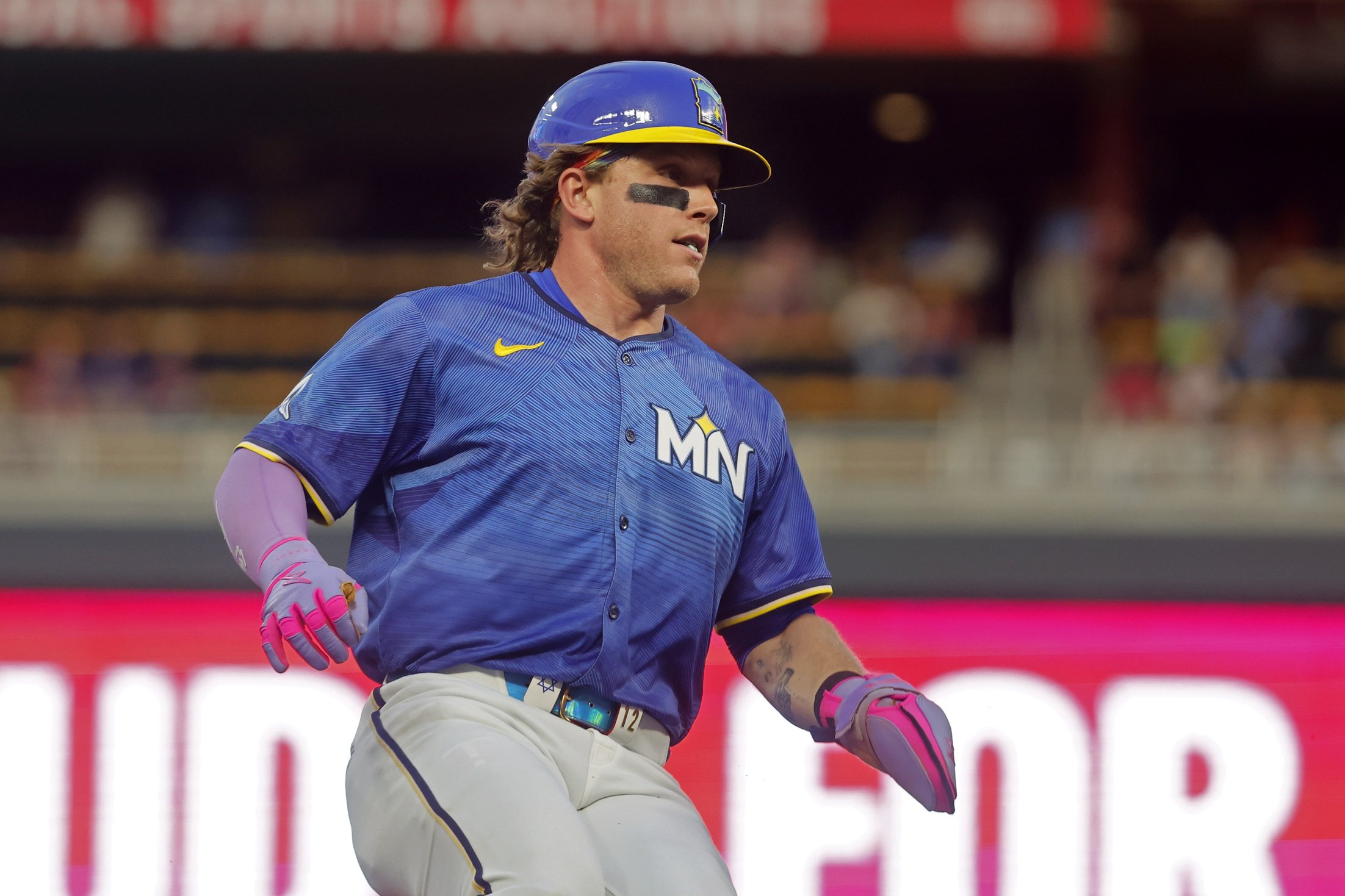 Late last offseason, Minnesota Twins Executive Vice President Joe Pohlad greenlit extra spending room for President of Baseball and Business Operations Derek Falvey, allowing the long-time Twins decision-maker to sign veterans Danny Coulombe, Harrison Bader, and Ty France to one-year contracts worth a combined $10.5 million. Adding Coulombe, Bader, and France served a last-minute effort to improve the club at depth-deficient areas, and less than two months into the season, all three investments are providing excess value. Over 39 games, the trio of Coulombe, Bader, and France have generated the following Wins Above Replacement at FanGraphs (fWAR): Coulombe: 0.7 fWAR Bader: 1.3 fWAR France: 0.4 fWAR Highlighted by Coulombe's lockdown efforts in the bullpen, Bader's platinum glove-deserving outfield defense, and France's steady effort at first base and the plate, the Twins trio of offseason additions have become positive contributors who look to be part of the core that attempts to return the organization to the postseason this October. Now, significant debate exists over how much money one win-above-replacement is worth. The Athletic's Eno Sarris has speculated that it is worth roughly $12 million. FanGraphs's Dan Szymborski has professed it's worth roughly $5 million. Twins Daily's John Bonnes thinks it's worth about $8 million, and Brock Beauchamp swears it's now worth over $8 million (if you couldn't tell, Twins Daily's finest discussed this very topic in their Slack channel). Nevertheless, the trio of Coulombe, Bader, and France have already outplayed their contracts from a dollars-to-fWAR perspective. According to FanGraphs's Value resource, the trio of veterans' early-season performances have been worth the following monetary figures: Coulombe: $5.5 million Bader: $10.1 million France: $3.1 million That being the case, Coulombe has outplayed his one-year, $3 million contract by $2.5 million; Bader has outplayed his one-year, $6.5 million contract by $3.6 million, and France has outplayed his one-year, $1 million contract by $2.1 million. Considering France has posted a 115 wRC+ over 157 plate appearances while demonstrating improved defense at first base, it is unsurprising that he already nearly tripled the value of his one-year, $1 million deal. However, the fact that the club has squeezed out this much value from a mid-to-high leverage left-handed reliever and assumed fourth outfielder illustrates the commensal nature of the three contracts the Twins front office allocated late last offseason. The first WAR earned is not what teams pay big dollars for. The real "profit" manifests when players become worth 2.0-or-3.0 WAR. It is nearly impossible for relievers to become worth 2.0-or-3.0 WAR unless they are last season's version of Emmanuel Clase or 2016 Zack Britton. That said, Coulombe could reasonably earn over 1.0 WAR this season, which would be significant value for Minnesota. Given Bader and France's hot start to the season, there is reason to believe both position players will accumulate a 2.0-to-3.0 WAR season. The club has already received plus value from the two position player veterans. That said, if they keep performing at the rate they have to begin their 2025 campaigns, the Twins could be the recipient of three of MLB's most profitable one-year deals from last offseason's free agency cycle.
- 46 comments
-
- 12
-
-
- danny coulombe
- harrison bader
- (and 1 more)
-
Amick had a 1.236 OPS over 192 plate appearances at Clemson his Sophomore year. He had a 1.026 OPS over 292 plate appearances at Tennessee his Junior year. He now has a 168 wRC+ over 99 plate appearances at High-A. He thrived at the plate against the best pitching in college baseball for consecutive seasons and is now hitting 68% better than league average in High-A. This isn't some random, obscure prospect that I picked out and randomly placed the "first baseman of the future title" on him. He is a top 12 prospect in a strong Twins system who could soon be in Double-A at 22 years old. The backlash this piece has received is unwarranted, imo.
-
Amick could reasonably be in the majors next season.
-
Image courtesy of David Malamut (photo of Billy Amick) Since Rocco Baldelli took over as Minnesota Twins manager at the beginning of the 2019 season, first base has been a revolving door. C.J. Cron patrolled the position in Baldelli's first year, hitting .253/.311/.469 with 25 home runs and an admirable 101 wRC+. Miguel Sanó occupied the position for two seasons thereafter. Since Sanó's departure, José Miranda, Alex Kirilloff, Donovan Solano, and Carlos Santana have rotated through the spot. In mid-February, Twins decision-makers signed Ty France to a one-year, $1-million non-guaranteed contract to become the club's next full-time first baseman. The 30-year-old veteran has already delivered value on that investment, with a sturdy 105 wRC+ in 145 plate appearances. Yet, given the significant spending restrictions this ownership group has placed on the front office and France's shaky recent track record, France will likely depart Twins Territory after his 2025 campaign. That being the case, the club will presumably be scouring the trade and free-agent markets to acquire another veteran first baseman on a short-term deal this offseason. While this method of roster construction has sufficed since Sanó's departure and would be a sound approach, the organization would happily welcome a long-term solution at the position. Interestingly, Billy Amick could be just that. Taken with the 60th selection in the 2024 MLB Draft out of the University of Tennessee, Amick performed well over 77 plate appearances at Low A last season, hitting .222/.351/.413 with 14 hits, three doubles, three home runs, 12 walks, and a 122 wRC+. The 22-year-old has built on that impressive inaugural campaign this spring, hitting .342/.475/.447 with 26 hits, six doubles, 15 walks, and a 168 wRC+ over 99 plate appearances at High-A Cedar Rapids. Contact and strikeout concerns exist in Amick's hitting profile. Yet, he has hit well at every level he's played at, lending weight to the idea that he could overcome these shortcomings as he progresses through the high minors. Given that Amick was a high draft pick who played collegiate baseball at Clemson and Tennessee for three seasons, he is expected to perform well in the low minors. The former Volunteer could soon earn a promotion to Double-A. In the field, Amick has netted playing time at the following positions: First base - 71 innings Third base - 103 innings Amick primarily played third base with Clemson and Tennessee, and was announced as a third baseman when selected by the Twins in the draft. It's unsurprising that they've kept him at the hot corner most of the time. However, one of his most significant shortcomings in college was his defense at third base. According to FanGraphs's Eric Longenhagen, Amick is a "flub-prone third baseman with mixed arm and accuracy [whose] range and hands [are] both below average." Minnesota already has promising third basemen Royce Lewis and Brooks Lee on the 26-man roster. Also, Carlos Correa could slide to the hot corner as his career progresses. Taking that into consideration, along with the fact that fellow young, defensively superior infield prospects Rayne Doncon, Kaelen Culpepper, and Brandon Winokur are also receiving opportunities at third, there is reason to believe the organization could eventually elect to move Amick off the position. Moving off a position higher on the defensive spectrum would be a negative for Amick and his future value. However, like most organizations, the Twins don't have a highly ranked first base prospect at any minor-league level. If Amick can continue to thrive at the plate while demonstrating adequate defense at first base, the former second-round pick could become the club's first long-term solution at the position this decade. View full article
-
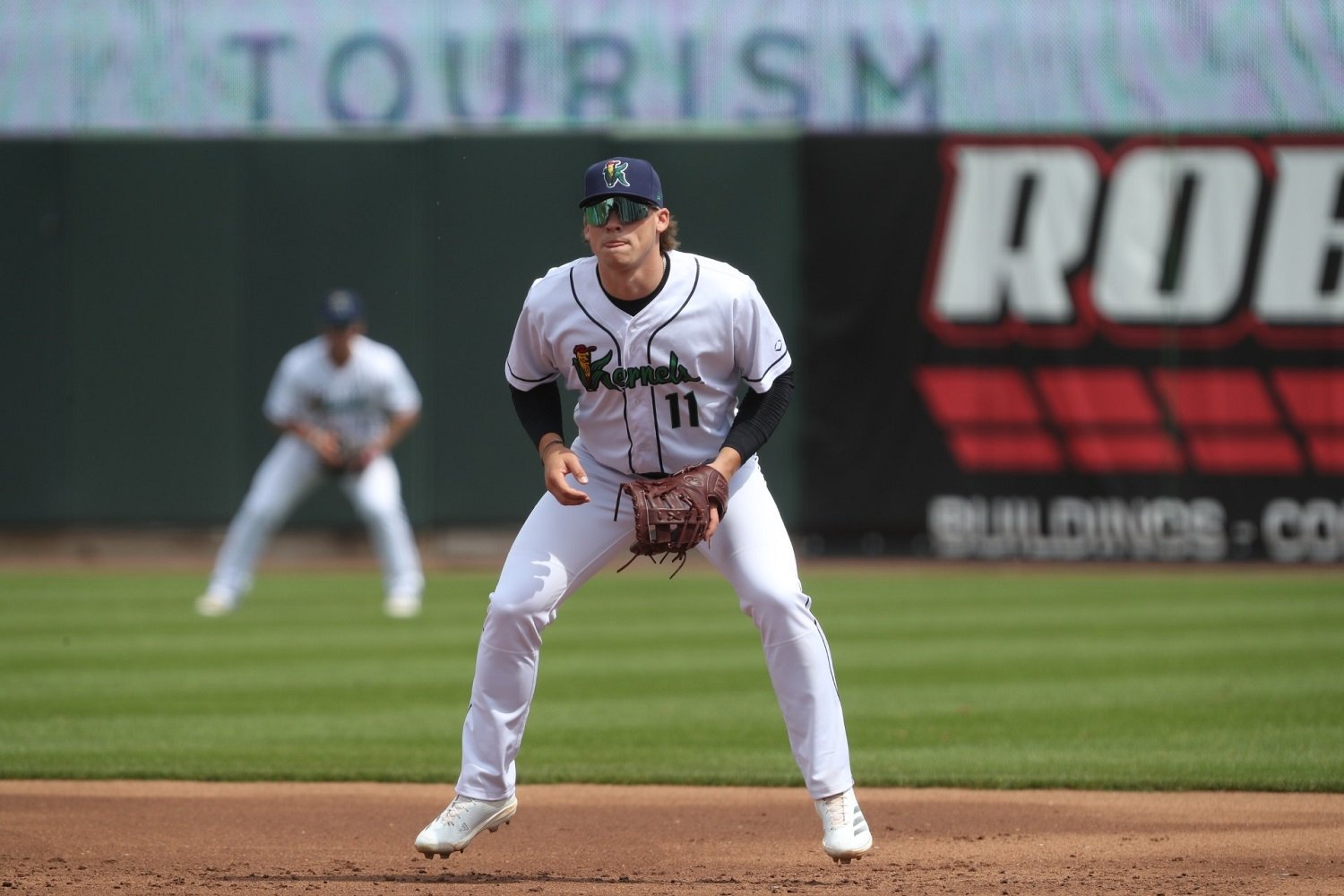 Since Rocco Baldelli took over as Minnesota Twins manager at the beginning of the 2019 season, first base has been a revolving door. C.J. Cron patrolled the position in Baldelli's first year, hitting .253/.311/.469 with 25 home runs and an admirable 101 wRC+. Miguel Sanó occupied the position for two seasons thereafter. Since Sanó's departure, José Miranda, Alex Kirilloff, Donovan Solano, and Carlos Santana have rotated through the spot. In mid-February, Twins decision-makers signed Ty France to a one-year, $1-million non-guaranteed contract to become the club's next full-time first baseman. The 30-year-old veteran has already delivered value on that investment, with a sturdy 105 wRC+ in 145 plate appearances. Yet, given the significant spending restrictions this ownership group has placed on the front office and France's shaky recent track record, France will likely depart Twins Territory after his 2025 campaign. That being the case, the club will presumably be scouring the trade and free-agent markets to acquire another veteran first baseman on a short-term deal this offseason. While this method of roster construction has sufficed since Sanó's departure and would be a sound approach, the organization would happily welcome a long-term solution at the position. Interestingly, Billy Amick could be just that. Taken with the 60th selection in the 2024 MLB Draft out of the University of Tennessee, Amick performed well over 77 plate appearances at Low A last season, hitting .222/.351/.413 with 14 hits, three doubles, three home runs, 12 walks, and a 122 wRC+. The 22-year-old has built on that impressive inaugural campaign this spring, hitting .342/.475/.447 with 26 hits, six doubles, 15 walks, and a 168 wRC+ over 99 plate appearances at High-A Cedar Rapids. Contact and strikeout concerns exist in Amick's hitting profile. Yet, he has hit well at every level he's played at, lending weight to the idea that he could overcome these shortcomings as he progresses through the high minors. Given that Amick was a high draft pick who played collegiate baseball at Clemson and Tennessee for three seasons, he is expected to perform well in the low minors. The former Volunteer could soon earn a promotion to Double-A. In the field, Amick has netted playing time at the following positions: First base - 71 innings Third base - 103 innings Amick primarily played third base with Clemson and Tennessee, and was announced as a third baseman when selected by the Twins in the draft. It's unsurprising that they've kept him at the hot corner most of the time. However, one of his most significant shortcomings in college was his defense at third base. According to FanGraphs's Eric Longenhagen, Amick is a "flub-prone third baseman with mixed arm and accuracy [whose] range and hands [are] both below average." Minnesota already has promising third basemen Royce Lewis and Brooks Lee on the 26-man roster. Also, Carlos Correa could slide to the hot corner as his career progresses. Taking that into consideration, along with the fact that fellow young, defensively superior infield prospects Rayne Doncon, Kaelen Culpepper, and Brandon Winokur are also receiving opportunities at third, there is reason to believe the organization could eventually elect to move Amick off the position. Moving off a position higher on the defensive spectrum would be a negative for Amick and his future value. However, like most organizations, the Twins don't have a highly ranked first base prospect at any minor-league level. If Amick can continue to thrive at the plate while demonstrating adequate defense at first base, the former second-round pick could become the club's first long-term solution at the position this decade.
 -
Image courtesy of © Eric Canha-Imagn Images On Tuesday, third baseman Royce Lewis and utility player Willi Castro could be activated off the 10-day injured list, adding much-needed reinforcements to an injury-stricken Minnesota Twins position player group. Lewis figures to split time between third base and DH, while Castro should slide back into a near-everyday role playing multiple positions. Although it might be a bit longer before Castro returns, when both guys are back, the Twins will need to open two 26-man roster spots for them. At first glance, Mickey Gasper seems likely to be demoted to Triple-A St. Paul. Recently acquired infielders Jonah Bride and Kody Clemens are candidates to lose their places, too. However, depending on how confident the team is in Lewis's ability to play third most days and on Castro's ability to bat from the left side without problems, both players could be spared—at the expense of Edouard Julien. Over 104 plate appearances in his third season in the majors, Julien has yet to rule again. Instead, he's hitting .198/.288/.319, with five doubles, two home runs, a 27.9% strikeout rate, and a 78 wRC+. The 26-year-old French Canadian hasn't improved defensively either, posting -5 Outs Above Average (OAA) at second base. Given that he is the fourth-worst qualified fielder in baseball while also performing 22 points worse than average at the plate, Julien has been a sub-replacement-level player. Neither Bride nor Clemens has performed well this season, generating a combined 29 wRC+ over 86 plate appearances. However, the two have performed well since joining Minnesota. Since making his Twins debut on Apr. 19, Bride has hit .350/.364/.350 with a 106 wRC+ over 22 plate appearances. Julien hit .139/.295/.250 with 69 wRC+ over 44 plate appearances in the same timeframe. Bride has demonstrated the ability to reach base at a significantly higher rate than Julien, while striking out at an impressively low 13.6% rate. Julien has a 31.8% strikeout rate over the same stretch. Since joining the club on Apr. 28, Clemens has also outperformed Julien, albeit with a paltry .167/.167/.500 line and an 80 wRC+ over 12 plate appearances. Julien has hit .125/.222/.313 with a 54 wRC+ over 18 plate appearances during the same stretch. Clemens got the start over Julien at second base on Saturday against Boston and earned a pinch-hitting opportunity over Julien in the eighth inning of Sunday's contest. The argument for Bride deserving a spot on the 26-man roster over Clemens and Julien is relatively straightforward. Since joining Minnesota, the former Marlin has been a plus hitter, while being a surehanded defender at third base and still possessing the ability to play first base. Having effectively stepped into the Jose Miranda role, there is reason to believe Bride will hold a 26-man roster spot upon Lewis and Castro's returns, even though Lewis will receive the bulk of opportunities at the hot corner. The club's 13th and final position player spot will likely come down to Clemens and Julien. Despite possessing a greater ceiling than Clemens, Julien could be the odd player out, given Clemens's defensive superiority and flexibility. View full article
-
Could Edouard Julien Be the Next Surprise Demotion for Minnesota Twins?
Cody Schoenmann posted an article in Twins
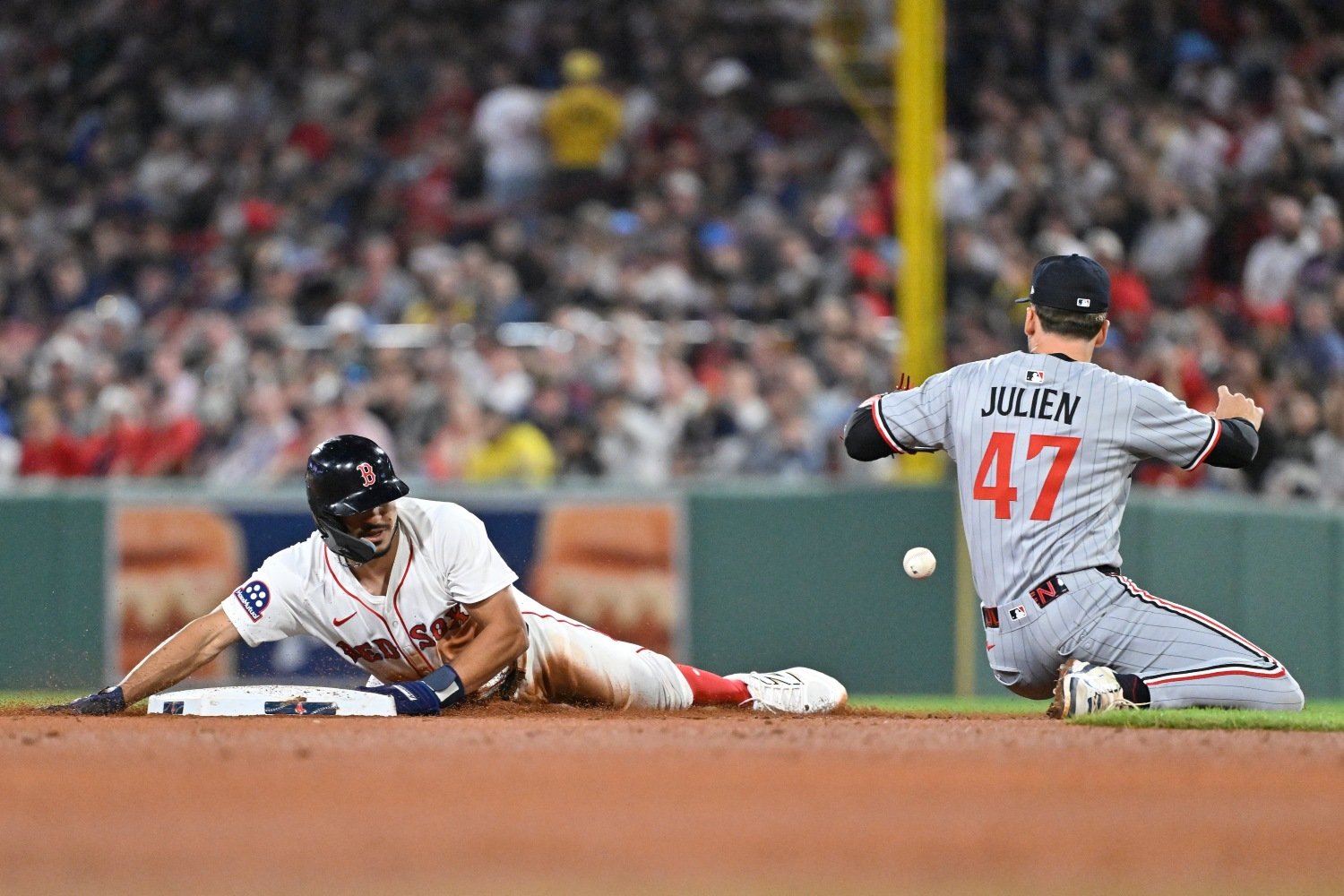 On Tuesday, third baseman Royce Lewis and utility player Willi Castro could be activated off the 10-day injured list, adding much-needed reinforcements to an injury-stricken Minnesota Twins position player group. Lewis figures to split time between third base and DH, while Castro should slide back into a near-everyday role playing multiple positions. Although it might be a bit longer before Castro returns, when both guys are back, the Twins will need to open two 26-man roster spots for them. At first glance, Mickey Gasper seems likely to be demoted to Triple-A St. Paul. Recently acquired infielders Jonah Bride and Kody Clemens are candidates to lose their places, too. However, depending on how confident the team is in Lewis's ability to play third most days and on Castro's ability to bat from the left side without problems, both players could be spared—at the expense of Edouard Julien. Over 104 plate appearances in his third season in the majors, Julien has yet to rule again. Instead, he's hitting .198/.288/.319, with five doubles, two home runs, a 27.9% strikeout rate, and a 78 wRC+. The 26-year-old French Canadian hasn't improved defensively either, posting -5 Outs Above Average (OAA) at second base. Given that he is the fourth-worst qualified fielder in baseball while also performing 22 points worse than average at the plate, Julien has been a sub-replacement-level player. Neither Bride nor Clemens has performed well this season, generating a combined 29 wRC+ over 86 plate appearances. However, the two have performed well since joining Minnesota. Since making his Twins debut on Apr. 19, Bride has hit .350/.364/.350 with a 106 wRC+ over 22 plate appearances. Julien hit .139/.295/.250 with 69 wRC+ over 44 plate appearances in the same timeframe. Bride has demonstrated the ability to reach base at a significantly higher rate than Julien, while striking out at an impressively low 13.6% rate. Julien has a 31.8% strikeout rate over the same stretch. Since joining the club on Apr. 28, Clemens has also outperformed Julien, albeit with a paltry .167/.167/.500 line and an 80 wRC+ over 12 plate appearances. Julien has hit .125/.222/.313 with a 54 wRC+ over 18 plate appearances during the same stretch. Clemens got the start over Julien at second base on Saturday against Boston and earned a pinch-hitting opportunity over Julien in the eighth inning of Sunday's contest. The argument for Bride deserving a spot on the 26-man roster over Clemens and Julien is relatively straightforward. Since joining Minnesota, the former Marlin has been a plus hitter, while being a surehanded defender at third base and still possessing the ability to play first base. Having effectively stepped into the Jose Miranda role, there is reason to believe Bride will hold a 26-man roster spot upon Lewis and Castro's returns, even though Lewis will receive the bulk of opportunities at the hot corner. The club's 13th and final position player spot will likely come down to Clemens and Julien. Despite possessing a greater ceiling than Clemens, Julien could be the odd player out, given Clemens's defensive superiority and flexibility.
- 53 comments
-
- 6
-
-
- edouard julien
- jonah bride
- (and 1 more)
-
Power Outage: Why Has Ryan Jeffers's Bat Speed Diminished?
Cody Schoenmann posted an article in Twins
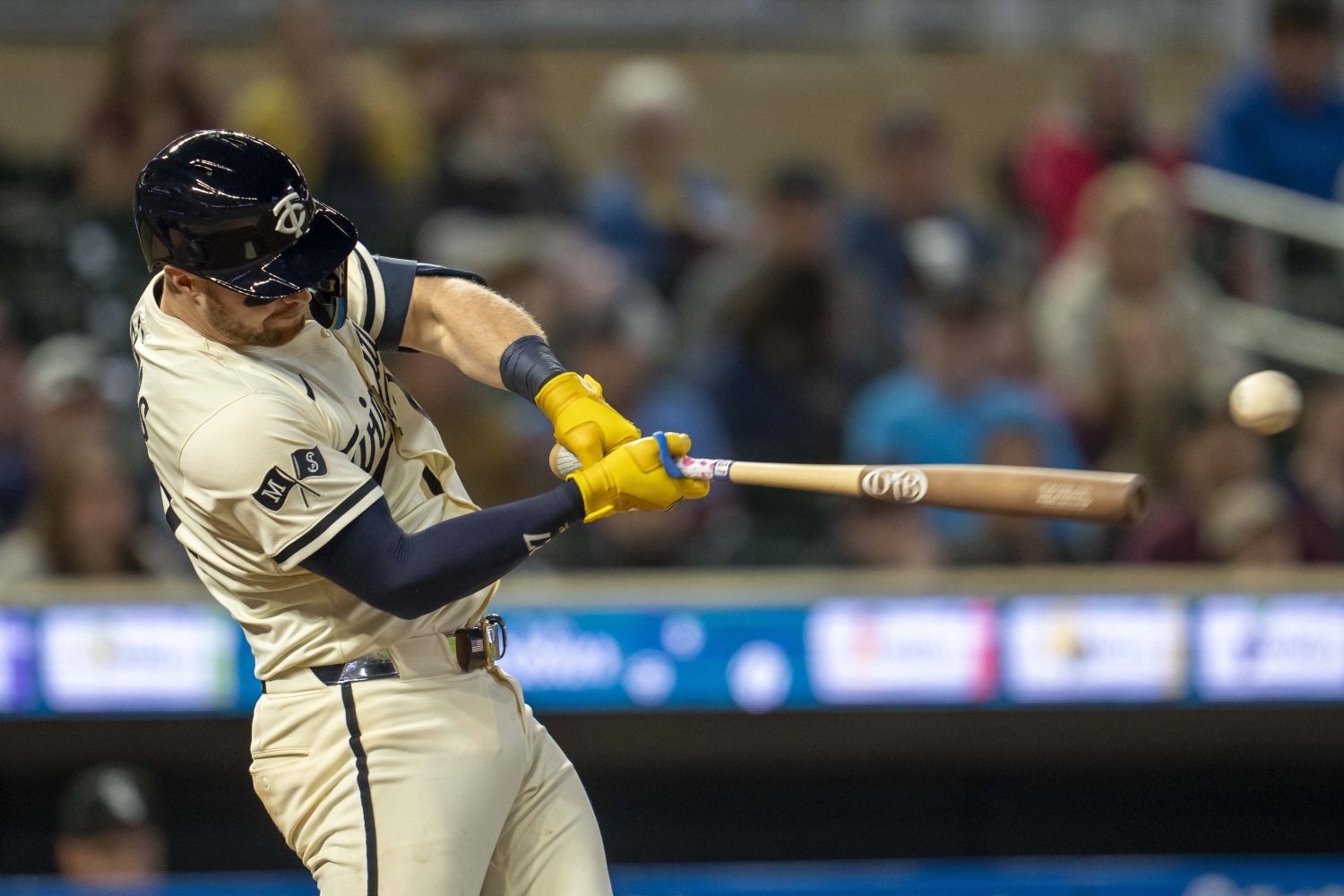 Twenty-four games into their season, the Minnesota Twins' catching tandem of Ryan Jeffers and Christian Vázquez ranks 26th in the major leagues. They've been exactly replacement-level. They're hitting .202/.253/.286, good for a 56 wRC+. The club's positional duo has taken a step back from last season, where they finished as the 19th-best tandem in baseball, and a significant step back from 2023, when they concluded the season as the league's ninth-best pairing. Jeffers and (more so) Vázquez are still sound game-planning, receiving, framing, and throwing catchers. They're the only catching corps in the league without a home run, though, and their hitting problems are too great to make up for even with great defense. The tandem's ability to function offensively would always be contingent on Jeffers's ability to produce at the plate. Since joining the Twins, Vázquez has been a well-below-league-average offensive catcher, posting a 65 and 60 wRC+ the prior two seasons, respectively. He is performing especially poorly at the plate this season, hitting .100/.152/.167 with three hits, zero home runs, and a -12 wRC+ over 33 plate appearances. Still, expectations were practically nonexistent with Vázquez, making his slow start at the plate unsurprising. On the other hand, Jeffers is performing far worse than hoped or expected. The long-time Twins backstop possesses an admirable 19.4% strikeout rate and 9.0% walk rate, indicating he isn't struggling to see the ball. Instead, the problems arise when he takes the bat off his shoulder. Here is how Jeffers's bat speed has trended since public data became available: 2023: 73.8 MPH 2024: 72.9 MPH 2025: 70.8 MPH Jeffers's bat speed has gradually dropped, directly correlating to a steady drop in power and overall offensive production. While possessing 30th-percentile bat speed, the UNC-Wilmington product has also generated a deeper contact point this season. Here's how far his average intercept point on swings has been from his center of mass in each of the three seasons (two of them partial) for which we have this data: 2023: 30.3 in. 2024: 30.7 in. 2025: 26.7 in. He's setting up deeper in the box, too, so his contact point has moved back from a few inches in front of home plate to a few inches behind the front edge thereof. Hitters make adjustments like that for various reasons, but in this case, it feels an awful lot like a hitter trying to buy a bit of extra space (and, therefore, time) for a barrel he knows is dragging more through the zone. cU9lUnFfWGw0TUFRPT1fQlFCU0JnWlZCRmNBWGxFTEF3QUFWQVJWQUFBQlVRQUFVMXdFVlZaUkIxSlFCZ1ZS.mp4 Decreased bat speed is often the product of a player playing through injury. The only documented injury Jeffers has sustained this season was when a ball hit his right hand, causing it to bleed and eventually swell. The right-handed hitting backstop was sidelined for two days before returning to the lineup. He has interestingly performed significantly better since injuring his thumb, propelling from a 46 wRC+ over 38 plate appearances before the injury to a 184 wRC+ over 29 plate appearances afterward. Nevertheless, Jeffers's change in positioning and notably diminished bat speed are cause for concern. Vázquez will always be a below-average offensive catcher. Triple-A catchers Jair Camargo and Diego Cartaya are struggling at the plate, meaning the possibility of minor-league reinforcements impacting the parent club's catching tandem is remote. That being the case, Jeffers will need to turn things around the plate if the club expects to receive any offensive production from the position. If he cannot, the club could face a bleak outlook at the position with over 130 games remaining.
 -
The Twins catcher hasn't hit a home run over 58 plate appearances. What is the cause of his power outage? Should those who follow the team be concerned? Over 23 games played, the Minnesota Twins' catching tandem of Ryan Jeffers and Christian Vázquez ranks 25th in major league baseball, hitting .175/.264/.250 with a 54 wRC+ and -0.1 Wins Above Replacement at FanGraphs (fWAR). The club's positional duo has taken a step back from last season, where they finished as the 19th-best tandem in baseball, and a significant step back from 2023, where they concluded the season as the league's ninth-best pairing. Jeffers and (more so) Vázquez are still sound game-planning, receiving, framing, and throwing catchers. Yet, they have taken a substantial step back offensively, causing them to plummet toward the bottom of the league. The tandem's ability to function offensively would always be contingent on Jeffers's ability to produce at the plate. Since joining the Twins, Vázquez has been a well-below-league-average offensive catcher, posting a 65 and 60 wRC+ the prior two seasons, respectively. He is performing especially poorly at the plate this season, hitting .100/.152/.167 with three hits, zero home runs, and a -12 wRC+ over 33 plate appearances. Still, expectations were practically nonexistent with Vázquez, making his slow start at the plate unsurprising. On the other hand, Jeffers is performing below expectations, evidenced by him hitting .220/.328/.300 with 11 hits, four doubles, zero home runs, and a 92 wRC+ over 58 plate appearances. The long-time Twins backstop possesses an admirable 20.7% strikeout rate and 10.3% walk rate, indicating he isn't struggling to see the ball. Instead, concerns lie within his suboptimal mechanics and diminished bat speed. Here is how Jeffers's bat speed has trended over the previous three seasons: 2023: 73.8 MPH 2024: 72.9 MPH 2025: 70.8 MPH Jeffers's bat speed has gradually dropped the previous three rolling seasons, directly correlating to a steady drop in power and overall offensive production. While possessing a 32nd-percentile bat speed, the UNC Wilmington product has also generated a deeper contact point this season, evidenced by his evolving Intercept Point (inches toward pitcher) versus the front of the plate the previous three seasons: 2023: 2.8 in. 2024: 3.5 in. 2025: -2.0 in. Jeffers is positioned further back in the box, further evidenced by depth in the box hovering between 27.5-to-27.2 inches in 2023 and 2024, respectively, to 28.7 inches this season. Now, there could be various reasons why Jeffers is further back in the box. Many MLB players have elected to stand further back in the box to accumulate more time to react to pitches. When players do this, it is typically a purposeful change in approach implemented alongside hitting coaches in the offseason. Jeffers, however, is seemingly deepening himself in the box to give himself more time to catch up to pitches because his bat is slower. cU9lUnFfWGw0TUFRPT1fQlFCU0JnWlZCRmNBWGxFTEF3QUFWQVJWQUFBQlVRQUFVMXdFVlZaUkIxSlFCZ1ZS.mp4 The reason behind Jeffers's decreased bat speed and decision to position himself further back in the box is unclear. Decreased bat speed is often the product of a player playing through injury. The only documented injury Jeffers has sustained this season was when a ball hit his right hand, causing it to bleed and eventually swell. The right-handed hitting backstop was sidelined for two days before returning to the lineup. He has interestingly performed significantly better since injuring his thumb, propelling from a 47 wRC+ over 38 plate appearances before the injury to a 177 wRC+ over 20 plate appearances afterward. Nevertheless, Jeffers's change in positioning and notably diminished bat speed are cause for concern. Vázquez will always be a below-average offensive catcher. Triple-A catchers Jair Camargo and Diego Cartaya are significantly struggling at the plate, meaning the possibility of minor-league reinforcements impacting the parent club's catching tandem is effectively a non-option. That being the case, Jeffers will need to turn things around the plate if the club expects to receive any offensive production from the position. If he cannot, the club could face a bleak outlook at the position with over 130 games remaining. View full article
-
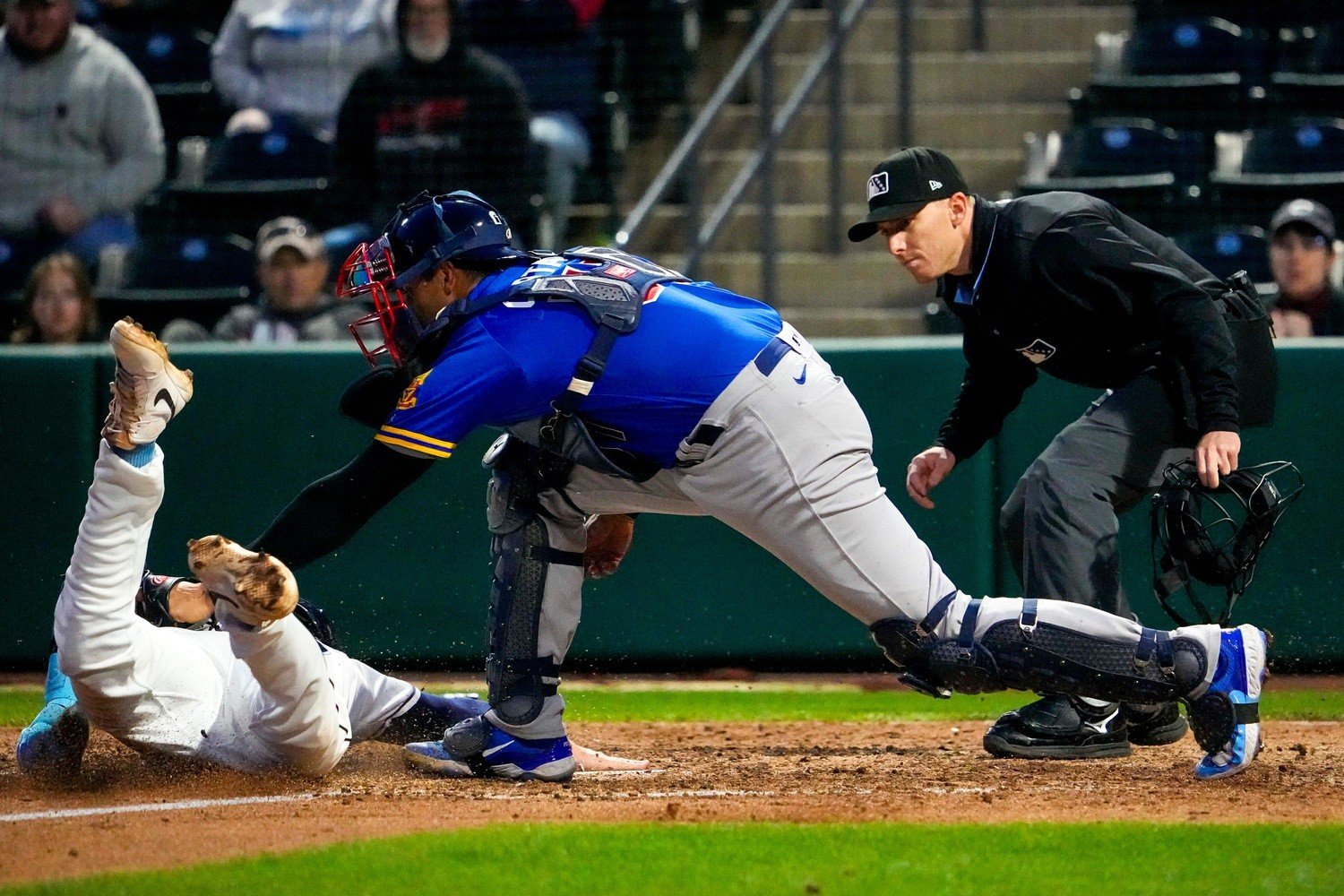 While facing Indianapolis early Tuesday afternoon, the St. Paul Saints managed an offensive outburst their major-league parent club couldn't fathom, scoring 16 runs on 16 hits. Potential future major-league contributors Carson McCusker, Armando Alvarez, Mickey Gasper, and Ryan Fitzgerald hit home runs to fuel the beatdown. However, one player was absent from the club's offensive barrage: Diego Cartaya. Cartaya went 1-5 in Tuesday's game, striking out four times. The 23-year-old's lackluster performance at the plate appropriately illustrates the struggles he has undergone at the plate to begin his 2025 campaign. He's hitting .080/.207/.200, with two hits, four walks, 18 strikeouts, and an 11 wRC+ over 29 plate appearances. Strikeouts have been the most significant hindrance to the former consensus top-20 prospect's inability to produce at the plate; he's not making enough contact for anything else to matter. Obviously, producing a strikeout rate that even former fan-favorite Joey Gallo would find alarming is a cause for concern. He had a much less eye-popping 28.6% strikeout rate over 803 plate appearances between the Los Angeles Dodgers' Double- and Triple-A affiliates. It's unlikely that he'll continue going down on strikes half the time. Still, it doesn't look at all as though he's set to blossom into the MLB-caliber contributor those who follow the Twins hoped he'd become, after the organization sent right-handed pitching prospect Jose Vasquez to Los Angeles for the right-handed hitting backstop in early January. Now, Cartaya's catching partner Jair Camargo isn't performing well at the plate either. He's hitting .222/.286/.356, with 10 hits, four walks, 21 strikeouts, and a 69 wRC+ over 49 plate appearances. However, the 25-year-old is at least yielding (somewhat) respectable plate appearances. Neither catcher is playing well, meaning the parent club could be in a dire situation if one of Ryan Jeffers or Christian Vázquez were forced to miss extended time. (Both have already been banged up within the first month, so it's not exactly a far-fetched hypothetical.) If Jeffers or Vázquez were forced to miss time in the near future, Camargo would undoubtedly be the backstop to earn a promotion to the majors, despite both he and Cartaya occupying 40-man roster spots. Camargo is also outperforming Cartaya behind the plate. Over 83 2/3 innings behind the plate, 22 runners have attempted to steal a base on Camargo. He has caught 10 of those runners, generating a respectable 45% caught stealing rate. Twelve runners have attempted to swipe a base on Cartaya, and he has thrown out zero. Cartaya has never been effective at throwing out baserunners. He's posted a below-average 19% caught-stealing rate over 353 career attempts. Yet, his defensive struggles have become more pronounced, given his ineptitude at the plate. He is still an adequate framer, a skill that will become even more important as the ABS challenge system could be implemented in the majors next season. That said, Camargo is an equally skilled framer, meaning Cartaya has no clear path to earning a roster spot over him in the short- or long-term future. Cartaya was an intriguing low-risk, high-reward offseason acquisition by the Twins' front office. Yet, his significant early-season struggles could signal that the young backstop might be the next 40-man roster occupant to be designated for assignment if the club elects to purchase the contract of a veteran reliever or position player in the near future. Here's the most damning thing: If that does happen, there's a fair chance the Twins would be able to retain Cartaya, anyway. Right now, no team is likely to claim him and allot their own 40-man roster spot to the lost soul behind the mask.
 -
The Twins' young catching prospect has struggled at the plate and in the field to begin his 2025 campaign. Is the 23-year-old at risk of being designated for assignment for the second time in five months? Image courtesy of © Samantha Madar/Columbus Dispatch / USA TODAY NETWORK via Imagn Images While facing Indianapolis early Tuesday afternoon, the St. Paul Saints managed an offensive outburst their major-league parent club couldn't fathom, scoring 16 runs on 16 hits. Potential future major-league contributors Carson McCusker, Armando Alvarez, Mickey Gasper, and Ryan Fitzgerald hit home runs to fuel the beatdown. However, one player was absent from the club's offensive barrage: Diego Cartaya. Cartaya went 1-5 in Tuesday's game, striking out four times. The 23-year-old's lackluster performance at the plate appropriately illustrates the struggles he has undergone at the plate to begin his 2025 campaign. He's hitting .080/.207/.200, with two hits, four walks, 18 strikeouts, and an 11 wRC+ over 29 plate appearances. Strikeouts have been the most significant hindrance to the former consensus top-20 prospect's inability to produce at the plate; he's not making enough contact for anything else to matter. Obviously, producing a strikeout rate that even former fan-favorite Joey Gallo would find alarming is a cause for concern. He had a much less eye-popping 28.6% strikeout rate over 803 plate appearances between the Los Angeles Dodgers' Double- and Triple-A affiliates. It's unlikely that he'll continue going down on strikes half the time. Still, it doesn't look at all as though he's set to blossom into the MLB-caliber contributor those who follow the Twins hoped he'd become, after the organization sent right-handed pitching prospect Jose Vasquez to Los Angeles for the right-handed hitting backstop in early January. Now, Cartaya's catching partner Jair Camargo isn't performing well at the plate either. He's hitting .222/.286/.356, with 10 hits, four walks, 21 strikeouts, and a 69 wRC+ over 49 plate appearances. However, the 25-year-old is at least yielding (somewhat) respectable plate appearances. Neither catcher is playing well, meaning the parent club could be in a dire situation if one of Ryan Jeffers or Christian Vázquez were forced to miss extended time. (Both have already been banged up within the first month, so it's not exactly a far-fetched hypothetical.) If Jeffers or Vázquez were forced to miss time in the near future, Camargo would undoubtedly be the backstop to earn a promotion to the majors, despite both he and Cartaya occupying 40-man roster spots. Camargo is also outperforming Cartaya behind the plate. Over 83 2/3 innings behind the plate, 22 runners have attempted to steal a base on Camargo. He has caught 10 of those runners, generating a respectable 45% caught stealing rate. Twelve runners have attempted to swipe a base on Cartaya, and he has thrown out zero. Cartaya has never been effective at throwing out baserunners. He's posted a below-average 19% caught-stealing rate over 353 career attempts. Yet, his defensive struggles have become more pronounced, given his ineptitude at the plate. He is still an adequate framer, a skill that will become even more important as the ABS challenge system could be implemented in the majors next season. That said, Camargo is an equally skilled framer, meaning Cartaya has no clear path to earning a roster spot over him in the short- or long-term future. Cartaya was an intriguing low-risk, high-reward offseason acquisition by the Twins' front office. Yet, his significant early-season struggles could signal that the young backstop might be the next 40-man roster occupant to be designated for assignment if the club elects to purchase the contract of a veteran reliever or position player in the near future. Here's the most damning thing: If that does happen, there's a fair chance the Twins would be able to retain Cartaya, anyway. Right now, no team is likely to claim him and allot their own 40-man roster spot to the lost soul behind the mask. View full article
-
.png.62c82160b004ede68f2e299573e65885.png) Your 2025 Minnesota Twins are off to an abysmal start. No amount of cognitive behavioral therapy or ventures into various coping mechanisms can soothe the reality that this team is, at best, disappointing. Nevertheless, we here at Twins Daily will relentlessly continue to cover every possible positive angle one can find on this team, its manager, and its front office (never the owners, though)—in hopes of looking intelligent when this club is inevitably holding a firm one-game lead over the third and final AL Wild Card spot at the All-Star break. That being the case, please prepare yourself for yet another puff piece on the Twins' front office's sound decision-making process in the runup to the 2022 MLB Trade Deadline. In the second season of a two-year, $22-million deal he signed with the Texas Rangers after the 2023 season, veteran Tyler Mahle has looked like one of the American League's best starting pitchers, posting a 0.68 ERA, 2.51 FIP, and 24.8% strikeout rate over 26 2/3 innings pitched, including a dominating start (seven innings pitched and zero earned runs) against the defending World Series champion Los Angeles Dodgers. The driving force behind the right-handed hurler's early-season success has been his fastball, which has generated a 99th-percentile fastball run value despite possessing 16th-percentile average velocity. OTdXdldfV0ZRVkV3dEdEUT09X0FGSlFWVkpWVlZZQUMxUUxVQUFIQlE5V0FBTUNCVmdBQjFOV0NRWU5VZ0VCQWxjRQ==.mp4 Mahle's splitter has played exceptionally well, too, as evidenced by the pitch generating a 98th-percentile Offspeed run value. The former Twins starter has utilized these two pitches 80% of the time, a usage rate similar to when he blossomed into one of the most sought-after 2022 deadline acquisitions while a member of the Cincinnati Reds. Minnesota won that bidding war, sending prospects Spencer Steer, Christian Encarnacion-Strand, and Stever Hajjar to the Queen City to acquire the prized righty. OTdXdldfV0ZRVkV3dEdEUT09X0RnVUVVZ0lHVUFjQVdnQUhBQUFIVkFaV0FGZ0ZBbEVBQ3dBQUJ3dFdCd0FHQTFSUw==.mp4 Mahle infamously started only four games for the Twins in 2022, with an uninspiring 4.41 ERA, 5.56 FIP, and 19% strikeout rate—before spending the rest of the season on the injured list with shoulder inflammation. The then-28-year-old began his 2023 campaign strongly, generating a 3.16 ERA, 4.19 FIP, and 27.5% strikeout rate. Unfortunately, any expectancies of an elongated bounce-back season were cut short, as Mahle was sidelined with an elbow impingement in late April before undergoing Tommy John surgery a month later. The injury-prone righty's absence went largely unfelt, as Minnesota went on to snap their 18-game postseason losing streak five months later. Mahle hit free agency that fall and struck his deal with Texas. The organization understood that he would spend a substantial portion of the contract's first season recovering from surgery. However, unlike the salary-restricted Twins, they were willing to shell out the money necessary to secure his services. In an echo of his first season in Minnesota, Mahle joined Texas in early August, making only three starts for the organization before missing the rest of the 2024 season due to right shoulder tightness. Coming off three straight seasons plagued by significant injuries to his throwing arm, many wondered if Mahle's once-promising major-league career would fizzle out. However, as stated earlier, the now-30-year-old has been incredible this season, making his $22-million contract a bargain. Other veteran injury-prone starters are earning nearly that much total money on one-year contracts. Mahle's success with Texas shouldn't anger Twins fans. Despite a dreadful start to their 2025 season, Minnesota still possesses a formidable starting rotation, with Pablo López, Bailey Ober, Joe Ryan, Simeon Woods Richardson, David Festa, and Zebby Matthews all possessing multiple seasons of control. Instead, Mahle overcoming significant injury concerns and blossoming into one of the AL's best starting pitchers this season further proves that the Twins front office's decision to spend significant prospect capital on Mahle at the 2022 deadline was sound, even if Texas is the organization benefitting from Mahle's success. Perhaps the people who most need to hear that are members of the front office, themselves. They shouldn't be cowed by the 2022 experience. They should be thinking about how to replicate that process.
Your 2025 Minnesota Twins are off to an abysmal start. No amount of cognitive behavioral therapy or ventures into various coping mechanisms can soothe the reality that this team is, at best, disappointing. Nevertheless, we here at Twins Daily will relentlessly continue to cover every possible positive angle one can find on this team, its manager, and its front office (never the owners, though)—in hopes of looking intelligent when this club is inevitably holding a firm one-game lead over the third and final AL Wild Card spot at the All-Star break. That being the case, please prepare yourself for yet another puff piece on the Twins' front office's sound decision-making process in the runup to the 2022 MLB Trade Deadline. In the second season of a two-year, $22-million deal he signed with the Texas Rangers after the 2023 season, veteran Tyler Mahle has looked like one of the American League's best starting pitchers, posting a 0.68 ERA, 2.51 FIP, and 24.8% strikeout rate over 26 2/3 innings pitched, including a dominating start (seven innings pitched and zero earned runs) against the defending World Series champion Los Angeles Dodgers. The driving force behind the right-handed hurler's early-season success has been his fastball, which has generated a 99th-percentile fastball run value despite possessing 16th-percentile average velocity. OTdXdldfV0ZRVkV3dEdEUT09X0FGSlFWVkpWVlZZQUMxUUxVQUFIQlE5V0FBTUNCVmdBQjFOV0NRWU5VZ0VCQWxjRQ==.mp4 Mahle's splitter has played exceptionally well, too, as evidenced by the pitch generating a 98th-percentile Offspeed run value. The former Twins starter has utilized these two pitches 80% of the time, a usage rate similar to when he blossomed into one of the most sought-after 2022 deadline acquisitions while a member of the Cincinnati Reds. Minnesota won that bidding war, sending prospects Spencer Steer, Christian Encarnacion-Strand, and Stever Hajjar to the Queen City to acquire the prized righty. OTdXdldfV0ZRVkV3dEdEUT09X0RnVUVVZ0lHVUFjQVdnQUhBQUFIVkFaV0FGZ0ZBbEVBQ3dBQUJ3dFdCd0FHQTFSUw==.mp4 Mahle infamously started only four games for the Twins in 2022, with an uninspiring 4.41 ERA, 5.56 FIP, and 19% strikeout rate—before spending the rest of the season on the injured list with shoulder inflammation. The then-28-year-old began his 2023 campaign strongly, generating a 3.16 ERA, 4.19 FIP, and 27.5% strikeout rate. Unfortunately, any expectancies of an elongated bounce-back season were cut short, as Mahle was sidelined with an elbow impingement in late April before undergoing Tommy John surgery a month later. The injury-prone righty's absence went largely unfelt, as Minnesota went on to snap their 18-game postseason losing streak five months later. Mahle hit free agency that fall and struck his deal with Texas. The organization understood that he would spend a substantial portion of the contract's first season recovering from surgery. However, unlike the salary-restricted Twins, they were willing to shell out the money necessary to secure his services. In an echo of his first season in Minnesota, Mahle joined Texas in early August, making only three starts for the organization before missing the rest of the 2024 season due to right shoulder tightness. Coming off three straight seasons plagued by significant injuries to his throwing arm, many wondered if Mahle's once-promising major-league career would fizzle out. However, as stated earlier, the now-30-year-old has been incredible this season, making his $22-million contract a bargain. Other veteran injury-prone starters are earning nearly that much total money on one-year contracts. Mahle's success with Texas shouldn't anger Twins fans. Despite a dreadful start to their 2025 season, Minnesota still possesses a formidable starting rotation, with Pablo López, Bailey Ober, Joe Ryan, Simeon Woods Richardson, David Festa, and Zebby Matthews all possessing multiple seasons of control. Instead, Mahle overcoming significant injury concerns and blossoming into one of the AL's best starting pitchers this season further proves that the Twins front office's decision to spend significant prospect capital on Mahle at the 2022 deadline was sound, even if Texas is the organization benefitting from Mahle's success. Perhaps the people who most need to hear that are members of the front office, themselves. They shouldn't be cowed by the 2022 experience. They should be thinking about how to replicate that process. -
And so, Mahle can wait. He knows it's too late as we're walkin' on by. His soul slides away, "But don't look back in anger," we heard him say. Image courtesy of © Jerome Miron-Imagn Images Your 2025 Minnesota Twins are off to an abysmal start. No amount of cognitive behavioral therapy or ventures into various coping mechanisms can soothe the reality that this team is, at best, disappointing. Nevertheless, we here at Twins Daily will relentlessly continue to cover every possible positive angle one can find on this team, its manager, and its front office (never the owners, though)—in hopes of looking intelligent when this club is inevitably holding a firm one-game lead over the third and final AL Wild Card spot at the All-Star break. That being the case, please prepare yourself for yet another puff piece on the Twins' front office's sound decision-making process in the runup to the 2022 MLB Trade Deadline. In the second season of a two-year, $22-million deal he signed with the Texas Rangers after the 2023 season, veteran Tyler Mahle has looked like one of the American League's best starting pitchers, posting a 0.68 ERA, 2.51 FIP, and 24.8% strikeout rate over 26 2/3 innings pitched, including a dominating start (seven innings pitched and zero earned runs) against the defending World Series champion Los Angeles Dodgers. The driving force behind the right-handed hurler's early-season success has been his fastball, which has generated a 99th-percentile fastball run value despite possessing 16th-percentile average velocity. OTdXdldfV0ZRVkV3dEdEUT09X0FGSlFWVkpWVlZZQUMxUUxVQUFIQlE5V0FBTUNCVmdBQjFOV0NRWU5VZ0VCQWxjRQ==.mp4 Mahle's splitter has played exceptionally well, too, as evidenced by the pitch generating a 98th-percentile Offspeed run value. The former Twins starter has utilized these two pitches 80% of the time, a usage rate similar to when he blossomed into one of the most sought-after 2022 deadline acquisitions while a member of the Cincinnati Reds. Minnesota won that bidding war, sending prospects Spencer Steer, Christian Encarnacion-Strand, and Stever Hajjar to the Queen City to acquire the prized righty. OTdXdldfV0ZRVkV3dEdEUT09X0RnVUVVZ0lHVUFjQVdnQUhBQUFIVkFaV0FGZ0ZBbEVBQ3dBQUJ3dFdCd0FHQTFSUw==.mp4 Mahle infamously started only four games for the Twins in 2022, with an uninspiring 4.41 ERA, 5.56 FIP, and 19% strikeout rate—before spending the rest of the season on the injured list with shoulder inflammation. The then-28-year-old began his 2023 campaign strongly, generating a 3.16 ERA, 4.19 FIP, and 27.5% strikeout rate. Unfortunately, any expectancies of an elongated bounce-back season were cut short, as Mahle was sidelined with an elbow impingement in late April before undergoing Tommy John surgery a month later. The injury-prone righty's absence went largely unfelt, as Minnesota went on to snap their 18-game postseason losing streak five months later. Mahle hit free agency that fall and struck his deal with Texas. The organization understood that he would spend a substantial portion of the contract's first season recovering from surgery. However, unlike the salary-restricted Twins, they were willing to shell out the money necessary to secure his services. In an echo of his first season in Minnesota, Mahle joined Texas in early August, making only three starts for the organization before missing the rest of the 2024 season due to right shoulder tightness. Coming off three straight seasons plagued by significant injuries to his throwing arm, many wondered if Mahle's once-promising major-league career would fizzle out. However, as stated earlier, the now-30-year-old has been incredible this season, making his $22-million contract a bargain. Other veteran injury-prone starters are earning nearly that much total money on one-year contracts. Mahle's success with Texas shouldn't anger Twins fans. Despite a dreadful start to their 2025 season, Minnesota still possesses a formidable starting rotation, with Pablo López, Bailey Ober, Joe Ryan, Simeon Woods Richardson, David Festa, and Zebby Matthews all possessing multiple seasons of control. Instead, Mahle overcoming significant injury concerns and blossoming into one of the AL's best starting pitchers this season further proves that the Twins front office's decision to spend significant prospect capital on Mahle at the 2022 deadline was sound, even if Texas is the organization benefitting from Mahle's success. Perhaps the people who most need to hear that are members of the front office, themselves. They shouldn't be cowed by the 2022 experience. They should be thinking about how to replicate that process. View full article
-
Thanks for asking the tough questions, Lou.
-
Cite five (5) pieces of evidence to the contrary with 150 word annotations in APA format, please.
- 35 replies
-
- 1
-

-
- rocco baldelli
- jayce tingler
- (and 1 more)
-
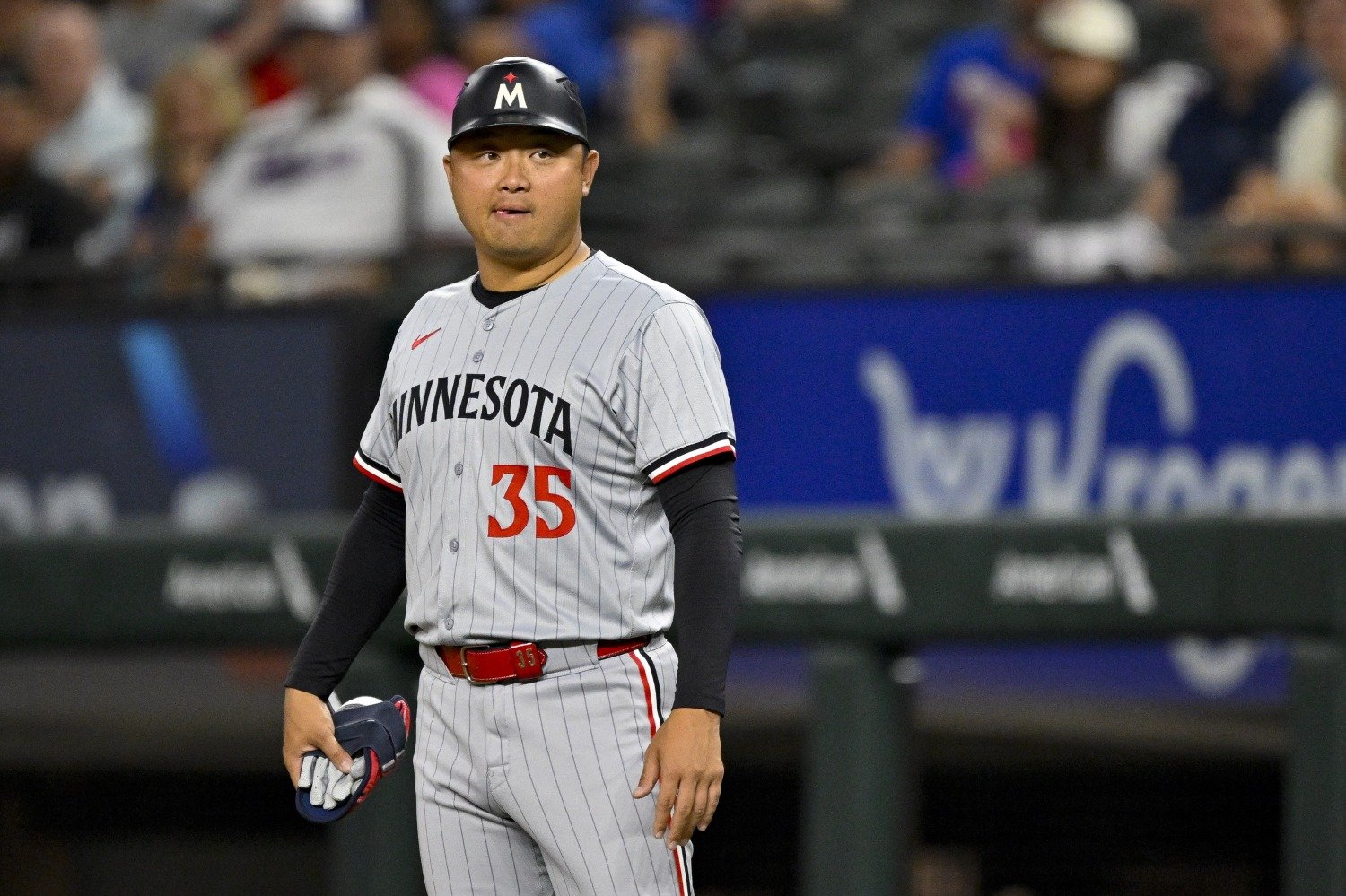 Through 18 games, the Minnesota Twins are off to one of their worst starts in franchise history. Plagued by sloppy defensive play, significant struggles at the plate, and pitchers developing a newfound inability to toss fielded groundballs to first base accurately, the Twins have become one of the majors' most unwatchable clubs. Minnesota has played only 11% of their games, and could rebound from their miserable 6-12 start, similar to what they did after beginning last season 7-13. However, times are dire, and drastic changes could occur if the club doesn't turn around its fortunes quickly. After dramatically missing last season's postseason following a dismal 12-27 stretch to conclude their 2024 campaign, Minnesota fired hitting coach David Popkins and his assistants Derek Shomon and Rudy Hernández. Despite hiring Matt Borgschulte as Popkins's successor, the Twins' offense is off to a similarly slow start this season, indicating he and his assistants likely weren't the main problem behind the 2024 club's inability to produce down the stretch. Popkins, Shomon, and Hernández were effectively scapegoated out of Minnesota, and with the team continuing to struggle, manager Rocco Baldelli could be the next Twins personnel member to be relieved of his duties. Big-league managers have relatively little control over events that occur in games. Their most considerable influence on games is deciding when to pull starting pitchers, which reliever will enter from the bullpen, and whether to ask a bench player to pinch-hit or pinch-run. Given their poor start and utter collapse last season, one could reasonably deem it's time for Baldelli to depart the organization. However, if the organization fired him this early in the year, they would effectively be scapegoating the seventh-year manager. The club elected to keep him last fall during one of their most catastrophic implosions in franchise history. Nothing that has occurred this spring should have materially changed their view of whether he can get the best out of this team, so if they liked him enough not to fire him in October, they should still like him enough now. Again, if the club continues to slip through the cracks, significant changes like upending the front office, coaching staff, and core of the roster would be justified. However, substantial moves like that would need to occur this summer or fall—not in mid-April. Nevertheless, the organization parting ways with Baldelli feels more realistic than ever. If the move were to occur, someone on the coaching staff would need to succeed him as the club's manager. When organizations fire their manager during the season, they often replace the fired skipper with their bench coach. Minnesota's bench coach is Jayce Tingler, though, and he was recently part of a similar situation to what Baldelli could soon become a victim of. Tingler was the San Diego Padres' manager during the 2020 and 2021 MLB seasons. Tingler was dismissed after the club finished 79-83 and missed the playoffs. Tingler felt somewhat scapegoated by the Padres. That being the case, he might not want to be the person who benefits from a different organization scapegoating their manager. In fact, he's not ardently pursuing the chance to be a manager again, period. Also, Tingler has been Baldelli's righthand man since joining the organization before the 2022 season. If Baldelli were fired, the organization could view Tingler as being too similar to Baldelli and elect to part ways with him, too. Thus, the organization could hand the managerial reins over to someone in the dugout with a different voice and perspective. That person could be current assistant bench coach/catching coach Hank Conger. Since joining the Twins before the 2022 season, Conger has become a significant clubhouse presence whom players and fellow coaches admire. He has progressed from first base coach and catcher coach to being promoted to assistant bench coach this past offseason. Being a former major-league catcher, Conger continues to coach the position. He has played a significant role in Ryan Jeffers and Christian Vázquez becoming one of the best game-planning catching duos in baseball. There has always been an understanding that catchers are the position players most likely to blossom into managers in their post-playing careers due to being the position player in charge of managing the game from the field. Multiple current big-league managers, such as legends Bruce Bochy and Bob Melvin and reigning AL Manager of the Year Stephen Vogt, reflect this phenomenon. Given what's already been asked of him and how the situation might shift in the near future, Conger could reasonably be the next former catcher to transition into a managerial job—if Minnesota continues their early season slide.
- 35 comments
-
- 4
-
-
-
- rocco baldelli
- jayce tingler
- (and 1 more)
-
Firing a well-respected manager roughly 20 games into the season would be premature. However, if the Minnesota Twins keep losing, the organization could decide a drastic change needs to be made—and the next man up might not be who you'd think. Image courtesy of © Jerome Miron-Imagn Images Through 18 games, the Minnesota Twins are off to one of their worst starts in franchise history. Plagued by sloppy defensive play, significant struggles at the plate, and pitchers developing a newfound inability to toss fielded groundballs to first base accurately, the Twins have become one of the majors' most unwatchable clubs. Minnesota has played only 11% of their games, and could rebound from their miserable 6-12 start, similar to what they did after beginning last season 7-13. However, times are dire, and drastic changes could occur if the club doesn't turn around its fortunes quickly. After dramatically missing last season's postseason following a dismal 12-27 stretch to conclude their 2024 campaign, Minnesota fired hitting coach David Popkins and his assistants Derek Shomon and Rudy Hernández. Despite hiring Matt Borgschulte as Popkins's successor, the Twins' offense is off to a similarly slow start this season, indicating he and his assistants likely weren't the main problem behind the 2024 club's inability to produce down the stretch. Popkins, Shomon, and Hernández were effectively scapegoated out of Minnesota, and with the team continuing to struggle, manager Rocco Baldelli could be the next Twins personnel member to be relieved of his duties. Big-league managers have relatively little control over events that occur in games. Their most considerable influence on games is deciding when to pull starting pitchers, which reliever will enter from the bullpen, and whether to ask a bench player to pinch-hit or pinch-run. Given their poor start and utter collapse last season, one could reasonably deem it's time for Baldelli to depart the organization. However, if the organization fired him this early in the year, they would effectively be scapegoating the seventh-year manager. The club elected to keep him last fall during one of their most catastrophic implosions in franchise history. Nothing that has occurred this spring should have materially changed their view of whether he can get the best out of this team, so if they liked him enough not to fire him in October, they should still like him enough now. Again, if the club continues to slip through the cracks, significant changes like upending the front office, coaching staff, and core of the roster would be justified. However, substantial moves like that would need to occur this summer or fall—not in mid-April. Nevertheless, the organization parting ways with Baldelli feels more realistic than ever. If the move were to occur, someone on the coaching staff would need to succeed him as the club's manager. When organizations fire their manager during the season, they often replace the fired skipper with their bench coach. Minnesota's bench coach is Jayce Tingler, though, and he was recently part of a similar situation to what Baldelli could soon become a victim of. Tingler was the San Diego Padres' manager during the 2020 and 2021 MLB seasons. Tingler was dismissed after the club finished 79-83 and missed the playoffs. Tingler felt somewhat scapegoated by the Padres. That being the case, he might not want to be the person who benefits from a different organization scapegoating their manager. In fact, he's not ardently pursuing the chance to be a manager again, period. Also, Tingler has been Baldelli's righthand man since joining the organization before the 2022 season. If Baldelli were fired, the organization could view Tingler as being too similar to Baldelli and elect to part ways with him, too. Thus, the organization could hand the managerial reins over to someone in the dugout with a different voice and perspective. That person could be current assistant bench coach/catching coach Hank Conger. Since joining the Twins before the 2022 season, Conger has become a significant clubhouse presence whom players and fellow coaches admire. He has progressed from first base coach and catcher coach to being promoted to assistant bench coach this past offseason. Being a former major-league catcher, Conger continues to coach the position. He has played a significant role in Ryan Jeffers and Christian Vázquez becoming one of the best game-planning catching duos in baseball. There has always been an understanding that catchers are the position players most likely to blossom into managers in their post-playing careers due to being the position player in charge of managing the game from the field. Multiple current big-league managers, such as legends Bruce Bochy and Bob Melvin and reigning AL Manager of the Year Stephen Vogt, reflect this phenomenon. Given what's already been asked of him and how the situation might shift in the near future, Conger could reasonably be the next former catcher to transition into a managerial job—if Minnesota continues their early season slide. View full article
-
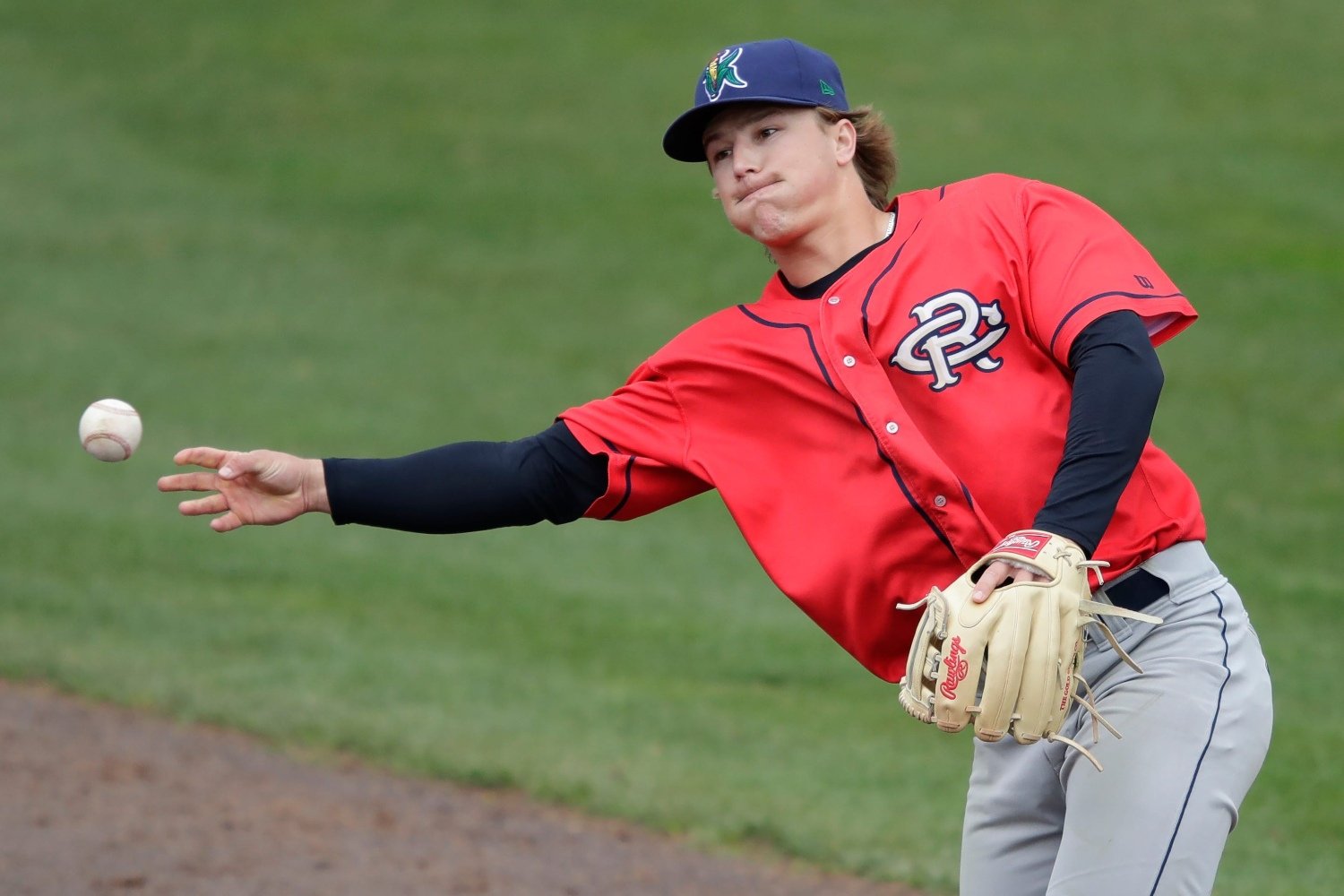 A little over a month ago, Twins Daily released its Top 20 Minnesota Twins Prospect Rankings list. Long-time prospects guru Seth Stohs released his annual blurb synopsizing the inner workings of how the list came about, and what to expect of the top 20 prospects as the impending minor-league season neared. As is true with most publications assessing Minnesota's prospect pool, young position players Walker Jenkins, Emmanuel Rodriguez, and Luke Keaschall were ranked first, second, and third, respectively. However, Seth noted in his piece that "approximately 25% of (Twins Daily) voters moved Keaschall ahead of Rodriguez in their rankings." Now, I am not one to doxx myself, but I, Cody Schoenmann, was one of those writers. On the surface, the fact that 1/4 of Twins Daily writers placed Keaschall ahead of Rodriguez shouldn't be surprising. As Seth noted in his piece, both are consensus top-100 prospects. That said, there is a significant distance between the two on nearly every reputable prospect rankings list. Here are three examples: FanGraphs: Rodriguez - 20; Keaschall - 56 The Athletic: Rodriguez - 21; Keaschall - 62 Just Baseball: Rodriguez - 19; Keaschall - 42 That's an average 33-spot difference. Unsurprisingly, other publications sport a similar disparity. Local gurus and national writers like Eric Longenhagen, Keith Law, and Aram Leighton agreed Rodriguez was a superior prospect to Keaschall before the 2025 minor-league season began. But could the tide be shifting? Here's how Rodriguez and Keaschall have performed to begin their 2025 Triple-A campaigns: Rodriguez - .235/.381/.294, 42 plate appearances, eight hits, eight walks, zero home runs, 103 wRC+ Keaschall - .294/.422/.412, 45 plate appearances, 10 hits, eight walks, two home runs, 138 wRC+ These, of course, are small samples. That said, a trend that commenced last season has continued: Keaschall is a substantially better bat-to-ball guy than Rodriguez. If you've been following these two hitters' respective careers in the Twins' farm system, that note won't surprise you, valued reader. Instead of being a plus pure hitter, Rodriguez excels by making hard contact and supernal swing decisions. In the lower minors, he was also largely platoon-proof. It's notable, therefore, that he has struggled against left-handed pitchers in Triple A, with a nightmarish .071/.188/.071 slash line and eight strikeouts over 14 at-bats this season. Rodriguez has always struck out a lot, but his swing-and-miss concerns have become more amplified with the Saints. He's generating a concerning 37.9% strikeout rate over 72 combined Triple-A at-bats the past two seasons. Like most young hitters, Rodriguez's weaknesses have been exposed by superior pitching, meaning he must make the adjustments necessary to become more than a plus platoon bat. There's still every reason to believe Rodrigez will become a consistently above-average offensive (and defensive) corner outfielder. Early in his career, he'll even be a capable a center fielder. However, it's Keaschall who now looks more ready to instantly become a plus offensive contributor, should the Twins have need of that. Last season, Keaschall excelled against right- and left-handed pitchers, as evidenced below: vs. Left: .281/.416/.404, 113 plate appearances, 25 hits, two home runs, five doubles, 20 walks, 20 strikeouts vs. Right: .310/.422/.507, 351 plate appearances, 90 hits, 13 home runs, 16 doubles, 42 walks, 60 strikeouts The hard-hitting righty has continued that trend this season, slashing .214/.353/.214 against lefties and .350/.464/.550 against righties. Those samples are too small to analyze, but the bigger ones paint the picture: Keaschall can hit regardless of the handedness of his opposing hurler. It's why he's struck out in just 16.9% of his minor-league plate appearances. He looks closer to being ready to hit in the majors. Unfortunately, he has yet to play an entire game in the field this season, as he is still recovering from Tommy John surgery he underwent last August. Given that Jenkins possesses the potential necessary to become a perennial All-Star, he will remain atop Minnesota's prospects rankings for the foreseeable future. However, Keaschall's ability to thrive offensively and provide defensive versatility gives real weight to the notion that he's surpassed Rodriguez as the organization's second-best prospect—and maybe a top-30 prospect in baseball.
 -
Both are consensus top-100 prospects. However, there is reason to believe Luke Keaschall has jumped Emmanuel Rodriguez as Minnesota's second-best prospect, after two years of Rodriguez being comfortably ensconced in that spot. Image courtesy of © Dan Powers/USA TODAY NETWORK-Wisconsin / USA TODAY NETWORK A little over a month ago, Twins Daily released its Top 20 Minnesota Twins Prospect Rankings list. Long-time prospects guru Seth Stohs released his annual blurb synopsizing the inner workings of how the list came about, and what to expect of the top 20 prospects as the impending minor-league season neared. As is true with most publications assessing Minnesota's prospect pool, young position players Walker Jenkins, Emmanuel Rodriguez, and Luke Keaschall were ranked first, second, and third, respectively. However, Seth noted in his piece that "approximately 25% of (Twins Daily) voters moved Keaschall ahead of Rodriguez in their rankings." Now, I am not one to doxx myself, but I, Cody Schoenmann, was one of those writers. On the surface, the fact that 1/4 of Twins Daily writers placed Keaschall ahead of Rodriguez shouldn't be surprising. As Seth noted in his piece, both are consensus top-100 prospects. That said, there is a significant distance between the two on nearly every reputable prospect rankings list. Here are three examples: FanGraphs: Rodriguez - 20; Keaschall - 56 The Athletic: Rodriguez - 21; Keaschall - 62 Just Baseball: Rodriguez - 19; Keaschall - 42 That's an average 33-spot difference. Unsurprisingly, other publications sport a similar disparity. Local gurus and national writers like Eric Longenhagen, Keith Law, and Aram Leighton agreed Rodriguez was a superior prospect to Keaschall before the 2025 minor-league season began. But could the tide be shifting? Here's how Rodriguez and Keaschall have performed to begin their 2025 Triple-A campaigns: Rodriguez - .235/.381/.294, 42 plate appearances, eight hits, eight walks, zero home runs, 103 wRC+ Keaschall - .294/.422/.412, 45 plate appearances, 10 hits, eight walks, two home runs, 138 wRC+ These, of course, are small samples. That said, a trend that commenced last season has continued: Keaschall is a substantially better bat-to-ball guy than Rodriguez. If you've been following these two hitters' respective careers in the Twins' farm system, that note won't surprise you, valued reader. Instead of being a plus pure hitter, Rodriguez excels by making hard contact and supernal swing decisions. In the lower minors, he was also largely platoon-proof. It's notable, therefore, that he has struggled against left-handed pitchers in Triple A, with a nightmarish .071/.188/.071 slash line and eight strikeouts over 14 at-bats this season. Rodriguez has always struck out a lot, but his swing-and-miss concerns have become more amplified with the Saints. He's generating a concerning 37.9% strikeout rate over 72 combined Triple-A at-bats the past two seasons. Like most young hitters, Rodriguez's weaknesses have been exposed by superior pitching, meaning he must make the adjustments necessary to become more than a plus platoon bat. There's still every reason to believe Rodrigez will become a consistently above-average offensive (and defensive) corner outfielder. Early in his career, he'll even be a capable a center fielder. However, it's Keaschall who now looks more ready to instantly become a plus offensive contributor, should the Twins have need of that. Last season, Keaschall excelled against right- and left-handed pitchers, as evidenced below: vs. Left: .281/.416/.404, 113 plate appearances, 25 hits, two home runs, five doubles, 20 walks, 20 strikeouts vs. Right: .310/.422/.507, 351 plate appearances, 90 hits, 13 home runs, 16 doubles, 42 walks, 60 strikeouts The hard-hitting righty has continued that trend this season, slashing .214/.353/.214 against lefties and .350/.464/.550 against righties. Those samples are too small to analyze, but the bigger ones paint the picture: Keaschall can hit regardless of the handedness of his opposing hurler. It's why he's struck out in just 16.9% of his minor-league plate appearances. He looks closer to being ready to hit in the majors. Unfortunately, he has yet to play an entire game in the field this season, as he is still recovering from Tommy John surgery he underwent last August. Given that Jenkins possesses the potential necessary to become a perennial All-Star, he will remain atop Minnesota's prospects rankings for the foreseeable future. However, Keaschall's ability to thrive offensively and provide defensive versatility gives real weight to the notion that he's surpassed Rodriguez as the organization's second-best prospect—and maybe a top-30 prospect in baseball. View full article
-
 Upon being recalled from Triple-A St. Paul early Saturday morning, Minnesota Twins left-handed reliever Kody Funderburk was thrust into action the same day, tossing two innings in the club's 4-0 loss against the Detroit Tigers. Funderburk struggled in his 2025 debut, sloppily allowing two earned runs, as illustrated below by Twins Daily's Jamie Cameron: Beyond allowing a two-run home run to Tigers first baseman Spencer Torkelson, the 28-year-old southpaw (interestingly) struggled against left-handed hitters, a trend dating back to last season. Here is how Funderburk fared against right- and left-handed hitters in 2024: vs. Left: 13 2/3 innings pitched, 64 batters faced, 15 hits allowed, zero home runs allowed, nine walks, 19 strikeouts, 1.76 WHIP vs. Right: 20 2/3 innings pitched, 97 batters faced, 26 hits allowed, four home runs allowed, six walks, 13 strikeouts, 1.55 WHIP The Dallas Baptist University product produced similar results at Triple A, generating a 1.62 WHIP over 22 left-handed hitters faced, compared to a 1.22 WHIP over 38 right-handed hitters faced. The three-batter minimum rule has made left-handed specialty relievers an extinct player type. That being the case, modern southpaws must perform well against righty batters to justify a roster spot—but they still generally excel against left-handed hitters, making Funderburk's performance last season an oddity. As noted earlier, Funderburk didn't perform well overall. The concept of platoon advantage or disadvantage becomes meaningless when a pitcher is ineffective against everyone. Still, even when he performed well at both levels in 2023, he was more effective against right-handed hitters. Funderburk is a true east-to-west pitcher, relying on his cutter and sinker over 60% of the time. He complements his fastball variations with a changeup and slider. In the minors (and his brief stints with the parent club), Funderburk's best pitch has consistently been his cutter. He often throws the pitch high and tight in the zone against righties. When he executes well, it runs in on those hitters' hands, minimizing their ability to generate competitive swings. Like this: NXlhelhfWGw0TUFRPT1fVlZWVlhWd0NVZ2NBWFZvS1ZnQUhVd1pYQUFNTVVWVUFBRndGVmdVTUF3cGNVd1JU.mp4 Funderburk also often employs his changeup against righties, a pitch known for being utilized by pitchers to attack opposite-handed hitters. He can throw the pitch low in the zone effectively, deploying it as a complementary offspeed pitch to his high-in-the-zone cutter. He can tunnel them, out of the hand, and let the arm-side, downward action of the changeup naturally play off the glove-side ride of the cutter. Unfortunately, he has yet to find an adequate pitch mix against same-handed hitters. Ideally, his sinker would function as the fastball variant he could rely on against lefties. It should run in at their hands, the same way the cutter does to righties. Unfortunately, the pitch has yet to become as effective as his cutter, because he's consistently throwing it to the glove side of the plate—where it can't compromise opponents' contact profile the same way, and where misses will tend (because of the difficulty of getting a pitch that runs arm side across to the other side of home) to find the heart of the zone. Lefty hitters can crowd the plate, fight the pitch off, or hit it hard in play, unworried about being jammed. His slider is an adequate complementary breaking pitch. However, the pitch becomes less effective when he's unable to attack the zone with either of his fastballs. He will need to improve his sinker's effectiveness against same-handed hitters, by developing the confidence to steer it inside on them. If the pitch continues to generate lousy results, he'll have to try his cutter against lefties, too. Since the cutter and the slider will have the same horizontal trajectory out of the hand, that could be somewhat viable, but it doesn't solve the problem of making lefties cover the inner half of the plate. Because he hasn't yet found the success he wants even against righties, for the time being, Funderburk is focused on improving his overall process. "I think the simplest way to do it is to make it the same every single time, no matter if you’re going in to face three lefties or three righties," he said Saturday, before his season debut. "It’s just getting your mentals right to be prepared, and then whatever you do out in the bullpen to make sure all your pitches are moving the way you want them, locating where you want to. For me, it’s easier to go into the game doing it that way, rather than trying to prepare lefty or righty." At the same time, he knows the team won't be able to schedule and optimize his usage with his development in mind, as affiliates do for pitchers in the minors. He'll have to get everything sharpened enough to be ready at a moment's notice, since the team could well call upon him to come into some dirty innings and escape jams via matchup play. "It’s all still kind of the same—you’re trying to do the same thing every single day," Funderburk said. "You’re right about the minor leagues being a little bit more programmed and scheduled, but they did a good job down there. I got lengthened out one time. I had a couple one-innings. This week, I went throw, day off, throw. It’s also early on, so you can’t get so much, but I’ve gotten lengthened out and I have thrown two out of three days. So it’s kind of all the stuff I would do up here, I’ve done this year. Now it’s just about making sure I’m right when I get in there." Funderburk's window of opportunity to become a fixture of Minnesota's bullpen is closing. That said, he will likely receive extended opportunities with the club this season, even though his first appearance was disheartening. Danny Coulombe is entrenched as the club's primary left-handed reliever. Veterans Anthony Misiewicz and Richard Lovelady are intriguing lefties who could soon inhabit a bullpen spot with the parent club, too. However, given that Funderburk possesses a minor-league option, the club will be more willing to move him back and forth between St. Paul and the parent club. Funderburk could have a future with the Twins. He is generally effective against right-handed batters. However, he must start overpowering same-handed hitters to become a more complete weapon.
 -
The southpaw struggled in his 2025 debut. That said, he will receive additional opportunities this season. When those opportunities arise, he needs to dominate against same-handed hitters. Upon being recalled from Triple-A St. Paul early Saturday morning, Minnesota Twins left-handed reliever Kody Funderburk was thrust into action the same day, tossing two innings in the club's 0-4 loss against the Detroit Tigers. Funderburk struggled in his 2025 debut, sloppily allowing two earned runs, as illustrated below by Twins Daily's Jamie Cameron: Beyond allowing a two-run home run to Tigers' first baseman Spencer Torkelson, the 28-year-old southpaw interestingly struggled against left-handed hitters, a trend dating back to last season. Here is how Funderburk fared against right- and left-handed hitters last season: vs. Left: 13 2/3 innings pitched, 64 batters faced, 15 hits allowed, zero home runs allowed, nine walks, 19 strikeouts, 1.76 WHIP vs. Right: 20 2/3 innings pitched, 97 batters faced, 26 hits allowed, four home runs allowed, six walks, 13 strikeouts, 1.55 WHIP The Dallas Baptist product produced similar results in Triple-A, generating 1.62 WHIP over 22 left-handed hitters faced compared to a 1.22 WHIP over 38 right-handed hitters faced. The three-batter minimum rule has made left-handed specialty relievers an extinct player archetype. That being the case, modern southpaw relievers must perform well against hitters to just a roster spot. Despite needing to perform against hitters of both-handedness, left-handed relievers still generally excel against left-handed hitters, making Funderburk's performance last season an oddity. As noted earlier, Funderburk didn't perform well overall. The concept of platoon advantage or disadvantage becomes meaningless when a pitcher is ineffective entirely. Still, even when he performed well in Triple-A and the majors in 2023, he was more effective against right-handed hitters. Funderburk is a true east-to-west pitcher, relying on his cutter and sinker over 60% of the time. He complements his fastball variations with a changeup and slider. In the minors and his brief stints with the parent club, the 28-year-old southpaw's best pitch has consistently been his cutter. He often throws the pitch high and tight in the zone against righties. That being the case, the pitch runs in on right-handed hitters hands, minimizing their ability to generate competitive swings. Below is an example of him efficiently using his cutter: NXlhelhfWGw0TUFRPT1fVlZWVlhWd0NVZ2NBWFZvS1ZnQUhVd1pYQUFNTVVWVUFBRndGVmdVTUF3cGNVd1JU.mp4 Funderburk also often employs his changeup against righties, a pitch known for being utilized by pitchers to attack opposite-handed hitters. He can throw the pitch low in the zone effectively, deploying it as a complementary offspeed pitch to his high-in-the-zone cutter. Unfortunately, he has yet to possess an adequate pitch mix against same-handed hitters. Ideally, his sinker would function as the fastball variation he could rely on against left-handed hitters. Unfortunately, the pitch has yet to become as effective as his cutter. That being the case, left-handed hitters can crowd the plate, fight the pitch off, or hit in hard and in play for extra-base hits. His slider is an adequate complementary breaking pitch when facing lefties. However, the pitch becomes less effective when he's unable to attack the zone with either of his fastball variations. He will need to improve his sinker's effectiveness against same-handed hitters. If the pitch continues to generate unideal results, he will seemingly have to begin pounding his cutter against lefties, too. While a less-than-optimal outcome, the pitch could be effective against left-handed hitters, as it could employ a movement profile similar to that of a gyro slider. While he has yet to demonstrate an ability to do this, Funderburk might need to begin attacking same-handed hitters outside with his cutter (which he could throw high and low in the zone) and his slider. Funderburk's window of opportunity to become a fixture of Minnesota's bullpen is closing. That said, he will likely receive extended opportunities with the club this season, even though his first appearance was disheartening. Danny Coulombe is entrenched as the club's primary left-handed reliever. Veterans Anthony Misiewicz and Richard Lovelady are intriguing lefties who could soon inhabit a bullpen spot with the parent club, too. However, given that Funderburk possesses a minor league option, the club will be more willing to move him back and forth between St. Paul and the parent club. Funderburk could have a future with the Twins. He is generally effective against right-handed pitchers. However, he must start overpowering same-handed hitters to become an entrenched figure in Minnesota's plans. View full article
-
The Twins roster multiple veterans at Triple-A with major-league experience. Which of them are most likely to join the parent club in a pinch? Image courtesy of © Kim Klement Neitzel-Imagn Images Fewer than 10 games into the 2025 MLB regular season, the Minnesota Twins have already engaged in some desperate roster machinations. Upon tossing 5 1/3 innings on 79 pitches in mop-up duty during the club's third game of the season against the St. Louis Cardinals, veteran pitcher Randy Dobnak was designated for assignment to roster a fresh arm in the eighth bullpen spot. Darren McCaughan was handed Dobnak's spot on the roster. Despite generating a 0.00 ERA and 0.37 FIP through his first 4 2/3 innings pitched, there is reason to suspect the 29-year-old journeyman reliever's days on Minnesota's 26-man roster are numbered. Promoting young, intriguing players on the 40-man roster (like Emmanuel Rodriguez or Travis Adams) would be fascinating. However, the organization values these blossoming talents' long-term outlooks and would prefer not to promote them to inhabit short-term bench or low-leverage relief roles. That being the case, expendable veterans like Dobnak and McCaughan will continue to receive opportunities with the parent club, especially early in the season. Interestingly, the organization possesses several veterans with major-league experience at Triple-A St. Paul, whose contracts could get purchased to inhabit a roster spot with the parent club if injury or emergency depth concerns arise. Which fringe veteran is most likely to join the club in a pinch? Let's take a look: Huascar Ynoa As mentioned earlier, despite impressing early in his 2025 campaign, McCaughan could soon get designated for assignment to make space for a fresh arm in the eight-pitcher bullpen. Veteran relievers Scott Blewett and Anthony Misiewicz are the most talented arms in St. Paul's bullpen. That said, the organization prefers not to purchase either of their contracts until one of their top seven relievers undergoes extended performance concerns or is forced to miss time due to injury. Misiewicz also pitched Sunday for the Saints, so he's not fresh at the moment. The next pitcher who could inhabit the mop-up role in Minnesota's bullpen could be Ynoa. Signed as part of Minnesota's 2014 international signing pool, Ynoa was eventually traded to Atlanta as part of the deal that brought veteran left-handed reliever Jaime García for one (celebrated) start. The young righty would go on to be part of Atlanta's 2021 World Series-winning club, before falling from grace due to extended injury and performance concerns. The now-26-year-old has returned to the Twins organization, albeit in a role with much lower expectations. Given his prior experience as a starter, Ynoa would be able to eat multiple innings in a stretch relief role. Like Dobnak recently did, Ynoa could go unclaimed in the event he is placed on waivers, meaning the club could retain his services throughout the season. The hard-throwing righty's days as a promising starter are behind him. However, there is reason to believe he could transition into a viable major-league reliever, health permitting. Despite not having pitched in the majors since Apr. 18, 2022, Ynoa could make his long-awaited return with the organization that provided him his first affiliated-ball opportunity. Ryan Fitzgerald Last week, Twins Daily's Nick Nelson published an article touching on the club's lack of shortstop depth. In his piece, Nick noted that if Carlos Correa or Willi Castro sustained a substantial injury that forced them to be placed on the injured list, Minnesota would likely be forced to purchase Fitzgerald's contract from the Saints. On Sunday, the club announced that infielder Brooks Lee would begin a rehab assignment with Low-A Fort Myers. Lee will have 20 days to rehabilitate from a lower back issue that kept him off the 26-man Opening Day roster. Yet, he could rejoin the team within the next week-and-a-half to two weeks. Thus, there is a finite window where Fitzgerald could join the Twins and make his MLB debut. Given that Correa or Castro would need to be sidelined for it to occur, those who follow the team would prefer his debut to be delayed as long as possible. Fitzgerald joining Minnesota is an undesirable outcome. That said, there are worse options, and there is reason to believe the 30-year-old career minor-leaguer could patrol shortstop in a pinch. Spending the first five seasons of his professional baseball career in the Boston Red Sox's minor league system, Fitzgerald netted significant playing time at shortstop. He also netted 217 1/3 innings at the position with Kansas City's Triple-A affiliate last season. Again, much would have to go wrong for Fitzgerald to join Minnesota. Yet, if Correa, Castro, or another infielder were forced to miss time in the immediate future, he could join the club until Lee completes his rehab assignment. Mike Ford Having played for three National League and three American League teams over the past six seasons, Ford has generated interleague folk hero status. However, despite being a lovable personality, Twins fans would prefer if the 32-year-old left-handed hitting first baseman/designated hitter never made an appearance with the club. Luckily, those who follow the club will likely get their wish—as long as primary first baseman Ty France remains healthy. Backup first baseman José Miranda has been forced to play exclusively third base or designated hitter to begin the season due to Royce Lewis opening the season on the 15-day IL due to a hamstring strain. Miranda will continue to occupy that role until Lewis returns around mid-May, but having Castro and Edouard Julien around gives him some freedom to slide over to first or be the DH. Switch-hitting infielder Mickey Gasper has become the backup first baseman. If Gasper were to miss time in the immediate future, Julien or Miranda could receive more opportunities at first base. Yet, the club likely wouldn't want to sacrifice the versatility these two bats present at their respective infield positions (second base and third base) and designated hitter. Austin Martin would be a viable candidate to take Gasper's spot. However, if Gasper were expected to miss minimal time or Lee were on the precipice of returning, the club could purchase Ford's contract and reward him with a briefly occupied 26-man roster spot. View full article
-
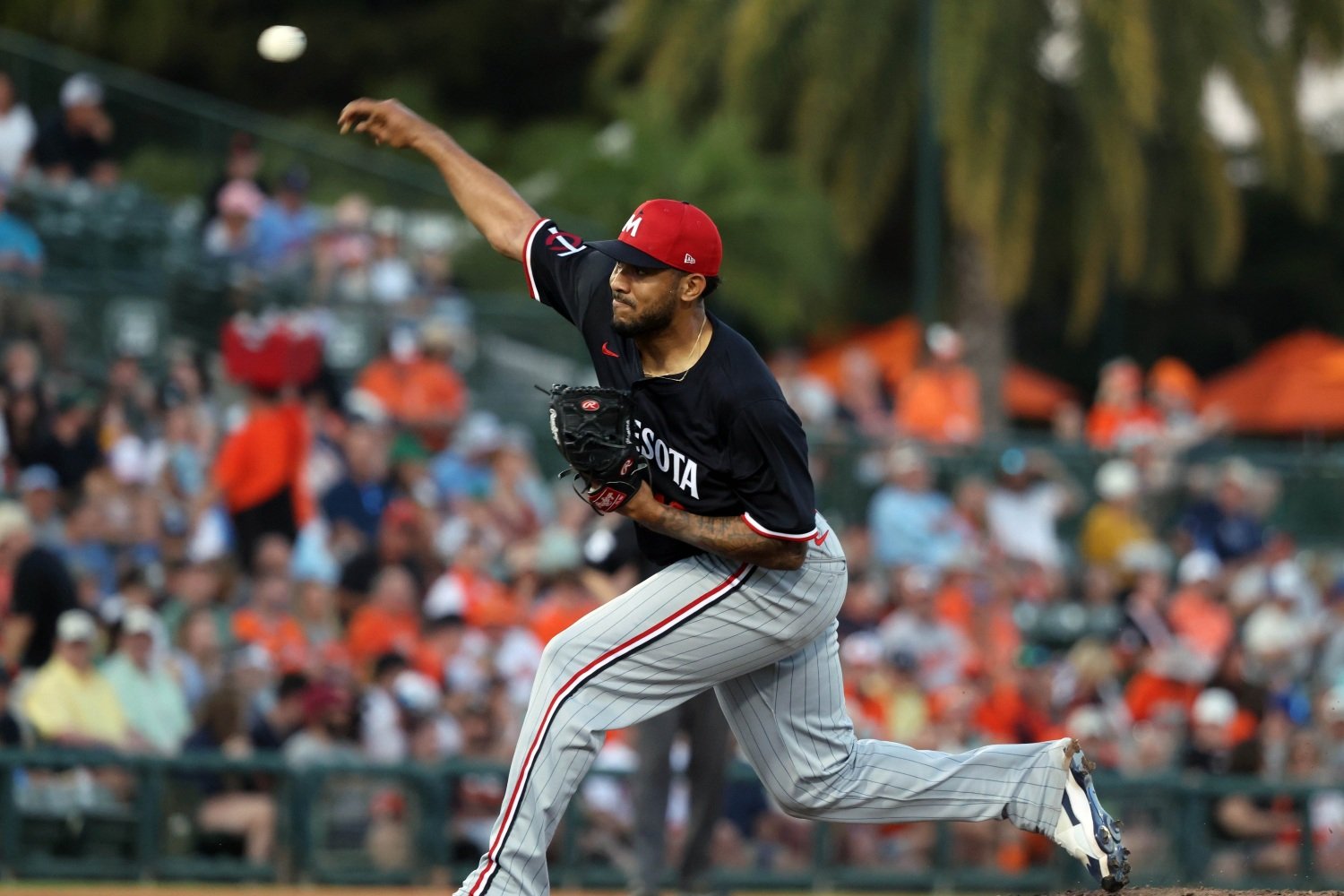 Fewer than 10 games into the 2025 MLB regular season, the Minnesota Twins have already engaged in some desperate roster machinations. Upon tossing 5 1/3 innings on 79 pitches in mop-up duty during the club's third game of the season against the St. Louis Cardinals, veteran pitcher Randy Dobnak was designated for assignment to roster a fresh arm in the eighth bullpen spot. Darren McCaughan was handed Dobnak's spot on the roster. Despite generating a 0.00 ERA and 0.37 FIP through his first 4 2/3 innings pitched, there is reason to suspect the 29-year-old journeyman reliever's days on Minnesota's 26-man roster are numbered. Promoting young, intriguing players on the 40-man roster (like Emmanuel Rodriguez or Travis Adams) would be fascinating. However, the organization values these blossoming talents' long-term outlooks and would prefer not to promote them to inhabit short-term bench or low-leverage relief roles. That being the case, expendable veterans like Dobnak and McCaughan will continue to receive opportunities with the parent club, especially early in the season. Interestingly, the organization possesses several veterans with major-league experience at Triple-A St. Paul, whose contracts could get purchased to inhabit a roster spot with the parent club if injury or emergency depth concerns arise. Which fringe veteran is most likely to join the club in a pinch? Let's take a look: Huascar Ynoa As mentioned earlier, despite impressing early in his 2025 campaign, McCaughan could soon get designated for assignment to make space for a fresh arm in the eight-pitcher bullpen. Veteran relievers Scott Blewett and Anthony Misiewicz are the most talented arms in St. Paul's bullpen. That said, the organization prefers not to purchase either of their contracts until one of their top seven relievers undergoes extended performance concerns or is forced to miss time due to injury. Misiewicz also pitched Sunday for the Saints, so he's not fresh at the moment. The next pitcher who could inhabit the mop-up role in Minnesota's bullpen could be Ynoa. Signed as part of Minnesota's 2014 international signing pool, Ynoa was eventually traded to Atlanta as part of the deal that brought veteran left-handed reliever Jaime García for one (celebrated) start. The young righty would go on to be part of Atlanta's 2021 World Series-winning club, before falling from grace due to extended injury and performance concerns. The now-26-year-old has returned to the Twins organization, albeit in a role with much lower expectations. Given his prior experience as a starter, Ynoa would be able to eat multiple innings in a stretch relief role. Like Dobnak recently did, Ynoa could go unclaimed in the event he is placed on waivers, meaning the club could retain his services throughout the season. The hard-throwing righty's days as a promising starter are behind him. However, there is reason to believe he could transition into a viable major-league reliever, health permitting. Despite not having pitched in the majors since Apr. 18, 2022, Ynoa could make his long-awaited return with the organization that provided him his first affiliated-ball opportunity. Ryan Fitzgerald Last week, Twins Daily's Nick Nelson published an article touching on the club's lack of shortstop depth. In his piece, Nick noted that if Carlos Correa or Willi Castro sustained a substantial injury that forced them to be placed on the injured list, Minnesota would likely be forced to purchase Fitzgerald's contract from the Saints. On Sunday, the club announced that infielder Brooks Lee would begin a rehab assignment with Low-A Fort Myers. Lee will have 20 days to rehabilitate from a lower back issue that kept him off the 26-man Opening Day roster. Yet, he could rejoin the team within the next week-and-a-half to two weeks. Thus, there is a finite window where Fitzgerald could join the Twins and make his MLB debut. Given that Correa or Castro would need to be sidelined for it to occur, those who follow the team would prefer his debut to be delayed as long as possible. Fitzgerald joining Minnesota is an undesirable outcome. That said, there are worse options, and there is reason to believe the 30-year-old career minor-leaguer could patrol shortstop in a pinch. Spending the first five seasons of his professional baseball career in the Boston Red Sox's minor league system, Fitzgerald netted significant playing time at shortstop. He also netted 217 1/3 innings at the position with Kansas City's Triple-A affiliate last season. Again, much would have to go wrong for Fitzgerald to join Minnesota. Yet, if Correa, Castro, or another infielder were forced to miss time in the immediate future, he could join the club until Lee completes his rehab assignment. Mike Ford Having played for three National League and three American League teams over the past six seasons, Ford has generated interleague folk hero status. However, despite being a lovable personality, Twins fans would prefer if the 32-year-old left-handed hitting first baseman/designated hitter never made an appearance with the club. Luckily, those who follow the club will likely get their wish—as long as primary first baseman Ty France remains healthy. Backup first baseman José Miranda has been forced to play exclusively third base or designated hitter to begin the season due to Royce Lewis opening the season on the 15-day IL due to a hamstring strain. Miranda will continue to occupy that role until Lewis returns around mid-May, but having Castro and Edouard Julien around gives him some freedom to slide over to first or be the DH. Switch-hitting infielder Mickey Gasper has become the backup first baseman. If Gasper were to miss time in the immediate future, Julien or Miranda could receive more opportunities at first base. Yet, the club likely wouldn't want to sacrifice the versatility these two bats present at their respective infield positions (second base and third base) and designated hitter. Austin Martin would be a viable candidate to take Gasper's spot. However, if Gasper were expected to miss minimal time or Lee were on the precipice of returning, the club could purchase Ford's contract and reward him with a briefly occupied 26-man roster spot.
- 8 comments
-
- 3
-
-
- huascar ynoa
- ryan fitzgerald
- (and 1 more)



.png.62c82160b004ede68f2e299573e65885.png)
