



Greggory Masterson
-
Posts
819 -
Joined
-
Last visited
-
Days Won
2
Content Type
Profiles
News
Minnesota Twins Videos
2026 Minnesota Twins Top Prospects Ranking
2022 Minnesota Twins Draft Picks
Minnesota Twins Free Agent & Trade Rumors, Notes, & Tidbits
Guides & Resources
2023 Minnesota Twins Draft Picks
The Minnesota Twins Players Project
2024 Minnesota Twins Draft Picks
2025 Minnesota Twins Draft Pick Tracker
2026 Minnesota Twins Draft Tracker: Picks & Bonuses
Forums
Blogs
Events
Store
Downloads
Gallery
Everything posted by Greggory Masterson
-
Sweet Lou and Ol Gregg livestream, discussing the current state of the franchise, prospects, and fan appreciation. Listen using Apple Podcasts: https://podcasts.apple.com/us/podcast/the-twins-off-daily-podcast/id1741266056 Listen using Spotify: https://open.spotify.com/show/4tb78XlurcPTYYSsARdbD7 Listen using iHeartRadio: https://www.iheart.com/podcast/263-the-twins-off-daily-podcas-167548600/ Listen using Pocket Casts: https://pca.st/nvclbt0w Watch on YouTube: https://www.youtube.com/@twinsdaily View full article
-
 I’ve gotten a couple of comments on this, and I agree that the slide has been happening longer than the past decade, but it accelerated a lot in the recent past. And yes, you can cite examples like Kent, Soriano, or someone like Daniel Murphy, but they’re still the exceptions. I wrote a couple years ago about balancing the bat and glove at second to produce value, and I agree. however, the weakest hitting position in baseball this season is second base, implying that good defense is still valued there, probably highly, by most organizations.
- 47 replies
-
- 3
-

-

-
- edouard julien
- jorge polanco
- (and 5 more)
-
The Twins and Second Base Defense: A Match Made in Gehenna
Greggory Masterson posted an article in Twins
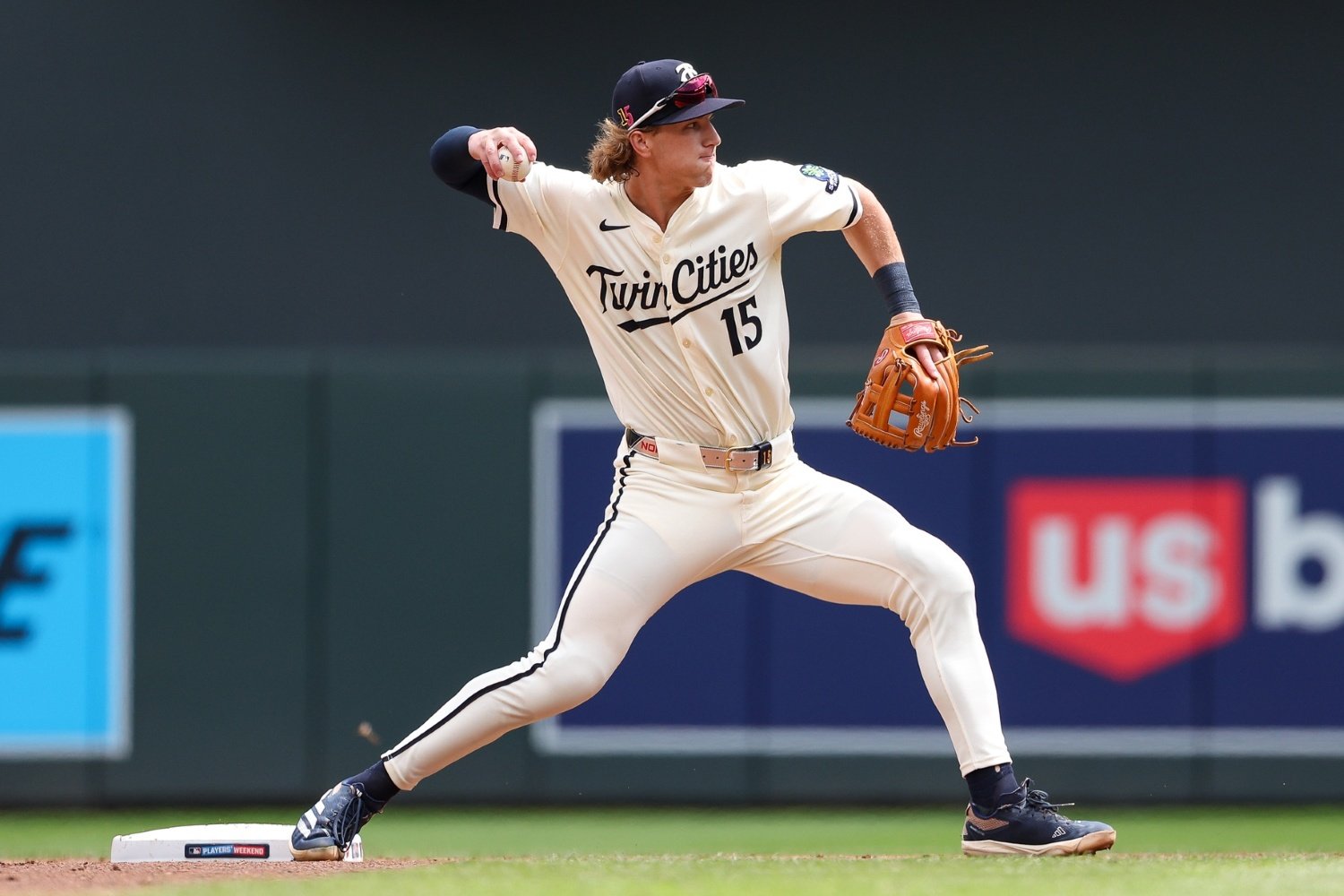 Can you name the 10 players who have played second base for the Minnesota Twins this season? Read to the bottom to see the list. Most of them aren’t very good at it. To answer the initial question (from the teaser about the last time the Twins had a good defender as their everyday second baseman), I’d have to go with the first half of 2019, when Jonathan Schoop patrolled the keystone daily. Since then, it’s been a mess. Although Schoop maintained a lion’s share of the work at second in 2019, the Luis Arraez Era started in May of that year, and by the end of the season, Arraez was seeing the bulk of starts at second base (when he wasn’t patrolling left field). Since then, the Twins have treated Arraez (2019-2020), Jorge Polanco (2021-2023), and Edouard Julien (2023-2024) as their everyday second basemen, and it wasn’t pretty. With the 2021 signing of Andrelton Simmons—who supplanted Polanco at shortstop—the Twins had to make a second base decision between Polanco and Arraez. They elected to stick Polanco at second base every day and allow Arraez to bounce between positions based on need. Technically, Polanco was an upgrade to Arraez, but he was no great asset at second. In mid-2023, the Twins had to make a similar decision between Polanco and Julien, this time electing the one seen as a poorer defender, Julien, to stay at the position. Polanco added third base to his repertoire. Both had to be in the lineup, and it beat moving Julien anywhere else. Julien stuck there for parts of two years, but his defense was so bad that Kyle Farmer had a full-time job just relieving him at the end of games to provide competent defense. Arraez; Polanco; Julien. All three of them are first basemen or designated hitters, now. It’s a bit perplexing, given the history of the second base position. Second base has historically been a spot for light-hitting, good-glove, diminutive players. When constructing a defensive spectrum—ordering the importance of defensive competence necessary for the position—second base has generally been ranked in the top half. Sometimes it’s tied for the middle spot with third base, and it’s consistently ranked below catcher and shortstop, but it’s at times either ahead of or tied with center field. Not so for the Twins in recent years. Instead, they have used the position to stash their best hitters, much like teams often do with left field and first base. There has been a movement in baseball, over the past decade, to rethink the second base position. Names like Mike Moustakas come to mind: power hitters with questionable gloves who can fake it at second base for a while, as their teams enjoy the benefits of having another plus bat in the lineup. The viability of this strategy was dampened with the advent of the 2023 shift ban, though, making it more difficult to hide a poor defender. Moustakas also wasn’t a full-time second baseman, only playing there for an entire campaign in the shortened 2020 season. He wasn’t terrible there. In his 613 innings, he was worth -2 outs above average (OAA) at the position. That doesn’t sound good, but compared to the Twins’ primary second basemen, well, you’d be surprised. Arraez accumulated -15 OAA across 1,248 innings at second base as a Twin, and Polanco wasn’t much better, racking up -16 OAA over 2,273 innings after sliding into the position. At the pace Moustakas accumulated OAA, he would have had -4 with Arraez’s innings and -8 with Polanco’s. Julien has played 1,343 innings at second base and comes in at -9 OAA, about in line with Polanco at half the innings and better than Arraez with about the same number of innings—though still worse than the Moustakas benchmark. And remember, zero is average. Beyond the quick turnover among the everyday players, the Twins have also gone a year and a half without an everyday second baseman, which again suggests the left-fieldification of the position in Minnesota. Hopefully, the emergence of Luke Keaschall will bring new stability to the position, but he has also looked shaky in the field. Much of that may be attributed to not playing in the field much over the past calendar year due to a UCL tear and broken arm, so it’s too early to assume he’ll be rough, but in his first 276 innings, he’s already been worth -2 OAA. That’s only about 30 games' worth of time, so don’t overreact, but if that sort of play continues, so will the shakiness of one of the most important defensive positions for your Minnesota Twins. Other players to have played the position since 2019 with any level of semi-regularity include middle-of-the-pack (or worse) defenders Willi Castro (2023-2025, 522 innings, -1 OAA), Nick Gordon (2021-2023, 431 innings, 1 OAA), Brooks Lee (2024-2025, 319 innings, -3 OAA), Kody Clemens (2025, 280 innings, 1 OAA), and Donovan Solano (2023, 117 innings, -1 OAA). The only two Twins defenders since Schoop (983 innings, 4 OAA) to show any hint of above-average defense at second were Farmer (2023-2024, 586 innings, 5 OAA) and Marwin Gonzalez (2019-2020, 184 innings, 3 OAA). Of course, defensive statistics are messy, and you can quibble with them, but OAA’s assessment lines up with the eye test for most (if not all) of the players listed above. It’s perplexing. For the better part of a decade, the position has essentially been left field 2.0, where defense is often overlooked and players tend to stay for only a short time. Many Twins players have been earmarked as second basemen, which may explain some of the turnover—in part because shortstop and third base have been more locked down this decade—but it’s been a revolving door of poor defenders who can sometimes (actually, I’ll give them this, it’s been most of the time) hit well. They’ve even tried Mickey Gasper there, for crying out loud. This may speak to an organizational philosophy, downplaying the importance of second base defense, a lack of development of infield skills, poor scouting, or a combination of all three. Who knows? I just saw Austin Martin starting a game at second last week, and it got me thinking about the question in the teaser—when is the last time the Twins had a good defensive everyday second baseman? Maybe the better one is: When will they have one again? Oh, and to answer the question, here are the Twins to have played second base this year, from most appearances to least: Clemens, Castro, Lee, Keaschall, Julien, Jonah Bride, Ryan Fitzgerald, Martin, Gasper, Ty France. No Royce Lewis, at least not yet. Admit it, though: you'd forgotten Jonah Bride ever existed.
- 47 comments
-
- 8
-

-
-
- edouard julien
- jorge polanco
- (and 5 more)
-
Image courtesy of © Matt Krohn-Imagn Images Can you name the 10 players who have played second base for the Minnesota Twins this season? Read to the bottom to see the list. Most of them aren’t very good at it. To answer the initial question (from the teaser about the last time the Twins had a good defender as their everyday second baseman), I’d have to go with the first half of 2019, when Jonathan Schoop patrolled the keystone daily. Since then, it’s been a mess. Although Schoop maintained a lion’s share of the work at second in 2019, the Luis Arraez Era started in May of that year, and by the end of the season, Arraez was seeing the bulk of starts at second base (when he wasn’t patrolling left field). Since then, the Twins have treated Arraez (2019-2020), Jorge Polanco (2021-2023), and Edouard Julien (2023-2024) as their everyday second basemen, and it wasn’t pretty. With the 2021 signing of Andrelton Simmons—who supplanted Polanco at shortstop—the Twins had to make a second base decision between Polanco and Arraez. They elected to stick Polanco at second base every day and allow Arraez to bounce between positions based on need. Technically, Polanco was an upgrade to Arraez, but he was no great asset at second. In mid-2023, the Twins had to make a similar decision between Polanco and Julien, this time electing the one seen as a poorer defender, Julien, to stay at the position. Polanco added third base to his repertoire. Both had to be in the lineup, and it beat moving Julien anywhere else. Julien stuck there for parts of two years, but his defense was so bad that Kyle Farmer had a full-time job just relieving him at the end of games to provide competent defense. Arraez; Polanco; Julien. All three of them are first basemen or designated hitters, now. It’s a bit perplexing, given the history of the second base position. Second base has historically been a spot for light-hitting, good-glove, diminutive players. When constructing a defensive spectrum—ordering the importance of defensive competence necessary for the position—second base has generally been ranked in the top half. Sometimes it’s tied for the middle spot with third base, and it’s consistently ranked below catcher and shortstop, but it’s at times either ahead of or tied with center field. Not so for the Twins in recent years. Instead, they have used the position to stash their best hitters, much like teams often do with left field and first base. There has been a movement in baseball, over the past decade, to rethink the second base position. Names like Mike Moustakas come to mind: power hitters with questionable gloves who can fake it at second base for a while, as their teams enjoy the benefits of having another plus bat in the lineup. The viability of this strategy was dampened with the advent of the 2023 shift ban, though, making it more difficult to hide a poor defender. Moustakas also wasn’t a full-time second baseman, only playing there for an entire campaign in the shortened 2020 season. He wasn’t terrible there. In his 613 innings, he was worth -2 outs above average (OAA) at the position. That doesn’t sound good, but compared to the Twins’ primary second basemen, well, you’d be surprised. Arraez accumulated -15 OAA across 1,248 innings at second base as a Twin, and Polanco wasn’t much better, racking up -16 OAA over 2,273 innings after sliding into the position. At the pace Moustakas accumulated OAA, he would have had -4 with Arraez’s innings and -8 with Polanco’s. Julien has played 1,343 innings at second base and comes in at -9 OAA, about in line with Polanco at half the innings and better than Arraez with about the same number of innings—though still worse than the Moustakas benchmark. And remember, zero is average. Beyond the quick turnover among the everyday players, the Twins have also gone a year and a half without an everyday second baseman, which again suggests the left-fieldification of the position in Minnesota. Hopefully, the emergence of Luke Keaschall will bring new stability to the position, but he has also looked shaky in the field. Much of that may be attributed to not playing in the field much over the past calendar year due to a UCL tear and broken arm, so it’s too early to assume he’ll be rough, but in his first 276 innings, he’s already been worth -2 OAA. That’s only about 30 games' worth of time, so don’t overreact, but if that sort of play continues, so will the shakiness of one of the most important defensive positions for your Minnesota Twins. Other players to have played the position since 2019 with any level of semi-regularity include middle-of-the-pack (or worse) defenders Willi Castro (2023-2025, 522 innings, -1 OAA), Nick Gordon (2021-2023, 431 innings, 1 OAA), Brooks Lee (2024-2025, 319 innings, -3 OAA), Kody Clemens (2025, 280 innings, 1 OAA), and Donovan Solano (2023, 117 innings, -1 OAA). The only two Twins defenders since Schoop (983 innings, 4 OAA) to show any hint of above-average defense at second were Farmer (2023-2024, 586 innings, 5 OAA) and Marwin Gonzalez (2019-2020, 184 innings, 3 OAA). Of course, defensive statistics are messy, and you can quibble with them, but OAA’s assessment lines up with the eye test for most (if not all) of the players listed above. It’s perplexing. For the better part of a decade, the position has essentially been left field 2.0, where defense is often overlooked and players tend to stay for only a short time. Many Twins players have been earmarked as second basemen, which may explain some of the turnover—in part because shortstop and third base have been more locked down this decade—but it’s been a revolving door of poor defenders who can sometimes (actually, I’ll give them this, it’s been most of the time) hit well. They’ve even tried Mickey Gasper there, for crying out loud. This may speak to an organizational philosophy, downplaying the importance of second base defense, a lack of development of infield skills, poor scouting, or a combination of all three. Who knows? I just saw Austin Martin starting a game at second last week, and it got me thinking about the question in the teaser—when is the last time the Twins had a good defensive everyday second baseman? Maybe the better one is: When will they have one again? Oh, and to answer the question, here are the Twins to have played second base this year, from most appearances to least: Clemens, Castro, Lee, Keaschall, Julien, Jonah Bride, Ryan Fitzgerald, Martin, Gasper, Ty France. No Royce Lewis, at least not yet. Admit it, though: you'd forgotten Jonah Bride ever existed. View full article
-
I can’t believe you haven’t had the privilege of meeting Marlins Man
-
Image courtesy of © Bruce Kluckhohn-Imagn Images At the onset, I want to make myself clear; I love my favorite baseball team, and I’m not being malicious or trying to rub the organization’s nose in it. I had the thought a few weeks ago, and I’ve been turning it over in my head. If you consider how involved each team is in the modern baseball landscape, their history as a franchise, and how prominent they are in the culture, I think that the Twins are the least relevant team in baseball. Please understand, I don’t mean the worst team in baseball, or the worst organization in baseball history. I mean: If you were to start talking about baseball with a stranger, how long would the conversation go before the Minnesota Twins were mentioned? The Colorado Rockies are more notable than the Twins right now, for instance, because their losing ways are so extreme. You could probably throw the West Sacramento Athletics, Chicago White Sox, and Pittsburgh Pirates into that pile, as well—they’re so bad that they’re relevant. There's relocation intrigue in one place, and the specter of a wasted generational megastar in another. On the flip side, obviously, there are a ton of teams who are clearly more relevant to baseball than the Twins, based on historical success, their market size, or any other unsubtle reasons. The Braves and Cubs, America’s national cable teams, fall under that category. So do the historically entrenched Boston Red Sox, Los Angeles Dodgers, New York Yankees, and Philadelphia Phillies. Some combination of market size, history, and recent success also exclude the Houston Astros, New York Mets, St. Louis Cardinals, and San Francisco Giants. There are some less successful teams and prominent teams that are also, nonetheless, more central to the conversation than the Twins. For instance, despite their recent struggles, the Detroit Tigers and Baltimore Orioles (even if these aren’t the original Orioles) carry a certain legacy as the current iterations of original American League teams. The Texas Rangers, without their recent World Series, may be in a similar relevancy class as the Twins, but it’s hard to ignore a Commissioner’s Trophy awarded in the past five years. Dallas-Ft. Worth is also an enormous market, even if it doesn't always feel like one in the baseball world. Likewise, their opponents in that series (the Arizona Diamondbacks) were vaulted a bit more into the spotlight. They’re also helped by their success in the recent past—and an iconic look. In the modern game, the attachment of spring training to Arizona also makes the growing Phoenix area play up as a baseball market. When baseball things happen there, they leave a heavier footprint in the national conversation than the sheer market size might imply. It’s not just about how good or bad the team is when we’re talking about relevance. The iconography of the Diamondbacks franchise, especially in their 1990s teal and purple, has staying power. The Milwaukee Brewers’ iconic ball-and-glove logo, the Florida Marlins’ teal caps, the Athletics’ Kelly greens, the Padres’ brown, the Royals’ baby blue. There are certain logos, insignias, and color schemes that lock into fans’ heads—and even the general population’s. The Twins do not have that type of staying power. The Twins’ 'TC' and 'M' are not fashion statements, like the classic Yankees or Mets 'NY', Dodgers 'LA' (formerly, 'B', or even the White Sox 'SOX' or the Pirates 'P'. This isn't because the logos aren't good, exactly. Maybe the problem is having gotten caught in between, and now using two different cap and cornerstone logos so evenly. Either way, the brand is diminished. With the exception of City Connect uniforms, all of the teams listed above wear the same logo on their cap every night. So, what do the Twins bring to the table? I think we’ve spent enough time on high fashion, but I hope that what I’m trying to say about cultural consciousness is getting through. They have been successful in the worst division in baseball over the last quarter-century. They won two World Series in 1987 and 1991. They have a handful of Hall of Famers wearing their caps—Harmon Killebrew, Tony Oliva, Rod Carew, Bert Blyleven, Kirby Puckett, Jim Kaat and Joe Mauer. With the exception of Carew, though, it’s a group that doesn’t get brought up often. They had a few stars in their recent past—Byron Buxton, Carlos Correa, Mauer, Justin Morneau, and Johan Santana likely being the most prominent. But you know who the most famous Minnesota Twin of the 21st century is, for most of the world's baseball fans? David Ortiz. They haven’t been great recently, but they haven’t been comically bad, either—at least since the 2011-2016 run that placed them at the bottom of the American League. They have existed for a while in a middle ground that doesn’t command much attention. Even their 0-18 playoff losing streak isn’t a talker anymore, now that it's over. The Mariners and Pirates can tell you how quickly the extra notes in national columns and the buzz from other fan bases die down, once you go from an active streak of historical playoff absence or anguish to a merely recent one. I’ll speedrun the teams I feel are in contention for the most irrelevant team in baseball, and why I think they’re more relevant than the Twins. The San Diego Padres are one of the most exciting teams in baseball right now. The Cincinnati Reds are the “first” professional baseball team, they have an iconic look, they had a great Big Red Machine run, and they once employed Ken Griffey Jr. They also currently employ Elly De La Cruz, an objectively worse version of Buxton but a much more famous player, which is illustrative. The Washington Nationals play baseball in the nation’s capital, but they’re probably close to the Twins in relevance, if you ignore their recent World Series and their Expos history. They have a chance to tumble into the cellar in this regard, but it hasn't happened yet. The Angels are on the Twins’ level of recent success, but they recently employed the best two players in baseball (and still have one of them, a surefire, utterly fascinating future Hall of Famer), making them a national punchline, and they even had a more popular children’s movie than Little Big League. (We all know Little Big League is a better movie, but we're matching up Luke Edwards and Timothy Busfield against Joseph Gordon-Levitt and Danny Glover, here.) They also play in a huge market and are a semi-serious threat to sign a big free agent every winter. I like to think of the Milwaukee Brewers as a sister team to the Twins, matching their lack of historic success and star power (Robin Yount, Paul Molitor, and Ryan Braun stack up pretty evenly with Killebrew, Puckett, and Mauer), but they’re much more successful right now and boast an iconic logo. They're going to draw over 2.5 million fans to the park this year, not counting some October sellouts. The Miami Marlins and Tampa Bay Rays also live in the Twins’ domain. However, their newness (and some bold fashion choices in the short history of each) plays in their favor. The Marlins have been so bad that they’re relevant—and have still won two World Series more recently than Minnesota. Tampa Bay has current events (their ballpark being damaged), recent success, and narratives about analytics attached to them. There are a lot of similarities between the Blue Jays and Twins, but it’s probably a little egocentric to pretend that an entire country’s only team is less relevant than one of the medium-market US-based teams, and they certainly have more star power, with Vladimir Guerrero Jr. Even if half of Canada rejected the Jays as merely Toronto's or Ontario's team, that's a big-market behemoth. And they, too, have two World Series wins more recent than the Twins'. Within the division, Cleveland and Kansas City seem to be the best contenders for least relevant team in baseball. However, Cleveland was the subject of perhaps the most famous baseball movie of all time; have been more successful in the recent past; and have been the subject of national debate over their name for decades. (Not all relevance is good relevance, but it's a thing.) They also have the longest World Series drought, by far, dating back to 1948. That's a narrative that will capture attention every time they're good. The Twins, Orioles (last title: 1983) and Pirates (1979) haven't yet reached that level where the losing becomes part of the lore. Kansas City would probably best Minnesota, but they did win a World Series in the past decade, and like I said above, they have an iconic look. They also have Bobby Witt Jr., and while they haven't yet secured funding for it, a new ballpark is on the horizon. If there’s an American League sister organization to the Twins, it’s the Mariners. They have both struggled to have any postseason success for decades, and they exist in secondary markets. But the star power associated with the Mariners, such as Randy Johnson, Alex Rodriguez, Ichiro, or Griffey, far outshines the Twins. Their teal is iconic, and they’re more involved in the national discussion, whether that’s in their MVP candidate Cal Raleigh or their yearly high-profile fight against the Astros and Rangers for a playoff berth. The Twins' best case for national relevancy, at least since they were knocked out of the postseason in 2023, was when they were up for sale. Now, even that bit of intrigue has been canceled—not consummated, but called off. There's no way to become more invisible to the baseball world than to not pay off even when you do promise something of interest. But that’s just my opinion. How wrong am I? Do you think the Twins are more top of mind than any other franchise? I appeared on Locked On Twins with Brandon Warne to discuss this topic a few weeks ago, if you'd like to give it a listen. View full article
-
Are the Minnesota Twins the Least Relevant Team in Baseball?
Greggory Masterson posted an article in Twins
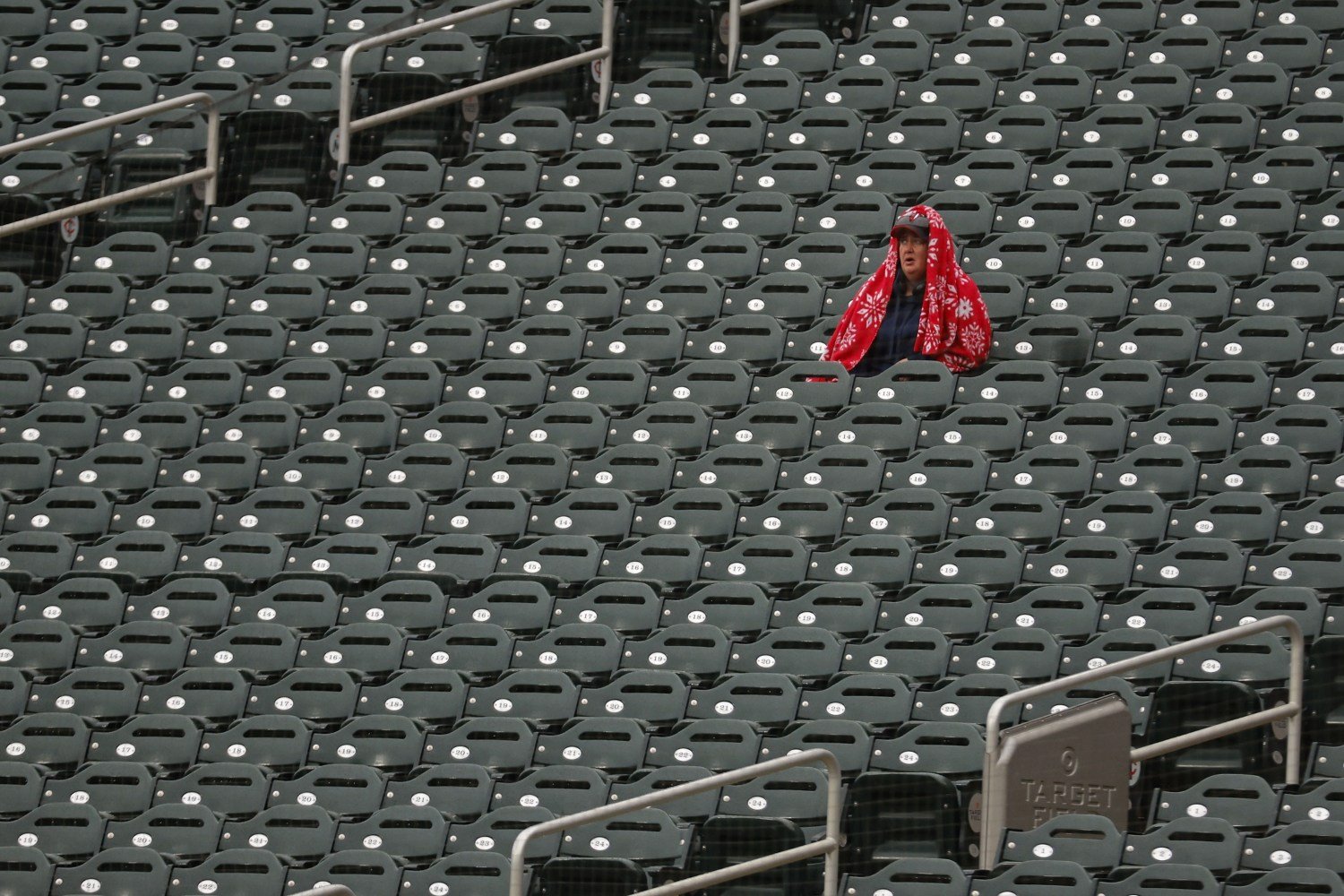 At the onset, I want to make myself clear; I love my favorite baseball team, and I’m not being malicious or trying to rub the organization’s nose in it. I had the thought a few weeks ago, and I’ve been turning it over in my head. If you consider how involved each team is in the modern baseball landscape, their history as a franchise, and how prominent they are in the culture, I think that the Twins are the least relevant team in baseball. Please understand, I don’t mean the worst team in baseball, or the worst organization in baseball history. I mean: If you were to start talking about baseball with a stranger, how long would the conversation go before the Minnesota Twins were mentioned? The Colorado Rockies are more notable than the Twins right now, for instance, because their losing ways are so extreme. You could probably throw the West Sacramento Athletics, Chicago White Sox, and Pittsburgh Pirates into that pile, as well—they’re so bad that they’re relevant. There's relocation intrigue in one place, and the specter of a wasted generational megastar in another. On the flip side, obviously, there are a ton of teams who are clearly more relevant to baseball than the Twins, based on historical success, their market size, or any other unsubtle reasons. The Braves and Cubs, America’s national cable teams, fall under that category. So do the historically entrenched Boston Red Sox, Los Angeles Dodgers, New York Yankees, and Philadelphia Phillies. Some combination of market size, history, and recent success also exclude the Houston Astros, New York Mets, St. Louis Cardinals, and San Francisco Giants. There are some less successful teams and prominent teams that are also, nonetheless, more central to the conversation than the Twins. For instance, despite their recent struggles, the Detroit Tigers and Baltimore Orioles (even if these aren’t the original Orioles) carry a certain legacy as the current iterations of original American League teams. The Texas Rangers, without their recent World Series, may be in a similar relevancy class as the Twins, but it’s hard to ignore a Commissioner’s Trophy awarded in the past five years. Dallas-Ft. Worth is also an enormous market, even if it doesn't always feel like one in the baseball world. Likewise, their opponents in that series (the Arizona Diamondbacks) were vaulted a bit more into the spotlight. They’re also helped by their success in the recent past—and an iconic look. In the modern game, the attachment of spring training to Arizona also makes the growing Phoenix area play up as a baseball market. When baseball things happen there, they leave a heavier footprint in the national conversation than the sheer market size might imply. It’s not just about how good or bad the team is when we’re talking about relevance. The iconography of the Diamondbacks franchise, especially in their 1990s teal and purple, has staying power. The Milwaukee Brewers’ iconic ball-and-glove logo, the Florida Marlins’ teal caps, the Athletics’ Kelly greens, the Padres’ brown, the Royals’ baby blue. There are certain logos, insignias, and color schemes that lock into fans’ heads—and even the general population’s. The Twins do not have that type of staying power. The Twins’ 'TC' and 'M' are not fashion statements, like the classic Yankees or Mets 'NY', Dodgers 'LA' (formerly, 'B', or even the White Sox 'SOX' or the Pirates 'P'. This isn't because the logos aren't good, exactly. Maybe the problem is having gotten caught in between, and now using two different cap and cornerstone logos so evenly. Either way, the brand is diminished. With the exception of City Connect uniforms, all of the teams listed above wear the same logo on their cap every night. So, what do the Twins bring to the table? I think we’ve spent enough time on high fashion, but I hope that what I’m trying to say about cultural consciousness is getting through. They have been successful in the worst division in baseball over the last quarter-century. They won two World Series in 1987 and 1991. They have a handful of Hall of Famers wearing their caps—Harmon Killebrew, Tony Oliva, Rod Carew, Bert Blyleven, Kirby Puckett, Jim Kaat and Joe Mauer. With the exception of Carew, though, it’s a group that doesn’t get brought up often. They had a few stars in their recent past—Byron Buxton, Carlos Correa, Mauer, Justin Morneau, and Johan Santana likely being the most prominent. But you know who the most famous Minnesota Twin of the 21st century is, for most of the world's baseball fans? David Ortiz. They haven’t been great recently, but they haven’t been comically bad, either—at least since the 2011-2016 run that placed them at the bottom of the American League. They have existed for a while in a middle ground that doesn’t command much attention. Even their 0-18 playoff losing streak isn’t a talker anymore, now that it's over. The Mariners and Pirates can tell you how quickly the extra notes in national columns and the buzz from other fan bases die down, once you go from an active streak of historical playoff absence or anguish to a merely recent one. I’ll speedrun the teams I feel are in contention for the most irrelevant team in baseball, and why I think they’re more relevant than the Twins. The San Diego Padres are one of the most exciting teams in baseball right now. The Cincinnati Reds are the “first” professional baseball team, they have an iconic look, they had a great Big Red Machine run, and they once employed Ken Griffey Jr. They also currently employ Elly De La Cruz, an objectively worse version of Buxton but a much more famous player, which is illustrative. The Washington Nationals play baseball in the nation’s capital, but they’re probably close to the Twins in relevance, if you ignore their recent World Series and their Expos history. They have a chance to tumble into the cellar in this regard, but it hasn't happened yet. The Angels are on the Twins’ level of recent success, but they recently employed the best two players in baseball (and still have one of them, a surefire, utterly fascinating future Hall of Famer), making them a national punchline, and they even had a more popular children’s movie than Little Big League. (We all know Little Big League is a better movie, but we're matching up Luke Edwards and Timothy Busfield against Joseph Gordon-Levitt and Danny Glover, here.) They also play in a huge market and are a semi-serious threat to sign a big free agent every winter. I like to think of the Milwaukee Brewers as a sister team to the Twins, matching their lack of historic success and star power (Robin Yount, Paul Molitor, and Ryan Braun stack up pretty evenly with Killebrew, Puckett, and Mauer), but they’re much more successful right now and boast an iconic logo. They're going to draw over 2.5 million fans to the park this year, not counting some October sellouts. The Miami Marlins and Tampa Bay Rays also live in the Twins’ domain. However, their newness (and some bold fashion choices in the short history of each) plays in their favor. The Marlins have been so bad that they’re relevant—and have still won two World Series more recently than Minnesota. Tampa Bay has current events (their ballpark being damaged), recent success, and narratives about analytics attached to them. There are a lot of similarities between the Blue Jays and Twins, but it’s probably a little egocentric to pretend that an entire country’s only team is less relevant than one of the medium-market US-based teams, and they certainly have more star power, with Vladimir Guerrero Jr. Even if half of Canada rejected the Jays as merely Toronto's or Ontario's team, that's a big-market behemoth. And they, too, have two World Series wins more recent than the Twins'. Within the division, Cleveland and Kansas City seem to be the best contenders for least relevant team in baseball. However, Cleveland was the subject of perhaps the most famous baseball movie of all time; have been more successful in the recent past; and have been the subject of national debate over their name for decades. (Not all relevance is good relevance, but it's a thing.) They also have the longest World Series drought, by far, dating back to 1948. That's a narrative that will capture attention every time they're good. The Twins, Orioles (last title: 1983) and Pirates (1979) haven't yet reached that level where the losing becomes part of the lore. Kansas City would probably best Minnesota, but they did win a World Series in the past decade, and like I said above, they have an iconic look. They also have Bobby Witt Jr., and while they haven't yet secured funding for it, a new ballpark is on the horizon. If there’s an American League sister organization to the Twins, it’s the Mariners. They have both struggled to have any postseason success for decades, and they exist in secondary markets. But the star power associated with the Mariners, such as Randy Johnson, Alex Rodriguez, Ichiro, or Griffey, far outshines the Twins. Their teal is iconic, and they’re more involved in the national discussion, whether that’s in their MVP candidate Cal Raleigh or their yearly high-profile fight against the Astros and Rangers for a playoff berth. The Twins' best case for national relevancy, at least since they were knocked out of the postseason in 2023, was when they were up for sale. Now, even that bit of intrigue has been canceled—not consummated, but called off. There's no way to become more invisible to the baseball world than to not pay off even when you do promise something of interest. But that’s just my opinion. How wrong am I? Do you think the Twins are more top of mind than any other franchise? I appeared on Locked On Twins with Brandon Warne to discuss this topic a few weeks ago, if you'd like to give it a listen.
 -
Sweet Lou and Ol Gregg assess some carnage, answer some pre-submitted mailbag questions, and react to some listener comments live! There's even a brand-new segment. Listen using Apple Podcasts: https://podcasts.apple.com/us/podcast/the-twins-off-daily-podcast/id1741266056 Listen using Spotify: https://open.spotify.com/show/4tb78XlurcPTYYSsARdbD7 Listen using iHeartRadio: https://www.iheart.com/podcast/263-the-twins-off-daily-podcas-167548600/ Listen using Pocket Casts: https://pca.st/nvclbt0w Watch on YouTube: https://www.youtube.com/@twinsdaily View full article
-
 Sweet Lou and Ol Gregg assess some carnage, answer some pre-submitted mailbag questions, and react to some listener comments live! There's even a brand-new segment. Listen using Apple Podcasts: https://podcasts.apple.com/us/podcast/the-twins-off-daily-podcast/id1741266056 Listen using Spotify: https://open.spotify.com/show/4tb78XlurcPTYYSsARdbD7 Listen using iHeartRadio: https://www.iheart.com/podcast/263-the-twins-off-daily-podcas-167548600/ Listen using Pocket Casts: https://pca.st/nvclbt0w Watch on YouTube: https://www.youtube.com/@twinsdaily
 -
David Festa's Fork in the Road: Rotation Depth or Twins Next Closer?
Greggory Masterson posted an article in Twins
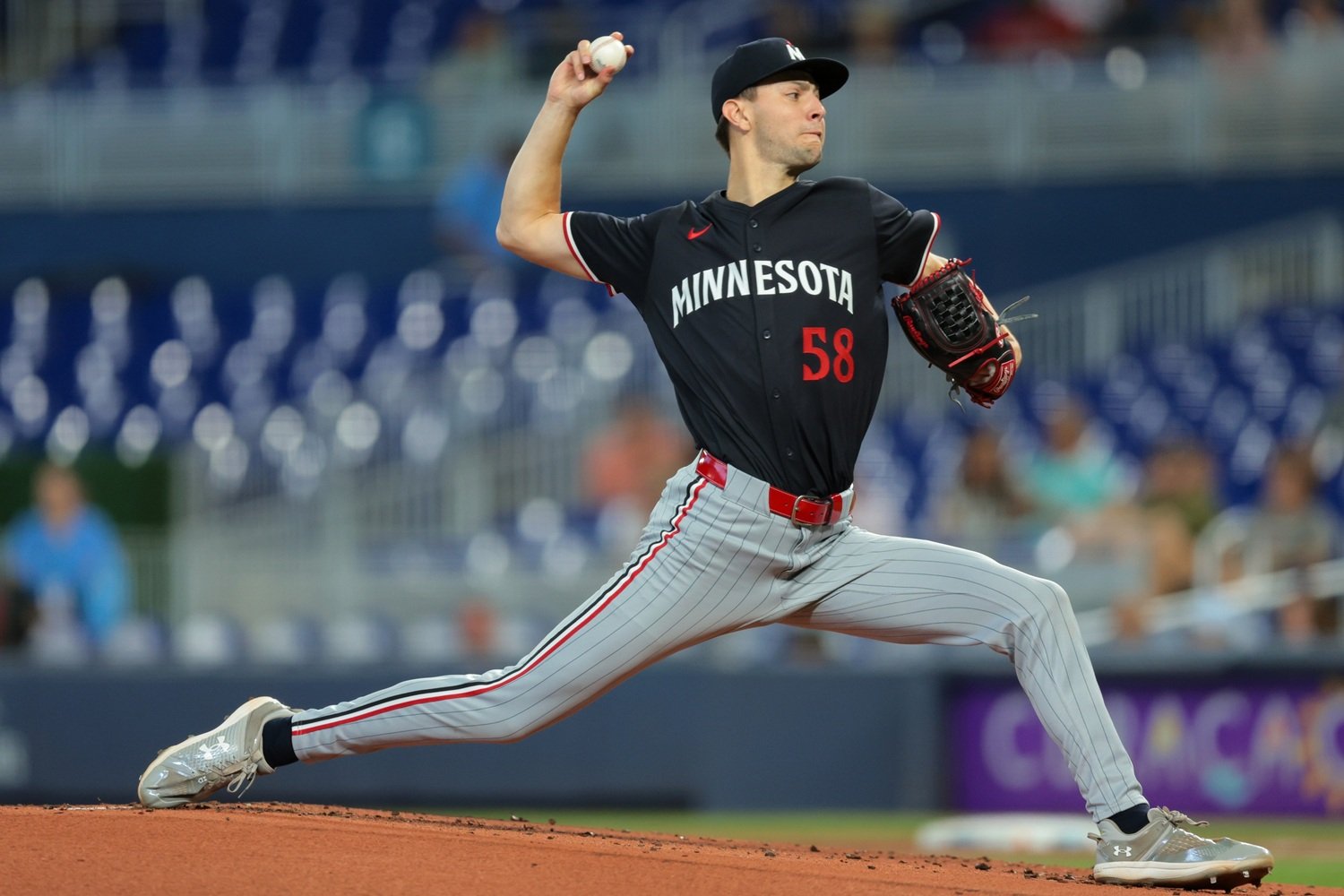 David Festa is one of a handful of Twins’ pitching draft success stories. Although fans may disagree regarding how effective or promising Festa is, taking a player in the 13th round and turning him into an MLB pitcher at all is a success. Festa rose quickly through the Twins system, racing through both levels of Class A in 2022, then Double-A and Triple-A in 2023 after being an unheralded 2021 draft pick. At the time of his call-up to the majors in 2024, he was a top five organizational prospect and was appearing on global Top 100 lists. There was a lot of hope that he could help restock the rotation after the departures of Sonny Gray and Kenta Maeda. And there still are Festa fanatics today. It’s not like he’s been a disappointment. It’s been rocky for the greenhorn, with a 5.12 ERA (83 ERA+) for the Twins across 117 2/3 innings in 2024 and 2025, but he’s shown flashes that can excite. He has three usable pitches—a plus four seamer that can reach the high-90s but sits 95, a plus slider, and a serviceable changeup. He has also attempted to add a sinker to diversify his pitch mix, though it’s more of a show-me offering that’s gotten hit hard and doesn’t grade well. There is legitimate reason to remain excited, or at least hopeful for Festa as a starter. As noted, he’s not been a disaster and he has less than a full season of MLB starting under his belt in sporadic action, as he’s yo-yoed several times between the Twins and St. Paul over the past two years. However, he has some factors working against his long-term outlook as a starter, including a couple of red flags that threaten THIS GUY IS A RELIEVER stamp. First, Festa has struggled to pitch deep into games with any regularity. Now, this isn’t some anomaly. Pitchers getting their first taste of the majors aren’t given free rein to rack up innings. They’re generally guided along, only biting off a bit of the game at a time. Festa himself is only averaging about four and two-thirds innings per start, completing a full five innings in thirteen of his twenty-five big league starts. Again, that’s not some travesty for a guy with 25 big league starts, but there’s more. Part of the reason is that Festa only makes it through five innings in about half of his starts. He struggles seeing offenses more than once. The first time through the order, Festa is excellent, holding hitters to a .498 OPS. The second time, though? A .909 OPS. Some of this can be attributed to youth and inexperience navigating an MLB lineup, but some can be chalked up to a limited pitch mix. It’s hard to fool hitters twice or three times when you have three (and a half) options to get them out. Whatever the case, though, it’s been an issue, and it’s easy for any armchair stat line scout to point at that and say, “What if he didn’t have to face hitters a second time? It's worked for Griffin Jax.” The second factor is his arm health. Festa has thrown just 82 innings this season, having lost about two months to shoulder inflammation and arm fatigue. It’s not some death sentence on his starter outlook, but having two arm injuries in a year isn’t encouraging, especially injuries that seem to be from normal use (obviously, most injuries are from normal use, but you know what I mean). When pitchers become relievers, it’s typically because they can’t rack up innings, either because of effectiveness or health, and Festa seems to be going down that path. Neither of these factors are damning at this point, but there are also a couple external factors that might expedite the process of the Twins altering course on Festa—and they’re related. First, the team needs relievers. After trading away six of the projected top seven relief arms during the season (I didn’t forget you, Jorge Alcala), there are nothing but holes in the bullpen. Seemingly only Cole Sands and Justin Topa have a better than 50% chance of being in the 2026 pen. Pitchers who might otherwise have been on a starter trajectory might be heading out to the bullpen out of necessity. That’s not necessarily a good thing. Starters are more valuable than relievers (see the Griffin Jax-Taj Bradley trade). Teams don’t want to give up on their starters. But hey, if it’s between that and spending $25 million on veteran free agent relievers, it’s hard not to at least consider it. Second, the rotation is crowded right now. Trade can disrupt that, but right now Pablo López, Joe Ryan, and Bailey Ober are written into the rotation, Zebby Matthews seems an almost-lock, and the fifth spot will be between Festa, Simeon Woods Richardson, and newcomers Mick Abel and Bradley. Even after a trade, Festa may be on the outside looking in. Granted, the Twins like to stockpile MLB-ready pitching depth at Triple-A, and Festa has been one of the first men up in both 2024 and 2025. But with all those names, plus a handful of other Triple-A names who could also step in if needed, Festa moving to the pen (and even one of the other names, too) would release a lot of pressure in the crowded room. Put another way, the Twins are in a position to sacrifice some depth if it helps their dilapidated pen. And how would Festa be? Well, it’s hard to say. But he has some traits prevent the title of this article from being too hyperbolic. Obviously, as already mentioned, he’s been terrific the first time through the order. That alone is enough to start the wheel in your head. Why not see if that early-game success can translate into late-game success? His three-pitch mix plays much better out of the pen, especially if he can hump it up for 20 pitches at a time. It’s not unreasonable to believe that his mid-90s fastball could transform into an offering that sits in the high 90s, and it would enable him to lean more into his wipeout slider and rely less on his average changeup and weak sinker. There are always his control problems, but this is one of those cookie-cutter cases that baseball has seen time and time again. Next year will be his age-26 season, so it’s about time for the Twins to pick a lane with him, and it’s not unreasonable to expect that Festa might spend it pitching the late innings for your hometown nine.
- 24 comments
-
- 12
-
-
-
- david festa
- griffin jax
- (and 4 more)
-
Image courtesy of © Sam Navarro-Imagn Images David Festa is one of a handful of Twins’ pitching draft success stories. Although fans may disagree regarding how effective or promising Festa is, taking a player in the 13th round and turning him into an MLB pitcher at all is a success. Festa rose quickly through the Twins system, racing through both levels of Class A in 2022, then Double-A and Triple-A in 2023 after being an unheralded 2021 draft pick. At the time of his call-up to the majors in 2024, he was a top five organizational prospect and was appearing on global Top 100 lists. There was a lot of hope that he could help restock the rotation after the departures of Sonny Gray and Kenta Maeda. And there still are Festa fanatics today. It’s not like he’s been a disappointment. It’s been rocky for the greenhorn, with a 5.12 ERA (83 ERA+) for the Twins across 117 2/3 innings in 2024 and 2025, but he’s shown flashes that can excite. He has three usable pitches—a plus four seamer that can reach the high-90s but sits 95, a plus slider, and a serviceable changeup. He has also attempted to add a sinker to diversify his pitch mix, though it’s more of a show-me offering that’s gotten hit hard and doesn’t grade well. There is legitimate reason to remain excited, or at least hopeful for Festa as a starter. As noted, he’s not been a disaster and he has less than a full season of MLB starting under his belt in sporadic action, as he’s yo-yoed several times between the Twins and St. Paul over the past two years. However, he has some factors working against his long-term outlook as a starter, including a couple of red flags that threaten THIS GUY IS A RELIEVER stamp. First, Festa has struggled to pitch deep into games with any regularity. Now, this isn’t some anomaly. Pitchers getting their first taste of the majors aren’t given free rein to rack up innings. They’re generally guided along, only biting off a bit of the game at a time. Festa himself is only averaging about four and two-thirds innings per start, completing a full five innings in thirteen of his twenty-five big league starts. Again, that’s not some travesty for a guy with 25 big league starts, but there’s more. Part of the reason is that Festa only makes it through five innings in about half of his starts. He struggles seeing offenses more than once. The first time through the order, Festa is excellent, holding hitters to a .498 OPS. The second time, though? A .909 OPS. Some of this can be attributed to youth and inexperience navigating an MLB lineup, but some can be chalked up to a limited pitch mix. It’s hard to fool hitters twice or three times when you have three (and a half) options to get them out. Whatever the case, though, it’s been an issue, and it’s easy for any armchair stat line scout to point at that and say, “What if he didn’t have to face hitters a second time? It's worked for Griffin Jax.” The second factor is his arm health. Festa has thrown just 82 innings this season, having lost about two months to shoulder inflammation and arm fatigue. It’s not some death sentence on his starter outlook, but having two arm injuries in a year isn’t encouraging, especially injuries that seem to be from normal use (obviously, most injuries are from normal use, but you know what I mean). When pitchers become relievers, it’s typically because they can’t rack up innings, either because of effectiveness or health, and Festa seems to be going down that path. Neither of these factors are damning at this point, but there are also a couple external factors that might expedite the process of the Twins altering course on Festa—and they’re related. First, the team needs relievers. After trading away six of the projected top seven relief arms during the season (I didn’t forget you, Jorge Alcala), there are nothing but holes in the bullpen. Seemingly only Cole Sands and Justin Topa have a better than 50% chance of being in the 2026 pen. Pitchers who might otherwise have been on a starter trajectory might be heading out to the bullpen out of necessity. That’s not necessarily a good thing. Starters are more valuable than relievers (see the Griffin Jax-Taj Bradley trade). Teams don’t want to give up on their starters. But hey, if it’s between that and spending $25 million on veteran free agent relievers, it’s hard not to at least consider it. Second, the rotation is crowded right now. Trade can disrupt that, but right now Pablo López, Joe Ryan, and Bailey Ober are written into the rotation, Zebby Matthews seems an almost-lock, and the fifth spot will be between Festa, Simeon Woods Richardson, and newcomers Mick Abel and Bradley. Even after a trade, Festa may be on the outside looking in. Granted, the Twins like to stockpile MLB-ready pitching depth at Triple-A, and Festa has been one of the first men up in both 2024 and 2025. But with all those names, plus a handful of other Triple-A names who could also step in if needed, Festa moving to the pen (and even one of the other names, too) would release a lot of pressure in the crowded room. Put another way, the Twins are in a position to sacrifice some depth if it helps their dilapidated pen. And how would Festa be? Well, it’s hard to say. But he has some traits prevent the title of this article from being too hyperbolic. Obviously, as already mentioned, he’s been terrific the first time through the order. That alone is enough to start the wheel in your head. Why not see if that early-game success can translate into late-game success? His three-pitch mix plays much better out of the pen, especially if he can hump it up for 20 pitches at a time. It’s not unreasonable to believe that his mid-90s fastball could transform into an offering that sits in the high 90s, and it would enable him to lean more into his wipeout slider and rely less on his average changeup and weak sinker. There are always his control problems, but this is one of those cookie-cutter cases that baseball has seen time and time again. Next year will be his age-26 season, so it’s about time for the Twins to pick a lane with him, and it’s not unreasonable to expect that Festa might spend it pitching the late innings for your hometown nine. View full article
-
Wait which side do I have to join for the most biscuits and gravy
-
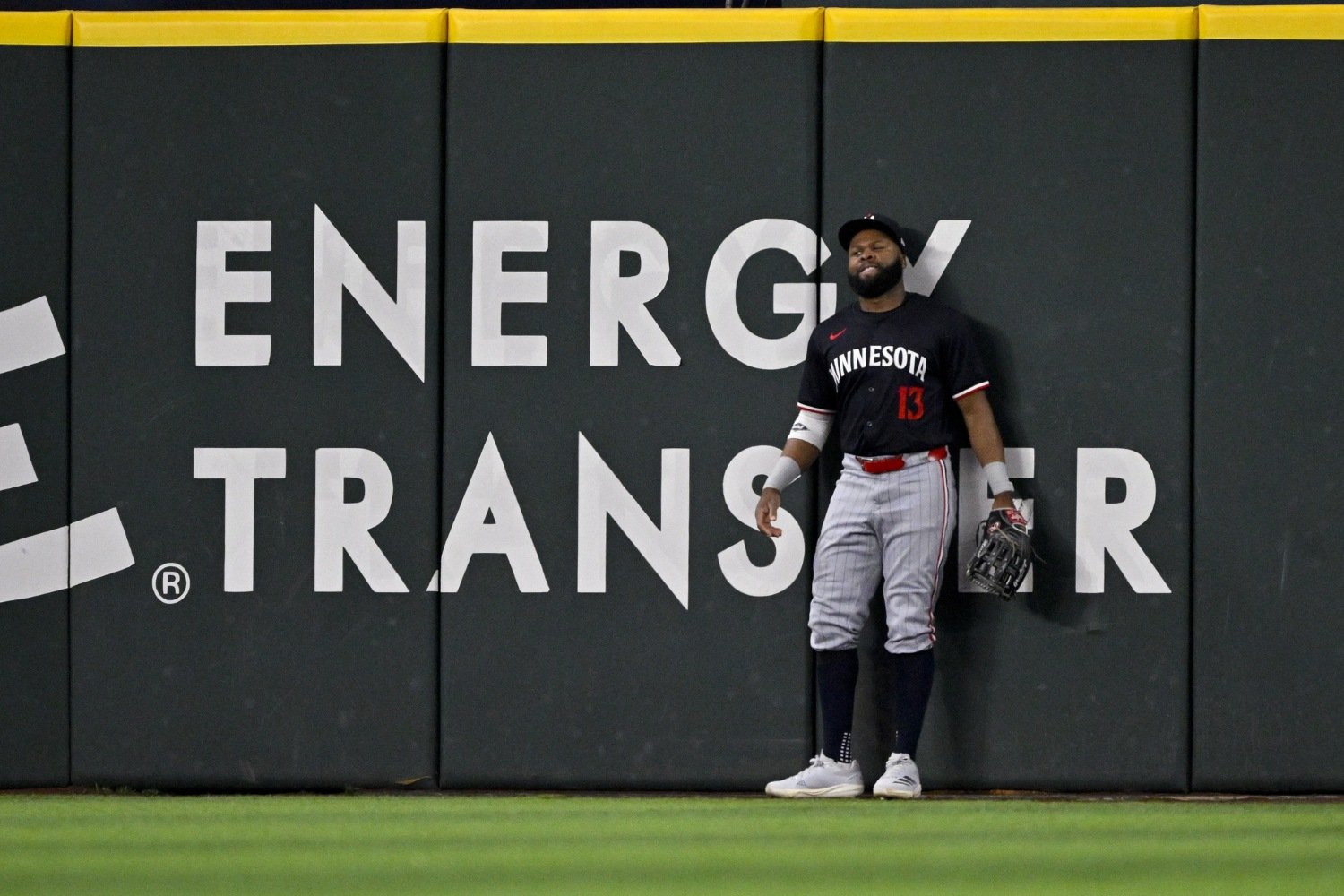 When the Twins and their fans woke up on Aug. 18, 2024, they sat in second place in the American League Central. They were just two games behind the (eventual) division-winning Guardians, with whom they had split a series the prior weekend. Minnesota had just taken three straight games from the (flailing) reigning World Series champion Texas Rangers and were looking for a four-game sweep. It took five minutes to derail the Twins’ season. Pablo López pitched them to a comfortable four-run lead after six, but Jorge Alcala entered to pitch the seventh inning, and within five real-world minutes surrendered five runs on 19 pitches. The Rangers would walk off Jhoan Duran in the 10th inning. At the time, it was a disappointing game, but it was just a game. In the months since, it has become understood as the beginning of the end. The team that saved their season with 12 consecutive wins in April and May didn’t win more than two games in a row over the final seven weeks of the season, finishing on a 12-27 skid. They missed the playoffs, after projection systems gave them a better than 90% chance to make the postseason on that fateful August day. Nothing worked down the stretch. Injuries, performance slippage, and fatigue were too much. There were rumblings of clubhouse discord. There was a lifelessness observable on the field, as the players lived the same disappointment that we watched. All they needed was a couple September wins against the Marlins to eke in anyway, but they couldn’t even do that. Discourse about ownership reignited. After reducing payroll by tens of millions after the club’s first playoff win in nearly a decade, there was already a level of anger and vitriol among fans. But that went up another notch, becoming a go-to excuse, reason, or rationale amid the collapse. The team didn’t improve at the deadline. There were no meaningful reinforcements. Conversely, the familiar complaints about players, coaches, and management rose again. The players had no fight, the manager was incompetent, the front office was too passive. Those complaints had waned as the team flourished at midseason. But as things got worse, the conversations became louder. It was an important offseason, ripe for change. On the ownership side, the biggest change possible was announced—or at least, the first step of that change was. In October, the Pohlad family announced that they were exploring a sale of the team. The much-maligned billionaire family had very few defenders, and the announcement was a welcome one among Twins fans who dreamt of what the organization could look like with a more benevolent, unknown owner. On the baseball side, that offseason ripe for change bore no fruit. Nominal change happened—Carlos Santana, Max Kepler, and Caleb Thielbar were out, Ty France, Harrison Bader, and Danny Coulombe were in. The same core that folded down the stretch in 2024 would be leading the charge in 2025. It wasn’t the worst decision ever, trusting that the team that sat at 70-53 on August 18 was more representative than the team that finished 12-27. But it was a gamble to dance with the girl that brung them. There was no great cleansing. The front office itself was also held in place, other than promotions ,following the historic collapse. Everyone was gonna run it back. In February, word leaked that that mysterious, benevolent owner was not just a hypothetical. Justin Ishbia—brother of Mat Ishbia, the owner of the Phoenix Suns—was strongly pursuing a purchase of the team. There was no guarantee as to how he would run the organization, but he would have been one of the richest owners in baseball; he’s a baseball fan; and his brother’s team had earned a reputation for spending to win. But as quickly as he had appeared, he disappeared, instead pursuing a purchase of the division rival White Sox, a team closer to home (and that he was already a minority owner of). And no individual or group seemed primed to fill his place. Amid all of this uncertainty, the Twins didn’t spend. That’s part of the lack of turnover, too. It was part philosophy, it was part circumstance. But the Twins opened the season with the same team they ended the prior year with, more or less. And they opened the year with the same play, more or less, skidding through the opening weeks and requiring another two-week stretch of consecutive wins to drag themselves out of the bowels of MLB. This time, they couldn’t keep it up. One of the most fascinating parts of the last year of Twins baseball is just how stale most of it was, and how that staleness accompanied so much change. Ownership was constantly in flux, but nothing truly changed. The team from the beginning of 2024 was more or less the same team as the beginning of 2025, but it played in a totally different way. By July, it became clear that change was finally coming. The Twins would be sellers, at least at the deadline, though there were questions as to how much they would sell. They sold a lot. In order: Chris Paddack, Randy Dobnak, Jhoan Duran, Harrison Bader, Brock Stewart, Carlos Correa, Danny Coulombe, Willi Castro, Griffin Jax, Ty France, and Louie Varland. All shipped off to the highest bidder. And suddenly, everything was changed. The team that spent so many months so stale was turned on its head. Eighteen players played in that August 18 game. Five are on the active roster today. After all those calls for a shakeup of the hitting core, the Twins traded… their whole bullpen. Much of that offensive core remains. Of course, they did trade Carlos Correa—the leader of the team. He was unceremoniously shipped off to Houston, paying the Astros to take his contract off the books. The era was just… over. Only 22 of the 52 players who played a game for the Twins last season are still in the organization today, and that’s after one of the least active offseasons you could imagine. And speaking of inaction, ownership. Just days ago, the announcement was released: The Pohlads would not be selling the team. Well, not all of it, anyway. Instead, limited partners will be buying a portion, but the family still has control. Twins fans went from being fed up with ownership, to hopeful for a new owner, to ecstatic about a real potential owner, to heartbroken, to grasping at any morsel of information, back to being fed up with ownership, or at least about three-quarters of it. On the field, the staleness turned to rot. The cooks hope that cutting off part of the loaf makes the rest of the bread edible again. This all started with a good team that seemed destined for the playoffs. How much different would we feel had that meltdown not happened? If, instead of being incensed, we were merely annoyed that the team could have gone a little farther with a little more investment? Instead of front office promotions following a complete self-destruction, what if they came after guiding a cheap and injury-riddled team into the playoffs? Instead of failing to fix what went wrong down the stretch, what if they merely banked on continual improvement and ran it back with a similar team? And what if today’s ownership, after all those months of questions, wasn’t the same ownership that the club had 12 months ago, plus a couple of friends?
 -
Image courtesy of © Jerome Miron-Imagn Images When the Twins and their fans woke up on Aug. 18, 2024, they sat in second place in the American League Central. They were just two games behind the (eventual) division-winning Guardians, with whom they had split a series the prior weekend. Minnesota had just taken three straight games from the (flailing) reigning World Series champion Texas Rangers and were looking for a four-game sweep. It took five minutes to derail the Twins’ season. Pablo López pitched them to a comfortable four-run lead after six, but Jorge Alcala entered to pitch the seventh inning, and within five real-world minutes surrendered five runs on 19 pitches. The Rangers would walk off Jhoan Duran in the 10th inning. At the time, it was a disappointing game, but it was just a game. In the months since, it has become understood as the beginning of the end. The team that saved their season with 12 consecutive wins in April and May didn’t win more than two games in a row over the final seven weeks of the season, finishing on a 12-27 skid. They missed the playoffs, after projection systems gave them a better than 90% chance to make the postseason on that fateful August day. Nothing worked down the stretch. Injuries, performance slippage, and fatigue were too much. There were rumblings of clubhouse discord. There was a lifelessness observable on the field, as the players lived the same disappointment that we watched. All they needed was a couple September wins against the Marlins to eke in anyway, but they couldn’t even do that. Discourse about ownership reignited. After reducing payroll by tens of millions after the club’s first playoff win in nearly a decade, there was already a level of anger and vitriol among fans. But that went up another notch, becoming a go-to excuse, reason, or rationale amid the collapse. The team didn’t improve at the deadline. There were no meaningful reinforcements. Conversely, the familiar complaints about players, coaches, and management rose again. The players had no fight, the manager was incompetent, the front office was too passive. Those complaints had waned as the team flourished at midseason. But as things got worse, the conversations became louder. It was an important offseason, ripe for change. On the ownership side, the biggest change possible was announced—or at least, the first step of that change was. In October, the Pohlad family announced that they were exploring a sale of the team. The much-maligned billionaire family had very few defenders, and the announcement was a welcome one among Twins fans who dreamt of what the organization could look like with a more benevolent, unknown owner. On the baseball side, that offseason ripe for change bore no fruit. Nominal change happened—Carlos Santana, Max Kepler, and Caleb Thielbar were out, Ty France, Harrison Bader, and Danny Coulombe were in. The same core that folded down the stretch in 2024 would be leading the charge in 2025. It wasn’t the worst decision ever, trusting that the team that sat at 70-53 on August 18 was more representative than the team that finished 12-27. But it was a gamble to dance with the girl that brung them. There was no great cleansing. The front office itself was also held in place, other than promotions ,following the historic collapse. Everyone was gonna run it back. In February, word leaked that that mysterious, benevolent owner was not just a hypothetical. Justin Ishbia—brother of Mat Ishbia, the owner of the Phoenix Suns—was strongly pursuing a purchase of the team. There was no guarantee as to how he would run the organization, but he would have been one of the richest owners in baseball; he’s a baseball fan; and his brother’s team had earned a reputation for spending to win. But as quickly as he had appeared, he disappeared, instead pursuing a purchase of the division rival White Sox, a team closer to home (and that he was already a minority owner of). And no individual or group seemed primed to fill his place. Amid all of this uncertainty, the Twins didn’t spend. That’s part of the lack of turnover, too. It was part philosophy, it was part circumstance. But the Twins opened the season with the same team they ended the prior year with, more or less. And they opened the year with the same play, more or less, skidding through the opening weeks and requiring another two-week stretch of consecutive wins to drag themselves out of the bowels of MLB. This time, they couldn’t keep it up. One of the most fascinating parts of the last year of Twins baseball is just how stale most of it was, and how that staleness accompanied so much change. Ownership was constantly in flux, but nothing truly changed. The team from the beginning of 2024 was more or less the same team as the beginning of 2025, but it played in a totally different way. By July, it became clear that change was finally coming. The Twins would be sellers, at least at the deadline, though there were questions as to how much they would sell. They sold a lot. In order: Chris Paddack, Randy Dobnak, Jhoan Duran, Harrison Bader, Brock Stewart, Carlos Correa, Danny Coulombe, Willi Castro, Griffin Jax, Ty France, and Louie Varland. All shipped off to the highest bidder. And suddenly, everything was changed. The team that spent so many months so stale was turned on its head. Eighteen players played in that August 18 game. Five are on the active roster today. After all those calls for a shakeup of the hitting core, the Twins traded… their whole bullpen. Much of that offensive core remains. Of course, they did trade Carlos Correa—the leader of the team. He was unceremoniously shipped off to Houston, paying the Astros to take his contract off the books. The era was just… over. Only 22 of the 52 players who played a game for the Twins last season are still in the organization today, and that’s after one of the least active offseasons you could imagine. And speaking of inaction, ownership. Just days ago, the announcement was released: The Pohlads would not be selling the team. Well, not all of it, anyway. Instead, limited partners will be buying a portion, but the family still has control. Twins fans went from being fed up with ownership, to hopeful for a new owner, to ecstatic about a real potential owner, to heartbroken, to grasping at any morsel of information, back to being fed up with ownership, or at least about three-quarters of it. On the field, the staleness turned to rot. The cooks hope that cutting off part of the loaf makes the rest of the bread edible again. This all started with a good team that seemed destined for the playoffs. How much different would we feel had that meltdown not happened? If, instead of being incensed, we were merely annoyed that the team could have gone a little farther with a little more investment? Instead of front office promotions following a complete self-destruction, what if they came after guiding a cheap and injury-riddled team into the playoffs? Instead of failing to fix what went wrong down the stretch, what if they merely banked on continual improvement and ran it back with a similar team? And what if today’s ownership, after all those months of questions, wasn’t the same ownership that the club had 12 months ago, plus a couple of friends? View full article
-
Episode 56: Trade Deadline Wrap Up and the New Look Twins
Greggory Masterson posted an article in Podcasts
 Sweet Lou and Ol Gregg discuss each of the Twins' nine trades and discuss where the Twins go from here. Gregg gripes about the word "moot." Listen using Apple Podcasts: https://podcasts.apple.com/us/podcast/the-twins-off-daily-podcast/id1741266056 Listen using Spotify: https://open.spotify.com/show/4tb78XlurcPTYYSsARdbD7 Listen using iHeartRadio: https://www.iheart.com/podcast/263-the-twins-off-daily-podcas-167548600/ Listen using Pocket Casts: https://pca.st/nvclbt0w Watch on YouTube: https://www.youtube.com/@twinsdaily
 -
Sweet Lou and Ol Gregg discuss each of the Twins' nine trades and discuss where the Twins go from here. Gregg gripes about the word "moot." Listen using Apple Podcasts: https://podcasts.apple.com/us/podcast/the-twins-off-daily-podcast/id1741266056 Listen using Spotify: https://open.spotify.com/show/4tb78XlurcPTYYSsARdbD7 Listen using iHeartRadio: https://www.iheart.com/podcast/263-the-twins-off-daily-podcas-167548600/ Listen using Pocket Casts: https://pca.st/nvclbt0w Watch on YouTube: https://www.youtube.com/@twinsdaily View full article
-
I think this is the biggest question across Twins baseball at this moment in time. And those two decisions will guide the direction of this team even beyond the years the two are under team control, as you alluded to. This ain’t over.
-
The Minnesota Twins Didn’t Tear It All Down, At Least Not Yet
Greggory Masterson posted an article in Twins
 I know, it’s clickbait Twins Daily at it again, selling out all of their integrity to get you to read about how it’s not that bad, actually! or three things that are Pollyanna at 1 Twins Way! or even everything is horrible and it will not get better! But no, I’m being serious. This is not a full-blow teardown—at least not yet. Yes, the Minnesota Twins had one of the biggest fire sales you’ll ever see in American professional sports. A full 40% of their active roster (and 2019 playoff legend Randy Dobnak) is now wearing another uniform. They paid the Astros to take their star shortstop off their hands, with no return to speak of. They rid themselves of the top five arms in their bullpen. Their Opening Day first baseman, second baseman, and left fielder, as well as their current third starter? All gone. It’s impossible to say that selling off that many names isn’t a shock to the system, and I won’t spit on your boots and tell you it’s raining. But I will say that it’s bordering on a half-measure. And you can take that however you will. Look at what the Twins traded. First, five rentals: Harrison Bader, Willi Castro, Chris Paddack, Danny Coulombe, and Ty France. All five of those players were headed for free agency, and none ever had a great chance to get an extension of their liking from the Twins, even if the team’s payroll was higher. Technically, all of them are eligible to return to the Twins, but I wouldn’t have put those odds high beforehand. There’s truly nothing of note in trading the last two months of these players for future value. So let’s not even consider them. What did the Twins really trade? What were the difficult decisions? Well, obviously, Carlos Correa was the biggest name. The Twins bailed out of the back half of his six guaranteed years, and they agreed to pay approximately one-third of his remaining salaries, removing about $75 million from their books in the process. Again, I’m not going to pretend that wasn’t shocking, notable, or future-altering. But I’ll come back to this. The other four players were the top four right-handed bullpen arms—Jhoan Durán, Griffin Jax, Brock Stewart, and Louis Varland. Durán, Jax, and Stewart each had two years of team control remaining, but Varland had five. Most fans expected at least one—if not two—of Durán, Jax, and Stewart to be traded, but Varland was the surprise. The bullpen represented the greatest strength for this team. And yet. If we lined up all of the possible ways to trade 40% of a team’s active roster and ordered them from least devastating to most devastating, this specific one is probably on the lower end. To start with, half of those players were not likely to return anyway. Even if you believe that any of those five should be back next year, you rarely see an extension signed this close to free agency. So, really, it’s Correa and four bullpen arms that have been erased. There’s a whole gamut of opinions on Correa, but one thing is clear: he wasn’t worth the over $30 million he made per year during the first half of his contract, and betting men (no offense to any Cleveland Guardians) wouldn’t put money on a transformative turnaround. The trade cost the team their shortstop of the present, but he was also headed to third base soon, if he and the Twins allegedly had their wishes. So, no, they didn’t trade their superstar shortstop. They traded their solid, highly-paid third baseman, who was playing shortstop for now. They got nothing of value in return, but they did free up about $20 million per year in spending money, which is more than they spent on free agents in the last two years combined. Naturally, you need to believe that the Twins won't cut an additional $40 million from the payroll for that to make a difference, but so be it. The bullpen, on the other hand, was the strength of this team, and it’s a huge blow to peel off two upper-echelon late-inning guys and two very good setup men, one with five years of control. However, making the bet year-to-year that a bullpen continues its dominance is a risky one. Obviously, it’s not a coin flip. I’m not going to tell you that there’s a 50% chance that the pen would cease to be a strength next year if held intact. But if a team is looking for a way to consistently sell high on their value that might not be there in the future, here it is. There’s going to be a lot of questions heading into 2026, and I won’t pretend that it’s easy to reconstruct a bullpen like this. But it’s a whole lot easier to reconstruct a bullpen than an infield or a pitching staff. Speaking of which, the outlook for the lineup is relatively unchanged. The Twins lost Bader and Castro, who are more valuable high-end bench players, but they’re not building blocks. They lost Correa, whose defense has been waning and has not yet reached a league-average OPS for 2025. I don't want to be too dismissive of his talent; he was an elite hitter in 2024 when healthy, but his presence and performance in the first three years of his Twins contract has been shaky enough to scare even the most optimistic of fans, and we have seen worse falloffs before. There is no great promise in this lineup as constructed, either. It’s been the greatest issue for the Twins, both defensively and offensively, but the (alleged) building block pieces are still there, and the Twins added additional options to sort through as 2025 concludes in Alan Roden and James Outman (you're free to hate the moves that brought them here, but—outside of Correa and his eighth-best OPS—the Twins did not subtract from their 2026 corps and instead added, even if only by technicality). If nothing else (and I believe that this factor has not gotten enough attention), if these hitters continue to struggle in 2026, they were always going to be a bad offense, regardless of this deadline. And in the rotation, the Twins still boast two starting pitchers who comfortably fit into the number one starter category, as well as Bailey Ober and a host of young, developing starters between the ages of 23 and 25 in Zebby Matthews, David Festa, Simeon Woods Richardson, and newcomers Taj Bradley and Mick Abel. The starting rotation is also not only still intact but deeper ahead of 2026 than it was last week. Again, your mileage may vary, but the Twins did not take a step back in the rotation, instead adding. In addition to bringing in far-off prospects, the Twins more or less stood pat in the lineup and bolstered the rotation. There are a ton of questions in the bullpen, but given where the Twins stand heading into next season, it’s hard to call this a full teardown. The thing that would make it a teardown? Breaking up the starting rotation, especially the top two. And that's my biggest point. It's not torn down, yet—whether you agree with the above assessment or not. The Twins were engaged in trade talks with Joe Ryan. That was widely reported. They maintained a high bar to acquire him, and no one met it, but he was technically available. And it’s very possible that Pablo López would have been in trade talks, especially with all the emphasis on shedding payroll at this deadline, had he been healthy. It’s possible that the Twins ran out of time. But both Ryan and López are under team control through 2027, and with two guys like that on the roster (and Byron Buxton, I suppose), you’re not really packing it in for a couple of years. Or at least you shouldn’t. Maybe in December they’ll change teams. Or perhaps in spring training, they’ll be flipped to some team that just lost their ace to Tommy John. But until then, the Twins didn’t trade either of their two most important pieces, and I refuse to call it a teardown. It’s trimmed to the bone in some places, but it’s not stripped to the studs. Not yet anyway. And for what it's worth, former Twins GM Thad Levine seems to agree.
- 94 comments
-
- 13
-
-

-

-
Image courtesy of © Jeffrey Becker-Imagn Images I know, it’s clickbait Twins Daily at it again, selling out all of their integrity to get you to read about how it’s not that bad, actually! or three things that are Pollyanna at 1 Twins Way! or even everything is horrible and it will not get better! But no, I’m being serious. This is not a full-blow teardown—at least not yet. Yes, the Minnesota Twins had one of the biggest fire sales you’ll ever see in American professional sports. A full 40% of their active roster (and 2019 playoff legend Randy Dobnak) is now wearing another uniform. They paid the Astros to take their star shortstop off their hands, with no return to speak of. They rid themselves of the top five arms in their bullpen. Their Opening Day first baseman, second baseman, and left fielder, as well as their current third starter? All gone. It’s impossible to say that selling off that many names isn’t a shock to the system, and I won’t spit on your boots and tell you it’s raining. But I will say that it’s bordering on a half-measure. And you can take that however you will. Look at what the Twins traded. First, five rentals: Harrison Bader, Willi Castro, Chris Paddack, Danny Coulombe, and Ty France. All five of those players were headed for free agency, and none ever had a great chance to get an extension of their liking from the Twins, even if the team’s payroll was higher. Technically, all of them are eligible to return to the Twins, but I wouldn’t have put those odds high beforehand. There’s truly nothing of note in trading the last two months of these players for future value. So let’s not even consider them. What did the Twins really trade? What were the difficult decisions? Well, obviously, Carlos Correa was the biggest name. The Twins bailed out of the back half of his six guaranteed years, and they agreed to pay approximately one-third of his remaining salaries, removing about $75 million from their books in the process. Again, I’m not going to pretend that wasn’t shocking, notable, or future-altering. But I’ll come back to this. The other four players were the top four right-handed bullpen arms—Jhoan Durán, Griffin Jax, Brock Stewart, and Louis Varland. Durán, Jax, and Stewart each had two years of team control remaining, but Varland had five. Most fans expected at least one—if not two—of Durán, Jax, and Stewart to be traded, but Varland was the surprise. The bullpen represented the greatest strength for this team. And yet. If we lined up all of the possible ways to trade 40% of a team’s active roster and ordered them from least devastating to most devastating, this specific one is probably on the lower end. To start with, half of those players were not likely to return anyway. Even if you believe that any of those five should be back next year, you rarely see an extension signed this close to free agency. So, really, it’s Correa and four bullpen arms that have been erased. There’s a whole gamut of opinions on Correa, but one thing is clear: he wasn’t worth the over $30 million he made per year during the first half of his contract, and betting men (no offense to any Cleveland Guardians) wouldn’t put money on a transformative turnaround. The trade cost the team their shortstop of the present, but he was also headed to third base soon, if he and the Twins allegedly had their wishes. So, no, they didn’t trade their superstar shortstop. They traded their solid, highly-paid third baseman, who was playing shortstop for now. They got nothing of value in return, but they did free up about $20 million per year in spending money, which is more than they spent on free agents in the last two years combined. Naturally, you need to believe that the Twins won't cut an additional $40 million from the payroll for that to make a difference, but so be it. The bullpen, on the other hand, was the strength of this team, and it’s a huge blow to peel off two upper-echelon late-inning guys and two very good setup men, one with five years of control. However, making the bet year-to-year that a bullpen continues its dominance is a risky one. Obviously, it’s not a coin flip. I’m not going to tell you that there’s a 50% chance that the pen would cease to be a strength next year if held intact. But if a team is looking for a way to consistently sell high on their value that might not be there in the future, here it is. There’s going to be a lot of questions heading into 2026, and I won’t pretend that it’s easy to reconstruct a bullpen like this. But it’s a whole lot easier to reconstruct a bullpen than an infield or a pitching staff. Speaking of which, the outlook for the lineup is relatively unchanged. The Twins lost Bader and Castro, who are more valuable high-end bench players, but they’re not building blocks. They lost Correa, whose defense has been waning and has not yet reached a league-average OPS for 2025. I don't want to be too dismissive of his talent; he was an elite hitter in 2024 when healthy, but his presence and performance in the first three years of his Twins contract has been shaky enough to scare even the most optimistic of fans, and we have seen worse falloffs before. There is no great promise in this lineup as constructed, either. It’s been the greatest issue for the Twins, both defensively and offensively, but the (alleged) building block pieces are still there, and the Twins added additional options to sort through as 2025 concludes in Alan Roden and James Outman (you're free to hate the moves that brought them here, but—outside of Correa and his eighth-best OPS—the Twins did not subtract from their 2026 corps and instead added, even if only by technicality). If nothing else (and I believe that this factor has not gotten enough attention), if these hitters continue to struggle in 2026, they were always going to be a bad offense, regardless of this deadline. And in the rotation, the Twins still boast two starting pitchers who comfortably fit into the number one starter category, as well as Bailey Ober and a host of young, developing starters between the ages of 23 and 25 in Zebby Matthews, David Festa, Simeon Woods Richardson, and newcomers Taj Bradley and Mick Abel. The starting rotation is also not only still intact but deeper ahead of 2026 than it was last week. Again, your mileage may vary, but the Twins did not take a step back in the rotation, instead adding. In addition to bringing in far-off prospects, the Twins more or less stood pat in the lineup and bolstered the rotation. There are a ton of questions in the bullpen, but given where the Twins stand heading into next season, it’s hard to call this a full teardown. The thing that would make it a teardown? Breaking up the starting rotation, especially the top two. And that's my biggest point. It's not torn down, yet—whether you agree with the above assessment or not. The Twins were engaged in trade talks with Joe Ryan. That was widely reported. They maintained a high bar to acquire him, and no one met it, but he was technically available. And it’s very possible that Pablo López would have been in trade talks, especially with all the emphasis on shedding payroll at this deadline, had he been healthy. It’s possible that the Twins ran out of time. But both Ryan and López are under team control through 2027, and with two guys like that on the roster (and Byron Buxton, I suppose), you’re not really packing it in for a couple of years. Or at least you shouldn’t. Maybe in December they’ll change teams. Or perhaps in spring training, they’ll be flipped to some team that just lost their ace to Tommy John. But until then, the Twins didn’t trade either of their two most important pieces, and I refuse to call it a teardown. It’s trimmed to the bone in some places, but it’s not stripped to the studs. Not yet anyway. And for what it's worth, former Twins GM Thad Levine seems to agree. View full article
-
Image courtesy of © Brace Hemmelgarn-Imagn Images We love trade trees, don’t we folks? You—yes, you, the reader—already know that the Twins traded closer Jhoan Durán to the Phillies for 18-year-old catcher Eduardo Tait and Triple-A starting pitching prospect Mick Abel. All over this site, there are breakdowns of the trade. But let’s talk about how we got here instead. As you read in the title, A.J. Pierzynski is directly responsible for the Twins acquiring Tait and Abel. Well, maybe not directly. He didn’t call Derek Falvey and instruct the team to make the trade. But Durán’s (and, in effect, Tait and Abel's) presence in the organization can be traced back to Pierzynski. Let’s start at the beginning. Pierzynski was drafted in 1994 by the Minnesota Twins. He played sparingly in the big leagues from 1998 to 2000, but he was Minnesota’s starting catcher between 2001 and 2003, earning an All-Star nod in 2002 and connecting for one of the biggest Twins home runs since 1991. But, as Twins fans know, there was another catcher in the system: Joseph Patrick Mauer. Before the 2004 season, to clear room for the top prospect in baseball, Pierzynski was traded to San Francisco for three pitchers: Joe Nathan, Francisco Liriano, and Boof Bonser. Let’s start doing some counting, and compare Baseball Reference wins above replacement (bWAR). Pierzynski played one season in a Giants uniform, accruing 0.3 bWAR, before being non-tendered over the offseason. Reports are that he wore out his welcome a bit in the Bay, but he nonetheless went on to play an additional 11 years, winning a World Series in Chicago the following year and a Silver Slugger in 2012. On the Twins' side, however, things got fun. Bonser was a replacement-level backend starter and long reliever for the Twins for three years, accruing -0.2 bWAR between 2006 and 2008, picking up a playoff start along the way. In 2009, he was traded for a minor leaguer named Chris Province, who never made the majors. Bonser isn’t the name people talk about with this trade, though. Nathan emerged as Minnesota’s closer and held that spot (other than during time lost to injury) from 2004 to 2011. He’s widely regarded to be the best closer in team history, and he’s arguably the second-best closer of his era, behind Mariano Rivera. He racked up 260 saves in his Twins career with an ERA of 2.16, earning four All-Star nods in six years from 2004 to 2009. He was worth 18.4 bWAR. Finally, Liriano had one of the more memorable Twins careers in recent memory. During his 2006 rookie season, he threw 121 innings, striking out 144, to the tune of a 2.16 ERA. He may have been the best pitcher on a team that included Johan Santana, who was about to win his second Cy Young Award in three years (should have been a three-peat, you’ll pay for this Bartolo Colón). Liriano blew out his elbow in August of that year and was never the same, but during his eight-year Twins career, he was worth 9.3 bWAR. Adding those three pitchers up, the Twins netted 27.5 bWAR from the products of the Pierzynski trade, compared to the 0.3 bWAR the Giants got out of it. But the story doesn’t stop there. At the 2012 Trade Deadline, Liriano was traded to the White Sox for pitcher Pedro Hernández and infielder Eduardo Escobar. Hernández had a rough go of it, only throwing 56 2/3 innings for the Twins in 2013 before being released over the offseason. He netted -0.7 bWAR. Escobar, however, spent parts of seven seasons in a Twins uniform, initially as a utility infielder (and occasional left fielder) before settling in as an everyday player from 2014 to 2018, mostly at shortstop and third base. The fan favorite accumulated 5.6 bWAR in a Twins uniform before his trade at the 2018 deadline to Arizona, where he became their everyday third baseman. The Liriano trade brought the Twins an additional 4.9 bWAR between Escobar and Hernández, but Escobar’s trade added another couple of branches. In return for Escobar, the Twins received Gabriel Maciel, Ernie De La Trinidad, and Jhoan Durán. Maciel and De La Trinidad have washed out of affiliated ball, but, well, you already know this. Durán emerged as the best Twins closer since Nathan. Pairing a fastball that could hit 105 miles per hour, a splitter that touched 100, and a filthy curveball, Durán became many Twins fans' favorite player. Durán closed for the Twins from 2022 to 2025, saving 74 games with a 2.47 ERA. He was worth 7.3 bWAR for Minnesota, and he was in the midst of what may be his best season as a big-leaguer when he was traded on Wednesday. So, between Nathan, Liriano, Durán, Escobar, Bonser, and Hernández, the Pierzynski trade accrued a total of 39.7 bWAR, which dwarfs the Giants' 0.3 from the deal. And now, Tait and Abel are the next two branches of this trade tree. Abel might start creating value for Minnesota as early as this season, and Tait has a chance to add some serious value if he pans out as a prospect. If you’re a sicko, this is fun. It’s far more fun than the shellacking that the Twins have taken in the Delmon Young Trade Tree, at least. View full article
- 9 replies
-
- 2
-
-
- aj pierzynski
- eduardo tait
- (and 5 more)
-
Eduardo Tait and Mick Abel, Brought to You By A.J. Pierzynski
Greggory Masterson posted an article in Twins
 We love trade trees, don’t we folks? You—yes, you, the reader—already know that the Twins traded closer Jhoan Durán to the Phillies for 18-year-old catcher Eduardo Tait and Triple-A starting pitching prospect Mick Abel. All over this site, there are breakdowns of the trade. But let’s talk about how we got here instead. As you read in the title, A.J. Pierzynski is directly responsible for the Twins acquiring Tait and Abel. Well, maybe not directly. He didn’t call Derek Falvey and instruct the team to make the trade. But Durán’s (and, in effect, Tait and Abel's) presence in the organization can be traced back to Pierzynski. Let’s start at the beginning. Pierzynski was drafted in 1994 by the Minnesota Twins. He played sparingly in the big leagues from 1998 to 2000, but he was Minnesota’s starting catcher between 2001 and 2003, earning an All-Star nod in 2002 and connecting for one of the biggest Twins home runs since 1991. But, as Twins fans know, there was another catcher in the system: Joseph Patrick Mauer. Before the 2004 season, to clear room for the top prospect in baseball, Pierzynski was traded to San Francisco for three pitchers: Joe Nathan, Francisco Liriano, and Boof Bonser. Let’s start doing some counting, and compare Baseball Reference wins above replacement (bWAR). Pierzynski played one season in a Giants uniform, accruing 0.3 bWAR, before being non-tendered over the offseason. Reports are that he wore out his welcome a bit in the Bay, but he nonetheless went on to play an additional 11 years, winning a World Series in Chicago the following year and a Silver Slugger in 2012. On the Twins' side, however, things got fun. Bonser was a replacement-level backend starter and long reliever for the Twins for three years, accruing -0.2 bWAR between 2006 and 2008, picking up a playoff start along the way. In 2009, he was traded for a minor leaguer named Chris Province, who never made the majors. Bonser isn’t the name people talk about with this trade, though. Nathan emerged as Minnesota’s closer and held that spot (other than during time lost to injury) from 2004 to 2011. He’s widely regarded to be the best closer in team history, and he’s arguably the second-best closer of his era, behind Mariano Rivera. He racked up 260 saves in his Twins career with an ERA of 2.16, earning four All-Star nods in six years from 2004 to 2009. He was worth 18.4 bWAR. Finally, Liriano had one of the more memorable Twins careers in recent memory. During his 2006 rookie season, he threw 121 innings, striking out 144, to the tune of a 2.16 ERA. He may have been the best pitcher on a team that included Johan Santana, who was about to win his second Cy Young Award in three years (should have been a three-peat, you’ll pay for this Bartolo Colón). Liriano blew out his elbow in August of that year and was never the same, but during his eight-year Twins career, he was worth 9.3 bWAR. Adding those three pitchers up, the Twins netted 27.5 bWAR from the products of the Pierzynski trade, compared to the 0.3 bWAR the Giants got out of it. But the story doesn’t stop there. At the 2012 Trade Deadline, Liriano was traded to the White Sox for pitcher Pedro Hernández and infielder Eduardo Escobar. Hernández had a rough go of it, only throwing 56 2/3 innings for the Twins in 2013 before being released over the offseason. He netted -0.7 bWAR. Escobar, however, spent parts of seven seasons in a Twins uniform, initially as a utility infielder (and occasional left fielder) before settling in as an everyday player from 2014 to 2018, mostly at shortstop and third base. The fan favorite accumulated 5.6 bWAR in a Twins uniform before his trade at the 2018 deadline to Arizona, where he became their everyday third baseman. The Liriano trade brought the Twins an additional 4.9 bWAR between Escobar and Hernández, but Escobar’s trade added another couple of branches. In return for Escobar, the Twins received Gabriel Maciel, Ernie De La Trinidad, and Jhoan Durán. Maciel and De La Trinidad have washed out of affiliated ball, but, well, you already know this. Durán emerged as the best Twins closer since Nathan. Pairing a fastball that could hit 105 miles per hour, a splitter that touched 100, and a filthy curveball, Durán became many Twins fans' favorite player. Durán closed for the Twins from 2022 to 2025, saving 74 games with a 2.47 ERA. He was worth 7.3 bWAR for Minnesota, and he was in the midst of what may be his best season as a big-leaguer when he was traded on Wednesday. So, between Nathan, Liriano, Durán, Escobar, Bonser, and Hernández, the Pierzynski trade accrued a total of 39.7 bWAR, which dwarfs the Giants' 0.3 from the deal. And now, Tait and Abel are the next two branches of this trade tree. Abel might start creating value for Minnesota as early as this season, and Tait has a chance to add some serious value if he pans out as a prospect. If you’re a sicko, this is fun. It’s far more fun than the shellacking that the Twins have taken in the Delmon Young Trade Tree, at least.
- 9 comments
-
- 8
-
-
-
- aj pierzynski
- eduardo tait
- (and 5 more)
-
Heck no, let me hear your derision!
-
Episode 55: One Final Game of "Is Chris Paddack Still A Twin?"
Greggory Masterson posted an article in Podcasts
 Gregg and Cody react to the Twins' trade of Chris Paddack and Randy Dobnak, remembering their time with the Twins, evaluating the return, and hypothesizing what's next. They also announced plans to livestream during the Trade Deadline on Thursday! Listen using Apple Podcasts: https://podcasts.apple.com/us/podcast/the-twins-off-daily-podcast/id1741266056 Listen using Spotify: https://open.spotify.com/show/4tb78XlurcPTYYSsARdbD7 Listen using iHeartRadio: https://www.iheart.com/podcast/263-the-twins-off-daily-podcas-167548600/ Listen using Pocket Casts: https://pca.st/nvclbt0w Watch on YouTube: https://www.youtube.com/@twinsdaily
 -
Gregg and Cody react to the Twins' trade of Chris Paddack and Randy Dobnak, remembering their time with the Twins, evaluating the return, and hypothesizing what's next. They also announced plans to livestream during the Trade Deadline on Thursday! Listen using Apple Podcasts: https://podcasts.apple.com/us/podcast/the-twins-off-daily-podcast/id1741266056 Listen using Spotify: https://open.spotify.com/show/4tb78XlurcPTYYSsARdbD7 Listen using iHeartRadio: https://www.iheart.com/podcast/263-the-twins-off-daily-podcas-167548600/ Listen using Pocket Casts: https://pca.st/nvclbt0w Watch on YouTube: https://www.youtube.com/@twinsdaily View full article
-
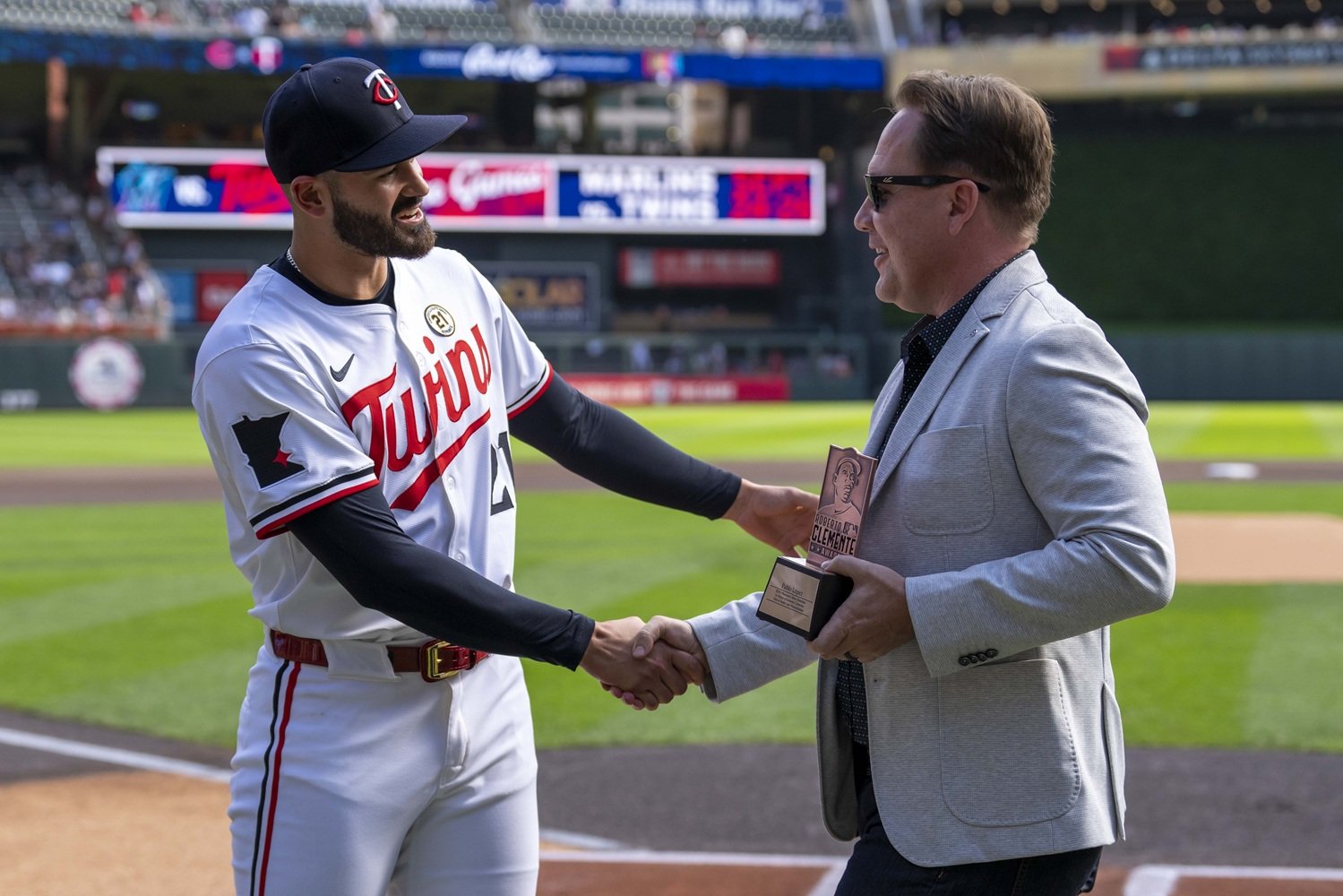 Put even more concisely, it's his job. It’s a common question posed by fans and commentators this trade deadline: Should Derek Falvey be trusted with potential franchise-altering trades? Our own Matthew Taylor asked that same question this weekend. He laid out the general points: Falvey’s job status beyond this season isn’t guaranteed, given the looming sale of the franchise and the team likely missing the playoffs in four of the past five seasons. There's a potential misalignment of goals (given that Falvey’s position may lead him to focus more on the short term than long-term organizational health), and many have questions about his trade record in the past. You can read Matthew’s piece for a more fleshed-out version of these factors (and my history of Falvey’s deadline deals, while you're looking for more light reading). But I’m here to tell you that answer: like it or not, he has to make those decisions at this deadline. Or at least, he has to be left alone to be open to them. To be clear, no one is arguing about whether he should be allowed to dump the expiring contracts; we’re talking about guys like Joe Ryan, Griffin Jax, or Jhoan Durán, or who knows, maybe Brock Stewart, Ryan Jeffers, or Trevor Larnach—players with at least a year remaining of team control after 2025. We just saw him deal Chris Paddack, but the real stakes lie with the longer-term moves. There, too, lie the real questions. But, again, the answer to this question is very simple. If he has the job, he has to do the job. Although it may seem like the organization is shooting itself in the foot, allowing a decision-maker to make potentially franchise-altering decisions on the way out the door, there are a few things to keep in mind here. First, the obvious: there’s no indication Falvey will not return in 2026 and beyond in a baseball decision-making position. There’s no indication he will, either, but such is the nature of a team that’s currently up for sale with no concrete news as to when a new owner will start calling shots—or what that owner’s preferences are. Given the assumption that no one knows the answer to that question (and at least publicly, that’s true, though it may be a different story behind closed doors), it’s incumbent on the organization to act as if there will not be changes to the decision-making roles. They need to act as if they will continue to be making those decisions for years to come. I mean, what’s the alternative? They take their ball and go home? Say, “I don’t know if I’ll be here next year, so I won’t do anything now?” Good luck explaining that to your new boss. Second, related to the first: making a silly, shortsighted trade of a valuable piece like Duran for some short-term gain is also not a good way to endear oneself to ownership. Doing something reckless to try to win in 2025 or sell out for 2026, like the recklessness by omission of doing nothing, isn’t good for a career, either. Third, are we all talking about the same Derek Falvey? As an executive, his public reputation is that of a notoriously hard bargainer. Making a deal on a controllable asset just to make a deal seems out of character—as an outsider, at least—which should give Twins fans comfort. By all accounts, and from watching him for eight seasons, it would be surprising to see him complete a deal that he didn’t think he won. It would, frankly, be confusing. Of course, you may have reached the end of this and maintained the opinion that you simply don’t trust him to make decisions, because you think he’s not good at his job. I’m not here to stop you from believing that. But too bad, I guess. That’s not an argument against him making these specific deals; it’s an argument that he shouldn’t have this job anymore, which, again, I won’t stop you from making. But it’s a different discussion. At that point, your stance should be that he shouldn’t be allowed to try to find deals for Harrison Bader and Willi Castro, and that a new decision-maker should replace him before we reach the deadline. But that’s not what we’re discussing. We’re talking about an executive doing the job that he’s paid to do. And if a team comes knocking, willing to overpay for one of the Twins' pricier pieces, it's incumbent on this organization to pull the trigger, regardless of the cloudy picture in 2026 and beyond.
- 34 comments
-
- 7
-
-
- joe ryan
- jhoan duran
- (and 3 more)


