



Parker Hageman
-
Posts
4,152 -
Joined
-
Last visited
-
Days Won
6
Content Type
Profiles
News
Minnesota Twins Videos
2026 Minnesota Twins Top Prospects Ranking
2022 Minnesota Twins Draft Picks
Minnesota Twins Free Agent & Trade Rumors, Notes, & Tidbits
Guides & Resources
2023 Minnesota Twins Draft Picks
The Minnesota Twins Players Project
2024 Minnesota Twins Draft Picks
2025 Minnesota Twins Draft Pick Tracker
2026 Minnesota Twins Draft Tracker: Picks & Bonuses
Forums
Blogs
Events
Store
Downloads
Gallery
Everything posted by Parker Hageman
-
 This, of course, came just two days after Utah Jazz’s Rudy Gobert was captured on film following a press conference in which he touched all of the microphones and recording devices before exiting the room. Gobert and the video would later both go viral. The press dining room at Hammond is lined with national publication covers from issues of Sports Illustrated and Baseball America when Twins prospects were featured. It is a no-frills affair in which a healthy option buffet lunch is served for $6 — cash only. Beneath the signage of giant images of Joe Mauer, Chuck Knoblauch or Matt Garza, the Twin Cities media collected at a table and estimated the amount of provisions in their respective dwellings currently contained 1,700 miles to the north. The most common answer was “not much.” One person made the observation that if this were a movie, this felt like the scene in which they would show rapid news clips of the country falling apart. Still, if there were any real concerns among the players, they sure didn’t show it. “Our guys are not seemingly worried about this at all,” Baldelli said following Wednesday’s game against the Braves. “I haven’t really heard much beyond just general chatter about, ‘Hey, what’s going to happen?’ And it’s not what’s going to happen as if anyone’s concerned for any reason, it’s more, ‘We’ll play wherever they tell us to play and we’ll be ready to go.’ I think our guys are completely of that mindset as opposed to anything else.” News that Washington’s governor had banned large crowd gatherings in his state hit the wires shortly before that. The Twins’ second series was now in jeopardy. The team released a statement saying they would work with the Seattle Mariners to find a venue to get the game played. There was talk of the series being played at the Mariners complex in Arizona. With Minnesota being relatively coronavirus-free at that time, Target Field was discussed as an option. While the situation had grown increasingly serious in Seattle, there was a contingent of the media group that believed the teams would find a way to play. Taylor Rogers, the Twins’ dominant closer and newly anointed players’ representative, said that if given the option to play at a spring training complex in front of some fans or playing at their respective major league ballparks with no fans, players would prefer to go to a major league park without attendees simply because of the vastly superior accommodations than the spring training ballparks. Maybe not Oakland or Tampa, however. From inside the Twins’ clubhouse, the vibe was that the team wanted to play, even if it was in an empty stadium. As Wednesday’s game unfolded, Jose Berrios was completing what would be his final outing of the spring. The day’s talker was the probability that Berrios would likely be named Opening Day starter and it was assumed that Baldelli was going to do so in his postgame remarks. I recall turning to look down the press box line and watching writers continue to work on their stories -- presumably shells of stories to announce Berrios’ Opening Day role, awaiting the accompanying quotes -- like everything was normal. Meanwhile, I had spent a portion of the game trying to complete an online order of groceries for my wife to pick up back in Minnesota where she was being overwhelmed and outnumbered by our three offspring. We determined that we should probably have an extra week’s worth of supplies, just in case. The ordering system crashed several times because multiple staple products were gone. Now, while trying to have some additional provisions in the event there is a national quarantine, I was somehow supposed to transition to writing about an Opening Day starter announcement for an Opening Day that seemed less and less likely to happen by each passing minute? Outside of camp, Wednesday was a bevvy of bad news. Almost every other active major sport had announced plans to shut down, including the NCAA basketball tournament. Jeff Passan reported that some MLB teams had begun to pull their scouts off the road, a sign they were starting to prepare for a stoppage. Governors of multiple states banned large gatherings. The stock market had its worst day since 1987. There were increasing reports of panic shopping of cleaning supplies, toilet paper and bottled water at retailers. The president spoke to the country to attempt to allay the nation’s fears. Back at our rental house, I opened my laptop several times and tried to come up with a story, any kind of story. I would type a few words then walk away. Or check Twitter again. Or text my wife. Or check for earlier flights out of Florida. Or even consider the option that I would have to drive home if all flights were grounded. Meanwhile, the following day’s schedule included a night game against the visiting Baltimore Orioles but it was now accepted that the season would be delayed. Why on God’s green would baseball continue to host practice games? Part 1 Part 2 Part 3 Part 4 Part 5
 -
 Tuesday was an away game but with the newly enacted access restrictions, long travel to Clearwater combined with the expectation that Byron Buxton would be facing live pitching for the first time since August of last year, almost all of the Twin Cities media members opted to stay in Fort Myers.An hour before Buxton’s scheduled live batting practice, the Twins’ director of Communications & Player Relations, Dustin Morse, addressed the media group and informed us that the Twins would be abiding by Major League Baseball’s aforementioned clubhouse restrictions and that, furthermore, the guidelines include everyone outside of essential personnel. This was not just for reporters. Morse, for lack of a better description, is the team’s gatekeeper. If you need an interview, you go to Morse. If you screw up by posting something online that suggests a pitcher is putting something on a baseball, you will hear from Morse (or so I’ve heard). Morse, a veteran of the organization and well-respected throughout the public relations industry, acknowledged the challenge in trying to accommodate the media’s requests and follow the league’s new distancing. This was uncharted territory, he said. As writers lobbed hypothetical scenarios at him that involved where the manager would be speaking on the road or how writers could access certain players for one-on-one interviews, you could see the exasperation in his face. For the time being, Morse said that they would have individual players made available for questions but would require at least three feet of space to separate the player from the writers. Someone made a sneeze guard joke. Buxton, following his on-field live batting practice, was the first interview subject to experience the new distancing guidelines. This amounted to having the media stand on the dugout steps while Buxton remained standing inside the cover of the dugout. No one measured the actual distance but it felt like we were shouting questions across a canyon. Later, up in the press box, as the on-field activity wrapped up, writers worked on their articles overlooking a mostly empty stadium. Twitter, always a vital tool of the engaged and informed reporter, was now the main communication hub of the outside world. Writers on Slack apps were messaging other colleagues covering other camps and learning of their happenings. Reports began to filter into the Twins’ pool of reporters of how the new rules worked in practice. Boston’s media found their access to be a disaster. Phillies media had a similar experience. With the Twins slated to open up their season in Oakland and Seattle, two hot zone markets, editors began to request their writers hold off on their travel plans, for now. At one point during the day my wife texted me and asked me to order some disinfectant cleaning supplies on Amazon because, back in the Twin Cities, she found empty shelves at Target. Amazon, of course, was out as well, save for the price-gouging third-party vultures that would fortunately soon be quashed from the system. This was still early in the week, before sports were shut down indefinitely. I turned to Aaron Gleeman and told him of what my wife had discovered. An inside source told him that suppliers were unable to meet the production demands for retailers to keep up with the crush. Later that night I became acutely aware of the empty spaces at the Publix grocery store in Fort Myers where the hardcore cleaning supplies should be -- if you didn’t have those supplies by now, odds were slim you were going to find them any time in the near future. Part 1 Part 2 Part 3 Part 4 Part 5 Click here to view the article
 -
Four Days, Day 2 - Scrambling for Access and Hand Sanitizer
Parker Hageman posted an article in Twins
 An hour before Buxton’s scheduled live batting practice, the Twins’ director of Communications & Player Relations, Dustin Morse, addressed the media group and informed us that the Twins would be abiding by Major League Baseball’s aforementioned clubhouse restrictions and that, furthermore, the guidelines include everyone outside of essential personnel. This was not just for reporters. Morse, for lack of a better description, is the team’s gatekeeper. If you need an interview, you go to Morse. If you screw up by posting something online that suggests a pitcher is putting something on a baseball, you will hear from Morse (or so I’ve heard). Morse, a veteran of the organization and well-respected throughout the public relations industry, acknowledged the challenge in trying to accommodate the media’s requests and follow the league’s new distancing. This was uncharted territory, he said. As writers lobbed hypothetical scenarios at him that involved where the manager would be speaking on the road or how writers could access certain players for one-on-one interviews, you could see the exasperation in his face. For the time being, Morse said that they would have individual players made available for questions but would require at least three feet of space to separate the player from the writers. Someone made a sneeze guard joke. Buxton, following his on-field live batting practice, was the first interview subject to experience the new distancing guidelines. This amounted to having the media stand on the dugout steps while Buxton remained standing inside the cover of the dugout. No one measured the actual distance but it felt like we were shouting questions across a canyon. Later, up in the press box, as the on-field activity wrapped up, writers worked on their articles overlooking a mostly empty stadium. Twitter, always a vital tool of the engaged and informed reporter, was now the main communication hub of the outside world. Writers on Slack apps were messaging other colleagues covering other camps and learning of their happenings. Reports began to filter into the Twins’ pool of reporters of how the new rules worked in practice. Boston’s media found their access to be a disaster. Phillies media had a similar experience. With the Twins slated to open up their season in Oakland and Seattle, two hot zone markets, editors began to request their writers hold off on their travel plans, for now. At one point during the day my wife texted me and asked me to order some disinfectant cleaning supplies on Amazon because, back in the Twin Cities, she found empty shelves at Target. Amazon, of course, was out as well, save for the price-gouging third-party vultures that would fortunately soon be quashed from the system. This was still early in the week, before sports were shut down indefinitely. I turned to Aaron Gleeman and told him of what my wife had discovered. An inside source told him that suppliers were unable to meet the production demands for retailers to keep up with the crush. Later that night I became acutely aware of the empty spaces at the Publix grocery store in Fort Myers where the hardcore cleaning supplies should be -- if you didn’t have those supplies by now, odds were slim you were going to find them any time in the near future. Part 1 Part 2 Part 3 Part 4 Part 5
 -
Following Monday’s game against the Cardinals, ESPN’s Jeff Passan reported that Major League Baseball would follow the practice of the NBA and NHL of closing the clubhouses to the media, fearing spread of the coronavirus. It was a precaution, they said. Baseball had already instituted a policy to keep fans from contacting players by not allowing autographs and the Twins had roped off areas of the complex which normally allowed the general public to come within inches of a passing player. Separating players from the gen pop was one thing but restricting access to the clubhouse could draw the ire of the ink-stained wretches.In recent history, there has been a cat-and-mouse dance between teams and the credentialed press regarding access to the clubhouse. Baseball’s clubhouse has long been a sanctuary for players. There is camaraderie, bonding, goofing around. There are poker games and practical jokes. There are discussions with trainers and coaches. Media members working the room, if the proper professionalism and tact is not taken, can be viewed as an intrusion. Plus, from the team’s perspective, they benefit by controlling the message under their terms. Many insiders felt that baseball would favor transitioning to a system similar to other major sports where certain players are brought in to a press conference room rather than host scrums in front of their lockers. For their part, baseball’s writers felt that by revoking the clubhouse access, you lose valuable insight and stories that would not otherwise see the light if writers were not working the room on a daily basis. As someone who attends camp to get insight on mechanics, systems and new developments — topics that don’t play well in the scrums — the clubhouse shutdown was a small blow to my plan. To be honest, my strength is not to provide game reports or stories that the beat writers thrive at. During group interviews, you could almost see them construct their stories through precise questions. These well-trained, well-seasoned writers are extremely good at their jobs. They ask questions to get a specific answer that flows into their story. I ask questions simply to learn more about baseball. Heading into Florida, I had planned on interviewing multiple pitchers and coaches on the Twins’ study of and use of biomechanics. It was here, during the looming shutdown, when I realized the question of what new pitch someone was working on or what piece of technology the team was using to measure hip speed was beyond trivial. Maybe even more so than usual. On the ground in Fort Myers, the overall concern seemed muted. Players ribbed reporters, jokingly saying they were part of the unwashed masses. There were cruise ship jokes. Others admitted the absurdity of the practice. (If media members could bring the virus into the clubhouse, players could certainly do the same). At the time it felt like a minor inconvenience. MLB’s clubhouse restriction was one decision that came from a conference call among all the owners. The other portion of the call, more ominously, was the report that the owners were looking at potentially starting the season’s opening series in alternate markets. Part 1 Part 2 Part 3 Part 4 Part 5 Click here to view the article
-
 In recent history, there has been a cat-and-mouse dance between teams and the credentialed press regarding access to the clubhouse. Baseball’s clubhouse has long been a sanctuary for players. There is camaraderie, bonding, goofing around. There are poker games and practical jokes. There are discussions with trainers and coaches. Media members working the room, if the proper professionalism and tact is not taken, can be viewed as an intrusion. Plus, from the team’s perspective, they benefit by controlling the message under their terms. Many insiders felt that baseball would favor transitioning to a system similar to other major sports where certain players are brought in to a press conference room rather than host scrums in front of their lockers. For their part, baseball’s writers felt that by revoking the clubhouse access, you lose valuable insight and stories that would not otherwise see the light if writers were not working the room on a daily basis. As someone who attends camp to get insight on mechanics, systems and new developments — topics that don’t play well in the scrums — the clubhouse shutdown was a small blow to my plan. To be honest, my strength is not to provide game reports or stories that the beat writers thrive at. During group interviews, you could almost see them construct their stories through precise questions. These well-trained, well-seasoned writers are extremely good at their jobs. They ask questions to get a specific answer that flows into their story. I ask questions simply to learn more about baseball. Heading into Florida, I had planned on interviewing multiple pitchers and coaches on the Twins’ study of and use of biomechanics. It was here, during the looming shutdown, when I realized the question of what new pitch someone was working on or what piece of technology the team was using to measure hip speed was beyond trivial. Maybe even more so than usual. On the ground in Fort Myers, the overall concern seemed muted. Players ribbed reporters, jokingly saying they were part of the unwashed masses. There were cruise ship jokes. Others admitted the absurdity of the practice. (If media members could bring the virus into the clubhouse, players could certainly do the same). At the time it felt like a minor inconvenience. MLB’s clubhouse restriction was one decision that came from a conference call among all the owners. The other portion of the call, more ominously, was the report that the owners were looking at potentially starting the season’s opening series in alternate markets. Part 1 Part 2 Part 3 Part 4 Part 5
 -
Covering spring training has a natural rhythm. During a normal, non-global-pandemic spring training day, one would wake up and get to the ballpark early. There, the Twins staff would have an open clubhouse and reporters could talk to any player willing to engage. Enterprising reporters work the room filling their recorders with quotes and information.Before the games, the media could congregate in the dugout during batting practice, catching a player or coach for a sidebar, maybe following up on something they learned from the morning’s clubhouse access. For instance, if Jorge Polanco told you that he’s working on a new throwing angle, you could chase down infield coach Tony Diaz for more insight. During the game, when a team’s starting pitcher was finished with his work for the day, reporters would abandon their posts and trot down to the clubhouse to pepper the subject with questions about how things feel, what’s left to finish and so on. The same group would race back to the press box to add quotes to their game stories or notebooks while, on the field, players with uniform numbers more reflective of linemen and wide receivers would complete the day’s activities. After the final out, it would then be time to talk with the manager in the comforts of his clubhouse office. So and so looked good huh? Did your lineup today reflect what you are planning for the regular season? Rotation contender was impressive right? Thanks Rocco. The ultimate game is to try to entice the manager into tipping his hand on a potential lineup decision, rotation spot or roster decision. In a normal afternoon session, the reporters would attack, and Baldelli would parry. Following that, one might scamper back up to the press box to meet a story deadline or linger and try to talk to any of the high-numbers players that remained in the clubhouse (though starters were long gone by this point). So you can see how important clubhouse access is to the industry. Gallons of ink and millions of internet words have been spilled and posted based on this chain of events. It was clockwork. Everyone, more or less, knew what to do and when to do it. If you were some noob like me who only dabbles in access, you could ask a neighboring mainstream reporter in the press box to clue you in. Or ask one of the Twins’ public relations staff on timing. Having spent stretches in camp over the last six years, some variation of the above happened every day at home games. Then, over a period of four days, nobody seemed to know anything anymore. On Monday, March 9, Hammond Stadium was overrun with Cardinal red of the St. Louis faithful. Lousy with them. The crowd in general was seemingly apathetic toward any impending pandemic. People still needed their baseball. People expected their baseball. People were thinking who their Opening Day starter would be, not how much toilet paper they had. I was told that the only difference in behavior was now there were longer lines at the sinks than at the urinals. Things began to rapidly change after that. Part 1 Part 2 Part 3 Part 4 Part 5 Tomorrow: Four Days, Day 1 - The Clubhouse Closes Click here to view the article
-
 Before the games, the media could congregate in the dugout during batting practice, catching a player or coach for a sidebar, maybe following up on something they learned from the morning’s clubhouse access. For instance, if Jorge Polanco told you that he’s working on a new throwing angle, you could chase down infield coach Tony Diaz for more insight. During the game, when a team’s starting pitcher was finished with his work for the day, reporters would abandon their posts and trot down to the clubhouse to pepper the subject with questions about how things feel, what’s left to finish and so on. The same group would race back to the press box to add quotes to their game stories or notebooks while, on the field, players with uniform numbers more reflective of linemen and wide receivers would complete the day’s activities. After the final out, it would then be time to talk with the manager in the comforts of his clubhouse office. So and so looked good huh? Did your lineup today reflect what you are planning for the regular season? Rotation contender was impressive right? Thanks Rocco. The ultimate game is to try to entice the manager into tipping his hand on a potential lineup decision, rotation spot or roster decision. In a normal afternoon session, the reporters would attack, and Baldelli would parry. Following that, one might scamper back up to the press box to meet a story deadline or linger and try to talk to any of the high-numbers players that remained in the clubhouse (though starters were long gone by this point). So you can see how important clubhouse access is to the industry. Gallons of ink and millions of internet words have been spilled and posted based on this chain of events. It was clockwork. Everyone, more or less, knew what to do and when to do it. If you were some noob like me who only dabbles in access, you could ask a neighboring mainstream reporter in the press box to clue you in. Or ask one of the Twins’ public relations staff on timing. Having spent stretches in camp over the last six years, some variation of the above happened every day at home games. Then, over a period of four days, nobody seemed to know anything anymore. On Monday, March 9, Hammond Stadium was overrun with Cardinal red of the St. Louis faithful. Lousy with them. The crowd in general was seemingly apathetic toward any impending pandemic. People still needed their baseball. People expected their baseball. People were thinking who their Opening Day starter would be, not how much toilet paper they had. I was told that the only difference in behavior was now there were longer lines at the sinks than at the urinals. Things began to rapidly change after that. Part 1 Part 2 Part 3 Part 4 Part 5 Tomorrow: Four Days, Day 1 - The Clubhouse Closes
 -
Nick. This title is triggering. I’m triggered. And sad.
-
TwinsTube: Harmon Killebrew on Home Run Derby
Parker Hageman replied to Tom Froemming's topic in Twins Daily Front Page News
In my opinion, the dimensions of the field in the original home run derby have nothing to do with the number of home runs during the show's airing. If you watch the videos, there are far fewer towering fly balls that die at the track or hit off the wall and more liners and grounders. My working theory is that hitters in that era wanted to maintain their game swings which were flatter in nature during the contest rather than changing it for lift. More modern hitters implement swings with increased vertical bat angles so a transition to a contest that requires added lift would be easier for those hitters. Not to take away what Mr. Killebrew or Mr. Mays accomplished in their careers. -
TwinsTube: Harmon Killebrew on Home Run Derby
Parker Hageman replied to Tom Froemming's topic in Twins Daily Front Page News
I remember watching all these when they were airing on ESPN back in the 1990s. We'd watch them and then go play home run derby up at Kenny Park in South Minneapolis, alternating between the tennis courts and horseshoe pits as our field (depending on which was unoccupied). In general, the thing that strikes me now re-watching them years later is how few home runs these guys actually hit compared to today's derby. The pitcher is clearly throwing BP speed pitches and guys top spin a ton of line drives. A lot of flat swings. The uppercut swing path was not really in favor. -
Wes Johnson Assigns Homework
Parker Hageman replied to Parker Hageman's topic in Twins Daily Front Page News
Cherry-picking is a fun activity. But, to play along, if the Twins had the level of sophistication available to them then as they do right now, they may have never A identified Hoey as a trade chip or B been able to enhance his existing mechanics. What-If-ing is another fav activity of mine. I think back to all the prospect arms the Twins had in the 2000s and think if they could have put those players through the same programs these guys get now -- weather it's mechanical tweaks or arsenal tweaks -- how different some careers could have been.- 15 replies
-
- 1
-

-
- wes johnson
- velocity
- (and 3 more)
-
Twins Ranked by Handsomeness, 1-26
Parker Hageman replied to Nash Walker's topic in Twins Daily Front Page News
Super upset at where you ranked my beautiful boy. -
Wes Johnson Assigns Homework
Parker Hageman replied to Parker Hageman's topic in Twins Daily Front Page News
The Twins believe they can help pitchers find movements that can both add velocity and consistency. Obviously they want pitchers to have both but, again, there is definitely a reason why they have velocity camps and not command camps. -
Wes Johnson Assigns Homework
Parker Hageman replied to Parker Hageman's topic in Twins Daily Front Page News
I can assure you, the Twins are very much more focused overall of velocity. It's why they have velocity camps and not command camps. Both are really good but the organization understands the value of the former over the latter.- 15 replies
-
- 1
-
-
- wes johnson
- velocity
- (and 3 more)
-
According to Jeff Passan, Major League Baseball ownership groups expect Major League Baseball to join multiple sports leagues in canceling their events to limit the spread of COVID-19. It is not clear when the announcement will come, but would likely include immediate suspension of remaining spring training games and a delay of the 2020 season.The reports comes after MLB ownership groups had a league-wide conference call with Commissioner Rob Manfred this morning. This story will be updated as more information becomes available. MLB's official statement: Click here to view the article
-
Major League Baseball Expected to Suspend Spring Training, Delay Season
Parker Hageman posted an article in Twins
 The reports comes after MLB ownership groups had a league-wide conference call with Commissioner Rob Manfred this morning. This story will be updated as more information becomes available. MLB's official statement:
 -
This has been my fifth or sixth time in camp with the Twins covering it for Twins Daily. I can honestly say this has been the weirdest experience yet.
-
Minnesota Twins pitching coach Wes Johnson assigned homework to the local media this week. 'I’ll challenge you with this, then,' he told no one specifically in the media scrum. 'Go back and watch what [Dakota] Chalmers did. He didn't throw one over 96. We've had a couple other guys hit 100. There's one big, distinct difference between those three guys. I'll let y'all find that one out.' Here’s what we found.First, some background. The “couple other guys” Johnson referenced were Jorge Alcala and Jhoan Duran. All three were optioned to the minor league side this week but all are highly touted arms in the organization. Chalmers, who was acquired in the Fernando Rodney trade in 2018, impressed in the Arizona Fall League. He flashed a mid-90s fastball and, what one American League scout told Baseball America, the best curveball in the fall league. He has swing-and-miss stuff, the critical lifeblood to becoming a successful modern pitcher. In 17.2 innings facing the game’s most promising prospects, Chalmers struck out 25. That said, he also walked 12 in that same time. Johnson referenced velocity when comparing Chalmers to Alcala and Duran. The latter two have seen their fastballs touch triple-digit territory while Chalmers has not. Johnson says there is a mechanical reason for this. Here are the three pitchers from their 2019 season: Download attachment: FSFrameGIFImage (2).gif Chalmers differs in his delivery in the use of his lower half, beginning with his feet. This is the critical component of a pitcher’s mechanics as pitchers who have the tendency to get to their toes limit their velocity ceilings. This is something that Jose Berrios' has wrestled with last season using quad-dominant mechanics. Johnson spoke extensively about the subject last spring, noting how having contact into the ground through the heel (but really the entire foot) aids in creating additional hip speed by engaging the gluteus muscle along with the quadriceps muscle. Here are shots of the pitchers’ feet. Notice that Chalmers’ foot is entirely on his toe while Alcala and Duran maintain more contact throughout. Chalmers gets quad dominant quickly. This leads to reduced hip speed which leads to lower peak velocity. Velocity, it is said, comes from the ground up. Download attachment: IMG_5412.jpg More issues can spring from these mechanics. When using predominately the quad muscle, less velocity and more stress is put on the arm. It may be one of the reasons Chalmers required Tommy John surgery in April 2018 while with Oakland, placing additional strain on the UCL. Another factor is command. When rotating from a stable full-foot, there is consistency in the mechanics. The Twins aren’t guessing on all this either. Sure, they can look at the video or watch a bullpen session and see this happening, but with the various array technological devices at their disposal, they can break down exactly what these movements mean to the pitcher. Starting with the release and working backwards, the Twins have available to them the standard pitch flight data systems available, like Trackman and Rapsodo devices, which measure the velocity and spin rates. They can track release point consistency as well. They have a legion of Edgertronic cameras which isolate all or small portions of the delivery, including how the ball comes out of the hand. These programs have now been widely utilized throughout baseball. Even some high school programs have invested in that equipment. Here is where things start getting advanced. From the ground up, the Twins recently invested in Newtforce ground plates. These data-collect mounds allows the Twins to capture how much pressure and where during the delivery process it is being created or applied. They can tell a pitcher just how much force they are generating from their back leg. On the field, the Twins have a Simi Motion system installed at Target Field and now at Hammond Stadium. This system can feed the team’s analysts information on components like hip speed, the driving factor in velocity, or valgus stress applied on the elbow (which could be an indicator of potential injury risk). In short, the Twins are no longer just visually assessing pitchers and telling them to make changes. They come armed with more data than NASA. The Twins players themselves are not necessarily diving into all the data after every pitch or every outing. Taylor Rogers says that he does not look at the information unless a coach notices something is off. Others have used the numbers to improve. Trevor May spent last season adding to his velocity and cited hip speed as a factor. The key has been having a coaching staff and analytic department that has worked together to identify and deliver the message to the player in ways that can help them understand how it will help them on the field. The other aspect is implementing the plan that the Twins create for their pitchers. Chalmers, for example, could be told exactly what he needs to do -- i.e. stay in his heel more and engage his glute more -- and be on board with the plan, but that specific movement may require additional physical preparation on Chalmers’ part. A pitcher could lack some hip mobility that would restrict his movements. The Twins training staff assesses all their players to figure out how their bodies move and then creates a plan to help them reach optimal movements. Chalmers told Twins Daily’s Seth Stohs that he had spent the off-season working on strengthening his core and lower half to stabilize his delivery. Still, given Johnson’s quotes this spring, the Twins haven’t seen Chalmers incorporate those changes in his mechanics just yet. Furthermore, Chalmers will be on an innings restriction so his work this spring has been varied from that of Alcala and Duran. If he does, we may see an uptick in his velocity, command and health this season. When contemplating the immediate potential of the three arms just sent down to the minor league camp, Johnson says the Twins are looking for swing-and-misses to add to the big league staff. “Those are the guys that impact your bullpen. We don't need ground ball guys coming in out of the 'pen.” Swings and misses can come from breaking balls, such as on Chalmers’ impressive bender, but velocity always helps play it up. 96 is cool but 99 is really cool. While this is a story of just one minor league pitcher’s journey, the real takeaway is how impressive the Twins development system has become in a short period of time. With numerous tools and minds at their disposal, the Minnesota Twins could soon be a pitcher development factory unrivaled in the game. Click here to view the article
- 15 replies
-
- 5
-
-
- wes johnson
- velocity
- (and 3 more)
-
 First, some background. The “couple other guys” Johnson referenced were Jorge Alcala and Jhoan Duran. All three were optioned to the minor league side this week but all are highly touted arms in the organization. Chalmers, who was acquired in the Fernando Rodney trade in 2018, impressed in the Arizona Fall League. He flashed a mid-90s fastball and, what one American League scout told Baseball America, the best curveball in the fall league. He has swing-and-miss stuff, the critical lifeblood to becoming a successful modern pitcher. In 17.2 innings facing the game’s most promising prospects, Chalmers struck out 25. That said, he also walked 12 in that same time. Johnson referenced velocity when comparing Chalmers to Alcala and Duran. The latter two have seen their fastballs touch triple-digit territory while Chalmers has not. Johnson says there is a mechanical reason for this. Here are the three pitchers from their 2019 season: Chalmers differs in his delivery in the use of his lower half, beginning with his feet. This is the critical component of a pitcher’s mechanics as pitchers who have the tendency to get to their toes limit their velocity ceilings. This is something that Jose Berrios' has wrestled with last season using quad-dominant mechanics. Johnson spoke extensively about the subject last spring, noting how having contact into the ground through the heel (but really the entire foot) aids in creating additional hip speed by engaging the gluteus muscle along with the quadriceps muscle. Here are shots of the pitchers’ feet. Notice that Chalmers’ foot is entirely on his toe while Alcala and Duran maintain more contact throughout. Chalmers gets quad dominant quickly. This leads to reduced hip speed which leads to lower peak velocity. Velocity, it is said, comes from the ground up. More issues can spring from these mechanics. When using predominately the quad muscle, less velocity and more stress is put on the arm. It may be one of the reasons Chalmers required Tommy John surgery in April 2018 while with Oakland, placing additional strain on the UCL. Another factor is command. When rotating from a stable full-foot, there is consistency in the mechanics. The Twins aren’t guessing on all this either. Sure, they can look at the video or watch a bullpen session and see this happening, but with the various array technological devices at their disposal, they can break down exactly what these movements mean to the pitcher. Starting with the release and working backwards, the Twins have available to them the standard pitch flight data systems available, like Trackman and Rapsodo devices, which measure the velocity and spin rates. They can track release point consistency as well. They have a legion of Edgertronic cameras which isolate all or small portions of the delivery, including how the ball comes out of the hand. These programs have now been widely utilized throughout baseball. Even some high school programs have invested in that equipment. Here is where things start getting advanced. From the ground up, the Twins recently invested in Newtforce ground plates. These data-collect mounds allows the Twins to capture how much pressure and where during the delivery process it is being created or applied. They can tell a pitcher just how much force they are generating from their back leg. On the field, the Twins have a Simi Motion system installed at Target Field and now at Hammond Stadium. This system can feed the team’s analysts information on components like hip speed, the driving factor in velocity, or valgus stress applied on the elbow (which could be an indicator of potential injury risk). In short, the Twins are no longer just visually assessing pitchers and telling them to make changes. They come armed with more data than NASA. The Twins players themselves are not necessarily diving into all the data after every pitch or every outing. Taylor Rogers says that he does not look at the information unless a coach notices something is off. Others have used the numbers to improve. Trevor May spent last season adding to his velocity and cited hip speed as a factor. The key has been having a coaching staff and analytic department that has worked together to identify and deliver the message to the player in ways that can help them understand how it will help them on the field. The other aspect is implementing the plan that the Twins create for their pitchers. Chalmers, for example, could be told exactly what he needs to do -- i.e. stay in his heel more and engage his glute more -- and be on board with the plan, but that specific movement may require additional physical preparation on Chalmers’ part. A pitcher could lack some hip mobility that would restrict his movements. The Twins training staff assesses all their players to figure out how their bodies move and then creates a plan to help them reach optimal movements. Chalmers told Twins Daily’s Seth Stohs that he had spent the off-season working on strengthening his core and lower half to stabilize his delivery. Still, given Johnson’s quotes this spring, the Twins haven’t seen Chalmers incorporate those changes in his mechanics just yet. Furthermore, Chalmers will be on an innings restriction so his work this spring has been varied from that of Alcala and Duran. If he does, we may see an uptick in his velocity, command and health this season. When contemplating the immediate potential of the three arms just sent down to the minor league camp, Johnson says the Twins are looking for swing-and-misses to add to the big league staff. “Those are the guys that impact your bullpen. We don't need ground ball guys coming in out of the 'pen.” Swings and misses can come from breaking balls, such as on Chalmers’ impressive bender, but velocity always helps play it up. 96 is cool but 99 is really cool. While this is a story of just one minor league pitcher’s journey, the real takeaway is how impressive the Twins development system has become in a short period of time. With numerous tools and minds at their disposal, the Minnesota Twins could soon be a pitcher development factory unrivaled in the game.
 -
Byron Buxton's Recovery Reaches New Milestone
Parker Hageman replied to Parker Hageman's topic in Twins Daily Front Page News
Yes, he's had a few stand-in ABs. This was the first swings he would take. -
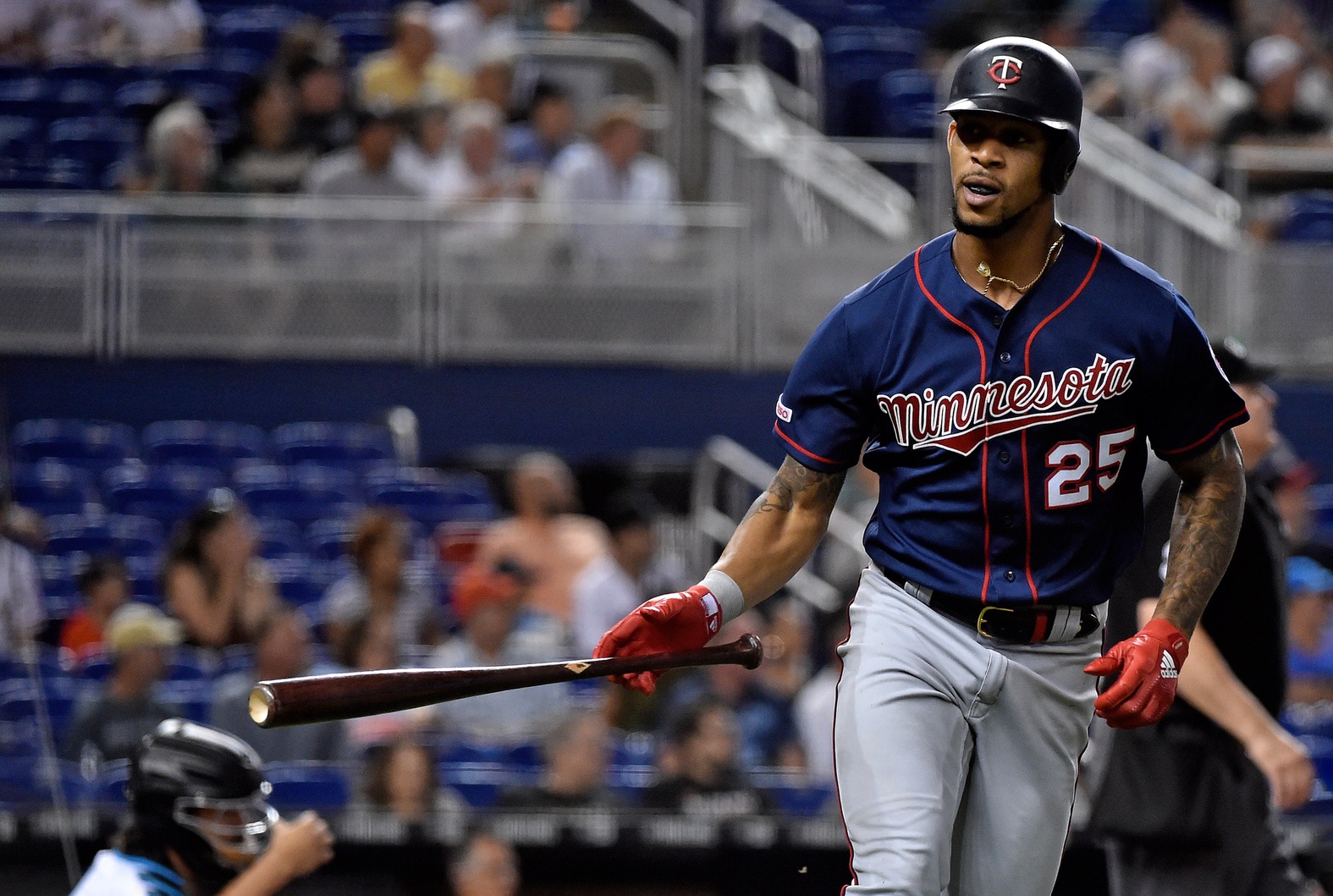
The Minnesota Twins have emphasized that when it comes to Byron Buxton, his recovery process will be taken one day at a time. On this day however he reached a fairly significant milestone for the 2020 season: Live swings. It happened in front of a near-empty minor league stadium. There were no fans, no fielders and no pressure. A congregation of coaches and a smattering of players lined the wall behind the plate and lingered in the dugout. Buxton’s first live action in the batter’s box since last August didn't exude the gravitas that perhaps the moment should have. In this moment, one of the players with the most electrifying tools in the game, was inching closer to his return.What was Buxton’s instant analysis of the hacks? “It’s the first day, so I was just up there, basically looking at pitches, trying to swing at good pitches, see how the arm feels,” he said. “Felt pretty good, so take the positive side out of it, put the ball in play a little bit. It’s a good day all around.” On Tuesday, Buxton faced a quartet of Twins pitchers, including a couple of Baileys — Homer and Ober -- as well as Bryan Sammons and Lachlan Wells. The field was empty besides on the mound and at the plate. Catchers called pitches and occasionally announced a count. Buxton saw about 16 pitches in all, including a pair of split-changes from Bailey. “I'm glad he's over here and I don't have to deal with that split-change anymore,” Buxton said after the session. “Oh my goodness. It was good.” For the Twins, having Buxton in center field and adding his speed to the lineup to give the opposing battery panic attacks is a massive weapon. After all, in 2019 the Twins were 62-25 when he played, which is certainly notable, but Rocco Baldelli feels that there is something extra that Buxton brings to the team. “There are a lot of skill sets that you see a fair number of in the big leagues, his skill set is not one you see very often,” Baldelli said. “When he does make these plays, there's an energy and it becomes contagious. It gets our team and his teammates a confidence when he's out there. That's something that he does.” Buxton’s emerging leadership is becoming more evident too. During the live session, once the pitchers were done for the day, Buxton would walk out toward the baseline and greet them, giving them a knuckle smash and offering words of encouragement. In regard to his shoulder recovery, Buxton noted that the little things, like a healthy day after live swings, makes a difference. It’s possible, too, that little things such as a passing platitude to a teammate makes a difference. As far as his progression, if all goes well Buxton says he will see live pitching again on Thursday and Friday. Once comfortable with that, he will begin game action but there is no timeline for that -- which is something the manager and player agree upon. “His comfort and progression and health are the most important thing,” said Baldelli. “I don't have a schedule for Byron Buxton. Our training staff does not have a schedule for Byron. He's going to show us what his schedule will be by how well everything goes as it is laid out.” “We are all on the same page,” Buxton said. “Each and every day we take it one day at a time. Today was the first day of live BPs and it felt good.” What does it mean for Opening Day? “Obviously I want to make Opening Day, but if the situation isn’t here, it’s not here,” he said matter-of-factly. “Keep doing what I’m doing, keep working hard, and go from there.” One day at a time. Click here to view the article
-
 What was Buxton’s instant analysis of the hacks? “It’s the first day, so I was just up there, basically looking at pitches, trying to swing at good pitches, see how the arm feels,” he said. “Felt pretty good, so take the positive side out of it, put the ball in play a little bit. It’s a good day all around.” On Tuesday, Buxton faced a quartet of Twins pitchers, including a couple of Baileys — Homer and Ober -- as well as Bryan Sammons and Lachlan Wells. The field was empty besides on the mound and at the plate. Catchers called pitches and occasionally announced a count. Buxton saw about 16 pitches in all, including a pair of split-changes from Bailey. “I'm glad he's over here and I don't have to deal with that split-change anymore,” Buxton said after the session. “Oh my goodness. It was good.” For the Twins, having Buxton in center field and adding his speed to the lineup to give the opposing battery panic attacks is a massive weapon. After all, in 2019 the Twins were 62-25 when he played, which is certainly notable, but Rocco Baldelli feels that there is something extra that Buxton brings to the team. “There are a lot of skill sets that you see a fair number of in the big leagues, his skill set is not one you see very often,” Baldelli said. “When he does make these plays, there's an energy and it becomes contagious. It gets our team and his teammates a confidence when he's out there. That's something that he does.” Buxton’s emerging leadership is becoming more evident too. During the live session, once the pitchers were done for the day, Buxton would walk out toward the baseline and greet them, giving them a knuckle smash and offering words of encouragement. In regard to his shoulder recovery, Buxton noted that the little things, like a healthy day after live swings, makes a difference. It’s possible, too, that little things such as a passing platitude to a teammate makes a difference. As far as his progression, if all goes well Buxton says he will see live pitching again on Thursday and Friday. Once comfortable with that, he will begin game action but there is no timeline for that -- which is something the manager and player agree upon. “His comfort and progression and health are the most important thing,” said Baldelli. “I don't have a schedule for Byron Buxton. Our training staff does not have a schedule for Byron. He's going to show us what his schedule will be by how well everything goes as it is laid out.” “We are all on the same page,” Buxton said. “Each and every day we take it one day at a time. Today was the first day of live BPs and it felt good.” What does it mean for Opening Day? “Obviously I want to make Opening Day, but if the situation isn’t here, it’s not here,” he said matter-of-factly. “Keep doing what I’m doing, keep working hard, and go from there.” One day at a time.
 -
The culling of the Minnesota Twins' roster started on Monday.Reassigned to the minor league camp are pitchers Lewis Thorpe, Dakota Chalmers, Jhoan Duran, Jorge Alcala, outfielder Gilberto Celestino and infielders Nick Gordon and Travis Blankenhorn. Of the cuts, perhaps the most surprising was Lewis Thorpe. Thorpe started to gain traction as a left-handed reliever late in 2019, striking out 17 in 13.1 innings in September, but he had left camp earlier this month for personal reasons and had yet to throw in a spring game. Rocco Baldelli said that Thorpe took the news well. “He knows what we are asking him to do,” said Baldelli. “What we are asking him to do has been very well laid out for him. And now he has to go and follow through and do it. We know the ability that he has. We know that he's not (just) close to being a big leaguer. He's a guy that can pitch in the big leagues and do it well. He just has to prepare for his season and make sure he's ready once the bell rings.” Dakota Chalmers, who is returning from an elbow injury from 2019, would be stretched out at a slower pace than the rest of the pitchers. “Our view of this from the beginning was we were going to slow-build him in spring training anyway,” said Falvey of Chalmers. “We're focused more on the end of season than the beginning. I think that's true of a lot of young arms, but for him in particular, coming off the surgery and an injury, we'd rather start him slow and let him finish the season strong than start him now, get to a point in the season where you feel like you have to cut off his innings because you've run out of buildup time.” “By all accounts, he had a great camp.” Duran, Twins Daily’s number six ranked prospect for 2020, has a hard sinking fastball which can reach upwards of 99 miles per hour and struck out 136 over 115 innings split between Pensacola and Fort Myers. This spring, the Twins were working with him to smooth out some of his mechanics in hopes of achieving better command of his repertoire. Baldelli did not want to put labels on the roles of the reassigned pitchers just yet. Chalmers would have the limits in place. Others would potentially see hybrid roles. For instance, when it came to the hard-throwing Alcala, Baldelli says he could see him used in a number of ways. “It’s not always a pure start, reliever, short reliever, there are a lot of different categories these guys can fall into,” the manager said. “Alcala is going to fall into that he's-going-to-be-lengthened-out category. He may help us at this level in a number of different ways.” Gordon performed well in his second stint at Triple-A, collecting 29 doubles in just 70 games with Rochester, but injuries limited his 2019 season. The former first-round pick remains decent middle infield depth even as his once vaunted prospect status declines. Celestino, acquired from the Houston Astros in the Ryan Pressly trade, left a strong impression on the team with his athleticism in the outfield. The Twins also announced that pitcher Fernando Romero has been added to the restricted list. According to Twins’ Derek Falvey, unlike the reassignment moves, adding Romero to the restricted list simply acknowledged that the player is not currently with the team and will not be for an indefinite amount of time. Once able to join the team, Romero could face another transaction. He has remained in the Dominican Republic because of visa issues while throwing in the Twins academy in Boca Chica while exiled from the team. “We've got staff and scouts around there that are connected with him more regularly, so probably the best way to describe it is a continuation of his offseason program and a little more throwing,” Falvey said. “Obviously, he's not pitching in games and playing here, but he's prepping." The academy has similar technology to the team’s Fort Myers complex, including Trackman and Rapsodo, so the organization can continue to monitor his progress. The Twins are now down to 55 players in camp. Click here to view the article
- 28 replies
-
- 1
-
-
- lewis thorpe
- rocco baldelli
- (and 2 more)
-
 Reassigned to the minor league camp are pitchers Lewis Thorpe, Dakota Chalmers, Jhoan Duran, Jorge Alcala, outfielder Gilberto Celestino and infielders Nick Gordon and Travis Blankenhorn. Of the cuts, perhaps the most surprising was Lewis Thorpe. Thorpe started to gain traction as a left-handed reliever late in 2019, striking out 17 in 13.1 innings in September, but he had left camp earlier this month for personal reasons and had yet to throw in a spring game. Rocco Baldelli said that Thorpe took the news well. “He knows what we are asking him to do,” said Baldelli. “What we are asking him to do has been very well laid out for him. And now he has to go and follow through and do it. We know the ability that he has. We know that he's not (just) close to being a big leaguer. He's a guy that can pitch in the big leagues and do it well. He just has to prepare for his season and make sure he's ready once the bell rings.” Dakota Chalmers, who is returning from an elbow injury from 2019, would be stretched out at a slower pace than the rest of the pitchers. “Our view of this from the beginning was we were going to slow-build him in spring training anyway,” said Falvey of Chalmers. “We're focused more on the end of season than the beginning. I think that's true of a lot of young arms, but for him in particular, coming off the surgery and an injury, we'd rather start him slow and let him finish the season strong than start him now, get to a point in the season where you feel like you have to cut off his innings because you've run out of buildup time.” “By all accounts, he had a great camp.” Duran, Twins Daily’s number six ranked prospect for 2020, has a hard sinking fastball which can reach upwards of 99 miles per hour and struck out 136 over 115 innings split between Pensacola and Fort Myers. This spring, the Twins were working with him to smooth out some of his mechanics in hopes of achieving better command of his repertoire. Baldelli did not want to put labels on the roles of the reassigned pitchers just yet. Chalmers would have the limits in place. Others would potentially see hybrid roles. For instance, when it came to the hard-throwing Alcala, Baldelli says he could see him used in a number of ways. “It’s not always a pure start, reliever, short reliever, there are a lot of different categories these guys can fall into,” the manager said. “Alcala is going to fall into that he's-going-to-be-lengthened-out category. He may help us at this level in a number of different ways.” Gordon performed well in his second stint at Triple-A, collecting 29 doubles in just 70 games with Rochester, but injuries limited his 2019 season. The former first-round pick remains decent middle infield depth even as his once vaunted prospect status declines. Celestino, acquired from the Houston Astros in the Ryan Pressly trade, left a strong impression on the team with his athleticism in the outfield. The Twins also announced that pitcher Fernando Romero has been added to the restricted list. According to Twins’ Derek Falvey, unlike the reassignment moves, adding Romero to the restricted list simply acknowledged that the player is not currently with the team and will not be for an indefinite amount of time. Once able to join the team, Romero could face another transaction. He has remained in the Dominican Republic because of visa issues while throwing in the Twins academy in Boca Chica while exiled from the team. “We've got staff and scouts around there that are connected with him more regularly, so probably the best way to describe it is a continuation of his offseason program and a little more throwing,” Falvey said. “Obviously, he's not pitching in games and playing here, but he's prepping." The academy has similar technology to the team’s Fort Myers complex, including Trackman and Rapsodo, so the organization can continue to monitor his progress. The Twins are now down to 55 players in camp.
 -
Kenta Maeda's Timing Couldn't Be Better
Parker Hageman posted a topic in Twins Daily Front Page News
As long as the ball stays in the ballpark, Kenta Maeda’s outings can be really satisfying to watch. Maeda oozes precision. His preparation -- the pre-game plyo workouts, the stretching, everything -- is performed succinctly. Prior to his warmup pitches, Maeda walked off three or four steps down the mound and marked the dirt where he wants to land. It is almost as if he is a pilot going through a pre-flight checklist.He can be methodical but Maeda is far from a plodder. For instance, in the third inning during Sunday’s game at JetBlue, after the Twins went down quickly in order, where other pitchers might slow foot it to the mound, Maeda raced out, beating his entire team, and tossed the rosin bag until his catcher was ready. It is his time to pitch. His delivery is fascinating to observe. His style doesn’t have fluidity nor would his slow-mo be glamorized on PitchingNinja’s twitter feed -- but Maeda’s mechanics feel deliberate by design. Maeda presets his split-change grip, digging deep before engaging the rubber and looking for his sign. When ready, he will draw his left foot back and wait for a moment. Then he will raise his leg, pause for another beat and pump his hands multiple times at the peak of his balance point. Only then will he kick his front foot and initiate the most electric portion of his mechanics. The lower half just whips at hitters and the arm unfurls in kind. Slow, slow, slow and explode. Rocco Baldelli doesn’t want to outright say it but he believes there is some portion of Maeda’s delivery that interferes with a hitter’s timing. “There are certain aspects of deliveries from some of the players that have come from Japan, some of the hesitations and some of the timing mechanisms and things like that,” Baldelli said. “Do I know if all of them lead to some sort of deception? I can’t tell you that for a fact but I bet there’s something to it.” There may be a psychological benefit from this approach. Whereas most pitchers flow through their delivery, giving hitters a reliable timing mechanism, Maeda’s sputtering technique encourages opponents to second guess themselves even before the pitch is delivered. It’s hard not to. His fastballs’ velocities -- a four-seamer, two-seam and cutter -- fluctuate like the weather in Minnesota in March. He will show 90 and run it up to 93. He’ll back some off to 89. The two-seamer will run, the four-seam will carry and the cutter will cut. No two fastballs are alike. “I’m not a pitcher who can throw 100 mile per hour heaters so I try to use all of my pitches to get strikeouts,” Maeda said through his translator. “That’s who I am as a pitcher.” It was almost a nod to Brusdar Graterol, the player whom the Twins sent to Los Angeles and has been lighting up spring training scoreboards with his triple digits. Maeda knows he doesn’t have the raw stuff that Graterol has and needs to employ other tactics to get swinging strikes. “All his pitches” includes a darting slider and his falling split-change. It was the latter pitch that Maeda ramped his usage of, which he perfected in 2018 after discovering the new grip. His previous changeup had tunneled well off of his fastball but the split grip effectively killed 300 RPMs of spin and gave him six inches of vertical drop. It now looked like a fastball out of his hand that fell off the face of the earth. The results were a spike in swinging strikes. The swinging strikes were on display on Sunday for Maeda and how he operated impressed his new manager. On this afternoon against the Red Sox, he was both economical and surgical. In four innings, he needed just 44 pitches to render the Boston lineup scoreless and threw 77 percent for strikes. Red Sox hitters swung wildly at his split-changes and sliders. Any contact would be classified as weak. “You really get to see a tremendous version of Kenta out there,” said Baldelli following his outing. “You watch how he attacked all hitters but you watch how he attacks some of these really good right-handed hitters and he can really compete against those guys pretty well.” Maeda was satisfied with his spring performance too. He considered his delivery -- the timing mechanism-messing pauses -- in sync. It was, according to him, the best so far and the fact that he didn’t give up a home run he said with a smile, made it even better. Click here to view the article
