



Nick Nelson
-
Posts
8,322 -
Joined
-
Last visited
-
Days Won
56
Content Type
Profiles
News
Minnesota Twins Videos
2026 Minnesota Twins Top Prospects Ranking
2022 Minnesota Twins Draft Picks
Minnesota Twins Free Agent & Trade Rumors, Notes, & Tidbits
Guides & Resources
2023 Minnesota Twins Draft Picks
The Minnesota Twins Players Project
2024 Minnesota Twins Draft Picks
2025 Minnesota Twins Draft Pick Tracker
2026 Minnesota Twins Draft Tracker: Picks & Bonuses
Forums
Blogs
Events
Store
Downloads
Gallery
Everything posted by Nick Nelson
-
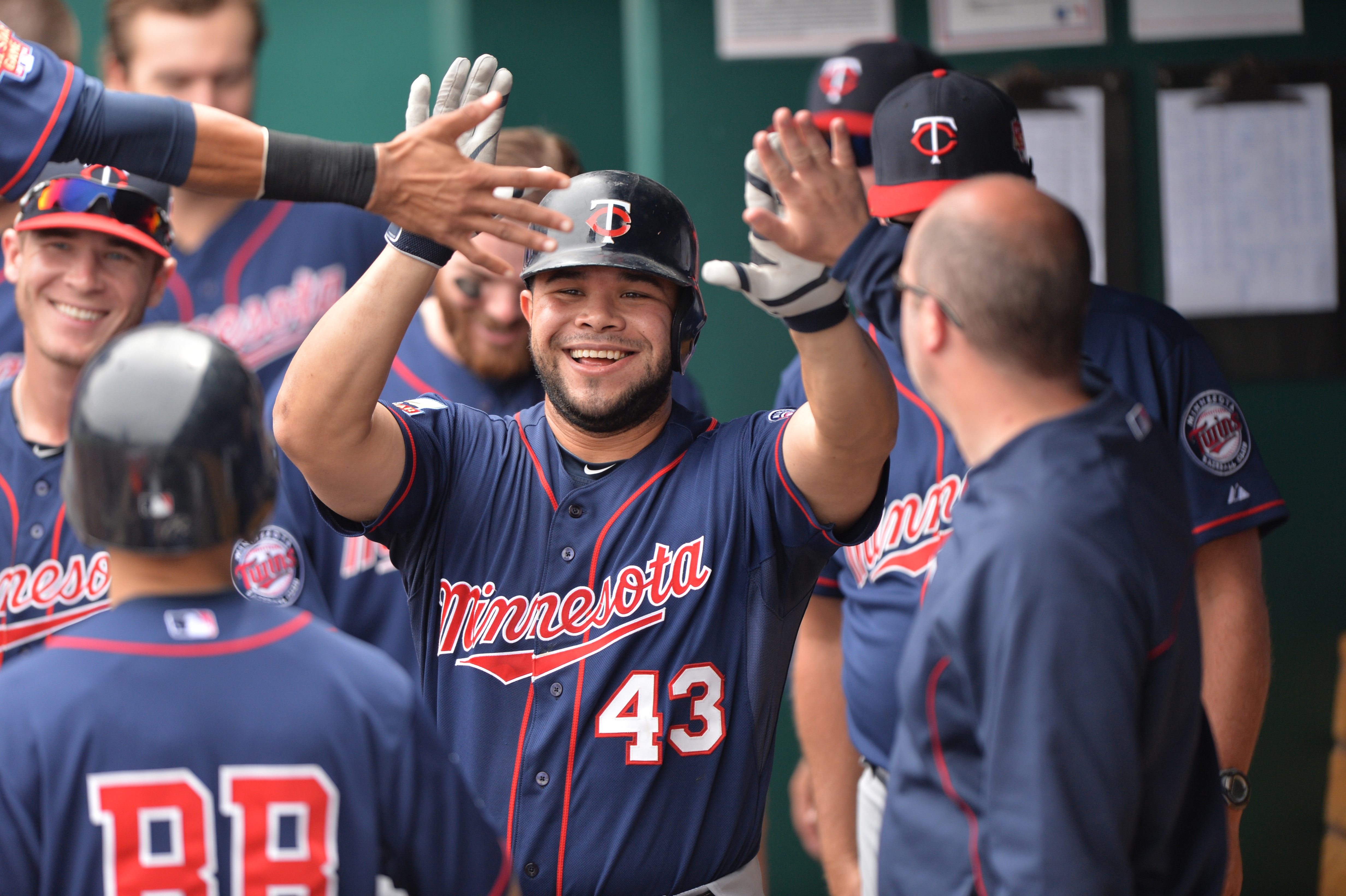 Pinto had been slumping after a red-hot April, so to some extent, his demotion was intended to get his bat back on track. But the bigger issue was that he was rarely catching with the Twins, giving him little opportunity to improve defensive skills that were drawing critical reviews from both coaches and players. Instead of allowing him to stick around and DH -- a role he seemed well equipped for -- the Twins signed Kendrys Morales and sent Pinto to Triple-A, ostensibly to refine him as a catcher. However, it's now becoming harder and harder to believe that the team views that as his long-term position. Kurt Suzuki's contract extension is one development that has clouded Pinto's future behind the plate. There is also the fact that Pinto hasn't even been the full-time catcher in Rochester. He has caught in only 30 of 52 games since being sent down, with nearly every other start coming at DH in recent weeks. There is really no doubt that Pinto's bat is big-league ready. That was fairly apparent when he was here, and has been reinforced by his offensive dominance in Triple-A, where he's hitting .302/.399/.500. It just isn't clear where the 25-year-old fits. The Twins don't appear to view him as a starting catcher and it looks like they favor Kennys Vargas at DH. Is Pinto likely to be traded this offseason? It makes little sense to keep letting him crush Triple-A pitching while catching only part-time. What would you do with Pinto?
 -

Article: Suddenly, Shortstops!
Nick Nelson replied to Nick Nelson's topic in Twins Daily Front Page News
Well, his MLB duty has been sporadic for a reason -- he hasn't hit. And... his OPS in the VSL 6 seasons ago...? Who was talking about that? He has a .688 OPS at Triple-A. Look, I like Escobar, but it seems we're in agreement that enthusiasm about his success should be tempered to a degree. So no need for the weird nit-picking. -
Article: Suddenly, Shortstops!
Nick Nelson replied to Nick Nelson's topic in Twins Daily Front Page News
We see value in having him around as a solid utility guy and depth option. That's probably how other teams see him, rather than as a starting SS. What is anyone really going to give up for that? Not enough to make it worthwhile, IMO. That's my hold-up. -
Article: Suddenly, Shortstops!
Nick Nelson replied to Nick Nelson's topic in Twins Daily Front Page News
See, to me, that's not worth it. The Twins have outfielders in the minors, and can find a guy like Sam Fuld in FA if needed. I value a guy who can capably play all over the infield -- and also hit a little -- more so than what they'd likely get back. When you finally have a modicum of depth at a position for the first time in like a decade, you don't just immediately trade one away. -
Article: Suddenly, Shortstops!
Nick Nelson replied to Nick Nelson's topic in Twins Daily Front Page News
I like what Escobar's doing but let's cool the "sell high" chatter. He had a .587 OPS in the majors prior to this season, and a career .675 OPS in the minors. Hopefully he is turning a corner but I don't know that other clubs are going to jump at him because of a solid stretch of 360 plate appearances. Also, there's nothing wrong with having a guy like him in the utility role. It's a luxury to have a versatile glove and a decent bat there, and if Santana should falter or get hurt, he's available to fall back on. -
Finding a non-temporary answer at the shortstop position has been a long-standing issue for the Minnesota Twins, dating back about a decade. In late April, we looked ahead to the upcoming crop of free agent shortstops, suggesting that this might be the best, or only, method for finding a palatable starter at the position in the remotely near future. However, since then, two players have emerged in a big way, to the point where we may now actually have a legitimate competition that doesn't amount to "which option is least terrible?"Eduardo Escobar has been drawing the lion's share of time at short, and he has performed fairly well. His .273/.319/.393 hitting line is above-average for the position, and his 32 doubles tie him for the team lead. I have always been a believer that Escobar's upside healthily outweighed his past production, and wrote back in March about his momentum toward overtaking the inadequate SS incumbent Pedro Florimon. Of course, the fact that Escobar has proven to be a superior option to Florimon isn't saying much, and while the 25-year-old has been solid both offensively and defensively this season, I think it's a stretch to argue that he should be counted on as the starter going forward. Escobar is a nice piece to have around, but I think he's best suited as a utility man and backup option at short. It's Danny Santana who has made the strongest case to claim shortstop duties in 2015 and beyond, even though he hasn't been playing there a whole lot. Santana's initial success upon being called up in May was surprising, in light of his .692 OPS in Triple-A prior to that promotion and his .708 career OPS in the minors, but what's more surprising is that he has never really cooled off. His OPS has been at or above .773 in every month, and so far in August he's hitting .319/.364/.458. Santana's production with the Twins this year has been strong enough to be an asset at any position, and jibes with the idea that his relatively unimpressive numbers in the minors were shaded by rawness and youth. Still, even if his abilities to spray line drives and run like crazy should keep his offensive game afloat, I'm not ready to tab him as an .800-plus OPS guy. His bat is much more likely to play at shortstop in the big picture, and I'm confident he'll ultimately bring more to the table there than Escobar. Of course, Santana is considered to be somewhat rough at shortstop, so it would help if he could play there and refine his defensive game. The Twins might view it the same way, as they gave him consecutive starts at short over the weekend -- his first infield exposure since June. Hopefully in September, or sooner, Aaron Hicks or someone else will take over center field and Santana can spend the final weeks solidifying his case to lock up the shortstop position, while Escobar moves around the diamond. Assuming both players stay on track and Santana can flash some fielding chops in a more extended audition, the Twins will finish the season with multiple legitimate internal options who have proven they have what it takes to play shortstop in the majors on a regular basis. That's something we haven't been able to say for a long time, and it would mean the club could finally go into this offseason without a clear need at that position. Click here to view the article
-
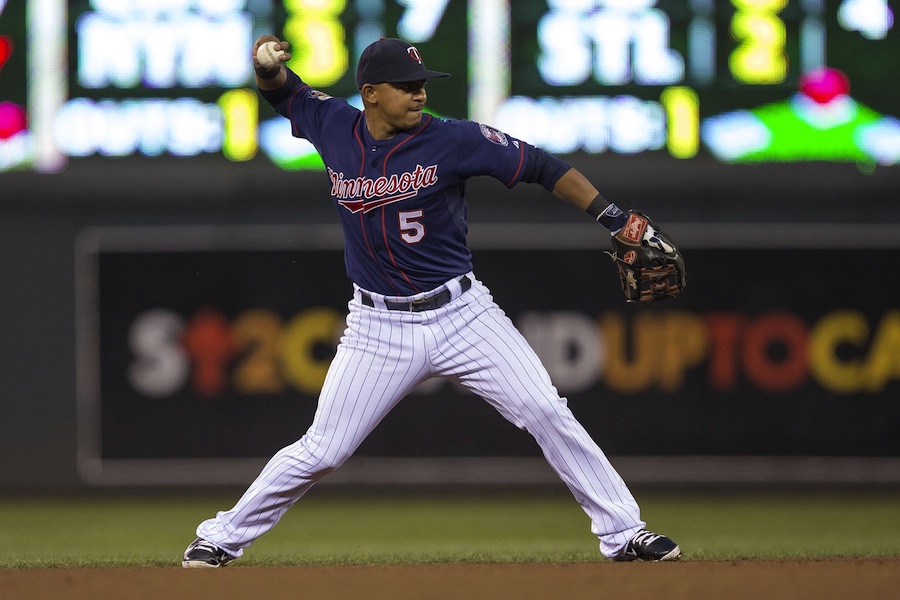 Eduardo Escobar has been drawing the lion's share of time at short, and he has performed fairly well. His .273/.319/.393 hitting line is above-average for the position, and his 32 doubles tie him for the team lead. I have always been a believer that Escobar's upside healthily outweighed his past production, and wrote back in March about his momentum toward overtaking the inadequate SS incumbent Pedro Florimon. Of course, the fact that Escobar has proven to be a superior option to Florimon isn't saying much, and while the 25-year-old has been solid both offensively and defensively this season, I think it's a stretch to argue that he should be counted on as the starter going forward. Escobar is a nice piece to have around, but I think he's best suited as a utility man and backup option at short. It's Danny Santana who has made the strongest case to claim shortstop duties in 2015 and beyond, even though he hasn't been playing there a whole lot. Santana's initial success upon being called up in May was surprising, in light of his .692 OPS in Triple-A prior to that promotion and his .708 career OPS in the minors, but what's more surprising is that he has never really cooled off. His OPS has been at or above .773 in every month, and so far in August he's hitting .319/.364/.458. Santana's production with the Twins this year has been strong enough to be an asset at any position, and jibes with the idea that his relatively unimpressive numbers in the minors were shaded by rawness and youth. Still, even if his abilities to spray line drives and run like crazy should keep his offensive game afloat, I'm not ready to tab him as an .800-plus OPS guy. His bat is much more likely to play at shortstop in the big picture, and I'm confident he'll ultimately bring more to the table there than Escobar. Of course, Santana is considered to be somewhat rough at shortstop, so it would help if he could play there and refine his defensive game. The Twins might view it the same way, as they gave him consecutive starts at short over the weekend -- his first infield exposure since June. Hopefully in September, or sooner, Aaron Hicks or someone else will take over center field and Santana can spend the final weeks solidifying his case to lock up the shortstop position, while Escobar moves around the diamond. Assuming both players stay on track and Santana can flash some fielding chops in a more extended audition, the Twins will finish the season with multiple legitimate internal options who have proven they have what it takes to play shortstop in the majors on a regular basis. That's something we haven't been able to say for a long time, and it would mean the club could finally go into this offseason without a clear need at that position.
 -
Last week, the Star Tribune's Phil Miller wrote a great column about Oswaldo Arcia's advice to rookie slugger Kennys Vargas: "Don't worry about [going the other way], just pull the ball and hit it over the fence." The story, and that quote in particular, unsurprisingly drew some attention.Owing to his intimidating presence in the batter's box, Vargas has often been compared to David Ortiz. As we all know, Ortiz became a star quickly after leaving Minnesota, and later went on to criticize his former organization for pressing him to alter his hitting approach. If Arcia's words made the Twins cringe, they've shown no signs of it. The 23-year-old outfielder has lived by that mantra at the plate all year long, and they've stuck with him. It's paying off. Sure, Ron Gardenhire might lament the ferocious swinging at times, but Arcia was in the starting lineup on Opening Day and -- despite some truly ugly slumps -- he's mostly remained there when healthy. Because while Gardy might justifiably admonish him for swinging "as hard as he possibly can, trying to hit the ball 8,000 miles," you can't argue with the results when he makes contact. Only three qualified hitters in the majors have struck out at a higher rate than Arcia's 30.6 percent. But when NOT striking out, he's hitting .342 and slugging .640. In recent weeks, the whiffs haven't subsided but the authoritative contact has increased; six of his 11 homers have come in the last month, even as he's struck out in one of every three plate appearances. Vargas is experiencing success with a similar style, as his intense cuts have produced a lot of strikeouts (19, against only three walks), but they've also produced some big offensive numbers, including a .317 average with three homers and 15 RBI in 15 games. And of course, the very model for this prototype is Miguel Sano, who last year in the minors fanned 142 times while also launching 35 homers. The Twins are hoping that these three hitters can anchor the middle of their lineup for many years to come, so if the team seems a little more passive than you'd expect in response to Arcia's open rebellion against toning down the swing in favor of more contact, perhaps it's just because they're readying themselves for what's to come. Hopefully by now they know better than to try and fundamentally change a promising young power hitter's ways. Click here to view the article
-
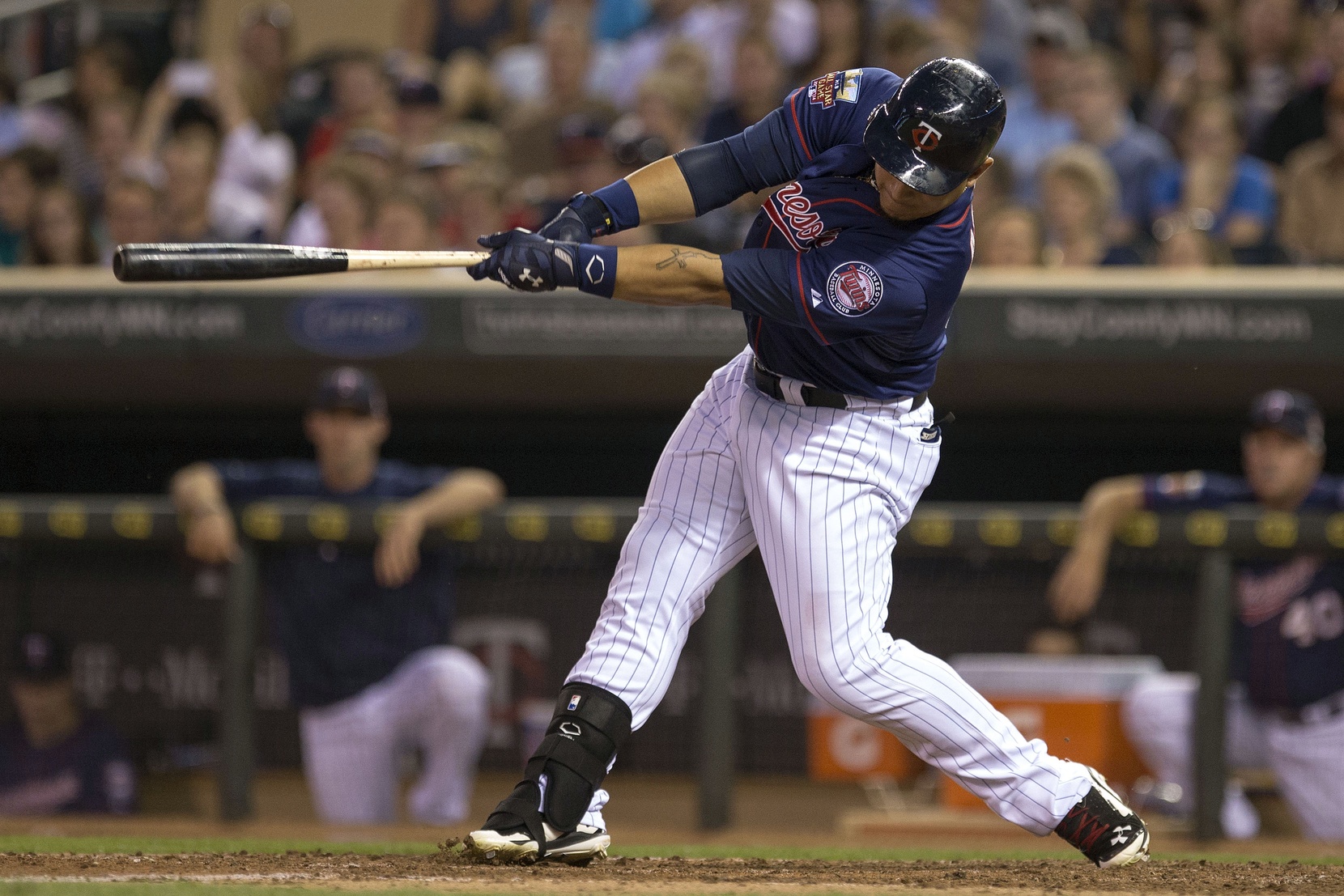 Owing to his intimidating presence in the batter's box, Vargas has often been compared to David Ortiz. As we all know, Ortiz became a star quickly after leaving Minnesota, and later went on to criticize his former organization for pressing him to alter his hitting approach. If Arcia's words made the Twins cringe, they've shown no signs of it. The 23-year-old outfielder has lived by that mantra at the plate all year long, and they've stuck with him. It's paying off. Sure, Ron Gardenhire might lament the ferocious swinging at times, but Arcia was in the starting lineup on Opening Day and -- despite some truly ugly slumps -- he's mostly remained there when healthy. Because while Gardy might justifiably admonish him for swinging "as hard as he possibly can, trying to hit the ball 8,000 miles," you can't argue with the results when he makes contact. Only three qualified hitters in the majors have struck out at a higher rate than Arcia's 30.6 percent. But when NOT striking out, he's hitting .342 and slugging .640. In recent weeks, the whiffs haven't subsided but the authoritative contact has increased; six of his 11 homers have come in the last month, even as he's struck out in one of every three plate appearances. Vargas is experiencing success with a similar style, as his intense cuts have produced a lot of strikeouts (19, against only three walks), but they've also produced some big offensive numbers, including a .317 average with three homers and 15 RBI in 15 games. And of course, the very model for this prototype is Miguel Sano, who last year in the minors fanned 142 times while also launching 35 homers. The Twins are hoping that these three hitters can anchor the middle of their lineup for many years to come, so if the team seems a little more passive than you'd expect in response to Arcia's open rebellion against toning down the swing in favor of more contact, perhaps it's just because they're readying themselves for what's to come. Hopefully by now they know better than to try and fundamentally change a promising young power hitter's ways.
 -
Article: Twins Daily Members on Joe Mauer
Nick Nelson replied to Nick Nelson's topic in Twins Daily Front Page News
alskn: One thing I would suggest is using the "Paste From Word" button (http://screencast.com/t/KHxLfNT2D) when you paste in your content. This tends to keep some of the spacing/formatting elements intact. -
This week we asked members to share your thoughts on Joe Mauer and the Twins in our blog section, offering up free pizza to all who participated. The response was tremendous. Fifteen of you checked in with entries that incorporated the topic of Mauer, often in very creative ways. For those who wrote, keep an eye on your Twins Daily inbox this weekend for your Papa John's promo code. Here's a recap of the stories that have been shared:Blast From the Past: Mauer's Inside the Park Home Run, by hugelycat: A look back at one of the quirkier moments in Mauer's career. After working the count to 3-2, Mauer rips a pitch from Scot Shields to center. Gary Matthews Jr. makes a valiant try at leaping for the ball, but he can’t get to it. The ball ends up rebounding off the wall, with Matthews rolling to the ground. Where We Are, Where We Are Going, by alskntwnsfn: A deep statistical look at where the Twins currently stand, with analysis of what those numbers mean going forward. The Forums and Blogs could fill volumes about what has transpired, what should have happened, and where we can go from here. However, I'd like to take a more quantitative approach and look at the team versus the rest of the league to see what we can deduce about the team and where they are losing the most ground. Rebuilding From 90 Losses to a Playoff Team, by jay: The Twins are in their fourth straight year of losing baseball. Looking at historical data for other teams, how long will it take to get back to the postseason? The Twins are about to wrap year 3 since 2011's 90+ losses. We're certainly hopeful that the Twins reach the playoffs before 2017 or 2018, but it's feasible to think that could be the case as prospects continue to develop and grow into producers at the MLB level. The Twins appear pretty close to on track for "average" or just ahead. A Mauer Resurgence Will Prove Vital, by Shane Wahl: Looking at how the Twins' lineup will shape up going forward, we can conclude that strong production from Mauer will be key to offensive production. Buxton is going to be in scoring position a lot for Mauer, and the hit and run potential is clearly there. Aside from that, Mauer's OBP in from of Sano, Vargas, and Dozier is going to be huge. Everyone's a Doctor: Joe Mauer, the Injury Bug, and the Notion of "Toughness", by trevor.aufderheide: Digging into the perceptions surrounding Mauer and his willingless (or lack thereof) to play through injuries. In baseball, a game where healthy hitters have a hard enough time hitting 95-mph fastballs, playing someone whose swing and instincts are off due to injury makes no sense. Additionally, most writers and fans lack the medical knowledge and insider information that professional medical staffs possess, so who are they to demand playing time from afflicted athletes? New Hopes, by Twins and Losses: Celebrating this week's return of Obi-Wan Kenob-- er, Joe Mauer. Joe Mauer might be the crazy, old wizard of Minnesota Twins lore at some point, but the former MVP has shown that he still has some magic left. The Rebirth of a Hometown Hero, by kevinhorner: Mauer's return to the field serves as a reminder of all the great skills he brings to the table, and how those skills can benefit the team's fortunes going forward. On Monday night, under the lights of Minute Maid Park, Joe Mauer instilled hope back into the hearts of Twins’ fans after missing essentially the whole month of July with a strained oblique. Secret Cabin, by Minnie Paul and Mary: How does Mauer figure into the team's failures over the last few seasons? He's an easy target, but doesn't deserve the blame. Even when Boston came knocking, we weren't interested. We never were. Trading Joe Mauer was never an option. So when the team started losing, the fans kept asking for more from the man who had never let them down before. The Game, by ashburyjohn: A fictional, yet amusing and eloquent, conversation between Mauer, Morneau and Gardy. Mauer studied the manager for a moment, and then looked at Morneau, who sat as still as if carved out of marble. "There are lots of things Morneau would never say," he told the others quietly, while staring at the Canadian intently. "He'd never say anything vindictive or dishonest, for instance." He pursed his lips thoughtfully. "It's funny," he finally told Morneau slowly. "I think I know you very well. But it's hard to nail down just one sentence I'd never expect to hear from you." How to Save Joe Mauer's Career, by goulik: Perhaps what Mauer needs to do is more closely emulate another famous first baseman in the team's history. Joe is the second coming of the hometown guy. Unlike Hrbek, he sat behind the dish, made a superstar name for himself with the national media, and received the awards and praise denied his predecessor. Pizza and Joe Mauer, by ReturnOfShaneMack: How Mauer's career can be likened to that good old dingy yet delicious pizza place in your hometown. Joe Mauer hasn’t changed. But Minnesotans’ perception of him has. He’s the pizza place’s pizza. He’s the same, reliable (and, let’s be honest, plain cheese) pizza he’s always been. 2016 Twins, by tobi0040: Projecting each position on Twins not next year, but the year after. Joe Mauer will be under contract thru 2018 and it is really hard to see a scenario where Joe is not with the team. His contract is next to immovable, even if he was having a typical .330, 10 HR pace. He, of course is not. I have never been a huge proponent of playing a guy to play for someone else and the Twins aren’t going to do that. Going Green with the Twins, by hybridbear: Various musings on Mauer, the Twins' Spanish broadcasting team and the team's admirable sustainibility efforts. Their efforts to capture & reuse rainwater are well publicized, but some of their other efforts which are less well known also deserve attention. Youth Movement, by Target Field of Dreams: How does Mauer (and other veterans) fit into the organization's prospect-based rebuilding process? While the young guys will take their lumps and struggle, see Trevor May's first start as an example of this, it is exciting to see them get their shots. It's important for them to get a chance to figure things out, so they can help us next year and for the Twins to figure out what they have as they plan their roster decisions for years to come. Monday Morning Madness: August 11, 2014, by Brad Swanson: Mauer and several other topics are covered in another installment of Swanson's excellent MMM series. Eduardo Escobar is tied with Jose Abreu for 10th in the AL with 29 doubles. It seems like a good time to remind everyone that he was behind Pedro Florimon on the depth chart when the season started. Pedro Florimon was batting .108/.194/.154 when the Twins finally switched to Escobar on May 7. When we launched Twins Daily, one of the overarching reasons was that we wanted not only to write about the Twins, but also to read about them. In that spirit, this has been a really fun week for all of us. I hope that those of you who blogged here for the first time as part of this contest will try it again, and that those who are already blogging regularly will keep chugging along. Click here to view the article
-
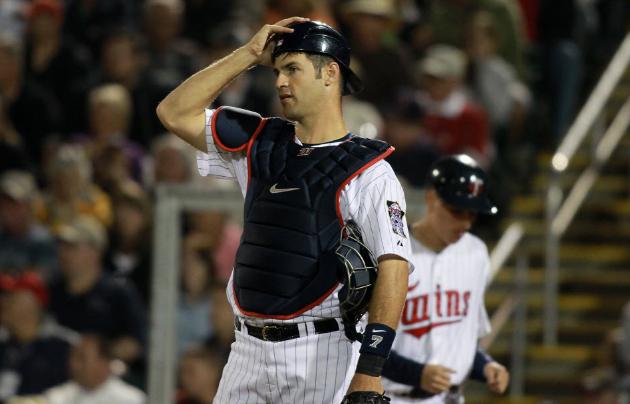 Blast From the Past: Mauer's Inside the Park Home Run, by hugelycat: A look back at one of the quirkier moments in Mauer's career. After working the count to 3-2, Mauer rips a pitch from Scot Shields to center. Gary Matthews Jr. makes a valiant try at leaping for the ball, but he can’t get to it. The ball ends up rebounding off the wall, with Matthews rolling to the ground. Where We Are, Where We Are Going, by alskntwnsfn: A deep statistical look at where the Twins currently stand, with analysis of what those numbers mean going forward. The Forums and Blogs could fill volumes about what has transpired, what should have happened, and where we can go from here. However, I'd like to take a more quantitative approach and look at the team versus the rest of the league to see what we can deduce about the team and where they are losing the most ground. Rebuilding From 90 Losses to a Playoff Team, by jay: The Twins are in their fourth straight year of losing baseball. Looking at historical data for other teams, how long will it take to get back to the postseason? The Twins are about to wrap year 3 since 2011's 90+ losses. We're certainly hopeful that the Twins reach the playoffs before 2017 or 2018, but it's feasible to think that could be the case as prospects continue to develop and grow into producers at the MLB level. The Twins appear pretty close to on track for "average" or just ahead. A Mauer Resurgence Will Prove Vital, by Shane Wahl: Looking at how the Twins' lineup will shape up going forward, we can conclude that strong production from Mauer will be key to offensive production. Buxton is going to be in scoring position a lot for Mauer, and the hit and run potential is clearly there. Aside from that, Mauer's OBP in from of Sano, Vargas, and Dozier is going to be huge. Everyone's a Doctor: Joe Mauer, the Injury Bug, and the Notion of "Toughness", by trevor.aufderheide: Digging into the perceptions surrounding Mauer and his willingless (or lack thereof) to play through injuries. In baseball, a game where healthy hitters have a hard enough time hitting 95-mph fastballs, playing someone whose swing and instincts are off due to injury makes no sense. Additionally, most writers and fans lack the medical knowledge and insider information that professional medical staffs possess, so who are they to demand playing time from afflicted athletes? New Hopes, by Twins and Losses: Celebrating this week's return of Obi-Wan Kenob-- er, Joe Mauer. Joe Mauer might be the crazy, old wizard of Minnesota Twins lore at some point, but the former MVP has shown that he still has some magic left. The Rebirth of a Hometown Hero, by kevinhorner: Mauer's return to the field serves as a reminder of all the great skills he brings to the table, and how those skills can benefit the team's fortunes going forward. On Monday night, under the lights of Minute Maid Park, Joe Mauer instilled hope back into the hearts of Twins’ fans after missing essentially the whole month of July with a strained oblique. Secret Cabin, by Minnie Paul and Mary: How does Mauer figure into the team's failures over the last few seasons? He's an easy target, but doesn't deserve the blame. Even when Boston came knocking, we weren't interested. We never were. Trading Joe Mauer was never an option. So when the team started losing, the fans kept asking for more from the man who had never let them down before. The Game, by ashburyjohn: A fictional, yet amusing and eloquent, conversation between Mauer, Morneau and Gardy. Mauer studied the manager for a moment, and then looked at Morneau, who sat as still as if carved out of marble. "There are lots of things Morneau would never say," he told the others quietly, while staring at the Canadian intently. "He'd never say anything vindictive or dishonest, for instance." He pursed his lips thoughtfully. "It's funny," he finally told Morneau slowly. "I think I know you very well. But it's hard to nail down just one sentence I'd never expect to hear from you." How to Save Joe Mauer's Career, by goulik: Perhaps what Mauer needs to do is more closely emulate another famous first baseman in the team's history. Joe is the second coming of the hometown guy. Unlike Hrbek, he sat behind the dish, made a superstar name for himself with the national media, and received the awards and praise denied his predecessor. Pizza and Joe Mauer, by ReturnOfShaneMack: How Mauer's career can be likened to that good old dingy yet delicious pizza place in your hometown. Joe Mauer hasn’t changed. But Minnesotans’ perception of him has. He’s the pizza place’s pizza. He’s the same, reliable (and, let’s be honest, plain cheese) pizza he’s always been. 2016 Twins, by tobi0040: Projecting each position on Twins not next year, but the year after. Joe Mauer will be under contract thru 2018 and it is really hard to see a scenario where Joe is not with the team. His contract is next to immovable, even if he was having a typical .330, 10 HR pace. He, of course is not. I have never been a huge proponent of playing a guy to play for someone else and the Twins aren’t going to do that. Going Green with the Twins, by hybridbear: Various musings on Mauer, the Twins' Spanish broadcasting team and the team's admirable sustainibility efforts. Their efforts to capture & reuse rainwater are well publicized, but some of their other efforts which are less well known also deserve attention. Youth Movement, by Target Field of Dreams: How does Mauer (and other veterans) fit into the organization's prospect-based rebuilding process? While the young guys will take their lumps and struggle, see Trevor May's first start as an example of this, it is exciting to see them get their shots. It's important for them to get a chance to figure things out, so they can help us next year and for the Twins to figure out what they have as they plan their roster decisions for years to come. Monday Morning Madness: August 11, 2014, by Brad Swanson: Mauer and several other topics are covered in another installment of Swanson's excellent MMM series. Eduardo Escobar is tied with Jose Abreu for 10th in the AL with 29 doubles. It seems like a good time to remind everyone that he was behind Pedro Florimon on the depth chart when the season started. Pedro Florimon was batting .108/.194/.154 when the Twins finally switched to Escobar on May 7. When we launched Twins Daily, one of the overarching reasons was that we wanted not only to write about the Twins, but also to read about them. In that spirit, this has been a really fun week for all of us. I hope that those of you who blogged here for the first time as part of this contest will try it again, and that those who are already blogging regularly will keep chugging along.
 -
Article: Twins Are Making The Right Moves
Nick Nelson replied to Nick Nelson's topic in Twins Daily Front Page News
Because the players who will fill many of those holes haven't arrived yet. What I meant is that they have few holes to fill externally via FA or trade. For instance, why would they acquire a third baseman when Sano is on the way? Why would they sign a starter when they've already got Meyer/May/Milone/Gibson/Nolsaco lined up? -
Article: Twins Are Making The Right Moves
Nick Nelson replied to Nick Nelson's topic in Twins Daily Front Page News
Correct, thanks. I got a little bit mixed up, and had meant to mention the Morales trade as well, since it also fits with the general theme of the article. -
As the Minnesota Twins have skidded to poor finishes in each of the past three seasons, many fans have been just as frustrated -- if not more so -- with the lack of organizational direction as the losses piled up in recent Augusts and Septembers. Too often there has been ambiguity about whether to buy or sell. Too often there has been reluctance to part with veteran players who weren't part of the long-term plan. Too often there has been inaction. None of that can be said about the front office's decision-making as we head toward another disappointing finish here in 2014.The Twins made only one deal before the non-waiver deadline on July 31st, sending Sam Fuld to the A's for Tommy Milone in what might go down as one of Terry Ryan's niftier pickups, but they've been characteristically active on the trade market here in August. Over the weekend, they dealt Kevin Correia to the Dodgers, making room for Milone in the rotation. And on Monday, needing to free up a roster spot for the return of Joe Mauer, Ryan was able to send Josh Willingham to the Royals. A couple fairly intriguing minor-league pitchers came back in the Correia and Willingham swaps, but the chief imperative there was always to open up playing time for younger guys. The deals also work out pretty well for the departing players, who head from the cellar-dwelling Twins to first-place contenders. Neither Correia nor Willingham has ever made a postseason appearance despite a combined 23 years of experience in the majors. Both have a good shot now. The Twins might not be done. There are still a few relievers on the roster who could draw interest from competing teams and are likely in their final year here -- most notably Jared Burton and Brian Duensing. There are several bullpen arms in Rochester that deserve a look. Additionally, as Mike Berardino pointed out on Tuesday, Ryan might try and find a suitor for Yohan Pino; his 1-5 record and 5.37 ERA won't wow anybody, but his solid peripherals -- in addition to his spectacular Triple-A numbers -- could stir up a bit of interest from a club needing a fifth starter or added rotation depth. The Twins have motivation to move Pino with Ricky Nolasco expected to return from his rehab stint soon. The ongoing rebuild that has been taking place here in Minnesota has been a difficult one to endure, filled with fits and starts, injury setbacks and indecisiveness. But finally, you can really begin to feel some momentum building. The Twins might be headed toward another 90-loss finish, but pieces are beginning to fall into place. May and Milone have arrived. Kennys Vargas is getting his feet wet while Danny Santana continues to build his case for a prominent 2015 role. Prospects are starting to be moved up more aggressively, with Byron Buxton's promotion to Double-A despite underwhelming numbers in Ft. Myers serving as the latest example. It's hard to heap praise on a franchise that has shown little in the way of on-field progress, but the Twins have done a good job of clearing house, and will enter this offseason with relatively few holes to fill. They'll have plenty of money to address those that can't be filled by incoming youth. "Wait until next year" might not be the most satisfying mantra to fall back on, but after a lot of treading water, it feels like we can at least feel confident in saying it now. Click here to view the article
-
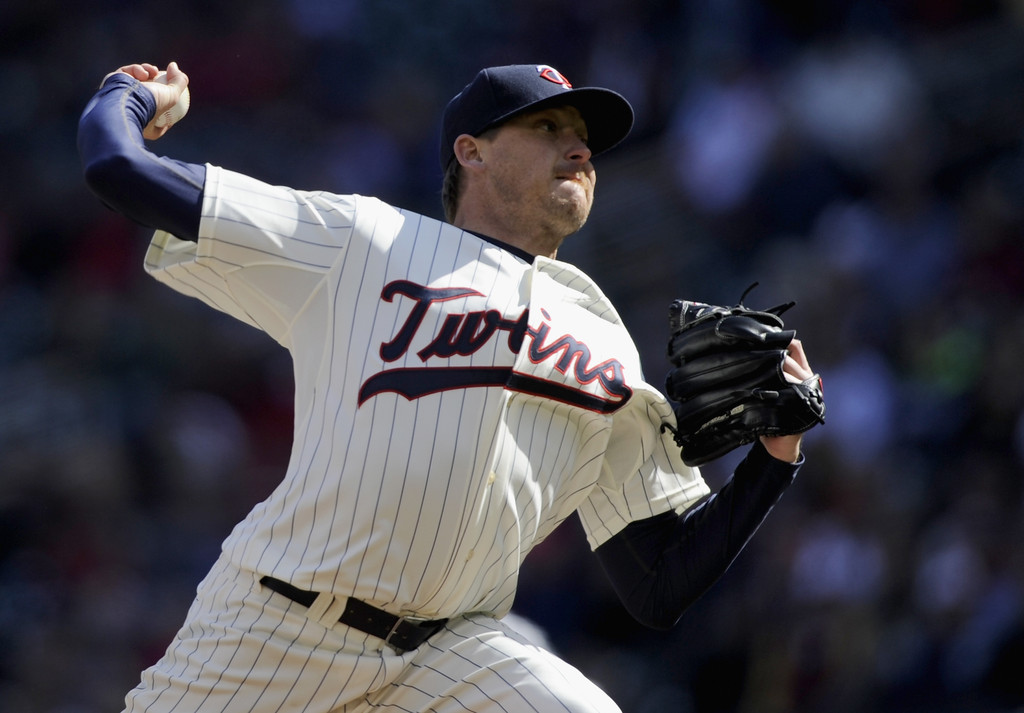 The Twins made only one deal before the non-waiver deadline on July 31st, sending Sam Fuld to the A's for Tommy Milone in what might go down as one of Terry Ryan's niftier pickups, but they've been characteristically active on the trade market here in August. Over the weekend, they dealt Kevin Correia to the Dodgers, making room for Milone in the rotation. And on Monday, needing to free up a roster spot for the return of Joe Mauer, Ryan was able to send Josh Willingham to the Royals. A couple fairly intriguing minor-league pitchers came back in the Correia and Willingham swaps, but the chief imperative there was always to open up playing time for younger guys. The deals also work out pretty well for the departing players, who head from the cellar-dwelling Twins to first-place contenders. Neither Correia nor Willingham has ever made a postseason appearance despite a combined 23 years of experience in the majors. Both have a good shot now. The Twins might not be done. There are still a few relievers on the roster who could draw interest from competing teams and are likely in their final year here -- most notably Jared Burton and Brian Duensing. There are several bullpen arms in Rochester that deserve a look. Additionally, as Mike Berardino pointed out on Tuesday, Ryan might try and find a suitor for Yohan Pino; his 1-5 record and 5.37 ERA won't wow anybody, but his solid peripherals -- in addition to his spectacular Triple-A numbers -- could stir up a bit of interest from a club needing a fifth starter or added rotation depth. The Twins have motivation to move Pino with Ricky Nolasco expected to return from his rehab stint soon. The ongoing rebuild that has been taking place here in Minnesota has been a difficult one to endure, filled with fits and starts, injury setbacks and indecisiveness. But finally, you can really begin to feel some momentum building. The Twins might be headed toward another 90-loss finish, but pieces are beginning to fall into place. May and Milone have arrived. Kennys Vargas is getting his feet wet while Danny Santana continues to build his case for a prominent 2015 role. Prospects are starting to be moved up more aggressively, with Byron Buxton's promotion to Double-A despite underwhelming numbers in Ft. Myers serving as the latest example. It's hard to heap praise on a franchise that has shown little in the way of on-field progress, but the Twins have done a good job of clearing house, and will enter this offseason with relatively few holes to fill. They'll have plenty of money to address those that can't be filled by incoming youth. "Wait until next year" might not be the most satisfying mantra to fall back on, but after a lot of treading water, it feels like we can at least feel confident in saying it now.
 -
This week on Twins Daily, you can earn a free dinner simply by sharing your thoughts on the team. Our friends at Papa John's gave us a bunch of complimentary pizza coupons to give away to our members, so we're going to give one to every reader who posts a blog here on the site between today (Monday) and Thursday at midnight. You write a blog, you get a pizza*. It's that simple. There are only two rules:1) The blog entry must be 100 words or longer. 2) The post must, in some way, incorporate Joe Mauer. Mauer seemed like a natural theme for the week given that he's returning from his oblique injury and his future is in question as he suffers through a career-worst season at age 31. He doesn't need to be the focus of your story, but he must be involved in some way. Other than that, you're free to take it whichever direction you want. If you haven't done so yet, creating a blog here on Twins Daily is extremely easy. Simply click "Blogs" on the top navigation, then click "Create a Blog." Customize a few things and you'll be ready to rock. If you already blog somewhere else and want to simply re-post an entry here with a link back, that's fine. We want people to find your work. On Friday, we will send promo codes for a free large two-topping pizza from Papa John's to everyone who posted a blog meeting the two aforementioned requirements. So keep an eye on your direct message inbox (it's that envelope icon on the upper right part of your screen). We will also pick a couple of our favorite stories and promote them to the front page. Have fun! We look forward to reading. * Free pizza promo codes are valid for Minnesota Papa John's locations only, but if you blog from out of state you can forward yours to someone here in MN as a gift. ----- Hi. This is John adding on to Nick's excellent story with a couple of ideas and a tip. Ideas: You can take the story just about any direction you want. Hate Joe? Love him? Want to put him in a historical context for the Twins? For MLB? Satire? Review his minor league career? Break down this week's at-bats pitch by pitch? Review the contract? Talk to his high school coach? Want to talk about where he should bat in the lineup? His defense? They're all fine. Tip One: One mistake that bloggers often fall into is that they feel the need to hit "Publish" too soon. Your story likely isn't that urgent. After you write it on your PC, save it. Let it marinade. Come back to it tomorrow. Show it to your wife for suggestions or editing. Then publish. You'll be amazed at how your eyes view it differently the next day. Tip Two: Brock just wrote up an awesome post on how to create/enter your own blog on the site. Click here to see it. Click here to view the article
-
 1) The blog entry must be 100 words or longer. 2) The post must, in some way, incorporate Joe Mauer. Mauer seemed like a natural theme for the week given that he's returning from his oblique injury and his future is in question as he suffers through a career-worst season at age 31. He doesn't need to be the focus of your story, but he must be involved in some way. Other than that, you're free to take it whichever direction you want. If you haven't done so yet, creating a blog here on Twins Daily is extremely easy. Simply click "Blogs" on the top navigation, then click "Create a Blog." Customize a few things and you'll be ready to rock. If you already blog somewhere else and want to simply re-post an entry here with a link back, that's fine. We want people to find your work. On Friday, we will send promo codes for a free large two-topping pizza from Papa John's to everyone who posted a blog meeting the two aforementioned requirements. So keep an eye on your direct message inbox (it's that envelope icon on the upper right part of your screen). We will also pick a couple of our favorite stories and promote them to the front page. Have fun! We look forward to reading. * Free pizza promo codes are valid for Minnesota Papa John's locations only, but if you blog from out of state you can forward yours to someone here in MN as a gift. ----- Hi. This is John adding on to Nick's excellent story with a couple of ideas and a tip. Ideas: You can take the story just about any direction you want. Hate Joe? Love him? Want to put him in a historical context for the Twins? For MLB? Satire? Review his minor league career? Break down this week's at-bats pitch by pitch? Review the contract? Talk to his high school coach? Want to talk about where he should bat in the lineup? His defense? They're all fine. Tip One: One mistake that bloggers often fall into is that they feel the need to hit "Publish" too soon. Your story likely isn't that urgent. After you write it on your PC, save it. Let it marinade. Come back to it tomorrow. Show it to your wife for suggestions or editing. Then publish. You'll be amazed at how your eyes view it differently the next day. Tip Two: Brock just wrote up an awesome post on how to create/enter your own blog on the site. Click here to see it.
 -
Download attachment: beerbaseball.jpg Are you coming out to TwinsFest at the Metrodome next weekend? Maybe on the fence and looking for some extra incentive to make the trip? Or skipping the event and just interested in having some fun downtown on a Saturday night? Twins Daily will be hosting a get-together at Hubert’s across the street from the Dome on Saturday, January 26, starting at 6:00 PM – right after TwinsFest shuts down. And because we love you all, we’ll be providing a few rounds of free beers and raffling off cool prizes like DiamondCentric apparel, Twins Prospect Handbooks and game tickets. [PRBREAK][/PRBREAK] The gathering figures to last throughout the evening, and the entire TD.com crew will be in attendance, along with a few noteworthy guests. It’s been a long winter and spring training is nearly upon us, so let us prepare by congregating, chatting baseball and enjoying some drinks and food. See you there! Click here to view the article
-
In most cases I'd agree with you but as I see it, the decision-making here isn't guided by performance. It's about taking every step possible -- call it "kid gloves" if you want -- to protect Meyer's arm and ensure he'll be healthy for next year. That supercedes the importance of him getting a few starts against big-league hitters. There have been too many injuries to this organization's top prospects.
-
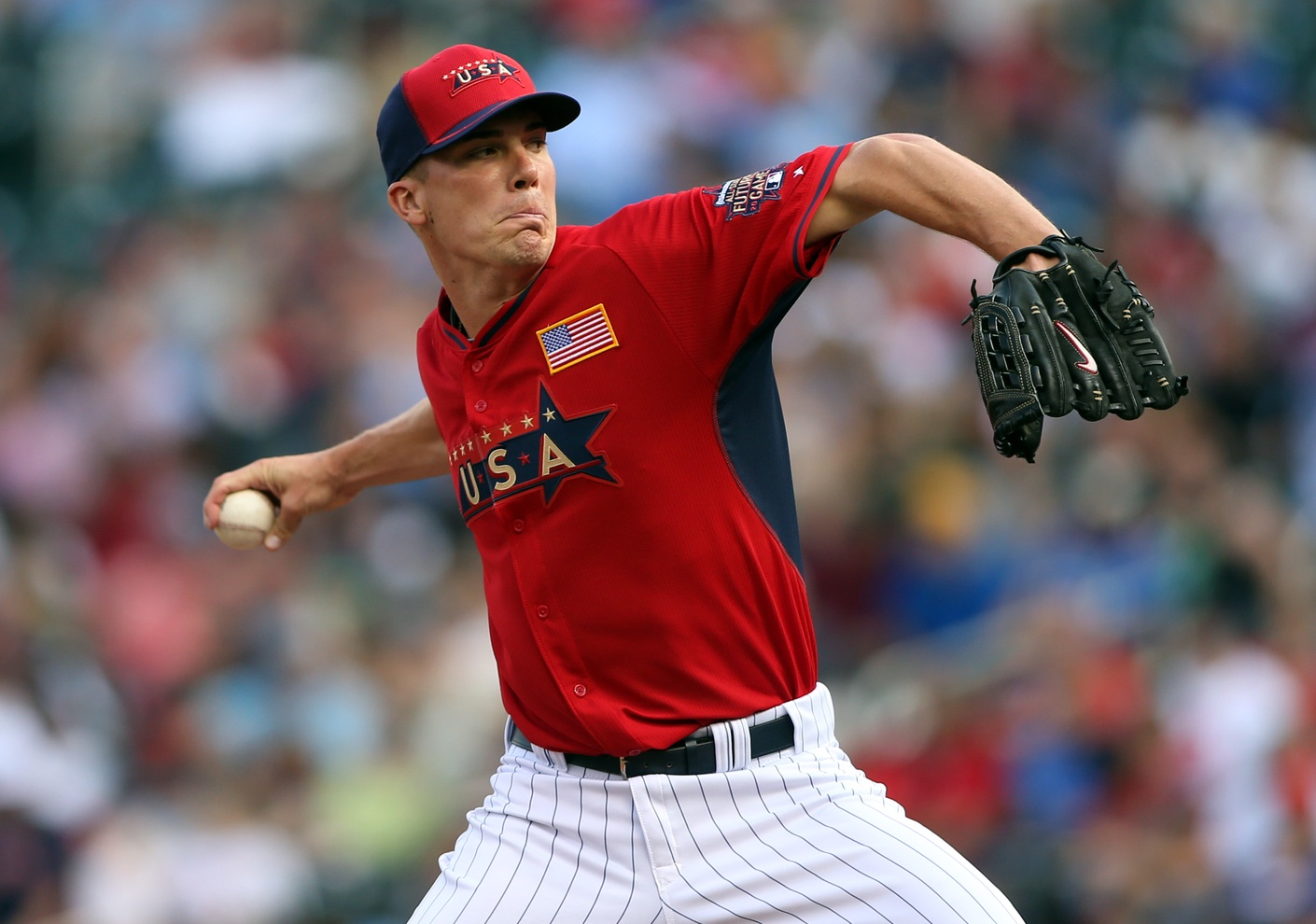 By all appearances, both of the highly rated pitching prospects have been MLB-ready for some time. May and Meyer rank fifth and sixth, respectively, on the International League ERA leaderboard, and they're both in the top three for strikeout rate. Yet, both have been left to dominate in Triple-A while the Twins give starts to lesser talents like Kris Johnson, Logan Darnell and Yohan Pino. We're now almost a week into August, and still there's no clear indication that either May or Meyer is even on the verge of a promotion. It's not hard to see why people are frustrated, but at the same time, there are circumstances at play with both pitchers that need to be recognized. May is very, very close. When he was seemingly nearing a call-up in June, he suffered an ill-timed calf injury that cost him a month, and he's been working his way back. Just now has he finally returned to a normal workload; he threw 99 pitches in his last start, the first time since mid-June that he's gone over 80. He's already on the 40-man roster. Bringing him up is a simple move at this point. I have to imagine that May will be on the Twins within the next turn or two through the rotation. The wait for Meyer will probably last longer. He might not even debut in 2014. And while that's unfortunate to hear, it's not something to get riled up at the organization over. Last year, Meyer missed two months -- more than a third of his season -- with a sore throwing shoulder. It was very scary, especially when you consider that his size and delivery always elicited injury concerns from scouts. Fortunately, the shoulder has been fine this year. He hasn't missed a start and has been making mincemeat of minor-league hitters. But when you look at this pitch count from start to start, it's obvious that the Twins are being very cautious with him. Here are Meyer's inning totals and pitch counts for each outing with Rochester this season: 4/6: 5.0 IP, 79 pitches 4/12: 5.1 IP, 83 pitches 4/18: 3.2 IP, 77 pitches 4/23: 6.2 IP, 100 pitches 4/28: 6.0 IP, 100 pitches 5/4: 4.2 IP, 92 pitches 5/10: 4.0 IP, 92 pitches 5/15: 5.0 IP, 69 pitches 5/22: 5.1 IP, 79 pitches 5/28: 6.0 IP, 88 pitches 6/2: 5.0 IP, 78 pitches 6/7: 6.0 IP, 81 pitches 6/13: 2.0 IP, 51 pitches 6/18: 3.0 IP, 78 pitches 6/23: 3.2 IP, 73 pitches 6/28: 6.0 IP, 77 pitches 7/3: 6.0 IP, 86 pitches 7/8: 6.0 IP, 96 pitches 7/18: 6.0 IP, 88 pitches 7/23: 6.0 IP, 86 pitches 7/29: 5.0 IP, 96 pitches 8/3: 5.2 IP, 91 pitches Looking at the game log, a few things stand out. First, he's only been allowed to pitch into the seventh inning once all season, despite the fact that he's routinely blowing away opposing lineups. Second, only seven times in 22 starts has he been pushed over 90 pitches. Twins Daily member jokin was in attendance during Meyer's latest start in Louisville, and described the performance in a post here on our forums. His writeup noted that Meyer was pulled rather abruptly with two outs in the fifth despite "looking completely in command of the game," as the righty had surpassed the 90-pitch threshold. This observation coincides with what we're seeing in Meyer's pitch count trends. There's a clear effort being made to monitor him very closely and pull him out of games where he's laboring or approaching that triple-digit pitch mark. It's a lot easier to do that in Triple-A, where the games don't really matter, than in the majors. Big-league starters are expected to throw more than 90 pitches. And Meyer, whose command remains spotty despite all his notable strengths, could have some games where he hits that 90-pitch mark pretty quickly as he transitions to the highest level. That taxes a bullpen. As a fan, I am dying to see Meyer pitch in a Twins uniform. But at the same time, I'm not going to fault the organization for taking every precaution with such a highly valuable arm, especially in a lost season. If they just want to get him through a full, healthy campaign, with the idea of having him try and win a spot next spring, I can live with that. At this point, it might not make much of a difference. He has already thrown 112 innings this year, which is eight more than he threw total last year, between the regular season and Arizona Fall League. As careful as they've been with him, it's hard to imagine the Twins letting Meyer top 150 innings this season. That means he might only have five or six starts left. While it would be nice for the fans if a few of those come in the majors, that also requires adding him to the 40-man and starting his service clock. Those aren't huge hurdles, necessarily, but they're factors. Ultimately, it wouldn't shock me if the Twins let Meyer finish out in Triple-A, and it wouldn't really upset me. International League hitters might feel differently. ------------ Since the Twins won on Tuesday, you can get half off your L or XL pizza order from PapaJohns.com on Wednesday with the promo code 'TWINSWIN'!
 -
With the Twins once again buried in last place and their starting pitching staff once again ranking among the worst in the league, fans have been asking the same question for much of the summer. When will Trevor May and Alex Meyer get the call?By all appearances, both of the highly rated pitching prospects have been MLB-ready for some time. May and Meyer rank fifth and sixth, respectively, on the International League ERA leaderboard, and they're both in the top three for strikeout rate. Yet, both have been left to dominate in Triple-A while the Twins give starts to lesser talents like Kris Johnson, Logan Darnell and Yohan Pino. We're now almost a week into August, and still there's no clear indication that either May or Meyer is even on the verge of a promotion. It's not hard to see why people are frustrated, but at the same time, there are circumstances at play with both pitchers that need to be recognized. May is very, very close. When he was seemingly nearing a call-up in June, he suffered an ill-timed calf injury that cost him a month, and he's been working his way back. Just now has he finally returned to a normal workload; he threw 99 pitches in his last start, the first time since mid-June that he's gone over 80. He's already on the 40-man roster. Bringing him up is a simple move at this point. I have to imagine that May will be on the Twins within the next turn or two through the rotation. The wait for Meyer will probably last longer. He might not even debut in 2014. And while that's unfortunate to hear, it's not something to get riled up at the organization over. Last year, Meyer missed two months -- more than a third of his season -- with a sore throwing shoulder. It was very scary, especially when you consider that his size and delivery always elicited injury concerns from scouts. Fortunately, the shoulder has been fine this year. He hasn't missed a start and has been making mincemeat of minor-league hitters. But when you look at this pitch count from start to start, it's obvious that the Twins are being very cautious with him. Here are Meyer's inning totals and pitch counts for each outing with Rochester this season: 4/6: 5.0 IP, 79 pitches 4/12: 5.1 IP, 83 pitches 4/18: 3.2 IP, 77 pitches 4/23: 6.2 IP, 100 pitches 4/28: 6.0 IP, 100 pitches 5/4: 4.2 IP, 92 pitches 5/10: 4.0 IP, 92 pitches 5/15: 5.0 IP, 69 pitches 5/22: 5.1 IP, 79 pitches 5/28: 6.0 IP, 88 pitches 6/2: 5.0 IP, 78 pitches 6/7: 6.0 IP, 81 pitches 6/13: 2.0 IP, 51 pitches 6/18: 3.0 IP, 78 pitches 6/23: 3.2 IP, 73 pitches 6/28: 6.0 IP, 77 pitches 7/3: 6.0 IP, 86 pitches 7/8: 6.0 IP, 96 pitches 7/18: 6.0 IP, 88 pitches 7/23: 6.0 IP, 86 pitches 7/29: 5.0 IP, 96 pitches 8/3: 5.2 IP, 91 pitches Looking at the game log, a few things stand out. First, he's only been allowed to pitch into the seventh inning once all season, despite the fact that he's routinely blowing away opposing lineups. Second, only seven times in 22 starts has he been pushed over 90 pitches. Twins Daily member jokin was in attendance during Meyer's latest start in Louisville, and described the performance in a post here on our forums. His writeup noted that Meyer was pulled rather abruptly with two outs in the fifth despite "looking completely in command of the game," as the righty had surpassed the 90-pitch threshold. This observation coincides with what we're seeing in Meyer's pitch count trends. There's a clear effort being made to monitor him very closely and pull him out of games where he's laboring or approaching that triple-digit pitch mark. It's a lot easier to do that in Triple-A, where the games don't really matter, than in the majors. Big-league starters are expected to throw more than 90 pitches. And Meyer, whose command remains spotty despite all his notable strengths, could have some games where he hits that 90-pitch mark pretty quickly as he transitions to the highest level. That taxes a bullpen. As a fan, I am dying to see Meyer pitch in a Twins uniform. But at the same time, I'm not going to fault the organization for taking every precaution with such a highly valuable arm, especially in a lost season. If they just want to get him through a full, healthy campaign, with the idea of having him try and win a spot next spring, I can live with that. At this point, it might not make much of a difference. He has already thrown 112 innings this year, which is eight more than he threw total last year, between the regular season and Arizona Fall League. As careful as they've been with him, it's hard to imagine the Twins letting Meyer top 150 innings this season. That means he might only have five or six starts left. While it would be nice for the fans if a few of those come in the majors, that also requires adding him to the 40-man and starting his service clock. Those aren't huge hurdles, necessarily, but they're factors. Ultimately, it wouldn't shock me if the Twins let Meyer finish out in Triple-A, and it wouldn't really upset me. International League hitters might feel differently. ------------ Since the Twins won on Tuesday, you can get half off your L or XL pizza order from PapaJohns.com on Wednesday with the promo code 'TWINSWIN'! Click here to view the article
-
Article: Center of Attention
Nick Nelson replied to Nick Nelson's topic in Twins Daily Front Page News
Right, so, don't you want him playing there and trying to improve? He's 23 years old, right at the crux of his development as a player. If they're hoping he can play short long-term, he should be playing there regularly right now. It just doesn't make sense to use him as a place-holder at another position.- 44 replies
-
- 1
-

-
- danny santana
- aaron hicks
- (and 1 more)
-
In a summer that's been marked by plenty of misfortune for the Twins, Danny Santana's shocking success has been hugely refreshing. The 23-year-old's stellar rookie season raged on over the weekend as he piled up eight hits in a pair of victories on Saturday and Sunday.Through his first 52 big-league games, Santana is hitting .325/.362/.497 with 21 extra-base hits and eight steals. Although his plate discipline hasn't been great -- he has struck out more than four times for every walk and has looked flat-out overmatched in some games -- his "hit" tool certainly looks legit. With another season heading down the tubes, the Twins needed a thriving young player they could point to as a sign of promising things to come. Santana has been that. The Twins needed a speedster that they could plug into the leadoff spot; a spark-plug type that could get on base, run around and disrupt. Santana has been that. He has also, surprisingly, filled another critical need that emerged early on for the Twins. Santana has made 29 of his 45 starts in center field, a position he played minimally in the minor leagues. The athletic Dominican hasn't looked bad in center, where his wheels and arm have been nice assets, but that's not his position of the future. And as much as he's helping the Twins by stepping in and excelling when called upon, he is at a critical point in his development and is hardly getting any reps at shortstop. Santana was already considered a raw defender at short, needing work and polish, and he's not getting the chance to refine his game while spending so much time in the outfield. Ideally, he would spend the majority of his time at his true position for the remainder of the season. But the who takes over center? With Sam Fuld gone, there are basically two choices. The New Guy The Twins snagged Fuld off waivers earlier this year and were able to find his replacement by the same method, claiming 27-year-old Jordan Schafer after he'd been designated for assignment by the Braves. Schafer emerged as a top-tier prospect five years ago, when he was putting up big numbers in the minors thanks to a potent power/speed combo. He has never been able to replicate that success in the big leagues, where he has a .222/.307/.304 hitting line in parts of five seasons. He's not likely to be a very productive hitter (he had a miserable .468 OPS in Atlanta before being cut) but there's some value in running him out there a bunch to get an idea of whether or not he might be worth keeping around next year as a fourth outfielder. Also, he's young enough, and inherently talented enough, that maybe with some regular at-bats you catch lightning in a bottle. It's unlikely, but not impossible. Of course, there's another guy on hand who could also be auditioned for a role next year... What About Aaron Hicks? Sent back to Double-A after another blown opportunity in the majors, Hicks toyed with the notion of giving up switch-hitting and appeared to be running low on confidence. Now, he's got his swag back. He is once again swinging from both sides, and swinging well. In 43 games with New Britain, Hicks is hitting .297/.404/.466. Over his last 10 contests he has a 1.122 OPS. He's taking walks and, more importantly, hitting the ball hard. I know the thought of sending Hicks directly from Double-A to MLB, again, makes some people squeamish. But I don't see a whole lot of benefit in sending him to Rochester. He needs to learn how to hit at the highest level. He needs to make the adjustments to have success against big-league pitching. Being that he's back in a groove, perhaps the time is right to let him try to make those adjustments in a fairly low-pressure environment. A good showing would make it a lot easier to pencil him into the 2015 blueprint, as opposed to a strong finish in the minors. Then again, the Twins could hardly be blamed for wanting to slow things down with Hicks, letting him finish out in the minors while getting increasingly acclimated to the outfield corners. What do you think? Who would you like to see as the regular center fielder the rest of the way, knowing that by this time next year, Byron Buxton might already be entrenched for the next decade? Click here to view the article
-
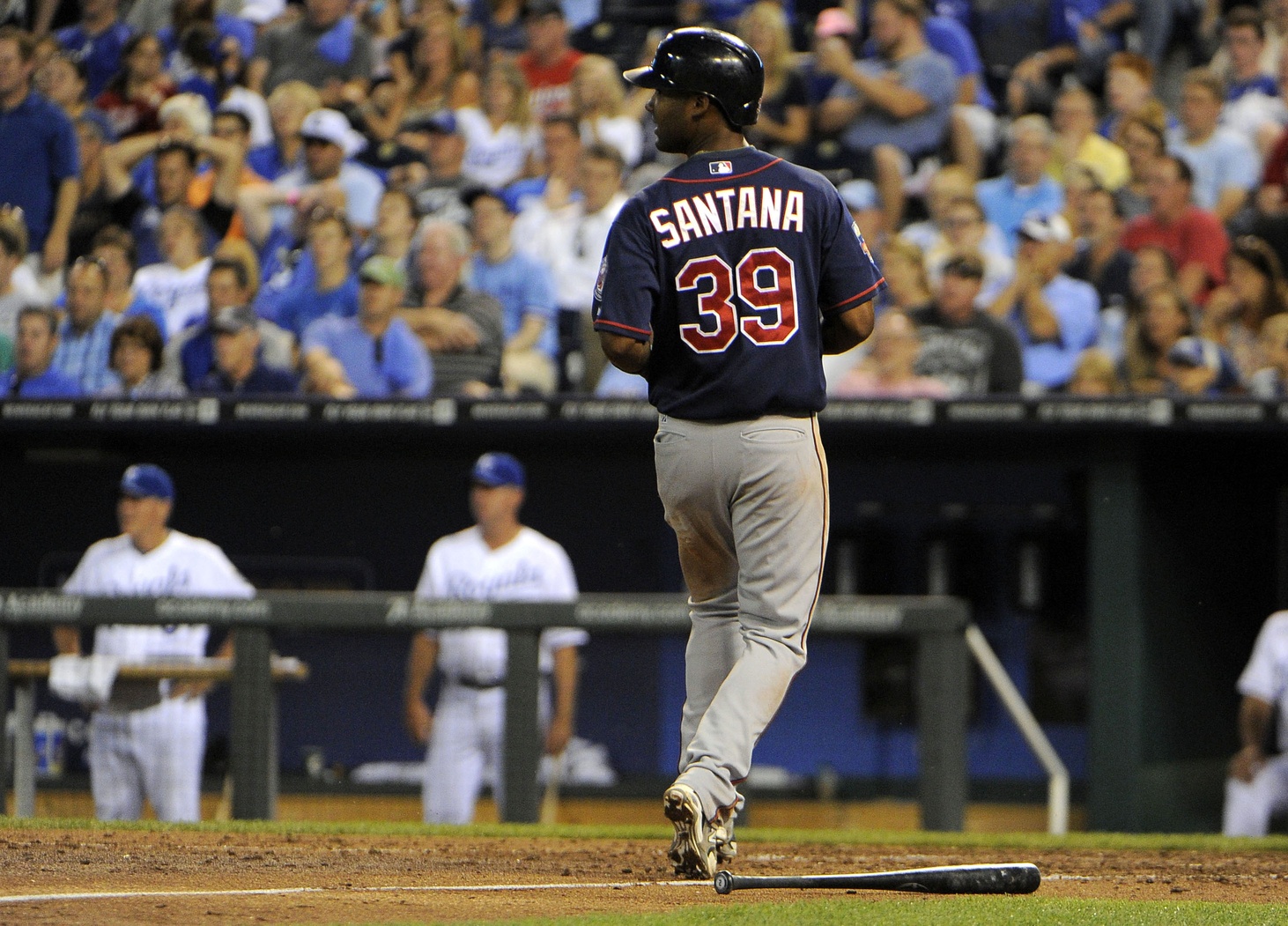 Through his first 52 big-league games, Santana is hitting .325/.362/.497 with 21 extra-base hits and eight steals. Although his plate discipline hasn't been great -- he has struck out more than four times for every walk and has looked flat-out overmatched in some games -- his "hit" tool certainly looks legit. With another season heading down the tubes, the Twins needed a thriving young player they could point to as a sign of promising things to come. Santana has been that. The Twins needed a speedster that they could plug into the leadoff spot; a spark-plug type that could get on base, run around and disrupt. Santana has been that. He has also, surprisingly, filled another critical need that emerged early on for the Twins. Santana has made 29 of his 45 starts in center field, a position he played minimally in the minor leagues. The athletic Dominican hasn't looked bad in center, where his wheels and arm have been nice assets, but that's not his position of the future. And as much as he's helping the Twins by stepping in and excelling when called upon, he is at a critical point in his development and is hardly getting any reps at shortstop. Santana was already considered a raw defender at short, needing work and polish, and he's not getting the chance to refine his game while spending so much time in the outfield. Ideally, he would spend the majority of his time at his true position for the remainder of the season. But the who takes over center? With Sam Fuld gone, there are basically two choices. The New Guy The Twins snagged Fuld off waivers earlier this year and were able to find his replacement by the same method, claiming 27-year-old Jordan Schafer after he'd been designated for assignment by the Braves. Schafer emerged as a top-tier prospect five years ago, when he was putting up big numbers in the minors thanks to a potent power/speed combo. He has never been able to replicate that success in the big leagues, where he has a .222/.307/.304 hitting line in parts of five seasons. He's not likely to be a very productive hitter (he had a miserable .468 OPS in Atlanta before being cut) but there's some value in running him out there a bunch to get an idea of whether or not he might be worth keeping around next year as a fourth outfielder. Also, he's young enough, and inherently talented enough, that maybe with some regular at-bats you catch lightning in a bottle. It's unlikely, but not impossible. Of course, there's another guy on hand who could also be auditioned for a role next year... What About Aaron Hicks? Sent back to Double-A after another blown opportunity in the majors, Hicks toyed with the notion of giving up switch-hitting and appeared to be running low on confidence. Now, he's got his swag back. He is once again swinging from both sides, and swinging well. In 43 games with New Britain, Hicks is hitting .297/.404/.466. Over his last 10 contests he has a 1.122 OPS. He's taking walks and, more importantly, hitting the ball hard. I know the thought of sending Hicks directly from Double-A to MLB, again, makes some people squeamish. But I don't see a whole lot of benefit in sending him to Rochester. He needs to learn how to hit at the highest level. He needs to make the adjustments to have success against big-league pitching. Being that he's back in a groove, perhaps the time is right to let him try to make those adjustments in a fairly low-pressure environment. A good showing would make it a lot easier to pencil him into the 2015 blueprint, as opposed to a strong finish in the minors. Then again, the Twins could hardly be blamed for wanting to slow things down with Hicks, letting him finish out in the minors while getting increasingly acclimated to the outfield corners. What do you think? Who would you like to see as the regular center fielder the rest of the way, knowing that by this time next year, Byron Buxton might already be entrenched for the next decade?
