



Nick Nelson
-
Posts
8,322 -
Joined
-
Last visited
-
Days Won
56
Content Type
Profiles
News
Minnesota Twins Videos
2026 Minnesota Twins Top Prospects Ranking
2022 Minnesota Twins Draft Picks
Minnesota Twins Free Agent & Trade Rumors, Notes, & Tidbits
Guides & Resources
2023 Minnesota Twins Draft Picks
The Minnesota Twins Players Project
2024 Minnesota Twins Draft Picks
2025 Minnesota Twins Draft Pick Tracker
2026 Minnesota Twins Draft Tracker: Picks & Bonuses
Forums
Blogs
Events
Store
Downloads
Gallery
Everything posted by Nick Nelson
-
Article: No Experience Necessary?
Nick Nelson replied to Nick Nelson's topic in Twins Daily Front Page News
Whoops, thanks. Fixed. -
When Doug Mientkiewicz emerged as an early contender for the Twins' managerial job, his lack of experience served both as a point against him and a point in his favor. On the one hand, Mientkiewicz hadn't managed above Single-A, and had only been there for two years. That's not a lot of track record for a big-league skipper. On the other hand, he had the advantage of being fresh, and not set in his ways. It is difficult for any long-timer to match the fire and ambition that burn within a guy who's just getting started.The Twins are looking to return to contention with a young roster, and there's an appeal to the dynamic where both players and manager are exploring new frontiers together. Growing together. Ultimately the team decided to opt for more experience in choosing Paul Molitor who has been coaching for almost two decades, albeit never in the role he will now be filling. Because Molitor is new to this particular gig, some expected that the front office would surround him with coaches who have been around for a while, but that's hardly been the case. Quite to the contrary, in fact. The Twins wasted little time in announcing that they would retain Tom Brunansky as hitting coach. His experience is modest; he's been Minnesota's hitting coach for the last two years, after serving in the same role for a couple of seasons in the minors. Prior to that, he was coaching a high school baseball team. Rudy Hernandez, tabbed as Bruno's assistant hitting coach, has only coached in the minors, and was promoted directly from rookie ball. Neil Allen, who has reportedly been hired as pitching coach, was brought in from Tampa Bay's system. He has worked almost exclusively in the minors, with the exception of a year spent as the Yankees bullpen coach. Eddie Guardado, who appears to be the choice for Twins bullpen coach, was playing up until 2009 and hasn't served in any official coaching capacity, though he has been an instructor in spring training. Newly appointed third base coach Gene Glynn is the antithesis of this trend, as he has a considerable amount of experience coaching in the majors. He's logged more than a decade on big-league staffs, including stints as third base coach for the Rockies, Cubs and Giants. Yet, Glynn hasn't been on an MLB coaching staff for nearly a decade. Following his departure from San Francisco, he spent six years as a scout for the Rays and has spent the last three managing in Rochester. I like this mix that the Twins have found with their new coaching alignment. You've got several rising guys who are are getting their first real chance and will certainly be driven to excel. You've got a manager who is in some respects very experienced but is essentially a novice. And then there's Glynn, who has put in almost 30 years as a coach, coordinator and scout, with a resume that lists six different organizations. He was a candidate for the Twins manager job and could become a hot name around the league if he takes part in a turnaround for the club. Everyone tries to do well at their job, but there's inherently an extra level of motivation at play when trying to further one's own career and livelihood. I think it's harsh to suggest that Ron Gardenhire and his coaches were "mailing it in" in recent years, but did they grow too comfortable? Was the same drive there as in Gardy's early years, when he led youthful rosters to several postseason appearances as a fresh big-league manager? That is apparently what the Twins are trying to recapture with this restructured group -- a hunger that starts at the top and is infectious toward young incoming players -- and all the appointees thus far seem to fit in that regard. Click here to view the article
- 26 replies
-
- 1
-

-
- paul molitor
- gene glynn
- (and 1 more)
-
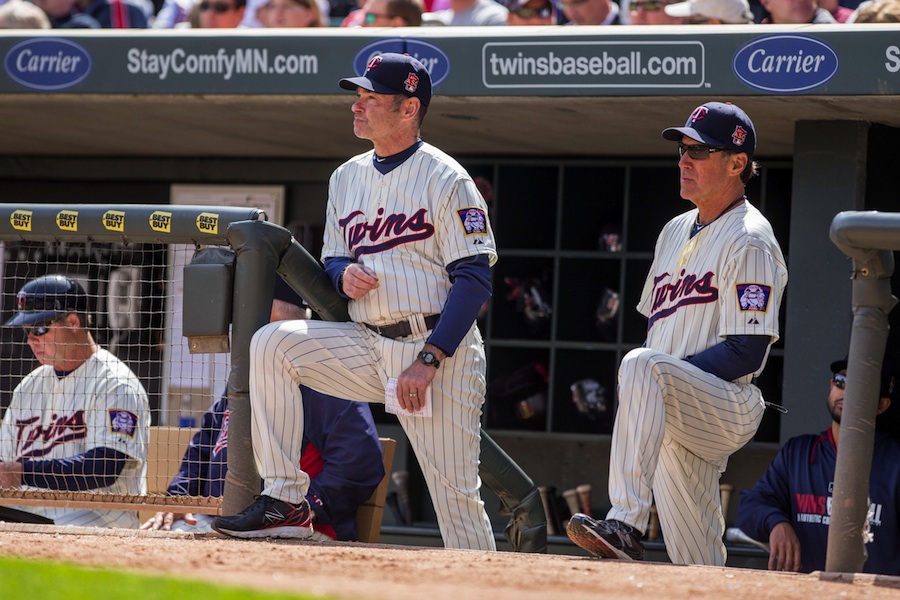 The Twins are looking to return to contention with a young roster, and there's an appeal to the dynamic where both players and manager are exploring new frontiers together. Growing together. Ultimately the team decided to opt for more experience in choosing Paul Molitor who has been coaching for almost two decades, albeit never in the role he will now be filling. Because Molitor is new to this particular gig, some expected that the front office would surround him with coaches who have been around for a while, but that's hardly been the case. Quite to the contrary, in fact. The Twins wasted little time in announcing that they would retain Tom Brunansky as hitting coach. His experience is modest; he's been Minnesota's hitting coach for the last two years, after serving in the same role for a couple of seasons in the minors. Prior to that, he was coaching a high school baseball team. Rudy Hernandez, tabbed as Bruno's assistant hitting coach, has only coached in the minors, and was promoted directly from rookie ball. Neil Allen, who has reportedly been hired as pitching coach, was brought in from Tampa Bay's system. He has worked almost exclusively in the minors, with the exception of a year spent as the Yankees bullpen coach. Eddie Guardado, who appears to be the choice for Twins bullpen coach, was playing up until 2009 and hasn't served in any official coaching capacity, though he has been an instructor in spring training. Newly appointed third base coach Gene Glynn is the antithesis of this trend, as he has a considerable amount of experience coaching in the majors. He's logged more than a decade on big-league staffs, including stints as third base coach for the Rockies, Cubs and Giants. Yet, Glynn hasn't been on an MLB coaching staff for nearly a decade. Following his departure from San Francisco, he spent six years as a scout for the Rays and has spent the last three managing in Rochester. I like this mix that the Twins have found with their new coaching alignment. You've got several rising guys who are are getting their first real chance and will certainly be driven to excel. You've got a manager who is in some respects very experienced but is essentially a novice. And then there's Glynn, who has put in almost 30 years as a coach, coordinator and scout, with a resume that lists six different organizations. He was a candidate for the Twins manager job and could become a hot name around the league if he takes part in a turnaround for the club. Everyone tries to do well at their job, but there's inherently an extra level of motivation at play when trying to further one's own career and livelihood. I think it's harsh to suggest that Ron Gardenhire and his coaches were "mailing it in" in recent years, but did they grow too comfortable? Was the same drive there as in Gardy's early years, when he led youthful rosters to several postseason appearances as a fresh big-league manager? That is apparently what the Twins are trying to recapture with this restructured group -- a hunger that starts at the top and is infectious toward young incoming players -- and all the appointees thus far seem to fit in that regard.
 -
Article: The Case For Brett Anderson (Again)
Nick Nelson replied to Nick Nelson's topic in Twins Daily Front Page News
Good input, and good points. I'll admit I don't know much about the injury and there isn't a long list of pitchers who've been through it to go on for precedent. But on a one-year deal (with a club option, ideally), I still think the risk is worth it. -
Article: The Case For Brett Anderson (Again)
Nick Nelson replied to Nick Nelson's topic in Twins Daily Front Page News
... Until he's not. If it was a recurring injury or chronic arm problem, I'd see it as a greater concern. I just think he's had an unfortunate series of ailments. He's far from a sure thing but I'd still probably be willing to give him an MLB deal if that's what it took. It'd be a better move than giving guaranteed money to Pelfrey 8 months off Tommy John. At the very least, a minor-league deal with hefty reachable incentives. They can afford it. -
I feel like I've written this article before. Maybe that's because I have. A year ago, Brett Anderson looked like a good target for the Twins to pursue. This time around, because of his circumstances -- and the team's -- he seems like an even more logical fit. Will Terry Ryan feel the same way? And if so, what will it cost to bring in the left-hander?Last offseason, Anderson was a known trade candidate, with just one guaranteed season remaining on his contract and Oakland's rotation flush with young talent. Given his age, his previous success and his depressed value coming off a bad season, he had the makings of a great buy-low candidate with big upside. Ultimately, it was another pitching-needy team that chose to take the gamble on Anderson, as the Rockies shipped out a couple of prospects in December to bring him aboard. That move didn't really pan out for Colorado. Once again, the oft-injured hurler could not stay healthy. He made only eight starts, finishing with 43 1/3 total innings. A fractured finger cost him most of the first half, and a bulging disc in his back that required surgery cost him most of the second. It was the fifth straight year in which health issues prevented Anderson from being able to get in anywhere close to a full season's work. He hasn't completed even 45 innings in any of the past three years. The overwhelming durability concerns caused the Rockies to opt out of his 2015 option, making him a free agent, and he might have trouble finding a guaranteed contract. Now is the perfect time for a savvy GM to strike, and the Twins are in a better position than perhaps any other club to do so. Obviously, Minnesota needs pitching help about as badly as anyone. But they also have considerable depth in the rotation, with Ricky Nolasco, Phil Hughes, Kyle Gibson, Trevor May, Alex Meyer, Tommy Milone, Mike Pelfrey and others all potentially in the mix. It might not be great quality of depth, but you can argue that all those guys deserve a chance. The Twins can afford to gamble on an injury risk like Anderson because if he gets hurt once again, they have viable options to fall back on. It's also an attractive situation for the player. Whereas a contending team would want to have strong contingency plans in place -- and thus, a higher barrier of entry -- the lefty should have no trouble locking up a spot in this rotation as long as he's healthy and effective in spring training. From a pure talent perspective, he would be arguably the best starter on the roster. Beyond the mutually beneficial circumstances in place, there are three key reasons I believe Anderson makes a ton of sense for Ryan and the Twins. He's still really young. Hughes was 27 when the Twins signed him last year -- uncommonly young for a free agent. Anderson doesn't turn 27 until February, so he's still right in the midst of his physical prime. And the silver lining in all the injuries and setbacks is that his arm is still pretty fresh. It's rare to find a starting pitcher who's been in the majors for six years and has thrown fewer than 500 innings. He doesn't have chronic arm injuries. He has already undergone Tommy John surgery and hasn't had any elbow issues since. The first injury that cost him several months this year was a broken finger suffered when he got hit by a pitch while batting -- total freak incident and not a long-term concern. The bulging disc that ended his season is more worrisome, as he battled low back soreness late in 2013 as well, but his August surgery hopefully resolved the problem. He should be 100 percent in March. As far as rehab projects go, Anderson's a much safer bet than someone like Josh Johnson or Chad Billingsley, both of whom are coming back from arm operations. He's still got it. Although his 2014 campaign did nothing to reverse his rep for being fragile, Anderson did show something while on the mound. In an admittedly small sample size, the lefty posted a 2.91 ERA and 2.99 FIP, and did so while making half his starts at Coors Field. He looked very much like the guy who had emerged as one of the best young pitchers in the game years earlier. Anderson is the rare example of a young pitcher who could be signed to a low-money, low-years deal while offering the real potential to be a No. 2 or No. 3 type in the rotation. Those opportunities don't come along very often and the Twins should be looking to pounce on this one if they can. His history of health problems is daunting, but one of these years Anderson is going to stay on the field and when he does I suspect that the team that employs him will benefit greatly. No club could use that boost more than the Twins. Click here to view the article
-
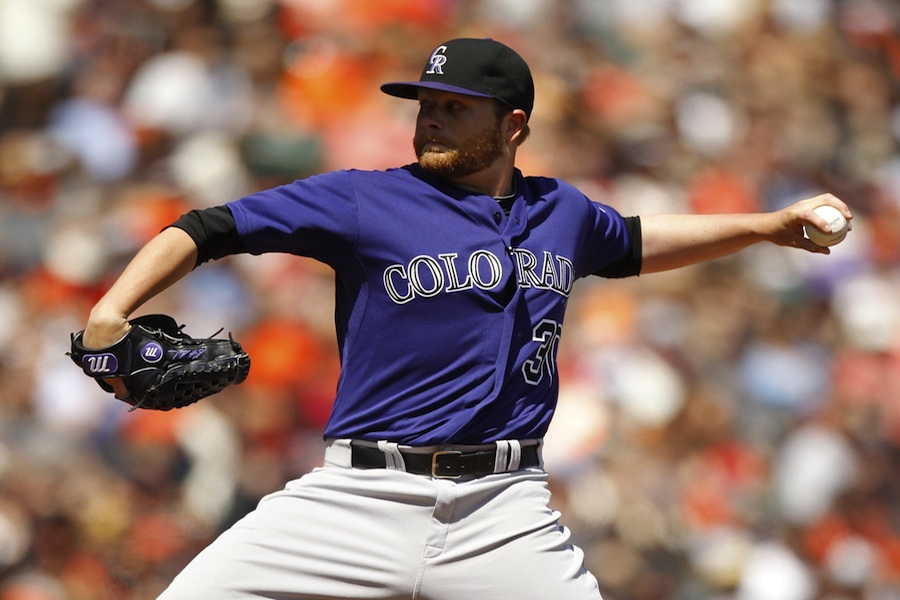 Last offseason, Anderson was a known trade candidate, with just one guaranteed season remaining on his contract and Oakland's rotation flush with young talent. Given his age, his previous success and his depressed value coming off a bad season, he had the makings of a great buy-low candidate with big upside. Ultimately, it was another pitching-needy team that chose to take the gamble on Anderson, as the Rockies shipped out a couple of prospects in December to bring him aboard. That move didn't really pan out for Colorado. Once again, the oft-injured hurler could not stay healthy. He made only eight starts, finishing with 43 1/3 total innings. A fractured finger cost him most of the first half, and a bulging disc in his back that required surgery cost him most of the second. It was the fifth straight year in which health issues prevented Anderson from being able to get in anywhere close to a full season's work. He hasn't completed even 45 innings in any of the past three years. The overwhelming durability concerns caused the Rockies to opt out of his 2015 option, making him a free agent, and he might have trouble finding a guaranteed contract. Now is the perfect time for a savvy GM to strike, and the Twins are in a better position than perhaps any other club to do so. Obviously, Minnesota needs pitching help about as badly as anyone. But they also have considerable depth in the rotation, with Ricky Nolasco, Phil Hughes, Kyle Gibson, Trevor May, Alex Meyer, Tommy Milone, Mike Pelfrey and others all potentially in the mix. It might not be great quality of depth, but you can argue that all those guys deserve a chance. The Twins can afford to gamble on an injury risk like Anderson because if he gets hurt once again, they have viable options to fall back on. It's also an attractive situation for the player. Whereas a contending team would want to have strong contingency plans in place -- and thus, a higher barrier of entry -- the lefty should have no trouble locking up a spot in this rotation as long as he's healthy and effective in spring training. From a pure talent perspective, he would be arguably the best starter on the roster. Beyond the mutually beneficial circumstances in place, there are three key reasons I believe Anderson makes a ton of sense for Ryan and the Twins. He's still really young. Hughes was 27 when the Twins signed him last year -- uncommonly young for a free agent. Anderson doesn't turn 27 until February, so he's still right in the midst of his physical prime. And the silver lining in all the injuries and setbacks is that his arm is still pretty fresh. It's rare to find a starting pitcher who's been in the majors for six years and has thrown fewer than 500 innings. He doesn't have chronic arm injuries. He has already undergone Tommy John surgery and hasn't had any elbow issues since. The first injury that cost him several months this year was a broken finger suffered when he got hit by a pitch while batting -- total freak incident and not a long-term concern. The bulging disc that ended his season is more worrisome, as he battled low back soreness late in 2013 as well, but his August surgery hopefully resolved the problem. He should be 100 percent in March. As far as rehab projects go, Anderson's a much safer bet than someone like Josh Johnson or Chad Billingsley, both of whom are coming back from arm operations. He's still got it. Although his 2014 campaign did nothing to reverse his rep for being fragile, Anderson did show something while on the mound. In an admittedly small sample size, the lefty posted a 2.91 ERA and 2.99 FIP, and did so while making half his starts at Coors Field. He looked very much like the guy who had emerged as one of the best young pitchers in the game years earlier. Anderson is the rare example of a young pitcher who could be signed to a low-money, low-years deal while offering the real potential to be a No. 2 or No. 3 type in the rotation. Those opportunities don't come along very often and the Twins should be looking to pounce on this one if they can. His history of health problems is daunting, but one of these years Anderson is going to stay on the field and when he does I suspect that the team that employs him will benefit greatly. No club could use that boost more than the Twins.
 -
The offseason is underway, and although we've already seen a couple notable signings, most analysts are expecting the free agent market to develop slowly this year. Still, with the door now open, conversations are beginning to take place as we build toward the MLB Winter Meetings, which are three weeks away. Let's take a look at the early Twins-related rumblings.* Unsurprisingly, the Twins were listed by Ken Rosenthal as one team that has shown preliminary interest in Torii Hunter. The past history, and Minnesota's need for a corner outfielder who can help mentor the youngsters, make it easy to see why they would pursue him. Hunter has stated publicly that he plans to play in 2015, even though he'll be turning 40 in July. Tigers GM Dave Dombrowsky declared that he "probably won't re-sign Torii," so the veteran will almost certainly be playing elsewhere next year. But considering that he's near the end of his career, Hunter is likely to latch on with a team that has a better shot at contending than the Twins. That's probably just as well, since this club needs defensive help in the outfield and at this point Hunter doesn't really provide that. * Darren Wolfson of 1500 ESPN reported over the weekend that the Twins have inquired about Justin Masterson. Although he's coming off a rough season, Masterson is only 29 and was excellent in 2011 and 2013. He was the starter we suggested signing in our blueprint for the Offseason Handbook, and was the top name on a list of buy-low starter candidates published here last week. Needless to say, I'm glad to hear that Ryan and the Twins are at least moving quickly to get on his radar. Whether or not they sign him, Masterson fits the profile that Minnesota should be targeting: a youngish guy who won't require a long commitment and offers a realistic chance of being more than a fourth or fifth starter. * Wolfson also put out Alex Rios as a name worth watching with the Twins seeking a right-handed bat for the outfield. Rios is preferable to Hunter, as he's much younger and offers more in the speed and defense departments. As a righty with pull power, Rios seems like a nice fit for Target Field and for the Twins. But his production has been inconsistent and he's almost 34, so it'd be tough to justify a multi-year deal, especially for a risk-averse GM like Ryan. Who's to say Rios will be a better option a year from now than someone like Eddie Rosario, or Aaron Hicks, or even Trevor Plouffe? Ultimately, the length of Rios' desired deal could be a stumbling block. Click here to view the article
-
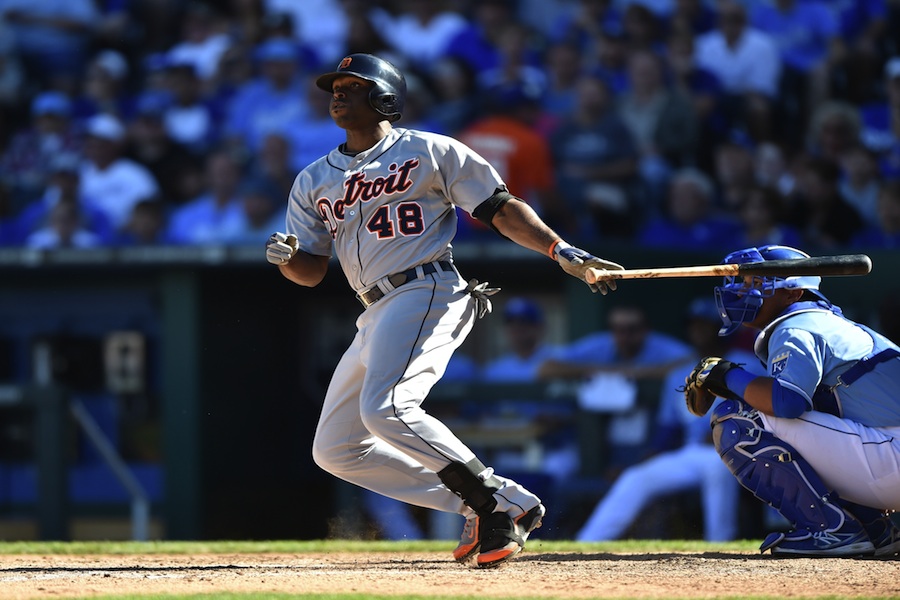 * Unsurprisingly, the Twins were listed by Ken Rosenthal as one team that has shown preliminary interest in Torii Hunter. The past history, and Minnesota's need for a corner outfielder who can help mentor the youngsters, make it easy to see why they would pursue him. Hunter has stated publicly that he plans to play in 2015, even though he'll be turning 40 in July. Tigers GM Dave Dombrowsky declared that he "probably won't re-sign Torii," so the veteran will almost certainly be playing elsewhere next year. But considering that he's near the end of his career, Hunter is likely to latch on with a team that has a better shot at contending than the Twins. That's probably just as well, since this club needs defensive help in the outfield and at this point Hunter doesn't really provide that. * Darren Wolfson of 1500 ESPN reported over the weekend that the Twins have inquired about Justin Masterson. Although he's coming off a rough season, Masterson is only 29 and was excellent in 2011 and 2013. He was the starter we suggested signing in our blueprint for the Offseason Handbook, and was the top name on a list of buy-low starter candidates published here last week. Needless to say, I'm glad to hear that Ryan and the Twins are at least moving quickly to get on his radar. Whether or not they sign him, Masterson fits the profile that Minnesota should be targeting: a youngish guy who won't require a long commitment and offers a realistic chance of being more than a fourth or fifth starter. * Wolfson also put out Alex Rios as a name worth watching with the Twins seeking a right-handed bat for the outfield. Rios is preferable to Hunter, as he's much younger and offers more in the speed and defense departments. As a righty with pull power, Rios seems like a nice fit for Target Field and for the Twins. But his production has been inconsistent and he's almost 34, so it'd be tough to justify a multi-year deal, especially for a risk-averse GM like Ryan. Who's to say Rios will be a better option a year from now than someone like Eddie Rosario, or Aaron Hicks, or even Trevor Plouffe? Ultimately, the length of Rios' desired deal could be a stumbling block.
 -
I think someone might give Rasmus three years. He's only 28, and while he hasn't quite lived up to his elite prospect hype he's been a productive center fielder. I'd be a little nervous about giving him that long a deal with his increasing whiffs, not to mention the presence of Rosario and others in the system.
-
Rasmus is really the only FA center fielder worth mentioning but yes, that is a point in his favor. You could go with him in CF next year then shift him to left once Buxton arrives.
-
It's been clear for some time now: the Twins need to find themselves a left fielder during the offseason. What should they be looking for in a prospective pickup at this position? Well, that also seems fairly clear. Considering that they fielded the worst defensive outfield in baseball this year, the Twins should really be seeking a player who can cover ground and provide some much-needed help for the pitching staff. Today, we'll take a look at some outfielders available on the free agent market who are known for their fielding chops.Although I'm not a huge fan of any defensive metrics, UZR is generally considered to be the most accurate measure over a large sample, so I've listed each player's career average per 150 games (in essence, this is meant to convey the number of runs saved defensively per season). For reference, Twins left fielders collectively posted a -14.7 UZR/150 mark in 2014. Yuck. Nyjer Morgan Age: 34 B/T: L/L Career UZR/150: 15.7 Morgan has been a defensive wizard. His 15.7 UZR/150 mark is off-the-charts good, and he has proven to be a major asset at all three outfield spots. He has also been a solid hitter for the most part and and an aggressive threat on the basepaths. Unfortunately, he's in his mid-30s and doesn't have much of a recent MLB track record; he was bad in 2012, spent the 2013 season playing in Japan, and missed most of 2014 with a knee injury. It's fair to wonder what "Tony Plush" is capable of at this point, though he'd be awfully intriguing on a minor-league deal. Chris Denorfia Age: 34 B/T: R/R UZR/150: 6.7 Denorfia has spent years reliably patrolling the spacious outfield at Petco Park, and has usually managed to put up solid offensive numbers in the notoriously hitter-hampering yard, though he's coming off his worst season at the plate. He's a .292 career hitter with a .789 OPS against left-handed pitchers, and would be interesting as a potential platoon partner for Jordan Schafer. Colby Rasmus Age: 28 B/T: L/L UZR/150: -0.3 Don't be fooled by that sub par overall UZR number; Rasmus has spent nearly his entire career playing center field. As an average defender there, he figures to be well above average in a corner, if he's willing to make that transition. In some ways, Rasmus is very appealing, as he has averaged about 20 homers in six MLB seasons and is the youngest player on this list. On the other hand, those factors will probably make him fairly expensive and he has posted a sub-.300 on-base percentage in three of the last four years, with K-rates that alarmingly continue to climb. Endy Chavez Age: 36 B/T: L/L Career UZR/150: 7.5 Like Rasmus, Chavez's UZR total understates his ability because he's spent so much time playing center field. In the corners he has been nothing short of spectacular, though his rates have sagged in the past couple years as he's aged into his late 30s. The Mariners still liked his defense enough to get him into 177 games in those two seasons, despite a .650 OPS, but he can't really be viewed as a candidate to start at this point. Emilio Bonifacio Age: 29 B/T: S/R UZR/150: 3.1 The 29-year-old has carved out a nice career as a glove-first utility man, and he does his best work in the outfield corners, but he doesn't bring enough with the bat to profile as a starter. He has posted an OPS above .700 only once in his career. Alex Rios Age: 33 B/T: R/R UZR/150: 5.5 Rios has been so-so in center but excellent in right field. He hasn't played much in left but there's no reason to think he couldn't. He is known for his cannon arm, and brings more with the stick than most players listed here. He is also an excellent base stealer and the Twins would probably welcome more speed to the lineup. The only question is whether they're willing to commit millions over multiple years to an inconsistent player in his mid-30s. Nori Aoki Age: 32 B/T: L/R UZR/150: 3.6 Aoki has mostly played right field, where he rates very well, but he would seemingly be a fit in left. He is a disciplined hitter without much pop, sporting a .287/.353/.387 slash line in three MLB seasons with the Brewers and Royals. He is said to be seeking a three-year deal. SUMMARY Out of the players on this list, we can probably rule out Morgan, Chavez and Bonifacio, at least as starting options. They just don't hit enough to anchor a corner outfield spot. Denorfia would be fairly cheap and his righty bat would complement Schafer well. If the Twins are looking to make a more significant splash, then Rasmus, Rios and Aoki are all worth a long look. Who appeals to you most out of this group? Or would you prefer to look elsewhere, like a trade or international signing? Click here to view the article
-
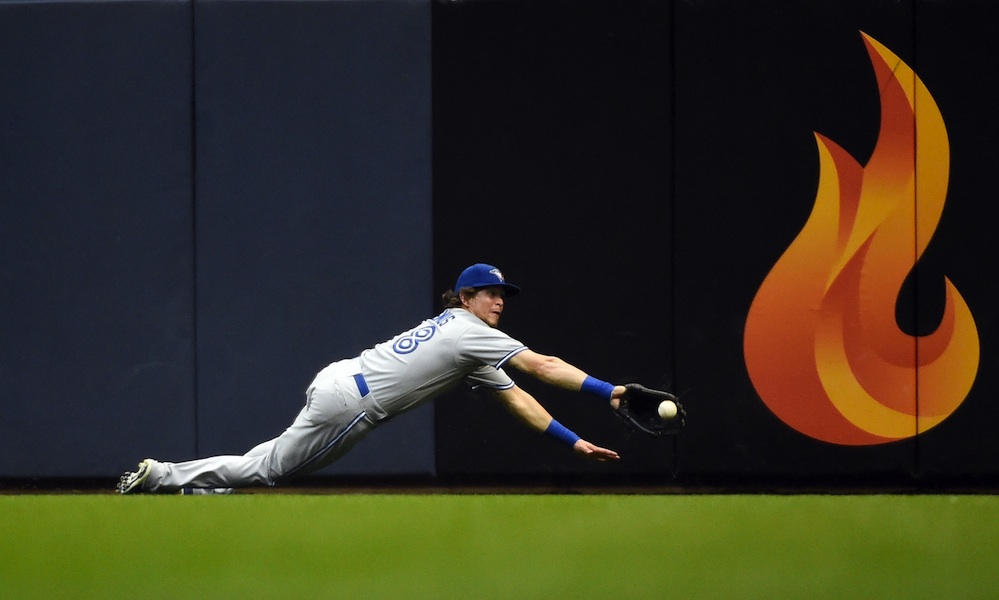 Although I'm not a huge fan of any defensive metrics, UZR is generally considered to be the most accurate measure over a large sample, so I've listed each player's career average per 150 games (in essence, this is meant to convey the number of runs saved defensively per season). For reference, Twins left fielders collectively posted a -14.7 UZR/150 mark in 2014. Yuck. Nyjer Morgan Age: 34 B/T: L/L Career UZR/150: 15.7 Morgan has been a defensive wizard. His 15.7 UZR/150 mark is off-the-charts good, and he has proven to be a major asset at all three outfield spots. He has also been a solid hitter for the most part and and an aggressive threat on the basepaths. Unfortunately, he's in his mid-30s and doesn't have much of a recent MLB track record; he was bad in 2012, spent the 2013 season playing in Japan, and missed most of 2014 with a knee injury. It's fair to wonder what "Tony Plush" is capable of at this point, though he'd be awfully intriguing on a minor-league deal. Chris Denorfia Age: 34 B/T: R/R UZR/150: 6.7 Denorfia has spent years reliably patrolling the spacious outfield at Petco Park, and has usually managed to put up solid offensive numbers in the notoriously hitter-hampering yard, though he's coming off his worst season at the plate. He's a .292 career hitter with a .789 OPS against left-handed pitchers, and would be interesting as a potential platoon partner for Jordan Schafer. Colby Rasmus Age: 28 B/T: L/L UZR/150: -0.3 Don't be fooled by that sub par overall UZR number; Rasmus has spent nearly his entire career playing center field. As an average defender there, he figures to be well above average in a corner, if he's willing to make that transition. In some ways, Rasmus is very appealing, as he has averaged about 20 homers in six MLB seasons and is the youngest player on this list. On the other hand, those factors will probably make him fairly expensive and he has posted a sub-.300 on-base percentage in three of the last four years, with K-rates that alarmingly continue to climb. Endy Chavez Age: 36 B/T: L/L Career UZR/150: 7.5 Like Rasmus, Chavez's UZR total understates his ability because he's spent so much time playing center field. In the corners he has been nothing short of spectacular, though his rates have sagged in the past couple years as he's aged into his late 30s. The Mariners still liked his defense enough to get him into 177 games in those two seasons, despite a .650 OPS, but he can't really be viewed as a candidate to start at this point. Emilio Bonifacio Age: 29 B/T: S/R UZR/150: 3.1 The 29-year-old has carved out a nice career as a glove-first utility man, and he does his best work in the outfield corners, but he doesn't bring enough with the bat to profile as a starter. He has posted an OPS above .700 only once in his career. Alex Rios Age: 33 B/T: R/R UZR/150: 5.5 Rios has been so-so in center but excellent in right field. He hasn't played much in left but there's no reason to think he couldn't. He is known for his cannon arm, and brings more with the stick than most players listed here. He is also an excellent base stealer and the Twins would probably welcome more speed to the lineup. The only question is whether they're willing to commit millions over multiple years to an inconsistent player in his mid-30s. Nori Aoki Age: 32 B/T: L/R UZR/150: 3.6 Aoki has mostly played right field, where he rates very well, but he would seemingly be a fit in left. He is a disciplined hitter without much pop, sporting a .287/.353/.387 slash line in three MLB seasons with the Brewers and Royals. He is said to be seeking a three-year deal. SUMMARY Out of the players on this list, we can probably rule out Morgan, Chavez and Bonifacio, at least as starting options. They just don't hit enough to anchor a corner outfield spot. Denorfia would be fairly cheap and his righty bat would complement Schafer well. If the Twins are looking to make a more significant splash, then Rasmus, Rios and Aoki are all worth a long look. Who appeals to you most out of this group? Or would you prefer to look elsewhere, like a trade or international signing?
 -
Article: Who's The Next Phil Hughes?
Nick Nelson replied to Nick Nelson's topic in Twins Daily Front Page News
Sure. They are bounce-back candidates. I'd just rather have more than less. The Twins are in a good position to gamble on these types of players, and also offer an appealing situation to bring said players aboard. There are health risks on the list (some more than others), but every pitcher is a health risk. -
Article: Who's The Next Phil Hughes?
Nick Nelson replied to Nick Nelson's topic in Twins Daily Front Page News
These are not low-upside deals. Each pitcher listed (with the exception of Morales I guess) has shown the ability to pitch like a front-of-rotation guy in recent years. That's why they're different from Pelfrey and Correia. Also, it's easy to say "Let's go get Ervin Santana" but is he really going to want to pitch here? You've got to be realistic about the other side of this thing. Pitchers with depressed value will view Minnesota as a more attractive landing spot because the barrier of entry for the rotation is low. -
Article: Who's The Next Phil Hughes?
Nick Nelson replied to Nick Nelson's topic in Twins Daily Front Page News
There are two nice things that can come out of it: 1) Pitcher has a good year and entices needy teams at the trade deadline. The Cubs turned Scott Feldman into Jake Arrieta. 2) Pitcher has a good year, decides he likes it here and re-signs. I actually think it makes perfect sense for where the Twins are as a franchise. -
Article: Who's The Next Phil Hughes?
Nick Nelson replied to Nick Nelson's topic in Twins Daily Front Page News
Masterson would require probably a one-year commitment. Lester would require at least five. Pretty much as simple as that. I think they should be focused on flexibility right now, especially with Hughes & Nolasco both under contract for 2016. It's not exactly the same, no. But the idea is buying low on a big talent due to his circumstances. Those are the signings that carry little risk but can make you look very smart. And I think the Twins can appeal to those free agents, because this rotation should be wide open. As for Liriano, they'd have to give up a draft pick to sign him, so he really doesn't fit the parameters. I still wouldn't be opposed to giving him a look, but it ain't gonna happen. -
With free agency now officially underway, there will be considerable interest in Terry Ryan's approach to addressing his team's starting pitching woes. If you're hoping see him aggressively pursue one of the top names on the market, you're likely to be disappointed. But there's a good chance the Twins will add at least one free agent arm, and as the Phil Hughes signing demonstrated last year, landing a pitcher with a mid-level contract can pay major dividends if done smartly.Some might be frustrated by the idea that ace types like Max Scherzer, Jon Lester and James Shields will probably not be on Ryan's radar. But this is understandable for a couple reasons. For one thing, there's already some congestion in the rotation with seven starters currently in line to vie for five spots. Secondly, there's the whole rebuilding thing. Does it make sense to commit $100-plus million over five-plus years when the roster is in such a state of flux? Given their present circumstances, it makes more sense for the Twins to seek a pitcher who carries less risk and commitment. That doesn't mean they can't bring in some considerable upside. When the Twins signed Hughes about a year ago, I liked the move quite a bit for three principal reasons: 1) He was young, with success in his past. 2) He had good peripherals. 3) He had been pitching under unfavorable circumstances. Hughes was coming off a season in which he'd gone 4-14 with a 5.19 ERA for the Yankees, enabling the Twins to get him at a bargain price of $8 million per year, but those three factors made him a good bet to rebound and improve with a change of scenery. I don't think anyone could have anticipated his turnaround to be quite so drastic, but the success of this signing was hardly random. With that in mind, I thought it would be interesting to gauge this year's free agent pitching market and identify some guys in similar situations, with depressed value but deeper potential. The Twins have no need for another back-end starter -- they have plenty of those already -- so the focus should be on finding a pitcher who offers at least a realistic chance of being more than that, without paying a premium or forfeiting a draft pick. Here are a few names worth keeping an eye on: Justin Masterson - RHP, 29 years old Masterson is the starter we suggested signing in our blueprint for the Offseason Handbook. In 2013, he was an All-Star, posting a 3.45 ERA over 193 innings for the Indians; in 2014, he was a mess, registering a 5.88 mark in 128 frames between Cleveland and St. Louis. The Cardinals demoted him to the bullpen in September and left him off their playoff roster. Despite the brutal results this year, Masterson did two important things quite well: missing bats (19.6 K%) and getting grounders (58.2 GB%). His .339 BABIP is bound to come back to Earth and if the Twins could bring his walks under control after he posted a career-high 4.8 BB/9 rate, there's a good shot he could return to his previous form. He may be seeking a one-year make-good deal, which would be ideal for the Twins since they still have multi-year commitments to Hughes and Ricky Nolasco, and want to maintain flexibility for incoming prospects. Brett Anderson - LHP, 26 years old He's consistently been very good when healthy, but he has also been consistently unhealthy. The Rockies took a gamble on his talent last offseason by trading with Oakland to bring him in, and the southpaw was great when on the mound, posting a sterling 2.91 ERA in eight starts... but, he only made eight starts. This time it was a bulging disc in his back that derailed Anderson, but he's expected to be ready for spring training and he's still extremely young by free agent standards. He seems like a good fit for the Twins, who could afford to be patient and endure setbacks because of their depth and relatively low expectations. Chad Billingsley - RHP, 30 years old Billingsley is coming off back-to-back lost seasons -- he threw a total of 12 innings in 2013 and never made it to a big-league mound in 2014. His right arm has gone through some major turmoil; first Tommy John, then surgery to repair a torn flexor tendon in the same elbow. He's probably the toughest guy to trust on this list, but he might come on a non-guaranteed minor-league deal and the upside is there. Prior to 2013, he had a 3.66 career ERA, and had made 25 or more starts in five straight seasons. Josh Johnson - RHP, 30 years old Like Billingsley, Johnson has had a really rough go of it the last two years. In 2013, he made only 16 starts (with a 6.20 ERA) while battling elbow soreness. He underwent offseason surgery to remove bone spurs from the elbow, but that did little good as he ended up needing Tommy John surgery early in the 2014 campaign. When healthy, he's got plenty of juice in his arm, with the ability to dial it up into the mid-90s and blow away opposing hitters. Franklin Morales - LHP, 28 years old Morales has long been reputed for his electric stuff, but the numbers have rarely lined up. The Venezuelan has gone from Colorado to Boston and back to Colorado, frustrating coaches with his inconsistency and shaky command. But the ability is there. He's still only 28 and was at one point viewed as one of the best prospects in the game (Baseball America ranked him No. 8 overall in 2008). Carlos Villanueva - RHP, 30 years old The right-hander is an enigma. During stints with the Brewers, Blue Jays and Cubs, he has constantly bounced back and forth between the rotation and bullpen, failing to establish himself despite solid secondary numbers buoyed by good control and a quality K-rate. It'd be hard to rely on Villanueva as a full-time starter at this point, but he's definitely worth a look; his 175-to-59 K/BB ratio in Chicago over the past two seasons is impressive and helps explain the disparity between a 4.27 ERA and 3.59 FIP. Brandon Morrow - RHP, 30 years old Things were looking bright for Morrow back in 2011. As a 26-year-old, he made a career-high 30 starts for the Blue Jays and led the league with a 10.2 K/9 rate. Since then, durability has unfortunately been a huge issue for him, as his games-started totals have dropped from 30 to 21 to 10 to six. In 2014 he was limited to 33 innings by a finger injury. Some believe his future may be as a reliever, where he could stay healthier and maximize his arsenal, but I think he's worth a gamble and he might like another opportunity to start. Click here to view the article
-
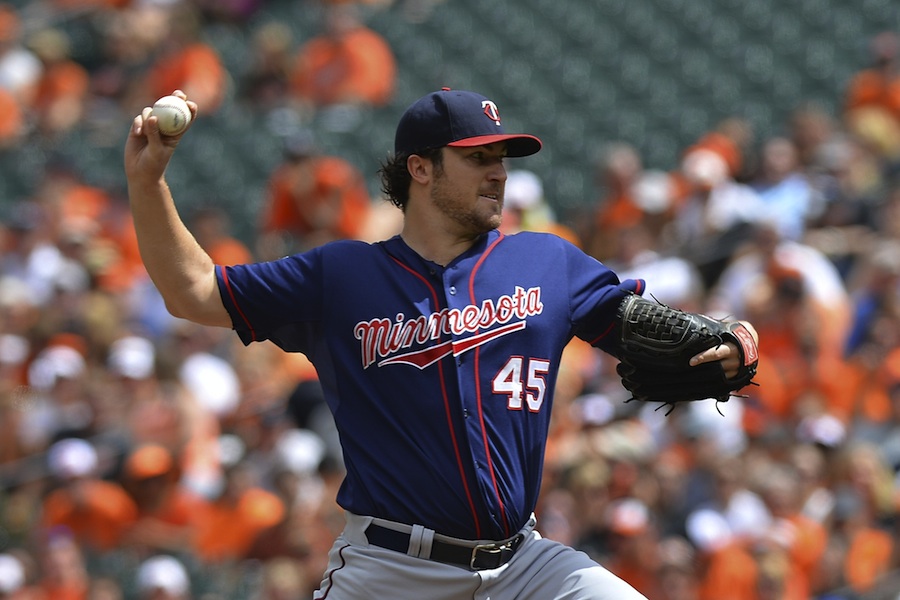 Some might be frustrated by the idea that ace types like Max Scherzer, Jon Lester and James Shields will probably not be on Ryan's radar. But this is understandable for a couple reasons. For one thing, there's already some congestion in the rotation with seven starters currently in line to vie for five spots. Secondly, there's the whole rebuilding thing. Does it make sense to commit $100-plus million over five-plus years when the roster is in such a state of flux? Given their present circumstances, it makes more sense for the Twins to seek a pitcher who carries less risk and commitment. That doesn't mean they can't bring in some considerable upside. When the Twins signed Hughes about a year ago, I liked the move quite a bit for three principal reasons: 1) He was young, with success in his past. 2) He had good peripherals. 3) He had been pitching under unfavorable circumstances. Hughes was coming off a season in which he'd gone 4-14 with a 5.19 ERA for the Yankees, enabling the Twins to get him at a bargain price of $8 million per year, but those three factors made him a good bet to rebound and improve with a change of scenery. I don't think anyone could have anticipated his turnaround to be quite so drastic, but the success of this signing was hardly random. With that in mind, I thought it would be interesting to gauge this year's free agent pitching market and identify some guys in similar situations, with depressed value but deeper potential. The Twins have no need for another back-end starter -- they have plenty of those already -- so the focus should be on finding a pitcher who offers at least a realistic chance of being more than that, without paying a premium or forfeiting a draft pick. Here are a few names worth keeping an eye on: Justin Masterson - RHP, 29 years old Masterson is the starter we suggested signing in our blueprint for the Offseason Handbook. In 2013, he was an All-Star, posting a 3.45 ERA over 193 innings for the Indians; in 2014, he was a mess, registering a 5.88 mark in 128 frames between Cleveland and St. Louis. The Cardinals demoted him to the bullpen in September and left him off their playoff roster. Despite the brutal results this year, Masterson did two important things quite well: missing bats (19.6 K%) and getting grounders (58.2 GB%). His .339 BABIP is bound to come back to Earth and if the Twins could bring his walks under control after he posted a career-high 4.8 BB/9 rate, there's a good shot he could return to his previous form. He may be seeking a one-year make-good deal, which would be ideal for the Twins since they still have multi-year commitments to Hughes and Ricky Nolasco, and want to maintain flexibility for incoming prospects. Brett Anderson - LHP, 26 years old He's consistently been very good when healthy, but he has also been consistently unhealthy. The Rockies took a gamble on his talent last offseason by trading with Oakland to bring him in, and the southpaw was great when on the mound, posting a sterling 2.91 ERA in eight starts... but, he only made eight starts. This time it was a bulging disc in his back that derailed Anderson, but he's expected to be ready for spring training and he's still extremely young by free agent standards. He seems like a good fit for the Twins, who could afford to be patient and endure setbacks because of their depth and relatively low expectations. Chad Billingsley - RHP, 30 years old Billingsley is coming off back-to-back lost seasons -- he threw a total of 12 innings in 2013 and never made it to a big-league mound in 2014. His right arm has gone through some major turmoil; first Tommy John, then surgery to repair a torn flexor tendon in the same elbow. He's probably the toughest guy to trust on this list, but he might come on a non-guaranteed minor-league deal and the upside is there. Prior to 2013, he had a 3.66 career ERA, and had made 25 or more starts in five straight seasons. Josh Johnson - RHP, 30 years old Like Billingsley, Johnson has had a really rough go of it the last two years. In 2013, he made only 16 starts (with a 6.20 ERA) while battling elbow soreness. He underwent offseason surgery to remove bone spurs from the elbow, but that did little good as he ended up needing Tommy John surgery early in the 2014 campaign. When healthy, he's got plenty of juice in his arm, with the ability to dial it up into the mid-90s and blow away opposing hitters. Franklin Morales - LHP, 28 years old Morales has long been reputed for his electric stuff, but the numbers have rarely lined up. The Venezuelan has gone from Colorado to Boston and back to Colorado, frustrating coaches with his inconsistency and shaky command. But the ability is there. He's still only 28 and was at one point viewed as one of the best prospects in the game (Baseball America ranked him No. 8 overall in 2008). Carlos Villanueva - RHP, 30 years old The right-hander is an enigma. During stints with the Brewers, Blue Jays and Cubs, he has constantly bounced back and forth between the rotation and bullpen, failing to establish himself despite solid secondary numbers buoyed by good control and a quality K-rate. It'd be hard to rely on Villanueva as a full-time starter at this point, but he's definitely worth a look; his 175-to-59 K/BB ratio in Chicago over the past two seasons is impressive and helps explain the disparity between a 4.27 ERA and 3.59 FIP. Brandon Morrow - RHP, 30 years old Things were looking bright for Morrow back in 2011. As a 26-year-old, he made a career-high 30 starts for the Blue Jays and led the league with a 10.2 K/9 rate. Since then, durability has unfortunately been a huge issue for him, as his games-started totals have dropped from 30 to 21 to 10 to six. In 2014 he was limited to 33 innings by a finger injury. Some believe his future may be as a reliever, where he could stay healthier and maximize his arsenal, but I think he's worth a gamble and he might like another opportunity to start.
 -
Everyone wants to criticize the Twins for the way they handle injuries. On the one side, there are those who claim that the club has created a culture where players don't communicate injuries to coaches and too frequently play hurt. NBC Sports blogger Craig Calcaterra recently suggested this in a post about Chris Colabello playing (and struggling) through a serious thumb injury. Then, on the opposite end of the spectrum, there are those like Jim Souhan who argue that the Twins too often let players sit with minor ailments. In a rather brutal column for the Star Tribune this week, Souhan urged new manager Paul Molitor to "end [the] coddling of Twins players," declaring that the team's deferential treatment of Joe Mauer sets a bad example. Which one is it? Or could it be that both these viewpoints are being taken to absurd extremes, and that the Twins are not really all that different from the majority of teams around the league when it comes to their management of injuries? Yeah, I'm gonna go with that.Injuries suck. They are frustrating. They often keep good players out of action, or severely inhibit their performance on the field. And the worst part is that they're almost totally uncontrollable. Baseball is a dangerous game. People get hurt. Just ask Byron Buxton. Maybe it is the randomness and, oftentimes, vagueness of injuries that cause so many otherwise intelligent individuals to view the subject with so little rationality. Souhan's incendiary article this week was tough to stomach, in part because it showed little regard for the well-being of actual people, and in part because it took a harsh stance on a touchy subject without providing much of anything resembling evidence or support. Here's an actual line from the piece: "When the guy making $23 million a year begs out of the lineup because of a bruise, it’s difficult for the manager to push others to play through pain." I mean, come on. A bruise? Why fall back on such a ridiculous exaggeration? Fellow Star Trib columnist Patrick Reusse was spouting the same brand of nonsense late last season, and it's a pervasive talking point in some circles. For the record, here's how Mauer's career has played out since that disastrous 2011 season that apparently earned him an unshakable reputation as a wussy: 2012: 147 games played, 641 plate appearances. Both career highs. 2013: Was on pace for 149 games and 669 plate appearances before suffering a season-ending concussion in mid-August. A severe, season-ending brain injury. 2014: 120 games played, 518 plate appearances. Missed six weeks in July/August due to a strained oblique. This is about the standard recovery period for any player anywhere with an oblique strain. Making an argument that Mauer "begs out of the lineup" due to minor aches and pains is pretty much impossible if you're being the least bit intellectually honest, particularly when you consider that he's spent much of his career playing the most punishing position in the game. It is more likely that Mauer, like many other players, has too frequently tried to play through pain. I have a hard time believing that he was completely healthy in the first half of 2014, when he put up an uncharacteristic .342 on-base percentage and sub-700 OPS. After returning in August from his long layoff, Mauer looked much more like himself, posting a .397 OBP and .802 OPS the rest of the way. It's strange that some people seem to think he should have just toughed out the bilateral leg weakness situation in 2011. He tried, for the first couple weeks. He looked completely terrible, putting up a .550 OPS while hitting everything into the ground. Most often, "playing through pain" -- in a more extreme sense, because the vast majority of major leaguers are doing it to some extent on a regular basis -- does your team no favors. This brings us to the idea posed by Calcaterra and others -- that the Twins have created a culture in which players dangerously try to battle through injuries, ultimately resulting in a negative impact. This is a bit more plausible as a theory. There have been plenty of examples of Twins who have gone through bad slumps, only to later reveal that they were playing hurt. Just this season, you could point to Colabello, Mike Pelfrey, Ricky Nolasco and others. I think it's undeniable that the Twins have had too many players problematically attempt to play while injured. I only question whether that is remotely unique to them. It happens everywhere. Pro athletes play through pain because they are by nature extremely competitive and prone to overestimating the capabilities of their own bodies. In many cases, like Colabello's, it's about maintaining your livelihood. Does it happen more here than other places? How could that be true when everyone's being coddled? Maybe we should try to step back and look at this topic with a little more clarity and compassion. I promise it won't hurt. Click here to view the article
-
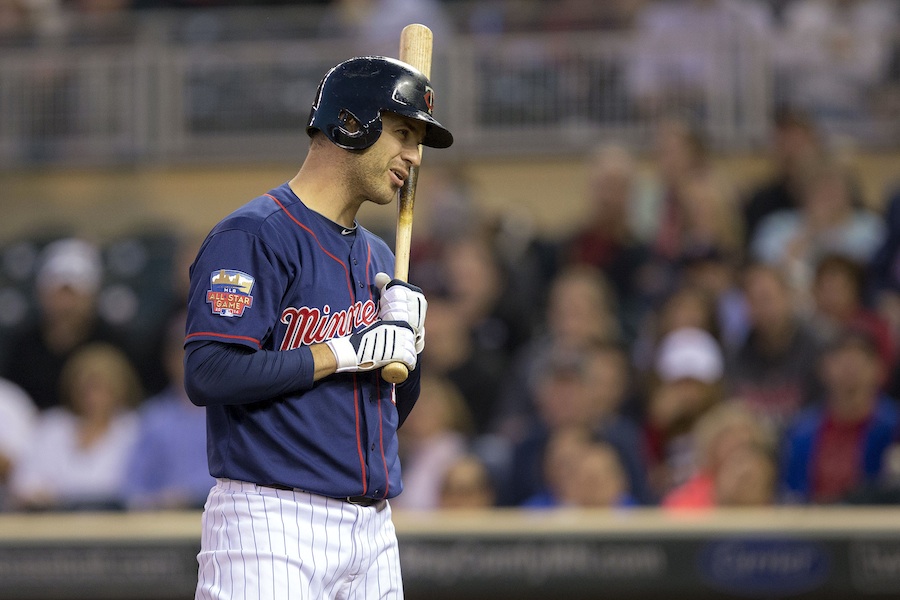 Injuries suck. They are frustrating. They often keep good players out of action, or severely inhibit their performance on the field. And the worst part is that they're almost totally uncontrollable. Baseball is a dangerous game. People get hurt. Just ask Byron Buxton. Maybe it is the randomness and, oftentimes, vagueness of injuries that cause so many otherwise intelligent individuals to view the subject with so little rationality. Souhan's incendiary article this week was tough to stomach, in part because it showed little regard for the well-being of actual people, and in part because it took a harsh stance on a touchy subject without providing much of anything resembling evidence or support. Here's an actual line from the piece: "When the guy making $23 million a year begs out of the lineup because of a bruise, it’s difficult for the manager to push others to play through pain." I mean, come on. A bruise? Why fall back on such a ridiculous exaggeration? Fellow Star Trib columnist Patrick Reusse was spouting the same brand of nonsense late last season, and it's a pervasive talking point in some circles. For the record, here's how Mauer's career has played out since that disastrous 2011 season that apparently earned him an unshakable reputation as a wussy: 2012: 147 games played, 641 plate appearances. Both career highs. 2013: Was on pace for 149 games and 669 plate appearances before suffering a season-ending concussion in mid-August. A severe, season-ending brain injury. 2014: 120 games played, 518 plate appearances. Missed six weeks in July/August due to a strained oblique. This is about the standard recovery period for any player anywhere with an oblique strain. Making an argument that Mauer "begs out of the lineup" due to minor aches and pains is pretty much impossible if you're being the least bit intellectually honest, particularly when you consider that he's spent much of his career playing the most punishing position in the game. It is more likely that Mauer, like many other players, has too frequently tried to play through pain. I have a hard time believing that he was completely healthy in the first half of 2014, when he put up an uncharacteristic .342 on-base percentage and sub-700 OPS. After returning in August from his long layoff, Mauer looked much more like himself, posting a .397 OBP and .802 OPS the rest of the way. It's strange that some people seem to think he should have just toughed out the bilateral leg weakness situation in 2011. He tried, for the first couple weeks. He looked completely terrible, putting up a .550 OPS while hitting everything into the ground. Most often, "playing through pain" -- in a more extreme sense, because the vast majority of major leaguers are doing it to some extent on a regular basis -- does your team no favors. This brings us to the idea posed by Calcaterra and others -- that the Twins have created a culture in which players dangerously try to battle through injuries, ultimately resulting in a negative impact. This is a bit more plausible as a theory. There have been plenty of examples of Twins who have gone through bad slumps, only to later reveal that they were playing hurt. Just this season, you could point to Colabello, Mike Pelfrey, Ricky Nolasco and others. I think it's undeniable that the Twins have had too many players problematically attempt to play while injured. I only question whether that is remotely unique to them. It happens everywhere. Pro athletes play through pain because they are by nature extremely competitive and prone to overestimating the capabilities of their own bodies. In many cases, like Colabello's, it's about maintaining your livelihood. Does it happen more here than other places? How could that be true when everyone's being coddled? Maybe we should try to step back and look at this topic with a little more clarity and compassion. I promise it won't hurt.
 -
My top concern as a Twins fan is winning baseball games, and I know I'm not alone in that sentiment. But I'm also a sucker for a compelling storyline, and the hiring of Paul Molitor as the club's new manager has the makings of a pretty great one.In an excellent column for the Star Tribune this past weekend laying out Molitor's many managerial merits, Jim Souhan included this tidbit, which I rather enjoyed: "The Twins’ only concern about Molitor throughout their relationship with him has been his occasional reticence to choose a defined career path. That is no longer a concern. Two people who know Molitor well said this week that he is driven to become a great manager, and to resurrect a franchise he loves." I've been a Twins fan and a Twin Cities resident for most my life, so I can't help but get a little revved up by that dynamic. Molitor was born here. He grew up as a fan. He picked up his 3,000th hit in a Twins uniform and retired here. And he's spent nearly his entire post-playing career serving this organization in some capacity. His ties to the franchise and the area are strong and deep. Molitor was born in St. Paul, and coincidentally, that might become his nickname locally if he can succeed in turning around this historically bad losing spell and shaping the Twins back into contenders. Fortunately, things are set up very favorably for the new skipper. Regardless of who was going to be in charge, the Twins are positioned to make significant strides in the coming years, with their vaunted prospect core reaching or rapidly approaching the majors. Helping those young players develop and realize their potential is the primary task in front of the new regime, and Molitor is as well equipped as anyone for that responsibility. He has familiarity with all the upcoming prospects, not to mention those who've already arrived, through his years as a roving minor-league instructor. By now you've probably heard Molitor referred to as a baseball "genius" or "savant," with various individuals remarking on his unique and useful insights into the game. He has also been lauded by many players for his teaching skills, and for his ability to connect with Spanish-speaking kids in the minors. These are critical strengths considering the nature of the job he's taking on. There are plenty of things for fans to like about Molitor. But a part of me does wonder if the new manager might prove to be a little too vanilla for the tastes of some. We all know about the rancor that has surrounded Joe Mauer during the team's recent lean years. Some complain that the highly compensated star doesn't assume enough of a vocal leadership role. His calm demeanor can be viewed as overly passive, riling up invested onlookers. The parallels between Minnesota's new manager and its longest-tenured player are numerous. They were born in the same town and went to the same high school. They fit the same playing mold -- disciplined hitters with picturesque swings and moderate power, delivering value largely through batting average and on-base percentage. (Both also were forced to switch to less demanding positions in their 30s due to injuries.) And, from a personality standpoint, although Molitor hasn't had a major public presence in many years, he does seem to offer traits similar to Mauer. Both are studious and cerebral in their approaches to the game. Both are fairly soft-spoken. The cynic could see this as a problem. Ammunition for frustrated fans to unleash on the newly appointed manager if things don't take an rapid turn for the better. It's a sad thought, but we've seen it before. Then again, one might also suggest that this pairing opens the door for a legendary tale of hometown redemption. If the Twins are to turn things around in short order, a resurgence from Mauer could be equally important to the impacts made by prospects entering the fold. And Molitor will be at the head of it all, imparting wisdom and rejuvenating a franchise to which he has dedicated a third of his life. Two generational baseball talents from Minnesota's capitol city. One, a 58-year-old Hall of Famer managing for the first time; the other, a 31-year-old former MVP (and perhaps future Hall of Famer) looking to prove that he can still be the centerpiece of a contending team. One must lead on the field -- through his performance if not his comportment -- and the other must learn to lead from the dugout. It'd be a hell of a story. Click here to view the article
-
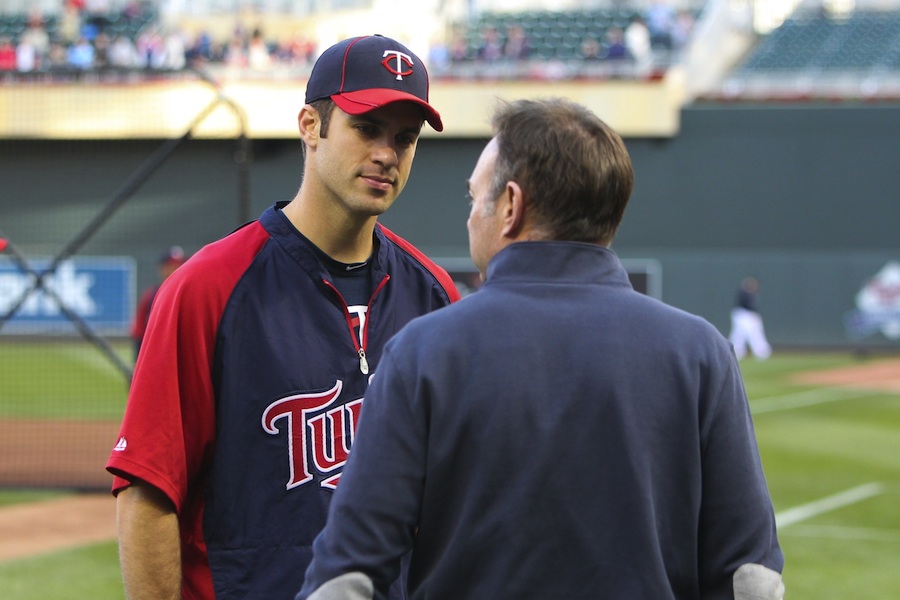 In an excellent column for the Star Tribune this past weekend laying out Molitor's many managerial merits, Jim Souhan included this tidbit, which I rather enjoyed: "The Twins’ only concern about Molitor throughout their relationship with him has been his occasional reticence to choose a defined career path. That is no longer a concern. Two people who know Molitor well said this week that he is driven to become a great manager, and to resurrect a franchise he loves." I've been a Twins fan and a Twin Cities resident for most my life, so I can't help but get a little revved up by that dynamic. Molitor was born here. He grew up as a fan. He picked up his 3,000th hit in a Twins uniform and retired here. And he's spent nearly his entire post-playing career serving this organization in some capacity. His ties to the franchise and the area are strong and deep. Molitor was born in St. Paul, and coincidentally, that might become his nickname locally if he can succeed in turning around this historically bad losing spell and shaping the Twins back into contenders. Fortunately, things are set up very favorably for the new skipper. Regardless of who was going to be in charge, the Twins are positioned to make significant strides in the coming years, with their vaunted prospect core reaching or rapidly approaching the majors. Helping those young players develop and realize their potential is the primary task in front of the new regime, and Molitor is as well equipped as anyone for that responsibility. He has familiarity with all the upcoming prospects, not to mention those who've already arrived, through his years as a roving minor-league instructor. By now you've probably heard Molitor referred to as a baseball "genius" or "savant," with various individuals remarking on his unique and useful insights into the game. He has also been lauded by many players for his teaching skills, and for his ability to connect with Spanish-speaking kids in the minors. These are critical strengths considering the nature of the job he's taking on. There are plenty of things for fans to like about Molitor. But a part of me does wonder if the new manager might prove to be a little too vanilla for the tastes of some. We all know about the rancor that has surrounded Joe Mauer during the team's recent lean years. Some complain that the highly compensated star doesn't assume enough of a vocal leadership role. His calm demeanor can be viewed as overly passive, riling up invested onlookers. The parallels between Minnesota's new manager and its longest-tenured player are numerous. They were born in the same town and went to the same high school. They fit the same playing mold -- disciplined hitters with picturesque swings and moderate power, delivering value largely through batting average and on-base percentage. (Both also were forced to switch to less demanding positions in their 30s due to injuries.) And, from a personality standpoint, although Molitor hasn't had a major public presence in many years, he does seem to offer traits similar to Mauer. Both are studious and cerebral in their approaches to the game. Both are fairly soft-spoken. The cynic could see this as a problem. Ammunition for frustrated fans to unleash on the newly appointed manager if things don't take an rapid turn for the better. It's a sad thought, but we've seen it before. Then again, one might also suggest that this pairing opens the door for a legendary tale of hometown redemption. If the Twins are to turn things around in short order, a resurgence from Mauer could be equally important to the impacts made by prospects entering the fold. And Molitor will be at the head of it all, imparting wisdom and rejuvenating a franchise to which he has dedicated a third of his life. Two generational baseball talents from Minnesota's capitol city. One, a 58-year-old Hall of Famer managing for the first time; the other, a 31-year-old former MVP (and perhaps future Hall of Famer) looking to prove that he can still be the centerpiece of a contending team. One must lead on the field -- through his performance if not his comportment -- and the other must learn to lead from the dugout. It'd be a hell of a story.
 -
With Paul Molitor set to be announced as the new Twins manager on Tuesday morning, focus now shifts to the makeup of his coaching staff. Molitor and Ryan will likely work together to assemble this group, so it stands to reason that several members will be internal (and even incumbent) selections. Molitor worked alongside hitting coach Tom Brunansky in a 2014 season that saw several young hitters succeed. Bruno seems like a lock to return. Terry Steinbach, Gene Glynn and Doug Mientkiewicz are all names within the organization who could land on Molitor's staff. However, the Twins may look outside for help at the one spot that figures to draw more attention than any other: pitching coach.Rick Anderson held that role through Ron Gardenhire's tenure, and he oversaw some very effective staffs during that time. In recent years, however, pitching has been a constant problem for the club. Anderson's "pitch to contact" mantra, though often misinterpreted and overblown, did manifest in several areas -- most notably the stat sheet. Minnesota has ranked last in the American League in strikeouts every year since 2011, with 500 fewer whiffs than the next-lowest MLB team during that span. The pitching staff needs to reinvent its identity, so there will be great interest in the Twins pick to run this unit. It is possible that they will look inward once again. Here are a few names worth watching on that front: Stu Cliburn: He has spent the last five years working as a pitching coach between Triple-A Rochester and Double-A New Britain. He has familiarity with many of the young arms that will comprise Twins staffs in the next couple years. Marty Mason: Replaced Cliburn as Red Wings pitching coach in 2012 after spending a couple of years in the Cubs organization. He helped Trevor May make massive improvements this year and also worked extensively with Alex Meyer, who might be the most important piece in the Twins' short-term pitching plans. Eric Rasmussen: If you're looking for someone with wide-reaching knowledge of the upcoming pitchers you could hardly do better than Rasmussen, who has been the organization's minor-league pitching coordinator since 2008. Before that, he was a pitching coach for various Twins affiliates for 17 years. While these could all be fine choices, the Twins may be more inclined look outside for a candidate at this spot given the depths of their struggles with developing pitchers recently. If so, one intriguing name is Frank Viola. He came up with the Twins back in the 1980s, won a Cy Young here in 1988, and is a member of the team's Hall of Fame. He was mentioned in a recent Sid Hartman column as a possible candidate and he would make some sense. Viola has been working as a pitching coach in the Mets system for the past four seasons. He underwent open heart surgery in April this year after an issue was discovered during his preseason physical, but recovered fully and joined Triple-A Las Vegas two months later. His name is very much on the rise. Molitor and Viola never played on the same team (they just missed each other in Toronto) but their careers spanned the same era so they likely have familiarity with each other. Both bring a marketable recognition factor while also the promise of fresh perspective. It would be an interesting direction for the Twins' new regime. Click here to view the article
-
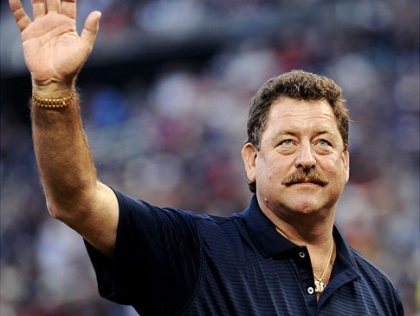 Rick Anderson held that role through Ron Gardenhire's tenure, and he oversaw some very effective staffs during that time. In recent years, however, pitching has been a constant problem for the club. Anderson's "pitch to contact" mantra, though often misinterpreted and overblown, did manifest in several areas -- most notably the stat sheet. Minnesota has ranked last in the American League in strikeouts every year since 2011, with 500 fewer whiffs than the next-lowest MLB team during that span. The pitching staff needs to reinvent its identity, so there will be great interest in the Twins pick to run this unit. It is possible that they will look inward once again. Here are a few names worth watching on that front: Stu Cliburn: He has spent the last five years working as a pitching coach between Triple-A Rochester and Double-A New Britain. He has familiarity with many of the young arms that will comprise Twins staffs in the next couple years. Marty Mason: Replaced Cliburn as Red Wings pitching coach in 2012 after spending a couple of years in the Cubs organization. He helped Trevor May make massive improvements this year and also worked extensively with Alex Meyer, who might be the most important piece in the Twins' short-term pitching plans. Eric Rasmussen: If you're looking for someone with wide-reaching knowledge of the upcoming pitchers you could hardly do better than Rasmussen, who has been the organization's minor-league pitching coordinator since 2008. Before that, he was a pitching coach for various Twins affiliates for 17 years. While these could all be fine choices, the Twins may be more inclined look outside for a candidate at this spot given the depths of their struggles with developing pitchers recently. If so, one intriguing name is Frank Viola. He came up with the Twins back in the 1980s, won a Cy Young here in 1988, and is a member of the team's Hall of Fame. He was mentioned in a recent Sid Hartman column as a possible candidate and he would make some sense. Viola has been working as a pitching coach in the Mets system for the past four seasons. He underwent open heart surgery in April this year after an issue was discovered during his preseason physical, but recovered fully and joined Triple-A Las Vegas two months later. His name is very much on the rise. Molitor and Viola never played on the same team (they just missed each other in Toronto) but their careers spanned the same era so they likely have familiarity with each other. Both bring a marketable recognition factor while also the promise of fresh perspective. It would be an interesting direction for the Twins' new regime.
