



Nick Nelson
-
Posts
8,322 -
Joined
-
Last visited
-
Days Won
56
Content Type
Profiles
News
Minnesota Twins Videos
2026 Minnesota Twins Top Prospects Ranking
2022 Minnesota Twins Draft Picks
Minnesota Twins Free Agent & Trade Rumors, Notes, & Tidbits
Guides & Resources
2023 Minnesota Twins Draft Picks
The Minnesota Twins Players Project
2024 Minnesota Twins Draft Picks
2025 Minnesota Twins Draft Pick Tracker
2026 Minnesota Twins Draft Tracker: Picks & Bonuses
Forums
Blogs
Events
Store
Downloads
Gallery
Everything posted by Nick Nelson
-

Article: The Defensive Dilemma
Nick Nelson replied to Nick Nelson's topic in Twins Daily Front Page News
I don't disagree with anything you said, but we've got to be realistic. The Twins have ranked last in the league in strikeouts four straight years -- they're not going to suddenly shoot into the top half. Hopefully they'll take some steps to make improvements in that category, but defense is still going to come into play heavily. There's no doubt about it. -
The Twins rank fifth in the American League in runs scored per game, and second-to-last in runs allowed per game. It's pretty obvious where they primarily need to improve in order to return to respectability: run prevention. A new pitching coach, along with some tweaking in personnel, might help, but there's a much deeper problem here. This is a horrendous defensive team, creating a dilemma with no easy solution.In Defensive Efficiency (a measure of how many balls in play are converted into outs), the Twins rank 29th out of 30 MLB clubs, with only the Rangers -- who lost their 92nd game on Thursday -- behind them. There are some blatantly bad fielders on the Minnesota roster. For Oswaldo Arcia, the statistics agree with the eye-test: he's a complete liability in either outfield corner. Josmil Pinto was sent to the minors in June almost solely because of his deficiencies behind the plate, and even when in Triple-A he was hardly a regular at catcher. Danny Santana is considered somewhat rough at shortstop, but has had almost no opportunity to refine his game there this year. Looking ahead to 2015, the Twins' question marks defensively are painfully obvious, and yet herein lies the problem: The same names mentioned above are also talented young hitters who will be critical to sustaining the team's aforementioned offensive improvement. Think about Trevor Plouffe. He was a mess defensively during his first couple seasons in the majors, first at shortstop and then at third. But this year, at age 28, he has made noticeable improvements that have been acknowledged by his coaches and backed up by fielding metrics. It's just one example of a player making meaningful strides with his glove over time, and it's not that rare. It is too soon to give up on 25-and-under guys like Pinto and Arcia being adequate fielders long-term. However, the Twins have got to get better at preventing runs in a hurry. This is the fourth straight season in which they've allowed too much scoring to even have a chance at competing, and that has to stop. But how do the Twins balance the desperate need to improve defensively with their coinciding reliance on these potent young bats? Kennys Vargas, at 23, is already essentially relegated to DH duty given his lack of value in the field, so hiding another hitter there isn't really an option unless he's traded. Maybe that's the answer: Seek to trade a one or two of these plodding sluggers, replacing them with more able defenders. But it seems weird for a retooling team to be dealing away promising, internally developed young talents. I don't think I'd advocate that. To be honest, I'm flummoxed. I hate the thought of another bottom-tier defensive unit next year, making the already difficult task of bringing this pitching staff up to snuff substantially more challenging. Yet, I have no desire to give up on MLB-caliber young hitters like Pinto, Arcia, Vargas and Santana. What it might come down to is hoping that some of these guys rapidly develop in the field -- they're at an age and experience level where that can happen. At the same time, the pitchers have got to miss more bats and reduce pressure on the defensive unit. There's no question that the Twins' fielding issues have been magnified to a tremendous degree by a staff that is constantly putting the ball in play; this is their fourth straight year ranking last in the league in strikeout rate. That simply has to change, or the ridiculous runs-allowed totals will not. Click here to view the article
-
Here's the thing with Molitor. Is he a good coach? Yes, by all accounts. But coaching and managing are different animals, with one being on more of a macro scale. I just would like some evidence that Molitor can capably handle the many things that go into managing a baseball team beyond developing players. I'm not saying he can't, but there's really no way to know. And if he's such an appealing managerial candidate, why haven't other teams come knocking? To my knowledge, they haven't.
-
I can come up with reasons he'd be qualified. He knows the game. He's familiar with the personnel. He's a highly touted coach. I just don't get why he's such a widely popular choice given his lack of experience and tangible results.
-
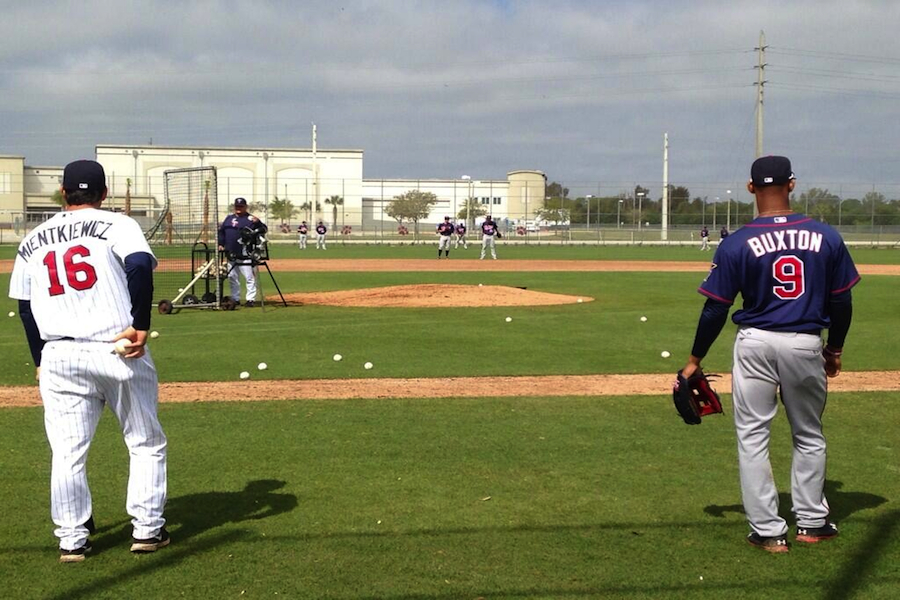 Earlier this week, we discussed potential changes on the Twins coaching staff. To me, moving on from pitching coach Rick Anderson is essentially a no-brainer, as his contract is up and the unit he's directly in charge of has been unacceptably bad for too long now. Gardenhire is a different case. His contract extends to 2015, so a dismissal would require firing him as opposed to simply passing on a new deal. Still, as many people pointed out in the comments section on Monday, there's a decent chance that Gardy will be gone after this season. The Twins could decide to clean house, giving Gardy the axe while also letting Anderson go. That seems unlikely, especially in light of Terry Ryan's recent vote of confidence. But Gardy could also opt to resign on his own if the team parts ways with Anderson, a longtime friend. Or the manager might just step down after four straight tumultuous seasons. So, if Gardy goes, who replaces him? Paul Molitor is a popular choice among fans, for some reason. But unlike Molitor, Mientkiewicz has earned the opportunity by performing well in a managerial role. Sure, the Twins have good players in the minors, but his immediate success with this Miracle team has been nothing short of astounding. Mientkiewicz wouldn't necessarily be a conventional choice. At 40, he'd be the youngest manager in baseball and his experience essentially amounts to two years at Single-A. However, his path would closely mirror that of former Twin Mike Redmond, who jumped straight from A-ball to the majors last year at the age of 41. Redmond's Marlins endured 100 losses in his first season, but have taken a huge step forward this year and are currently just three games below .500. Let's take a look at some reasons why Mientkiewicz might make sense as the next Twins manager: * He's familiar, yet fresh. Since the Twins have a long history of promoting from within, it stands to reason that the next manager will be someone who's currently in the organization, so this fits. Yet, Mientkiewicz is disparate enough from the current regime, and young enough, that he'd bring a distinctly different flavor to what is unaffectionately referred to as the "Old Boys' Club." * He has worked extensively with the top prospects expected to be the lifeblood of a turnaround. Mientkiewicz managed Miguel Sano in Ft. Myers for the first half of the 2013 season, and Byron Buxton for the second half. Mientkiewicz has also coached Kennys Vargas, J.O. Berrios, Eddie Rosario, Jorge Polanco, Adam Walker and others. * He's got attitude. It's something that many believe has been missing in the Twins clubhouse. Gardenhire isn't without fire -- as illustrated by his numerous ejections -- but his teams have often been accused of lacking in that department. Mientkiewicz would bring swagger. Last year he actually got in a brawl with an opposing manager on the field. Kind of awesome. What do you think? Does Mientkiewicz appeal to you as a candidate to be Gardenhire's successor?
 -
On Monday night, the Ft. Myers Miracle won the Florida State League Championship for the first time in team history, with manager Doug Mientkiewicz leading at the helm. In his two seasons since taking over the High-A affiliate, Mientkiewicz has guided a club that had finished below .500 in three straight seasons to a 161-113 record. The impressive results, in combination with a few other factors, lead to an interesting question -- one that fellow Twins Daily writer Seth Stohs has been drumming up for a while now: Is Mientkiewicz the right man to succeed Ron Gardenhire and usher in the next wave of young talent for the Twins?Earlier this week, we discussed potential changes on the Twins coaching staff. To me, moving on from pitching coach Rick Anderson is essentially a no-brainer, as his contract is up and the unit he's directly in charge of has been unacceptably bad for too long now. Gardenhire is a different case. His contract extends to 2015, so a dismissal would require firing him as opposed to simply passing on a new deal. Still, as many people pointed out in the comments section on Monday, there's a decent chance that Gardy will be gone after this season. The Twins could decide to clean house, giving Gardy the axe while also letting Anderson go. That seems unlikely, especially in light of Terry Ryan's recent vote of confidence. But Gardy could also opt to resign on his own if the team parts ways with Anderson, a longtime friend. Or the manager might just step down after four straight tumultuous seasons. So, if Gardy goes, who replaces him? Paul Molitor is a popular choice among fans, for some reason. But unlike Molitor, Mientkiewicz has earned the opportunity by performing well in a managerial role. Sure, the Twins have good players in the minors, but his immediate success with this Miracle team has been nothing short of astounding. Mientkiewicz wouldn't necessarily be a conventional choice. At 40, he'd be the youngest manager in baseball and his experience essentially amounts to two years at Single-A. However, his path would closely mirror that of former Twin Mike Redmond, who jumped straight from A-ball to the majors last year at the age of 41. Redmond's Marlins endured 100 losses in his first season, but have taken a huge step forward this year and are currently just three games below .500. Let's take a look at some reasons why Mientkiewicz might make sense as the next Twins manager: * He's familiar, yet fresh. Since the Twins have a long history of promoting from within, it stands to reason that the next manager will be someone who's currently in the organization, so this fits. Yet, Mientkiewicz is disparate enough from the current regime, and young enough, that he'd bring a distinctly different flavor to what is unaffectionately referred to as the "Old Boys' Club." * He has worked extensively with the top prospects expected to be the lifeblood of a turnaround. Mientkiewicz managed Miguel Sano in Ft. Myers for the first half of the 2013 season, and Byron Buxton for the second half. Mientkiewicz has also coached Kennys Vargas, J.O. Berrios, Eddie Rosario, Jorge Polanco, Adam Walker and others. * He's got attitude. It's something that many believe has been missing in the Twins clubhouse. Gardenhire isn't without fire -- as illustrated by his numerous ejections -- but his teams have often been accused of lacking in that department. Mientkiewicz would bring swagger. Last year he actually got in a brawl with an opposing manager on the field. Kind of awesome. What do you think? Does Mientkiewicz appeal to you as a candidate to be Gardenhire's successor? Click here to view the article
-
This is a good, reasoned take. I'm less interested in the "team sucks, fire Gardy" rants and more interested in WHY he should be removed and WHY someone else would be better.
-
That's a difficult, borderline impossible question to answer. The whole "This team is losing so the manager should go" line of thinking is incredibly oversimplified, which is why I tend to stay away from these conversations. I can say with confidence that Gardenhire isn't the reason the Twins have been losing 95 games each year instead of 70. That said, I've seen enough of the same with this pitching staff over the last four years, through many different personnel, that I'm ready for a change there.
-
That's your takeaway, eh? Because it's really not remotely similar to what I actually wrote.
-
After dropping four straight against the red-hot Angels over the weekend, the Twins now have 82 losses on the season. That's more than every major-league team other than Arizona, Colorado and Texas. This is good news because it means the Twins are likely headed toward another top pick in next year's draft. Texas is basically assured of finishing with baseball's worst record -- they're already at 89 losses -- but the Twins could easily be picking anywhere from second to fifth. Top five selections have bolstered the Minnesota system in recent years, leading to players like Byron Buxton, Kohl Stewart and Nick Gordon. Of course, the rapidly escalating loss total is also bad news because it means that -- once again -- the Twins are completely tanking late in the season.The sweep at the hands of the Angels marks the fourth time since the beginning of August that the Twins have lost four straight games. Their overall record during that span is 13-23 -- a .361 winning percentage that is depressingly similar to their August/September marks from the past few seasons. When you watch the games, you'd have a hard time saying that the team has simply given up or stopped trying. Three of the games in the Angels series were closely contested and could have gone either way. The offense has churned out runs in recent weeks. Yet, the Twins have lost 12 of their last 15, and as they continue to slide it's looking more and more like they might reach 95 losses in a fourth straight season. Individual bright spots have certainly been evident, but the losing just continues at an outrageous rate. This naturally brings us back to a question that was posed frequently in recent discussions over the outlook for the 2015 Twins: With so little on-field improvement, how can the same coaching staff remain intact going forward? There have been -- and will be -- calls for Ron Gardenhire's dismissal, and that's understandable. He's the manager that has overseen this extended stretch of losing, and ultimately the accountability for all this poor overall play should fall on his shoulders. It has been extremely rare in MLB history for a manager to survive four consecutive 90-loss seasons. However, it sounds like Terry Ryan and the Twins are (unsurprisingly) committed to bringing Gardenhire back, as they apparently consider him the best man to bring their rebuild full-circle. Many people might have a tough time stomaching that reality, but I can live with it. As frustrating as the losses have been, Gardy has done some good things with his lineups and I haven't had any major issues with his in-game management. The impact of his impressive young offensive unit has been negated, however, by a familiar downfall: pitching. This team has been utterly horrible at preventing runs, allowing 5.6 per game on average since the All-Star break. In part, that's because of poor defense, especially in the outfield. In part, it's young starters and relievers taking their lumps and learning to adjust. But the excuses run thin when you consider just how long the Twins have reigned as one of the most hittable teams in baseball. The faces change and the results stay the same. The Twins currently rank second-to-last among AL teams in ERA. That's the same place they've finished in each of the last three years. The man running this staff has had some success stories -- with Phil Hughes certainly standing out as the most notable recent example -- but those have been few and far between. More and more it seems that Rick Anderson's standing is buoyed by past accomplishments that are now disappearing in the rearview mirror. I don't have enough insight as to what happens behind the scenes to declare him a horrible pitching coach, but with the number of young hurlers that have come up and struggled, and the number of pitchers that have been drastically worse here than elsewhere, the evidence has mounted against him to the point of being overwhelming. For me, it would be difficult to view Anderson's retention at this point as anything more than a move to continue appeasing Gardenhire, his longtime friend and co-captain at the helm. And while I'm OK with keeping Gardy around, making decisions based around his comfort is nearly impossible to justify with the way things have been going. When the Twins extended Gardenhire last year, they gave him a two-year deal, meaning he's under contract for next year. But his assistants were only extended for one year. Moving on from Anderson wouldn't require firing him. But to actively re-sign him for another year, with the results we've seen in now four straight seasons, would send a really painful signal to fans. Whether or not he's the problem, the Twins have got to try something new. Click here to view the article
-
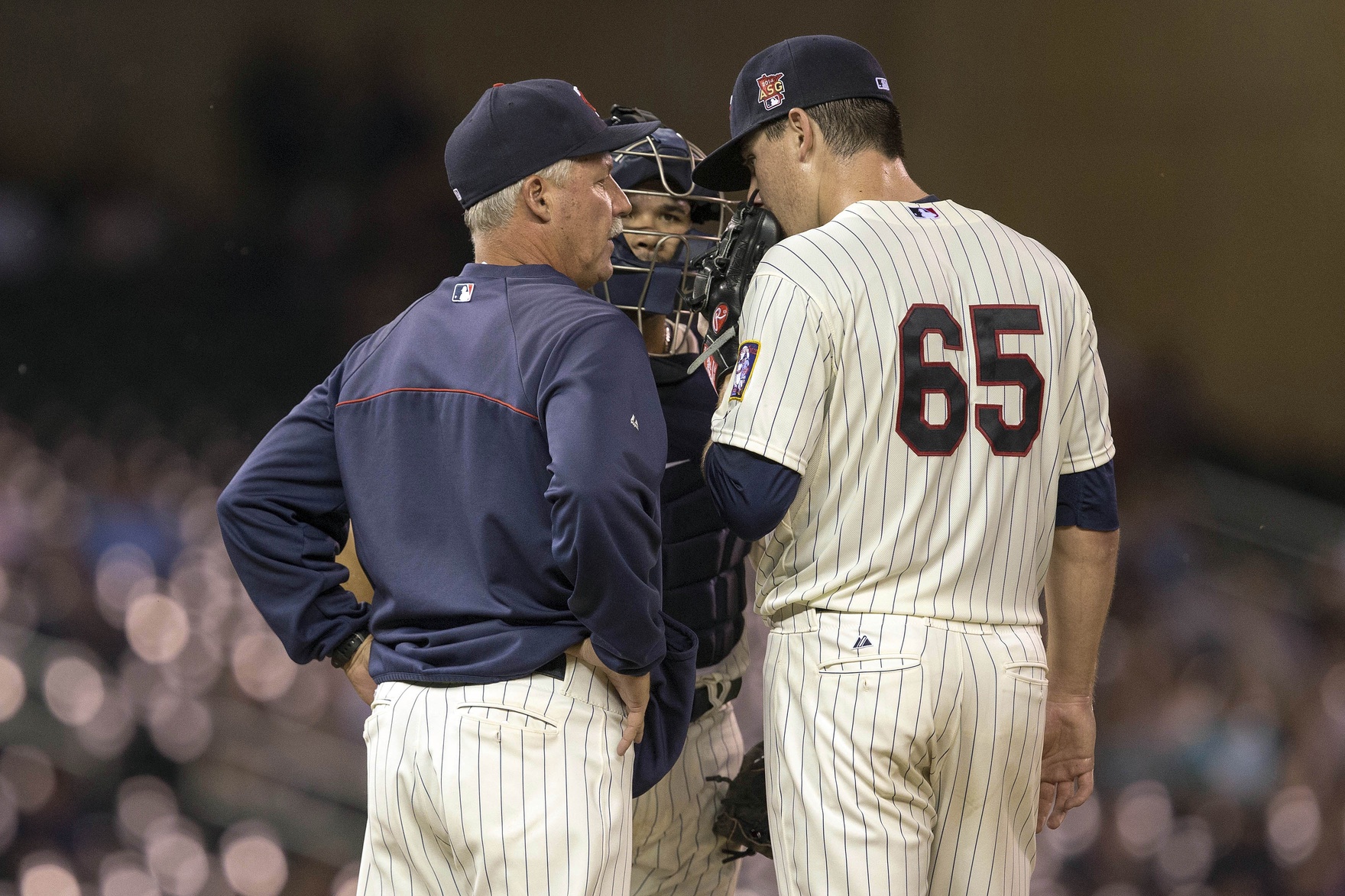 The sweep at the hands of the Angels marks the fourth time since the beginning of August that the Twins have lost four straight games. Their overall record during that span is 13-23 -- a .361 winning percentage that is depressingly similar to their August/September marks from the past few seasons. When you watch the games, you'd have a hard time saying that the team has simply given up or stopped trying. Three of the games in the Angels series were closely contested and could have gone either way. The offense has churned out runs in recent weeks. Yet, the Twins have lost 12 of their last 15, and as they continue to slide it's looking more and more like they might reach 95 losses in a fourth straight season. Individual bright spots have certainly been evident, but the losing just continues at an outrageous rate. This naturally brings us back to a question that was posed frequently in recent discussions over the outlook for the 2015 Twins: With so little on-field improvement, how can the same coaching staff remain intact going forward? There have been -- and will be -- calls for Ron Gardenhire's dismissal, and that's understandable. He's the manager that has overseen this extended stretch of losing, and ultimately the accountability for all this poor overall play should fall on his shoulders. It has been extremely rare in MLB history for a manager to survive four consecutive 90-loss seasons. However, it sounds like Terry Ryan and the Twins are (unsurprisingly) committed to bringing Gardenhire back, as they apparently consider him the best man to bring their rebuild full-circle. Many people might have a tough time stomaching that reality, but I can live with it. As frustrating as the losses have been, Gardy has done some good things with his lineups and I haven't had any major issues with his in-game management. The impact of his impressive young offensive unit has been negated, however, by a familiar downfall: pitching. This team has been utterly horrible at preventing runs, allowing 5.6 per game on average since the All-Star break. In part, that's because of poor defense, especially in the outfield. In part, it's young starters and relievers taking their lumps and learning to adjust. But the excuses run thin when you consider just how long the Twins have reigned as one of the most hittable teams in baseball. The faces change and the results stay the same. The Twins currently rank second-to-last among AL teams in ERA. That's the same place they've finished in each of the last three years. The man running this staff has had some success stories -- with Phil Hughes certainly standing out as the most notable recent example -- but those have been few and far between. More and more it seems that Rick Anderson's standing is buoyed by past accomplishments that are now disappearing in the rearview mirror. I don't have enough insight as to what happens behind the scenes to declare him a horrible pitching coach, but with the number of young hurlers that have come up and struggled, and the number of pitchers that have been drastically worse here than elsewhere, the evidence has mounted against him to the point of being overwhelming. For me, it would be difficult to view Anderson's retention at this point as anything more than a move to continue appeasing Gardenhire, his longtime friend and co-captain at the helm. And while I'm OK with keeping Gardy around, making decisions based around his comfort is nearly impossible to justify with the way things have been going. When the Twins extended Gardenhire last year, they gave him a two-year deal, meaning he's under contract for next year. But his assistants were only extended for one year. Moving on from Anderson wouldn't require firing him. But to actively re-sign him for another year, with the results we've seen in now four straight seasons, would send a really painful signal to fans. Whether or not he's the problem, the Twins have got to try something new.
 -
Article: A Closer Look at the 2015 Twins
Nick Nelson replied to Nick Nelson's topic in Twins Daily Front Page News
Wow! Thank you! Too kind. -
Alex Meyer, who entered this season as the bona fide top pitching prospect in the Minnesota Twins organization, saw his season come to an ominous end over the weekend, when he was removed in the second inning of his final start for the Rochester Red Wings due to shoulder stiffness. The move was deemed "precautionary" but it is unsettling nonetheless, considering that the hard-throwing right-hander missed about a third of the 2013 season because of shoulder problems. Now, Meyer's designation as the team's best pitching prospect has grown tenuous, not just because of his own question marks but because another young hurler in the organization has risen rapidly, overcoming the odds to emerge as one of the most exciting and unusual arms in the minor leagues. J.O. Berrios won't be taking his first legal drink until next May, but his spectacular 2014 season certainly deserves a toast.Berrios gained some immediate fanfare when the touching video of his tear-filled celebration went viral after he was selected by the Twins with the 32nd overall pick in 2012. That fanfare grew with a dominant debut between two levels of rookie ball, where the teenager posted a 1.17 ERA and ridiculous 49-to-4 K/BB ratio over 30 innings. The enthusiasm surrounding Berrios died down a bit last year in his first exposure to full-season baseball at Cedar Rapids. His 3.99 ERA and 1.40 WHIP were not terrible by any means, especially considering his age, but he certainly looked more human. Then came this 2014 season. Berrios moved up a level to open in High-A, and he was simply lights-out with the Ft. Myers Miracle. In 16 starts, he went 9-3 with a 1.96 ERA and 109-to-23 K/BB ratio. After watching him rattle off 10 straight quality starts with 82 strikeouts in 66 innings from May 13 through July 4, the Twins -- who have typically fallen on the conservative side when it comes to promoting pitchers -- really had little choice but to bump him up to Double-A. Berrios, who had turned 20 just a couple weeks before his promotion, became the youngest pitcher to throw in the Eastern League, where the average batter is 24.7 years old. Despite his drastic disadvantage in age and experience, the righty continued to hold his own for New Britain, putting up a 3.54 ERA and 1.11 WHIP over eight starts. His showing impressed the organization enough that when Class-AAA Rochester -- locked in a tight pennant race and facing a must-win situation on Sunday -- desperately needed a starter to get them a victory, it was Berrios that they looked to. At age 20, the kid was starting in a high-stakes Triple-A contest. Berrios didn't fare well in the outing, coughing up six runs in three innings, but that's not particularly surprising nor worrisome. Simply putting himself in position to start that game was an incredible feat that frankly ought to be generating a lot more buzz than I've seen. What I find especially encouraging about Berrios is that an aspect of his game most experts expected to be a weakness has thus far proven to be perhaps his greatest strength. As a relatively short (6'0") specimen who lacks ground ball tendencies, prospect analysts suggested that he was likely to start giving up home runs in bunches once he began facing advanced hitters. On the contrary, however, Berrios has shown an astonishing ability to keep the ball in the yard. Last year at Cedar Rapids he allowed only six home runs in 19 starts. This year, he yielded the same number in 25 starts. Somehow his ability to limit the long ball has only improved as he has climbed the ladder; in eight starts (40 innings) in Double-A, Berrios was taken deep only twice, by experienced hitters who were more than four years older than him on average. And despite a rough go in his lone Triple-A outing, he didn't give up a bomb. While the young Berrios was rising meteorically this summer, Meyer was working through a season that was encouraging in many ways but not as overwhelmingly successful. Although he led the International League in strikeout rate, whiffing 27 percent of opposing batters, he also posted the worst walk rate of his career and never showed the ability to pitch deep into games over a prolonged period. He completed six innings only once in his final seven starts. That's not exactly ideal for a 24-year-old in Triple-A. Meyer still has the best stuff of any pitcher in the system, by most accounts, and probably maintains the highest upside. But Berrios has moved past the point of being that young, undersized kid tearing up the low levels of the minors. What he did this season -- rising through three levels at the age of 20 -- is nothing short of amazing. Suddenly, unlikely as it may be, he's in a position where he could conceivably debut in the majors next year at age 21. For the record, only Johan Santana and Francisco Liriano have pitched for the Twins at such a young age in the past 20 years. What do you think? Has Berrios surpassed Meyer as the team's top pitching prospect? Click here to view the article
-
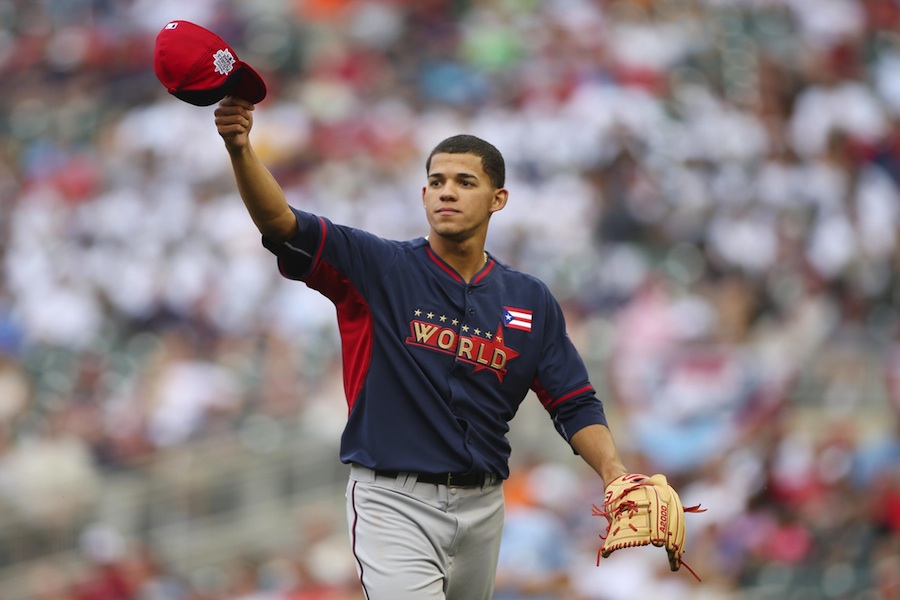 Berrios gained some immediate fanfare when the touching video of his tear-filled celebration went viral after he was selected by the Twins with the 32nd overall pick in 2012. That fanfare grew with a dominant debut between two levels of rookie ball, where the teenager posted a 1.17 ERA and ridiculous 49-to-4 K/BB ratio over 30 innings. The enthusiasm surrounding Berrios died down a bit last year in his first exposure to full-season baseball at Cedar Rapids. His 3.99 ERA and 1.40 WHIP were not terrible by any means, especially considering his age, but he certainly looked more human. Then came this 2014 season. Berrios moved up a level to open in High-A, and he was simply lights-out with the Ft. Myers Miracle. In 16 starts, he went 9-3 with a 1.96 ERA and 109-to-23 K/BB ratio. After watching him rattle off 10 straight quality starts with 82 strikeouts in 66 innings from May 13 through July 4, the Twins -- who have typically fallen on the conservative side when it comes to promoting pitchers -- really had little choice but to bump him up to Double-A. Berrios, who had turned 20 just a couple weeks before his promotion, became the youngest pitcher to throw in the Eastern League, where the average batter is 24.7 years old. Despite his drastic disadvantage in age and experience, the righty continued to hold his own for New Britain, putting up a 3.54 ERA and 1.11 WHIP over eight starts. His showing impressed the organization enough that when Class-AAA Rochester -- locked in a tight pennant race and facing a must-win situation on Sunday -- desperately needed a starter to get them a victory, it was Berrios that they looked to. At age 20, the kid was starting in a high-stakes Triple-A contest. Berrios didn't fare well in the outing, coughing up six runs in three innings, but that's not particularly surprising nor worrisome. Simply putting himself in position to start that game was an incredible feat that frankly ought to be generating a lot more buzz than I've seen. What I find especially encouraging about Berrios is that an aspect of his game most experts expected to be a weakness has thus far proven to be perhaps his greatest strength. As a relatively short (6'0") specimen who lacks ground ball tendencies, prospect analysts suggested that he was likely to start giving up home runs in bunches once he began facing advanced hitters. On the contrary, however, Berrios has shown an astonishing ability to keep the ball in the yard. Last year at Cedar Rapids he allowed only six home runs in 19 starts. This year, he yielded the same number in 25 starts. Somehow his ability to limit the long ball has only improved as he has climbed the ladder; in eight starts (40 innings) in Double-A, Berrios was taken deep only twice, by experienced hitters who were more than four years older than him on average. And despite a rough go in his lone Triple-A outing, he didn't give up a bomb. While the young Berrios was rising meteorically this summer, Meyer was working through a season that was encouraging in many ways but not as overwhelmingly successful. Although he led the International League in strikeout rate, whiffing 27 percent of opposing batters, he also posted the worst walk rate of his career and never showed the ability to pitch deep into games over a prolonged period. He completed six innings only once in his final seven starts. That's not exactly ideal for a 24-year-old in Triple-A. Meyer still has the best stuff of any pitcher in the system, by most accounts, and probably maintains the highest upside. But Berrios has moved past the point of being that young, undersized kid tearing up the low levels of the minors. What he did this season -- rising through three levels at the age of 20 -- is nothing short of amazing. Suddenly, unlikely as it may be, he's in a position where he could conceivably debut in the majors next year at age 21. For the record, only Johan Santana and Francisco Liriano have pitched for the Twins at such a young age in the past 20 years. What do you think? Has Berrios surpassed Meyer as the team's top pitching prospect?
 -
Article: A Closer Look at the 2015 Twins
Nick Nelson replied to Nick Nelson's topic in Twins Daily Front Page News
The point was that he is the top-rated prospect in baseball and has at least reached Double-A, which means he'll be very much in position to make an MLB debut next year (and would've been this year, if not for all the ridiculous injury stuff). Regardless of production and time spent in New Britain, I think the fact that the Twins moved him there despite his underwhelming performance at Ft. Myers is telling with regards to their plans for him. There seemed to be an implication that they should consider doing it. I apologize if I mis-read. -
Article: A Closer Look at the 2015 Twins
Nick Nelson replied to Nick Nelson's topic in Twins Daily Front Page News
Well yes, it's one thing to say they could improve in certain areas. It's another thing to say they SHOULD spend a bunch of money on a player who will likely block a younger guy from getting a chance. Are they really in a position where they should be operating like that, especially when you consider that free agents aren't exactly the model of reliability? Yep. In the original article that this one is following up on, I said I thought left field is the one spot where the Twins could stand to make a significant addition, so I agree with you there. I'd like to see them sign or trade for an established corner OF bat to stabilize a talented but young lineup. -
Article: A Closer Look at the 2015 Twins
Nick Nelson replied to Nick Nelson's topic in Twins Daily Front Page News
Well, no, they really can't "eat Nolasco's money." That's not a viable option. No MLB team would do that one year into a four-year deal. They gave him $50 million for a reason, and that reason is still there even if his contract is off to an incredibly bad start. Are you suggesting that they just eat $36 million and sign another expensive pitcher to replace him? That's not even remotely realistic. Is it? I guess I don't really agree. They're two of the top prospects in baseball and they've both played at Double-A. Either way, as drjim notes, at most the team would be looking to sign short-term stopgaps to keep their seats warm, so any additions at those positions would (logically) be relatively minor. -
Article: A Closer Look at the 2015 Twins
Nick Nelson replied to Nick Nelson's topic in Twins Daily Front Page News
That's the most outrageous thing I've ever heard! -
Last week, when I wrote that the Twins have only one major need to address during the coming offseason, I expected the piece of generate some animated conversation. You guys did not disappoint.The article here on Twins Daily generated nearly 200 comments. The re-post on the Star Tribune added another 70. Multiple people nominated me on Twitter for KFAN's Preposterous Statement Tournament, and on Friday the proprietor of that tournament ridiculed the column on his show. If you want to listen to that bit, you can click here and zoom ahead to the 37-minute mark or so. It's good stuff. Common suggested that I must either be working for the team or that I may actually be a Pohlad. He called the sentiment "insane" and roused the crowd to show agreement with applause. It was awesome. Common's tirade was flush with hyperbole -- a staple in his always-entertaining shtick -- but as the crowd's cheering can attest, his general reaction was not out of the ordinary. Many people are flat-out repulsed at the notion that this roster needs anything less than major work. I wanted to examine that mind set a little more closely, because it's interesting. I'm sure a lot of it is borne from frustration with a winning drought that has now stretched to four years. But how can you look at this lineup and not credit the organization for what they've brought together? The Twins have scored the fifth-most runs in baseball, and the offense has been clicking most in recent weeks with a lineup consisting almost entirely of players who are 28 or younger (Joe Mauer and Kurt Suzuki being the lone exceptions). Is statistic regression likely in some cases? Sure -- that's the nature of baseball. But it will be offset to some degree by young players getting better, and eventually by the arrivals of Miguel Sano, Byron Buxton and others. If you're not feeling confident in the offensive outlook right now, you're just not paying attention. The pitching staff seems to be the main sticking point for a lot of people, and I can relate with that. Ricky Nolasco was crushed again on Sunday and is having an incredibly bad year, the worst of his career, but he'll be back in 2015 and he'll be better. At least we've got to hope so, because he isn't going anywhere right now. Nolasco, along with Phil Hughes and Kyle Gibson, will have spots cemented. Trevor May has nothing left to prove in Triple-A and as much as he's struggled in the majors, he's learning right now. The Twins need to just give him a full year and see what he can do. It's worked out OK for Gibson, who was coming off a miserable late-season MLB debut. So what it comes down to is that fifth rotation spot. The existing group of contenders includes Alex Meyer, Tommy Milone and Mike Pelfrey. If you're not enthralled by that trio (especially with Meyer ending his season on a note of health uncertainty), I can't blame you, but I still think it's a stretch to expect the club to go add another starter who would be guaranteed a spot. I just don't see much room for addition, and I think that if anyone takes an honest look at the situation they'd have to reach the same conclusion. Maybe the Twins will get creative and trade a few back-end arms to make room for a more reliable, high-quality starter who could slot as a No. 1 or No. 2, but I doubt it. The accusations that I'm acting as a shill for the organization with this line of thinking are more bemusing than offensive, but I am a little surprised. I never said they'll have a surefire playoff team in 2015. I never said I'm happy with how long it's taken them to get to this point. But while going through this demoralizing stretch of losing baseball, the Twins have assembled premium minor-league talent and put together one of the best farm systems in baseball. That pipeline is already beginning to feed the big-league club -- with some undeniably strong results -- and the best is still on the verge of arriving. The other common disagreement I saw was that switches need to be made on the coaching staff or in the front office, rather than on the roster. That's a fair stance to hold, and probably one worth exploring in a little more depth here in the final weeks. But from a roster standpoint, I think the 2015 Twins are already mostly lined up. And it doesn't look that bad to me. Click here to view the article
-
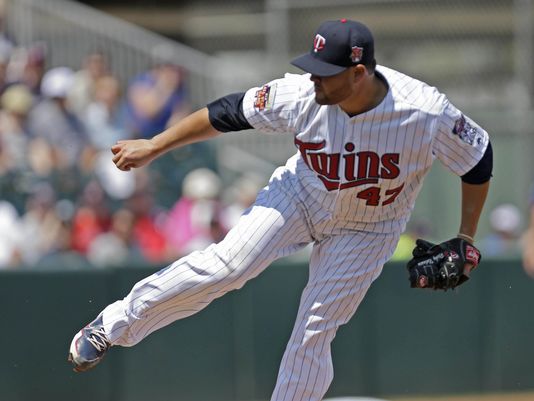 The article here on Twins Daily generated nearly 200 comments. The re-post on the Star Tribune added another 70. Multiple people nominated me on Twitter for KFAN's Preposterous Statement Tournament, and on Friday the proprietor of that tournament ridiculed the column on his show. If you want to listen to that bit, you can click here and zoom ahead to the 37-minute mark or so. It's good stuff. Common suggested that I must either be working for the team or that I may actually be a Pohlad. He called the sentiment "insane" and roused the crowd to show agreement with applause. It was awesome. Common's tirade was flush with hyperbole -- a staple in his always-entertaining shtick -- but as the crowd's cheering can attest, his general reaction was not out of the ordinary. Many people are flat-out repulsed at the notion that this roster needs anything less than major work. I wanted to examine that mind set a little more closely, because it's interesting. I'm sure a lot of it is borne from frustration with a winning drought that has now stretched to four years. But how can you look at this lineup and not credit the organization for what they've brought together? The Twins have scored the fifth-most runs in baseball, and the offense has been clicking most in recent weeks with a lineup consisting almost entirely of players who are 28 or younger (Joe Mauer and Kurt Suzuki being the lone exceptions). Is statistic regression likely in some cases? Sure -- that's the nature of baseball. But it will be offset to some degree by young players getting better, and eventually by the arrivals of Miguel Sano, Byron Buxton and others. If you're not feeling confident in the offensive outlook right now, you're just not paying attention. The pitching staff seems to be the main sticking point for a lot of people, and I can relate with that. Ricky Nolasco was crushed again on Sunday and is having an incredibly bad year, the worst of his career, but he'll be back in 2015 and he'll be better. At least we've got to hope so, because he isn't going anywhere right now. Nolasco, along with Phil Hughes and Kyle Gibson, will have spots cemented. Trevor May has nothing left to prove in Triple-A and as much as he's struggled in the majors, he's learning right now. The Twins need to just give him a full year and see what he can do. It's worked out OK for Gibson, who was coming off a miserable late-season MLB debut. So what it comes down to is that fifth rotation spot. The existing group of contenders includes Alex Meyer, Tommy Milone and Mike Pelfrey. If you're not enthralled by that trio (especially with Meyer ending his season on a note of health uncertainty), I can't blame you, but I still think it's a stretch to expect the club to go add another starter who would be guaranteed a spot. I just don't see much room for addition, and I think that if anyone takes an honest look at the situation they'd have to reach the same conclusion. Maybe the Twins will get creative and trade a few back-end arms to make room for a more reliable, high-quality starter who could slot as a No. 1 or No. 2, but I doubt it. The accusations that I'm acting as a shill for the organization with this line of thinking are more bemusing than offensive, but I am a little surprised. I never said they'll have a surefire playoff team in 2015. I never said I'm happy with how long it's taken them to get to this point. But while going through this demoralizing stretch of losing baseball, the Twins have assembled premium minor-league talent and put together one of the best farm systems in baseball. That pipeline is already beginning to feed the big-league club -- with some undeniably strong results -- and the best is still on the verge of arriving. The other common disagreement I saw was that switches need to be made on the coaching staff or in the front office, rather than on the roster. That's a fair stance to hold, and probably one worth exploring in a little more depth here in the final weeks. But from a roster standpoint, I think the 2015 Twins are already mostly lined up. And it doesn't look that bad to me.
 -
Article: Only One Spot to Address for 2015?
Nick Nelson replied to Nick Nelson's topic in Twins Daily Front Page News
Well, it wouldn't be a clone. Buxton, Sano and Meyer -- the org's three best prospects -- are all expected to debut next year, which is kind of a big deal. Berrios (now the No.4 prospect?) also has a decent chance to enter the mix. And you've got some younger players hopefully improving. Even if there's some regression (obviously there are a few clear candidates) I have a hard time imagining that next year could possibly be as depressing as the last few unless there's a big rash of injuries. The excitement generated by the big-name prospects will change the game. -
At a glance, the title of this article might seem a little outrageous. How could one suggest that a team on track for 90 losses needs so little retooling? Well, when you look at the lineup that the Twins fielded on Tuesday night -- one which is very similar to those they've been trotting out regularly in recent weeks -- it's hard to find more than one spot that is going to need to be addressed externally this offseason.Here's the lineup that Ron Gardenhire has written out for each of the last three games: Danny Santana, CF Brian Dozier, 2B Joe Mauer, 1B Kennys Vargas, DH Oswaldo Arcia, RF Trevor Plouffe, 3B Kurt Suzuki, C Eduardo Escobar, SS Jordan Schafer, LF Each of those players remains under team control for 2015 and, with the exception of Schafer, each has a strong case to deservingly remain a starter going forward. There are a few positions that carry some uncertainty, most notably third base and center field (I continue to believe Santana should go to short with Escobar sliding into a utility role), but Miguel Sano and Byron Buxton figure to come along and entrench themselves at some point during the season. The only position where the Twins clearly need some help is left field. One possibility is that Aaron Hicks will end up there, but it's a bit hard to count on him at this point. Eddie Rosario is another candidate but he's probably still a ways off. So the Twins would be smart to pursue an impact outfielder during the offseason, but the rest of the starting lineup appears to be pretty much locked in. And, similarly, there isn't much room for additions on the pitching staff. Sure, preventing runs has once again been an issue for the Twins this year. But are they really going to spend big money on bringing in another starting pitcher when they've already got Phil Hughes, Ricky Nolasco, Kyle Gibson, Tommy Milone, Trevor May, Alex Meyer and Mike Pelfrey all set to return to the mix (and Jose Berrios potentially emerging as an option midseason)? At most, I could see the team taking a couple low-cost gambles, but it doesn't make much sense to keep adding guaranteed contracts to that group. Ditto for the bullpen. This unit will be bringing back some core members -- Glen Perkins, Casey Fien, Caleb Thielbar, Anthony Swarzak, possibly Brian Duensing -- and they've got a handful of options currently in Triple-A that are at least as appealing as the majority of arms that will be available in free agency. With an $85 million payroll this year, the Twins are well below their spending limit, even by their own admission. That means they will have money available to spend this offseason, but as long as there aren't any major changes in the final month, and as long as no one is traded, there will be few places to spend it. The takeaways from this overview? 1) Don't freak out if the Twins don't throw money around this offseason. For the first time in several years, a quiet winter would actually be quite justifiable, because... 2) The rebuild is finally coming together. Capable young players are starting to fill every position, and that's why -- despite the lack of on-field success -- the final months of this season are proving much more satisfying than years past. Click here to view the article
-
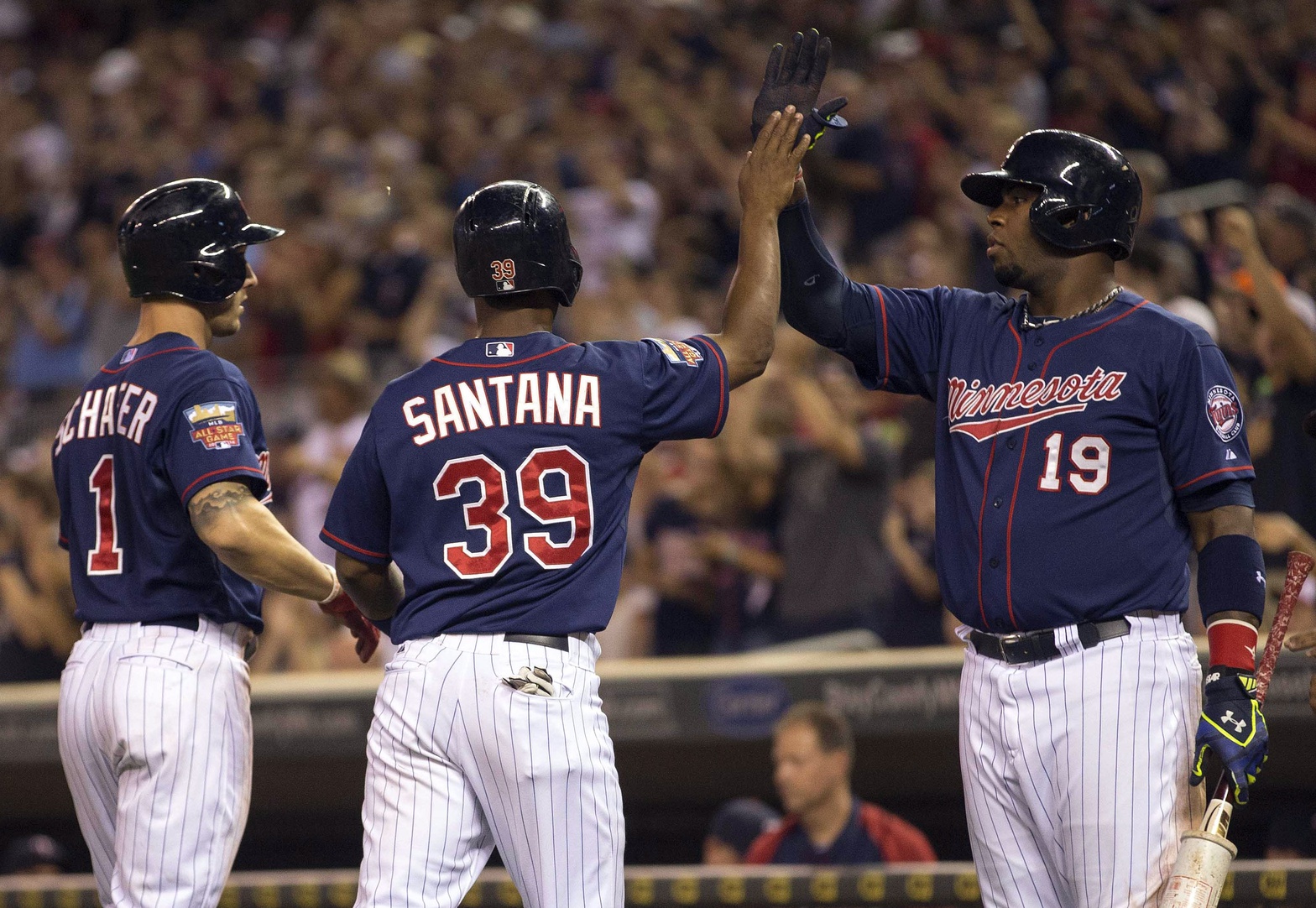 Here's the lineup that Ron Gardenhire has written out for each of the last three games: Danny Santana, CF Brian Dozier, 2B Joe Mauer, 1B Kennys Vargas, DH Oswaldo Arcia, RF Trevor Plouffe, 3B Kurt Suzuki, C Eduardo Escobar, SS Jordan Schafer, LF Each of those players remains under team control for 2015 and, with the exception of Schafer, each has a strong case to deservingly remain a starter going forward. There are a few positions that carry some uncertainty, most notably third base and center field (I continue to believe Santana should go to short with Escobar sliding into a utility role), but Miguel Sano and Byron Buxton figure to come along and entrench themselves at some point during the season. The only position where the Twins clearly need some help is left field. One possibility is that Aaron Hicks will end up there, but it's a bit hard to count on him at this point. Eddie Rosario is another candidate but he's probably still a ways off. So the Twins would be smart to pursue an impact outfielder during the offseason, but the rest of the starting lineup appears to be pretty much locked in. And, similarly, there isn't much room for additions on the pitching staff. Sure, preventing runs has once again been an issue for the Twins this year. But are they really going to spend big money on bringing in another starting pitcher when they've already got Phil Hughes, Ricky Nolasco, Kyle Gibson, Tommy Milone, Trevor May, Alex Meyer and Mike Pelfrey all set to return to the mix (and Jose Berrios potentially emerging as an option midseason)? At most, I could see the team taking a couple low-cost gambles, but it doesn't make much sense to keep adding guaranteed contracts to that group. Ditto for the bullpen. This unit will be bringing back some core members -- Glen Perkins, Casey Fien, Caleb Thielbar, Anthony Swarzak, possibly Brian Duensing -- and they've got a handful of options currently in Triple-A that are at least as appealing as the majority of arms that will be available in free agency. With an $85 million payroll this year, the Twins are well below their spending limit, even by their own admission. That means they will have money available to spend this offseason, but as long as there aren't any major changes in the final month, and as long as no one is traded, there will be few places to spend it. The takeaways from this overview? 1) Don't freak out if the Twins don't throw money around this offseason. For the first time in several years, a quiet winter would actually be quite justifiable, because... 2) The rebuild is finally coming together. Capable young players are starting to fill every position, and that's why -- despite the lack of on-field success -- the final months of this season are proving much more satisfying than years past.
 -
It'd be convenient if Pinto could play the outfield, but I think there's basically no chance of that happening. He doesn't move well enough to play anywhere other than 1B, C or DH.
-
As spring training came to a close, the Twins decided that they needed Josmil Pinto's bat, so they brought him north. Pinto provided the offense they desired during his stay in Minnesota, posting an above-average .730 OPS with some pop and solid discipline. Despite his success at the plate, he was sent down in early June. The move was a little perplexing at the time, but was evidently part of a larger plan.Pinto had been slumping after a red-hot April, so to some extent, his demotion was intended to get his bat back on track. But the bigger issue was that he was rarely catching with the Twins, giving him little opportunity to improve defensive skills that were drawing critical reviews from both coaches and players. Instead of allowing him to stick around and DH -- a role he seemed well equipped for -- the Twins signed Kendrys Morales and sent Pinto to Triple-A, ostensibly to refine him as a catcher. However, it's now becoming harder and harder to believe that the team views that as his long-term position. Kurt Suzuki's contract extension is one development that has clouded Pinto's future behind the plate. There is also the fact that Pinto hasn't even been the full-time catcher in Rochester. He has caught in only 30 of 52 games since being sent down, with nearly every other start coming at DH in recent weeks. There is really no doubt that Pinto's bat is big-league ready. That was fairly apparent when he was here, and has been reinforced by his offensive dominance in Triple-A, where he's hitting .302/.399/.500. It just isn't clear where the 25-year-old fits. The Twins don't appear to view him as a starting catcher and it looks like they favor Kennys Vargas at DH. Is Pinto likely to be traded this offseason? It makes little sense to keep letting him crush Triple-A pitching while catching only part-time. What would you do with Pinto? Click here to view the article

