



Nick Nelson
-
Posts
8,322 -
Joined
-
Last visited
-
Days Won
56
Content Type
Profiles
News
Minnesota Twins Videos
2026 Minnesota Twins Top Prospects Ranking
2022 Minnesota Twins Draft Picks
Minnesota Twins Free Agent & Trade Rumors, Notes, & Tidbits
Guides & Resources
2023 Minnesota Twins Draft Picks
The Minnesota Twins Players Project
2024 Minnesota Twins Draft Picks
2025 Minnesota Twins Draft Pick Tracker
2026 Minnesota Twins Draft Tracker: Picks & Bonuses
Forums
Blogs
Events
Store
Downloads
Gallery
Everything posted by Nick Nelson
-

Article: The Merits of Mientkiewicz and Molitor
Nick Nelson replied to Nick Nelson's topic in Twins Daily Front Page News
That won't stop anyone from drawing sweeping conclusions, evidently. -
Article: The Merits of Mientkiewicz and Molitor
Nick Nelson replied to Nick Nelson's topic in Twins Daily Front Page News
Good comments so far. I will say that I think the most important part of the article is the last two words: "from afar." I don't know enough about either of these guys to form real strong opinions and I'm mainly just riffing on some of the more outwardly visible differences. I do think that putting tons of stock into quotes about them from minor-league players, or a passing remark about SABR and stats from a radio interview, is a little dubious. Also, personally I think awareness/acceptance of those principles is a lot more important in the process of composing a roster than managing it, but that's just me. -
Last month I wrote about the potential benefits Doug Mientkiewicz could provide as the next Twins manager. At the time, I didn't really think Ron Gardenhire would be dismissed, so it was a largely hypothetical piece, but now that Mientkiewicz is actually a legitimate contender -- and maybe even a front-runner -- to lead the club in 2015, I thought I'd revisit the subject.Mientkiewicz had his formal interview for the job on Thursday, one day after Paul Molitor did the same. National ball scribe Bob Nightengale tweeted that the two former first basemen are considered finalists for the position, which isn't surprising given this team's penchant for promoting from within and the high standings of these two in the organization. I'll be honest: I'm not acutely familiar with either individual's tactical approach or managerial style (I don't think anyone is in Molitor's case, since he's never managed). But it's easy to draw some clear distinctions between the two. And as I examine those distinctions, I can't help but feel like Mientkiewicz is the far more interesting and compelling choice. In many ways, there's an old-school versus new-school dynamic at play here. Molitor, at 58, is nearly two decades older. He retired from playing in 1998, the same year Mientkiewicz made his MLB debut. In terms of experience, there's no comparison. Molitor had a much longer career as a player and has been involved in coaching and instructing since Mientkiewicz was first breaking into the league. But Molitor's distance from his playing days could be viewed as a mark against him. Obviously, the Twins' turnaround -- which hopefully will begin to take place next year -- is going to be built around youth. Will these incoming prospects be able to relate and connect with him in the same way as a guy who retired only five years ago, and who has been working directly with many of them in Ft. Myers over the last couple seasons? That's an important question, in my mind, especially when you consider that one of the most common complaints about Gardenhire (and his predecessor, Tom Kelly) was a perceived inability to recognize and maximize the impact of good young talent. Too often, it seemed that Gardy and TK would eschew the excitement and upside of a capable yet inexperienced youth in favor of the established veteran. As I see it, an ability to get the most out of young players, and a willingness to help them through struggles and learning curves, should be the foremost consideration in selecting a new skipper. I'm not saying Molitor can't excel in this area, but on the surface, Mientkiewicz appears more well equipped. There is also the matter of insularity. This is a preeminent concern for many who would like to see the organization break away from its longstanding habit of maintaining continuity and drawing from the same well when it comes to hiring coaches and execs. After four straight miserable years, people want change -- real change. It's not clear that Molitor wouldn't provide that, but he's got deep roots in Minnesota. He was a finalist to take over for Kelly in 2001 before Gardenhire landed the job, and has been involved with the Twins extensively since then. He spent one year in Seattle as a hitting coach in 2004, but then returned as a roving minor-league instructor and filled that role for nine years before being added to the major-league staff in 2014. Molitor has plenty of respect as a baseball mind, around the game and here in Minny especially, but when you look at his track record you can't help but ask questions. Why did he only last one year in Seattle? And in the decade since, how come no other team has lured him away to serve as manager or in some other prominent role? Maybe he never had interest, but why now? Mientkiewicz spent much of his playing career in Minnesota, but after being traded away in 2004, he moved through six different organizations (Red Sox, Yankees, Royals, Mets, Pirates, Dodgers) in six years. He's been around the block, and has been exposed to many different cultures and philosophies. And although he has managed the Twins' Single-A affiliate for the past two years, he hasn't worked on Gardenhire's staff. When the Twins hired Molitor into his new role a year ago, the Hall of Famer said it was possibly his "last opportunity to get back in the game at the major league level." Does a guy who, by his own admission, might be reaching the end of the rope make sense for a team seeking to modernize and break through with a crop of young talent? Even looking beyond his obvious strong points -- his fiery passion, his familiarity with the incoming prospects, his history of winning (a World Series, an Olympic title and most recently a Florida State League Championship) -- Mientkiewicz seems like the better choice for the Twins on a fundamental level. If he and Molitor are indeed the top candidates for the position, I know which one I prefer from afar. Click here to view the article
-
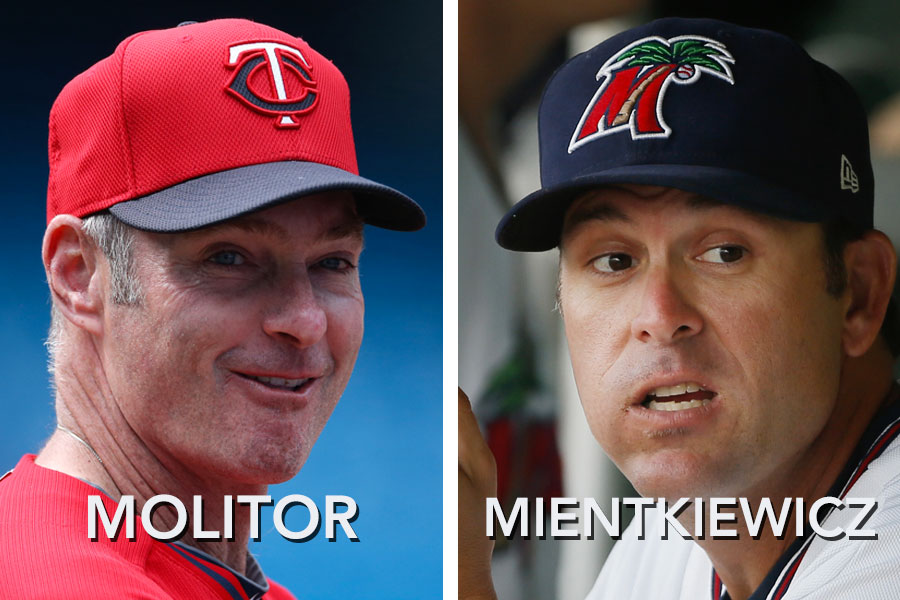 Mientkiewicz had his formal interview for the job on Thursday, one day after Paul Molitor did the same. National ball scribe Bob Nightengale tweeted that the two former first basemen are considered finalists for the position, which isn't surprising given this team's penchant for promoting from within and the high standings of these two in the organization. I'll be honest: I'm not acutely familiar with either individual's tactical approach or managerial style (I don't think anyone is in Molitor's case, since he's never managed). But it's easy to draw some clear distinctions between the two. And as I examine those distinctions, I can't help but feel like Mientkiewicz is the far more interesting and compelling choice. In many ways, there's an old-school versus new-school dynamic at play here. Molitor, at 58, is nearly two decades older. He retired from playing in 1998, the same year Mientkiewicz made his MLB debut. In terms of experience, there's no comparison. Molitor had a much longer career as a player and has been involved in coaching and instructing since Mientkiewicz was first breaking into the league. But Molitor's distance from his playing days could be viewed as a mark against him. Obviously, the Twins' turnaround -- which hopefully will begin to take place next year -- is going to be built around youth. Will these incoming prospects be able to relate and connect with him in the same way as a guy who retired only five years ago, and who has been working directly with many of them in Ft. Myers over the last couple seasons? That's an important question, in my mind, especially when you consider that one of the most common complaints about Gardenhire (and his predecessor, Tom Kelly) was a perceived inability to recognize and maximize the impact of good young talent. Too often, it seemed that Gardy and TK would eschew the excitement and upside of a capable yet inexperienced youth in favor of the established veteran. As I see it, an ability to get the most out of young players, and a willingness to help them through struggles and learning curves, should be the foremost consideration in selecting a new skipper. I'm not saying Molitor can't excel in this area, but on the surface, Mientkiewicz appears more well equipped. There is also the matter of insularity. This is a preeminent concern for many who would like to see the organization break away from its longstanding habit of maintaining continuity and drawing from the same well when it comes to hiring coaches and execs. After four straight miserable years, people want change -- real change. It's not clear that Molitor wouldn't provide that, but he's got deep roots in Minnesota. He was a finalist to take over for Kelly in 2001 before Gardenhire landed the job, and has been involved with the Twins extensively since then. He spent one year in Seattle as a hitting coach in 2004, but then returned as a roving minor-league instructor and filled that role for nine years before being added to the major-league staff in 2014. Molitor has plenty of respect as a baseball mind, around the game and here in Minny especially, but when you look at his track record you can't help but ask questions. Why did he only last one year in Seattle? And in the decade since, how come no other team has lured him away to serve as manager or in some other prominent role? Maybe he never had interest, but why now? Mientkiewicz spent much of his playing career in Minnesota, but after being traded away in 2004, he moved through six different organizations (Red Sox, Yankees, Royals, Mets, Pirates, Dodgers) in six years. He's been around the block, and has been exposed to many different cultures and philosophies. And although he has managed the Twins' Single-A affiliate for the past two years, he hasn't worked on Gardenhire's staff. When the Twins hired Molitor into his new role a year ago, the Hall of Famer said it was possibly his "last opportunity to get back in the game at the major league level." Does a guy who, by his own admission, might be reaching the end of the rope make sense for a team seeking to modernize and break through with a crop of young talent? Even looking beyond his obvious strong points -- his fiery passion, his familiarity with the incoming prospects, his history of winning (a World Series, an Olympic title and most recently a Florida State League Championship) -- Mientkiewicz seems like the better choice for the Twins on a fundamental level. If he and Molitor are indeed the top candidates for the position, I know which one I prefer from afar.
 -
Article: Should the Twins Emulate the Royals?
Nick Nelson replied to Nick Nelson's topic in Twins Daily Front Page News
Ahem... http://www.startribune.com/sports/twins/blogs/118893459.html The points about my characterization of 2011 as a rebuilding year are well taken though. That was the collapse that precipitated the necessity of a rebuild. -
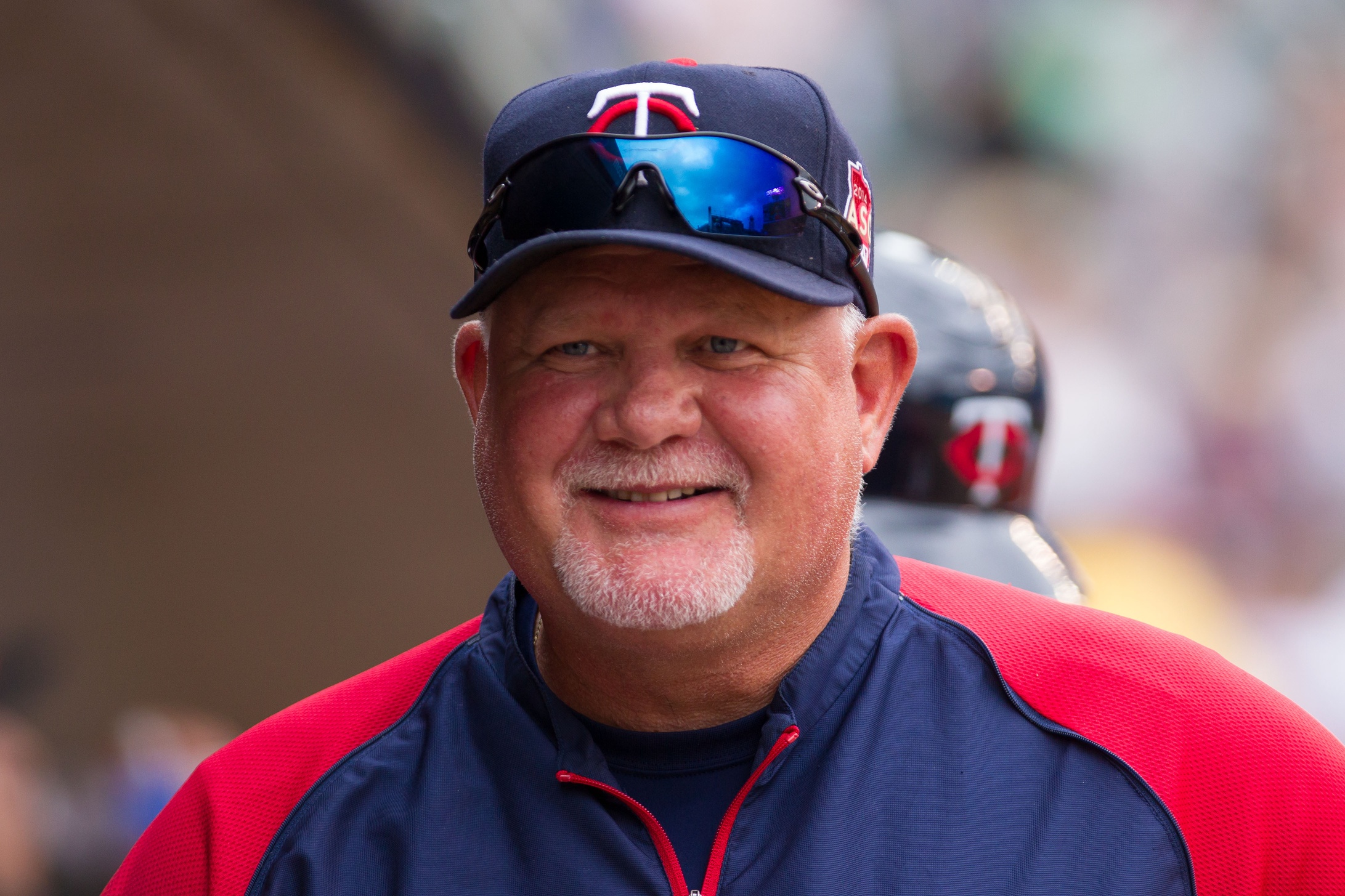 I remember it vividly. The year was 2004 and I was a freshman in college. I had come back to the dorms after a night class, and I parked on a couch in the common room to watch the end of an ALDS game against the Yankees. As was typical of playoff games during that era, the Twins had squandered an early lead and they wilted in the late innings. In this case the management from Gardenhire was especially baffling. You might remember this particular game. A plainly overmatched rookie named Jason Kubel went 0-for-6 while Lew Ford (who was in prime "LEWWW!" form) sat on the bench. Joe Nathan was sent out to pitch a third inning of relief after the Twins had taken a 12th-inning lead, and he coughed up the game while running on fumes. I was so mad at the decision-making that I went back to my dorm and typed out some angry post full of vitriol about Gardy on whatever Blogspot thing I had at the time. I found it cathartic, and some friends seemed to get a kick out reading of it. I was 18 then. It was a decade ago, damn near exactly. The next spring I started an actual blog with a friend, and over the years I stuck with it, continuing to cover the team on a platform that continually evolved into what you read here today. Through all those seasons, the manager of the team I covered was always the same guy. Gardenhire held the position for 13 years. That's pretty crazy. His was the second-longest active tenure in the majors. Across the rest of baseball, only five current managers have had their jobs for more than five years. As I grew from dumb teenager into slightly-less-dumb adult, and developed from amateur blogger dude into occasionally-credentialed pseudo-media member, the lens through which I viewed Gardenhire changed dramatically. Reading his quotes on a screen, I would often perceive an air of smugness, small-mindedness and maybe even pettiness. His snide comments about digital media, in particular, sometimes struck me that way. But when you sit in a room with the man, and you hear him playfully bash "dot-com" along with anything else he can set his sights on, you see it in a different light. He's folksy. He's sarcastic. He's a master of deadpanning. And yeah, he's old school. But while he might not always understand the changing dynamics of the way the game is covered and analyzed, at the end of the day, he gets it. That's the thing that stuck with me on Monday afternoon as I watched the press conference held by the organization to announce Gardenhire's dismissal. He gets it. Despite all the good arguments I've read over the past couple weeks explaining why Gardy might be on the way out, I had a hard time taking them seriously. I just couldn't picture this particular press conference playing out. And how could anyone have pictured what actually ended up transpiring? Here you had Gardenhire, sitting next to the man who had just fired him, cracking jokes and pleasantly answering questions about his termination. It was bizarre. It shouldn't have been bizarre, though. In fact, as I watched it unfold, I found myself wondering why more teams and managers can't part so amiably. Usually the firing of an executive or coach is an awkward and drama-filled affair, but there wasn't a shred of contention in the room Monday. Gardy confessed that he would like to keep managing and would have preferred to do it here, but said he understands the situation and the need to move on. He acknowledged that "sometimes people need to hear a different voice." That's a rare level of self-awareness. People can justifiably complain about the culture of the Twins being overly chummy, and loyal to a fault; in many ways Gardenhire's tenure -- and certainly his departure -- embodied that. But when the team on the other side of downtown is holding bumbling press conferences about child abuse, it's refreshing to watch a strangely amicable presser like the one that took place at Target Field this week. At the end of the day, I think this was the right move, and I agree with Gardy. A different voice is probably needed -- hopefully one that is a little more in-tune with analytics and modern game strategy theory. But I will miss the guy. He's been the skipper ever since I truly started paying attention to the Twins, and it's going to be weird analyzing decisions and dissecting quotes from someone different. Gardenhire represented a longstanding continuity in the organization, one which will be shaken to the very core in the likely event that most of the coaching staff is replaced. I tend to think that a manager's impact on game outcomes is generally overstated, but certainly, the identity of this club is going to change. Maybe for the better. That's intriguing -- not just to me and the hardcores, but to the general public. This is what the Twins needed right now. We'll see where they take it from here.
 -
It's ironic when you consider his views on blogs and online coverage in general, but really, Ron Gardenhire was the one who first inspired me to start writing about the Twins.I remember it vividly. The year was 2004 and I was a freshman in college. I had come back to the dorms after a night class, and I parked on a couch in the common room to watch the end of an ALDS game against the Yankees. As was typical of playoff games during that era, the Twins had squandered an early lead and they wilted in the late innings. In this case the management from Gardenhire was especially baffling. You might remember this particular game. A plainly overmatched rookie named Jason Kubel went 0-for-6 while Lew Ford (who was in prime "LEWWW!" form) sat on the bench. Joe Nathan was sent out to pitch a third inning of relief after the Twins had taken a 12th-inning lead, and he coughed up the game while running on fumes. I was so mad at the decision-making that I went back to my dorm and typed out some angry post full of vitriol about Gardy on whatever Blogspot thing I had at the time. I found it cathartic, and some friends seemed to get a kick out reading of it. I was 18 then. It was a decade ago, damn near exactly. The next spring I started an actual blog with a friend, and over the years I stuck with it, continuing to cover the team on a platform that continually evolved into what you read here today. Through all those seasons, the manager of the team I covered was always the same guy. Gardenhire held the position for 13 years. That's pretty crazy. His was the second-longest active tenure in the majors. Across the rest of baseball, only five current managers have had their jobs for more than five years. As I grew from dumb teenager into slightly-less-dumb adult, and developed from amateur blogger dude into occasionally-credentialed pseudo-media member, the lens through which I viewed Gardenhire changed dramatically. Reading his quotes on a screen, I would often perceive an air of smugness, small-mindedness and maybe even pettiness. His snide comments about digital media, in particular, sometimes struck me that way. But when you sit in a room with the man, and you hear him playfully bash "dot-com" along with anything else he can set his sights on, you see it in a different light. He's folksy. He's sarcastic. He's a master of deadpanning. And yeah, he's old school. But while he might not always understand the changing dynamics of the way the game is covered and analyzed, at the end of the day, he gets it. That's the thing that stuck with me on Monday afternoon as I watched the press conference held by the organization to announce Gardenhire's dismissal. He gets it. Despite all the good arguments I've read over the past couple weeks explaining why Gardy might be on the way out, I had a hard time taking them seriously. I just couldn't picture this particular press conference playing out. And how could anyone have pictured what actually ended up transpiring? Here you had Gardenhire, sitting next to the man who had just fired him, cracking jokes and pleasantly answering questions about his termination. It was bizarre. It shouldn't have been bizarre, though. In fact, as I watched it unfold, I found myself wondering why more teams and managers can't part so amiably. Usually the firing of an executive or coach is an awkward and drama-filled affair, but there wasn't a shred of contention in the room Monday. Gardy confessed that he would like to keep managing and would have preferred to do it here, but said he understands the situation and the need to move on. He acknowledged that "sometimes people need to hear a different voice." That's a rare level of self-awareness. People can justifiably complain about the culture of the Twins being overly chummy, and loyal to a fault; in many ways Gardenhire's tenure -- and certainly his departure -- embodied that. But when the team on the other side of downtown is holding bumbling press conferences about child abuse, it's refreshing to watch a strangely amicable presser like the one that took place at Target Field this week. At the end of the day, I think this was the right move, and I agree with Gardy. A different voice is probably needed -- hopefully one that is a little more in-tune with analytics and modern game strategy theory. But I will miss the guy. He's been the skipper ever since I truly started paying attention to the Twins, and it's going to be weird analyzing decisions and dissecting quotes from someone different. Gardenhire represented a longstanding continuity in the organization, one which will be shaken to the very core in the likely event that most of the coaching staff is replaced. I tend to think that a manager's impact on game outcomes is generally overstated, but certainly, the identity of this club is going to change. Maybe for the better. That's intriguing -- not just to me and the hardcores, but to the general public. This is what the Twins needed right now. We'll see where they take it from here. Click here to view the article
-
Article: Should the Twins Emulate the Royals?
Nick Nelson replied to Nick Nelson's topic in Twins Daily Front Page News
I'm going to say yes. Even if the strategy didn't result in a World Series, or even a deep playoff run, what the Royals have accomplished is a return to relevancy. They've recaptured the interest of fans who had turned away during a decade of losing. They have proven that they're willing to take bold steps to get to the next level rather than constantly playing the safe route. There's value in that. The Twins, at this time, should recognize that as much as anyone. -
On Friday night, the Kansas City Royals clinched a playoff spot for the first time in 29 years. It will be a short postseason appearance if they can't beat the Athletics on Tuesday, but finally KC has emerged from the void. The Twins, now coming off their fourth straight "rebuilding year" where little progress was shown in the win/loss column, are becoming familiar with a dynamic that characterized the Royals throughout their lengthy drought: the moving goalpost. A finish line that inches further away as you race toward it.While wallowing near the bottom of the AL Central and perpetually searching for a way out, the Royals often sported an impressive collection of minor-league talent. Understandably, they tended to be protective of those assets, considering them the lifeblood of their rebuilding process. But, as tends to be the case, things didn't always work out. Rising stars fizzled along the way. Injuries struck. Prospects that were expected to be cornerstones ended up being merely 'OK.' A batter is considered successful if he gets a hit three out of every ten trips to the plate. As much as we'd like to believe otherwise, player development isn't a whole lot different. The Twins have a soundly designed plan to return to relevancy, but it is a plan based around uncertainties. I think they were rather unlucky this year with the major injuries to their two best prospects, but setbacks and side-tracks in the minors are nothing out of the norm. No matter what kind of stats and scouting reports you print out, you just never know what you have until a player reaches the majors, and even then it usually takes a while to get a clear picture. At one point it appeared that the Royals would tailor an effective rebuild around Eric Hosmer and Mike Moustakas, who a few years ago were both considered elite young talents at the level we currently view Byron Buxon and Miguel Sano. Both Hosmer and Moustakas took much longer than anticipated to develop. And this year, while they each contributed in Kansas City's strong season, neither has been all that great. Instead, it is the pitching staff that has been key to the franchise's revival, and leading that staff is the guy who they'll turn to on Tuesday night: James Shields. The Royals, of course, acquired Shields two years ago in a deal that was highly controversial and widely criticized. In order to acquire the frontline starter from Tampa Bay, Kansas City had to part with a premium package of prospects headlined by Wil Myers, who was considered a Top 5 player in the minors. The move was kind of baffling. The Royals were coming off a 90-loss season and hadn't won more than 75 games in a decade. What were they doing trading their best prospect -- a major-league ready star in the making -- for a 30-year-old whose impact figured to be immediate and short-lived? It's worked out well enough. The Royals won 86 games last year and 89 this year, their two highest totals since 1990. And through all of that, Shields has performed exactly as advertised -- a durable, inning-eating ace, setting the example in a rotation that has seen incredible improvement. It's hard to look at Kansas City's reemergence and not wonder about the Twins. Most around here recognize the importance of homegrown talent, and we're reminded of the upside offered by that talent regularly, but there's something to be said about the boldness of Dayton Moore's dramatic shift in approach and the results that have been yielded. Various injury concerns surround some of the top prospects, but Minnesota's system still contains a number of young players that would be highly appealing to other clubs, particularly in this age of skyrocketing free agent salaries. How protective should Terry Ryan be of guys like Sano, Buxton, Alex Meyer and Jose Berrios? For that matter, what about those that have already successfully debuted, like Oswaldo Arcia, Kennys Vargas and Danny Santana? I'm not entirely sure where I fall on the subject. I can see the wisdom of both sides, but as I examine the lengthy stagnant cycles that have plagued organizations like the Royals, and as I size up the marketability problems being faced by the Twins, I must admit that I find myself questioning the conservative route. Click here to view the article
-
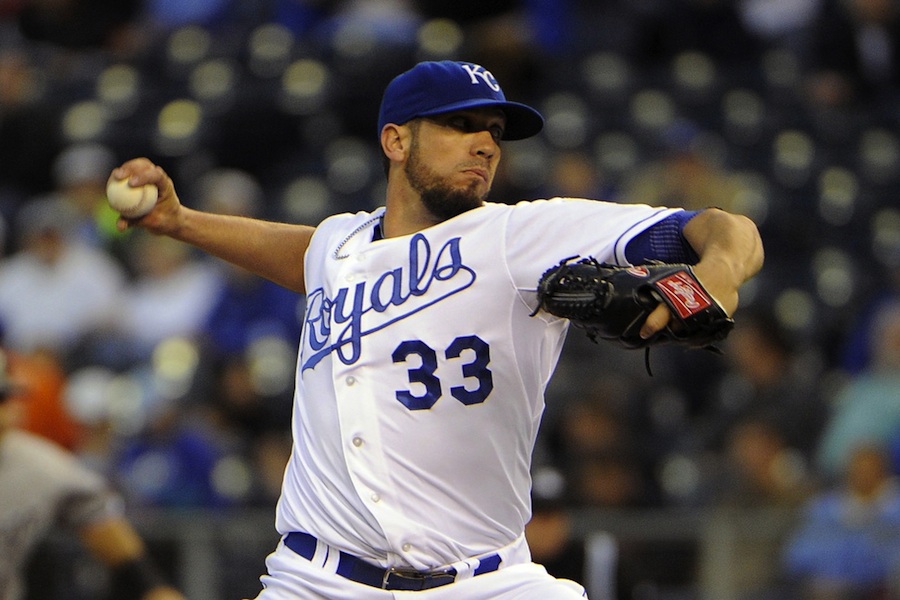 While wallowing near the bottom of the AL Central and perpetually searching for a way out, the Royals often sported an impressive collection of minor-league talent. Understandably, they tended to be protective of those assets, considering them the lifeblood of their rebuilding process. But, as tends to be the case, things didn't always work out. Rising stars fizzled along the way. Injuries struck. Prospects that were expected to be cornerstones ended up being merely 'OK.' A batter is considered successful if he gets a hit three out of every ten trips to the plate. As much as we'd like to believe otherwise, player development isn't a whole lot different. The Twins have a soundly designed plan to return to relevancy, but it is a plan based around uncertainties. I think they were rather unlucky this year with the major injuries to their two best prospects, but setbacks and side-tracks in the minors are nothing out of the norm. No matter what kind of stats and scouting reports you print out, you just never know what you have until a player reaches the majors, and even then it usually takes a while to get a clear picture. At one point it appeared that the Royals would tailor an effective rebuild around Eric Hosmer and Mike Moustakas, who a few years ago were both considered elite young talents at the level we currently view Byron Buxon and Miguel Sano. Both Hosmer and Moustakas took much longer than anticipated to develop. And this year, while they each contributed in Kansas City's strong season, neither has been all that great. Instead, it is the pitching staff that has been key to the franchise's revival, and leading that staff is the guy who they'll turn to on Tuesday night: James Shields. The Royals, of course, acquired Shields two years ago in a deal that was highly controversial and widely criticized. In order to acquire the frontline starter from Tampa Bay, Kansas City had to part with a premium package of prospects headlined by Wil Myers, who was considered a Top 5 player in the minors. The move was kind of baffling. The Royals were coming off a 90-loss season and hadn't won more than 75 games in a decade. What were they doing trading their best prospect -- a major-league ready star in the making -- for a 30-year-old whose impact figured to be immediate and short-lived? It's worked out well enough. The Royals won 86 games last year and 89 this year, their two highest totals since 1990. And through all of that, Shields has performed exactly as advertised -- a durable, inning-eating ace, setting the example in a rotation that has seen incredible improvement. It's hard to look at Kansas City's reemergence and not wonder about the Twins. Most around here recognize the importance of homegrown talent, and we're reminded of the upside offered by that talent regularly, but there's something to be said about the boldness of Dayton Moore's dramatic shift in approach and the results that have been yielded. Various injury concerns surround some of the top prospects, but Minnesota's system still contains a number of young players that would be highly appealing to other clubs, particularly in this age of skyrocketing free agent salaries. How protective should Terry Ryan be of guys like Sano, Buxton, Alex Meyer and Jose Berrios? For that matter, what about those that have already successfully debuted, like Oswaldo Arcia, Kennys Vargas and Danny Santana? I'm not entirely sure where I fall on the subject. I can see the wisdom of both sides, but as I examine the lengthy stagnant cycles that have plagued organizations like the Royals, and as I size up the marketability problems being faced by the Twins, I must admit that I find myself questioning the conservative route.
 -
Article: The Twins Have a Problem
Nick Nelson replied to Nick Nelson's topic in Twins Daily Front Page News
It's not a bad idea in theory but is it actually plausible? Nolasco and Hughes will be there because of contracts and (in Hughes' case) performance. Gibson will be there. So if you sign two more impact pitchers who are highly paid and guaranteed spots, there's no room for May or Meyer, or Berrios when he's ready (maybe as soon as the AS break). The Twins aren't going to spend nine figures to get one of the top starters on the market, so the "impact" arms they'd be adding would probably be in the Nolasco range, and as we know all too well, there's no assurance with those guys. Maybe no more so than Meyer or May. -
Article: The Twins Have a Problem
Nick Nelson replied to Nick Nelson's topic in Twins Daily Front Page News
This is a great question that is probably worth exploring with a full article. I know exactly what you mean. I went to a game with my mom this summer -- a particularly bad game -- and I was getting so irritated with what was happening on the field that I kinda started snapping at her and acting crabby. The next day I felt horrible about my behavior and had to call her and apologize. But it is tough to continually watch a team you care about play so, so poorly. -
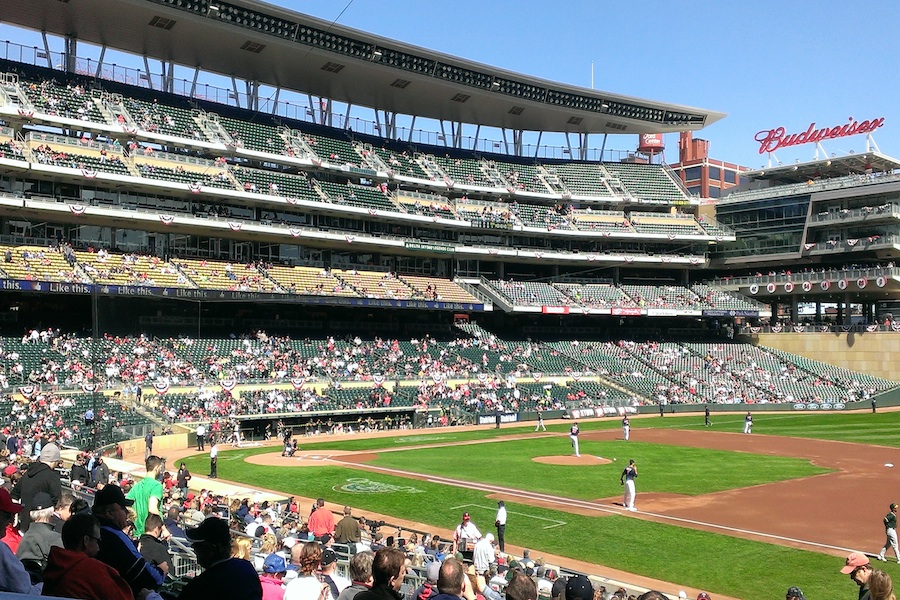 This season ticket group was a bunch of hardcore Twins fans, especially the actual seat-holders. But even they could no longer justify the cost, especially at a time where all games after July consistently carry no level of drama or intrigue. It's a drain. The new ballpark honeymoon period has passed, and now there's going to be a newer stadium over in St. Paul. The All-Star Game has come and gone. The Twins now have to rely more than ever on the quality of their product on the field and, for yet another season, that product has been flat-out lousy. It's not just that this team is bad. They're worse than bad. This is going to be their fourth straight finish with a bottom-five W/L record in the majors. While you can point at several individual positive developments, and numerous unfortunate setbacks that weren't really controllable, the bottom line is that there have been no tangible signs of progress. The Twins will finish with fewer losses than last year, but barely. We've already seen the attendance decline take effect. They're currently at about 2.2 million through the gate this year, so they're going to fall short of their last year at the Metrodome (2.4 million in 2009). If my parents' season ticket group, along with several others I've been hearing about, are any indication, that decline is only going to steepen. The Twins need to do something to jolt the fan base and stir some kind of buzz. But a big roster shakeup doesn't seem to be in the plans; there just aren't many areas where it's realistic to expect major additions. A change in leadership would at least signal a dissatisfaction with the stagnant results and a sense of urgency to get things going, but that also does not seem to be in the plans. Terry Ryan, based on everything I've heard, is entrenched in his position as long as he wants it. Ryan hinted that Ron Gardenhire will also be back next year, and while the team later backed off that statement a bit, it's probably accurate. All the assistant coaches are on one-year deals, and thus facing renewal or removal, so I would guess we'll see some turnover there. It should probably start with Rick Anderson. But the last staff shakeup was little more than a rearrangement. And is the shuffling of assistant coaches really going to strike any skeptical season ticket renewer as a sufficient overhaul? I, personally, can see the light for the Twins. I follow closely enough to know that they were set back by a number of unfortunate events in the minors this year, and that a sizable wave of premium talent is heading this way (or already developing on the field). I do think this young core can succeed with the existing leadership in place, because I mostly trust Ryan and I don't think Gardy matters much one way or the other. But the majority of fans don't follow as closely as I, or most readers of this blog. Most casual fans I talk to can barely identify with the team anymore, and have only faintly heard the names Byron Buxton and Miguel Sano. And right or wrong, this organization's constant commitment to loyalty, promoting from within, and sticking with the guys they like in the face of historically awful results comes off to many as arrogant and insular. There's a reason that a recent rose-colored marketing survey has been nationally criticized as tone-deaf and absurd. The Twins say they get it, but do they? "They're always one year away," my co-worker grumbled over lunch the other day while I was trying to emphasize the quality of the young players who are -- hopefully -- on the verge of arriving and changing this pitiful culture. It's hard to disagree. And in fact "one year away" might seem generous with the complete lack of progress that we've seen in three straight. Until that magical turnaround season finally comes, how many more fans can the team afford to lose to disinterest while steadfastly staying the course? At what point do major changes become a business necessity rather than a strategic decision? I don't know the answer, but what I can say is this: The dwindling crowds at the ballpark, the stagnating traffic and activity on sites like ours, and the increasingly ambivalent attitudes of local baseball fans that I encounter all clearly signify that the Twins are fading from the public sports consciousness to an alarming degree.
 -
For the past several years, my parents have been part of a season ticket group, buying 10 games from a full 81-game package along with several other parties. The couple running the group has been season ticket holders for a long, long time, and they had worked their way into some pretty prime seats on the lower deck, directly behind home plate and just beneath the overhang. I enjoyed this arrangement because invariably I would be invited to use one or both tickets several times per year. But a couple weeks ago my dad called me with a message that didn't come as a total surprise: "They're not renewing the tickets." When I heard that news, I immediately thought to myself, "This team is in trouble."This season ticket group was a bunch of hardcore Twins fans, especially the actual seat-holders. But even they could no longer justify the cost, especially at a time where all games after July consistently carry no level of drama or intrigue. It's a drain. The new ballpark honeymoon period has passed, and now there's going to be a newer stadium over in St. Paul. The All-Star Game has come and gone. The Twins now have to rely more than ever on the quality of their product on the field and, for yet another season, that product has been flat-out lousy. It's not just that this team is bad. They're worse than bad. This is going to be their fourth straight finish with a bottom-five W/L record in the majors. While you can point at several individual positive developments, and numerous unfortunate setbacks that weren't really controllable, the bottom line is that there have been no tangible signs of progress. The Twins will finish with fewer losses than last year, but barely. We've already seen the attendance decline take effect. They're currently at about 2.2 million through the gate this year, so they're going to fall short of their last year at the Metrodome (2.4 million in 2009). If my parents' season ticket group, along with several others I've been hearing about, are any indication, that decline is only going to steepen. The Twins need to do something to jolt the fan base and stir some kind of buzz. But a big roster shakeup doesn't seem to be in the plans; there just aren't many areas where it's realistic to expect major additions. A change in leadership would at least signal a dissatisfaction with the stagnant results and a sense of urgency to get things going, but that also does not seem to be in the plans. Terry Ryan, based on everything I've heard, is entrenched in his position as long as he wants it. Ryan hinted that Ron Gardenhire will also be back next year, and while the team later backed off that statement a bit, it's probably accurate. All the assistant coaches are on one-year deals, and thus facing renewal or removal, so I would guess we'll see some turnover there. It should probably start with Rick Anderson. But the last staff shakeup was little more than a rearrangement. And is the shuffling of assistant coaches really going to strike any skeptical season ticket renewer as a sufficient overhaul? I, personally, can see the light for the Twins. I follow closely enough to know that they were set back by a number of unfortunate events in the minors this year, and that a sizable wave of premium talent is heading this way (or already developing on the field). I do think this young core can succeed with the existing leadership in place, because I mostly trust Ryan and I don't think Gardy matters much one way or the other. But the majority of fans don't follow as closely as I, or most readers of this blog. Most casual fans I talk to can barely identify with the team anymore, and have only faintly heard the names Byron Buxton and Miguel Sano. And right or wrong, this organization's constant commitment to loyalty, promoting from within, and sticking with the guys they like in the face of historically awful results comes off to many as arrogant and insular. There's a reason that a recent rose-colored marketing survey has been nationally criticized as tone-deaf and absurd. The Twins say they get it, but do they? "They're always one year away," my co-worker grumbled over lunch the other day while I was trying to emphasize the quality of the young players who are -- hopefully -- on the verge of arriving and changing this pitiful culture. It's hard to disagree. And in fact "one year away" might seem generous with the complete lack of progress that we've seen in three straight. Until that magical turnaround season finally comes, how many more fans can the team afford to lose to disinterest while steadfastly staying the course? At what point do major changes become a business necessity rather than a strategic decision? I don't know the answer, but what I can say is this: The dwindling crowds at the ballpark, the stagnating traffic and activity on sites like ours, and the increasingly ambivalent attitudes of local baseball fans that I encounter all clearly signify that the Twins are fading from the public sports consciousness to an alarming degree. Click here to view the article
-
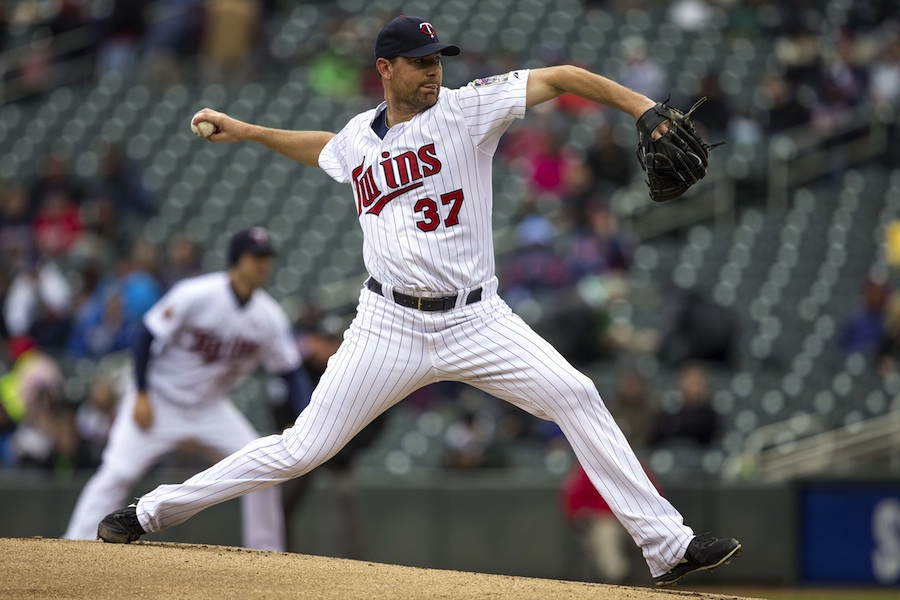 It's easy to see why Pelfrey isn't popular among the Twins faithful. He was a mediocre pitcher in the National League before being signed. He hasn't pitched well here. He works slowly on the mound and his starts tend to drag on. More than that, the Twins' dealings with him have been emblematic of what frustrates a lot of folks about the way this team operates -- too much of a cater-to-the-player, bargain-seeking approach. When they initially signed him, they got him at a bargain price because he was coming off elbow surgery and few other teams wanted to risk relying on a player who was in recovery mode. His $4 million deal was one of the cheapest guaranteed contracts for a starting pitcher during that offseason, at a time where the Twins desperately needed quality arms. And this past winter, when they re-signed him, it was difficult to view his contract as anything other than a favor to a guy they liked. Who else was going to give Pelfrey multiple years coming off 13 losses and a 5.19 ERA, when he was never that great to begin with? I can certainly agree with those critiques, but at the same time, I think the negativity I see directed toward Pelf is over-the-top. His struggles early on in the 2013 season were completely predictable following his insanely rapid return from Tommy John, but in the final three months of the season he was solid: 4.39 ERA, 2-to-1 K/BB, just six homers allowed in 15 starts. I saw a lot of people using Pelfrey's poor start this year as justification for their complaints about his contract, and it always struck me as disingenuous. He was never healthy. If he was healthy and pitched badly, you could say the Twins screwed up, but I still believe that the guy we saw in the second half last season could be a decent value at $5.5 million as a fifth starter. Whether the Twins should have really been aiming for a fifth starter is another matter, of course, but that's all in the past so there's no use sulking about it now. The question, at this point, is what kind of value he can provide next year. If things proceed as planned, it's tough to see how he fits into the starting rotation. You have to assume that Phil Hughes, Ricky Nolasco and Kyle Gibson will all enter camp as locks. Trevor May should get a spot as long as he's not a mess during spring training. Alex Meyer should be in position to win a spot as well. He'll be 25 with a full year of Triple-A under his belt; it's time to let him roll. Factor in Tommy Milone, who should at least be in the mix, and there doesn't appear to be much room for Mr. Pelfrey. I don't think it's fair to penalize him for getting hurt, but he just hasn't done anything to earn a look over the younger guys. The best route -- and one the Twins have to be considering -- might be moving the 6'7" righty into a relief role. It actually makes a ton of sense. Too much sense. He's basically a one-trick pony, but that fastball he throws 80 percent of the time could be more of weapon with a few extra ticks of velocity. And with the way things have played out late in this season, it looks like the Twins may need some new blood in the bullpen next year. When not injured, Pelfrey has proven to have a durable and resilient arm (he basically never missed a start from 2008 through 2011), so he could turn into a guy they can use for multiple innings, or several days in a row. That has value. If he blossoms in that role, Pelfrey could easily be worth the $5.5 million they pay him next year. And he might uncover a new path for success in the second half of his career.
 -
Article: Where Does Pelfrey Fit In?
Nick Nelson replied to Nick Nelson's topic in Twins Daily Front Page News
Really? You predicted he was going to get injured and miss the whole year after finishing last season healthy, huh? I know I've asked you before, but could you point me to that post? Don't recall seeing it. -
Article: Where Does Pelfrey Fit In?
Nick Nelson replied to Nick Nelson's topic in Twins Daily Front Page News
Parker and I participated in a wiffleball tournament at Target Field on Sunday morning, while the Twins were playing out of town, and Pelfrey was out on the field playing long toss while the wiffle games were going on in the outfield. So he's definitely throwing and working out at the stadium. His surgery took place in June and had like a four-month return timetable, so he'd probably be getting pretty close if the season weren't ending. You're not intrigued at all by the thought of Pelfrey in the bullpen? Not enough to even give it a shot? Seems silly to sign him to a two-year deal and then cut him because he got hurt the first year. He should be all systems go next spring. -
His name invariably elicits a visceral response from Twins fans. When talking about how the 2015 pitching staff will shake out, nobody seems to like hearing him brought up. Well, like it or not (and in most cases the answer is "not"), Mike Pelfrey was signed to a two-year deal during the offseason and is owed $5.5 million next year, so he'll get his chance.It's easy to see why Pelfrey isn't popular among the Twins faithful. He was a mediocre pitcher in the National League before being signed. He hasn't pitched well here. He works slowly on the mound and his starts tend to drag on. More than that, the Twins' dealings with him have been emblematic of what frustrates a lot of folks about the way this team operates -- too much of a cater-to-the-player, bargain-seeking approach. When they initially signed him, they got him at a bargain price because he was coming off elbow surgery and few other teams wanted to risk relying on a player who was in recovery mode. His $4 million deal was one of the cheapest guaranteed contracts for a starting pitcher during that offseason, at a time where the Twins desperately needed quality arms. And this past winter, when they re-signed him, it was difficult to view his contract as anything other than a favor to a guy they liked. Who else was going to give Pelfrey multiple years coming off 13 losses and a 5.19 ERA, when he was never that great to begin with? I can certainly agree with those critiques, but at the same time, I think the negativity I see directed toward Pelf is over-the-top. His struggles early on in the 2013 season were completely predictable following his insanely rapid return from Tommy John, but in the final three months of the season he was solid: 4.39 ERA, 2-to-1 K/BB, just six homers allowed in 15 starts. I saw a lot of people using Pelfrey's poor start this year as justification for their complaints about his contract, and it always struck me as disingenuous. He was never healthy. If he was healthy and pitched badly, you could say the Twins screwed up, but I still believe that the guy we saw in the second half last season could be a decent value at $5.5 million as a fifth starter. Whether the Twins should have really been aiming for a fifth starter is another matter, of course, but that's all in the past so there's no use sulking about it now. The question, at this point, is what kind of value he can provide next year. If things proceed as planned, it's tough to see how he fits into the starting rotation. You have to assume that Phil Hughes, Ricky Nolasco and Kyle Gibson will all enter camp as locks. Trevor May should get a spot as long as he's not a mess during spring training. Alex Meyer should be in position to win a spot as well. He'll be 25 with a full year of Triple-A under his belt; it's time to let him roll. Factor in Tommy Milone, who should at least be in the mix, and there doesn't appear to be much room for Mr. Pelfrey. I don't think it's fair to penalize him for getting hurt, but he just hasn't done anything to earn a look over the younger guys. The best route -- and one the Twins have to be considering -- might be moving the 6'7" righty into a relief role. It actually makes a ton of sense. Too much sense. He's basically a one-trick pony, but that fastball he throws 80 percent of the time could be more of weapon with a few extra ticks of velocity. And with the way things have played out late in this season, it looks like the Twins may need some new blood in the bullpen next year. When not injured, Pelfrey has proven to have a durable and resilient arm (he basically never missed a start from 2008 through 2011), so he could turn into a guy they can use for multiple innings, or several days in a row. That has value. If he blossoms in that role, Pelfrey could easily be worth the $5.5 million they pay him next year. And he might uncover a new path for success in the second half of his career. Click here to view the article
-
Article: The Real Brian Dozier?
Nick Nelson replied to Nick Nelson's topic in Twins Daily Front Page News
Yeah, I mean there's no doubt that an uptick in his batting average would take his game to another level. If he can keep walking at his current rate while batting around .260-270 he could approach a .400 OBP. But he's still a very valuable player while hitting .230, which says a lot about him. -
Article: The Real Brian Dozier?
Nick Nelson replied to Nick Nelson's topic in Twins Daily Front Page News
I'm curious: As long as he's walking a ton and getting base at a .350ish rate, why be concerned about his batting average? I'm not one of those "BA is meaningless" people, but as a No. 1 or 2 hitter Dozier's job is to get on base and get in scoring position. He has done that very effectively this year, allowing him to lead the league in runs scored for most of the season despite the .230 average. -
It's a statistic that you've probably heard recently: Prior to the All-Star break, Twins second baseman Brian Dozier piled up 18 home runs, leading to an appearance in the Derby at Target Field. Since then, he has hit a total of two. For some, this is a worrisome development, indicative that perhaps Dozier is not the long-term cog that many of us hoped he could be. For me, however, the 27-year-old's post-break production is actually rather encouraging. Allow me to explain.First, let's get this out there: It was never terribly realistic to believe that Dozier was going to keep hitting the ball out of the park at the frantic rate he established during the first three-plus months. In 2013, he launched 18 homers, surpassing his career total in the minors, and this year he matched that number in just over half a season. Clearly he has made some strides and developed considerably as a power hitter, but based on his history and his swing, the odds that he was going to be an annual source for 30-40 home runs were slim to nil. Some regression in the HR category was inevitable. Granted, the regression has been more drastic than we would have expected or hoped. But for the most part, the rest of Dozier's strong offensive game has remained intact. Here's a more broad view of his splits: Before All-Star break: 424 PA, .242/.340/.436, 16 2B, 0 3B, 18 HR, 79/52 K/BB Since All-Star break: 234 PA, .227/.348/.340, 16 2B, 0 3B, 2 HR, 39/33 K/BB Although Dozier has clearly been scuffling from a pure power standpoint, he is still getting on base, still showing excellent plate discipline and still hitting a bunch of doubles. Let's face it, as nice as the long balls were, these are the most important aspects of his game when you consider his role as a top-of-the-lineup table setter. If a "slumping" Dozier can continue to exhibit those positive traits, it bodes awfully well for what we can expect going forward, especially once the home run proclivity returns in some form. He might not get back to ripping four homers per month on a consistent basis, but he did place 34 balls in the seats from April of 2013 through July of 2014. It's pretty tough to view that as a total fluke. Dozier, at the worst we've seen him in a long time, still ain't bad by any means, especially when you account for his exceptional defensive skills. Consider that his relatively unimpressive .688 OPS since the All-Star break is just five points lower than what the average AL second baseman has produced this year. Is the guy we've seen since mid-July the "real Brian Dozier"? Probably not. More likely he has just cooled off a bit, and been adjusted to, after a really long and really impressive power-hitting hot streak. The true version probably lies somewhere in the middle, and still figures to be a hell of a player and building block. Click here to view the article
-
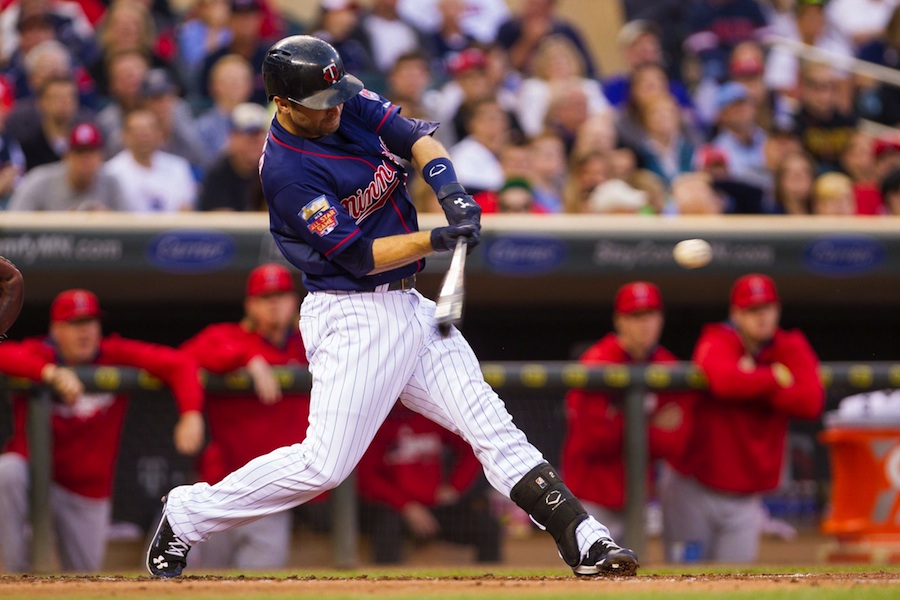 First, let's get this out there: It was never terribly realistic to believe that Dozier was going to keep hitting the ball out of the park at the frantic rate he established during the first three-plus months. In 2013, he launched 18 homers, surpassing his career total in the minors, and this year he matched that number in just over half a season. Clearly he has made some strides and developed considerably as a power hitter, but based on his history and his swing, the odds that he was going to be an annual source for 30-40 home runs were slim to nil. Some regression in the HR category was inevitable. Granted, the regression has been more drastic than we would have expected or hoped. But for the most part, the rest of Dozier's strong offensive game has remained intact. Here's a more broad view of his splits: Before All-Star break: 424 PA, .242/.340/.436, 16 2B, 0 3B, 18 HR, 79/52 K/BB Since All-Star break: 234 PA, .227/.348/.340, 16 2B, 0 3B, 2 HR, 39/33 K/BB Although Dozier has clearly been scuffling from a pure power standpoint, he is still getting on base, still showing excellent plate discipline and still hitting a bunch of doubles. Let's face it, as nice as the long balls were, these are the most important aspects of his game when you consider his role as a top-of-the-lineup table setter. If a "slumping" Dozier can continue to exhibit those positive traits, it bodes awfully well for what we can expect going forward, especially once the home run proclivity returns in some form. He might not get back to ripping four homers per month on a consistent basis, but he did place 34 balls in the seats from April of 2013 through July of 2014. It's pretty tough to view that as a total fluke. Dozier, at the worst we've seen him in a long time, still ain't bad by any means, especially when you account for his exceptional defensive skills. Consider that his relatively unimpressive .688 OPS since the All-Star break is just five points lower than what the average AL second baseman has produced this year. Is the guy we've seen since mid-July the "real Brian Dozier"? Probably not. More likely he has just cooled off a bit, and been adjusted to, after a really long and really impressive power-hitting hot streak. The true version probably lies somewhere in the middle, and still figures to be a hell of a player and building block.
 -
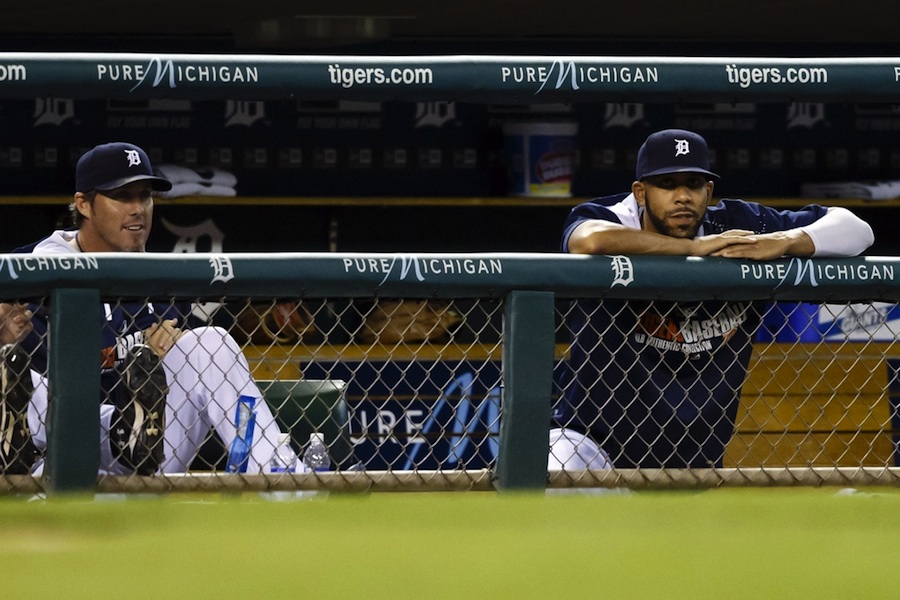 For those who enjoy baseball drama, it won't be tough to get invested in these games. While the Twins have little motivation beyond trying to avoid a fourth straight 95-loss season, the Tigers are entering an absolutely pivotal stretch, as they play three in Minnesota and then head straight to KC for what could be an epic showdown. If the Twins can win two or three against Detroit while the Royals do the same at home against the White Sox, Kansas City would have a chance to build a lead by the end of the weekend. There aren't very many baseball games left. The forecast calls for dry, cool nights: perfect sweatshirt weather. And the events at Target Field this week will help decide who wins the AL Central. Ticket King has some really cheap tickets for all three games in this series -- we're talking lower deck for under $10 -- so if you want to get out to the ballpark again before it's too late, this looks like an awfully good time to do so. Let's take a look at the matchups for each game: Monday, 7:10 PM: Max Scherzer vs. Anthony Swarzak Scheduled starter Tommy Milone's neck injury continued to nag him, so he's been shut down for the season and the Twins will turn to Swarzak, who has started only once this season, back on July 23rd. The Tigers will send Scherzer, the 2013 Cy Young winner who is enjoying another spectacular season. Obviously this is a bit of a lopsided matchup, but two things to note: 1) Scherzer has recorded a quality start in nine of this last 10 turns. The only exception? That came at home against the Twins, who chased him after five innings in late August. It was the only time since mid-June that the righty has failed to pitch into the sixth. 2) Swarzak beat the Indians in his lone start this season, holding them to one run over five innings, and he has posted a 3.54 ERA as a reliever since that outing. Tuesday, 7:10 PM: Rick Porcello vs. Ricky Nolasco Since getting demolished by a very good Orioles lineup in Baltimore at the end of August, Nolasco has looked pretty good in two September starts, allowing just three earned runs in 12 innings with a 10-to-1 K/BB ratio. Nolasco's poor finish last year set the tone for a disastrous season in 2014. Perhaps the opposite can be true this time around. Wednesday, 7:10 PM: David Price vs. Kyle Gibson Speaking of pitchers who need to finish on a positive note, we have Gibson. He shut down Detroit back in June, part of a 22-inning scoreless streak, but he has been struggling since that high point in the season, with a 6.04 ERA in his last 14 starts. Given his importance to the process of turning around this rotation, Gibson's backward steps in the second half have been extremely concerning. He hasn't had a quality start in a month and could really use one here. He'll have his work cut out for him, as the Twins lineup gets its first look at David Price in a Tigers uniform.
 -
Once again, the Twins have been relegated to playing the spoiler role here in September, rather than actively competing for a postseason spot. Sigh. On the bright side, they have a chance to make an impact on the most compelling race in baseball. The Kansas City Royals haven't been to the playoffs since winning the World Series in 1985, and they're trying to get back. But they'll need to overcome a Tigers team that has reigned over the Central for three years straight. Detroit leads Kansas City by a game and a half, and comes to Target Field this week as the Twins launch their final homestand of 2014.For those who enjoy baseball drama, it won't be tough to get invested in these games. While the Twins have little motivation beyond trying to avoid a fourth straight 95-loss season, the Tigers are entering an absolutely pivotal stretch, as they play three in Minnesota and then head straight to KC for what could be an epic showdown. If the Twins can win two or three against Detroit while the Royals do the same at home against the White Sox, Kansas City would have a chance to build a lead by the end of the weekend. There aren't very many baseball games left. The forecast calls for dry, cool nights: perfect sweatshirt weather. And the events at Target Field this week will help decide who wins the AL Central. Ticket King has some really cheap tickets for all three games in this series -- we're talking lower deck for under $10 -- so if you want to get out to the ballpark again before it's too late, this looks like an awfully good time to do so. Let's take a look at the matchups for each game: Monday, 7:10 PM: Max Scherzer vs. Anthony Swarzak Scheduled starter Tommy Milone's neck injury continued to nag him, so he's been shut down for the season and the Twins will turn to Swarzak, who has started only once this season, back on July 23rd. The Tigers will send Scherzer, the 2013 Cy Young winner who is enjoying another spectacular season. Obviously this is a bit of a lopsided matchup, but two things to note: 1) Scherzer has recorded a quality start in nine of this last 10 turns. The only exception? That came at home against the Twins, who chased him after five innings in late August. It was the only time since mid-June that the righty has failed to pitch into the sixth. 2) Swarzak beat the Indians in his lone start this season, holding them to one run over five innings, and he has posted a 3.54 ERA as a reliever since that outing. Tuesday, 7:10 PM: Rick Porcello vs. Ricky Nolasco Since getting demolished by a very good Orioles lineup in Baltimore at the end of August, Nolasco has looked pretty good in two September starts, allowing just three earned runs in 12 innings with a 10-to-1 K/BB ratio. Nolasco's poor finish last year set the tone for a disastrous season in 2014. Perhaps the opposite can be true this time around. Wednesday, 7:10 PM: David Price vs. Kyle Gibson Speaking of pitchers who need to finish on a positive note, we have Gibson. He shut down Detroit back in June, part of a 22-inning scoreless streak, but he has been struggling since that high point in the season, with a 6.04 ERA in his last 14 starts. Given his importance to the process of turning around this rotation, Gibson's backward steps in the second half have been extremely concerning. He hasn't had a quality start in a month and could really use one here. He'll have his work cut out for him, as the Twins lineup gets its first look at David Price in a Tigers uniform. Click here to view the article
-
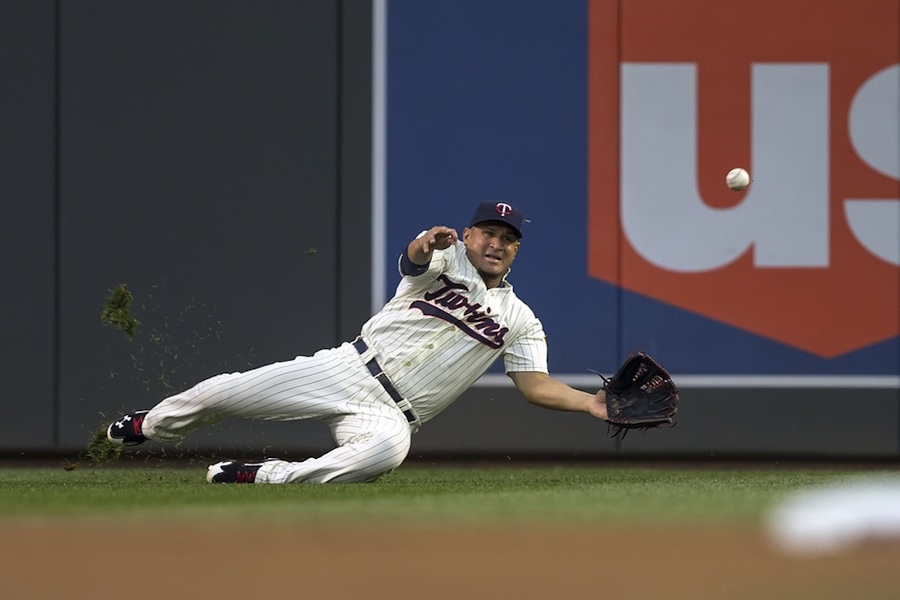 In Defensive Efficiency (a measure of how many balls in play are converted into outs), the Twins rank 29th out of 30 MLB clubs, with only the Rangers -- who lost their 92nd game on Thursday -- behind them. There are some blatantly bad fielders on the Minnesota roster. For Oswaldo Arcia, the statistics agree with the eye-test: he's a complete liability in either outfield corner. Josmil Pinto was sent to the minors in June almost solely because of his deficiencies behind the plate, and even when in Triple-A he was hardly a regular at catcher. Danny Santana is considered somewhat rough at shortstop, but has had almost no opportunity to refine his game there this year. Looking ahead to 2015, the Twins' question marks defensively are painfully obvious, and yet herein lies the problem: The same names mentioned above are also talented young hitters who will be critical to sustaining the team's aforementioned offensive improvement. Think about Trevor Plouffe. He was a mess defensively during his first couple seasons in the majors, first at shortstop and then at third. But this year, at age 28, he has made noticeable improvements that have been acknowledged by his coaches and backed up by fielding metrics. It's just one example of a player making meaningful strides with his glove over time, and it's not that rare. It is too soon to give up on 25-and-under guys like Pinto and Arcia being adequate fielders long-term. However, the Twins have got to get better at preventing runs in a hurry. This is the fourth straight season in which they've allowed too much scoring to even have a chance at competing, and that has to stop. But how do the Twins balance the desperate need to improve defensively with their coinciding reliance on these potent young bats? Kennys Vargas, at 23, is already essentially relegated to DH duty given his lack of value in the field, so hiding another hitter there isn't really an option unless he's traded. Maybe that's the answer: Seek to trade a one or two of these plodding sluggers, replacing them with more able defenders. But it seems weird for a retooling team to be dealing away promising, internally developed young talents. I don't think I'd advocate that. To be honest, I'm flummoxed. I hate the thought of another bottom-tier defensive unit next year, making the already difficult task of bringing this pitching staff up to snuff substantially more challenging. Yet, I have no desire to give up on MLB-caliber young hitters like Pinto, Arcia, Vargas and Santana. What it might come down to is hoping that some of these guys rapidly develop in the field -- they're at an age and experience level where that can happen. At the same time, the pitchers have got to miss more bats and reduce pressure on the defensive unit. There's no question that the Twins' fielding issues have been magnified to a tremendous degree by a staff that is constantly putting the ball in play; this is their fourth straight year ranking last in the league in strikeout rate. That simply has to change, or the ridiculous runs-allowed totals will not.

