



Nick Nelson
-
Posts
8,322 -
Joined
-
Last visited
-
Days Won
56
Content Type
Profiles
News
Minnesota Twins Videos
2026 Minnesota Twins Top Prospects Ranking
2022 Minnesota Twins Draft Picks
Minnesota Twins Free Agent & Trade Rumors, Notes, & Tidbits
Guides & Resources
2023 Minnesota Twins Draft Picks
The Minnesota Twins Players Project
2024 Minnesota Twins Draft Picks
2025 Minnesota Twins Draft Pick Tracker
2026 Minnesota Twins Draft Tracker: Picks & Bonuses
Forums
Blogs
Events
Store
Downloads
Gallery
Everything posted by Nick Nelson
-
 A managerial search that stretched on for more than a month appears to be reaching its conclusion, with Patrick Reusse reporting that the Minnesota Twins have decided on Paul Molitor as their new manager and will announce the hiring early next week. The 58-year-old Hall of Famer will become the franchise's 13th different manager since arriving in Minnesota.Molitor has been widely viewed as Ron Gardenhire's likely successor ever since he was added to the Twins' coaching staff in October of 2013. He has worked with players and personnel throughout the system over the years as a roving instructor, and he spent the 2014 season working from the Twins dugout and assisting Gardenhire in various ways. In that sense, his transition to the head honcho role should be fairly smooth. His entrenchment within the organization does raise some concerns over whether he will be provide a real change in direction, but there are plenty of signals that Molitor is a unique baseball mind capable of bringing fresh perspectives and ideas to the table. The greater concern might relate to Molitor's managerial experience, or lack thereof. While he's been extensively involved in baseball as a coach and instructor since retiring as a player, he has never managed at any level. This was not the case for any of the other known candidates for the position. How big of a deal is it? Perhaps not very. Molitor has certainly been around the game enough to know what goes into managing a team, and purportedly has all the interpersonal and tactical skills necessary to handle the gig, but you really never know until someone actually steps in and does it. At the end of the day, we've got to show some faith in the Twins' judgment on this matter. They've done pretty well with their last two managerial hires; Tom Kelly guided his teams to two World Series championships and Gardenhire won six division titles in his first nine years. The good news for Molitor is that, much like Gardy before him, he should be positioned to make himself look good because the Twins' roster figures to rapidly improve over the next few years as young stars enter the fray and establish themselves. It might not be the most creative or unconventional choice, but Molitor has plenty of pedigree and if you're under the impression that he falls into that more-of-the-same mold, you may end up being surprised. Stay tuned to Twins Daily for plenty more coverage of the new hire. Click here to view the article
 -
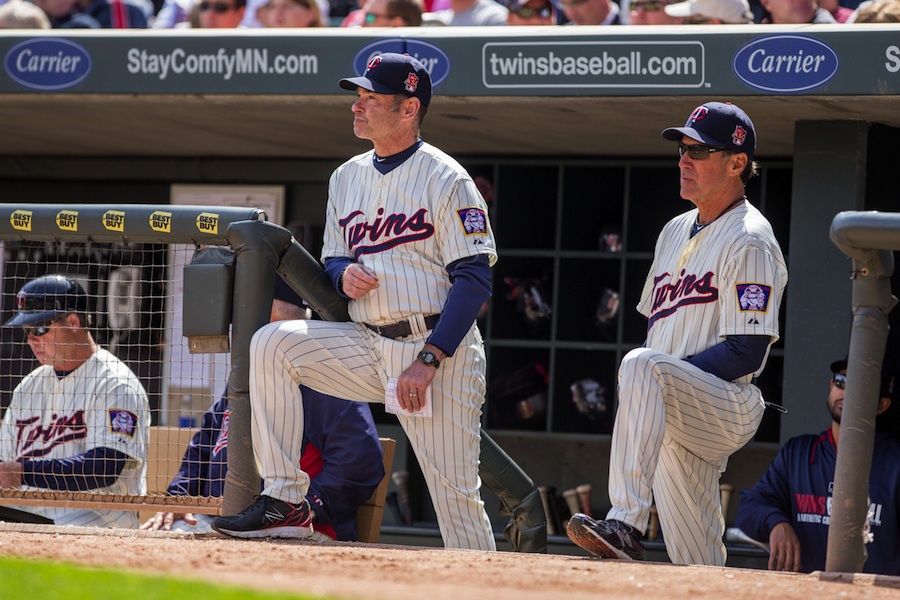 Molitor has been widely viewed as Ron Gardenhire's likely successor ever since he was added to the Twins' coaching staff in October of 2013. He has worked with players and personnel throughout the system over the years as a roving instructor, and he spent the 2014 season working from the Twins dugout and assisting Gardenhire in various ways. In that sense, his transition to the head honcho role should be fairly smooth. His entrenchment within the organization does raise some concerns over whether he will be provide a real change in direction, but there are plenty of signals that Molitor is a unique baseball mind capable of bringing fresh perspectives and ideas to the table. The greater concern might relate to Molitor's managerial experience, or lack thereof. While he's been extensively involved in baseball as a coach and instructor since retiring as a player, he has never managed at any level. This was not the case for any of the other known candidates for the position. How big of a deal is it? Perhaps not very. Molitor has certainly been around the game enough to know what goes into managing a team, and purportedly has all the interpersonal and tactical skills necessary to handle the gig, but you really never know until someone actually steps in and does it. At the end of the day, we've got to show some faith in the Twins' judgment on this matter. They've done pretty well with their last two managerial hires; Tom Kelly guided his teams to two World Series championships and Gardenhire won six division titles in his first nine years. The good news for Molitor is that, much like Gardy before him, he should be positioned to make himself look good because the Twins' roster figures to rapidly improve over the next few years as young stars enter the fray and establish themselves. It might not be the most creative or unconventional choice, but Molitor has plenty of pedigree and if you're under the impression that he falls into that more-of-the-same mold, you may end up being surprised. Stay tuned to Twins Daily for plenty more coverage of the new hire.
 -
It's a fair point, and I too have been disappointed by their general lack of aggressiveness in pursuing upgrades, but in hindsight all that was going to do was secure a few extra wins, pushing their draft slots back at the expense of millions of dollars. No amount of offseason maneuvering was going to push them from 65 wins to 90 wins. I still think they should continue to seek quality players to supplement their emerging core, but until that core begins to establish itself and produce, nothing else matters all that much. And while it's true that prospects are hard to trust (as we've been seeing) the Twins have an elite group and that's a far better formula for returning to contention than simply throwing money at the problem.
- 64 replies
-
- 1
-

-
- byron buxton
- miguel sano
- (and 1 more)
-
Yeah, I remember that. I just linked to Walters because it was the latest mention. I'd love to see Mientkiewicz in charge of getting those guys going again at Double-A. He knows them.
-
Byron Buxton goes by the nickname "Buck." I'm told it's a shortening of his last name, but at this point I'm wondering if it isn't more appropriately a shortening of the words "bad luck." The tweet from William Boor, a reporter on scene at the Arizona Fall League on Monday, felt like some sort of cruel cosmic joke: #Twins prospect Byron Buxton, MLB.coms top prospect, just left today's #AFL14 game with an injury. Looked like he hurt wrist diving for ball It evoked a nauseating feeling that was all too familiar.Buxton's season in the minors was obliterated by injuries, each one somewhat freakish in nature. He sprained a wrist in spring training, then reinjured the same wrist, then took a painful fastball to the other wrist, and ended his campaign with a knockout concussion in the outfield. When I pondered this summer whether the Twins are the unluckiest team in baseball, that sentiment stemmed largely from the plight of their star prospect. Buxton is the top asset in the organization, and the centerpiece of their rebuilding effort. This time Buxton has a fractured finger, which is at least preferable to a wrist aggravation, but his AFL season is done. He'll once again be shut down before he really gets a chance to get going. It has truly been a lost season for the premier young talent in the game. So if Terry Ryan seems cautious about raising expectations for next year's team, I guess it's not hard to see why. Much speculation is surrounding the manager search right now, and that will soon give way to hot stove buzz as free agency heats up, but neither a new skipper nor an expensive veteran addition is going to fuel a turnaround for this club. That responsibility rests upon the young internally developed core led by Buxton. And he's not the only one who's been struck by setbacks. Miguel Sano lost his whole season to Tommy John surgery, and is sitting out winter ball. Eddie Rosario, who ranked as the organization's third-best positional prospect, lost nearly half his season to a drug suspension and scuffled after returning, though he's currently raking in the AFL. Had things gone to plan, all three would have started the 2014 season in Double-A and would likely be angling for big-league jobs next spring. Instead, all three will likely start at Double-A next year, with much to prove. That's why I cut Ryan quite a bit of slack for the franchise's stalling rebuild. While bad decisions have been made, these prospect developments have been far more impactful and have been entirely out of his control. But here's some food for thought: If you believe in Doug Mientkiewicz's managerial muster, you might actually be pleased by the rumblings that he could end up managing at Chattanooga next season. Overseeing and assisting the returns of Buxton, Sano and Rosario -- not to mention the rise of top pitching prospect J.O. Berrios, who is likely to start there -- could be the most important job in the organization in 2015. Click here to view the article
-
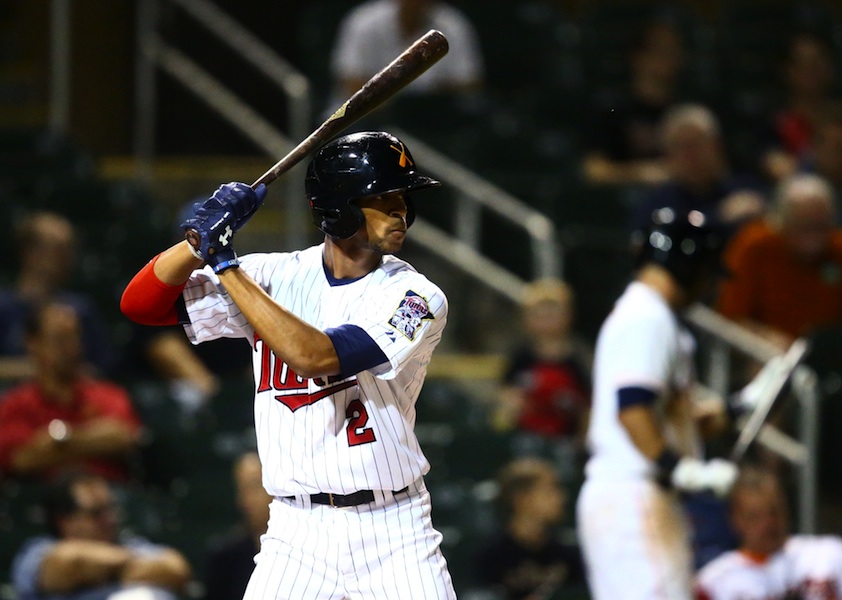 Buxton's season in the minors was obliterated by injuries, each one somewhat freakish in nature. He sprained a wrist in spring training, then reinjured the same wrist, then took a painful fastball to the other wrist, and ended his campaign with a knockout concussion in the outfield. When I pondered this summer whether the Twins are the unluckiest team in baseball, that sentiment stemmed largely from the plight of their star prospect. Buxton is the top asset in the organization, and the centerpiece of their rebuilding effort. This time Buxton has a fractured finger, which is at least preferable to a wrist aggravation, but his AFL season is done. He'll once again be shut down before he really gets a chance to get going. It has truly been a lost season for the premier young talent in the game. So if Terry Ryan seems cautious about raising expectations for next year's team, I guess it's not hard to see why. Much speculation is surrounding the manager search right now, and that will soon give way to hot stove buzz as free agency heats up, but neither a new skipper nor an expensive veteran addition is going to fuel a turnaround for this club. That responsibility rests upon the young internally developed core led by Buxton. And he's not the only one who's been struck by setbacks. Miguel Sano lost his whole season to Tommy John surgery, and is sitting out winter ball. Eddie Rosario, who ranked as the organization's third-best positional prospect, lost nearly half his season to a drug suspension and scuffled after returning, though he's currently raking in the AFL. Had things gone to plan, all three would have started the 2014 season in Double-A and would likely be angling for big-league jobs next spring. Instead, all three will likely start at Double-A next year, with much to prove. That's why I cut Ryan quite a bit of slack for the franchise's stalling rebuild. While bad decisions have been made, these prospect developments have been far more impactful and have been entirely out of his control. But here's some food for thought: If you believe in Doug Mientkiewicz's managerial muster, you might actually be pleased by the rumblings that he could end up managing at Chattanooga next season. Overseeing and assisting the returns of Buxton, Sano and Rosario -- not to mention the rise of top pitching prospect J.O. Berrios, who is likely to start there -- could be the most important job in the organization in 2015.
 -
Just an update: We wrapped up the Handbook a little ahead of schedule, so we've moved up the release date to noon on Thursday, October 30th. Wednesday will be your last chance to preorder at the special discounted price of $3.99. And you'll be able to grab it the very next day! Do it up!
-
A compelling new twist was added to the Twins' managerial search on Friday, when it was announced that Rays skipper Joe Maddon has opted out of his contract in Tampa Bay, becoming a free agent. Minnesota is the only club with a current opening. Will they take advantage of this unexpected opportunity and aggressively pursue the heralded longtime manager?Let's be clear from the get-go: a match in this case is unlikely. For one thing, Maddon would be exorbitantly expensive; Mike Scioscia and Joe Girardi are the highest-paid managers in the game presently, earning $5 million and $4 million in 2014 respectively, and Maddon -- being viewed by many (including myself) as the best in the biz -- could command a higher salary than either. There's also the matter of Maddon's preference. Even if the Twins are willing to pony up, will the 60-year-old want to join a club that is amidst such a brutal drought? There was some initial speculation that Maddon could follow former Rays GM Andrew Friedman to the Los Angeles Dodgers, although Ken Rosenthal tweeted definitively that this will not be happening. And really, firing Don Mattingly -- who's under contract -- after a 94-win season would be pretty ludicrous. Still, there are more likely destinations than Minnesota, even though this is the only present vacancy. Plenty of teams would undoubtedly be willing to set aside their current skipper to make room for Maddon. The Cubs, coming off an 89-loss campaign under Rick Renteria, seem like an early favorite. All that being said, even though they're in deep with their present group of candidates, the Twins would be foolish not to at least reach out to Maddon and explore a potential match. He has a reputation as being forward-thinking, analytical, and beloved by players and coaches alike. He has experienced immense success with a small-market franchise in Tampa that the Twins should be modeling themselves after. And he really knows how to run a pitching staff. What do you think? Is there any chance Maddon ends up in Minnesota? Click here to view the article
-
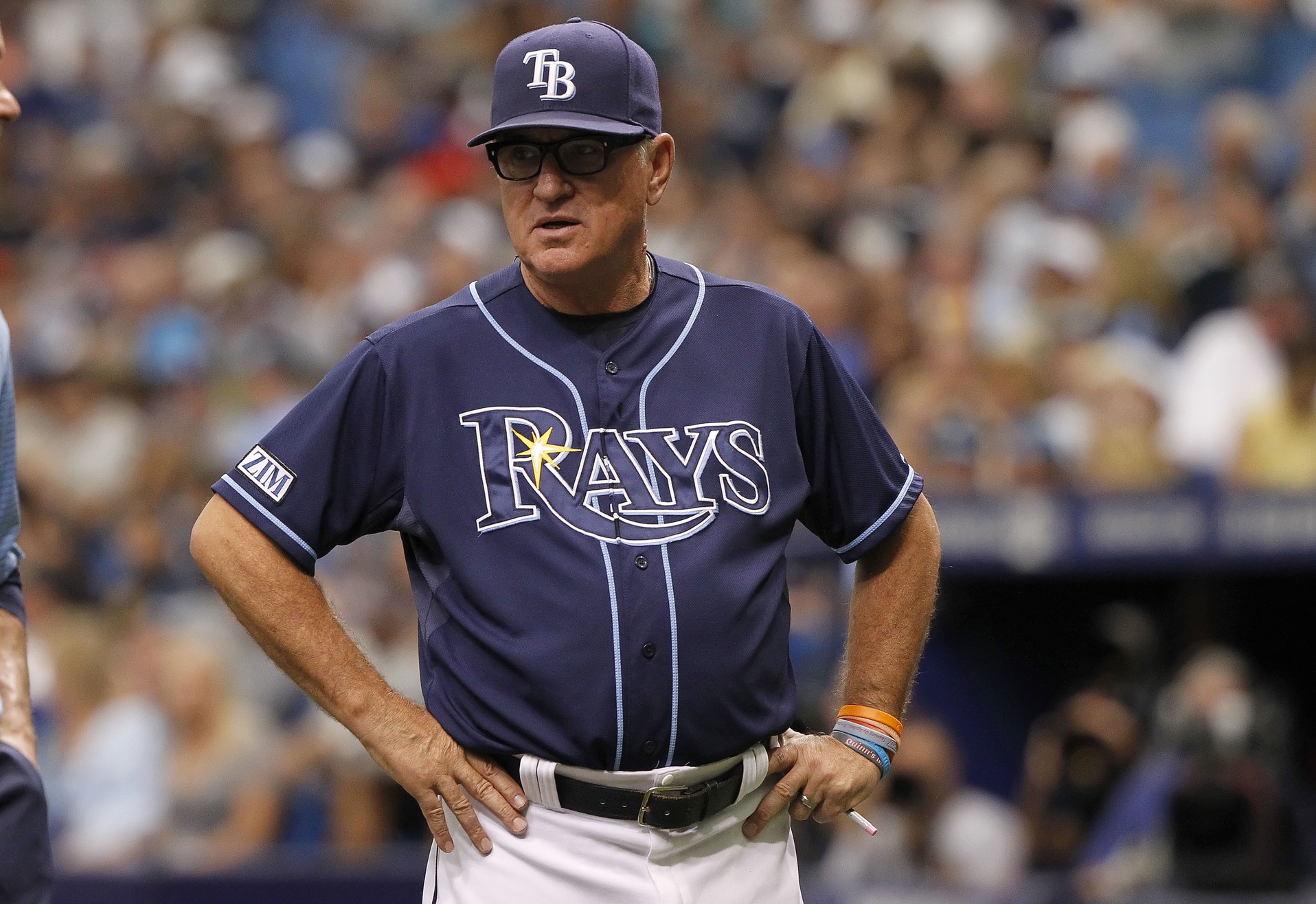 Let's be clear from the get-go: a match in this case is unlikely. For one thing, Maddon would be exorbitantly expensive; Mike Scioscia and Joe Girardi are the highest-paid managers in the game presently, earning $5 million and $4 million in 2014 respectively, and Maddon -- being viewed by many (including myself) as the best in the biz -- could command a higher salary than either. There's also the matter of Maddon's preference. Even if the Twins are willing to pony up, will the 60-year-old want to join a club that is amidst such a brutal drought? There was some initial speculation that Maddon could follow former Rays GM Andrew Friedman to the Los Angeles Dodgers, although Ken Rosenthal tweeted definitively that this will not be happening. And really, firing Don Mattingly -- who's under contract -- after a 94-win season would be pretty ludicrous. Still, there are more likely destinations than Minnesota, even though this is the only present vacancy. Plenty of teams would undoubtedly be willing to set aside their current skipper to make room for Maddon. The Cubs, coming off an 89-loss campaign under Rick Renteria, seem like an early favorite. All that being said, even though they're in deep with their present group of candidates, the Twins would be foolish not to at least reach out to Maddon and explore a potential match. He has a reputation as being forward-thinking, analytical, and beloved by players and coaches alike. He has experienced immense success with a small-market franchise in Tampa that the Twins should be modeling themselves after. And he really knows how to run a pitching staff. What do you think? Is there any chance Maddon ends up in Minnesota?
 -
In many ways, Paul Molitor is an easy sell as the next manager of the Minnesota Twins. He is a Hall of Famer who has been involved in pro baseball for nearly four decades. His knowledge of the game is lauded by individuals around the league. He is a St. Paul native with plenty of local ties. That last part might actually be the team's biggest hurdle in trying to generate excitement around Molitor, if he is the ultimate choice. But it seems like the Twins are already trying to get out in front of that potentially negative reaction.Whether you're reading the tea leaves or lending credence to a report from KFAN's Paul Lambert (aka Meatsauce), who has been conspicuously accurate with his breaking news tidbits pertaining to the Twins, Molitor's chances of landing the job are looking good. And while his résumé is exemplary, many fans who have grown tired of the insularity and continuity that permeate the Twins organization may have a hard time seeing his hiring as a real changing of the guard. After all, Molitor has been an instructor and coach in this system for the past nine years, and in 2014 he was a member of Gardenhire's staff, working closely with the regime that is now being cleared out. But for what it's worth, Twins officials have always been noticeably up-front about characterizing Molitor as a very different type of of baseball mind. When he chatted with us a year ago for the previous Offseason Handbook (which you can now download for free here, if you're interested), Terry Ryan spoke about the recent decision to add Molitor as a seventh coach on the staff: "He's a very smart guy. He looks at the game different than a lot of people. He and Tom Kelly watch games different than I do. I've always respected that." This is a viewpoint that the general manager has expressed frequently regarding Molitor, and it's a sentiment that doesn't stop with Ryan. During an appearance on SiriusXM radio on Thursday, Ron Gardenhire shared similar thoughts: “If Paulie ends up getting this manager’s job, he’s not going to be your traditional manager,” Gardenhire said. “He can go out there and he’ll try things, which is really entertaining because we talked about it all the time. He’s into a lot of different things on finding different ways to beat you, just like he did as a player. “It’s not going to be straight-up baseball. He’ll work in a lot of things up there as far as baserunning and all those things. I don’t think there’s anybody better in that as far as figuring things out, watching pitchers and so forth. He brings a lot to the table. I do know that about Paulie.” In the same article where he relayed these quotes from the radio interview, Mike Berardino of the Pioneer Press also dropped this nugget: "Molitor’s addition to the staff caused Gardenhire to chafe at times behind the scenes, especially early on, considering their shared expertise when it comes to infield play." Sure, this friction may have been partially attributable to the belief that Molitor was brought onto the staff to audition as Gardy's successor. But when you put it all together, it also seems fair to surmise that the two have some fundamental differences of opinion on certain aspects of strategy and running a team. Since the idea in parting with Gardenhire is to bring in a fresh perspective and some different managerial philosophies, isn't that exactly what you're looking for? Click here to view the article
-
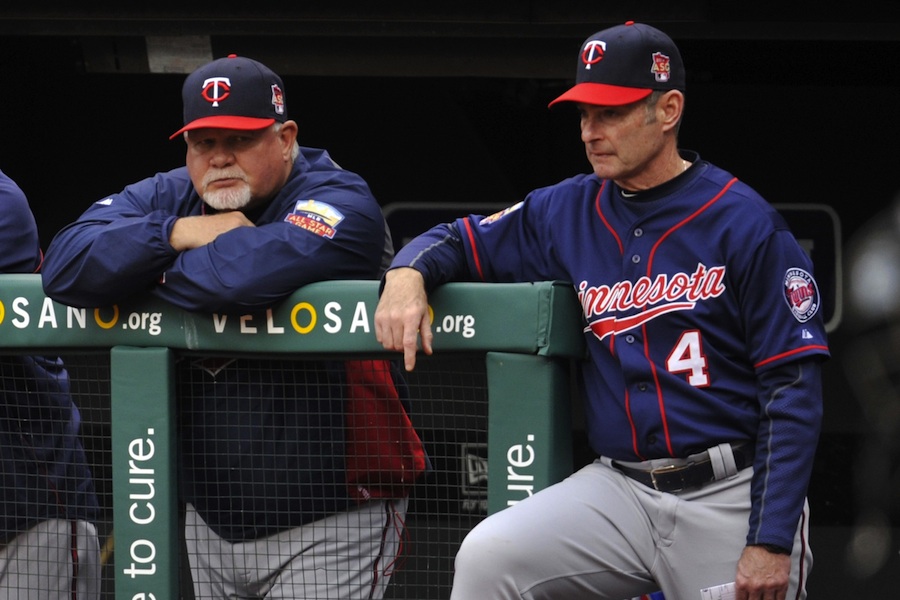 Whether you're reading the tea leaves or lending credence to a report from KFAN's Paul Lambert (aka Meatsauce), who has been conspicuously accurate with his breaking news tidbits pertaining to the Twins, Molitor's chances of landing the job are looking good. And while his résumé is exemplary, many fans who have grown tired of the insularity and continuity that permeate the Twins organization may have a hard time seeing his hiring as a real changing of the guard. After all, Molitor has been an instructor and coach in this system for the past nine years, and in 2014 he was a member of Gardenhire's staff, working closely with the regime that is now being cleared out. But for what it's worth, Twins officials have always been noticeably up-front about characterizing Molitor as a very different type of of baseball mind. When he chatted with us a year ago for the previous Offseason Handbook (which you can now download for free here, if you're interested), Terry Ryan spoke about the recent decision to add Molitor as a seventh coach on the staff: "He's a very smart guy. He looks at the game different than a lot of people. He and Tom Kelly watch games different than I do. I've always respected that." This is a viewpoint that the general manager has expressed frequently regarding Molitor, and it's a sentiment that doesn't stop with Ryan. During an appearance on SiriusXM radio on Thursday, Ron Gardenhire shared similar thoughts: “If Paulie ends up getting this manager’s job, he’s not going to be your traditional manager,” Gardenhire said. “He can go out there and he’ll try things, which is really entertaining because we talked about it all the time. He’s into a lot of different things on finding different ways to beat you, just like he did as a player. “It’s not going to be straight-up baseball. He’ll work in a lot of things up there as far as baserunning and all those things. I don’t think there’s anybody better in that as far as figuring things out, watching pitchers and so forth. He brings a lot to the table. I do know that about Paulie.” In the same article where he relayed these quotes from the radio interview, Mike Berardino of the Pioneer Press also dropped this nugget: "Molitor’s addition to the staff caused Gardenhire to chafe at times behind the scenes, especially early on, considering their shared expertise when it comes to infield play." Sure, this friction may have been partially attributable to the belief that Molitor was brought onto the staff to audition as Gardy's successor. But when you put it all together, it also seems fair to surmise that the two have some fundamental differences of opinion on certain aspects of strategy and running a team. Since the idea in parting with Gardenhire is to bring in a fresh perspective and some different managerial philosophies, isn't that exactly what you're looking for?
 -
Article: Powering Up The Bullpen
Nick Nelson replied to Nick Nelson's topic in Twins Daily Front Page News
There's some truth to that, but Meyer's inability to pitch deep into games spoke more to the high pitch counts he regularly ran up due to bouts of wildness. If that's happening in Triple-A, it's only going to get worse in the majors. Probably my No. 1 concern with him (other than the shoulder). -
Article: Powering Up The Bullpen
Nick Nelson replied to Nick Nelson's topic in Twins Daily Front Page News
Yep. Great point. It's worked for plenty of young hurlers breaking into the big-league ranks, and seems especially logical for Meyer given his circumstances.- 27 replies
-
- 2
-
-
- mike pelfrey
- alex meyer
- (and 1 more)
-
There are only so many worthwhile takeaways to be gleaned from an examination of the Kansas City Royals' incredible postseason run up to this point. It's just been one of those miraculous stretches of baseball where everything has kept on clicking. (At least until Game 1 of the World Series.) It is possible that the impact of Kansas City's speed, fundamentals, and maybe even defense, can be overstated. The impact of a lights-out bullpen, however, cannot.During the regular season, the Royals went 64-9 when ahead after the sixth inning, and 65-4 when ahead after the seventh. This relief corps that reliably protected leads during the summer has stepped it up here in October. When Kansas City leads after five, or gains a lead at any point thereafter, the win has been automatic. This was an overlooked calling card in the Twins' wonder years. During Minnesota's division championship seasons of 2002, 2003, 2004, 2006, 2009 and 2010, they ranked 4th, 5th, 5th, 1st, 4th and 4th among AL teams in bullpen ERA. This year, they ranked 10th. So when you look at areas that need to improve, this is a pretty blatant one. A truly great bullpen can be a key difference-maker; many of those division-winning clubs lacked elite lineups or rotations but won games because they consistently could finish the job. Fortunately, the current Twins already have that all-important piece: a shutdown closer. Like Eddie Guardado and Joe Nathan before him, Glen Perkins is an All-Star, ranking among the game's best at slamming the door. Concerns over Perkins' sore forearm and shaky September were quelled after an MRI revealed no UCL damage. But what of the pieces leading up to Perkins? Where are those dominant arms that bridge the gap, like Wade Davis and Kelvin Herrera have done for the Royals? Casey Fien was far less dominant this year than in 2013, as his strikeouts declined and more hits fell in. Jared Burton struggled too often, and seems unlikely to have his option activated. When minor-leaguers like Michael Tonkin, A.J. Achter and Lester Oliveros got their chances, they delivered mixed results. If the Twins want to be proactive in addressing the bullpen, they might want to seek alternatives to their present options. That could mean looking to free agency, where some intriguing names are covered in the Offseason Handbook. But it also might mean getting creative and trying out some different things. One such idea is shifting Mike Pelfrey into a relief role, where I believe he could transform from a liability to an asset. And here's another idea I'm starting to like: Alex Meyer in the bullpen to start the season. He already has a full year at Triple-A under his belt and he'll turn 25 in January. He needs to be in the majors. But the Twins seem to have lingering doubts about his ability to pitch deep into games, and that's warranted. He completed six innings just once in his last seven starts at Rochester. There might not be room for him in the rotation from the outset, if the Twins sign a pitcher or want to give Tommy Milone a look. So why not let Meyer start out in a relief role, where he can gain confidence pitching in short stints while blowing big-league hitters away with his elite stuff? The Twins brought Francisco Liriano along in this manner in 2006. He dominated pitching a couple innings at a time as a potent weapon out of the bullpen during the first six weeks, and was already rolling by the time he hit the rotation in mid-May. Since Meyer only pitched 130 innings this year and ended on an injury scare, the Twins will want to manage his workload. Serving as a reliever those first few weeks or months will allow him to pitch deeper into the season without vastly exceeding his inning total from 2014. Ideally, he'll pitch well in this role, refine his control, and be ready to stretch out and step in as a starter when help is inevitably needed. Or else the Twins could let him work as a reliever the entire season. The Cardinals did so with Adam Wainwright his rookie year, and he turned out all right. Whichever route they choose to go, Minnesota must find a way to harness Meyer's overpowering arm. It makes little sense to send him back to the minors. Click here to view the article
- 27 replies
-
- 1
-
-
- mike pelfrey
- alex meyer
- (and 1 more)
-
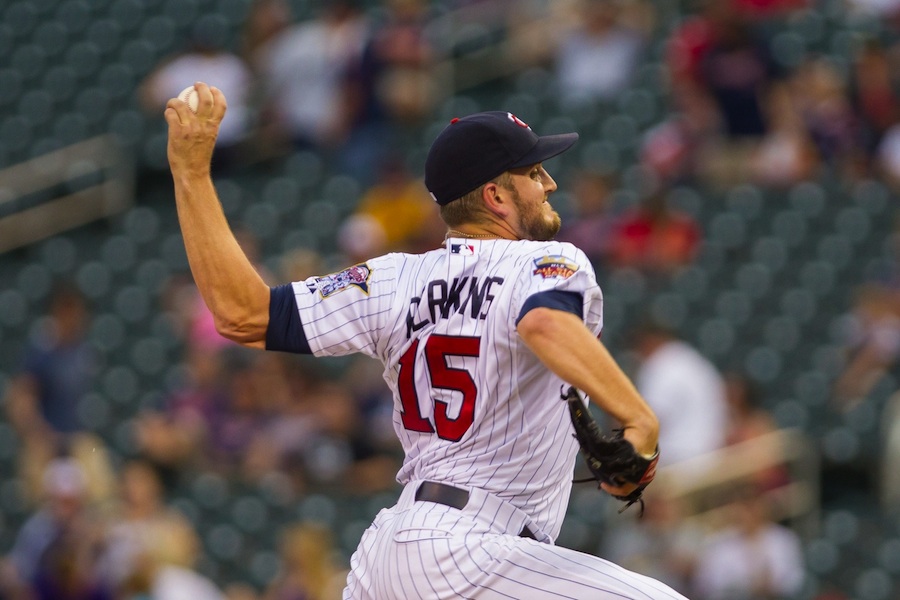 During the regular season, the Royals went 64-9 when ahead after the sixth inning, and 65-4 when ahead after the seventh. This relief corps that reliably protected leads during the summer has stepped it up here in October. When Kansas City leads after five, or gains a lead at any point thereafter, the win has been automatic. This was an overlooked calling card in the Twins' wonder years. During Minnesota's division championship seasons of 2002, 2003, 2004, 2006, 2009 and 2010, they ranked 4th, 5th, 5th, 1st, 4th and 4th among AL teams in bullpen ERA. This year, they ranked 10th. So when you look at areas that need to improve, this is a pretty blatant one. A truly great bullpen can be a key difference-maker; many of those division-winning clubs lacked elite lineups or rotations but won games because they consistently could finish the job. Fortunately, the current Twins already have that all-important piece: a shutdown closer. Like Eddie Guardado and Joe Nathan before him, Glen Perkins is an All-Star, ranking among the game's best at slamming the door. Concerns over Perkins' sore forearm and shaky September were quelled after an MRI revealed no UCL damage. But what of the pieces leading up to Perkins? Where are those dominant arms that bridge the gap, like Wade Davis and Kelvin Herrera have done for the Royals? Casey Fien was far less dominant this year than in 2013, as his strikeouts declined and more hits fell in. Jared Burton struggled too often, and seems unlikely to have his option activated. When minor-leaguers like Michael Tonkin, A.J. Achter and Lester Oliveros got their chances, they delivered mixed results. If the Twins want to be proactive in addressing the bullpen, they might want to seek alternatives to their present options. That could mean looking to free agency, where some intriguing names are covered in the Offseason Handbook. But it also might mean getting creative and trying out some different things. One such idea is shifting Mike Pelfrey into a relief role, where I believe he could transform from a liability to an asset. And here's another idea I'm starting to like: Alex Meyer in the bullpen to start the season. He already has a full year at Triple-A under his belt and he'll turn 25 in January. He needs to be in the majors. But the Twins seem to have lingering doubts about his ability to pitch deep into games, and that's warranted. He completed six innings just once in his last seven starts at Rochester. There might not be room for him in the rotation from the outset, if the Twins sign a pitcher or want to give Tommy Milone a look. So why not let Meyer start out in a relief role, where he can gain confidence pitching in short stints while blowing big-league hitters away with his elite stuff? The Twins brought Francisco Liriano along in this manner in 2006. He dominated pitching a couple innings at a time as a potent weapon out of the bullpen during the first six weeks, and was already rolling by the time he hit the rotation in mid-May. Since Meyer only pitched 130 innings this year and ended on an injury scare, the Twins will want to manage his workload. Serving as a reliever those first few weeks or months will allow him to pitch deeper into the season without vastly exceeding his inning total from 2014. Ideally, he'll pitch well in this role, refine his control, and be ready to stretch out and step in as a starter when help is inevitably needed. Or else the Twins could let him work as a reliever the entire season. The Cardinals did so with Adam Wainwright his rookie year, and he turned out all right. Whichever route they choose to go, Minnesota must find a way to harness Meyer's overpowering arm. It makes little sense to send him back to the minors.
 -
Now that another tough season has come to a close, it's time to focus on finding ways to reinforce and expedite a rebuilding process that has moved along more slowly than anyone would like. These next few months will present numerous opportunities to supplement and perhaps restructure a talent-laden young core. You'll be able to familiarize yourself with all those possibilities in the Twins Daily 2015 Offseason Handbook, which is now available for pre-order at a new low price.If you've followed this site for any length of time, you're probably familiar with the annual Offseason Handbook. At the end of each season, we compile a comprehensive preview of the coming offseason from the perspective of the Twins. This year, we've scaled back the scope of the Handbook to some degree, focusing more acutely on the team's areas of need and what will be available. This condensing of content allows us to offer it for less than any past edition -- you can preorder today for only $3.99. We're positive that any Twins fan will find to be a great value because this beautifully designed, full-color ebook still comes packed with great stuff, including: Full transcript of an hour-long, exclusive interview with general manager Terry Ryan, who candidly discusses the current state of the roster, the direction of the team, and a wide range of other topics.An in-depth look at the payroll situation. How much is available to spend? How much does it make sense to spend? Where do the long-term commitments lie?A breakdown of where the Twins have needs, and what's available at those positions -- in free agency, via potential trades, and on the international market.A look at which players are arbitration-eligible and how much they'll cost to retain.An offseason blueprint compiled by the Twins Daily staff, along with a fun worksheet that allows you to lay out your own vision.The Offseason Handbook will be available on Monday, November 3rd Thursday, October 30th at a price of $5.49, but if you preorder now, you can lock up your copy for just $3.99. We know that any Twins fan will absolutely love this product, so please order one for yourself and maybe another for that fanatical friend or family member in your life. In doing so, you'll be supporting this site and fully preparing yourself for the pivotal offseason ahead. Thanks, as always, for your patronage! Click here to view the article
-
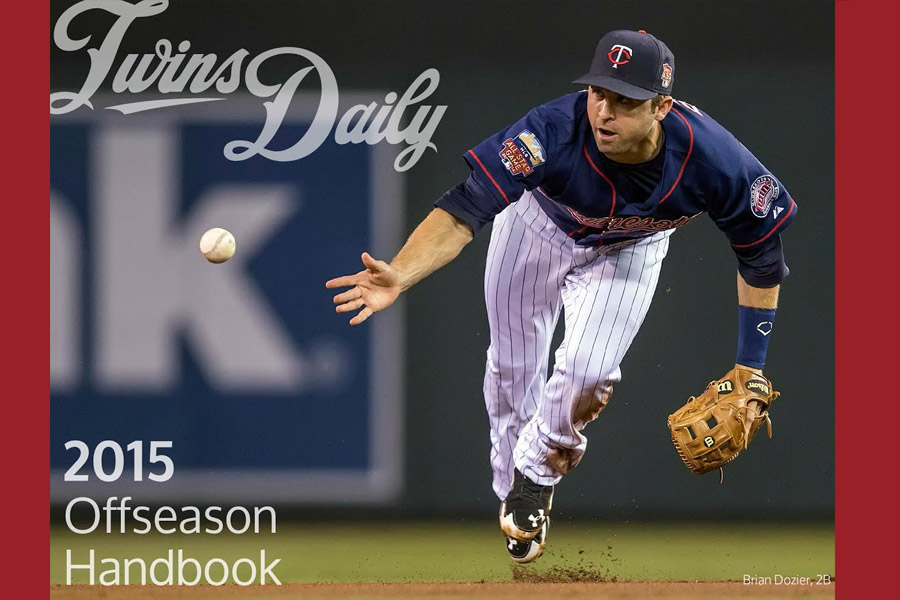 If you've followed this site for any length of time, you're probably familiar with the annual Offseason Handbook. At the end of each season, we compile a comprehensive preview of the coming offseason from the perspective of the Twins. This year, we've scaled back the scope of the Handbook to some degree, focusing more acutely on the team's areas of need and what will be available. This condensing of content allows us to offer it for less than any past edition -- you can preorder today for only $3.99. We're positive that any Twins fan will find to be a great value because this beautifully designed, full-color ebook still comes packed with great stuff, including: Full transcript of an hour-long, exclusive interview with general manager Terry Ryan, who candidly discusses the current state of the roster, the direction of the team, and a wide range of other topics. An in-depth look at the payroll situation. How much is available to spend? How much does it make sense to spend? Where do the long-term commitments lie? A breakdown of where the Twins have needs, and what's available at those positions -- in free agency, via potential trades, and on the international market. A look at which players are arbitration-eligible and how much they'll cost to retain. An offseason blueprint compiled by the Twins Daily staff, along with a fun worksheet that allows you to lay out your own vision. The Offseason Handbook will be available on Monday, November 3rd Thursday, October 30th at a price of $5.49, but if you preorder now, you can lock up your copy for just $3.99. We know that any Twins fan will absolutely love this product, so please order one for yourself and maybe another for that fanatical friend or family member in your life. In doing so, you'll be supporting this site and fully preparing yourself for the pivotal offseason ahead. Thanks, as always, for your patronage!
 -
Certainly wasn't intended that way. I didn't mean to say that was his only qualification by any means. But there has been a lot of clamoring for a manager with a Latin background, considering the proliferation of young Latin players rising through the system, and he's the only candidate I've seen thus far that would fit that bill.
-
While they initially appeared to have emerged as front-runners, and still may be, things have been quiet on the Paul Molitor and Doug Mientkiewicz fronts. That's because the Twins, true to their word, have expanded the scope of their manager search substantially, with numerous outside names entering the mix over the past couple weeks. Let's run through the latest developments as the search moves on and picks up:* ESPN 1500's Darren Wolfson, who has been characteristically active in providing rumors and tidbits gleaned from his various sources, reports that the Twins have interviewed Blue Jays bench coach Demarlo Hale. Hale, 53, has managed at various spots in the minors, and was a member of Terry Francona's staff in Boston before a stint with Baltimore (as third base coach) and his present gig in Toronto. He was rumored to be one of four finalists in 2010 for the Jays managerial job, which ended up going to John Farrell. If it's wide-ranging experience that the Twins are looking for, Hale offers plenty of that. * A day earlier, Wolfson had tweeted that Red Sox bench coach Torey Lovullo "nailed his interview" with the team. Lovullo's name generated some Thursday-morning excitement when his profile page was discovered on the Twins' site, but that buzz was quickly squashed after team employee Andrew Ettel pointed out that any name in the system would show up on a search of the site (including Babe Ruth). Nevertheless, Lovullo appears to have some steam behind him. He was apparently one of the top names considered for the Rangers job, which went to Jeff Banister on Thursday. During just the last two seasons in Boston, Lovullo has experienced the highest of highs (a World Series in 2013) and the lowest of lows (last-place finish in 2014). He also appears to be open to analytics and modernized strategy: It bears noting that Lovullo has interviewed for several managerial openings in the past, including Los Angeles, Cleveland and Boston, and always come up short. But maybe, like Mike Zimmer with the Vikings, this is finally his time. * The Twins also interviewed Sandy Alomar Jr., who has been serving as the bench coach in Cleveland for the past two years. The 48-year-old lacks the depth of experience of the two names mentioned above, and his managerial background amounts to a few days at the end of the 2012 season when he was named as Manny Acta's interim replacement, but it's only a matter of time before Alomar gets a chance somewhere, and he would satisfy calls for a Latin infusion on the Twins' coaching staff. * The Twins became the last team with a managerial vacancy after Texas hired Banister this week. Earlier, the Diamondbacks had hired Chip Hale, who was scheduled for an interview in Minnesota before being swooped away. That means Ron Gardenhire, who expressed interest in managing again, is out of potential destinations for the time being. It seems likely he'll accept a job in the Twins organization. Click here to view the article
-
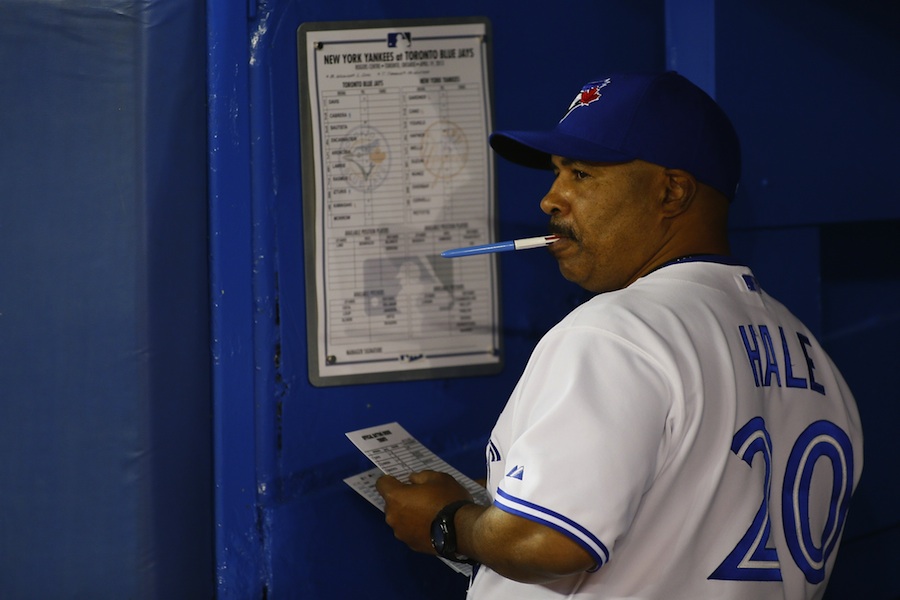 * ESPN 1500's Darren Wolfson, who has been characteristically active in providing rumors and tidbits gleaned from his various sources, reports that the Twins have interviewed Blue Jays bench coach Demarlo Hale. Hale, 53, has managed at various spots in the minors, and was a member of Terry Francona's staff in Boston before a stint with Baltimore (as third base coach) and his present gig in Toronto. He was rumored to be one of four finalists in 2010 for the Jays managerial job, which ended up going to John Farrell. If it's wide-ranging experience that the Twins are looking for, Hale offers plenty of that. * A day earlier, Wolfson had tweeted that Red Sox bench coach Torey Lovullo "nailed his interview" with the team. Lovullo's name generated some Thursday-morning excitement when his profile page was discovered on the Twins' site, but that buzz was quickly squashed after team employee Andrew Ettel pointed out that any name in the system would show up on a search of the site (including Babe Ruth). Nevertheless, Lovullo appears to have some steam behind him. He was apparently one of the top names considered for the Rangers job, which went to Jeff Banister on Thursday. During just the last two seasons in Boston, Lovullo has experienced the highest of highs (a World Series in 2013) and the lowest of lows (last-place finish in 2014). He also appears to be open to analytics and modernized strategy: It bears noting that Lovullo has interviewed for several managerial openings in the past, including Los Angeles, Cleveland and Boston, and always come up short. But maybe, like Mike Zimmer with the Vikings, this is finally his time. * The Twins also interviewed Sandy Alomar Jr., who has been serving as the bench coach in Cleveland for the past two years. The 48-year-old lacks the depth of experience of the two names mentioned above, and his managerial background amounts to a few days at the end of the 2012 season when he was named as Manny Acta's interim replacement, but it's only a matter of time before Alomar gets a chance somewhere, and he would satisfy calls for a Latin infusion on the Twins' coaching staff. * The Twins became the last team with a managerial vacancy after Texas hired Banister this week. Earlier, the Diamondbacks had hired Chip Hale, who was scheduled for an interview in Minnesota before being swooped away. That means Ron Gardenhire, who expressed interest in managing again, is out of potential destinations for the time being. It seems likely he'll accept a job in the Twins organization.
 -
Terry Ryan has formed a rock-solid reputation during his decades in the game of baseball, in large part because of his integrity and honesty. Say what you will about the man, but he will always give you his sincere opinion. Sometimes, that honesty isn't so refreshing.Here are three quotes that Ryan has provided on three separate occasions since the season ended: “We’re not broke here, we’re bent. We’ve got some issues, and we need to make better decisions. But I feel a heck of a lot better about this club and moving forward than I did a year ago,” Ryan said. “I don’t think we’re all that far away [from contention]. I don’t want to punt on 2015, but it’s still going to be a struggle.” - Conference call with season ticket holders (via Star Tribune) "No one said this is going to be easy. It’s going to take a lot of work and a little time,” Ryan said. “But the worst thing that could happen is, yeah, we’ve had four bad years. I don’t want it to turn into 14 bad years. Sometimes you make decisions that ultimately are going to benefit you down the line that don’t look exactly like what you want right now.” - Phil Miller story from Tuesday's Star Tribune "There isn’t any shortcut to this thing. I’m not going to pretend that this thing’s going to come together in the next six months. We’ve got a lot of work to do, I know it. I’m not going to hide and I’m not going to pretend. … I don’t know how long it’s going to take, but for everybody’s sake the sooner that we get this thing going in the right direction, the better." - Interview with Parker Hageman for the upcoming Offseason Handbook Hey Terry, maybe lighten up a little and leave the doom and gloom to the bloggers, eh? The season ended two weeks ago, for crying out loud! Is there a need to keep not-so-implicitly suggesting that we're likely to be in for another rough one next season when the sting of this year's 92nd loss remains so fresh? On some level, I can appreciate what TR is doing. He's being frank and stern in his assessments of a roster that -- objectively -- still appears to be a ways off from contention. He doesn't want to blow smoke after four straight miserable years. I'll take that over the delusional rah-rah Tim Brewster rhetoric. But while I'm sure Ryan is more hopeful than the above quotes would indicate, it sure seems like I have more faith in the ability of this team to be competitive next year than he does -- and I'm no eternal optimist. Hopefully his actions this offseason don't match his words, but Phil Miller's story in Tuesday's Star Tribune emits little optimism on that front. In the article, Ryan and team president Dave St. Peter share the same sentiment: payroll is likely to remain more or less static heading into 2015. In fact, St. Peter would only go so far as to say "we don't see it going down significantly." Team execs bristle whenever the payroll topic is brought up, and I'm not one to wave the "spend money because you owe the taxpayers!" torch, but they've got to at least acknowledge that they bring this upon themselves. In 2013, the Twins ranked 22nd in the majors with an Opening Day payroll of $76 million. In 2014, thanks to big signings like Ricky Nolasco and Phil Hughes, that number rose to $86 million. But despite the splurge, Minnesota's MLB rank dropped to 24th, because every single team that had sported a lower payroll in 2013 spent even more during the offseason. If the Twins stay at $86 million or drop slightly, they'll likely be passed by a couple more teams, because with substantial new revenues flowing into the game from new TV mega-deals that kicked in this year, small-market franchises are spending more. That said, it's not the payroll rank relative to other teams that bothers me, nor the dubiousness of this supposed "50 percent of revenue" standard. I'm just dispirited by the messages being conveyed. I wouldn't advocate "spending just to spend," and I fully recognize that the Twins are in a position where they basically they have to roll with what they've got, but they have an acute need in left field with no answer in the pipeline. I'd like to think that Ryan will at least aggressively pursue a quality player there to supplement his emerging core, but going after the most highly sought assets -- whether in free agency, or trade, or the international market -- requires a willingness to spend. To see both the general manager and team president downplaying that whole notion so early in the offseason, at a time where fan morale is dreadfully low and the team is hemorrhaging season ticket holders, seems rather bizarre. I'm depressed from reading this stuff as a fan. I can only imagine how the players must feel. A friend reminded me of a quote that Glen Perkins shared back in June, after the Twins signed Kendrys Morales: Hopefully Ryan and the Twins will heed these words from their All-Star closer, and reconsider their stated offseason course. This roster ain't so bad. They need some pitchers to bounce back, but there are some nice young arms ready to make an impact, and the offensive unit is quite strong with elite prospects set to join soon. Youthful teams can emerge from the abyss quite quickly, as the two squads presently facing off in the ALCS can attest. Don't sell these kids short. Give them some help. Or at least feign making an effort. When all you've got to sell is hope, it'd be nice to put a little out on the shelf. Click here to view the article
-
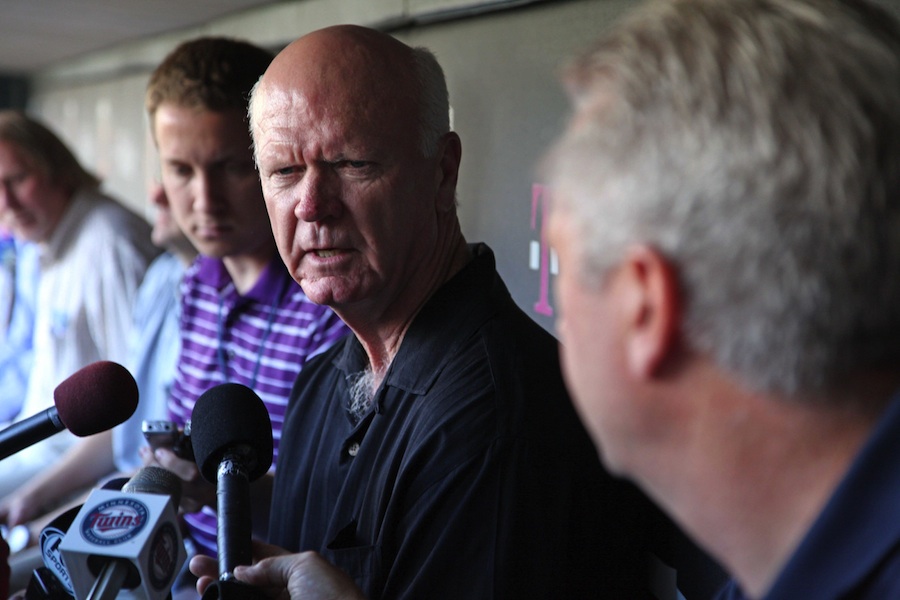 Here are three quotes that Ryan has provided on three separate occasions since the season ended: “We’re not broke here, we’re bent. We’ve got some issues, and we need to make better decisions. But I feel a heck of a lot better about this club and moving forward than I did a year ago,” Ryan said. “I don’t think we’re all that far away [from contention]. I don’t want to punt on 2015, but it’s still going to be a struggle.” - Conference call with season ticket holders (via Star Tribune) "No one said this is going to be easy. It’s going to take a lot of work and a little time,” Ryan said. “But the worst thing that could happen is, yeah, we’ve had four bad years. I don’t want it to turn into 14 bad years. Sometimes you make decisions that ultimately are going to benefit you down the line that don’t look exactly like what you want right now.” - Phil Miller story from Tuesday's Star Tribune "There isn’t any shortcut to this thing. I’m not going to pretend that this thing’s going to come together in the next six months. We’ve got a lot of work to do, I know it. I’m not going to hide and I’m not going to pretend. … I don’t know how long it’s going to take, but for everybody’s sake the sooner that we get this thing going in the right direction, the better." - Interview with Parker Hageman for the upcoming Offseason Handbook Hey Terry, maybe lighten up a little and leave the doom and gloom to the bloggers, eh? The season ended two weeks ago, for crying out loud! Is there a need to keep not-so-implicitly suggesting that we're likely to be in for another rough one next season when the sting of this year's 92nd loss remains so fresh? On some level, I can appreciate what TR is doing. He's being frank and stern in his assessments of a roster that -- objectively -- still appears to be a ways off from contention. He doesn't want to blow smoke after four straight miserable years. I'll take that over the delusional rah-rah Tim Brewster rhetoric. But while I'm sure Ryan is more hopeful than the above quotes would indicate, it sure seems like I have more faith in the ability of this team to be competitive next year than he does -- and I'm no eternal optimist. Hopefully his actions this offseason don't match his words, but Phil Miller's story in Tuesday's Star Tribune emits little optimism on that front. In the article, Ryan and team president Dave St. Peter share the same sentiment: payroll is likely to remain more or less static heading into 2015. In fact, St. Peter would only go so far as to say "we don't see it going down significantly." Team execs bristle whenever the payroll topic is brought up, and I'm not one to wave the "spend money because you owe the taxpayers!" torch, but they've got to at least acknowledge that they bring this upon themselves. In 2013, the Twins ranked 22nd in the majors with an Opening Day payroll of $76 million. In 2014, thanks to big signings like Ricky Nolasco and Phil Hughes, that number rose to $86 million. But despite the splurge, Minnesota's MLB rank dropped to 24th, because every single team that had sported a lower payroll in 2013 spent even more during the offseason. If the Twins stay at $86 million or drop slightly, they'll likely be passed by a couple more teams, because with substantial new revenues flowing into the game from new TV mega-deals that kicked in this year, small-market franchises are spending more. That said, it's not the payroll rank relative to other teams that bothers me, nor the dubiousness of this supposed "50 percent of revenue" standard. I'm just dispirited by the messages being conveyed. I wouldn't advocate "spending just to spend," and I fully recognize that the Twins are in a position where they basically they have to roll with what they've got, but they have an acute need in left field with no answer in the pipeline. I'd like to think that Ryan will at least aggressively pursue a quality player there to supplement his emerging core, but going after the most highly sought assets -- whether in free agency, or trade, or the international market -- requires a willingness to spend. To see both the general manager and team president downplaying that whole notion so early in the offseason, at a time where fan morale is dreadfully low and the team is hemorrhaging season ticket holders, seems rather bizarre. I'm depressed from reading this stuff as a fan. I can only imagine how the players must feel. A friend reminded me of a quote that Glen Perkins shared back in June, after the Twins signed Kendrys Morales: Hopefully Ryan and the Twins will heed these words from their All-Star closer, and reconsider their stated offseason course. This roster ain't so bad. They need some pitchers to bounce back, but there are some nice young arms ready to make an impact, and the offensive unit is quite strong with elite prospects set to join soon. Youthful teams can emerge from the abyss quite quickly, as the two squads presently facing off in the ALCS can attest. Don't sell these kids short. Give them some help. Or at least feign making an effort. When all you've got to sell is hope, it'd be nice to put a little out on the shelf.
 -
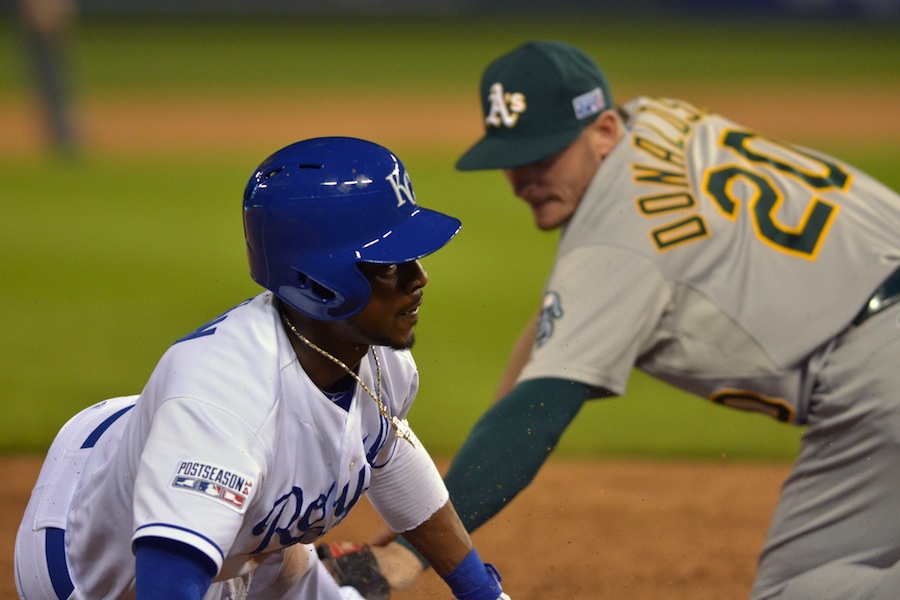 You can draw some similarities between the Orioles and Royals, but in many ways they are polar opposites. Baltimore is built around power. They led the majors with 211 homers and ranked last with 44 steals. Not one player on the O's roster swiped more than eight bases this season. This is a plodding, station-to-station club whose strategy is very much built around producing runs with bases-clearing hits and homers. Conversely, the Royals are all speed and no power. They ranked last in the majors in home runs (95) but first in steals (153). They barely sneaked into the playoffs but were able to shockingly sweep a 98-win Angels team with a small-ball offensive attack characterized by aggressive base-running and lots (I mean LOTS) of sacrifice bunting. I have little doubt that the Twins, at least under Ron Gardenhire, would have very much aspired to tailor themselves after the Royals. That's a brand of baseball that this organization has constantly held up as the gold standard over the years. However, when you look at the composition of this roster -- and the way it figures to evolve going forward -- there's no denying that the Twins are much more likely to assume Baltimore's profile. By the end of next season, the middle of Minnesota's lineup will likely be anchored by Oswaldo Arcia, Kennys Vargas and Miguel Sano -- slow-footed sluggers. Elsewhere you've got guys like Joe Mauer, Kurt Suzuki and Trevor Plouffe, who also aren't threats with their legs. Sure, there's Brian Dozier and Danny Santana, and eventually Byron Buxton. Maybe they'll add a speedster as a free agent. But barring a major shakeup or trade, the Twins aren't really going to have the personnel to execute the kind of speed-based, small-ball approach that they've so often striven for in the past. Maybe that's not such a bad thing. On the pitching side, there's good news. Neither the Orioles nor Royals have particularly strikeout-heavy staffs. Baltimore ranked 10th in the AL in K/9 rate this year, and Kansas City ranked 12th. The Twins, of course, ranked last with a miserable 6.5 K/9 rate, but the ground they need to make up to reach that level is obviously much smaller than the top tier. Therein lies the rub. The key that allowed these staffs to excel without tons of strikeouts is found in one one clear commonality between the two teams: outstanding defense. Baltimore has several high-end fielders and KC has been hailed by some as the best defensive unit to come along in years. Here's where the Twins are far, far behind. The path to returning to defensive excellence -- a longtime philosophical foundation and clearly a critical component in succeeding as a team -- is murky. As I wrote a month ago, the presence of so many slow power hitters within the offensive core makes it highly difficult to field a defense with great speed and range. To me, this overarching paradox represents the greatest roadblock to a return to contention. The Twins have the offensive pieces to score runs -- albeit more in Baltimore's style than Kansas City's -- but can they create a dynamic with their pitching staff and defense that allows them to prevent scoring in the same way as the Orioles (third-fewest runs allowed in AL) and Royals (fourth-fewest)? You've got to have power pitching or strong defense -- ideally both. But you can't have neither. This is where the identity crisis truly lies.
 -
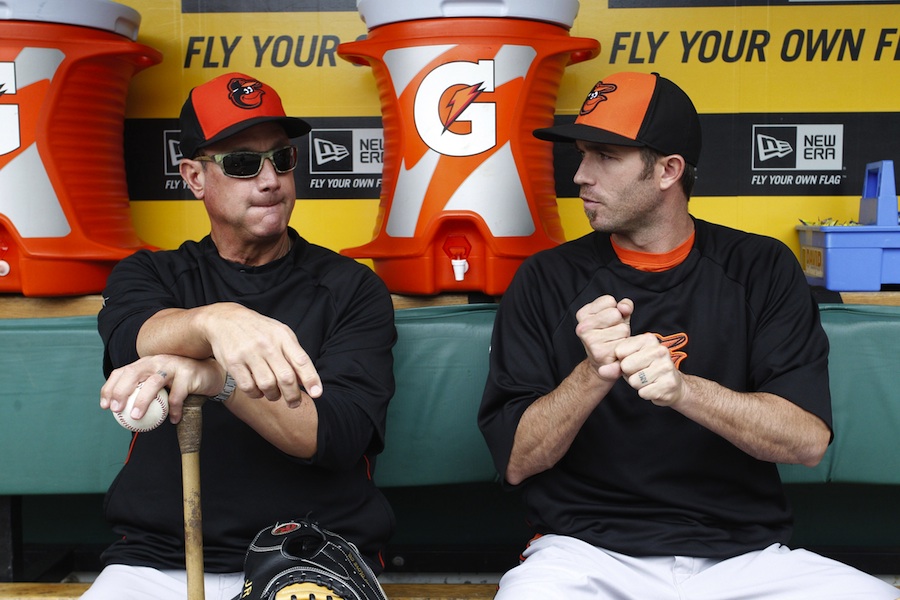 * Bob Nightengale of USA Today tweeted on Friday that "Doug Mientkiewicz has emerged as the favorite, ever so slightly over Paul Molitor." Earlier in the week, Nightengale had named Mientkiewicz and Molitor as finalists for the job. Although he's a national reporter, Nightengale has been the first to break Twins news multiple times in the past, leading me to believe he has a pretty good source within the organization. I first brought up Mientkiewicz as a managerial candidate in mid-September and reiterated my support for him last week, so I'd be pleased if they're indeed leaning in his direction. I'd also be extremely surprised, because he'd be a pretty unconventional choice. * Then again, La Velle E. Neal III of the Star Tribune tweeted later on Friday that Molitor "has had multiple interviews with the Twins." If that's true, it's hard not to view the Hall of Famer as clear front-runner. Multiple meetings within a week -- especially when they've only publicly interviewed one other candidate -- suggests aggressive interest. Of course, I believe that Molitor's real interview to be the next manager was the entire 2014 season. Some believe that was implied when he was added to Gardenhire's staff as a seventh coach. He's been in the dugout and in the clubhouse all year, so I think Twins execs have a decent idea of what to expect from him at this point. * Just because Molitor and Mientkiewicz are drawing the early press, we shouldn't assume this is a two-horse race. Jim Mandelaro, who covers the Rochester Red Wings for the Democrat & Chronicle, wrote the following last week: Glynn, like Mientkiewicz, has done an impressive job of turning around a struggling minor-league affiliate, and he worked as a scout for the exemplary Rays in the six years prior to taking over in Rochester. For those reasons, and others, I think he's one of the more intriguing names to be considered, but I wonder if the Twins would view him as a tough sell. He doesn't offer fans the familiarity of a Molitor or Mientkiewicz, nor does he offer the novelty of a name hired from outside the organization. Obviously I don't think the potential for a subdued public reaction should rule out a qualified candidate, but I do wonder how heavily that's being weighed given the waning fan interest. * What about external candidates? Terry Ryan gave his assurance that the team would be casting a wide net in its search for Gardy's replacement, and explicitly stated that they'd look outside the organization as well as within. But we've heard little buzz so far about outside names. Well, the Pittsburgh Tribune-Review did report on Sunday that John Russell is expected to interview for the position. Russell (pictured above with former Twin J.J. Hardy) has served as bench coach for the Orioles since 2011, and was manager of the Pirates from 2008 through 2010. He compiled an ugly 186-299 record in his three seasons there, including a 105-loss campaign that led to his removal. Working with catchers is considered to be a speciality for Russell. That could appeal to the Twins, who will be working to determine Joe Mauer's long-term successor behind the plate. The Twins would need to wait for Baltimore's postseason run to end before they can interview Russell. That run will continue for now, after the O's completed a first-round sweep of the Tigers on Sunday. * Stay tuned to Twins Daily all week for the latest news on the Twins' manager search. We'll be on top of each new rumor as it develops.
 -
It's been less than a week since the Twins announced Ron Gardenhire's dismissal, but already there has been a dizzying whirlwind of reports and rumors regarding who might replace him as manager. Struggling to keep up? No worries. Read on and we'll get you up to speed on all the latest substantive whisperings about the team's search for a skipper successor.* Bob Nightengale of USA Today tweeted on Friday that "Doug Mientkiewicz has emerged as the favorite, ever so slightly over Paul Molitor." Earlier in the week, Nightengale had named Mientkiewicz and Molitor as finalists for the job. Although he's a national reporter, Nightengale has been the first to break Twins news multiple times in the past, leading me to believe he has a pretty good source within the organization. I first brought up Mientkiewicz as a managerial candidate in mid-September and reiterated my support for him last week, so I'd be pleased if they're indeed leaning in his direction. I'd also be extremely surprised, because he'd be a pretty unconventional choice. * Then again, La Velle E. Neal III of the Star Tribune tweeted later on Friday that Molitor "has had multiple interviews with the Twins." If that's true, it's hard not to view the Hall of Famer as clear front-runner. Multiple meetings within a week -- especially when they've only publicly interviewed one other candidate -- suggests aggressive interest. Of course, I believe that Molitor's real interview to be the next manager was the entire 2014 season. Some believe that was implied when he was added to Gardenhire's staff as a seventh coach. He's been in the dugout and in the clubhouse all year, so I think Twins execs have a decent idea of what to expect from him at this point. * Just because Molitor and Mientkiewicz are drawing the early press, we shouldn't assume this is a two-horse race. Jim Mandelaro, who covers the Rochester Red Wings for the Democrat & Chronicle, wrote the following last week: Glynn, like Mientkiewicz, has done an impressive job of turning around a struggling minor-league affiliate, and he worked as a scout for the exemplary Rays in the six years prior to taking over in Rochester. For those reasons, and others, I think he's one of the more intriguing names to be considered, but I wonder if the Twins would view him as a tough sell. He doesn't offer fans the familiarity of a Molitor or Mientkiewicz, nor does he offer the novelty of a name hired from outside the organization. Obviously I don't think the potential for a subdued public reaction should rule out a qualified candidate, but I do wonder how heavily that's being weighed given the waning fan interest. * What about external candidates? Terry Ryan gave his assurance that the team would be casting a wide net in its search for Gardy's replacement, and explicitly stated that they'd look outside the organization as well as within. But we've heard little buzz so far about outside names. Well, the Pittsburgh Tribune-Review did report on Sunday that John Russell is expected to interview for the position. Russell (pictured above with former Twin J.J. Hardy) has served as bench coach for the Orioles since 2011, and was manager of the Pirates from 2008 through 2010. He compiled an ugly 186-299 record in his three seasons there, including a 105-loss campaign that led to his removal. Working with catchers is considered to be a speciality for Russell. That could appeal to the Twins, who will be working to determine Joe Mauer's long-term successor behind the plate. The Twins would need to wait for Baltimore's postseason run to end before they can interview Russell. That run will continue for now, after the O's completed a first-round sweep of the Tigers on Sunday. * Stay tuned to Twins Daily all week for the latest news on the Twins' manager search. We'll be on top of each new rumor as it develops. Click here to view the article
