



Nick Nelson
-
Posts
8,322 -
Joined
-
Last visited
-
Days Won
56
Content Type
Profiles
News
Minnesota Twins Videos
2026 Minnesota Twins Top Prospects Ranking
2022 Minnesota Twins Draft Picks
Minnesota Twins Free Agent & Trade Rumors, Notes, & Tidbits
Guides & Resources
2023 Minnesota Twins Draft Picks
The Minnesota Twins Players Project
2024 Minnesota Twins Draft Picks
2025 Minnesota Twins Draft Pick Tracker
2026 Minnesota Twins Draft Tracker: Picks & Bonuses
Forums
Blogs
Events
Store
Downloads
Gallery
Everything posted by Nick Nelson
-
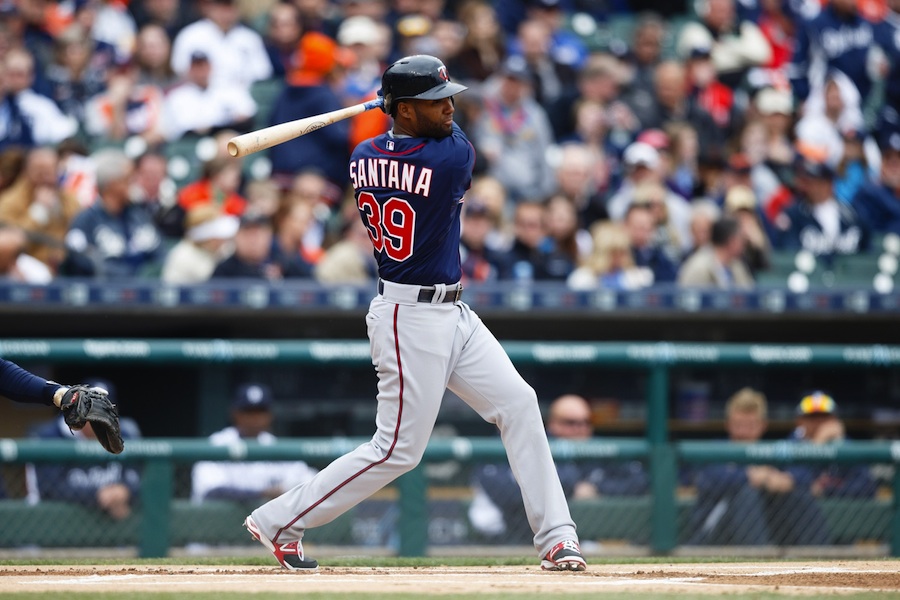 The Twins generally tend to exercise patience with slumping players, and that's what you usually like to see with a guy as young as Santana, but there are several mitigating factors in his case that could press Paul Molitor to take action. First, he's in that leadoff spot, batting directly in front of the best hitters in the lineup and consistently taking terrible at-bats. That's tough to stomach. Of course, you can simply slide him down, and that step will probably be taken ahead of sending him to the minors. But the bigger concern might be Santana's defense. He has already committed three errors in 10 games, and has looked shaky by and large. Former shortstop Roy Smalley commented during one Fox Sports North broadcast last week that it was obvious Santana has spent some time away from the position because he appeared rusty in many regards. That's the developmental cost of using him in center field for much of 2014. With the Twins focused on playing strong defense behind their pitchers, there won't be much tolerance for inadequate glove work at short. They know what Escobar brings to the table defensively, and while he hasn't hit much early on himself, he's coming off an excellent spring and a productive '14 campaign. The season is only two weeks old, but Santana fills vital roles both offensively and defensively and he's been nowhere near up to snuff in either regard. His tremendous rookie season is offset by a lengthy minor-league record of mediocrity, so I'll be curious to see how long of a leash it really buys him.
 -
The Twins desperately needed a good start this year to generate some enthusiasm following a stretch of four consecutive horrible seasons and a deflating development involving their top free agent acquisition just before Opening Day. Unfortunately, the first week has played out in the opposite fashion. One could hardly imagine a worse start to this 2015 campaign, as the first week of games has seen the Twins win just one of seven. For the most part, this club hasn't even been competitive. Some of the struggles are tied up in slumps that seem unlikely to extend much further. But this is a roster that was constructed sub-optimally from the start, as Twins decision-makers opted for veteran mediocrity over youthful upside in almost every possible instance. With that plan blowing up in the worst way, how long will Terry Ryan, Paul Molitor and Co. stick to their guns? How patient can they be before implementing major shakeups to prevent things from getting out of hand?One could paint the idea of drastic roster overhauls after one week of games as an overreaction, but in this case the horrors that have played out on the field only help to confirm the dubiousness of several choices made at the end of spring. In a sense, it's unfair to cast judgment on Blaine Boyer or Tim Stauffer or the current center field duo for struggling in such a small sample, especially with the team at large failing on almost every level. But these are easily addressed problems, where the solution is almost certain to pay better short-term and long-term dividends. What benefit is there to continually trotting out a veteran like Boyer or Shane Robinson? The minor-leaguers have done their parts in an even smaller slate of games. Aaron Hicks has an OPS above 1.000 through four games at Triple-A and Josmil Pinto is over .800 as usual. The Rochester bullpen, which includes several seemingly MLB-ready arms, has not allowed a run. Sample size be damned, it seems flat-out strange that these players are putting up numbers in Triple-A after being eschewed for ill-equipped vets that look overmatched in the majors. If things continue the way they're going, the Twins will face some tougher decisions. How long can Oswaldo Arcia continue to stumble around in left field while looking utterly awful at the plate? How lengthy is Kyle Gibson's leash if he keeps delivering starts that remotely resemble his first one? Can J.R. Graham be trusted to overcome his control woes and get outs? But those potentially long-term building blocks deserve more patience than veteran journeyman bench players and relievers who probably shouldn't have been on the roster to begin with, and carry little if any value beyond this season. Clear them out, and replace them with viable young players to energize this grossly underperforming squad. I'm not necessarily convinced that a roster with Hicks, Pinto, Michael Tonkin, Ryan Pressly and others is going to be substantially better, but it could hardly be worse and at the very least it gives fans something worth tuning into. At this point, that's got to be a major concern for this club. Click here to view the article
- 113 replies
-
- 2
-

-
- blaine boyer
- shane robinson
- (and 1 more)
-
 One could paint the idea of drastic roster overhauls after one week of games as an overreaction, but in this case the horrors that have played out on the field only help to confirm the dubiousness of several choices made at the end of spring. In a sense, it's unfair to cast judgment on Blaine Boyer or Tim Stauffer or the current center field duo for struggling in such a small sample, especially with the team at large failing on almost every level. But these are easily addressed problems, where the solution is almost certain to pay better short-term and long-term dividends. What benefit is there to continually trotting out a veteran like Boyer or Shane Robinson? The minor-leaguers have done their parts in an even smaller slate of games. Aaron Hicks has an OPS above 1.000 through four games at Triple-A and Josmil Pinto is over .800 as usual. The Rochester bullpen, which includes several seemingly MLB-ready arms, has not allowed a run. Sample size be damned, it seems flat-out strange that these players are putting up numbers in Triple-A after being eschewed for ill-equipped vets that look overmatched in the majors. If things continue the way they're going, the Twins will face some tougher decisions. How long can Oswaldo Arcia continue to stumble around in left field while looking utterly awful at the plate? How lengthy is Kyle Gibson's leash if he keeps delivering starts that remotely resemble his first one? Can J.R. Graham be trusted to overcome his control woes and get outs? But those potentially long-term building blocks deserve more patience than veteran journeyman bench players and relievers who probably shouldn't have been on the roster to begin with, and carry little if any value beyond this season. Clear them out, and replace them with viable young players to energize this grossly underperforming squad. I'm not necessarily convinced that a roster with Hicks, Pinto, Michael Tonkin, Ryan Pressly and others is going to be substantially better, but it could hardly be worse and at the very least it gives fans something worth tuning into. At this point, that's got to be a major concern for this club.
 -
They are microcosms, not even necessarily on the verge of becoming meaningful as of yet. But anyway, here are five trends we've noticed over the first week of Minnesota Twins games that might be worth keeping an eye on.Danny Santana is lacking discipline. Anyone would acknowledge that Santana was not likely to repeat last year's .400-plus batting average on balls in play, but it was hoped he could offset some of that inevitable regression by taking a few more walks and reducing his strikeouts. With his speed and ability to spray line drives to all fields, Santana can be a dynamic threat when he puts the bat on the ball. So far, he has struck out six times in his first 20 plate appearances with zero walks. Unless he improves his approach, he's not going to be an asset in the leadoff spot. Blaine Boyer is getting shelled. The Twins' fascination with Boyer has always been somewhat mysterious, and now even more so after a rocky first week. The veteran right-hander appeared four times in the team's first six games and gave up multiple hits each time out. He has struck out only one of the 20 batters he's faced. It was an odd experiment but it doesn't look like one that will last very long. Joe Mauer is looking like himself. Last year, Mauer had an uncharacteristically difficult time making contact in the early going, striking out in nearly 30 percent of his plate appearances over the first couple weeks. This year, he has struck out only four times in his first 24 plate appearances, with the same number of walks, and he's batting an even .300. Late in Sunday's game, he had an excellent at-bat against a very tough lefty in Zach Duke that ended with Mauer singling to set up a big scoring opportunity in a then-close game. Oswaldo Arcia has not been an everyday starter. Arcia started only four of Minnesota's first six games, sitting out the series finales against both Detroit and Chicago. It was easy to see why Paul Molitor would bench Arcia against dominating lefty Chris Sale, but the decision to keep him out of the season's third game, with mediocre right-hander Shane Greene on the hill for the Tigers, was harder to figure. Arcia was also lifted defensively late in two games, so he has only played two full nine-inning contests so far. The starting pitching is getting better. That's faint praise when you look at how ugly the performances were before Tommy Milone stopped the bleeding with an exceptional outing in the team's only victory on Friday, but Phil Hughes was solid in his second start Sunday and now Trevor May is stepping in to replace the ailing Ricky Nolasco. Things are going to get better. Oh, and Jose Berrios struck out 11 hitters in his season debut for the Chattanooga Lookouts on Friday. How far away can he be? Click here to view the article
-
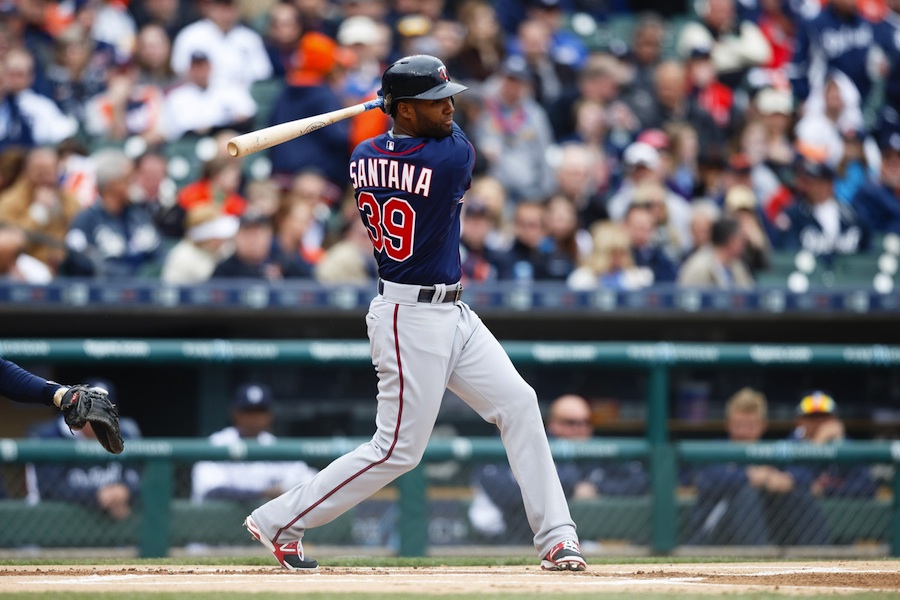 Danny Santana is lacking discipline. Anyone would acknowledge that Santana was not likely to repeat last year's .400-plus batting average on balls in play, but it was hoped he could offset some of that inevitable regression by taking a few more walks and reducing his strikeouts. With his speed and ability to spray line drives to all fields, Santana can be a dynamic threat when he puts the bat on the ball. So far, he has struck out six times in his first 20 plate appearances with zero walks. Unless he improves his approach, he's not going to be an asset in the leadoff spot. Blaine Boyer is getting shelled. The Twins' fascination with Boyer has always been somewhat mysterious, and now even more so after a rocky first week. The veteran right-hander appeared four times in the team's first six games and gave up multiple hits each time out. He has struck out only one of the 20 batters he's faced. It was an odd experiment but it doesn't look like one that will last very long. Joe Mauer is looking like himself. Last year, Mauer had an uncharacteristically difficult time making contact in the early going, striking out in nearly 30 percent of his plate appearances over the first couple weeks. This year, he has struck out only four times in his first 24 plate appearances, with the same number of walks, and he's batting an even .300. Late in Sunday's game, he had an excellent at-bat against a very tough lefty in Zach Duke that ended with Mauer singling to set up a big scoring opportunity in a then-close game. Oswaldo Arcia has not been an everyday starter. Arcia started only four of Minnesota's first six games, sitting out the series finales against both Detroit and Chicago. It was easy to see why Paul Molitor would bench Arcia against dominating lefty Chris Sale, but the decision to keep him out of the season's third game, with mediocre right-hander Shane Greene on the hill for the Tigers, was harder to figure. Arcia was also lifted defensively late in two games, so he has only played two full nine-inning contests so far. The starting pitching is getting better. That's faint praise when you look at how ugly the performances were before Tommy Milone stopped the bleeding with an exceptional outing in the team's only victory on Friday, but Phil Hughes was solid in his second start Sunday and now Trevor May is stepping in to replace the ailing Ricky Nolasco. Things are going to get better. Oh, and Jose Berrios struck out 11 hitters in his season debut for the Chattanooga Lookouts on Friday. How far away can he be?
 -
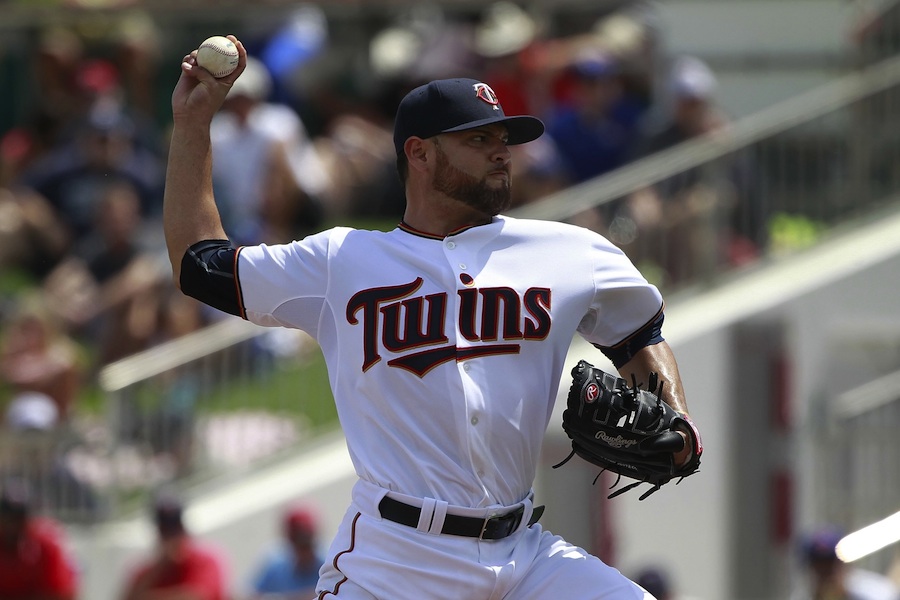 Nolasco's struggles in 2014 were magnified by the fact that he was in the first of four years on a free agent contract that was, at the time, the largest in franchise history. A rebound was already going to be imperative to a turnaround for Minnesota's embattled starting corps, and with the fate that has befallen the new holder of the largest ever Twins free agent deal, Nolasco's improvement becomes all the more pivotal. Now that Ervin Santana has been suspended for 80 games, Nolasco moves up to take his place in the rotation, and will start Wednesday in Detroit. Which early signs should we be looking for as we gauge what to expect from the 32-year-old in his second year as a Twin? VELOCITY The recipe for strikeouts isn't as simple as "more velocity = more missed bats," but for Nolasco that has been true. His average fastball speed topped out at 91.5 mph in 2009, the only year in his career that he has averaged more than a strikeout per inning. His lowest readings have come in 2012 (90.0) and 2014 (90.1), and those seasons have featured his two lowest swinging strike rates. Not only was the fastball velocity down a bit last year, but he also posted the lowest marks for each of his secondary offerings. I'll be curiously watching the radar to see how many of Nolasco's heaters touch 93 or 94 mph this afternoon, and I'll be especially focused on where the breaking balls register. If his oft-used slider continues to flatten and sag toward the 70s, it won't bode well. ATTACKING THE KNEES Nolasco coughed up 22 homers in 27 starts last year, and for anyone who regularly watched him the culprit was obvious: way too many pitches left hanging up in the zone. His ground ball rate reached a career-high 46.6 percent in 2012 but has dropped in each of the last two years. He spoke in spring training about how important it is to him to work in the lower part of the zone and induce grounders, which was a struggle for him at times (he gave up a team-leading five homers in six Grapefruit starts). Can he keep Detroit's powerful lineup from elevating the ball? DEFENSIVE PROWESS Not so much from him, but more so from the players behind him. It'd be nice to see an uptick in strikeouts and grounders, as mentioned above, but realistically Nolasco is a guy who will allow substantial contact, and a fair number of flies and line drives. That puts pressure on the defenders -- particularly those in the outfield -- to make plays and help him out. If his batting average on balls in play is anywhere close to where it was last year (.351) he stands almost no chance of success. We need some signals that an alignment featuring Oswaldo Arcia and Torii Hunter in the corners is going to be less damaging than many fear. Even after the crushing development that took place just days before the start of the season, I still think there's a realistic chance for the Minnesota rotation to be decent, but the loss of Santana means that a drastic improvement from Nolasco is more of a necessity than a luxury.
 -
 Ask any player what his primary goal is in spring training, and you'll get the same answer: Stay healthy. In that regard, the six weeks were beyond fruitful for the Minnesota Twins. The club's players reported shockingly few physical ailments. You might have forgotten that Trevor Plouffe broke his arm late last year, or that Glen Perkins finished on the DL with elbow problems, because there were no signs of any lingering effects. Aside from a pesky flu strain and a couple of minor issues, the Twins kept the injury bug at bay and were set to enter this 2015 campaign at maximum capacity. Then came the news. There's no other way to slice it: Ervin Santana's suspension casts a pall over the start of this fresh season. But the team will move on without him and while losing the No. 2 starter hurts, the Twins still have plenty of potential for improvement on various fronts.Here's the thing about the Santana suspension: he'll be gone for the first half of the season, but it is the second half he's returning for that figures to be most compelling for the Twins. By then, players like Trevor May, Alex Meyer and Aaron Hicks will have likely entered the fold. Fast-rising youngsters such as Miguel Sano, Byron Buxton and Jose Berrios could be making their cases as well. Several knowledgable onlookers in Ft. Myers opined that Sano and Berrios could play in the majors right now. So, by the time Minnesota's biggest new acquisition actually makes his debut, things could be getting exciting, but not so much if the team has already fallen hopelessly out of contention by then. What remains to be seen is whether this team, with considerable upside on the top half of the roster and considerable dead weight on the bottom half, can avoid a slow start that puts them in an early hole. Much might depend on the urgency and reactiveness of the new regime. When Santana's suspension was announced, the club's decision to move Mike Pelfrey back into the rotation was a disappointing one, given that Trevor May seems to better serve both short-term and long-term goals. But the decision doesn't become truly damaging unless Paul Molitor is committed to letting Pelfrey work it out for 10 bad starts. The same can be said for several of the questionable personnel moves that shaped the season-opening 25-man roster. It's not encouraging to see names like Shane Robinson, Aaron Thompson, Blaine Boyer and Eduardo Nunez occupying spots, but at this point the cupboard is well stocked with replacements. Maybe along the way a guy like Boyer or Robinson will prove to be worthy of a role. In the early weeks, that will be the focus. This 2015 season is setting up to be one of experimentation and testing different fits as Molitor gets his bearings. Already the rookie manager has talked about quirky lineup choices, non-conventional reliever usage and increased implementation of modern strategies. Molitor, of all people, is not ignorant to the capabilities of the incoming wave, having served as a minor-league instructor in the system for a decade. And this should go without saying, but he wants to win. He hasn't waited his whole life for this opportunity to waste it. So I'll mostly hold off on sourness over the Opening Day roster makeup, with hopes that the Twins, under Molitor, can prove adaptive and savvy enough to make swift changes and pull the right strings. Of course, that's also incumbent upon players like May, Hicks, Meyer, Michael Tonkin and A.J. Achter demonstrating their readiness in the minors. The upside of the young core on the roster, the quantity and quality of reinforcements in the wings, and the all-around excellent health of the team entering the season all serve as reasons to believe that the 2015 Twins could approach or even surpass a .500 record. It's hard to believe that this is the year Minnesota turns the corner and returns to contention status. But we keep asking when a time will come that we stop hearing about the prospects and start seeing them. That time is at hand. Click here to view the article
 -
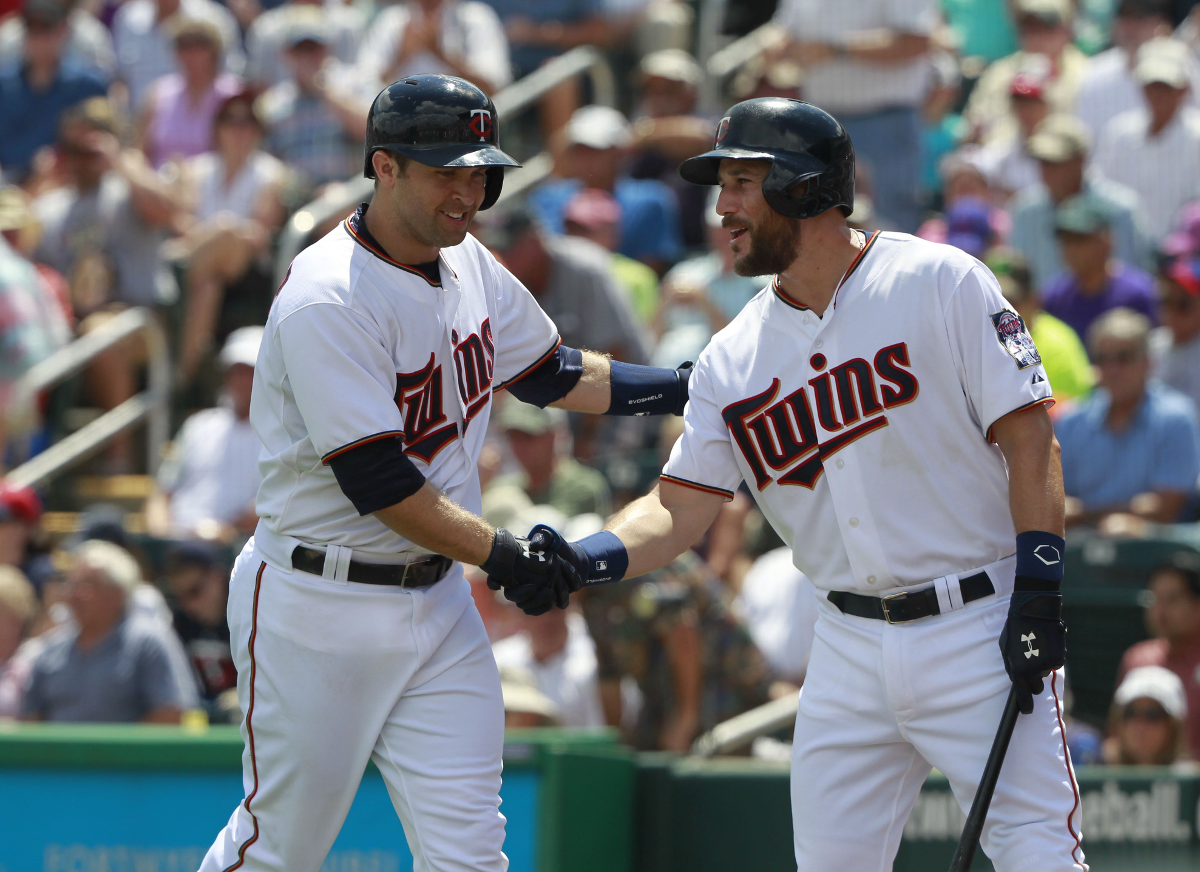 Here's the thing about the Santana suspension: he'll be gone for the first half of the season, but it is the second half he's returning for that figures to be most compelling for the Twins. By then, players like Trevor May, Alex Meyer and Aaron Hicks will have likely entered the fold. Fast-rising youngsters such as Miguel Sano, Byron Buxton and Jose Berrios could be making their cases as well. Several knowledgable onlookers in Ft. Myers opined that Sano and Berrios could play in the majors right now. So, by the time Minnesota's biggest new acquisition actually makes his debut, things could be getting exciting, but not so much if the team has already fallen hopelessly out of contention by then. What remains to be seen is whether this team, with considerable upside on the top half of the roster and considerable dead weight on the bottom half, can avoid a slow start that puts them in an early hole. Much might depend on the urgency and reactiveness of the new regime. When Santana's suspension was announced, the club's decision to move Mike Pelfrey back into the rotation was a disappointing one, given that Trevor May seems to better serve both short-term and long-term goals. But the decision doesn't become truly damaging unless Paul Molitor is committed to letting Pelfrey work it out for 10 bad starts. The same can be said for several of the questionable personnel moves that shaped the season-opening 25-man roster. It's not encouraging to see names like Shane Robinson, Aaron Thompson, Blaine Boyer and Eduardo Nunez occupying spots, but at this point the cupboard is well stocked with replacements. Maybe along the way a guy like Boyer or Robinson will prove to be worthy of a role. In the early weeks, that will be the focus. This 2015 season is setting up to be one of experimentation and testing different fits as Molitor gets his bearings. Already the rookie manager has talked about quirky lineup choices, non-conventional reliever usage and increased implementation of modern strategies. Molitor, of all people, is not ignorant to the capabilities of the incoming wave, having served as a minor-league instructor in the system for a decade. And this should go without saying, but he wants to win. He hasn't waited his whole life for this opportunity to waste it. So I'll mostly hold off on sourness over the Opening Day roster makeup, with hopes that the Twins, under Molitor, can prove adaptive and savvy enough to make swift changes and pull the right strings. Of course, that's also incumbent upon players like May, Hicks, Meyer, Michael Tonkin and A.J. Achter demonstrating their readiness in the minors. The upside of the young core on the roster, the quantity and quality of reinforcements in the wings, and the all-around excellent health of the team entering the season all serve as reasons to believe that the 2015 Twins could approach or even surpass a .500 record. It's hard to believe that this is the year Minnesota turns the corner and returns to contention status. But we keep asking when a time will come that we stop hearing about the prospects and start seeing them. That time is at hand.
 -
Following a spring that featured surprisingly few injuries or setbacks, the Minnesota Twins received the ultimate gut punch just three days before their season opener: Ervin Santana, the most expensive free agent signing in franchise history, tested positive for steroids, and will sit out three months on a suspension. Losing Santana for such a long period of time is a blow, lessening the probable quality of the rotation, but the real concerns here are related to motive. Even if you take him at this word that he doesn't know how the substance got into his body, why did Santana consume anything he wasn't 100 percent on? What pushed the 10-year veteran to take any such type of risk at this point in his career?Stanozolol, the drug for which the right-hander tested positive, is an anabolic steroid but not one that is associated with big, rippling muscles. It increases red blood cell production and thus allows for faster recovery and reduced injury occurrence. In a 2005 ESPN article covering the substance after Rafael Palmeiro's positive test, an expert said Stanozolol "could help a player avoid serious injury because it helps the body recover from physical stress." Although he has been an extremely durable pitcher, logging an average of almost 190 innings per season since reaching the majors at age 22, Santana did have a notable scare with his right elbow ligament a while back. In 2009, he was diagnosed with a sprain -- in other words, a partial tear -- and missed the first six weeks. He never required surgery, came back and made every start the rest of the way, then threw 450 innings over the next two seasons. It was an impressive bounce-back and a seemingly rare instance where the "rest and rehab" route worked out perfectly, but with Santana throwing so many innings before and after that sprain, aging into his mid-30s, and coming off a season where the stakes were as high for him personally as they have been at any point in his career, one can't help but wonder if he's finding it harder to keep that arm going, to the point where he'd turn to a substance he couldn't fully trust -- one that has now cost him dearly. This is all purely speculation, and that's all we'll get because beyond the generic press releases, there will be no details publicized about what Santana took, why he took it and what his goals were. But the hurler's lifetime workload was already somewhat of a red flag to begin with. While the Twins have touted his innings total -- 10th-highest of anyone since his debut in 2005 -- as a resounding positive, one could easily argue the opposite. That's a lot of wear. If there's a bright side to this whole thing, it's that Santana's well-weathered arm will get a lengthy respite. Perhaps this added break, at this point in his career, will help make him more effective over the remainder of the contract. Click here to view the article
-
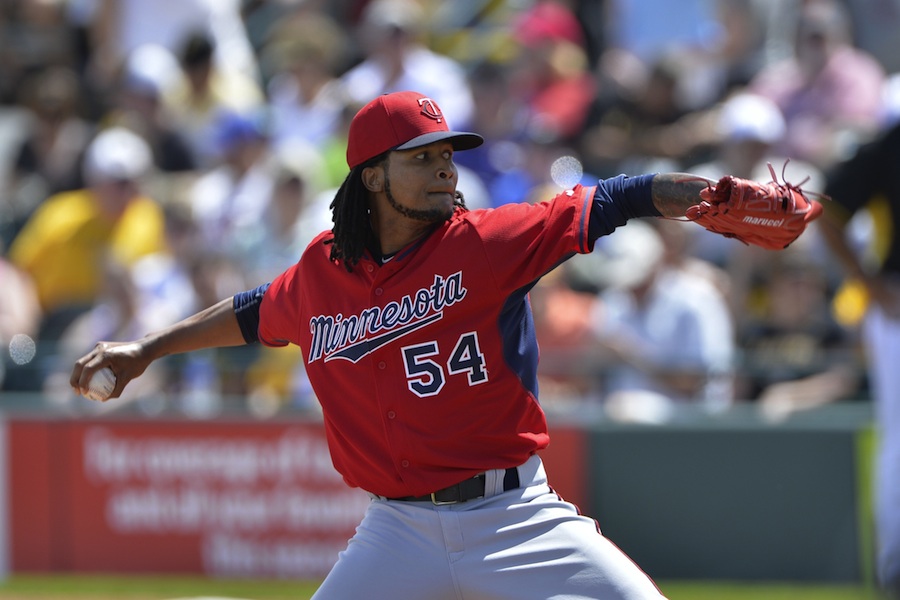 Stanozolol, the drug for which the right-hander tested positive, is an anabolic steroid but not one that is associated with big, rippling muscles. It increases red blood cell production and thus allows for faster recovery and reduced injury occurrence. In a 2005 ESPN article covering the substance after Rafael Palmeiro's positive test, an expert said Stanozolol "could help a player avoid serious injury because it helps the body recover from physical stress." Although he has been an extremely durable pitcher, logging an average of almost 190 innings per season since reaching the majors at age 22, Santana did have a notable scare with his right elbow ligament a while back. In 2009, he was diagnosed with a sprain -- in other words, a partial tear -- and missed the first six weeks. He never required surgery, came back and made every start the rest of the way, then threw 450 innings over the next two seasons. It was an impressive bounce-back and a seemingly rare instance where the "rest and rehab" route worked out perfectly, but with Santana throwing so many innings before and after that sprain, aging into his mid-30s, and coming off a season where the stakes were as high for him personally as they have been at any point in his career, one can't help but wonder if he's finding it harder to keep that arm going, to the point where he'd turn to a substance he couldn't fully trust -- one that has now cost him dearly. This is all purely speculation, and that's all we'll get because beyond the generic press releases, there will be no details publicized about what Santana took, why he took it and what his goals were. But the hurler's lifetime workload was already somewhat of a red flag to begin with. While the Twins have touted his innings total -- 10th-highest of anyone since his debut in 2005 -- as a resounding positive, one could easily argue the opposite. That's a lot of wear. If there's a bright side to this whole thing, it's that Santana's well-weathered arm will get a lengthy respite. Perhaps this added break, at this point in his career, will help make him more effective over the remainder of the contract.
 -
That was often the case under Gardenhire. I don't think we should assume it will be under Molitor. But as the article concludes, that remains to be seen.
-
In baseball, spring is a time of optimism, hope, and endless possibilities. With the regular season days away, and anticipation at its highest following a long and cold offseason, just about everyone is feeling the buzz. The potential. The freshness. This year, we should be feeling that vibe more than ever. Things are moving in a legitimately positive trajectory, in terms of upcoming young personnel, and this is the healthiest I can ever remember the team being at the start of April. Yet, when you scan the roster that Paul Molitor and his staff have settled on taking north, it's hard not to feeling a sense of puzzlement and deflation.Shane Robinson. He's a 30-year-old career backup with a .612 OPS in the majors, and he hit .150 last year with St. Louis. Blaine Boyer. He's a 33-year-old who was out of big leagues for two years, between a trip to Japan and a brief retirement, before returning last year to throw 40 decent innings for San Diego. Chris Herrmann. He's a 27-year-old with a .196 average and .548 OPS in 276 MLB plate appearances. He plays a lot of positions, but none of them all that well, and he's a catcher who rarely catches. He's mostly been an emergency valve at the position, in fact. These are players that should generally be viewed as backup options, if not backup backup options. They are the guys who should be stashed in the minors or at the very end of the bench. But each has clutched a spot on the Twins' opening day roster and each is in line to play a fairly significant role from the get-go. Robinson, who struggled mightily in 47 games with the Cardinals last year before being released in November, is the only option in center field other than Jordan Schafer, who himself profiles as a backup. Paul Molitor has said he won't be straight-up platooning the two, but Robinson still figures to see some time. Boyer has a great story and an intriguing fastball, but there's not a whole lot of reason to believe he's going to be an above-average reliever. It's one thing to have a guy like that at the very bottom of your bullpen chain, but Boyer is not that. The Twins are also carrying Mike Pelfrey, who has zero experience as a reliever and whose usage will be tightly restricted early on. And also J.R. Graham, who hasn't pitched an inning in the majors or Triple-A. And also Tim Stauffer, who's been flat-out horrendous this spring. Boyer, at this point, looks like the No. 2 righty option out of the bullpen. Herrmann is not without value, and probably is a better hitter than he's shown in his altogether short big-league time. But with the rest of the bench looking rather thin, and with Herrmann's versatility, he's going to get some tread. As Kurt Suzuki's only backup, he'll probably start once a week behind the plate, where he played all of one inning in the majors last year. In fairness, it should be pointed out that there were some extenuating circumstances at play in all these cases. Herrmann may have only won his job because Josmil Pinto suffered a concussion late in camp that set him back. Chances are he won't be around long. Robinson was the fallback plan when Aaron Hicks was deemed unready. He was the best defensive option to complement Schafer and the Twins are trying to help their pitching staff, which is fair enough. Boyer probably wouldn't have stuck around if he didn't make the team, and for whatever reason the Twins want to get a look at him. I will say that much of the outrage about certain demotions this spring, often alluding to things like upside and age, strikes me as overblown. None of the moves mentioned above are permanent, and younger players like Trevor May and Michael Tonkin -- who were most likely better options than those that beat them out -- will head to the minors, where they'll wait in line and be available when the time comes. Still, the Twins are coming out of the chute featuring a roster that is overly dense with journeymen and long shots; players you expect to find on a last-place team. Like, say, the Twins in August. But, the Twins in April? Obviously, I hope some of these odd experiments work out. But if they don't, will Molitor show the same type of unwarranted patience that his predecessor tended to exercise in such situations? That could be a key area for the new regime to differentiate itself. Click here to view the article
-
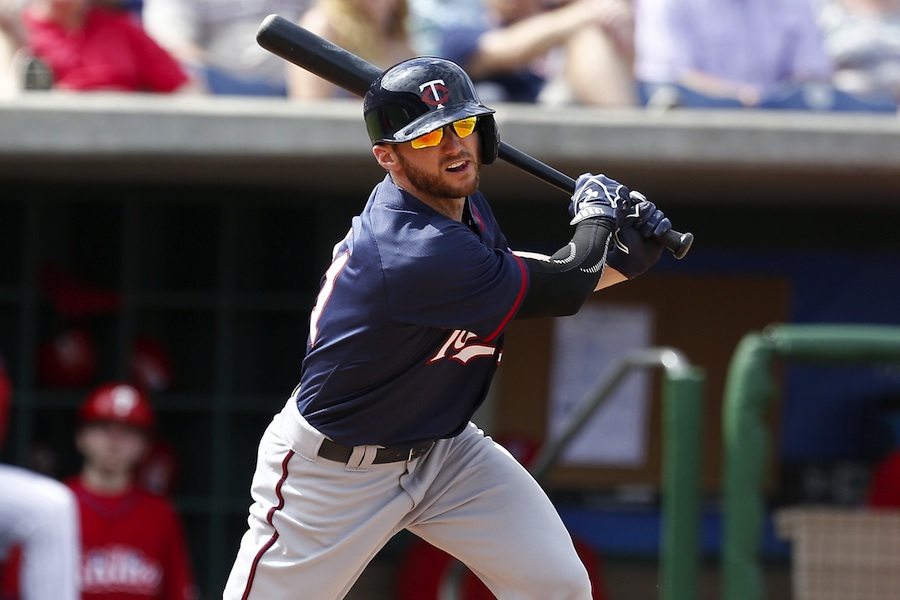 Shane Robinson. He's a 30-year-old career backup with a .612 OPS in the majors, and he hit .150 last year with St. Louis. Blaine Boyer. He's a 33-year-old who was out of big leagues for two years, between a trip to Japan and a brief retirement, before returning last year to throw 40 decent innings for San Diego. Chris Herrmann. He's a 27-year-old with a .196 average and .548 OPS in 276 MLB plate appearances. He plays a lot of positions, but none of them all that well, and he's a catcher who rarely catches. He's mostly been an emergency valve at the position, in fact. These are players that should generally be viewed as backup options, if not backup backup options. They are the guys who should be stashed in the minors or at the very end of the bench. But each has clutched a spot on the Twins' opening day roster and each is in line to play a fairly significant role from the get-go. Robinson, who struggled mightily in 47 games with the Cardinals last year before being released in November, is the only option in center field other than Jordan Schafer, who himself profiles as a backup. Paul Molitor has said he won't be straight-up platooning the two, but Robinson still figures to see some time. Boyer has a great story and an intriguing fastball, but there's not a whole lot of reason to believe he's going to be an above-average reliever. It's one thing to have a guy like that at the very bottom of your bullpen chain, but Boyer is not that. The Twins are also carrying Mike Pelfrey, who has zero experience as a reliever and whose usage will be tightly restricted early on. And also J.R. Graham, who hasn't pitched an inning in the majors or Triple-A. And also Tim Stauffer, who's been flat-out horrendous this spring. Boyer, at this point, looks like the No. 2 righty option out of the bullpen. Herrmann is not without value, and probably is a better hitter than he's shown in his altogether short big-league time. But with the rest of the bench looking rather thin, and with Herrmann's versatility, he's going to get some tread. As Kurt Suzuki's only backup, he'll probably start once a week behind the plate, where he played all of one inning in the majors last year. In fairness, it should be pointed out that there were some extenuating circumstances at play in all these cases. Herrmann may have only won his job because Josmil Pinto suffered a concussion late in camp that set him back. Chances are he won't be around long. Robinson was the fallback plan when Aaron Hicks was deemed unready. He was the best defensive option to complement Schafer and the Twins are trying to help their pitching staff, which is fair enough. Boyer probably wouldn't have stuck around if he didn't make the team, and for whatever reason the Twins want to get a look at him. I will say that much of the outrage about certain demotions this spring, often alluding to things like upside and age, strikes me as overblown. None of the moves mentioned above are permanent, and younger players like Trevor May and Michael Tonkin -- who were most likely better options than those that beat them out -- will head to the minors, where they'll wait in line and be available when the time comes. Still, the Twins are coming out of the chute featuring a roster that is overly dense with journeymen and long shots; players you expect to find on a last-place team. Like, say, the Twins in August. But, the Twins in April? Obviously, I hope some of these odd experiments work out. But if they don't, will Molitor show the same type of unwarranted patience that his predecessor tended to exercise in such situations? That could be a key area for the new regime to differentiate itself.
 -
The American League Central isn’t filled with as many imposing left-handed hitters as it once was. With Prince Fielder traded to Texas, Adam Dunn retired and Travis Hafner’s dominance a distant memory, Minnesota no longer needs to worry much about game-changing homers from lefty swingers. Because of this, perhaps it makes sense for the Twins to carry only one southpaw specialist among its seven relievers, as they appear poised to do.With Blaine Boyer and Mike Pelfrey both being slotted for roles as middle relievers, only one spot in the bullpen remains. Both J.R. Graham and Caleb Thielbar are in contention for that job, but with Graham enjoying a much more successful spring -- not to mention his status as a Rule 5 acquisition -- things appear to be leaning in the righty’s favor. That puts Paul Molitor in an interesting position as he enters his first season as a manager. Ron Gardenhire almost always had multiple lefties in his bullpens, providing him with added flexibility to play match-ups in the late innings, but Molitor may not have that luxury in his first go. Maybe that's not all that surprising; his reliever usage this spring has suggested that he’s more interested in having his pitchers record multiple outs -- even over multiple innings -- as opposed to utilizing specific arms to face one or two hitters. Still, there will be instances late in a close game where a threatening left-handed hitter like Michael Brantley or Eric Hosmer steps into the box and Molitor’s top weapon, Brian Duensing, is unavailable. If Thielbar’s not around, who’s the go-to guy in such a situation? Is there one? Let’s take a look at the options Molitor will have on hand outside of Glen Perkins, who is obviously not a match-up play. Blaine Boyer: The veteran really isn’t a strong option to match up against left-handed hitters, and in fact should probably be limited almost entirely to righties. As Parker noted Tuesday, Boyer has struggled against batters from the opposite side, though the addition of a changeup to his repertoire could help matters. Mike Pelfrey: Over the course of his career, Pelfrey has been just about equally effective against hitters from either side -- which is to say, not terribly effective (.753 OPS vs. RHB, .784 OPS vs. LHB). As a starter, he didn't really have the secondary stuff to keep lefties in line, but we’ll see how things change with the role switch. Casey Fien: He will probably be tabbed for a pretty strict eighth-inning role, at least initially, though at least he can probably handle hitters from both sides in that duty? Last year, he held lefties to a .255/.294/.400 line, though in his first season with the Twins portsiders slugged .472 with six homers against him. Tim Stauffer: In his career, Stauffer has actually been more effective against lefty batters, holding them to a .712 OPS as opposed to .737 for righties. Last year in San Diego, Stauffer held LHB to a .282/.333/.347 line with zero homers in 135 plate appearances. Interesting. From a strictly statistical standpoint, Stauffer actually appears to be the best match-up choice for left-handed hitters among righties in the bullpen. That may be a key point in his favor, in light of his immense struggles on the hill this spring. Would you be comfortable sending any of the above names (or the completely untested J.R. Graham) against a lefty power threat in a tie game? Or do you think the Twins would be wise to have a second lefty behind Duensing? Sound off in the comments. Click here to view the article
-
 With Blaine Boyer and Mike Pelfrey both being slotted for roles as middle relievers, only one spot in the bullpen remains. Both J.R. Graham and Caleb Thielbar are in contention for that job, but with Graham enjoying a much more successful spring -- not to mention his status as a Rule 5 acquisition -- things appear to be leaning in the righty’s favor. That puts Paul Molitor in an interesting position as he enters his first season as a manager. Ron Gardenhire almost always had multiple lefties in his bullpens, providing him with added flexibility to play match-ups in the late innings, but Molitor may not have that luxury in his first go. Maybe that's not all that surprising; his reliever usage this spring has suggested that he’s more interested in having his pitchers record multiple outs -- even over multiple innings -- as opposed to utilizing specific arms to face one or two hitters. Still, there will be instances late in a close game where a threatening left-handed hitter like Michael Brantley or Eric Hosmer steps into the box and Molitor’s top weapon, Brian Duensing, is unavailable. If Thielbar’s not around, who’s the go-to guy in such a situation? Is there one? Let’s take a look at the options Molitor will have on hand outside of Glen Perkins, who is obviously not a match-up play. Blaine Boyer: The veteran really isn’t a strong option to match up against left-handed hitters, and in fact should probably be limited almost entirely to righties. As Parker noted Tuesday, Boyer has struggled against batters from the opposite side, though the addition of a changeup to his repertoire could help matters. Mike Pelfrey: Over the course of his career, Pelfrey has been just about equally effective against hitters from either side -- which is to say, not terribly effective (.753 OPS vs. RHB, .784 OPS vs. LHB). As a starter, he didn't really have the secondary stuff to keep lefties in line, but we’ll see how things change with the role switch. Casey Fien: He will probably be tabbed for a pretty strict eighth-inning role, at least initially, though at least he can probably handle hitters from both sides in that duty? Last year, he held lefties to a .255/.294/.400 line, though in his first season with the Twins portsiders slugged .472 with six homers against him. Tim Stauffer: In his career, Stauffer has actually been more effective against lefty batters, holding them to a .712 OPS as opposed to .737 for righties. Last year in San Diego, Stauffer held LHB to a .282/.333/.347 line with zero homers in 135 plate appearances. Interesting. From a strictly statistical standpoint, Stauffer actually appears to be the best match-up choice for left-handed hitters among righties in the bullpen. That may be a key point in his favor, in light of his immense struggles on the hill this spring. Would you be comfortable sending any of the above names (or the completely untested J.R. Graham) against a lefty power threat in a tie game? Or do you think the Twins would be wise to have a second lefty behind Duensing? Sound off in the comments.
 -
Article: Five Beliefs Reinforced In Spring Training
Nick Nelson replied to Nick Nelson's topic in Twins Daily Front Page News
Gibson's line today against the Rays: 6 IP, 1 ER, 2 H, 7 K, 2 BB. 10 outs on the ground vs. 2 through the air. That's dominance. (I know that equates to 19 outs, not 18, but I'm just going by the MLB.com box)- 18 replies
-
- 2
-
-
- kyle gibson
- paul molitor
- (and 1 more)
-
Anyone who has followed baseball for a substantial amount of time knows better than to put much stock into spring training performances. Down in Ft. Myers, players and coaches constantly warn against reading too much into statistics compiled or tendencies displayed during exhibition play in March, insisting that this time is all about readying oneself physically and experimenting before the games begin to matter. I'd certainly agree that it's foolhardy to allow the proceedings in spring training to determine or change your opinion about a player, or unit, on the team. However, I traveled down to Florida with a number of ideas already in my head about this club, and some of what I saw and heard during a week in camp served to reinforce those ideas. Here are five beliefs I hold about the 2015 Minnesota Twins that were reaffirmed during my time covering spring training.1) This offense is going to be pretty good. In 2014, the Twins ranked seventh in the majors in runs scored, and they did so with a career-worst year from arguably their best hitter, Joe Mauer. Sure, there are a few players that are bound to regress this season, but I've felt that a big step forward in home runs and some positive contributions from incoming prospects would at the very least offset the regression. Miguel Sano was cut from big-league camp the first day I was down there, so I didn't get the chance to see any of his fireworks, but heard plenty of buzz about the way he was crushing the ball. His impending arrival is just one of many wild-cards in play for the lineup in 2015. Meanwhile, several entrenched players are having excellent offensive springs -- most notably Brian Dozier, who signed a four-year contract on Tuesday -- and the club has already flashed far more power than it did a year ago. When discussing his lineup, Terry Ryan talked about how much he likes the balance; a blend of left-handed and right-handed hitters, a mix of youth and veterans, a combination of speed and power. "I would say we've got a chance to be a pretty good offensive club," Ryan said, in his typically understated rhetoric. They do indeed. 2) Kyle Gibson is going to have a breakout year. Gibson's 2014 campaign was not spectacular by any means. He averaged fewer than six innings per start, his 4.47 ERA was well below average, and his 5.4 K/9 rate ranked as the fourth-lowest for a qualifying big-league pitcher. But there were plenty of positive signs within the right-hander's first full season, providing a sense that with improvements in a few key areas, he could be on the verge of taking a huge step forward. When I watched him in Ft. Myers, Gibson looked like a stud. His fastball was buzzing in at 94 MPH regularly, his offspeed pitches were inducing awkward swings and weak contact, and he spoke with a great deal of confidence following his outings. As an extreme ground ball pitcher, Gibson already has a key ingredient in the recipe for consistently shutting down opposing lineups. With a bit more command and a few more missed bats, he could profile as a No. 3 or even No. 2 caliber starter, which would completely change the complexion of this rotation. 3) The bullpen could be an issue. The bullpen has generally been a strong point for the Twins, even in their leaner times. Last year, however, Minnesota's relief corps ranked bottom 10 in the majors in most key categories (ERA, BAA, WHIP, etc.), and faltered late in the season. Glen Perkins struggled down the stretch before being shut down. Casey Fien coughed up multiple runs in three of his 10 September appearances. Brian Duensing put up a 6.28 ERA over the final two months. The only offseason move made to address this unit was replacing Anthony Swarzak with Tim Stauffer, and Stauffer's rocky month of March has inspired little confidence in that swap. Meanwhile, Perkins got a late start due to an injury and several relievers have been hit hard. The three arms that are effectively vying for that final spot in the bullpen -- J.R. Graham, Blaine Boyer and Mark Hamburger -- all offer some level of intrigue, but none are really established, reliable options. The Twins have some potentially dominant relievers coming up through the system, but in the meantime, protecting leads could be a struggle. 4) Paul Molitor will be a different type of manager. When the Twins hired from within when naming Ron Gardenhire's successor, many fans expressed skepticism over whether the managerial switch would really lead to significant change. After spending more time around Molitor, and hearing him talk about the importance of OBP at the top of the order, the evolving role of the No. 2 hitter ("it's turned into a little bit more of an offensive position in the lineup"), and his openness to using the closer outside of save situations or hitters in platoons, I feel more confident than ever that he will represent a meaningful change in direction. Obviously we'll need to see it play out on the field, but based on the things Molitor's been saying, I believe fans who gravitate toward modern baseball philosophy and strategy will be pleased with the new hire. 5) Alex Meyer has a ways to go. In our annual prospect rankings, Meyer was bumped down to No. 5 this year after appearing at No. 3 a year ago. In part, that's because the two pitchers that passed him, Jose Berrios and Kohl Stewart, did plenty to help their cases in 2014. But it's also because Meyer's flaws -- or at least his lack of polish -- have become more evident. I watched him throw live in Port Charlotte, and afterwards I wrote about the outing, which featured inconsistent mechanics, erratic pitches and a visible lack of confidence. There's no question that Meyer has the stuff to blow away hitters at any level, but from watching him pitch, it's quite clear that -- regardless of his age -- he shouldn't be pitching in the majors right now. Click here to view the article
- 18 replies
-
- 2
-
-
- kyle gibson
- paul molitor
- (and 1 more)
-
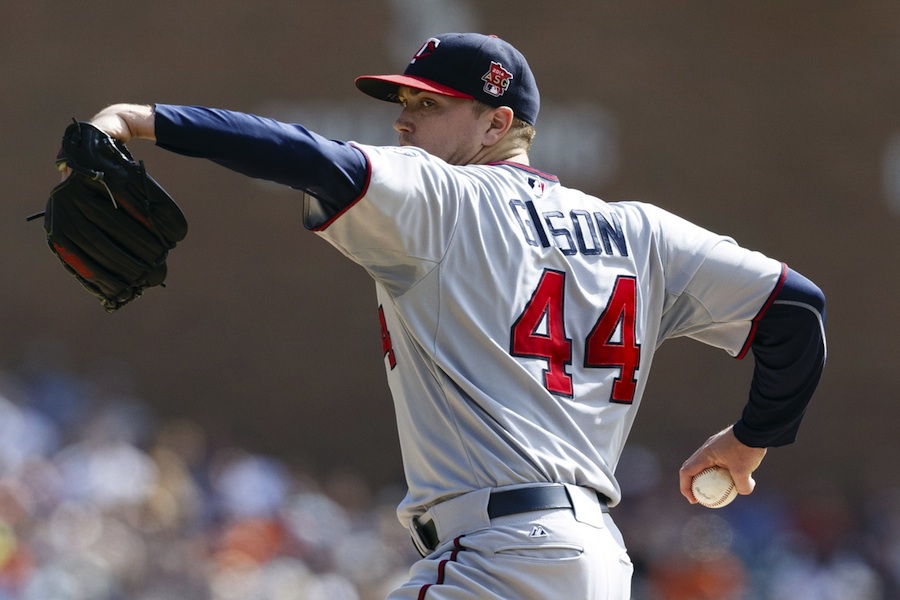 1) This offense is going to be pretty good. In 2014, the Twins ranked seventh in the majors in runs scored, and they did so with a career-worst year from arguably their best hitter, Joe Mauer. Sure, there are a few players that are bound to regress this season, but I've felt that a big step forward in home runs and some positive contributions from incoming prospects would at the very least offset the regression. Miguel Sano was cut from big-league camp the first day I was down there, so I didn't get the chance to see any of his fireworks, but heard plenty of buzz about the way he was crushing the ball. His impending arrival is just one of many wild-cards in play for the lineup in 2015. Meanwhile, several entrenched players are having excellent offensive springs -- most notably Brian Dozier, who signed a four-year contract on Tuesday -- and the club has already flashed far more power than it did a year ago. When discussing his lineup, Terry Ryan talked about how much he likes the balance; a blend of left-handed and right-handed hitters, a mix of youth and veterans, a combination of speed and power. "I would say we've got a chance to be a pretty good offensive club," Ryan said, in his typically understated rhetoric. They do indeed. 2) Kyle Gibson is going to have a breakout year. Gibson's 2014 campaign was not spectacular by any means. He averaged fewer than six innings per start, his 4.47 ERA was well below average, and his 5.4 K/9 rate ranked as the fourth-lowest for a qualifying big-league pitcher. But there were plenty of positive signs within the right-hander's first full season, providing a sense that with improvements in a few key areas, he could be on the verge of taking a huge step forward. When I watched him in Ft. Myers, Gibson looked like a stud. His fastball was buzzing in at 94 MPH regularly, his offspeed pitches were inducing awkward swings and weak contact, and he spoke with a great deal of confidence following his outings. As an extreme ground ball pitcher, Gibson already has a key ingredient in the recipe for consistently shutting down opposing lineups. With a bit more command and a few more missed bats, he could profile as a No. 3 or even No. 2 caliber starter, which would completely change the complexion of this rotation. 3) The bullpen could be an issue. The bullpen has generally been a strong point for the Twins, even in their leaner times. Last year, however, Minnesota's relief corps ranked bottom 10 in the majors in most key categories (ERA, BAA, WHIP, etc.), and faltered late in the season. Glen Perkins struggled down the stretch before being shut down. Casey Fien coughed up multiple runs in three of his 10 September appearances. Brian Duensing put up a 6.28 ERA over the final two months. The only offseason move made to address this unit was replacing Anthony Swarzak with Tim Stauffer, and Stauffer's rocky month of March has inspired little confidence in that swap. Meanwhile, Perkins got a late start due to an injury and several relievers have been hit hard. The three arms that are effectively vying for that final spot in the bullpen -- J.R. Graham, Blaine Boyer and Mark Hamburger -- all offer some level of intrigue, but none are really established, reliable options. The Twins have some potentially dominant relievers coming up through the system, but in the meantime, protecting leads could be a struggle. 4) Paul Molitor will be a different type of manager. When the Twins hired from within when naming Ron Gardenhire's successor, many fans expressed skepticism over whether the managerial switch would really lead to significant change. After spending more time around Molitor, and hearing him talk about the importance of OBP at the top of the order, the evolving role of the No. 2 hitter ("it's turned into a little bit more of an offensive position in the lineup"), and his openness to using the closer outside of save situations or hitters in platoons, I feel more confident than ever that he will represent a meaningful change in direction. Obviously we'll need to see it play out on the field, but based on the things Molitor's been saying, I believe fans who gravitate toward modern baseball philosophy and strategy will be pleased with the new hire. 5) Alex Meyer has a ways to go. In our annual prospect rankings, Meyer was bumped down to No. 5 this year after appearing at No. 3 a year ago. In part, that's because the two pitchers that passed him, Jose Berrios and Kohl Stewart, did plenty to help their cases in 2014. But it's also because Meyer's flaws -- or at least his lack of polish -- have become more evident. I watched him throw live in Port Charlotte, and afterwards I wrote about the outing, which featured inconsistent mechanics, erratic pitches and a visible lack of confidence. There's no question that Meyer has the stuff to blow away hitters at any level, but from watching him pitch, it's quite clear that -- regardless of his age -- he shouldn't be pitching in the majors right now.
 -
Article: Embracing Substance Over Style
Nick Nelson replied to John Bonnes's topic in Twins Daily Front Page News
I don't think it's that strange. The latter two are being groomed as utility men. Santana will be the everyday SS. Santana was considered a raw defensive shortstop coming up through the minors. He's still in the prime of his development at age 24. He needs to play there to get better, and that I think is the biggest reason that CF should not be an option, even if he might be their best option there in the short-term.- 41 replies
-
- 10
-
-
- eduardo escobar
- the voice of reason
- (and 1 more)
-
With Michael Tonkin and Ryan Pressly both being optioned in the past two days, the Minnesota Twins' bullpen picture is starting to come into focus, but there are still a lot of relievers in big-league camp. Part of that is the team needs plenty of arms to get them through these exhibition contests, but another part is that they face some tricky decisions. Let's take a shot at handicapping this race as it stands with about two weeks left to go.First, a quick look at the guys who are essentially locks: Glen Perkins, LHP Perkins was slowed early in camp by an oblique strain, but he pitched in a minor-league game on Thursday with no issues, and is expected to make his Grapefruit League debut this weekend. Both he and Terry Ryan have expressed full confidence he'll be ready to roll at the start of the season, barring any setbacks. Casey Fien, RHP Fien is inked in as the setup man presently, and if Perkins were to experience a setback, he'd be first in line to fill the closer role. Fien saw a few key numbers drop last season, causing his xFIP to rise to 3.87 from 2.71 in 2013, but he also added almost two full miles per hour to his average fastball velocity. He's been throwing hard and getting very good results in spring training. Brian Duensing, LHP Entering his seventh season with the Twins, Duensing is in line to be the bullpen's foremost lefty specialist, and it's a role for which he is well suited. In his career, he has held same-sided batters to a .233/.277/.322 slash line, and last year those numbers checked in at .242/.282/.305. Hopefully Paul Molitor can limit his exposure against righties. Tim Stauffer, RHP It's been a rocky spring so far for the veteran, but with a guaranteed $2.2 million contract, he's in as long as he's healthy. The Twins have ruled him out of the rotation race, so he'll be in the bullpen. He's likely to be a guy who will be called upon frequently to pitch multiple innings, with perhaps the occasional spot start as needed -- a la Anthony Swarzak. I don't think he really has the stuff to be an impact late-inning arm. That leaves three spots in a seven-man pen. Two of them are pretty close to being penciled in, though not quite as certain as the above four. Caleb Thielbar, LHP Thielbar is almost a lock, because I think Molitor will want to have multiple lefties at his disposal; Perkins doesn't really count as he's obviously not a match-up guy. Still, Thielbar hasn't had the greatest spring, allowing 10 hits in five innings, and the coaching staff might have confidence in some of the right-handers in the mix to get lefty bats out. Still, he seems very likely. Tommy Milone, LHP/Mike Pelfrey, RHP Whoever loses out in the fifth starter competition probably ends up in the bullpen as a long reliever, capable of being stretched out to join the rotation when a need arises. Ryan has stated strongly that he prefers Pelfrey as a starter, citing the veteran's preparation routine as one reason, so Milone is the leading candidate. Asked about the possibility of a relief role earlier this week, Milone sounded open to the idea: "Wherever they want me to go, I'm going to trust what they want to do and go with it." (If you're wondering whether the southpaw Milone's presence in the bullpen could make Thielbar more expendable, that's possible, but Milone has actually allowed a higher OPS against lefties than righties in his career.) Short of a surprise with one of the names above, that leaves one opening -- likely a middle relief role. Let's take a look at the remaining contenders, ranked in order of how likely they are to win that final spot from my view… J.R. Graham, RHP This year's Rule 5 pick has impressed this spring, flashing surprisingly huge velocity from his smallish frame. The Twins need to keep him on the 25-man roster in order to retain him -- unless they work out a trade with Atlanta -- so there's plenty of incentive to have him rounding out the bullpen if he's healthy and they believe in his ability. Blaine Boyer, RHP The veteran was signed to a minor-league deal after coming out of an injury-prompted retirement and playing for San Diego last year. He has a live fastball that draws rave reviews and has looked good in Grapefruit play for the most part. "He's made a nice impression over here, there's no denying that," Paul Molitor said following another strong outing on Friday. "He's making a run for it." Mark Hamburger, RHP He's a great story, and while he entered camp as somewhat of a long shot, I keep hearing positive things about him from different people. He was pitching extremely well in his first three spring appearances, striking out six with only one hit allowed in five innings prior to coughing up four earned runs against Baltimore this week. Molitor termed that outing a "little hiccup." A.J. Achter, RHP The tall, lanky 26-year-old has somewhat quietly been a tremendous performer in the Twins' minor-league system. Last year he allowed only 44 hits in 72 innings at Rochester, and had a decent September debut for the Twins. Achter has looked good this spring, and he eventually could be quite useful as a guy who can be counted on to get more than three outs, but he has multiple options and I believe he heads back to Rochester. Stephen Pryor, RHP Acquired from the Mariners last July in the Kendrys Morales trade, Pryor has big stuff but has always had a hard time throwing strikes. That hasn't been as much an issue this spring but it's tough see the Twins trusting him over some of the names listed above. He could be a factor at some point this season. Trevor May, RHP The pitching prospect appears to be behind Milone and Pelfrey in the fifth starter race, and could theoretically latch on in the bullpen, but the Twins have consistently downplayed that idea. They want to keep him acclimated to starting. Aaron Thompson, LHP Thompson has had a couple decent seasons at Rochester, and he can get left-handed batters out, but the only way I can see him making the roster is if Duensing or Thielbar gets hurt. Click here to view the article
-
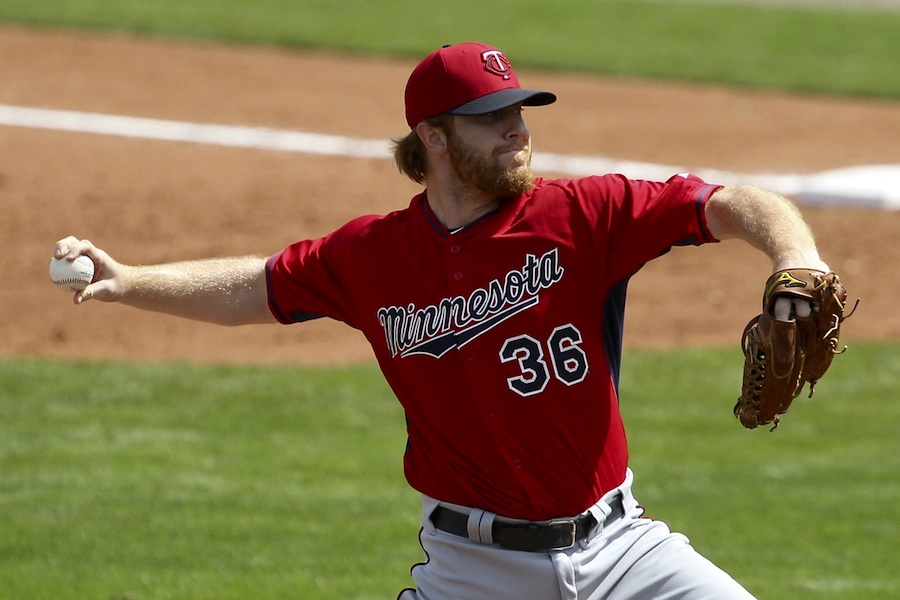 First, a quick look at the guys who are essentially locks: Glen Perkins, LHP Perkins was slowed early in camp by an oblique strain, but he pitched in a minor-league game on Thursday with no issues, and is expected to make his Grapefruit League debut this weekend. Both he and Terry Ryan have expressed full confidence he'll be ready to roll at the start of the season, barring any setbacks. Casey Fien, RHP Fien is inked in as the setup man presently, and if Perkins were to experience a setback, he'd be first in line to fill the closer role. Fien saw a few key numbers drop last season, causing his xFIP to rise to 3.87 from 2.71 in 2013, but he also added almost two full miles per hour to his average fastball velocity. He's been throwing hard and getting very good results in spring training. Brian Duensing, LHP Entering his seventh season with the Twins, Duensing is in line to be the bullpen's foremost lefty specialist, and it's a role for which he is well suited. In his career, he has held same-sided batters to a .233/.277/.322 slash line, and last year those numbers checked in at .242/.282/.305. Hopefully Paul Molitor can limit his exposure against righties. Tim Stauffer, RHP It's been a rocky spring so far for the veteran, but with a guaranteed $2.2 million contract, he's in as long as he's healthy. The Twins have ruled him out of the rotation race, so he'll be in the bullpen. He's likely to be a guy who will be called upon frequently to pitch multiple innings, with perhaps the occasional spot start as needed -- a la Anthony Swarzak. I don't think he really has the stuff to be an impact late-inning arm. That leaves three spots in a seven-man pen. Two of them are pretty close to being penciled in, though not quite as certain as the above four. Caleb Thielbar, LHP Thielbar is almost a lock, because I think Molitor will want to have multiple lefties at his disposal; Perkins doesn't really count as he's obviously not a match-up guy. Still, Thielbar hasn't had the greatest spring, allowing 10 hits in five innings, and the coaching staff might have confidence in some of the right-handers in the mix to get lefty bats out. Still, he seems very likely. Tommy Milone, LHP/Mike Pelfrey, RHP Whoever loses out in the fifth starter competition probably ends up in the bullpen as a long reliever, capable of being stretched out to join the rotation when a need arises. Ryan has stated strongly that he prefers Pelfrey as a starter, citing the veteran's preparation routine as one reason, so Milone is the leading candidate. Asked about the possibility of a relief role earlier this week, Milone sounded open to the idea: "Wherever they want me to go, I'm going to trust what they want to do and go with it." (If you're wondering whether the southpaw Milone's presence in the bullpen could make Thielbar more expendable, that's possible, but Milone has actually allowed a higher OPS against lefties than righties in his career.) Short of a surprise with one of the names above, that leaves one opening -- likely a middle relief role. Let's take a look at the remaining contenders, ranked in order of how likely they are to win that final spot from my view… J.R. Graham, RHP This year's Rule 5 pick has impressed this spring, flashing surprisingly huge velocity from his smallish frame. The Twins need to keep him on the 25-man roster in order to retain him -- unless they work out a trade with Atlanta -- so there's plenty of incentive to have him rounding out the bullpen if he's healthy and they believe in his ability. Blaine Boyer, RHP The veteran was signed to a minor-league deal after coming out of an injury-prompted retirement and playing for San Diego last year. He has a live fastball that draws rave reviews and has looked good in Grapefruit play for the most part. "He's made a nice impression over here, there's no denying that," Paul Molitor said following another strong outing on Friday. "He's making a run for it." Mark Hamburger, RHP He's a great story, and while he entered camp as somewhat of a long shot, I keep hearing positive things about him from different people. He was pitching extremely well in his first three spring appearances, striking out six with only one hit allowed in five innings prior to coughing up four earned runs against Baltimore this week. Molitor termed that outing a "little hiccup." A.J. Achter, RHP The tall, lanky 26-year-old has somewhat quietly been a tremendous performer in the Twins' minor-league system. Last year he allowed only 44 hits in 72 innings at Rochester, and had a decent September debut for the Twins. Achter has looked good this spring, and he eventually could be quite useful as a guy who can be counted on to get more than three outs, but he has multiple options and I believe he heads back to Rochester. Stephen Pryor, RHP Acquired from the Mariners last July in the Kendrys Morales trade, Pryor has big stuff but has always had a hard time throwing strikes. That hasn't been as much an issue this spring but it's tough see the Twins trusting him over some of the names listed above. He could be a factor at some point this season. Trevor May, RHP The pitching prospect appears to be behind Milone and Pelfrey in the fifth starter race, and could theoretically latch on in the bullpen, but the Twins have consistently downplayed that idea. They want to keep him acclimated to starting. Aaron Thompson, LHP Thompson has had a couple decent seasons at Rochester, and he can get left-handed batters out, but the only way I can see him making the roster is if Duensing or Thielbar gets hurt.
 -
Kyle Gibson hadn't given up a single home run in his first three starts this spring, but surrendered two today, both to Pirates catcher Francisco Cervelli, who has 10 homers in 250 career MLB games. In spite of that, Gibson's pitches looked sharp. He touched 94 MPH on the scoreboard regularly with his fastball and induced several swings and misses with his offspeed stuff, helping him notch four strikeouts over his 4 2/3 innings of work in a 4-2 loss to Pittsburgh.* Gibson rarely used his change-up against right-handed hitters last season, but says he's working on implementing it more frequently now. One of Cervelli's homers came on a change that hung over the plate, but Gibson says he's undeterred. "That's the first one I've been beat on." * It was an uncharacteristically tough day for the righty from a command standpoint. He issued three walks, one more than his previous three starts combined. The most damaging free pass came against pitcher Gerrit Cole with the bases loaded, scoring a run. Don't expect it to be an enduring problem. Last year he walked only 57 batters in 179 innings for the Twins, and in the minors he averaged 2.5 BB/9IP. * In Cole's second at-bat, Joe Mauer made a diving play to his right, stabbing a grounder and flipping to Gibson at first for the out. It was the second or third time I've seen Mauer lay out to make a slick play over there this week, and that's been a noticeable contrast compared to last spring, when I was surprised by the number of grounders that sneaked by him. "He's a lot more comfortable, I know that," Paul Molitor said. "He's a lot more confident." "He made a nice play over there in the three-hole, even though it was on a pitcher," he added with a chuckle. * Eddie Escobar: Spring Slugger. He drove in his team-leading 10th RBI with a run-scoring single in the fourth. He also paced the Twins in RBIs last spring with nine. No word on whether Molitor is considering him for the cleanup spot. * Michael Tonkin pitched the seventh inning, allowing a run on two hits with a strikeout. Following the game he was optioned to Triple-A. "He needs to become more efficient with his secondary pitches," Molitor said. "It seems to me that his trouble getting through innings is that people can look for that fastball and pretty much know they're going to get one at some point." * Alex Meyer was optioned to Triple-A just before the game in the wake of a wild outing on Thursday afternoon. "He's behind quite a few guys," Terry Ryan said. "We all know that there are guys that it takes a little more time than others and he's one of them, because mechanically, he's a big man, there's a lot of moving parts." Still, Ryan has plenty of hope for the big right-hander. "You've seen the pitches," he said, speaking of Meyer's power fastball, filthy curve and developing change. "It's obvious he can strike people out. Now it's a matter of not getting into so much trouble." Molitor believes that Meyer would benefit from carrying more of a bulldog demeanor on the mound. "I don't think anyone likes to face him," the manager said. "He has to start understanding that. He can take command of those situations." * Although Ricky Nolasco gave up a few hard-hit balls in Thursday's start against the Rays, including a two-run homer that ended his day in the fourth inning, Ryan went out of his way to praise the right-hander today. "I just thought he threw the ball wonderfully yesterday, regardless of that home run," the GM said. "He should have never been in that predicament in the first place. We gave them way too many outs." Ryan added that Nolasco's stuff has looked noticeably better this year. "His fastball's crisper, his breaking balls -- he's got more command … I've got no complaints." * Tomorrow, Mr. Bonnes takes over with your spring training coverage from Ft. Myers. Thanks to all who have read and commented this week, and thanks as always to the Twins for the hospitality. Click here to view the article
-
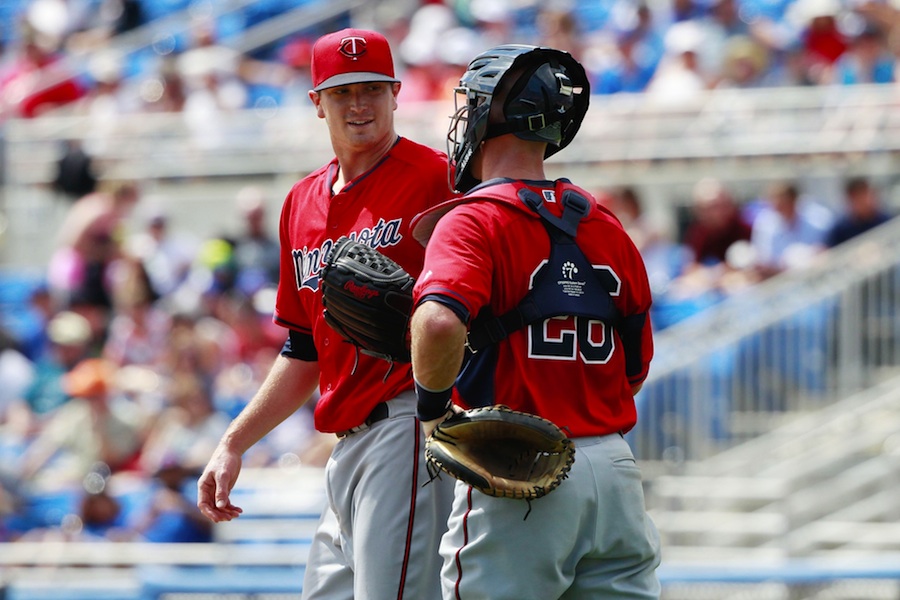 * Gibson rarely used his change-up against right-handed hitters last season, but says he's working on implementing it more frequently now. One of Cervelli's homers came on a change that hung over the plate, but Gibson says he's undeterred. "That's the first one I've been beat on." * It was an uncharacteristically tough day for the righty from a command standpoint. He issued three walks, one more than his previous three starts combined. The most damaging free pass came against pitcher Gerrit Cole with the bases loaded, scoring a run. Don't expect it to be an enduring problem. Last year he walked only 57 batters in 179 innings for the Twins, and in the minors he averaged 2.5 BB/9IP. * In Cole's second at-bat, Joe Mauer made a diving play to his right, stabbing a grounder and flipping to Gibson at first for the out. It was the second or third time I've seen Mauer lay out to make a slick play over there this week, and that's been a noticeable contrast compared to last spring, when I was surprised by the number of grounders that sneaked by him. "He's a lot more comfortable, I know that," Paul Molitor said. "He's a lot more confident." "He made a nice play over there in the three-hole, even though it was on a pitcher," he added with a chuckle. * Eddie Escobar: Spring Slugger. He drove in his team-leading 10th RBI with a run-scoring single in the fourth. He also paced the Twins in RBIs last spring with nine. No word on whether Molitor is considering him for the cleanup spot. * Michael Tonkin pitched the seventh inning, allowing a run on two hits with a strikeout. Following the game he was optioned to Triple-A. "He needs to become more efficient with his secondary pitches," Molitor said. "It seems to me that his trouble getting through innings is that people can look for that fastball and pretty much know they're going to get one at some point." * Alex Meyer was optioned to Triple-A just before the game in the wake of a wild outing on Thursday afternoon. "He's behind quite a few guys," Terry Ryan said. "We all know that there are guys that it takes a little more time than others and he's one of them, because mechanically, he's a big man, there's a lot of moving parts." Still, Ryan has plenty of hope for the big right-hander. "You've seen the pitches," he said, speaking of Meyer's power fastball, filthy curve and developing change. "It's obvious he can strike people out. Now it's a matter of not getting into so much trouble." Molitor believes that Meyer would benefit from carrying more of a bulldog demeanor on the mound. "I don't think anyone likes to face him," the manager said. "He has to start understanding that. He can take command of those situations." * Although Ricky Nolasco gave up a few hard-hit balls in Thursday's start against the Rays, including a two-run homer that ended his day in the fourth inning, Ryan went out of his way to praise the right-hander today. "I just thought he threw the ball wonderfully yesterday, regardless of that home run," the GM said. "He should have never been in that predicament in the first place. We gave them way too many outs." Ryan added that Nolasco's stuff has looked noticeably better this year. "His fastball's crisper, his breaking balls -- he's got more command … I've got no complaints." * Tomorrow, Mr. Bonnes takes over with your spring training coverage from Ft. Myers. Thanks to all who have read and commented this week, and thanks as always to the Twins for the hospitality.
 -
The Minnesota Twins announced just before Friday's game against Pittsburgh Pirates that they have optioned right-hander Alex Meyer to Class-AAA Rochester.Meyer has struggled with his control this spring, issuing seven walks in 5 2/3 innings over three Grapefruit League appearances. That included an erratic outing at Port Charlotte on Thursday in which Meyer issued four walks over two innings. Earlier this week the Twins announced that they have moved Tim Stauffer to a relief role, so Meyer is the second contender for that fifth rotation spot to be officially taken out of the running. That leaves Tommy Milone, Mike Pelfrey and Trevor May. Look for more on this move, including quotes from Terry Ryan, in our daily recap later this afternoon. Click here to view the article
-
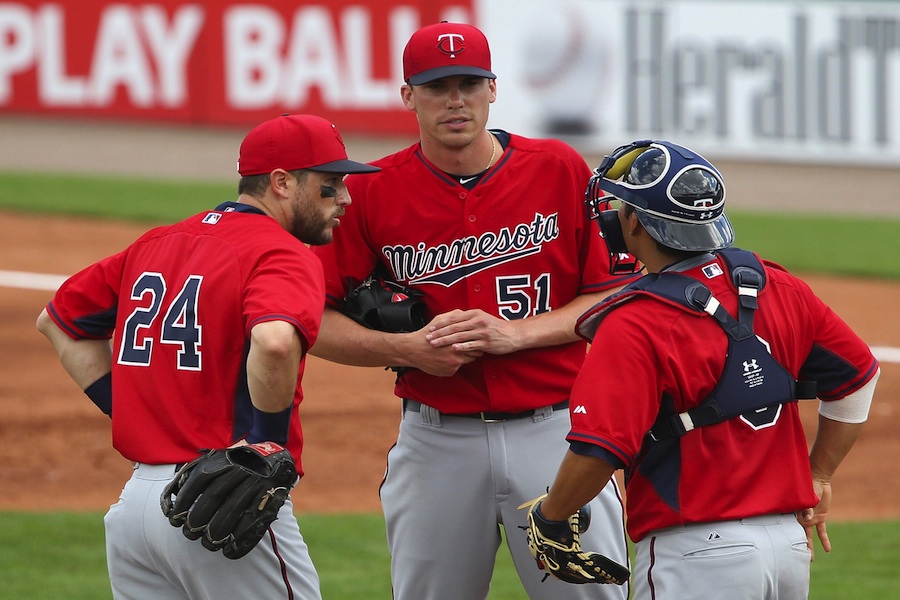 Meyer has struggled with his control this spring, issuing seven walks in 5 2/3 innings over three Grapefruit League appearances. That included an erratic outing at Port Charlotte on Thursday in which Meyer issued four walks over two innings. Earlier this week the Twins announced that they have moved Tim Stauffer to a relief role, so Meyer is the second contender for that fifth rotation spot to be officially taken out of the running. That leaves Tommy Milone, Mike Pelfrey and Trevor May. Look for more on this move, including quotes from Terry Ryan, in our daily recap later this afternoon.


