



Nick Nelson
-
Posts
8,322 -
Joined
-
Last visited
-
Days Won
56
Content Type
Profiles
News
Minnesota Twins Videos
2026 Minnesota Twins Top Prospects Ranking
2022 Minnesota Twins Draft Picks
Minnesota Twins Free Agent & Trade Rumors, Notes, & Tidbits
Guides & Resources
2023 Minnesota Twins Draft Picks
The Minnesota Twins Players Project
2024 Minnesota Twins Draft Picks
2025 Minnesota Twins Draft Pick Tracker
2026 Minnesota Twins Draft Tracker: Picks & Bonuses
Forums
Blogs
Events
Store
Downloads
Gallery
Everything posted by Nick Nelson
-
The sun returns to Minneapolis this weekend, and so do the Twins, who will be looking to build on a 12-5 home record as they take on Tampa Bay. With temperatures expected to rise back into the 70s and 80s following a chilly week, it's looking like prime time to take in an outdoor ballgame or two. As usual, our friends at Ticket King have plenty of tickets available for all three games. Which one(s) should you attend? Let's dig in with our series preview.OVERVIEW Last year the Rays lost 85 games and traded away David Price, so expectations were tempered coming into this 2015 campaign. They've recently lost two of their best starters, Alex Cobb and Drew Smyly, to season-ending injuries, and they have 12 total players currently on the disabled list. These are the types of setbacks that would bury many clubs. Yet here are the Rays, second in the American League East with a winning record. The Twins have gone 7-22 against Tampa Bay over the last four years but are looking to reverse that trend, and they've got a good opportunity as they kick off the season series at Target Field, where they've played awfully well so far. PITCHING MATCH-UPS Friday, 7:10 PM: Jake Odorizzi vs. Phil Hughes Odorizzi was among the high-end prospects received by the Rays when they dealt James Shields to the Royals a couple years ago, and he has panned out nicely in Tampa. Last year, in his first full big-league season, he posted a respectable 4.13 ERA with the sixth-highest strikeout rate in the AL. This year he's 3-2 with a 2.09 ERA through seven turns. Hughes is throwing strikes and avoiding walks, as he did last year, but he's had a hard time keeping the ball in the park. Fortunately, the Rays don't have a ton of power. I'd expect a low-scoring affair on Friday. Saturday, 1:10 PM: Alex Colome vs. Trevor May Added to the Tampa Bay rotation at the beginning of May after recovering from a nasty bout of pneumonia, Colome has yet to record a quality start in three tries. He was trounced in his most recent outing against the Yankees, who piled up eight runs on 11 hits in six innings. May is also coming off a poor start in Cleveland, but he has a 3.97 ERA at Target Field. Sunday, 1:10 PM: Chris Archer vs. Kyle Gibson Gibson's first start of the year was a mess, but he's been absolutely brilliant since, with a 3-1 record and 1.59 ERA across six starts. He showed how far along he's come in his most recent outing, when he returned to the scene of that brutal season debut and held the Tigers to one run over seven innings in Detroit, striking out five of the last six batters he faced. He draws a tough assignment in Archer, who has been insanely dominant despite a 3-4 record. WHICH GAME SHOULD YOU ATTEND? Well, that depends on what you're looking for. Want to see the Twins hit some homers? They'll be hard-pressed to do so against Odorizzi or Archer, who have given up only four home runs combined all year. Colome, though, is a fly ball pitcher who has surrendered four bombs in 16 innings. Best Choice: Saturday Want to see some infield defense on display? Gibson and Archer are heavy ground ball pitchers. Both teams have a few flashy fielders in the infield, and they figure to see plenty of action with those two hurlers on the mound. Best Choice: Sunday Looking for an evening out on the town? Saturday and Sunday are day games, but the 7:10 start on Friday night is conducive to some post-game partying. It forecasts to be a beautiful evening, with clear skies and temperatures in the high 60s -- perfect for spilling out out of the ballpark to a nearby patio. Best Choice: Friday Click here to view the article
-
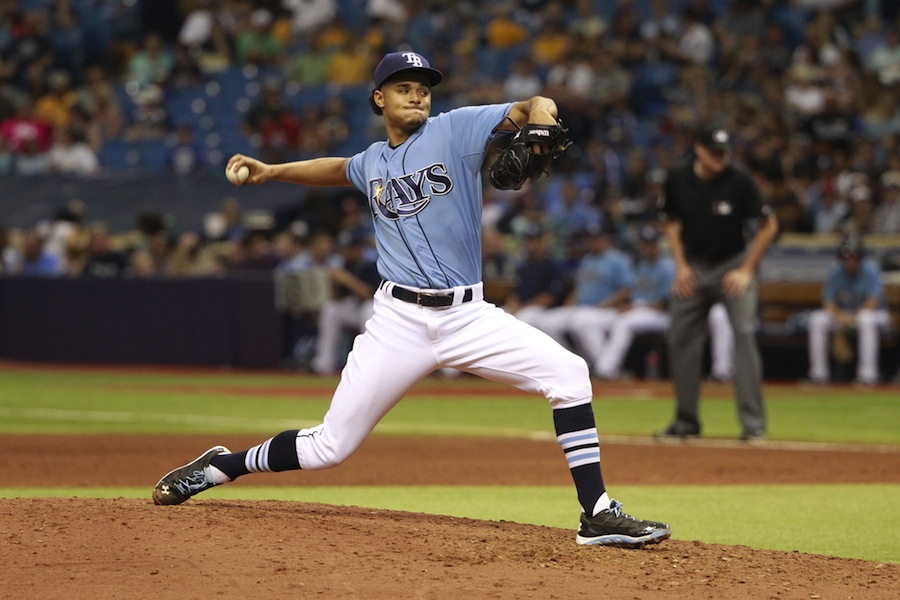 OVERVIEW Last year the Rays lost 85 games and traded away David Price, so expectations were tempered coming into this 2015 campaign. They've recently lost two of their best starters, Alex Cobb and Drew Smyly, to season-ending injuries, and they have 12 total players currently on the disabled list. These are the types of setbacks that would bury many clubs. Yet here are the Rays, second in the American League East with a winning record. The Twins have gone 7-22 against Tampa Bay over the last four years but are looking to reverse that trend, and they've got a good opportunity as they kick off the season series at Target Field, where they've played awfully well so far. PITCHING MATCH-UPS Friday, 7:10 PM: Jake Odorizzi vs. Phil Hughes Odorizzi was among the high-end prospects received by the Rays when they dealt James Shields to the Royals a couple years ago, and he has panned out nicely in Tampa. Last year, in his first full big-league season, he posted a respectable 4.13 ERA with the sixth-highest strikeout rate in the AL. This year he's 3-2 with a 2.09 ERA through seven turns. Hughes is throwing strikes and avoiding walks, as he did last year, but he's had a hard time keeping the ball in the park. Fortunately, the Rays don't have a ton of power. I'd expect a low-scoring affair on Friday. Saturday, 1:10 PM: Alex Colome vs. Trevor May Added to the Tampa Bay rotation at the beginning of May after recovering from a nasty bout of pneumonia, Colome has yet to record a quality start in three tries. He was trounced in his most recent outing against the Yankees, who piled up eight runs on 11 hits in six innings. May is also coming off a poor start in Cleveland, but he has a 3.97 ERA at Target Field. Sunday, 1:10 PM: Chris Archer vs. Kyle Gibson Gibson's first start of the year was a mess, but he's been absolutely brilliant since, with a 3-1 record and 1.59 ERA across six starts. He showed how far along he's come in his most recent outing, when he returned to the scene of that brutal season debut and held the Tigers to one run over seven innings in Detroit, striking out five of the last six batters he faced. He draws a tough assignment in Archer, who has been insanely dominant despite a 3-4 record. WHICH GAME SHOULD YOU ATTEND? Well, that depends on what you're looking for. Want to see the Twins hit some homers? They'll be hard-pressed to do so against Odorizzi or Archer, who have given up only four home runs combined all year. Colome, though, is a fly ball pitcher who has surrendered four bombs in 16 innings. Best Choice: Saturday Want to see some infield defense on display? Gibson and Archer are heavy ground ball pitchers. Both teams have a few flashy fielders in the infield, and they figure to see plenty of action with those two hurlers on the mound. Best Choice: Sunday Looking for an evening out on the town? Saturday and Sunday are day games, but the 7:10 start on Friday night is conducive to some post-game partying. It forecasts to be a beautiful evening, with clear skies and temperatures in the high 60s -- perfect for spilling out out of the ballpark to a nearby patio. Best Choice: Friday
 -
During the last four years, it has become customary to look at the rankings for American League teams in starting pitcher ERA and find Minnesota at the bottom. In 2011 they ranked 12th. In 2012, 2013 and 2014, they ranked dead last, each time finishing with a mark above 5.00. When you look at the current ranks, you find Twins starters not last, and not even in the bottom five, but ninth out of 15 AL clubs with a 4.37 ERA. That's still not great, but it represents something we have been waiting a long time to see: progress.The odd thing about the relative success of the Twins' rotation is that it hasn't been backed up by indicators that they're actually pitching all that well. Minnesota starters rank last in the AL in strikeouts, second-to-last in opponents' batting average, and 11th in ground ball rate. In other words, they're not really excelling at anything. This could lead one to reason that the starting corps is due for some major regression, and bound to return to its familiar standing among the league's worst. That is possible. What I see, however, are signs of promise. Here are three reasons why I believe the Twins can hang around the middle of the pack in terms of starting pitcher ERA, which would be an enormous victory considering their recent history. Some wacky trends are bound to normalize. Over at 1500 ESPN, Derek Wetmore wrote a great column this week about why Kyle Gibson's early-season success won't sustain if he keeps pitching the way he has. That's absolutely true; walking more batters than you strike out is a recipe for disaster, and one that will catch up with Gibson soon if things don't change. But things almost have to change, and we might have seen the start of it on Tuesday night when he fanned five of the last six Tigers he faced in a seven-inning gem. Gibson had entered that start with a 2.7 K/9 rate, and there is nothing in his history to suggest that was going to endure. Last year the lowest qualifying rate for any starter was 5.3 (Mark Buehrle). In the minors, Gibson averaged 8.0 K/9. The story is the same for almost every Twins starter. Gibson, Mike Pelfrey, Ricky Nolasco and Phil Hughes all have strikeout rates that are below their career norms, so as long as they're healthy, you'd expect upticks across the board. It's not just strikeouts. Take a look at Hughes. Even though he's throwing strikes at a ridiculous rate similar to last year, his results have been much worse, as he's given up 56 hits and nine homers in 44 innings. Although he's been hittable and homer-prone at times in the past, it's never been to this extent. His BABIP (.326) is 25 points higher than his career norm, and his HR/FB ratio (15 percent) is sixth-highest in the AL. If he keeps doing his thing, those unlucky numbers should become a bit more neutral over time. They keep the ball in the yard. Hughes has served up nine homers, and will likely continue to be somewhat susceptible to the long ball as an extreme fly ball pitcher. Tommy Milone coughed up five homers in 22 innings before being sent down. The remaining four Twins starters, though, have allowed only seven home runs in 120 innings. For most of these guys, that's par for the course. Gibson, who creates a strong downward plane on his sinker delivered from a 6'5" frame, has allowed only 22 homers in 273 MLB innings. Pelfrey has never been homer-prone, yielding 90 in 1107 career frames. Trevor May was taken deep only four times in 18 starts at Triple-A last year. Nolasco is a wild card, given the way he's been throwing, but he has averaged less than one home run allowed per nine innings dating back to 2011. When you're not giving up the big hits, you have much more margin for error. Reinforcements are waiting. When the Twins have needed to reach down to Triple-A for help in recent years, too often they've come up with pitchers like P.J. Walters and Pedro Hernandez who simply weren't big-league material. Presently, their top option at Rochester is Milone, who has a proven MLB track record. Even with Alex Meyer completely out of sorts, there are intriguing hurlers alongside Milone in that rotation, like Taylor Rogers (2.84 ERA) and Pat Dean (1.93 ERA). Meanwhile, Jose Berrios is busy in Double-A making his case for a midseason promotion to the Twins, where he would instantly become the rotation's most talented and electric arm. And, of course, Ervin Santana will return from his suspension in July. What do you think? Can the Twins rotation remain in the Top 10 in ERA through the end of the season, or do you expect things to unravel? Click here to view the article
- 39 replies
-
- 1
-

-
- phil hughes
- kyle gibson
- (and 3 more)
-
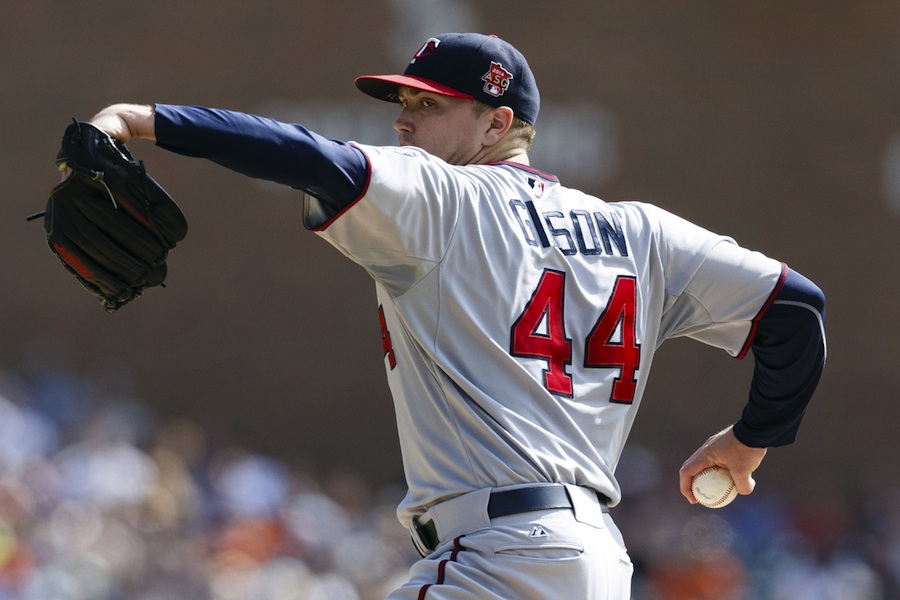 The odd thing about the relative success of the Twins' rotation is that it hasn't been backed up by indicators that they're actually pitching all that well. Minnesota starters rank last in the AL in strikeouts, second-to-last in opponents' batting average, and 11th in ground ball rate. In other words, they're not really excelling at anything. This could lead one to reason that the starting corps is due for some major regression, and bound to return to its familiar standing among the league's worst. That is possible. What I see, however, are signs of promise. Here are three reasons why I believe the Twins can hang around the middle of the pack in terms of starting pitcher ERA, which would be an enormous victory considering their recent history. Some wacky trends are bound to normalize. Over at 1500 ESPN, Derek Wetmore wrote a great column this week about why Kyle Gibson's early-season success won't sustain if he keeps pitching the way he has. That's absolutely true; walking more batters than you strike out is a recipe for disaster, and one that will catch up with Gibson soon if things don't change. But things almost have to change, and we might have seen the start of it on Tuesday night when he fanned five of the last six Tigers he faced in a seven-inning gem. Gibson had entered that start with a 2.7 K/9 rate, and there is nothing in his history to suggest that was going to endure. Last year the lowest qualifying rate for any starter was 5.3 (Mark Buehrle). In the minors, Gibson averaged 8.0 K/9. The story is the same for almost every Twins starter. Gibson, Mike Pelfrey, Ricky Nolasco and Phil Hughes all have strikeout rates that are below their career norms, so as long as they're healthy, you'd expect upticks across the board. It's not just strikeouts. Take a look at Hughes. Even though he's throwing strikes at a ridiculous rate similar to last year, his results have been much worse, as he's given up 56 hits and nine homers in 44 innings. Although he's been hittable and homer-prone at times in the past, it's never been to this extent. His BABIP (.326) is 25 points higher than his career norm, and his HR/FB ratio (15 percent) is sixth-highest in the AL. If he keeps doing his thing, those unlucky numbers should become a bit more neutral over time. They keep the ball in the yard. Hughes has served up nine homers, and will likely continue to be somewhat susceptible to the long ball as an extreme fly ball pitcher. Tommy Milone coughed up five homers in 22 innings before being sent down. The remaining four Twins starters, though, have allowed only seven home runs in 120 innings. For most of these guys, that's par for the course. Gibson, who creates a strong downward plane on his sinker delivered from a 6'5" frame, has allowed only 22 homers in 273 MLB innings. Pelfrey has never been homer-prone, yielding 90 in 1107 career frames. Trevor May was taken deep only four times in 18 starts at Triple-A last year. Nolasco is a wild card, given the way he's been throwing, but he has averaged less than one home run allowed per nine innings dating back to 2011. When you're not giving up the big hits, you have much more margin for error. Reinforcements are waiting. When the Twins have needed to reach down to Triple-A for help in recent years, too often they've come up with pitchers like P.J. Walters and Pedro Hernandez who simply weren't big-league material. Presently, their top option at Rochester is Milone, who has a proven MLB track record. Even with Alex Meyer completely out of sorts, there are intriguing hurlers alongside Milone in that rotation, like Taylor Rogers (2.84 ERA) and Pat Dean (1.93 ERA). Meanwhile, Jose Berrios is busy in Double-A making his case for a midseason promotion to the Twins, where he would instantly become the rotation's most talented and electric arm. And, of course, Ervin Santana will return from his suspension in July. What do you think? Can the Twins rotation remain in the Top 10 in ERA through the end of the season, or do you expect things to unravel?
 -

Article: It's Time For Aaron Hicks
Nick Nelson replied to Nick Nelson's topic in Twins Daily Front Page News
You admit that they have twice "royally messed up" his development, but are completely willing to buy into their assessment of his present readiness? I'm not making this argument based on 19 box scores. I'm making it based on the fact that he's quite clearly more talented than the current occupants, and he was a more valuable asset in the lineup even when struggling last year (at least he got on base), and they need to get another long look at him in the majors due to his options situation + other OFs coming up through the system. If you think his makeup or maturity or approach might still need work that's fine, I just don't see why we wouldn't want him working on those things under Molitor/Brunansky and alongside Hunter while also improving the quality of the MLB roster. -
Article: It's Time For Aaron Hicks
Nick Nelson replied to Nick Nelson's topic in Twins Daily Front Page News
Are they really still developing him though? He's 25 and he's got almost 1500 plate appearances in the majors + high minors. I'd say at this point they're in more of an evaluative stage, and I simply don't see how they can properly evaluate him while he's handling Triple-A pitching. What is the risk in bringing him up? If he can't hack it in an extended opportunity this time around I think you know all you need to know. And at least then you're making an actual effort to field a competent starter in center. -
Article: It's Time For Aaron Hicks
Nick Nelson replied to Nick Nelson's topic in Twins Daily Front Page News
I don't get this. So if he slumps a bit for two weeks, leave him sitting in the minors indefinitely while replacement-level players continue to rack up plate appearances for a major-league club that is trying to compete? Mental gaffes and all, Hicks is a significantly more talented player than what the Twins are currently trotting out. They need to get as long of a look at him as they can this year. He's not going to learn to play in the majors by playing in Triple-A. If he needs to sharpen his fundamentals, who better to learn from than Paul Molitor? If he needs to learn how to be a big-league ballplayer, who better to learn from than Torii Hunter? Minnesota is where Hicks needs to be. Not in a month, but now. -
You may have heard this arbitrary but nevertheless impressive statistic: Since the beginning of last August, the Minnesota Twins lead all of baseball in runs scored. This year they have outscored all but three American League teams, and during their current 9-2 stretch they've averaged nearly seven runs per game. It seems safe to say that offense is not a major problem for this team, Sunday's punchless effort against Danny Salazar notwithstanding. Yet it's still bothersome that the Twins have continued to hold off on making the most obvious move possible to upgrade their lineup. When will Aaron Hicks get a look?Throughout spring training, most expected that Hicks would end up winning the center field job, if only for a lack of better options. But Hicks had a tough spring, highlighted by a few notable gaffes and mental blunders, and ultimately the lesser options prevailed. The Twins opted to roll with a pair of backup-caliber players in Jordan Schafer and Shane Robinson, with the presumption being that this sub-par duo would only be keeping the spot warm until a superior option proved ready. Well, Schafer and Robinson have been as bad as expected if not worse, producing a miserable .590 combined OPS in center field, while Hicks has done just about everything possible to show he's ready for another chance in the majors. In 26 games at Rochester, the switch-hitting 25-year-old has a spectacular .330/.412/.553 hitting line. He has shown discipline (20/15 K/BB) and plenty of power (nine doubles, four triples, two homers), and he has even hit from the left side (.880 OPS), yet he remains relegated to Triple-A while the Twins keep trotting out non-legitimate major-league starters in center day after day. On Sunday, Schafer once again looked completely overmatched in going 0-for-3 with three strikeouts. People can point to Hicks' poor numbers in his first two seasons, but Schafer -- who is three years older -- has a nearly identical career OPS. There have got to be deeper factors at play in Minnesota's decision to continually eschew its former first-round draft pick. Whatever those might be, it's time to get past them and give the kid another shot. Hicks is in his final option year, which means that next season they'll no longer have the option to bury him in the minors in deference to veteran sub-mediocrity. This year represents the club's last chance to determine whether Hicks is going to be a big-league asset going forward, and they'll gain no clarity by allowing him to keep beating up Triple-A pitching. We talked last week about an eventual long-term upgrade in center, but most agree that Byron Buxton's arrival is at least a month or two away. Hicks, on the other hand, is quite clearly ready for his chance now. And every day the Twins wait, they're doing themselves -- and their fans -- a disservice. The situation in center field right now is simply untenable. The Twins are off on Monday and Hicks was not in the Rochester lineup on Sunday, so I wouldn't be surprised to see the change take place before the next series in Detroit gets underway. Click here to view the article
-
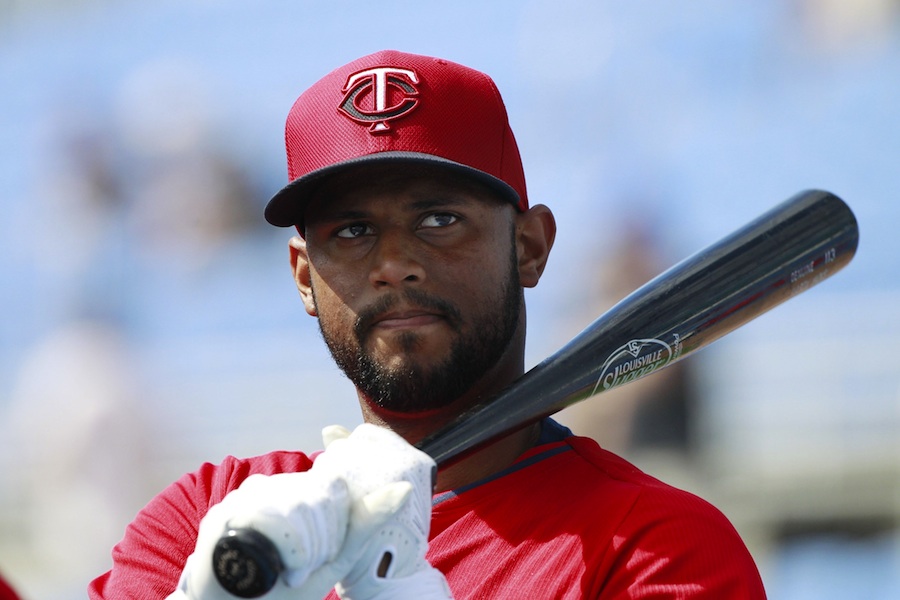 Throughout spring training, most expected that Hicks would end up winning the center field job, if only for a lack of better options. But Hicks had a tough spring, highlighted by a few notable gaffes and mental blunders, and ultimately the lesser options prevailed. The Twins opted to roll with a pair of backup-caliber players in Jordan Schafer and Shane Robinson, with the presumption being that this sub-par duo would only be keeping the spot warm until a superior option proved ready. Well, Schafer and Robinson have been as bad as expected if not worse, producing a miserable .590 combined OPS in center field, while Hicks has done just about everything possible to show he's ready for another chance in the majors. In 26 games at Rochester, the switch-hitting 25-year-old has a spectacular .330/.412/.553 hitting line. He has shown discipline (20/15 K/BB) and plenty of power (nine doubles, four triples, two homers), and he has even hit from the left side (.880 OPS), yet he remains relegated to Triple-A while the Twins keep trotting out non-legitimate major-league starters in center day after day. On Sunday, Schafer once again looked completely overmatched in going 0-for-3 with three strikeouts. People can point to Hicks' poor numbers in his first two seasons, but Schafer -- who is three years older -- has a nearly identical career OPS. There have got to be deeper factors at play in Minnesota's decision to continually eschew its former first-round draft pick. Whatever those might be, it's time to get past them and give the kid another shot. Hicks is in his final option year, which means that next season they'll no longer have the option to bury him in the minors in deference to veteran sub-mediocrity. This year represents the club's last chance to determine whether Hicks is going to be a big-league asset going forward, and they'll gain no clarity by allowing him to keep beating up Triple-A pitching. We talked last week about an eventual long-term upgrade in center, but most agree that Byron Buxton's arrival is at least a month or two away. Hicks, on the other hand, is quite clearly ready for his chance now. And every day the Twins wait, they're doing themselves -- and their fans -- a disservice. The situation in center field right now is simply untenable. The Twins are off on Monday and Hicks was not in the Rochester lineup on Sunday, so I wouldn't be surprised to see the change take place before the next series in Detroit gets underway.
 -
Derek Wetmore from 1500 ESPN posted a column on this subject today with quotes from Terry Ryan: http://www.1500espn.com/sportswire/Could_Byron_Buxton_possibly_force_a_midsummer_callup_this_season050615 "For me, he's just started to take off down there," Ryan said. "And I think it would be wrong to start putting [a promotion] into the equation this early. Now, if we're talking later in the year, everything being equal, I suspect he would be in that conversation." "He's just not quite to that point where we should consider him, I don't think." If he keeps this up -- an unlikely but not altogether impossible feat, perhaps -- what then? "All right, let's say it's six weeks later and he's pounding it like he has been for the last two weeks, then he's starting to force our hand," Ryan said. So, if you're wondering whether Ryan would at least give consideration to bringing Buxton up before the All-Star break, the answer would appear to be yes.
-
I made my first trip of the year to Target Field last Friday, and had a fantastic time. It was a beautiful evening and the Twins played a very crisp ballgame, winning 1-0 behind a tremendous start from Kyle Gibson. Yet, as I looked around the park from my seats down the first base line, I couldn't help but feel a sense of disappointment with the sparsity of the crowd. The announced attendance of 22,794 -- their second-largest since Opening Day -- seemed overstated, with empty seats littering the lower deck. The Twins moved within a game of .500 that night, and by the end of the weekend they had a winning record. In the wake of a dreadful start, this team has been playing good ball, positioning itself for relevancy in the AL Central at least early on. But the fans, mired in apathy following a fourth straight 90-loss season, haven't responded by filling the stadium. Already the Twins have drawn fewer than 20,000 on five occasions; last year that happened once, in September. Continuing to win games at a solid clip will help bring back some wayward fans, but what this team needs is a spark plug that generates real excitement and gets the entire baseball world buzzing. They'll have one soon in Byron Buxton. But how soon?Buxton's allure goes beyond the fact that he's arguably the best prospect in the game. His dynamic skill set will make him appointment viewing, because he's capable of doing amazing things on a regular basis. That's been on display at Class-AA Chattanooga over his past 10 games, during which Buxton has batted .415 with five steals, four triples and two homers -- one of them a walk-off shot on Monday night. Not only will Buxton's arrival deliver an enormous marketing jolt, it will more importantly provide a huge boost on the field. He offers so many things that the Twins desperately need if they want to hang around as a contender in the AL Central. Offering elite speed along with the ability to draw walks and get on base, Buxton is a prototypical leadoff hitter. When you look at the production from the top three spots in the Twins' lineup, it is obvious that they could use one of those, as the struggles of Danny Santana and others have lessened the impact of the two spots that follow in the order (often occupied by Brian Dozier and Joe Mauer): No. 1 Hitter: .261/.289/.383 No. 2 Hitter: .273/.322/.445 No. 3 Hitter: .297/.374/.386 Twins leadoff hitters have produced the lowest OBP of any spot in the lineup save for No. 9. Capable of running down any fly ball in his zip code and possessing a cannon arm, Buxton profiles as a premium defensive center fielder. The Twins have been trotting out a pseudo-platoon of Jordan Schafer and Shane Robinson in center up to this point, leaving much to be desired. Buxton would fill the biggest hole in the lineup while also substantially upgrading a porous outfield defense. Then there's this: In some capacity, Torii Hunter was supposedly brought on to serve in a mentorship role, but presently there aren't really any young players on the roster for him to help along -- not any that speak much English, anyway. Buxton is seemingly one of the players who stands to benefit most from Hunter's influence, but he can't do so in Chattanooga. With Hunter on a one-year deal, the Twins need to get their star prospect up in the somewhat near future if they want Hunter to be able to aid his transition to the majors. When you take all these things into account, it's easy to see why the Twins might feel a bit more urgency to bring Buxton along more quickly than they typically would. But of course, all of these factors are superseded by the importance of his development. They're not going to do anything that may negatively affect his ability to smoothly and successfully make the jump to the majors, nor should they. And despite his recent blazing hot streak, Buxton remains a 21-year-old coming off a lost season, with just 24 games of experience in Double-A. As badly as they were burned by the Aaron Hicks experience, one could understand the Twins opting for a conservative approach with their most prized asset, waiting until September or maybe even 2016 to consider a promotion regardless of his performance in the minors. However, I really can't emphasize this enough: Buxton is a different animal. He's a transcendent talent, on another level entirely from prospects such as Hicks or Danny Santana or Kennys Vargas. The Twins won't -- or at least shouldn't -- feel trepidation based on those past examples. Buxton's prospect caliber matches that of a young Joe Mauer, who was installed as a big-leaguer at age 21 after just 73 games in Double-A and caught on immediately. It matches Mike Trout, who was in the majors for good at age 20. It matches Kris Bryant, who was called up by the Cubs last month after just 181 total games in the minors, and is now excelling in Chi-town. Clearly, Buxton is not in line for an imminent promotion to the big leagues. He needs to continue working in Chattanooga for the time being, to prove that he's fully back on track and to keep building confidence. If he does both of those things for a couple of more months, and the All-Star break is approaching, and the Twins still need his services as badly as they do now? Why not? Click here to view the article
-
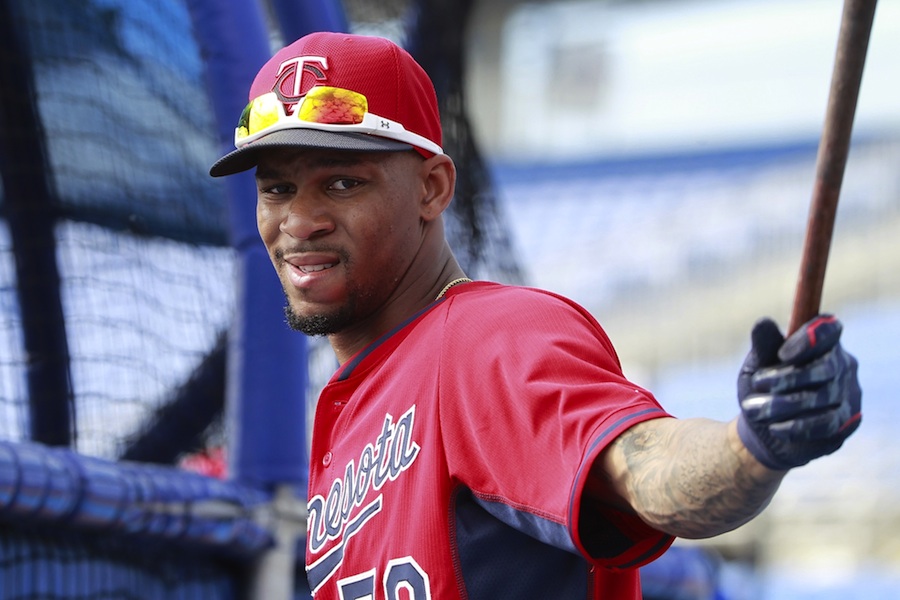 Buxton's allure goes beyond the fact that he's arguably the best prospect in the game. His dynamic skill set will make him appointment viewing, because he's capable of doing amazing things on a regular basis. That's been on display at Class-AA Chattanooga over his past 10 games, during which Buxton has batted .415 with five steals, four triples and two homers -- one of them a walk-off shot on Monday night. Not only will Buxton's arrival deliver an enormous marketing jolt, it will more importantly provide a huge boost on the field. He offers so many things that the Twins desperately need if they want to hang around as a contender in the AL Central. Offering elite speed along with the ability to draw walks and get on base, Buxton is a prototypical leadoff hitter. When you look at the production from the top three spots in the Twins' lineup, it is obvious that they could use one of those, as the struggles of Danny Santana and others have lessened the impact of the two spots that follow in the order (often occupied by Brian Dozier and Joe Mauer): No. 1 Hitter: .261/.289/.383 No. 2 Hitter: .273/.322/.445 No. 3 Hitter: .297/.374/.386 Twins leadoff hitters have produced the lowest OBP of any spot in the lineup save for No. 9. Capable of running down any fly ball in his zip code and possessing a cannon arm, Buxton profiles as a premium defensive center fielder. The Twins have been trotting out a pseudo-platoon of Jordan Schafer and Shane Robinson in center up to this point, leaving much to be desired. Buxton would fill the biggest hole in the lineup while also substantially upgrading a porous outfield defense. Then there's this: In some capacity, Torii Hunter was supposedly brought on to serve in a mentorship role, but presently there aren't really any young players on the roster for him to help along -- not any that speak much English, anyway. Buxton is seemingly one of the players who stands to benefit most from Hunter's influence, but he can't do so in Chattanooga. With Hunter on a one-year deal, the Twins need to get their star prospect up in the somewhat near future if they want Hunter to be able to aid his transition to the majors. When you take all these things into account, it's easy to see why the Twins might feel a bit more urgency to bring Buxton along more quickly than they typically would. But of course, all of these factors are superseded by the importance of his development. They're not going to do anything that may negatively affect his ability to smoothly and successfully make the jump to the majors, nor should they. And despite his recent blazing hot streak, Buxton remains a 21-year-old coming off a lost season, with just 24 games of experience in Double-A. As badly as they were burned by the Aaron Hicks experience, one could understand the Twins opting for a conservative approach with their most prized asset, waiting until September or maybe even 2016 to consider a promotion regardless of his performance in the minors. However, I really can't emphasize this enough: Buxton is a different animal. He's a transcendent talent, on another level entirely from prospects such as Hicks or Danny Santana or Kennys Vargas. The Twins won't -- or at least shouldn't -- feel trepidation based on those past examples. Buxton's prospect caliber matches that of a young Joe Mauer, who was installed as a big-leaguer at age 21 after just 73 games in Double-A and caught on immediately. It matches Mike Trout, who was in the majors for good at age 20. It matches Kris Bryant, who was called up by the Cubs last month after just 181 total games in the minors, and is now excelling in Chi-town. Clearly, Buxton is not in line for an imminent promotion to the big leagues. He needs to continue working in Chattanooga for the time being, to prove that he's fully back on track and to keep building confidence. If he does both of those things for a couple of more months, and the All-Star break is approaching, and the Twins still need his services as badly as they do now? Why not?
 -
Rosario made a good impression in spring training and evidently that was enough to place him first in line for a promotion. I expect he'll struggle quite a bit as MLB pitchers take advantage of his free-swinging ways.
-
Article: According To Plan
Nick Nelson replied to Nick Nelson's topic in Twins Daily Front Page News
Is it though? He's coming off a full missed season, he still has a 700+ OPS and his K-rate is pretty standard. I wouldn't say it's really all that concerning. Milone is next in line for a shot at the rotation, but Rogers might be after him. The Twins have been high on this kid for a while and he has looked terrific at Triple-A. -
For the Minnesota Twins, the blueprint this year was simple: stay afloat until midseason and give yourself a chance to make things interesting in the final months. That's more or less true for every team, but especially so for a Twins club that figures to receive significant reinforcements midway through the summer, in the form of impact prospects and a suspended No. 2 starter. After a 1-6 start where they looked completely inadequate in every aspect of the game, simply remaining relevant appeared a tall task. But to the credit of rookie manager Paul Molitor and his resilient group, the Twins are back above .500 just three weeks later.The story of the season so far has been improved pitching. It's strange to look at the rankings for American League teams across various pitching categories and NOT see the Twins at the bottom. Out of 15 AL clubs, Minnesota is eighth in ERA and ninth in WHIP. Not great, but not abysmal, and with the offense starting to come together after a slow start, it's an equation that has produced a 12-6 record since the ugly start, even with half their games coming against the two top teams in the division. In spite of their present groove, the Twins are a team with very apparent weaknesses. But when you look at the areas that most plainly need to be addressed, solutions seem to line up rather conveniently within the organization. They need a legitimate leadoff hitter, with Danny Santana showing no semblance of plate discipline. They also need a center fielder. Byron Buxton, after a slow start, is on a scorching hot tear in Double-A and profiles as an ideal specimen in both roles. They need a DH and cleanup hitter, with Kennys Vargas looking like he may not be up to the task for the time being. Josmil Pinto is hitting very well in Triple-A and Miguel Sano, shaking off the rust following a missed year, hit his fifth home run for Chattanooga on Sunday. They could use some difference-makers at the top of the rotation. Jose Berrios is flashing tremendous stuff in Double-A and Ervin Santana will return in July. They will require some extra juice in the bullpen as they go along. There are plenty of arms in the high minors with the potential to add that. The buzz of a four-game sweep can skew perceptions a little bit, and in reality the Twins are not as good as their record over the past three weeks suggests. But the big takeaways are that they are healthy, they appear to have enough pitching to at least stay in games on a regular basis, and with a full month in the books, they're a game above .500. The Twins are getting better as they move along, and that figures to continue going forward with quality players set to enter the mix and fill areas of need during the course of the summer. Click here to view the article
-
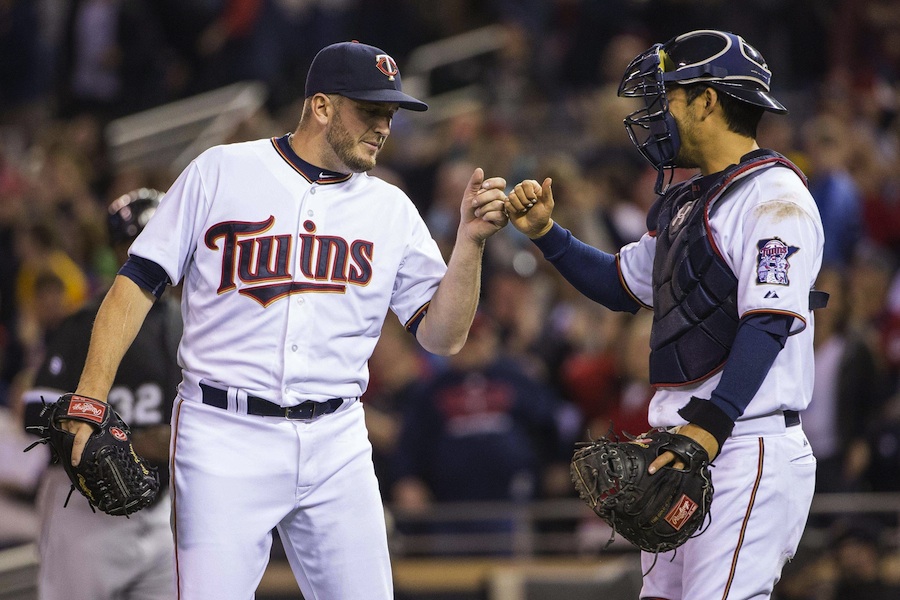 The story of the season so far has been improved pitching. It's strange to look at the rankings for American League teams across various pitching categories and NOT see the Twins at the bottom. Out of 15 AL clubs, Minnesota is eighth in ERA and ninth in WHIP. Not great, but not abysmal, and with the offense starting to come together after a slow start, it's an equation that has produced a 12-6 record since the ugly start, even with half their games coming against the two top teams in the division. In spite of their present groove, the Twins are a team with very apparent weaknesses. But when you look at the areas that most plainly need to be addressed, solutions seem to line up rather conveniently within the organization. They need a legitimate leadoff hitter, with Danny Santana showing no semblance of plate discipline. They also need a center fielder. Byron Buxton, after a slow start, is on a scorching hot tear in Double-A and profiles as an ideal specimen in both roles. They need a DH and cleanup hitter, with Kennys Vargas looking like he may not be up to the task for the time being. Josmil Pinto is hitting very well in Triple-A and Miguel Sano, shaking off the rust following a missed year, hit his fifth home run for Chattanooga on Sunday. They could use some difference-makers at the top of the rotation. Jose Berrios is flashing tremendous stuff in Double-A and Ervin Santana will return in July. They will require some extra juice in the bullpen as they go along. There are plenty of arms in the high minors with the potential to add that. The buzz of a four-game sweep can skew perceptions a little bit, and in reality the Twins are not as good as their record over the past three weeks suggests. But the big takeaways are that they are healthy, they appear to have enough pitching to at least stay in games on a regular basis, and with a full month in the books, they're a game above .500. The Twins are getting better as they move along, and that figures to continue going forward with quality players set to enter the mix and fill areas of need during the course of the summer.
 -
Article: Between A Rick And A Hard Place
Nick Nelson replied to Nick Nelson's topic in Twins Daily Front Page News
I thought about bringing up Gibson, because that K/BB ratio is hideous, but I think he's at least 2-3 bad starts away from even being in consideration for a demotion. I think your point about cool weather affecting sinker-ballers is a fair one.- 68 replies
-
- 1
-
-
- ricky nolasco
- trevor may
- (and 2 more)
-
Article: Between A Rick And A Hard Place
Nick Nelson replied to Nick Nelson's topic in Twins Daily Front Page News
You're right, I didn't really phrase that correctly - I reworked it a bit in the article. I meant more that they could send him to Triple-A as part of his rehab, with the idea of easing him toward the majors and building his workload (he only threw five innings in the Cedar Rapids start). But I don't know if that'd fly. Not saying you're wrong, but Milone was their top choice for the 5th starter role out of spring, and that first start was pretty big following the series in Detroit. I just don't think he's pitched badly enough to get bumped.- 68 replies
-
- 1
-
-
- ricky nolasco
- trevor may
- (and 2 more)
-
The Twins face a tough decision with Ricky Nolasco set to return from the disabled list by next week. The right-hander, who's been sidelined with elbow inflammation, made a rehab start in Cedar Rapids on Sunday, tossing five scoreless frames with no issues. He might make one more start in the minors, but Nolasco will be back soon. And that means the Twins will have to make room for him.In theory, it shouldn't be all that difficult for a team with a 4.74 ERA from its starters (third-worst in the AL) to find room in its rotation, yet here we are. Trevor May, who was called up to take Nolasco's spot and probably should have been on the team coming out of spring training, has a 13-to-2 K/BB ratio with only one homer allowed in 14 2/3 innings spanning three starts. Not only is May's continued development vital to the rotation's long-term outlook, the Twins also need him right now. He provides some things that are otherwise sorely lacking on this staff; namely, the ability to miss bats while limiting walks and long balls. Tommy Milone could be a candidate for demotion coming off a rough outing on Monday, but he had a 3.37 ERA entering that start, and three of his four turns have come against the two best teams record-wise in the AL (Detroit and Kansas City). Mike Pelfrey would have been the obvious choice a week ago at this time, but he has since rattled off two excellent starts, evidently turning a corner of sorts. Now that he's gotten the opportunity he wanted and made the absolute most of it, will the Twins take it away from him? Hard to envision. When you look at all the names in the mix, the guy who seems to have the worst case for deserving a spot in the rotation is... Nolasco. He was terrible last season and he gave up six runs over three innings in his first start this year before being shelved. It's beyond optimistic to think that a couple weeks off suddenly resolved all his issues. The most just course of action would be to extend out his rehab, move him to a higher level and make him earn his way back in by proving over a string of several starts that he's healthy and effective. Rehab stints can last up to 30 days for pitchers, so the the Twins could conceivably delay a decision until it becomes clear that he's a better option than one of the five current occupants. It seems apparent, however, that the Twins feel compelled to get Nolasco back in the rotation. That'll likely mean having a rather uncomfortable conversation with a starter who really hasn't done much to lose his job. The next matter is what to do with the unfortunate demoted starter. If it's a move to the bullpen, then perhaps an uncomfortable conversation with Tim Stauffer is also looming. Click here to view the article
- 68 replies
-
- 1
-
-
- ricky nolasco
- trevor may
- (and 2 more)
-
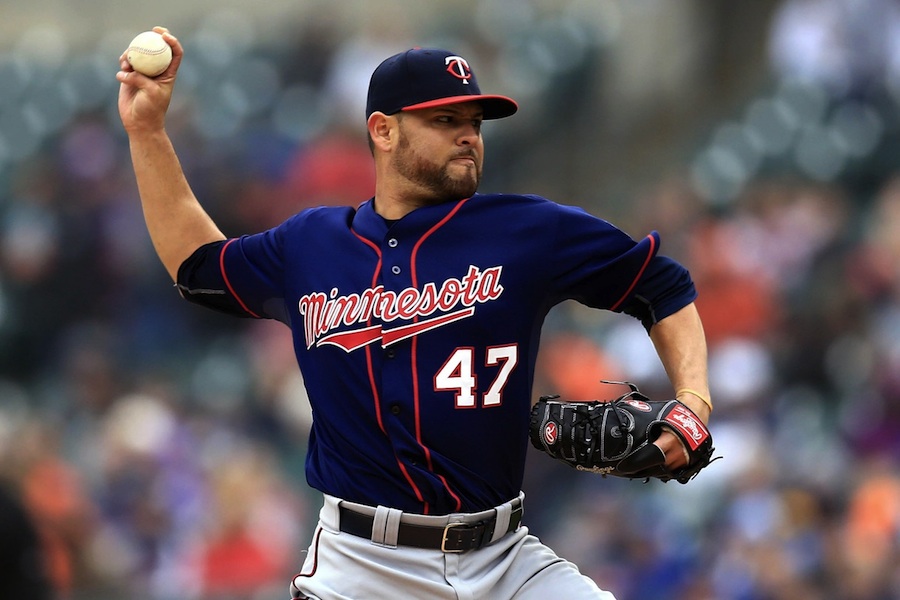 In theory, it shouldn't be all that difficult for a team with a 4.74 ERA from its starters (third-worst in the AL) to find room in its rotation, yet here we are. Trevor May, who was called up to take Nolasco's spot and probably should have been on the team coming out of spring training, has a 13-to-2 K/BB ratio with only one homer allowed in 14 2/3 innings spanning three starts. Not only is May's continued development vital to the rotation's long-term outlook, the Twins also need him right now. He provides some things that are otherwise sorely lacking on this staff; namely, the ability to miss bats while limiting walks and long balls. Tommy Milone could be a candidate for demotion coming off a rough outing on Monday, but he had a 3.37 ERA entering that start, and three of his four turns have come against the two best teams record-wise in the AL (Detroit and Kansas City). Mike Pelfrey would have been the obvious choice a week ago at this time, but he has since rattled off two excellent starts, evidently turning a corner of sorts. Now that he's gotten the opportunity he wanted and made the absolute most of it, will the Twins take it away from him? Hard to envision. When you look at all the names in the mix, the guy who seems to have the worst case for deserving a spot in the rotation is... Nolasco. He was terrible last season and he gave up six runs over three innings in his first start this year before being shelved. It's beyond optimistic to think that a couple weeks off suddenly resolved all his issues. The most just course of action would be to extend out his rehab, move him to a higher level and make him earn his way back in by proving over a string of several starts that he's healthy and effective. Rehab stints can last up to 30 days for pitchers, so the the Twins could conceivably delay a decision until it becomes clear that he's a better option than one of the five current occupants. It seems apparent, however, that the Twins feel compelled to get Nolasco back in the rotation. That'll likely mean having a rather uncomfortable conversation with a starter who really hasn't done much to lose his job. The next matter is what to do with the unfortunate demoted starter. If it's a move to the bullpen, then perhaps an uncomfortable conversation with Tim Stauffer is also looming.
 -
Article: That's The Ticket: Spring Arrives
Nick Nelson posted a topic in Twins Daily Front Page News
We've had a few false starts, but it looks like this is the week spring officially arrives in the Twin Cities. The forecast calls for sunny days all week, with highs reaching the 70s. It's perfect baseball weather, and the Twins are returning home just in time, with a 10-game homestand opening against a pair of divisional opponents. Let's dig in and unpack this first three-game set against Detroit.Overview With the season now three weeks old, the Twins have faced every American League Central opponent, and have managed to record at least one win against each of them except Detroit. The Tigers, who thoroughly dismantled Minnesota at Comerica to open the season, have had their way with just about everyone, notching an AL-leading 13 wins. Can the Twins exact some revenge at home, where they've won both series thus far? They'll have their work cut out for them. Pitching Tilts Monday, 7:10 PM: David Price (LHP) vs. Tommy Milone (LHP) Price is coming off a horrendous bad-weather outing against the Yankees in which he was shelled for eight runs on 10 hits. Prior to that, he had allowed only one earned run in 22 1/3 innings. Milone was terrific in his first start but hasn't pitched all that well since. Tuesday, 7:10 PM: Anibal Sanchez (RHP) vs. Mike Pelfrey (RHP) Since shutting down the Twins in his first turn this year, Sanchez has allowed 15 runs in 16 innings. Pelfrey delivered his best start in a Twins uniform last Wednesday, hurling seven shutout innings in Kansas City. Wednesday, 12:10 PM: Shane Greene (RHP) vs. Phil Hughes (RHP) Greene's red-hot start came to a screeching halt on Friday, when the Indians knocked him around for eight runs on nine hits in four innings. Hughes has been solid for the most part but has been susceptible to the long ball, with six homers allowed in four starts. Ticket King currently has cheap tickets available for every game. Which should you attend? That depends on what you're looking for… Want a Pitcher's Duel? Price's last outing was clearly affected by the cold, snowy conditions in Detroit. No such circumstances will be in play on Monday night, which is expected to be clear and pleasant. Price has a 2.27 career ERA against the Twins, and shut them down on Opening Day, so Minnesota will need Milone to bring everything he's got. He has a 3.37 ERA through three starts, two of which have come against a Royals team that leads the AL in OPS. Best Choice: Monday Want an Intriguing Match-Up? I'm especially curious to see Sanchez and Pelfrey face off on Tuesday. Fresh off an outing where he seemingly figured some things out and gained confidence, Pelfrey can make a statement by following up against another very tough lineup. Best Choice: Tuesday Want to Catch a Tan? The forecast for Wednesday's noon start calls for lots of sun and a high of 71. If you play hooky and grab some lower-deck tickets you'll likely be able to add a little color on the arms and face. With the Twins sending their best starter out against a reeling Greene, I'd say this is also the most favorable match-up in the series, so you might take in a win along with those rays. Best Choice: Wednesday Click here to view the article -
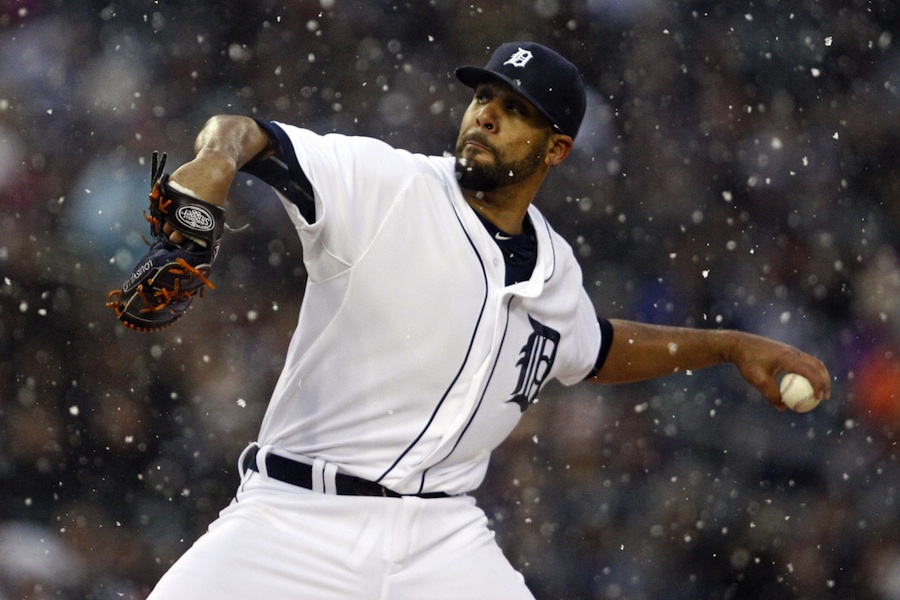 Overview With the season now three weeks old, the Twins have faced every American League Central opponent, and have managed to record at least one win against each of them except Detroit. The Tigers, who thoroughly dismantled Minnesota at Comerica to open the season, have had their way with just about everyone, notching an AL-leading 13 wins. Can the Twins exact some revenge at home, where they've won both series thus far? They'll have their work cut out for them. Pitching Tilts Monday, 7:10 PM: David Price (LHP) vs. Tommy Milone (LHP) Price is coming off a horrendous bad-weather outing against the Yankees in which he was shelled for eight runs on 10 hits. Prior to that, he had allowed only one earned run in 22 1/3 innings. Milone was terrific in his first start but hasn't pitched all that well since. Tuesday, 7:10 PM: Anibal Sanchez (RHP) vs. Mike Pelfrey (RHP) Since shutting down the Twins in his first turn this year, Sanchez has allowed 15 runs in 16 innings. Pelfrey delivered his best start in a Twins uniform last Wednesday, hurling seven shutout innings in Kansas City. Wednesday, 12:10 PM: Shane Greene (RHP) vs. Phil Hughes (RHP) Greene's red-hot start came to a screeching halt on Friday, when the Indians knocked him around for eight runs on nine hits in four innings. Hughes has been solid for the most part but has been susceptible to the long ball, with six homers allowed in four starts. Ticket King currently has cheap tickets available for every game. Which should you attend? That depends on what you're looking for… Want a Pitcher's Duel? Price's last outing was clearly affected by the cold, snowy conditions in Detroit. No such circumstances will be in play on Monday night, which is expected to be clear and pleasant. Price has a 2.27 career ERA against the Twins, and shut them down on Opening Day, so Minnesota will need Milone to bring everything he's got. He has a 3.37 ERA through three starts, two of which have come against a Royals team that leads the AL in OPS. Best Choice: Monday Want an Intriguing Match-Up? I'm especially curious to see Sanchez and Pelfrey face off on Tuesday. Fresh off an outing where he seemingly figured some things out and gained confidence, Pelfrey can make a statement by following up against another very tough lineup. Best Choice: Tuesday Want to Catch a Tan? The forecast for Wednesday's noon start calls for lots of sun and a high of 71. If you play hooky and grab some lower-deck tickets you'll likely be able to add a little color on the arms and face. With the Twins sending their best starter out against a reeling Greene, I'd say this is also the most favorable match-up in the series, so you might take in a win along with those rays. Best Choice: Wednesday
 -
On Monday night in Kansas City, Kyle Gibson had made it through five innings with only one run allowed. He opened the sixth by facing Mike Moustakas, who sent a hard-hit but fairly routine line drive to left field. Oswaldo Arcia trotted after it, reached his glove out, and... dropped the ball. Figuratively and literally. Moustakas reached, as did the next two batters, and by the end of the inning Gibson was long gone and the Royals were up 4-1.Now, this was on Gibson to some extent. He needs to recover better from that mishap and, in general, you're not going to have much success when you give up four walks and eight hits with no strikeouts in an outing. But porous defense has been an ongoing theme for this club in the early weeks. They rank last in the American League with negative-12 defensive runs saved. Their defensive efficiency (rate of balls in play turned into outs) is worst in the major leagues at 69.3 percent. Even on a more traditional level, their 11 team errors are second-most in the AL. This isn't unexpected by any means, but that doesn't exactly make it easy to stomach -- least of all for a new manager who famously preaches fundamentals and steady execution. Paul Molitor undoubtedly cringed at the sight of Arcia flubbing a routine play in left field on Monday, and he has to be aware of the devastating impact that a sub-par fielding unit is having on a pitching staff that allows more contact than any other team in the game by a wide margin. (The Twins have averaged 5.1 K/9; no one else is below 6.3.) But what can be done about it? Here are a few ideas for improving the Twins' team defense, some drastic and some less so: * Swap Oswaldo Arcia and Torii Hunter in the outfield. This is probably the least dramatic option, as it allows you to keep all the same hitters in the lineup. It's also not exactly a guarantee for improvement, as Hunter is no great shakes in the outfield himself at this point and has barely ever played in left. Still, even at age 39 he appears to be moving around and reacting better than Arcia, and there's more ground to cover on that side. Perhaps Arcia would benefit from returning to right field, where he's spent the majority of his time as a pro. * Replace Arcia with Eddie Rosario. Rosario made a late run in spring training, impressing coaches with his athleticism and aggressiveness. He has good speed and range in the outfield corners and would almost certainly represent a substantial defensive upgrade over Arcia. Unfortunately, Rosario is off to a slow start in Triple-A, batting .240 with 15 strikeouts and two walks through his first 12 games. * Make Eduardo Escobar the starter at shortstop. This was discussed a little bit on Monday. Santana has slumped at the plate in the early going, but his defensive issues may be more costly. Escobar is considered a steadier glove, and Santana might be best served sharpening his skills at shortstop in the minors after spending minimal time at the position in 2014. * Call up Aaron Hicks to play center. You'd have a hard time arguing that Jordan Schafer is at the root of the team's defensive issues, but he's stretched defensively in center and is far better suited as an occasional fill-in at the position rather than a regular starter. Hicks, for all his problems at the plate, is a strong defender capable of making exceptional plays. His bat could hardly be worse than Schafer and Shane Robinson, who have combined for a .424 OPS. Or, if the Twins really want to shake things up, they could... * Call up Byron Buxton to play center. He's the best defensive player in the entire system, and several scouts have suggested that he could play a Gold Glove-caliber center field in the major leagues right now. Installing Buxton as the starter in center would be by far the most impactful move the Twins could make to upgrade their defense, but it's not something I would endorse and probably not a notion they would take seriously at this point. Buxton's development outweighs the importance of what's presently happening with the big-league club, and while he might not be THAT far away, there's little evidence that he's prepared to face MLB pitching at this time. Do you like any of these ideas? Do you have some of your own? Sound off in the comments. Click here to view the article
-
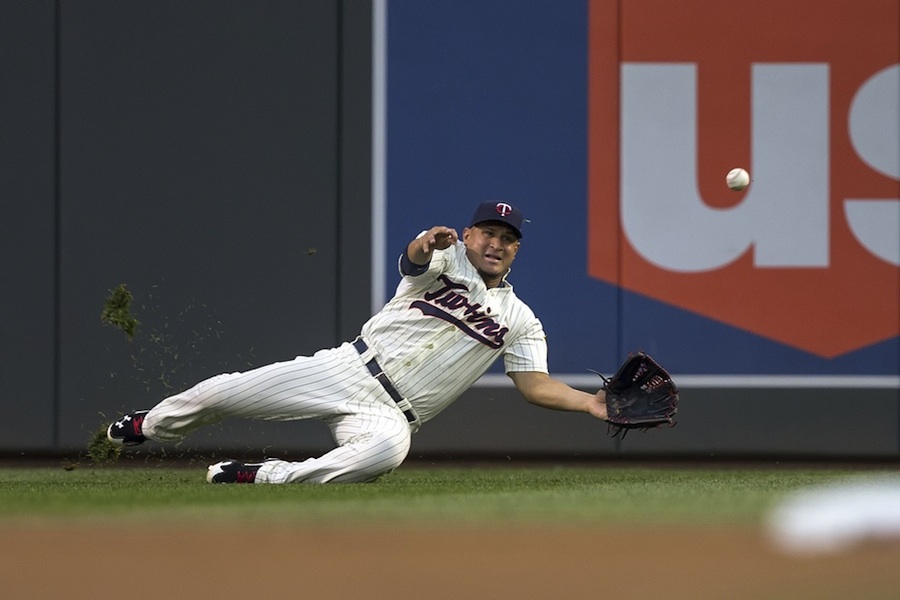 Now, this was on Gibson to some extent. He needs to recover better from that mishap and, in general, you're not going to have much success when you give up four walks and eight hits with no strikeouts in an outing. But porous defense has been an ongoing theme for this club in the early weeks. They rank last in the American League with negative-12 defensive runs saved. Their defensive efficiency (rate of balls in play turned into outs) is worst in the major leagues at 69.3 percent. Even on a more traditional level, their 11 team errors are second-most in the AL. This isn't unexpected by any means, but that doesn't exactly make it easy to stomach -- least of all for a new manager who famously preaches fundamentals and steady execution. Paul Molitor undoubtedly cringed at the sight of Arcia flubbing a routine play in left field on Monday, and he has to be aware of the devastating impact that a sub-par fielding unit is having on a pitching staff that allows more contact than any other team in the game by a wide margin. (The Twins have averaged 5.1 K/9; no one else is below 6.3.) But what can be done about it? Here are a few ideas for improving the Twins' team defense, some drastic and some less so: * Swap Oswaldo Arcia and Torii Hunter in the outfield. This is probably the least dramatic option, as it allows you to keep all the same hitters in the lineup. It's also not exactly a guarantee for improvement, as Hunter is no great shakes in the outfield himself at this point and has barely ever played in left. Still, even at age 39 he appears to be moving around and reacting better than Arcia, and there's more ground to cover on that side. Perhaps Arcia would benefit from returning to right field, where he's spent the majority of his time as a pro. * Replace Arcia with Eddie Rosario. Rosario made a late run in spring training, impressing coaches with his athleticism and aggressiveness. He has good speed and range in the outfield corners and would almost certainly represent a substantial defensive upgrade over Arcia. Unfortunately, Rosario is off to a slow start in Triple-A, batting .240 with 15 strikeouts and two walks through his first 12 games. * Make Eduardo Escobar the starter at shortstop. This was discussed a little bit on Monday. Santana has slumped at the plate in the early going, but his defensive issues may be more costly. Escobar is considered a steadier glove, and Santana might be best served sharpening his skills at shortstop in the minors after spending minimal time at the position in 2014. * Call up Aaron Hicks to play center. You'd have a hard time arguing that Jordan Schafer is at the root of the team's defensive issues, but he's stretched defensively in center and is far better suited as an occasional fill-in at the position rather than a regular starter. Hicks, for all his problems at the plate, is a strong defender capable of making exceptional plays. His bat could hardly be worse than Schafer and Shane Robinson, who have combined for a .424 OPS. Or, if the Twins really want to shake things up, they could... * Call up Byron Buxton to play center. He's the best defensive player in the entire system, and several scouts have suggested that he could play a Gold Glove-caliber center field in the major leagues right now. Installing Buxton as the starter in center would be by far the most impactful move the Twins could make to upgrade their defense, but it's not something I would endorse and probably not a notion they would take seriously at this point. Buxton's development outweighs the importance of what's presently happening with the big-league club, and while he might not be THAT far away, there's little evidence that he's prepared to face MLB pitching at this time. Do you like any of these ideas? Do you have some of your own? Sound off in the comments.
 -
Regression was expected for Danny Santana following a charmed rookie season, but few could have guessed it would hit him as hard as it has right out of the gate. In 42 plate appearances over his first 10 games of the season, the 24-year-old has eight hits (seven singles), 13 strikeouts and zero walks. For the most part, he has looked totally overmatched at the plate. On Sunday, Santana got his second day off of the season. Eduardo Escobar, starting at shortstop in his place, went 1-for-4 with an RBI single.The Twins generally tend to exercise patience with slumping players, and that's what you usually like to see with a guy as young as Santana, but there are several mitigating factors in his case that could press Paul Molitor to take action. First, he's in that leadoff spot, batting directly in front of the best hitters in the lineup and consistently taking terrible at-bats. That's tough to stomach. Of course, you can simply slide him down, and that step will probably be taken ahead of sending him to the minors. But the bigger concern might be Santana's defense. He has already committed three errors in 10 games, and has looked shaky by and large. Former shortstop Roy Smalley commented during one Fox Sports North broadcast last week that it was obvious Santana has spent some time away from the position because he appeared rusty in many regards. That's the developmental cost of using him in center field for much of 2014. With the Twins focused on playing strong defense behind their pitchers, there won't be much tolerance for inadequate glove work at short. They know what Escobar brings to the table defensively, and while he hasn't hit much early on himself, he's coming off an excellent spring and a productive '14 campaign. The season is only two weeks old, but Santana fills vital roles both offensively and defensively and he's been nowhere near up to snuff in either regard. His tremendous rookie season is offset by a lengthy minor-league record of mediocrity, so I'll be curious to see how long of a leash it really buys him. Click here to view the article
