



Nick Nelson
-
Posts
8,326 -
Joined
-
Last visited
-
Days Won
56
Content Type
Profiles
News
Minnesota Twins Videos
2026 Minnesota Twins Top Prospects Ranking
2022 Minnesota Twins Draft Picks
Minnesota Twins Free Agent & Trade Rumors, Notes, & Tidbits
Guides & Resources
2023 Minnesota Twins Draft Picks
The Minnesota Twins Players Project
2024 Minnesota Twins Draft Picks
2025 Minnesota Twins Draft Pick Tracker
2026 Minnesota Twins Draft Tracker: Picks & Bonuses
Forums
Blogs
Events
Store
Downloads
Gallery
Everything posted by Nick Nelson
-
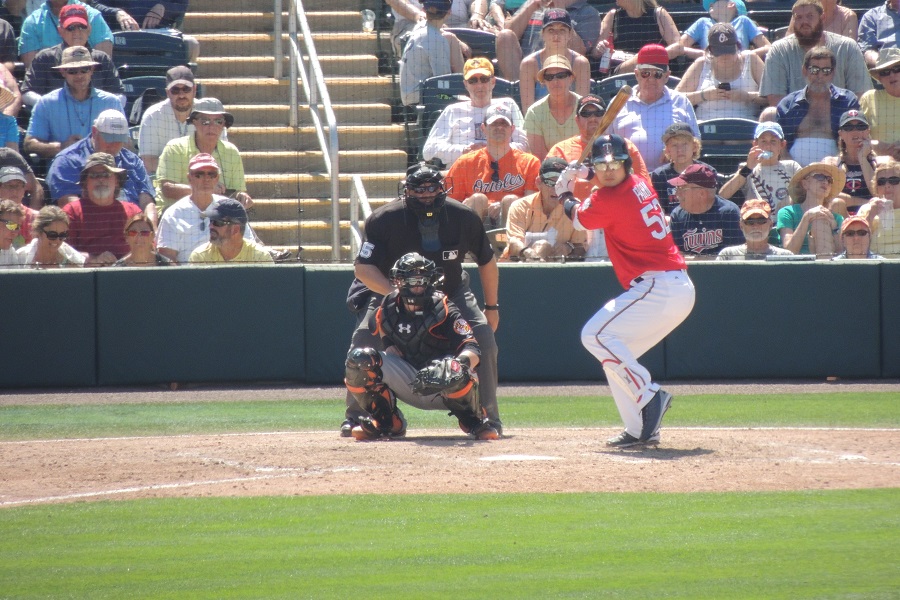 *** I'll be handling this week's Write of Spring newsletter, a special in-depth report breaking down a particular topic from Twins camp, along with a notebook dump of quotes and rumblings. The only way to get it is by making sure you're on the mailing list. It's free! *** Park went from hitting long shots last March to becoming a longshot this time around after losing his 40-man roster spot. But with Kennys Vargas away at the World Baseball Classic, the 30-year-old is taking advantage of his opportunity to pile up at-bats. Sure, the thump has been there – he leads the team with three home runs (I mean, #ParkBangs). But that’s nothing new, as it was clear from the moment he arrived that his prodigious power was legit. Now, it’s the subtler things that are gaining notice. He drew yet another start on Sunday and once again made the most of it. No, there was no 500-foot moonshot. But Park did fight off a tough pitch for a bloop single over the second baseman’s head, and laid off a borderline offering on a full count to draw a walk. Therein lies the most conspicuous distinction between this spring and last. In his first camp, Park displayed plenty of pop but the ghastly plate discipline – evidenced by a 17-to-1 strikeout-to-walk ratio – was an unshakably ominous harbinger. This year, his improved approach at the dish is evident in a K/BB that stands at 6-to-4 following Sunday’s contest. Manager Paul Molitor has certainly taken notice of this adjustment. "I like that he’s swinging at a lot of strikes,” Molitor said over the weekend. "We haven’t seen the huge expansion of the zone, or the panic. It seems like there’s a lot more calmness to his at-bats and trust in his approach.” While he’s not one to make excuses on anyone’s behalf, Molitor noted that the foreign import faced a variety of exacerbating factors as an MLB rookie. “The microscope was fairly intense," as he put it. The Korean media throngs that swarmed through Hammond Field last year have now dissipated to a sparse contingent. The widespread attention and notoriety attached to a KBO superstar arriving in America have faded. Park has been humbled, first by a midseason demotion to the minors that proved season-long, and then by a trip through waivers – unclaimed – during the offseason. Setbacks like these can be a driving force in self-actualization. Add in the surgical repair of a finger tendon issue that hampered him for much of the summer, and there’s a strong basis for belief that some key circumstantial changes will make Park’s second go at it far more fruitful. But one thing that’s not going to change is the speed of those major-league fastballs. The data on Park’s lackluster production against pitches buzzing in 93+ MPH, which he rarely if ever saw in South Korea, is stark. "He was a little bit intimidated by last year,” bench coach Joe Vavra suggested. “The excessive velocity compared to what he’s used to, that was in his head.” Now? The former Twins batting instructor detects an unmistakable shift. While the blazing heaters won’t cool off, a mellower mental state could make them more manageable. "His mind has slowed down, if anything, and that really relaxes him at the plate,” said Vavra. "You don’t see him too anxious and overexcited in any one at-bat." Molitor opined that the relentless speed of the game at its highest level, in conjunction with the team’s horrendous season-opening slump, contributed to sending the first-year big-leaguer into a spiral. Park was one of five Twins appearing in an Opening Day MLB lineup for the first time last April, the manager pointed out, and "although he’s an experienced player, it was new for him.” The former KBO MVP had grown accustomed to carrying his club. “That’s the kind of guy he is,” Molitor said. "I think it’s part of his makeup and part of his culture that they have a huge accountability factor.” All the more reason to believe fierce efforts over the winter are playing into this early success. Park is visibly more comfortable in the batter’s box. But, then again, it’s spring training. When the games don’t matter and the pitchers aren’t going full bore, it’s much easier to manage emotions and stay on an even keel. Can he do it in the regular season? Will he get the chance, with the non-roster barrier now standing in his way? Even if he keeps doing encouraging things on the field, the Twins can still easily justify sending him to Triple-A, where he failed to distinguish himself last year. This would enable the front office to delay tough DFA decisions involved with re-adding him to the 40-man. He doesn't exactly have the largest obstacle blocking him though. Well, in the literal sense, yes, Vargas is a big man. But he isn't exactly doing much to stymie Park's advance. Vargas went 1-for-13 in Grapefruit play before reporting to Puerto Rico for the WBC, where he has started one of three games (and went hitless). Either way, it's starting to feel like it won't be long before Park is back... with a bang?
 -

Article: Report From The Fort: Home Run Derby
Nick Nelson replied to Nick Nelson's topic in Twins Daily Front Page News
You seem to have a dubious understanding of how spring training works, my friend. Hughes was intentionally going to perhaps his weakest pitch in bunches (Vavra said he believes it's the most changeups Hughes has ever thrown) in order work on it. The 103 games the Twins lost last year mattered and this one did not. Yes, it was encouraging. He took a clear step forward in some meaningful ways. He was getting whiffs with his slider. It's not immaterial that he's working at 91 with the FB and hitting 92 when we're not halfway through March. That pitch averaged 90.7 and 90.5 the last two years.- 33 replies
-
- 11
-

-
- phil hughes
- byron buxton
- (and 2 more)
-
Article: Report From The Fort: Home Run Derby
Nick Nelson replied to Nick Nelson's topic in Twins Daily Front Page News
I believe it was pretty pervasive for him last year. It's a standard symptom of TOS, also reported by Matt Harvey and others.- 33 replies
-
- 2
-
-
- phil hughes
- byron buxton
- (and 2 more)
-
Article: Report From The Fort: Home Run Derby
Nick Nelson replied to Nick Nelson's topic in Twins Daily Front Page News
Well, he had the surgery so theoretically that won't be an issue anymore. If it doesn't have the desired results, I'm sure that would be a consideration.- 33 replies
-
- 2
-
-
- phil hughes
- byron buxton
- (and 2 more)
-
The ball was flying out of Hammond Stadium on Sunday, as the Twins and Orioles combined for five long balls in an 8-6 loss that snapped Minnesota’s eight-game spring win streak. We’ve got everything you need to know below the fold.* Home runs have been a problem for Phil Hughes frequently throughout his career, and certainly over the past couple of underwhelming seasons. He led the league with 29 allowed in 2015 and coughed up 11 in just 59 innings last year. Today, Baltimore’s lineup took him deep three times en route to this final pitching line: 5 IP, 6 H, 4 ER, 1 BB, 4 K. Outside of the homers, it was mostly an encouraging outing. And afterward he noted that two of the three came on changeups, a lesser pitch he’s been working on extensively this spring. His fastball showed some life, flashing 92 on the gun several times, and finally the righty started to generate some whiffs. He had struck out only one batter total in two previous Grapefruit League appearances. “Obviously I have a tendency to (allow) home runs, so people are going to say what they’re going to say in spring training about it,” Hughes said, “but I did what I wanted to do. You’re going to make mistakes with a pitch you don’t throw very often.” * Asked how his arm strength feels relative to this point last March, Hughes explained that this was the first start in which he really would have noticed a difference. The symptoms of his thoracic outlet syndrome, which was surgically repaired last year, would typically set in over the course of a game when he would be sitting between innings and going back out. As his first two official spring starts were only two innings apiece, that didn’t really come into play. So, how did he feel about today’s five-inning assignment? “I felt good. I didn’t have any of the tingling and numbness in my fingers, which is obviously a good sign. I’d say I feel a lot better than I did." * Byron Buxton led off the game with his first home run of the spring and it was a no doubter, sailing well beyond the wall in left-center and bouncing off the concourse. Buxton worked the count to 2-2 before turning on a 93 MPH fastball from Orioles righty Dylan Bundy and obliterating it. He later added a double. “He continues to be in attack mode, seeing the ball good,” said bench coach Joe Vavra, serving as acting manager with Paul Molitor and the split squad facing the Pirates in Bradenton. “That’s encouraging." * Jorge Polanco’s defense at shortstop has been the subject of much scrutiny, and that will continue to be the case, but there aren’t many questions surrounding his bat. He has been stinging the ball consistently this spring, and in the second inning today launched a grand slam from the left side, pushing his team-leading RBI total to 11. Does Vavra, a former hitting coach, like the infielder’s swing better from either box? “I don’t know,” he said pensively. “Pretty good from the right side, that’s his natural side. But from the left side, he handles that bat pretty well. Obviously the reps he’s had from the left side over the years are a lot more.” * In Mexico, World Baseball Classic pool play rolled on with Puerto Rico taking on Italy. Jose Berrios got the start, his WBC debut, and worked five innings. The rotation contender gave up only two hits, but Italy made them hurt, putting up three runs with a pair of homers. One of those came off the bat of old friend Drew Butera in the second inning. But all in all, the Twins are probably happy with what they saw. Berrios worked ahead and proceeded efficiently, needing only 62 pitches to get through five frames and placing 43 of them in the zone (69%). He stuck out six and walked only one. Yesterday, I asked Chief Baseball Officer Derek Falvey about the challenge presented by evaluating players like Berrios and Kennys Vargas, who are heavily in the mix for roster spots, from afar. He said he feels that seeing players compete at a high level, at this point in the year, is a good thing. “I like the idea that they’re going and playing in a really competitive environment,” Falvey stated. “It’s not that spring training isn’t competitive and guys don’t want to do well, but we all know that as the games wear on it’s a little bit more of a practice environment.” “We have scouts at each of the WBC events, so we’re getting reports from them. We’re also really well involved with the leaders of those teams." * Tomorrow, the Twins will host the Tampa Bay Rays at Hammond Stadium. Starting for the Rays? None other than Jose De Leon, the young right-hander who was of course at the center of Brian Dozier trade talks between the Twins and Dodgers before Los Angeles dealt him to Tampa for Logan Forsythe. De Leon has been limited by back tightness this spring and has made only one appearance, in which he gave up four runs while recording only two outs. He’ll look to get on track tomorrow. Wonder if Dozier will be in the lineup? * If you’re subscribed to the Twins Daily “Write of Spring” newsletter, I’ll have a special report hitting your inboxes on Monday night, featuring exclusive insights, quotes and analysis you won’t find anywhere else. If you’re not subscribed, what are you waiting for? It’s free! Click here to learn more. Click here to view the article
- 33 replies
-
- 2
-
-
- phil hughes
- byron buxton
- (and 2 more)
-
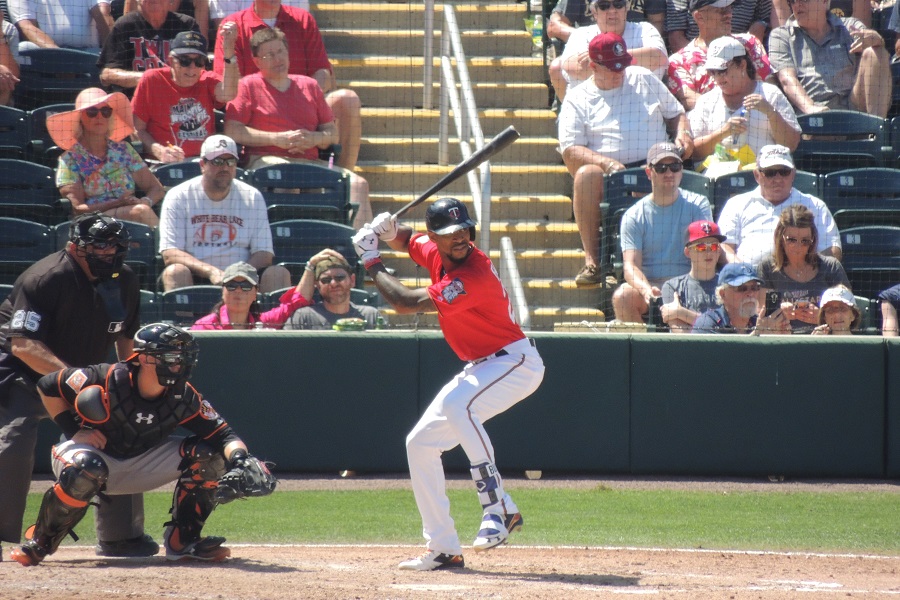 * Home runs have been a problem for Phil Hughes frequently throughout his career, and certainly over the past couple of underwhelming seasons. He led the league with 29 allowed in 2015 and coughed up 11 in just 59 innings last year. Today, Baltimore’s lineup took him deep three times en route to this final pitching line: 5 IP, 6 H, 4 ER, 1 BB, 4 K. Outside of the homers, it was mostly an encouraging outing. And afterward he noted that two of the three came on changeups, a lesser pitch he’s been working on extensively this spring. His fastball showed some life, flashing 92 on the gun several times, and finally the righty started to generate some whiffs. He had struck out only one batter total in two previous Grapefruit League appearances. “Obviously I have a tendency to (allow) home runs, so people are going to say what they’re going to say in spring training about it,” Hughes said, “but I did what I wanted to do. You’re going to make mistakes with a pitch you don’t throw very often.” * Asked how his arm strength feels relative to this point last March, Hughes explained that this was the first start in which he really would have noticed a difference. The symptoms of his thoracic outlet syndrome, which was surgically repaired last year, would typically set in over the course of a game when he would be sitting between innings and going back out. As his first two official spring starts were only two innings apiece, that didn’t really come into play. So, how did he feel about today’s five-inning assignment? “I felt good. I didn’t have any of the tingling and numbness in my fingers, which is obviously a good sign. I’d say I feel a lot better than I did." * Byron Buxton led off the game with his first home run of the spring and it was a no doubter, sailing well beyond the wall in left-center and bouncing off the concourse. Buxton worked the count to 2-2 before turning on a 93 MPH fastball from Orioles righty Dylan Bundy and obliterating it. He later added a double. “He continues to be in attack mode, seeing the ball good,” said bench coach Joe Vavra, serving as acting manager with Paul Molitor and the split squad facing the Pirates in Bradenton. “That’s encouraging." * Jorge Polanco’s defense at shortstop has been the subject of much scrutiny, and that will continue to be the case, but there aren’t many questions surrounding his bat. He has been stinging the ball consistently this spring, and in the second inning today launched a grand slam from the left side, pushing his team-leading RBI total to 11. Does Vavra, a former hitting coach, like the infielder’s swing better from either box? “I don’t know,” he said pensively. “Pretty good from the right side, that’s his natural side. But from the left side, he handles that bat pretty well. Obviously the reps he’s had from the left side over the years are a lot more.” * In Mexico, World Baseball Classic pool play rolled on with Puerto Rico taking on Italy. Jose Berrios got the start, his WBC debut, and worked five innings. The rotation contender gave up only two hits, but Italy made them hurt, putting up three runs with a pair of homers. One of those came off the bat of old friend Drew Butera in the second inning. But all in all, the Twins are probably happy with what they saw. Berrios worked ahead and proceeded efficiently, needing only 62 pitches to get through five frames and placing 43 of them in the zone (69%). He stuck out six and walked only one. Yesterday, I asked Chief Baseball Officer Derek Falvey about the challenge presented by evaluating players like Berrios and Kennys Vargas, who are heavily in the mix for roster spots, from afar. He said he feels that seeing players compete at a high level, at this point in the year, is a good thing. “I like the idea that they’re going and playing in a really competitive environment,” Falvey stated. “It’s not that spring training isn’t competitive and guys don’t want to do well, but we all know that as the games wear on it’s a little bit more of a practice environment.” “We have scouts at each of the WBC events, so we’re getting reports from them. We’re also really well involved with the leaders of those teams." * Tomorrow, the Twins will host the Tampa Bay Rays at Hammond Stadium. Starting for the Rays? None other than Jose De Leon, the young right-hander who was of course at the center of Brian Dozier trade talks between the Twins and Dodgers before Los Angeles dealt him to Tampa for Logan Forsythe. De Leon has been limited by back tightness this spring and has made only one appearance, in which he gave up four runs while recording only two outs. He’ll look to get on track tomorrow. Wonder if Dozier will be in the lineup? * If you’re subscribed to the Twins Daily “Write of Spring” newsletter, I’ll have a special report hitting your inboxes on Monday night, featuring exclusive insights, quotes and analysis you won’t find anywhere else. If you’re not subscribed, what are you waiting for? It’s free! Click here to learn more.
 -
A beautiful Saturday at Hammond Stadium got off to an inauspicious start, but the Minnesota Twins thrived under the sun against their crosstown Grapefruit League rivals, laying down a 13-0 whooping on the Boston Red Sox. Plenty of inside tidbits following the break...* The events of the day were overshadowed by this morning’s news that right-hander Trevor May, who had positioned himself to claim Minnesota’s fifth starter job, suffered a tear of the ulnar collateral ligament in his right elbow. You can get the whole story in our report, which includes thoughts from May and general manager Thad Levine. * The Twins rotation desperately needed some good vibes following that devastating blow. Kyle Gibson delivered them with five scoreless frames against the Red Sox, his finest outing this spring. If Gibson is to rebound and put it together this year, he’ll need to do exactly the things he did on the mound today. The righty attacked the lower region of the strike zone relentlessly, allowing only one walk and working efficiently enough that he needed to throw a few extras on the side after wrapping up his five innings. He notched four strikeouts, all swinging, with three coming on the slider. “It was terrible in the second start, so I’ve been working on it quite a bit in the pen,” Gibson said of his featured put-away pitch. “It’s more getting the motion right and getting my hand to the right position, it’s not necessarily when I’m using it or what my body’s doing.” * As you’ve probably heard, Gibson has been implementing some new training techniques in an effort stay strong and healthy throughout the summer. On Wednesday night we tweeted some footage of the hurler going through one of his new routines during a bullpen session: He was turned on to this regimen over the offseason at the Florida Baseball Ranch, a center in nearby Plant City that specializes in altering mechanics to eliminate preventable arm injuries. Mike Berardino had a good piece last month in the Pioneer Press discussing the innovative and quirky throwing program. “When I went to see this guy in Plant City, one thing I was kind of worried about was how he had me throwing and how we wanted me to throw, if it was going to still sink,” Gibson explained after today’s start. “He said what most guys find is as you get – not more extension, but they call it late launch – as you get the late launch your hand gets into that position to where it actually gets you a little bit later sink or a little bit more sink.” That would certainly be welcome for Gibson. Last year, his performance sank in part because his pitches didn’t, at least not enough. His 48.8 percent grounder rate was a career-low following a 2015 campaign in which he was among the game’s Top 10. Download attachment: Gibson Pitch.jpg * As I wrote on Thursday, Miguel Sano had been flailing in the early going down here. He broke out of his slump loudly today, driving a pitch from Boston lefty Henry Owens into the right-center gap and then racing around the bases for a two-run triple to open the scoring. Yes, the big slugger legged out a triple, diving into third base after reminding us that he’s a bit quicker than he looks. Seth snapped a great shot of it, pictured above. "Freight train running," Molitor said with a smirk. "He gets going." * Jackie Bradley Jr., who was in center for the Red Sox today, serves as an example that Minnesota’s own young center fielder might hope to follow. A former high draft pick and heralded prospect, Bradley struggled mightily through his first two big-league seasons with a .196/.268/.280 slash line in 530 plate appearances with a 29 percent K-rate. He turned the corner in Year 3, and in 2016 he was an All-Star, hitting .267/.349/.486 with a 26 homers to go along with exceptional defense while reining in the whiffs. In other words, exactly the kind of evolution the Twins would love to see from Buxton. * On Friday night, Team USA kicked off its World Baseball Classic pool play with a dramatic 10th inning walk-off win over Colombia. Not present for the action, of course, was Brian Dozier, who expressed surprise and disappointment over not being invited following a career year. “I thought it was a done deal,” he said. It’s particularly striking to hear from a star player who’s more than wiling but was left off the WBC roster, on the same day where Ken Rosenthal of FOX Sports publishes a story tying to the idea that U.S. players don’t care about the tournament. Click here to view the article
-
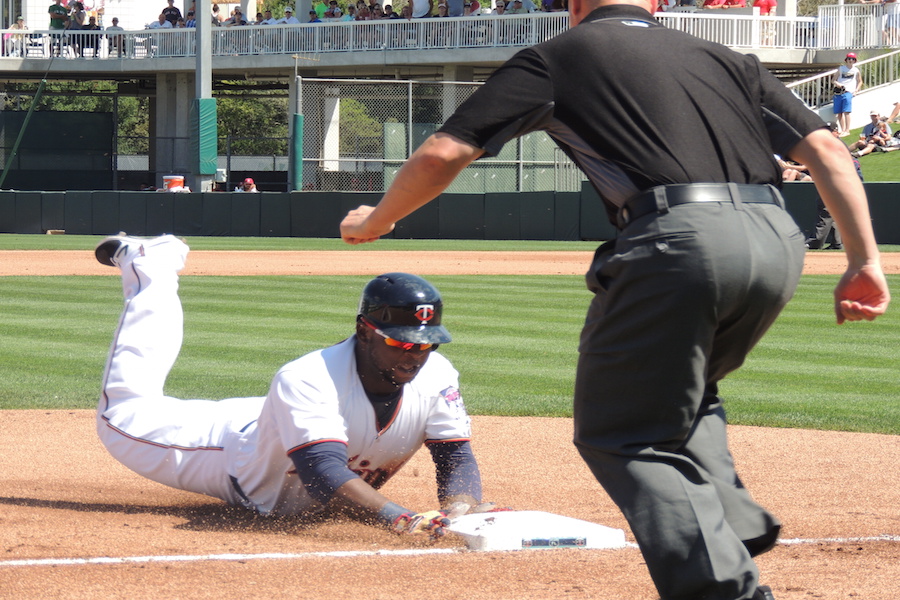 * The events of the day were overshadowed by this morning’s news that right-hander Trevor May, who had positioned himself to claim Minnesota’s fifth starter job, suffered a tear of the ulnar collateral ligament in his right elbow. You can get the whole story in our report, which includes thoughts from May and general manager Thad Levine. * The Twins rotation desperately needed some good vibes following that devastating blow. Kyle Gibson delivered them with five scoreless frames against the Red Sox, his finest outing this spring. If Gibson is to rebound and put it together this year, he’ll need to do exactly the things he did on the mound today. The righty attacked the lower region of the strike zone relentlessly, allowing only one walk and working efficiently enough that he needed to throw a few extras on the side after wrapping up his five innings. He notched four strikeouts, all swinging, with three coming on the slider. “It was terrible in the second start, so I’ve been working on it quite a bit in the pen,” Gibson said of his featured put-away pitch. “It’s more getting the motion right and getting my hand to the right position, it’s not necessarily when I’m using it or what my body’s doing.” * As you’ve probably heard, Gibson has been implementing some new training techniques in an effort stay strong and healthy throughout the summer. On Wednesday night we tweeted some footage of the hurler going through one of his new routines during a bullpen session: https://twitter.com/twinsdaily/status/839586455957745664 He was turned on to this regimen over the offseason at the Florida Baseball Ranch, a center in nearby Plant City that specializes in altering mechanics to eliminate preventable arm injuries. Mike Berardino had a good piece last month in the Pioneer Press discussing the innovative and quirky throwing program. “When I went to see this guy in Plant City, one thing I was kind of worried about was how he had me throwing and how we wanted me to throw, if it was going to still sink,” Gibson explained after today’s start. “He said what most guys find is as you get – not more extension, but they call it late launch – as you get the late launch your hand gets into that position to where it actually gets you a little bit later sink or a little bit more sink.” That would certainly be welcome for Gibson. Last year, his performance sank in part because his pitches didn’t, at least not enough. His 48.8 percent grounder rate was a career-low following a 2015 campaign in which he was among the game’s Top 10. * As I wrote on Thursday, Miguel Sano had been flailing in the early going down here. He broke out of his slump loudly today, driving a pitch from Boston lefty Henry Owens into the right-center gap and then racing around the bases for a two-run triple to open the scoring. Yes, the big slugger legged out a triple, diving into third base after reminding us that he’s a bit quicker than he looks. Seth snapped a great shot of it, pictured above. "Freight train running," Molitor said with a smirk. "He gets going." * Jackie Bradley Jr., who was in center for the Red Sox today, serves as an example that Minnesota’s own young center fielder might hope to follow. A former high draft pick and heralded prospect, Bradley struggled mightily through his first two big-league seasons with a .196/.268/.280 slash line in 530 plate appearances with a 29 percent K-rate. He turned the corner in Year 3, and in 2016 he was an All-Star, hitting .267/.349/.486 with a 26 homers to go along with exceptional defense while reining in the whiffs. In other words, exactly the kind of evolution the Twins would love to see from Buxton. * On Friday night, Team USA kicked off its World Baseball Classic pool play with a dramatic 10th inning walk-off win over Colombia. Not present for the action, of course, was Brian Dozier, who expressed surprise and disappointment over not being invited following a career year. “I thought it was a done deal,” he said. It’s particularly striking to hear from a star player who’s more than wiling but was left off the WBC roster, on the same day where Ken Rosenthal of FOX Sports publishes a story tying to the idea that U.S. players don’t care about the tournament.
 -
Plans to turn around the Minnesota Twins rotation took a hit today with the news that Trevor May, a big factor in those designs, has suffered a tear to the ulnar collateral ligament in his right elbow. Read on for details and quotes regarding the right-hander’s very unexpected setback.In a decade of playing professional ball, May has amazingly been able to avoid any kind of significant elbow or shoulder issues. “I’ve literally never missed a day of baseball activity because my arm hurt,” he said. So it isn’t too surprising that when he felt a “grab” on an 0-2 pitch against Andrew McCutchen while facing Team USA on Wednesday night, he downplayed it. When speaking to reporters after the game, he was very positive, signaling no distress or concern. He came in the next morning and felt soreness, and then on Friday the tear showed up on a scan, which even in the pitcher’s non-medical opinion was “pretty conclusive.” Standing outside the clubhouse on Saturday morning alongside top baseball executives Derek Falvey and Thad Levine, May was subdued but searching for silver linings. So, too, was the general manager. “When the results of the MRI came back, it was a little bit unique in the sense that it sounded as if the wear and tear component, or the cumulative impact, was very minimal," Levine said. “It really was an acute injury ... That’s very atypical for a guy who has logged 10 years worth of pitching on his arm.” “That gives us cause for optimism that maybe the health of the overall region is very strong but for this one acute area." Of course, this doesn’t change the basic realities. May will seek a second opinion – no date or doctor has been scheduled as of yet – and there are a few potential options on the table, but Tommy John surgery seems likely. Levine expressed no plans for reactive moves by the team, noting that injuries are always an expectation. “I don’t think you ever have any misgivings that you’re going to go through the process without needing significantly more than five starters. You hate to have it happen at this point to a player who’s put in the that work he’s put in, but the reality is that’s why we built up some of the depth we did coming into camp and it’s going to give other guys opportunities.” Among those guys are Tyler Duffey, Jose Berrios, Adalberto Mejia, Rule 5 pick Justin Haley and non-roster invite Ryan Vogelsong. Duffey pitched well in a road start for the Twins against Miami on Friday and Berrios is preparing to make his first start for Puerto Rico in the World Baseball Classic. For May, who was the subject of a feature here on Twins Daily just a couple days ago, it’s a difficult pill to swallow but he vows not to let it derail his determination. "If it comes down to getting good old fashioned Tommy John, I’ll go from there,” May said. "I’m not a guy who’s gonna sit here and mope about how hard I worked and now it’s not gonna happen.” “Yesterday was tough, but I’m probably going to go right back to that little notebook I have with me, and those goals I write down every day are just going to change from this year to next year.” Click here to view the article
-
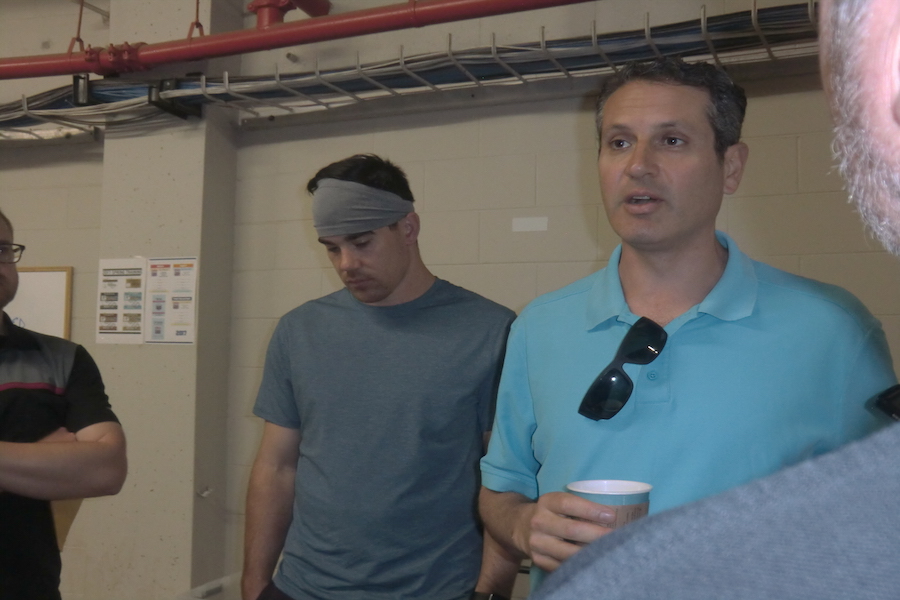 In a decade of playing professional ball, May has amazingly been able to avoid any kind of significant elbow or shoulder issues. “I’ve literally never missed a day of baseball activity because my arm hurt,” he said. So it isn’t too surprising that when he felt a “grab” on an 0-2 pitch against Andrew McCutchen while facing Team USA on Wednesday night, he downplayed it. When speaking to reporters after the game, he was very positive, signaling no distress or concern. He came in the next morning and felt soreness, and then on Friday the tear showed up on a scan, which even in the pitcher’s non-medical opinion was “pretty conclusive.” Standing outside the clubhouse on Saturday morning alongside top baseball executives Derek Falvey and Thad Levine, May was subdued but searching for silver linings. So, too, was the general manager. “When the results of the MRI came back, it was a little bit unique in the sense that it sounded as if the wear and tear component, or the cumulative impact, was very minimal," Levine said. “It really was an acute injury ... That’s very atypical for a guy who has logged 10 years worth of pitching on his arm.” “That gives us cause for optimism that maybe the health of the overall region is very strong but for this one acute area." Of course, this doesn’t change the basic realities. May will seek a second opinion – no date or doctor has been scheduled as of yet – and there are a few potential options on the table, but Tommy John surgery seems likely. Levine expressed no plans for reactive moves by the team, noting that injuries are always an expectation. “I don’t think you ever have any misgivings that you’re going to go through the process without needing significantly more than five starters. You hate to have it happen at this point to a player who’s put in the that work he’s put in, but the reality is that’s why we built up some of the depth we did coming into camp and it’s going to give other guys opportunities.” Among those guys are Tyler Duffey, Jose Berrios, Adalberto Mejia, Rule 5 pick Justin Haley and non-roster invite Ryan Vogelsong. Duffey pitched well in a road start for the Twins against Miami on Friday and Berrios is preparing to make his first start for Puerto Rico in the World Baseball Classic. For May, who was the subject of a feature here on Twins Daily just a couple days ago, it’s a difficult pill to swallow but he vows not to let it derail his determination. "If it comes down to getting good old fashioned Tommy John, I’ll go from there,” May said. "I’m not a guy who’s gonna sit here and mope about how hard I worked and now it’s not gonna happen.” “Yesterday was tough, but I’m probably going to go right back to that little notebook I have with me, and those goals I write down every day are just going to change from this year to next year.”
 -
Article: Report From The Fort: Colombia Conquered
Nick Nelson replied to Nick Nelson's topic in Twins Daily Front Page News
I mean, Ervin's results weren't actually that bad. He gave up like two hard-hit balls in four innings. It was mostly tongue-in-cheek since they were the first runs he allowed. -
In a pro sports locker room culture largely associated with jocks and meatheads, Trevor May certainly stands out. He isn’t the only major-leaguer with a profile in the gaming community, but his might be the highest. While the right-hander is excited to get his Nintendo Switch so he can play Zelda on road trips, it’s another switch Twins fans are more interested in as he makes the move back from relieving to starting.There was some consternation over Minnesota's lack of offseason action on the starting pitching front, given the horrendous results that unit put forth last year. However, the rotation can potentially receive a huge boost simply by getting May back following his 2016 foray into the bullpen. It’s an opportunity for the 27-year-old to press reset. And the stakes are high for both him and the club. ~~~ Reality is a bit more unpredictable and complicated than the virtual alternative, as May knows all too well. In a baseball sim on PlayStation, you pick your pitch, aim the joystick and press a button to deliver. You needn't deal with days where your stuff isn’t there, or with changes in your role dictated from up top, or with injuries that you just can’t seem to shake. All of these hindrances helped turn May’s 2016 campaign into a nightmarish one. But the righty believes he’s stronger for the experience. “I learned a lot of stuff about myself,” he said. "Getting myself ready, working through things, when I need to shut it down, when I need to battle through.” May’s efforts to battle through recurring back problems proved counterproductive last summer, as his numbers suffered (a 1.89 ERA and .563 opponents' OPS through May 10th gave way to 7.99 and .902 the rest of the way) and a stress fracture was discovered in September. Now, he’s got a strategy in place that he believes will keep those pesky back issues at bay. “The problem with backs, as many people know,” May explained, “is that when you tweak it, it’s hard to relax and not be tight all the time. That’s something I learned a lot about in the offseason.” “I’ve learned how to let myself relax.” ~~~ There are few things more relaxing than cozying up to the keyboard or controller and plugging in. Perhaps that’s part of May’s regimen. He makes no secret of his affinity for gaming, and he also happens to be pretty good at it. In February, he became the only pro athlete on an eSports team when he signed on with Luminosity. Download attachment: mayluminosityplain.png For the uninitiated, eSports is a humongous and rapidly growing industry that involves playing video games competitively for spectators, often while commentating. For May, the game of choice is Overwatch, a cartoony first-person shooter developed by Blizzard Entertainment. He calls the arrangement “kind of an informal thing” but both he and Luminosity have played it up, and the significance isn’t lost on people like Pete Leisen. You might be familiar with Leisen, though not by that name. He goes by the pseudonym Panda Pete, and makes up one half of the Twins and Losses duo; they frequently post their stuff here on Twins Daily. Pete's been blogging about the Twins since 2014, but he has been a gamer for pretty much his entire life, ever since he fell in love with the original Nintendo Entertainment System as a kid. For a lifelong baseball fan and avid gamer, May presents the ideal intersection of interests. On the field, he's a hell of a pitcher. Off it, he's an obsessive video game player with an entertaining persona. "Being around the same age as Trevor, along with his personality, make him a must-watch," Leisen said. "Sure he's a professional baseball player, but you can tell he loves games by his reactions when things go good and bad." Connecting with May through this medium enables Leisen to scratch two itches at once. "Twins fans, baseball fans, and gamers alike ask him questions about his 'day job' and he almost always gives an honest answer. It's also interesting to see how baseball fans and gamers interact with each other because there are some pure baseball fans who want to support Trevor, and pure gamers who like what he streams." It's safe to say the Twins pitcher is gaining new fans all the time, from all corners. He has a big one in Pete – heck, the two are posing together in his Twitter profile pic. Download attachment: petemay.jpg ~~~ May is openly passionate about his pastime, but serious about his business. He is as self-analytical and reflective as any player you will talk to in the Minnesota clubhouse. He's also constantly looking for ways to improve. If you hold a grudge toward Kevin Jepsen, I don't blame you. Terry Ryan gave up Chih-Wei Hu, an intriguing pitching prospect, to acquire the reliever at the 2015 deadline and Jepsen completely bombed last year when the team needed him after Glen Perkins went down. But Jepsen did leave a parting gift. May credits the veteran with helping teach him a new curveball grip that he implemented halfway through the season with exceptional results. The new technique gives him more 12-to-6 movement and less horizontal tilt. It also comes in much faster. "My swing-and-miss rate on it has gone up a lot since the change," he said after an impressive outing against Team USA on Wednesday. "It's been hit hard a lot less." Who else helped contribute to this evolution? Yet another unpopular Twins castoff. "Ricky Nolasco said, I throw my curveball slow on purpose and I grip it like that" – May repositions his fingers on the ball he's using to demonstrate for reporters, back to his original grip – "because I want it to be slow." "He goes, you want to throw a hard curveball though right? I'm like, yeah. He's like, don't hold it like this then, idiot!" So far, there are positive signs. On Wednesday, the difficulty level was turned up for May when he faced a star-studded lineup that featured – in his words – "the No. 3 hitter from every team." One of the right-hander's biggest pitches was a curve that dived out of the zone and coaxed Nolan Arenado to go too far with a check swing for strike three. Arenado was the actual No. 3 hitter on a team full of them, so that basically makes him the Shao Kahn or M. Bison in this scenario. May's weapon upgrade helped him vanquish the boss. If this reinvention assists in spurring a turnaround for the Twins rotation, Jepsen and Nolasco will be accepting apologies from the boo birds while the end credits roll. ~~~ Video games are fun. The Twins 2016 season, obviously, was not. It was like lag hitting when you're in the middle of a kill streak. It was like a brand new disc freezing at the first loading screen. It was like freaking Superman 64. "We're tired of being that team. It's time to step up and hold everyone accountable," May said. He includes himself in that mandate, and that's why he spent his offseason getting right physically and prepping for a triumphant return to the rotation, where he showed significant promise in 2015 before being shifted to relief. The Twins don’t need him to put up video game numbers. They’ll welcome steady mid-rotation production and May is more than capable of providing it. Click here to view the article
-
 There was some consternation over Minnesota's lack of offseason action on the starting pitching front, given the horrendous results that unit put forth last year. However, the rotation can potentially receive a huge boost simply by getting May back following his 2016 foray into the bullpen. It’s an opportunity for the 27-year-old to press reset. And the stakes are high for both him and the club. ~~~ Reality is a bit more unpredictable and complicated than the virtual alternative, as May knows all too well. In a baseball sim on PlayStation, you pick your pitch, aim the joystick and press a button to deliver. You needn't deal with days where your stuff isn’t there, or with changes in your role dictated from up top, or with injuries that you just can’t seem to shake. All of these hindrances helped turn May’s 2016 campaign into a nightmarish one. But the righty believes he’s stronger for the experience. “I learned a lot of stuff about myself,” he said. "Getting myself ready, working through things, when I need to shut it down, when I need to battle through.” May’s efforts to battle through recurring back problems proved counterproductive last summer, as his numbers suffered (a 1.89 ERA and .563 opponents' OPS through May 10th gave way to 7.99 and .902 the rest of the way) and a stress fracture was discovered in September. Now, he’s got a strategy in place that he believes will keep those pesky back issues at bay. “The problem with backs, as many people know,” May explained, “is that when you tweak it, it’s hard to relax and not be tight all the time. That’s something I learned a lot about in the offseason.” “I’ve learned how to let myself relax.” ~~~ There are few things more relaxing than cozying up to the keyboard or controller and plugging in. Perhaps that’s part of May’s regimen. He makes no secret of his affinity for gaming, and he also happens to be pretty good at it. In February, he became the only pro athlete on an eSports team when he signed on with Luminosity. For the uninitiated, eSports is a humongous and rapidly growing industry that involves playing video games competitively for spectators, often while commentating. For May, the game of choice is Overwatch, a cartoony first-person shooter developed by Blizzard Entertainment. He calls the arrangement “kind of an informal thing” but both he and Luminosity have played it up, and the significance isn’t lost on people like Pete Leisen. You might be familiar with Leisen, though not by that name. He goes by the pseudonym Panda Pete, and makes up one half of the Twins and Losses duo; they frequently post their stuff here on Twins Daily. Pete's been blogging about the Twins since 2014, but he has been a gamer for pretty much his entire life, ever since he fell in love with the original Nintendo Entertainment System as a kid. For a lifelong baseball fan and avid gamer, May presents the ideal intersection of interests. On the field, he's a hell of a pitcher. Off it, he's an obsessive video game player with an entertaining persona. "Being around the same age as Trevor, along with his personality, make him a must-watch," Leisen said. "Sure he's a professional baseball player, but you can tell he loves games by his reactions when things go good and bad." Connecting with May through this medium enables Leisen to scratch two itches at once. "Twins fans, baseball fans, and gamers alike ask him questions about his 'day job' and he almost always gives an honest answer. It's also interesting to see how baseball fans and gamers interact with each other because there are some pure baseball fans who want to support Trevor, and pure gamers who like what he streams." It's safe to say the Twins pitcher is gaining new fans all the time, from all corners. He has a big one in Pete – heck, the two are posing together in his Twitter profile pic. ~~~ May is openly passionate about his pastime, but serious about his business. He is as self-analytical and reflective as any player you will talk to in the Minnesota clubhouse. He's also constantly looking for ways to improve. If you hold a grudge toward Kevin Jepsen, I don't blame you. Terry Ryan gave up Chih-Wei Hu, an intriguing pitching prospect, to acquire the reliever at the 2015 deadline and Jepsen completely bombed last year when the team needed him after Glen Perkins went down. But Jepsen did leave a parting gift. May credits the veteran with helping teach him a new curveball grip that he implemented halfway through the season with exceptional results. The new technique gives him more 12-to-6 movement and less horizontal tilt. It also comes in much faster. "My swing-and-miss rate on it has gone up a lot since the change," he said after an impressive outing against Team USA on Wednesday. "It's been hit hard a lot less." Who else helped contribute to this evolution? Yet another unpopular Twins castoff. "Ricky Nolasco said, I throw my curveball slow on purpose and I grip it like that" – May repositions his fingers on the ball he's using to demonstrate for reporters, back to his original grip – "because I want it to be slow." "He goes, you want to throw a hard curveball though right? I'm like, yeah. He's like, don't hold it like this then, idiot!" So far, there are positive signs. On Wednesday, the difficulty level was turned up for May when he faced a star-studded lineup that featured – in his words – "the No. 3 hitter from every team." One of the right-hander's biggest pitches was a curve that dived out of the zone and coaxed Nolan Arenado to go too far with a check swing for strike three. Arenado was the actual No. 3 hitter on a team full of them, so that basically makes him the Shao Kahn or M. Bison in this scenario. May's weapon upgrade helped him vanquish the boss. If this reinvention assists in spurring a turnaround for the Twins rotation, Jepsen and Nolasco will be accepting apologies from the boo birds while the end credits roll. ~~~ Video games are fun. The Twins 2016 season, obviously, was not. It was like lag hitting when you're in the middle of a kill streak. It was like a brand new disc freezing at the first loading screen. It was like freaking Superman 64. "We're tired of being that team. It's time to step up and hold everyone accountable," May said. He includes himself in that mandate, and that's why he spent his offseason getting right physically and prepping for a triumphant return to the rotation, where he showed significant promise in 2015 before being shifted to relief. The Twins don’t need him to put up video game numbers. They’ll welcome steady mid-rotation production and May is more than capable of providing it.
 -
In preparation for its World Baseball Classic tournament play, which officially kicks off tomorrow against Team USA, Colombia came to Hammond Stadium for an exhibition against the Twins. Ervin Santana took his perfect spring record (2-0, 0.00 ERA) to the hill for Minnesota. How did he fare?* In the context of his previous work, Santana’s final line – 4 IP, 4 H, 2 ER, 3 K, 1 BB – looks awful! But he was satisfied with his outing, which set the stage for a 10-7 Twins victory, and for good reason. Obviously, the results didn’t matter. And while Santana gave up a few hard hits, he threw strikes, got grounders and worked efficiently. The righty made it through four frames while needing a dozen fewer pitches than his allotment of 65. The loudest knock of the day was an opposite field blast to right by Phillies catcher Jorge Alfaro in the fourth inning. Though the homer came on an 0-2 count, Santana didn’t regret his offering. “That was the right pitch, fastball away,” he said. "He got a good swing on it." * Drew Stubbs, who signed a minor-league deal during the offseason, got the start and batted leadoff as he makes his case for a bench spot. Stubbs hasn’t hit much in the past couple of seasons, which is why he couldn’t land a guaranteed contract, but he recognizes his appeal to a team like Minnesota. "I’m a natural center fielder and those are kind of hard to come by when you’re looking for a guy who can fill in,” the 32-year-old said. As I wrote last month when discussing some camp sleepers for the Twins, he veteran’s defensive play this month will likely prove more critical than anything he does with the bat. He didn’t get any real chances to flash the leather in center today but I suspect he’ll get plenty more opportunities to show what he can do out there this month. Paul Molitor said he wants to see more of what Stubbs can do against left-handed pitching, and plans to get him some more exposure over the next couple of days with southpaws on the probable docket. * Another day, another Danny Santana gaffe. After committing several blunders at shortstop on Wednesday night, Santana got the start in left. In the third inning, after reaching on a fielder’s choice, he left early on a steal attempt with one out and got picked off. On the very next pitch, Brian Dozier smashed a double off the wall in left center that would have likely scored Santana from first. Instead, Miguel Sano followed the Dozier double with a strikeout and the Twins came away empty-handed in the inning. It was another base running flub from a player who went just 12-for-21 on steals last year despite his speed. To his credit, Santana did deliver an RBI infield single a few innings later that put the Twins on the board. * Two contenders for the backup catcher job appeared in today’s game, with Chris Gimenez starting behind the plate before being replaced by Mitch Garver in the sixth inning. Gimenez went 1-for-2 with a single while Garver finished 0-for-1 with a walk and an RBI groundout. It was a somewhat rare chance this spring for Garver, who ranks as our 11th-best Twins prospect. When chatting before the game, he didn’t make it sound like he’d be too crushed if he loses out to more experienced options like Gimenez or John Ryan Murphy, and in fact seemed almost resigned to it. "If they want me to help the team and be a backup that’d be awesome,” he said. “If I’ve gotta be in Triple-A for the year that’s fine with me. I just want to improve my game and be ready when I get there." * Sano struck out in two of his three plate appearances and walked in the other. He’s now batting .167 this spring with 10 strikeouts in 18 at-bats. The base on balls was his first in Grapefruit League play, so clearly the slugger hasn’t brought a very good approach the plate thus far. Is Molitor concerned? Not too much, yet. “It’s funny, when it’s the start of the season or whatever else, and things don’t go well, it kind of jumps out at you … We’ll keep him in a regular rotation and hopefully start seeing better results.” Molitor’s point about small samples, good or bad, sticking out more when they are the only sample is a fair one. But Sano’s 36 percent K-rate last year was three points higher than the qualified leader (Chris Davis) and in fact he would’ve set the all-time record for if he made seven more plate appearances to reach the 502 threshold. So, it’s a little tough not to be distraught by the early contact issues from a player the Twins desperately need to start moving in the other direction. * One player who has caught Molitor’s eye: Benji Gonzalez, a non-roster invite who most recently played in the Mariners organization. The versatile infielder made the most of his four innings after taking over at the hot corner in the sixth. He walked and scored in his first at-bat, singled in the go-ahead run on a hit-and-run in his second, and then launched a towering oppo bomb in his third. Later, his nifty backhand pick and throw on a tough grounder down the third base line mercifully ended a ninth frame that had dragged on with Michael Tonkin and Ryan O’Rourke laboring. “He’s done really well,” the manager said. “We’ve had a chance to have some different people in camp here in that kind of role and – not that these other guys haven’t done some things – but he’s been a pleasant surprise." Click here to view the article
-
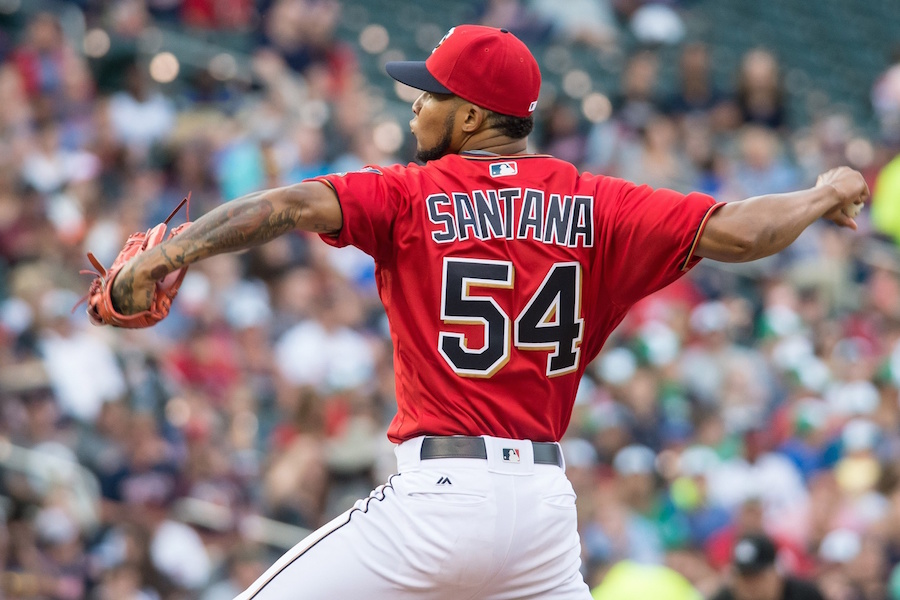 * In the context of his previous work, Santana’s final line – 4 IP, 4 H, 2 ER, 3 K, 1 BB – looks awful! But he was satisfied with his outing, which set the stage for a 10-7 Twins victory, and for good reason. Obviously, the results didn’t matter. And while Santana gave up a few hard hits, he threw strikes, got grounders and worked efficiently. The righty made it through four frames while needing a dozen fewer pitches than his allotment of 65. The loudest knock of the day was an opposite field blast to right by Phillies catcher Jorge Alfaro in the fourth inning. Though the homer came on an 0-2 count, Santana didn’t regret his offering. “That was the right pitch, fastball away,” he said. "He got a good swing on it." * Drew Stubbs, who signed a minor-league deal during the offseason, got the start and batted leadoff as he makes his case for a bench spot. Stubbs hasn’t hit much in the past couple of seasons, which is why he couldn’t land a guaranteed contract, but he recognizes his appeal to a team like Minnesota. "I’m a natural center fielder and those are kind of hard to come by when you’re looking for a guy who can fill in,” the 32-year-old said. As I wrote last month when discussing some camp sleepers for the Twins, he veteran’s defensive play this month will likely prove more critical than anything he does with the bat. He didn’t get any real chances to flash the leather in center today but I suspect he’ll get plenty more opportunities to show what he can do out there this month. Paul Molitor said he wants to see more of what Stubbs can do against left-handed pitching, and plans to get him some more exposure over the next couple of days with southpaws on the probable docket. * Another day, another Danny Santana gaffe. After committing several blunders at shortstop on Wednesday night, Santana got the start in left. In the third inning, after reaching on a fielder’s choice, he left early on a steal attempt with one out and got picked off. On the very next pitch, Brian Dozier smashed a double off the wall in left center that would have likely scored Santana from first. Instead, Miguel Sano followed the Dozier double with a strikeout and the Twins came away empty-handed in the inning. It was another base running flub from a player who went just 12-for-21 on steals last year despite his speed. To his credit, Santana did deliver an RBI infield single a few innings later that put the Twins on the board. * Two contenders for the backup catcher job appeared in today’s game, with Chris Gimenez starting behind the plate before being replaced by Mitch Garver in the sixth inning. Gimenez went 1-for-2 with a single while Garver finished 0-for-1 with a walk and an RBI groundout. It was a somewhat rare chance this spring for Garver, who ranks as our 11th-best Twins prospect. When chatting before the game, he didn’t make it sound like he’d be too crushed if he loses out to more experienced options like Gimenez or John Ryan Murphy, and in fact seemed almost resigned to it. "If they want me to help the team and be a backup that’d be awesome,” he said. “If I’ve gotta be in Triple-A for the year that’s fine with me. I just want to improve my game and be ready when I get there." * Sano struck out in two of his three plate appearances and walked in the other. He’s now batting .167 this spring with 10 strikeouts in 18 at-bats. The base on balls was his first in Grapefruit League play, so clearly the slugger hasn’t brought a very good approach the plate thus far. Is Molitor concerned? Not too much, yet. “It’s funny, when it’s the start of the season or whatever else, and things don’t go well, it kind of jumps out at you … We’ll keep him in a regular rotation and hopefully start seeing better results.” Molitor’s point about small samples, good or bad, sticking out more when they are the only sample is a fair one. But Sano’s 36 percent K-rate last year was three points higher than the qualified leader (Chris Davis) and in fact he would’ve set the all-time record for if he made seven more plate appearances to reach the 502 threshold. So, it’s a little tough not to be distraught by the early contact issues from a player the Twins desperately need to start moving in the other direction. * One player who has caught Molitor’s eye: Benji Gonzalez, a non-roster invite who most recently played in the Mariners organization. The versatile infielder made the most of his four innings after taking over at the hot corner in the sixth. He walked and scored in his first at-bat, singled in the go-ahead run on a hit-and-run in his second, and then launched a towering oppo bomb in his third. Later, his nifty backhand pick and throw on a tough grounder down the third base line mercifully ended a ninth frame that had dragged on with Michael Tonkin and Ryan O’Rourke laboring. “He’s done really well,” the manager said. “We’ve had a chance to have some different people in camp here in that kind of role and – not that these other guys haven’t done some things – but he’s been a pleasant surprise."
 -
Article: Report From The Fort: WBC Warmup
Nick Nelson replied to Nick Nelson's topic in Twins Daily Front Page News
I think it mostly has to do with how the schedule has played out and ensuring he gets enough rest early in the spring. But yeah, it was striking to see how lopsided the distribution was. -
Article: Report From The Fort: WBC Warmup
Nick Nelson replied to Nick Nelson's topic in Twins Daily Front Page News
He explained that he has put together a good system for managing it and expressed zero concern. I'll probably write about it at some point this weekend, pretty interesting stuff.- 15 replies
-
- 1
-
-
- danny santana
- trevor may
- (and 2 more)
-
The Minnesota Twins faced off against Team USA on Wednesday night in a tuneup for the World Baseball Classic. While this was a low-stakes exhibition even by lax spring training standards, Paul Molitor did roll out a midsummer-caliber batting order and Trevor May took the bump as he competes for the fifth starter job. Read on for notes and quotes from a 3-2 victory over what May dubbed “one of the best lineups that anyone’s ever faced."* The starting pitcher’s description of his opposing lineup was intentionally hyperbolic, but not too much of a stretch. The American WBC roster features plenty of offensive firepower, and had all its starters on display tonight. When the bottom third of your order consists of Daniel Murphy, Andrew McCutchen and Brandon Crawford, you know you’re stacked. May got off to a rocky start, giving up singles to Ian Kinsler and Adam Jones followed by a two-run double from Nolan Arenado that put him in an early hole. But he settled in impressively, allowing only a ground ball single and a couple of walks the rest of the way while completing 3 2/3 frames, second-most for a Twins starter this spring. His two strikeouts – one of Giancarlo Stanton with a high heater, the other of Arenado with a nasty curve – were definitely highlights. It’s probably a leap to say he locked up his rotation spot with this performance, but… maybe not. * Tonight was May’s first time working with catcher Jason Castro, in a game or even a bullpen session. In fact, it was their first real opportunity to interact. “I introduced myself to him today,” the right-hander said with a chuckle. “I walked up and said hi, I’m Trevor.” The righty had strong reviews for the new acquisition as a receiver, complimenting the way he sets up and anticipates pitch movement. There is also the more basic advantage of having a sturdy 6-foot-3 specimen crouching behind the plate. “Huge target. He looks like Joe (Mauer) back there." * May isn’t alone in his lack of experience working with Castro. Previously, the free agent addition had started behind the plate for Kyle Gibson three times, and Ervin Santana twice, but not for any other projected starters. "It hasn’t been as distributed as I thought it would be at this point," Molitor acknowledged. "There’s still plenty of time left. We’re going to try to spread that out a little bit if we can." * Twins lefty Stephen Gonsalves was scheduled to head over to Team USA's side this evening as an extra bullpen arm, but he was scratched due to shoulder weakness, which he initially reported after his outing against the Phillies last Friday. Molitor said Gonsalves was feeling tenderness on the posterior side of his shoulder, which is notably the same area where a strain caused him to miss time in the Arizona Fall League a few months ago. "They tested his strength and it was down just a hair," the manager explained, "so we’re just kind of being cautious there." Molitor didn’t express much concern, and Gonsalves was in good spirits when I spoke to him earlier today in the clubhouse. Still, it’s something to keep an eye on. Here’s what John wrote about the southpaw’s AFL health scare when profiling him as Twins Daily’s No. 2 prospect: * Danny Santana got a chance to play some shortstop, taking over after starter Jorge Polanco came out of the game. He quickly reminded everyone of the good he can do there, ranging into the hole and making a beautiful off-balance one-hop strike to beat Paul Goldschmidt at first. It was, honestly, perhaps a better play than a Twins shortstop made in the entirety of 2016. Unfortunately, he wasted little time in reminding us of the bad. In the next inning, he pulled first baseman Matt Hague off the bag with a wide throw while turning a routine double play. Then, in the ninth, he charged in a slow roller and hastily delivered a terrible toss that skipped past first and moved two runners into scoring position with no outs. Reliever Craig Breslow worked around the damage, getting two outs and then inducing a fly ball to foul territory behind third base that should have ended the game. Santana failed to reach it. That one bugged the manager. “Little disappointed we didn’t catch that ball down the line.” Santana’s athleticism and raw abilities continue to be obvious, but he can ill afford the mistakes that continue to come in bunches when he’s on the field. Click here to view the article
- 15 replies
-
- 1
-
-
- danny santana
- trevor may
- (and 2 more)
-
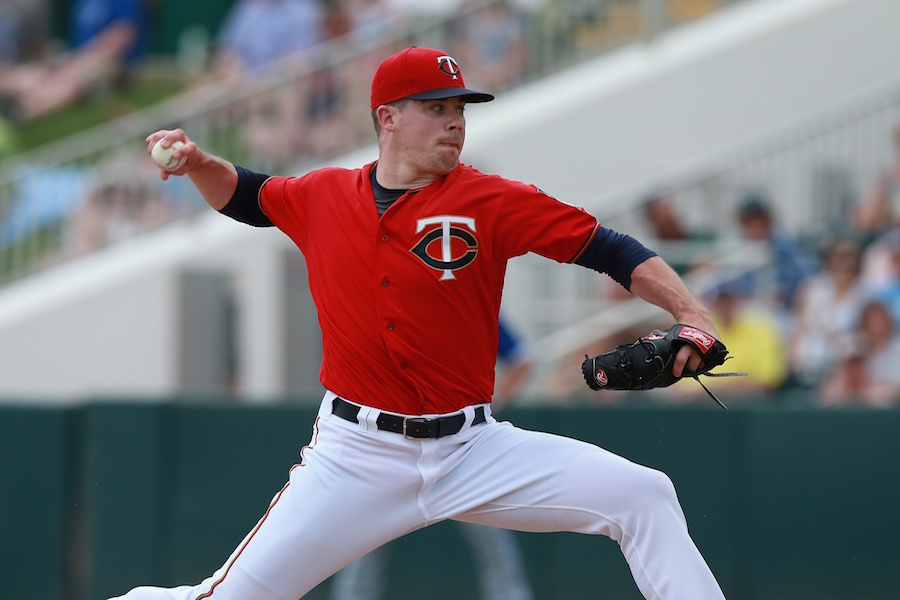 * The starting pitcher’s description of his opposing lineup was intentionally hyperbolic, but not too much of a stretch. The American WBC roster features plenty of offensive firepower, and had all its starters on display tonight. When the bottom third of your order consists of Daniel Murphy, Andrew McCutchen and Brandon Crawford, you know you’re stacked. May got off to a rocky start, giving up singles to Ian Kinsler and Adam Jones followed by a two-run double from Nolan Arenado that put him in an early hole. But he settled in impressively, allowing only a ground ball single and a couple of walks the rest of the way while completing 3 2/3 frames, second-most for a Twins starter this spring. His two strikeouts – one of Giancarlo Stanton with a high heater, the other of Arenado with a nasty curve – were definitely highlights. It’s probably a leap to say he locked up his rotation spot with this performance, but… maybe not. * Tonight was May’s first time working with catcher Jason Castro, in a game or even a bullpen session. In fact, it was their first real opportunity to interact. “I introduced myself to him today,” the right-hander said with a chuckle. “I walked up and said hi, I’m Trevor.” The righty had strong reviews for the new acquisition as a receiver, complimenting the way he sets up and anticipates pitch movement. There is also the more basic advantage of having a sturdy 6-foot-3 specimen crouching behind the plate. “Huge target. He looks like Joe (Mauer) back there." * May isn’t alone in his lack of experience working with Castro. Previously, the free agent addition had started behind the plate for Kyle Gibson three times, and Ervin Santana twice, but not for any other projected starters. "It hasn’t been as distributed as I thought it would be at this point," Molitor acknowledged. "There’s still plenty of time left. We’re going to try to spread that out a little bit if we can." * Twins lefty Stephen Gonsalves was scheduled to head over to Team USA's side this evening as an extra bullpen arm, but he was scratched due to shoulder weakness, which he initially reported after his outing against the Phillies last Friday. Molitor said Gonsalves was feeling tenderness on the posterior side of his shoulder, which is notably the same area where a strain caused him to miss time in the Arizona Fall League a few months ago. "They tested his strength and it was down just a hair," the manager explained, "so we’re just kind of being cautious there." Molitor didn’t express much concern, and Gonsalves was in good spirits when I spoke to him earlier today in the clubhouse. Still, it’s something to keep an eye on. Here’s what John wrote about the southpaw’s AFL health scare when profiling him as Twins Daily’s No. 2 prospect: * Danny Santana got a chance to play some shortstop, taking over after starter Jorge Polanco came out of the game. He quickly reminded everyone of the good he can do there, ranging into the hole and making a beautiful off-balance one-hop strike to beat Paul Goldschmidt at first. It was, honestly, perhaps a better play than a Twins shortstop made in the entirety of 2016. Unfortunately, he wasted little time in reminding us of the bad. In the next inning, he pulled first baseman Matt Hague off the bag with a wide throw while turning a routine double play. Then, in the ninth, he charged in a slow roller and hastily delivered a terrible toss that skipped past first and moved two runners into scoring position with no outs. Reliever Craig Breslow worked around the damage, getting two outs and then inducing a fly ball to foul territory behind third base that should have ended the game. Santana failed to reach it. That one bugged the manager. “Little disappointed we didn’t catch that ball down the line.” Santana’s athleticism and raw abilities continue to be obvious, but he can ill afford the mistakes that continue to come in bunches when he’s on the field.
 -
The Detroit Tigers have seen the bottom. In 2003 they set the benchmark for modern era ineptitude with 119 losses, and the franchise seems intent on never going back to that place. Maybe that's why they have eschewed any kind of significant rebuild efforts despite an aging roster and a thin farm system. The window is still open, but it's closing fast, and the lack of a proactive strategy could soon loom large.2016 At A Glance Record: 86-75 Runs Scored: 750 Runs Allowed: 721 Pythag W/L: 83-78 Pitching WAR Leader: Justin Verlander Hitting WAR Leader: Ian Kinsler Season Recap Miguel Cabrera went back into Miguel Cabrera mode. Ian Kinsler delivered one of the best seasons of his career at age 34. Victor Martinez rebounded, Justin Upton arrived with a 31-homer campaign, and Nick Castellanos seemingly turned a corner at third. On the pitching end, Justin Verlander came through with vintage, ace-caliber performance while Michael Fulmer emerged as a stud. It was enough to fuel a major turnaround, which saw Detroit rise from fifth to second in the standings, but not enough to get them to the playoffs. Ultimately, they lacked the pitching depth to keep pace with Cleveland, despite a rotation that boasted the Rookie of the Year along with the Cy Young runner-up, and that's... well, scary. Scarier for Detroit's fan base is that the Tigers front office did little to alter or supplement the roster during the offseason. GM Al Avila showed little outward interest in trading the 34-year-old Kinsler with his value at a high point, a strong signal that title contention remains the plan. Given the Hall of Fame bound cornerstones leading the way, we certainly can't count Detroit out, but will the beast known as Cabrerlander get the help it needs? Why They'll Be Better Year One of the Jordan Zimmermann experiment was a bust, and a costly one for the Tigers. After a brilliant month of April, the $110 million free agent signing went in the tank, posting a 6.84 ERA the rest of the way while losing long stretches to neck and lat injuries. It's interesting to think about how differently things might have played out in the Central if Zimmermann had been able to stay strong, healthy and effective throughout the summer. That's surely what the club is envisioning in this new season. If Verlander and Fullmer can approximate their 2016 performances, while Zim rediscovers the form he consistently showed in Washington, the Tigers have a starter trio that can rival the Indians. This is their best path to overtaking the reigning division champs. The back of the rotation figures to improve also with young talents like Daniel Norris and Matt Boyd assuming bigger roles. The Tigers will score enough, so if the defense and pitching staff can cut down the Runs Allowed total by 50 or so, 90-plus wins is very realistic. Why They'll Be Worse As mentioned earlier, the Tigers came up short last year despite Cabrera, Verlander and several others giving pretty much all you can hope for. It's been a while since the entire core has stayed healthy and productive at the same time, and it's a little tough to count on that keeping up as they age into their mid-30s. Between Anibal Sanchez and Mike Pelfrey, Detroit has $25 million tied up in burnt out veterans who were sizable parts of the problem in 2016. Neither is a lock for the rotation, but the contractual commitments will probably compel manager Brad Ausmus to feed them more innings and opportunities. Detroit's offense should still be solid at the very least, but there isn't much setup for improvement. They didn't sign anyone to fill their biggest hole at catcher – James McCann will get another shot after posting a .629 OPS – and they opened a new one by trading center fielder Cameron Maybin for a middling pitching prospect. The Tigers are set to outspend every MLB team other than the Dodgers and Yankees. Over the past three years, these hefty payrolls have produced not one postseason win. Something's gotta give, which is that I expect Detroit will be a major player at the trade deadline – one way or the other. Three Key Storylines 1. Can fireballing reliever Bruce Rondon build on his impressive 2016 showing and become a late-inning force? 2. Will Jordan Zimmermann rebound from an ugly first year in Motown and start making good on the team's enormous investment? 3. Who will play between Justin Upton and J.D. Martinez in the outfield? Can some combination of Tyler Collins, Mikie Mahtook and JaCoby Jones equate to a palatable solution in center? Click here to view the article
-
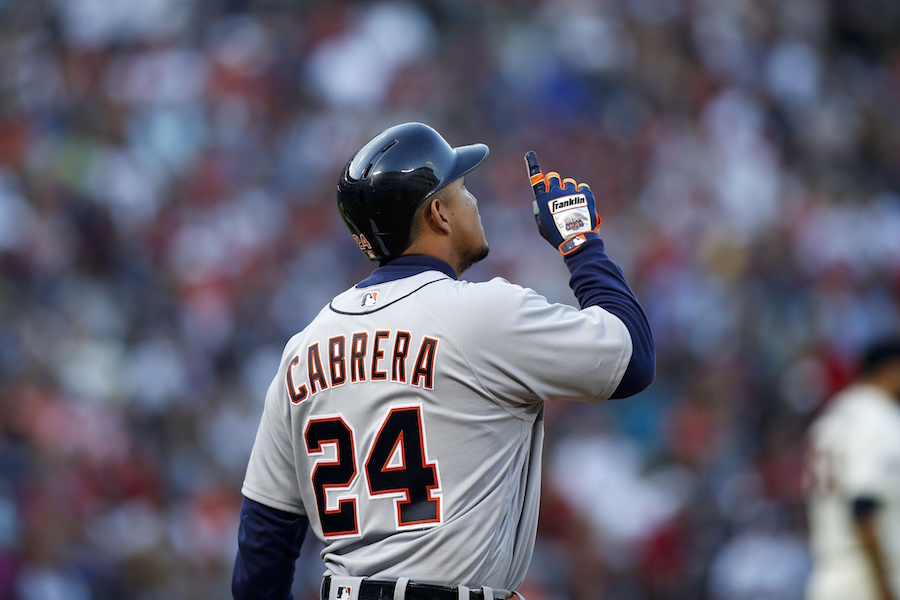 2016 At A Glance Record: 86-75 Runs Scored: 750 Runs Allowed: 721 Pythag W/L: 83-78 Pitching WAR Leader: Justin Verlander Hitting WAR Leader: Ian Kinsler Season Recap Miguel Cabrera went back into Miguel Cabrera mode. Ian Kinsler delivered one of the best seasons of his career at age 34. Victor Martinez rebounded, Justin Upton arrived with a 31-homer campaign, and Nick Castellanos seemingly turned a corner at third. On the pitching end, Justin Verlander came through with vintage, ace-caliber performance while Michael Fulmer emerged as a stud. It was enough to fuel a major turnaround, which saw Detroit rise from fifth to second in the standings, but not enough to get them to the playoffs. Ultimately, they lacked the pitching depth to keep pace with Cleveland, despite a rotation that boasted the Rookie of the Year along with the Cy Young runner-up, and that's... well, scary. Scarier for Detroit's fan base is that the Tigers front office did little to alter or supplement the roster during the offseason. GM Al Avila showed little outward interest in trading the 34-year-old Kinsler with his value at a high point, a strong signal that title contention remains the plan. Given the Hall of Fame bound cornerstones leading the way, we certainly can't count Detroit out, but will the beast known as Cabrerlander get the help it needs? Why They'll Be Better Year One of the Jordan Zimmermann experiment was a bust, and a costly one for the Tigers. After a brilliant month of April, the $110 million free agent signing went in the tank, posting a 6.84 ERA the rest of the way while losing long stretches to neck and lat injuries. It's interesting to think about how differently things might have played out in the Central if Zimmermann had been able to stay strong, healthy and effective throughout the summer. That's surely what the club is envisioning in this new season. If Verlander and Fullmer can approximate their 2016 performances, while Zim rediscovers the form he consistently showed in Washington, the Tigers have a starter trio that can rival the Indians. This is their best path to overtaking the reigning division champs. The back of the rotation figures to improve also with young talents like Daniel Norris and Matt Boyd assuming bigger roles. The Tigers will score enough, so if the defense and pitching staff can cut down the Runs Allowed total by 50 or so, 90-plus wins is very realistic. Why They'll Be Worse As mentioned earlier, the Tigers came up short last year despite Cabrera, Verlander and several others giving pretty much all you can hope for. It's been a while since the entire core has stayed healthy and productive at the same time, and it's a little tough to count on that keeping up as they age into their mid-30s. Between Anibal Sanchez and Mike Pelfrey, Detroit has $25 million tied up in burnt out veterans who were sizable parts of the problem in 2016. Neither is a lock for the rotation, but the contractual commitments will probably compel manager Brad Ausmus to feed them more innings and opportunities. Detroit's offense should still be solid at the very least, but there isn't much setup for improvement. They didn't sign anyone to fill their biggest hole at catcher – James McCann will get another shot after posting a .629 OPS – and they opened a new one by trading center fielder Cameron Maybin for a middling pitching prospect. The Tigers are set to outspend every MLB team other than the Dodgers and Yankees. Over the past three years, these hefty payrolls have produced not one postseason win. Something's gotta give, which is that I expect Detroit will be a major player at the trade deadline – one way or the other. Three Key Storylines 1. Can fireballing reliever Bruce Rondon build on his impressive 2016 showing and become a late-inning force? 2. Will Jordan Zimmermann rebound from an ugly first year in Motown and start making good on the team's enormous investment? 3. Who will play between Justin Upton and J.D. Martinez in the outfield? Can some combination of Tyler Collins, Mikie Mahtook and JaCoby Jones equate to a palatable solution in center?
 -
Part of Minnesota's blueprint for success from 2002 through 2010 was taking advantage of the unbalanced schedule and piling up wins against inferior AL Central opponents. Lately that has been an exceedingly tall order, with the division producing pennant winners in four of the last five seasons. Most recently it was the Cleveland Indians, who charged through the postseason before coming up just short of a World Series title. Today we kick off our team-by-team 2017 preview of AL Central opponents with a look at the reigning champs.2016 At A Glance Record: 94-67 Runs Scored: 777 Runs Allowed: 676 Pythag W/L: 91-70 Pitching WAR Leader: Corey Kluber Hitting WAR Leader: Francisco Lindor Season Recap When previewing Cleveland before the season, here was my summation: Cleveland has a wide range of possible outcomes for the 2016 season. With their rotation setup, they can't be discounted as legitimate World Series contenders, but with an offense that wasn't good last year and displays no obvious avenues for significant improvement, they may not score enough to finally get over that hump. As it turned out, the offense improved by more than 100 runs and got them over the hump. Free agent signing Mike Napoli played a big part with his 34 homers and 101 RBI. He anchored a tremendously productive infield that also featured Francisco Lindor, Jason Kipnis and Jose Ramirez. Tyler Naquin's out-of-nowhere Herculean rookie effort led the way in the outfield while Carlos Santana enjoyed a career year at the plate as DH. The Indians trudged through a slowish start, which included series losses to the Twins in April and May, but hit their stride in June and never looked back. Over the final four months Cleveland went 68-43, and then won eight of its first nine postseason games before being thwarted by a Cubs comeback. This tremendous run was driven by outstanding starting pitching – led by the elite trio of Corey Kluber, Carlos Carrasco and Danny Salazar – and solid production throughout the lineup, as well as a weaponized bullpen bolstered by the addition of Andrew Miller in July. Why They'll Be Better One of the most amazing parts of Cleveland's 2016 run is that it occurred with virtually no contribution from arguably the club's best position player. Over the previous two seasons, Michael Brantley had batted .319 with an .876 OPS to go along with 35 homers and 90 doubles, twice garnering MVP consideration. But his recovery from shoulder surgery was fraught with setbacks, limiting him to 43 plate appearances last year. He underwent another operation on the same shoulder after the season and is currently easing his way into spring activities. There's no assurance Brantley is going to come back anywhere close to his previous form, but if he does, the Indians are adding a huge impact bat. And he won't be the only one. With Napoli departing via free agency, Cleveland actually managed to upgrade by signing of Edwin Encarnacion. His numbers on average over the past five years have been better than the ones that made Napoli the lineup's best run producer. There's room for regression with a few players (especially Naquin), but the Indians have a very realistic chance to improve again offensively after scoring the league's second-most runs in 2016. Meanwhile, a pitching staff that allowed the second-fewest brings back every key member. Kluber, Carrasco and Salazar will be back at the top of the rotation. Trevor Bauer, still only 26, is a breakout candidate. Boone Logan joins the bullpen as a situational weapon to deploy ahead of Miller and Cody Allen. One of Derek Falvey's biggest early difficulties while running the Twins will be dealing with the juggernaut he helped build in Cleveland. This is a well-rounded squad that is going to be tough to take a series from. Why They'll Be Worse The "gotta stay healthy" stipulation applies to any team, but Cleveland has more prominent concerns than most in this regard. Brantley is of course a wild card at this point. Salazar dealt with a late-season flexor strain and missed the playoffs. Kluber piled up 250 total innings while going max-effort into November. The farm system is solid but most of their top prospects – including catcher Francisco Mejia, who they could really use – are still a ways off. A few major injuries could at least make things interesting, but I think it would take a disastrous turn of events for the Indians to lose their standing as clear favorites in the division and in the league. Three Key Storylines 1. Can Trevor Bauer throw enough strikes to give the rotation a fourth dominator? 2. Will Michael Brantley be able to get past his nightmarish shoulder woes? 3. Can Andrew Miller repeat what he did last year after throwing nearly 100 relief innings? Click here to view the article
-
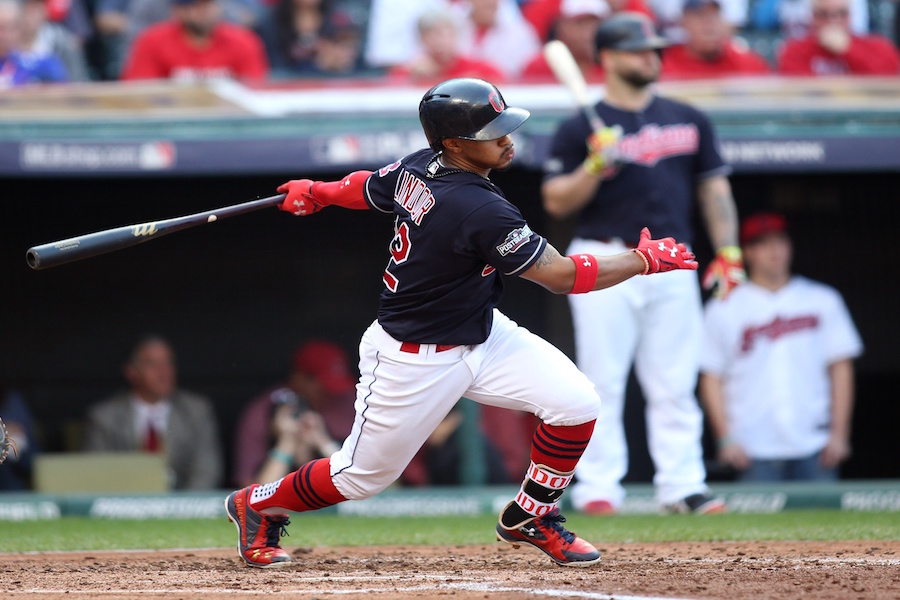 2016 At A Glance Record: 94-67 Runs Scored: 777 Runs Allowed: 676 Pythag W/L: 91-70 Pitching WAR Leader: Corey Kluber Hitting WAR Leader: Francisco Lindor Season Recap When previewing Cleveland before the season, here was my summation: Cleveland has a wide range of possible outcomes for the 2016 season. With their rotation setup, they can't be discounted as legitimate World Series contenders, but with an offense that wasn't good last year and displays no obvious avenues for significant improvement, they may not score enough to finally get over that hump. As it turned out, the offense improved by more than 100 runs and got them over the hump. Free agent signing Mike Napoli played a big part with his 34 homers and 101 RBI. He anchored a tremendously productive infield that also featured Francisco Lindor, Jason Kipnis and Jose Ramirez. Tyler Naquin's out-of-nowhere Herculean rookie effort led the way in the outfield while Carlos Santana enjoyed a career year at the plate as DH. The Indians trudged through a slowish start, which included series losses to the Twins in April and May, but hit their stride in June and never looked back. Over the final four months Cleveland went 68-43, and then won eight of its first nine postseason games before being thwarted by a Cubs comeback. This tremendous run was driven by outstanding starting pitching – led by the elite trio of Corey Kluber, Carlos Carrasco and Danny Salazar – and solid production throughout the lineup, as well as a weaponized bullpen bolstered by the addition of Andrew Miller in July. Why They'll Be Better One of the most amazing parts of Cleveland's 2016 run is that it occurred with virtually no contribution from arguably the club's best position player. Over the previous two seasons, Michael Brantley had batted .319 with an .876 OPS to go along with 35 homers and 90 doubles, twice garnering MVP consideration. But his recovery from shoulder surgery was fraught with setbacks, limiting him to 43 plate appearances last year. He underwent another operation on the same shoulder after the season and is currently easing his way into spring activities. There's no assurance Brantley is going to come back anywhere close to his previous form, but if he does, the Indians are adding a huge impact bat. And he won't be the only one. With Napoli departing via free agency, Cleveland actually managed to upgrade by signing of Edwin Encarnacion. His numbers on average over the past five years have been better than the ones that made Napoli the lineup's best run producer. There's room for regression with a few players (especially Naquin), but the Indians have a very realistic chance to improve again offensively after scoring the league's second-most runs in 2016. Meanwhile, a pitching staff that allowed the second-fewest brings back every key member. Kluber, Carrasco and Salazar will be back at the top of the rotation. Trevor Bauer, still only 26, is a breakout candidate. Boone Logan joins the bullpen as a situational weapon to deploy ahead of Miller and Cody Allen. One of Derek Falvey's biggest early difficulties while running the Twins will be dealing with the juggernaut he helped build in Cleveland. This is a well-rounded squad that is going to be tough to take a series from. Why They'll Be Worse The "gotta stay healthy" stipulation applies to any team, but Cleveland has more prominent concerns than most in this regard. Brantley is of course a wild card at this point. Salazar dealt with a late-season flexor strain and missed the playoffs. Kluber piled up 250 total innings while going max-effort into November. The farm system is solid but most of their top prospects – including catcher Francisco Mejia, who they could really use – are still a ways off. A few major injuries could at least make things interesting, but I think it would take a disastrous turn of events for the Indians to lose their standing as clear favorites in the division and in the league. Three Key Storylines 1. Can Trevor Bauer throw enough strikes to give the rotation a fourth dominator? 2. Will Michael Brantley be able to get past his nightmarish shoulder woes? 3. Can Andrew Miller repeat what he did last year after throwing nearly 100 relief innings?
 -
Every year at least one player ends up making the Minnesota Twins 25-man roster out of spring training that few expected to do so at the outset of camp. Let's examine a few of the top candidates among this year's non-roster invite group to latch on, and what kinds of roles they might play.There are a number of NRIs who stand a good chance of making the team and shouldn't really be viewed as "sleepers" per se. For instance, I would say Chris Gimenez is the favorite to win the backup catcher job, and Craig Breslow probably has better than a 50/50 shot at making the bullpen, provided his experimentations prove fruitful. ByungHo Park is hardly under the radar, especially after his hot start. The four names below are relative long shots, but any could force his way into the picture by making the right impressions over the coming month. Drew Stubbs, OF The 32-year-old brings with him plenty of experience, which is something Paul Molitor and the front office have openly coveted. Stubbs has piled up more than 3,000 plate appearances in the majors, contributing to multiple playoff teams. Even though he batted .195 during brief stints with the Rangers, Thad Levine liked what he saw enough to go get him. As a strikeout-prone power hitter, his offensive profile is a bit redundant. But if the Twins want to add some veteran balance on an offensive unit that projects six regulars 26 and under, carrying Stubbs over Danny Santana might be the best way to do it. Much will depend on how Stubbs looks in the field; a team carrying Robbie Grossman as fourth outfielder can't afford another defensive liability as the fifth. J.B. Shuck, OF Another vet angling to overtake a very vulnerable Santana. Shuck faces longer odds than Stubbs, to be sure, but could gain an edge if he's clearly better with the glove. A low-power contact hitter in the Piranha mold, he hasn't produced in the big leagues but had a .380 OBP in the minors. Shuck has all the traits of a solid final bench guy, and would complement the slow-footed Grossman well in the outfield reserves. Ben Paulsen, 1B During his first two seasons in Colorado, Paulsen batted .284 with an .809 OPS. Good production, and the type that Minnesota would love to get at the DH spot. Unfortunately, it was a small sample (420 PA) buoyed by hitter-friendly Coors Field and tainted by poor plate discipline. Last year, the bottom fell out and Paulsen spent much of the summer in Triple-A. This spring he would need to significantly outshine both Park and Kennys Vargas, as he undoubtedly enters camp trailing both. Swinging from the same side as starting first baseman Joe Mauer also works against him. Still, Paulsen does have some things working for him: he's still fairly young (29) but has logged more MLB time – with better overall numbers – than either Vargas or Park. The message coming into this camp has been clear: nothing is being handed to anyone. Therein lies Paulsen's advantage. Ryan Vogelsong, RHP There are some people in the know who tell me Vogelsong is an odds on favorite to make the roster as long as he holds his own this spring. I'm not sure I really understand that, but his appeal is apparent enough. The righty has been around the block, with nearly 300 appearances in the majors since debuting all the way back in 2000. Vogelsong experienced a late-career renaissance, making his first All-Star team at age 33 and then following with another quality season. But he hasn't been good in four years and is about to turn 40, with almost every measurable trending the wrong way. It sounds like the Twins value the veteran for more than simply his production. Commending Vogelsong's leadership, assistant GM Rob Antony said shortly after the signing: "I think he communicates well with the younger pitchers and tries to help them. From all accounts, he’s got really, really good makeup.” A later quote from Antony seems to tell the story: “He could give some of our younger guys more time to develop if they’re not ready.” Click here to view the article
- 42 replies
-
- 1
-
-
- drew stubbs
- jb shuck
- (and 2 more)
-
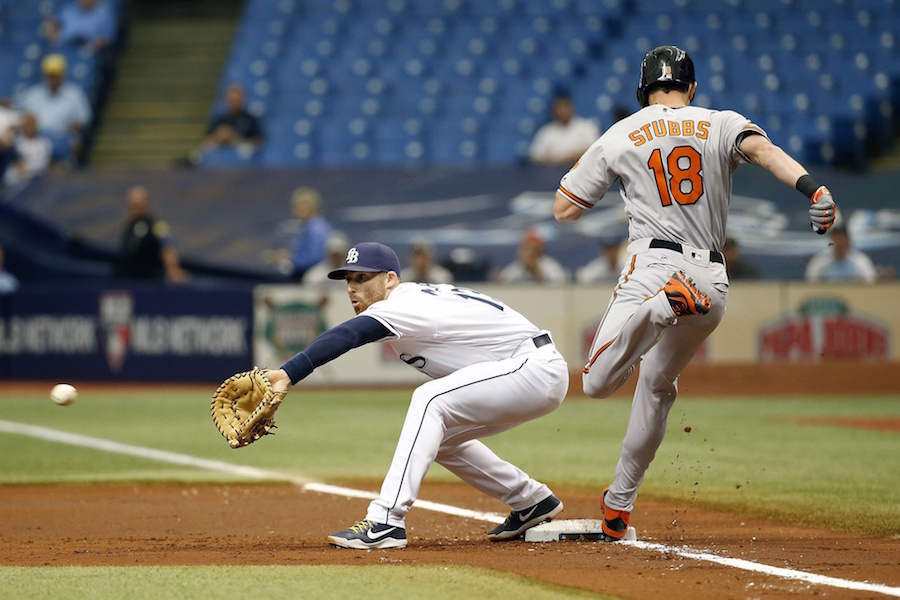 There are a number of NRIs who stand a good chance of making the team and shouldn't really be viewed as "sleepers" per se. For instance, I would say Chris Gimenez is the favorite to win the backup catcher job, and Craig Breslow probably has better than a 50/50 shot at making the bullpen, provided his experimentations prove fruitful. ByungHo Park is hardly under the radar, especially after his hot start. The four names below are relative long shots, but any could force his way into the picture by making the right impressions over the coming month. Drew Stubbs, OF The 32-year-old brings with him plenty of experience, which is something Paul Molitor and the front office have openly coveted. Stubbs has piled up more than 3,000 plate appearances in the majors, contributing to multiple playoff teams. Even though he batted .195 during brief stints with the Rangers, Thad Levine liked what he saw enough to go get him. As a strikeout-prone power hitter, his offensive profile is a bit redundant. But if the Twins want to add some veteran balance on an offensive unit that projects six regulars 26 and under, carrying Stubbs over Danny Santana might be the best way to do it. Much will depend on how Stubbs looks in the field; a team carrying Robbie Grossman as fourth outfielder can't afford another defensive liability as the fifth. J.B. Shuck, OF Another vet angling to overtake a very vulnerable Santana. Shuck faces longer odds than Stubbs, to be sure, but could gain an edge if he's clearly better with the glove. A low-power contact hitter in the Piranha mold, he hasn't produced in the big leagues but had a .380 OBP in the minors. Shuck has all the traits of a solid final bench guy, and would complement the slow-footed Grossman well in the outfield reserves. Ben Paulsen, 1B During his first two seasons in Colorado, Paulsen batted .284 with an .809 OPS. Good production, and the type that Minnesota would love to get at the DH spot. Unfortunately, it was a small sample (420 PA) buoyed by hitter-friendly Coors Field and tainted by poor plate discipline. Last year, the bottom fell out and Paulsen spent much of the summer in Triple-A. This spring he would need to significantly outshine both Park and Kennys Vargas, as he undoubtedly enters camp trailing both. Swinging from the same side as starting first baseman Joe Mauer also works against him. Still, Paulsen does have some things working for him: he's still fairly young (29) but has logged more MLB time – with better overall numbers – than either Vargas or Park. The message coming into this camp has been clear: nothing is being handed to anyone. Therein lies Paulsen's advantage. Ryan Vogelsong, RHP There are some people in the know who tell me Vogelsong is an odds on favorite to make the roster as long as he holds his own this spring. I'm not sure I really understand that, but his appeal is apparent enough. The righty has been around the block, with nearly 300 appearances in the majors since debuting all the way back in 2000. Vogelsong experienced a late-career renaissance, making his first All-Star team at age 33 and then following with another quality season. But he hasn't been good in four years and is about to turn 40, with almost every measurable trending the wrong way. It sounds like the Twins value the veteran for more than simply his production. Commending Vogelsong's leadership, assistant GM Rob Antony said shortly after the signing: "I think he communicates well with the younger pitchers and tries to help them. From all accounts, he’s got really, really good makeup.” A later quote from Antony seems to tell the story: “He could give some of our younger guys more time to develop if they’re not ready.”
