



Nick Nelson
-
Posts
8,327 -
Joined
-
Last visited
-
Days Won
56
Content Type
Profiles
News
Minnesota Twins Videos
2026 Minnesota Twins Top Prospects Ranking
2022 Minnesota Twins Draft Picks
Minnesota Twins Free Agent & Trade Rumors, Notes, & Tidbits
Guides & Resources
2023 Minnesota Twins Draft Picks
The Minnesota Twins Players Project
2024 Minnesota Twins Draft Picks
2025 Minnesota Twins Draft Pick Tracker
2026 Minnesota Twins Draft Tracker: Picks & Bonuses
Forums
Blogs
Events
Store
Downloads
Gallery
Everything posted by Nick Nelson
-
Article: What's the Plan with Tyler Austin?
Nick Nelson replied to Nick Nelson's topic in Twins Daily Front Page News
I'm not sure what you're saying here RB. I'm using the data we have, which jibes with what I've seen. Austin has been a good hitter in the majors, was a very good hitter in the minors. Given that he just turned 27 and has only had the opportunity to play sporadically, I see room for growth yet. Finding him a role where he can maximize ABs against LHP seems like the best way to get him on the roster, derive immediate value, and gradually find him more playing time if he hits. -
When the Twins added C.J. Cron and essentially tabbed him as their 2019 first baseman, the move puzzled me. Not because of Cron so much as what his addition seemed to say about the lone incumbent at first base. Is Tyler Austin being written out of Minnesota's plans already? Or is there still a way his very specific, very potent skills could be optimally put to use?Up to this point, Austin has shown some ability as a major-league hitter. Through his age 26-season, he owns a .758 OPS in 404 MLB plate appearances. This year between New York and Minnesota he slugged .480 in 268 PA; that's a higher mark than Eddie Rosario finished with, and barely below what Cron produced in a career year with Tampa. In many ways, Austin looks like the prototypical "change of scenery special." He showed promise with the Yankees but couldn't differentiate himself in a system full of big power bats. Having acquired him in the Lance Lynn deal, the Twins found themselves with a prime opportunity to give Austin a prolonged look, with first base becoming vacant, but instead they chose to go with Cron – a similar if not redundant player. Austin's solid overall production has been highly polarized in its concentration. Against right-handed pitchers he's been ineffective, with a .211/.259/.405 slash line and 39% K-rate. Against lefties he's been DOMINANT, at .272/.345/.592 and 32%. The way to best utilize such a player seems clear: partner him with a lefty swinger who can mash righties, and let Rocco Baldelli play the platoon game while also enjoying some great strategic pinch-hitting options. Cron throws a wrench in that, swinging from the same side as Austin. In fact, given his neutral platoon splits and his success in a full-time role this year, it seems likely Cron will be penciled as the everyday starter at first. This leaves only one path for Austin, who's out of options next spring and likely to land elsewhere if he doesn't make the roster: designated hitter. There is still opportunity there for the Twins to leverage Austin's strengths and deploy him impactfully. They can't trust him as full-time DH. It'd be irresponsible to go with Austin as the full-time solution, given his ugly numbers against righties. But if you equip the team with a lefty bat that can frequently plug in at DH? Then we're cooking. Theoretically, this can be accomplished with the existing setup. Roll with a bench of Mitch Garver, Ehire Adrianza, Willians Astudillo and Jake Cave, then rotate Cave (or Eddie Rosario) through the DH spot against righties. It'd be a good way to keep arguably your reigning two best hitters (Rosario and Cave) in the lineup regularly. Another bench construction that would intrigue me, if Garver is deemed good to go at catcher, would be swapping out Astudillo (who has an option remaining) for outfielder LaMonte Wade, recently added to the 40-man roster. He'll be 25 on Opening Day, has ample experience at Triple-A, and would help balance out a roster short on patience and plate discipline. Wade has a .391 OBP in the minors and walks more than he strikes out against right-handers. Alternatively, the Twins could seek out another lefty bat via trade or free agency to complement Austin as a DH/bench piece. It'd need to be someone with a bit of positional flexibility since the team surely isn't gonna carry three first basemen. These are scenarios in which Minnesota could still roster Austin and maximize his value. But the simple reality may be that they just don't see the 27-year-old fitting into their plans. Cron's addition already hinted toward this (why not just skip him and set up the Austin platoon at first?) and the reported serious interest in Nelson Cruz would be another indicator. If the Twins sign Cruz, Austin's out – that feels like a safe assumption. In fact, signing Cruz and essentially locking him in for 600 plate appearances at DH would all but eliminate any room for creative platoons or rotations, which strikes me as odd for a team that claims to be focused on sorting out existing assets and developing its core. Giving up on Austin wouldn't necessarily be malpractice, given that he's so one-dimensional both offensively and defensively, and so very very strikeout-prone. But based on the pure slugging prowess he showed during his short time in Minnesota this year, and his proven ability to terrorize southpaws, he certainly seems worthy of a longer look. For his part, Austin is undoubtedly tracking the front office's movements at the Winter Meetings as closely as any fan, knowing that the addition of Cruz would turn his grasp on a roster spot from precarious to perilous. Click here to view the article
-
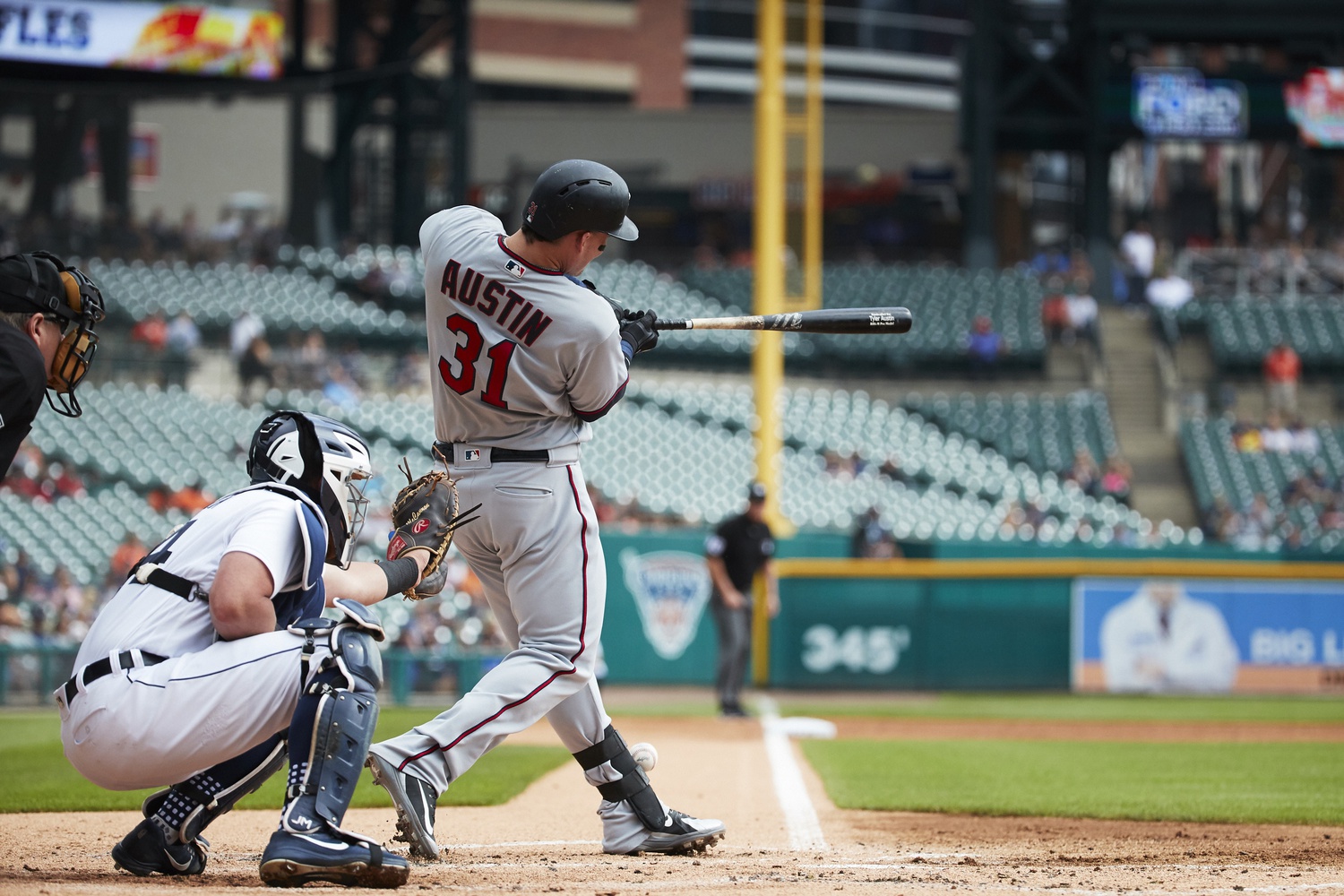 Up to this point, Austin has shown some ability as a major-league hitter. Through his age 26-season, he owns a .758 OPS in 404 MLB plate appearances. This year between New York and Minnesota he slugged .480 in 268 PA; that's a higher mark than Eddie Rosario finished with, and barely below what Cron produced in a career year with Tampa. In many ways, Austin looks like the prototypical "change of scenery special." He showed promise with the Yankees but couldn't differentiate himself in a system full of big power bats. Having acquired him in the Lance Lynn deal, the Twins found themselves with a prime opportunity to give Austin a prolonged look, with first base becoming vacant, but instead they chose to go with Cron – a similar if not redundant player. Austin's solid overall production has been highly polarized in its concentration. Against right-handed pitchers he's been ineffective, with a .211/.259/.405 slash line and 39% K-rate. Against lefties he's been DOMINANT, at .272/.345/.592 and 32%. The way to best utilize such a player seems clear: partner him with a lefty swinger who can mash righties, and let Rocco Baldelli play the platoon game while also enjoying some great strategic pinch-hitting options. Cron throws a wrench in that, swinging from the same side as Austin. In fact, given his neutral platoon splits and his success in a full-time role this year, it seems likely Cron will be penciled as the everyday starter at first. This leaves only one path for Austin, who's out of options next spring and likely to land elsewhere if he doesn't make the roster: designated hitter. There is still opportunity there for the Twins to leverage Austin's strengths and deploy him impactfully. They can't trust him as full-time DH. It'd be irresponsible to go with Austin as the full-time solution, given his ugly numbers against righties. But if you equip the team with a lefty bat that can frequently plug in at DH? Then we're cooking. Theoretically, this can be accomplished with the existing setup. Roll with a bench of Mitch Garver, Ehire Adrianza, Willians Astudillo and Jake Cave, then rotate Cave (or Eddie Rosario) through the DH spot against righties. It'd be a good way to keep arguably your reigning two best hitters (Rosario and Cave) in the lineup regularly. Another bench construction that would intrigue me, if Garver is deemed good to go at catcher, would be swapping out Astudillo (who has an option remaining) for outfielder LaMonte Wade, recently added to the 40-man roster. He'll be 25 on Opening Day, has ample experience at Triple-A, and would help balance out a roster short on patience and plate discipline. Wade has a .391 OBP in the minors and walks more than he strikes out against right-handers. Alternatively, the Twins could seek out another lefty bat via trade or free agency to complement Austin as a DH/bench piece. It'd need to be someone with a bit of positional flexibility since the team surely isn't gonna carry three first basemen. These are scenarios in which Minnesota could still roster Austin and maximize his value. But the simple reality may be that they just don't see the 27-year-old fitting into their plans. Cron's addition already hinted toward this (why not just skip him and set up the Austin platoon at first?) and the reported serious interest in Nelson Cruz would be another indicator. If the Twins sign Cruz, Austin's out – that feels like a safe assumption. In fact, signing Cruz and essentially locking him in for 600 plate appearances at DH would all but eliminate any room for creative platoons or rotations, which strikes me as odd for a team that claims to be focused on sorting out existing assets and developing its core. Giving up on Austin wouldn't necessarily be malpractice, given that he's so one-dimensional both offensively and defensively, and so very very strikeout-prone. But based on the pure slugging prowess he showed during his short time in Minnesota this year, and his proven ability to terrorize southpaws, he certainly seems worthy of a longer look. For his part, Austin is undoubtedly tracking the front office's movements at the Winter Meetings as closely as any fan, knowing that the addition of Cruz would turn his grasp on a roster spot from precarious to perilous.
 -
Article: Rundown: Cruz, Cahill, Soria and Ramos
Nick Nelson replied to Tom Froemming's topic in Twins Daily Front Page News
How sure are we that a 38-year-old Cruz outhits an Austin/Cave platoon at DH by a significant margin? I know which scenario yields vastly more long-term benefit to the club, while keeping as much money as possible free to spend on pitching.- 100 replies
-
- 2
-

-
- nelson cruz
- trevor cahill
- (and 2 more)
-
Article: Rundown: Cruz, Cahill, Soria and Ramos
Nick Nelson replied to Tom Froemming's topic in Twins Daily Front Page News
Can someone explain the logic of signing a full-time DH to a roster that may already include (arguably) four starting-caliber OFs, two first basemen deserving of ABs, and Willians Astudillo? I'm just not seeing it. Presumably signing Cruz would mean pushing aside some younger guys, but I'm not sure how that makes sense in the scope of their "develop the core" strategy.- 100 replies
-
- 2
-
-
- nelson cruz
- trevor cahill
- (and 2 more)
-
Article: Standing Pat as a Strategy
Nick Nelson replied to Nick Nelson's topic in Twins Daily Front Page News
I think some people are exaggerating the risk in this lineup. The Twins finished 5th in the AL in scoring even with all that went wrong. That breakdown also doesn't include Jake Cave, who was arguably their second best hitter as a rookie. -
Article: Standing Pat as a Strategy
Nick Nelson replied to Nick Nelson's topic in Twins Daily Front Page News
Buxton and Sano were derailed in large part by broken and damaged bones on foul balls. I'm not sure how you'd characterize that other than dumb luck. It's hard to argue that the health-based tribulations that struck the likes of Dozier, Santana, Castro, Reed etc last year were clearly preventable. I actually think the statement is a lot less naive than you're implying. Yes, there have almost certainly been player developmental issues in play at a macro level but those are being addressed forcefully by the front office. Who would you blame specifically right now for the current state of affairs that's actually still here? -
Article: Standing Pat as a Strategy
Nick Nelson replied to Nick Nelson's topic in Twins Daily Front Page News
When I say "standing pat" here I just mean staying the course -- not making any bold commitments or changes in direction because you're still tethered to the existing vision. Maintaining as much spending/roster flexibility as possible. I don't agree that this isn't strategic. You can disagree with the strategy but it's a strategy. -
Article: Standing Pat as a Strategy
Nick Nelson replied to Nick Nelson's topic in Twins Daily Front Page News
No, I was just pointing out that they are spending some money on the rotation in 2019, whereas they could have non-tendered or traded Odorizzi/Gibson if they wanted to go extreme with the "stand pat" approach. And I bet we'll see fairly significant $ spent on 2-3 more pitching staff additions, as well as a sizable deal to lock up Berrios. -
Article: Standing Pat as a Strategy
Nick Nelson replied to Nick Nelson's topic in Twins Daily Front Page News
Not sure I follow. Did I imply that? -
Article: Standing Pat as a Strategy
Nick Nelson replied to Nick Nelson's topic in Twins Daily Front Page News
I don't really buy this. 2018 seems a lot more like the outlier than 2017 to me. The Twins should've expected to be good by the time Buxton and Sano were fully establishing themselves as big-leaguers alongside Dozier, Mauer, etc. -
Article: Standing Pat as a Strategy
Nick Nelson replied to Nick Nelson's topic in Twins Daily Front Page News
Well that's the thing, they're not punting. I know the total payroll is going to disappoint people but they are set to pay like $30 million combined for Gibson, Odorizzi and Pineda. And I bet they ink Berrios to a long-term deal before the start of next season. They could've gone a lot more conservative than Schoop at second. This team will have a chance if some things break right offensively, it's just not a real aggressive push. And the problem is that it's all too easy to see them in a very similar position a year from now. -
'As we speak cruel time is fleeing. Seize the day, believing as little as possible in the morrow.' – Horace By all appearances, this is going to be a low-key winter for the Minnesota Twins. Coming off a season full of setbacks, the front office is reluctant to make firm commitments or chart a new course, with so much uncertainty permeating its existing core. And you know what? I get it. It's a logical approach in the scope of long-term strategy. But that doesn't make coming to terms with this reality any less of a bummer.To their credit, the Twins have been proactive in addressing their needs this offseason. Already they have filled their two clearest positional vacancies. Granted, they've done so by gathering up castoffs non-tendered by other organizations, but C.J. Cron and Jonathan Schoop are hardly scraps. They're legitimate starters and intriguing flyers for a rebuilding team. It is that last part that stings. Every indication I've seen signals a conservative approach this offseason, as the front office continues to bide time and see how things shake out with its inherited volatile assets. "The Twins have indicated that next season will be about allowing their young core to continue to develop," La Velle E. Neal III wrote in forecasting a quiet week at the Winter Meetings. Derek Falvey himself echoed that sentiment during a Friday interview with 1500 ESPN. "I do believe that you build championship teams around an internal core," Falvey said. "In our particular situation I think we’re really attentive to how we impact that core with complementary pieces." "You have to be thoughtful, the more years out you go, how it impacts your club." This isn't a new narrative from Falvey's baseball ops group, and the strategy thus far has aligned. Schoop on a one-year deal allows the Twins to wait and see what happens next year with Nick Gordon, added to the 40-man roster last month. Gordon had an awful season in 2018 but he's 22, a former top-10 draft pick, and a fixture on national Top 100 prospect lists. Any kind of long-term answer at second base would have amounted to waving the white flag on this highly touted and talented youth. As far as stopgaps go, Schoop's a damn good one. He's 27 and one year removed from an All-Star campaign that earned him MVP votes. The Cron situation is similar. The Twins don't quite have a Gordon-level prospect coming up at first base but Brent Rooker looks like a player and could be ready by midseason. Minnesota also is accounting for the very real possibility that Miguel Sano will be relegated to first base in the near future. Cron gives them flexibility and offers a fairly high floor; he's almost certain to be a significant improvement over Joe Mauer v.2018. Plus, the Twins can control Cron in 2020, which will look great if he backs up his breakout campaign. So, like I said, I get the rationale for these moves. They're very defensible. But they're not bold or particularly ambitious. They don't point to an outright aspiration for serious contention in the division next year. At best, the Twins are hoping they catch fire with these low-wattage additions while things coalesce elsewhere. Even with solid returns on Cron and Schoop, and moderate improvements among the incumbent crowd, this position-player unit still doesn't look all that well designed. The offense is desperately lacking for on-base percentage. An infield alignment of Sano, Jorge Polanco, Schoop and Cron will likely be very poor defensively. Mitch Garver's status is basically a mystery at this point. The team is caught in flux, and that's not really anyone's fault so much as just the way things have played out. Most other positions on this roster are similar to first and second base – unestablished at present, but with too promising or undecided an outlook for drastic changes in direction. An offseason spent more or less standing pat makes sense for the Twins. But for fans – even those who fully understand and accept the thought process – it stinks nonetheless. Cron and Schoop are logical in the rebuilding framework because they're young and capable enough that either could turn into parts of the go-forward vision – or at least deadline trade chips to further supplement the pipeline. But they are probably not the kind of decisive difference-makers who help Minnesota take the next step, in the event that Buxton and Sano rebound. We all know they are at the heart of the matter – Buxton and Sano – and that neither of those outcomes can be fully counted upon, but it's almost as if the Twins are planning around it not happening, turning their gaze already to the next hot prospect wave led by Royce Lewis and Alex Kirilloff. Which brings me back to that Horace quote from the outset about the unrelenting passage of time. "As we speak cruel time is fleeing. Seize the day, believing as little as possible in the morrow." We can all hope Lewis, Kirilloff and the next group are up to the task of pulling this franchise from the dredges, but no one can be blamed for pessimism as we watch an endless rebuild carry on in perpetuity, with Buxton and Sano entering their theoretical primes. Falvey and Thad Levine have made some nice moves with the coaching staff and behind the scenes (where some would argue the real war is being waged), but those moves don't put fans in the seats, nor do savvy buy-low investments like Schoop and Cron. The Twins drew their lowest attendance this year since 2004 at the Metrodome, and while that's partially attributable to weather, it also speaks to growing fan apathy, which I fear will only worsen in 2019 if Minnesota stays on course to field a low-payroll, low-profile club. Fans have endured nearly a decade of mediocre or worse play at Target Field. Even if the current rhetoric and ensuing actions are perfectly reasonable and valid, the whole "building a sustainable long-term winner, eventually" model doesn't do much to energize or excite a base that could really use some energy and excitement. Right now, the real focus is on 2020. At various points in the past, it's been on 2018, 2017, 2016, etc. No one wants or expects a rebuild to take eight-plus years, but here we are. If you've been conditioned into believing as little as possible in the morrow, that's more than fair. Especially because of the unique window of winnability in the AL Central, which won't last forever. At the same time, if you put yourself in the shoes of the team's decision makers, with all they must account for, hopefully you can see why – from their view – it's not quite time to seize the day. But as we speak, cruel time is fleeing... Click here to view the article
-
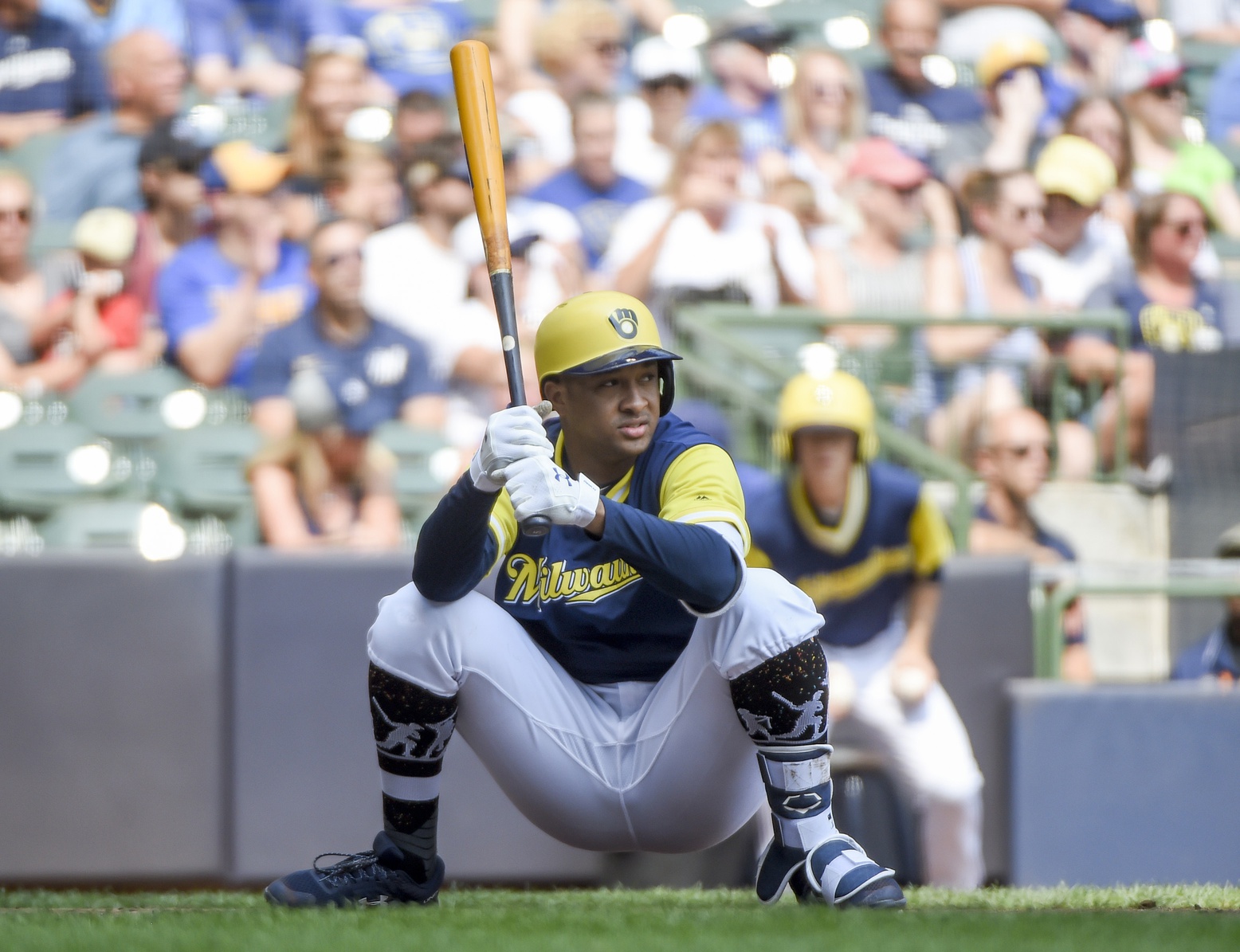 To their credit, the Twins have been proactive in addressing their needs this offseason. Already they have filled their two clearest positional vacancies. Granted, they've done so by gathering up castoffs non-tendered by other organizations, but C.J. Cron and Jonathan Schoop are hardly scraps. They're legitimate starters and intriguing flyers for a rebuilding team. It is that last part that stings. Every indication I've seen signals a conservative approach this offseason, as the front office continues to bide time and see how things shake out with its inherited volatile assets. "The Twins have indicated that next season will be about allowing their young core to continue to develop," La Velle E. Neal III wrote in forecasting a quiet week at the Winter Meetings. Derek Falvey himself echoed that sentiment during a Friday interview with 1500 ESPN. "I do believe that you build championship teams around an internal core," Falvey said. "In our particular situation I think we’re really attentive to how we impact that core with complementary pieces." "You have to be thoughtful, the more years out you go, how it impacts your club." This isn't a new narrative from Falvey's baseball ops group, and the strategy thus far has aligned. Schoop on a one-year deal allows the Twins to wait and see what happens next year with Nick Gordon, added to the 40-man roster last month. Gordon had an awful season in 2018 but he's 22, a former top-10 draft pick, and a fixture on national Top 100 prospect lists. Any kind of long-term answer at second base would have amounted to waving the white flag on this highly touted and talented youth. As far as stopgaps go, Schoop's a damn good one. He's 27 and one year removed from an All-Star campaign that earned him MVP votes. The Cron situation is similar. The Twins don't quite have a Gordon-level prospect coming up at first base but Brent Rooker looks like a player and could be ready by midseason. Minnesota also is accounting for the very real possibility that Miguel Sano will be relegated to first base in the near future. Cron gives them flexibility and offers a fairly high floor; he's almost certain to be a significant improvement over Joe Mauer v.2018. Plus, the Twins can control Cron in 2020, which will look great if he backs up his breakout campaign. So, like I said, I get the rationale for these moves. They're very defensible. But they're not bold or particularly ambitious. They don't point to an outright aspiration for serious contention in the division next year. At best, the Twins are hoping they catch fire with these low-wattage additions while things coalesce elsewhere. Even with solid returns on Cron and Schoop, and moderate improvements among the incumbent crowd, this position-player unit still doesn't look all that well designed. The offense is desperately lacking for on-base percentage. An infield alignment of Sano, Jorge Polanco, Schoop and Cron will likely be very poor defensively. Mitch Garver's status is basically a mystery at this point. The team is caught in flux, and that's not really anyone's fault so much as just the way things have played out. Most other positions on this roster are similar to first and second base – unestablished at present, but with too promising or undecided an outlook for drastic changes in direction. An offseason spent more or less standing pat makes sense for the Twins. But for fans – even those who fully understand and accept the thought process – it stinks nonetheless. Cron and Schoop are logical in the rebuilding framework because they're young and capable enough that either could turn into parts of the go-forward vision – or at least deadline trade chips to further supplement the pipeline. But they are probably not the kind of decisive difference-makers who help Minnesota take the next step, in the event that Buxton and Sano rebound. We all know they are at the heart of the matter – Buxton and Sano – and that neither of those outcomes can be fully counted upon, but it's almost as if the Twins are planning around it not happening, turning their gaze already to the next hot prospect wave led by Royce Lewis and Alex Kirilloff. Which brings me back to that Horace quote from the outset about the unrelenting passage of time. "As we speak cruel time is fleeing. Seize the day, believing as little as possible in the morrow." We can all hope Lewis, Kirilloff and the next group are up to the task of pulling this franchise from the dredges, but no one can be blamed for pessimism as we watch an endless rebuild carry on in perpetuity, with Buxton and Sano entering their theoretical primes. Falvey and Thad Levine have made some nice moves with the coaching staff and behind the scenes (where some would argue the real war is being waged), but those moves don't put fans in the seats, nor do savvy buy-low investments like Schoop and Cron. The Twins drew their lowest attendance this year since 2004 at the Metrodome, and while that's partially attributable to weather, it also speaks to growing fan apathy, which I fear will only worsen in 2019 if Minnesota stays on course to field a low-payroll, low-profile club. Fans have endured nearly a decade of mediocre or worse play at Target Field. Even if the current rhetoric and ensuing actions are perfectly reasonable and valid, the whole "building a sustainable long-term winner, eventually" model doesn't do much to energize or excite a base that could really use some energy and excitement. Right now, the real focus is on 2020. At various points in the past, it's been on 2018, 2017, 2016, etc. No one wants or expects a rebuild to take eight-plus years, but here we are. If you've been conditioned into believing as little as possible in the morrow, that's more than fair. Especially because of the unique window of winnability in the AL Central, which won't last forever. At the same time, if you put yourself in the shoes of the team's decision makers, with all they must account for, hopefully you can see why – from their view – it's not quite time to seize the day. But as we speak, cruel time is fleeing...
 -
In a dispiriting 2018 season that was direly short on bright spots, Mitch Garver was unequivocally one of the best stories, progressively improving over the course of the summer and posting an .814 OPS in the second half. But a concussion suffered in September casts a cloud of uncertainty over the 27-year-old's future. For Twins fans, the familiarity of this feeling makes it all the more unsettling.To play professional sports is to put your body at risk. This is understood. But there are varying degrees of tolerable risk, and past a certain threshold, it becomes irresponsible to put a human being in harm's way. I'm not sure where that threshold lies with respect to Garver and his specific situation. I do know this: When Joe Mauer made the call to move away from catcher after a concussion ended his 2013 season, he talked about coming face-to-face with a sobering reality: "When I kept gathering information, to be honest with you, it wasn't really even a decision," said Mauer, who is signed through 2018 with $115 million remaining on his contract. "I kept searching to see if it was going to be OK, if it was going to be safe for me to go back there and catch, and I just wasn't finding that." He added: "All it could take is one foul tip in pitcher's batting practice, and I'm out for two or three months or even more." Unstated there is the impact on his personal life and his overall wellness. Even though he shifted away from catcher, Mauer experienced prolonged after-effects from his brain injury, which ultimately led him to retire well ahead of schedule. Garver was watching from the dugout when Mauer dove for a fly ball in May, flaring up those nasty concussion symptoms. Garver saw from up-close as Mauer then battled yet another round of life-altering impairments, which sidelined him for a month and were so severe initially he had to spend multiple days away from the stadium. Whatever stories and warnings Mauer heard about the dangers of successive concussions in 2013, Garver has seen first-hand since, torturing a player he deeply respects and admires. The gravity of this situation couldn't possibly be lost on him. Granted, Mauer had caught a lot more innings behind the plate, and had probably taken quite a few more foul tips off the mask. But this isn't about comparative volume. There's no magic number where the risk becomes untenable. Garver does have a troubling history. In his first game this season, he was hit in the side of the head by Manny Machado's bat, leaving Garver staggered and dazed. He wasn't diagnosed with a concussion in that case. "My brain does not hurt, but my skull does, however," Garver said afterward. He did acknowledge in September, though, that he suffered concussions at least twice in the minors, in 2014 and 2016. And although he stayed in to finish the inning after taking a foul tip off Luke Voigt's bat on September 12th (as did Mauer back in 2013 – he finished the game in fact), Garver hasn't donned the catcher's gear since. When you're still experiencing symptoms a week after taking a blow to the head... that's a scary thing. The Twins, for their part, seem to be preparing themselves for a scenario where Garver is unavailable behind the plate. Their reported early interest in Robinson Chirinos, who signed with the Astros on Tuesday for $5.75 million, is noteworthy. Chirinos isn't the kind of guy you bring in as a third catcher or as camp competition; he's an established big-leaguer who's averaged 300 plate appearances with the Rangers over the past five years, with a career OPS (.761) that bests Garver's rookie mark. If Garver were to move away from catcher, it becomes a question of how he figures into the team's plans. At catcher, his numbers were outstanding: Among MLB backstops with 300+ PA, he ranked 10th in OPS (.749), 10th in wOBA (.325), and seventh in hard-contact percentage (40.5%, per FanGraphs). At first base or DH, those numbers don't shine as much, and of course, the Twins already find that mix crowded with defensively limited righty hitters at the moment. Then again, you can make an argument Garver's bat is quite valuable to the Twins wherever they can fit him in. I wrote recently about this club's glaring dearth of OBP strength, which wasn't helped any by the signing of Jonathan Schoop on Thursday, nor the addition of Ronald Torreyes. Garver's .335 OBP this year ranked as the second-highest among players set to return, behind only Jorge Polanco (.345). And if you believe Garver turned a corner as he acclimated to the majors, you might even expect more; from June 1st onward he had a .349 OBP and 9% BB rate. It bears noting that in his preceding breakout season at Triple-A, Garver posted a .387 OBP and 13.4% BB rate over 372 plate appearances. With all that said, it's pretty hard to see him hanging around as strictly a 1B/DH. Does he have the offensive ability of a C.J. Cron or Tyler Austin? Doubtful. And those were readily available waiver types. In order to keep himself essential while not catching, Garver would need to become a versatile roster piece capable of helping in the outfield. In that capacity, his right-handed stick would actually be quite useful amidst a crowd of lefty swingers in the corners. And Garver did make 14 starts in left field at Rochester last year. However, Paul Molitor was never inclined to use him out there, and understandably so. Given his lack of speed or experience, it's hard to imagine Garver being much of an asset in the outfield. If you find yourself lacking for clarity after reading all this, that's kinda the point. Garver is one of the team's most intriguing young players, but also a total wild-card at this juncture. The tight-lipped Twins have been mum about his status. But if their interest in Chirinos was legit and serious, perhaps that says all we need to know. Click here to view the article
-
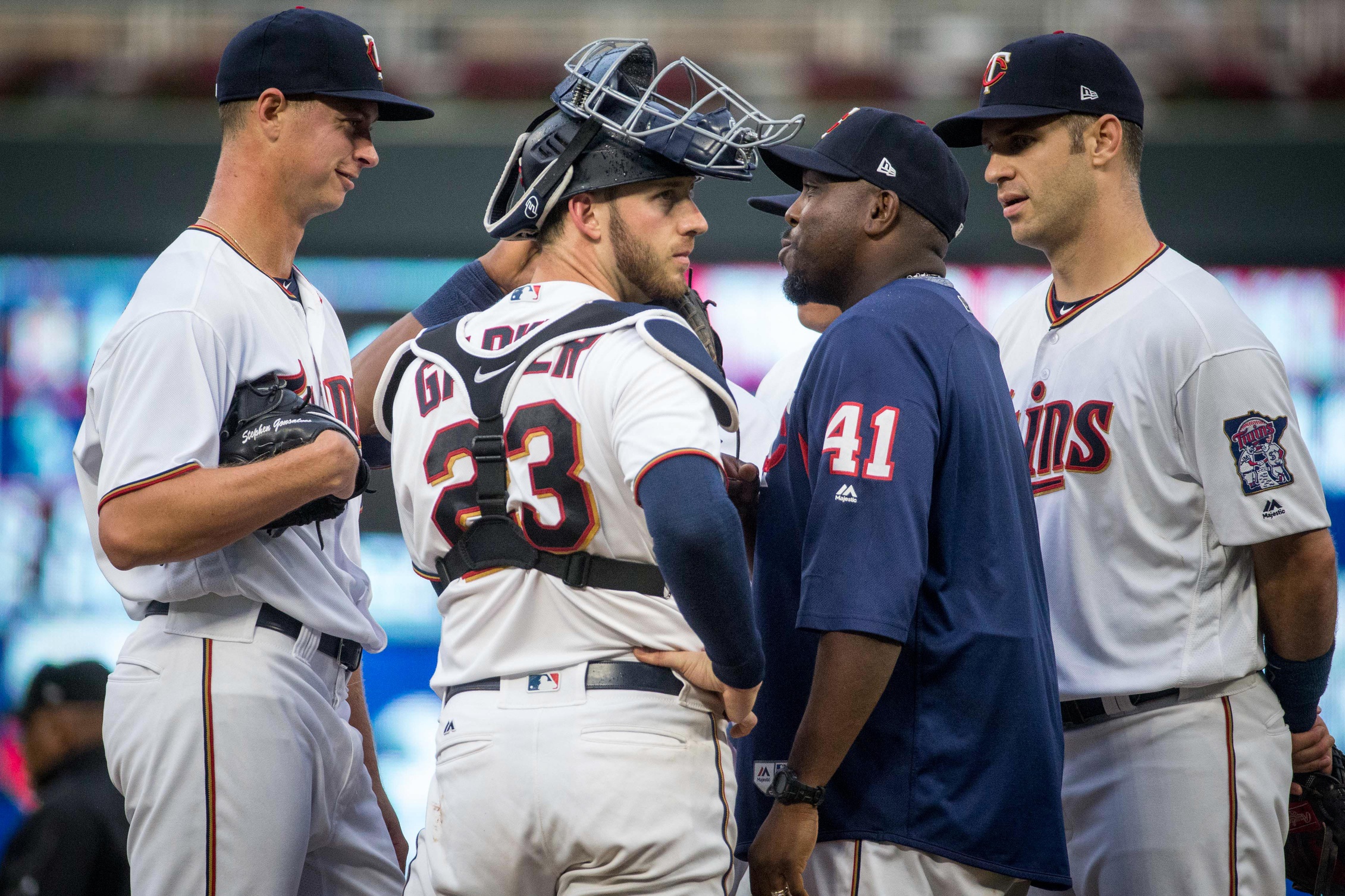 To play professional sports is to put your body at risk. This is understood. But there are varying degrees of tolerable risk, and past a certain threshold, it becomes irresponsible to put a human being in harm's way. I'm not sure where that threshold lies with respect to Garver and his specific situation. I do know this: When Joe Mauer made the call to move away from catcher after a concussion ended his 2013 season, he talked about coming face-to-face with a sobering reality: "When I kept gathering information, to be honest with you, it wasn't really even a decision," said Mauer, who is signed through 2018 with $115 million remaining on his contract. "I kept searching to see if it was going to be OK, if it was going to be safe for me to go back there and catch, and I just wasn't finding that." He added: "All it could take is one foul tip in pitcher's batting practice, and I'm out for two or three months or even more." Unstated there is the impact on his personal life and his overall wellness. Even though he shifted away from catcher, Mauer experienced prolonged after-effects from his brain injury, which ultimately led him to retire well ahead of schedule. Garver was watching from the dugout when Mauer dove for a fly ball in May, flaring up those nasty concussion symptoms. Garver saw from up-close as Mauer then battled yet another round of life-altering impairments, which sidelined him for a month and were so severe initially he had to spend multiple days away from the stadium. Whatever stories and warnings Mauer heard about the dangers of successive concussions in 2013, Garver has seen first-hand since, torturing a player he deeply respects and admires. The gravity of this situation couldn't possibly be lost on him. Granted, Mauer had caught a lot more innings behind the plate, and had probably taken quite a few more foul tips off the mask. But this isn't about comparative volume. There's no magic number where the risk becomes untenable. Garver does have a troubling history. In his first game this season, he was hit in the side of the head by Manny Machado's bat, leaving Garver staggered and dazed. He wasn't diagnosed with a concussion in that case. "My brain does not hurt, but my skull does, however," Garver said afterward. He did acknowledge in September, though, that he suffered concussions at least twice in the minors, in 2014 and 2016. And although he stayed in to finish the inning after taking a foul tip off Luke Voigt's bat on September 12th (as did Mauer back in 2013 – he finished the game in fact), Garver hasn't donned the catcher's gear since. When you're still experiencing symptoms a week after taking a blow to the head... that's a scary thing. The Twins, for their part, seem to be preparing themselves for a scenario where Garver is unavailable behind the plate. Their reported early interest in Robinson Chirinos, who signed with the Astros on Tuesday for $5.75 million, is noteworthy. Chirinos isn't the kind of guy you bring in as a third catcher or as camp competition; he's an established big-leaguer who's averaged 300 plate appearances with the Rangers over the past five years, with a career OPS (.761) that bests Garver's rookie mark. If Garver were to move away from catcher, it becomes a question of how he figures into the team's plans. At catcher, his numbers were outstanding: Among MLB backstops with 300+ PA, he ranked 10th in OPS (.749), 10th in wOBA (.325), and seventh in hard-contact percentage (40.5%, per FanGraphs). At first base or DH, those numbers don't shine as much, and of course, the Twins already find that mix crowded with defensively limited righty hitters at the moment. Then again, you can make an argument Garver's bat is quite valuable to the Twins wherever they can fit him in. I wrote recently about this club's glaring dearth of OBP strength, which wasn't helped any by the signing of Jonathan Schoop on Thursday, nor the addition of Ronald Torreyes. Garver's .335 OBP this year ranked as the second-highest among players set to return, behind only Jorge Polanco (.345). And if you believe Garver turned a corner as he acclimated to the majors, you might even expect more; from June 1st onward he had a .349 OBP and 9% BB rate. It bears noting that in his preceding breakout season at Triple-A, Garver posted a .387 OBP and 13.4% BB rate over 372 plate appearances. With all that said, it's pretty hard to see him hanging around as strictly a 1B/DH. Does he have the offensive ability of a C.J. Cron or Tyler Austin? Doubtful. And those were readily available waiver types. In order to keep himself essential while not catching, Garver would need to become a versatile roster piece capable of helping in the outfield. In that capacity, his right-handed stick would actually be quite useful amidst a crowd of lefty swingers in the corners. And Garver did make 14 starts in left field at Rochester last year. However, Paul Molitor was never inclined to use him out there, and understandably so. Given his lack of speed or experience, it's hard to imagine Garver being much of an asset in the outfield. If you find yourself lacking for clarity after reading all this, that's kinda the point. Garver is one of the team's most intriguing young players, but also a total wild-card at this juncture. The tight-lipped Twins have been mum about his status. But if their interest in Chirinos was legit and serious, perhaps that says all we need to know.
 -
Article: Twins Sign 2B Jonathan Schoop
Nick Nelson replied to Tom Froemming's topic in Twins Daily Front Page News
I like that they're buying low on a big talent. But this does nothing to help with their OBP issues – in fact it exacerbates them – so I have a hard time getting excited. Right now this looks like a lineup that'll produce a lot of solo homers and strikeouts. -
I wouldn't quite go this far. We need to account for the fact that players hit worse away from home in general. It isn't fair to apply his road numbers as his baseline, especially when he shows a lot of positive traits as a hitter. I actually think LeMaheiu would be a nice option at the right price. This piece at FanGraphs was eye-opening for me.
-
So you've been saying since the start of 2012, when they drafted Buxton, that they should focus internally and build around their own talent. And now that Buxton is 25 years old and entering his ostensible prime, you are advocating that they continue to perpetually follow some bland "be crappy and hope" plan? Your biggest takeaway from what we've seen unfold is that the Twins should stake all their hopes on their top prospects? Personally, yes, I like contending for the division and wild-card. It means they're playing quality baseball, and I don't have to leave Target Field in a bad mood every time I go to watch a game. It means they're relevant in August and September. It means they're starting to establish a culture of winning, which actually matters. I'll never understand the notion that if you don't have a bona fide World Series contending team on paper (which will rarely happen in the age of mega-spending powerhouses), you should just tank.
-
Are you suggesting he swing at balls? Mauer has one of the highest batting averages with RISP in modern MLB history so criticizing him on this front seems off base. This team ain't lacking for guys who will reach for one and try to drive in a run.
-
Nice post with some solid reasons for optimism. As I noted in a recent post here on Reed, I'm excited to see how the addition of new coaching voices (Johnson and Hefner) can benefit him.
-
This is a weirdly defeatist attitude. The AL Central is going to be eminently there for the taking next year, and the Twins should be right in the thick if Buxton & Sano rebound. I'm not sure I understand tanking while staking your future on unspectacular prospects like Rooker and Gordon. Sounds like a recipe for remaining in the perpetual cycle of rebuilding. There are moves on this list that align with a long-term thinking. Bour and LeMahieu are 30. McCutchen would be helpful on a 3-year deal, creating veteran entrenchment. If these kinds of players are holding prospects back any time soon, it's a good problem to have.
-
The problem is that one is teachable and one really isn't. You can tweak a guy's swing and try to generate better contact results; you can't exactly tell a guy "be more patient" and watch him take more walks. For the most part, people are who they are as hitters.
-
It is well understood (and intuitively obvious) that on-base percentage correlates highly with run-scoring. In fact, looking at this year's MLB results, you'd conclude it simply correlates with winning. Thirteen of the top 14 teams in OBP finished above .500, and 10 made the playoffs. The Twins now find themselves with a dire scarcity of this treasured resource. Where can they acquire it?It wasn't a big surprise when the team non-tendered Robbie Grossman on Friday, nor was it an especially controversial move. But while Minnesota won't miss his lack of power or defensive prowess, they will absolutely miss his on-base proficiency. Among Twins players to make 500+ PA since 2016, Grossman led all with a .377 OBP. In fact, here's what that list looks like: 1. Robbie Grossman – .377 OBP 2. Joe Mauer – .366 OBP 3. Brian Dozier – .339 OBP 4. Jorge Polanco – .327 OBP 5. Miguel Sano – .323 OBP The top three guys on that list are gone, and Sano is coming off a 2018 campaign where he posted a .281 mark. Needless to say, the Twins are looking at a real deficiency in the on-base category. Of course they're hoping that rebounds and better health will trigger some improvement, but the fact remains: This is a roster full of free swingers with pop, and right now it is very short on disciplined hitters who can draw a walk. The addition of C.J. Cron, who agreed to terms Friday on a one-year, $4.8 millon deal and appears penciled in at first base, doesn't help in this department. He has a .311 career OBP, and even in his career year of 2018 still struck out four times for every walk. It's a weakness the front office will need to address with its remaining offseason moves. Perusing the Offseason Handbook and beyond, let's take a look at nine free agent options that might help move the needle. Justin Bour, 1B This is the kind of player the Twins should have been seeking at first base, in my opinion. With his .853 career OPS against right-handed pitchers, Bour would've been an ideal complement to Tyler Austin (.937 OPS vs. LHP). It's still possible the Twins will seek such an arrangement alongside Cron – also a righty – but that's not likely, which is too bad. In addition to his platooning fit, Bour would bring sorely needed patience to this offensive unit. His BB rates over the past three seasons: 11.8%, 11.0%, 14.6%. His 2018 mark would've led the Twins (Grossman and Mauer included). D.J. LeMahieu, 2B The two-time All-Star and 2016 NL batting champ is hitting the open market for the first time, and has been popular as a theoretical target for the Twins. It isn't hard to see why; over the past three years LeMahieu has slashed .309/.369/.429, and that middle number is especially attractive. In the Handbook, we added this caution: "Like many products of Coors Field, there are questions about his offensive numbers translating elsewhere. His career OPS is 160 points lower on the road than at home." If the Twins were to get an OBP closer to his .277 lifetime mark away from Coors, that would obviously not be helpful. Jed Lowrie, 2B I haven't seen Lowrie's name connected to Minnesota in reports yet, but I have to assume we will. He's a switch-hitter who's proven very adept in Oakland over the past two seasons – even making the All-Star team this year. He also turns 35 in April, so he won't require a long-term deal. If Lowrie's late-career surge with the A's (.356 OBP and .804 OPS in 2017-18) can sustain, he's very appealing. If he reverts to his previous form (.326 OBP and .726 OPS from 2008-16), less so. Logan Forsythe, 2B Should the Twins turn their gaze toward the lower end of the second base pool, they could go with Forsythe on a one-year deal and hope he provides some on-base juice to go along with his solid defense. The veteran posted a .359 OBP in 2015 with Tampa, and a .351 mark in 2017 with LA. He also turned in a .356 OBP in 50 games with the Twins after he was acquired this summer. But that figure stood at a .270 when the Dodgers dealt him, and his .327 career OBP is mediocre. Forsythe's bat has also been anemic the last two years: .228 AVG and .309 SLG. The ability to take walks becomes somewhat trivial at that rate. Michael Brantley, LF Brantley is past his lengthy bout with shoulder issues and back in All-Star form. This year he played in 143 games for Cleveland and posted a fantastic .309/.364/.468 slash line with a 60-to-48 K/BB ratio. He has a .351 career OBP and has been above that number every year since 2014 (except '16, when he played only 11 games). The problem is that he's a lefty-swinging left fielder, so he doesn't really fit with the roster as currently constructed. The Twins would need to shake things up – say, with an Eddie Rosario trade. Nelson Cruz, DH The premier slugger brings OBP (.342 career, .362 the past four seasons) as well as prodigious power, averaging 40 home runs since 2015. He'd be more lineup centerpiece than need-filling pickup, but the Twins could seemingly use one of those. That said, as a 38-year-old with zero defensive value and a big payday on the way, he's very unlikely. Nick Markakis, RF The uber-durable 13-year veteran is entering the market at an opportune time, coming off his best campaign in years. He played all 162 games for Atlanta, posting a .297/.366/.440 line with a 80-to-62 K/BB ratio, and helping push an upstart young squad to a surprise postseason appearance. Sounds like the kind of guy that Minnesota would really benefit from. Markakis has always been a patient hitter, with a .358 career OBP and 10.2% BB rate. But like Brantley, he's a lefty-swinging corner outfielder. Tough to see how that makes sense on a team with Rosario, Max Kepler and Jake Cave – unless the Twins were to, say, have Kepler split time between right and first, with Markakis splitting between right and DH. Andrew McCutchen, RF We now come to my absolute favorite option on this list (and perhaps on the entire offseason market). McCutchen is a former MVP and five time All-Star hitting the market at age 32. In recent years he hasn't been quite the same top-tier superstar, averaging 2.5 WAR the last three seasons compared to 6.9 from 2011 through 2015, but that'll keep his price tag reasonable and he's still a damn fine player. He has a .378 OBP and has been at or above .363 in nine of 10 MLB seasons. His 12.0% career BB rate is higher than Mauer's. Rotating his right-handed bat with the lefty-swinging corner outfielders and at DH would give McCutchen a regular role. He'd be an excellent leadoff guy. Bryce Harper, RF You want OBP? Here's a .388 career OBP and the game's second-highest BB rate since 2015, just sitting there for the taking. How fortuitous! I'm sure he won't cost all the much either. Nope, very affordable and plausible. Who on this list would you like to see the Twins pursue? Are there other OBP-focused additions you'd be targeting? Click here to view the article
-
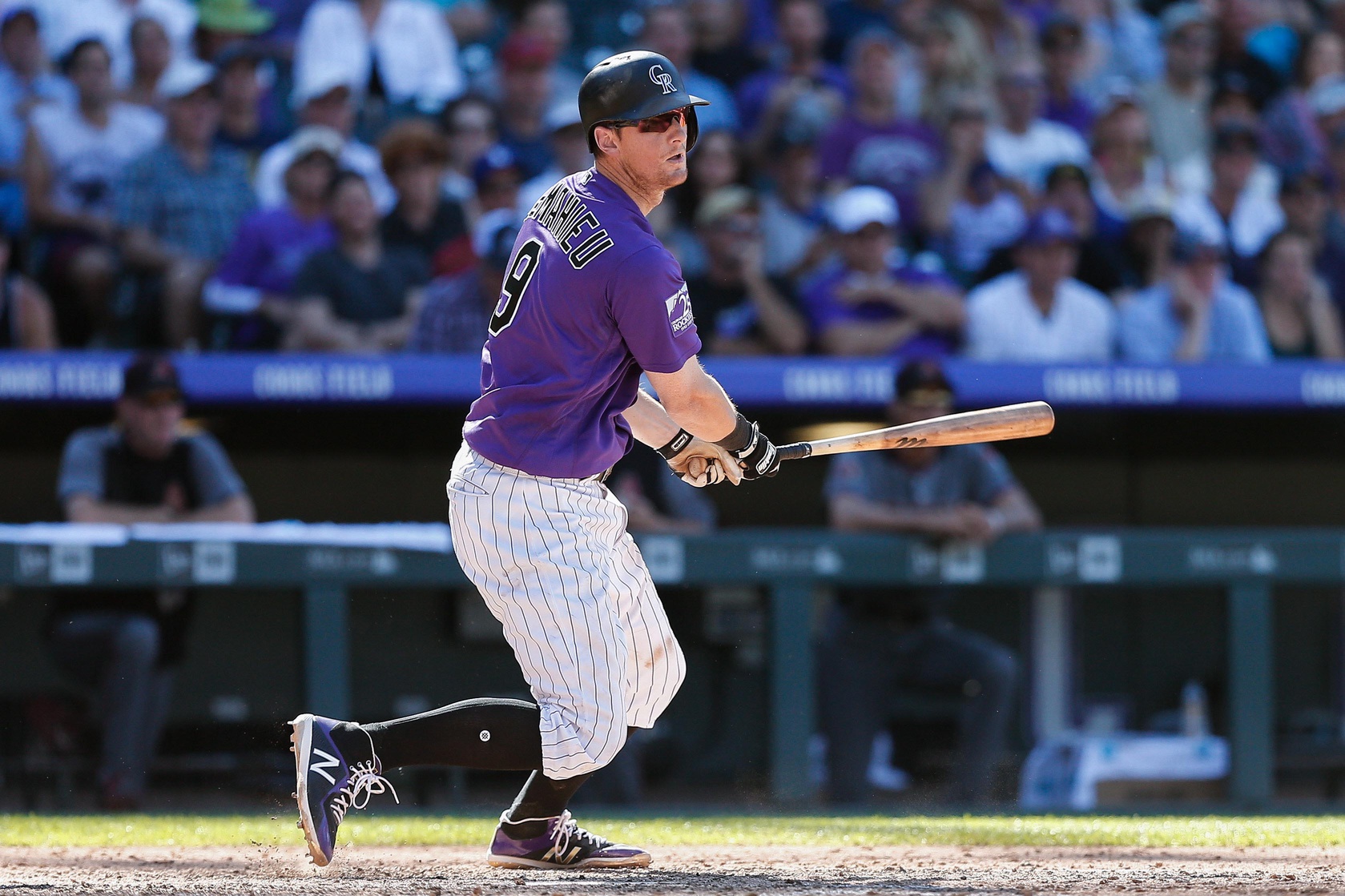 It wasn't a big surprise when the team non-tendered Robbie Grossman on Friday, nor was it an especially controversial move. But while Minnesota won't miss his lack of power or defensive prowess, they will absolutely miss his on-base proficiency. Among Twins players to make 500+ PA since 2016, Grossman led all with a .377 OBP. In fact, here's what that list looks like: 1. Robbie Grossman – .377 OBP 2. Joe Mauer – .366 OBP 3. Brian Dozier – .339 OBP 4. Jorge Polanco – .327 OBP 5. Miguel Sano – .323 OBP The top three guys on that list are gone, and Sano is coming off a 2018 campaign where he posted a .281 mark. Needless to say, the Twins are looking at a real deficiency in the on-base category. Of course they're hoping that rebounds and better health will trigger some improvement, but the fact remains: This is a roster full of free swingers with pop, and right now it is very short on disciplined hitters who can draw a walk. The addition of C.J. Cron, who agreed to terms Friday on a one-year, $4.8 millon deal and appears penciled in at first base, doesn't help in this department. He has a .311 career OBP, and even in his career year of 2018 still struck out four times for every walk. It's a weakness the front office will need to address with its remaining offseason moves. Perusing the Offseason Handbook and beyond, let's take a look at nine free agent options that might help move the needle. Justin Bour, 1B This is the kind of player the Twins should have been seeking at first base, in my opinion. With his .853 career OPS against right-handed pitchers, Bour would've been an ideal complement to Tyler Austin (.937 OPS vs. LHP). It's still possible the Twins will seek such an arrangement alongside Cron – also a righty – but that's not likely, which is too bad. In addition to his platooning fit, Bour would bring sorely needed patience to this offensive unit. His BB rates over the past three seasons: 11.8%, 11.0%, 14.6%. His 2018 mark would've led the Twins (Grossman and Mauer included). D.J. LeMahieu, 2B The two-time All-Star and 2016 NL batting champ is hitting the open market for the first time, and has been popular as a theoretical target for the Twins. It isn't hard to see why; over the past three years LeMahieu has slashed .309/.369/.429, and that middle number is especially attractive. In the Handbook, we added this caution: "Like many products of Coors Field, there are questions about his offensive numbers translating elsewhere. His career OPS is 160 points lower on the road than at home." If the Twins were to get an OBP closer to his .277 lifetime mark away from Coors, that would obviously not be helpful. Jed Lowrie, 2B I haven't seen Lowrie's name connected to Minnesota in reports yet, but I have to assume we will. He's a switch-hitter who's proven very adept in Oakland over the past two seasons – even making the All-Star team this year. He also turns 35 in April, so he won't require a long-term deal. If Lowrie's late-career surge with the A's (.356 OBP and .804 OPS in 2017-18) can sustain, he's very appealing. If he reverts to his previous form (.326 OBP and .726 OPS from 2008-16), less so. Logan Forsythe, 2B Should the Twins turn their gaze toward the lower end of the second base pool, they could go with Forsythe on a one-year deal and hope he provides some on-base juice to go along with his solid defense. The veteran posted a .359 OBP in 2015 with Tampa, and a .351 mark in 2017 with LA. He also turned in a .356 OBP in 50 games with the Twins after he was acquired this summer. But that figure stood at a .270 when the Dodgers dealt him, and his .327 career OBP is mediocre. Forsythe's bat has also been anemic the last two years: .228 AVG and .309 SLG. The ability to take walks becomes somewhat trivial at that rate. Michael Brantley, LF Brantley is past his lengthy bout with shoulder issues and back in All-Star form. This year he played in 143 games for Cleveland and posted a fantastic .309/.364/.468 slash line with a 60-to-48 K/BB ratio. He has a .351 career OBP and has been above that number every year since 2014 (except '16, when he played only 11 games). The problem is that he's a lefty-swinging left fielder, so he doesn't really fit with the roster as currently constructed. The Twins would need to shake things up – say, with an Eddie Rosario trade. Nelson Cruz, DH The premier slugger brings OBP (.342 career, .362 the past four seasons) as well as prodigious power, averaging 40 home runs since 2015. He'd be more lineup centerpiece than need-filling pickup, but the Twins could seemingly use one of those. That said, as a 38-year-old with zero defensive value and a big payday on the way, he's very unlikely. Nick Markakis, RF The uber-durable 13-year veteran is entering the market at an opportune time, coming off his best campaign in years. He played all 162 games for Atlanta, posting a .297/.366/.440 line with a 80-to-62 K/BB ratio, and helping push an upstart young squad to a surprise postseason appearance. Sounds like the kind of guy that Minnesota would really benefit from. Markakis has always been a patient hitter, with a .358 career OBP and 10.2% BB rate. But like Brantley, he's a lefty-swinging corner outfielder. Tough to see how that makes sense on a team with Rosario, Max Kepler and Jake Cave – unless the Twins were to, say, have Kepler split time between right and first, with Markakis splitting between right and DH. Andrew McCutchen, RF We now come to my absolute favorite option on this list (and perhaps on the entire offseason market). McCutchen is a former MVP and five time All-Star hitting the market at age 32. In recent years he hasn't been quite the same top-tier superstar, averaging 2.5 WAR the last three seasons compared to 6.9 from 2011 through 2015, but that'll keep his price tag reasonable and he's still a damn fine player. He has a .378 OBP and has been at or above .363 in nine of 10 MLB seasons. His 12.0% career BB rate is higher than Mauer's. Rotating his right-handed bat with the lefty-swinging corner outfielders and at DH would give McCutchen a regular role. He'd be an excellent leadoff guy. Bryce Harper, RF You want OBP? Here's a .388 career OBP and the game's second-highest BB rate since 2015, just sitting there for the taking. How fortuitous! I'm sure he won't cost all the much either. Nope, very affordable and plausible. Who on this list would you like to see the Twins pursue? Are there other OBP-focused additions you'd be targeting?
