



Cody Pirkl
-
Posts
1,314 -
Joined
-
Last visited
-
Days Won
4
Content Type
Profiles
News
Minnesota Twins Videos
2026 Minnesota Twins Top Prospects Ranking
2022 Minnesota Twins Draft Picks
Minnesota Twins Free Agent & Trade Rumors, Notes, & Tidbits
Guides & Resources
2023 Minnesota Twins Draft Picks
The Minnesota Twins Players Project
2024 Minnesota Twins Draft Picks
2025 Minnesota Twins Draft Pick Tracker
2026 Minnesota Twins Draft Tracker: Picks & Bonuses
Forums
Blogs
Events
Store
Downloads
Gallery
Everything posted by Cody Pirkl
-
Image courtesy of © D. Ross Cameron-Imagn Images Heading into 2025, Matt Wallner was arguably the Twins’ second-best hitter. Despite periods of significant struggles (and even a demotion to begin last season), the left-handed slugger had posted a .254/.371/.515 line in 2024, good for 49% above league average. He looked the part while posting an .847 OPS this March and April, before pulling a hamstring. Unfortunately, he hasn’t been nearly as productive since returning. In 78 plate appearances since being activated off the IL, Wallner is slashing .155/.231/.394. He’s shown some power, but not much else. The lack of consistency has contributed to the Twins’ struggling offense, and the subsequent nosedive in the team’s outlook for the rest of the season. As we know all too well, this offensive profile is tough to watch when it’s not clicking. We’ve seen Wallner completely lose the ability to make contact in the past. While it may feel like it, whiffs aren’t Wallner’s issue since returning from the IL. He has maintained a strikeout rate under 30% for the season and during the stretch since his return, which is an improvement over the 36.4% rate he posted in 2024. Instead, the issue seems to be with the contact Wallner is making. Matt Wallner has the worst batting average on balls in play in June, and a .150 mark since being activated. For reference, Wallner’s career mark is .336, as (despite his flyball tendencies) the way he punishes baseballs when he makes contact helps them find the grass at an above-average rate. The issue during his current rough stretch is his nearly 30% infield flyball rate. Not only is he getting under the ball, he’s hitting it straight up in the air, where there’s no chance for it to fall for a hit. Matt Trueblood wrote about this Monday; the change in trajectory comes from a flatter swing path. Even taking this into account, though, it’s probably safe to say that bad batted-ball luck is still playing a part in such a low BABIP. As a whole, Wallner’s profile is only a slight step below his 2024 season and, in some ways, it actually looks better. His expected batting average is nearly identical, and his expected slugging and xwOBA are just a few points off of his elite 2024 marks. His hard-hit rate is still over 50%, and he’s striking out less and walking more. Twins fans seem to have soured on Wallner’s plate approach, after watching Miguel Sanó and Joey Gallo types in recent years. His swing-and-miss, high-power profile is a necessary complement to the rest of the Twins’ lineup, though. The Twins have transitioned to a team that makes a lot of contact, and it hasn’t gone particularly well. The entire lineup (save Byron Buxton) is doing next to nothing lately. While Wallner’s struggles are the ugliest to watch, he’s also likelier than just about anyone else to turn a corner and help carry the offense when he’s locked in. We’ve seen Wallner at his lowest, when he’s completely lost at the plate. His recent struggles are nothing like that. We know he's struggling with some mechanical issues that are causing all of the infield fly balls, with some bad luck mixed in along the way. His timing is also off, perhaps as a result of the injury-inflicted layoff. The Twins have also faced a gauntlet of left-handed pitching, and he’s been consistently left in the lineup in those matchups for the first time in his career. It may not be enjoyable to watch right now, but Wallner will be just fine. While it’s unfortunate that his struggles are occurring in tandem with the rest of the lineup, his numbers look close enough to 2024, when he posted a near-.850 OPS. There’s no reason to believe he won’t be back to himself shortly. View full article
- 31 replies
-
- 2
-

-
- matt wallner
- miguel sano
- (and 1 more)
-
Image courtesy of Matt Krohn-Imagn Images The Twins have posted a .669 OPS against left-handed pitching so far in 2025. As a result, opposing teams have begun to throw whatever southpaws they have on their roster with little to no repercussions. There may be no legitimate answer to this problem within the organization, but the Twins' refusal to even try something different is becoming questionable. Carson McCusker can’t be considered a prospect or a likely remedy to the Twins’ ailments against left-handed pitching, but there’s at least a chance he can help. The 27-year-old outfielder has posted a .927 OPS in St. Paul overall this season and a .981 OPS against left-handed pitching. He received minimal opportunity in his brief call-up to the MLB and has admittedly not been as dominant since being demoted. McCusker has always been a long shot to be an impact MLB contributor. His career path from the Independent Leagues is fun, but it rarely leads to MLB success. His swing-and-miss tendencies raise plenty of red flags, and even in a best-case scenario, he’s unlikely to contribute in any categories other than the power department. The Twins are skeptical, which is fair, but the bar to clear is currently extremely low. After Royce Lewis was placed on the IL, the Twins lost one of their few potential impact options against left-handed pitching. They opted not to bring up fellow right-handed third baseman Jose Miranda due to his continued struggles since being demoted. Instead, they called up DaShawn Keirsey Jr., another left-handed hitter who is serving as a defensive fill-in and pinch runner. The Twins roster already included Jonah Bride, who has made more of an impact pitching in mop-up duty than he has as a position player in recent weeks. As their offense continues to flounder, the Twins continue to dedicate the back end of the roster to players who have little chance of helping turn things around. We’re also likely to continue to see at least one of Larnach and Wallner play regularly against left-handed pitching. Ironically, the team has waited until the supporting cast on offense is at its weakest this season to give these two regular at-bats against same-handed pitching after years of platooning them. McCusker being on the roster and receiving regular playing time against southpaws would undoubtedly be an act of desperation. Unfortunately, with the rash of injuries and the struggles from the lineup, this is the point we’ve reached. The downside of McCusker being overmatched isn’t much of a risk at all, given the current struggles from the lineup. The upside of something clicking and him being even a league-average option in those matchups would be massive. Unfortunately, it seems the Twins are so confident in their assessment of McCusker that they’re not willing to take such a modest gamble. The status quo from the Twins’ lineup simply isn’t getting the job done against left-handed pitching. There’s little reason to expect an improvement from their current roster, and it’s hard to imagine them acquiring an impact bat at the trade deadline. They have a lever to pull in St. Paul that carries minimal risk. Carson McCusker should be getting an opportunity right now. View full article
- 46 replies
-
- 2
-
-
- carson mccusker
- trevor larnach
- (and 2 more)
-
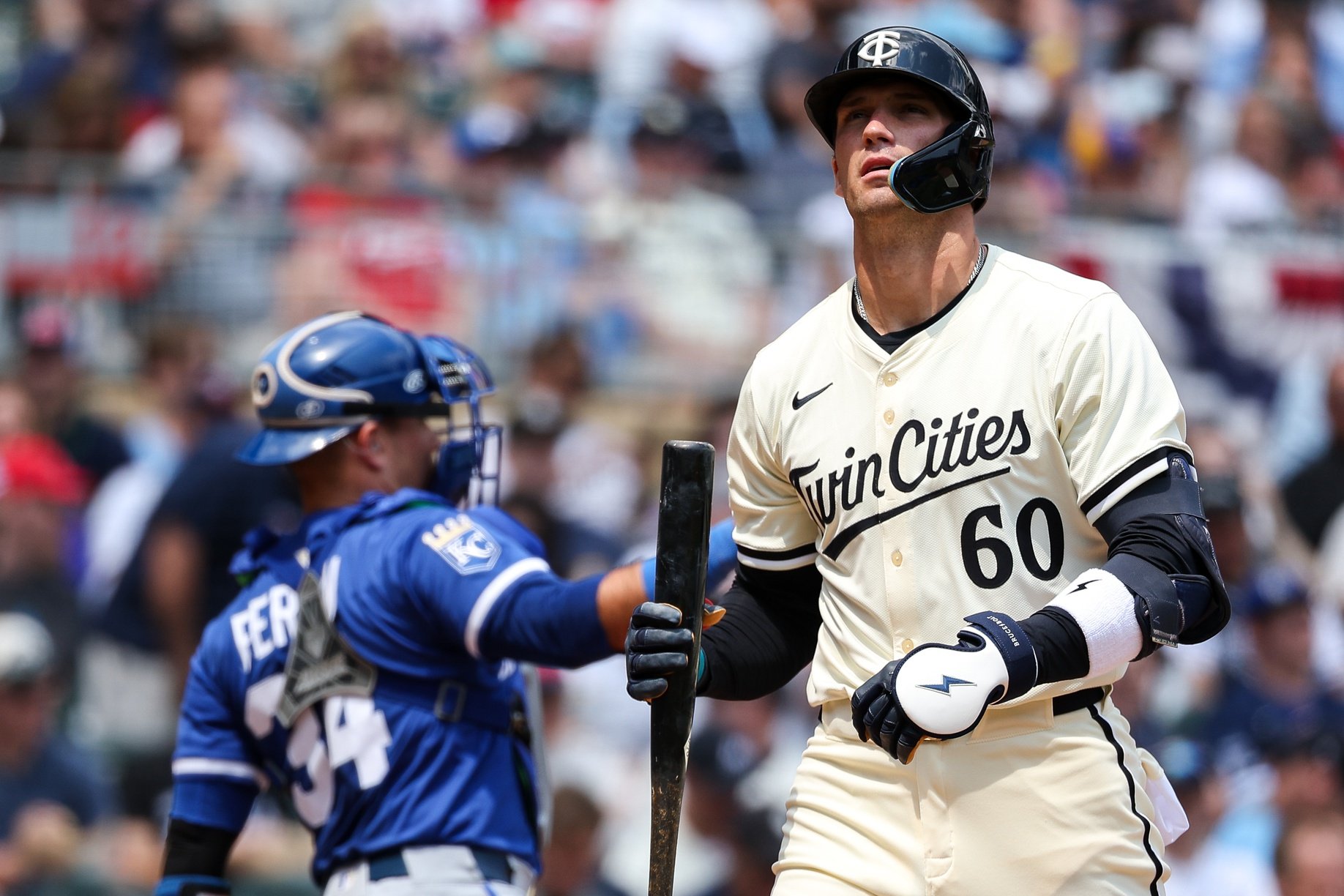 The Twins have posted a .669 OPS against left-handed pitching so far in 2025. As a result, opposing teams have begun to throw whatever southpaws they have on their roster with little to no repercussions. There may be no legitimate answer to this problem within the organization, but the Twins' refusal to even try something different is becoming questionable. Carson McCusker can’t be considered a prospect or a likely remedy to the Twins’ ailments against left-handed pitching, but there’s at least a chance he can help. The 27-year-old outfielder has posted a .927 OPS in St. Paul overall this season and a .981 OPS against left-handed pitching. He received minimal opportunity in his brief call-up to the MLB and has admittedly not been as dominant since being demoted. McCusker has always been a long shot to be an impact MLB contributor. His career path from the Independent Leagues is fun, but it rarely leads to MLB success. His swing-and-miss tendencies raise plenty of red flags, and even in a best-case scenario, he’s unlikely to contribute in any categories other than the power department. The Twins are skeptical, which is fair, but the bar to clear is currently extremely low. After Royce Lewis was placed on the IL, the Twins lost one of their few potential impact options against left-handed pitching. They opted not to bring up fellow right-handed third baseman Jose Miranda due to his continued struggles since being demoted. Instead, they called up DaShawn Keirsey Jr., another left-handed hitter who is serving as a defensive fill-in and pinch runner. The Twins roster already included Jonah Bride, who has made more of an impact pitching in mop-up duty than he has as a position player in recent weeks. As their offense continues to flounder, the Twins continue to dedicate the back end of the roster to players who have little chance of helping turn things around. We’re also likely to continue to see at least one of Larnach and Wallner play regularly against left-handed pitching. Ironically, the team has waited until the supporting cast on offense is at its weakest this season to give these two regular at-bats against same-handed pitching after years of platooning them. McCusker being on the roster and receiving regular playing time against southpaws would undoubtedly be an act of desperation. Unfortunately, with the rash of injuries and the struggles from the lineup, this is the point we’ve reached. The downside of McCusker being overmatched isn’t much of a risk at all, given the current struggles from the lineup. The upside of something clicking and him being even a league-average option in those matchups would be massive. Unfortunately, it seems the Twins are so confident in their assessment of McCusker that they’re not willing to take such a modest gamble. The status quo from the Twins’ lineup simply isn’t getting the job done against left-handed pitching. There’s little reason to expect an improvement from their current roster, and it’s hard to imagine them acquiring an impact bat at the trade deadline. They have a lever to pull in St. Paul that carries minimal risk. Carson McCusker should be getting an opportunity right now.
- 46 comments
-
- 4
-
-
- carson mccusker
- trevor larnach
- (and 2 more)
-
Image courtesy of © Dennis Lee-Imagn Images After losing Pablo López, the Twins' starting rotation is far from full strength. There was plenty of hope for Zebby Matthews, until he went down himself. Meanwhile, the lineup remains mired in mediocrity, with several positions that could stand an upgrade. Despite these needs and the Twins remaining in the middle of the playoff hunt, however, it may not be worth it for fans to get their hopes up at the trade deadline. The last time the Twins operated like a team that wanted to compete for a championship at the trade deadline was 2022. Unfortunately, their attempts are not fondly remembered. The Twins acquired Tyler Mahle, Jorge López, and Michael Fulmer. Fulmer was a valuable setup man, but the other two acquisitions turned out to be painful reminders of how going “all-in” can backfire. Even if the prospects the Twins gave up in 2022 haven’t developed into superstars, the Twins' gamble at that deadline turned out to be a painful one. The team fell out of contention, and the team control of the Mahle and López turned out to be worth very little. It’s fair to wonder whether the brutal return on the 2022 trade deadline continues to influence their decision-making to this day. In 2023, the team found itself in need of a right-handed hitter, as usual. They could also have used relief help, after the previously acquired Jorge López imploded and Brock Stewart suffered a setback on his IL stint, making the future of his season murky. Instead, they made one sole move, flipping López for Dylan Floro, who was a non-factor down the stretch. The team was proven correct in their assessment of the roster, as they went on to make the playoffs and break their postseason win drought. In 2024, the story was much of the same. The roster had sustained several injuries, including Joe Ryan, Byron Buxton, and Carlos Correa. Still, the team remained afloat and in contention into mid-August, when it all finally fell apart. Despite their needs, the Twins acquired Trevor Richards as their lone addition, then designated him for assignment before the end of the season. This time, their faith in the roster didn’t pay off. The 2025 trade deadline will be a completely different animal for the Twins. Their roster has some very real needs, but the organizational context will play a huge part. Like last season, the payroll will be a limiting factor in whom they can even consider acquiring. The Pohlads’ days are (hopefully) numbered in the ownership role, and they likely don’t see much personal benefit in taking on money for the stretch run. It could be argued that winning would raise the asking price of the team, but unless they think they’re winning the World Series, their finish to the 2025 season will likely carry very little weight in a $1.5 billion sale. The orders may be more along the lines of “don’t shake things up too much.” Depleting the farm system in pursuit of impact big-league players could carry too much risk, depending on the stage of the sale process. If the front office misses on big swings involving top-end prospects while negotiations are ongoing, the perception of the team’s future success could become a negotiating chip. The Pohlads may simply inform the front office that impact additions are not an option this year. Given this front office’s risk-averse nature at the last two deadlines and the state of the payroll and ownership, it’s hard to imagine the team acquiring impact players at the 2025 trade deadline. Doing so would require either taking on salary or overpaying in prospect capital to avoid adding millions to the ever-growing debt the Pohlads have found themselves in. Perhaps the team will surprise us and see an opportunity to add to a roster that is already very capable of competing. However, there is no shortage of reasons to be skeptical. Do you think the Twins will make meaningful additions to the roster at the deadline for the first time in three years? Let us know below! View full article
-
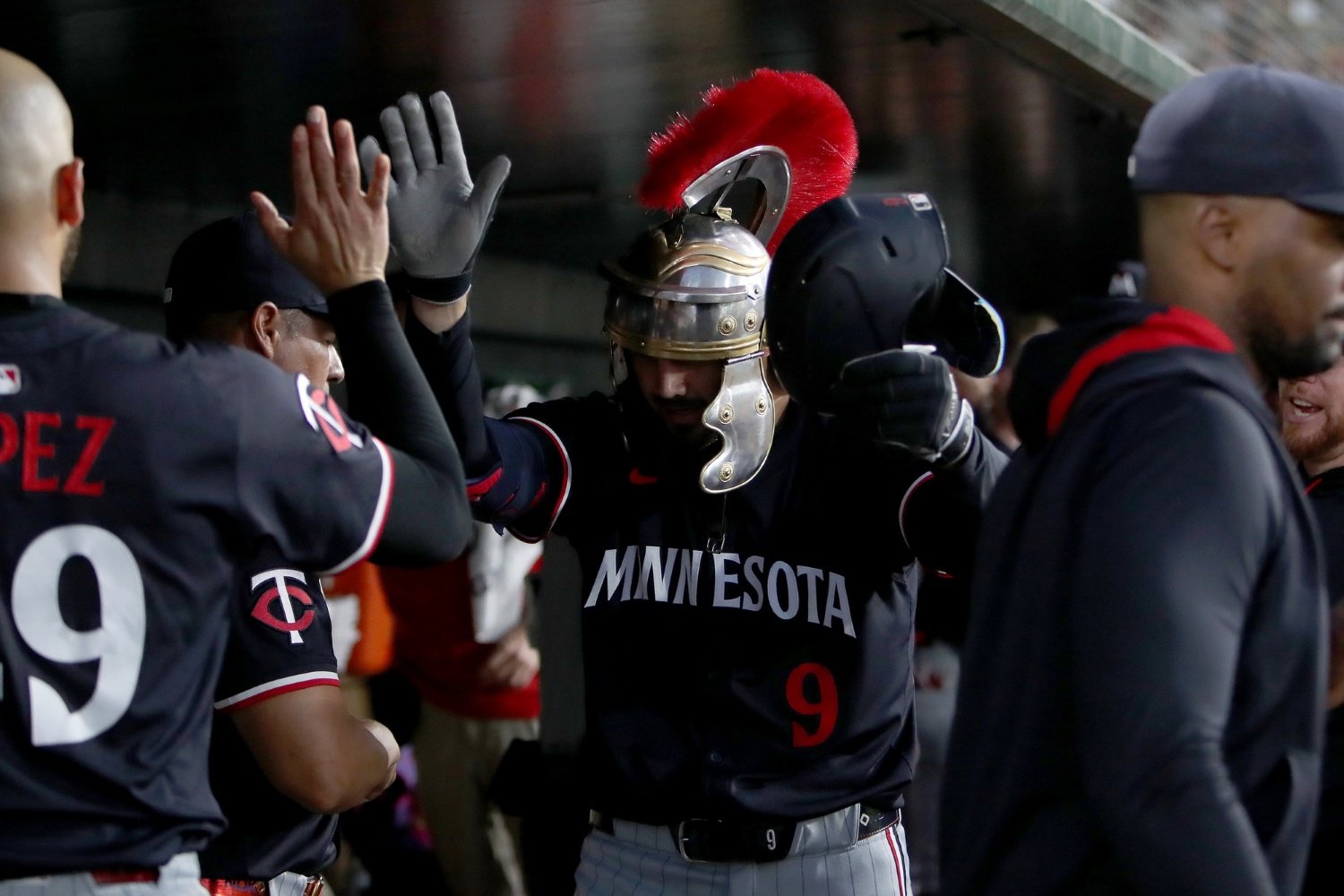 After losing Pablo López, the Twins' starting rotation is far from full strength. There was plenty of hope for Zebby Matthews, until he went down himself. Meanwhile, the lineup remains mired in mediocrity, with several positions that could stand an upgrade. Despite these needs and the Twins remaining in the middle of the playoff hunt, however, it may not be worth it for fans to get their hopes up at the trade deadline. The last time the Twins operated like a team that wanted to compete for a championship at the trade deadline was 2022. Unfortunately, their attempts are not fondly remembered. The Twins acquired Tyler Mahle, Jorge López, and Michael Fulmer. Fulmer was a valuable setup man, but the other two acquisitions turned out to be painful reminders of how going “all-in” can backfire. Even if the prospects the Twins gave up in 2022 haven’t developed into superstars, the Twins' gamble at that deadline turned out to be a painful one. The team fell out of contention, and the team control of the Mahle and López turned out to be worth very little. It’s fair to wonder whether the brutal return on the 2022 trade deadline continues to influence their decision-making to this day. In 2023, the team found itself in need of a right-handed hitter, as usual. They could also have used relief help, after the previously acquired Jorge López imploded and Brock Stewart suffered a setback on his IL stint, making the future of his season murky. Instead, they made one sole move, flipping López for Dylan Floro, who was a non-factor down the stretch. The team was proven correct in their assessment of the roster, as they went on to make the playoffs and break their postseason win drought. In 2024, the story was much of the same. The roster had sustained several injuries, including Joe Ryan, Byron Buxton, and Carlos Correa. Still, the team remained afloat and in contention into mid-August, when it all finally fell apart. Despite their needs, the Twins acquired Trevor Richards as their lone addition, then designated him for assignment before the end of the season. This time, their faith in the roster didn’t pay off. The 2025 trade deadline will be a completely different animal for the Twins. Their roster has some very real needs, but the organizational context will play a huge part. Like last season, the payroll will be a limiting factor in whom they can even consider acquiring. The Pohlads’ days are (hopefully) numbered in the ownership role, and they likely don’t see much personal benefit in taking on money for the stretch run. It could be argued that winning would raise the asking price of the team, but unless they think they’re winning the World Series, their finish to the 2025 season will likely carry very little weight in a $1.5 billion sale. The orders may be more along the lines of “don’t shake things up too much.” Depleting the farm system in pursuit of impact big-league players could carry too much risk, depending on the stage of the sale process. If the front office misses on big swings involving top-end prospects while negotiations are ongoing, the perception of the team’s future success could become a negotiating chip. The Pohlads may simply inform the front office that impact additions are not an option this year. Given this front office’s risk-averse nature at the last two deadlines and the state of the payroll and ownership, it’s hard to imagine the team acquiring impact players at the 2025 trade deadline. Doing so would require either taking on salary or overpaying in prospect capital to avoid adding millions to the ever-growing debt the Pohlads have found themselves in. Perhaps the team will surprise us and see an opportunity to add to a roster that is already very capable of competing. However, there is no shortage of reasons to be skeptical. Do you think the Twins will make meaningful additions to the roster at the deadline for the first time in three years? Let us know below!
 -
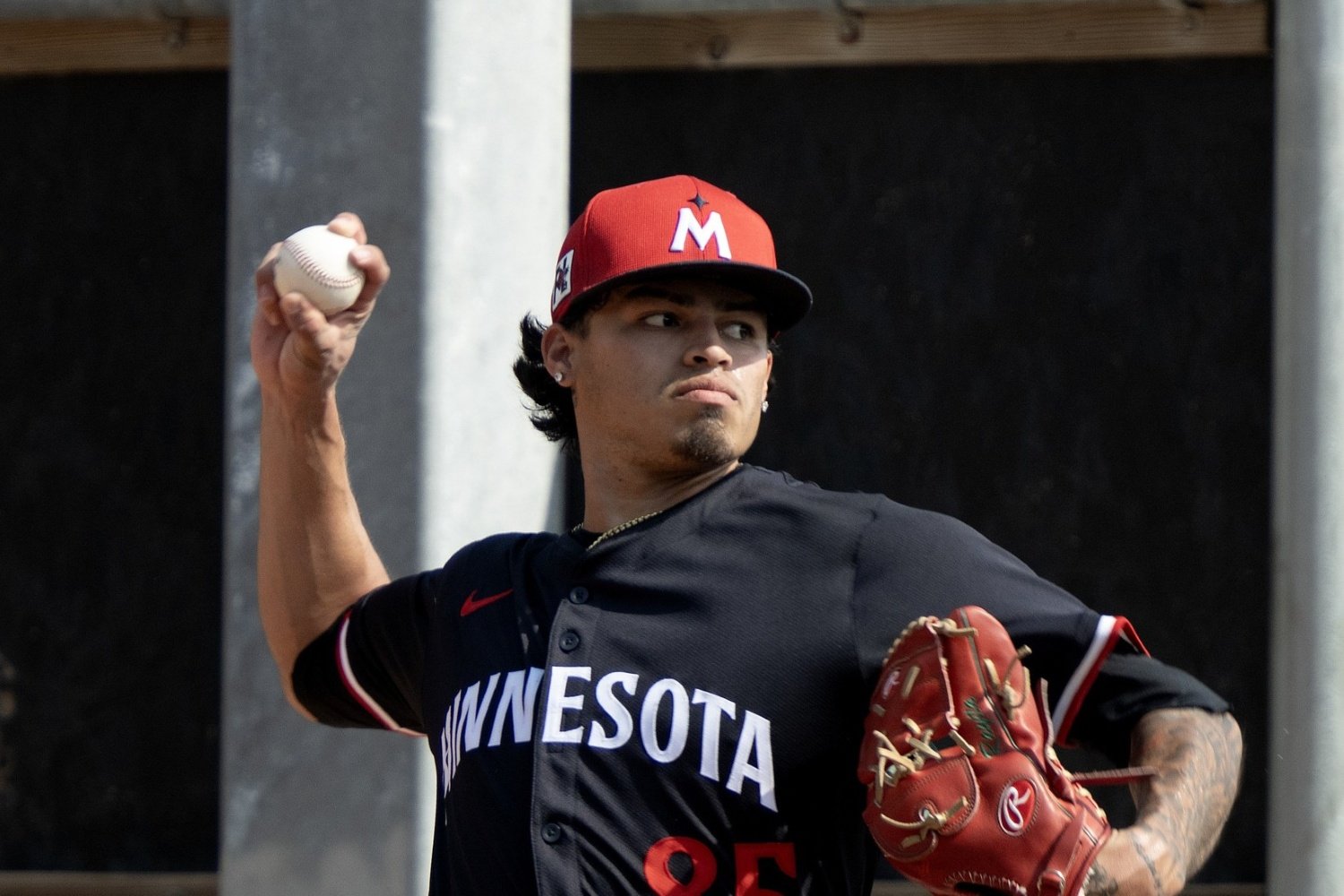 The Twins added Marco Raya to the 40-man roster a few offseasons ago, to protect him from the Rule 5 Draft. It was well known that he was likely still a reasonable distance away from the big leagues, but it was a small move to make to ensure opposing teams didn’t snatch him away. Fast-forward to 2025, and Raya, the starting pitcher, does not look poised to make an impact on the big-league roster. It may be time for a change. Raya was drafted out of high school in 2020 during the shortened draft and received mixed reviews from scouts. He wasn’t able to burnish his resume much that spring, due to the pandemic. He then suffered a shoulder injury during his first full season of pro ball in 2021, and the Twins have handled him very carefully during his ascent through the minor leagues ever since. Because of Raya’s limited workload, his ability to become a big-league starting pitcher has been in question for some time. He has showcased the talent that led to his original selection, but has yet to integrate it as a starting pitcher above A-ball. As his time on the 40-man roster adds up and Raya’s inconsistencies continue, it’s approaching time to try something new. The 2025 campaign has been a particularly trying one for Raya. His ERA is over 10.00 for the St. Paul Saints, and he’s walked 20 in 26 innings pitched. He’s also struck out 38 and has mixed in some outings that were downright dominant along the way. Unfortunately, this isn’t enough to feel good about dropping him into the Twins rotation. Even with the recent injuries the big-league roster has sustained, it’s hard to imagine Raya getting the call ahead of someone like Randy Dobnak. Raya’s prospects as a big-league starter are currently murky, to say the least. In the best-case scenario, it’s hard to see a path this season, given how he’s started. Because of this, it may be worthwhile to consider moving him to the bullpen. Raya’s mid- to high-90s fastball and range of secondary pitches should play incredibly well in short stints. It’s possible that his walk issues aren’t physical or mechanical, and that a change in role could help resolve them. He’s already only a nominal starter in most of his outings due to his short leash, which could make a shift to a multi-inning relief role relatively smooth. Such a change is far from a sure thing, but Raya appears to have stalled out with the current plan for him, and it may be worth shaking things up. The Twins need a role player like this. Travis Adams was recently promoted (and promptly demoted) to fill a multi-inning relief role. With several question marks in the rotation, a reliever who can throw more than one inning at a time is extremely valuable. While the Twins could use Adams to fill this spot, Raya has the upside to not only fill innings but dominate opposing lineups while doing so, if all goes well. While it may seem odd to transition a starter to the bullpen while the Twins' rotation depth dwindles, such a gamble could be the best move for all parties involved. The clock is ticking on Raya, who has yet to make an impact on the MLB roster. His innings are going to be limited this season anyway, and moving him doesn’t need to preclude him from starting games in the future. The Twins would also benefit from an added dimension to their bullpen mix, and Raya represents the most intriguing potential suitor. While Raya hasn’t panned out yet as a starting pitcher, his ability to become an impact pitcher for the big-league roster remains, even if the Twins need to get creative to find it. Should Marco Raya make a move to the bullpen?
 -
Image courtesy of © Chris Tilley-Imagn Images The Twins added Marco Raya to the 40-man roster a few offseasons ago, to protect him from the Rule 5 Draft. It was well known that he was likely still a reasonable distance away from the big leagues, but it was a small move to make to ensure opposing teams didn’t snatch him away. Fast-forward to 2025, and Raya, the starting pitcher, does not look poised to make an impact on the big-league roster. It may be time for a change. Raya was drafted out of high school in 2020 during the shortened draft and received mixed reviews from scouts. He wasn’t able to burnish his resume much that spring, due to the pandemic. He then suffered a shoulder injury during his first full season of pro ball in 2021, and the Twins have handled him very carefully during his ascent through the minor leagues ever since. Because of Raya’s limited workload, his ability to become a big-league starting pitcher has been in question for some time. He has showcased the talent that led to his original selection, but has yet to integrate it as a starting pitcher above A-ball. As his time on the 40-man roster adds up and Raya’s inconsistencies continue, it’s approaching time to try something new. The 2025 campaign has been a particularly trying one for Raya. His ERA is over 10.00 for the St. Paul Saints, and he’s walked 20 in 26 innings pitched. He’s also struck out 38 and has mixed in some outings that were downright dominant along the way. Unfortunately, this isn’t enough to feel good about dropping him into the Twins rotation. Even with the recent injuries the big-league roster has sustained, it’s hard to imagine Raya getting the call ahead of someone like Randy Dobnak. Raya’s prospects as a big-league starter are currently murky, to say the least. In the best-case scenario, it’s hard to see a path this season, given how he’s started. Because of this, it may be worthwhile to consider moving him to the bullpen. Raya’s mid- to high-90s fastball and range of secondary pitches should play incredibly well in short stints. It’s possible that his walk issues aren’t physical or mechanical, and that a change in role could help resolve them. He’s already only a nominal starter in most of his outings due to his short leash, which could make a shift to a multi-inning relief role relatively smooth. Such a change is far from a sure thing, but Raya appears to have stalled out with the current plan for him, and it may be worth shaking things up. The Twins need a role player like this. Travis Adams was recently promoted (and promptly demoted) to fill a multi-inning relief role. With several question marks in the rotation, a reliever who can throw more than one inning at a time is extremely valuable. While the Twins could use Adams to fill this spot, Raya has the upside to not only fill innings but dominate opposing lineups while doing so, if all goes well. While it may seem odd to transition a starter to the bullpen while the Twins' rotation depth dwindles, such a gamble could be the best move for all parties involved. The clock is ticking on Raya, who has yet to make an impact on the MLB roster. His innings are going to be limited this season anyway, and moving him doesn’t need to preclude him from starting games in the future. The Twins would also benefit from an added dimension to their bullpen mix, and Raya represents the most intriguing potential suitor. While Raya hasn’t panned out yet as a starting pitcher, his ability to become an impact pitcher for the big-league roster remains, even if the Twins need to get creative to find it. Should Marco Raya make a move to the bullpen? View full article
-
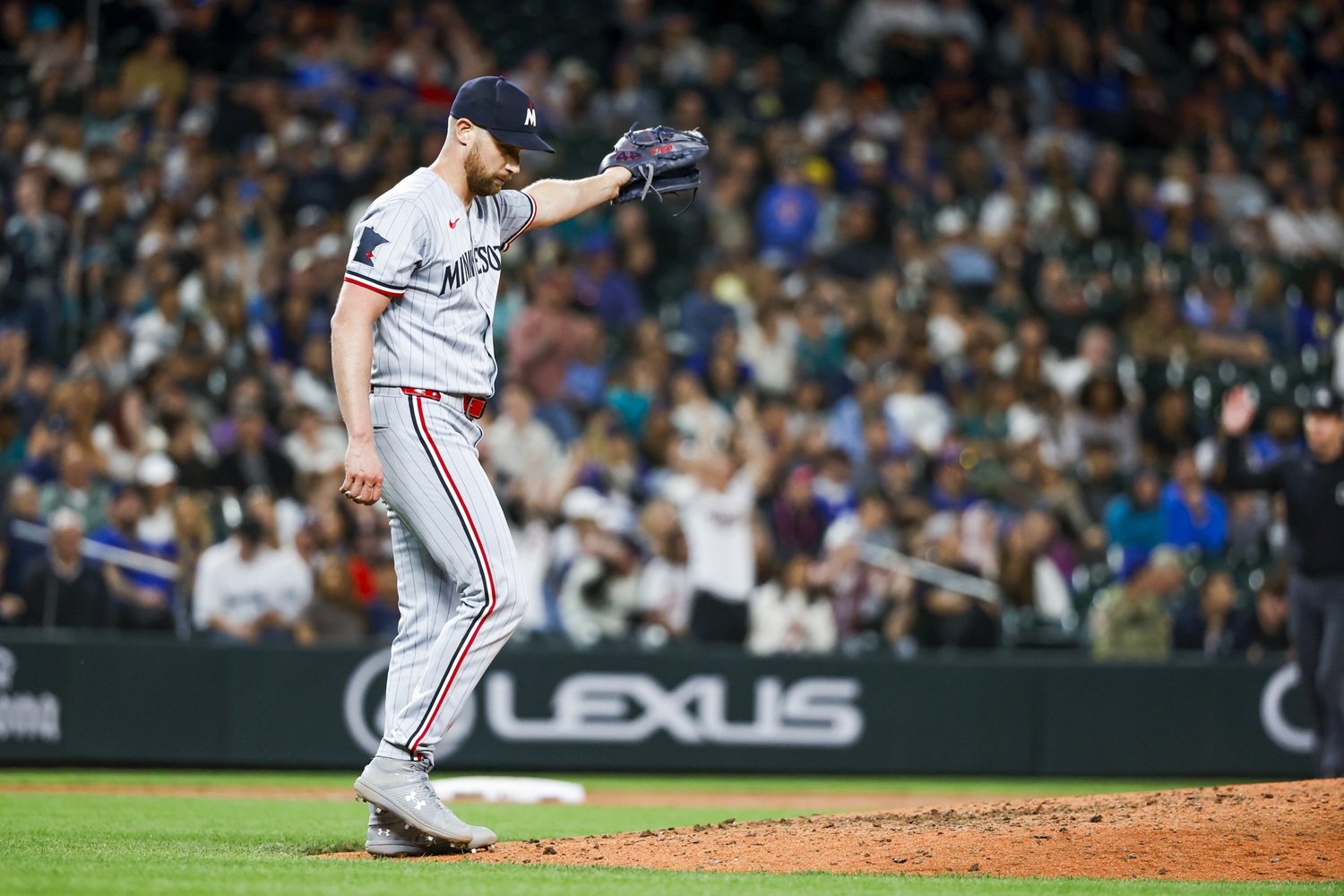 Brock Stewart has put up incredible numbers in a Twins uniform in a limited sample in between injuries. During his first two seasons, his unexpected dominance was a constant topic of discussion. His third year in Minnesota got off to a delayed start, but he’s been the same bullpen weapon so far as we’ve seen at his best in recent years. And yet, it feels like Brock Stewart is being underappreciated. The Twins' pitching staff has been the carrying force of the Twins' roster. The lineup has been mediocre at best, and despite the starting rotation's dominance, the bullpen has matched them every step of the way. The relief corps is headed by well-known names such as Jhoan Duran and Griffin Jax, with Louis Varland emerging as the fireman in his first full season as a reliever. This is likely the three-headed monster that most attention focuses on when considering the 4th best bullpen ERA in all of baseball, but for some time now, Stewart has been every bit as dominant as any one of these three. Stewart wasn’t ready to go on Opening Day following a shoulder procedure in the offseason, and a hamstring injury further delayed his debut. When he did return, he posted back-to-back outings in which he gave up multiple runs, something we weren’t accustomed to seeing from Stewart in his Twins tenure. Given his extensive injury history and rocky start, it would have been fair to wonder whether his latest health struggles might affect his performance. He’s emphatically answered that question since then. On May 3, Stewart allowed two earned runs against Boston while recording just one out. Since that appearance, he’s made twelve appearances and has allowed just one run. His ERA on the season sits at 2.93. While his fastball is down over a whole tick, he’s still struck out over 36% of the opposing hitters he’s faced. His walk rate is better than it was in 2023 when he posted a sub-1.00 ERA. This is peak Brock Stewart. Because of the dominance of the trio at the top of the Twins’ bullpen hierarchy, it’s felt like Stewart’s bounceback has flown under the radar. Mix in names like Cole Sands and Danny Coulombe, and we haven’t seen quite as much Stewart in high leverage as we have in years past. In addition to the wealth of other options in save or setup situations, the Twins are also managing Stewart very closely. For as aggressive as they’ve been with most of the bullpen, Stewart has yet to record more than three outs in an outing and has pitched on back-to-back days only three times. After missing the end of the last two seasons, the Twins have a plan to try to keep Stewart healthy. This is perfectly reasonable, as this version of Stewart could be heavily leaned on in October despite the team’s lack of doing so in the regular season. Don’t let the late start to the season or the glut of other dominant relief options distract you from the fact that Stewart is once again a force at the back end of games in 2025. This season has been an extension of the dominant Stewart that emerged in 2023 when the Twins called him up. During that time, he’s thrown just under 59 innings with a 2.50 ERA and has struck out over one-third of opposing hitters. He’s continued his reputation of being dominant when healthy, and the Twins are taking steps to keep him on the field. Should we be more appreciative of Brock Stewart? Have his season-ending injuries over the last two years affected how he’s perceived? Let us know below!
 -
Image courtesy of © Joe Nicholson-Imagn Images Brock Stewart has put up incredible numbers in a Twins uniform in a limited sample in between injuries. During his first two seasons, his unexpected dominance was a constant topic of discussion. His third year in Minnesota got off to a delayed start, but he’s been the same bullpen weapon so far as we’ve seen at his best in recent years. And yet, it feels like Brock Stewart is being underappreciated. The Twins' pitching staff has been the carrying force of the Twins' roster. The lineup has been mediocre at best, and despite the starting rotation's dominance, the bullpen has matched them every step of the way. The relief corps is headed by well-known names such as Jhoan Duran and Griffin Jax, with Louis Varland emerging as the fireman in his first full season as a reliever. This is likely the three-headed monster that most attention focuses on when considering the 4th best bullpen ERA in all of baseball, but for some time now, Stewart has been every bit as dominant as any one of these three. Stewart wasn’t ready to go on Opening Day following a shoulder procedure in the offseason, and a hamstring injury further delayed his debut. When he did return, he posted back-to-back outings in which he gave up multiple runs, something we weren’t accustomed to seeing from Stewart in his Twins tenure. Given his extensive injury history and rocky start, it would have been fair to wonder whether his latest health struggles might affect his performance. He’s emphatically answered that question since then. On May 3, Stewart allowed two earned runs against Boston while recording just one out. Since that appearance, he’s made twelve appearances and has allowed just one run. His ERA on the season sits at 2.93. While his fastball is down over a whole tick, he’s still struck out over 36% of the opposing hitters he’s faced. His walk rate is better than it was in 2023 when he posted a sub-1.00 ERA. This is peak Brock Stewart. Because of the dominance of the trio at the top of the Twins’ bullpen hierarchy, it’s felt like Stewart’s bounceback has flown under the radar. Mix in names like Cole Sands and Danny Coulombe, and we haven’t seen quite as much Stewart in high leverage as we have in years past. In addition to the wealth of other options in save or setup situations, the Twins are also managing Stewart very closely. For as aggressive as they’ve been with most of the bullpen, Stewart has yet to record more than three outs in an outing and has pitched on back-to-back days only three times. After missing the end of the last two seasons, the Twins have a plan to try to keep Stewart healthy. This is perfectly reasonable, as this version of Stewart could be heavily leaned on in October despite the team’s lack of doing so in the regular season. Don’t let the late start to the season or the glut of other dominant relief options distract you from the fact that Stewart is once again a force at the back end of games in 2025. This season has been an extension of the dominant Stewart that emerged in 2023 when the Twins called him up. During that time, he’s thrown just under 59 innings with a 2.50 ERA and has struck out over one-third of opposing hitters. He’s continued his reputation of being dominant when healthy, and the Twins are taking steps to keep him on the field. Should we be more appreciative of Brock Stewart? Have his season-ending injuries over the last two years affected how he’s perceived? Let us know below! View full article
-
Image courtesy of © Matt Krohn-Imagn Images The Twins invested as little as possible at first base this offseason, when they gambled $1 million on a Ty France rebound. He was immediately given the starting job, because of their confidence that 2024 was an injury-marred fluke for the former Reds and Mariners first baseman. Whether their faith has been vindicated is a complicated question. France is tied for second on the team with 23 RBIs, behind only Byron Buxton. Often hitting in the heart of the lineup, he's seen a wealth of opportunities to impact games, and has made the most of them. He’s slashing .378/.408/.444 with runners in scoring position. His contact-oriented approach and use of all fields make him an excellent option for getting the job done when there are baserunners to cash in. We’ve also seen some brief hot streaks from France, who earned himself Player of the Week honors in April. Despite his repeated success in big situations, France’s overall performance leaves much to be desired. Currently slashing .256/.319/.357, he owns a 96 wRC+, which is all the more unimpressive at first base, where the bar to clear offensively is higher. After struggling to a .670 OPS in 2024, he became a fringe MLB player. In 2025, he holds an OPS of .676, albeit in a very tough year for hitters. For what it’s worth, France does appear to have bounced back from his injury-plagued 2024 campaign. His average exit velocity of over 89 mph is a career-high, leading to a career high in expected slugging percentage and a vast discrepancy between his wOBA and xwOBA. He’s been unlucky so far, which isn’t necessarily predictive but gives reason to have hope moving forward—if he can continue with the same process he’s employed. Defensively, the Twins talked up France’s abilities throughout spring training. It's surprising to hear, given a career-long sample size of defensive metrics indicating that he was extremely limited in the field. So far, the defense has been solid but unexceptional. He hasn’t made any significant defensive mistakes, but his limited range has shown up occasionally. France’s overall profile is among the more interesting ones on the Twins’ roster. His 0.1 Wins Above Replacement tells the story of a basically fungible player and the 10th-most valuable position player on the team, right behind Jonah Bride. Surely, such a low mark in the all-encompassing WAR measure points to a player who makes little impact on a big-league roster—except that France has been a significantly impactful player, as evidenced by his team-leading Win Probability Added. As unimpressive as the overall body of work is, he’s answered the bell when the team needed him most. That counts for something. Bottom-line measures might disdain France and downplay his value, but we’ve repeatedly seen him impact the most pivotal parts of games. On one hand, it could be argued that these opportunistic successes are not sustainable. On the other hand, he’s underperformed his expected numbers. If one of these regresses to the mean, it could quickly change the perception of France’s season. If both do, he’ll likely remain a solid contributor to the lineup. It’s an interesting storyline to watch as the season marches on, especially if the Twins remain in contention as the trade deadline nears. Has Ty France been good this season? It’s hard to say no, given all the impactful moments we’ve seen from him in 2025, despite his modest overall body of work. Perhaps the rest of the season will give us a more definitive answer. View full article
-
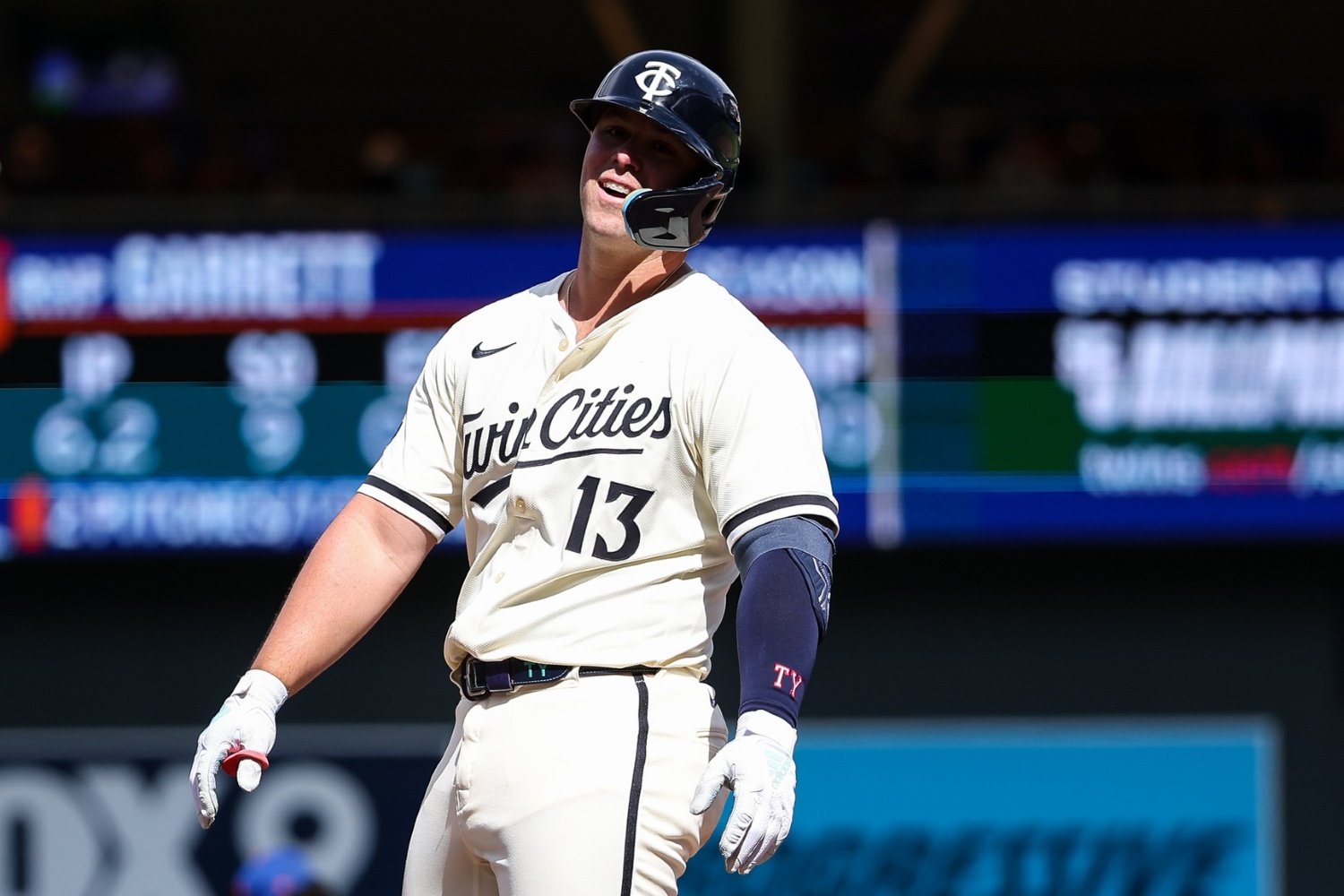 The Twins invested as little as possible at first base this offseason, when they gambled $1 million on a Ty France rebound. He was immediately given the starting job, because of their confidence that 2024 was an injury-marred fluke for the former Reds and Mariners first baseman. Whether their faith has been vindicated is a complicated question. France is tied for second on the team with 23 RBIs, behind only Byron Buxton. Often hitting in the heart of the lineup, he's seen a wealth of opportunities to impact games, and has made the most of them. He’s slashing .378/.408/.444 with runners in scoring position. His contact-oriented approach and use of all fields make him an excellent option for getting the job done when there are baserunners to cash in. We’ve also seen some brief hot streaks from France, who earned himself Player of the Week honors in April. Despite his repeated success in big situations, France’s overall performance leaves much to be desired. Currently slashing .256/.319/.357, he owns a 96 wRC+, which is all the more unimpressive at first base, where the bar to clear offensively is higher. After struggling to a .670 OPS in 2024, he became a fringe MLB player. In 2025, he holds an OPS of .676, albeit in a very tough year for hitters. For what it’s worth, France does appear to have bounced back from his injury-plagued 2024 campaign. His average exit velocity of over 89 mph is a career-high, leading to a career high in expected slugging percentage and a vast discrepancy between his wOBA and xwOBA. He’s been unlucky so far, which isn’t necessarily predictive but gives reason to have hope moving forward—if he can continue with the same process he’s employed. Defensively, the Twins talked up France’s abilities throughout spring training. It's surprising to hear, given a career-long sample size of defensive metrics indicating that he was extremely limited in the field. So far, the defense has been solid but unexceptional. He hasn’t made any significant defensive mistakes, but his limited range has shown up occasionally. France’s overall profile is among the more interesting ones on the Twins’ roster. His 0.1 Wins Above Replacement tells the story of a basically fungible player and the 10th-most valuable position player on the team, right behind Jonah Bride. Surely, such a low mark in the all-encompassing WAR measure points to a player who makes little impact on a big-league roster—except that France has been a significantly impactful player, as evidenced by his team-leading Win Probability Added. As unimpressive as the overall body of work is, he’s answered the bell when the team needed him most. That counts for something. Bottom-line measures might disdain France and downplay his value, but we’ve repeatedly seen him impact the most pivotal parts of games. On one hand, it could be argued that these opportunistic successes are not sustainable. On the other hand, he’s underperformed his expected numbers. If one of these regresses to the mean, it could quickly change the perception of France’s season. If both do, he’ll likely remain a solid contributor to the lineup. It’s an interesting storyline to watch as the season marches on, especially if the Twins remain in contention as the trade deadline nears. Has Ty France been good this season? It’s hard to say no, given all the impactful moments we’ve seen from him in 2025, despite his modest overall body of work. Perhaps the rest of the season will give us a more definitive answer.
 -
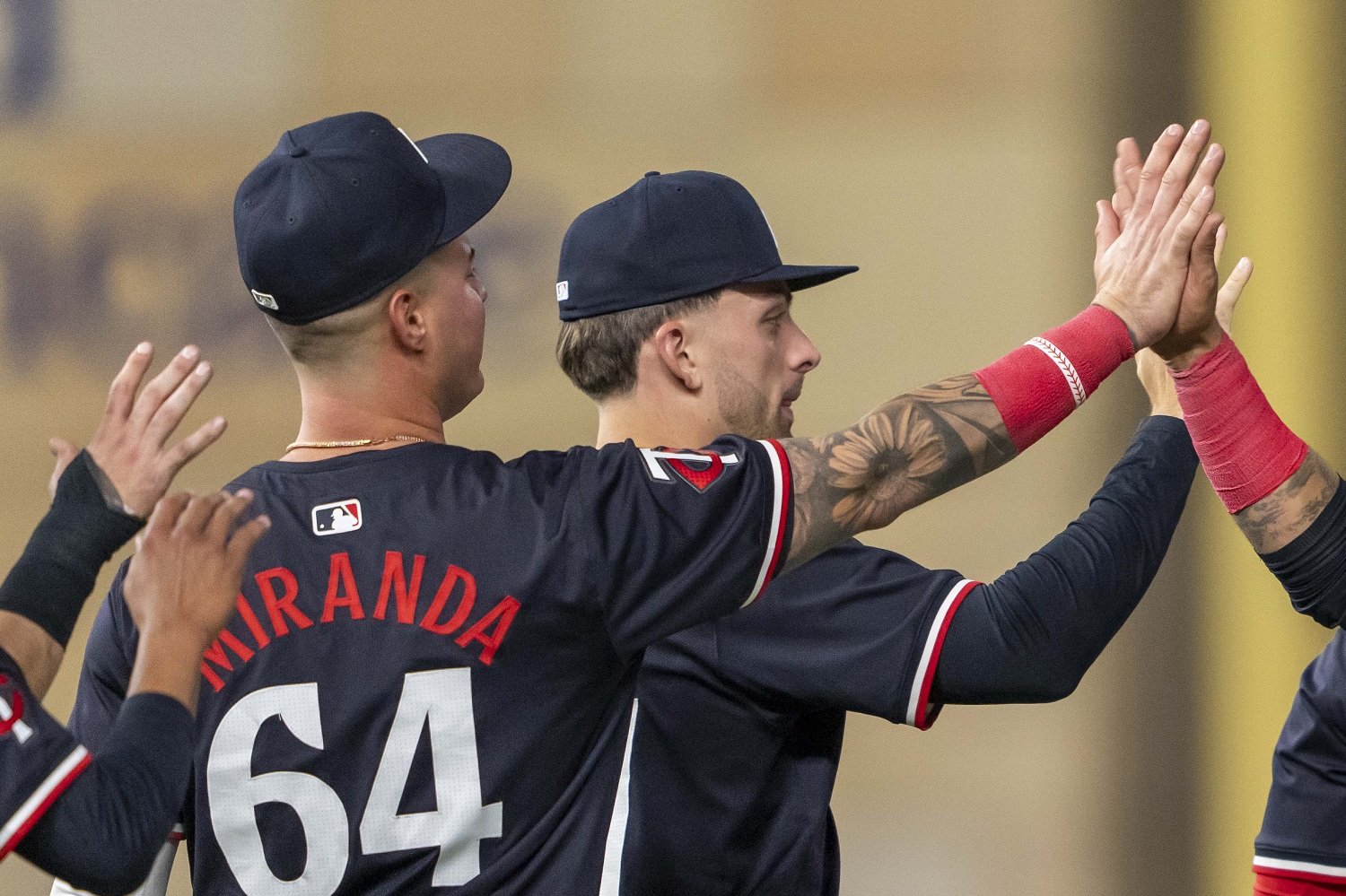 A pair of previously promising hitters are now settled in St. Paul, and if the parent club enjoys even moderately good health, they'll be there for the foreseeable future. Each of them struggled mightily to begin the season, after two different but similar sagas of highs and lows in 2023 and 2024. Each was demoted following costly mistakes that the Twins may be completely fed up with. Are Edouard Julien and Jose Miranda now on the outside looking in? Edouard Julien Julien’s recent demotion came on the heels of oversliding a base to make an out and committing several costly errors in the field, contributing to a loss to the Boston Red Sox. This capped off a 29-game sample size in which he hit .198/.288/.319. According to FanGraphs, he was worth half a win less than a replacement-level player. Julien showed promise earlier this season after changing his plate approach, but could never fully put it together. His defensive struggles afforded him less patience from the Twins, as with the return of (first) Brooks Lee and (most recently) the duo of Royce Lewis and Willi Castro, the team had superior defensive options for second base. The front office chose demoting him over parting ways with Kody Clemens or Jonah Bride. While it is true that the move can be justified by saying Julien is a more valuable piece of the organization needing everyday at-bats, this demotion feels different. The Twins have a lot of ground to make up for their slow start, and they don’t see Julien as part of the solution. He was given an extended opportunity after injuries hit this spring, and performed more poorly offensively and defensively than last season—when he lost his job at second base. Given his age and the state of the Twins' season, this demotion was about more than continuing Julien’s development. Julien is now behind both Castro and Lee in the depth chart at second base, and is likely to be passed by Luke Keaschall shortly after he returns from injury. His career OPS in Triple A is around .900, leaving little to prove in the minor leagues. Julien has found himself in no-man’s land in the Twins organization, and his recent demotion shows just how far he’s fallen over the last year. Jose Miranda In a season with several contenders for “rock bottom” moments, Miranda's contribution may take the cake. After a brutal baserunning gaffe in mid-April, he was demoted to Triple-A, where he has yet to play because of a hand injury sustained off the diamond. Dating back to Aug. 1, 2024, Miranda is slashing .207/.228/.299, with a 38:4 strikeout-to-walk ratio. Now 27 years old, Miranda has failed to hone his free-swinging plate approach, and has remained a streaky hitter with extreme highs and lows. While he can be a middle-of-the-order contributor when running hot, he’s been unable to sustain those stretches and fully establish himself as a part of the core. While he’s been perfectly serviceable at third base, Miranda’s range limits him defensively and buries him behind Lewis, Lee, and Bride on the active roster. The Twins had a tentative plan for him to see more time at first base, but we’ve seen very little of him at the position so far. Julien and Miranda are in similarly difficult circumstances. Each is questionable defensively, without the track record offensively to keep them afloat. Each has returned to Triple A after costly mistakes and has little left to prove at that level. Both previously promising young players have extremely murky outlooks beyond this season and may be due for changes of scenery more momentous than a ride up and down the Green Line. They have fallen out of favor with the current front office, and each lacks the track record to hold onto their roster spots if a new front office is in place in 2026. There are no boxes to check for l Julien or Miranda to find themselves back in the big leagues. Their opportunities likely depend on the health of the active roster—which is, admittedly, to say that another chance could still crop up for either. They’re still young enough to break through and have shown too much talent to write off, but their paths to becoming meaningful contributors to the Twins roster remain narrow. Is time running out for Edouard Julien and Jose Miranda? Given their age and history of success, should they be given more time to earn roster spots? Let us know below!
 -
Image courtesy of Jesse Johnson- Imagn Sports A pair of previously promising hitters are now settled in St. Paul, and if the parent club enjoys even moderately good health, they'll be there for the foreseeable future. Each of them struggled mightily to begin the season, after two different but similar sagas of highs and lows in 2023 and 2024. Each was demoted following costly mistakes that the Twins may be completely fed up with. Are Edouard Julien and Jose Miranda now on the outside looking in? Edouard Julien Julien’s recent demotion came on the heels of oversliding a base to make an out and committing several costly errors in the field, contributing to a loss to the Boston Red Sox. This capped off a 29-game sample size in which he hit .198/.288/.319. According to FanGraphs, he was worth half a win less than a replacement-level player. Julien showed promise earlier this season after changing his plate approach, but could never fully put it together. His defensive struggles afforded him less patience from the Twins, as with the return of (first) Brooks Lee and (most recently) the duo of Royce Lewis and Willi Castro, the team had superior defensive options for second base. The front office chose demoting him over parting ways with Kody Clemens or Jonah Bride. While it is true that the move can be justified by saying Julien is a more valuable piece of the organization needing everyday at-bats, this demotion feels different. The Twins have a lot of ground to make up for their slow start, and they don’t see Julien as part of the solution. He was given an extended opportunity after injuries hit this spring, and performed more poorly offensively and defensively than last season—when he lost his job at second base. Given his age and the state of the Twins' season, this demotion was about more than continuing Julien’s development. Julien is now behind both Castro and Lee in the depth chart at second base, and is likely to be passed by Luke Keaschall shortly after he returns from injury. His career OPS in Triple A is around .900, leaving little to prove in the minor leagues. Julien has found himself in no-man’s land in the Twins organization, and his recent demotion shows just how far he’s fallen over the last year. Jose Miranda In a season with several contenders for “rock bottom” moments, Miranda's contribution may take the cake. After a brutal baserunning gaffe in mid-April, he was demoted to Triple-A, where he has yet to play because of a hand injury sustained off the diamond. Dating back to Aug. 1, 2024, Miranda is slashing .207/.228/.299, with a 38:4 strikeout-to-walk ratio. Now 27 years old, Miranda has failed to hone his free-swinging plate approach, and has remained a streaky hitter with extreme highs and lows. While he can be a middle-of-the-order contributor when running hot, he’s been unable to sustain those stretches and fully establish himself as a part of the core. While he’s been perfectly serviceable at third base, Miranda’s range limits him defensively and buries him behind Lewis, Lee, and Bride on the active roster. The Twins had a tentative plan for him to see more time at first base, but we’ve seen very little of him at the position so far. Julien and Miranda are in similarly difficult circumstances. Each is questionable defensively, without the track record offensively to keep them afloat. Each has returned to Triple A after costly mistakes and has little left to prove at that level. Both previously promising young players have extremely murky outlooks beyond this season and may be due for changes of scenery more momentous than a ride up and down the Green Line. They have fallen out of favor with the current front office, and each lacks the track record to hold onto their roster spots if a new front office is in place in 2026. There are no boxes to check for l Julien or Miranda to find themselves back in the big leagues. Their opportunities likely depend on the health of the active roster—which is, admittedly, to say that another chance could still crop up for either. They’re still young enough to break through and have shown too much talent to write off, but their paths to becoming meaningful contributors to the Twins roster remain narrow. Is time running out for Edouard Julien and Jose Miranda? Given their age and history of success, should they be given more time to earn roster spots? Let us know below! View full article
-
Injuries have presented Brooks Lee with an opportunity again this season, after he did little to seize one in 2024. While his surface-level numbers are unimpressive, Lee looks like a different player in 2025. Image courtesy of Jonathan Dyer-Imagn Images Brooks Lee was overmatched at the plate in 2024, and while it was his first taste of MLB action, his performance at least started to raise some red flags on the former 8th overall pick. He’s putting those concerns to bed in 2025, even if his superficial stats aren’t showing it. Lee’s most significant issue in 2024 was that he showed no semblance of the elite plate discipline he displayed across the minor leagues. It appeared Lee was overmatched and overanxious, chasing 35.8% of the time while continuing to make contact at a high rate. As we’ve seen with players like Jose Miranda, there comes a point where a lack of swing-and-miss becomes detrimental, particularly when the contact being made is outside of the strike zone. While Lee’s game is not centered upon his ability to do significant damage at the plate, his lack of power in 2024 was alarming. His average exit velocity of 85.8 mph would have ranked him in the bottom 15 of qualified hitters last season. His hard-hit percentage would have been in the bottom 10. While far from a death sentence in such a small sample, he had a long way to go to meet already low expectations in the power department. This season has been a much different story for Brooks Lee. His modest .683 OPS is slightly above the league-average hitter, but the process is entirely different. He’s improved his quality of contact across the board, including adding roughly 4 mph to his average exit velocity. Hard-hit rate, barrel rate, expected slugging, and even Lee’s expected batting average have spiked so far, and it’s only a matter of time before these improvements show up in his bottom-line performance. Brooks.mp4 Much like Lee’s struggles in 2024, these metrics have a root cause that can be traced back to his plate approach. He’s swung at more pitches in the zone while cutting 16% off his chase rate. He’s making less weak contact, letting these pitches outside of the zone go, and setting himself up with more favorable hitting counts to get pitches he can barrel. This is the approach that made him such a polished hitting prospect. Lee’s change in plate approach is likely a result of the newfound confidence he feels at the plate, which shows in multiple layers of his profile. In 2024, he appeared to be sitting back to fight everything off. He hit .175 against fastballs with a .275 slugging percentage. So far in 2025, he’s hitting .273 with a .455 slugging against them, and expected stats say he’s been unlucky. He’s hit offspeed pitches even better than fastballs, but has yet to collect a hit against breaking balls. How he adjusts to pitchers who try to abuse this weakness will likely determine how high Brooks Lee’s ceiling can be offensively. Brooks Lee looks like a player who acknowledged his struggles in his brief debut and went to work in the offseason. Despite an early season back injury delaying his start to the season, he looks like a different player at the plate. His overall performance is unimpressive, but his underlying numbers provide exciting foreshadowing. His .368 xwOBA is ahead of players like Randy Arozarena and Francisco Lindor. If Lee can maintain this performance, he’ll be a serious contributor to the Twins’ roster. Lee looks like a completely different player so far in 2025. Given his minor-league track record, his plate approach supports the quality of contact and makes 2024 look like the outlier in his career. The raw production should be right around the corner for Brooks Lee, and he may simply be a core member of the Twins’ lineup for years to come. View full article
-
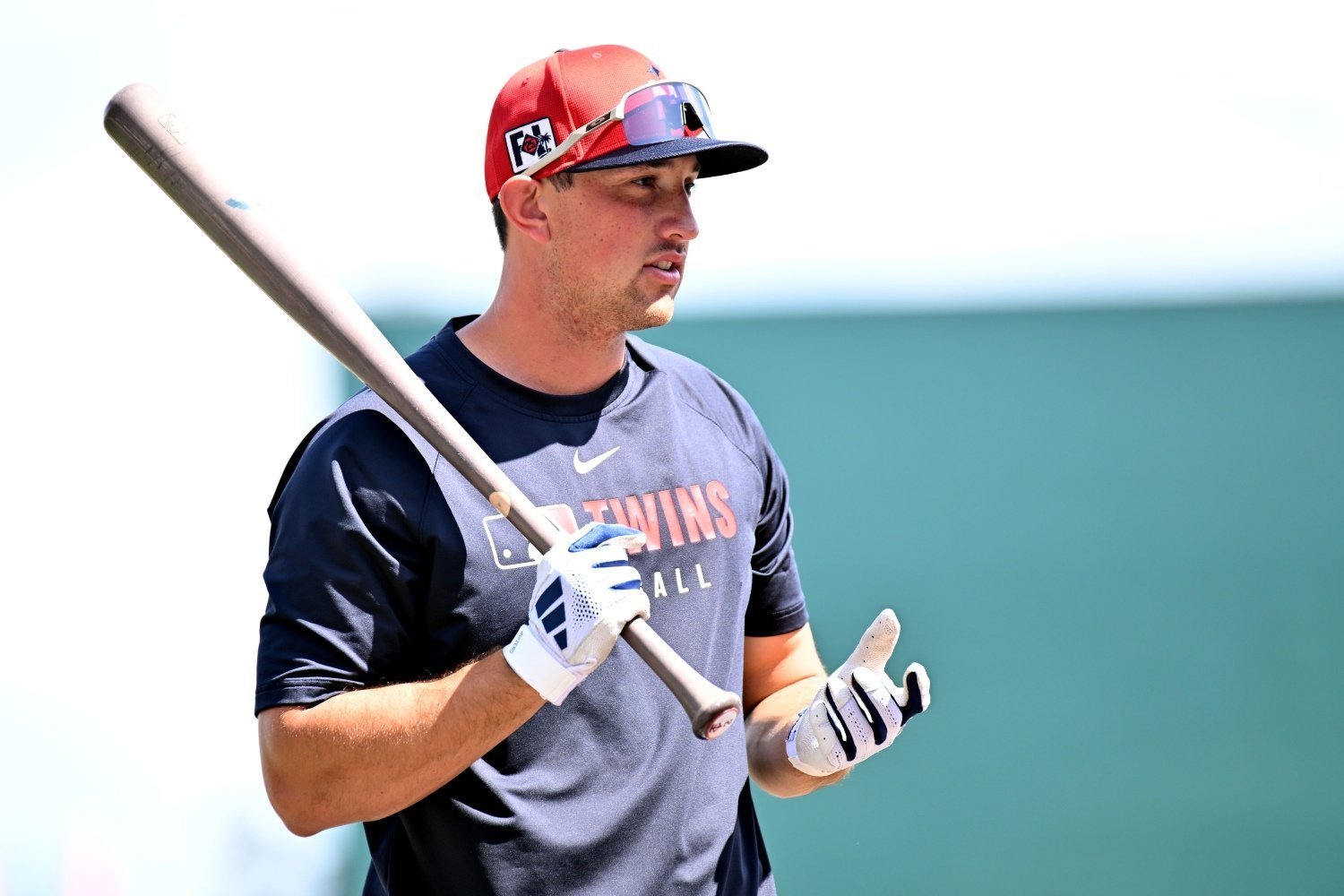 Brooks Lee was overmatched at the plate in 2024, and while it was his first taste of MLB action, his performance at least started to raise some red flags on the former 8th overall pick. He’s putting those concerns to bed in 2025, even if his superficial stats aren’t showing it. Lee’s most significant issue in 2024 was that he showed no semblance of the elite plate discipline he displayed across the minor leagues. It appeared Lee was overmatched and overanxious, chasing 35.8% of the time while continuing to make contact at a high rate. As we’ve seen with players like Jose Miranda, there comes a point where a lack of swing-and-miss becomes detrimental, particularly when the contact being made is outside of the strike zone. While Lee’s game is not centered upon his ability to do significant damage at the plate, his lack of power in 2024 was alarming. His average exit velocity of 85.8 mph would have ranked him in the bottom 15 of qualified hitters last season. His hard-hit percentage would have been in the bottom 10. While far from a death sentence in such a small sample, he had a long way to go to meet already low expectations in the power department. This season has been a much different story for Brooks Lee. His modest .683 OPS is slightly above the league-average hitter, but the process is entirely different. He’s improved his quality of contact across the board, including adding roughly 4 mph to his average exit velocity. Hard-hit rate, barrel rate, expected slugging, and even Lee’s expected batting average have spiked so far, and it’s only a matter of time before these improvements show up in his bottom-line performance. Brooks.mp4 Much like Lee’s struggles in 2024, these metrics have a root cause that can be traced back to his plate approach. He’s swung at more pitches in the zone while cutting 16% off his chase rate. He’s making less weak contact, letting these pitches outside of the zone go, and setting himself up with more favorable hitting counts to get pitches he can barrel. This is the approach that made him such a polished hitting prospect. Lee’s change in plate approach is likely a result of the newfound confidence he feels at the plate, which shows in multiple layers of his profile. In 2024, he appeared to be sitting back to fight everything off. He hit .175 against fastballs with a .275 slugging percentage. So far in 2025, he’s hitting .273 with a .455 slugging against them, and expected stats say he’s been unlucky. He’s hit offspeed pitches even better than fastballs, but has yet to collect a hit against breaking balls. How he adjusts to pitchers who try to abuse this weakness will likely determine how high Brooks Lee’s ceiling can be offensively. Brooks Lee looks like a player who acknowledged his struggles in his brief debut and went to work in the offseason. Despite an early season back injury delaying his start to the season, he looks like a different player at the plate. His overall performance is unimpressive, but his underlying numbers provide exciting foreshadowing. His .368 xwOBA is ahead of players like Randy Arozarena and Francisco Lindor. If Lee can maintain this performance, he’ll be a serious contributor to the Twins’ roster. Lee looks like a completely different player so far in 2025. Given his minor-league track record, his plate approach supports the quality of contact and makes 2024 look like the outlier in his career. The raw production should be right around the corner for Brooks Lee, and he may simply be a core member of the Twins’ lineup for years to come.
 -
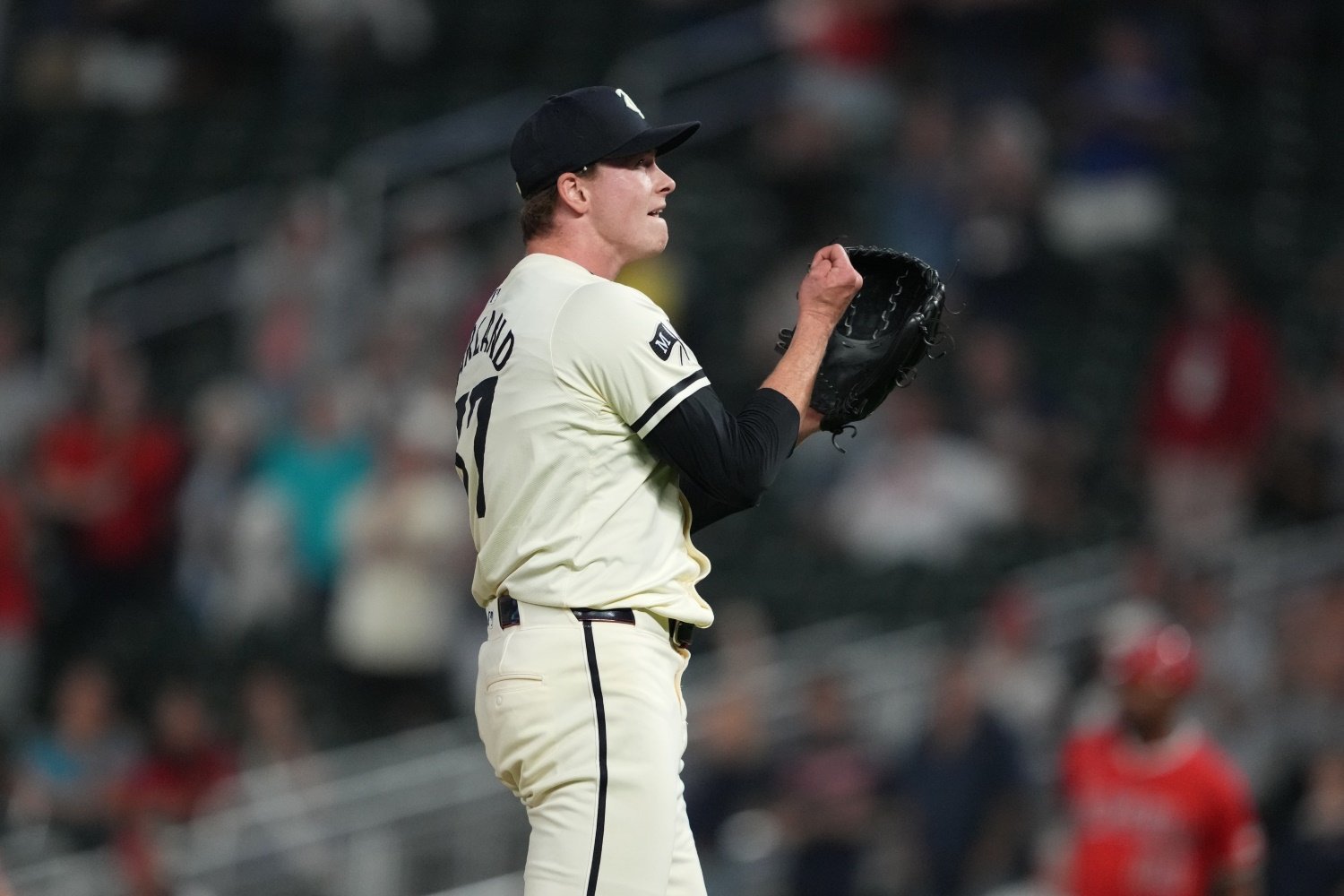 Louis Varland might currently be second on the Twins' bullpen hierarchy, due in equal measure to Griffin Jax’s struggles and his own performance. Varland looks like the fire-breathing relief ace we all hoped for so far, and it’s opened a whole new world of possibilities for the Twins. On Tuesday night, we saw the next step in Varland’s ascent. The maligned Jax pitched the 7th inning, with Varland left to bridge the 8th to Jhoan Duran, facing the heart of the opposing lineup. With a 1-2-3 inning, Varland continued with what had already been an impressive start to the season. He should now be considered one of their top relief arms. He may factor into that conversation for years to come. Varland has struck out nearly one-third of opposing hitters so far this season. While his struggles with allowing hard contact haven’t completely vanished, he’s posted career bests in many metrics, like expected batting average and slugging percentage. His knuckle-curve has become a legitimate weapon, allowing just one hit so far and drawing a near 50% whiff rate as his second-most used offering. His fastball is averaging 98.1 mph and has been nearly unhittable. Varland’s emergence gives the Twins a wealth of options at the back end of games. If Brock Stewart and Jax return to form (as already seems to be happening), they have four legitimate options to turn to in high-leverage situations. While both continue to get their footing to begin the season, one could argue that Varland has emerged as the second option in the bullpen, below only Duran. The Twins may currently be struggling to keep their heads above water, but if they have a season-saving comeback in them, the back end of this bullpen is likely to play a huge part. Varland’s emergence affects more than just the effectiveness of the Twins' bullpen in 2025. There’s no sugarcoating how much damage the Twins have done to their playoff odds to begin the season. If their poor play continues, they’re sure to find themselves fielding more and more calls from opposing teams on back-end relievers. Varland rising through the ranks gives them more ability to entertain such calls. This front office doesn’t believe in paying bullpen arms, and the team’s payroll and ownership are uncertain situations for the medium-term future. Continued struggles may create the perfect storm to part with at least one high-leverage reliever. Varland, being the youngest member of this group, is the most cost-controlled. The Twins may find themselves more comfortable parting with a more expensive relief arm, knowing that Varland is effective and under team control for years to come. While it may be a disappointing season so far, 2025 hasn’t been without its bright spots. Varland is becoming the reliever we thought he could be, which is beneficial for the Twins, whether they fight back into contention or continue to flounder. He can be a valuable piece of a competitive Twins bullpen down the stretch, or allow the team to shop older relievers with their sights set on reinforcing the 2026 roster. While one reality is much more desirable than the other, it’s worth recognizing the doors Varland’s performance so far has opened. Time will tell how, exactly, this development benefits the Twins, but it’s been one of the bright spots of a disappointing start to 2025.
- 23 comments
-
- 7
-
-
- louis varland
- jhoan duran
- (and 1 more)
-
There was always hope that Louie Varland could be a valuable reliever, whenever the Twins officially transitioned him to the bullpen. So far, he’s exceeded all expectations, giving the Twins all kinds of options. Image courtesy of Jordan Johnson-Imagn Images Louis Varland might currently be second on the Twins' bullpen hierarchy, due in equal measure to Griffin Jax’s struggles and his own performance. Varland looks like the fire-breathing relief ace we all hoped for so far, and it’s opened a whole new world of possibilities for the Twins. On Tuesday night, we saw the next step in Varland’s ascent. The maligned Jax pitched the 7th inning, with Varland left to bridge the 8th to Jhoan Duran, facing the heart of the opposing lineup. With a 1-2-3 inning, Varland continued with what had already been an impressive start to the season. He should now be considered one of their top relief arms. He may factor into that conversation for years to come. Varland has struck out nearly one-third of opposing hitters so far this season. While his struggles with allowing hard contact haven’t completely vanished, he’s posted career bests in many metrics, like expected batting average and slugging percentage. His knuckle-curve has become a legitimate weapon, allowing just one hit so far and drawing a near 50% whiff rate as his second-most used offering. His fastball is averaging 98.1 mph and has been nearly unhittable. Varland’s emergence gives the Twins a wealth of options at the back end of games. If Brock Stewart and Jax return to form (as already seems to be happening), they have four legitimate options to turn to in high-leverage situations. While both continue to get their footing to begin the season, one could argue that Varland has emerged as the second option in the bullpen, below only Duran. The Twins may currently be struggling to keep their heads above water, but if they have a season-saving comeback in them, the back end of this bullpen is likely to play a huge part. Varland’s emergence affects more than just the effectiveness of the Twins' bullpen in 2025. There’s no sugarcoating how much damage the Twins have done to their playoff odds to begin the season. If their poor play continues, they’re sure to find themselves fielding more and more calls from opposing teams on back-end relievers. Varland rising through the ranks gives them more ability to entertain such calls. This front office doesn’t believe in paying bullpen arms, and the team’s payroll and ownership are uncertain situations for the medium-term future. Continued struggles may create the perfect storm to part with at least one high-leverage reliever. Varland, being the youngest member of this group, is the most cost-controlled. The Twins may find themselves more comfortable parting with a more expensive relief arm, knowing that Varland is effective and under team control for years to come. While it may be a disappointing season so far, 2025 hasn’t been without its bright spots. Varland is becoming the reliever we thought he could be, which is beneficial for the Twins, whether they fight back into contention or continue to flounder. He can be a valuable piece of a competitive Twins bullpen down the stretch, or allow the team to shop older relievers with their sights set on reinforcing the 2026 roster. While one reality is much more desirable than the other, it’s worth recognizing the doors Varland’s performance so far has opened. Time will tell how, exactly, this development benefits the Twins, but it’s been one of the bright spots of a disappointing start to 2025. View full article
-
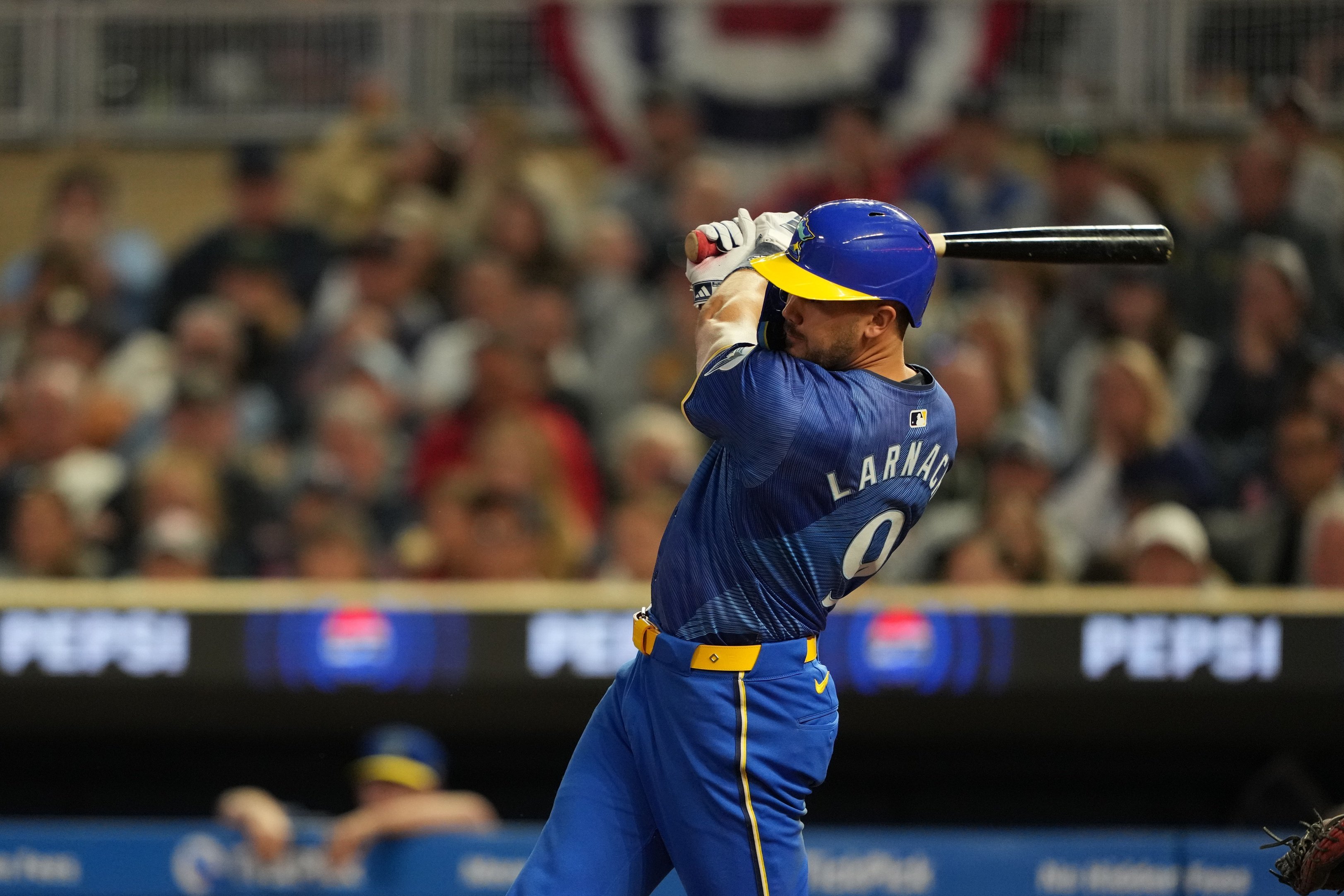 Trevor Larnach made significant strides in 2024, particularly in his whiff rates and performance against non-fastballs. After slashing his strikeout rate to 22.3% last season, he’s striking out even less in 2025. He also has yet to barrel a single ball, and has contributed very little offensively. Could Larnach be leaning too far into his adjusted plate approach? In 2024, we finally saw Larnach make good on his prospect pedigree. He posted career bests across the board, resulting in a 15-homer season with a .771 OPS despite playing through foot problems. He was 21% better than the league-average hitter, and looked to break through as a trustworthy piece of the Twins lineup while so many others struggled. He pulled the ball more, swung and missed less, and showed a balanced plate approach that should hold up consistently. So far in 2025, Larnach has shown some concerning trends that have led to his struggles. Dropping his strikeout rate in 2024 was a welcome development. Dropping it even further in 2025 has led to some unintended consequences. Larnach’s quality of contact has been extremely poor so far this season, and it’s easy to see why. While he’s still posting strong walk rates, his chase rate is above 30%, a mark he’s never come close to in his career. This hasn’t been reflected in his strikeout rate, because he’s making contact on these swings outside of the zone over half the time, but that's just leading to poor contact. It’s the same issue we saw from Jose Miranda before his demotion. The ability to make contact isn’t always valuable. Despite Larnach’s suddenly free-swinging tendencies, he’s also become oddly passive in certain situations. He’s swung at just over 13% of first pitches in his at-bats, by far the lowest rate of his career. Perhaps on a related note, he’s swung at a career-low 60% of pitches in the heart of the plate. It makes sense, then, that he’s slashing just .143/.409/.214 when ahead in the count. It’s impossible to succeed while swinging at so many pitches outside the zone and letting so many hittable pitches go by. When Larnach does make contact, he’s pulling the ball a career-low 34.9% of the time and using the opposite field a career-high 32.6% of the time. It’s tough to say what’s going through Larnach’s head when he’s at the plate, but it sure looks like he’s in survival mode, trying to fight off pitches and make sure he makes contact. He’s swinging and missing at a career-low rate so far, but it’s coming at the expense of any offensive production. It’s possible that, after significantly reducing his strikeouts last season, Larnach is trying to take things a step further in 2025 and has taken his adjustments too far. Regardless of the reason, he’s entirely out of sorts at the plate, and the Twins are taking notice. He’s already been moved down in the order as the offense has continued to struggle, and top prospect Emmanuel Rodriguez could push for playing time at the MLB level sometime this season. At 28 years old and in his fifth season at the MLB level, Larnach will have to show something relatively quickly, given his lack of track record. If the offense continues to struggle, the range of available options may widen in the Twins’ eyes as they look for any spark. We’re watching the downside of avoiding strikeouts at all costs. After finding a winning formula last season, he hasn’t been able to repeat it in 2025. Can he adjust his plate approach before it’s too late?
- 24 comments
-
- 3
-
-
- trevor larnach
- emmanuel rodriguez
- (and 1 more)
-
After a solid 2024 season, the young outfielder is off to a poor start this spring, and the underlying numbers suggest his struggles aren’t just bad luck. What’s changed for the Twins' left fielder? Image courtesy of Jordan Johnson-USA TODAY Sports Trevor Larnach made significant strides in 2024, particularly in his whiff rates and performance against non-fastballs. After slashing his strikeout rate to 22.3% last season, he’s striking out even less in 2025. He also has yet to barrel a single ball, and has contributed very little offensively. Could Larnach be leaning too far into his adjusted plate approach? In 2024, we finally saw Larnach make good on his prospect pedigree. He posted career bests across the board, resulting in a 15-homer season with a .771 OPS despite playing through foot problems. He was 21% better than the league-average hitter, and looked to break through as a trustworthy piece of the Twins lineup while so many others struggled. He pulled the ball more, swung and missed less, and showed a balanced plate approach that should hold up consistently. So far in 2025, Larnach has shown some concerning trends that have led to his struggles. Dropping his strikeout rate in 2024 was a welcome development. Dropping it even further in 2025 has led to some unintended consequences. Larnach’s quality of contact has been extremely poor so far this season, and it’s easy to see why. While he’s still posting strong walk rates, his chase rate is above 30%, a mark he’s never come close to in his career. This hasn’t been reflected in his strikeout rate, because he’s making contact on these swings outside of the zone over half the time, but that's just leading to poor contact. It’s the same issue we saw from Jose Miranda before his demotion. The ability to make contact isn’t always valuable. Despite Larnach’s suddenly free-swinging tendencies, he’s also become oddly passive in certain situations. He’s swung at just over 13% of first pitches in his at-bats, by far the lowest rate of his career. Perhaps on a related note, he’s swung at a career-low 60% of pitches in the heart of the plate. It makes sense, then, that he’s slashing just .143/.409/.214 when ahead in the count. It’s impossible to succeed while swinging at so many pitches outside the zone and letting so many hittable pitches go by. When Larnach does make contact, he’s pulling the ball a career-low 34.9% of the time and using the opposite field a career-high 32.6% of the time. It’s tough to say what’s going through Larnach’s head when he’s at the plate, but it sure looks like he’s in survival mode, trying to fight off pitches and make sure he makes contact. He’s swinging and missing at a career-low rate so far, but it’s coming at the expense of any offensive production. It’s possible that, after significantly reducing his strikeouts last season, Larnach is trying to take things a step further in 2025 and has taken his adjustments too far. Regardless of the reason, he’s entirely out of sorts at the plate, and the Twins are taking notice. He’s already been moved down in the order as the offense has continued to struggle, and top prospect Emmanuel Rodriguez could push for playing time at the MLB level sometime this season. At 28 years old and in his fifth season at the MLB level, Larnach will have to show something relatively quickly, given his lack of track record. If the offense continues to struggle, the range of available options may widen in the Twins’ eyes as they look for any spark. We’re watching the downside of avoiding strikeouts at all costs. After finding a winning formula last season, he hasn’t been able to repeat it in 2025. Can he adjust his plate approach before it’s too late? View full article
- 24 replies
-
- 1
-
-
- trevor larnach
- emmanuel rodriguez
- (and 1 more)
-
The French-Canadian God of Walks hasn’t had much success this season, but he’s been a changed man at the plate. Finally abandoning his overly patient plate approach, he's worth watching as a Twins breakout hitter in 2025. Image courtesy of Matt Marton-Imagn Images Edouard Julien’s patient plate approach was taken advantage of by opposing pitchers last season. While he didn’t hint at being more aggressive, he did recognize his need to compete against non-fastballs this season to bounce back. So far, in 2025, he’s been able to do both. His sophomore campaign was a massive disappointment for Julien, whose patient approach sometimes crossed over into outright passivity. Opposing pitchers put together a rock-solid scouting report against him, as evidenced by Julien leading the league in called strikeouts—despite spending a good chunk of the season at Triple A. It was time for Julien to make a big adjustment, and that’s precisely what he’s done. For the first time in his major-league career, Julien is swinging at more than half the pitches he sees. After constantly finding himself down in the count last season, he’s no longer willing to let the borderline pitches sneak by. While he hasn’t worked counts and taken walks as much as we’ve come to expect, he’s also cut down on the strikeouts so far this season. The quality of contact has also remained steady in the early going. Julien’s hard-hit rate is back to the level it was in his breakout rookie season, and his barrel rate is better than it’s ever been. He’s not just selling out to try to make contact of any kind, he’s consistently putting a charge into the ball. More encouraging is Julien’s performance against non-fastballs. Last season, he had no chance in non-fastball counts, and pitchers repeatedly attacked him with soft stuff when he was behind. While Julien may not be punishing fastballs like we’ve seen him do in the past, it’s hard to imagine he’s lost his ability to do so long-term. More importantly, the talk of spring training regarding Julien was his need to compete against other pitches, and so far, he’s doing so at a level we’ve never seen from him before. While the sample size is small, it coincides with a change in approach, which should always be given at least some attention. It's not just that he's timing his swing to the softer stuff, either—though there might be truth in that, and he might need to make a next wave of adjustments because of it, so he can catch up to the heat. Julien is also hitting from a slightly more spread-out stance, and using a slightly shorter stride this year. That's allowed him to make contact farther in front of his own body, and to catch the ball in front of home plate—which usually means more thump, particularly against breaking and offspeed pitches. Julien likely still has a bit to iron out with his plate approach in 2025. Swinging so often can also be taken advantage of, particularly when chasing pitches outside the zone. Julien has chased nearly 30% of the time this season, a notable increase from the 18% rate he showed in 2024. While his strikeout rate has declined, his per-swing whiff rate has increased from 30.9% to 35.7%. It’s hard to expect Julien to come out this season with a completely different plate approach and have it optimized, but this is a start. Instead of looking for the perfect pitch, it appears he’s more willing to expand what he’s hunting for, and so far it’s worked. Julien Hit.mp4 Julien has shown plenty to be excited about early this season. Watching him take strike three so consistently in 2024 became maddening, and we’re seeing some encouraging signs of him putting that tendency in the rearview mirror. He's a different hitter in 2025. Can he keep it up? View full article
-
Edouard Julien Is A New Man. Can He Regain His Former Excellence?
Cody Pirkl posted an article in Twins
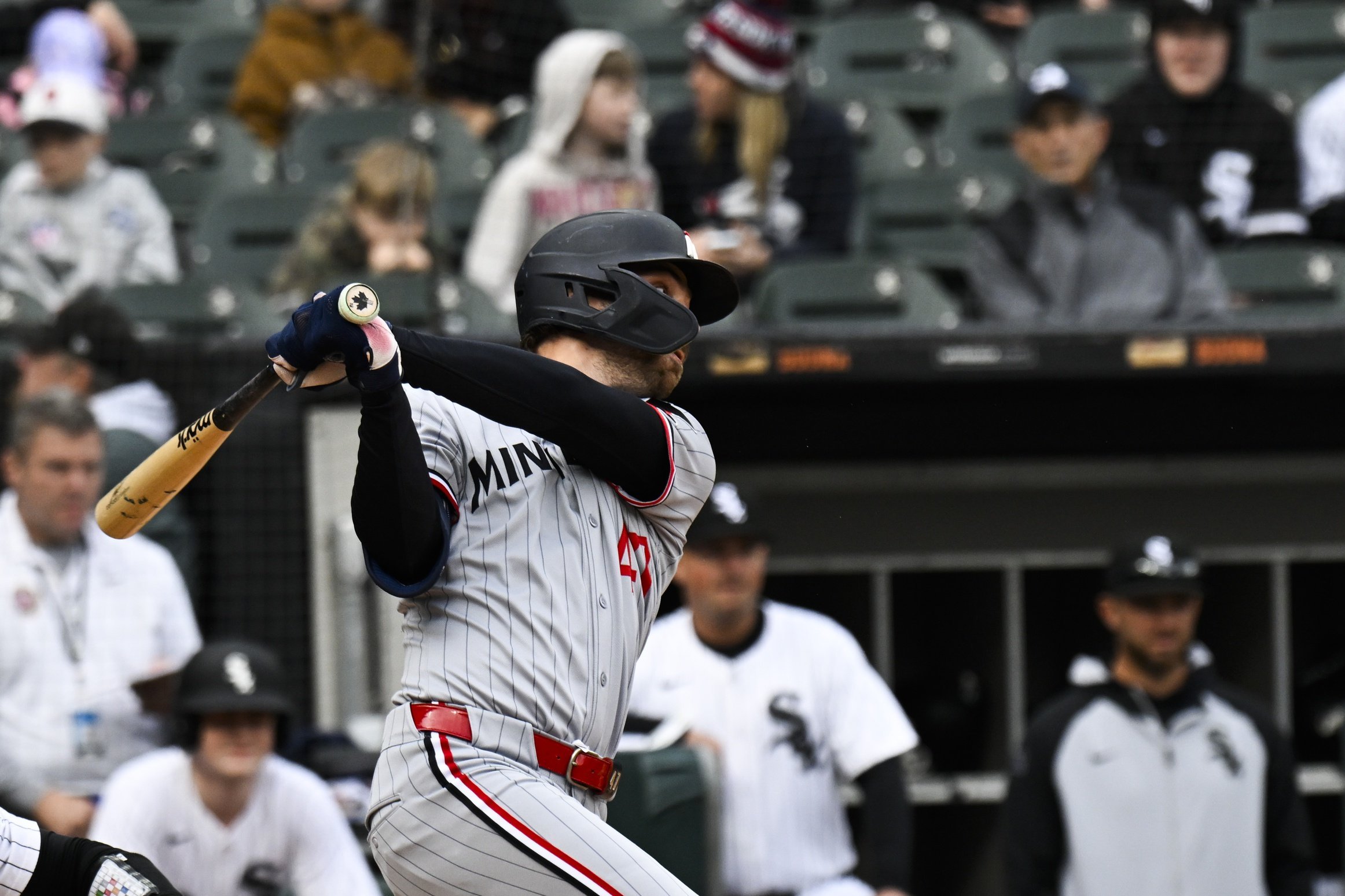 Edouard Julien’s patient plate approach was taken advantage of by opposing pitchers last season. While he didn’t hint at being more aggressive, he did recognize his need to compete against non-fastballs this season to bounce back. So far, in 2025, he’s been able to do both. His sophomore campaign was a massive disappointment for Julien, whose patient approach sometimes crossed over into outright passivity. Opposing pitchers put together a rock-solid scouting report against him, as evidenced by Julien leading the league in called strikeouts—despite spending a good chunk of the season at Triple A. It was time for Julien to make a big adjustment, and that’s precisely what he’s done. For the first time in his major-league career, Julien is swinging at more than half the pitches he sees. After constantly finding himself down in the count last season, he’s no longer willing to let the borderline pitches sneak by. While he hasn’t worked counts and taken walks as much as we’ve come to expect, he’s also cut down on the strikeouts so far this season. The quality of contact has also remained steady in the early going. Julien’s hard-hit rate is back to the level it was in his breakout rookie season, and his barrel rate is better than it’s ever been. He’s not just selling out to try to make contact of any kind, he’s consistently putting a charge into the ball. More encouraging is Julien’s performance against non-fastballs. Last season, he had no chance in non-fastball counts, and pitchers repeatedly attacked him with soft stuff when he was behind. While Julien may not be punishing fastballs like we’ve seen him do in the past, it’s hard to imagine he’s lost his ability to do so long-term. More importantly, the talk of spring training regarding Julien was his need to compete against other pitches, and so far, he’s doing so at a level we’ve never seen from him before. While the sample size is small, it coincides with a change in approach, which should always be given at least some attention. It's not just that he's timing his swing to the softer stuff, either—though there might be truth in that, and he might need to make a next wave of adjustments because of it, so he can catch up to the heat. Julien is also hitting from a slightly more spread-out stance, and using a slightly shorter stride this year. That's allowed him to make contact farther in front of his own body, and to catch the ball in front of home plate—which usually means more thump, particularly against breaking and offspeed pitches. Julien likely still has a bit to iron out with his plate approach in 2025. Swinging so often can also be taken advantage of, particularly when chasing pitches outside the zone. Julien has chased nearly 30% of the time this season, a notable increase from the 18% rate he showed in 2024. While his strikeout rate has declined, his per-swing whiff rate has increased from 30.9% to 35.7%. It’s hard to expect Julien to come out this season with a completely different plate approach and have it optimized, but this is a start. Instead of looking for the perfect pitch, it appears he’s more willing to expand what he’s hunting for, and so far it’s worked. Julien Hit.mp4 Julien has shown plenty to be excited about early this season. Watching him take strike three so consistently in 2024 became maddening, and we’re seeing some encouraging signs of him putting that tendency in the rearview mirror. He's a different hitter in 2025. Can he keep it up?
 -
The Twins' 2022 first-round pick has returned to Triple-A in his rehab assignment, and his return to the Twins is looming. With no shortage of candidates, which player on the current roster should be replaced? Image courtesy of Jonathan Dyer-Imagn Images Brooks Lee was never a lock to make the Opening Day roster out of spring training, and in different circumstances, he may have remained in St. Paul for some time, even after his rehab assignment ended. Given the Twins' poor start, however, the plan will likely be to get Lee back up as soon as he’s ready. Which player stands to lose their job? Unfortunately, there are a few viable candidates. Mickey Gasper Gasper is a great story, but we may be seeing why it’s taken so long for him to get a shot at the MLB level. His discerning eye at the plate is his calling card. To his credit, he’s walked 20% of the time. He’s also struck out 40% of the time and has only one hit, effectively canceling out the walks. Gasper hasn’t been able to punish pitches in the zone, as even his one hit was a dribbler that barely left the infield. If pitchers have no concerns filling up the strike zone, Gasper’s primary tool dries up. If he were a stronger defensive player, Gasper would be a solid bench option, but that’s not proven to be the case. Despite being labeled a catcher when the Twins acquired him, the team clearly doesn’t see him that way. He’s played first base, but his size has already cost him on one occasion at that position. He also made a tough error on Tuesday night in Kansas City at second base, where he played for the first time this season. He doesn’t have much immediate utility to the roster or a track record to wait on, making Gasper the likeliest player to lose out upon Lee’s return. Jose Miranda While it’s a long shot, there’s certainly a world where Jose Miranda gets demoted back to St. Paul. Aside from a big three-run homer against Houston, he’s looked completely lost at the plate. Miranda’s free-swinging ways have been on full display. He's had, seemingly, no idea what’s a ball and what’s a strike. If the Twins feel like Miranda would benefit from seeing lesser pitching to get back into a groove, St. Paul could be an option. Miranda has done a fine job filling in at third base, but Lee would be an upgrade defensively. He has rarely seen time at first base, and with the way Harrison Bader is being used, there are much better options for the DH spot. If the Twins decide Lee is going to play a lot of third base, a Miranda demotion becomes realistic. Edouard Julien The Twins’ view of Edouard Julien has soured, making him a sleeper pick of this trio. Julien is no longer a lock to start, even against right-handed pitching. While he’s barreled some balls so far this season, he doesn’t have the production to show for it. These barrels have also come at the expense of Julien’s plate approach. He’s chasing nearly 30% of pitches outside the zone and is whiffing over 35% of the time. This level of aggressiveness is a 180° from the passiveness he's shown in the past, but that seems to have been an overcorrection. There are reasons for optimism, but it may take time for Julien to hone this new plate approach, and it may be easier to do so in Triple-A. Most concerning for Julien was Gasper starting over him at second base on Tuesday. Gasper learned this position on the fly in spring training, and the Twins preferred him there on Tuesday. while Julien served as the DH. Gasper made an error, but Julien has made plenty of those himself in the last two years, and he’s starting to look like a player without a defensive home. It may be more telling if Julien isn’t optioned back to Triple-A, as it would indicate the Twins are no longer prioritizing getting him everyday at-bats. Julien has found himself in a precarious spot. These three all deserve a demotion in different ways, and to different degrees. It’s become clear that Lee needs to be up as soon as he’s ready, to shore up the defense and add a new face to an already stale roster. Which player should be the one headed back to St. Paul? View full article
-
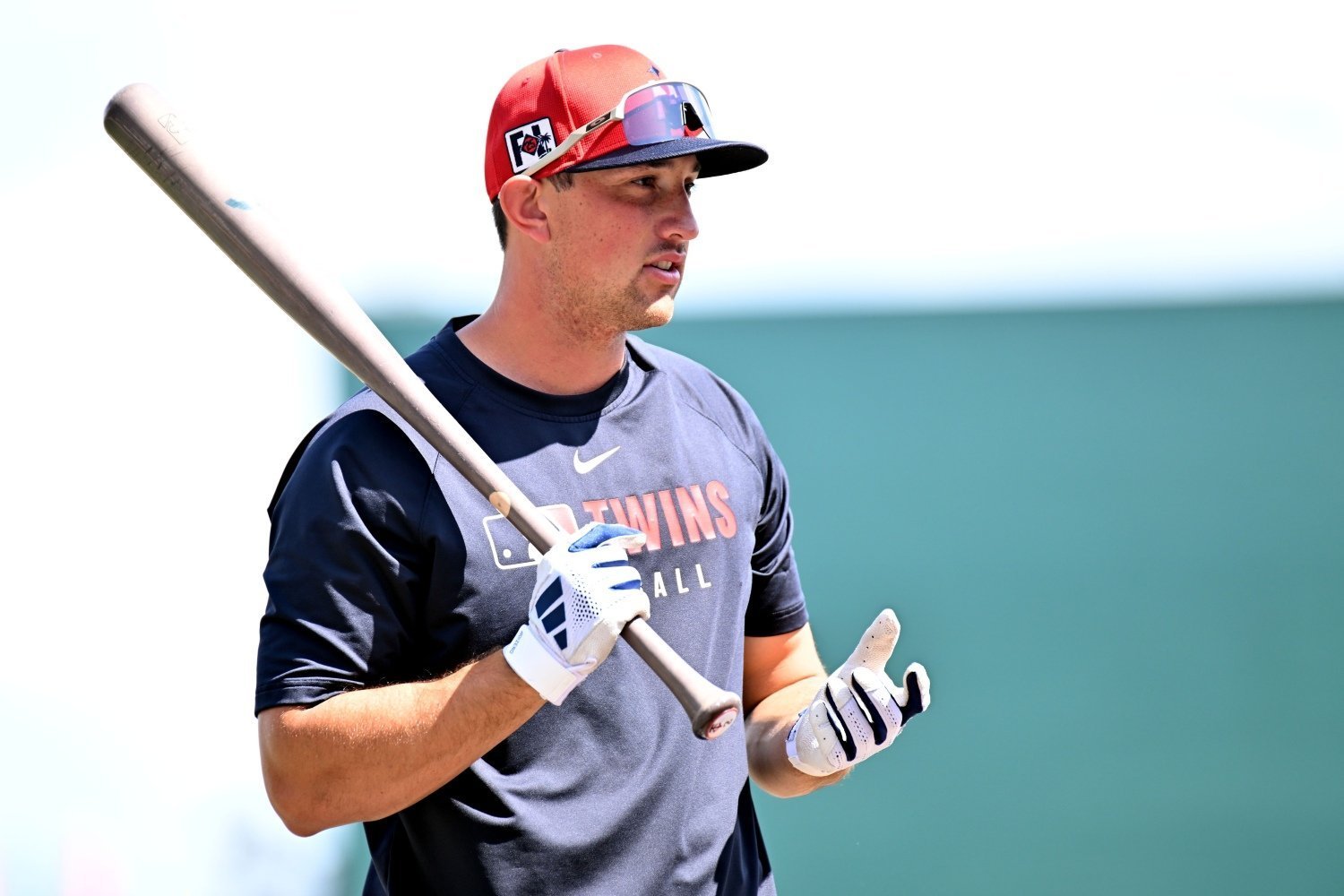 Brooks Lee was never a lock to make the Opening Day roster out of spring training, and in different circumstances, he may have remained in St. Paul for some time, even after his rehab assignment ended. Given the Twins' poor start, however, the plan will likely be to get Lee back up as soon as he’s ready. Which player stands to lose their job? Unfortunately, there are a few viable candidates. Mickey Gasper Gasper is a great story, but we may be seeing why it’s taken so long for him to get a shot at the MLB level. His discerning eye at the plate is his calling card. To his credit, he’s walked 20% of the time. He’s also struck out 40% of the time and has only one hit, effectively canceling out the walks. Gasper hasn’t been able to punish pitches in the zone, as even his one hit was a dribbler that barely left the infield. If pitchers have no concerns filling up the strike zone, Gasper’s primary tool dries up. If he were a stronger defensive player, Gasper would be a solid bench option, but that’s not proven to be the case. Despite being labeled a catcher when the Twins acquired him, the team clearly doesn’t see him that way. He’s played first base, but his size has already cost him on one occasion at that position. He also made a tough error on Tuesday night in Kansas City at second base, where he played for the first time this season. He doesn’t have much immediate utility to the roster or a track record to wait on, making Gasper the likeliest player to lose out upon Lee’s return. Jose Miranda While it’s a long shot, there’s certainly a world where Jose Miranda gets demoted back to St. Paul. Aside from a big three-run homer against Houston, he’s looked completely lost at the plate. Miranda’s free-swinging ways have been on full display. He's had, seemingly, no idea what’s a ball and what’s a strike. If the Twins feel like Miranda would benefit from seeing lesser pitching to get back into a groove, St. Paul could be an option. Miranda has done a fine job filling in at third base, but Lee would be an upgrade defensively. He has rarely seen time at first base, and with the way Harrison Bader is being used, there are much better options for the DH spot. If the Twins decide Lee is going to play a lot of third base, a Miranda demotion becomes realistic. Edouard Julien The Twins’ view of Edouard Julien has soured, making him a sleeper pick of this trio. Julien is no longer a lock to start, even against right-handed pitching. While he’s barreled some balls so far this season, he doesn’t have the production to show for it. These barrels have also come at the expense of Julien’s plate approach. He’s chasing nearly 30% of pitches outside the zone and is whiffing over 35% of the time. This level of aggressiveness is a 180° from the passiveness he's shown in the past, but that seems to have been an overcorrection. There are reasons for optimism, but it may take time for Julien to hone this new plate approach, and it may be easier to do so in Triple-A. Most concerning for Julien was Gasper starting over him at second base on Tuesday. Gasper learned this position on the fly in spring training, and the Twins preferred him there on Tuesday. while Julien served as the DH. Gasper made an error, but Julien has made plenty of those himself in the last two years, and he’s starting to look like a player without a defensive home. It may be more telling if Julien isn’t optioned back to Triple-A, as it would indicate the Twins are no longer prioritizing getting him everyday at-bats. Julien has found himself in a precarious spot. These three all deserve a demotion in different ways, and to different degrees. It’s become clear that Lee needs to be up as soon as he’s ready, to shore up the defense and add a new face to an already stale roster. Which player should be the one headed back to St. Paul?
- 91 comments
-
- 6
-
-
- brooks lee
- edouard julien
- (and 2 more)
-
His career has had many ups and downs—some due to injury, and some due to the nature of his plate approach. He can run white-hot for long periods, and then turn ice-cold without warning. To begin 2025, we’ve seen the latter. Image courtesy of Peter Aiken-Imagn Images At the midway point of last season, José Miranda looked like he had hit his way back into the Twins' plans. He slashed .325/.366/.522 in the first half, but suffered a back injury and posted a .543 OPS to finish the season. As a result, the Twins didn’t trust him to become the full-time first baseman headed into 2025. In a small sample this season, he’s proven their decision correct. Miranda was a late-blooming prospect. It took him a few years to turn his ability to make frequent contact into an ability to do damage. Even as he ascended through the minor leagues, his consistency was always the question, as his lack of patience canceled out his lack of swing-and-miss. That's precisely what we’ve seen from him (at his worst) at the MLB level. So far this season, Miranda’s plate approach has continued to hold him back. The Royce Lewis and Brooks Lee injuries have allowed him to play in every game thus far, but he has done little to seize the opportunity. Miranda whiffing at nearly 33% of pitches is likely the result of the small sample, but the rest of his profile affirms the concerns many have long harbored about him. He’s chased over 40% of pitches outside the zone, which has always been his chief flaw. It’s resulted in minimal hard contact, which will continue even as the whiff rate stabilizes. We’re watching the worst version of Miranda right now. We’ve seen it before, and so far in 2025, it appears he hasn’t ironed out these tendencies. We know he can be a force at the plate when locked in and 100% healthy, but he’s continually bounced between extreme highs and extreme lows in his career, with little in between. When he’s seeing pitches in the zone, his ability to make contact has resulted in some memorable performances. When pitchers decide not to throw him anything to hit, he’s taking the same swings and badly slumping. It also results in very low walk rates, and Miranda has yet to earn a free pass this season. We still aren’t sure of the timelines for Brooks Lee and Royce Lewis, but Miranda will have to go on a run offensively before either of them returns. The Twins have no shortage of options in the DH spot, where Miranda will likely need most of his playing time to come from when another third baseman is ready to take over in the field. The Twins are doubtful of him, considering he’s been hitting in the 8th spot against right-handed pitching. It’s up to Miranda to prove them wrong. A major-league hitter can make a living chasing pitches and making frequent contact. Twins fans got to experience the highs and lows of this strategy for years when Eddie Rosario was roaming the outfield. It’s a difficult needle to thread regarding sustained performance, though, and it typically doesn’t age well. The Twins, notably, cut bait with Rosario in his last year of arbitration at age 29 and were proven correct. The hope was that Miranda could evolve at the plate to become more well-rounded and consistent. The early returns in 2025 show the same problematic plate approach, and as he nears 27 years of age, the likelihood of adjusting has significantly declined. He may always be a feast-or-famine hitter, cut from the opposite end of the same cloth as hitters such as Joey Gallo and Miguel Sano. It’s an important year for Miranda, and he’s gotten off to a discouraging start. While the sample size is minuscule, many of his past deficiencies at the plate have been alive and well so far. Can he turn it around before another third baseman is ready to return? View full article
-
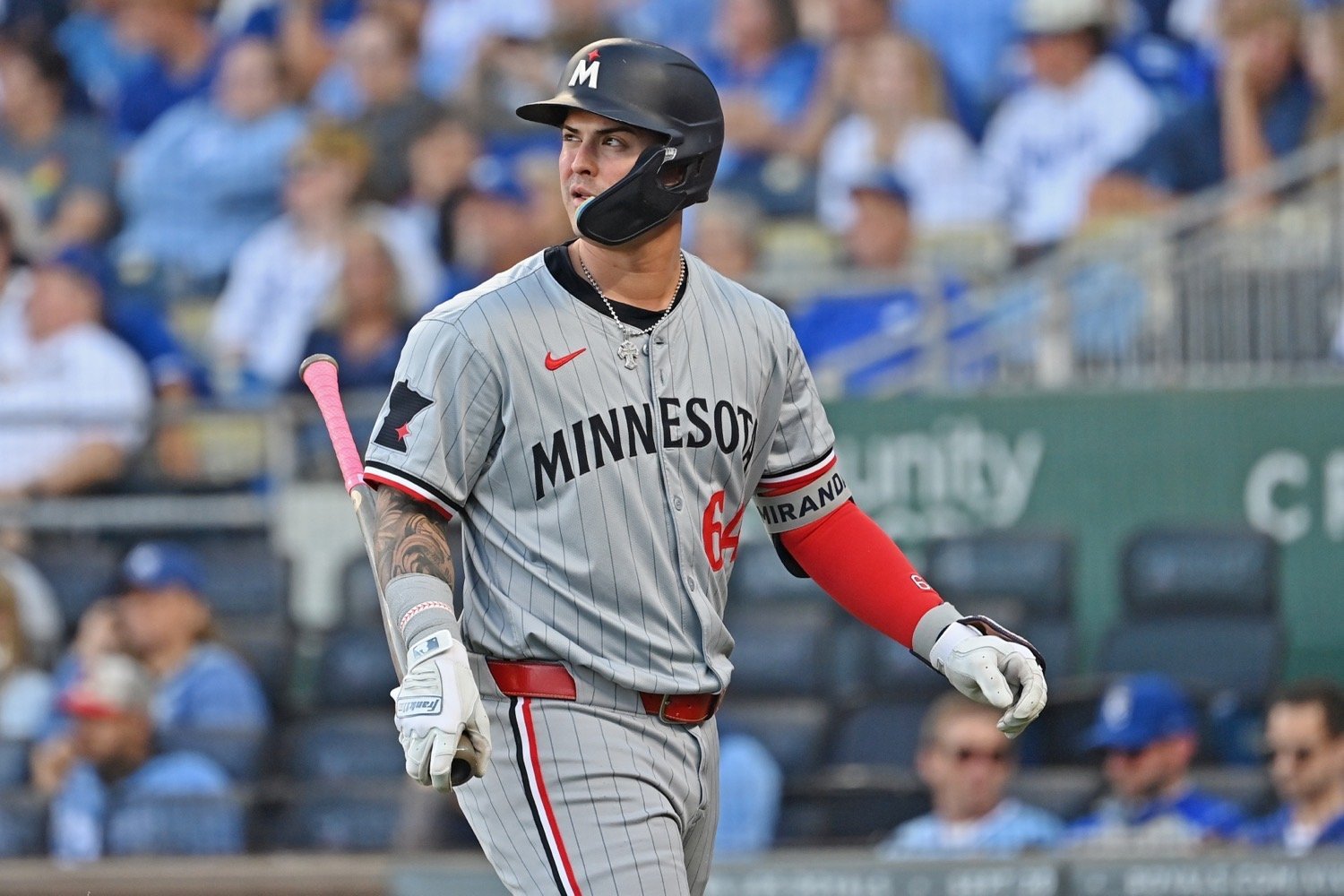 At the midway point of last season, José Miranda looked like he had hit his way back into the Twins' plans. He slashed .325/.366/.522 in the first half, but suffered a back injury and posted a .543 OPS to finish the season. As a result, the Twins didn’t trust him to become the full-time first baseman headed into 2025. In a small sample this season, he’s proven their decision correct. Miranda was a late-blooming prospect. It took him a few years to turn his ability to make frequent contact into an ability to do damage. Even as he ascended through the minor leagues, his consistency was always the question, as his lack of patience canceled out his lack of swing-and-miss. That's precisely what we’ve seen from him (at his worst) at the MLB level. So far this season, Miranda’s plate approach has continued to hold him back. The Royce Lewis and Brooks Lee injuries have allowed him to play in every game thus far, but he has done little to seize the opportunity. Miranda whiffing at nearly 33% of pitches is likely the result of the small sample, but the rest of his profile affirms the concerns many have long harbored about him. He’s chased over 40% of pitches outside the zone, which has always been his chief flaw. It’s resulted in minimal hard contact, which will continue even as the whiff rate stabilizes. We’re watching the worst version of Miranda right now. We’ve seen it before, and so far in 2025, it appears he hasn’t ironed out these tendencies. We know he can be a force at the plate when locked in and 100% healthy, but he’s continually bounced between extreme highs and extreme lows in his career, with little in between. When he’s seeing pitches in the zone, his ability to make contact has resulted in some memorable performances. When pitchers decide not to throw him anything to hit, he’s taking the same swings and badly slumping. It also results in very low walk rates, and Miranda has yet to earn a free pass this season. We still aren’t sure of the timelines for Brooks Lee and Royce Lewis, but Miranda will have to go on a run offensively before either of them returns. The Twins have no shortage of options in the DH spot, where Miranda will likely need most of his playing time to come from when another third baseman is ready to take over in the field. The Twins are doubtful of him, considering he’s been hitting in the 8th spot against right-handed pitching. It’s up to Miranda to prove them wrong. A major-league hitter can make a living chasing pitches and making frequent contact. Twins fans got to experience the highs and lows of this strategy for years when Eddie Rosario was roaming the outfield. It’s a difficult needle to thread regarding sustained performance, though, and it typically doesn’t age well. The Twins, notably, cut bait with Rosario in his last year of arbitration at age 29 and were proven correct. The hope was that Miranda could evolve at the plate to become more well-rounded and consistent. The early returns in 2025 show the same problematic plate approach, and as he nears 27 years of age, the likelihood of adjusting has significantly declined. He may always be a feast-or-famine hitter, cut from the opposite end of the same cloth as hitters such as Joey Gallo and Miguel Sano. It’s an important year for Miranda, and he’s gotten off to a discouraging start. While the sample size is minuscule, many of his past deficiencies at the plate have been alive and well so far. Can he turn it around before another third baseman is ready to return?
- 24 comments
-
- 8
-
-
- jose miranda
- royce lewis
- (and 1 more)


