



Cody Pirkl
-
Posts
1,314 -
Joined
-
Last visited
-
Days Won
4
Content Type
Profiles
News
Minnesota Twins Videos
2026 Minnesota Twins Top Prospects Ranking
2022 Minnesota Twins Draft Picks
Minnesota Twins Free Agent & Trade Rumors, Notes, & Tidbits
Guides & Resources
2023 Minnesota Twins Draft Picks
The Minnesota Twins Players Project
2024 Minnesota Twins Draft Picks
2025 Minnesota Twins Draft Pick Tracker
2026 Minnesota Twins Draft Tracker: Picks & Bonuses
Forums
Blogs
Events
Store
Downloads
Gallery
Everything posted by Cody Pirkl
-
Good news for players like Mickey Gasper and DaShawn Keirsey Jr. meant bad news for Austin Martin today. What’s next for the former top prospect left off the Opening Day roster? Image courtesy of Bruce Kluckhohn-USA TODAY Sports The Twins made a series of announcements this week, awarding roster spots to several players who will travel north with the team when the regular season begins this week. Austin Martin is on the outside looking in, raising significant questions for the 26-year-old former fifth overall pick. Several roster spots have opened up unexpectedly on the position player side this spring, as Royce Lewis and Brooks Lee opened the season on the IL. While disappointing, this created an opportunity for a handful of players. At this point, it must be alarming that the Twins perceive Austin Martin so far down the depth chart. Offensively, Martin has struggled to make good on his draft pedigree at almost every stop in the minor leagues. He’s often displayed impressive plate discipline and ability to make contact but hasn’t been able to develop any power whatsoever throughout his career. He has yet to slug .400 in an entire season, which leaves a murky path to being anything close to a regular in the MLB. Even with an 18.3% walk rate at the MLB level in 2024, he was a below-average hitter. The hope was that Martin’s athleticism could still earn him a bench spot and afford him more time to seize an opportunity and develop further. Unfortunately, Martin hasn’t been able to translate that athleticism to the defensive side of his game, which is likely what cost him an Opening Day roster spot. Martin saw significant playing time in the infield throughout his minor league career despite the Blue Jays and Twins having little faith that he would stick there long term. The hope was that Martin would immediately become a strong outfielder defensively because of his raw physical talent when they finally made the change. So far, in his brief MLB action, this has not proven to be the case. Martin was a negative defensively at every position the Twins tried him at in 2024. His speed hasn’t been able to compensate for his lack of instincts at these positions, leaving him without a defensive home. The lack of confidence in Martin’s ability to contribute on either side of the ball will result in him spending the beginning of his age-26 season in St. Paul. He’s already performed there as well as can be expected over the last two seasons, which begs the question of what precisely the Twins need to see from him to trust him at the MLB level. Martin is a depth piece, behind several players at multiple positions on the depth chart, with several top prospects approaching who may quickly surpass him. Luke Keaschall will warrant playing time at second base. Emmanuel Rodriguez will see time in center field at some point this season. DaShawn Keirsey Jr. will likely play ahead of him if he gets squeezed off the MLB roster. It’s not a good spot for Martin to be. Austin Martin could further develop his outfield defense to at least earn a bench spot in the future, but time is likely running out for the former headliner of the Jose Berrios trade to work his way into the Twins plans. He has nothing left to prove in Triple-A, and the Twins don’t feel he can help them at the MLB level. It will take quite a series of events for Martin to have a chance to establish himself in Minnesota at this point, raising the question of whether this opportunity may have to come elsewhere. Monday’s roster cuts were a worst-case scenario for Austin Martin and raised some significant questions about his future with the Minnesota Twins. Is his time about to run out? What should the Twins do with Austin Martin? Where does he go from here? Let us know in the comments. View full article
-
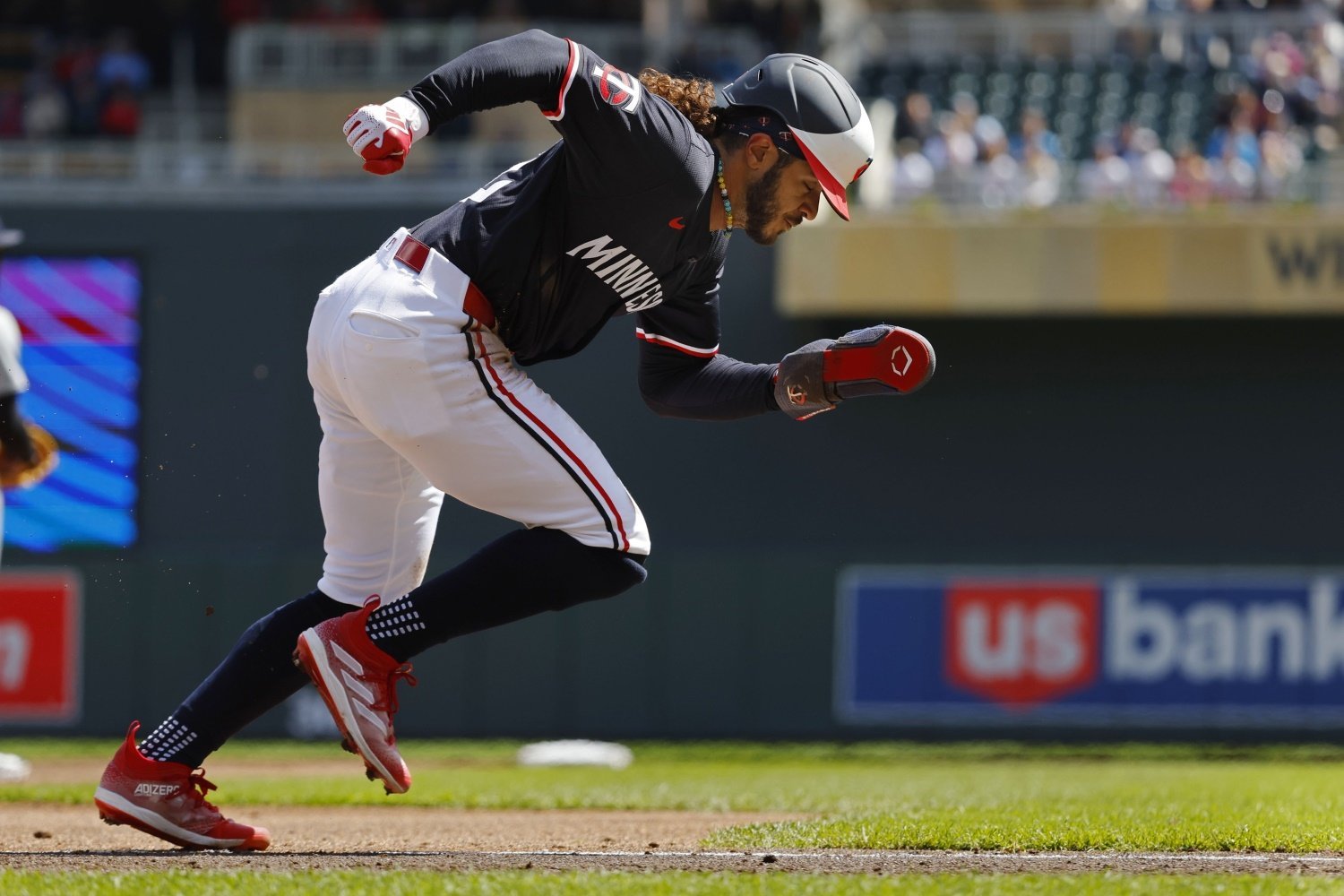 The Twins made a series of announcements this week, awarding roster spots to several players who will travel north with the team when the regular season begins this week. Austin Martin is on the outside looking in, raising significant questions for the 26-year-old former fifth overall pick. Several roster spots have opened up unexpectedly on the position player side this spring, as Royce Lewis and Brooks Lee opened the season on the IL. While disappointing, this created an opportunity for a handful of players. At this point, it must be alarming that the Twins perceive Austin Martin so far down the depth chart. Offensively, Martin has struggled to make good on his draft pedigree at almost every stop in the minor leagues. He’s often displayed impressive plate discipline and ability to make contact but hasn’t been able to develop any power whatsoever throughout his career. He has yet to slug .400 in an entire season, which leaves a murky path to being anything close to a regular in the MLB. Even with an 18.3% walk rate at the MLB level in 2024, he was a below-average hitter. The hope was that Martin’s athleticism could still earn him a bench spot and afford him more time to seize an opportunity and develop further. Unfortunately, Martin hasn’t been able to translate that athleticism to the defensive side of his game, which is likely what cost him an Opening Day roster spot. Martin saw significant playing time in the infield throughout his minor league career despite the Blue Jays and Twins having little faith that he would stick there long term. The hope was that Martin would immediately become a strong outfielder defensively because of his raw physical talent when they finally made the change. So far, in his brief MLB action, this has not proven to be the case. Martin was a negative defensively at every position the Twins tried him at in 2024. His speed hasn’t been able to compensate for his lack of instincts at these positions, leaving him without a defensive home. The lack of confidence in Martin’s ability to contribute on either side of the ball will result in him spending the beginning of his age-26 season in St. Paul. He’s already performed there as well as can be expected over the last two seasons, which begs the question of what precisely the Twins need to see from him to trust him at the MLB level. Martin is a depth piece, behind several players at multiple positions on the depth chart, with several top prospects approaching who may quickly surpass him. Luke Keaschall will warrant playing time at second base. Emmanuel Rodriguez will see time in center field at some point this season. DaShawn Keirsey Jr. will likely play ahead of him if he gets squeezed off the MLB roster. It’s not a good spot for Martin to be. Austin Martin could further develop his outfield defense to at least earn a bench spot in the future, but time is likely running out for the former headliner of the Jose Berrios trade to work his way into the Twins plans. He has nothing left to prove in Triple-A, and the Twins don’t feel he can help them at the MLB level. It will take quite a series of events for Martin to have a chance to establish himself in Minnesota at this point, raising the question of whether this opportunity may have to come elsewhere. Monday’s roster cuts were a worst-case scenario for Austin Martin and raised some significant questions about his future with the Minnesota Twins. Is his time about to run out? What should the Twins do with Austin Martin? Where does he go from here? Let us know in the comments.
- 18 comments
-
- 4
-

-
- austin martin
- dashawn keirsey jr
- (and 2 more)
-
Kind of a lot to address here for me on mobile, so I'll just say this: I didn't only cite Paddack's ERA as the reason he's a worthy back end starting pitcher. I know you say you care about results, so none of this is likely meaningful, but Paddack pitched much better than his near 5.00 ERA he wound up with. The projection systems agree by the way. Steamer projects a 4.15 ERA for him in 2025, while the worst projection for him is a 4.41. For many people, this means absolutely nothing, which is their prerogative. Many of his numbers last season point to him deserving much better results though, and the projection systems value that and see what he could provide with the skills he's shown while healthy.
- 49 replies
-
- 1
-
-
- chris paddack
- zebby matthews
- (and 1 more)
-
Absolutely true, but I don't think there's significant data showing that moving him to the bullpen where he'll empty the tank in shorter stints will keep him healthy either. This is something I would have liked to see them try earlier with Matt Canterino, but that's because he was a young highly drafted arm with team control who hadn't impacted the team in any way since being drafted. Paddack has shown the ability to perform like at least a back end starting pitcher when healthy over his career, and is currently healthy and built up to start the season in the rotation.
-
This is a common argument, but I assume you're referencing David Festa and Zebby Matthews, who each have their own concerns. Festa wasn't trusted to turn the lineup over last season which strained the bullpen. He also made some mechanical adjustments and really struggled this spring. Zebby had a very tough audition last season after going from A Ball to the MLB. If either had done enough to earn the spot over Paddack, I would assume the Twins would have been happy to give Paddack to another team and save the salary.
-
I just think this scale sets you up for disappointment. By these measures Pablo Lopez falls into the #4-5 starter range by last seasons measures. How often do MLB teams have a consensus back end starter put up a season on par with 2024 Pablo Lopez?
-
They don't need him in the bullpen either, though. Worst case scenario he either struggles or gets injured down the line and Zebby or Festa make the 5 minute trip from CHS field at that point. There isn't a reason to make that decision right now.
-
The bar for a back end starting pitcher is pretty low. Go look at the depth charts for the Mets, Yankees, Astros etc. It's unrealistic to expect an entire rotation of top end starting pitchers. Paddack also allowed almost 1/3 of his total runs between two starts, which is exactly why it's worth looking at more just just ERA.
-
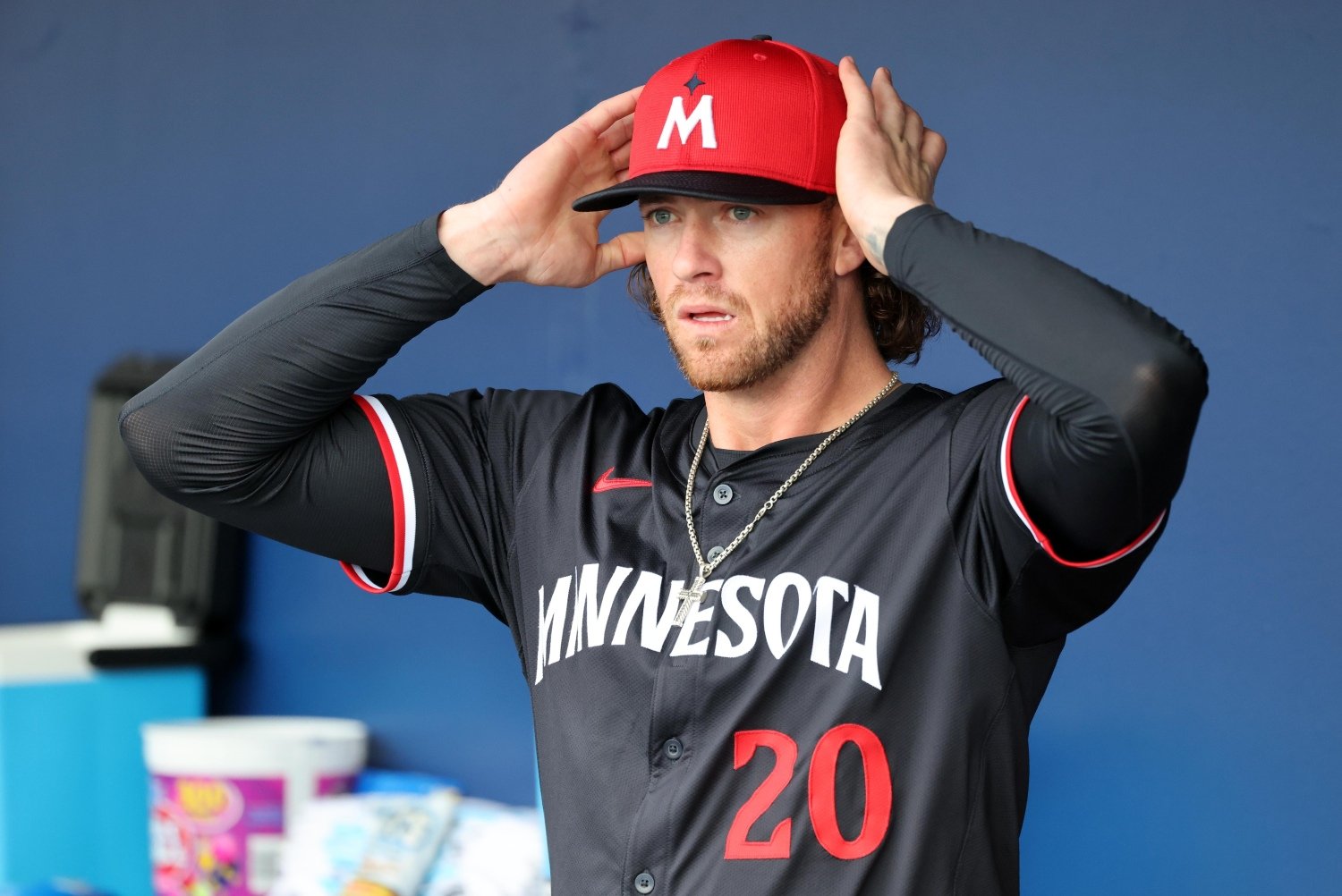 Coming off another injury-plagued season, Chris Paddack looks to bounce back in 2025 and reestablish his value before hitting free agency. Despite being far from a sure thing, he’ll have a rotation spot from the get-go. The Twins have several other worthy candidates for his role, but Paddack has earned it. In three years with the Twins organization, Paddack has yet to make a significant impact. The shine of his early career has worn off, as he’s struggled with injuries and inconsistency. After another season-ending injury in 2024, the Twins stuck with Paddack, instead of dumping his salary this offseason or simply awarding a younger arm with his rotation spot. There are several arguments to support this decision, including roster construction, finances, and the maintenance of organizational depth. Still, Paddack himself has done his part to justify it. Paddack’s 2024 season was underwhelming, but far from a failure. In 88 innings, he posted an ERA of just under 5.00, with his peripherals (such as FIP and xFIP) suggesting that better times may have been ahead had he stayed healthy. He was on pace to be worth around 2 Wins Above Replacement in FanGraphs's calculation, which would be a more-than-capable back-end starting pitcher in any rotation. Michael Lorenzen signed with Kansas City this winter for $7 million. Mike Soroka signed with Washington for $9 million. A 37-year-old Alex Cobb pitched 16 innings last season and signed with Detroit for $15 million. If we look at Paddack alongside those hurlers, he fares well. His health concerns are no reason to keep him from the Opening Day rotation; he can be swapped out anytime. Speaking of health, Paddack has given the Twins no reason to doubt where he’s at. He’s struck out 26.7% of hitters he’s faced this spring, and has a walk rate of just 3.3%. His surface-level performance won’t blow anyone away, but four of the seven runs he’s allowed this spring came in his first appearance on March 7th. More recently, Paddack has shown signs of a pitcher the Twins haven’t seen since he returned in a bullpen role in 2023. Rocco Baldelli noted as much, saying it’s the best he’s seen Paddack pitch. One outing in spring training only matters so much, and the rotation battle was never much of an actual competition. Still, for Paddack to dominate as he did so close to the regular season has to count for something. When healthy, Paddack was more than serviceable in 2024 and has looked better as spring training has ramped up. While pitchers like Zebby Matthews or David Festa are more exciting options who are likelier to figure into the long-term picture, neither is without concerns of their own, and having to earn a spot by dominating in St. Paul isn’t the worst thing. We’ll see them both this season, but keeping Paddack in the organization and stretched out as a starter best allows them to manage the eventuality of injuries. Who knows what Chris Paddack’s ceiling is at this point, or how he’ll hold up physically in 2025? For now, he’s earned a rotation spot, based on his performance in 2024 and how he’s looked this spring. Do you agree?
- 49 comments
-
- 7
-
-
- chris paddack
- zebby matthews
- (and 1 more)
-
The veteran right-hander made the Twins’ Opening Day rotation, and it seems like this decision was never in doubt. Some may argue this is based on his salary, but he earned this opportunity. Image courtesy of © Kim Klement Neitzel-Imagn Images Coming off another injury-plagued season, Chris Paddack looks to bounce back in 2025 and reestablish his value before hitting free agency. Despite being far from a sure thing, he’ll have a rotation spot from the get-go. The Twins have several other worthy candidates for his role, but Paddack has earned it. In three years with the Twins organization, Paddack has yet to make a significant impact. The shine of his early career has worn off, as he’s struggled with injuries and inconsistency. After another season-ending injury in 2024, the Twins stuck with Paddack, instead of dumping his salary this offseason or simply awarding a younger arm with his rotation spot. There are several arguments to support this decision, including roster construction, finances, and the maintenance of organizational depth. Still, Paddack himself has done his part to justify it. Paddack’s 2024 season was underwhelming, but far from a failure. In 88 innings, he posted an ERA of just under 5.00, with his peripherals (such as FIP and xFIP) suggesting that better times may have been ahead had he stayed healthy. He was on pace to be worth around 2 Wins Above Replacement in FanGraphs's calculation, which would be a more-than-capable back-end starting pitcher in any rotation. Michael Lorenzen signed with Kansas City this winter for $7 million. Mike Soroka signed with Washington for $9 million. A 37-year-old Alex Cobb pitched 16 innings last season and signed with Detroit for $15 million. If we look at Paddack alongside those hurlers, he fares well. His health concerns are no reason to keep him from the Opening Day rotation; he can be swapped out anytime. Speaking of health, Paddack has given the Twins no reason to doubt where he’s at. He’s struck out 26.7% of hitters he’s faced this spring, and has a walk rate of just 3.3%. His surface-level performance won’t blow anyone away, but four of the seven runs he’s allowed this spring came in his first appearance on March 7th. More recently, Paddack has shown signs of a pitcher the Twins haven’t seen since he returned in a bullpen role in 2023. Rocco Baldelli noted as much, saying it’s the best he’s seen Paddack pitch. One outing in spring training only matters so much, and the rotation battle was never much of an actual competition. Still, for Paddack to dominate as he did so close to the regular season has to count for something. When healthy, Paddack was more than serviceable in 2024 and has looked better as spring training has ramped up. While pitchers like Zebby Matthews or David Festa are more exciting options who are likelier to figure into the long-term picture, neither is without concerns of their own, and having to earn a spot by dominating in St. Paul isn’t the worst thing. We’ll see them both this season, but keeping Paddack in the organization and stretched out as a starter best allows them to manage the eventuality of injuries. Who knows what Chris Paddack’s ceiling is at this point, or how he’ll hold up physically in 2025? For now, he’s earned a rotation spot, based on his performance in 2024 and how he’s looked this spring. Do you agree? View full article
-
There's Real Reason to Worry About Jhoan Durán
Cody Pirkl replied to Cody Pirkl's topic in Twins Daily Front Page News
That's totally my bad, I've had my mind on whiffs for most of this conversation and those two stats always make my head spin. Swinging strike rate is valuable, and I can't check it right this moment, but I imagine he wasn't exactly cruising along in that department before his last outing either. And swinging strike rate is another metric he declined in in 2024. I have no problem with anyone defense more to swinging strike rate as an indicator because generally I'm in that same camp. I will say CSW is typically my favorite, and that's way down at 23% this spring too. Paired with the overall lack of swing and miss so far, it's something I'll be watching very closely when the season starts. -
There's Real Reason to Worry About Jhoan Durán
Cody Pirkl replied to Cody Pirkl's topic in Twins Daily Front Page News
I feel like you're interpreting my opinion as 2024 being some kind of disaster for him when that's not the case whatsoever. He lost a full tick on his fastball and the pitch had a negative run value. There were some weird potential luck related things with it, but it also lost two inches of vertical movement. His WPA was the worst of his career and he had more occasions of looking vulnerable than his first two seasons combined, and there are statistics that show why aside from his Savant percentiles. That's a problem when one pitcher makes up such a significant portion of the bullpens projected value. To see him struggle in ways beyond ERA this spring worries me personally. They can only afford so much of a decline. -
There's Real Reason to Worry About Jhoan Durán
Cody Pirkl replied to Cody Pirkl's topic in Twins Daily Front Page News
For what it's worth, his swinging strike rate last spring was 25% when he had an oblique injury. While his last outing dragged it down, those first two outings you listed were also quite bad. -
There's Real Reason to Worry About Jhoan Durán
Cody Pirkl replied to Cody Pirkl's topic in Twins Daily Front Page News
There's any number of arguments one could come up with regarding his first two seasons in which he was one of the top 2 or 3 relievers in baseball. There was no scouting report or MLB data to gameplay with in his rookie season for example. And I get the argument that all of spring is a small sample, but even without his last outing in which he didn't draw a single whiff, his whiff rates this spring would have been bad instead of disastrous as they are now. And yes, as the league sees him more and compiles more data, they're better able to prepare. He throws a pretty straight fastball that doesn't have much for standout characteristics aside from the velocity. For all we know, it could become very hittable if it drops below 100 mph. He wouldn't be the first. And I'm glad you're not concerned, I hope you're right. Some people prefer to ignore absolutely everything about spring training performance. I think there are still indicators that deserve attention. -
There's Real Reason to Worry About Jhoan Durán
Cody Pirkl replied to Cody Pirkl's topic in Twins Daily Front Page News
It's not about his final stat line, it's about the numbers under the hood that lead to the stat line. In both regards, Duran has not had a good spring. I'm sure the answer to this is "spring doesn't matter", which is fine if you feel that way, but I personally think at least some things do actually matter in the spring, especially when the season is right around the corner.- 30 replies
-
- 1
-
-
- jhoan duran
- pablo lopez
- (and 1 more)
-
There's Real Reason to Worry About Jhoan Durán
Cody Pirkl replied to Cody Pirkl's topic in Twins Daily Front Page News
I'm a pretty firm believer that fastball characteristics matter. Duran's fastball is different than Joe Ryan's, whose 95 has more ride and therefore looks faster than the radar gun picks up on. Depending on the shape, extension, angle etc., there's a breaking point for every pitchers fastball where it's effectiveness drops off, which affects their whole repertoire. Just because one pitcher saw that drop off at 93 mph doesn't mean another will. It's absolutely possible and I'd argue likely that Duran can be less effective at 100 than 102. It's also valuable to identify concerning trends before they bubble over into actual performance. Statcast percentiles may be more indicative than just looking at a pitchers ERA, but things like chase rate also tell the story of how deceptive a pitcher is and how opposing hitters see them. Duran had a decline in that in 2024 despite his still solid season as I pointed out, but the bottom has fallen out this spring. If anyone wants to shrug off the slight decline he showed last year or the red flags he's shown this spring, I've got no issue with that. I just find it concerning and find it worth keeping a close eye on.- 30 replies
-
- 3
-
-
- jhoan duran
- pablo lopez
- (and 1 more)
-
The Twins' young closer has had a disappointing spring, in several regards. It’s easy to shrug off spring training stats, but harder to do so when they're underpinned by troubling indicators. Image courtesy of Nathan Ray Seebeck-Imagn Images Jhoan Durán suffered an oblique injury last spring, which delayed his season and prevented him from being his typically dominant self for most of 2024. His velocity never returned to its peak, and while his numbers remained solid, he wasn’t the anchor of the Twins bullpen, as we had grown accustomed to him being. His spring training performance thus far isn’t giving many signs that he’s set to return to his former dominance. In fact, it might be urging us to expect the exact opposite. Duran was a good pitcher in 2024 in terms of results. However, he lost a tick over his fastball, and for the first time in his career, there were occasions where it appeared opposing hitters could ambush him. His strikeout rate was below 30%, after being above 32% in his first two seasons. His overall whiff rate was the worst of his career at a still-solid 32.9%, despite his chase rate dropping below 30%. A few percentage points here and there are negligible, but there’s likely a cliff at some point as these peripherals trend down. Hitters weren’t as fooled by Durán’s stuff as they had been in his first two seasons, and it coincided with a notable dropoff in velocity. The Twins would be fine with the 2024 version of Durán, but any further loss of his dominance would be worrisome, making his spring performance all the more notable. Duran’s whiff rates are at an all-time low in spring training, and not by a matter of a few percentage points. His velocity hasn’t rebounded, and his ability to get swings and misses isn’t just lower than usual; it’s been flat-out bad. His spring whiff rate of 11.8% puts him below any pitcher with at least 200 batters faced in 2024, and it’s less than half of his 2024 spring whiff rates, when he turned out to be injured. While it cannot be emphasized enough that spring stats need to be taken with a grain of salt, this degree of dropoff is beyond worrisome. Even if he’s been “working on things” during games that don’t matter, Durán has shown no signs of his dominant self at any point, and Opening Day is right around the corner. Pablo López has also gotten hit hard this spring, which can be attributed to that vague notion of working on stuff and caring little for results, but his velocity has also ramped up along the way as he approaches the regular season. Sometimes, spring training data does matter. It mattered for Matt Wallner last season, when his strikeouts carried over into the regular season and ultimately landed him in St. Paul. It mattered for Durán himself, when his decline in velocity and whiff rate turned out to be the result of an injury. When the struggles are this significant, especially for a reliever who declined in several areas last season, it’s worth wondering whether there are significant problems ahead. Perhaps there’s a switch flipped when Opening Day arrives for Durán, but in each previous season of his career, he had rounded into form by now. Even if he’s toying around with new approaches or dialing back his velocity on purpose, it must be notable to see such a lack of dominance from a reliever who had previously been one of the most feared in baseball. While most spring training performances don’t correlate with the regular season, Durán may be in trouble in 2025 if any portion of it does. Durán has much more going on than surface-level struggles in meaningless spring training games. His last outing was the worst of the spring, and his entire body of work looks nothing like the dominant reliever the Twins needed him to be. Is it time to worry? View full article
-
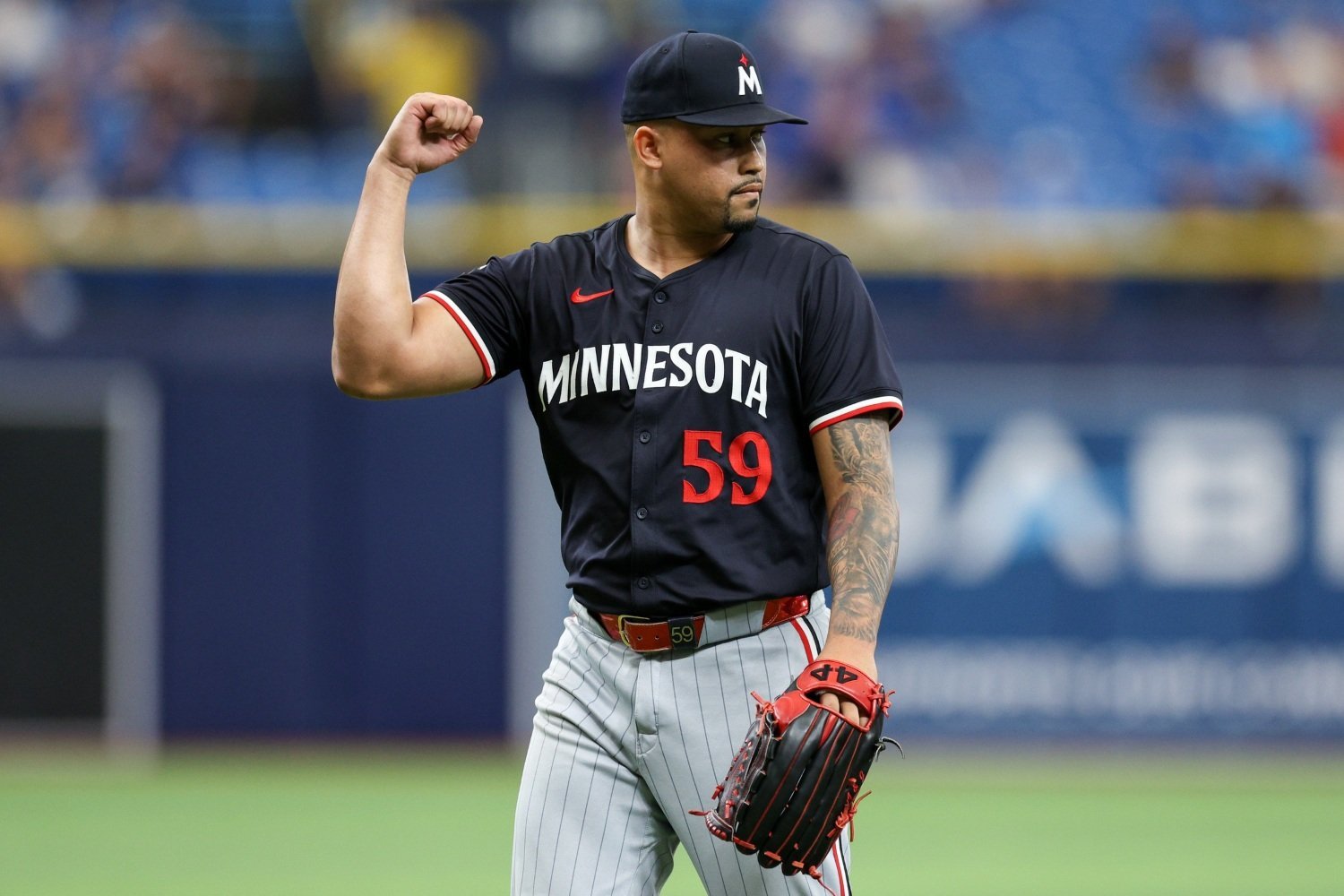 Jhoan Durán suffered an oblique injury last spring, which delayed his season and prevented him from being his typically dominant self for most of 2024. His velocity never returned to its peak, and while his numbers remained solid, he wasn’t the anchor of the Twins bullpen, as we had grown accustomed to him being. His spring training performance thus far isn’t giving many signs that he’s set to return to his former dominance. In fact, it might be urging us to expect the exact opposite. Duran was a good pitcher in 2024 in terms of results. However, he lost a tick over his fastball, and for the first time in his career, there were occasions where it appeared opposing hitters could ambush him. His strikeout rate was below 30%, after being above 32% in his first two seasons. His overall whiff rate was the worst of his career at a still-solid 32.9%, despite his chase rate dropping below 30%. A few percentage points here and there are negligible, but there’s likely a cliff at some point as these peripherals trend down. Hitters weren’t as fooled by Durán’s stuff as they had been in his first two seasons, and it coincided with a notable dropoff in velocity. The Twins would be fine with the 2024 version of Durán, but any further loss of his dominance would be worrisome, making his spring performance all the more notable. Duran’s whiff rates are at an all-time low in spring training, and not by a matter of a few percentage points. His velocity hasn’t rebounded, and his ability to get swings and misses isn’t just lower than usual; it’s been flat-out bad. His spring whiff rate of 11.8% puts him below any pitcher with at least 200 batters faced in 2024, and it’s less than half of his 2024 spring whiff rates, when he turned out to be injured. While it cannot be emphasized enough that spring stats need to be taken with a grain of salt, this degree of dropoff is beyond worrisome. Even if he’s been “working on things” during games that don’t matter, Durán has shown no signs of his dominant self at any point, and Opening Day is right around the corner. Pablo López has also gotten hit hard this spring, which can be attributed to that vague notion of working on stuff and caring little for results, but his velocity has also ramped up along the way as he approaches the regular season. Sometimes, spring training data does matter. It mattered for Matt Wallner last season, when his strikeouts carried over into the regular season and ultimately landed him in St. Paul. It mattered for Durán himself, when his decline in velocity and whiff rate turned out to be the result of an injury. When the struggles are this significant, especially for a reliever who declined in several areas last season, it’s worth wondering whether there are significant problems ahead. Perhaps there’s a switch flipped when Opening Day arrives for Durán, but in each previous season of his career, he had rounded into form by now. Even if he’s toying around with new approaches or dialing back his velocity on purpose, it must be notable to see such a lack of dominance from a reliever who had previously been one of the most feared in baseball. While most spring training performances don’t correlate with the regular season, Durán may be in trouble in 2025 if any portion of it does. Durán has much more going on than surface-level struggles in meaningless spring training games. His last outing was the worst of the spring, and his entire body of work looks nothing like the dominant reliever the Twins needed him to be. Is it time to worry?
- 30 comments
-
- 4
-
-
- jhoan duran
- pablo lopez
- (and 1 more)
-
Agreed. I look at the system now and see more options close to the MLB level at 2B, which is why I'd argue Brooks should see the most time at 3B rather than having to bounce back and forth. Of course best case scenario is Royce comes back and stays healthy and pushed Lee off, I just find that hard to plan on at this point.
- 53 replies
-
- 7
-
-
- brooks lee
- royce lewis
- (and 2 more)
-
Royce Lewis suffered a hamstring strain on Sunday, 11 days before Opening Day. Originally competing for the job at second base, Brooks Lee now figures to see significant time at third. Should he just stay there? Image courtesy of Jonathan Dyer-Imagn Images By now, we know that Royce Lewis will not be ready for Opening Day after suffering an injury late in camp. After Brooks Lee had spent all of the spring competing to take over second base, he may now see significant time at the hot corner. Given Lewis’s repeated injury struggles and Lee having already proved himself capable of manning the position, would the Twins be better off viewing Lee as the long-term third baseman for the franchise? The thing about the battle for second base this spring is that someone (potentially multiple players who deserve an extended look at MLB action) was going to miss out. Now, Lee will surely make the roster to pick up some of the recently opened playing time at third base (around and in addition to Jose Miranda), and a huge opportunity has presented itself to players like Mickey Gasper and Edouard Julien at second. Top prospect Luke Keaschall could force his way into the mix before long, too. Some things have to go right, such as Lee performing offensively and someone grabbing the reins at second base, but if all is going well when Lewis is ready to return, it could create some difficult questions regarding the future of third base. Lee is a versatile player, but it would be nice to see him settle into a primary position long-term. Because of his defensive prowess, there are several possibilities. He was slated second base this spring because that’s where the opportunity was when everyone was healthy. After another Lewis injury, however, that situation has changed. It’s fair to wonder whether the organization will feel they can continue to wait and invest so much hope in Lewis, or whether they need to amend their approach. It’s impossible not to feel for Lewis. The former No. 1 overall pick has been through the wringer physically, with two ACL tears snowballing into repeated soft-tissue injuries as he’s reached the MLB level. His athleticism has predictably declined, causing a move from shortstop to third base, where less range is required. Lewis played in 82 games last year, his most in a single season since 2019. By the end, he was clearly on his last legs, posting a .602 OPS from Aug. 1 forward. It was the first time he had struggled at the plate while on the field for the Twins, which may add another layer of difficulty to trusting him to fill a bulk of the playing time at third base over the coming years. While Lee has struggled with injuries of his own, he profiles as an everyday player given his balanced plate approach and ability to hit from both sides. The offensive upside he showed at St. Paul didn’t translate to the MLB last year as a 23-year-old, but he did show that he can more than handle the position defensively. Brooks Bunt.mp4 There’s an argument to be made that as Lee tries to adjust to MLB pitching, having a more settled defensive home could give him less to work on. He’s likely to be the backup shortstop, the position still he’s played since college, but having to shift to third base unexpectedly every season likely isn’t doing him any favors. He had made just seven appearances at third base before 2024 and logged more innings there at the position at the MLB level last year than the rest of his professional career combined. Even for a mature and developed prospect like Lee, it’s a lot to put on his plate. Because the angles and timing of plays are different at each spot around the infield, a player without a fixed position must take daily reps at each spot to which they might be called—which comes at the cost of things like reps in the batting cage, extra preparation in meetings, or precious rest. In terms of how a full-time move to third base for Lee would affect Lewis, it’s more of a hypothetical question. Unfortunately, at this point, it’s difficult to ask where he will play when he comes back and is 100% healthy, because there’s no telling when that will be—or, more importantly, how long it will last. It’s a harsh reality that the Twins may have to begin planning for, as a competing team can’t continue to have to patch together a premium position for more than half of every season. If Lewis does return sometime around May, he’ll likely see plenty of days off and some time at DH. He’s still certain to see some time at third base, but expecting him to play there regularly for the remainder of the season simply cannot be the plan. While Lee is capable of being completely moved off of third base at that point and adequately filling in elsewhere, there’s an argument to be made that this wouldn’t be the best course of action for him or the team. The unpredictability of baseball will have a lot to do with how the Twins proceed. Both the health and performance of all players involved in this equation will help guide their decision-making, but it may be time to start considering whether Lee is the third baseman of the future. Lewis still possesses an elite level of talent, but when it comes to being the trusted long-term third baseman, Lee might be the best option. Do you agree? View full article
-
Is Brooks Lee the Third Baseman of the Minnesota Twins' Future?
Cody Pirkl posted an article in Twins
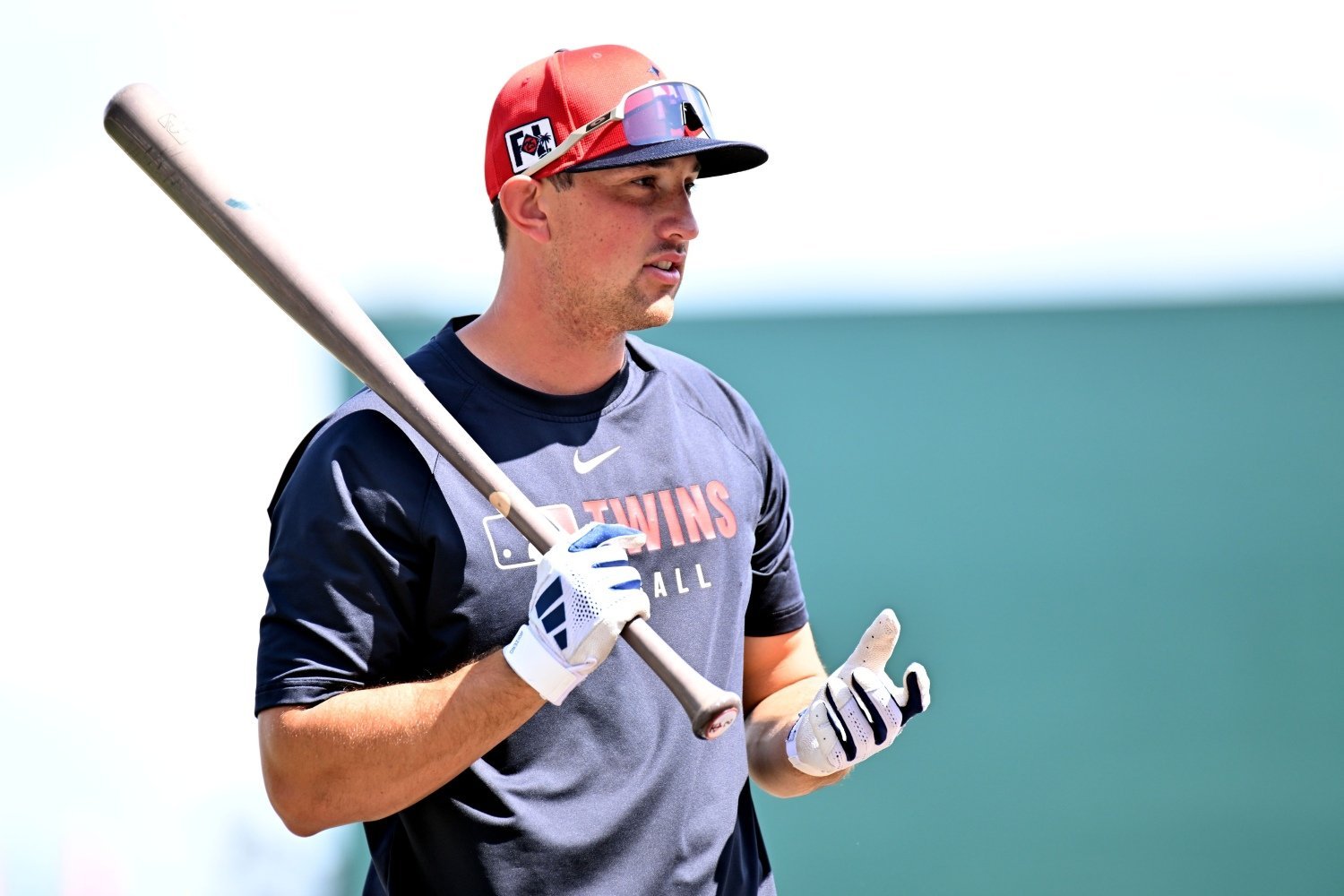 By now, we know that Royce Lewis will not be ready for Opening Day after suffering an injury late in camp. After Brooks Lee had spent all of the spring competing to take over second base, he may now see significant time at the hot corner. Given Lewis’s repeated injury struggles and Lee having already proved himself capable of manning the position, would the Twins be better off viewing Lee as the long-term third baseman for the franchise? The thing about the battle for second base this spring is that someone (potentially multiple players who deserve an extended look at MLB action) was going to miss out. Now, Lee will surely make the roster to pick up some of the recently opened playing time at third base (around and in addition to Jose Miranda), and a huge opportunity has presented itself to players like Mickey Gasper and Edouard Julien at second. Top prospect Luke Keaschall could force his way into the mix before long, too. Some things have to go right, such as Lee performing offensively and someone grabbing the reins at second base, but if all is going well when Lewis is ready to return, it could create some difficult questions regarding the future of third base. Lee is a versatile player, but it would be nice to see him settle into a primary position long-term. Because of his defensive prowess, there are several possibilities. He was slated second base this spring because that’s where the opportunity was when everyone was healthy. After another Lewis injury, however, that situation has changed. It’s fair to wonder whether the organization will feel they can continue to wait and invest so much hope in Lewis, or whether they need to amend their approach. It’s impossible not to feel for Lewis. The former No. 1 overall pick has been through the wringer physically, with two ACL tears snowballing into repeated soft-tissue injuries as he’s reached the MLB level. His athleticism has predictably declined, causing a move from shortstop to third base, where less range is required. Lewis played in 82 games last year, his most in a single season since 2019. By the end, he was clearly on his last legs, posting a .602 OPS from Aug. 1 forward. It was the first time he had struggled at the plate while on the field for the Twins, which may add another layer of difficulty to trusting him to fill a bulk of the playing time at third base over the coming years. While Lee has struggled with injuries of his own, he profiles as an everyday player given his balanced plate approach and ability to hit from both sides. The offensive upside he showed at St. Paul didn’t translate to the MLB last year as a 23-year-old, but he did show that he can more than handle the position defensively. Brooks Bunt.mp4 There’s an argument to be made that as Lee tries to adjust to MLB pitching, having a more settled defensive home could give him less to work on. He’s likely to be the backup shortstop, the position still he’s played since college, but having to shift to third base unexpectedly every season likely isn’t doing him any favors. He had made just seven appearances at third base before 2024 and logged more innings there at the position at the MLB level last year than the rest of his professional career combined. Even for a mature and developed prospect like Lee, it’s a lot to put on his plate. Because the angles and timing of plays are different at each spot around the infield, a player without a fixed position must take daily reps at each spot to which they might be called—which comes at the cost of things like reps in the batting cage, extra preparation in meetings, or precious rest. In terms of how a full-time move to third base for Lee would affect Lewis, it’s more of a hypothetical question. Unfortunately, at this point, it’s difficult to ask where he will play when he comes back and is 100% healthy, because there’s no telling when that will be—or, more importantly, how long it will last. It’s a harsh reality that the Twins may have to begin planning for, as a competing team can’t continue to have to patch together a premium position for more than half of every season. If Lewis does return sometime around May, he’ll likely see plenty of days off and some time at DH. He’s still certain to see some time at third base, but expecting him to play there regularly for the remainder of the season simply cannot be the plan. While Lee is capable of being completely moved off of third base at that point and adequately filling in elsewhere, there’s an argument to be made that this wouldn’t be the best course of action for him or the team. The unpredictability of baseball will have a lot to do with how the Twins proceed. Both the health and performance of all players involved in this equation will help guide their decision-making, but it may be time to start considering whether Lee is the third baseman of the future. Lewis still possesses an elite level of talent, but when it comes to being the trusted long-term third baseman, Lee might be the best option. Do you agree?
- 53 comments
-
- 7
-
-
- brooks lee
- royce lewis
- (and 2 more)
-
I've heard of slipping a Mickey, but this is ridiculous. Image courtesy of © Jonathan Dyer-Imagn Images On Sunday, Royce Lewis hit a ground ball down the line, fielded deep behind third base. In sprinting to attempt an infield single, he strained his hamstring. Imaging showed a moderate strain, which figures to set the team's could-be star slugger back quite a bit. With Lewis likely to miss several weeks, Brooks Lee should make the roster to help fill in at third base—if he wasn’t going to already. The day after Lewis’s injury, Lee was the starting third baseman against the Pirates, indicating what the Twins' plans could be. That should leave one more spot for a position player on the roster. Mickey Gasper has quietly had a strong spring, and could grab the last spot. The Twins traded for Gasper this winter, surely thinking of him as little more than depth to be stashed at St. Paul. Gasper is a journeyman, playing only 13 games at the MLB level despite being 29 years old. His lack of experience is surprising, given his production at all levels of the minor leagues in his career. This 2025 Twins roster may be the best opportunity for legitimate playing time that Gasper has been presented with to date. For starters, the Twins did the bare minimum to address first base this winter. Carlos Santana departed for Cleveland. Ty France was brought in as a bounce-back candidate, and we’re likely to see Jose Miranda and maybe even Edouard Julien fill in at some point this season. It’s not a particularly strong group, and the only left-handed hitter (Julien) has the least experience. In addition to being an option at first base, Gasper has seen increased playing time at second base. Rocco Baldelli has praised his flexibility and the team’s trust in him to play multiple positions competently. While Julien has had a strong spring at the plate, the same cannot be said for his time in the infield dirt. It’s clear Julien’s glove will still be a significant problem for him and may even be part of why Gasper has seen time up the middle. Comparing Gasper’s offensive abilities to Julien’s is an interesting exercise. Gasper’s calling card in the minor leagues has been his ability to get on base at an elite rate, typically walking 12% of the time or more. While he lacks Julien’s power, he’s rarely struck out more than 20% of the time and has a decisive advantage in the batting average department. If Julien is Gasper’s main competition, the Twins viewing Gasper as having a defensive advantage could be the tiebreaker. Other competition for the last roster spot could include names like Austin Martin or DaShawn Keirsey. Martin now appears to be primarily an outfielder, and Keirsey's left-handedness likely leaves him as the next man up in St. Paul if Trevor Larnach or Matt Wallner misses time. It doesn’t seem like either of the young speedsters will be in a strong position to make the roster. While breaking camp with a career minor-league journeyman may be odd for a team with playoff aspirations and so many younger options, Gasper could fit in nicely to a bench role. His professional plate approach should play, and Steamer agrees. It pegs him for a slash line of .249/.344/.375. If he can play a solid first and second base and post a slash line 10% above league average from the left side, there’s plenty of opportunity for him. Gasper could be the frontrunner for the final position-player spot, now that Lewis is likely to miss time, and there’s an argument that he should be. Do you think another player deserves the final roster spot? Let us know below! View full article
-
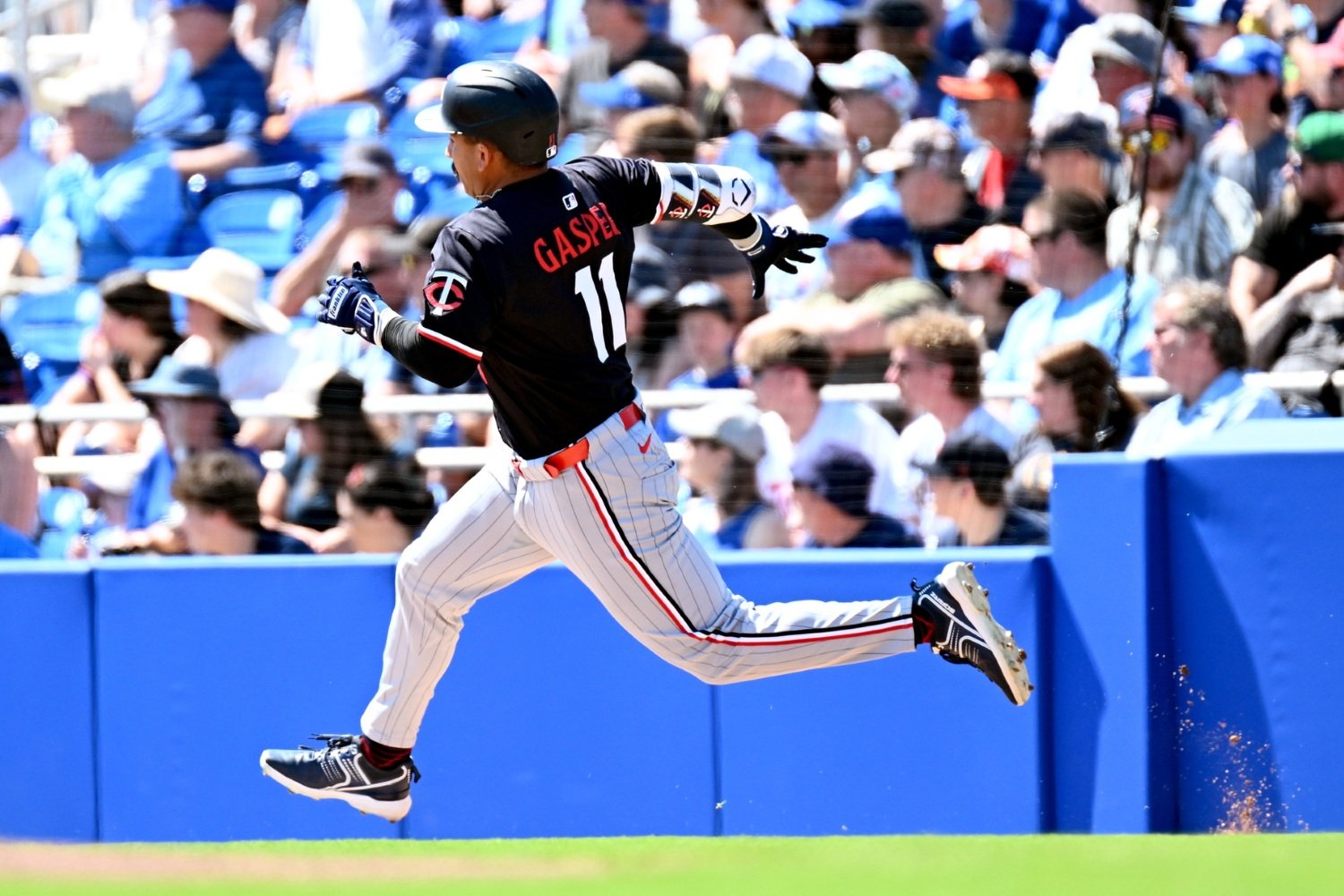 On Sunday, Royce Lewis hit a ground ball down the line, fielded deep behind third base. In sprinting to attempt an infield single, he strained his hamstring. Imaging showed a moderate strain, which figures to set the team's could-be star slugger back quite a bit. With Lewis likely to miss several weeks, Brooks Lee should make the roster to help fill in at third base—if he wasn’t going to already. The day after Lewis’s injury, Lee was the starting third baseman against the Pirates, indicating what the Twins' plans could be. That should leave one more spot for a position player on the roster. Mickey Gasper has quietly had a strong spring, and could grab the last spot. The Twins traded for Gasper this winter, surely thinking of him as little more than depth to be stashed at St. Paul. Gasper is a journeyman, playing only 13 games at the MLB level despite being 29 years old. His lack of experience is surprising, given his production at all levels of the minor leagues in his career. This 2025 Twins roster may be the best opportunity for legitimate playing time that Gasper has been presented with to date. For starters, the Twins did the bare minimum to address first base this winter. Carlos Santana departed for Cleveland. Ty France was brought in as a bounce-back candidate, and we’re likely to see Jose Miranda and maybe even Edouard Julien fill in at some point this season. It’s not a particularly strong group, and the only left-handed hitter (Julien) has the least experience. In addition to being an option at first base, Gasper has seen increased playing time at second base. Rocco Baldelli has praised his flexibility and the team’s trust in him to play multiple positions competently. While Julien has had a strong spring at the plate, the same cannot be said for his time in the infield dirt. It’s clear Julien’s glove will still be a significant problem for him and may even be part of why Gasper has seen time up the middle. Comparing Gasper’s offensive abilities to Julien’s is an interesting exercise. Gasper’s calling card in the minor leagues has been his ability to get on base at an elite rate, typically walking 12% of the time or more. While he lacks Julien’s power, he’s rarely struck out more than 20% of the time and has a decisive advantage in the batting average department. If Julien is Gasper’s main competition, the Twins viewing Gasper as having a defensive advantage could be the tiebreaker. Other competition for the last roster spot could include names like Austin Martin or DaShawn Keirsey. Martin now appears to be primarily an outfielder, and Keirsey's left-handedness likely leaves him as the next man up in St. Paul if Trevor Larnach or Matt Wallner misses time. It doesn’t seem like either of the young speedsters will be in a strong position to make the roster. While breaking camp with a career minor-league journeyman may be odd for a team with playoff aspirations and so many younger options, Gasper could fit in nicely to a bench role. His professional plate approach should play, and Steamer agrees. It pegs him for a slash line of .249/.344/.375. If he can play a solid first and second base and post a slash line 10% above league average from the left side, there’s plenty of opportunity for him. Gasper could be the frontrunner for the final position-player spot, now that Lewis is likely to miss time, and there’s an argument that he should be. Do you think another player deserves the final roster spot? Let us know below!
 -
The Twins have an unexpected player tearing up spring training this year, and his skillset has the makings of the next great cult hero of the Twins roster if things break right for him. Who is Jeferson Morales? Image courtesy of © Chris Tilley-Imagn Images Jeferson Morales is a name to keep an eye on this spring, as he’s seen a steady uptick in playing time and has outlasted several rounds of roster cuts so far as Opening Day approaches. He won’t break camp with the team and isn’t on any top prospect lists, but it’s worth learning his name now, as we may see him break through before long if he continues on his upward trajectory. Morales is slashing .438/.550/.750 this spring in 20 plate appearances. He’s bounced around defensively, including seeing time at catcher, second base, and both corner outfield spots. His offensive and defensive showing this spring correlate to his minor league career. Morales was signed out of Venezuela and made his professional debut in 2018. He’s seen a solid chunk of time at several positions defensively, and his bat has excelled nearly every step of the way. He’s posted an OPS+ of 120 or more in every season of his professional career, aside from 72 games in 2022. He’s never hit more than 12 homers in a single season but has shown strong plate discipline and has reduced his strikeout rates to around 15% in recent years. So why are many of us learning his name for the first time this season? For starters, Morales is already 26 years old. Despite his solid offensive performance, he hasn’t shown off any elite tools with his bat but has been a well-rounded hitter. This has likely made him more of an organizational soldier, and he spent most of his time in A ball until 2023. Despite his defensive flexibility, he’s also not a gold-glove-caliber defender at any position. He has spent years bouncing between positions to fill roster holes in the lower minor leagues but finally made it to St. Paul for 17 games in 2024. Now winning over the heart of Rocco Baldelli one spring training game at a time, it’s worth wondering whether Morales could finally break through to the MLB in 2025. The Twins love his flexibility, but it’s hard to say how they feel about his viability at any given position. Morales has a few routes to potential playing time in 2025 between the infield, outfield, and catcher, depending on whether the Twins trust in him to fill those positions should they get hit with the injury bug. In the meantime, he will hopefully report back to St. Paul along with other organizational success stories, such as Payton Eeles, Randy Dobnak, and Carson McCusker. Jeferson Morales has become a fun name to watch for the upcoming season. He won’t be emerging as a top prospect any time soon, but opportunity is always right on the horizon in baseball, and Morales has seized it so far this spring. Hopefully, he will continue his rise through the ranks in 2025 and emerge as the next in a line of surprising players to emerge from the organization against all odds, making him an easy player to root for. View full article
-
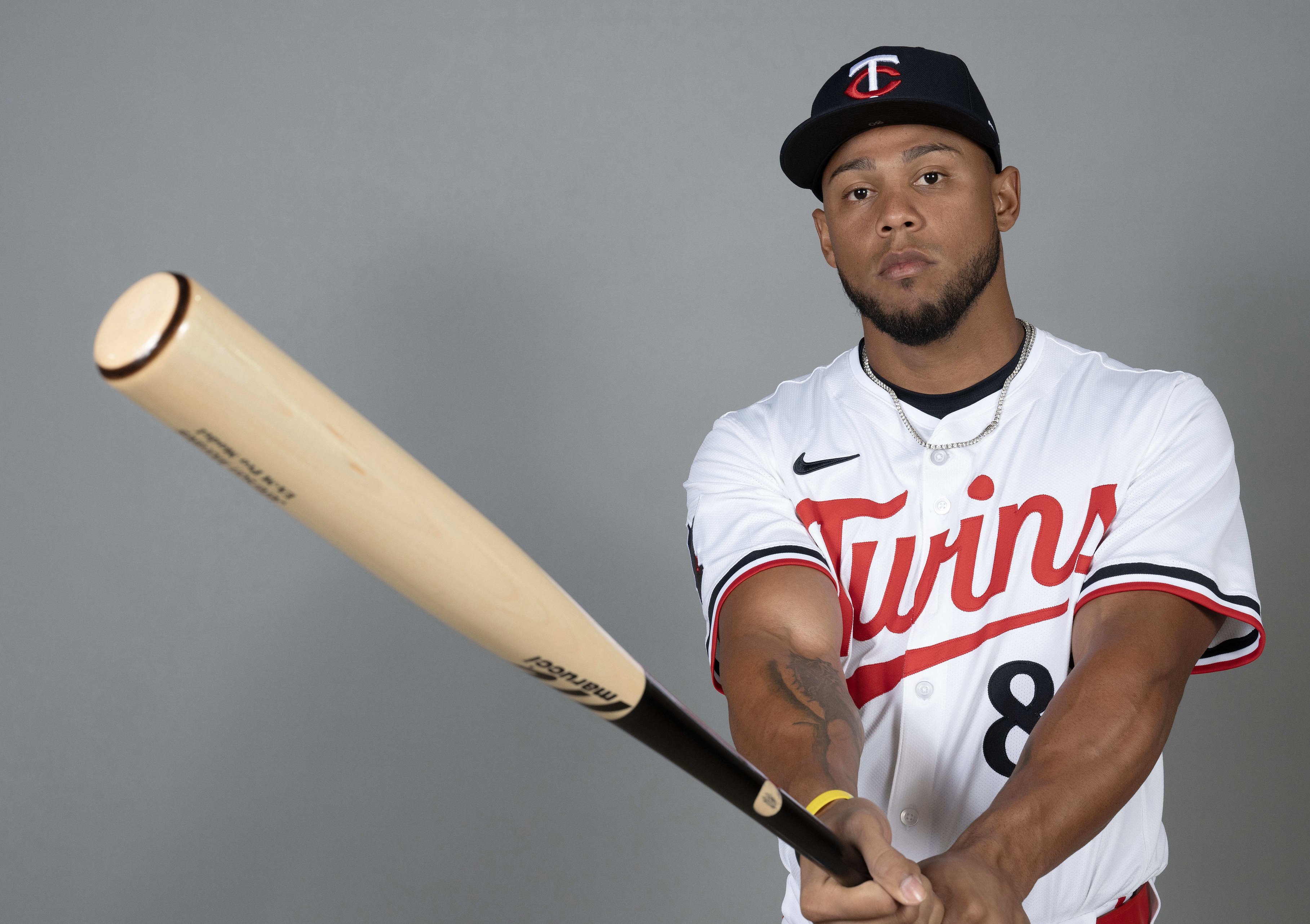 Jeferson Morales is a name to keep an eye on this spring, as he’s seen a steady uptick in playing time and has outlasted several rounds of roster cuts so far as Opening Day approaches. He won’t break camp with the team and isn’t on any top prospect lists, but it’s worth learning his name now, as we may see him break through before long if he continues on his upward trajectory. Morales is slashing .438/.550/.750 this spring in 20 plate appearances. He’s bounced around defensively, including seeing time at catcher, second base, and both corner outfield spots. His offensive and defensive showing this spring correlate to his minor league career. Morales was signed out of Venezuela and made his professional debut in 2018. He’s seen a solid chunk of time at several positions defensively, and his bat has excelled nearly every step of the way. He’s posted an OPS+ of 120 or more in every season of his professional career, aside from 72 games in 2022. He’s never hit more than 12 homers in a single season but has shown strong plate discipline and has reduced his strikeout rates to around 15% in recent years. So why are many of us learning his name for the first time this season? For starters, Morales is already 26 years old. Despite his solid offensive performance, he hasn’t shown off any elite tools with his bat but has been a well-rounded hitter. This has likely made him more of an organizational soldier, and he spent most of his time in A ball until 2023. Despite his defensive flexibility, he’s also not a gold-glove-caliber defender at any position. He has spent years bouncing between positions to fill roster holes in the lower minor leagues but finally made it to St. Paul for 17 games in 2024. Now winning over the heart of Rocco Baldelli one spring training game at a time, it’s worth wondering whether Morales could finally break through to the MLB in 2025. The Twins love his flexibility, but it’s hard to say how they feel about his viability at any given position. Morales has a few routes to potential playing time in 2025 between the infield, outfield, and catcher, depending on whether the Twins trust in him to fill those positions should they get hit with the injury bug. In the meantime, he will hopefully report back to St. Paul along with other organizational success stories, such as Payton Eeles, Randy Dobnak, and Carson McCusker. Jeferson Morales has become a fun name to watch for the upcoming season. He won’t be emerging as a top prospect any time soon, but opportunity is always right on the horizon in baseball, and Morales has seized it so far this spring. Hopefully, he will continue his rise through the ranks in 2025 and emerge as the next in a line of surprising players to emerge from the organization against all odds, making him an easy player to root for.
