



Cody Pirkl
-
Posts
1,314 -
Joined
-
Last visited
-
Days Won
4
Content Type
Profiles
News
Minnesota Twins Videos
2026 Minnesota Twins Top Prospects Ranking
2022 Minnesota Twins Draft Picks
Minnesota Twins Free Agent & Trade Rumors, Notes, & Tidbits
Guides & Resources
2023 Minnesota Twins Draft Picks
The Minnesota Twins Players Project
2024 Minnesota Twins Draft Picks
2025 Minnesota Twins Draft Pick Tracker
2026 Minnesota Twins Draft Tracker: Picks & Bonuses
Forums
Blogs
Events
Store
Downloads
Gallery
Everything posted by Cody Pirkl
-
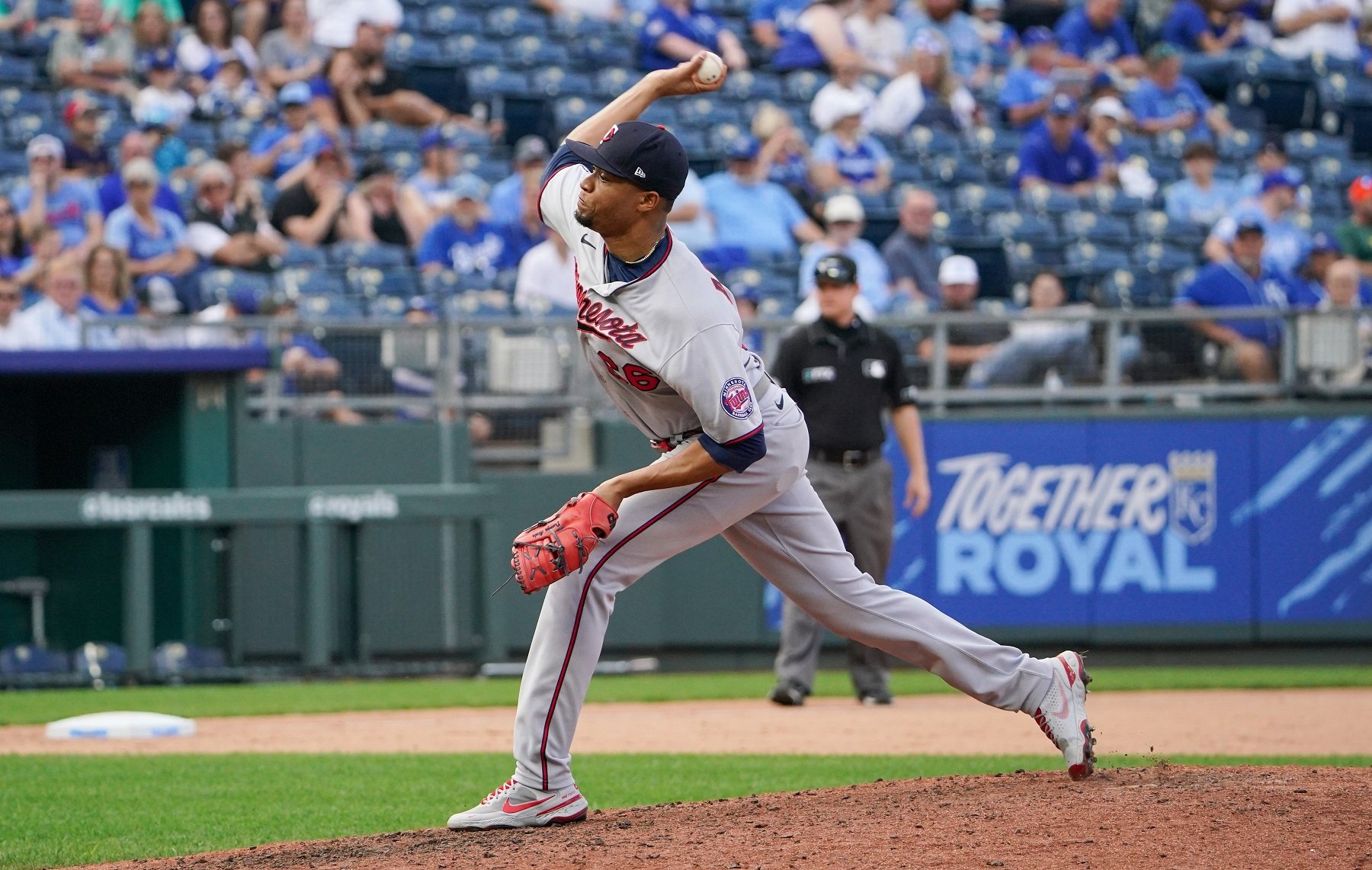 Jorge Alcala had a mini breakout at the end of 2021 and was prevented from building on it further due to injury in 2022. Headed into 2023, the hope was that he was 100% healthy and could pick up where he left off. So far it appears that may not be the case on multiple fronts. Alcala looked locked and loaded coming out of spring training. His velocity had crept up considerably, and he looked flat-out dominant. Alcala began his 2023 season with a shutout inning, but has pitched in a multi-inning role twice as well. His velocity is down from 2021 levels and more importantly from the 97.4 we saw this spring. The underlying numbers don’t look great despite his 0.00 ERA thus far. What can we make of it? Velocity-wise, Alcala has long been a flamethrower even during his starting days in the minor leagues. His high 90s fastball has been a staple of his repertoire for years before his elbow acted up. After having it surgically cleaned up last season (arthroscopic debridement on his right elbow), his high 90s fastball has settled in around 95. A couple of ticks may not sound like much, but it can make a world of difference for a pitcher like Alcala who relies on blowing the doors off hitters more than command. That being said, heading to the Midwest spring weather after building up in the warm confines of Ft. Myers is a tough ask. It’s possible we see the velocity tick up as we did over time this spring, and therefore there isn’t much reason to worry yet. The bigger question with Alcala is what the Twins think of him and what role he could play. Rather than setting him up to potentially take the reins on even a middle relief moderate leverage job, the Twins have used him as a multi-inning reliever in two of four appearances thus far. His most recent multi-inning excursion was a bit rocky and questionable on multiple accounts. Alcala allowed just a single in his most recent multi-inning appearance on Sunday before ending it with a strikeout. He was asked to come back out for the 8th inning and threw 45 pitches in the outing. He issued two walks to lead off his second inning. He was clearly not as effective in his second inning. As high as Twins fans hopes were for Alcala coming into the season, that outing may have brought a moment of clarity. It's fair to wonder whether the Twins see the same potential in Alcala when they’re allowing him to rack up his highest pitch count since August of 2020 coming off of elbow surgery. That being said, he was inserted into a relatively high-leverage spot on Wednesday and spun a clean inning. It's kind of difficult to read how the Twins feel about Alcala, but it appears the ball is at least in his court. The hope is still that Alcala can raise his mid-90s fastball into the upper 90s again, as he does still have a pair of secondary offerings to navigate any-handed hitter that comes to the plate. He may have to build that velocity up with sporadic multi-inning roles, which could be more difficult than doing so across strictly single-inning outings where Duran can give it his all on every pitch. The reality is that present day, the perception among Twins fans and the organization may not quite line up. Alcala was never going to get very high-leverage spots right off the bat after missing nearly a full season, but the Twins don’t appear to be particularly inclined to set him up to earn that role. Instead he’ll have to earn his way up the hierarchy by outperforming other relievers the Twins see in the same vein such as Jovani Morán and Emilio Pagán. At the end of the day, Alcala appears to be starting from scratch in regard to his status in the bullpen after missing nearly all of 2022. The Twins are doing him no favors in regard to easing him in and leaving the door open to work his way into high-leverage innings. He’ll have to earn it back himself. It all likely starts with the fastball velocity. Can Jorge Alcala bounce back to end of 2021 levels?
- 12 comments
-
- 3
-

-
- jorge alcala
- emilio pagan
- (and 1 more)
-
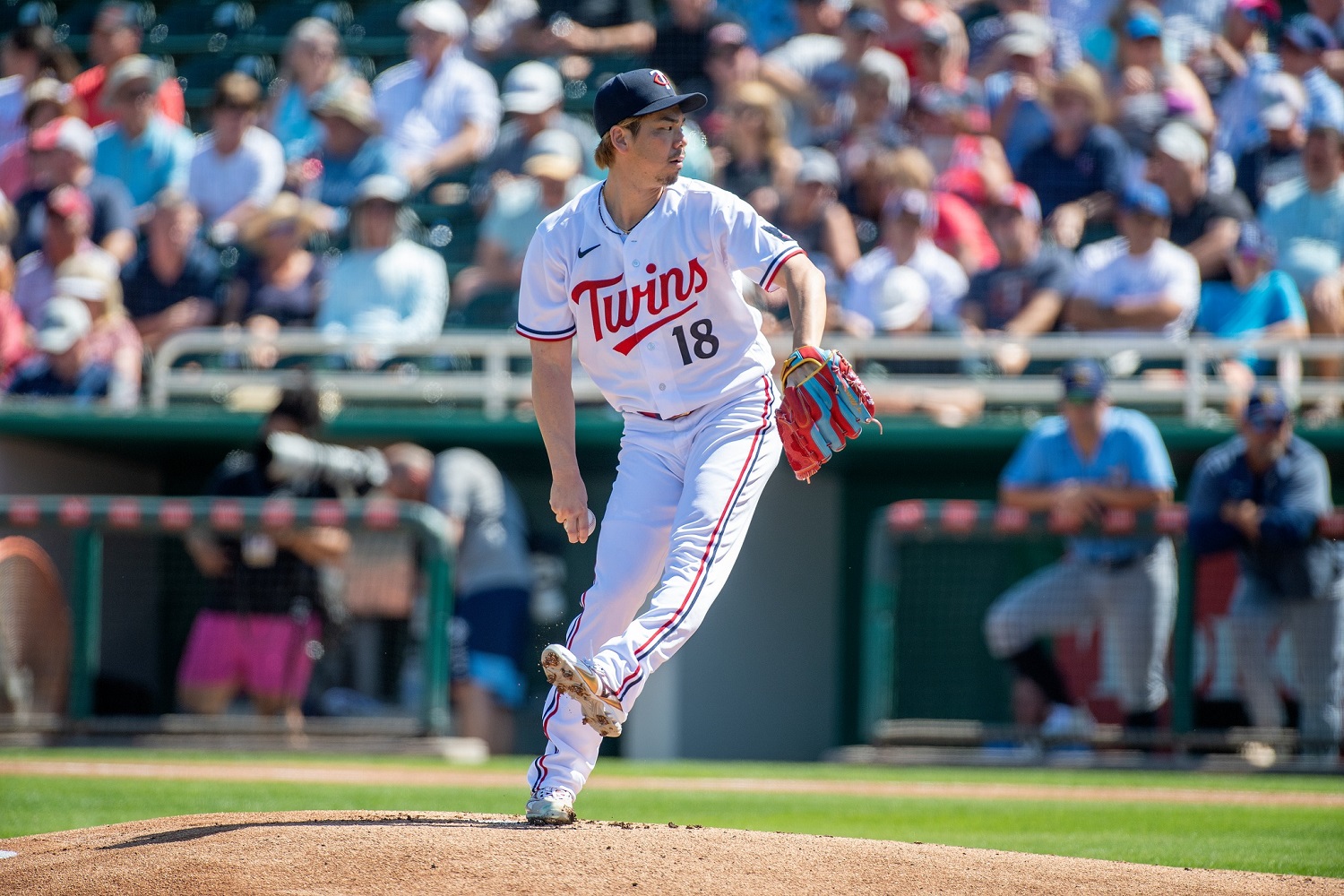 Kenta Maeda’s spring was far from ideal. After missing a year-and-a-half due to Tommy John surgery, the soon-to-be 35-year-old was missing his velocity and command for much of camp. Some were calling for Bailey Ober to get the fifth rotation spot and to figure out how to utilize Maeda elsewhere. Well at least through his first start, the Twins' faith in Maeda has been justified. He’s already shown more than he did at any point in the spring, and one could argue that this start was better than what we had seen from him in 2021 when Maeda last pitched. If his debut performance can be maintained, the Twins are in an enviable spot. With the caveat that it was against the Marlins lineup, Maeda was simply dominant in his 2023 debut. In five-plus innings, Maeda allowed only three hits and struck out nine. While his one mistake resulted in a game-deciding solo homer, he showcased the pinpoint command that made him a Cy Young contender in 2020. His velocity was surprisingly up across the board even from pre-Tommy John levels. For the Twins, this could be a game-changer. It was only one start, but it was a possibility that this version of Maeda simply didn’t exist anymore. Age and injury come for the best pitchers in baseball. Maeda will soon be 35 years old and is coming off an arm injury that routinely leaves pitchers with diminished command. Even if he can’t consistently dominate the way he did on Tuesday, the proof that the ability is still in there has to be encouraging. Maeda was undoubtedly the Twins' #5 starter headed into the season, and there’s an argument to be made that once through the rotation he had one of the more impressive performances. If they were to get even a league-average starting pitcher out of that rotation spot, the Twins and their fans should be thrilled. Maeda showing that he’s capable of that and a lot more in his first start raised the floor and ceiling of the pitching staff. There is, of course, a lot more to wait and see regarding Maeda before saying he’s fully returned to his pre-injury levels. Consistency is often the key following Tommy John surgery, and it’s undeniable that we will see some up and down performances. The hope is the extra recovery time he had because the Twins didn't rush him back in 2022 helps him a bit. He also left his start with the trainer after allowing a leadoff hit in the sixth inning. Baldelli and Maeda echoed his ability to make his next start after the game, but as with all Twins-related injuries, it’ll be something to watch closely. Even if Maeda escapes this injury scare with a clean bill of health, he had his fair share of injury concerns even several years ago, and the risk can only increase with age. Health will be a big question for Maeda now that we know the performance can still be elite. All things considered, there wasn’t much else someone could have really wanted to see from Kenta Maeda in his first start in nearly two years. It’s too early to say that he’s returned to his top-of-the-rotation peak, but for a team with several lingering questions headed into an important season, Kenta Maeda’s answer is about as good as possible. Some were saying this Twins rotation is the deepest we’ve seen in years. If Tuesday’s version of Kenta Maeda is here to stay, it’s a difficult point to argue.
 -
Kenta Maeda entered 2023 as a complete wild card following nearly two years of missed time due to elbow surgery. A rocky spring raised further questions, but his regular season debut offers reasons for excitement. Image courtesy of William Parmeter Kenta Maeda’s spring was far from ideal. After missing a year-and-a-half due to Tommy John surgery, the soon-to-be 35-year-old was missing his velocity and command for much of camp. Some were calling for Bailey Ober to get the fifth rotation spot and to figure out how to utilize Maeda elsewhere. Well at least through his first start, the Twins' faith in Maeda has been justified. He’s already shown more than he did at any point in the spring, and one could argue that this start was better than what we had seen from him in 2021 when Maeda last pitched. If his debut performance can be maintained, the Twins are in an enviable spot. With the caveat that it was against the Marlins lineup, Maeda was simply dominant in his 2023 debut. In five-plus innings, Maeda allowed only three hits and struck out nine. While his one mistake resulted in a game-deciding solo homer, he showcased the pinpoint command that made him a Cy Young contender in 2020. His velocity was surprisingly up across the board even from pre-Tommy John levels. For the Twins, this could be a game-changer. It was only one start, but it was a possibility that this version of Maeda simply didn’t exist anymore. Age and injury come for the best pitchers in baseball. Maeda will soon be 35 years old and is coming off an arm injury that routinely leaves pitchers with diminished command. Even if he can’t consistently dominate the way he did on Tuesday, the proof that the ability is still in there has to be encouraging. Maeda was undoubtedly the Twins' #5 starter headed into the season, and there’s an argument to be made that once through the rotation he had one of the more impressive performances. If they were to get even a league-average starting pitcher out of that rotation spot, the Twins and their fans should be thrilled. Maeda showing that he’s capable of that and a lot more in his first start raised the floor and ceiling of the pitching staff. There is, of course, a lot more to wait and see regarding Maeda before saying he’s fully returned to his pre-injury levels. Consistency is often the key following Tommy John surgery, and it’s undeniable that we will see some up and down performances. The hope is the extra recovery time he had because the Twins didn't rush him back in 2022 helps him a bit. He also left his start with the trainer after allowing a leadoff hit in the sixth inning. Baldelli and Maeda echoed his ability to make his next start after the game, but as with all Twins-related injuries, it’ll be something to watch closely. Even if Maeda escapes this injury scare with a clean bill of health, he had his fair share of injury concerns even several years ago, and the risk can only increase with age. Health will be a big question for Maeda now that we know the performance can still be elite. All things considered, there wasn’t much else someone could have really wanted to see from Kenta Maeda in his first start in nearly two years. It’s too early to say that he’s returned to his top-of-the-rotation peak, but for a team with several lingering questions headed into an important season, Kenta Maeda’s answer is about as good as possible. Some were saying this Twins rotation is the deepest we’ve seen in years. If Tuesday’s version of Kenta Maeda is here to stay, it’s a difficult point to argue. View full article
-
Changeups are typically used to equalize opposite-handed hitters for pitchers, but the Twins have recently shown signs of going against the grain. Are the Twins doing themselves a disservice? Image courtesy of Dave Nelson-USA TODAY Sports In 2022, the Twins traded for Jorge Lopez, paying a pretty high price for a reliever in hopes of shoring up the bullpen down the home stretch. They acquired the All-Star right-hander and immediately decided they could make some improvements to a dominant pitcher who at the time had a 1.68 ERA. He posted a 4.37 ERA down the stretch and was a completely different pitcher. There’s a lot of correlation between changeup usage and Lopez’s decline. Long considered an organization that was fond of sliders nearly to a fault, the Twins seem to have changed their approach in some instances. Despite Jorge Lopez possessing a wipeout slider to pair with his high 90s fastball, the Twins appeared to have a plan when they acquired him to pump up his changeup usage, something we often saw against same-handed hitters. After being acquired by the Twins, Lopez’s changeup usage against right-handed hitters increased from 10.4% in July to 17.9% in August, and then to 19.4% in September. The pitch was fine in August before allowing a .600 batting average and .800 slugging percentage in September. These are, of course, small samples, but the thought process is questionable considering the mass of historical data saying sliders are more effective against same-handed hitters, especially in Lopez’s case whose breaking ball allowed a .179 average and .393 slugging to righties in 2022. The hope was that the Twins learned their lesson, and Lopez has yet to throw a same-handed changeup so far in 2023. On Wednesday there was a blip on the radar that needs to be kept from becoming a trend. In the 8th inning against Miami, Griffin Jax relieved Pablo López who had been nearly perfect to that point. After striking out the leadoff hitter, Jax got ahead of Jean Segura 0-2 before throwing consecutive changeups and ultimately allowing a single that later came around to score. Jax is a slider-first pitcher whose lack of success with the rest of his repertoire caused a transition from starter to reliever. Last season was incredibly successful as he was allowed to throw his best pitch nearly 50% of the time, allowing a sub .200 batting average and sub .300 slugging. The pitch was even better against right-handed hitters. Instead of going to one of the most dominant pitches in all of baseball against right-handed hitters, Jax went to his worst pitch for that matchup twice in a row and was burned because of it. Throwing two changeups to a right-handed hitter is a minor detail, but it continues a trend seen at the end of 2022 with Jorge Lopez. In Lopez’s case, such a boost in changeup usage almost had to be a Twins-led choice. It’s possible Jax’s two pitches yesterday were either his own or Jeffers’ decision behind the plate, but either way, it doesn’t look good to allow eventual go-ahead baserunners because of a decision to throw your third-best pitch as a reliever. For pitchers such as Griffin Jax, pitch usage should be relatively straightforward. Throw the slider a ton while mixing in some fastballs. The changeup was effective against lefties in 2022, but was easily his worst offering against same-handed hitters. It may work to surprise righties on occasion, but the pitch had the worst whiff percentage against right-handed hitters of his entire repertoire in 2022. There’s no reason for Griffin Jax to be fishing for strikeouts against righties with the changeup. Small percentage points are easy to brush under the rug when it comes to comparing production allowed between pitches, but Wednesday’s outcome shows that not putting the best foot forward statistically can burn the Twins. Jax's changeup that resulted in the infield single was actually a good pitch, but the difference in whiff percentage between his slider and changeup in that situation is massive. In nearly all cases, relievers should be throwing their best pitch when it matters most, especially when it comes to platoon matchups between sliders and changeups. History says there’s no need for deviation. Hopefully, this was a one-off and not a trend for Jax, who looked well-positioned for an even better 2023 after a fantastic 2022. If the Twins are trying to push same-handed changeups again this season, it’s already time to scrap the idea and stop trying to reinvent the wheel. Otherwise, it may continue to burn them. View full article
-
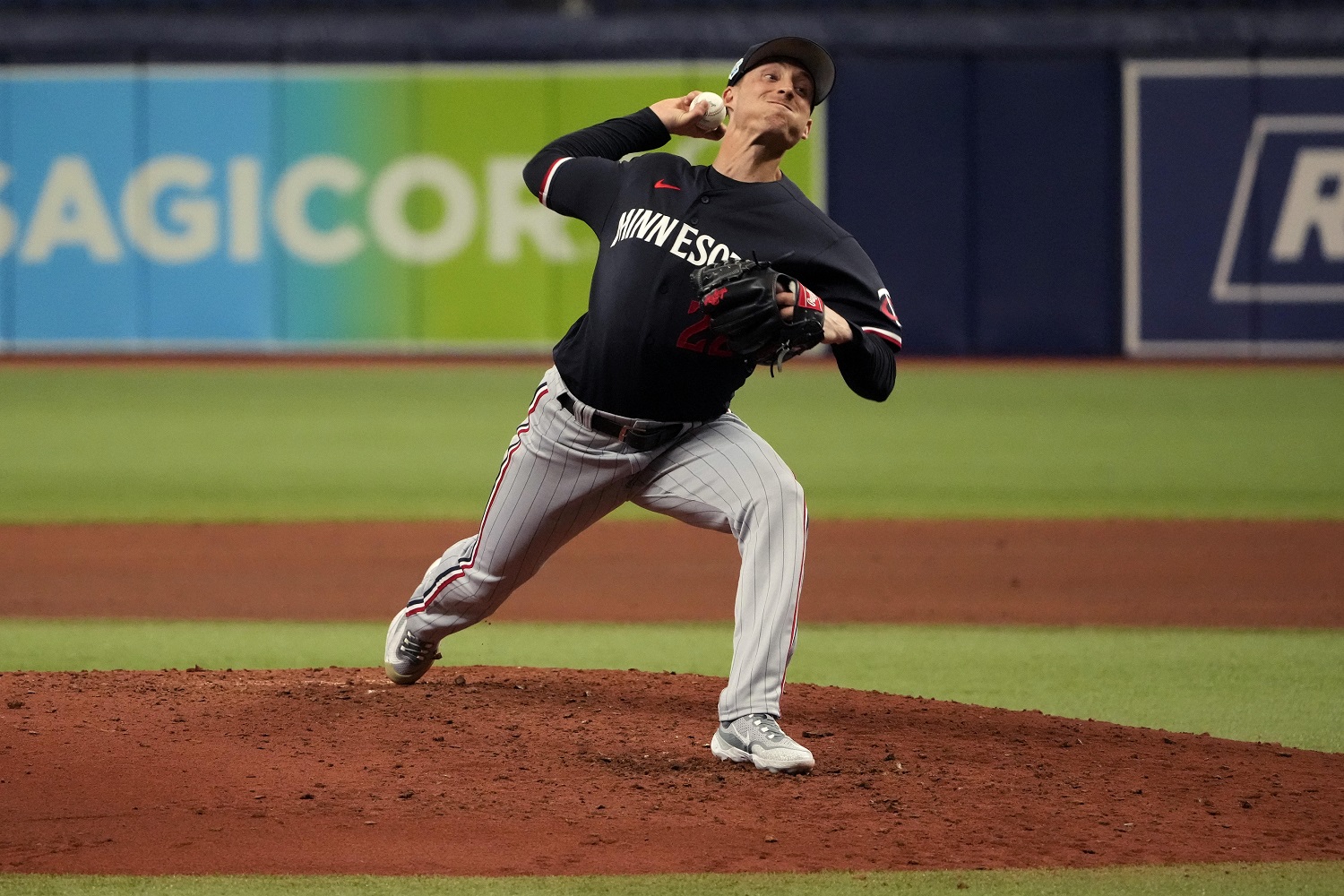 In 2022, the Twins traded for Jorge Lopez, paying a pretty high price for a reliever in hopes of shoring up the bullpen down the home stretch. They acquired the All-Star right-hander and immediately decided they could make some improvements to a dominant pitcher who at the time had a 1.68 ERA. He posted a 4.37 ERA down the stretch and was a completely different pitcher. There’s a lot of correlation between changeup usage and Lopez’s decline. Long considered an organization that was fond of sliders nearly to a fault, the Twins seem to have changed their approach in some instances. Despite Jorge Lopez possessing a wipeout slider to pair with his high 90s fastball, the Twins appeared to have a plan when they acquired him to pump up his changeup usage, something we often saw against same-handed hitters. After being acquired by the Twins, Lopez’s changeup usage against right-handed hitters increased from 10.4% in July to 17.9% in August, and then to 19.4% in September. The pitch was fine in August before allowing a .600 batting average and .800 slugging percentage in September. These are, of course, small samples, but the thought process is questionable considering the mass of historical data saying sliders are more effective against same-handed hitters, especially in Lopez’s case whose breaking ball allowed a .179 average and .393 slugging to righties in 2022. The hope was that the Twins learned their lesson, and Lopez has yet to throw a same-handed changeup so far in 2023. On Wednesday there was a blip on the radar that needs to be kept from becoming a trend. In the 8th inning against Miami, Griffin Jax relieved Pablo López who had been nearly perfect to that point. After striking out the leadoff hitter, Jax got ahead of Jean Segura 0-2 before throwing consecutive changeups and ultimately allowing a single that later came around to score. Jax is a slider-first pitcher whose lack of success with the rest of his repertoire caused a transition from starter to reliever. Last season was incredibly successful as he was allowed to throw his best pitch nearly 50% of the time, allowing a sub .200 batting average and sub .300 slugging. The pitch was even better against right-handed hitters. Instead of going to one of the most dominant pitches in all of baseball against right-handed hitters, Jax went to his worst pitch for that matchup twice in a row and was burned because of it. Throwing two changeups to a right-handed hitter is a minor detail, but it continues a trend seen at the end of 2022 with Jorge Lopez. In Lopez’s case, such a boost in changeup usage almost had to be a Twins-led choice. It’s possible Jax’s two pitches yesterday were either his own or Jeffers’ decision behind the plate, but either way, it doesn’t look good to allow eventual go-ahead baserunners because of a decision to throw your third-best pitch as a reliever. For pitchers such as Griffin Jax, pitch usage should be relatively straightforward. Throw the slider a ton while mixing in some fastballs. The changeup was effective against lefties in 2022, but was easily his worst offering against same-handed hitters. It may work to surprise righties on occasion, but the pitch had the worst whiff percentage against right-handed hitters of his entire repertoire in 2022. There’s no reason for Griffin Jax to be fishing for strikeouts against righties with the changeup. Small percentage points are easy to brush under the rug when it comes to comparing production allowed between pitches, but Wednesday’s outcome shows that not putting the best foot forward statistically can burn the Twins. Jax's changeup that resulted in the infield single was actually a good pitch, but the difference in whiff percentage between his slider and changeup in that situation is massive. In nearly all cases, relievers should be throwing their best pitch when it matters most, especially when it comes to platoon matchups between sliders and changeups. History says there’s no need for deviation. Hopefully, this was a one-off and not a trend for Jax, who looked well-positioned for an even better 2023 after a fantastic 2022. If the Twins are trying to push same-handed changeups again this season, it’s already time to scrap the idea and stop trying to reinvent the wheel. Otherwise, it may continue to burn them.
 -
Josh Winder went from a trendy pick to round out the Twins rotation before the 2022 season to a Triple-A reliever headed into the 2023 season. After so many ups and downs, what could Winder’s future hold? Image courtesy of Jonathan Dyer, USA TODAY Sports For several years, Josh Winder has repeatedly dealt with the vague “shoulder impingement” diagnosis. Once considered an up-and-coming starting pitcher after posting a 1.98 ERA across 54 Double-A innings in 2021, the injuries have finally forced the Twins to forego stretching him out into a starter this season. Aside from injuries, Winder had several other red flags that clouded his future as a starting pitcher. He looked the part of a mid-rotation arm when his fastball velocity was there, but it was often inconsistent. The pitch allowed a .713 slugging % in his debut 2022 season. His slider and changeup each garnered 30+% whiff rates, but his overall 16.4% strikeout rate ranked in the 10th percentile league-wide. Having a pitch get punished so severely and not being able to punch hitters out was a difficult tightrope to walk. Could we see improvements across the board out of the bullpen? The first hope, of course, is that a 100+ inning starter’s workload allows Winder to be available for the entirety of a season for the first time in years. There’s also hope for a dramatic improvement in performance as well. The Twins may have plans for Winder to change the shape of his fastball which could be behind his struggles with the pitch. Regardless of any tweaks, his 94 mph average in 2022 as a starter paints a rosy picture of what kind of velocity the pitch could pick up. We’d seen 95s and 96s on occasion from Winder when healthy, and the hope is that we could see him sit in the mid to high 90s if he’s a one-inning reliever, creating more margin for error on the pitch. The Twins have also shown they’re not shy regarding having relievers throw their best pitch most of the time. From Matt Wisler to the current success of Griffin Jax, there’s no reason to believe that Winder won’t be throwing a ton of sliders considering it’s arguably his best pitch. Allowing a .186 batting average against and .320 slugging %, it’s possible we see him bully right-handed hitters with his breaking ball and use a mid to high 90s fastball as a secondary as we’ve seen with Griffin Jax. Unlike Jax when he moved to relief in 2022, Winder already has a ready-to-use changeup, making him a formidable matchup regardless of the handedness of the hitter. The pitch received a 50 future grade on Fangraph’s scouting scale and while it wasn’t quite as dominant as the slider in 2022, the pitch was more than adequate at getting hitters out and generating whiffs. It would be a stretch to call Josh Winder becoming a valuable reliever a smashing success, but it’s a route many starting pitching prospects take among all baseball teams. Despite his peak 2021 minor league season suggesting a future as a starter, things can change quickly in a pitcher’s career, and Winder’s red flags and injuries appear to have finally proven to be too much for the Twins. With him already manning a 40-man roster spot, a move to the bullpen not only offers hope of keeping Winder on the field but also fast-tracks him to possibly contributing to the MLB team should he hit the ground running in his new role. At 26 years old, it was time to try something new given the last few lost seasons Josh Winder has endured. He’s still a talented pitcher, but it may be time for the Twins to get value from him at the Major League level any way they can. The bullpen may be the most straightforward option. Are the Twins making the right choice not stretching Winder out into a starter? Should he stay in the bullpen moving forward? Let us know below. View full article
-
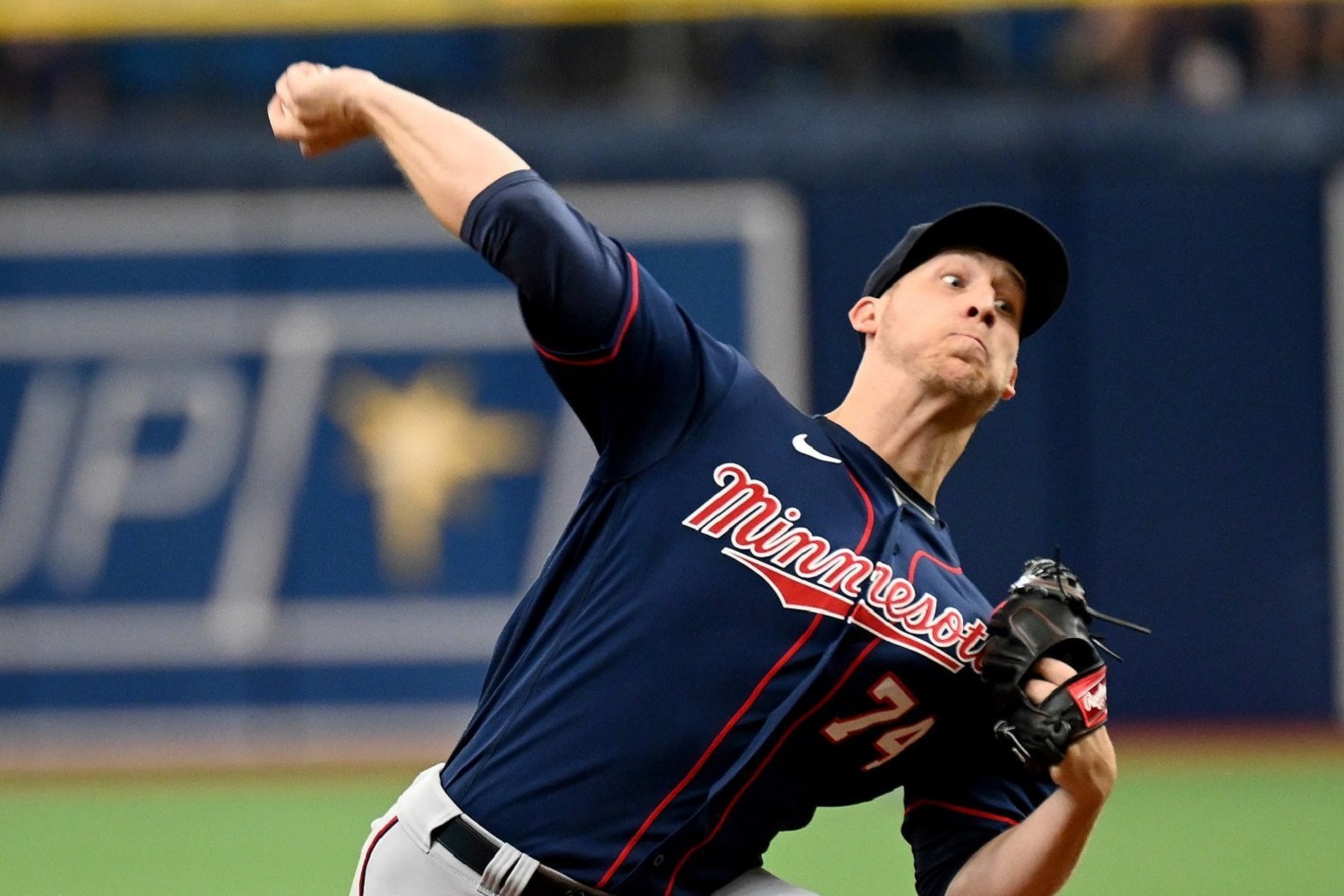 For several years, Josh Winder has repeatedly dealt with the vague “shoulder impingement” diagnosis. Once considered an up-and-coming starting pitcher after posting a 1.98 ERA across 54 Double-A innings in 2021, the injuries have finally forced the Twins to forego stretching him out into a starter this season. Aside from injuries, Winder had several other red flags that clouded his future as a starting pitcher. He looked the part of a mid-rotation arm when his fastball velocity was there, but it was often inconsistent. The pitch allowed a .713 slugging % in his debut 2022 season. His slider and changeup each garnered 30+% whiff rates, but his overall 16.4% strikeout rate ranked in the 10th percentile league-wide. Having a pitch get punished so severely and not being able to punch hitters out was a difficult tightrope to walk. Could we see improvements across the board out of the bullpen? The first hope, of course, is that a 100+ inning starter’s workload allows Winder to be available for the entirety of a season for the first time in years. There’s also hope for a dramatic improvement in performance as well. The Twins may have plans for Winder to change the shape of his fastball which could be behind his struggles with the pitch. Regardless of any tweaks, his 94 mph average in 2022 as a starter paints a rosy picture of what kind of velocity the pitch could pick up. We’d seen 95s and 96s on occasion from Winder when healthy, and the hope is that we could see him sit in the mid to high 90s if he’s a one-inning reliever, creating more margin for error on the pitch. The Twins have also shown they’re not shy regarding having relievers throw their best pitch most of the time. From Matt Wisler to the current success of Griffin Jax, there’s no reason to believe that Winder won’t be throwing a ton of sliders considering it’s arguably his best pitch. Allowing a .186 batting average against and .320 slugging %, it’s possible we see him bully right-handed hitters with his breaking ball and use a mid to high 90s fastball as a secondary as we’ve seen with Griffin Jax. Unlike Jax when he moved to relief in 2022, Winder already has a ready-to-use changeup, making him a formidable matchup regardless of the handedness of the hitter. The pitch received a 50 future grade on Fangraph’s scouting scale and while it wasn’t quite as dominant as the slider in 2022, the pitch was more than adequate at getting hitters out and generating whiffs. It would be a stretch to call Josh Winder becoming a valuable reliever a smashing success, but it’s a route many starting pitching prospects take among all baseball teams. Despite his peak 2021 minor league season suggesting a future as a starter, things can change quickly in a pitcher’s career, and Winder’s red flags and injuries appear to have finally proven to be too much for the Twins. With him already manning a 40-man roster spot, a move to the bullpen not only offers hope of keeping Winder on the field but also fast-tracks him to possibly contributing to the MLB team should he hit the ground running in his new role. At 26 years old, it was time to try something new given the last few lost seasons Josh Winder has endured. He’s still a talented pitcher, but it may be time for the Twins to get value from him at the Major League level any way they can. The bullpen may be the most straightforward option. Are the Twins making the right choice not stretching Winder out into a starter? Should he stay in the bullpen moving forward? Let us know below.
 -
They definitely could re-sign him at any time but his opting out suggests he feels he could get a Major League opportunity elsewhere and I could see why. He had a good spring and his velocity was up so I could see another team taking a shot.
- 35 replies
-
- 1
-
-
- cole sands
- jeff hoffman
- (and 2 more)
-
I don't think moving Maeda to the bullpen would have much of an effect on future free agents. The move would have been understandable with his velo being down and coming off injury but I think the simple answer is that the Twins still think he could be a serviceable starter. We could always see a move to the bullpen later in the season if needed.
- 35 replies
-
- 2
-
-
- cole sands
- jeff hoffman
- (and 2 more)
-
Out with the Old? Twins Embrace Youth Movement on Pitching Staff
Cody Pirkl posted an article in Twins
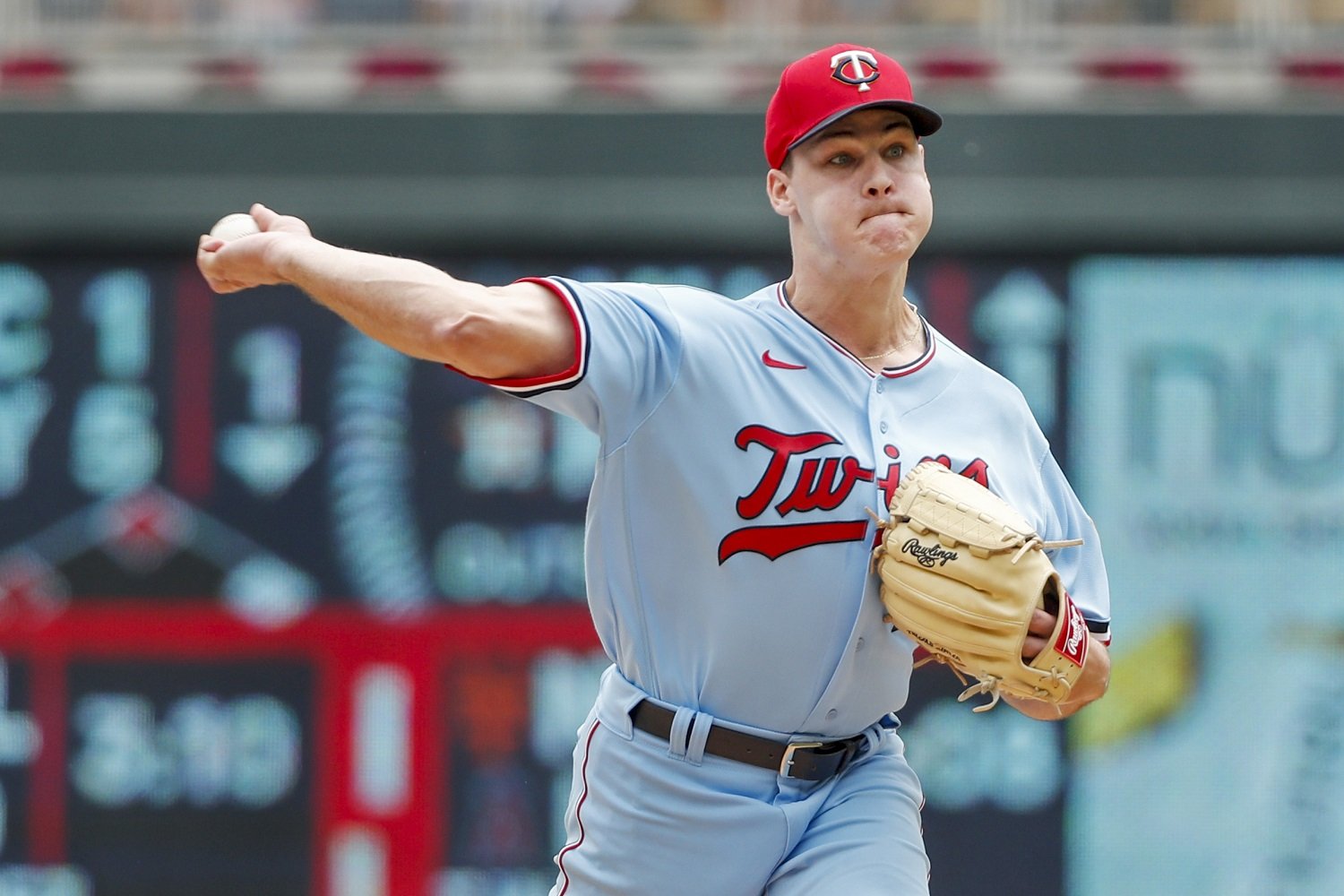 Veteran leadership is necessary on a contending team. Still, a fine line exists where acquiring low-floor, low-ceiling players in the twilight of their careers can put a roster at a disadvantage. The lack of roster flexibility that comes with such players as well as the possibility of them falling off and damaging a team’s contention hopes is an issue the Twins have run into in recent years, and in 2023 they appear to be operating differently. Half of the fun of spring training is attempting to put together the Opening Day roster based on performances, interviews, etc. The Twins only had a few roster spots to fill and a handful of veteran-type players they’d been drawn to in recent years. Particularly in the bullpen, it appeared at one point that the Twins were certain to allocate a spot to a veteran reliever as we’ve seen them do in recent years. Jeff Hoffman had a great (thought limited) spring performance and had a minor-league contract with multiple opt-outs should he fail to make the Twins roster. It was easy to say the Twins would likely keep him rather than risk losing him based on how they’d behaved in previous seasons. He was reassigned to minor-league camp over the weekend, and on Tuesday, he opted out for an opportunity elsewhere. Danny Coulombe was not only a grizzled, journeyman veteran, but one the Twins are familiar with after years with the organization. He too put up stellar spring numbers before being reassigned to minor league camp. He had an agreement in his deal that if a major-league opportunity was available to him and he wasn't on the Twins roster, he could pursue it. So, he is now a member of the Baltimore Orioles, and the Twins got a little cash from them. Barring a late spring waiver claim, it appears Cole Sands is set to make the Opening Day roster. Rather than utilizing his remaining options on day one, the Twins have sided with his youth and roster flexibility. If the Twins have a need for another pitcher early in April, Sands can be optioned. If he struggles, the Twins won’t allow him to stay on the team for months out of fear of losing him on waivers. On top of it all, Cole Sands has more long and short-term potential than a Joe Smith-type signing. Further examples can be found in the starting rotation, where the Twins have chosen to forego low-impact veteran acquisitions and instead shot for the moon in acquiring Pablo Lopez this spring. They may have chosen Kenta Maeda over Bailey Ober despite their polar opposite spring training performances, but the hope is that even post-Tommy John Maeda is better than a Dylan Bundy type. They could have earmarked $7m for a 30-something-year-old fifth starter whose upside was 150 innings of a 4.80 ERA, but they decided against it after the previous two seasons of watching such additions play out. Perhaps the team feels more young players are ready to play a role on the 2023 team. It’s also possible they’ve realized that youth and upside are a better bet than what they perceive as a higher floor. At any rate, it’s a welcome change after watching them allow several players to suffer through the possible end of their careers on a roster that’s trying to compete. The Twins are carrying very few roster-clogging veterans in 2023. They didn’t waste a moderate amount of money on players who are undoubtedly past their primes. They also don’t have too many roster spots dedicated to fringe players without options. There were certainly things to like about Danny Coulombe and Jeff Hoffman-type players, but those likable qualities have led to the Twins hanging onto this mold of player long past when they should have in the past, and it’s cost them. It’s a welcome change in 2023, as even the choice of Cole Sands over an option-less veteran in the bullpen allows for much more roster flexibility. The rotation has more depth and upside than it’s had in years. The Twins finally dialing back on bottom-tier free agents and waiver claims to fill out their roster makes for a much more interesting squad, and opens the door for a wave of youth to spill onto the team throughout the season. The Twins have changed their approach. How do you feel about these Opening Day choices? Leave a COMMENT below.
- 35 comments
-
- 9
-
-
- cole sands
- jeff hoffman
- (and 2 more)
-
The Twins have loved their veteran players in recent years, and at times it’s cost them. In 2023, it appears they’ve changed their thinking when it comes to the fringes of the roster. Will it work out? Image courtesy of Bruce Kluckhohn-USA TODAY Sports Veteran leadership is necessary on a contending team. Still, a fine line exists where acquiring low-floor, low-ceiling players in the twilight of their careers can put a roster at a disadvantage. The lack of roster flexibility that comes with such players as well as the possibility of them falling off and damaging a team’s contention hopes is an issue the Twins have run into in recent years, and in 2023 they appear to be operating differently. Half of the fun of spring training is attempting to put together the Opening Day roster based on performances, interviews, etc. The Twins only had a few roster spots to fill and a handful of veteran-type players they’d been drawn to in recent years. Particularly in the bullpen, it appeared at one point that the Twins were certain to allocate a spot to a veteran reliever as we’ve seen them do in recent years. Jeff Hoffman had a great (thought limited) spring performance and had a minor-league contract with multiple opt-outs should he fail to make the Twins roster. It was easy to say the Twins would likely keep him rather than risk losing him based on how they’d behaved in previous seasons. He was reassigned to minor-league camp over the weekend, and on Tuesday, he opted out for an opportunity elsewhere. Danny Coulombe was not only a grizzled, journeyman veteran, but one the Twins are familiar with after years with the organization. He too put up stellar spring numbers before being reassigned to minor league camp. He had an agreement in his deal that if a major-league opportunity was available to him and he wasn't on the Twins roster, he could pursue it. So, he is now a member of the Baltimore Orioles, and the Twins got a little cash from them. Barring a late spring waiver claim, it appears Cole Sands is set to make the Opening Day roster. Rather than utilizing his remaining options on day one, the Twins have sided with his youth and roster flexibility. If the Twins have a need for another pitcher early in April, Sands can be optioned. If he struggles, the Twins won’t allow him to stay on the team for months out of fear of losing him on waivers. On top of it all, Cole Sands has more long and short-term potential than a Joe Smith-type signing. Further examples can be found in the starting rotation, where the Twins have chosen to forego low-impact veteran acquisitions and instead shot for the moon in acquiring Pablo Lopez this spring. They may have chosen Kenta Maeda over Bailey Ober despite their polar opposite spring training performances, but the hope is that even post-Tommy John Maeda is better than a Dylan Bundy type. They could have earmarked $7m for a 30-something-year-old fifth starter whose upside was 150 innings of a 4.80 ERA, but they decided against it after the previous two seasons of watching such additions play out. Perhaps the team feels more young players are ready to play a role on the 2023 team. It’s also possible they’ve realized that youth and upside are a better bet than what they perceive as a higher floor. At any rate, it’s a welcome change after watching them allow several players to suffer through the possible end of their careers on a roster that’s trying to compete. The Twins are carrying very few roster-clogging veterans in 2023. They didn’t waste a moderate amount of money on players who are undoubtedly past their primes. They also don’t have too many roster spots dedicated to fringe players without options. There were certainly things to like about Danny Coulombe and Jeff Hoffman-type players, but those likable qualities have led to the Twins hanging onto this mold of player long past when they should have in the past, and it’s cost them. It’s a welcome change in 2023, as even the choice of Cole Sands over an option-less veteran in the bullpen allows for much more roster flexibility. The rotation has more depth and upside than it’s had in years. The Twins finally dialing back on bottom-tier free agents and waiver claims to fill out their roster makes for a much more interesting squad, and opens the door for a wave of youth to spill onto the team throughout the season. The Twins have changed their approach. How do you feel about these Opening Day choices? Leave a COMMENT below. View full article
-
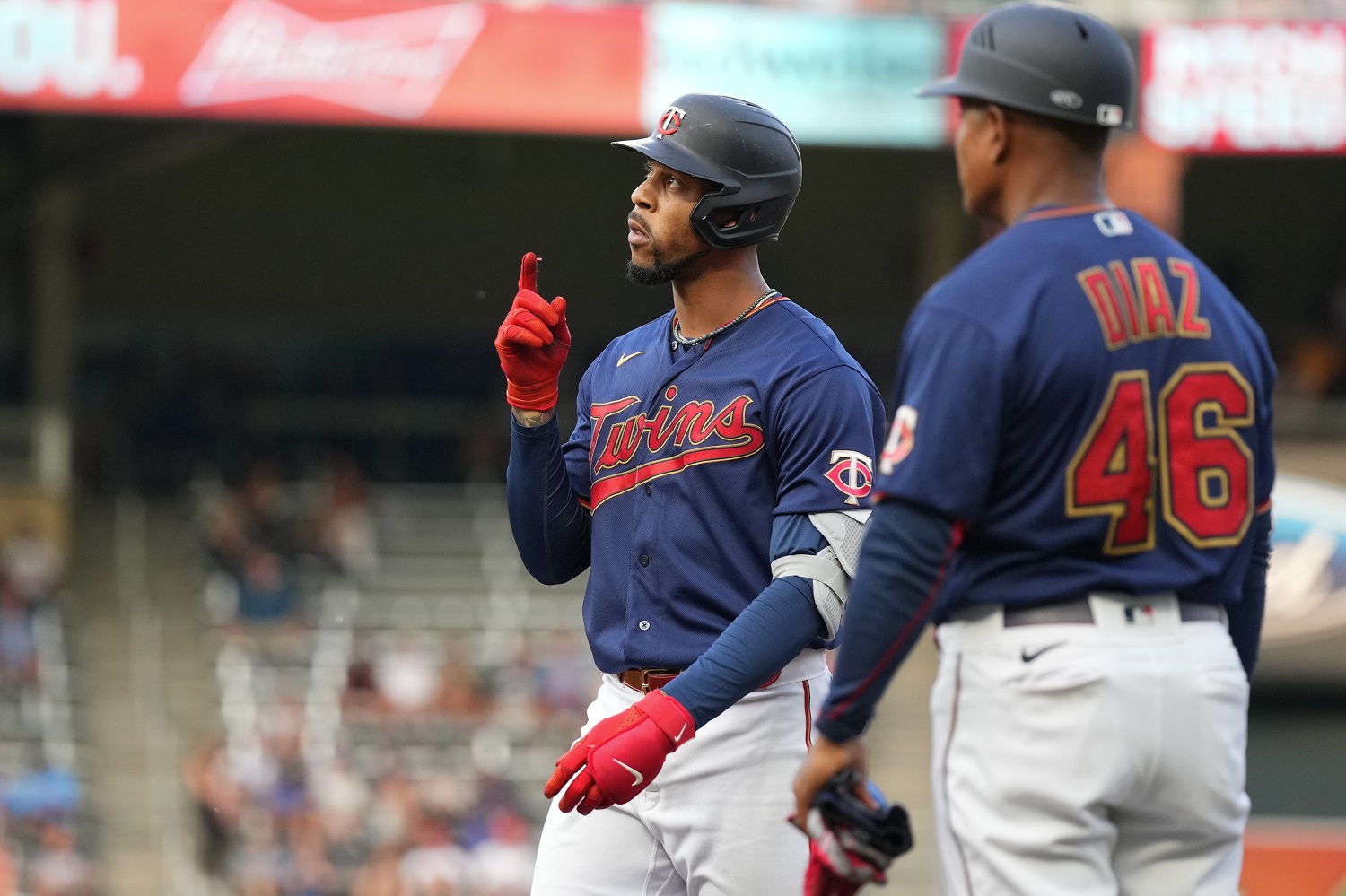 Byron Buxton sat out a majority of spring training games to many fans' dismay before debuting at DH last week. Buxton’s appearance indicated a readiness for Opening Day but was quickly followed by news that he wouldn’t be playing in the field to begin the season. Byron Buxton is a dynamic player. At the beginning of his career, while struggling at the plate, he still enamored fans with his ability to run down fly balls to a superhuman degree. He still holds the highest stolen base percentage in MLB history. He’s a different player than he was when he debuted. We rarely see him try to steal bases anymore. Over the years he’s made reckless dives at balls less often and rarely goes crashing into the wall as we once saw him do. He rarely takes off from first base. Early in 2023, he won’t be roaming centerfield at all. As Buxton’s game has changed defensively and on the bases, so too has his offensive profile. Not only has Buxton molded himself into an offensive contributor, but he’s projected to be the best hitter in the lineup this season as he arguably has been the last few years. The issue of course isn’t talent, but how often Buxton has been able to use it. The Twins know this, which is why they’re opting to DH him to begin the season. They’ve made the decision that his bat is too valuable to risk losing in pursuit of his defensive value, at least for now. Is that the right decision? In 2022, Byron Buxton put up an .833 OPS, a down year relative to 2020 and 2021. His knee was ailing him, and he became something of an all-or-nothing hitter, something he could hopefully avoid in 2023. Despite his struggles with consistency, he was 36% above the league-average hitter. This would have put him behind only the Astros Yordan Alvarez in regard to designated hitters in all of baseball. Buxton’s bat is special enough that even when he’s as banged up as he was in 2022, he can be a game-changer without playing the field. The Twins also insulated their center field depth to a degree they never had before. If you think the Twins will miss Buxton’s center-field defense, it’s worth noting that Michael A. Taylor is a defensive wizard in his own right. While Outs Above Average has him comfortably below Buxton defensively, his 19 defensive runs saved in 2022 paced out to a similar number to what Buxton would have reached in a full season. It’s safe to say that Taylor’s presence on the roster should significantly soften the blow of Buxton not playing the field. Byron Buxton’s inability to play the field when the season starts is disappointing, but he’s got plenty of star power to add solely at the plate. Michael A. Taylor still will give the Twins one of the best defensive centerfielders in the game, even though the thought of getting the full Byron Buxton Experience is enticing. Fans may be tired of Byron Buxton being treated with kid gloves, but he’s the kind of star player that’s worth taking the conservative route with. By all accounts, a return to centerfield is in his future, and they’re in much better shape than in past years while they wait until he’s ready. Byron Buxton is worth it.
 -
The good news is Byron Buxton looks good to go for Opening Day. The bad news is it appears it may be a bit until we see him play the field. Some fans may be disappointed, but it may be the right move. Image courtesy of Jordan Johnson-USA TODAY Sports Byron Buxton sat out a majority of spring training games to many fans' dismay before debuting at DH last week. Buxton’s appearance indicated a readiness for Opening Day but was quickly followed by news that he wouldn’t be playing in the field to begin the season. Byron Buxton is a dynamic player. At the beginning of his career, while struggling at the plate, he still enamored fans with his ability to run down fly balls to a superhuman degree. He still holds the highest stolen base percentage in MLB history. He’s a different player than he was when he debuted. We rarely see him try to steal bases anymore. Over the years he’s made reckless dives at balls less often and rarely goes crashing into the wall as we once saw him do. He rarely takes off from first base. Early in 2023, he won’t be roaming centerfield at all. As Buxton’s game has changed defensively and on the bases, so too has his offensive profile. Not only has Buxton molded himself into an offensive contributor, but he’s projected to be the best hitter in the lineup this season as he arguably has been the last few years. The issue of course isn’t talent, but how often Buxton has been able to use it. The Twins know this, which is why they’re opting to DH him to begin the season. They’ve made the decision that his bat is too valuable to risk losing in pursuit of his defensive value, at least for now. Is that the right decision? In 2022, Byron Buxton put up an .833 OPS, a down year relative to 2020 and 2021. His knee was ailing him, and he became something of an all-or-nothing hitter, something he could hopefully avoid in 2023. Despite his struggles with consistency, he was 36% above the league-average hitter. This would have put him behind only the Astros Yordan Alvarez in regard to designated hitters in all of baseball. Buxton’s bat is special enough that even when he’s as banged up as he was in 2022, he can be a game-changer without playing the field. The Twins also insulated their center field depth to a degree they never had before. If you think the Twins will miss Buxton’s center-field defense, it’s worth noting that Michael A. Taylor is a defensive wizard in his own right. While Outs Above Average has him comfortably below Buxton defensively, his 19 defensive runs saved in 2022 paced out to a similar number to what Buxton would have reached in a full season. It’s safe to say that Taylor’s presence on the roster should significantly soften the blow of Buxton not playing the field. Byron Buxton’s inability to play the field when the season starts is disappointing, but he’s got plenty of star power to add solely at the plate. Michael A. Taylor still will give the Twins one of the best defensive centerfielders in the game, even though the thought of getting the full Byron Buxton Experience is enticing. Fans may be tired of Byron Buxton being treated with kid gloves, but he’s the kind of star player that’s worth taking the conservative route with. By all accounts, a return to centerfield is in his future, and they’re in much better shape than in past years while they wait until he’s ready. Byron Buxton is worth it. View full article
-
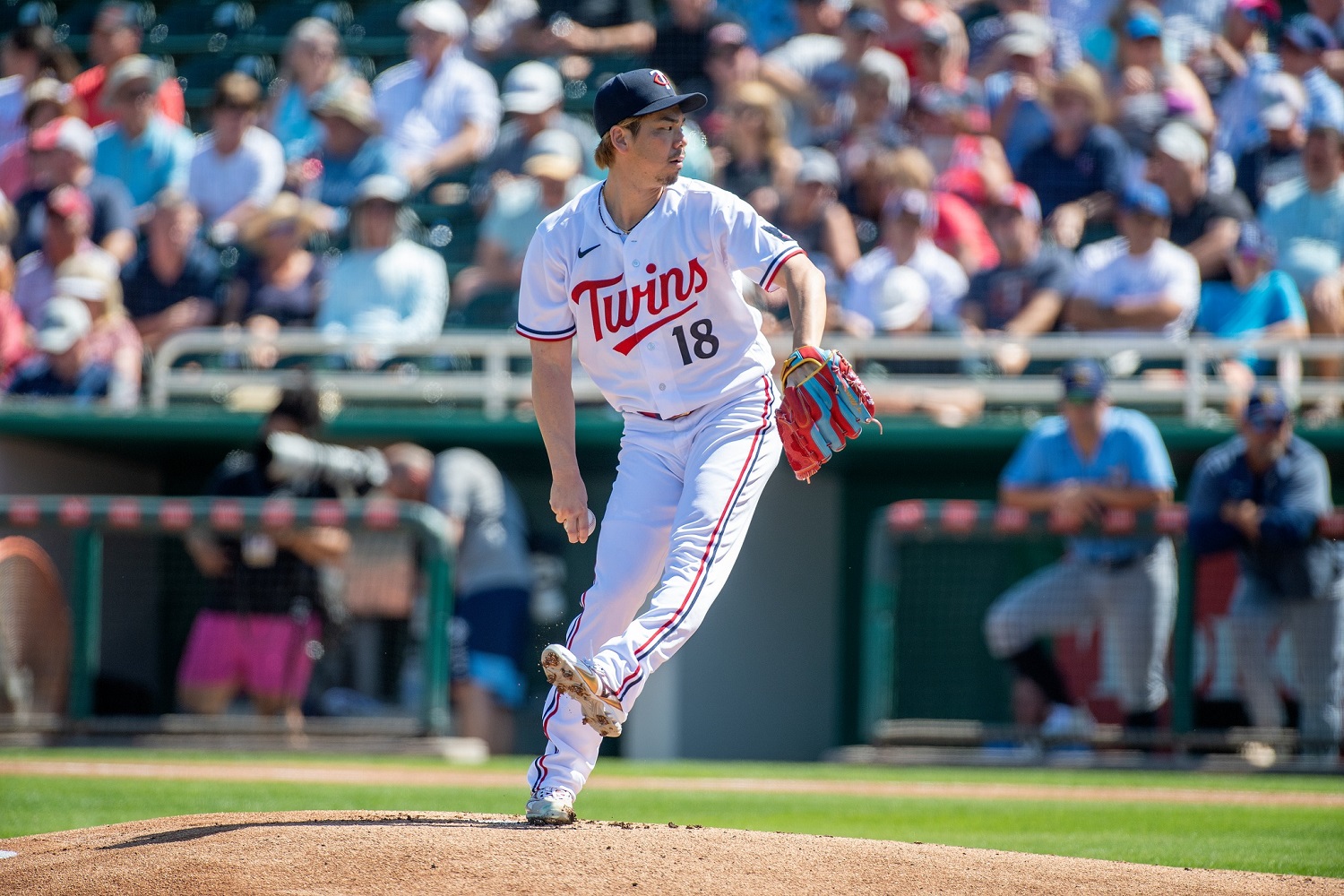 Kenta Maeda is roughly a year and a half removed from Tommy John surgery after getting the procedure done in September 2021. He reportedly could have returned last season had the Twins been in contention. This assurance suggested that Maeda would be at full strength to begin 2023, but his performance this spring has been far from encouraging. Is Maeda worth worrying about at this point? Maeda has publicly taken any opportunity to get back into the pitching routine this spring, sometimes even taking road trips that veterans usually pass up to make a scheduled start. There have been no reports of lingering issues with the elbow, but the performance so far is worrisome. In four outings, Maeda has thrown 9 2/3 innings and allowed six runs. He has nine strikeouts and seven walks, leading to an unsightly 1.86 WHIP. In addition to the uncharacteristic lack of control, the velocity has yet to return for Maeda. In his Cy Young runner-up 2020, he only averaged 91.6 on the heater. This declined to 90.6 in a less effective 2021. In Sunday’s start against Atlanta, Maeda averaged 89.6 on the four-seam as he allowed five runs in four innings. Typically spring numbers can be tossed aside altogether, especially following a season missed with injury. In Maeda’s case, there could be some slightly bigger red flags, unfortunately. At Maeda’s age, the often-performed Tommy John surgery carries more risk that his arm doesn’t bounce back to pre-injury levels. Maeda was already showing signs of decline in 2021 prior to the injury. He put up a 4.66 ERA in 106 innings pitched in 2021, a far cry from the rotation-leading starting pitcher the Twins were hoping for after 2020. It’s possible the elbow had been barking at him all season, but if any of his struggles were a result of natural decline, the two years off since then certainly wouldn’t help. It is possible that Maeda just has to get some feel back in regard to his command and control. The problem is that at his best, he seemed to use pinpoint accuracy to take advantage of hitters. If that skillset takes time and in-game experience to return, the results in the meantime could get ugly if Maeda is also missing his best stuff. It sets up a difficult situation for the Twins to try to handle. It’s hard to imagine the Twins not slotting Maeda into the Opening Day rotation, but it’s fair to wonder how long he would be allowed to struggle should his spring performance carry into the season. It’s entirely possible this spring is a blip on the radar, but for once the Twins have starting pitching depth. Not only has Bailey Ober staked his claim to a rotation spot, but good performances from Louie Varland or Simeon Woods Richardson in St. Paul could fast-track them back to the MLB after 2022 debuts. Maeda’s contract is also incredibly incentive-laden, particularly based on starts made. It’s safe to assume that given their alternative options for the rotation, the Twins wouldn’t allow Maeda to hit too many of his quantity-related incentives if the quality isn’t there. It’s possible that even if he struggles to return to the rotation he could still provide value out of the bullpen at this stage of his career. Maeda remains a question mark for the 2023 Twins season and carries a fair amount of upside despite what we’ve seen so far this spring. The hope is that he can take a rotation spot on Opening Day and be a mainstay in the upcoming season. With his age, he’s not likely to have a hard innings cap following his elbow surgery and should be able to pitch as his body allows so long as he’s doing so effectively. That being said, it’s safe to say the lack of velocity and control he’s shown so far isn’t what Twins fans hope to see when the games start to count. While the Twins may bet on improvements, don’t expect them to show too much patience given the depth they have and the possibility that Maeda doesn’t have a massive bounce back in him. Does Maeda’s performance so far this spring raise any red flags given his injury and age? Should we wait until the season to have any concerns? Let us know below!
- 36 comments
-
- 6
-
-
- kenta maeda
- bailey ober
- (and 1 more)
-
Kenta Maeda will be 35 years old shortly after the season starts and is coming off of Tommy John surgery. While spring training numbers are to be taken with a grain of salt, should Maeda’s spring performance carry any weight? Image courtesy of William Parmeter Kenta Maeda is roughly a year and a half removed from Tommy John surgery after getting the procedure done in September 2021. He reportedly could have returned last season had the Twins been in contention. This assurance suggested that Maeda would be at full strength to begin 2023, but his performance this spring has been far from encouraging. Is Maeda worth worrying about at this point? Maeda has publicly taken any opportunity to get back into the pitching routine this spring, sometimes even taking road trips that veterans usually pass up to make a scheduled start. There have been no reports of lingering issues with the elbow, but the performance so far is worrisome. In four outings, Maeda has thrown 9 2/3 innings and allowed six runs. He has nine strikeouts and seven walks, leading to an unsightly 1.86 WHIP. In addition to the uncharacteristic lack of control, the velocity has yet to return for Maeda. In his Cy Young runner-up 2020, he only averaged 91.6 on the heater. This declined to 90.6 in a less effective 2021. In Sunday’s start against Atlanta, Maeda averaged 89.6 on the four-seam as he allowed five runs in four innings. Typically spring numbers can be tossed aside altogether, especially following a season missed with injury. In Maeda’s case, there could be some slightly bigger red flags, unfortunately. At Maeda’s age, the often-performed Tommy John surgery carries more risk that his arm doesn’t bounce back to pre-injury levels. Maeda was already showing signs of decline in 2021 prior to the injury. He put up a 4.66 ERA in 106 innings pitched in 2021, a far cry from the rotation-leading starting pitcher the Twins were hoping for after 2020. It’s possible the elbow had been barking at him all season, but if any of his struggles were a result of natural decline, the two years off since then certainly wouldn’t help. It is possible that Maeda just has to get some feel back in regard to his command and control. The problem is that at his best, he seemed to use pinpoint accuracy to take advantage of hitters. If that skillset takes time and in-game experience to return, the results in the meantime could get ugly if Maeda is also missing his best stuff. It sets up a difficult situation for the Twins to try to handle. It’s hard to imagine the Twins not slotting Maeda into the Opening Day rotation, but it’s fair to wonder how long he would be allowed to struggle should his spring performance carry into the season. It’s entirely possible this spring is a blip on the radar, but for once the Twins have starting pitching depth. Not only has Bailey Ober staked his claim to a rotation spot, but good performances from Louie Varland or Simeon Woods Richardson in St. Paul could fast-track them back to the MLB after 2022 debuts. Maeda’s contract is also incredibly incentive-laden, particularly based on starts made. It’s safe to assume that given their alternative options for the rotation, the Twins wouldn’t allow Maeda to hit too many of his quantity-related incentives if the quality isn’t there. It’s possible that even if he struggles to return to the rotation he could still provide value out of the bullpen at this stage of his career. Maeda remains a question mark for the 2023 Twins season and carries a fair amount of upside despite what we’ve seen so far this spring. The hope is that he can take a rotation spot on Opening Day and be a mainstay in the upcoming season. With his age, he’s not likely to have a hard innings cap following his elbow surgery and should be able to pitch as his body allows so long as he’s doing so effectively. That being said, it’s safe to say the lack of velocity and control he’s shown so far isn’t what Twins fans hope to see when the games start to count. While the Twins may bet on improvements, don’t expect them to show too much patience given the depth they have and the possibility that Maeda doesn’t have a massive bounce back in him. Does Maeda’s performance so far this spring raise any red flags given his injury and age? Should we wait until the season to have any concerns? Let us know below! View full article
-
Is Jeff Hoffman an Opening Day Bullpen Option?
Cody Pirkl replied to Cody Pirkl's topic in Twins Daily Front Page News
I liked Santana better myself as well. Surprising to see them put him on waivers but I do wonder if they did so having essentially already decided on Hoffman for whatever reason. It's also possible they tried to sneak him through waivers. We've seen them do that before.- 21 replies
-
- 1
-
-
- jeff hoffman
- jovani moran
- (and 1 more)
-
 The Minnesota Twins could end the competition for the final bullpen roles if they declared the incumbents (Trevor Megill and Jovani Moran) victors. Given how the Twins have operated this offseason, particularly in terms of depth, it’s likely that they may insulate their roster by sending one or both of them to Triple-A instead. With a few non-roster invites in camp staking their claim, The Twins could add depth to their bullpen. Dennis Santana, already holding a 40-man roster spot, looked to be the likeliest candidate to make the Opening Day roster at another reliever’s expense. After quietly being put on waivers, Santana’s name is no longer in the competition. Instead, it may be time to turn our eyes toward veteran Jeff Hoffman , who signed an interesting minor-league deal earlier this spring. Hoffman has never quite put it all together, but he has pitched in parts of seven MLB seasons. Originally a starter, Hoffman transitioned to the bullpen in 2020 and has been able to strike out over a batter per inning in each of the last two seasons. His 3.83 ERA in just over 44 innings last season may be the most successful campaign of his career thus far. So why would the Twins be enticed by such unexciting numbers? Hoffman averaged a solid 94.2 on his fastball in 2022. It wasn’t a dominant pitch, but opposing batters hit only .237 and slugged .443 off of it that season. Despite a spin rate in the 93rd percentile, the pitch only had a swing-and-miss rate of 16.5%. For a pitch with solid results but potentially lacking something, it seems that he went to work on it this winter, and early on, the returns are encouraging. Hoffman has consistently sat in the mid-90s all spring and has hit the high 90s on the heater with regularity. Gains made on the fastball could be a game-changer for Hoffman, and the Twins may be inclined to take a gamble considering the low risk. Hoffman’s two secondary pitches were legitimately dominant in 2022. The slider earned a 38.5% whiff rate and punished hitters to a .222 batting average and .370 slugging. His changeup had a whiff rate of 37.6% and allowed a .209 average and .348 slugging. He threw both pitches around 24% of the time. The assumption based on the pitch mix is that Hoffman’s repertoire is built to match up with both right-handed and left-handed opposing hitters. His numbers don’t match what would be expected from a reliever with two dominant secondaries. It’s possible the Twins planned to bring him in and cut back on fastball usage while increasing the offspeed. While this still may be the plan, Hoffman potentially increasing his fastball velocity brings his potential to a whole new level. Hoffman has only made three appearances this spring, allowing two runs in three innings. He’s walked one batter and struck out six. With multiple opt-outs in his contract (March 28, May 15, June 15), Hoffman may not be a candidate to take a Triple-A assignment. Given his velocity gains, he’s likely to take the first opportunity to pursue a job elsewhere unless the Twins add him to the 40-man roster by March 28. The organization is obviously aware of this. For the bottom of the bullpen pecking order role that Hoffman would likely fill, the Twins would have little to lose if they believe in the improvements he’s shown early this spring. An arm like Trevor Megill could be stashed in Triple-A in case of injury or if Hoffman himself struggles. The Twins may see this as a more advantageous option than letting Hoffman walk for nothing and having no obvious replacement waiting in St. Paul should another reliever go down. Has Hoffman’s performance this spring been enough to earn an Opening Day roster spot? Should we trust the velocity gains we’ve seen from him early in camp? Let us know below!
- 21 comments
-
- 9
-
-
- jeff hoffman
- jovani moran
- (and 1 more)
-
Spring training battles continue to play out, and the competition for bullpen jobs has gained more clarity. With one less hat in the rink, could Jeff Hoffman snag an Opening Day job with the Twins? Image courtesy of Kareem Elgazzar/The Enquirer / USA TODAY NETWORK The Minnesota Twins could end the competition for the final bullpen roles if they declared the incumbents (Trevor Megill and Jovani Moran) victors. Given how the Twins have operated this offseason, particularly in terms of depth, it’s likely that they may insulate their roster by sending one or both of them to Triple-A instead. With a few non-roster invites in camp staking their claim, The Twins could add depth to their bullpen. Dennis Santana, already holding a 40-man roster spot, looked to be the likeliest candidate to make the Opening Day roster at another reliever’s expense. After quietly being put on waivers, Santana’s name is no longer in the competition. Instead, it may be time to turn our eyes toward veteran Jeff Hoffman , who signed an interesting minor-league deal earlier this spring. Hoffman has never quite put it all together, but he has pitched in parts of seven MLB seasons. Originally a starter, Hoffman transitioned to the bullpen in 2020 and has been able to strike out over a batter per inning in each of the last two seasons. His 3.83 ERA in just over 44 innings last season may be the most successful campaign of his career thus far. So why would the Twins be enticed by such unexciting numbers? Hoffman averaged a solid 94.2 on his fastball in 2022. It wasn’t a dominant pitch, but opposing batters hit only .237 and slugged .443 off of it that season. Despite a spin rate in the 93rd percentile, the pitch only had a swing-and-miss rate of 16.5%. For a pitch with solid results but potentially lacking something, it seems that he went to work on it this winter, and early on, the returns are encouraging. Hoffman has consistently sat in the mid-90s all spring and has hit the high 90s on the heater with regularity. Gains made on the fastball could be a game-changer for Hoffman, and the Twins may be inclined to take a gamble considering the low risk. Hoffman’s two secondary pitches were legitimately dominant in 2022. The slider earned a 38.5% whiff rate and punished hitters to a .222 batting average and .370 slugging. His changeup had a whiff rate of 37.6% and allowed a .209 average and .348 slugging. He threw both pitches around 24% of the time. The assumption based on the pitch mix is that Hoffman’s repertoire is built to match up with both right-handed and left-handed opposing hitters. His numbers don’t match what would be expected from a reliever with two dominant secondaries. It’s possible the Twins planned to bring him in and cut back on fastball usage while increasing the offspeed. While this still may be the plan, Hoffman potentially increasing his fastball velocity brings his potential to a whole new level. Hoffman has only made three appearances this spring, allowing two runs in three innings. He’s walked one batter and struck out six. With multiple opt-outs in his contract (March 28, May 15, June 15), Hoffman may not be a candidate to take a Triple-A assignment. Given his velocity gains, he’s likely to take the first opportunity to pursue a job elsewhere unless the Twins add him to the 40-man roster by March 28. The organization is obviously aware of this. For the bottom of the bullpen pecking order role that Hoffman would likely fill, the Twins would have little to lose if they believe in the improvements he’s shown early this spring. An arm like Trevor Megill could be stashed in Triple-A in case of injury or if Hoffman himself struggles. The Twins may see this as a more advantageous option than letting Hoffman walk for nothing and having no obvious replacement waiting in St. Paul should another reliever go down. Has Hoffman’s performance this spring been enough to earn an Opening Day roster spot? Should we trust the velocity gains we’ve seen from him early in camp? Let us know below! View full article
-
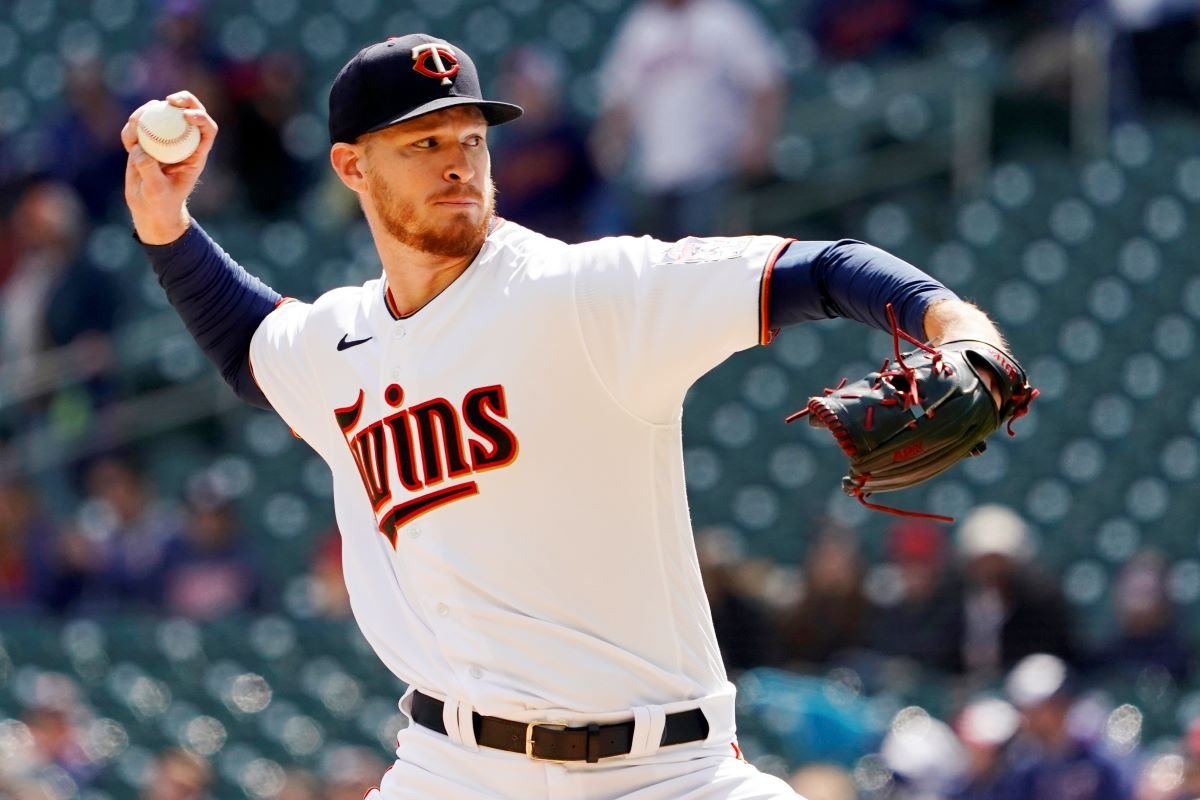 Bailey Ober has found himself on the outside looking in regarding the Opening Day rotation. With the additions the Twins have made the last few seasons and the return of Kenta Maeda, the 6-foot-8-inch right-hander seemed to have lost his job. It’s certainly about health more than performance, but Ober’s spring thus far may push the Twins into making a difficult decision. Bailey Ober is the one homegrown starting pitcher the Falvey regime has produced that can be considered anything near “established”. That definition has to be used loosely, as his health has been a significant question mark. Ober’s size and frame have cost him significant time in his six professional seasons, topping out at 108 innings in 2021. It’s those health issues that have factored into the Twins trading for five starting pitchers during the last two seasons. The team’s inability to count on any significant amount of innings is a concern. He’s showing this spring that he’s at 100%, and that could and probably should force the Twins to bring him north with the big league club for Opening Day. His velocity is up, and his offspeed pitches look dominant thus far this spring. With a track record of such a limited workload in his career, it can be argued that healthy innings shouldn’t be burned in St. Paul. So how could Ober find his way onto the Opening Day roster? Injury Opens A Spot It’s worth noting that finding space for Ober isn’t an issue as of now with plenty of spring training time remaining. We can’t forget the injury-riddled 2022 season in regard to the possibility that a starting pitcher could still find their way to the Opening Day IL, including Ober. Many times when we ask where someone fits in, the problem solves itself. Hopefully, it doesn’t, but Ober is insurance for the possibility that it does. He Outright Wins The Job The Twins haven’t alluded to any kind of formal rotation battle going on, but if there was, it would likely be between Ober and Kenta Maeda. We’re talking about a ridiculously small sample of spring training stats, but it would be hard to argue that Ober hasn't looked much sharper this spring. Having only thrown six innings in three outings, Ober has struck out six and only allowed two baserunners with his velocity up across the board. Maeda on the other hand has looked rusty as should be expected following his Tommy John recovery. In his 5 2/3 innings. He’s struck out four and walked five. His velocity continues to sit in the danger zone of around 90 mph. Could the Twins be swayed into going with Ober and pushing Maeda out of the rotation? It’s worth noting that he showed signs of falling off in 2021 before injuring his elbow. Maeda has also pitched effectively out of the bullpen before where his offspeed pitches could be used more effectively. It may be a long shot, but it may be a possibility worth keeping in mind during the last few weeks of spring training. Six-Man Rotation The Twins are considering a six-man rotation more seriously than ever. While it would cost them an arm in the bullpen, the concept makes a lot of sense in order to give an extra recovery day to a rotation full of health-related landmines. The question in this scenario becomes “How long do they stick with it?”. This could also answer itself very quickly due to either health or performance. In this situation the Twins keep all six of their possible Opening Day starters stretched out to ensure they still have five viable arms should one go down with an injury. While it’s a bit unorthodox, a six-man rotation would give an opportunity to start to all six pitchers who at this point are deserving. While Maeda’s spring has been questionable thus far, it’s hard to put much stock in the numbers he’s putting up, and this would give him an opportunity to show what he has left in the tank. It seems to be the best option for all parties involved if the Twins are willing to sacrifice a relief pitcher. How it all will play out remains unclear, but the Twins had a very simple solution to their unusual stash of depth in the rotation, and Bailey Ober has shown up to camp and made it complicated. Should Ober go to Triple-A and wait for an opening in the big leagues? Should he earn an Opening Day spot should his good performance continue? Let us know below
- 51 comments
-
- 9
-
-
- opening day 2023
- bailey ober
- (and 1 more)
-
Bailey Ober seemed slated for Triple-A to start the season when the Twins filled up their rotation this offseason. He’s shown up to camp looking to change the team’s mind, and it’s time to start wondering if he may succeed. Image courtesy of Nick Wosika, USA TODAY Sports Bailey Ober has found himself on the outside looking in regarding the Opening Day rotation. With the additions the Twins have made the last few seasons and the return of Kenta Maeda, the 6-foot-8-inch right-hander seemed to have lost his job. It’s certainly about health more than performance, but Ober’s spring thus far may push the Twins into making a difficult decision. Bailey Ober is the one homegrown starting pitcher the Falvey regime has produced that can be considered anything near “established”. That definition has to be used loosely, as his health has been a significant question mark. Ober’s size and frame have cost him significant time in his six professional seasons, topping out at 108 innings in 2021. It’s those health issues that have factored into the Twins trading for five starting pitchers during the last two seasons. The team’s inability to count on any significant amount of innings is a concern. He’s showing this spring that he’s at 100%, and that could and probably should force the Twins to bring him north with the big league club for Opening Day. His velocity is up, and his offspeed pitches look dominant thus far this spring. With a track record of such a limited workload in his career, it can be argued that healthy innings shouldn’t be burned in St. Paul. So how could Ober find his way onto the Opening Day roster? Injury Opens A Spot It’s worth noting that finding space for Ober isn’t an issue as of now with plenty of spring training time remaining. We can’t forget the injury-riddled 2022 season in regard to the possibility that a starting pitcher could still find their way to the Opening Day IL, including Ober. Many times when we ask where someone fits in, the problem solves itself. Hopefully, it doesn’t, but Ober is insurance for the possibility that it does. He Outright Wins The Job The Twins haven’t alluded to any kind of formal rotation battle going on, but if there was, it would likely be between Ober and Kenta Maeda. We’re talking about a ridiculously small sample of spring training stats, but it would be hard to argue that Ober hasn't looked much sharper this spring. Having only thrown six innings in three outings, Ober has struck out six and only allowed two baserunners with his velocity up across the board. Maeda on the other hand has looked rusty as should be expected following his Tommy John recovery. In his 5 2/3 innings. He’s struck out four and walked five. His velocity continues to sit in the danger zone of around 90 mph. Could the Twins be swayed into going with Ober and pushing Maeda out of the rotation? It’s worth noting that he showed signs of falling off in 2021 before injuring his elbow. Maeda has also pitched effectively out of the bullpen before where his offspeed pitches could be used more effectively. It may be a long shot, but it may be a possibility worth keeping in mind during the last few weeks of spring training. Six-Man Rotation The Twins are considering a six-man rotation more seriously than ever. While it would cost them an arm in the bullpen, the concept makes a lot of sense in order to give an extra recovery day to a rotation full of health-related landmines. The question in this scenario becomes “How long do they stick with it?”. This could also answer itself very quickly due to either health or performance. In this situation the Twins keep all six of their possible Opening Day starters stretched out to ensure they still have five viable arms should one go down with an injury. While it’s a bit unorthodox, a six-man rotation would give an opportunity to start to all six pitchers who at this point are deserving. While Maeda’s spring has been questionable thus far, it’s hard to put much stock in the numbers he’s putting up, and this would give him an opportunity to show what he has left in the tank. It seems to be the best option for all parties involved if the Twins are willing to sacrifice a relief pitcher. How it all will play out remains unclear, but the Twins had a very simple solution to their unusual stash of depth in the rotation, and Bailey Ober has shown up to camp and made it complicated. Should Ober go to Triple-A and wait for an opening in the big leagues? Should he earn an Opening Day spot should his good performance continue? Let us know below View full article
- 51 replies
-
- 1
-
-
- opening day 2023
- bailey ober
- (and 1 more)
-
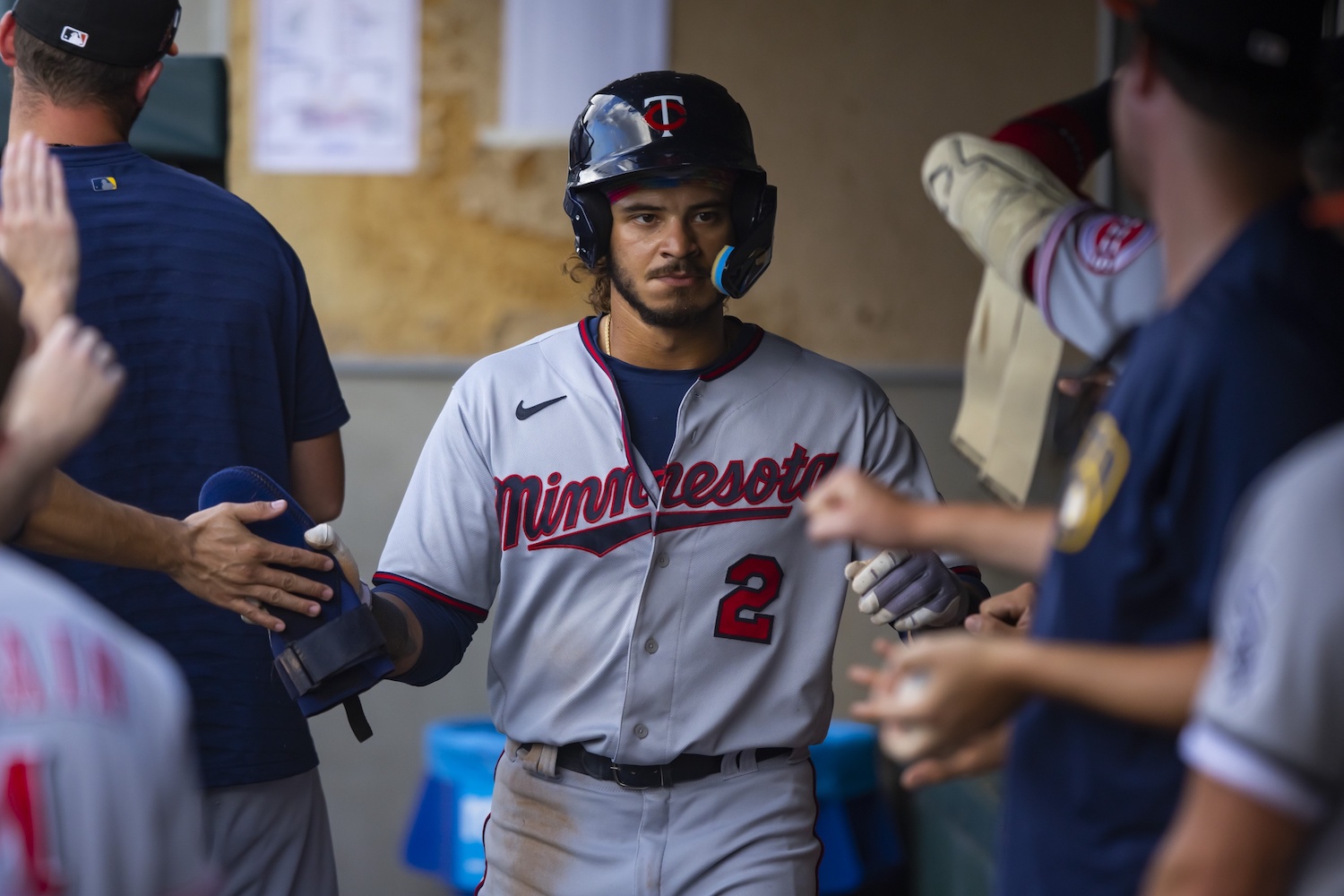 Austin Martin mysteriously disappeared from spring lineups for about a week before the Twins announced that he was shut down with the dreaded UCL sprain, an injury that often leads to Tommy John surgery in pitchers. The Twins have their own history of position players undergoing the surgery as well such as Miguel Sano and Alex Kirilloff. The severity is unknown at this time, but Martin will not return to action any time soon. How could this potentially devastating injury affect all parties involved? Austin Martin Martin is attempting to bounce back from his worst season as a professional, although his time in last year’s Arizona Fall League brought some hope. Any time missed would be difficult, as he still has to prove he can perform against Double-A pitching in order to be considered as an MLB option in 2023. If he were to miss an entire season, it would likely drop him significantly in the organizational depth chart. Martin dealt with injuries in 2022 as well which may have contributed to his below-league-average slash line in Double-A. Some call 2022 a “lost season” for Martin. If he were to have another in 2023, it may become difficult for the Twins to count on him being a legitimate future asset given his struggles to perform as well as his difficulties staying on the field. Other players who perform well will certainly pass him by, and it could create an uphill battle for him to establish himself on the Twins MLB roster. Young Prospects Martin missing significant time opens the door for other prospects. He had a legitimate shot to play himself onto the Twins this year with a bounce-back season. The Twins have enough players that could be expendable if a top prospect forces the issue. He had already been surpassed by Edouard Julien, and now many other young players will get an opportunity to capitalize. All eyes likely fall on Brooks Lee who, like Martin, was drafted as a shortstop but may settle in at second or third base down the line. Lee had already made it to Double-A just three months after being drafted by the Twins, and he’s likely to soak up Martin’s playing time in Wichita to begin 2023. Thus far, Lee has shown the skills to take hold of whatever position the Twins settle on, and Martin will have no ability to stave him off if he’s sidelined. If Martin’s injury turns out to be long-term, Royce Lewis could also beat him back to action. Lewis finds himself in the same boat as Lee and Martin. They may be looking for another position after the Twins gave Carlos Correa a six-year deal. If Martin were to play his way onto the big-league roster and establish himself at a position before Lewis returned this summer, it would’ve been hard to make a change. Instead, a long-term injury could lead to Lewis having a chance to establish himself first. There’s also the possibility of other infield prospects playing their way to Double-A in 2023 such as Jose Salas, Ben Ross, and Tanner Schobel. They would get every opportunity to cement themselves into whatever position they could, and if that position happened to be second or third base if Martin is still recovering, it would be their spot to lose. The Twins It would have been difficult to plan on Austin Martin making a significant impact on the 2023 Twins roster, but he was a part of their depth chart. With Jose Miranda having yet to prove himself as a passable defensive third baseman and Jorge Polanco’s injuries at second base, it’s likely the Twins utilize their minor-league infield depth at some point this season. While Julien is technically a second baseman, he has question marks defensively, and the Twins undoubtedly value a player’s glove work highly. Martin had flashed an ability to be a plus defender away from shortstop. With a good spring, the Twins could have seen added depth from Austin Martin, and if he performed well to start the season, they would have loved to bring him up with the right opportunity. Instead this likely leaves the recently-drafted Brooks Lee as the closest legitimate middle infield prospect to MLB action, and they’re still likely to be careful with him. As a result, it means players such as Kyle Farmer and Donovan Solano will likely hang around for a good while regardless of their performance. Little is known of the extent of Martin’s UCL injury while he’s currently shut down. Some such injuries don’t require surgical intervention and it’s possible Martin is back on the field in a few weeks. Regardless, the best-case scenario is that an unfortunate injury will delay a very important season in the 2020 #5 overall pick’s career. The worst-case scenario is that Martin could endure his second consecutive lost season having never surpassed Double-A. In addition to his skillset raising significant red flags in 2022, injury has now become a legitimate concern as well. All the Twins and fans can do is wait to see how Martin’s elbow recovers with time off for now. The severity of his injury and the amount of time lost could have consequences across the organization.
- 27 comments
-
- 3
-
-
- austin martin
- brooks lee
- (and 2 more)
-
Austin Martin’s time in the Twins organization has been difficult to say the least. Now with a potentially major injury this spring, what does it mean for the top prospect as well as the team that traded for him? Image courtesy of Mark J. Rebilas-USA TODAY Sports Austin Martin mysteriously disappeared from spring lineups for about a week before the Twins announced that he was shut down with the dreaded UCL sprain, an injury that often leads to Tommy John surgery in pitchers. The Twins have their own history of position players undergoing the surgery as well such as Miguel Sano and Alex Kirilloff. The severity is unknown at this time, but Martin will not return to action any time soon. How could this potentially devastating injury affect all parties involved? Austin Martin Martin is attempting to bounce back from his worst season as a professional, although his time in last year’s Arizona Fall League brought some hope. Any time missed would be difficult, as he still has to prove he can perform against Double-A pitching in order to be considered as an MLB option in 2023. If he were to miss an entire season, it would likely drop him significantly in the organizational depth chart. Martin dealt with injuries in 2022 as well which may have contributed to his below-league-average slash line in Double-A. Some call 2022 a “lost season” for Martin. If he were to have another in 2023, it may become difficult for the Twins to count on him being a legitimate future asset given his struggles to perform as well as his difficulties staying on the field. Other players who perform well will certainly pass him by, and it could create an uphill battle for him to establish himself on the Twins MLB roster. Young Prospects Martin missing significant time opens the door for other prospects. He had a legitimate shot to play himself onto the Twins this year with a bounce-back season. The Twins have enough players that could be expendable if a top prospect forces the issue. He had already been surpassed by Edouard Julien, and now many other young players will get an opportunity to capitalize. All eyes likely fall on Brooks Lee who, like Martin, was drafted as a shortstop but may settle in at second or third base down the line. Lee had already made it to Double-A just three months after being drafted by the Twins, and he’s likely to soak up Martin’s playing time in Wichita to begin 2023. Thus far, Lee has shown the skills to take hold of whatever position the Twins settle on, and Martin will have no ability to stave him off if he’s sidelined. If Martin’s injury turns out to be long-term, Royce Lewis could also beat him back to action. Lewis finds himself in the same boat as Lee and Martin. They may be looking for another position after the Twins gave Carlos Correa a six-year deal. If Martin were to play his way onto the big-league roster and establish himself at a position before Lewis returned this summer, it would’ve been hard to make a change. Instead, a long-term injury could lead to Lewis having a chance to establish himself first. There’s also the possibility of other infield prospects playing their way to Double-A in 2023 such as Jose Salas, Ben Ross, and Tanner Schobel. They would get every opportunity to cement themselves into whatever position they could, and if that position happened to be second or third base if Martin is still recovering, it would be their spot to lose. The Twins It would have been difficult to plan on Austin Martin making a significant impact on the 2023 Twins roster, but he was a part of their depth chart. With Jose Miranda having yet to prove himself as a passable defensive third baseman and Jorge Polanco’s injuries at second base, it’s likely the Twins utilize their minor-league infield depth at some point this season. While Julien is technically a second baseman, he has question marks defensively, and the Twins undoubtedly value a player’s glove work highly. Martin had flashed an ability to be a plus defender away from shortstop. With a good spring, the Twins could have seen added depth from Austin Martin, and if he performed well to start the season, they would have loved to bring him up with the right opportunity. Instead this likely leaves the recently-drafted Brooks Lee as the closest legitimate middle infield prospect to MLB action, and they’re still likely to be careful with him. As a result, it means players such as Kyle Farmer and Donovan Solano will likely hang around for a good while regardless of their performance. Little is known of the extent of Martin’s UCL injury while he’s currently shut down. Some such injuries don’t require surgical intervention and it’s possible Martin is back on the field in a few weeks. Regardless, the best-case scenario is that an unfortunate injury will delay a very important season in the 2020 #5 overall pick’s career. The worst-case scenario is that Martin could endure his second consecutive lost season having never surpassed Double-A. In addition to his skillset raising significant red flags in 2022, injury has now become a legitimate concern as well. All the Twins and fans can do is wait to see how Martin’s elbow recovers with time off for now. The severity of his injury and the amount of time lost could have consequences across the organization. View full article
- 27 replies
-
- 1
-

-
- austin martin
- brooks lee
- (and 2 more)
-
Could The Twins Roll With A Long Reliever?
Cody Pirkl replied to Cody Pirkl's topic in Twins Daily Front Page News
If a pitcher doesn't get into game action and is lightly throwing for a potential appearance for 10+ days as we saw with Dobnak in 2021, it's going to affect them. You don't just build up your arm to the point of starting and stay there all season. It takes a routine that would almost surely be interrupted by being in a long relief role when you don't know when you're going to pitch next. And I'd bet Ober starts in AAA unless someone else gets pushed from the rotation due to something like injury. His age doesn't matter. He has options and that gives them flexibility that they've shown they'll take full advantage of.- 29 replies
-
- 1
-
-
- randy dobnak
- cole sands
- (and 3 more)
-
Could The Twins Roll With A Long Reliever?
Cody Pirkl replied to Cody Pirkl's topic in Twins Daily Front Page News
The bar to clear for a long reliever isn't particularly high. The thought is that whoever pitches in those spots is coming into games that already have a large difference in score whether they're ahead or behind. We've seen in past years if a starter exits early in a close game, they like to go to traditional relievers to try to keep the game in hand. As I also noted, I think we saw with Dobnak in particular a few years ago that this role doesn't really set them up to slot the long reliever into the rotation immediately if a spot opens up. If the specific scenario for a long reliever doesn't come up for 10 days, they just don't get into any games. I'd bet they'd prefer to put Ober in AAA to throw 5+ innings every 5th day so if he's needed in the majors to start he can seamlessly make that transition. "Veteran" in this case isn't meant to be based off of De Leon's experience. I mean it to signify a pitcher who is expendable and whose development won't be impacted by a role that could turn out to be inconsistent. If they struggle, you move on. If they don't pitch for two weeks, that's not valuable time they're missing out on. I can guarantee you they won't put a legitimate prospect in this role.- 29 replies
-
- 1
-
-
- randy dobnak
- cole sands
- (and 3 more)
-
Could The Twins Roll With A Long Reliever?
Cody Pirkl replied to Cody Pirkl's topic in Twins Daily Front Page News
Hmm I think there was a misunderstanding. I don't think Ober is a certainty to end up in the bullpen. I think they want him in a role where he's consistently throwing 5+ innings in order for him to be able to step into the rotation if there's an injury.- 29 replies
-
- 1
-
-
- randy dobnak
- cole sands
- (and 3 more)

