



Matt Braun
-
Posts
1,393 -
Joined
-
Last visited
-
Days Won
1
Content Type
Profiles
News
Minnesota Twins Videos
2026 Minnesota Twins Top Prospects Ranking
2022 Minnesota Twins Draft Picks
Minnesota Twins Free Agent & Trade Rumors, Notes, & Tidbits
Guides & Resources
2023 Minnesota Twins Draft Picks
The Minnesota Twins Players Project
2024 Minnesota Twins Draft Picks
2025 Minnesota Twins Draft Pick Tracker
2026 Minnesota Twins Draft Tracker: Picks & Bonuses
Forums
Blogs
Events
Store
Downloads
Gallery
Everything posted by Matt Braun
-
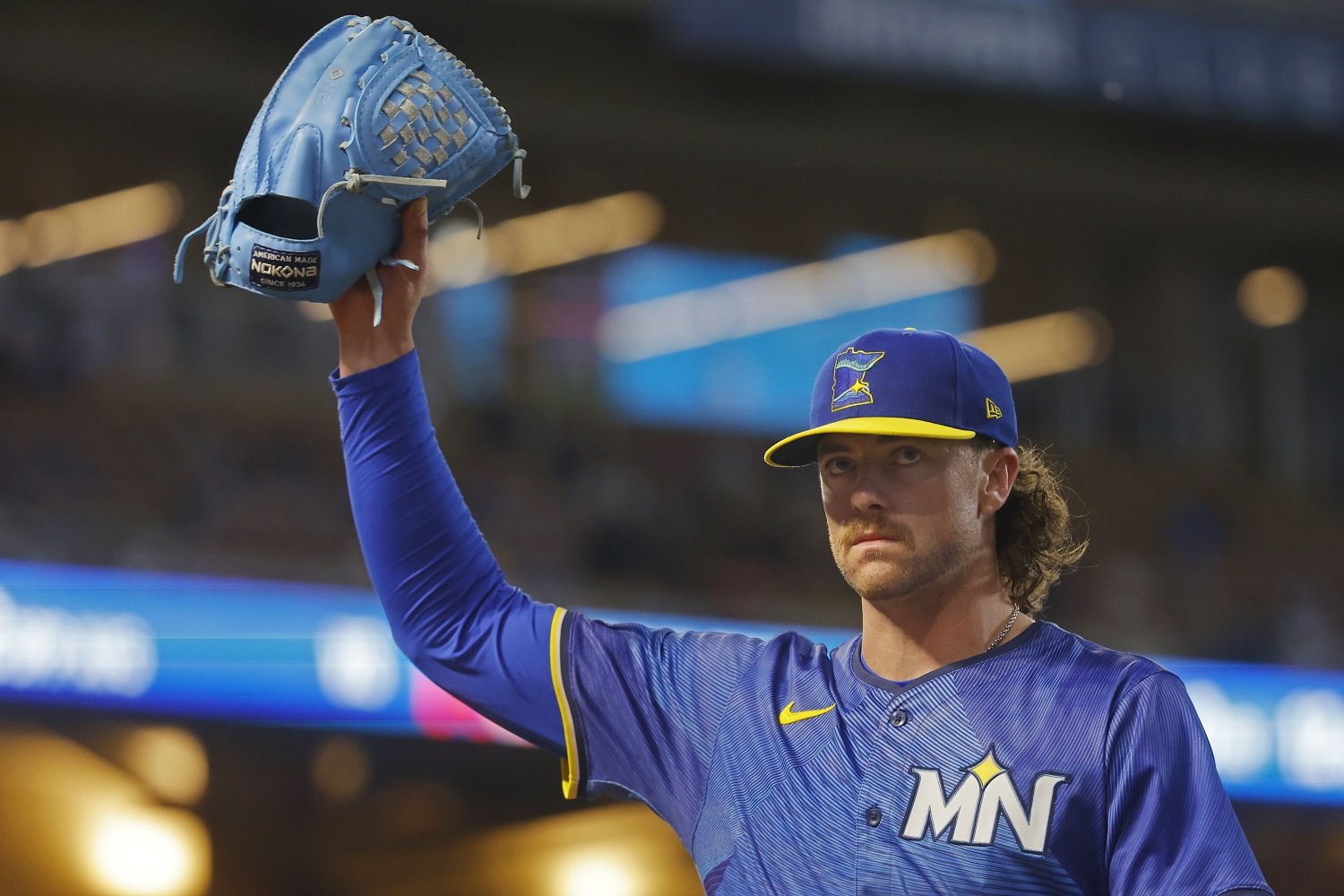
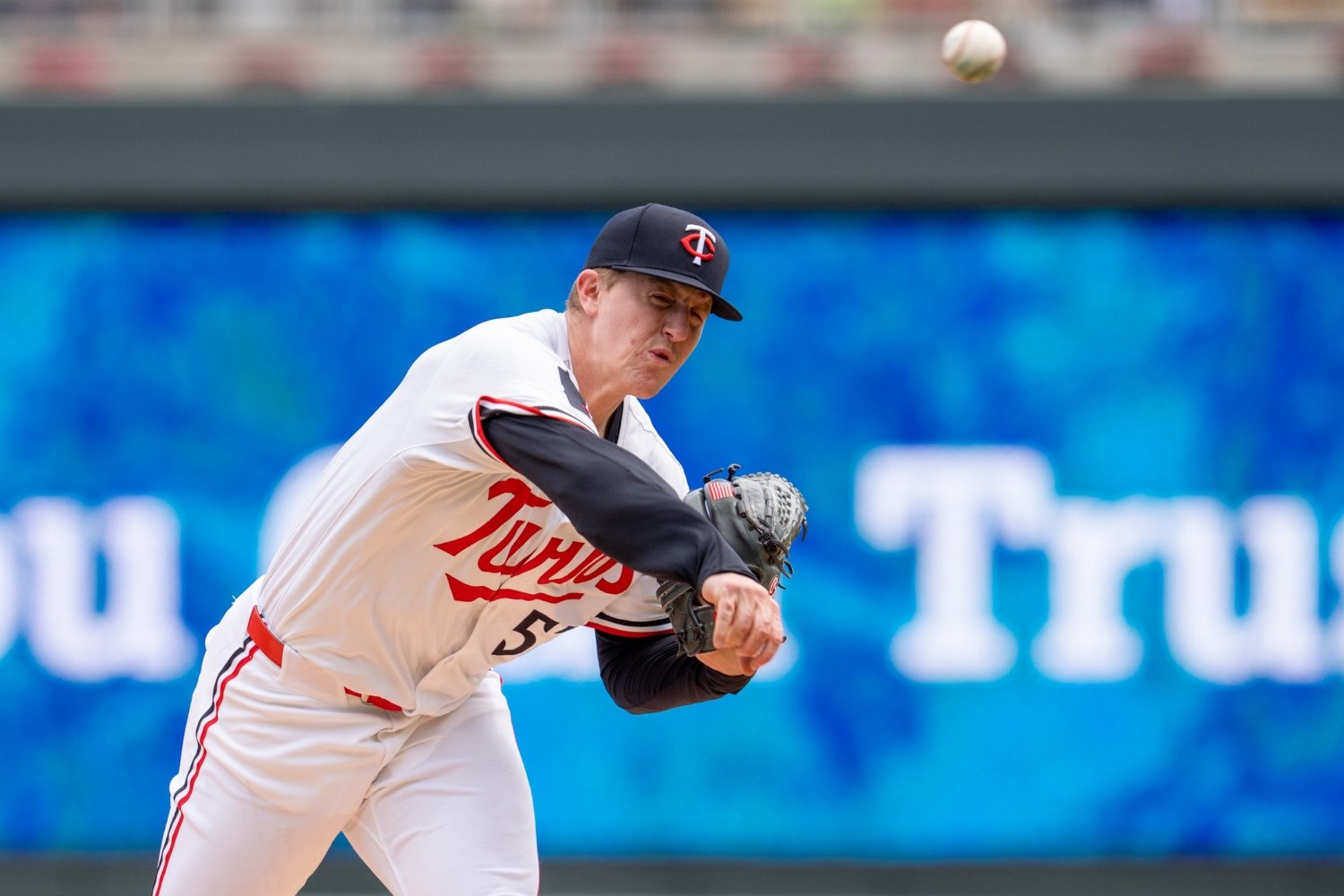 The Twins and Zebby Matthews had a problem. The righty flashed legitimate strikeout potential in 2024, but the whiffs came with a Blylevian barrage of homers; batters found the stands 11 times across just 37 ⅔ major-league frames. That’s a 58-home run pace across 200 innings. And the type of pitch didn’t matter. The fastball? Obliterated. The cutter? Crushed. Spencer Horwitz even put one on the board against a curveball. Tough. If this trend continued, the team would have to hand out helmets and oversized gloves to fans every day when Matthews pitched. Unless he wanted to waste his prime years on the Saints, something needed to change. Early tendencies in his pitch mix indicate an evolution is currently underway. Matthews’s curveball and changeup—which accounted for 15% of his offerings in 2024—have been almost fully abandoned this season, in favor of a four-seam/cutter/slider three-piece selection. He’s thrown the hook and the cambio just seven total times in 152 pitches over two starts. That’s probably a good call. The curve yielded a .385 xwOBA last year, and the change sat at a .365. A league-average number is .327. Remember that you read wOBA like OBP, meaning Matthews turned hitters into Bobby Witt Jr., and Brent Rooker, respectively, with those two offerings. For the short term, I think this mix change makes sense. A part of the pitching milieu these days is focused on having hurlers throw as many types of pitches as possible, but if those offerings aren’t cutting it, there’s little point in throwing them. The simplified approach has also sharpened his pitches: while the slider and cutter bled into each other at times in 2024, his 2025 plot reveals two solidly separate offerings. Just as saliently, Matthews’s velocity is noticeably up compared to 2024, with his heater sitting at 96.6 MPH and the slider and cutter up a tick, as well. Here's what he looked like last year. And here's the (you know, hopefully) new and improved version. Now, I was concerned his new, tighter movement distribution and more linear approach might make him susceptible to platoon splits. We know that, inside of each pitcher lives two individuals, and who they reveal is based on batter handedness. Indeed, pitchers like Sonny Gray, Pablo López, and Bailey Ober (not Joe Ryan, really, but that’s just how he rolls) throw different pitches based on which batter’s box the hitters step in. Matthews doesn’t do that. Or, at least, his measures are less extreme. He trades about 10% of his four-seamers for cutters against lefties, but is otherwise shockingly agnostic on the matter. It’s worked for him, though, because his command of the cutter and slider to lefties has been pristine, and the verticality of his slider makes the pitch less susceptible to platoon splits. Just look at how he turned Brice Turang into mincemeat with the pitch: eUxONjNfWGw0TUFRPT1fQXdNQVZsSURWZ0VBVzFjS1hnQUhBQTRDQUZnQUFWSUFBd0VIQVFGV0FBcFRDQVZU.mp4 Ok, and we’ll embarrass Vinnie Pasquantino as well: MTZxRGdfVjBZQUhRPT1fQmxKUkJnRlZVRmNBV3dSUkF3QUhBd0FGQUFNSFVWVUFCbDBCQUZVTkJnRUdCMUZl.mp4 So far, Matthews has faced 14 lefties and struck out six of them. He’s also allowed five singles and a walk, but only two of the hits were struck well. I think his process here is especially intriguing, and we should keep an eye on whether he can keep whiffing lefties at such an extreme rate. Long term, I’m unsure of the viability of a right-handed pitcher having nothing moving arm-side. The guys who successfully eschew having such an offering—rare in nature, but existing nonetheless—do so by dominating in other ways. Dylan Cease’s slider might be the best in baseball. Nick Pivetta works with an extreme vertical approach and a variety of breaking ball shapes. Can Matthews sharpen his slider to reach Cease’s level? It’s unlikely. I think he’ll need a sinker or a re-worked changeup. Hitters are just too good. They won’t be fooled for long by a small movement profile. Though his season ERA sits at 7.71, even higher than his 2024 mark, Matthews is not the same pitcher he was last year. His velocity is up. He largely eliminated two impotent offerings. I don’t think it’ll be enough to launch him into dominance, but it should at least allow him to reach a higher level. He looks primed to take a step forward. We shall see what comes next.
 -
Image courtesy of © Matt Blewett-Imagn Images The Twins and Zebby Matthews had a problem. The righty flashed legitimate strikeout potential in 2024, but the whiffs came with a Blylevian barrage of homers; batters found the stands 11 times across just 37 ⅔ major-league frames. That’s a 58-home run pace across 200 innings. And the type of pitch didn’t matter. The fastball? Obliterated. The cutter? Crushed. Spencer Horwitz even put one on the board against a curveball. Tough. If this trend continued, the team would have to hand out helmets and oversized gloves to fans every day when Matthews pitched. Unless he wanted to waste his prime years on the Saints, something needed to change. Early tendencies in his pitch mix indicate an evolution is currently underway. Matthews’s curveball and changeup—which accounted for 15% of his offerings in 2024—have been almost fully abandoned this season, in favor of a four-seam/cutter/slider three-piece selection. He’s thrown the hook and the cambio just seven total times in 152 pitches over two starts. That’s probably a good call. The curve yielded a .385 xwOBA last year, and the change sat at a .365. A league-average number is .327. Remember that you read wOBA like OBP, meaning Matthews turned hitters into Bobby Witt Jr., and Brent Rooker, respectively, with those two offerings. For the short term, I think this mix change makes sense. A part of the pitching milieu these days is focused on having hurlers throw as many types of pitches as possible, but if those offerings aren’t cutting it, there’s little point in throwing them. The simplified approach has also sharpened his pitches: while the slider and cutter bled into each other at times in 2024, his 2025 plot reveals two solidly separate offerings. Just as saliently, Matthews’s velocity is noticeably up compared to 2024, with his heater sitting at 96.6 MPH and the slider and cutter up a tick, as well. Here's what he looked like last year. And here's the (you know, hopefully) new and improved version. Now, I was concerned his new, tighter movement distribution and more linear approach might make him susceptible to platoon splits. We know that, inside of each pitcher lives two individuals, and who they reveal is based on batter handedness. Indeed, pitchers like Sonny Gray, Pablo López, and Bailey Ober (not Joe Ryan, really, but that’s just how he rolls) throw different pitches based on which batter’s box the hitters step in. Matthews doesn’t do that. Or, at least, his measures are less extreme. He trades about 10% of his four-seamers for cutters against lefties, but is otherwise shockingly agnostic on the matter. It’s worked for him, though, because his command of the cutter and slider to lefties has been pristine, and the verticality of his slider makes the pitch less susceptible to platoon splits. Just look at how he turned Brice Turang into mincemeat with the pitch: eUxONjNfWGw0TUFRPT1fQXdNQVZsSURWZ0VBVzFjS1hnQUhBQTRDQUZnQUFWSUFBd0VIQVFGV0FBcFRDQVZU.mp4 Ok, and we’ll embarrass Vinnie Pasquantino as well: MTZxRGdfVjBZQUhRPT1fQmxKUkJnRlZVRmNBV3dSUkF3QUhBd0FGQUFNSFVWVUFCbDBCQUZVTkJnRUdCMUZl.mp4 So far, Matthews has faced 14 lefties and struck out six of them. He’s also allowed five singles and a walk, but only two of the hits were struck well. I think his process here is especially intriguing, and we should keep an eye on whether he can keep whiffing lefties at such an extreme rate. Long term, I’m unsure of the viability of a right-handed pitcher having nothing moving arm-side. The guys who successfully eschew having such an offering—rare in nature, but existing nonetheless—do so by dominating in other ways. Dylan Cease’s slider might be the best in baseball. Nick Pivetta works with an extreme vertical approach and a variety of breaking ball shapes. Can Matthews sharpen his slider to reach Cease’s level? It’s unlikely. I think he’ll need a sinker or a re-worked changeup. Hitters are just too good. They won’t be fooled for long by a small movement profile. Though his season ERA sits at 7.71, even higher than his 2024 mark, Matthews is not the same pitcher he was last year. His velocity is up. He largely eliminated two impotent offerings. I don’t think it’ll be enough to launch him into dominance, but it should at least allow him to reach a higher level. He looks primed to take a step forward. We shall see what comes next. View full article
-
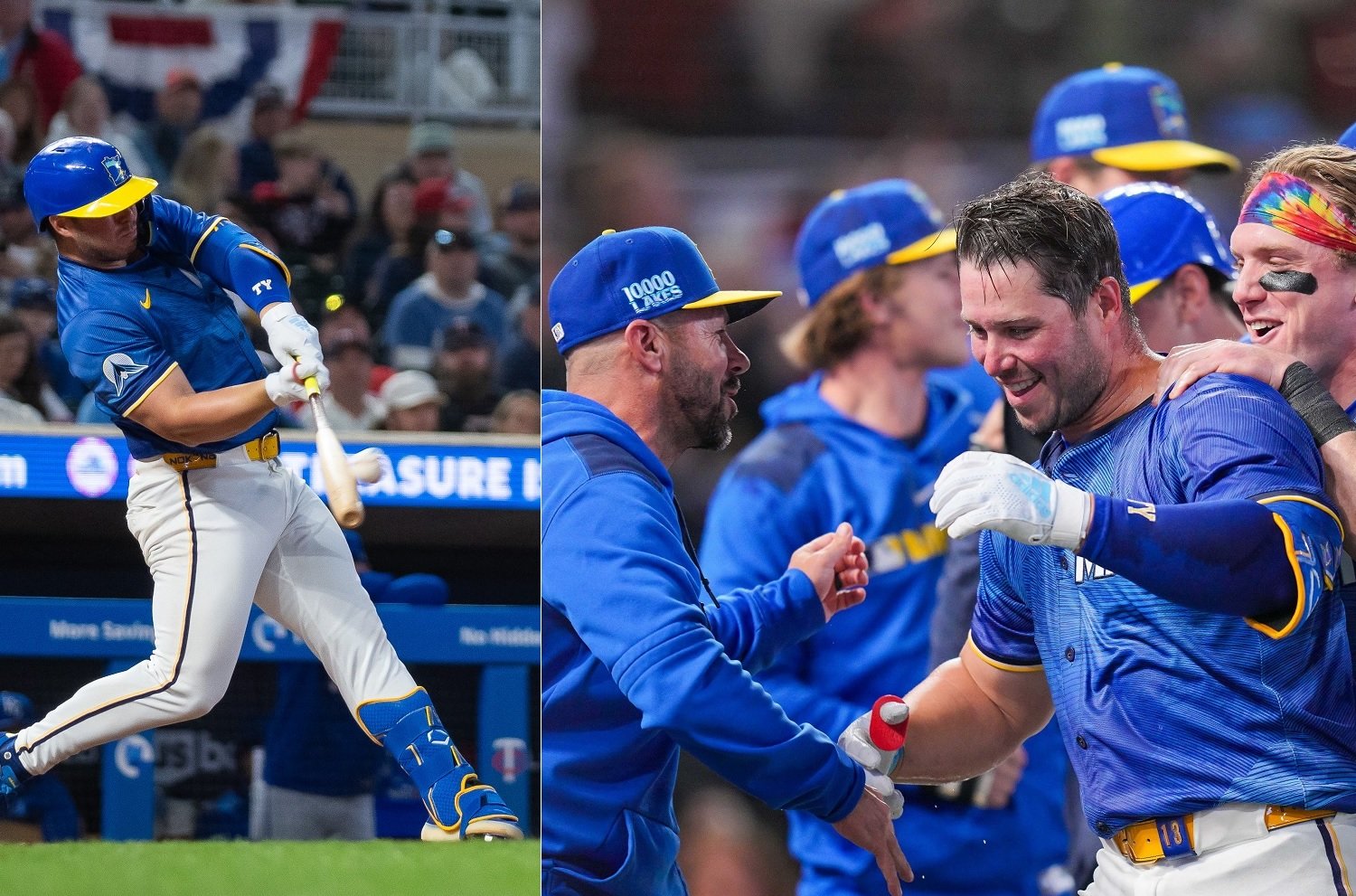 Box Score SP: Pablo López: 5 ⅔ IP, 7 H, 1 ER, 0 BB, 5 K Home Runs: Carlos Correa (3), Ty France (4) Top 3 WPA: Ty France (.294), Pablo López (.204), Cole Sands (.134) Win Probability Chart (via FanGraphs) With thoughts of rain solidly in the past, Minnesota could finally move on. The weather that had so strangely chopped up their series with Cleveland fled for other pastures, leaving Minnesota with a traditionally beautiful late-spring evening, neither quite too cold nor too warm—but chilly enough to remind all that summer’s comfort was still more than a few sleeps away. Would that augur success for the home team? Only the players could determine that. Straits appeared a little dire early. Pablo López smoked Jonathan India with his second offering of the day, and a blooped single from Vinnie Pasquantino pushed the situation into “legitimate run-scoring threat” territory. Indeed, it was: López claimed his second out before relinquishing a run off a hittable fastball. Cavan Biggio served as the beneficiary. The Royals were up 1-0. Squaring up against Minnesota’s ace was one Noah Cameron. Bespectacled and green—Friday’s start was just his third in the big leagues—the lefty nonetheless offered the aesthetics of one referred to as “crafty;” with a below-average heater and extended collection of off-speed pitches capable of putting hitters on their heels. Across 12 2/3 frames, he had just three allowed hits to his name. His first career start saw a no-hit bid creep into the seventh inning. The dominance potential became apparent across the fullness of his start—he walked off the mound after striking out eight Twins over six and two-third innings—yet Carlos Correa punctured a chink into his armor early. The veteran took the second pitch he had seen since coming off the IL and deposited it 429 feet away into the bullpens nestled in left-center. Tie game. The homer ushered in a period of classic baseball emptiness. Surely, the game saw action. One could interrogate the box score to collect the fullness of each minute detail. Entire dramas lived within Kansas City’s two-strike hits, or Minnesota’s clear difficulties handling Cameron’s arm slot. Yet, in a game dominated by runs, only one truth stood out: no one scored. For a while. The third became the fourth, which evolved into the fifth, which, which, which… One could look down for a time, then look up just to conclude the entire game was an exercise in human futility. Maybe it is. That’s baseball. The funny thing about the seemingly endless supply of zeroes is that everything can change in an instant. And any small move can incite. The great running of the bullpens spat out Kansas City's Lucas Erceg in the ninth. He punched out Trevor Larnach before Correa softly grounded a ball to third. One would typically Maikel Garcia to handle it properly, yet he bobbled the ball and allowed Carlos to reach base. Oh well. Certainly, the next batter wouldn't hit a homer on the first pitch he saw. Anyways, Ty France crushed a homer on the first pitch of his at-bat to win the game for the Twins. Don't let anyone tell you this game doesn't have a sense of humor. Notes: The Twins are 16-2 in their last 18 games. Friday was the first walk-off homer of Ty France's big league career. Carlos Correa hit his 190th career homer, the 24th-most for a primary shortstop in MLB history. He's five away from tying Toby Harrah. Pablo López earned his 486th strikeout in a Twins uniform, good for 30th all-time in team history. He's one away from tying Joe Mays. Griffin Jax picked off a runner for the third time in his big league career. Post-Game Interview: What’s Next? The Twins will face the Royals again on Saturday, with first pitch set to arrive at 1:10 PM. Zebby Matthews is scheduled to start opposite Michael Wacha. Bullpen Usage Spreadsheet
- 55 comments
-
- 8
-

-
- ty france
- carlos correa
- (and 3 more)
-
Image courtesy of © Brad Rempel-Imagn Images Box Score SP: Pablo López: 5 ⅔ IP, 7 H, 1 ER, 0 BB, 5 K Home Runs: Carlos Correa (3), Ty France (4) Top 3 WPA: Ty France (.294), Pablo López (.204), Cole Sands (.134) Win Probability Chart (via FanGraphs) With thoughts of rain solidly in the past, Minnesota could finally move on. The weather that had so strangely chopped up their series with Cleveland fled for other pastures, leaving Minnesota with a traditionally beautiful late-spring evening, neither quite too cold nor too warm—but chilly enough to remind all that summer’s comfort was still more than a few sleeps away. Would that augur success for the home team? Only the players could determine that. Straits appeared a little dire early. Pablo López smoked Jonathan India with his second offering of the day, and a blooped single from Vinnie Pasquantino pushed the situation into “legitimate run-scoring threat” territory. Indeed, it was: López claimed his second out before relinquishing a run off a hittable fastball. Cavan Biggio served as the beneficiary. The Royals were up 1-0. Squaring up against Minnesota’s ace was one Noah Cameron. Bespectacled and green—Friday’s start was just his third in the big leagues—the lefty nonetheless offered the aesthetics of one referred to as “crafty;” with a below-average heater and extended collection of off-speed pitches capable of putting hitters on their heels. Across 12 2/3 frames, he had just three allowed hits to his name. His first career start saw a no-hit bid creep into the seventh inning. The dominance potential became apparent across the fullness of his start—he walked off the mound after striking out eight Twins over six and two-third innings—yet Carlos Correa punctured a chink into his armor early. The veteran took the second pitch he had seen since coming off the IL and deposited it 429 feet away into the bullpens nestled in left-center. Tie game. The homer ushered in a period of classic baseball emptiness. Surely, the game saw action. One could interrogate the box score to collect the fullness of each minute detail. Entire dramas lived within Kansas City’s two-strike hits, or Minnesota’s clear difficulties handling Cameron’s arm slot. Yet, in a game dominated by runs, only one truth stood out: no one scored. For a while. The third became the fourth, which evolved into the fifth, which, which, which… One could look down for a time, then look up just to conclude the entire game was an exercise in human futility. Maybe it is. That’s baseball. The funny thing about the seemingly endless supply of zeroes is that everything can change in an instant. And any small move can incite. The great running of the bullpens spat out Kansas City's Lucas Erceg in the ninth. He punched out Trevor Larnach before Correa softly grounded a ball to third. One would typically Maikel Garcia to handle it properly, yet he bobbled the ball and allowed Carlos to reach base. Oh well. Certainly, the next batter wouldn't hit a homer on the first pitch he saw. Anyways, Ty France crushed a homer on the first pitch of his at-bat to win the game for the Twins. Don't let anyone tell you this game doesn't have a sense of humor. Notes: The Twins are 16-2 in their last 18 games. Friday was the first walk-off homer of Ty France's big league career. Carlos Correa hit his 190th career homer, the 24th-most for a primary shortstop in MLB history. He's five away from tying Toby Harrah. Pablo López earned his 486th strikeout in a Twins uniform, good for 30th all-time in team history. He's one away from tying Joe Mays. Griffin Jax picked off a runner for the third time in his big league career. Post-Game Interview: What’s Next? The Twins will face the Royals again on Saturday, with first pitch set to arrive at 1:10 PM. Zebby Matthews is scheduled to start opposite Michael Wacha. Bullpen Usage Spreadsheet View full article
-
Image courtesy of Kirby Milam, Wichita Wind Surge (photo of Aaron Rozek) TRANSACTIONS LHP Connor Prielipp transferred to development list (Wichita) RHP Brent Francisco assigned to FCL Twins OF Matt Wallner sent to AAA St. Paul for rehab assignment Twins recall INF Mickey Gasper as 27th-man RHP Cole Peschl promoted from A Fort Myers to A+ Cedar Rapids Saints Sentinel The Saints were rained out for the 13th time this season. They will play doubleheaders on Thursday and Saturday. Wind Surge Wisdom Wichita 6, San Antonio 4 Box Score Aaron Rozek: 4 ⅔ IP, 7 H, 1 ER, 1 BB, 3 K HR: None Multi-hit games: Kala’i Rosario (2-for-4, 2B, 2 R), Aaron Sabato (2-for-5, RBI), Andrew Cossetti (2-for-5, 2B, 2 RBI) The Wind Surge eked out a win on Wednesday. Wichita’s batters stole the story early, plating a pair of runs in the game’s opening frame before returning for two more in the third. Andrew Cossetti was the catalyst: he doubled in a score in his first at-bat and singled home another runner in his second trip to the plate. He alone netted half of the team’s hits with runners in scoring position before the game was ⅓ over. Aaron Rozek delivered an unusual outing; his 4 ⅔ frames with just one earned run was ideal, but he also surrendered seven hits and a walk, forcing the lefty to labor for his outs and sweat for his runs allowed. Still, it worked. And he lowered his Wichita ERA to 3.67. His three strikeouts were tied for a season-low. Gabriel Gonzalez walked in the sixth to push across a fifth run, and a sixth and final run scored in the eighth off a wild pitch. Gonzalez was a force all night: the recently promoted outfielder walked twice, singled, stole a base, and scored two runs in a critical evening as the team’s cleanup hitter. Mike Paredes earned the win to push his record to a perfect 6-0 out of the bullpen. That’s one hell of a good luck charm. The Missions are an affiliate of the San Diego Padres. While their uber prospect Ethan Salas plays for them, he has been injured since the middle of April, leaving their 17th-ranked player, Romeo Sanabria, as their best prospect on Wednesday. He singled twice and drove in a run. Kernels Nuggets Like their AAA counterparts, Cedar Rapids found the weather too hazardous for baseball; they will make up the match with a doubleheader on Friday. Mussel Matters Fort Myers 3, Lakeland 5 Box Score Michael Carpenter: 4 IP, 2 H, 0 ER, 1 BB, 3 K HR: None Multi-hit games: Yasser Mercedes (2-for-3, R, RBI), Poncho Ruiz (2-for-4, 2B, RBI), Angel Del Rosario (2-for-2, 2B, R) Fort Myers came up short on Wednesday. Despite his team’s fortunes, starter Michael Carpenter likely walked away from the game relieved. May had been a sore sport; the lefty trudged through back-to-back stinkers that ballooned his numbers and flattened his ego. Yet—after four quality innings without a single earned run—he appears to have put the pain behind him, at least for one day. Unfortunately, Josh Bortka saw a different fate. Evidently drenched in nerves, the recent minor league signee made his Fort Myers debut, and walked four batters while netting just two outs. A run scored on a balk. Another via a sacrifice fly. A third and final run dashed home off an RBI groundout. One is reminded of Yennier Cano’s erratic Fort Myers debut six years ago; if he can recover, so can Bortka. The bats never found chemistry. They cracked nine hits—including a trio of doubles—but almost always at inopportune times; the Mighty Mussels only scratched across three runs, all in single-score intervals. Rehabbing minor league Payton Eeles singled in three trips to the plate. Rehabbing big leaguer Matt Vierling played 3rd base for Lakeland, driving in a run and walking in four plate appearances. MLB.com’s 46th-ranked prospect, Bryce Rainer, played shortstop for the Flying Tigers. He singled and struck out in four at-bats. TWINS DAILY PLAYERS OF THE DAY Twins Daily Minor League Pitcher of the Day – Michael Carpenter Twins Daily Minor League Hitter of the Day – Gabriel Gonzalez PROSPECT SUMMARY Here’s a look at how the Twins Daily Top 20 Twins Prospects performed: #14 – Gabriel Gonzalez (Wichita) - 1-3, 2 R, RBI, BB #17 – Tanner Schobel (Wichita) - 1-4, BB, K #18 – Yasser Mercedes (Fort Myers) - 2-3, R, RBI #19 – Carson McCusker (Twins) - 0-1, K THURSDAY’S PROBABLE STARTERS Norfolk @ St. Paul (5:07 PM) - RHP Simeon Woods Richardson Norfolk @ St. Paul Game Two - RHP Marco Raya Wichita @ San Antonio (7:05 PM) - RHP Ricky Castro Cedar Rapids @ Fort Myers (6:05 PM) - RHP Jeremy Lee Fort Myers @ Lakeland (5:30 PM) - RHP Dylan Questad FCL Pirates @ FCL Twins (11:00 AM) - TBD View full article
- 10 replies
-
- 1
-
-
- michael carpenter
- matt wallner
- (and 3 more)
-
Twins Minor League Report (5/21): Matt Wallner's Rehab Halted by Rain
Matt Braun posted an article in Minor Leagues
 TRANSACTIONS LHP Connor Prielipp transferred to development list (Wichita) RHP Brent Francisco assigned to FCL Twins OF Matt Wallner sent to AAA St. Paul for rehab assignment Twins recall INF Mickey Gasper as 27th-man RHP Cole Peschl promoted from A Fort Myers to A+ Cedar Rapids Saints Sentinel The Saints were rained out for the 13th time this season. They will play doubleheaders on Thursday and Saturday. Wind Surge Wisdom Wichita 6, San Antonio 4 Box Score Aaron Rozek: 4 ⅔ IP, 7 H, 1 ER, 1 BB, 3 K HR: None Multi-hit games: Kala’i Rosario (2-for-4, 2B, 2 R), Aaron Sabato (2-for-5, RBI), Andrew Cossetti (2-for-5, 2B, 2 RBI) The Wind Surge eked out a win on Wednesday. Wichita’s batters stole the story early, plating a pair of runs in the game’s opening frame before returning for two more in the third. Andrew Cossetti was the catalyst: he doubled in a score in his first at-bat and singled home another runner in his second trip to the plate. He alone netted half of the team’s hits with runners in scoring position before the game was ⅓ over. Aaron Rozek delivered an unusual outing; his 4 ⅔ frames with just one earned run was ideal, but he also surrendered seven hits and a walk, forcing the lefty to labor for his outs and sweat for his runs allowed. Still, it worked. And he lowered his Wichita ERA to 3.67. His three strikeouts were tied for a season-low. Gabriel Gonzalez walked in the sixth to push across a fifth run, and a sixth and final run scored in the eighth off a wild pitch. Gonzalez was a force all night: the recently promoted outfielder walked twice, singled, stole a base, and scored two runs in a critical evening as the team’s cleanup hitter. Mike Paredes earned the win to push his record to a perfect 6-0 out of the bullpen. That’s one hell of a good luck charm. The Missions are an affiliate of the San Diego Padres. While their uber prospect Ethan Salas plays for them, he has been injured since the middle of April, leaving their 17th-ranked player, Romeo Sanabria, as their best prospect on Wednesday. He singled twice and drove in a run. Kernels Nuggets Like their AAA counterparts, Cedar Rapids found the weather too hazardous for baseball; they will make up the match with a doubleheader on Friday. Mussel Matters Fort Myers 3, Lakeland 5 Box Score Michael Carpenter: 4 IP, 2 H, 0 ER, 1 BB, 3 K HR: None Multi-hit games: Yasser Mercedes (2-for-3, R, RBI), Poncho Ruiz (2-for-4, 2B, RBI), Angel Del Rosario (2-for-2, 2B, R) Fort Myers came up short on Wednesday. Despite his team’s fortunes, starter Michael Carpenter likely walked away from the game relieved. May had been a sore sport; the lefty trudged through back-to-back stinkers that ballooned his numbers and flattened his ego. Yet—after four quality innings without a single earned run—he appears to have put the pain behind him, at least for one day. Unfortunately, Josh Bortka saw a different fate. Evidently drenched in nerves, the recent minor league signee made his Fort Myers debut, and walked four batters while netting just two outs. A run scored on a balk. Another via a sacrifice fly. A third and final run dashed home off an RBI groundout. One is reminded of Yennier Cano’s erratic Fort Myers debut six years ago; if he can recover, so can Bortka. The bats never found chemistry. They cracked nine hits—including a trio of doubles—but almost always at inopportune times; the Mighty Mussels only scratched across three runs, all in single-score intervals. Rehabbing minor league Payton Eeles singled in three trips to the plate. Rehabbing big leaguer Matt Vierling played 3rd base for Lakeland, driving in a run and walking in four plate appearances. MLB.com’s 46th-ranked prospect, Bryce Rainer, played shortstop for the Flying Tigers. He singled and struck out in four at-bats. TWINS DAILY PLAYERS OF THE DAY Twins Daily Minor League Pitcher of the Day – Michael Carpenter Twins Daily Minor League Hitter of the Day – Gabriel Gonzalez PROSPECT SUMMARY Here’s a look at how the Twins Daily Top 20 Twins Prospects performed: #14 – Gabriel Gonzalez (Wichita) - 1-3, 2 R, RBI, BB #17 – Tanner Schobel (Wichita) - 1-4, BB, K #18 – Yasser Mercedes (Fort Myers) - 2-3, R, RBI #19 – Carson McCusker (Twins) - 0-1, K THURSDAY’S PROBABLE STARTERS Norfolk @ St. Paul (5:07 PM) - RHP Simeon Woods Richardson Norfolk @ St. Paul Game Two - RHP Marco Raya Wichita @ San Antonio (7:05 PM) - RHP Ricky Castro Cedar Rapids @ Fort Myers (6:05 PM) - RHP Jeremy Lee Fort Myers @ Lakeland (5:30 PM) - RHP Dylan Questad FCL Pirates @ FCL Twins (11:00 AM) - TBD
- 10 comments
-
- 2
-

-
-
- michael carpenter
- matt wallner
- (and 3 more)
-
Twins 3, Brewers 0: Dominant Pitching Spearheads 12th-Straight Win
Matt Braun posted an article in Twins
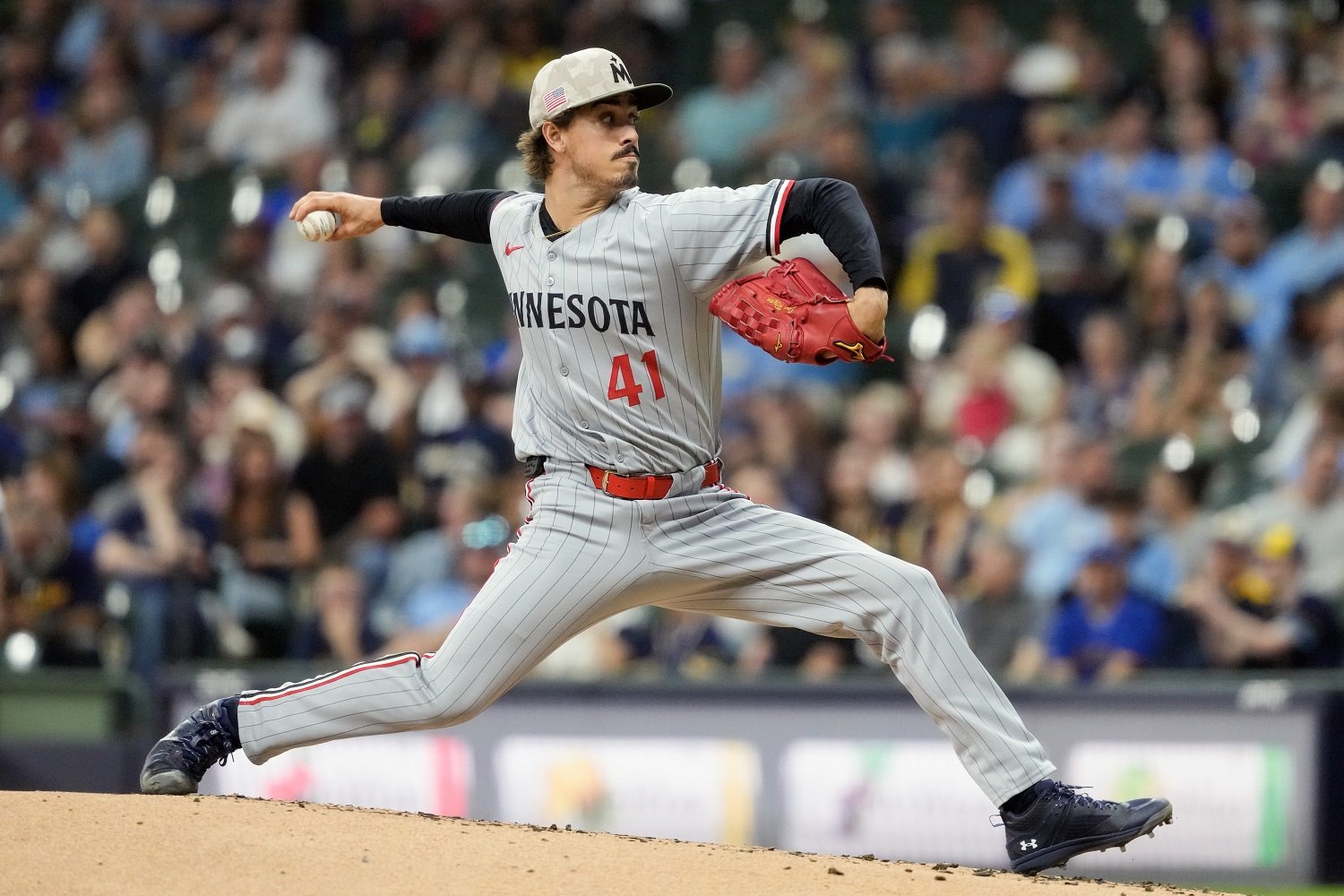 Box Score Joe Ryan: 6 IP, 2 H, 0 ER, 1 BB, 9 K Home Runs: None Top 3 WPA: Joe Ryan (.303), Kody Clemens (.098), Trevor Larnach (.084) Win Probability Chart (via FanGraphs) 12 games is the winning streak set by the 2024 squad. Indeed the (in)famous “rally sausage” carried the team from the bowels of terribleness to relevance, at least for a time. The ultimate fate last year was disappointing. We’re in the middle of discovering what 2025 holds for the present collection of players. First, the Twins scored. Twice. Facing Chad Patrick—another in a seemingly endless supply of Milwaukee’s eclectic quality hurlers—Trevor Larnach wore an inside cutter, Ryan Jeffers smashed a single to right, and Ty France copied his teammate to score the game’s opening run. Genteel behavior would have to wait; Minnesota was ready to rumble early. Kody Clemens singled in the frame’s second score. One inning later, Ryan Jeffers grounded himself and Christian Vázquez to plate the uniquely underwhelming baseball outcome: a run-scoring double play. Oh well. The Twins lead stood at three after just two innings. Just as well, the plague of injuries cursing the Twins all season struck once more before this author could even reference the game’s starting pitcher: Willi Castro fouled a pitch off his knee in his first at-bat; he toughed out an inning before exiting the game to give 30-year-old Ryan Fitzgerald his first taste of the big leagues. Joe Ryan was the man tasked with defending this lead. Known for his eccentricities and antics, Ryan’s pitching mound demeanor alone would render his starts critical viewing; in play to start the season, Ryan might just be one of the best hurlers in the AL. He entered Friday with just five walks, 54 strikeouts, and a 2.74 ERA across 46 innings—and he continued his excellence against the Brewers. You’d be forgiven if his first inning churned skepticism regarding another great start; he tossed 30 pitches while allowing a hit and a walk, only finally exiting the inning when his last offering fell harmlessly into Larnach’s glove, about five feet in front of the outfield wall. His fastball command wasn’t where it needed to be. Then, it was. The righty came out for the second with a renewed vigor. The heater found the spots he looked for; Milwaukee wilted as he struck out eight in a row. The frames melted into each other. An occasional lapse in control revealed that Ryan wasn’t in complete control of his arsenal—they’ll call it “effectively wild” when it works—yet he walked off the mound following six shutout innings with nine strikeouts. The sloppy first only proved to be a pitch count burden, perhaps the only thing that limited him from pitching further into the game. Brock Stewart entered as Minnesota’s opening bullpen arm. Two men reached, but the other three went down on strikes. Griffin Jax followed. He struck out two. Then... Cole Sands? The closer? Sure. He struck out a pair with just 11 pitches. The streak extends to 12. Notes: After 684 minor league games, Ryan Fitzgerald made his MLB debut on Friday. Joe Ryan's nine strikeouts give him 588 in his Twins career, passing Rick Aguilera for the 17th-most Ks in team history. He's 22 behind Eddie Guardado. Griffin Jax earned his 13th hold on Friday, tying with him Lucas Erceg for the major league lead. Post-Game Interview: What’s Next? The Twins and Brewers play again on Saturday, with Pablo López set to start against Tobias Myers. First pitch is at 6:15 PM. Bullpen Usage Spreadsheet
- 34 comments
-
- 6
-
-
- ryan fitzgerald
- joe ryan
- (and 3 more)
-
Image courtesy of © Jeff Hanisch-Imagn Images Box Score Joe Ryan: 6 IP, 2 H, 0 ER, 1 BB, 9 K Home Runs: None Top 3 WPA: Joe Ryan (.303), Kody Clemens (.098), Trevor Larnach (.084) Win Probability Chart (via FanGraphs) 12 games is the winning streak set by the 2024 squad. Indeed the (in)famous “rally sausage” carried the team from the bowels of terribleness to relevance, at least for a time. The ultimate fate last year was disappointing. We’re in the middle of discovering what 2025 holds for the present collection of players. First, the Twins scored. Twice. Facing Chad Patrick—another in a seemingly endless supply of Milwaukee’s eclectic quality hurlers—Trevor Larnach wore an inside cutter, Ryan Jeffers smashed a single to right, and Ty France copied his teammate to score the game’s opening run. Genteel behavior would have to wait; Minnesota was ready to rumble early. Kody Clemens singled in the frame’s second score. One inning later, Ryan Jeffers grounded himself and Christian Vázquez to plate the uniquely underwhelming baseball outcome: a run-scoring double play. Oh well. The Twins lead stood at three after just two innings. Just as well, the plague of injuries cursing the Twins all season struck once more before this author could even reference the game’s starting pitcher: Willi Castro fouled a pitch off his knee in his first at-bat; he toughed out an inning before exiting the game to give 30-year-old Ryan Fitzgerald his first taste of the big leagues. Joe Ryan was the man tasked with defending this lead. Known for his eccentricities and antics, Ryan’s pitching mound demeanor alone would render his starts critical viewing; in play to start the season, Ryan might just be one of the best hurlers in the AL. He entered Friday with just five walks, 54 strikeouts, and a 2.74 ERA across 46 innings—and he continued his excellence against the Brewers. You’d be forgiven if his first inning churned skepticism regarding another great start; he tossed 30 pitches while allowing a hit and a walk, only finally exiting the inning when his last offering fell harmlessly into Larnach’s glove, about five feet in front of the outfield wall. His fastball command wasn’t where it needed to be. Then, it was. The righty came out for the second with a renewed vigor. The heater found the spots he looked for; Milwaukee wilted as he struck out eight in a row. The frames melted into each other. An occasional lapse in control revealed that Ryan wasn’t in complete control of his arsenal—they’ll call it “effectively wild” when it works—yet he walked off the mound following six shutout innings with nine strikeouts. The sloppy first only proved to be a pitch count burden, perhaps the only thing that limited him from pitching further into the game. Brock Stewart entered as Minnesota’s opening bullpen arm. Two men reached, but the other three went down on strikes. Griffin Jax followed. He struck out two. Then... Cole Sands? The closer? Sure. He struck out a pair with just 11 pitches. The streak extends to 12. Notes: After 684 minor league games, Ryan Fitzgerald made his MLB debut on Friday. Joe Ryan's nine strikeouts give him 588 in his Twins career, passing Rick Aguilera for the 17th-most Ks in team history. He's 22 behind Eddie Guardado. Griffin Jax earned his 13th hold on Friday, tying with him Lucas Erceg for the major league lead. Post-Game Interview: What’s Next? The Twins and Brewers play again on Saturday, with Pablo López set to start against Tobias Myers. First pitch is at 6:15 PM. Bullpen Usage Spreadsheet View full article
-
Twins Minor League Report (5/14): Ryan Fitzgerald Cannot be Stopped
Matt Braun posted an article in Minor Leagues
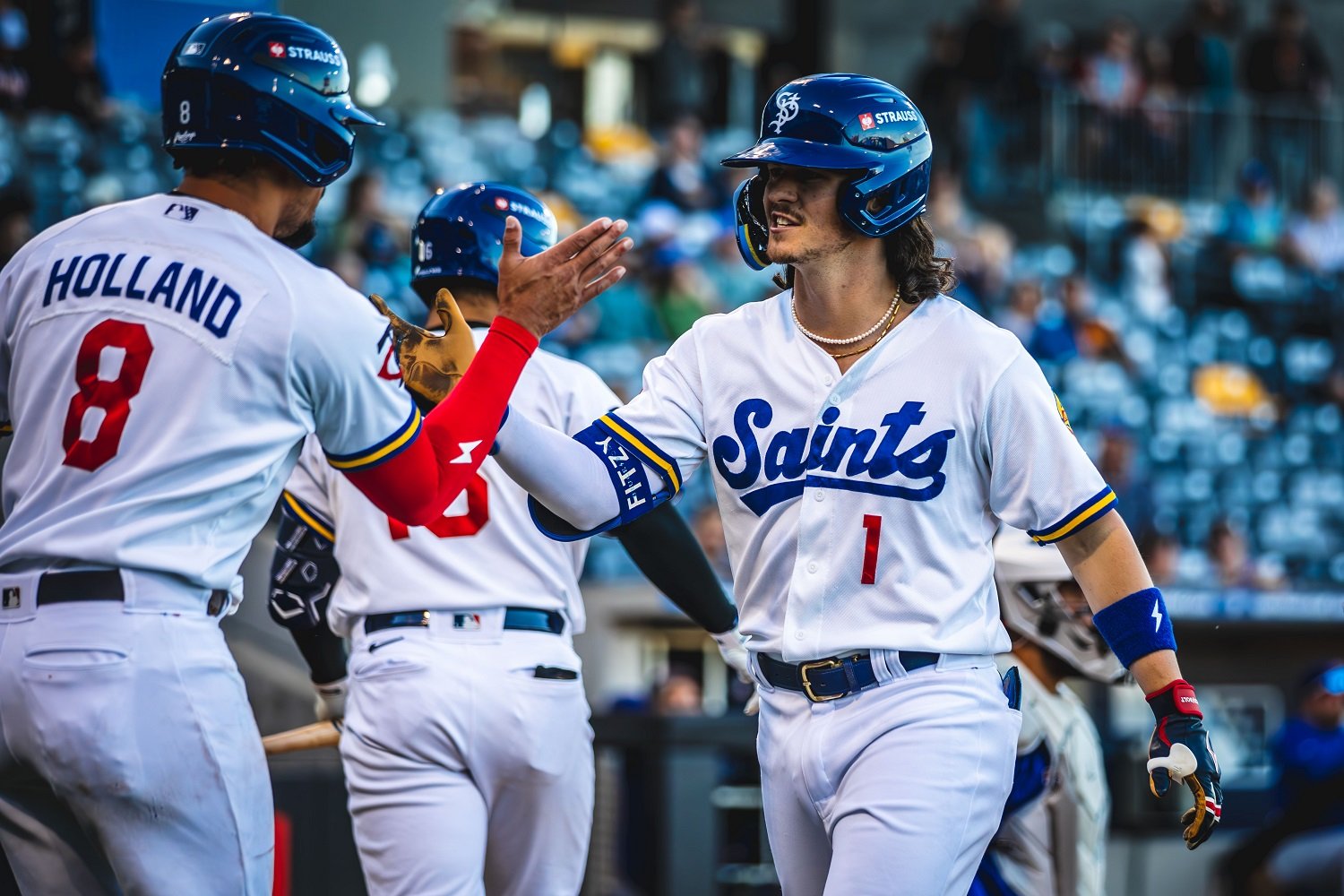 TRANSACTIONS RHP Jack Noble activated from 7-day IL (Cedar Rapids) OF Byron Chourio placed on 7-day IL with left oblique strain (Fort Myers) LHP Kody Funderburk recalled from AAA St. Paul (27th man) Saints Sentinel St. Paul 5, Iowa 10 Box Score Cory Lewis: 3 1/3 IP, 4 H, 5 ER, 5 BB, 3 K HR: None Multi-hit games: Ryan Fitzgerald (4-for-5, 2 2B, R, RBI, BB), Will Holland (2-for-3, R), Patrick Winkel (2-for-5, R) The Saints stranded a small army to lose on Wednesday. Really, it appeared neither team was interested in playing a clean game of baseball. Both squads walked more than they struck out; there were nine combined steals, with just one baserunner caught, and each squad netted an outfield assist. Perhaps the credit should go to the ones igniting the fury—the hitters who walked, the runners who stole, the outfielders who threw—but the end result was the same: someone often looked foolish on Wednesday. Cory Lewis continued his 2025 struggles. The hurler who looked so polished in 2023 and 2024 bears little resemblance to the one pitching these days, and his start on Wednesday only made matters worse, with nine allowed baserunners, five earned runs, and just three strikeouts. His ERA is over 9.00. His WHIP is over 2.00. He threw as many balls as strikes on Wednesday. Hopefully, he re-finds his groove soon. On the surface, the Saints’ offense was potent: they took 10 walks and knocked 12 hits. Seven of their starting nine players reached base multiple times, and one of the ones who didn’t—Carson McCusker—still accrued two RBIs. But, the team couldn’t make the most of their opportunities, and left a franchise-tying record 15 men on base. This isn’t the juiced way to count runners left on base, either; even the typically conservative counting method couldn’t disguise the clutch impotence. Ryan Fitzgerald reached base five times to push his season slash line to .336/.431/.541. 18th-ranked MLB prospect Matt Shaw played third for the Cubs, singling twice and walking in five plate appearances. Wind Surge Wisdom Wichita 11, Arkansas 9 Box Score Connor Prielipp: 2 IP, 2 H, 2 ER, 2 BB, 2 K HR: Ricardo Olivar (5), Jorel Ortega (3) Multi-hit games: Ricardo Olivar (3-for-5, HR, 2 R, 3 RBI), Rubel Cespedes (2-for-5), Kala’i Rosario (2-for-4, R), Jorel Ortega (2-for-3, HR, R, 4 RBI) An offensive outburst favored the Wind Surge on Wednesday. Ricardo Olivar delivered the team’s first major knock, following up a Tanner Schobel RBI single in the third with a three-run homer just over the left field wall to give Wichita the lead. The lead was only two, not four, because Connor Prielipp labored to start the game. He allowed four straight batters to reach before coaxing three consecutive outs. A clean second proved he was back on track, but an elevated pitch count of 49 was too high for manager Brian Dinkelman, who yanked his lefty to give him the rare all deuces pitching line. Pierson Ohl, Jarret Whorff, John Stankiewicz, and Cody Laweryson combined to deliver the game’s remaining seven frames, with the four hurlers turning in inconsistent results. Ohl surrendered two over two innings, Whorff was knocked for one across a pair of innings, Stankiewicz was blasted for four in just 1 1/3 innings, and Laweryson saw the best of it, giving up two walks and two hits but nonetheless succeeding in earning five outs without an earned run. A bad day to be a bullpen man. Fortunately, Wichita’s bats never stopped attacking Travelers pitching. That four-run third portended dual empty frames, but the scoring roared into overdrive starting with a two-run knock by Jorel Ortega in the sixth. More shenanigans in the seventh allowed for a Tyler Dearden double to score two, before Ortega struck again, this time for a two-run blast. Kyler Fedko capped the action with a final run-scoring single in the eighth. Former Twins farmhand Yoyner Fajardo pinch-ran for Arkansas and scored a run. The Travelers are an affiliate of the Seattle Mariners. Despite usually owning a talented farm system, the franchise is thin on excellent Double-A players; their best offering on Wednesday was their 24th-ranked prospect, outfielder Jared Sundstrom. He cracked three hits in five trips to the plate. Kernels Nuggets Cedar Rapids 6, Peoria 7 (11 Innings) Box Score Tanner Hall: 5 IP, 7 H, 4 ER, 2 BB, 2 K HR: Gabriel Gonzalez (4), Danny De Andrade (3) Multi-hit games: Gabriel Gonzalez (3-for-5, HR, 2 R, RBI), Khadim Diaw (2-for-4, R), Misael Urbina (2-for-5, 2B, RBI) The Kernels fell in extra innings on Wednesday. The typical introductions for the game—a scoreless first; the almost gentlemanly formality that introduces our competitors—did not arrive for Tanner Hall. Not even close. He only escaped the frame once four Chiefs had crossed home plate, with the scores coming via an elaborate series of dinks and dunks that would make the piranhas of old proud. Someone even stole home (on a double steal, but still!) Hall found his footing and worked four more innings without allowing any extra runs—an impressive outcome given how disastrous his outing started. Cedar Rapids fought back against the fracas. Gabriel Gonzalez launched his fourth homer of the season in the fourth to get his team on the board. An RBI double by Misael Urbina the next frame, and a two-run shot by Danny De Andrade the inning after that pushed the Kernels’ run total to four. That didn’t tie the game, though, because the Chiefs had plated one more run in the sixth, but a clutch Nate Baez single in the eighth knotted the match at five. So it stood until the two teams entered Manfred Ball time. They passed on scoring in the 10th before Peoria struck for two in the 11th, giving them a lead they would not relinquish. Kevin Maitan ushered in a run off a sacrifice fly in vain; the game ended two batters later with an Urbina strikeout. The Chiefs are an affiliate of the St. Louis Cardinals. None of their top 30 prospects played in Wednesday’s game. Mussel Matters Fort Myers 4, Jupiter 3 (10 Innings) Box Score Michael Ross: 3 IP, 3 H, 1 ER, 2 BB, 2 K HR: None Multi-hit games: None The Mighty Mussels won in extras on Wednesday. 2024 draftee Michael Ross earned the nod, going three solid innings with one earned run and a pair of strikeouts for his troubles. His career ERA after 13 frames stands at 2.77. He enjoyed early run support, with a pair of first-inning runs coming from RBI singles by Yasser Mercedes and Miguel Briceno. A third Mighty Mussels run scored in the fifth via a Jay Thomason sacrifice fly. Jupiter plated two to tie the game off Madison native Jacob Kisting when a 14-pitch at bat resulted in a double dumped into left field, taking out Thomason when another Mighty Mussel collided with him. Maddux Houghton replaced the injured left fielder. The game settled into a cold war equality, with neither team scoring in the seventh, eighth, or ninth to send the game into extra innings. Fort Myers plated their free run off a wild pitch, and Hunter Hoopes held the Hammerheads at bay in the bottom of the frame to clinch the win for the Mighty Mussels. Second baseman Andrew Salas, brother of Jose, is the Marlins’ sixth-ranked prospect. He singled twice and earned a pair of walks in five plate appearances. TWINS DAILY PLAYERS OF THE DAY Twins Daily Minor League Pitcher of the Day – Michael Ross Twins Daily Minor League Hitter of the Day – Ryan Fitzgerald PROSPECT SUMMARY Here’s a look at how the Twins Daily Top 20 Twins Prospects performed: #3 – Emmanuel Rodriguez (St. Paul) - 1-3, 2B, 2 R, 2 BB, 2 K #5 – Connor Prielipp (Wichita) - 2 IP, 2 H, 2 ER, 2 BB, 2 K #6 – Kaelen Culpepper (Cedar Rapids) - 1-5 2B, K #9 – Brandon Winokur (Cedar Rapids) - 0-4, R, BB, K #12 – Cory Lewis (St. Paul) - 3 1/3 IP, 4 H, 5 ER, 5 BB, 3 K #14 – Gabriel Gonzalez (Cedar Rapids) - 3-5, HR, 2 R, RBI #17 – Tanner Schobel (Wichita) - 1-5, R, RBI, K #18 – Yasser Mercedes (Fort Myers) - 1-4, 2 R, RBI, BB, 2 K #19 – Carson McCusker (St. Paul) - 0-3, 2 RBI, BB, K #20 – Ricardo Olivar (Wichita) - 3-5, HR, 2 R, 3 RBI, K THURSDAY’S PROBABLE STARTERS St. Paul @ Iowa (12:08 PM) - RHP Marco Raya St. Paul @ Iowa Game Two - RHP Darren McCaughan Arkansas @ Wichita (6:35 PM) - LHP Aaron Rozek Peoria @ Cedar Rapids (6:35 PM) - RHP Jose Olivares Fort Myers @ Jupiter (5:30 PM) - LHP Michael Carpenter FCL Twins @ FCL Rays (11:00 AM) - TBD
- 14 comments
-
- 4
-
-
-
- ryan fitzgerald
- gabriel gonzalez
- (and 3 more)
-
Image courtesy of Rob Thompson, St. Paul Saints (photo of Ryan Fitzgerald) TRANSACTIONS RHP Jack Noble activated from 7-day IL (Cedar Rapids) OF Byron Chourio placed on 7-day IL with left oblique strain (Fort Myers) LHP Kody Funderburk recalled from AAA St. Paul (27th man) Saints Sentinel St. Paul 5, Iowa 10 Box Score Cory Lewis: 3 1/3 IP, 4 H, 5 ER, 5 BB, 3 K HR: None Multi-hit games: Ryan Fitzgerald (4-for-5, 2 2B, R, RBI, BB), Will Holland (2-for-3, R), Patrick Winkel (2-for-5, R) The Saints stranded a small army to lose on Wednesday. Really, it appeared neither team was interested in playing a clean game of baseball. Both squads walked more than they struck out; there were nine combined steals, with just one baserunner caught, and each squad netted an outfield assist. Perhaps the credit should go to the ones igniting the fury—the hitters who walked, the runners who stole, the outfielders who threw—but the end result was the same: someone often looked foolish on Wednesday. Cory Lewis continued his 2025 struggles. The hurler who looked so polished in 2023 and 2024 bears little resemblance to the one pitching these days, and his start on Wednesday only made matters worse, with nine allowed baserunners, five earned runs, and just three strikeouts. His ERA is over 9.00. His WHIP is over 2.00. He threw as many balls as strikes on Wednesday. Hopefully, he re-finds his groove soon. On the surface, the Saints’ offense was potent: they took 10 walks and knocked 12 hits. Seven of their starting nine players reached base multiple times, and one of the ones who didn’t—Carson McCusker—still accrued two RBIs. But, the team couldn’t make the most of their opportunities, and left a franchise-tying record 15 men on base. This isn’t the juiced way to count runners left on base, either; even the typically conservative counting method couldn’t disguise the clutch impotence. Ryan Fitzgerald reached base five times to push his season slash line to .336/.431/.541. 18th-ranked MLB prospect Matt Shaw played third for the Cubs, singling twice and walking in five plate appearances. Wind Surge Wisdom Wichita 11, Arkansas 9 Box Score Connor Prielipp: 2 IP, 2 H, 2 ER, 2 BB, 2 K HR: Ricardo Olivar (5), Jorel Ortega (3) Multi-hit games: Ricardo Olivar (3-for-5, HR, 2 R, 3 RBI), Rubel Cespedes (2-for-5), Kala’i Rosario (2-for-4, R), Jorel Ortega (2-for-3, HR, R, 4 RBI) An offensive outburst favored the Wind Surge on Wednesday. Ricardo Olivar delivered the team’s first major knock, following up a Tanner Schobel RBI single in the third with a three-run homer just over the left field wall to give Wichita the lead. The lead was only two, not four, because Connor Prielipp labored to start the game. He allowed four straight batters to reach before coaxing three consecutive outs. A clean second proved he was back on track, but an elevated pitch count of 49 was too high for manager Brian Dinkelman, who yanked his lefty to give him the rare all deuces pitching line. Pierson Ohl, Jarret Whorff, John Stankiewicz, and Cody Laweryson combined to deliver the game’s remaining seven frames, with the four hurlers turning in inconsistent results. Ohl surrendered two over two innings, Whorff was knocked for one across a pair of innings, Stankiewicz was blasted for four in just 1 1/3 innings, and Laweryson saw the best of it, giving up two walks and two hits but nonetheless succeeding in earning five outs without an earned run. A bad day to be a bullpen man. Fortunately, Wichita’s bats never stopped attacking Travelers pitching. That four-run third portended dual empty frames, but the scoring roared into overdrive starting with a two-run knock by Jorel Ortega in the sixth. More shenanigans in the seventh allowed for a Tyler Dearden double to score two, before Ortega struck again, this time for a two-run blast. Kyler Fedko capped the action with a final run-scoring single in the eighth. Former Twins farmhand Yoyner Fajardo pinch-ran for Arkansas and scored a run. The Travelers are an affiliate of the Seattle Mariners. Despite usually owning a talented farm system, the franchise is thin on excellent Double-A players; their best offering on Wednesday was their 24th-ranked prospect, outfielder Jared Sundstrom. He cracked three hits in five trips to the plate. Kernels Nuggets Cedar Rapids 6, Peoria 7 (11 Innings) Box Score Tanner Hall: 5 IP, 7 H, 4 ER, 2 BB, 2 K HR: Gabriel Gonzalez (4), Danny De Andrade (3) Multi-hit games: Gabriel Gonzalez (3-for-5, HR, 2 R, RBI), Khadim Diaw (2-for-4, R), Misael Urbina (2-for-5, 2B, RBI) The Kernels fell in extra innings on Wednesday. The typical introductions for the game—a scoreless first; the almost gentlemanly formality that introduces our competitors—did not arrive for Tanner Hall. Not even close. He only escaped the frame once four Chiefs had crossed home plate, with the scores coming via an elaborate series of dinks and dunks that would make the piranhas of old proud. Someone even stole home (on a double steal, but still!) Hall found his footing and worked four more innings without allowing any extra runs—an impressive outcome given how disastrous his outing started. Cedar Rapids fought back against the fracas. Gabriel Gonzalez launched his fourth homer of the season in the fourth to get his team on the board. An RBI double by Misael Urbina the next frame, and a two-run shot by Danny De Andrade the inning after that pushed the Kernels’ run total to four. That didn’t tie the game, though, because the Chiefs had plated one more run in the sixth, but a clutch Nate Baez single in the eighth knotted the match at five. So it stood until the two teams entered Manfred Ball time. They passed on scoring in the 10th before Peoria struck for two in the 11th, giving them a lead they would not relinquish. Kevin Maitan ushered in a run off a sacrifice fly in vain; the game ended two batters later with an Urbina strikeout. The Chiefs are an affiliate of the St. Louis Cardinals. None of their top 30 prospects played in Wednesday’s game. Mussel Matters Fort Myers 4, Jupiter 3 (10 Innings) Box Score Michael Ross: 3 IP, 3 H, 1 ER, 2 BB, 2 K HR: None Multi-hit games: None The Mighty Mussels won in extras on Wednesday. 2024 draftee Michael Ross earned the nod, going three solid innings with one earned run and a pair of strikeouts for his troubles. His career ERA after 13 frames stands at 2.77. He enjoyed early run support, with a pair of first-inning runs coming from RBI singles by Yasser Mercedes and Miguel Briceno. A third Mighty Mussels run scored in the fifth via a Jay Thomason sacrifice fly. Jupiter plated two to tie the game off Madison native Jacob Kisting when a 14-pitch at bat resulted in a double dumped into left field, taking out Thomason when another Mighty Mussel collided with him. Maddux Houghton replaced the injured left fielder. The game settled into a cold war equality, with neither team scoring in the seventh, eighth, or ninth to send the game into extra innings. Fort Myers plated their free run off a wild pitch, and Hunter Hoopes held the Hammerheads at bay in the bottom of the frame to clinch the win for the Mighty Mussels. Second baseman Andrew Salas, brother of Jose, is the Marlins’ sixth-ranked prospect. He singled twice and earned a pair of walks in five plate appearances. TWINS DAILY PLAYERS OF THE DAY Twins Daily Minor League Pitcher of the Day – Michael Ross Twins Daily Minor League Hitter of the Day – Ryan Fitzgerald PROSPECT SUMMARY Here’s a look at how the Twins Daily Top 20 Twins Prospects performed: #3 – Emmanuel Rodriguez (St. Paul) - 1-3, 2B, 2 R, 2 BB, 2 K #5 – Connor Prielipp (Wichita) - 2 IP, 2 H, 2 ER, 2 BB, 2 K #6 – Kaelen Culpepper (Cedar Rapids) - 1-5 2B, K #9 – Brandon Winokur (Cedar Rapids) - 0-4, R, BB, K #12 – Cory Lewis (St. Paul) - 3 1/3 IP, 4 H, 5 ER, 5 BB, 3 K #14 – Gabriel Gonzalez (Cedar Rapids) - 3-5, HR, 2 R, RBI #17 – Tanner Schobel (Wichita) - 1-5, R, RBI, K #18 – Yasser Mercedes (Fort Myers) - 1-4, 2 R, RBI, BB, 2 K #19 – Carson McCusker (St. Paul) - 0-3, 2 RBI, BB, K #20 – Ricardo Olivar (Wichita) - 3-5, HR, 2 R, 3 RBI, K THURSDAY’S PROBABLE STARTERS St. Paul @ Iowa (12:08 PM) - RHP Marco Raya St. Paul @ Iowa Game Two - RHP Darren McCaughan Arkansas @ Wichita (6:35 PM) - LHP Aaron Rozek Peoria @ Cedar Rapids (6:35 PM) - RHP Jose Olivares Fort Myers @ Jupiter (5:30 PM) - LHP Michael Carpenter FCL Twins @ FCL Rays (11:00 AM) - TBD View full article
- 14 replies
-
- 1
-
-
- ryan fitzgerald
- gabriel gonzalez
- (and 3 more)
-
Image courtesy of © Bruce Kluckhohn-Imagn Images Box Score Chris Paddack: 7 ⅓ IP, 3 H, 1 ER, 0 BB, 6 K Home Runs: None Top 3 WPA: Chris Paddack (.305), Byron Buxton (.143), Carlos Correa (.095) Win Probability Chart (via FanGraphs) After a tepid start to the season, fortune seems to have found the Twins. Yet another uninspiring outing last Friday begat a five-game winning streak. The typical pitfalls—untimely hitting; poor defense; inconsistent relief pitching—turned, with the club appearing before us bearing a different nature than the one lamented and consternated over just a week ago. Would that success continue? We shall see. Minnesota wasted little time starting the game’s action. Byron Buxton locked onto one of Jordan Hicks’ signature sinkers and cracked the offering deep into the right-center gap; he dashed around the bases to showcase one of the game’s most gorgeous plays: a Buxton triple. Trevor Larnach singled him home two pitches later. That early run was likely appreciated by Chris Paddack, who entered May 9th winless, with a 5.57 ERA stretched across 32 ⅓ innings. For whatever reason, the usually competent righty hadn’t found 2025 friendly; hitters had crushed his fastball, and the changeup that seemed to always coax critical outs more often landed safely in green grass. The world seemingly had no more room for sheriffs. Yet, May 9th nearly became a historic day for Paddack. He dodged a 1st-inning homer scare—Willy Adames’ deep fly ball to left appeared a homer so convincing that the umpires allowed him to jog the bases before erasing the score—and fell into a deep groove. The heater had life. Breakers nicked the zone. Every offering looked like the exact one the batter least expected. Paddack was almost impossibly good. Even the best hurlers rarely dice through major league batters with such efficiency; he sat at just 73 pitches after seven innings. And he came awfully close to throwing a perfect game. Closer than most will ever get. That’s the funny thing about such an accomplishment: it doesn’t suddenly appear, rather, a perfect game builds over a few hours, evolving from a “man, he looks good” type of feeling, to a few “this is legitimately possible” thoughts, before concluding with anxious intensity. Paddack didn’t reach that final stage, but he did pitch until the sixth before surrendering his first base runner. And it wasn’t until the seventh that the Giants finally scored a run off him. In the end, he’ll settle for a garden-variety excellent start. I’m sure that’s still a terribly comforting feeling. For their part, Minnesota continued to support their starter throughout the game. Carlos Correa singled home Ty France in the fourth, thanks in large part to a clever decision to dart to 2nd to coax a cutoff that otherwise may have nabbed the lethargic France. Then, Buxton added a third run the following frame by poking an RBI single into left field. At 3-1 heading into the 8th, Paddack remained on the mound. He certainly earned the privilege. Heliot Ramos solidly stroked a single into center and LaMonte Wade Jr. flew out. That was enough. Rocco Baldelli pulled his starter, who exited the game to a heroes’ chorus of cheers and admiration. There remained just one problem: the bullpen. Rather, who of Minnesota's relievers would finish the game, given that Griffin Jax and Jhoan Durán had pitched on back-to-back days. Louis Varland entered first, and cleanly worked out of the eighth. The ninth coaxed... Danny Coulombe? Sure. The lefty hadn't allowed a run since perhaps the Nixon administration. And the decision worked out: Coulombe erased three San Francisco hitters with just nine pitches. Eight for strikes. The final out landed softly in Harrison Bader's glove, and it officially added a sixth win to the Twins' winning streak. Notes: Byron Buxton earned the 27th triple of his career, giving him the 14th-most in Twins history. He's three away from tying Joe Mauer. Danny Coulombe extended his scoreless inning streak to 25 ⅓. Chris Paddack reached the eighth inning for the first time since May 19th, 2024. Byron Buxton is slashing .419/.486/.806 in May. What’s Next? The Twins and Giants face off again on Saturday, with Joe Ryan set to battle against Logan Webb. First pitch is at 6:15 PM. Bullpen Usage Spreadsheet View full article
-
Twins 3, Giants 1: Chris Paddack Dominates to Extend Win Streak to Six
Matt Braun posted an article in Twins
 Box Score Chris Paddack: 7 ⅓ IP, 3 H, 1 ER, 0 BB, 6 K Home Runs: None Top 3 WPA: Chris Paddack (.305), Byron Buxton (.143), Carlos Correa (.095) Win Probability Chart (via FanGraphs) After a tepid start to the season, fortune seems to have found the Twins. Yet another uninspiring outing last Friday begat a five-game winning streak. The typical pitfalls—untimely hitting; poor defense; inconsistent relief pitching—turned, with the club appearing before us bearing a different nature than the one lamented and consternated over just a week ago. Would that success continue? We shall see. Minnesota wasted little time starting the game’s action. Byron Buxton locked onto one of Jordan Hicks’ signature sinkers and cracked the offering deep into the right-center gap; he dashed around the bases to showcase one of the game’s most gorgeous plays: a Buxton triple. Trevor Larnach singled him home two pitches later. That early run was likely appreciated by Chris Paddack, who entered May 9th winless, with a 5.57 ERA stretched across 32 ⅓ innings. For whatever reason, the usually competent righty hadn’t found 2025 friendly; hitters had crushed his fastball, and the changeup that seemed to always coax critical outs more often landed safely in green grass. The world seemingly had no more room for sheriffs. Yet, May 9th nearly became a historic day for Paddack. He dodged a 1st-inning homer scare—Willy Adames’ deep fly ball to left appeared a homer so convincing that the umpires allowed him to jog the bases before erasing the score—and fell into a deep groove. The heater had life. Breakers nicked the zone. Every offering looked like the exact one the batter least expected. Paddack was almost impossibly good. Even the best hurlers rarely dice through major league batters with such efficiency; he sat at just 73 pitches after seven innings. And he came awfully close to throwing a perfect game. Closer than most will ever get. That’s the funny thing about such an accomplishment: it doesn’t suddenly appear, rather, a perfect game builds over a few hours, evolving from a “man, he looks good” type of feeling, to a few “this is legitimately possible” thoughts, before concluding with anxious intensity. Paddack didn’t reach that final stage, but he did pitch until the sixth before surrendering his first base runner. And it wasn’t until the seventh that the Giants finally scored a run off him. In the end, he’ll settle for a garden-variety excellent start. I’m sure that’s still a terribly comforting feeling. For their part, Minnesota continued to support their starter throughout the game. Carlos Correa singled home Ty France in the fourth, thanks in large part to a clever decision to dart to 2nd to coax a cutoff that otherwise may have nabbed the lethargic France. Then, Buxton added a third run the following frame by poking an RBI single into left field. At 3-1 heading into the 8th, Paddack remained on the mound. He certainly earned the privilege. Heliot Ramos solidly stroked a single into center and LaMonte Wade Jr. flew out. That was enough. Rocco Baldelli pulled his starter, who exited the game to a heroes’ chorus of cheers and admiration. There remained just one problem: the bullpen. Rather, who of Minnesota's relievers would finish the game, given that Griffin Jax and Jhoan Durán had pitched on back-to-back days. Louis Varland entered first, and cleanly worked out of the eighth. The ninth coaxed... Danny Coulombe? Sure. The lefty hadn't allowed a run since perhaps the Nixon administration. And the decision worked out: Coulombe erased three San Francisco hitters with just nine pitches. Eight for strikes. The final out landed softly in Harrison Bader's glove, and it officially added a sixth win to the Twins' winning streak. Notes: Byron Buxton earned the 27th triple of his career, giving him the 14th-most in Twins history. He's three away from tying Joe Mauer. Danny Coulombe extended his scoreless inning streak to 25 ⅓. Chris Paddack reached the eighth inning for the first time since May 19th, 2024. Byron Buxton is slashing .419/.486/.806 in May. What’s Next? The Twins and Giants face off again on Saturday, with Joe Ryan set to battle against Logan Webb. First pitch is at 6:15 PM. Bullpen Usage Spreadsheet
- 51 comments
-
- 6
-
-
- chris paddack
- byron buxton
- (and 4 more)
-
I completely agree. I think this is what makes evaluating hitting in the low levels of the minors such a crapshoot. It really can't be understated how underdeveloped these pitchers often are.
- 7 replies
-
- 1
-
-
- mike ford
- andrew morris
- (and 4 more)
-
Image courtesy of Ed Bailey, Wichita Wind Surge (photo of Rubel Cespedes) TRANSACTIONS No moves were made on Wednesday. Saints Sentinel St. Paul 8, Buffalo 7 Box Score Andrew Morris: 5 IP, 8 H, 0 ER, 1 BB, 6 K HR: Ryan Fitzgerald (3), Mike Ford (7) Multi-hit games: Ryan Fitzgerald (3-for-5, HR, 2B, 2 R, RBI), Mickey Gasper (2-for-3, 2B, 2 R, 2 BB), Edouard Julien (2-for-5, R, RBI), Jeferson Morales (2-for-4, R) The Saints won on a walk-off on Wednesday. Yet again, Andrew Morris demonstrated his unique ability to deliver pitching lines rarely seen by man. Only he can turn eight hits into zero earned runs—with six strikeouts to boot. At this point, I’m in awe; this is a master of a specific craft and every time he pitches we see something new. (The good news is that, for the most part, these lines are in his favor.) The Saints offense sputtered for a few innings before roaring into gear, turning the middle frames into a bloodbath spilled upon Buffalo pitchers. First, Will Holland crushed a pitch about as far as possible without netting a homer, instead settling for an RBI double. In the next inning, Ryan Fitzgerald homered before Mickey Gasper walked and stole second, leading to Carson McCusker pulverizing a run-scoring double. Finally, with two men on in the sixth, Edouard Julien cracked a single the other way, scoring two as the Bison’s left fielder forgot the process on how a human is supposed to pick up a baseball. For a time, that seemed to be the zenith of the game for St. Paul. Kyle Bischoff and Kody Funderburk endured brutal relief outings, with the latter surrendering a pair of back-breaking lead-relinquishing homers. Yet, St. Paul had one more rally in them. Julien singled to lead off the ninth, and McCusker walked to bring the winning run to the plate. That run—Mike Ford, perfectly capable of sending a ball into orbit—proved true, as the big man cracked a signature sky-scraper out to right field to win the game for the Saints. The Bisons are affiliated with the Toronto Blue Jays, and their third-ranked prospect, Orelvis Martinez, played second base in Wednesday’s game. He went 0-for-5. Wind Surge Wisdom Wichita 5, NW Arkansas 6 (10 Innings) Box Score Trent Baker: 5 IP, 1 H, 0 ER, 3 BB, 6 K HR: Rubel Cespedes (3) Multi-hit games: Tanner Schobel (4-for-6, 2B, 2 R, RBI), Rubel Cespedes (3-for-4, HR, R, 3 RBI, 2 BB), Kala'i Rosario (2-for-6, 2B, K), Ben Ross (2-for-5, RBI, BB) Once again, Trent Baker was magnificent. He entered the game with an already miniscule 2.49 ERA on the year, and found a way to lower the number; his five scoreless frames brought it to 2.03. The minor-league Rule 5 pick from the Cardinals has been electric so far in 2025. Wichita ensured their starter would have early support. Tanner Schobel doubled on the fifth pitch of the game, and Rubel Cespedes homered three offerings later. Not to be outdone, the two again jumped on the Naturals’ starter for RBI knocks in the second; this time, Schobel singled and stole second base, while Cespedes doubled him home. That starter, by the way, was one-time 21-game-winner Kyle Wright, rehabbing to potentially pitch again in the big leagues for the first time since 2023. That second inning proved the height of Wichita’s offensive powers, as they fought rabidly to put runners on in subsequent frames, but couldn’t break through like they did so easily to start the game. As well, what looked to be a breezy victory turned sour thanks to one man: Gavin Cross. What a terror. The Naturals DH launched a two-run shot in the seventh, and repeated his feat in the ninth to tie a game two outs away from its potential conclusion. Instead, we went into Manfred Man territory. The Wind Surge plated their run, but came up short on a second score when Cespedes was called out at third on a sacrifice fly double-play. NW Arkansas made them pay for that mistake: they jumped on Cody Laweryson, walking off the game just three batters into the bottom of the tenth. 18th-ranked MLB prospect, Jac Caglianone, singled and walked in five plate appearances. Kernels Nuggets Cedar Rapids 6, Beloit 5 Box Score Alejandro Hidalgo: 3 IP, 5 H, 3 ER, 2 BB, 4 K HR: None Multi-hit games: Kyle DeBarge (2-for-5, 2 R), Danny De Andrade (2-for-5, 2B, 2 RBI) The Kernels eked out a win on Wednesday. Cedar Rapids drew first blood, turning a Kyle DeBarge single and stolen base—typical DeBarge activities these days—into a run with a Danny De Andrade double. That would be the only score in the first, but three runs were ushered in the following frame, with the Kernels doing so without netting a base hit. The sequence went as follows: pop out, hit by pitch, stolen base, walk, hit by pitch, walk, strikeout, hit by pitch, wild pitch, groundout. It was ugly, and painful, but three runs are three runs. The scores aided starter Alejandro Hidalgo, who glided through the first inning before running into trouble in the 2nd and 3rd; Beloit scored twice in each frame, although because of a Brandon Winokur error, one of the runs was unearned. The two squads were knotted at five heading into the eighth. Kaelen Culpepper walked and DeBarge took his place after a groundout. After advancing to second, DeBarge skated home when De Andrade singled into right, giving him the game’s opening and ending RBIs. In total, the Kernels were hit by six pitches, with Jamie Ferrer suffering the worst of it; he was hit three times by three different pitches. He may need some extra ice. The Sky Carp are an affiliate of the Miami Marlins, and sent the 79th overall prospect in baseball, Noble Meyer, to the mound on Wednesday. He allowed five earned runs across 2 1/3 innings. DeBarge is slashing .284/.402/.477 so far this year with 16 stolen bases. Mussel Matters Fort Myers 3, Dunedin 7 Box Score Adrian Bohorquez: 3 IP, 3 H, 4 ER, 2 BB, 5 K HR: Yasser Mercedes (2) Multi-hit games: None The Mighty Mussels found a dearth of hitting on Wednesday. Adrian Bohorquez continued his rough start to the year. His 2 2/3 inning, two-run season debut on May 1st portended Wednesday’s tepid outing, which was mostly ruined by a two-homer third inning. Still, the righty struck out five and earned six whiffs off 10 swings at his breaking balls. He topped out at 95.7 MPH. Fort Myers’ batters faced a tough foe, as Dunedin’s starter was the 82nd-ranked prospect in MLB, Trey Yesavage. The 2024 first-round pick diced them up, punching out seven across five frames with just two hits allowed and one earned run. But did those hits ever count. The first was an RBI double by Peyton Carr, while the second was a two-run shot by Yasser Mercedes, plating a pair of unearned runs. (Statcast is somehow blanking on the metrics for that homer, which is a shame; he smoked that one.) Bohorquez’s departure left an opening for Cole Peschl to soak up innings. The righty entered the game with a perfect ERA across 17 1/3 innings in 2025… and he finally revealed mortality. Orel Hershiser can sleep peacefully. Still, he totaled 4 1/3 frames with seven strikeouts and five baserunners allowed, which is far from a disastrous outing. The Mighty Mussels failed to get a hit following Mercedes’ third-inning homer. Fort Myers pitchers struck out 16 batters on Wednesday. The aforementioned Yesavage was Dunedun’s highest-ranked prospect in the game. TWINS DAILY PLAYERS OF THE DAY Twins Daily Minor League Pitcher of the Day – Trent Baker Twins Daily Minor League Hitter of the Day – Rubel Cespedes PROSPECT SUMMARY Here’s a look at how the Twins Daily Top 20 Twins Prospects performed: #2 – Emmanuel Rodriguez (St. Paul) - 0-3, BB, 3 K #5 – Andrew Morris (St. Paul) - 5 IP, 8 H, 0 ER, 1 BB, 6 K #7 – Kaelen Culpepper (Cedar Rapids) - 1-4, RBI, 2 BB, 2 K #8 – Brandon Winokur (Cedar Rapids) - 0-4, RBI, 3 K #13 – Kyle DeBarge (Cedar Rapids) - 2-5, 2 R #15 – Yasser Mercedes (Fort Myers) - 1-4, HR, R, 2 RBI, 2 K #18 – Kala’i Rosario (Wichita) - 2-6, 2B, K THURSDAY’S PROBABLE STARTERS Buffalo @ St. Paul (6:37 PM) - RHP Cory Lewis Wichita @ NW Arkansas (7:05 PM) - LHP Connor Prielipp Cedar Rapids @ Beloit (6:05 PM) - RHP Tanner Hall Dunedin @ Fort Myers (6:05 PM) - RHP Jakob Hall FCL Twins @ FCL Orioles (11:00 AM) - TBD View full article
-
Twins Minor League Report (5/7): Mike Ford Sends Everyone Home Happy
Matt Braun posted an article in Minor Leagues
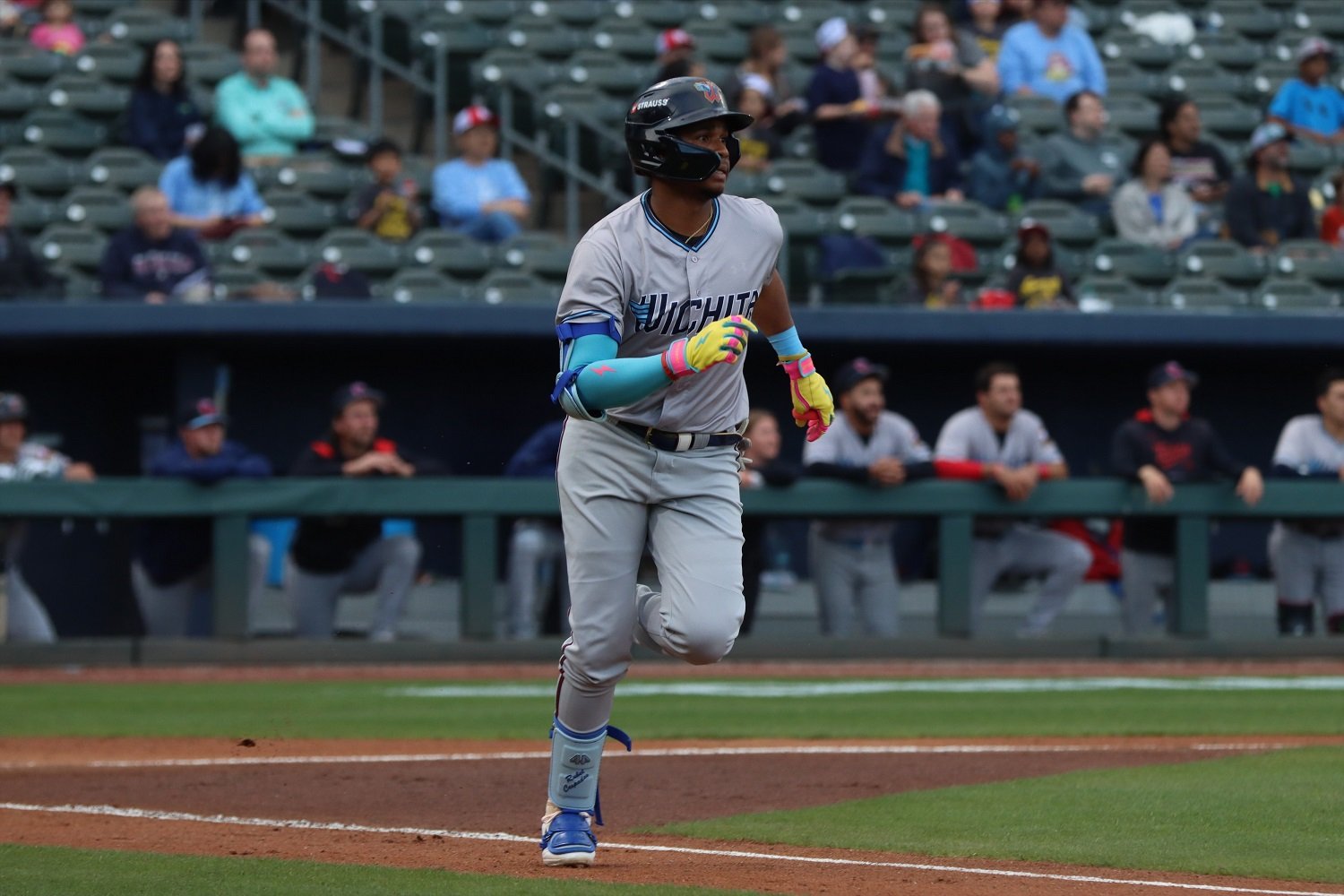 TRANSACTIONS No moves were made on Wednesday. Saints Sentinel St. Paul 8, Buffalo 7 Box Score Andrew Morris: 5 IP, 8 H, 0 ER, 1 BB, 6 K HR: Ryan Fitzgerald (3), Mike Ford (7) Multi-hit games: Ryan Fitzgerald (3-for-5, HR, 2B, 2 R, RBI), Mickey Gasper (2-for-3, 2B, 2 R, 2 BB), Edouard Julien (2-for-5, R, RBI), Jeferson Morales (2-for-4, R) The Saints won on a walk-off on Wednesday. Yet again, Andrew Morris demonstrated his unique ability to deliver pitching lines rarely seen by man. Only he can turn eight hits into zero earned runs—with six strikeouts to boot. At this point, I’m in awe; this is a master of a specific craft and every time he pitches we see something new. (The good news is that, for the most part, these lines are in his favor.) The Saints offense sputtered for a few innings before roaring into gear, turning the middle frames into a bloodbath spilled upon Buffalo pitchers. First, Will Holland crushed a pitch about as far as possible without netting a homer, instead settling for an RBI double. In the next inning, Ryan Fitzgerald homered before Mickey Gasper walked and stole second, leading to Carson McCusker pulverizing a run-scoring double. Finally, with two men on in the sixth, Edouard Julien cracked a single the other way, scoring two as the Bison’s left fielder forgot the process on how a human is supposed to pick up a baseball. For a time, that seemed to be the zenith of the game for St. Paul. Kyle Bischoff and Kody Funderburk endured brutal relief outings, with the latter surrendering a pair of back-breaking lead-relinquishing homers. Yet, St. Paul had one more rally in them. Julien singled to lead off the ninth, and McCusker walked to bring the winning run to the plate. That run—Mike Ford, perfectly capable of sending a ball into orbit—proved true, as the big man cracked a signature sky-scraper out to right field to win the game for the Saints. The Bisons are affiliated with the Toronto Blue Jays, and their third-ranked prospect, Orelvis Martinez, played second base in Wednesday’s game. He went 0-for-5. Wind Surge Wisdom Wichita 5, NW Arkansas 6 (10 Innings) Box Score Trent Baker: 5 IP, 1 H, 0 ER, 3 BB, 6 K HR: Rubel Cespedes (3) Multi-hit games: Tanner Schobel (4-for-6, 2B, 2 R, RBI), Rubel Cespedes (3-for-4, HR, R, 3 RBI, 2 BB), Kala'i Rosario (2-for-6, 2B, K), Ben Ross (2-for-5, RBI, BB) Once again, Trent Baker was magnificent. He entered the game with an already miniscule 2.49 ERA on the year, and found a way to lower the number; his five scoreless frames brought it to 2.03. The minor-league Rule 5 pick from the Cardinals has been electric so far in 2025. Wichita ensured their starter would have early support. Tanner Schobel doubled on the fifth pitch of the game, and Rubel Cespedes homered three offerings later. Not to be outdone, the two again jumped on the Naturals’ starter for RBI knocks in the second; this time, Schobel singled and stole second base, while Cespedes doubled him home. That starter, by the way, was one-time 21-game-winner Kyle Wright, rehabbing to potentially pitch again in the big leagues for the first time since 2023. That second inning proved the height of Wichita’s offensive powers, as they fought rabidly to put runners on in subsequent frames, but couldn’t break through like they did so easily to start the game. As well, what looked to be a breezy victory turned sour thanks to one man: Gavin Cross. What a terror. The Naturals DH launched a two-run shot in the seventh, and repeated his feat in the ninth to tie a game two outs away from its potential conclusion. Instead, we went into Manfred Man territory. The Wind Surge plated their run, but came up short on a second score when Cespedes was called out at third on a sacrifice fly double-play. NW Arkansas made them pay for that mistake: they jumped on Cody Laweryson, walking off the game just three batters into the bottom of the tenth. 18th-ranked MLB prospect, Jac Caglianone, singled and walked in five plate appearances. Kernels Nuggets Cedar Rapids 6, Beloit 5 Box Score Alejandro Hidalgo: 3 IP, 5 H, 3 ER, 2 BB, 4 K HR: None Multi-hit games: Kyle DeBarge (2-for-5, 2 R), Danny De Andrade (2-for-5, 2B, 2 RBI) The Kernels eked out a win on Wednesday. Cedar Rapids drew first blood, turning a Kyle DeBarge single and stolen base—typical DeBarge activities these days—into a run with a Danny De Andrade double. That would be the only score in the first, but three runs were ushered in the following frame, with the Kernels doing so without netting a base hit. The sequence went as follows: pop out, hit by pitch, stolen base, walk, hit by pitch, walk, strikeout, hit by pitch, wild pitch, groundout. It was ugly, and painful, but three runs are three runs. The scores aided starter Alejandro Hidalgo, who glided through the first inning before running into trouble in the 2nd and 3rd; Beloit scored twice in each frame, although because of a Brandon Winokur error, one of the runs was unearned. The two squads were knotted at five heading into the eighth. Kaelen Culpepper walked and DeBarge took his place after a groundout. After advancing to second, DeBarge skated home when De Andrade singled into right, giving him the game’s opening and ending RBIs. In total, the Kernels were hit by six pitches, with Jamie Ferrer suffering the worst of it; he was hit three times by three different pitches. He may need some extra ice. The Sky Carp are an affiliate of the Miami Marlins, and sent the 79th overall prospect in baseball, Noble Meyer, to the mound on Wednesday. He allowed five earned runs across 2 1/3 innings. DeBarge is slashing .284/.402/.477 so far this year with 16 stolen bases. Mussel Matters Fort Myers 3, Dunedin 7 Box Score Adrian Bohorquez: 3 IP, 3 H, 4 ER, 2 BB, 5 K HR: Yasser Mercedes (2) Multi-hit games: None The Mighty Mussels found a dearth of hitting on Wednesday. Adrian Bohorquez continued his rough start to the year. His 2 2/3 inning, two-run season debut on May 1st portended Wednesday’s tepid outing, which was mostly ruined by a two-homer third inning. Still, the righty struck out five and earned six whiffs off 10 swings at his breaking balls. He topped out at 95.7 MPH. Fort Myers’ batters faced a tough foe, as Dunedin’s starter was the 82nd-ranked prospect in MLB, Trey Yesavage. The 2024 first-round pick diced them up, punching out seven across five frames with just two hits allowed and one earned run. But did those hits ever count. The first was an RBI double by Peyton Carr, while the second was a two-run shot by Yasser Mercedes, plating a pair of unearned runs. (Statcast is somehow blanking on the metrics for that homer, which is a shame; he smoked that one.) Bohorquez’s departure left an opening for Cole Peschl to soak up innings. The righty entered the game with a perfect ERA across 17 1/3 innings in 2025… and he finally revealed mortality. Orel Hershiser can sleep peacefully. Still, he totaled 4 1/3 frames with seven strikeouts and five baserunners allowed, which is far from a disastrous outing. The Mighty Mussels failed to get a hit following Mercedes’ third-inning homer. Fort Myers pitchers struck out 16 batters on Wednesday. The aforementioned Yesavage was Dunedun’s highest-ranked prospect in the game. TWINS DAILY PLAYERS OF THE DAY Twins Daily Minor League Pitcher of the Day – Trent Baker Twins Daily Minor League Hitter of the Day – Rubel Cespedes PROSPECT SUMMARY Here’s a look at how the Twins Daily Top 20 Twins Prospects performed: #2 – Emmanuel Rodriguez (St. Paul) - 0-3, BB, 3 K #5 – Andrew Morris (St. Paul) - 5 IP, 8 H, 0 ER, 1 BB, 6 K #7 – Kaelen Culpepper (Cedar Rapids) - 1-4, RBI, 2 BB, 2 K #8 – Brandon Winokur (Cedar Rapids) - 0-4, RBI, 3 K #13 – Kyle DeBarge (Cedar Rapids) - 2-5, 2 R #15 – Yasser Mercedes (Fort Myers) - 1-4, HR, R, 2 RBI, 2 K #18 – Kala’i Rosario (Wichita) - 2-6, 2B, K THURSDAY’S PROBABLE STARTERS Buffalo @ St. Paul (6:37 PM) - RHP Cory Lewis Wichita @ NW Arkansas (7:05 PM) - LHP Connor Prielipp Cedar Rapids @ Beloit (6:05 PM) - RHP Tanner Hall Dunedin @ Fort Myers (6:05 PM) - RHP Jakob Hall FCL Twins @ FCL Orioles (11:00 AM) - TBD
- 7 comments
-
- 2
-
-
-
- mike ford
- andrew morris
- (and 4 more)
-
Once again, we'll take a close look at the best youngsters the Twins minor league teams had to offer, and crown one pitcher as the best of the best, while also spotlighting the other performers who deserved attention. Image courtesy of Rob Thompson, St. Paul Saints (photo of Zebby Matthews) Before we get to the list, let me quickly explain how I like to analyze starters. Innings are king; the ultimate point of pitching is to accrue outs, so I use innings as the center of my statistical solar system, in which everything else revolves around. That means I have a bias towards older players, which I try to account for and adjust. Then, I'll evaluate how effective a player was at run prevention, which, again, is the ultimate job of pitching. Although they are presented, I've lessened my use of peripherals, as they are more descriptive of how a player will perform in the future, not how they did in the past, which is what these awards are about. Finally, defining a "starting pitcher" in the minors is somewhat nebulous, as bulk hurlers will get time in as a starter, and as a bullpen arm depending on what the team needs. My line is this: a relief outing isn't completely thrown out, but it weighs less than a start. Let's get to the honorable mentions. Honorable Mentions Jason Doktorczyk - A Fort Myers, 2.70 ERA, 20 IP, 3.34 FIP Jason Doktorczyk perhaps enjoyed the most dominant start so far in the Twins’ minor league system, hurling a 0 ER, 10 K outing on the 18th. Three of his appearances came out of the bullpen, though, which kept him off the list proper. Dasan Hill, A Fort Myers - 1.69 ERA, 10 2/3 IP, 2.29 FIP On efficiency alone, I don’t think anyone topped Dasan Hill, whose first foray into pro ball resulted in a 50% K rate across 10 ⅔ innings. That’s 21 whiffs. Disgusting stuff. Christian MacLeod, A Fort Myers/AA Wichita - 0.00 ERA, 10 IP, 1.83 FIP Because he spent time rehabbing an injury, Christian MacLeod ended the month with just 10 frames, but also didn’t allow a run, which seemed deserving of a mention. Dylan Questad, A Fort Myers - 1.38 ERA, 13 IP, 3.27 FIP Dylan Questad has so far rebounded from a walk-filled showing at rookie ball, dominating A-ball with 18 strikeouts across 13 innings. Only two runs were scored off him. Jose Olivares, A+ Cedar Rapids - 0.00 ERA, 10 2/3 IP, 2.04 FIP Again, zero earned runs. You literally can’t beat that. The total innings were low, though, which just narrowly kept Jose Olivares off the list. 5. Charlee Soto, A+ Cedar Rapids - 1.38 ERA, 13 IP, 2.61 FIP, 28.3 K% 2025 has been kind to the former 2023 1st-rounder. While he often battled control issues in 2024—walking 33 batters across 74 innings—Charlee Soto appears to have found an elevated sharpness in his game. The walks are manageable—and he has so far dominated his competition. There’s a lot to be excited about regarding Soto. 19 year olds pitching at A+ ball don’t grow on trees; and ones with fastball traits like Soto are even more rare. He’s more than four years younger than the average player at the level, and he’s doing so while throwing high-90s velocity with improved movement. Again, you simply don’t see pitchers like this every day. The only bad news is that Soto is currently on the mend for right triceps soreness. Hopefully, he’s only off the mound for a short time. 4. Trent Baker, AA Wichita - 2.49 ERA, 21 ⅔ IP, 3.69 FIP, 21.5 K% A newcomer to the organization, Trent Baker joined the Twins as a minor league Rule 5 pick following four seasons with the Cardinals franchise. A ninth-round selection out of Angelo State University, the same college as Fort Myers’ Kade Bragg, Baker was never a top prospect, but pitched well in 2022 and 2023 before suffering command problems in 2024. He was also a Mankato MoonDog in 2019. Back in 2023, Eric Longenhagen of Fangraphs mentioned Baker as an off-the-list guy to look out for, calling his changeup a “usual plus” pitch, while his delivery was “as violent as the end of Once Upon A Time in Hollywood and more typical of a reliever.” He’s nonetheless buoyed the Wichita rotation so far in 2025. The righty made five starts, going at least three innings in all of them, while never allowing more than a trio of earned runs in any one outing. While other hurlers may have beat him in run suppression and efficiency, Baker came out on top in terms of innings; only one other pitcher named in this article threw more innings in April than him. 3. Cole Peschl, A Fort Myers - 0.00 ERA, 14 IP, 2.10 FIP, 33.3 K% Like his rotation mate, Hill, Cole Peschl’s placement here is an acknowledgement of his ridiculous efficiency. 14 innings without an earned run is impressive no matter how you slice it; yet he did so with 19 strikeouts, a WHIP of 1.00, and an opposing batting average under .200. In his first month of professional baseball. That’s worthy of praise. The Twins selected Peschl in the 15th round of the 2024 draft out of Campbell University, which claims a few notable current players like Cedric Mullins and Zach Neto (also, does the team have an obsession with the Carolinas? It seems to be a hotbed for players and prospects alike.) The righty held just a 5.48 ERA in college and almost transferred to Oregon, but he decided to join Minnesota, and the early returns look extremely promising. He made an appearance on May 1st—which doesn’t count for this list—in which he tossed 3 1/3 scoreless while striking out eight, giving him an absurd 27 Ks over 17 1/3 clean frames to start the season. He certainly would have ranked even higher if all his outings were starts, and if that most recent outing didn’t come after April ended. In any case, the team usually has a late-round breakout pitcher, and Peschl looks like a good bet to be that this year. 2. Darren Bowen, AA Wichita - 1.50 ERA, 18 IP, 3.88 FIP, 22.5 K% You don’t typically see a player eschew a 10 loss, 6.07 ERA season and dominate a higher level, but Darren Bowen’s April proved an exception. He was magnificent for the Wind Surge, never allowing more than one earned run in any of his outings, while tossing at least four frames in each appearance. You may be forgiven if you forgot about Bowen, who was probably the least-known player arriving from the Mariners in the Jorge Polanco trade. While Anthony DeSclafani and Justin Topa were big leaguers—and Gabriel Gonzalez was a well-regarded prospect—Bowen was a small-school lotto ticket. His alma mater of UNC Pembroke has just one big leaguer—River Ryan. Still, Bowen’s lankiness and projections made him a fascinating prospect. His 2024 was messy, but his 2025 is off to a tremendous start. He’ll claim the silver for our Minor League Starting Pitcher of the Month honors today (there’s no actual award for this.) 1. Zebby Matthews, AAA St. Paul - 1.93 ERA, 23 ⅓ IP, 1.87 FIP, 30.9 K% For maybe the 30th time as a pro, Zebby Matthews has been named Twins Daily’s Minor League Starting Pitcher of the Month. For as close as the rest of the list was, the winner was strangely straightforward: no other starter in the system married workload with efficiency like Matthews, who tossed the most innings of any Twins minor leaguer in April, while also carrying a sub-2.00 ERA. And he struck out over 30% of batters faced. Yeah, that’ll do. Zebby’s April 1st start set the tone for the month. He totaled five remarkably clean innings, allowing a lone hit while striking out four. Then came the whiff monster: in back-to-back outings he punched out nine and seven batters, respectively, before ending with two relative clunkers. (Relative being the key word: he allowed two earned runs across 8 1/3 innings but nonetheless allowed a lot of traffic, and was at least a little fortunate his ERA didn’t inflate more.) Matthews is everything you would want in a pitcher. A big guy with stuff and command, he’s spent almost his entire professional career laying waste to minor league hitters; with them often spending most of their day against him walking back to the dugout, slumped and confused. Across 228 2/3 minor league innings, he holds a 3.07 ERA. With Zebby, the only question left is opportunity; he’s clearly demonstrated a dominance of the minors, leaving the majors as his final stepping stone. Due to the nature of pitchers, he’ll invariably earn a chance—an injury here; a double-header there will make sure of that—and that’s when we will see if he can make the jump. Until then, he’ll have to settle for earning our Minor League Starting Pitcher of the Month honors for April 2025. View full article
- 22 replies
-
- 1
-
-
- zebby matthews
- darren bowen
- (and 8 more)
-
 Before we get to the list, let me quickly explain how I like to analyze starters. Innings are king; the ultimate point of pitching is to accrue outs, so I use innings as the center of my statistical solar system, in which everything else revolves around. That means I have a bias towards older players, which I try to account for and adjust. Then, I'll evaluate how effective a player was at run prevention, which, again, is the ultimate job of pitching. Although they are presented, I've lessened my use of peripherals, as they are more descriptive of how a player will perform in the future, not how they did in the past, which is what these awards are about. Finally, defining a "starting pitcher" in the minors is somewhat nebulous, as bulk hurlers will get time in as a starter, and as a bullpen arm depending on what the team needs. My line is this: a relief outing isn't completely thrown out, but it weighs less than a start. Let's get to the honorable mentions. Honorable Mentions Jason Doktorczyk - A Fort Myers, 2.70 ERA, 20 IP, 3.34 FIP Jason Doktorczyk perhaps enjoyed the most dominant start so far in the Twins’ minor league system, hurling a 0 ER, 10 K outing on the 18th. Three of his appearances came out of the bullpen, though, which kept him off the list proper. Dasan Hill, A Fort Myers - 1.69 ERA, 10 2/3 IP, 2.29 FIP On efficiency alone, I don’t think anyone topped Dasan Hill, whose first foray into pro ball resulted in a 50% K rate across 10 ⅔ innings. That’s 21 whiffs. Disgusting stuff. Christian MacLeod, A Fort Myers/AA Wichita - 0.00 ERA, 10 IP, 1.83 FIP Because he spent time rehabbing an injury, Christian MacLeod ended the month with just 10 frames, but also didn’t allow a run, which seemed deserving of a mention. Dylan Questad, A Fort Myers - 1.38 ERA, 13 IP, 3.27 FIP Dylan Questad has so far rebounded from a walk-filled showing at rookie ball, dominating A-ball with 18 strikeouts across 13 innings. Only two runs were scored off him. Jose Olivares, A+ Cedar Rapids - 0.00 ERA, 10 2/3 IP, 2.04 FIP Again, zero earned runs. You literally can’t beat that. The total innings were low, though, which just narrowly kept Jose Olivares off the list. 5. Charlee Soto, A+ Cedar Rapids - 1.38 ERA, 13 IP, 2.61 FIP, 28.3 K% 2025 has been kind to the former 2023 1st-rounder. While he often battled control issues in 2024—walking 33 batters across 74 innings—Charlee Soto appears to have found an elevated sharpness in his game. The walks are manageable—and he has so far dominated his competition. There’s a lot to be excited about regarding Soto. 19 year olds pitching at A+ ball don’t grow on trees; and ones with fastball traits like Soto are even more rare. He’s more than four years younger than the average player at the level, and he’s doing so while throwing high-90s velocity with improved movement. Again, you simply don’t see pitchers like this every day. The only bad news is that Soto is currently on the mend for right triceps soreness. Hopefully, he’s only off the mound for a short time. 4. Trent Baker, AA Wichita - 2.49 ERA, 21 ⅔ IP, 3.69 FIP, 21.5 K% A newcomer to the organization, Trent Baker joined the Twins as a minor league Rule 5 pick following four seasons with the Cardinals franchise. A ninth-round selection out of Angelo State University, the same college as Fort Myers’ Kade Bragg, Baker was never a top prospect, but pitched well in 2022 and 2023 before suffering command problems in 2024. He was also a Mankato MoonDog in 2019. Back in 2023, Eric Longenhagen of Fangraphs mentioned Baker as an off-the-list guy to look out for, calling his changeup a “usual plus” pitch, while his delivery was “as violent as the end of Once Upon A Time in Hollywood and more typical of a reliever.” He’s nonetheless buoyed the Wichita rotation so far in 2025. The righty made five starts, going at least three innings in all of them, while never allowing more than a trio of earned runs in any one outing. While other hurlers may have beat him in run suppression and efficiency, Baker came out on top in terms of innings; only one other pitcher named in this article threw more innings in April than him. 3. Cole Peschl, A Fort Myers - 0.00 ERA, 14 IP, 2.10 FIP, 33.3 K% Like his rotation mate, Hill, Cole Peschl’s placement here is an acknowledgement of his ridiculous efficiency. 14 innings without an earned run is impressive no matter how you slice it; yet he did so with 19 strikeouts, a WHIP of 1.00, and an opposing batting average under .200. In his first month of professional baseball. That’s worthy of praise. The Twins selected Peschl in the 15th round of the 2024 draft out of Campbell University, which claims a few notable current players like Cedric Mullins and Zach Neto (also, does the team have an obsession with the Carolinas? It seems to be a hotbed for players and prospects alike.) The righty held just a 5.48 ERA in college and almost transferred to Oregon, but he decided to join Minnesota, and the early returns look extremely promising. He made an appearance on May 1st—which doesn’t count for this list—in which he tossed 3 1/3 scoreless while striking out eight, giving him an absurd 27 Ks over 17 1/3 clean frames to start the season. He certainly would have ranked even higher if all his outings were starts, and if that most recent outing didn’t come after April ended. In any case, the team usually has a late-round breakout pitcher, and Peschl looks like a good bet to be that this year. 2. Darren Bowen, AA Wichita - 1.50 ERA, 18 IP, 3.88 FIP, 22.5 K% You don’t typically see a player eschew a 10 loss, 6.07 ERA season and dominate a higher level, but Darren Bowen’s April proved an exception. He was magnificent for the Wind Surge, never allowing more than one earned run in any of his outings, while tossing at least four frames in each appearance. You may be forgiven if you forgot about Bowen, who was probably the least-known player arriving from the Mariners in the Jorge Polanco trade. While Anthony DeSclafani and Justin Topa were big leaguers—and Gabriel Gonzalez was a well-regarded prospect—Bowen was a small-school lotto ticket. His alma mater of UNC Pembroke has just one big leaguer—River Ryan. Still, Bowen’s lankiness and projections made him a fascinating prospect. His 2024 was messy, but his 2025 is off to a tremendous start. He’ll claim the silver for our Minor League Starting Pitcher of the Month honors today (there’s no actual award for this.) 1. Zebby Matthews, AAA St. Paul - 1.93 ERA, 23 ⅓ IP, 1.87 FIP, 30.9 K% For maybe the 30th time as a pro, Zebby Matthews has been named Twins Daily’s Minor League Starting Pitcher of the Month. For as close as the rest of the list was, the winner was strangely straightforward: no other starter in the system married workload with efficiency like Matthews, who tossed the most innings of any Twins minor leaguer in April, while also carrying a sub-2.00 ERA. And he struck out over 30% of batters faced. Yeah, that’ll do. Zebby’s April 1st start set the tone for the month. He totaled five remarkably clean innings, allowing a lone hit while striking out four. Then came the whiff monster: in back-to-back outings he punched out nine and seven batters, respectively, before ending with two relative clunkers. (Relative being the key word: he allowed two earned runs across 8 1/3 innings but nonetheless allowed a lot of traffic, and was at least a little fortunate his ERA didn’t inflate more.) Matthews is everything you would want in a pitcher. A big guy with stuff and command, he’s spent almost his entire professional career laying waste to minor league hitters; with them often spending most of their day against him walking back to the dugout, slumped and confused. Across 228 2/3 minor league innings, he holds a 3.07 ERA. With Zebby, the only question left is opportunity; he’s clearly demonstrated a dominance of the minors, leaving the majors as his final stepping stone. Due to the nature of pitchers, he’ll invariably earn a chance—an injury here; a double-header there will make sure of that—and that’s when we will see if he can make the jump. Until then, he’ll have to settle for earning our Minor League Starting Pitcher of the Month honors for April 2025.
- 22 comments
-
- 9
-
-
-
- zebby matthews
- darren bowen
- (and 8 more)
-
Sands in the 8th raised an eyebrow from me, but it was good to see him come through. Hope that’s a confidence builder for him going forward.
- 14 replies
-
- 2
-
-
- bailey ober
- jhoan duran
- (and 5 more)
-
Image courtesy of © Eric Canha-Imagn Images Box Score Joe Ryan: 6 IP, 4 H, 1 ER, 1 BB, 8 K Home Runs: Ryan Jeffers (2) Bottom 3 WPA: Louis Varland (-.140), Danny Coulombe (-.124), Carlos Correa (-.106) Win Probability Chart (via FanGraphs) Fresh off a standard Cleveland series—what with the multiple walk-offs and unlimited late blown leads—Rocco Baldelli looked to change things up. The repetition felt stale; something about the team needed altering if they wanted to avoid the pitfalls of 2024. That’s how we get a lineup featuring Trevor Larnach hitting leadoff with Brooks Lee in the three-hole. Would it work? Let’s see. Early returns were not favorable. Not that it had anything to do with the lineup. Joe Ryan sliced up Boston’s first two hitters before an old foe in a new uniform appeared. Alex Bregman may have traded Houston’s orange for Boston’s white and red trim, but he’s still a Twin-killer at heart—and new threads didn’t change that. He saw one of Ryan’s signature high fastballs and cracked the pitch 410 feet into left-center. Annoying as the run was, Minnesota responded fairly quickly, finding their redemptive gumption through Ryan Jeffers’ bat, which found kinship in a hanging Brayan Bello slider, soon to become one of those classic high-rising line drive homers that appear capable of leaving Boston altogether. That quieted things. Both starters settled in. Ryan shed the 1st-frame inefficiency to cut through the Red Sox lineup, collecting whiffs with his impossibly squirrely fastball; before it was all said and done, he earned 12 swings-and-misses on the pitch, and eight strikeouts overall. Not quite the bat-missing wizard, Bello decided to let his defense work for him, striking out just five while Jarren Duran performed Olympic-level gymnastics in left field. The two crossed the six-inning threshold with just their lone solo homers as blemishes. Sometimes there were threats. Often, there wasn’t. Any trouble seemed inconsequential as the starters dove deep into the game. As it always seems to be, drama didn’t fully arrive until the bullpen entered the game. Louis Varland took the mound rearing, ready to fire heaters, but walked off the mound puzzled after just five pitches when two singles and a bunt placed two men in scoring position. Enter Danny Coulombe. The Great Problem-Solver. Capable of wriggling out of anything. He struck out his first batter, Duran. Rafael Devers? A little trickier. He shot a grounder somewhere between routine and tricky to Edouard Julien, who couldn’t handle the opportunity, falling all over himself as two runs scored. And that portended the worst of it. Things continued to slide: Jorge Alcalá entered in the 8th and found no favor in the mound; in his arm; or in his fortune in attempting to accrue outs. Three runs scored on his watch. It was nearly four, but grace blessed him in a most minor and, frankly, somewhat insulting way, as Duran was originally called safe when sliding into home, yet was called out on review. Liam Hendriks ended the inevitable in the 9th, perhaps as a way to salt the wound. Notes: Joe Ryan's eight strikeouts give him 572 in his career, the 18th-most in Twins history. He's 14 away from tying Rick Aguilera. Ryan Jeffers hit his 61st career homer on Friday, the 4th most by a primary catcher in Twins history. He's 15 away from tying Earl Battey. Danny Coulombe appeared in his 302nd career MLB game. Byron Buxton is slashing .444/.444/.444 in two games in May. Post-Game Interview: What’s Next? The Twins and Red Sox battle again on Saturday, with Bailey Ober set to face off against Hunter Dobbins. First pitch is at 3:10 PM. Bullpen Usage Spreadsheet View full article
-
 Box Score Joe Ryan: 6 IP, 4 H, 1 ER, 1 BB, 8 K Home Runs: Ryan Jeffers (2) Bottom 3 WPA: Louis Varland (-.140), Danny Coulombe (-.124), Carlos Correa (-.106) Win Probability Chart (via FanGraphs) Fresh off a standard Cleveland series—what with the multiple walk-offs and unlimited late blown leads—Rocco Baldelli looked to change things up. The repetition felt stale; something about the team needed altering if they wanted to avoid the pitfalls of 2024. That’s how we get a lineup featuring Trevor Larnach hitting leadoff with Brooks Lee in the three-hole. Would it work? Let’s see. Early returns were not favorable. Not that it had anything to do with the lineup. Joe Ryan sliced up Boston’s first two hitters before an old foe in a new uniform appeared. Alex Bregman may have traded Houston’s orange for Boston’s white and red trim, but he’s still a Twin-killer at heart—and new threads didn’t change that. He saw one of Ryan’s signature high fastballs and cracked the pitch 410 feet into left-center. Annoying as the run was, Minnesota responded fairly quickly, finding their redemptive gumption through Ryan Jeffers’ bat, which found kinship in a hanging Brayan Bello slider, soon to become one of those classic high-rising line drive homers that appear capable of leaving Boston altogether. That quieted things. Both starters settled in. Ryan shed the 1st-frame inefficiency to cut through the Red Sox lineup, collecting whiffs with his impossibly squirrely fastball; before it was all said and done, he earned 12 swings-and-misses on the pitch, and eight strikeouts overall. Not quite the bat-missing wizard, Bello decided to let his defense work for him, striking out just five while Jarren Duran performed Olympic-level gymnastics in left field. The two crossed the six-inning threshold with just their lone solo homers as blemishes. Sometimes there were threats. Often, there wasn’t. Any trouble seemed inconsequential as the starters dove deep into the game. As it always seems to be, drama didn’t fully arrive until the bullpen entered the game. Louis Varland took the mound rearing, ready to fire heaters, but walked off the mound puzzled after just five pitches when two singles and a bunt placed two men in scoring position. Enter Danny Coulombe. The Great Problem-Solver. Capable of wriggling out of anything. He struck out his first batter, Duran. Rafael Devers? A little trickier. He shot a grounder somewhere between routine and tricky to Edouard Julien, who couldn’t handle the opportunity, falling all over himself as two runs scored. And that portended the worst of it. Things continued to slide: Jorge Alcalá entered in the 8th and found no favor in the mound; in his arm; or in his fortune in attempting to accrue outs. Three runs scored on his watch. It was nearly four, but grace blessed him in a most minor and, frankly, somewhat insulting way, as Duran was originally called safe when sliding into home, yet was called out on review. Liam Hendriks ended the inevitable in the 9th, perhaps as a way to salt the wound. Notes: Joe Ryan's eight strikeouts give him 572 in his career, the 18th-most in Twins history. He's 14 away from tying Rick Aguilera. Ryan Jeffers hit his 61st career homer on Friday, the 4th most by a primary catcher in Twins history. He's 15 away from tying Earl Battey. Danny Coulombe appeared in his 302nd career MLB game. Byron Buxton is slashing .444/.444/.444 in two games in May. Post-Game Interview: What’s Next? The Twins and Red Sox battle again on Saturday, with Bailey Ober set to face off against Hunter Dobbins. First pitch is at 3:10 PM. Bullpen Usage Spreadsheet
- 104 comments
-
- 1
-
-
- ryan jeffers
- joe ryan
- (and 5 more)
-
Twins Minor League Report (4/30): A Clean Sweep
Matt Braun posted a topic in Twins Minor League Talk
Image courtesy of Ed Bailey, Wichita Wind Surge (photo of Aaron Sabato) TRANSACTIONS RHP Cole Percival signed and assigned to A+ Cedar Rapids RHP Agustin Campusano assigned to DSL Twins RHP Michael Ross activated from 7-day IL (A Fort Myers) RHP Will Armbruster assigned to FCL Twins RHP Matt Canterino re-signed and assigned to they 7-Day IL of AAA St. Paul So concludes our right-handed pitcher update. Saints Sentinel St. Paul 8, Columbus 7 (11 Innings) Box Score Andrew Morris: 4 IP, 6 H, 4 ER, 1 BB, 5 K HR: Mike Ford (5) Multi-hit games: Ryan Fitzgerald (2-for-5, 2B, 2 R, RBI, BB), Mike Ford (2-for-5, HR, R, 2 RBI), Patrick Winkel (2-for-5, 2B) The Saints won in extras on Wednesday. Who cursed Andrew Morris? After starting the season with back-to-back scoreless starts, the righty experienced his second clunker in his last three outings. The damage was immediate and consistent; he didn’t see his first 1-2-3 frame until the 4th, which proved to be his final inning. The good news is that he still struck out five and only walked one. St. Paul’s offense favored democracy; only two starters went home without a hit, and five batters drove in at least one run. Most potent was the Carson McCusker/Mike Ford/Armando Alvarez run at the lineup’s heart; the three hitters combined for six RBIs, four hits, and three runs. Ford sure hits them high. The Saints and Clippers traded Manfred Man runs in the 10th before St. Paul scored again in the 11th and held their counterparts at bay to win the game. Rehabbing big-leaguer Royce Lewis went 0-for-5 with two strikeouts. He played nine innings at third base before being lifted for a defensive substitute. Rehabbing big-leaguer Michael Tonkin appeared for the first time since April 25th. He threw two innings, allowing a run while striking out two and walking two. Columbus is the AAA affiliate of the Cleveland Guardians. First baseman C.J. Kayfus—ranked eighth on the team—served as their finest prospect. He homered and singled in five at-bats. Wind Surge Wisdom Wichita 7, Frisco 0 Box Score Trent Baker: 5 IP, 2 H, 0 ER, 1 BB, 4 K HR: Aaron Sabato (2), Kyler Fedko (5) Multi-hit games: Ricardo Olivar (2-for-2, 2 RBI, 2 BB), Aaron Sabato (2-for-3, HR, 2B, 3 R, RBI, 2 BB) The Wind Surge smoked their competition on Wednesday. Already one of April’s top performers, Trent Baker added to his resume with five brilliant innings, punching out four while blanking the RoughRiders. He allowed just three baserunners. It’s hard to make a better organizational impression than Baker, who joined the Twins following four seasons with the Cardinals. He was also a Mankato MoonDog back in 2019! Baker handed the ball to Mike Paredes, who continued the pitching vibes with three shutout frames of his own. Joel Cesar concluded things to give Wichita their second shutout in five days (the other was also a 7-0 victory.) Offensively, the Wind Surge scored early and often. Aaron Sabato blasted an opposite-field homer in the 2nd to kick off the festivities, and Andrew Cossetti singled in a run two frames later. In the sixth, Kyler Fedko launched a moonshot to plate a third run, soon to become four after a Ricardo Olivar RBI knock in the seventh. The eighth is when things got absurd. Four consecutive walks augured a run, which soon stacked into three with a Tanner Schobel single and Olivar sacrifice fly. The 16th-best prospect in MLB, Sebastian Walcott, played shortstop for Frisco on Wednesday and went 0-for-4 at the plate. Kernels Nuggets Cedar Rapids 4, Iowa 3 Box Score Chase Chaney: 6 IP, 4 H, 2 ER, 3 BB, 2 K HR: Brandon Winokur (1), Kyle DeBarge (3) Multi-hit games: Kyle DeBarge (3-for-4, HR, 2 R, RBI), Billy Amick (2-for-4) The Kernels squeaked out a win on Wednesday. Starter Chase Chaney’s outing was unique; unique in that starters in April don’t often reach six innings in the minors; unique in that he walked more than he struck out; and unique in that he only needed 78 pitches to do so. We may never see a start quite like this again—and the good news is that he also excelled in run prevention, with only two men scoring against him. Nate Baez kicked off the scoring with an RBI double in the second, before Brandon Winokur extended the lead with a two-run shot the following frame, his first homer of the year. The runs portended an extended streak of emptiness from both squads: starting with the fourth inning and running until the eighth, neither team scored, and they only ever mildly threatened to do so. Sometimes a man reached second. That’s as far as he would get. Lonely was the base paths; dull was the adventure. But that would eventually change. In the eighth, Carter Trice homered for Iowa to knot the game at three, inspiring Kyle DeBarge to respond with an absolute tank. Minor-league cameras are never great, yet they usually at least find some semblance of the ball; good luck seeing where this one went. Spencer Bengard shut the door in the ninth to cap off a brilliant three-frame outing out of the bullpen. His minor-league ERA over 110 career innings is now 2.05. The best of the baby Cubs is mostly waiting on the franchise’s AAA squad, but Iowa does enjoy the presence of Jefferson Rojas, the team’s 7th-ranked prospect. He singled and drove in a run in four trips to the plate. Mussel Matters Fort Myers 6, Jupiter 5 Box Score Michael Ross: 2 IP, 3 H, 1 ER, 0 BB, 1 K HR: None Multi-hit games: Will Holland (2-for-4, 2B, R, RBI), Poncho Ruiz (3-for-3, 2 2B, 3 RBI, 2 BB) The Mighty Mussels walked off their opponent on Wednesday. Given his prolific day at the plate, it was only fitting that Poncho Ruiz was the man to deliver the win for Fort Myers: the catcher reached base all five times he stepped up to the plate, thrashing a pair of doubles and a single while working a pair of walks. Three of the game’s six runs scored thanks to his hits. The final two were ushered home off his game-winning smack deep into the left-center gap. That was Fort Myers’ first walk-off since Brandon Winokur’s game-ending homer on August 27th, 2024. Starter Michael Ross made his second professional appearance on Wednesday, and his first since hitting the IL on April 6th. The Samford product—alma mater of just two big leaguers—worked two inefficient innings with an earned run allowed, displaying the kind of rust expected from a hurler who hadn’t pitched since the beginning of the month. Outside of Ruiz, the Mighty Mussels were remarkably balanced offensively: eight of the nine starters reached base at least once, and they took seven walks as a team. Ruiz wasn’t even the only batter to walk twice; Jose Rodriguez accomplished the same feat. As a team, Fort Myers went 3-for-17 with runners in scoring position, which is ghastly, but it's also kind of impressive that they hit 17 times with someone in scoring position. The Hammerheads are an affiliate of the Miami Marlins. They employ the talents of the team’s 7th-ranked prospect, outfielder, and former 1st-rounder P.J. Morlando. He doubled and walked in five plate appearances. TWINS DAILY PLAYERS OF THE DAY Twins Daily Minor League Pitcher of the Day – Trent Baker Twins Daily Minor League Hitter of the Day – Aaron Sabato ft. Poncho Ruiz and Kyle DeBarge PROSPECT SUMMARY Here’s a look at how the Twins Daily Top 20 Twins Prospects performed: #5 – Andrew Morris (St. Paul) - 4 IP, 6 H, 4 ER, 1 BB, 5 K #7 – Kaelen Culpepper (Cedar Rapids) - 0-4 #8 – Brandon Winokur (Cedar Rapids) - 1-4, HR, R, 2 RBI #13 – Kyle DeBarge (Cedar Rapids) - 3-4, HR, 2 R, RBI #15 – Yasser Mercedes (Fort Myers) - 0-4, R, BB, 2 K #17 – Billy Amick (Cedar Rapids) - 2-4 #18 – Kala’i Rosario (Wichita) - 0-5, 4 K #19 – Gabriel Gonzalez (Cedar Rapids) - 0-4, K #20 – Ricardo Olivar (Wichita) - 2-2, 2 RBI, 2 BB THURSDAY’S PROBABLE STARTERS St. Paul @ Columbus Game One (11:05 AM) - RHP Cory Lewis St. Paul @ Columbus Game Two - RHP Marco Raya Wichita @ Frisco (6:35 PM) - RHP Pierson Ohl South Bend @ Cedar Rapids (6:35 PM) - RHP Alejandro Hidalgo Jupiter @ Fort Myers (5:05 PM) - TBD View full article -
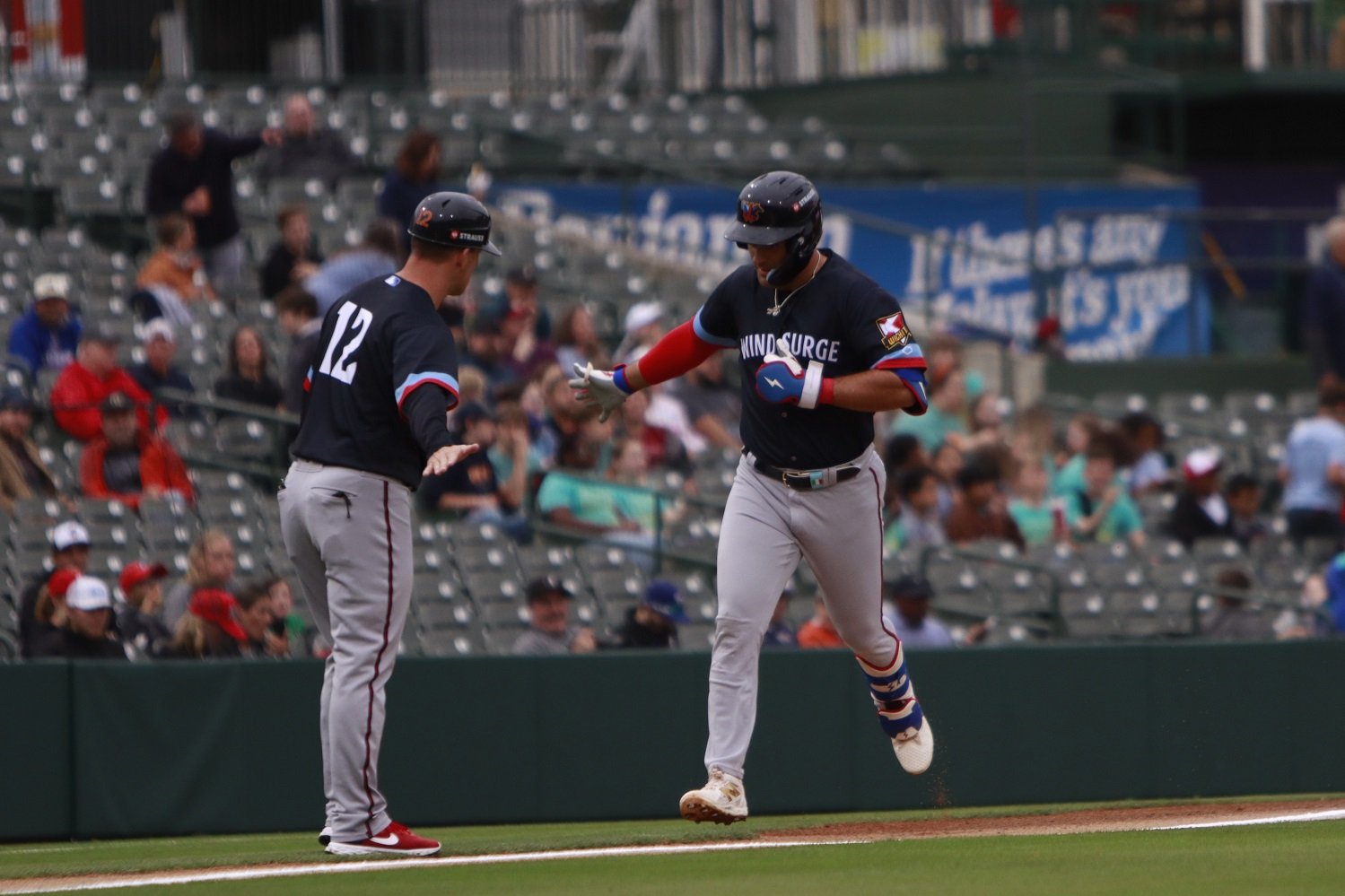 TRANSACTIONS RHP Cole Percival signed and assigned to A+ Cedar Rapids RHP Agustin Campusano assigned to DSL Twins RHP Michael Ross activated from 7-day IL (A Fort Myers) RHP Will Armbruster assigned to FCL Twins RHP Matt Canterino re-signed and assigned to they 7-Day IL of AAA St. Paul So concludes our right-handed pitcher update. Saints Sentinel St. Paul 8, Columbus 7 (11 Innings) Box Score Andrew Morris: 4 IP, 6 H, 4 ER, 1 BB, 5 K HR: Mike Ford (5) Multi-hit games: Ryan Fitzgerald (2-for-5, 2B, 2 R, RBI, BB), Mike Ford (2-for-5, HR, R, 2 RBI), Patrick Winkel (2-for-5, 2B) The Saints won in extras on Wednesday. Who cursed Andrew Morris? After starting the season with back-to-back scoreless starts, the righty experienced his second clunker in his last three outings. The damage was immediate and consistent; he didn’t see his first 1-2-3 frame until the 4th, which proved to be his final inning. The good news is that he still struck out five and only walked one. St. Paul’s offense favored democracy; only two starters went home without a hit, and five batters drove in at least one run. Most potent was the Carson McCusker/Mike Ford/Armando Alvarez run at the lineup’s heart; the three hitters combined for six RBIs, four hits, and three runs. Ford sure hits them high. The Saints and Clippers traded Manfred Man runs in the 10th before St. Paul scored again in the 11th and held their counterparts at bay to win the game. Rehabbing big-leaguer Royce Lewis went 0-for-5 with two strikeouts. He played nine innings at third base before being lifted for a defensive substitute. Rehabbing big-leaguer Michael Tonkin appeared for the first time since April 25th. He threw two innings, allowing a run while striking out two and walking two. Columbus is the AAA affiliate of the Cleveland Guardians. First baseman C.J. Kayfus—ranked eighth on the team—served as their finest prospect. He homered and singled in five at-bats. Wind Surge Wisdom Wichita 7, Frisco 0 Box Score Trent Baker: 5 IP, 2 H, 0 ER, 1 BB, 4 K HR: Aaron Sabato (2), Kyler Fedko (5) Multi-hit games: Ricardo Olivar (2-for-2, 2 RBI, 2 BB), Aaron Sabato (2-for-3, HR, 2B, 3 R, RBI, 2 BB) The Wind Surge smoked their competition on Wednesday. Already one of April’s top performers, Trent Baker added to his resume with five brilliant innings, punching out four while blanking the RoughRiders. He allowed just three baserunners. It’s hard to make a better organizational impression than Baker, who joined the Twins following four seasons with the Cardinals. He was also a Mankato MoonDog back in 2019! Baker handed the ball to Mike Paredes, who continued the pitching vibes with three shutout frames of his own. Joel Cesar concluded things to give Wichita their second shutout in five days (the other was also a 7-0 victory.) Offensively, the Wind Surge scored early and often. Aaron Sabato blasted an opposite-field homer in the 2nd to kick off the festivities, and Andrew Cossetti singled in a run two frames later. In the sixth, Kyler Fedko launched a moonshot to plate a third run, soon to become four after a Ricardo Olivar RBI knock in the seventh. The eighth is when things got absurd. Four consecutive walks augured a run, which soon stacked into three with a Tanner Schobel single and Olivar sacrifice fly. The 16th-best prospect in MLB, Sebastian Walcott, played shortstop for Frisco on Wednesday and went 0-for-4 at the plate. Kernels Nuggets Cedar Rapids 4, Iowa 3 Box Score Chase Chaney: 6 IP, 4 H, 2 ER, 3 BB, 2 K HR: Brandon Winokur (1), Kyle DeBarge (3) Multi-hit games: Kyle DeBarge (3-for-4, HR, 2 R, RBI), Billy Amick (2-for-4) The Kernels squeaked out a win on Wednesday. Starter Chase Chaney’s outing was unique; unique in that starters in April don’t often reach six innings in the minors; unique in that he walked more than he struck out; and unique in that he only needed 78 pitches to do so. We may never see a start quite like this again—and the good news is that he also excelled in run prevention, with only two men scoring against him. Nate Baez kicked off the scoring with an RBI double in the second, before Brandon Winokur extended the lead with a two-run shot the following frame, his first homer of the year. The runs portended an extended streak of emptiness from both squads: starting with the fourth inning and running until the eighth, neither team scored, and they only ever mildly threatened to do so. Sometimes a man reached second. That’s as far as he would get. Lonely was the base paths; dull was the adventure. But that would eventually change. In the eighth, Carter Trice homered for Iowa to knot the game at three, inspiring Kyle DeBarge to respond with an absolute tank. Minor-league cameras are never great, yet they usually at least find some semblance of the ball; good luck seeing where this one went. Spencer Bengard shut the door in the ninth to cap off a brilliant three-frame outing out of the bullpen. His minor-league ERA over 110 career innings is now 2.05. The best of the baby Cubs is mostly waiting on the franchise’s AAA squad, but Iowa does enjoy the presence of Jefferson Rojas, the team’s 7th-ranked prospect. He singled and drove in a run in four trips to the plate. Mussel Matters Fort Myers 6, Jupiter 5 Box Score Michael Ross: 2 IP, 3 H, 1 ER, 0 BB, 1 K HR: None Multi-hit games: Will Holland (2-for-4, 2B, R, RBI), Poncho Ruiz (3-for-3, 2 2B, 3 RBI, 2 BB) The Mighty Mussels walked off their opponent on Wednesday. Given his prolific day at the plate, it was only fitting that Poncho Ruiz was the man to deliver the win for Fort Myers: the catcher reached base all five times he stepped up to the plate, thrashing a pair of doubles and a single while working a pair of walks. Three of the game’s six runs scored thanks to his hits. The final two were ushered home off his game-winning smack deep into the left-center gap. That was Fort Myers’ first walk-off since Brandon Winokur’s game-ending homer on August 27th, 2024. Starter Michael Ross made his second professional appearance on Wednesday, and his first since hitting the IL on April 6th. The Samford product—alma mater of just two big leaguers—worked two inefficient innings with an earned run allowed, displaying the kind of rust expected from a hurler who hadn’t pitched since the beginning of the month. Outside of Ruiz, the Mighty Mussels were remarkably balanced offensively: eight of the nine starters reached base at least once, and they took seven walks as a team. Ruiz wasn’t even the only batter to walk twice; Jose Rodriguez accomplished the same feat. As a team, Fort Myers went 3-for-17 with runners in scoring position, which is ghastly, but it's also kind of impressive that they hit 17 times with someone in scoring position. The Hammerheads are an affiliate of the Miami Marlins. They employ the talents of the team’s 7th-ranked prospect, outfielder, and former 1st-rounder P.J. Morlando. He doubled and walked in five plate appearances. TWINS DAILY PLAYERS OF THE DAY Twins Daily Minor League Pitcher of the Day – Trent Baker Twins Daily Minor League Hitter of the Day – Aaron Sabato ft. Poncho Ruiz and Kyle DeBarge PROSPECT SUMMARY Here’s a look at how the Twins Daily Top 20 Twins Prospects performed: #5 – Andrew Morris (St. Paul) - 4 IP, 6 H, 4 ER, 1 BB, 5 K #7 – Kaelen Culpepper (Cedar Rapids) - 0-4 #8 – Brandon Winokur (Cedar Rapids) - 1-4, HR, R, 2 RBI #13 – Kyle DeBarge (Cedar Rapids) - 3-4, HR, 2 R, RBI #15 – Yasser Mercedes (Fort Myers) - 0-4, R, BB, 2 K #17 – Billy Amick (Cedar Rapids) - 2-4 #18 – Kala’i Rosario (Wichita) - 0-5, 4 K #19 – Gabriel Gonzalez (Cedar Rapids) - 0-4, K #20 – Ricardo Olivar (Wichita) - 2-2, 2 RBI, 2 BB THURSDAY’S PROBABLE STARTERS St. Paul @ Columbus Game One (11:05 AM) - RHP Cory Lewis St. Paul @ Columbus Game Two - RHP Marco Raya Wichita @ Frisco (6:35 PM) - RHP Pierson Ohl South Bend @ Cedar Rapids (6:35 PM) - RHP Alejandro Hidalgo Jupiter @ Fort Myers (5:05 PM) - TBD
- 10 comments
-
- 4
-
-
-
- aaron sabato
- poncho ruiz
- (and 5 more)
-
In the fourth week of each April, the NFL Draft upstages even actual baseball games and the NBA Playoffs, at least in many American households. Is it realistic—or even desirable—for the MLB Draft ever to approximate that level of mania? Image courtesy of © Kevin Jairaj-Imagn Images “You want to televise what?” then-Commissioner Pete Rozelle incredulously replied, when a fledgling network called ESPN brought their desire to broadcast the NFL Draft to league officials. The statement has become immortalized in football legend, but Rozelle had good reason for skepticism. At that pointm the draft was a conclave of middle-aged men, bespectacled and ringed with cigarette smoke, making calls and deciding team futures over glasses of brandy. It was conducted in the wood-lined walls of hotel rooms, and served as little more than an organized press release to inform the public which college stars would be going to what teams. Nowadays, the draft is a spectacle unrivaled in pro sports. Perhaps inspired by the ethos of a traveling circus—including the dazzling and melodramatic flourishes inherent in the event—the draft is now a three-day roaming event, taking over cities as it commands the attention and commerce of the local community. Great stages are sculpted and (just as quickly) torn down, all to highlight the young talent soon to become the league’s next corps of superstars. In contrast with the events of yesteryear—the limited gatherings that made fans feel like outsiders gazing into a private convention—modern draft events are open for all. There’s live music; an embrace of local customs; and a bizarrely carnival-like atmosphere. Beloved players from past and present come in to make people feel like this draft is for them. More than an in-person event, the draft has erupted in popularity because of its success as a TV affair. It provides the drama, stakes, and unexpected developments present in sporting events, but this time on an actual, literal stage. We usually know who’s going first overall. Everywhere else? A guess. And the How and When that create specific moments are often more juicy than the selections themselves. Months of speculation and theorizing from media and casual sports talk fail to hit on everything; an unpredictable trade or unforeseen choice will occur. The excitement keeps people watching and talking. In this respect, the draft is unique: teams have a great deal of time to plan offseason moves in signings and trades, yet the endless scouting and debates for each player are turbo-driven by the clock and the potential for one night to change a franchise’s fortunes. Sure, maybe you’re reaching. But do you want to risk someone else nabbing the guy you like? Are you willing to put your job on the line for one transcendent yet troubled talent? Every year, we see the smartest executives struggle with these thoughts. Watching the rational become irrational is a rare moment in the modern, ultra-analytical sports environment. Critically, these decisions have an almost immediate impact. Unlike, say, a bad player-for-player deal—which usually takes a few years to pan out—a bad pick or foolish trade-up becomes apparent almost immediately. Players are selected as mostly finished products. Rookies often can—and do—dominate the league. Time is unforgiving. One bad draft decision can quickly create dread in fans and executives alike. Add in the popularity and familiarity casual fans have with college football, which makes stars like Travis Hunter and Abdul Carter household names, and the draft becomes a dazzling and personal spectacle. A solar system of dedicated prospect writers, “experts,” and fans of varying die-hardness fuel its success. It’s large—maybe a bit too large for its own good—and doesn’t seem to be losing momentum. So, can MLB replicate this? Would it even be smart to try? In recent years, baseball has taken steps to build buzz for their draft. Now tucked into All-Star weekend festivities, top youngsters, their families, and the MLB media apparatus pack the All-Star host stadium for an event not far off from the one the NFL offers. Everyone is dressed to the nines. Fans line the seats to see their newest young players. It’s come a long way since 2001, when the only evidence we had of Joe Mauer’s 1st overall selection was a wire announcement more reminiscent of military communication than a sports draft. Shoot, it’s come a long way since even 2009, when MLB Network broadcasted the 1st round for the first time, attracting only one player (Mike Trout, who lived in New Jersey, where the event was held) to show up at the studio for the festivities. If you build it, they will come, of course. Where the draft lacks, and where it will probably never touch football, is in the drama. Teams can trade competitive-balance picks, but that’s it. And there are no trades on the day of the draft. Even if there were, MLB’s slot system—allocating bonus money based on where a team selects—would make dealing picks a much more complicated affair. A team could “trade up” for a player who doesn’t even sign for them. So, the only drama MLB has is garden-variety: who goes where? Every draft has that. They’ll need more than that to become a true spectacle. Unlike those college football stars who often become Pro Bowl-caliber right away, baseball requires more development. Sure, that process has been accelerated in recent years, with teams like the Braves and Angels aggressively promoting college prospects, but only some players are suitable for moving so quickly. It’s an open question whether the strategy is wise, given that players like Nolan Schanuel have been merely ok so far as big leaguers. It’s simply hard to get excited about drafting someone who’s three to four years away from impacting the major-league roster. As it currently operates, I don’t think the MLB Draft needs to change. They can take extra steps to improve the grandness of the operation—it’s just inherently a cool thing to give these talented young men a night to celebrate—but the league would risk worsening their system of player development if they move to be more like the NFL. The added drama wouldn’t be worth it. The point is the major-league product, after all. The league is fine keeping the status quo. Plus, who actually liked hearing Mel Kiper talk about Shedeur Sanders for three days? View full article
-
 “You want to televise what?” then-Commissioner Pete Rozelle incredulously replied, when a fledgling network called ESPN brought their desire to broadcast the NFL Draft to league officials. The statement has become immortalized in football legend, but Rozelle had good reason for skepticism. At that pointm the draft was a conclave of middle-aged men, bespectacled and ringed with cigarette smoke, making calls and deciding team futures over glasses of brandy. It was conducted in the wood-lined walls of hotel rooms, and served as little more than an organized press release to inform the public which college stars would be going to what teams. Nowadays, the draft is a spectacle unrivaled in pro sports. Perhaps inspired by the ethos of a traveling circus—including the dazzling and melodramatic flourishes inherent in the event—the draft is now a three-day roaming event, taking over cities as it commands the attention and commerce of the local community. Great stages are sculpted and (just as quickly) torn down, all to highlight the young talent soon to become the league’s next corps of superstars. In contrast with the events of yesteryear—the limited gatherings that made fans feel like outsiders gazing into a private convention—modern draft events are open for all. There’s live music; an embrace of local customs; and a bizarrely carnival-like atmosphere. Beloved players from past and present come in to make people feel like this draft is for them. More than an in-person event, the draft has erupted in popularity because of its success as a TV affair. It provides the drama, stakes, and unexpected developments present in sporting events, but this time on an actual, literal stage. We usually know who’s going first overall. Everywhere else? A guess. And the How and When that create specific moments are often more juicy than the selections themselves. Months of speculation and theorizing from media and casual sports talk fail to hit on everything; an unpredictable trade or unforeseen choice will occur. The excitement keeps people watching and talking. In this respect, the draft is unique: teams have a great deal of time to plan offseason moves in signings and trades, yet the endless scouting and debates for each player are turbo-driven by the clock and the potential for one night to change a franchise’s fortunes. Sure, maybe you’re reaching. But do you want to risk someone else nabbing the guy you like? Are you willing to put your job on the line for one transcendent yet troubled talent? Every year, we see the smartest executives struggle with these thoughts. Watching the rational become irrational is a rare moment in the modern, ultra-analytical sports environment. Critically, these decisions have an almost immediate impact. Unlike, say, a bad player-for-player deal—which usually takes a few years to pan out—a bad pick or foolish trade-up becomes apparent almost immediately. Players are selected as mostly finished products. Rookies often can—and do—dominate the league. Time is unforgiving. One bad draft decision can quickly create dread in fans and executives alike. Add in the popularity and familiarity casual fans have with college football, which makes stars like Travis Hunter and Abdul Carter household names, and the draft becomes a dazzling and personal spectacle. A solar system of dedicated prospect writers, “experts,” and fans of varying die-hardness fuel its success. It’s large—maybe a bit too large for its own good—and doesn’t seem to be losing momentum. So, can MLB replicate this? Would it even be smart to try? In recent years, baseball has taken steps to build buzz for their draft. Now tucked into All-Star weekend festivities, top youngsters, their families, and the MLB media apparatus pack the All-Star host stadium for an event not far off from the one the NFL offers. Everyone is dressed to the nines. Fans line the seats to see their newest young players. It’s come a long way since 2001, when the only evidence we had of Joe Mauer’s 1st overall selection was a wire announcement more reminiscent of military communication than a sports draft. Shoot, it’s come a long way since even 2009, when MLB Network broadcasted the 1st round for the first time, attracting only one player (Mike Trout, who lived in New Jersey, where the event was held) to show up at the studio for the festivities. If you build it, they will come, of course. Where the draft lacks, and where it will probably never touch football, is in the drama. Teams can trade competitive-balance picks, but that’s it. And there are no trades on the day of the draft. Even if there were, MLB’s slot system—allocating bonus money based on where a team selects—would make dealing picks a much more complicated affair. A team could “trade up” for a player who doesn’t even sign for them. So, the only drama MLB has is garden-variety: who goes where? Every draft has that. They’ll need more than that to become a true spectacle. Unlike those college football stars who often become Pro Bowl-caliber right away, baseball requires more development. Sure, that process has been accelerated in recent years, with teams like the Braves and Angels aggressively promoting college prospects, but only some players are suitable for moving so quickly. It’s an open question whether the strategy is wise, given that players like Nolan Schanuel have been merely ok so far as big leaguers. It’s simply hard to get excited about drafting someone who’s three to four years away from impacting the major-league roster. As it currently operates, I don’t think the MLB Draft needs to change. They can take extra steps to improve the grandness of the operation—it’s just inherently a cool thing to give these talented young men a night to celebrate—but the league would risk worsening their system of player development if they move to be more like the NFL. The added drama wouldn’t be worth it. The point is the major-league product, after all. The league is fine keeping the status quo. Plus, who actually liked hearing Mel Kiper talk about Shedeur Sanders for three days?
 -
Twins 11, Angels 4: Offensive Explosion Backs Pablo's Return to the Rotation
Matt Braun posted an article in Twins
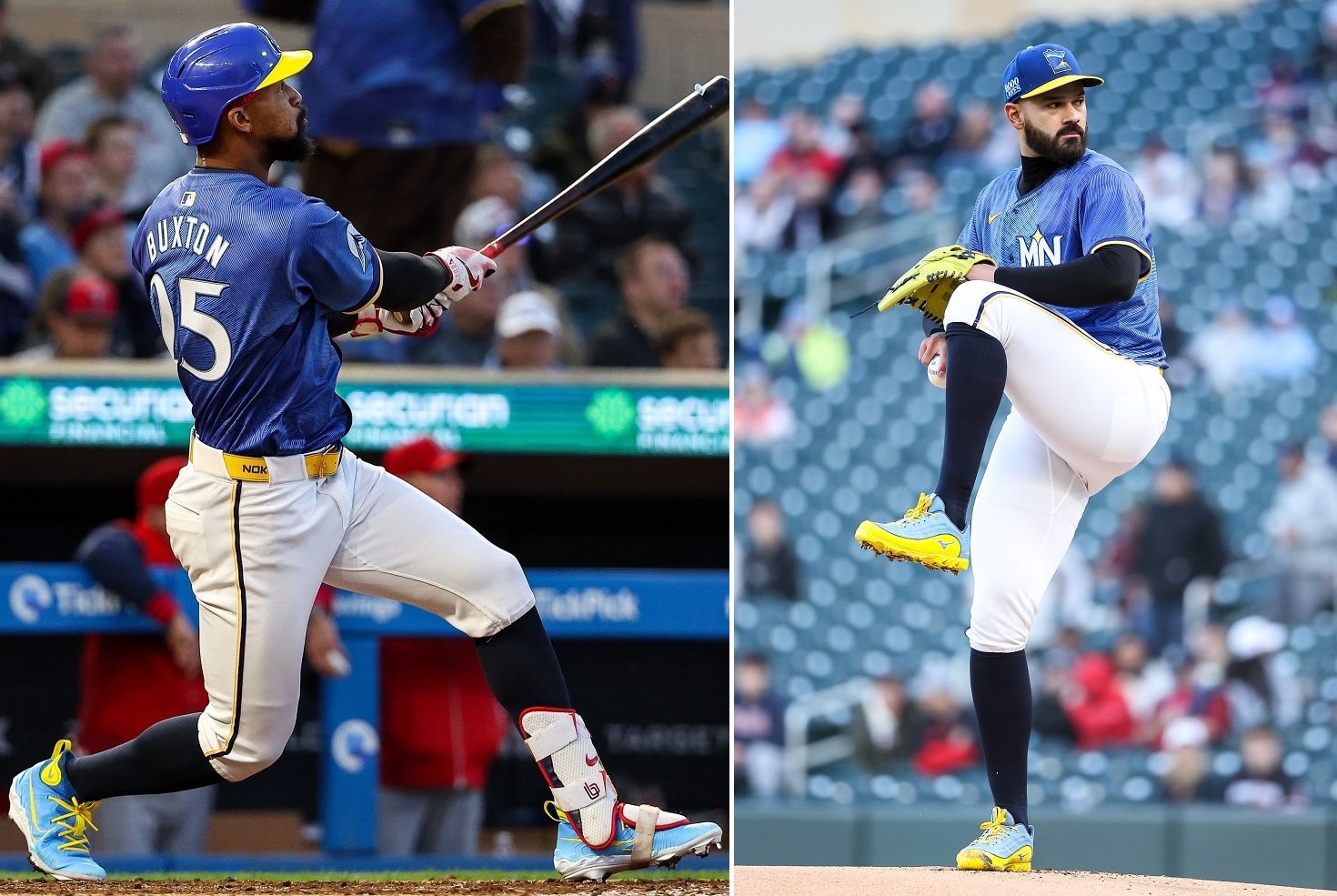 Box Score Starting Pitcher: Pablo López: 5 IP, 5 H, 2 ER, 2 BB, 6 K Home Runs: Byron Buxton (6), Trevor Larnach (4) Top 3 WPA: Trevor Larnach (.202), Pablo López (.099), Byron Buxton (.090) Win Probability Chart (via FanGraphs) Fresh off (mostly) beating up on the White Sox, Minnesota entered Friday with the opportunity to collect wins against another meager opponent: the Angels. Certainly, The Other LA Team presents as a more formidable foe than Chicago—the target to beat is the floor—but their habitual mediocrity in recent years makes for a far less intimidating opponent than most. Can the Twins make the most of their matchup? Healthy once again, Pablo López started for the Twins for the first time since April 8th. The timing couldn’t have been better: Minnesota had oscillated from sluggish to uninspiring in performance, often appearing content with their dull outcomes. López didn’t dominate with overpowering stuff like we’ve seen—he battled command, and his defense all game—but he did enough to keep his team competitive before walking off the mound. The Angels countered with Kyle Hendricks. The Cubs icon, once a youngster with veteran touch; now a veteran with youngster touch, still offers his usual selection of tricky sinkers, floating changeups, and impossibly tall curveballs. The team exchanged opening runs—the Twins off a Carlos Correa sacrifice fly; the Angels via a Jo Adell RBI single—before the game grew legs and took off. And with great haste. One of those skyscraping breakers found itself in the middle of the strike zone, perfectly placed for Byron Buxton to demolish the pitch for a solo homer. Two batters later, Trevor Larnach cracked a double into the right-center gap to plate a third run. Then the dam broke. The inning started walk, single, walk. Which brought Ron Washington to debate replacing his starter. No, he determined. Hendricks is fine. One final walk scored a run and ended the 35-year-old’s night, perhaps a batter later than it should have. Buxton tacked on a sacrifice fly. Mickey Gasper fought off a high-and-inside offering, slashing it beyond the shortstop’s reach for the team’s sixth run of the night. Then, with two men on, Larnach strolled up to the plate, observed a first-pitch curve fall in for a strike, and smoked the next delivery 110.6 MPH over the towering wall in right-center. Nine runs. In four innings. Can you believe it? Now pitching with a significant lead, López finished his night softly, but nonetheless successful. Mike Trout guided an RBI grounder into right field to stain the Venezuelan’s ledger with a second run before López whiffed Taylor Ward to conclude his fifth inning of work. The next few innings were a seesaw in baseball form. The Twins would score; then the Angels would answer back. Runs scored. ERAs ballooned. Great stress and annoyance struck various pitchers, but the ultimate reality never changed; Minnesota still commanded the lead—and by a significant margin. The game reached its inevitable conclusion when Justin Topa caught Trout staring at a sinker that split the heart of the plate. Notes Luke Keaschall exited the game following a hit by pitch in his first plate appearance. More information regarding his status will be provided when known. Byron Buxton hit his 139th career home run, good for 15th place in Twins history. He is two away from tying Michael Cuddyer. Mickey Gasper earned his first career MLB extra-base hit. Pablo López struck out his 452nd batter in a Twins uniform, the 31st-most in team history. He is 14 away from tying Tyler Duffey. Edouard Julien set an MLB career-high with four walks. Perhaps related, the Twins forced a career-high five walks from Kyle Hendricks. Post-Game Interview: What’s Next? The Twins and Angels will return Saturday for the second of their three-game series. Simeon Woods Richardson will start opposite Yusei Kikuchi. First pitch is at 1:10 PM. Bullpen Usage Spreadsheet
- 29 comments
-
- 6
-
-
- pablo lopez
- trevor larnach
- (and 4 more)

