



Matthew Lenz
-
Posts
1,465 -
Joined
-
Last visited
-
Days Won
3
Content Type
Profiles
News
Minnesota Twins Videos
2026 Minnesota Twins Top Prospects Ranking
2022 Minnesota Twins Draft Picks
Minnesota Twins Free Agent & Trade Rumors, Notes, & Tidbits
Guides & Resources
2023 Minnesota Twins Draft Picks
The Minnesota Twins Players Project
2024 Minnesota Twins Draft Picks
2025 Minnesota Twins Draft Pick Tracker
2026 Minnesota Twins Draft Tracker: Picks & Bonuses
Forums
Blogs
Events
Store
Downloads
Gallery
Everything posted by Matthew Lenz
-
 For the second consecutive season, Major League Baseball opened their regular season with an international Opening Day for two clubs. For the second consecutive season, it was a resounding success. Now, it's time for the league to expand their international brand. Image courtesy of © Darren Yamashita-Imagn Images For the second consecutive season, Major League Baseball opened their regular season with an international Opening Day for two clubs. For the second consecutive season, it was a resounding success. Now, it's time for the league to expand their international brand. In recent seasons, MLB has done a better job of trying to expand their reach by playing games in areas that don't have a Major League Baseball team. The longest-running annual tradition is the MLB Little League Classic where two teams play at the site of the Little League World Series in Williamsport, Pa. This event started in 2017 and will continue in 2025, with the Seattle Mariners and New York Mets squaring off in front of a crowd full of Little League players and families. In 2018, the Twins played the Cleveland Guardians in San Juan, Puerto Rico in a matchup that included multiple Puerto Ricans, including stars Francisco Lindor and José Berríos. More recently, MLB teams have played in Dyersville, Iowa (the site of the Field of Dreams movie). It's been two years since a game has been hosted at this location due to construction, but it sounds like it will be returning once construction is completed. In 2024, the San Francisco Giants and St. Louis Cardinals played at Rickwood Field in Birmingham, Ala., the oldest existing professional baseball stadium in the country. Rickwood was once home to the Birmingham Black Barons of the Negro American League. In 2023 and 2024, MLB played the Mexico City Series, but that will not continue in 2025 due to economic issues, according to MLB commissioner Rob Mandred. They've visited London (in 2019, 2023, and 2024), but the previously-scheduled Paris Series was canceled for 2025 due to not finding a promoter for the event. That brings us to the Seoul Series in 2024 and the Tokyo Series in 2025, which had record-setting ratings. For a league that has struggled with its marketability and reach for decades, it’s time that they continue taking advantage of having one of the most diverse groups of players of the four major sports in the States—and more broadly, in the world. According to Forbes, at the start of the 2024 season, MLB teams rostered 264 internationally-born players. Those players hailed from 19 different countries and territories outside of the United States. The Dominican Republic, Venezuela, and Cuba represent the largest number of non-American-born players, with México and Japan also having double-digit representation in MLB. While attempts have been made to expand, citing economics as the reason they're canceling economic events undermines the bigger picture of building the game's audience. It may cost the league in the short term, but over the long term, playing in new spaces can only help to maximize their viewership and following. Perhaps MLB needs to be more strategic with where they play their games. At the start of the 2024 season, Max Kepler was the only European-born player, and he's not going to draw an audience like international superstars have done when returning to their home countries. Sure, between the United Kingdom and France there are upwards of 140 million people, but what buy-in does the area (or even the entire continent) have when they're essentially not represented in MLB? Instead, MLB needs to go to the countries that are highly represented by their players. In addition to the current series that exist, here are some ideas that could have worked in the 2025 season. Dominican Republic Arizona Diamondbacks v San Diego Padres Seattle Mariners v Cleveland Guardians MLB did play spring training contests at Estadio Quisqueya Juan Marichal in 2024, but that's obviously not the same as a regular-season matchup. The four teams mentioned above would bring Ketel Marte, Fernando Tatís Jr., Julio Rodríguez, Luis Castillo, and José Ramírez (among others) back to their home country, which boasts some of the most passionate baseball fans in the world. Venezuela Minnesota Twins v Atlanta Braves St. Louis Cardinals v Milwaukee Brewers Estadio Monumental de Caracas Simón Bolívar is a newer stadium in Venezuela, and the country has never hosted MLB games. The matchups above would feature the best Venezuelan players in the game such as Pablo López, Ronald Acuña Jr., and the Contreras brothers (William and Willson). Cuba Houston Astros v Texas Rangers Tampa Bay Rays v Chicago White Sox MLB last played in Cuba in 2016, at the only recent lull in decades of political tension. The four teams above would feature Yordan Álvarez, Adolis García, Luis Robert Jr, and Yandy Díaz returning to their roots. Puerto Rico Toronto Blue Jays v New York Mets A return to Puerto Rico would highlight players such as Lindor, Edwin Díaz, and Berriós, but would also bring much-needed attention to the tenuous status of Puerto Rico. It's currently a U.S. territory and (in the eyes of many who live there) colony, and one way or anohter, that relationship seems likely to require an alteration in the near future. These sites would bring home the largest numbers of foreign-born players across MLB and highlight some of the best players in the game. I think MLB is really missing an opportunity by not consistently hosting games in these countries, despite the economic issues they may have. What are some other sites that could host MLB games? Join the conversation in the comments! View full article
 -
The Tokyo Series Proves That MLB Needs to Expand Its International Reach
Matthew Lenz posted an article in Twins
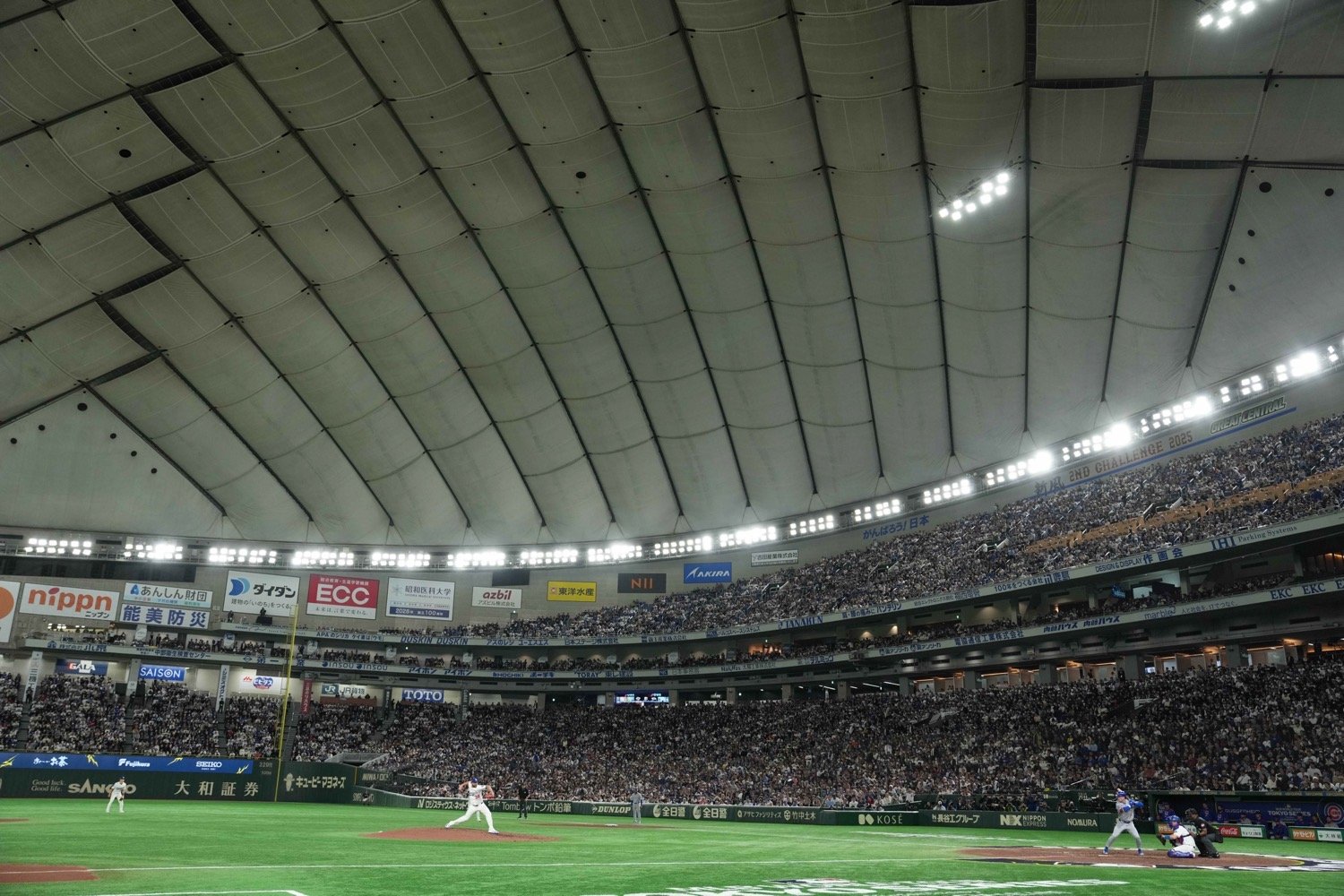 In recent seasons, MLB has done a better job of trying to expand their reach by playing games in areas that don't have a Major League Baseball team. The longest-running annual tradition is the MLB Little League Classic where two teams play at the site of the Little League World Series in Williamsport, Pa. This event started in 2017 and will continue in 2025, with the Seattle Mariners and New York Mets squaring off in front of a crowd full of Little League players and families. In 2018, the Twins played the Cleveland Guardians in San Juan, Puerto Rico in a matchup that included multiple Puerto Ricans, including stars Francisco Lindor and José Berríos. More recently, MLB teams have played in Dyersville, Iowa (the site of the Field of Dreams movie). It's been two years since a game has been hosted at this location due to construction, but it sounds like it will be returning once construction is completed. In 2024, the San Francisco Giants and St. Louis Cardinals played at Rickwood Field in Birmingham, Ala., the oldest existing professional baseball stadium in the country. Rickwood was once home to the Birmingham Black Barons of the Negro American League. In 2023 and 2024, MLB played the Mexico City Series, but that will not continue in 2025 due to economic issues, according to MLB commissioner Rob Mandred. They've visited London (in 2019, 2023, and 2024), but the previously-scheduled Paris Series was canceled for 2025 due to not finding a promoter for the event. That brings us to the Seoul Series in 2024 and the Tokyo Series in 2025, which had record-setting ratings. For a league that has struggled with its marketability and reach for decades, it’s time that they continue taking advantage of having one of the most diverse groups of players of the four major sports in the States—and more broadly, in the world. According to Forbes, at the start of the 2024 season, MLB teams rostered 264 internationally-born players. Those players hailed from 19 different countries and territories outside of the United States. The Dominican Republic, Venezuela, and Cuba represent the largest number of non-American-born players, with México and Japan also having double-digit representation in MLB. While attempts have been made to expand, citing economics as the reason they're canceling economic events undermines the bigger picture of building the game's audience. It may cost the league in the short term, but over the long term, playing in new spaces can only help to maximize their viewership and following. Perhaps MLB needs to be more strategic with where they play their games. At the start of the 2024 season, Max Kepler was the only European-born player, and he's not going to draw an audience like international superstars have done when returning to their home countries. Sure, between the United Kingdom and France there are upwards of 140 million people, but what buy-in does the area (or even the entire continent) have when they're essentially not represented in MLB? Instead, MLB needs to go to the countries that are highly represented by their players. In addition to the current series that exist, here are some ideas that could have worked in the 2025 season. Dominican Republic Arizona Diamondbacks v San Diego Padres Seattle Mariners v Cleveland Guardians MLB did play spring training contests at Estadio Quisqueya Juan Marichal in 2024, but that's obviously not the same as a regular-season matchup. The four teams mentioned above would bring Ketel Marte, Fernando Tatís Jr., Julio Rodríguez, Luis Castillo, and José Ramírez (among others) back to their home country, which boasts some of the most passionate baseball fans in the world. Venezuela Minnesota Twins v Atlanta Braves St. Louis Cardinals v Milwaukee Brewers Estadio Monumental de Caracas Simón Bolívar is a newer stadium in Venezuela, and the country has never hosted MLB games. The matchups above would feature the best Venezuelan players in the game such as Pablo López, Ronald Acuña Jr., and the Contreras brothers (William and Willson). Cuba Houston Astros v Texas Rangers Tampa Bay Rays v Chicago White Sox MLB last played in Cuba in 2016, at the only recent lull in decades of political tension. The four teams above would feature Yordan Álvarez, Adolis García, Luis Robert Jr, and Yandy Díaz returning to their roots. Puerto Rico Toronto Blue Jays v New York Mets A return to Puerto Rico would highlight players such as Lindor, Edwin Díaz, and Berriós, but would also bring much-needed attention to the tenuous status of Puerto Rico. It's currently a U.S. territory and (in the eyes of many who live there) colony, and one way or anohter, that relationship seems likely to require an alteration in the near future. These sites would bring home the largest numbers of foreign-born players across MLB and highlight some of the best players in the game. I think MLB is really missing an opportunity by not consistently hosting games in these countries, despite the economic issues they may have. What are some other sites that could host MLB games? Join the conversation in the comments!
 -
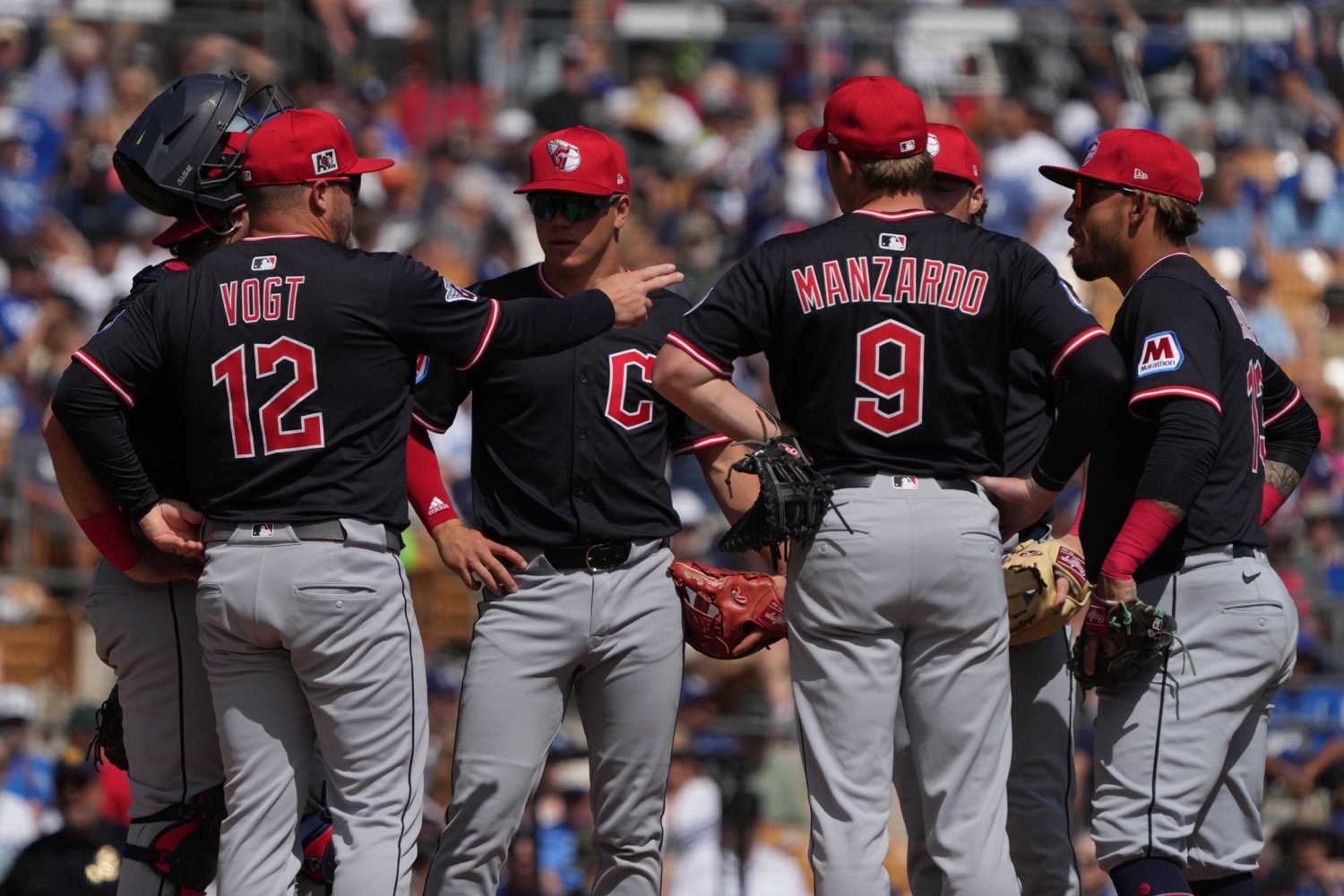 Revisiting 2024 In 2024, the Guardians won their fifth division crown in nine seasons, with 92 wins under first-year manager Stephen Vogt. They earned themselves a bye in the AL Wild Card round, but after winning a fun series against the Detroit Tigers in the Division Series, the New York Yankees made easy work of them in the American League Championship Series. An organization that’s long been known for their pitching development deployed a starting rotation that fell short of that standard, ranking in the bottom third in many categories. On the other hand, their bullpen transcended the standard. They were arguably the best relief corps in baseball. At the plate, their lineup was top-heavy, led by the usual suspects (José Ramírez, Josh Naylor, and Steven Kwan) and surprising production from David Fry (128 OPS+) and Will Brennan (97 OPS+). Unfortunately, after that, the offensive output was pretty bleak, led by second basemen Andrés Giménez who produced an 82 OPS+ and is no longer with the team. Will their starting rotation return to form? Can their offense survive losing fan favorite and slugger Naylor? Let’s dive in. The Rotation As was the case last year (and will be the case for years to come), Tanner Bibee headlines the rotation for the Guardians. The 25-year-old had a solid 3.56 FIP and 20.1% K-BB rate in 2024, and PECOTA projects more of the same this season. Behind him, they’ll start the season with Ben Lively, Gavin Williams, Luis L.L. Oritz, and Triston McKenzie, with Williams being the only one of those projected to be average or better. They’re anticipating help, in the form of former ace Shane Bieber returning from Tommy John surgery sometime during the season. They also made a sneaky move by signing former Baltimore Orioles ace John Means to a one-year, incentive-laden deal, although he’s not expected to return until August at the earliest. Foor what was formerly a deep pitching pipeline, there isn’t much for help behind the seven names listed above if things go sideways; the bullpen is going to need to carry the pitching staff. The Bullpen Living up to their reputation, the bullpen is once again projected to be very good. It may fall short of “elite”, and may not be the best in the division, but it features six players who are projected to be above-average contributors. The group is headlined by one of the best closers in the history of baseball, Emmanuel Clase, and offseason acquisition Paul Sewald (coupled with 2024 standouts Cade Smith and Hunter Gaddis) figures to bridge the gap between him and the low-leverage relievers. Of that group, Tim Herrin and Andrew Walters show the depth of the bullpen, as they are projected for above-average seasons despite being one of the first options to relieve a starter. More than in years past, this group will need to carry the pitching staff if the Guardians hope to play baseball in October. The Infield The Naylor name lives on for the sixth consecutive season, but it will be backstop Bo Naylor carrying the figurative torch, as Josh was sent to the Arizona Diamondbacks. The 25-year-old catcher has struggled at the plate, especially with contact, which is also the case for his backup, Austin Hedges. While Naylor's one of the best framers in the game, his defense overall grades out pretty poorly. That said, he's still developing and past scouting reports were pretty high on the offensive profile and thought the defense would be passable. We’ll see if he can make strides in 2025. The Guardians will have new faces on the right side of the diamond, as fan favorite and former Minnesota Twins first baseman Carlos Santana will be replacing the elder Naylor brother. The 39-year-old looks to continue his resurgence after a Gold Glove performance and his best offensive output since 2019. For what it's worth, PECOTA projects him to produce slightly above the league average. He’ll be backed by Kyle Manzardo, who will serve as the team's primary DH and is projected to be a slightly above-average producer at the plate, too. Replacing the Gold Glove winner Giménez at the keystone will be some mix of Juan Brito, Angel Martinez, Gabriel Arias, Daniel Schneeman, and maybe even 2024 top pick Travis Bazzana. Everyone but Brito is projected to produce well below average at the plate, and even the former top-100 prospect (Brito) is projected for a 90 DRC+. To make matters worse, none of those players provide plus defense. This is still a very young group, with Schneeman being the elder statesman at 28 years old. Like catcher, it's another spot in the lineup where the Guardians need their player development to come through. On the left side of the infield are two players with plus gloves, in Brayan Rocchio and their superstar, Ramírez. Rocchio, who is just 24 years old, will get the lion's share of the work at shortstop, with Arias acting as the primary backup. Like the group of second basemen, Rocchio is projected to produce well below average at the plate, but at least he provides solid defense that saw him accrue a Fielding Run Value of 4 last year. We’re very familiar with Ramírez, who in 169 games against the Twins has a career .791 OPS with 24 home runs. The 32-year-old has received MVP votes in eight of 11 professional seasons, including five top-five finishes, and is projected to produce more of the same in 2025. The Guardians are young up the middle; they lost quite a bit when Giménez was traded. The vets of the infield will need to carry this group on both sides of the ball. The Outfield Kwan won a Gold Glove in 2024 while carrying a 124 OPS+, and is projected for more of the same in 2025. Trade deadline acquisition, Lane Thomas, will work as the primary center fielder and has a rather uninspiring profile. His arm and speed are his only plus tools, but he's largely graded out pretty poorly defensively and is projected to produce slightly worse than average at the plate. He has low OBP skills but decent pop. Right field will be a lot like second base, where many players will contribute, but Brennan and Jhonkensy Noel are projected to be the two primary options. Brennan doesn't have one standout skill, but is solid across the board. Noel, nicknamed “Big Christmas”, has a plus power tool, with an aggressive approach at the plate. There isn't much depth behind the four names listed above, so an injury would likely open the door for top prospect Chase DeLauter to make his big-league debut sometime in 2025. Summary It's pretty clear to see why PECOTA sees an 11-win drop from 2024 to 2025. The losses of Naylor and Giménez are going to be felt, especially at the plate. While the bullpen remains good, the rotation is surrounded by uncertainty and there's not a lot of optimism they’ll improve much from 2024. While 2025 may not be their year, they are carrying quite a few players in the mid- or early 20s, and have one of the better farm systems in baseball. The ability for the team to remain competitive and possibly become contenders in the near future will hinge on their player development staff, but I wouldn't expect them to really be a threat to the Twins in 2025. What are your projections for the Guardians? Do you think their young talent can come through? Join the conversation in the comments!
- 14 comments
-
- 1
-

-
- jose ramirez
- carlos santana
- (and 2 more)
-
Last week, Baseball America released their Top 100 players for the major leagues ahead of the 2025 season. The Minnesota Twins have two players who made the list, which is one more than last year. Who are they, and what needs to happen this season for more to make the list in 2026? Image courtesy of Left: © Matt Blewett-Imagn Images; Right: © Eric Canha-Imagn Images Last week, Baseball America released their Top 100 players for the major leagues ahead of the 2025 season. The Minnesota Twins have two players who made the list, which is one more than last year. Who are they, and what needs to happen this season for more to make the list in 2026? For the third year in a row, Baseball America released their Top 100 MLB players for the upcoming season. This reflects just the player’s impact on the season ahead; no future impact is considered when the team at BA constructs the list. That team consists of Matt Eddy, Geoff Pontes, and Dylan White, who sorted and graded all players on the 20-80 scale. If you're unfamiliar, that scale is broken down as so: 75–80: Franchise player or No. 1 starter. WAR: 5.0 or more 65–70: Perennial All-Star or No. 1/2 starter. WAR: about 4.0 to 4.9 60: Occasional All-Star or No. 2/3 starter. WAR: about 3.5 to 3.9 55: First-division regular or No. 3/4 starter. WAR: about 3.0 Last year, Pablo López was the Twins' lone representative on the list. Let's take a look at who is on the list his year. #56 Pablo López López comes in at No. 56 overall, with a BA grade of 60. He fell 33 spots from his 2024 ranking, wherein he was given a BA grade of 70. He was unranked in their inaugural version of the list in 2023. He is one of 34 pitchers on the list, ranking 16th among all hurlers and 10th out of 29 right-handers. The fall for López isn't all that surprising, after an up-and-down 2024 season that saw him accrue 1.4 fewer fWAR than in 2023. A combination of a lower strikeout rate and higher home-run rate resulted in an ERA north of 4.00 and a FIP that was roughly a third of a run higher than in 2023. This spring, López appears to be ramping up more than in the past, as he completed an 87-pitch outing last Sunday. If this buildup leads to him surpassing the 6.0 innings/start benchmark, we would very likely see him back in the top half of this list in 2026. #84 Carlos Correa Correa rejoins the list after falling from 24th in 2023 to unranked in 2024. He is the 14th of 16 ranked shortstops and the 56th-ranked position player, with a BA grade of 55. It’s clear that the team at BA believes that Correa can stay on the field in 2025, after he played in only 86 games last season. Entering his age-30 season with a lengthy injury history, this is likely the highest we'll see him on this list, barring a complete season of 140-plus games played and an .800+ OPS. While those are the only two players to crack the list in 2025, let's take a look at who we could see next year and what needs to happen for them to make the list. Byron Buxton and Royce Lewis I group these two players together for one massively obvious reason: their health. Buxton and Lewis have the talent to be near the very top of this list, but just can't stay on the field. There's been cautious optimism that Buxton can have back-to-back 100-game seasons for the first time in his career, but that's all it is for now: cautious optimism. Even then, 100 games being the sign of a healthy campaign is telling. On the other hand, Lewis is already hurt and expected to miss the first month or so of the regular season. That doesn't mean he can't make the list next year (remember, Correa only played 86 games last year and cracked the top 100 this year), but it's not the start we had hoped for. Joe Ryan I think Ryan has a real shot to make this list at some point in his career. In addition to hitting the 30-start benchmark, the 29-year-old needs to find a way to limit the long ball. That's going to be hard for him to do as a fly-ball pitcher, but he did show progress on this before getting injured in 2024, dropping his HR/FB rate from 14.9% in 2023 to 11.7%. This improvement was due in large part to Ryan using his new sinker to keep hitters from sitting on his fastball, but he also benefited from throwing more breaking balls. Give me 27 or more starts and a HR/FB rate under 12% (like it was in 2024), and I think we have ourselves a top-100 player. Bailey Ober Like Ryan, Ober carries a good strikeout-to-walk ratio, but is susceptible to the long ball. Where Ober seems to come up short is having too many blow-ups. In 2024, over a third of his 79 earned runs came in just five (16%) of his starts, including two starts where he gave up 8 and 9 earned runs. I think reducing those big games could be key to him being recognized as one of the better pitchers in the game. While boasting two players on Baseball America's 2025 Top 100 list is an improvement from last year for Minnesota, many teams have significantly more representatives. The Twins' lack of representatives heading into 2025 does make you wonder if they have the top-end talent to make a run. Not only would the continued development of their core and young players increase their representation on this list, but it will likely determine just how far this team can go in October. Do you think anyone was snubbed for the list? Who do you think cracks the list a year from now? Join the conversation in the comments! View full article
-
Two Minnesota Twins Named To Baseball America's Top 100 Big-Leaguers
Matthew Lenz posted an article in Twins
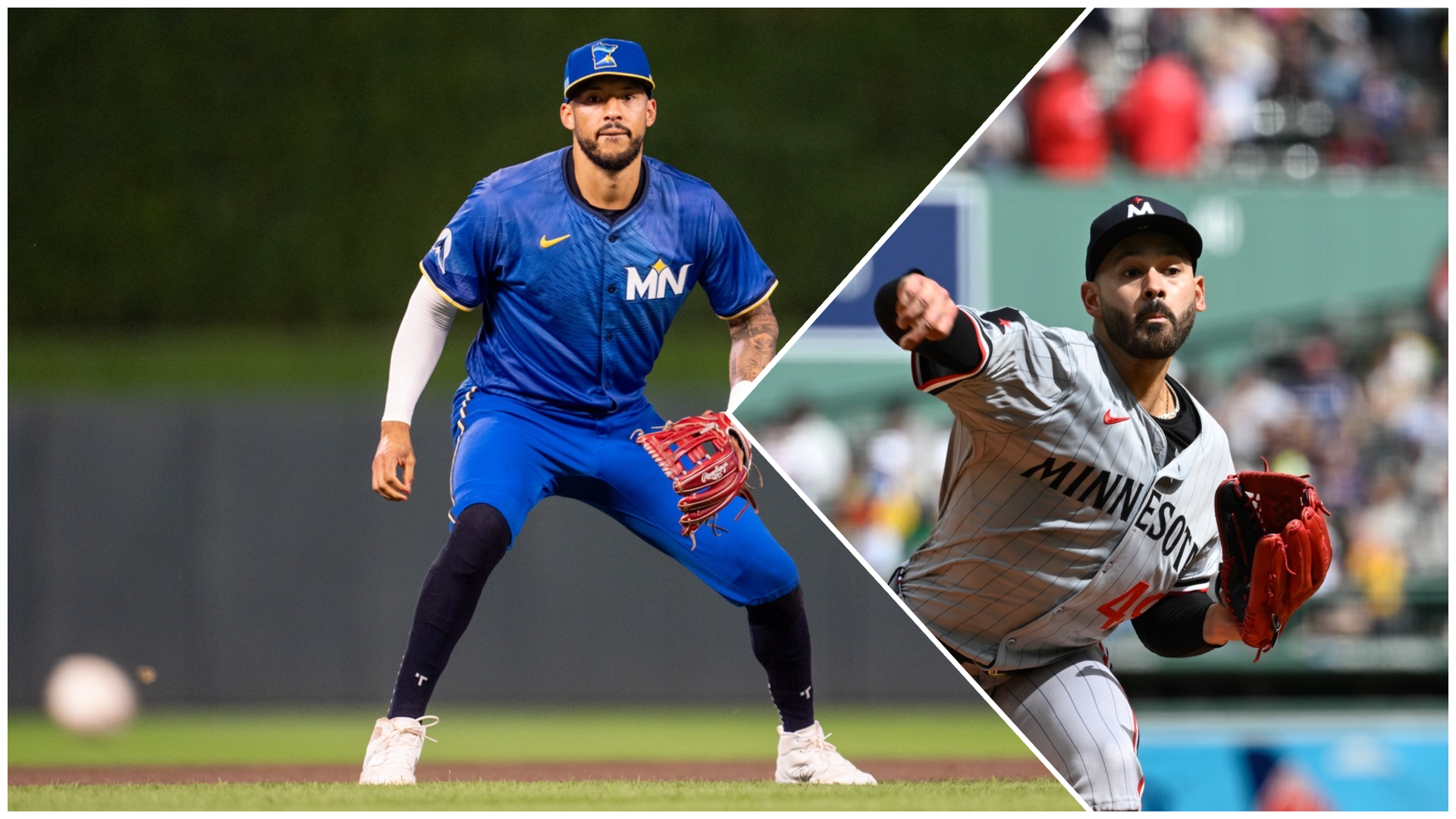 For the third year in a row, Baseball America released their Top 100 MLB players for the upcoming season. This reflects just the player’s impact on the season ahead; no future impact is considered when the team at BA constructs the list. That team consists of Matt Eddy, Geoff Pontes, and Dylan White, who sorted and graded all players on the 20-80 scale. If you're unfamiliar, that scale is broken down as so: 75–80: Franchise player or No. 1 starter. WAR: 5.0 or more 65–70: Perennial All-Star or No. 1/2 starter. WAR: about 4.0 to 4.9 60: Occasional All-Star or No. 2/3 starter. WAR: about 3.5 to 3.9 55: First-division regular or No. 3/4 starter. WAR: about 3.0 Last year, Pablo López was the Twins' lone representative on the list. Let's take a look at who is on the list his year. #56 Pablo López López comes in at No. 56 overall, with a BA grade of 60. He fell 33 spots from his 2024 ranking, wherein he was given a BA grade of 70. He was unranked in their inaugural version of the list in 2023. He is one of 34 pitchers on the list, ranking 16th among all hurlers and 10th out of 29 right-handers. The fall for López isn't all that surprising, after an up-and-down 2024 season that saw him accrue 1.4 fewer fWAR than in 2023. A combination of a lower strikeout rate and higher home-run rate resulted in an ERA north of 4.00 and a FIP that was roughly a third of a run higher than in 2023. This spring, López appears to be ramping up more than in the past, as he completed an 87-pitch outing last Sunday. If this buildup leads to him surpassing the 6.0 innings/start benchmark, we would very likely see him back in the top half of this list in 2026. #84 Carlos Correa Correa rejoins the list after falling from 24th in 2023 to unranked in 2024. He is the 14th of 16 ranked shortstops and the 56th-ranked position player, with a BA grade of 55. It’s clear that the team at BA believes that Correa can stay on the field in 2025, after he played in only 86 games last season. Entering his age-30 season with a lengthy injury history, this is likely the highest we'll see him on this list, barring a complete season of 140-plus games played and an .800+ OPS. While those are the only two players to crack the list in 2025, let's take a look at who we could see next year and what needs to happen for them to make the list. Byron Buxton and Royce Lewis I group these two players together for one massively obvious reason: their health. Buxton and Lewis have the talent to be near the very top of this list, but just can't stay on the field. There's been cautious optimism that Buxton can have back-to-back 100-game seasons for the first time in his career, but that's all it is for now: cautious optimism. Even then, 100 games being the sign of a healthy campaign is telling. On the other hand, Lewis is already hurt and expected to miss the first month or so of the regular season. That doesn't mean he can't make the list next year (remember, Correa only played 86 games last year and cracked the top 100 this year), but it's not the start we had hoped for. Joe Ryan I think Ryan has a real shot to make this list at some point in his career. In addition to hitting the 30-start benchmark, the 29-year-old needs to find a way to limit the long ball. That's going to be hard for him to do as a fly-ball pitcher, but he did show progress on this before getting injured in 2024, dropping his HR/FB rate from 14.9% in 2023 to 11.7%. This improvement was due in large part to Ryan using his new sinker to keep hitters from sitting on his fastball, but he also benefited from throwing more breaking balls. Give me 27 or more starts and a HR/FB rate under 12% (like it was in 2024), and I think we have ourselves a top-100 player. Bailey Ober Like Ryan, Ober carries a good strikeout-to-walk ratio, but is susceptible to the long ball. Where Ober seems to come up short is having too many blow-ups. In 2024, over a third of his 79 earned runs came in just five (16%) of his starts, including two starts where he gave up 8 and 9 earned runs. I think reducing those big games could be key to him being recognized as one of the better pitchers in the game. While boasting two players on Baseball America's 2025 Top 100 list is an improvement from last year for Minnesota, many teams have significantly more representatives. The Twins' lack of representatives heading into 2025 does make you wonder if they have the top-end talent to make a run. Not only would the continued development of their core and young players increase their representation on this list, but it will likely determine just how far this team can go in October. Do you think anyone was snubbed for the list? Who do you think cracks the list a year from now? Join the conversation in the comments!
- 14 comments
-
- 3
-
-
- carlos correa
- joe ryan
- (and 4 more)
-
The Cleveland Guardians will look to repeat as American League Central champions for the first time since 2017 and 2018. That seems rather unlikely after the loss of a couple of key contributors, though. What can we expect from them this season? Image courtesy of © Rick Scuteri-Imagn Images The Cleveland Guardians will look to repeat as American League Central champions for the first time since 2017 and 2018. That seems rather unlikely after the loss of a couple of key contributors, though. What can we expect from them this season? Revisiting 2024 In 2024, the Guardians won their fifth division crown in nine seasons, with 92 wins under first-year manager Stephen Vogt. They earned themselves a bye in the AL Wild Card round, but after winning a fun series against the Detroit Tigers in the Division Series, the New York Yankees made easy work of them in the American League Championship Series. An organization that’s long been known for their pitching development deployed a starting rotation that fell short of that standard, ranking in the bottom third in many categories. On the other hand, their bullpen transcended the standard. They were arguably the best relief corps in baseball. At the plate, their lineup was top-heavy, led by the usual suspects (José Ramírez, Josh Naylor, and Steven Kwan) and surprising production from David Fry (128 OPS+) and Will Brennan (97 OPS+). Unfortunately, after that, the offensive output was pretty bleak, led by second basemen Andrés Giménez who produced an 82 OPS+ and is no longer with the team. Will their starting rotation return to form? Can their offense survive losing fan favorite and slugger Naylor? Let’s dive in. The Rotation As was the case last year (and will be the case for years to come), Tanner Bibee headlines the rotation for the Guardians. The 25-year-old had a solid 3.56 FIP and 20.1% K-BB rate in 2024, and PECOTA projects more of the same this season. Behind him, they’ll start the season with Ben Lively, Gavin Williams, Luis L.L. Oritz, and Triston McKenzie, with Williams being the only one of those projected to be average or better. They’re anticipating help, in the form of former ace Shane Bieber returning from Tommy John surgery sometime during the season. They also made a sneaky move by signing former Baltimore Orioles ace John Means to a one-year, incentive-laden deal, although he’s not expected to return until August at the earliest. Foor what was formerly a deep pitching pipeline, there isn’t much for help behind the seven names listed above if things go sideways; the bullpen is going to need to carry the pitching staff. The Bullpen Living up to their reputation, the bullpen is once again projected to be very good. It may fall short of “elite”, and may not be the best in the division, but it features six players who are projected to be above-average contributors. The group is headlined by one of the best closers in the history of baseball, Emmanuel Clase, and offseason acquisition Paul Sewald (coupled with 2024 standouts Cade Smith and Hunter Gaddis) figures to bridge the gap between him and the low-leverage relievers. Of that group, Tim Herrin and Andrew Walters show the depth of the bullpen, as they are projected for above-average seasons despite being one of the first options to relieve a starter. More than in years past, this group will need to carry the pitching staff if the Guardians hope to play baseball in October. The Infield The Naylor name lives on for the sixth consecutive season, but it will be backstop Bo Naylor carrying the figurative torch, as Josh was sent to the Arizona Diamondbacks. The 25-year-old catcher has struggled at the plate, especially with contact, which is also the case for his backup, Austin Hedges. While Naylor's one of the best framers in the game, his defense overall grades out pretty poorly. That said, he's still developing and past scouting reports were pretty high on the offensive profile and thought the defense would be passable. We’ll see if he can make strides in 2025. The Guardians will have new faces on the right side of the diamond, as fan favorite and former Minnesota Twins first baseman Carlos Santana will be replacing the elder Naylor brother. The 39-year-old looks to continue his resurgence after a Gold Glove performance and his best offensive output since 2019. For what it's worth, PECOTA projects him to produce slightly above the league average. He’ll be backed by Kyle Manzardo, who will serve as the team's primary DH and is projected to be a slightly above-average producer at the plate, too. Replacing the Gold Glove winner Giménez at the keystone will be some mix of Juan Brito, Angel Martinez, Gabriel Arias, Daniel Schneeman, and maybe even 2024 top pick Travis Bazzana. Everyone but Brito is projected to produce well below average at the plate, and even the former top-100 prospect (Brito) is projected for a 90 DRC+. To make matters worse, none of those players provide plus defense. This is still a very young group, with Schneeman being the elder statesman at 28 years old. Like catcher, it's another spot in the lineup where the Guardians need their player development to come through. On the left side of the infield are two players with plus gloves, in Brayan Rocchio and their superstar, Ramírez. Rocchio, who is just 24 years old, will get the lion's share of the work at shortstop, with Arias acting as the primary backup. Like the group of second basemen, Rocchio is projected to produce well below average at the plate, but at least he provides solid defense that saw him accrue a Fielding Run Value of 4 last year. We’re very familiar with Ramírez, who in 169 games against the Twins has a career .791 OPS with 24 home runs. The 32-year-old has received MVP votes in eight of 11 professional seasons, including five top-five finishes, and is projected to produce more of the same in 2025. The Guardians are young up the middle; they lost quite a bit when Giménez was traded. The vets of the infield will need to carry this group on both sides of the ball. The Outfield Kwan won a Gold Glove in 2024 while carrying a 124 OPS+, and is projected for more of the same in 2025. Trade deadline acquisition, Lane Thomas, will work as the primary center fielder and has a rather uninspiring profile. His arm and speed are his only plus tools, but he's largely graded out pretty poorly defensively and is projected to produce slightly worse than average at the plate. He has low OBP skills but decent pop. Right field will be a lot like second base, where many players will contribute, but Brennan and Jhonkensy Noel are projected to be the two primary options. Brennan doesn't have one standout skill, but is solid across the board. Noel, nicknamed “Big Christmas”, has a plus power tool, with an aggressive approach at the plate. There isn't much depth behind the four names listed above, so an injury would likely open the door for top prospect Chase DeLauter to make his big-league debut sometime in 2025. Summary It's pretty clear to see why PECOTA sees an 11-win drop from 2024 to 2025. The losses of Naylor and Giménez are going to be felt, especially at the plate. While the bullpen remains good, the rotation is surrounded by uncertainty and there's not a lot of optimism they’ll improve much from 2024. While 2025 may not be their year, they are carrying quite a few players in the mid- or early 20s, and have one of the better farm systems in baseball. The ability for the team to remain competitive and possibly become contenders in the near future will hinge on their player development staff, but I wouldn't expect them to really be a threat to the Twins in 2025. What are your projections for the Guardians? Do you think their young talent can come through? Join the conversation in the comments! View full article
-
Pitchers don't work deep into spring training games anymore. That custom is long gone; the game has changed. For the Twins' ace, though, there still seems to be some value in getting the pitch count ratcheted way up in March. Image courtesy of © Chris Tilley-Imagn Images Pitchers don't work deep into spring training games anymore. That custom is long gone; the game has changed. For the Twins' ace, though, there still seems to be some value in getting the pitch count ratcheted way up in March. In Sunday’s Grapefruit League start against the Boston Red Sox, Pablo López threw 87 pitches, which is seven more than any Twins pitcher has thrown in a spring training game for which we have that information (admittedly, only back to 2008, and even then, incomplete). In his previous start, he threw 78 pitches, which was the most that had been tracked in a game played before Mar. 15. In fact, López’s last three starts all rank in the top 30 in pitches thrown of all starts this spring. Although it was never that simple anyway, this seems to go against the idea that Twins manager Rocco Baldelli is too conservative with his starters' pitch counts. While we can't come up with anything definitive—Baldelli hasn't spoken to López’s pitch counts, specifically—it stands to reason that Baldelli is building up López to go deeper in games. In two seasons with the Twins, López has pitched 379 ⅓ innings across 64 starts, good for eighth and 10th, respectively, across baseball. This equates to just under six innings per start, which is about half an inning shorter than innings leader Logan Webb over the same timeframe. While López has been a relative workhorse for the Twins, just getting one more out per start would result in him basically topping the innings leaderboard. More than pitch counts and innings limits, Baldelli does tend to go to the bullpen once the lineup turns over a second time. Since López is already an innings eater of sorts, would it make sense to push him to face lineups a third time through? Since taking over ahead of the 2019 season, Baldelli has allowed Twins starters to face the lineup a third time the eighth-fewest times in baseball. However, López in particular has actually faced opposing batters a third time the ninth-most, and in those showdowns, he carries a spectacular 2.59 FIP and a 22.2% K-BB rate. While the data generally favors a hitter the third time they’ve seen a pitcher, López bucks that trend by getting better as the game goes on. In fact, the first time through a lineup, López has a 4.11 FIP with a 21.4% K-BB rate, both of which are also worse than the same statistics the second time through a lineup. While that’s noteworthy, comparing him to the relievers who typically enter in the fifth through seventh innings is even more interesting. Of pitchers who have pitched at least 20 frames in the fifth through seventh innings over the last two seasons, López has the third-best FIP (2.88), fourth-best K-BB rate (23.1%), and the seventh-best strand rate (74.1% - “above average”, per Fangraphs). In short, not only does López get better the deeper he goes but he’s produced at a better clip than nearly all of the pitchers who would likely relieve him. Now, to be fair, that data may be a little skewed—typically, if things are clicking and he’s cruising, he’s going to be allowed to go deeper into games. Regardless, pushing López through the fifth and even into the sixth inning more consistently will have a chain reaction on keeping the bullpen fresh, and that could be the motivation in pushing his pitch count. Or, maybe it’s more simple than that. While his 87-pitch performance was still an outlier, López has typically ramped up in the second half of March, hitting the 60-pitch mark eight times since 2021 and the 70-pitch mark five times. He might simply feel, more than most other pitchers, that he needs that early volume in order to be ready for the season. While I think there is something telling to him approaching 90 pitches on Mar. 16 (with at least one spring training start to go), it could also be that he’s simply doing what he needs to do to get ready for the season. For what it’s worth, I tend to believe that López will be pushed to go deeper into games in an attempt to leave the bullpen well-rested—and indrectly relieve the back end of the rotation who may be on a bit of an innings limit. Regardless of how much you want to look into spring training stats, López’s 87-pitch performance is quite notable, considering it’s the most in well over a decade. Whether it really has any deeper meaning remains to be seen, and we likely won’t have our answer until we're well into the season. What are your takeaways from Pablo’s 87-pitch outing? Join the conversation in the comments! View full article
-
What Do Pablo López's High Grapefruit League Pitch Counts Tell Us, Exactly?
Matthew Lenz posted an article in Twins
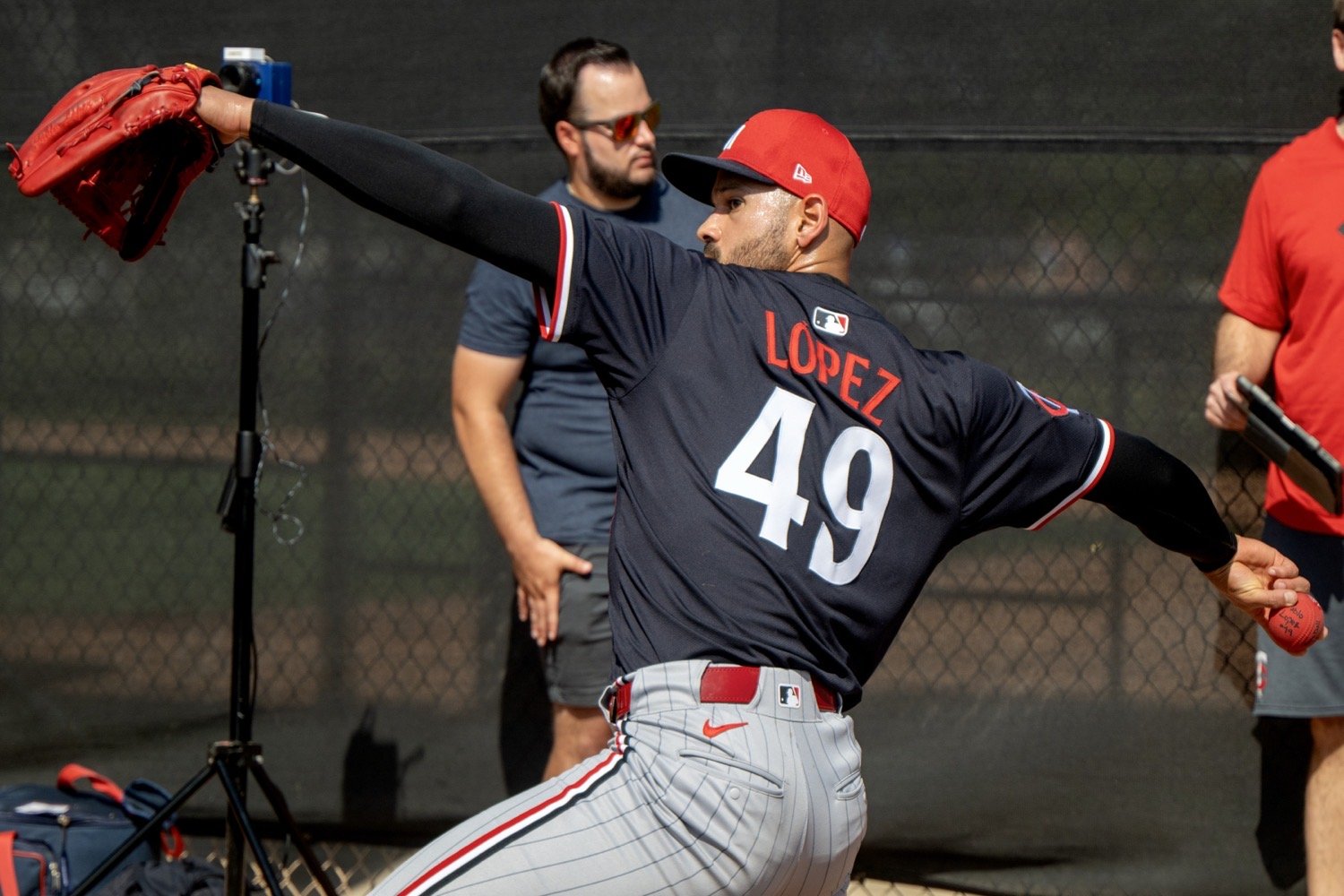 In Sunday’s Grapefruit League start against the Boston Red Sox, Pablo López threw 87 pitches, which is seven more than any Twins pitcher has thrown in a spring training game for which we have that information (admittedly, only back to 2008, and even then, incomplete). In his previous start, he threw 78 pitches, which was the most that had been tracked in a game played before Mar. 15. In fact, López’s last three starts all rank in the top 30 in pitches thrown of all starts this spring. Although it was never that simple anyway, this seems to go against the idea that Twins manager Rocco Baldelli is too conservative with his starters' pitch counts. While we can't come up with anything definitive—Baldelli hasn't spoken to López’s pitch counts, specifically—it stands to reason that Baldelli is building up López to go deeper in games. In two seasons with the Twins, López has pitched 379 ⅓ innings across 64 starts, good for eighth and 10th, respectively, across baseball. This equates to just under six innings per start, which is about half an inning shorter than innings leader Logan Webb over the same timeframe. While López has been a relative workhorse for the Twins, just getting one more out per start would result in him basically topping the innings leaderboard. More than pitch counts and innings limits, Baldelli does tend to go to the bullpen once the lineup turns over a second time. Since López is already an innings eater of sorts, would it make sense to push him to face lineups a third time through? Since taking over ahead of the 2019 season, Baldelli has allowed Twins starters to face the lineup a third time the eighth-fewest times in baseball. However, López in particular has actually faced opposing batters a third time the ninth-most, and in those showdowns, he carries a spectacular 2.59 FIP and a 22.2% K-BB rate. While the data generally favors a hitter the third time they’ve seen a pitcher, López bucks that trend by getting better as the game goes on. In fact, the first time through a lineup, López has a 4.11 FIP with a 21.4% K-BB rate, both of which are also worse than the same statistics the second time through a lineup. While that’s noteworthy, comparing him to the relievers who typically enter in the fifth through seventh innings is even more interesting. Of pitchers who have pitched at least 20 frames in the fifth through seventh innings over the last two seasons, López has the third-best FIP (2.88), fourth-best K-BB rate (23.1%), and the seventh-best strand rate (74.1% - “above average”, per Fangraphs). In short, not only does López get better the deeper he goes but he’s produced at a better clip than nearly all of the pitchers who would likely relieve him. Now, to be fair, that data may be a little skewed—typically, if things are clicking and he’s cruising, he’s going to be allowed to go deeper into games. Regardless, pushing López through the fifth and even into the sixth inning more consistently will have a chain reaction on keeping the bullpen fresh, and that could be the motivation in pushing his pitch count. Or, maybe it’s more simple than that. While his 87-pitch performance was still an outlier, López has typically ramped up in the second half of March, hitting the 60-pitch mark eight times since 2021 and the 70-pitch mark five times. He might simply feel, more than most other pitchers, that he needs that early volume in order to be ready for the season. While I think there is something telling to him approaching 90 pitches on Mar. 16 (with at least one spring training start to go), it could also be that he’s simply doing what he needs to do to get ready for the season. For what it’s worth, I tend to believe that López will be pushed to go deeper into games in an attempt to leave the bullpen well-rested—and indrectly relieve the back end of the rotation who may be on a bit of an innings limit. Regardless of how much you want to look into spring training stats, López’s 87-pitch performance is quite notable, considering it’s the most in well over a decade. Whether it really has any deeper meaning remains to be seen, and we likely won’t have our answer until we're well into the season. What are your takeaways from Pablo’s 87-pitch outing? Join the conversation in the comments!
 -
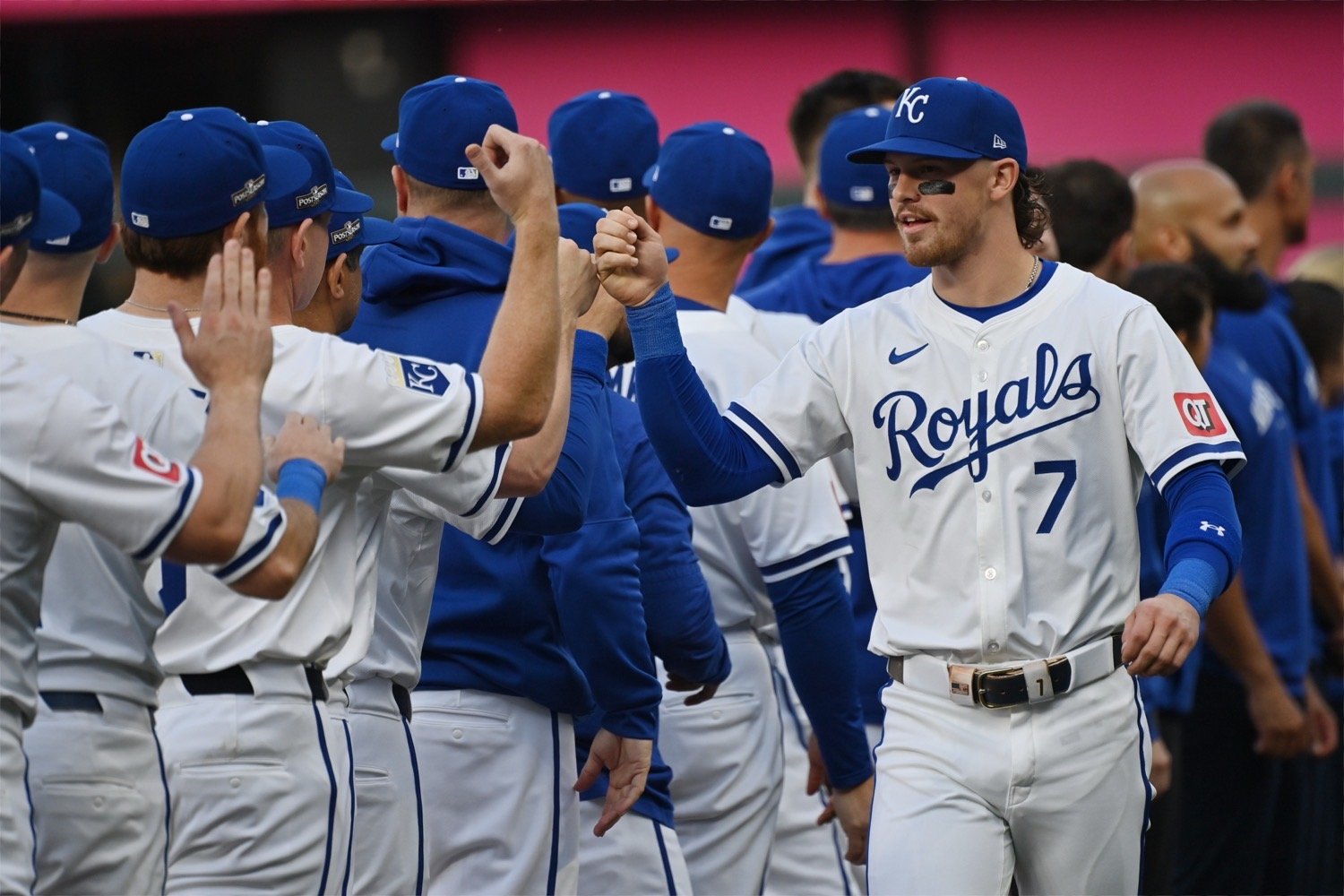 Revisiting 2024 The 2024 Royals returned to the playoffs for the first time since they won the World Series nine years earlier. The team, led by budding superstar shortstop Bobby Witt Jr., won 86 games, finishing 6.5 games behind the division champion Cleveland Guardians. After a two-game sweep of the Baltimore Orioles in the AL Wild Card round, they lost the Division Series to the New York Yankees in four games. They boasted one of the best starting rotations in baseball and an above-average offense, but struggled once their starters turned the ball over to the bullpen. Outside of two offseason additions, they’ll be running it back with the same group in 2025. The Pitching Staff The Royals starting rotation is headlined by Cole Ragans, who finished fourth in the Cy Young race last season—two spots behind teammate Seth Lugo. PECOTA projects another Cy Young-caliber season for Ragans and some regression for Lugo, although the model still likes him to be above-average. Michael Wacha, meanwhile, is marked out as a candidate for regression, which you would have guessed even before opening the projections page. After the team traded away Brady Singer and lost Alec Marsh to shoulder soreness for all of spring training, the back end of the rotation will include Michael Lorenzen and Kris Bubic. Questions on the repeatability of impact seasons from Lugo and Wacha (plus uncertainty surrounding the back end of the rotation) explain why models are projecting fewer wins in 2025. Maybe the bullpen can make up the difference? For a team that clearly needed to address the bullpen, they only made one meaningful move, signing Carlos Estévez away from the Philadelphia Phillies via free agency. The back of their bullpen looks great with Estévez, Lucas Erceg, and Hunter Harvey getting the highest-leverage opportunities, but the bridge between that group and the rotation isn’t nearly as solid. PECOTA projects slightly above-average seasons from Sam Long and James McArthur, but it pretty quickly falls off after that. The Royals will consistently need six or more innings from their starters if they want to hit the over on their win projections. The Infield Somehow, someway, 13-year vet Salvador Perez played 91 games behind the dish last season and 158 total (including 24 at DH). He’ll cede more chest-protector time to Freddy Fermin, who projects to be a productive backstop, but PECOTA still has it as only a 60-40 split in favor of Fermin. When Perez is not behind the plate or serving as the DH, he’ll provide rest to Vinnie Pasquantino at first. The 27-year-old lived up to his prospect pedigree last season, posting a 111 OPS+ and finishing in the 81st percentile in Outs Above Average (OAA) at the position. PECOTA likes Pasquantino to continue growing into his role as the Royals’ long-term first baseman and become one of the top first basemen in the league. Up the middle, Witt has done what Pasquantino is looking to do. He’s an established superstar in the league. In only his third big-league season, he was an All-Star; finished 2nd in MVP voting; and won both a Gold Glove and a Silver Slugger Award. He’s going to be a thorn in the Twins' side for years to come. Across from Witt at the keystone will be a Twins-esque merry-go-round, with Michael Massey, Maikel Garcia, Jonathan India (acquired in the Singer trade), and Nick Loftin. Much of that same group is also projected to get time at the hot corner, as well. India, who is expected to DH a fair amount, brings good on-base skills and a little pop to the Royals lineup, which finished in the bottom third of the league in both OBP and slugging average last year. Massey is expected to provide above-average production, while Loftin and Garcia are glove-first options likely coming off the bench. The Outfield The Royals’ outfield is undoubtedly the weakest offensive position group, with only one above-average defender in center fielder Kyle Isbel. Unfortunately, Isbel doesn’t have the bat that MJ Melendez and Hunter Renfroe do, and they don’t have the glove that Isbel does. The best tool among the starters is Isbel’s glove and, at the plate, both Melendez and Renfroe are projected to be slightly above-average contributors—albeit while carrying a sub-.300 OBP and a .400(ish) SLG. Behind them will be the likes of the aforementioned Garcia, as well as Dairon Blanco, Drew Waters, and Joey Weimer. The Royals have tried to shore up this group by kicking the tires on Adam Duvall and Starling Marte, but obviously, nothing has come to fruition. Summary Despite some of the best top-end talent in the league, the Royals don’t have the role players nor the depth to repeat their surprising success. For a team with a limited number of movable assets, it’s a bit shocking that their most significant move of the offseason was to rob Paul (trading Singer; weakening the rotation) to pay Peter (acquiring India to improve the lineup). With virtually no bench, no impact prospects who are close to major-league ready, and one of the worst farm systems in baseball, the Royals are walking on thin ice. If I were a betting man, I’d bet the under on 83.5 wins in 2025. What are your thoughts on the Royals for 2025? Join the conversation in the comments!
- 9 comments
-
- 2
-
-
- bobby witt jr
- salvador perez
- (and 3 more)
-
The Kansas City Royals are expected to be in the mix for the American League Central title in 2025. Projected to win 81 games and finish second, they’ll look to prove people wrong by winning their first division title since 2015. Do they have what it takes to supplant the favored Twins? Let’s dive in. Image courtesy of © Peter Aiken-Imagn Images The Kansas City Royals are expected to be in the mix for the American League Central title in 2025. Projected to win 81 games and finish second, they’ll look to prove people wrong by winning their first division title since 2015. Do they have what it takes to supplant the favored Twins? Let’s dive in. Revisiting 2024 The 2024 Royals returned to the playoffs for the first time since they won the World Series nine years earlier. The team, led by budding superstar shortstop Bobby Witt Jr., won 86 games, finishing 6.5 games behind the division champion Cleveland Guardians. After a two-game sweep of the Baltimore Orioles in the AL Wild Card round, they lost the Division Series to the New York Yankees in four games. They boasted one of the best starting rotations in baseball and an above-average offense, but struggled once their starters turned the ball over to the bullpen. Outside of two offseason additions, they’ll be running it back with the same group in 2025. The Pitching Staff The Royals starting rotation is headlined by Cole Ragans, who finished fourth in the Cy Young race last season—two spots behind teammate Seth Lugo. PECOTA projects another Cy Young-caliber season for Ragans and some regression for Lugo, although the model still likes him to be above-average. Michael Wacha, meanwhile, is marked out as a candidate for regression, which you would have guessed even before opening the projections page. After the team traded away Brady Singer and lost Alec Marsh to shoulder soreness for all of spring training, the back end of the rotation will include Michael Lorenzen and Kris Bubic. Questions on the repeatability of impact seasons from Lugo and Wacha (plus uncertainty surrounding the back end of the rotation) explain why models are projecting fewer wins in 2025. Maybe the bullpen can make up the difference? For a team that clearly needed to address the bullpen, they only made one meaningful move, signing Carlos Estévez away from the Philadelphia Phillies via free agency. The back of their bullpen looks great with Estévez, Lucas Erceg, and Hunter Harvey getting the highest-leverage opportunities, but the bridge between that group and the rotation isn’t nearly as solid. PECOTA projects slightly above-average seasons from Sam Long and James McArthur, but it pretty quickly falls off after that. The Royals will consistently need six or more innings from their starters if they want to hit the over on their win projections. The Infield Somehow, someway, 13-year vet Salvador Perez played 91 games behind the dish last season and 158 total (including 24 at DH). He’ll cede more chest-protector time to Freddy Fermin, who projects to be a productive backstop, but PECOTA still has it as only a 60-40 split in favor of Fermin. When Perez is not behind the plate or serving as the DH, he’ll provide rest to Vinnie Pasquantino at first. The 27-year-old lived up to his prospect pedigree last season, posting a 111 OPS+ and finishing in the 81st percentile in Outs Above Average (OAA) at the position. PECOTA likes Pasquantino to continue growing into his role as the Royals’ long-term first baseman and become one of the top first basemen in the league. Up the middle, Witt has done what Pasquantino is looking to do. He’s an established superstar in the league. In only his third big-league season, he was an All-Star; finished 2nd in MVP voting; and won both a Gold Glove and a Silver Slugger Award. He’s going to be a thorn in the Twins' side for years to come. Across from Witt at the keystone will be a Twins-esque merry-go-round, with Michael Massey, Maikel Garcia, Jonathan India (acquired in the Singer trade), and Nick Loftin. Much of that same group is also projected to get time at the hot corner, as well. India, who is expected to DH a fair amount, brings good on-base skills and a little pop to the Royals lineup, which finished in the bottom third of the league in both OBP and slugging average last year. Massey is expected to provide above-average production, while Loftin and Garcia are glove-first options likely coming off the bench. The Outfield The Royals’ outfield is undoubtedly the weakest offensive position group, with only one above-average defender in center fielder Kyle Isbel. Unfortunately, Isbel doesn’t have the bat that MJ Melendez and Hunter Renfroe do, and they don’t have the glove that Isbel does. The best tool among the starters is Isbel’s glove and, at the plate, both Melendez and Renfroe are projected to be slightly above-average contributors—albeit while carrying a sub-.300 OBP and a .400(ish) SLG. Behind them will be the likes of the aforementioned Garcia, as well as Dairon Blanco, Drew Waters, and Joey Weimer. The Royals have tried to shore up this group by kicking the tires on Adam Duvall and Starling Marte, but obviously, nothing has come to fruition. Summary Despite some of the best top-end talent in the league, the Royals don’t have the role players nor the depth to repeat their surprising success. For a team with a limited number of movable assets, it’s a bit shocking that their most significant move of the offseason was to rob Paul (trading Singer; weakening the rotation) to pay Peter (acquiring India to improve the lineup). With virtually no bench, no impact prospects who are close to major-league ready, and one of the worst farm systems in baseball, the Royals are walking on thin ice. If I were a betting man, I’d bet the under on 83.5 wins in 2025. What are your thoughts on the Royals for 2025? Join the conversation in the comments! View full article
-
Despite a 2024 campaign that saw him produce at the plate and provide solid defense at first, his role on the 2025 team is in flux. It's time for him to hit like he's running out of time, because he is. Image courtesy of © Peter Aiken-Imagn Images Despite a 2024 campaign that saw him produce at the plate and provide solid defense at first, his role on the 2025 team is in flux. It's time for him to hit like he's running out of time, because he is. For the first half of last season, Jose Miranda was arguably the MVP of the Minnesota Twins. In 255 at-bats, he carried an .888 OPS with 30 extra-base hits (nine of them home runs); a solid strikeout rate; and decent batted-ball data. Then, like much of the team, everything went to hell for Miranda around mid-August. Over the final two months, his OPS plummeted more than 300 points; he had only 10 extra-base hits (none of which left the park); his strikeout rate climbed nearly six percentage points; and his quality of contact was below average. It really wasn't all that surprising of a fall-off, as his aggressive approach at the plate leaves him vulnerable to inconsistency. A sub-20% strikeout rate looks good, but there are underlying concerns when that's coupled with a sub-5% walk rate. That slump (and concerns about his overall profile) forced the Twins' hand in finding someone who could more consistently produce while playing first base. In fact, before spring training even started, Twins’ manager Rocco Baldelli all but anointed Ty France as the starting first baseman. If you're like me, that led you to believe that Miranda would be on the short side of a platoon at first, while also covering at third when Royce Lewis needs a day off (or gets injured). Almost a month since Baldelli’s proclamation, Miranda has only played parts of three games at first while Eduoard Julien and Mickey Gasper battle it out behind France. Realistically, Julien and Gasper aren’t threats to make a significant dent in Miranda’s playing time. It's more likely that the two are fighting for the last bench spot on the roster, and that's why both are getting time at first base: for the at-bats, rather than the defensive exposure. Baldelli is ensuring that both are provided plenty of opportunities to compete for a spot on the Opening Day roster as a utility option. Miranda’s role as the secondary option at first and at the hot corner does seem to be intact, as he's made the second-most appearances on the team during Grapefruit League action. He's looked solid, with more walks than strikeouts and a .708 OPS, albeit with a solitary home run as his lone extra-base hit. Yet, even coming off a 120 wRC+ season and with four years of team control remaining, he might end up in a reserve role. While that certainly does seem to be the case, Miranda provides a pretty solid safety net for two players surrounded by questions. In addition to a slump of his own over the second half of the season, Lewis has a lengthy injury history. Him playing 140 games—heck, even 120 games—is far from a guarantee. France is coming off a career-worst season that saw him accrue -0.9 fWAR across 140 games. One way or another, especially when you consider the rotating DH position in the order, it seems likely that Miranda will find a way to get at-bats. The Twins sent an interesting message to Miranda by bringing in France and quickly naming him the starter. It showed that the team currently doesn't see him as the primary first baseman, despite a good 2024 season. While the signing lessens his role in 2025, he needs to leverage this limited opportunity to establish himself as the long-term first baseman after France’s one-year pact expires. Only time will tell if he will flourish—or flounder, and force the Twins' hand again next offseason. In that case, he'd probably end up facing the same questions in new colors next spring. What is your long-term outlook for Jose Miranda? Join the conversation in the comments! View full article
-
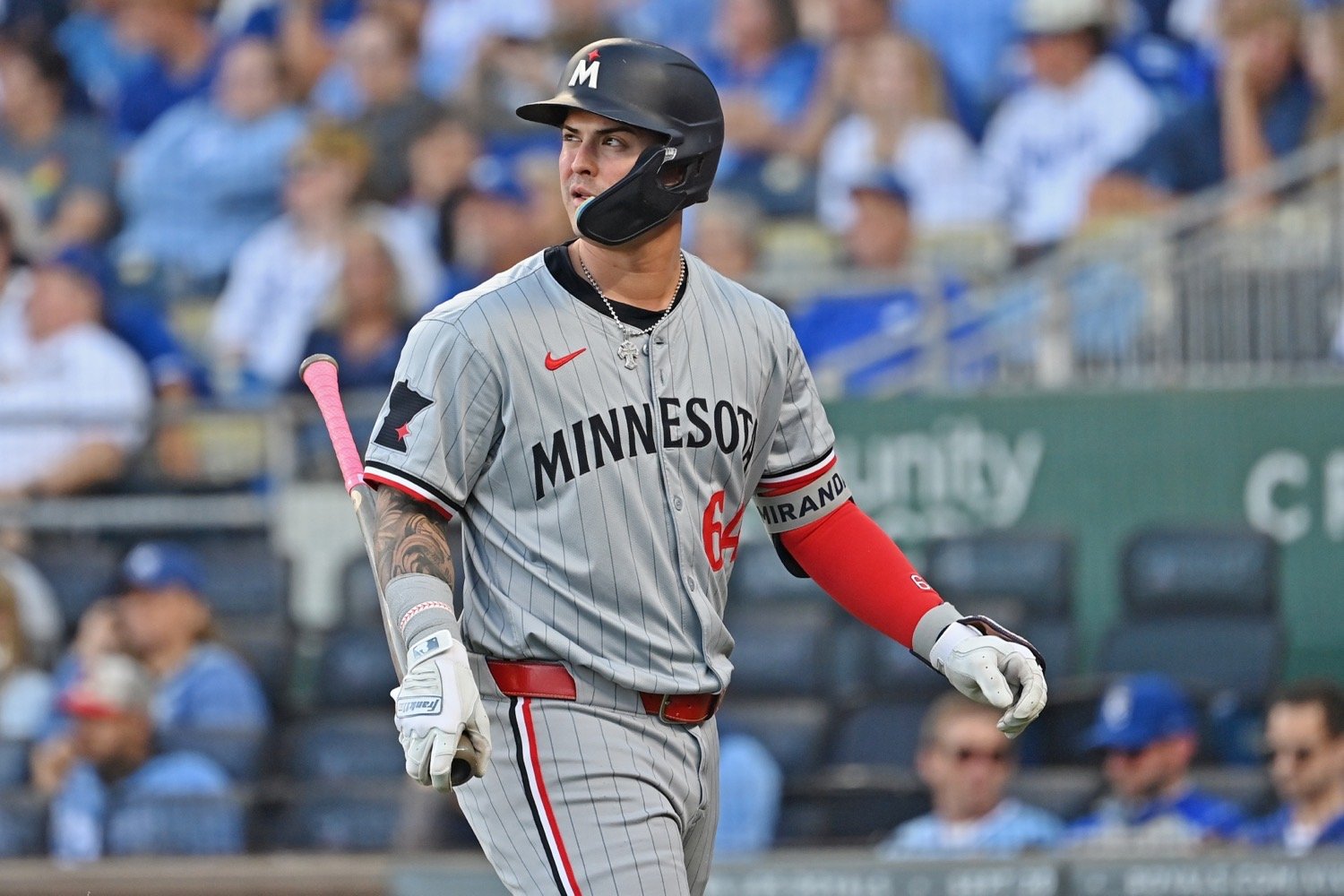 For the first half of last season, Jose Miranda was arguably the MVP of the Minnesota Twins. In 255 at-bats, he carried an .888 OPS with 30 extra-base hits (nine of them home runs); a solid strikeout rate; and decent batted-ball data. Then, like much of the team, everything went to hell for Miranda around mid-August. Over the final two months, his OPS plummeted more than 300 points; he had only 10 extra-base hits (none of which left the park); his strikeout rate climbed nearly six percentage points; and his quality of contact was below average. It really wasn't all that surprising of a fall-off, as his aggressive approach at the plate leaves him vulnerable to inconsistency. A sub-20% strikeout rate looks good, but there are underlying concerns when that's coupled with a sub-5% walk rate. That slump (and concerns about his overall profile) forced the Twins' hand in finding someone who could more consistently produce while playing first base. In fact, before spring training even started, Twins’ manager Rocco Baldelli all but anointed Ty France as the starting first baseman. If you're like me, that led you to believe that Miranda would be on the short side of a platoon at first, while also covering at third when Royce Lewis needs a day off (or gets injured). Almost a month since Baldelli’s proclamation, Miranda has only played parts of three games at first while Eduoard Julien and Mickey Gasper battle it out behind France. Realistically, Julien and Gasper aren’t threats to make a significant dent in Miranda’s playing time. It's more likely that the two are fighting for the last bench spot on the roster, and that's why both are getting time at first base: for the at-bats, rather than the defensive exposure. Baldelli is ensuring that both are provided plenty of opportunities to compete for a spot on the Opening Day roster as a utility option. Miranda’s role as the secondary option at first and at the hot corner does seem to be intact, as he's made the second-most appearances on the team during Grapefruit League action. He's looked solid, with more walks than strikeouts and a .708 OPS, albeit with a solitary home run as his lone extra-base hit. Yet, even coming off a 120 wRC+ season and with four years of team control remaining, he might end up in a reserve role. While that certainly does seem to be the case, Miranda provides a pretty solid safety net for two players surrounded by questions. In addition to a slump of his own over the second half of the season, Lewis has a lengthy injury history. Him playing 140 games—heck, even 120 games—is far from a guarantee. France is coming off a career-worst season that saw him accrue -0.9 fWAR across 140 games. One way or another, especially when you consider the rotating DH position in the order, it seems likely that Miranda will find a way to get at-bats. The Twins sent an interesting message to Miranda by bringing in France and quickly naming him the starter. It showed that the team currently doesn't see him as the primary first baseman, despite a good 2024 season. While the signing lessens his role in 2025, he needs to leverage this limited opportunity to establish himself as the long-term first baseman after France’s one-year pact expires. Only time will tell if he will flourish—or flounder, and force the Twins' hand again next offseason. In that case, he'd probably end up facing the same questions in new colors next spring. What is your long-term outlook for Jose Miranda? Join the conversation in the comments!
 -
The Minnesota Twins have seven major-league-ready starters and another two or three who are very close. Meanwhile, multiple teams around the league are dealing with injuries to their rotation from significant contributors. Is it time for the Twins to cash in on their pitching pipeline? Image courtesy of Left & Middle: © Kim Klement Neitzel-Imagn Images; Right:© Tim Heitman-Imagn Images The Minnesota Twins have seven major-league-ready starters and another two or three who are very close. Meanwhile, multiple teams around the league are dealing with injuries to their rotation from significant contributors. Is it time for the Twins to cash in on their pitching pipeline? There may be no better-positioned team than the Twins to take advantage of some of the injuries around the league. Behind one of the best starting pitcher trios in baseball stands a solid group of guys who would be improvements over many other teams' fourth and fifth options: Chris Paddack, Simeon Woods Richardson, David Festa, and Zebby Matthews. Then, behind them, there's a group of near-ready arms in Andrew Morris, Cory Lewis, and Marco Raya. Some of them have questions and/or are unproven, but the Twins arguably have the deepest rotation group at the highest two levels of pro ball, and are in a position to be opportunistic. Many teams are looking for rotation help this close to Opening Day. So, to deal or not to deal? That is the question. If you’re like me, then you live by the credo that you can never have enough pitching. It’s the most valuable asset in the game and, no matter how desperate other teams are, the last thing most fans want is for the Twins to be in their position months from now. After all, while the Twins rotation is relatively healthy right now, Joe Ryan and Paddack haven’t been pillars of health, and their core of young pitchers aren’t guaranteed to meet the expectations put on them. Meanwhile, on the other side of the argument is the belief that there is no such thing as a pitching prospect (TINSTAAPP). This theory, created by Baseball Prospectus founder Gary Huckabay, basically suggests that pitching prospects' range of outcomes are so volatile that teams shouldn’t become too tied to them. For every Paul Skenes, there is a Mark Appel, a Matt Bush, a Kyle Drabek, and a Brian Matusz—and this is doubly true for prep arms. At the very least, the Twins must do their due diligence. At this point in spring training, the Twins' 40-man roster seems pretty well set. While there are battles that will impact the Opening Day active roster, the Twins filled their gaps this winter, with Danny Coulombe, Harrison Bader, and Ty France (among other, less notable depth options). While there is always room to improve, it can be a little hard to envision a deal between two teams that are looking to contend for the playoffs in the upcoming season. The Twins won’t be looking to flip a major-league or Triple-A arm for far-away prospects, and opposing teams likely aren't going to borrow from Paul to pay Pete. Nonetheless, let’s take a look at the teams in need and what they may have to offer to the Twins. New York Yankees - Gerrit Cole and Luis Gil Fresh off the news of their ace needing Tommy John surgery, the Yankees now have two holes in their rotation. They'd already lost the American League Rookie of the Year to a lat strain for at least two months. The 2024 World Series runner-up does have decent options to fill those losses, in Clarke Schmidt and Will Warren, but those aren’t names whom they’re ready to rely on over a large chunk of the season. The Yankees don’t have great depth at any one position, so it’s really hard to find a deal that both teams would be interested in. The Yankees don't have a great backup to starting catcher Austin Wells, but because they're already up against the top threshold of the competitive-balance tax ladder, it's hard to imagine them being willing to take on both Paddack and Christian Vázquez—at least not while giving the Twins anything of real value. New York Mets - Sean Manaea and Frankie Montas The other team in the Big Apple has also lost two starters this spring, as well as their starting catcher, Francisco Alvarez. The timelines of Manaea and Montas are unclear at this point, although neither are supposed to be long-term injuries, and after the Montas injury (but prior to the Manaea injury) the team said they were not planning to add another starter. While they haven’t publicly changed their stance in the last two weeks, it’s hard to envision them sitting on their hands after an offseason that saw them land Juan Soto and re-sign Pete Alonso. Unlike the Yankees, they could be in a position to take on a couple of contracts to supplement one of the best lineups in the league, and unlike the Yankees, the Mets do have some intriguing pieces that are at or close to the major-league level. It’s still hard to see a deal come to fruition between these two, but the Mets do have young pieces who could help the Twins in 2025 and beyond. Given that the Twins' financial impetus to move Paddack and/or Vázquez seems to have been removed, though, finding a value fit on each side might be difficult. Baltimore Orioles - Grayson Rodriguez Rodriguez, who missed the last two months of the 2024 season, is set to start 2025 on the IL with elbow inflammation. At this point, the team is shutting him down for about a week and then he will begin a throwing program. The Orioles are loaded with young talent, some of which have been blocked from getting significant runs in the big leagues. While the Twins did shore up first base, I’ve long been a fan of Ryan Mountcastle, who has two years of team control left and could be replaced on the Baltimore roster with a number of talented options. Or, since that would create a roster crunch for the Twins, maybe they kick the tires on one of those talented options like Heston Kjerstad, who has more team control and positional versatility but would certainly cost an arm like Festa or Matthews, rather than Paddack. Seattle Mariners - George Kirby Kirby has been shut down with shoulder inflammation but, at least for now, this appears to be a short-term injury; no structural damage was found. Of the teams we’ve discussed, the Mariners may be the most motivated to add. They’ve made small but affirmative “win-now” type moves in recent times, trading for Randy Arozarena at last year's deadline, signing Mitch Garver the winter before, trading for and re-signing Jorge Polanco, and holding on to Luis Castillo. Despite all that, PECOTA projects them to finish third in the AL West, while competing for a Wild Card spot with an offense that is projected to be slightly below average. While their pitching staff is the strength of the team, the difference between Kirby and Emerson Hancock may be too much to overcome while staying competitive. The Mariners don’t have much depth and, while their farm system is very good at the top, many of their top prospects are years away from the bigs. While this isn’t a comprehensive list, it is a list of the biggest names that teams have lost since the start of spring training. While I do think it would be in the Twins' best interest to kick the tires, I’m struggling to see a trade scenario that makes sense at this point. It’s my opinion that Twins should stand pat for now. They can always reassess at the deadline, once there is a clearer picture of how their season is unfolding and where gaps may exist on their roster. Do you think the Twins should trade from their pitching depth? Join the conversation in the comments! View full article
-
Is It Time for the Minnesota Twins to Cash in on Their Pitching Pipeline?
Matthew Lenz posted an article in Twins
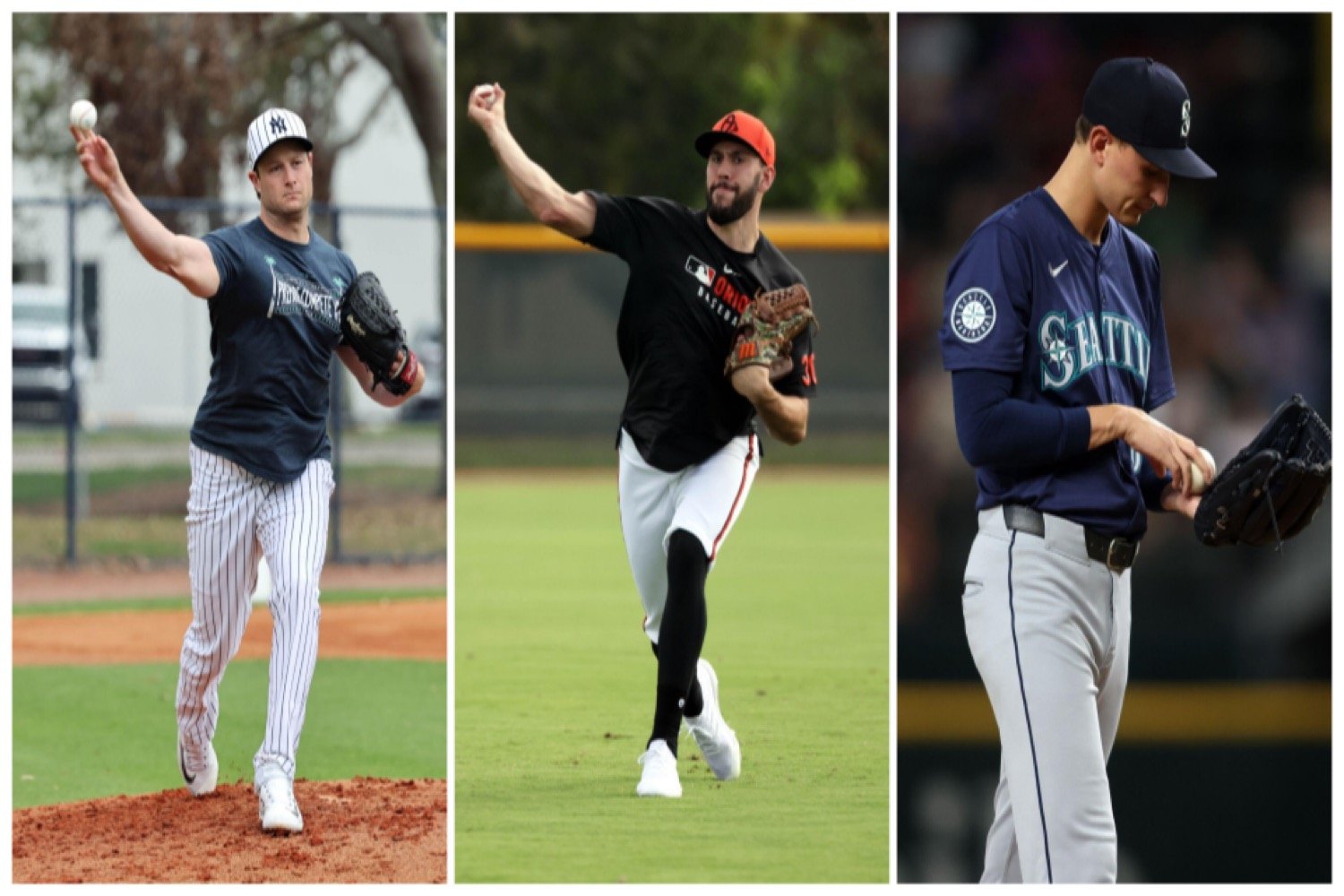 There may be no better-positioned team than the Twins to take advantage of some of the injuries around the league. Behind one of the best starting pitcher trios in baseball stands a solid group of guys who would be improvements over many other teams' fourth and fifth options: Chris Paddack, Simeon Woods Richardson, David Festa, and Zebby Matthews. Then, behind them, there's a group of near-ready arms in Andrew Morris, Cory Lewis, and Marco Raya. Some of them have questions and/or are unproven, but the Twins arguably have the deepest rotation group at the highest two levels of pro ball, and are in a position to be opportunistic. Many teams are looking for rotation help this close to Opening Day. So, to deal or not to deal? That is the question. If you’re like me, then you live by the credo that you can never have enough pitching. It’s the most valuable asset in the game and, no matter how desperate other teams are, the last thing most fans want is for the Twins to be in their position months from now. After all, while the Twins rotation is relatively healthy right now, Joe Ryan and Paddack haven’t been pillars of health, and their core of young pitchers aren’t guaranteed to meet the expectations put on them. Meanwhile, on the other side of the argument is the belief that there is no such thing as a pitching prospect (TINSTAAPP). This theory, created by Baseball Prospectus founder Gary Huckabay, basically suggests that pitching prospects' range of outcomes are so volatile that teams shouldn’t become too tied to them. For every Paul Skenes, there is a Mark Appel, a Matt Bush, a Kyle Drabek, and a Brian Matusz—and this is doubly true for prep arms. At the very least, the Twins must do their due diligence. At this point in spring training, the Twins' 40-man roster seems pretty well set. While there are battles that will impact the Opening Day active roster, the Twins filled their gaps this winter, with Danny Coulombe, Harrison Bader, and Ty France (among other, less notable depth options). While there is always room to improve, it can be a little hard to envision a deal between two teams that are looking to contend for the playoffs in the upcoming season. The Twins won’t be looking to flip a major-league or Triple-A arm for far-away prospects, and opposing teams likely aren't going to borrow from Paul to pay Pete. Nonetheless, let’s take a look at the teams in need and what they may have to offer to the Twins. New York Yankees - Gerrit Cole and Luis Gil Fresh off the news of their ace needing Tommy John surgery, the Yankees now have two holes in their rotation. They'd already lost the American League Rookie of the Year to a lat strain for at least two months. The 2024 World Series runner-up does have decent options to fill those losses, in Clarke Schmidt and Will Warren, but those aren’t names whom they’re ready to rely on over a large chunk of the season. The Yankees don’t have great depth at any one position, so it’s really hard to find a deal that both teams would be interested in. The Yankees don't have a great backup to starting catcher Austin Wells, but because they're already up against the top threshold of the competitive-balance tax ladder, it's hard to imagine them being willing to take on both Paddack and Christian Vázquez—at least not while giving the Twins anything of real value. New York Mets - Sean Manaea and Frankie Montas The other team in the Big Apple has also lost two starters this spring, as well as their starting catcher, Francisco Alvarez. The timelines of Manaea and Montas are unclear at this point, although neither are supposed to be long-term injuries, and after the Montas injury (but prior to the Manaea injury) the team said they were not planning to add another starter. While they haven’t publicly changed their stance in the last two weeks, it’s hard to envision them sitting on their hands after an offseason that saw them land Juan Soto and re-sign Pete Alonso. Unlike the Yankees, they could be in a position to take on a couple of contracts to supplement one of the best lineups in the league, and unlike the Yankees, the Mets do have some intriguing pieces that are at or close to the major-league level. It’s still hard to see a deal come to fruition between these two, but the Mets do have young pieces who could help the Twins in 2025 and beyond. Given that the Twins' financial impetus to move Paddack and/or Vázquez seems to have been removed, though, finding a value fit on each side might be difficult. Baltimore Orioles - Grayson Rodriguez Rodriguez, who missed the last two months of the 2024 season, is set to start 2025 on the IL with elbow inflammation. At this point, the team is shutting him down for about a week and then he will begin a throwing program. The Orioles are loaded with young talent, some of which have been blocked from getting significant runs in the big leagues. While the Twins did shore up first base, I’ve long been a fan of Ryan Mountcastle, who has two years of team control left and could be replaced on the Baltimore roster with a number of talented options. Or, since that would create a roster crunch for the Twins, maybe they kick the tires on one of those talented options like Heston Kjerstad, who has more team control and positional versatility but would certainly cost an arm like Festa or Matthews, rather than Paddack. Seattle Mariners - George Kirby Kirby has been shut down with shoulder inflammation but, at least for now, this appears to be a short-term injury; no structural damage was found. Of the teams we’ve discussed, the Mariners may be the most motivated to add. They’ve made small but affirmative “win-now” type moves in recent times, trading for Randy Arozarena at last year's deadline, signing Mitch Garver the winter before, trading for and re-signing Jorge Polanco, and holding on to Luis Castillo. Despite all that, PECOTA projects them to finish third in the AL West, while competing for a Wild Card spot with an offense that is projected to be slightly below average. While their pitching staff is the strength of the team, the difference between Kirby and Emerson Hancock may be too much to overcome while staying competitive. The Mariners don’t have much depth and, while their farm system is very good at the top, many of their top prospects are years away from the bigs. While this isn’t a comprehensive list, it is a list of the biggest names that teams have lost since the start of spring training. While I do think it would be in the Twins' best interest to kick the tires, I’m struggling to see a trade scenario that makes sense at this point. It’s my opinion that Twins should stand pat for now. They can always reassess at the deadline, once there is a clearer picture of how their season is unfolding and where gaps may exist on their roster. Do you think the Twins should trade from their pitching depth? Join the conversation in the comments!
- 27 comments
-
- 3
-
-
- david festa
- zebby matthews
- (and 5 more)
-
It's a small sample (literally one start of thirty three pitches), but it seems that David Festa has made some changes to his mechanics that are impacting his pitch movement. Oh, he's added a pitch to his arsenal too. What did we see in his first start of the spring that used publicly accessible statcast technology? Let's dive in. Image courtesy of © Matt Blewett-Imagn Images It's a small sample (literally one start of thirty three pitches), but it seems that David Festa has made some changes to his mechanics that are impacting his pitch movement. Oh, he's added a pitch to his arsenal too. What did we see in his first start of the spring that used publicly accessible statcast technology? Let's dive in. It’s been a couple of weeks since David Festa made his spring training debut against the Pittsburgh Pirates. On the surface there wasn't much to the start wherein he faced seven batters across two frames striking out two and allowing one base hit. As you dive deeper, though, you start to realize that quite a bit has changed with the 25-year-old since the last time we saw him on a big-league mound. In his rookie season, right-handed batters had an opponent batting average of .360 and slugging percentage of .700 against his fastball. To counter that, he’s added a sinker that he will primarily deploy against righties as a different look from his four-seam fastball. The addition of that offering should not only be more effective than his four-seamer, but it should actually help the pitch become more effective as hitters have one additional offering to consider. In addition to deepening his arsenal, the lanky righty has dropped his arm slot 11 degrees which has impacted the movement pattern of his pitches. On the left, you see Festa’s movement patterns from his August 28th start against the Atlanta Braves, and on the right his spring training start. In addition to the added sinker, we can see the following changes in his spring training start: The fastball has more arm side action The change up has more horizontal and vertical movement The slider has less horizontal and vertical movement Albeit thirty-three pitches of data, that's a significant change in his profile, so let's dive into the implications of those changes. The added run to his fastball should counteract the downward movement of the sinker. While less movement in his slider can make it less deceptive, the average velocity on the pitch in this start was two miles per hour faster than it was in August. This will help keep hitters off-balance and potentially offset the hitability of the pitch due to the movement change. Of all the changes the most significant may be with his changeup that had more run and depth in his spring training start. Of his three offerings in 2024, the changeup was his least used pitch yet (28% of the time) but generated the highest whiff percentage at 39.1%. It was especially utilized against lefties where the usage rate jumped to nearly 40% and carried an opponent wOBA of .304. Especially with the added depth, the 2025 version of the pitch looks to separate itself even more from his four-seam fastball, which should generate even more whiffs this season, particularly against right-handed bats. If you read the entire thread above, D.J. Morgan of Medium suggests that Festa’s new and improved changeup isn't only due to his change in arm slot. In one of the subsequent tweets (but seriously, go and read the entire thread…it's very insightful), he shares the following adjustments to the pitch grip from the traditional circle change grip: Middle & ring fingers shifted to a two-seam orientation Index finger moved lower on the ball. Like his sinker, this adjustment should not only directly improve his changeup, but we can also anticipate it indirectly helping his fastball. Festa started Friday afternoon against the Tamps Rays, a game that ended in a 9-9 tie. He gave up five runs in his 3 2/3 innings, with most of the damage coming in the third inning. "I thought in that third inning, I just got too predictable," Festa said after the game. Unfortunately, Tampa Bay’s spring training park doesn't have publicly accessible statcast data, so you’ll need to find a replay of the game and rely on your eye test to see if these changes will stick from start to start. Regardless, it's encouraging that one of the Twins' top pitching arms is looking to get even better after a rookie season that saw him produce a 19.5% K-BB rate and a 3.76 FIP across 64 ⅓ innings. It's just more evidence that points to the Twins being one of the best pitching development organizations in the league. For Festa, it's more evidence that his prospect pedigree and 2024 success was warranted, and whether he wins a roster out of camp or not, he's not far from having a big impact on the big-league club. What are your initial thoughts on the new and improved Festa? Join the conversation in the comments! View full article
-
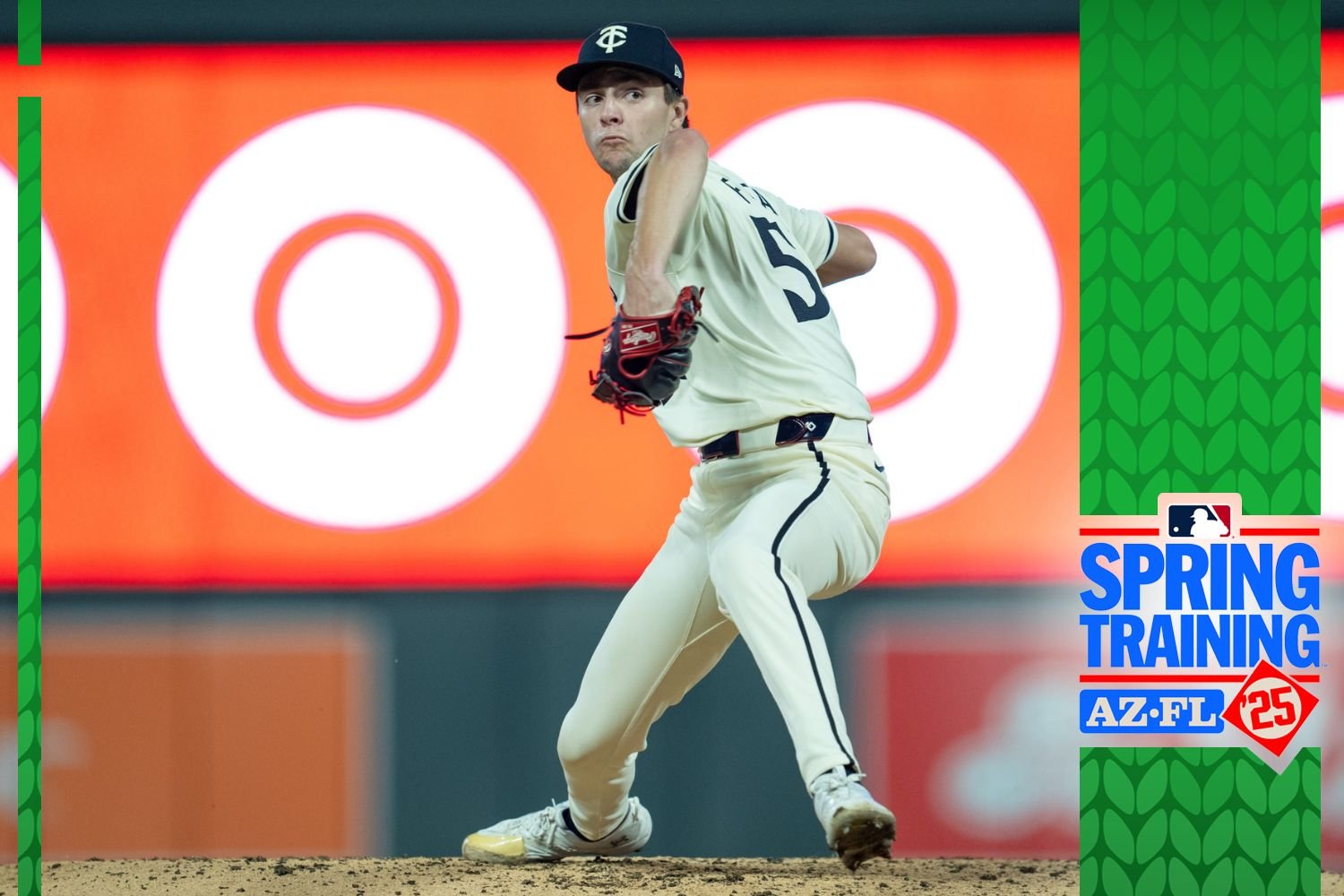 It’s been a couple of weeks since David Festa made his spring training debut against the Pittsburgh Pirates. On the surface there wasn't much to the start wherein he faced seven batters across two frames striking out two and allowing one base hit. As you dive deeper, though, you start to realize that quite a bit has changed with the 25-year-old since the last time we saw him on a big-league mound. In his rookie season, right-handed batters had an opponent batting average of .360 and slugging percentage of .700 against his fastball. To counter that, he’s added a sinker that he will primarily deploy against righties as a different look from his four-seam fastball. The addition of that offering should not only be more effective than his four-seamer, but it should actually help the pitch become more effective as hitters have one additional offering to consider. In addition to deepening his arsenal, the lanky righty has dropped his arm slot 11 degrees which has impacted the movement pattern of his pitches. On the left, you see Festa’s movement patterns from his August 28th start against the Atlanta Braves, and on the right his spring training start. In addition to the added sinker, we can see the following changes in his spring training start: The fastball has more arm side action The change up has more horizontal and vertical movement The slider has less horizontal and vertical movement Albeit thirty-three pitches of data, that's a significant change in his profile, so let's dive into the implications of those changes. The added run to his fastball should counteract the downward movement of the sinker. While less movement in his slider can make it less deceptive, the average velocity on the pitch in this start was two miles per hour faster than it was in August. This will help keep hitters off-balance and potentially offset the hitability of the pitch due to the movement change. Of all the changes the most significant may be with his changeup that had more run and depth in his spring training start. Of his three offerings in 2024, the changeup was his least used pitch yet (28% of the time) but generated the highest whiff percentage at 39.1%. It was especially utilized against lefties where the usage rate jumped to nearly 40% and carried an opponent wOBA of .304. Especially with the added depth, the 2025 version of the pitch looks to separate itself even more from his four-seam fastball, which should generate even more whiffs this season, particularly against right-handed bats. If you read the entire thread above, D.J. Morgan of Medium suggests that Festa’s new and improved changeup isn't only due to his change in arm slot. In one of the subsequent tweets (but seriously, go and read the entire thread…it's very insightful), he shares the following adjustments to the pitch grip from the traditional circle change grip: Middle & ring fingers shifted to a two-seam orientation Index finger moved lower on the ball. Like his sinker, this adjustment should not only directly improve his changeup, but we can also anticipate it indirectly helping his fastball. Festa started Friday afternoon against the Tamps Rays, a game that ended in a 9-9 tie. He gave up five runs in his 3 2/3 innings, with most of the damage coming in the third inning. "I thought in that third inning, I just got too predictable," Festa said after the game. Unfortunately, Tampa Bay’s spring training park doesn't have publicly accessible statcast data, so you’ll need to find a replay of the game and rely on your eye test to see if these changes will stick from start to start. Regardless, it's encouraging that one of the Twins' top pitching arms is looking to get even better after a rookie season that saw him produce a 19.5% K-BB rate and a 3.76 FIP across 64 ⅓ innings. It's just more evidence that points to the Twins being one of the best pitching development organizations in the league. For Festa, it's more evidence that his prospect pedigree and 2024 success was warranted, and whether he wins a roster out of camp or not, he's not far from having a big impact on the big-league club. What are your initial thoughts on the new and improved Festa? Join the conversation in the comments!
 -
The Minnesota Twins are roughly a third of the way through their Grapefruit League season, which means it’s time to check in on the unresolved position battles. Who’s been manning the keystone? Is there a favorite for the fifth rotation spot? How is the bullpen shaping up? Is Rocco Baldelli dropping any hints? Image courtesy of © Chris Tilley-Imagn Images The Minnesota Twins are roughly a third of the way through their Grapefruit League season, which means it’s time to check in on the unresolved position battles. Who’s been manning the keystone? Is there a favorite for the fifth rotation spot? How is the bullpen shaping up? Is Rocco Baldelli dropping any hints? Before the start of spring training, I previewed three positional battles: second base, the rotation anchor, and the final two bullpen spots. Eight games into their spring training season and after weeks' worth of interviews, we are starting to get an idea of how these battles are unfolding. Second Base This battle is between Willi Castro, Brooks Lee, Mickey Gasper and Edouard Julien. From a pure playing time perspective, Gasper leads the way with four games played at second, followed by Lee (3), Castro (2), and Julien (1). A few non-roster invitees have gotten into the mix, but none of them really have a shot at making the Opening Day roster. Keeping small samples in mind (and that we don’t put a lot of stock in spring training stats), Gasper is making the most of his opportunity, leading the way with a .665 OPS. In fairness, though, that's just a single point ahead of Julien among the four in this battle. Lee and Castro have struggled mightily, carrying sub-.500 OPSes, but it’s interesting to note that each player’s walk-to-strikeout ratio is at least 1.00. This is something to keep a close eye on for Lee, as Baldelli shared with reporters in a scrum following their spring training opener on Feb. 22 in Fort Myers, Fla.: “Having quality at-bats and controlling the zone is going to be really important for [Lee], something that challenged him during the season last year and something that is part of his focus going into this year,” Baldelli said. A week earlier, Lee had this to say regarding his offseason work related to swing mechanics: “When you have good mechanics, and your swing is quick, you don't have any wasted movements, then you get to make a decision later. While the ball's coming to the plate, you can make a decision late. So that's what I think is a big difference on how I see the pitch and then my swing decisions.” Many questions remain unanswered here, but as Baldelli intimated at the start of camp, this might be a spot where they simply don't arrive at any one full-time answer—not this month, and perhaps not throughout the season. As was true in 2024, the keystone looks like it will be a merry-go-round of sorts, with Castro likely leading the way. Gasper wasn’t really in the picture (at least mine) a few weeks ago, but he’s making at least a modest case to make the roster, which could have implications for Lee and Julien. 5th Rotation Spot This battle is between Simeon Woods Richardson, David Festa, and Zebby Matthews. It was my opinion that Woods Richardson had the edge, purely based on a 2024 performance that saw him carry a sub-4.00 ERA into the final month of the season before he ran out of gas. Funnily enough, Matthews and Festa are the top two in innings pitched (although with 5 and 4 ⅓, respectively), followed by Woods Richardson, who has 4. It’s clear these three will each get an opportunity to crack the Opening Day roster, and from a statistical perspective, Matthews is leading the way with a 7:0 strikeout-to-walk ratio and a 0.88 FIP. Festa isn’t far behind analytically, but on the surface, he was knocked around quite a bit in his second outing, allowing six baserunners and four earned runs. As we saw in his rookie campaign, Woods Richardson doesn’t have the bat-missing ability of the other two, and is currently carrying a 6.93 FIP. There is very little to read into when it comes to hints from the Twins’ skipper, because he’s had nothing but positive things to say about each of the three players in this battle. One potential takeaway is that he has spoken the most about Matthews (which may be more about the questions being asked), and had this to say after his first outing on Feb. 22: “Yeah, Zebby looked good…his stuff was probably even up a little bit from where we saw it last year in the big leagues.” That was before his second outing, which was even better: he struck out five of 10 batters faced over three innings. While I think Woods Richardson started with the edge, it’s hard to ignore how Matthews has looked. He might be my favorite to round out the rotation, as it sits today. Bullpen This might be the one battle we are getting a clearer picture on. Louis Varland has made four one-inning appearances (in three of which he threw 11 or fewer pitches), and it seems all but guaranteed that he will be in the Twins bullpen on Opening Day. Justin Topa, who was also on the roster bubble, is now dealing with right shoulder tightness, and I already had him pegged to start the year in St. Paul. That leaves Michael Tonkin, Eiberson Castellano, and Jorge Alcalá for the last two spots. Check out my thoughts from earlier this week for a deeper dive on this battle, but here’s the TL;DR version: the Twins should prioritize keeping arms in the organization over putting together the most formidable bullpen on Opening Day. Send Alcalá and Topa to St. Paul, which means they’re carrying Tonkin and Castellano at the bottom of the bullpen. We know how the Twins work. We’re only going to learn about the “winners” of these battles when roster decisions are formally made. They always hold their cards close, and there’s no reason to think that will change now. That said, spring training performances carry some weight, and we can try to read the tea leaves in interviews to get an idea of where things might be headed. We’re three weeks out from Opening Day…who do you think wins these battles? What does your Opening Day roster look like? Drop your ideas in the comments and join the conversation! View full article
-
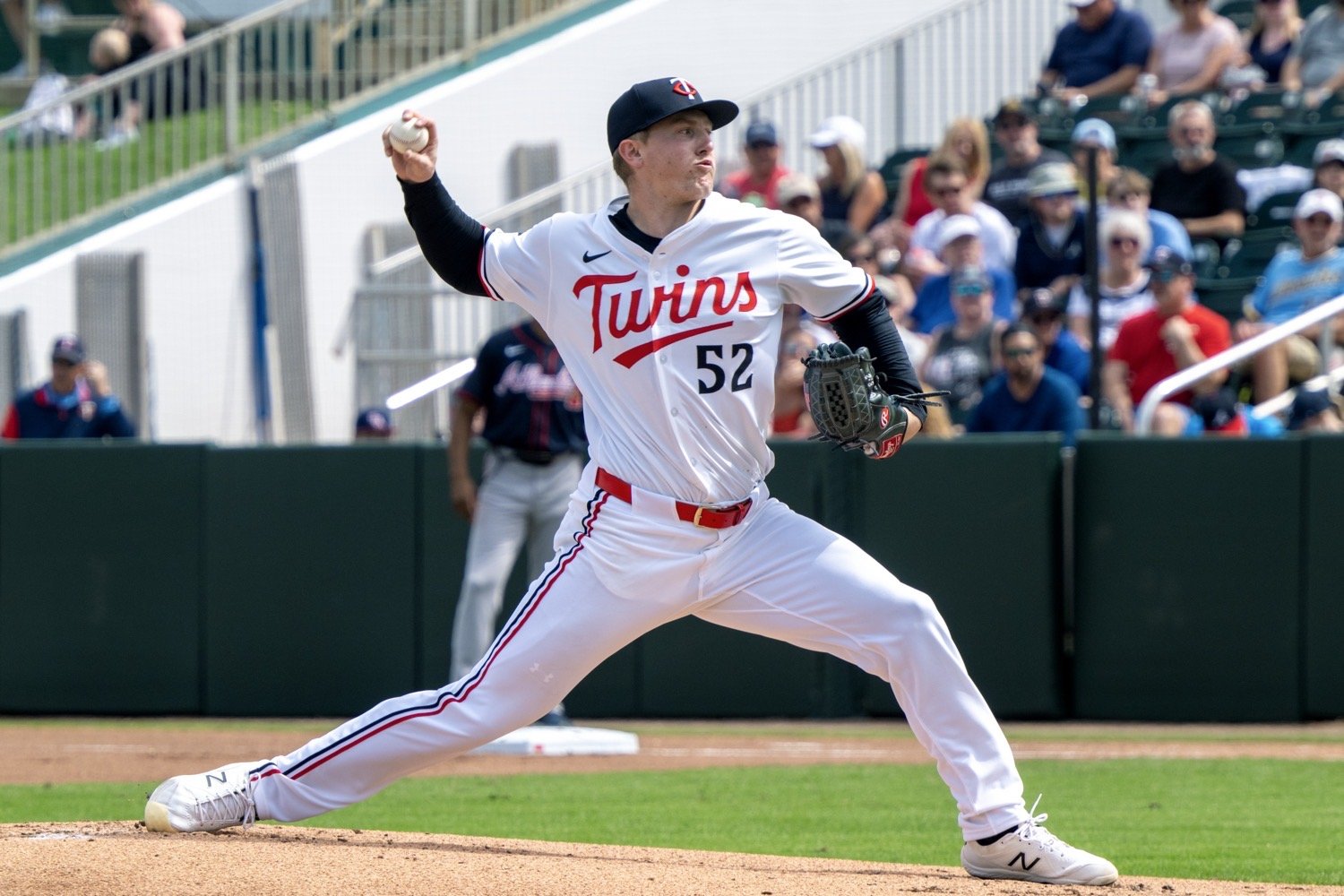 Before the start of spring training, I previewed three positional battles: second base, the rotation anchor, and the final two bullpen spots. Eight games into their spring training season and after weeks' worth of interviews, we are starting to get an idea of how these battles are unfolding. Second Base This battle is between Willi Castro, Brooks Lee, Mickey Gasper and Edouard Julien. From a pure playing time perspective, Gasper leads the way with four games played at second, followed by Lee (3), Castro (2), and Julien (1). A few non-roster invitees have gotten into the mix, but none of them really have a shot at making the Opening Day roster. Keeping small samples in mind (and that we don’t put a lot of stock in spring training stats), Gasper is making the most of his opportunity, leading the way with a .665 OPS. In fairness, though, that's just a single point ahead of Julien among the four in this battle. Lee and Castro have struggled mightily, carrying sub-.500 OPSes, but it’s interesting to note that each player’s walk-to-strikeout ratio is at least 1.00. This is something to keep a close eye on for Lee, as Baldelli shared with reporters in a scrum following their spring training opener on Feb. 22 in Fort Myers, Fla.: “Having quality at-bats and controlling the zone is going to be really important for [Lee], something that challenged him during the season last year and something that is part of his focus going into this year,” Baldelli said. A week earlier, Lee had this to say regarding his offseason work related to swing mechanics: “When you have good mechanics, and your swing is quick, you don't have any wasted movements, then you get to make a decision later. While the ball's coming to the plate, you can make a decision late. So that's what I think is a big difference on how I see the pitch and then my swing decisions.” Many questions remain unanswered here, but as Baldelli intimated at the start of camp, this might be a spot where they simply don't arrive at any one full-time answer—not this month, and perhaps not throughout the season. As was true in 2024, the keystone looks like it will be a merry-go-round of sorts, with Castro likely leading the way. Gasper wasn’t really in the picture (at least mine) a few weeks ago, but he’s making at least a modest case to make the roster, which could have implications for Lee and Julien. 5th Rotation Spot This battle is between Simeon Woods Richardson, David Festa, and Zebby Matthews. It was my opinion that Woods Richardson had the edge, purely based on a 2024 performance that saw him carry a sub-4.00 ERA into the final month of the season before he ran out of gas. Funnily enough, Matthews and Festa are the top two in innings pitched (although with 5 and 4 ⅓, respectively), followed by Woods Richardson, who has 4. It’s clear these three will each get an opportunity to crack the Opening Day roster, and from a statistical perspective, Matthews is leading the way with a 7:0 strikeout-to-walk ratio and a 0.88 FIP. Festa isn’t far behind analytically, but on the surface, he was knocked around quite a bit in his second outing, allowing six baserunners and four earned runs. As we saw in his rookie campaign, Woods Richardson doesn’t have the bat-missing ability of the other two, and is currently carrying a 6.93 FIP. There is very little to read into when it comes to hints from the Twins’ skipper, because he’s had nothing but positive things to say about each of the three players in this battle. One potential takeaway is that he has spoken the most about Matthews (which may be more about the questions being asked), and had this to say after his first outing on Feb. 22: “Yeah, Zebby looked good…his stuff was probably even up a little bit from where we saw it last year in the big leagues.” That was before his second outing, which was even better: he struck out five of 10 batters faced over three innings. While I think Woods Richardson started with the edge, it’s hard to ignore how Matthews has looked. He might be my favorite to round out the rotation, as it sits today. Bullpen This might be the one battle we are getting a clearer picture on. Louis Varland has made four one-inning appearances (in three of which he threw 11 or fewer pitches), and it seems all but guaranteed that he will be in the Twins bullpen on Opening Day. Justin Topa, who was also on the roster bubble, is now dealing with right shoulder tightness, and I already had him pegged to start the year in St. Paul. That leaves Michael Tonkin, Eiberson Castellano, and Jorge Alcalá for the last two spots. Check out my thoughts from earlier this week for a deeper dive on this battle, but here’s the TL;DR version: the Twins should prioritize keeping arms in the organization over putting together the most formidable bullpen on Opening Day. Send Alcalá and Topa to St. Paul, which means they’re carrying Tonkin and Castellano at the bottom of the bullpen. We know how the Twins work. We’re only going to learn about the “winners” of these battles when roster decisions are formally made. They always hold their cards close, and there’s no reason to think that will change now. That said, spring training performances carry some weight, and we can try to read the tea leaves in interviews to get an idea of where things might be headed. We’re three weeks out from Opening Day…who do you think wins these battles? What does your Opening Day roster look like? Drop your ideas in the comments and join the conversation!
- 30 comments
-
- 9
-
-
- willi castro
- mickey gasper
- (and 5 more)
-
Minnesota Twins star Royce Lewis spent the offseason getting back to his roots to prepare for the 2025 season. What does that mean and how will it help him be successful and stay on the field? View full video
-
Minnesota Twins star Royce Lewis spent the offseason getting back to his roots to prepare for the 2025 season. What does that mean and how will it help him be successful and stay on the field?
-
Announcing Home Run Derby (2025) - A fun game to play!
Matthew Lenz replied to Southpaw19's topic in Minnesota Twins Talk
Are you just wanting us to post in this forum? -
After months of speculation, it seems unofficially official that Louis Varland will be a reliever for the Minnesota Twins this season. While Twins manager Rocco Baldelli continues to keep his cards close to his chest, it’s hard to ignore the signs. What gives us this impression, and what implications will such a move have on others fighting for a roster spot? Image courtesy of © Jesse Johnson-Imagn Images After months of speculation, it seems unofficially official that Louis Varland will be a reliever for the Minnesota Twins this season. While Twins manager Rocco Baldelli continues to keep his cards close to his chest, it’s hard to ignore the signs. What gives us this impression, and what implications will such a move have on others fighting for a roster spot? The Twins are roughly one-third of the way through their Grapefruit League schedule, and to this point we have seen Louis Varland make four appearances. It’s not overly notable that all of those have come in relief, but an interesting trend has emerged in the box scores (listed chronologically): Not only has Varland been limited to one-inning outings, but his pitch count has been kept “suspiciously” low, as well. If he was being stretched out as a starter, or even a multi-inning reliever, he assuredly would need to be on the mound for more than an inning or a dozen pitches at a time. With just four innings under his belt and only the first two frames taking place in a stadium with publicly accessible Statcast technology, it remains to be seen how this will impact his velocity and pitch mix. As it stands right now, his velocity and spin rates are roughly the same as his 2024 numbers, although I would expect that to change as the sample grows and the season ramps up. Regardless, in 29 ⅓ regular season innings as a reliever, his analytics suggest this is the right move. Across 16 appearances, he’s carried a 25.6% K-BB rate and a 3.54 FIP, which is nearly two runs better than as a starter. So why can’t we make this unofficial announcement official? Well, Rocco Baldelli is still claiming that they have yet to label Varland's role for the season. On Mar. 1, in a scrum with reporters following the spring training tilt against the Boston Red Sox (Varland’s third appearance), the Twins skipper said: “I don’t remember or recall backfield outings where [Varland is] being stretched out at the moment. He’s going to throw some multi-inning appearances this spring, no matter what we end up landing on for him. But getting a chance to see him throw an inning, kind of a revved-up inning, let him come in from the pen doing that gets him the work we’re looking for from him right now. We’re still waiting to see those “multi-inning appearances” and, in his defense, the spring training season is still relatively young. That said, despite not formally giving Varland a label, it’s getting harder to ignore what the box scores are telling us—in addition to the success he’s experienced as a reliever. So, if we are reading the tea leaves correctly, what impact will this have on the major-league roster. Entering spring training, I hypothesized that the Twins would carry eight relievers, and that only two of those spots were really open. Initially, I had Michael Tonkin as a lock to make the Opening Day roster, but I’m less confident in that given his spring. I am swapping him out for Varland as a lock—which means, if our conjecture ends up being true, we’re still at two spots for a few different arms. We know who’s at the top of the pecking order, so the last two spots likely come down to Jorge Alcalá, Justin Topa, Tonkin, or Eiberson Castellano. Alcalá has mostly proven to be a good reliever when he’s healthy. Take out the month of August last season, and he was one of the more reliable and productive members of the Twins bullpen. He’s been used sparingly this spring, but one interesting thing to note is that he is only eight days away from reaching five years of service, whereupon he would need to agree to be optioned to Triple-A St. Paul. Topa is another effective reliever, when healthy, but his 2024 season was basically a loss, and he's now 34 years old. Like Alcalá, he’s only thrown two innings this spring, but unlike Alcalá, his appearances have been a bit messy. He's given up four hits and an earned run, while striking out two. Despite his age, he’s accrued far less service time than Alcalá and could be optioned at any point this season. Tonkin bounced around quite a bit last year, but ended the season as one of the more reliable arms for the Twins, which says more about the team’s performance than it does about him. He’s had an unfortunate spring, giving up eight base runners and four earned runs across 2 ⅔ innings. He’s out of options, though, and if he doesn’t crack the Opening Day roster, he would likely be lost to waivers. The best argument for keeping him is that he's the rubber arm in the group. In a pen full of pitchers with some notable injury histories, Tonkin offers durability. Castellano has gone three innings across two appearances, including a rough two-inning outing against the Pittsburgh Pirates on Feb. 28. Of course, being a Rule 5 Draft selection means that the Twins have to carry him on their active roster or offer him back to the Philadelphia Phillies. Theoretically, they could try and swing a trade with the Phillies to keep him in the organization, but rumors suggest they tried to trade for him ahead of the Rule 5 Draft to no avail. I think the Twins need to be strategic with how they handle the last spot in the bullpen; there is a way to do this without losing any arms. The season is a marathon, not a sprint, so I think it’s okay if they don't deploy the best 26 players in the organization on Opening Day, especially when it comes to the bullpen. Regardless of how his spring turns out, I like the long-term outlook for Castellano, and think he should be carried on the active roster for the entirety of the 2025 season. While I don’t think Tonkin is the best arm between Topa and Alcalá (in fact, he might be the worst), he’s the only one who cannot be optioned to Triple-A. Thus, I would pencil him in at the bottom of the bullpen totem pole. Strategically, I’m taking advantage of the eight days Alcalá has left to be freely optioned, and I'm also starting Topa with the Saints. Again, this isn’t about having the best 26-man roster possible, but instead hoarding the most valuable resource in baseball. You can never have enough pitching, and when injury or poor performance strikes, the Twins would be in a really good spot if they had multiple arms in St. Paul at the ready. The plan for the bullpen is more about winning the marathon and keeping as many MLB-ready arms in the organization as possible. What does your Opening Day bullpen look like? Join the conversation in the comments! View full article
-
Louis Varland is (Un)Officially a Member of the Minnesota Twins Bullpen
Matthew Lenz posted an article in Twins
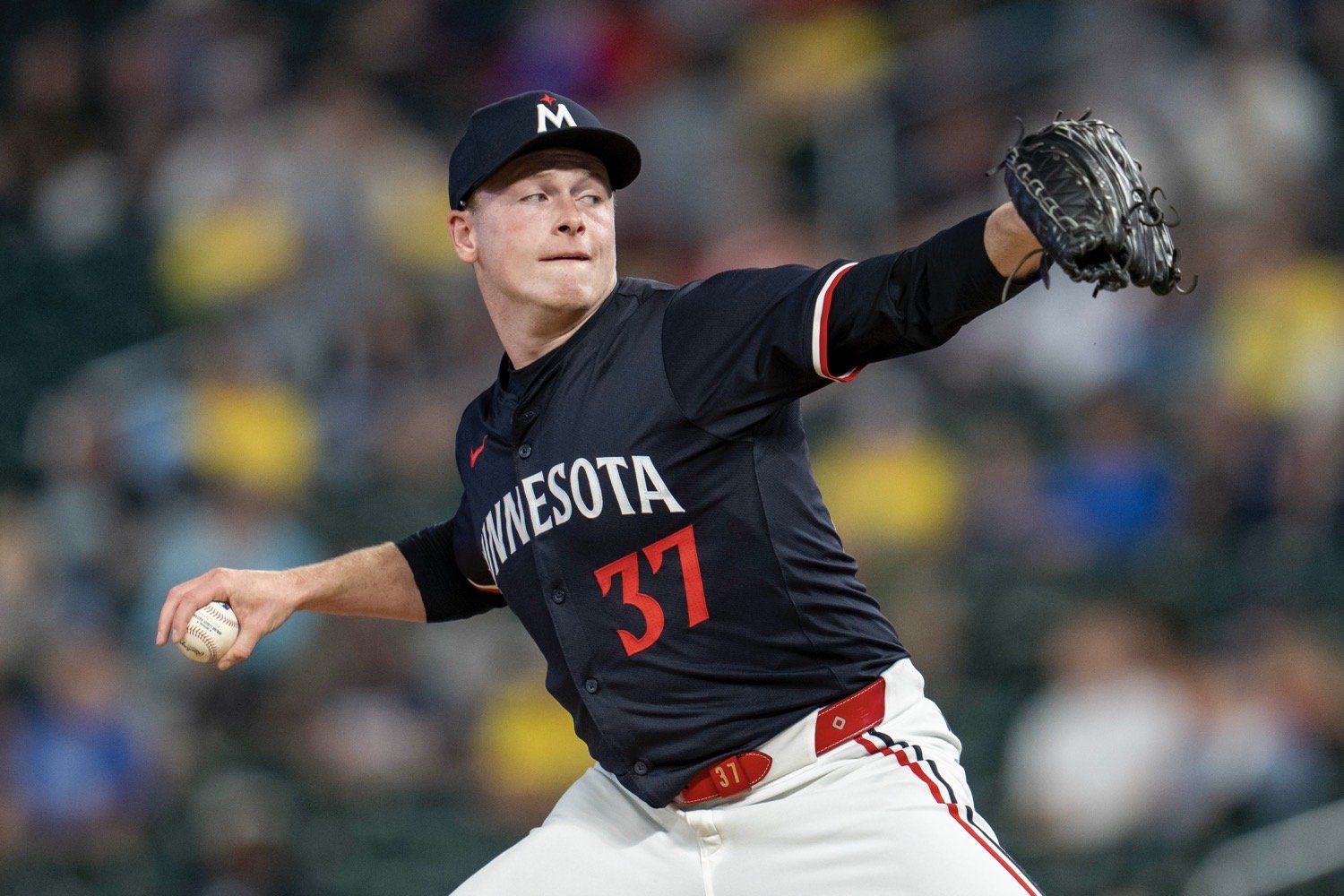 The Twins are roughly one-third of the way through their Grapefruit League schedule, and to this point we have seen Louis Varland make four appearances. It’s not overly notable that all of those have come in relief, but an interesting trend has emerged in the box scores (listed chronologically): Not only has Varland been limited to one-inning outings, but his pitch count has been kept “suspiciously” low, as well. If he was being stretched out as a starter, or even a multi-inning reliever, he assuredly would need to be on the mound for more than an inning or a dozen pitches at a time. With just four innings under his belt and only the first two frames taking place in a stadium with publicly accessible Statcast technology, it remains to be seen how this will impact his velocity and pitch mix. As it stands right now, his velocity and spin rates are roughly the same as his 2024 numbers, although I would expect that to change as the sample grows and the season ramps up. Regardless, in 29 ⅓ regular season innings as a reliever, his analytics suggest this is the right move. Across 16 appearances, he’s carried a 25.6% K-BB rate and a 3.54 FIP, which is nearly two runs better than as a starter. So why can’t we make this unofficial announcement official? Well, Rocco Baldelli is still claiming that they have yet to label Varland's role for the season. On Mar. 1, in a scrum with reporters following the spring training tilt against the Boston Red Sox (Varland’s third appearance), the Twins skipper said: “I don’t remember or recall backfield outings where [Varland is] being stretched out at the moment. He’s going to throw some multi-inning appearances this spring, no matter what we end up landing on for him. But getting a chance to see him throw an inning, kind of a revved-up inning, let him come in from the pen doing that gets him the work we’re looking for from him right now. We’re still waiting to see those “multi-inning appearances” and, in his defense, the spring training season is still relatively young. That said, despite not formally giving Varland a label, it’s getting harder to ignore what the box scores are telling us—in addition to the success he’s experienced as a reliever. So, if we are reading the tea leaves correctly, what impact will this have on the major-league roster. Entering spring training, I hypothesized that the Twins would carry eight relievers, and that only two of those spots were really open. Initially, I had Michael Tonkin as a lock to make the Opening Day roster, but I’m less confident in that given his spring. I am swapping him out for Varland as a lock—which means, if our conjecture ends up being true, we’re still at two spots for a few different arms. We know who’s at the top of the pecking order, so the last two spots likely come down to Jorge Alcalá, Justin Topa, Tonkin, or Eiberson Castellano. Alcalá has mostly proven to be a good reliever when he’s healthy. Take out the month of August last season, and he was one of the more reliable and productive members of the Twins bullpen. He’s been used sparingly this spring, but one interesting thing to note is that he is only eight days away from reaching five years of service, whereupon he would need to agree to be optioned to Triple-A St. Paul. Topa is another effective reliever, when healthy, but his 2024 season was basically a loss, and he's now 34 years old. Like Alcalá, he’s only thrown two innings this spring, but unlike Alcalá, his appearances have been a bit messy. He's given up four hits and an earned run, while striking out two. Despite his age, he’s accrued far less service time than Alcalá and could be optioned at any point this season. Tonkin bounced around quite a bit last year, but ended the season as one of the more reliable arms for the Twins, which says more about the team’s performance than it does about him. He’s had an unfortunate spring, giving up eight base runners and four earned runs across 2 ⅔ innings. He’s out of options, though, and if he doesn’t crack the Opening Day roster, he would likely be lost to waivers. The best argument for keeping him is that he's the rubber arm in the group. In a pen full of pitchers with some notable injury histories, Tonkin offers durability. Castellano has gone three innings across two appearances, including a rough two-inning outing against the Pittsburgh Pirates on Feb. 28. Of course, being a Rule 5 Draft selection means that the Twins have to carry him on their active roster or offer him back to the Philadelphia Phillies. Theoretically, they could try and swing a trade with the Phillies to keep him in the organization, but rumors suggest they tried to trade for him ahead of the Rule 5 Draft to no avail. I think the Twins need to be strategic with how they handle the last spot in the bullpen; there is a way to do this without losing any arms. The season is a marathon, not a sprint, so I think it’s okay if they don't deploy the best 26 players in the organization on Opening Day, especially when it comes to the bullpen. Regardless of how his spring turns out, I like the long-term outlook for Castellano, and think he should be carried on the active roster for the entirety of the 2025 season. While I don’t think Tonkin is the best arm between Topa and Alcalá (in fact, he might be the worst), he’s the only one who cannot be optioned to Triple-A. Thus, I would pencil him in at the bottom of the bullpen totem pole. Strategically, I’m taking advantage of the eight days Alcalá has left to be freely optioned, and I'm also starting Topa with the Saints. Again, this isn’t about having the best 26-man roster possible, but instead hoarding the most valuable resource in baseball. You can never have enough pitching, and when injury or poor performance strikes, the Twins would be in a really good spot if they had multiple arms in St. Paul at the ready. The plan for the bullpen is more about winning the marathon and keeping as many MLB-ready arms in the organization as possible. What does your Opening Day bullpen look like? Join the conversation in the comments!
 -
The Minnesota Twins have a problem in their hands. A good problem, that is. They have more Major League ready arms than they can fit on their active roster. Who starts the year in St. Paul? And of that group, who still impacts the 2025 Twins? View full video
-
The Minnesota Twins have a problem in their hands. A good problem, that is. They have more Major League ready arms than they can fit on their active roster. Who starts the year in St. Paul? And of that group, who still impacts the 2025 Twins?

