


Twins Video
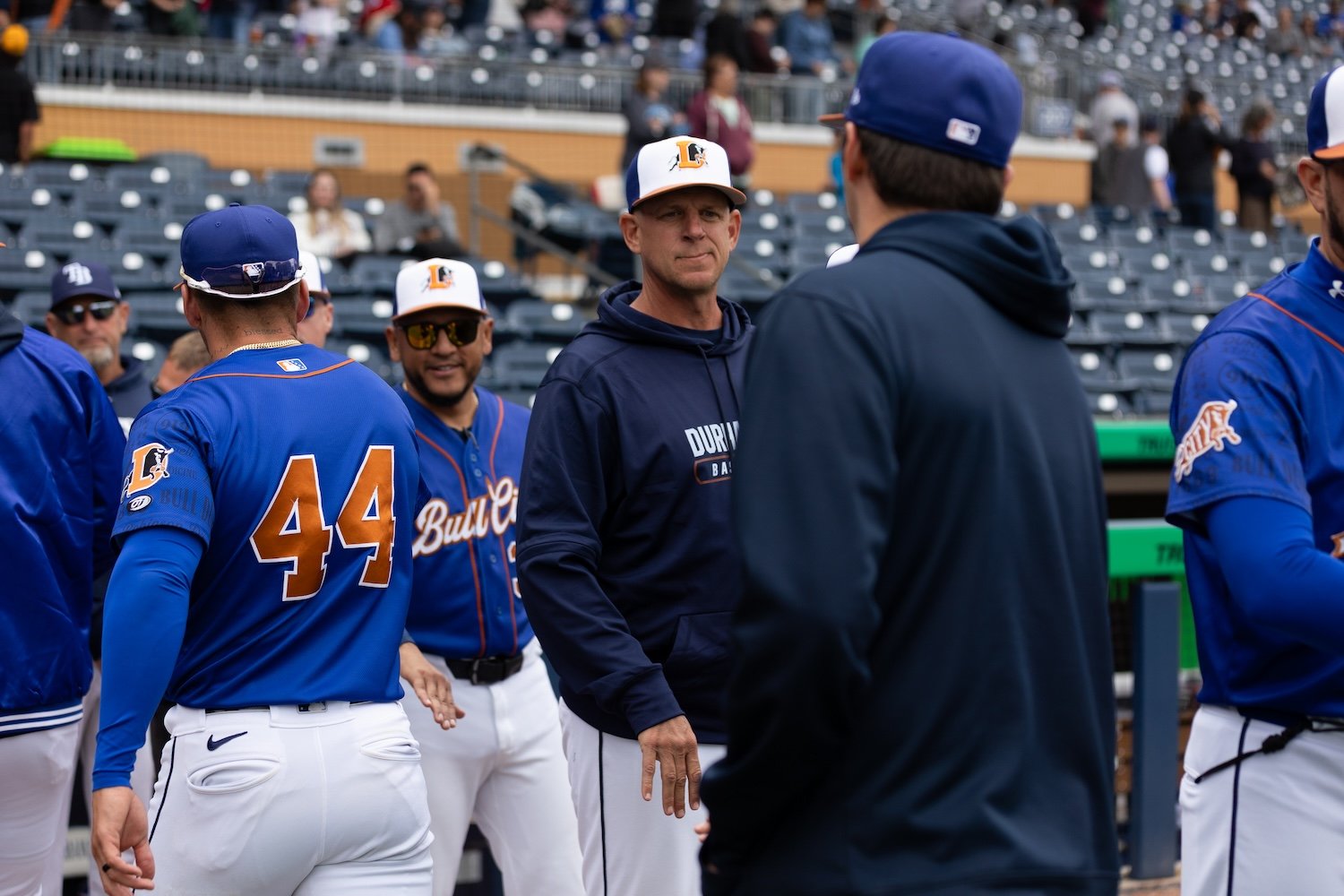
Last Wednesday, the Minnesota Twins named Brian Reith as their new pitching coach, replacing long-time predecessor Pete Maki. Operating under the same title for the Durham Bulls (Tampa’s Triple-A affiliate) for the past five seasons, Reith draws little fanfare himself. As a minor league pitching coach over the past half-decade, he is not well known among those who primarily follow the majors. Instead, his appeal lies entirely in the parent club he developed pitchers for, with many having a Pavlov’s dog-type positive reaction to seeing “Rays.”
Justifiably so. Tampa has been a pioneer in the analytical revolution, often assembling competitive rosters with one of the lowest payrolls in baseball. There is a particular shine around the organization as they just clinched a World Series berth, operating as one of the final three clubs remaining alongside other small-market darlings in Cleveland and Milwaukee. The Rays have been particularly keen on maximizing their pitching talent, deploying the AL’s second-best pitching staff of the 2020s, according to FanGraphs' Wins Above Replacement (fWAR).
Despite the stereotype that small-market teams maximize pitching talent through international free agency and the draft, Tampa’s success stems from being hyperactive in the trade market. For example, their best starting pitcher (Drew Rasmussen) was acquired from Milwaukee in 2021. The rest of their four-pitcher starting rotation (Freddy Peralta, Griffin Jax, and Nick Martinez) were also acquired through trade or free agency in the past year-and-a-half. Also, elite closer Bryan Baker was acquired in a trade with Baltimore in July, 2025, with the rest of the bullpen being entirely comprised of external additions, sans 2020 draft selection Ian Seymour.
This level of hyperactivity on the trade market is the product of the club’s president of baseball operations, Erik Neander, and the front office. It is impossible to know whether Twins top baseball executive Jeremy Zoll will operate similarly this offseason. If he does, however, his new pitching coach will be equipped to maximize those additions' strengths, having played an integral role in Tampa’s pitching development the past half-season.
As I’m sure you’ve heard countless times, Joe Ryan and Taj Bradley worked with Reith in Durham. Again, it is impossible to know what impact he will have on their respective 2027 campaigns. Bradley thrived under Maki’s guidance in 2026, so there’s no guarantee he will take another step forward based on familiarity alone. Yet what Reith will bring to Minnesota was best summed up by another former Durham Bull, Garrett Acton, whom I spoke with in early August when Minnesota was at Rate Field facing the Chicago White Sox.
Acton repeatedly referred to the concept of “2K” and “pre-2K,” like in the following quote: “(We prioritized) tightening up the arsenal," Acton noted when discussing what changes Maki and former assistant pitching coach Luis Ramirez made to his arsenal upon joining the Twins last season. "But the emphasis was still the same. Dominate the strike zone pre-2K, be able to expand, and use my best pitch 2K.” So, “Dominate the strike zone pre-2K” means attacking the strike zone before reaching two strikes. Subsequently, “2K” means a pitcher has reached two strikes and is trying to strike out the hitter.
Again, Acton noted this was Maki’s and Ramirez’s preferred approach. Yet, he likely first developed this approach when Reith was his pitching coach in 2025. Counts are the most important element of baseball. There is a meaningful advantage to a pitcher starting an at-bat with an 0-1 count rather than a 1-0 count. Attacking the zone pre-two-strike counts and using your best pitch in two-strike counts have been Tampa’s organizational modus operandi for pitching over the past half-decade, and there’s no doubt Reith will bring that philosophy to Minnesota.
On the surface, throwing strikes early and often is a simple concept. Every pitcher and pitching coach knows what they should be doing. But the first strike needs to be executed—easier said than done. Again, Twins pitchers knew they needed to throw strikes last season. There’s no doubt Maki communicated that. Yet, the club surrendered the fifth-most walks, playing a primary role in the Maki-led unit being one of the worst pitching staffs in baseball last season. What Reith is expected to be better at than Maki is deciding what arsenal changes need to be implemented and how and when to communicate them effectively.
Tampa’s success is largely rooted in encouraging pitchers to take the path of least resistance, opting for simplicity over over-complication. They are transcendentalist pitching developers, inspired by Henry David Thoreau: simplify, simplify. For example, this will look like Bradley leaning heavily on his elite cutter; Ryan trusting his fastball even more; and Jeff Hoffman spamming his slider. Not every pitcher needs to tinker with a fastball variant all the time—Reith knows that.
Don't be mistaken. Tampa’s simplicity isn’t rooted in being luddites. They have embraced advanced metrics and cutting-edge pitching technology. However, they communicate their desired results in an exceptionally simple manner and reduce the threat of miscommunication. For example, Tampa catchers place their glove in the middle of the strike zone for every pitch. One can expect Victor Caratini and whichever backstop joins him in 2027 to do the same. Instead of scrambling pitchers' brains with stringent location zones, they are encouraged to throw at the glove, leaning into their strengths.
If Reith can effectively bring Tampa’s pitching philosophy, he could immediately drastically improve Minnesota’s pitching staff, potentially unlocking newfound success for the club’s top starters in Ryan, Bradley, and Pablo López while helping young starters Connor Prielipp and Zebby Matthews develop into steady, above-average arms. The same goes for the bullpen, which will again rely heavily on Hoffman, Andrew Morris, and another former Reith prodigee (Yoendrys Gómez) in high-leverage situations. Maximizing these arms could be the most consequential factor in Minnesota’s ability to earn its first postseason berth since 2023.
Which team do you dislike the most in the AL Central?

Follow Twins Daily For Minnesota Twins News & Analysis



- nclahammer and Andy MacPhail
-
 2


Recommended Comments
Create an account or sign in to comment
You need to be a member in order to leave a comment
Create an account
Sign up for a new account in our community. It's easy!
Register a new accountSign in
Already have an account? Sign in here.
Sign In Now