Jump to content
Twins Daily
  • Create Account
  • Twins News & Analysis

    Logan Morrison: Bad or Just Bad Luck?


    Andrew Thares

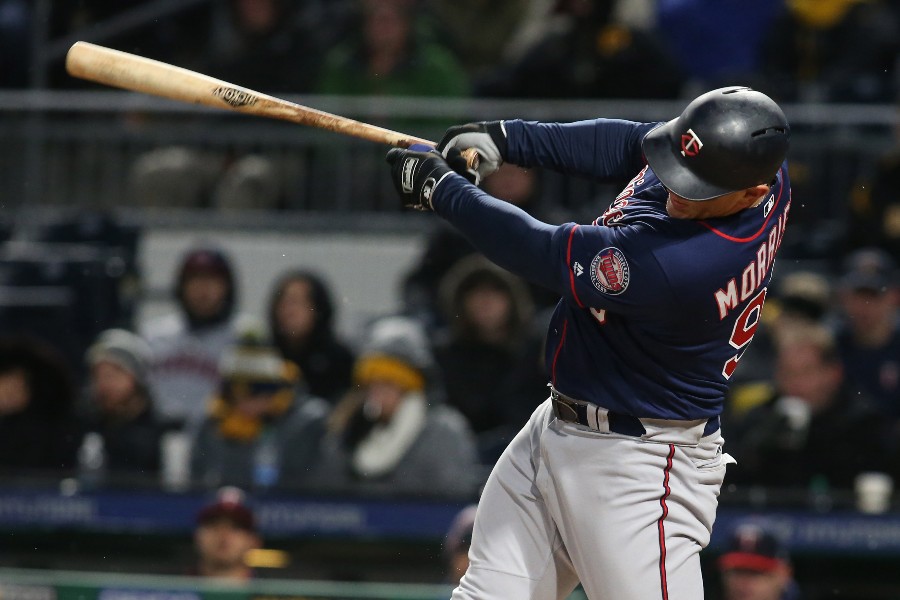
    The start of Logan Morrison’s tenure with the Minnesota Twins has been, how can I put this delicately, worse than Byron Buxton’s start last season. Through his first 26 plate appearances, Morrison has a .043/.154/.087 slash line, and a -30 wRC+. This is not exactly what the Twins had in mind when they signed Morrison to be their full-time designated hitter.

    Image courtesy of Charles LeClaire-USA TODAY Sports

    Twins Video

    Fortunately for the Twins, 26 plate appearances is a pretty small sample, and unless Morrison completely forgot how to play baseball, he will turn it around. Even before Morrison’s breakout season last year he had a career OPS+ of 104, so it’s not like 2017 was a one-hit-wonder.

    As is often the question with extreme performances over a small sample, has this performance been based on the player’s skill during that time, or has it been propped up/dragged down by luck? Fortunately, with the evolution of Statcast, along with other metrics, whe can make more reasoned assumptions about a player’s performance than we would have been able to in the past. So, let’s dive into the numbers and see if there is anything definitive that we conclude about Morrison’s performance.

    Plate Discipline

    If a hitter is in the middle of a slump, it is often due to having poor plate discipline during the slump. This makes it a great starting point to see if a hitter is playing poorly because of outside factors, or if he is simply taking a poor approach at the plate.

    Looking at Morrison’s strikeout and walk rates, neither sticks out as anything too far off from where he sits normally. Morrison currently has a 23.1% strikeout rate, which is right in between the 22.4% and 24.8% he averaged in 2016 and 2017 respectively. Additionally, his walk rate is at 7.7%, which isn’t too far off his 10.5% career average.

    While Morrison’s strikeout and walk numbers don’t look that bad, his swing rate tells a different story. So far this season, Morrison has an O-Swing rate of 35%, which is a full 8% higher than his career average. His overall swing rate is also up by 11.1% on his career average. To me this is a sign of a hitter who is pressing to make an instant impact on his new team. This is hurting Morrison as he is usually falling behind in the count, and not getting many good pitches to swing at.

    Morrison’s BABIP

    To start the season, Morrison has put 17 balls into play with just one of those balls falling for a hit, resulting in a .059 BABIP. While it might be easy to jump to conclusions that this low number is based mostly on luck, that does not appear to be the case. According to Statcast, Morrison’s deserved BABIP is just .179.

    This number is a little bit higher than his actual BABIP, and suggests Morrison has been a little bit unlucky, but the entire difference can’t simply be written off as luck. For starters, the Statcast numbers do not control for the batted balls that are hit into a shift, thus decreasing the chances that they will become a hit relatively speaking. Unfortunately for Morrison, the book seems to be out on where to play defensively against him. Just look at how the Astros lined up against him with nobody on base Monday night.

    https://twitter.com/darenw/status/983507250873417728

    In all, Morrison’s low BABIP can partially be written off as bad luck, but it is mostly a result of Morrison making poor contact and paying the price for being an extreme pull hitter.

    wOBA vs xwOBA

    Comparing Logan Morrison’s wOBA and xwOBA (expected weighted on-base average) works in much the same way as comparing Morrison’s BABIP with his deserved BABIP, in that wOBA is a results-based statistic and xwOBA is a Statcast generated statistic. However, using wOBA gives us a better all-around picture of how Morrison has been hitting.

    Thus far Logan Morrison’s wOBA sits at just .131 (league average is usually around .330). This is the fourth lowest number by any hitter with at least 20 plate appearances so far this season. By comparison, Morrison’s xwOBA sits at .166, which is the third worst mark of any hitter with at least 20 at-bats this season. So it is safe to say that Morrison has been performing about exactly as poorly as his Statcast data says he should be.

    Conclusion

    After digging through the data, it is quite apparent that Morrison’s slow start is almost entirely a result of bad hitting by Logan. If Morrison wants to turn it around he will need to bring a more patient approach to the plate. Much like it was for Eddie Rosario last season, Logan Morrison’s O-Swing% might be the key stat to follow for him as the season goes on.
    Follow Twins Daily For Minnesota Twins News & Analysis

    Recent Twins Articles

    Recent Twins Videos

    Twins Top Prospects

    Kaelen Culpepper

    St. Paul Saints - AAA, SS
    The 23-year-old led off the Sains Tuesday morning game with a home run. He went 3-for-5 with two home runs, giving him five on the season.

    User Feedback

    Recommended Comments


    Featured Comments


    Oh, same here. It looks like he’s pressing for sure. But it could be six of one, half dozen of the other. He’s struggling in the cold but also pressing to live up to expectations. It’s so early and there are likely multiple factors in play.

    I don’t think he’ll be as good as last season but it’s way too early to predict where he will land.

    Me neither, I thought when they signed him they were paying for Vargas-esque production with a little more offensive upside, although they also gave up the option to truly platoon at 1B. Agreed, it's too early to say we have a solid idea about how any of these guys end up. 


    The whole "just bunt against the shift" thing seems to be so obvious to so many people, but yet no one hardly ever does it.  Is there something that we fans just don't see or get that players, coaches, and front offices do?  As others have said, even if you're "too proud" to bunt, it would only take a handful of times doing it, to show you're willing to do it, for teams to stop shifting on you.  You can then go back to pulling the ball through your normal side.  What am I missing?

    Well, it is still very hard. I doubt Morrison and most LH sluggers have practiced bunting in a game in years, if ever. Rosario bunted against the shift but he's a fast dude so I'm sure he's laid down a bunt or two in the minors to see if he could do it. Mauer would occasionally drop a bunt to keep the opponents honest. But holding the bat and trying to get the ball to roll toward third base (esp when the pitcher is probably throwing hard inside) isn't just something you do overnight. I wish some of these guys would work on it in the off-season but most probably don't.


    IIRC, I think Thome or Dunn once tried to bunt against the shift and ended up having the pitch hit their thumb and knocking him out of the game.

    Well, it is still very hard. I doubt Morrison and most LH sluggers have practiced bunting in a game in years, if ever. Rosario bunted against the shift but he's a fast dude so I'm sure he's laid down a bunt or two in the minors to see if he could do it. Mauer would occasionally drop a bunt to keep the opponents honest. But holding the bat and trying to get the ball to roll toward third base (esp when the pitcher is probably throwing hard inside) isn't just something you do overnight. I wish some of these guys would work on it in the off-season but most probably don't.


    IIRC, I think Thome or Dunn once tried to bunt against the shift and ended up having the pitch hit their thumb and knocking him out of the game.

    It’s really not that hard. Every player in the big leagues has been playing baseball for years, if not decades. They’ve all had years and years of BP, and laid down bunts as part of that BP. It doesn’t have to be a good bunt.


    What’s hard is squaring up a pitch.

    It’s really not that hard. Every player in the big leagues has been playing baseball for years, if not decades. They’ve all had years and years of BP, and laid down bunts as part of that BP. It doesn’t have to be a good bunt.


    What’s hard is squaring up a pitch.

    Just because they do it professionally doesn't mean it's not hard. I'd imagine it's pretty difficult, even for the pros, to bunt a ball traveling 95 with movement. Not that they shouldn't try, or that we shouldn't expect them to be able. Saying it isn't hard minimizes the level of play it requires to be a big leaguer.


    Just because they do it professionally doesn't mean it's not hard. I'd imagine it's pretty difficult, even for the pros, to bunt a ball traveling 95 with movement. Not that they shouldn't try, or that we shouldn't expect them to be able. Saying it isn't hard minimizes the level of play it requires to be a big leaguer.

    Exactly. I've said that many times, but you'll never win that argument.  And it gets even harder to bunt it to the 3B side if the lefty is being pitched inside (especially offspeed pitches).  

    Edited by jimmer


    Just because they do it professionally doesn't mean it's not hard. I'd imagine it's pretty difficult, even for the pros, to bunt a ball traveling 95 with movement. Not that they shouldn't try, or that we shouldn't expect them to be able. Saying it isn't hard minimizes the level of play it requires to be a big leaguer.

    Russell Carleton touched on the difficulty of bunting in a recent article he wrote about why Joey Gallo should start bunting. A lot of what he writes about in this article would apply to Logan Morrison as well.


    https://www.baseballprospectus.com/news/article/38922/baseball-therapy-bunt-joey-bunt/


    Just because they do it professionally doesn't mean it's not hard. I'd imagine it's pretty difficult, even for the pros, to bunt a ball traveling 95 with movement. Not that they shouldn't try, or that we shouldn't expect them to be able. Saying it isn't hard minimizes the level of play it requires to be a big leaguer.

    We can argue the difficulty ... but I'll disagree with you. They're all used to seeing 95. It's more difficult to bunt for a hit against a normal defense, I agree. You not only have to bunt, you have to bunt into a good spot. But none of that applies here.  It can be bunted hard, soft, it doesn't matter.  It can be a popup, line drive. It doesn't matter.  


    In any case, What ISN'T arguable is that bunting a ball poorly to the left side is orders of magnitude easier than hitting a line drive. Why do you think teams have their pitchers bunt whenever there's a runner on with less than 2 out? They do so because it's easier than hitting.


    Those same pitches that are so tough to bunt are the same ones he's trying to hit.


    And we already have studies done that show a fair bunt against a shift has a better than .500 chance of being a hit.


    He should bunt.  Often.  If teams want to play four outfielders, with nobody on the left side of the infield, if he can get one down once in every 3 ABs, the team comes out ahead. What's the worst that can happen? He misses and it's strike one? He bunts foul? Again, strike one. He gets it fair, he's on first.


    We can argue the difficulty ... but I'll disagree with you. They're all used to seeing 95. It's more difficult to bunt for a hit against a normal defense, I agree. You not only have to bunt, you have to bunt into a good spot. But none of that applies here. It can be bunted hard, soft, it doesn't matter. It can be a popup, line drive. It doesn't matter.


    In any case, What ISN'T arguable is that bunting a ball poorly to the left side is orders of magnitude easier than hitting a line drive. Why do you think teams have their pitchers bunt whenever there's a runner on with less than 2 out? They do so because it's easier than hitting.


    Those same pitches that are so tough to bunt are the same ones he's trying to hit.


    And we already have studies done that show a fair bunt against a shift has a better than .500 chance of being a hit.


    He should bunt. Often. If teams want to play four outfielders, with nobody on the left side of the infield, if he can get one down once in every 3 ABs, the team comes out ahead. What's the worst that can happen? He misses and it's strike one? He bunts foul? Again, strike one. He gets it fair, he's on first.

    IMO he'd have to get one down more often than that (1 in 3 is only a .666 OPS, if my math is correct), but otherwise agree totally.

    IMO he'd have to get one down more often than that (1 in 3 is only a .666 OPS, if my math is correct), but otherwise agree totally.

    but that's the thing, on the two of three ABs where he doesn't get a bunt down fair, he's still hitting. Down a strike, but still hitting.


    He's not out on a foul bunt. He's not out on a missed bunt. It's just a strike.


    Anything he does in those 2 of 3 ABs is added to the OPS he gets on the fair bunts, and his OPS on fair hunts will be much higher than .666 almost certainly. Again, we have studies (not recent, but still) showing fair hunts against a shift work somewhere north of half the time. One study said 2/3ds if the time.

    but that's the thing, on the two of three ABs where he doesn't get a bunt down fair, he's still hitting. Down a strike, but still hitting.


    He's not out on a foul bunt. He's not out on a missed bunt. It's just a strike.


    Anything he does in those 2 of 3 ABs is added to the OPS he gets on the fair bunts, and his OPS on fair hunts will be much higher than .666 almost certainly. Again, we have studies (not recent, but still) showing fair hunts against a shift work somewhere north of half the time. One study said 2/3ds if the time.

    And in the specific case of Morrison, those studies didn't include the recent Houston shifts of 4 OFers and not a soul on the left side of the IF.

    We can argue the difficulty ... but I'll disagree with you. They're all used to seeing 95. It's more difficult to bunt for a hit against a normal defense, I agree. You not only have to bunt, you have to bunt into a good spot. But none of that applies here. It can be bunted hard, soft, it doesn't matter. It can be a popup, line drive. It doesn't matter.


    In any case, What ISN'T arguable is that bunting a ball poorly to the left side is orders of magnitude easier than hitting a line drive. Why do you think teams have their pitchers bunt whenever there's a runner on with less than 2 out? They do so because it's easier than hitting.


    Those same pitches that are so tough to bunt are the same ones he's trying to hit.


    And we already have studies done that show a fair bunt against a shift has a better than .500 chance of being a hit.


    He should bunt. Often. If teams want to play four outfielders, with nobody on the left side of the infield, if he can get one down once in every 3 ABs, the team comes out ahead. What's the worst that can happen? He misses and it's strike one? He bunts foul? Again, strike one. He gets it fair, he's on first.

    I definitely agree that bunting is a lot easier than squaring one up. My point is just that bunting probably wouldn't work as often as we like to think it would.

    The excuse of someone not knowing how to bunt is a non-starter for me. If you don't know how to bunt, learn, it's your job. We all have to learn how to do new things in our jobs to stay relevant, so you get no sympathy from me on that front.

    And to me the actual success rate of the bunts isn't really that important and misses the point. As I said earlier, the end goal is actually just to get the defense to stop shifting. Even if you're only successful 1/3 times (and I firmly believe that with a little practice, success rates would be much higher than 1/3), I bet that would be enough for opposing teams to stop shifting. Anyway, I'd rather be successful 1/3 times bunting against the shift, than probably 1/5 trying to hit into a shift (I'm completely guessing at that number and have no stat to back it up).

    The excuse of someone not knowing how to bunt is a non-starter for me. If you don't know how to bunt, learn, it's your job. We all have to learn how to do new things in our jobs to stay relevant, so you get no sympathy from me on that front.

    And to me the actual success rate of the bunts isn't really that important and misses the point. As I said earlier, the end goal is actually just to get the defense to stop shifting. Even if you're only successful 1/3 times (and I firmly believe that with a little practice, success rates would be much higher than 1/3), I bet that would be enough for opposing teams to stop shifting. Anyway, I'd rather be successful 1/3 times bunting against the shift, than probably 1/5 trying to hit into a shift (I'm completely guessing at that number and have no stat to back it up).

    No one said anything you're arguing against.

    Worse than Buxton?  Buxton had a hard time just making contact.  After ten games last year Buxton was hitting .081 and had 20 Ks in 37 at bats.


    I can't recall a position player ever looking worse than he did those first 10 games last year.  He was downright scary

    Sorry, but bunting is only just a quick fix.  If Logan Morrison resorts to bunting every few games then he has been effectively neutralized.   What he needs to do is go against the shift every so often.  Develop an opposite field swing.  It is like he is the exact opposite of Mauer in the way they are shifted.


    Are we left to hope that opposing teams have a mental lapse and give Morrison Mauer's shift?  He's going to need to adapt


    Create an account or sign in to comment

    You need to be a member in order to leave a comment

    Create an account

    Sign up for a new account in our community. It's easy!

    Register a new account

    Sign in

    Already have an account? Sign in here.

    Sign In Now

×
×
  • Create New...