


Twins Video
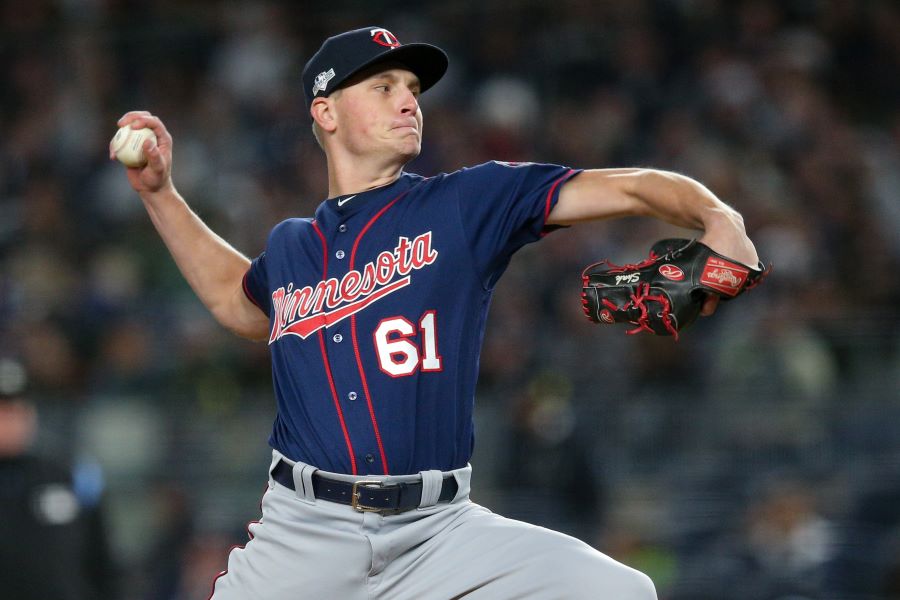
Stashak’s greatest strength, as a pitcher, is the carry on his four-seam heater. With his extremely high arm slot and above-average spin rate, he can miss bats and induce weak contact at the top of the strike zone. However, his raw velocity is below-average, and his short stature and delivery combine for little extension at release. Thus, when Stashak isn’t elevating that fastball enough, the pitch flattens out and batters can tee off. In Stashak’s career, over 13 percent of the batted balls he has allowed have been classified as Barrels by Statcast, meaning that they result in hits at least half the time (and often in extra-base hits). That rate makes it hard to sustain much success at all, and especially hard to earn a high-leverage relief role, because damaging batted balls are even more problematic when the game hangs in the balance.
While he was at St. Paul with the rest of the Twins’ alternate-site roster, Stashak focused primarily on his secondary stuff, according to alternate-site pitching coach Mike McCarthy. That’s one way he can keep hitters off of his fastball: by using changes of speed and eye level to keep them honest.
“Throwing the changeup is still a priority for Cody,” McCarthy said. “We feel like it’s obviously an elite fastball in terms of its vertical break, but giving him an opportunity to add some depth to the changeup and get that third pitch as an option can make that [fastball] a little more of a weapon.”
Stashak’s slider has also been an exceptional weapon since his big-league debut, with tight, vertical movement and a high “miss rate,” as McCarthy called it. However, the pitch has enough lateral movement to give lefties a slightly earlier hint that it’s coming, so he’s been much more effective against right-handed batters while leaning mostly on the four-seamer and breaking ball. His 35-percent career strikeout rate against righties makes him nearly elite, whereas he’s whiffed only 22 percent of lefties, an essentially average clip. Because of his vulnerability to homers, Stashak can’t be a merely average strikeout arm. He’ll be good only if his strikeout rate is great.
“If we give him a third weapon and help him develop [the changeup], it’s going to be a huge advantage for him to get left-handed batters out,” McCarthy said. Last year, Stashak did increase the depth on his changeup slightly, though it still wasn’t a pitch on which he could rely consistently. His arm slot and the position he takes on the first-base side of the rubber do give him good angles for throwing the change with more vertical movement, though, and McCarthy and the Twins are optimistic that he can continue to hone that pitch while using the slider as the principal complement to his heat.
Alas, one other bugaboo reared its head during Stashak’s time at the alternate site: he still makes too many mistakes with the fastball itself. No matter how well he and the team shape and tweak his other offerings, he’ll be in big trouble unless he can hammer the top of the zone with that pitch.
At least twice during his stint in St. Paul, Stashak gave up home runs to teammates hitting against him. He left his appearance last Sunday at CHS Field cursing into his mitt and complaining to his catcher that he was unable to throw his fastball for strikes. In his case, that usually means missing well above the zone, or pulling the ball to the glove side and missing away from right-handed batters. Whenever that’s happening, he’s forced to use the big part of the zone with his other pitches, and the odds of hard contact rise. All three of the hard-hit balls that led to the Pirates’ multi-run rally against Stashak Sunday at Target Field came on the slider, and he didn’t throw his changeup at all during the contest. In fact, he only threw four fastballs out of his 19 pitches, a reflection of his ongoing struggle to find control and confidence on that pitch.
Given his size and his style, Stashak can’t afford to trade much of his sheer power for stability or command. That doesn’t mean he can’t clean up his mechanics, but the impact of the changes he could make is likely to be small. Unless he can simply find the release point that allows him to attack the spots where he can win with that pitch, he’s going to remain an unreliable middle reliever, and he could soon find himself back in St. Paul. In the meantime, the Twins can only arm him with information and counsel patience, for a pitcher fighting both a mental and a physical battle with himself.
MORE FROM TWINS DAILY
— Latest Twins coverage from our writers
— Recent Twins discussion in our forums
— Follow Twins Daily via Twitter, Facebook or email





Recommended Comments
Create an account or sign in to comment
You need to be a member in order to leave a comment
Create an account
Sign up for a new account in our community. It's easy!
Register a new accountSign in
Already have an account? Sign in here.
Sign In Now