


Twins Video
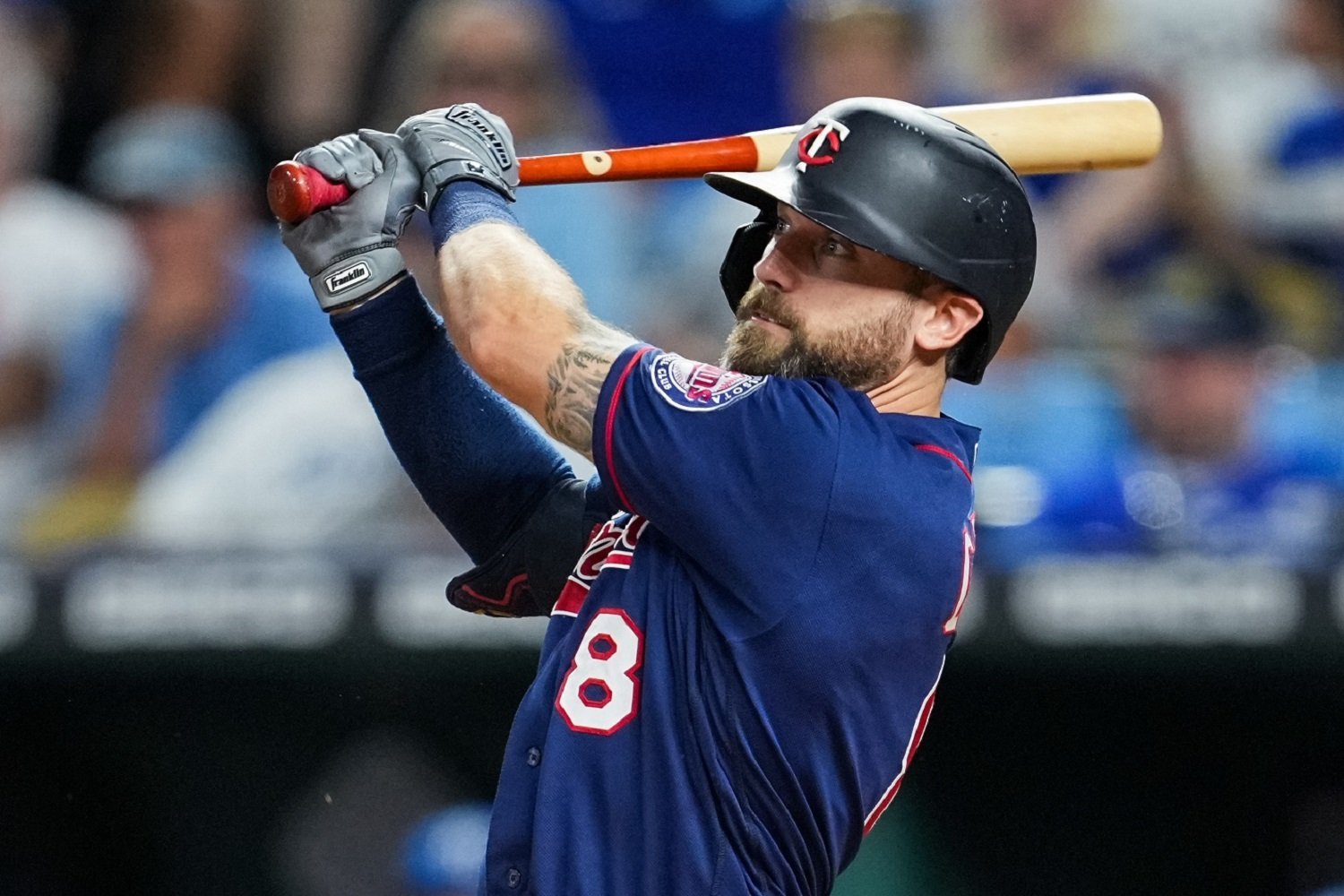
Trades involving teenage pitching prospects rarely feel significant in the moment. They exist more as footnotes than headlines, small transactions made to solve immediate roster problems. But every so often, one of those deals circles back years later and demands a second look. That is exactly what happened when the Minnesota Twins acquired Jake Cave from the New York Yankees in March 2018, for a 19-year-old pitcher named Luis Gil.
At the time, it felt like a classic roster crunch move. New York had more big league-capable players than available spots on its 40-man roster, while Minnesota was searching for outfield depth. The cost was a teenage arm in the minors' lowest levels, a profile that represents one of the biggest wild cards any organization can trade. These players are years away from the majors, often volatile in both performance and health, and just as likely to disappear as they are to develop. For the Twins, that risk was worth taking.
Cave: A Useful Role Player in Minnesota
Cave quickly justified Minnesota’s interest by carving out a role as a capable fourth outfielder. Across parts of five seasons, he accumulated over 1,000 plate appearances and posted a .235 average with a .297 on-base percentage and a .411 slugging percentage, good for a 93 OPS+.
Early in his Twins tenure, Cave looked like more than just depth. From 2018 through 2019, he produced a 112 OPS+ while showing legitimate pop, with double-digit home runs and doubles. He became a frequent fill-in when injuries sidelined Byron Buxton, offering a left-handed bat that could take advantage of right-handed pitching.
That platoon advantage defined much of his value. Cave’s OPS was significantly higher against righties, which made him a natural fit in a complementary role. Defensively, he moved around all three outfield spots. While center field often pushed his range to its limits, he provided steady play in the corners.
There were stretches where the production dipped, especially from 2020 through 2022, when his offensive numbers declined, and he shuttled between Triple-A and the majors. Still, the Twins received what they initially sought. Cave delivered multiple seasons of usable depth and finished his time in Minnesota with 2.1 rWAR. For a team seeking stability at the margins, the Twins’ evaluation of Cave proved accurate. He helped them win the AL Central in 2019 and 2020.
Gil: The High Variance Path
While Cave provided immediate value, Gil represented the long game for New York. At the time of the trade, he was a teenage arm in rookie ball who had already dealt with injuries. His profile fit the definition of volatility. Big arm, limited experience, and years away from contributing. That volatility showed up throughout his development.
Gil’s career has been shaped as much by injuries as by flashes of top-end talent. He underwent Tommy John surgery in 2022, delaying his progress and forcing the Yankees to remain patient. When he returned, the upside was still there, and in 2024, it all came together.
Gil emerged as one of the Yankees’ best starters that season, posting a 3.50 ERA with 171 strikeouts across 151 2/3 innings. He accumulated 2.9 rWAR and captured the American League Rookie of the Year Award, seemingly turning the trade into a clear win for New York. But the story did not end there.
Injuries again interrupted his momentum, as a right lat strain limited him for much of 2025. Since then, his performance has been less consistent. A declining strikeout rate and persistent control issues have raised questions about sustainability. Even at his peak, walks have been a major concern, highlighted by an MLB-leading 77 free passes in 2024.
Through 261 1/3 career innings, Gil has issued 142 walks. That lack of command has prevented him from fully stabilizing as a frontline starter. After a rough start to 2026, the Yankees demoted him to Triple-A.
There is still time for him to adjust. At 27, the raw ability remains, and his past success shows what he can be when everything clicks. But the combination of injuries, declining strikeouts, and control problems suggests that his 2024 breakout may represent his peak rather than a new baseline.
A Trade That Refuses to Settle
Looking back, this trade resists a simple winner-or-loser label. The Twins acquired exactly what they needed at the time. Cave provided multiple seasons of competent outfield depth and helped bridge gaps during injury absences. For a team trying to stay competitive, that kind of reliability has value.
The Yankees, meanwhile, captured the upside play. Gil reached heights that Cave never approached, including an award-winning season that briefly made the deal look lopsided. Yet, his inconsistency and health concerns have complicated that narrative.
This is the reality of trading teenage pitching. The outcomes stretch across years, often shifting with each season. What once looked like a decisive victory can soften over time, just as a seemingly minor move can quietly deliver steady returns.
In the end, the Cave for Gil trade stands as a reminder that player development is rarely linear and that even the smallest deals can leave a lasting imprint on both organizations.
Who won the trade between the Twins and Yankees? Leave a comment and start the discussion.
Do you approve of the job Derek Shelton is doing as Twins manager?

Are you interested in Twins history? Then check out the Minnesota Twins Players Project, a community-driven project to discover and collect great information on every player to wear a Twins uniform!
View The Players Project



Recommended Comments
Create an account or sign in to comment
You need to be a member in order to leave a comment
Create an account
Sign up for a new account in our community. It's easy!
Register a new accountSign in
Already have an account? Sign in here.
Sign In Now