


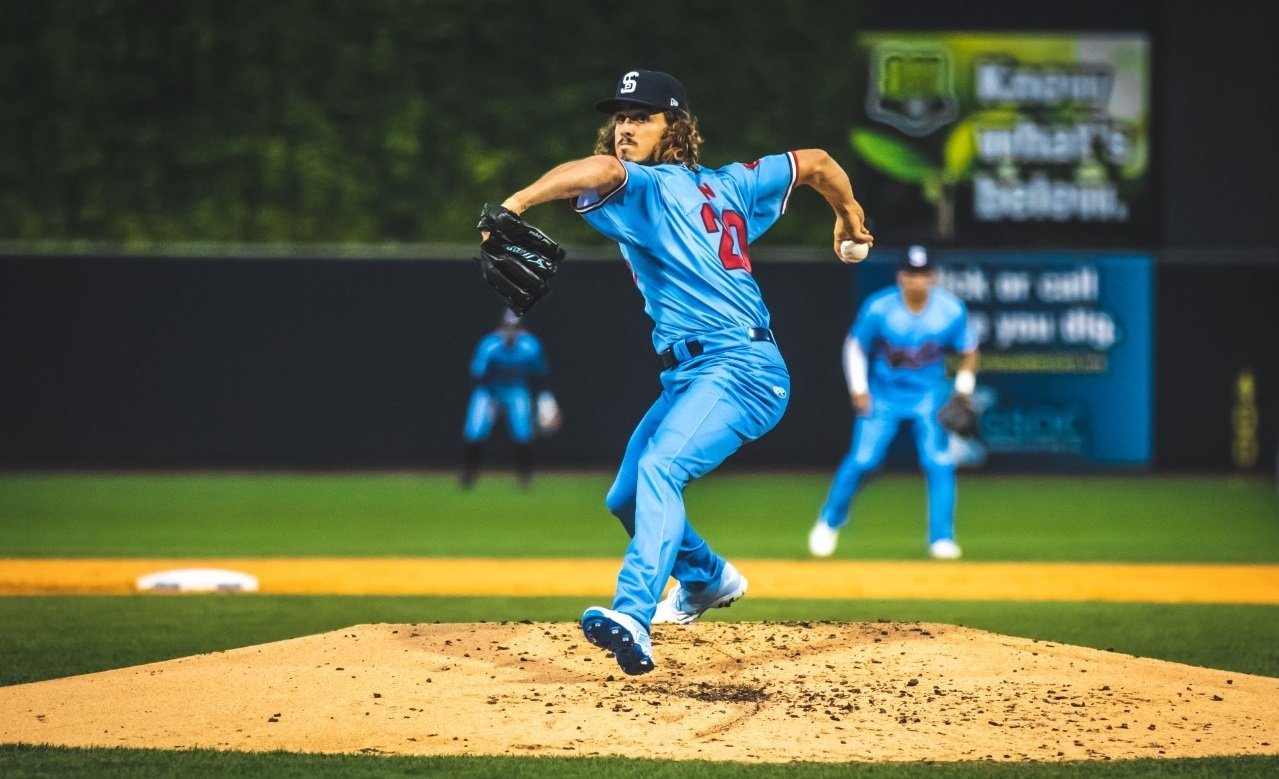
Twins Video
Five years ago this month, the Minnesota Twins made one of the most significant trades in franchise history. At the time, it felt like an emotional farewell. Looking back now, it serves as a reminder that the best trades aren't always judged by what a team gives up, because they're defined by the opportunity they create.
The Twins did lose Nelson Cruz at the 2021 MLB trade deadline, but in the process, they unknowingly acquired the pitcher who would become the face of their rotation for the better part of the decade. That type of return is exceedingly rare.
Cruz had become much more than a designated hitter during his two and a half seasons in Minnesota. He was the heartbeat of the clubhouse and the centerpiece of the 2019 "Bomba Squad," helping the Twins shatter the MLB single-season home run record while restoring excitement to Target Field. He returned for the shortened 2020 season and entered 2021 hoping to lead one more postseason run with a veteran core that still believed it could contend.
Instead, everything unraveled. Minnesota stumbled through injuries, underperformance, and inconsistency, eventually finishing 73-89 and in last place in the American League Central. Once it became clear the season couldn't be salvaged, the Twins made the difficult but necessary decision to move one of the most beloved players in the franchise’s recent history. They sent Cruz and minor-league pitcher Calvin Faucher to Tampa Bay. In return came two pitching prospects: Joe Ryan and Drew Strotman. At the time, it looked like a sensible baseball trade. Five years later, it looks like a franchise-altering steal.
A Trade Built on Opportunity
The Rays have long been among baseball's most aggressive organizations at identifying veterans who can push a contender over the top. Cruz had been on Tampa Bay's radar for years.
When the Rays finally acquired him in July 2021, they got exactly what they expected. The 41-year-old slugger hit 13 home runs with 36 RBI over 55 games, helping Tampa Bay capture another AL East title For the Rays, the trade accomplished its goal.
For the Twins, however, it became something much larger. They out-Raysed the Rays, by taking a player Tampa wasn’t willing to give a chance to and helping him reach an All-Star ceiling.
Tampa Bay had pitching. Minnesota had an opportunity. Ryan wasn't an unknown prospect when the trade happened. He had dominated during his first full professional season in 2019, posting a 1.96 ERA (while striking out 183 hitters in 123 2/3 innings) across three levels. Yet, despite the production, his path to the majors remained cloudy.
Rather than preparing for a debut in 2021, Ryan represented Team USA in Olympic qualifying before helping the Americans win a silver medal in Tokyo. While that was an incredible personal accomplishment, it also reinforced where he stood in Tampa Bay's organizational depth chart.
The Rays could afford to wait. The Twins couldn't. Minnesota was entering a transition period and needed pitching immediately. Ryan returned from Japan, made only two Triple-A starts in the Twins organization, and was promoted to the majors.
Almost instantly, it looked like the Twins had found something special. In just his second career start, Ryan carried a perfect game into the seventh inning against Cleveland. Two starts later, he struck out 11 Cubs hitters at Wrigley Field. The flashes weren't accidental. They were the beginning.
What’s Changed With Ryan?
The pitcher the Twins acquired isn't the one they have today. One reason the trade has aged so well is Ryan's willingness to reinvent himself. When he debuted in 2021, he leaned almost exclusively on his four-seam fastball, throwing it roughly two-thirds of the time. That approach worked early, but Ryan understood that sustaining success required constant evolution.
Following the 2022 season, he traveled to Driveline Baseball to develop a splitter and refine his pitch mix. Another offseason brought him back to Driveline and additional work on a sinker. More recently, his curveball has become a significantly larger part of his arsenal.
Every offseason has brought another adjustment. Every season has made him better. Rather than relying solely on the fastball that carried him through the mihnors, Ryan has become one of baseball's most complete and adaptable pitchers.
Modern baseball often celebrates radar-gun readings. Ryan has become one of the best examples that there is another path to dominance. His four-seam fastball typically sits between 93 and 94 mph—not overpowering by today's standards—but it's one of the most effective pitches in baseball because of how it plays. Ryan releases the ball from one of the lowest heights among starting pitchers, while still generating exceptional riding life through the top of the strike zone. Hitters see a release point unlike almost anyone else, then watch the ball seemingly rise above their barrels.
The pitch consistently misses bats despite lacking elite velocity. That's why it has graded among baseball's most valuable fastballs over the last several seasons. It's a reminder that movement, deception, command, and sequencing still matter. Ryan has mastered all four.
Looking Back with a New Perspective
The Nelson Cruz trade will always carry mixed emotions because of what Cruz meant to the organization. He was the foremost symbol of one of the most entertaining eras in recent Twins history and left Minnesota as one of the most respected players to ever wear the uniform.
But five years later, the trade has become a reminder that difficult decisions often define successful organizations. The Twins honored a veteran who deserved a chance to compete for a championship while acquiring a young pitcher whose talent had yet to be fully realized.
Both organizations accomplished what they set out to do. Only one, however, found the foundation of its rotation for years to come. Five years later, the trade is remembered less as the end of the Bomba Squad and more as the beginning of the Joe Ryan era.
What stands out about this trade? What were your thoughts about the trade when it happened? Leave a comment and start the discussion.
Which team do you dislike the most in the AL Central?
Are you interested in Twins history? Then check out the Minnesota Twins Players Project, a community-driven project to discover and collect great information on every player to wear a Twins uniform!
View The Players Project






Recommended Comments
Create an account or sign in to comment
You need to be a member in order to leave a comment
Create an account
Sign up for a new account in our community. It's easy!
Register a new accountSign in
Already have an account? Sign in here.
Sign In Now