Jump to content
Twins Daily
  • Create Account

Recommended Posts

Posted
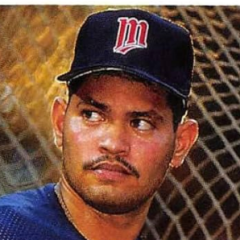
Image courtesy of Tommy Tomsic (1977 photo of Carew), RVR Photos (photo of Puckett)

The debate over baseball’s greatest players usually begins with a familiar question: Who belongs at the top of the list? The Sporting News is taking a different approach to that discussion, examining 140 of the greatest players in baseball history and organizing them into 14 position-less groups, or “rooms,” that represent different forms of greatness.

The project considers more than traditional rankings. The Sporting News evaluated more than 500 candidates, accounting for modern statistics, newly available Negro Leagues data, changing demographics and the evolution of the game. Rather than force players from different eras into a single ranking, the publication created categories that recognize the different ways players have shaped baseball history. As The Sporting News explained, “Our ‘rooms’ serve not only to honor the game’s greatest players, but to contextualize their standing in baseball history — for better or worse.”

From a Minnesota Twins perspective, the concept offers an opportunity to revisit the franchise's greatest players and consider how their accomplishments fit into baseball's broader history. Some Twins legends earned national recognition for their statistical achievements, while others built their reputations through memorable moments and lasting connections with fans.

This series will identifty two Twins players that fit into each of The Sporting News' 14 rooms. These are Minnesota-focused selections, not necessarily the same groupings the national publication will use for its own list. The goal is to recognize the different ways Twins legends have made their mark on the game.

We begin with two categories that represent the highest levels of accomplishment and legacy: Inner Circle and Immortals.

Inner Circle: Rod Carew and Harmon Killebrew

The Sporting News describes the Inner Circle as a collection of “the greatest baseball players who ever lived.” It is the ultimate category, reserved for players whose accomplishments place them among the most exceptional talents in baseball history.

Minnesota has no shortage of candidates for such recognition, but Rod Carew and Harmon Killebrew offer two very different examples of what greatness can look like.

Rod Carew

Carew's greatness was rooted in his extraordinary ability to hit a baseball. He spent 12 seasons with the Twins, winning seven American League batting titles and establishing himself as one of the most consistent hitters of his era. He finished his major league career with a .328 batting average and 3,053 hits, eventually earning first-ballot induction into the National Baseball Hall of Fame in 1991.

His 1977 season remains one of the defining individual performances in franchise history. Carew captured the American League Most Valuable Player Award after hitting .388, collecting 239 hits and leading the league in runs scored and triples. He was not simply a player who could hit for a high average. He controlled at-bats, put pressure on defenses and consistently found ways to reach base.

Carew's seven batting titles with Minnesota reflect a level of sustained excellence that few players have matched. He hit .300 or better in 15 consecutive major league seasons, demonstrating that his success was not limited to a brief peak.

For a franchise that has produced numerous memorable power hitters, Carew represents a different kind of dominance. His ability to make consistent contact and produce at an elite level made him one of baseball's premier offensive players. In a category reserved for the game's greatest talents, Carew deserves serious consideration.

Harmon Killebrew

Where Carew mastered the art of getting on base, Killebrew made his mark by sending baseballs into the stands. One of the premier power hitters of his generation, Killebrew finished his career with 573 home runs, including 475 with the Twins franchise. That total remains a Minnesota franchise record. 

Killebrew's power was at its peak during the late 1960s, when he became one of the American League's most feared hitters. In 1969, he hit 49 home runs, drove in 140 runs and drew 145 walks on his way to winning the American League MVP Award. His 49 home runs remain the Twins' single-season franchise record.

His career also illustrates how the greatest players can define an organization for generations. Killebrew started his career with the Washington Senators before following the franchise to Minnesota in 1961. He became a cornerstone of the early Twins teams and helped establish a tradition of star power that continued in the decades that followed.

Killebrew's combination of longevity, power and offensive production places him among the defining sluggers of his era. He was elected to the Hall of Fame in 1984, cementing his place among baseball's all-time greats.

Carew and Killebrew reached greatness in different ways, but both helped establish the Twins as a franchise capable of producing elite individual talent. Their accomplishments give Minnesota a compelling case for representation in the Inner Circle conversation.

Immortals: Kirby Puckett and Joe Mauer

The Sporting News defines the Immortals as players who “shattered barriers. They broke records. They captivated nations. They inspired millions. Their imprint endures.” This category extends beyond statistics, recognizing the players whose accomplishments and influence continue to resonate long after their careers end.

For Twins fans, Kirby Puckett and Joe Mauer represent two different generations of that enduring connection.

Kirby Puckett

Puckett's major league career lasted only 12 seasons, but few players have left a more powerful imprint on Minnesota baseball. He collected 2,304 hits, batted .318 for his career and earned 10 All-Star selections, six Gold Glove Awards and five Silver Slugger Awards. He also helped the Twins capture World Series championships in 1987 and 1991.

His postseason performances helped turn him into a franchise icon. The defining moment came in Game 6 of the 1991 World Series, when Puckett delivered a walk-off home run in the 11th inning against the Atlanta Braves. Earlier in the game, he made a spectacular catch to rob Ron Gant of an extra-base hit. His performance helped force a decisive Game 7, which Minnesota won to claim its second championship.

Puckett's legacy is about more than one October night. His energetic personality, infectious enthusiasm and consistent production made him a fan favorite throughout his career. He became the face of the franchise during a period when the Twins delivered two of the most memorable championship runs in baseball history.

His career ended abruptly when glaucoma caused irreversible damage to the retina in his right eye, forcing his retirement in 1996. He was elected to the Hall of Fame on the first ballot in 2001.

The Immortals category captures what makes Puckett so special to Minnesota. His playing career was relatively short, but his most memorable moments have become permanent parts of the franchise's identity.

Joe Mauer

Mauer's legacy began long before he reached the major leagues. The St. Paul native was the first overall selection in the 2001 MLB Draft, and expectations followed him from his high school days through his 15-year career with Minnesota.

He ultimately delivered a career that exceeded even ambitious expectations. Mauer won three American League batting titles, earned six All-Star selections and claimed the 2009 AL MVP Award. Perhaps most remarkably, he became the only catcher in American League history to win three batting titles. He was also a three-time Gold Glove winner behind the plate.

Mauer's 2009 campaign stands among the finest offensive seasons ever produced by a catcher. He hit .365 with a .444 on-base percentage and a .587 slugging percentage, leading the American League in all three categories. His ability to combine elite contact hitting with the physical demands of catching made him a unique player.

His career eventually shifted to first base following a concussion in 2013, but his impact on the franchise remained significant. Mauer spent his entire major league career with Minnesota, becoming one of the most recognizable players in the team's history. His combination of local roots, on-field excellence and longevity made him a natural representative of the Twins organization.

Mauer's legacy reached another milestone in 2024, when he was elected to the National Baseball Hall of Fame on the first ballot. His place in Minnesota baseball history was already secure, but Cooperstown confirmed his standing among the game's elite.

Puckett and Mauer illustrate the two sides of immortality in sports. Puckett is remembered for championship moments and a personality that captivated fans. Mauer is celebrated for a historic statistical profile and a career that connected a hometown star with the team he grew up watching. Both left legacies that extend beyond their numbers. For Twins fans, their names remain inseparable from some of the franchise's most meaningful memories.

Two Rooms, Four Twins Legends

The Inner Circle and Immortals categories provide two ways to think about baseball greatness. Carew and Killebrew built their cases through extraordinary production, while Puckett and Mauer created lasting legacies through a combination of performance, personality and connection with Minnesota fans.

All four belong in conversations about the greatest players to wear a Twins uniform. Whether the discussion focuses on career statistics, peak performance, championships or cultural impact, each player offers a different reason to celebrate the franchise's history.

The Sporting News project invites baseball fans to consider greatness from multiple perspectives. For the Twins, these four legends are an excellent place to start.


Would you add other players to these two rooms? Leave a comment and start the discussion. 


View full article

Posted

Mauer is Inner Circle.

Despite the fact he was knocked down a few years ahead of his time, his impact at his peak was immense and somehow goes under-appreciated by Twins fans. 

Mauer's 7th all time in Catcher JAWS, matching Carew's placement for 2B. Whereas Killebrew is 24th for 1B and Puckett is 26th. 

Killer was a very good hitter but never really transcended his own market. And, unlike Joe Mauer, he never led the league in OPS. 

Posted
4 minutes ago, NYCTK said:

Mauer is Inner Circle.

Despite the fact he was knocked down a few years ahead of his time, his impact at his peak was immense and somehow goes under-appreciated by Twins fans. 

Mauer's 7th all time in Catcher JAWS, matching Carew's placement for 2B. Whereas Killebrew is 24th for 1B and Puckett is 26th. 

Killer was a very good hitter but never really transcended his own market. And, unlike Joe Mauer, he never led the league in OPS. 

popcorn_jackson.gif.95133a275cac52b29f28c4864f886f9e.gif

Posted
1 hour ago, NYCTK said:

Killer was a very good hitter but never really transcended his own   

And yet, the logo of the MLB Players Alumni Association was overtly designed to be a likeness of his swing.  The actual MLB logo was NOT actually designed after his silhouette, according to the artist, but that would seem to be a situation similar to the Ghostbusters theme not being based on another tune.  In Ray Parker Jr.’s case, even if the intent wasn’t there, the song was probably playing in the background while he wrote it.  In the same manner, the artist on the MLB logo seems to have been channeling his inner Killebrew as well, even if he doesn’t want anybody to know that.  

Much like with Jerry West, the NBA logo player, Killebrew was a great player whose persona was something to attach to in perpetuity.  

YMMV, but that’s the direction I go with this.  

Posted
2 minutes ago, Rod Carews Birthday said:

And yet, the logo of the MLB Players Alumni Association was overtly designed to be a likeness of his swing.  The actual MLB logo was NOT actually designed after his silhouette, according to the artist, but that would seem to be a situation similar to the Ghostbusters theme not being based on another tune.  In Ray Parker Jr.’s case, even if the intent wasn’t there, the song was probably playing in the background while he wrote it.  In the same manner, the artist on the MLB logo seems to have been channeling his inner Killebrew as well, even if he doesn’t want anybody to know that.  

Much like with Jerry West, the NBA logo player, Killebrew was a great player whose persona was something to attach to in perpetuity.  

YMMV, but that’s the direction I go with this.  

Well, no one ever considers Jerry West in the discussion of all time greats anymore, so I guess they're fairly analogous. 

The argument is not that Killebrew wasn't great. It's that Joe Mauer is far too under appreciated by Twins fans. And that is further demonstrated with this list. 

Posted
10 minutes ago, NYCTK said:

Well, no one ever considers Jerry West in the discussion of all time greats anymore, so I guess they're fairly analogous. 

The argument is not that Killebrew wasn't great. It's that Joe Mauer is far too under appreciated by Twins fans. And that is further demonstrated with this list. 

What's a greater accolade? Immortal or inner circle? imo immortal is a far grander descriptor than inner circle. Since it's only two players per room each player has to be sent to one. Or should Joe get every room to himself?

Posted
1 hour ago, sweetmusicviola16 said:

What's a greater accolade? Immortal or inner circle? imo immortal is a far grander descriptor than inner circle. Since it's only two players per room each player has to be sent to one. Or should Joe get every room to himself?

For what it's worth, the TSN definition, which is what I assume the author is also using, has "inner circle" for the "greatest players who ever lived" and uses Willie Mays as its prototype. Their "immortal" is for "shattering barriers" and "inspiring millions," so they use Jackie Robinson.

Posted
5 hours ago, ashbury said:

popcorn_jackson.gif.95133a275cac52b29f28c4864f886f9e.gif

I think it's a fun exercise. Before commenting, I needed to take my own shot, using the Twins 28 greatest players (as TSN seems to have done with the 140) and then fit them into the categories. That takes some shifting around. For example, my first inclination was to list Oliva as an Immortal, but I needed someone for the "What-If" room. I could fit someone else into Immortal better than I could into What-If. I first slotted my other What-If into another category as well.

There are also some guys who seem like the best fits for a category, but they didn't make the top 28 (I used bWAR). For example, Wynegar seemed like an obvious Prodigy, but he's a few WAR short of the leaders.

I'll wait until Cody reveals his full list before sharing mine. 

Posted
7 minutes ago, IndianaTwin said:

I think it's a fun exercise. Before commenting, I needed to list out the 28 greatest players (as they seem to have done with the 140) and then fit them into the categories. That takes some shifting around. For example, my first inclination was to list Oliva as an immortal, but I needed someone for the "What if" room. 

The way I look at this project, Oliva is practically the prototype for the What If room.

Create an account or sign in to comment

You need to be a member in order to leave a comment

Create an account

Sign up for a new account in our community. It's easy!

Register a new account

Sign in

Already have an account? Sign in here.

Sign In Now
The Twins Daily Caretaker Fund

You all care about this site. The next step is caring for it. We’re asking you to caretake this site so it can remain the premier Twins community on the internet.

×
×
  • Create New...