



Jamie Cameron
-
Posts
1,341 -
Joined
-
Last visited
-
Days Won
4
Content Type
Profiles
News
Minnesota Twins Videos
2026 Minnesota Twins Top Prospects Ranking
2022 Minnesota Twins Draft Picks
Minnesota Twins Free Agent & Trade Rumors, Notes, & Tidbits
Guides & Resources
2023 Minnesota Twins Draft Picks
The Minnesota Twins Players Project
2024 Minnesota Twins Draft Picks
2025 Minnesota Twins Draft Pick Tracker
2026 Minnesota Twins Draft Tracker: Picks & Bonuses
Forums
Blogs
Events
Store
Downloads
Gallery
Everything posted by Jamie Cameron
-
There's been a little-noticed but noteworthy silence, since the end of last season, about the contract statuses of the Minnesota Twins' top front-office executives. What should fans make of it? Image courtesy of © Kim Klement Neitzel-USA TODAY Sports The Twins are struggling. In the last week, they’ve lost three games in which their win probability was 85% or higher at some point. The team seems to be running into a confluence of challenges at the worst possible time. Carlos Correa and Byron Buxton remain sidelined, with the trio of Correa, Buxton, and Royce Lewis having only played 17 games together all season. The back half of the rotation is comprised of three rookies. The bullpen looks thin and exposed, with Brock Stewart’s season-ending injury leaving the Twins short of high-leverage arms and Jhoan Durán proving, shockingly, to be human. Despite all that, the resilient Twins are still roughly 86% likely to make the playoffs, and 23% likely to win the AL Central, per FanGraphs. Impressive fortitude, indeed. Amid that state of affairs, especially given that they're coming off an AL Central championship and a very important playoff breakthrough, it's peculiar that we have no official news of an extension with either of their top baseball executives, Derek Falvey and Thad Levine. It’s possible that the Twins have engaged Falvey and Levine in contract talks already. In May 2023, Ken Rosenthal reported that the organization ‘quietly’ extended Rocco Baldelli until at least the end of the 2025 season. Regardless of which Pohlad is running the show, the Twins organization has typically been one that prizes consistency and continuity, if we’re to judge by the tenures of previous managers and front office staff. Furthermore, as best Twins Daily has been able to discern in discussions with several sources around and within the team, Falvey is happy with his situation in Minnesota, and the Pohlads are happy with the way Falvey and Levine have done their jobs of late. Asked for an official comment, the Twins declined. "A few years back as a matter of policy, we decided not to comment on contract specifics during the season for any of our staff, including Rocco, the coaching staff, or our executive leadership," said a spokesperson. That jibes with the lack of an announcement from the team when Baldelli signed his aforementioned extension, and it leaves wide open the possibility that Falvey and Levine have already agreed to deals to stick around beyond 2024. By all indications, both executives would be welcomed back, and a significant change in leadership is unlikely. If that's how it plays out, we should regard it as very good news. Since 2019, the Twins have won the AL Central in three out of five seasons. They’re on track to make the playoffs for the fourth time in six seasons. In 2023, they broke a playoff drought of over 20 years by sweeping the Wild Card series against the Toronto Blue Jays, before eventually crashing out to the Houston Astros. All you can do is get there as close to every year as possible. The last five years on the field have been good for the Twins. In Falvey’s initial remarks on taking the job in Minnesota, he stated a desire to build a team that could win sustainably. For a mid-market team like the Twins, that means drafting and development. Things could hardly be going better in that arena. Entering the season, the Twins had three consensus top-100 prospects (Walker Jenkins, Brooks Lee, Emmanuel Rodriguez). Lee and Jenkins were high draft picks; they began their professional careers with the top prospect label. This season, the organization has added three more premium dudes: David Festa (13th round), Zebby Matthews (8th round), and Luke Keaschall (2nd round) all now appear on top-100 prospect lists. None of them were ranked entering 2024. This speaks to the systems and structures the Twins have built around player development. The organization knows what it does well, whether that’s improving swing decisions or adding velocity to a fastball. Increasingly, the developmental leaps taken by drafted prospects are becoming more pronounced. It’s not difficult to imagine a future in 2025 wherein the likes of Kaelen Culpepper or Charlee Soto enter top-100 consideration. At various points this season, the Twins have used four homegrown starting pitchers in their rotation (Ober, Varland, Festa, Matthews). I don’t think the front office is above criticism. There have been poor free-agent signings, trades that didn’t work out (Tyler Mahle, Jorge López), and underwhelming trade deadline returns (2023, 2024). That’s not exclusive to this front office, though, and to me, it’s clear that they have gotten more of the big decisions and tests right than wrong. Whether it’s the Pablo López trade, re-signing Carlos Correa, or extending Byron Buxton, the front office has usually nailed the big moments. Too often, organizational weaknesses are foisted on the front office. Whether it’s broadcast access or diminishing payroll, let’s not conflate the front office with ownership just because they are the mouthpiece of the organization. That brings us back around to the real question about retaining Falvey and Levine, which seems to be less about whether the Twins would want them than about whether they would want to stay. To reiterate, we have some reason to believe the answer to both questions is yes, but we must take note of the lack of an announcement of extensions for either last fall. That wouldn't have violated their convenient organizational policy, after all. It also would have forestalled a lot of potential speculation and uncertainty, including and especially for fans--who already must contend with a lack of clarity about the team's commitment to winning (in the form of spending on payroll) and about the future of access to the team via TV broadcasts. It does seem safe to assume that, as of the start of spring training, both Falvey and Levine were de facto impending free agents. Even if both, or just Falvey, have reupped since, the diminished transparency here--the twin extensions the two signed after 2019 were made public in short order--invites some unease that feels unnecessary, except as a means of preserving a policy they instituted both silently and voluntarily. On balance, it’s clear that the Twins should extend Falvey and Levine immediately--if not sooner, as is actually possible in this case. They’ve restored consistent competitiveness to the Twin Cities, and spearheaded the development of a top-five farm system in baseball. There’s a young, exciting core in place who, despite the miserliness of the ownership group, gives the team a chance to win sustainably for the next half-decade. A bit more clarity about the situation would probably do more good than harm, but while the team remains mum, it sounds like both sides are interested in keeping the Falvey Pipeline flowing for years to come. What is your assessment of the Twins front office pair of Derek Falvey and Thad Levine? Should they be extended? What stand out as the successes and challenges of their tenure in Minnesota? View full article
-
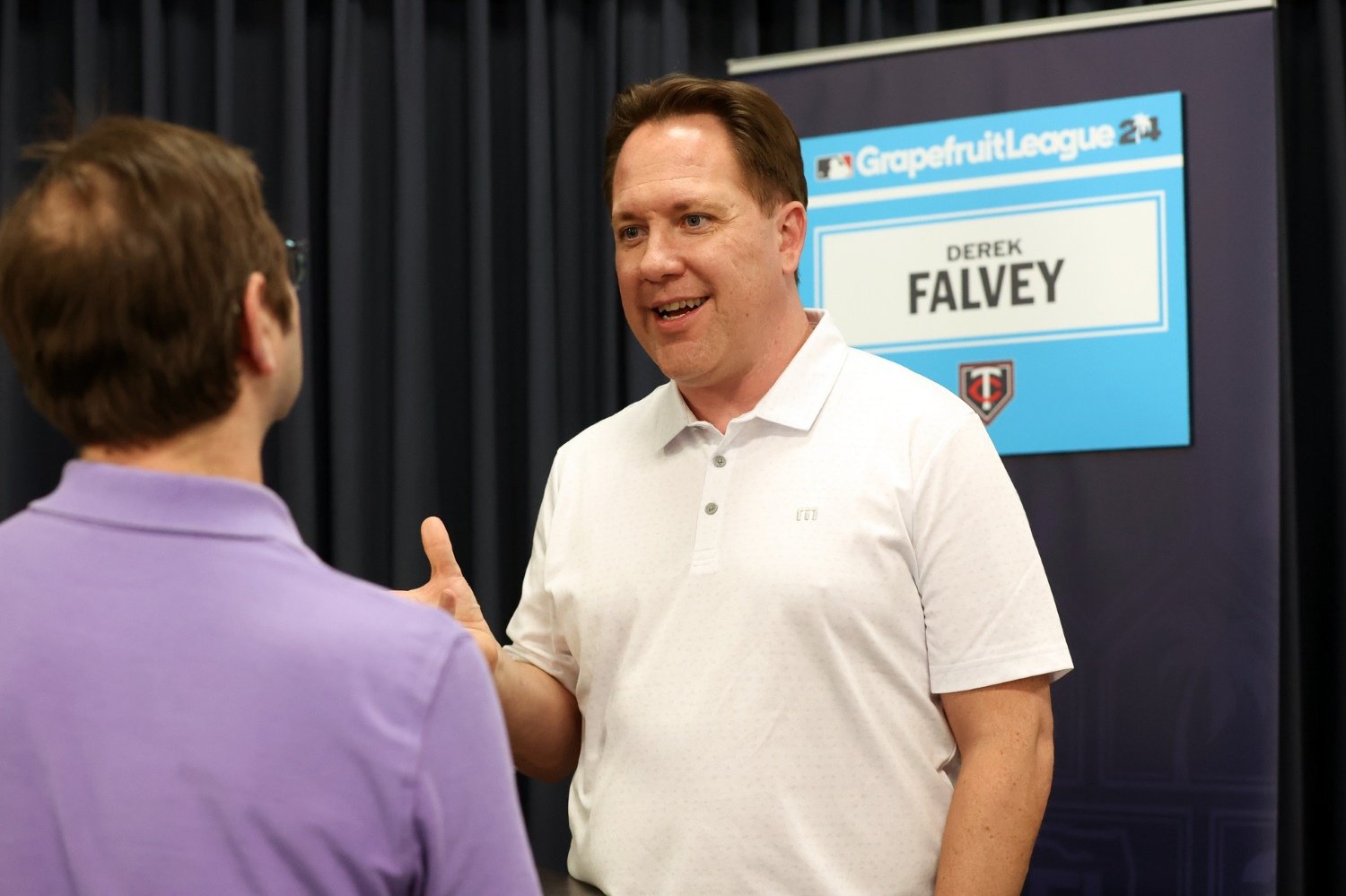 The Twins are struggling. In the last week, they’ve lost three games in which their win probability was 85% or higher at some point. The team seems to be running into a confluence of challenges at the worst possible time. Carlos Correa and Byron Buxton remain sidelined, with the trio of Correa, Buxton, and Royce Lewis having only played 17 games together all season. The back half of the rotation is comprised of three rookies. The bullpen looks thin and exposed, with Brock Stewart’s season-ending injury leaving the Twins short of high-leverage arms and Jhoan Durán proving, shockingly, to be human. Despite all that, the resilient Twins are still roughly 86% likely to make the playoffs, and 23% likely to win the AL Central, per FanGraphs. Impressive fortitude, indeed. Amid that state of affairs, especially given that they're coming off an AL Central championship and a very important playoff breakthrough, it's peculiar that we have no official news of an extension with either of their top baseball executives, Derek Falvey and Thad Levine. It’s possible that the Twins have engaged Falvey and Levine in contract talks already. In May 2023, Ken Rosenthal reported that the organization ‘quietly’ extended Rocco Baldelli until at least the end of the 2025 season. Regardless of which Pohlad is running the show, the Twins organization has typically been one that prizes consistency and continuity, if we’re to judge by the tenures of previous managers and front office staff. Furthermore, as best Twins Daily has been able to discern in discussions with several sources around and within the team, Falvey is happy with his situation in Minnesota, and the Pohlads are happy with the way Falvey and Levine have done their jobs of late. Asked for an official comment, the Twins declined. "A few years back as a matter of policy, we decided not to comment on contract specifics during the season for any of our staff, including Rocco, the coaching staff, or our executive leadership," said a spokesperson. That jibes with the lack of an announcement from the team when Baldelli signed his aforementioned extension, and it leaves wide open the possibility that Falvey and Levine have already agreed to deals to stick around beyond 2024. By all indications, both executives would be welcomed back, and a significant change in leadership is unlikely. If that's how it plays out, we should regard it as very good news. Since 2019, the Twins have won the AL Central in three out of five seasons. They’re on track to make the playoffs for the fourth time in six seasons. In 2023, they broke a playoff drought of over 20 years by sweeping the Wild Card series against the Toronto Blue Jays, before eventually crashing out to the Houston Astros. All you can do is get there as close to every year as possible. The last five years on the field have been good for the Twins. In Falvey’s initial remarks on taking the job in Minnesota, he stated a desire to build a team that could win sustainably. For a mid-market team like the Twins, that means drafting and development. Things could hardly be going better in that arena. Entering the season, the Twins had three consensus top-100 prospects (Walker Jenkins, Brooks Lee, Emmanuel Rodriguez). Lee and Jenkins were high draft picks; they began their professional careers with the top prospect label. This season, the organization has added three more premium dudes: David Festa (13th round), Zebby Matthews (8th round), and Luke Keaschall (2nd round) all now appear on top-100 prospect lists. None of them were ranked entering 2024. This speaks to the systems and structures the Twins have built around player development. The organization knows what it does well, whether that’s improving swing decisions or adding velocity to a fastball. Increasingly, the developmental leaps taken by drafted prospects are becoming more pronounced. It’s not difficult to imagine a future in 2025 wherein the likes of Kaelen Culpepper or Charlee Soto enter top-100 consideration. At various points this season, the Twins have used four homegrown starting pitchers in their rotation (Ober, Varland, Festa, Matthews). I don’t think the front office is above criticism. There have been poor free-agent signings, trades that didn’t work out (Tyler Mahle, Jorge López), and underwhelming trade deadline returns (2023, 2024). That’s not exclusive to this front office, though, and to me, it’s clear that they have gotten more of the big decisions and tests right than wrong. Whether it’s the Pablo López trade, re-signing Carlos Correa, or extending Byron Buxton, the front office has usually nailed the big moments. Too often, organizational weaknesses are foisted on the front office. Whether it’s broadcast access or diminishing payroll, let’s not conflate the front office with ownership just because they are the mouthpiece of the organization. That brings us back around to the real question about retaining Falvey and Levine, which seems to be less about whether the Twins would want them than about whether they would want to stay. To reiterate, we have some reason to believe the answer to both questions is yes, but we must take note of the lack of an announcement of extensions for either last fall. That wouldn't have violated their convenient organizational policy, after all. It also would have forestalled a lot of potential speculation and uncertainty, including and especially for fans--who already must contend with a lack of clarity about the team's commitment to winning (in the form of spending on payroll) and about the future of access to the team via TV broadcasts. It does seem safe to assume that, as of the start of spring training, both Falvey and Levine were de facto impending free agents. Even if both, or just Falvey, have reupped since, the diminished transparency here--the twin extensions the two signed after 2019 were made public in short order--invites some unease that feels unnecessary, except as a means of preserving a policy they instituted both silently and voluntarily. On balance, it’s clear that the Twins should extend Falvey and Levine immediately--if not sooner, as is actually possible in this case. They’ve restored consistent competitiveness to the Twin Cities, and spearheaded the development of a top-five farm system in baseball. There’s a young, exciting core in place who, despite the miserliness of the ownership group, gives the team a chance to win sustainably for the next half-decade. A bit more clarity about the situation would probably do more good than harm, but while the team remains mum, it sounds like both sides are interested in keeping the Falvey Pipeline flowing for years to come. What is your assessment of the Twins front office pair of Derek Falvey and Thad Levine? Should they be extended? What stand out as the successes and challenges of their tenure in Minnesota?
 -
Brandon Winokur was labeled a raw hitter coming out of the 2023 draft, with plenty of power but some swing and miss in his profile. In August, he's begun to make strides in his approach at the plate, and it's increased his impact significantly.
-
Brandon Winokur was labeled a raw hitter coming out of the 2023 draft, with plenty of power but some swing and miss in his profile. In August, he's begun to make strides in his approach at the plate, and it's increased his impact significantly. View full video
-
Charlee Soto is one of the youngest Twins prospects playing Stateside. He's beginning to show the arsenal, velocity, and movement that should have Twins fans excited about his potential ceiling.
-
Charlee Soto is one of the youngest Twins prospects playing Stateside. He's beginning to show the arsenal, velocity, and movement that should have Twins fans excited about his potential ceiling. View full video
-
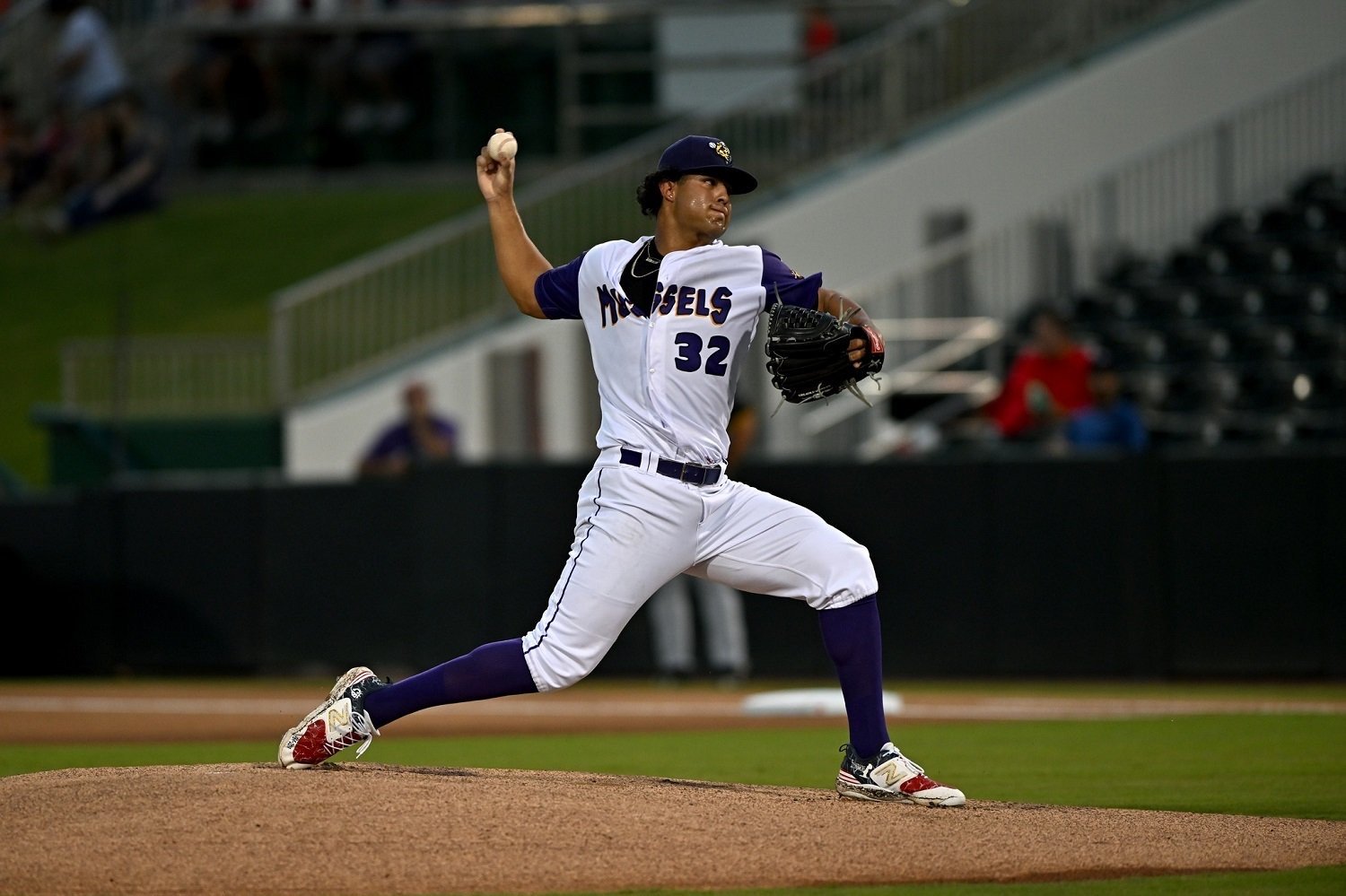 Much of the fanfare surrounding the Twins' 2023 draft class (unsurprisingly) centered on Walker Jenkins. Not only was Jenkins part of an elite group of five prospects at the top of the draft, the Twins should have had no business being able to select him: they moved up in the inaugural draft lottery to be able to do so. The Twins leaned into a strong prep demographic throughout the early portion of the draft, though. Beyond Jenkins's own success, two other teenagers have put together loud performances since the beginning of July. Charlee Soto was the Twins' competitive-balance Round A selection in 2023. At the time he was drafted, Soto was 17, one of the youngest players in the draft. He was also relatively new to pitching, having played shortstop growing up. It tracks, then, that Soto, as the youngest starting pitcher in the Florida State League, had some peaks and valleys in the first few months of his first full professional season. Since July began, however, Soto has figured it out and turned it on. In his last 23 innings, Soto has given up just four earned runs and five walks. He's posted a 1.57 ERA and a 2.09 FIP, while striking out 26.4% of hitters and walking just 5.7%, throwing strikes at an elite 69.9% clip. Soto’s impressive run is underpinned by a pitch mix that should have Twins fans doubling down on their enthusiasm. With support from the Twins, he is now throwing five different pitches: a four-seam fastball that has been up to 98.4 mph; a sinker with a 55% ground ball rate; a cutter as a bridge pitch; a slider; and a changeup that averages 17.1 inches of horizontal break away from a left-handed batter. This is a combination of velocity and stuff that allows Soto to devise a diverse plan of attack for opposing hitters, which he’s been executing with increasing consistency. Brandon Winokur, the Twins' fourth-round selection, was even more raw than Soto coming out of the draft. A gifted athlete with octopus-like limbs, Winokur spent time this offseason training his running gait. The Twins threw Winokur into the deep end of the pool, starting the year at Fort Myers, where he held his own with solid, if unspectacular numbers. In August, however, Winokur eased into another gear. He’s hitting .259/.344/.556, with five home runs in 15 games, capped by a three-home run game. Coming out of the draft, Winokur was lauded for his raw power. Some evaluators questioned his hit tool and approach, both of which have seen significant improvements this month. April - July August K% 27.7% 19.7% Chase% 30.7% 21.4% Hit95+% 33.6% 45.2% LaunchAng 10.1 22.7 xWOBA .272 .393 Winokur is listed at 6-foot-6 and 210 pounds; he has been widely praised for his athleticism. He’s played in center field and at shortstop in 2024. It’s certainly encouraging to see a hitter with such long levers (and potentially a long swing) begin to make these kinds of adjustments at the plate. It’s hard to ask for a better big-picture outcome for the Twins farm system in 2024. They had three consensus top-100 prospects coming into the season (Walker Jenkins, Emmanuel Rodriguez, Brooks Lee) and three more players have played themselves onto most top-100 lists (David Festa, Zebby Matthews, Luke Keaschall). Beyond that, though, performances up and down the levels of the organization point to structures and processes that are consistently driving accelerated improvement curves for players like Charlee Soto and Brandon Winokur. If you’re a fan of prospects, enjoy this. The Twins are currently a blueprint of player development excellence. Research assistance provided by Tru Media Sports
- 58 comments
-
- 20
-

-

-
- charlee soto
- brandon winokur
- (and 1 more)
-
The 2023 draft will rightly be remembered among Minnesota Twins fans for the team drafting Walker Jenkins. What about the other, high-ceiling prep prospects the Twins drafted, though? Much of the fanfare surrounding the Twins' 2023 draft class (unsurprisingly) centered on Walker Jenkins. Not only was Jenkins part of an elite group of five prospects at the top of the draft, the Twins should have had no business being able to select him: they moved up in the inaugural draft lottery to be able to do so. The Twins leaned into a strong prep demographic throughout the early portion of the draft, though. Beyond Jenkins's own success, two other teenagers have put together loud performances since the beginning of July. Charlee Soto was the Twins' competitive-balance Round A selection in 2023. At the time he was drafted, Soto was 17, one of the youngest players in the draft. He was also relatively new to pitching, having played shortstop growing up. It tracks, then, that Soto, as the youngest starting pitcher in the Florida State League, had some peaks and valleys in the first few months of his first full professional season. Since July began, however, Soto has figured it out and turned it on. In his last 23 innings, Soto has given up just four earned runs and five walks. He's posted a 1.57 ERA and a 2.09 FIP, while striking out 26.4% of hitters and walking just 5.7%, throwing strikes at an elite 69.9% clip. Soto’s impressive run is underpinned by a pitch mix that should have Twins fans doubling down on their enthusiasm. With support from the Twins, he is now throwing five different pitches: a four-seam fastball that has been up to 98.4 mph; a sinker with a 55% ground ball rate; a cutter as a bridge pitch; a slider; and a changeup that averages 17.1 inches of horizontal break away from a left-handed batter. This is a combination of velocity and stuff that allows Soto to devise a diverse plan of attack for opposing hitters, which he’s been executing with increasing consistency. Brandon Winokur, the Twins' fourth-round selection, was even more raw than Soto coming out of the draft. A gifted athlete with octopus-like limbs, Winokur spent time this offseason training his running gait. The Twins threw Winokur into the deep end of the pool, starting the year at Fort Myers, where he held his own with solid, if unspectacular numbers. In August, however, Winokur eased into another gear. He’s hitting .259/.344/.556, with five home runs in 15 games, capped by a three-home run game. Coming out of the draft, Winokur was lauded for his raw power. Some evaluators questioned his hit tool and approach, both of which have seen significant improvements this month. April - July August K% 27.7% 19.7% Chase% 30.7% 21.4% Hit95+% 33.6% 45.2% LaunchAng 10.1 22.7 xWOBA .272 .393 Winokur is listed at 6-foot-6 and 210 pounds; he has been widely praised for his athleticism. He’s played in center field and at shortstop in 2024. It’s certainly encouraging to see a hitter with such long levers (and potentially a long swing) begin to make these kinds of adjustments at the plate. It’s hard to ask for a better big-picture outcome for the Twins farm system in 2024. They had three consensus top-100 prospects coming into the season (Walker Jenkins, Emmanuel Rodriguez, Brooks Lee) and three more players have played themselves onto most top-100 lists (David Festa, Zebby Matthews, Luke Keaschall). Beyond that, though, performances up and down the levels of the organization point to structures and processes that are consistently driving accelerated improvement curves for players like Charlee Soto and Brandon Winokur. If you’re a fan of prospects, enjoy this. The Twins are currently a blueprint of player development excellence. Research assistance provided by Tru Media Sports View full article
- 58 replies
-
- 1
-
-
- charlee soto
- brandon winokur
- (and 1 more)
-
Zebby Matthews has flown through the minor leagues in dominant fashion in 2024. What's left to work on in order to achieve sustained success at the major league level. Have we misconstrued his strengths and areas of opportunity?
-
Zebby Matthews has flown through the minor leagues in dominant fashion in 2024. What's left to work on in order to achieve sustained success at the major league level. Have we misconstrued his strengths and areas of opportunity? View full video
-
Andrew Morris has flown under the radar of Twins fans for much of 2024. He has some of the best numbers in all of MiLB. Here's an update on his 2024 season.
-
Andrew Morris has flown under the radar of Twins fans for much of 2024. He has some of the best numbers in all of MiLB. Here's an update on his 2024 season. View full video
-
Zebby Matthews Gets the Call to the Twins: What He Is, What He Will Be
Jamie Cameron posted an article in Twins
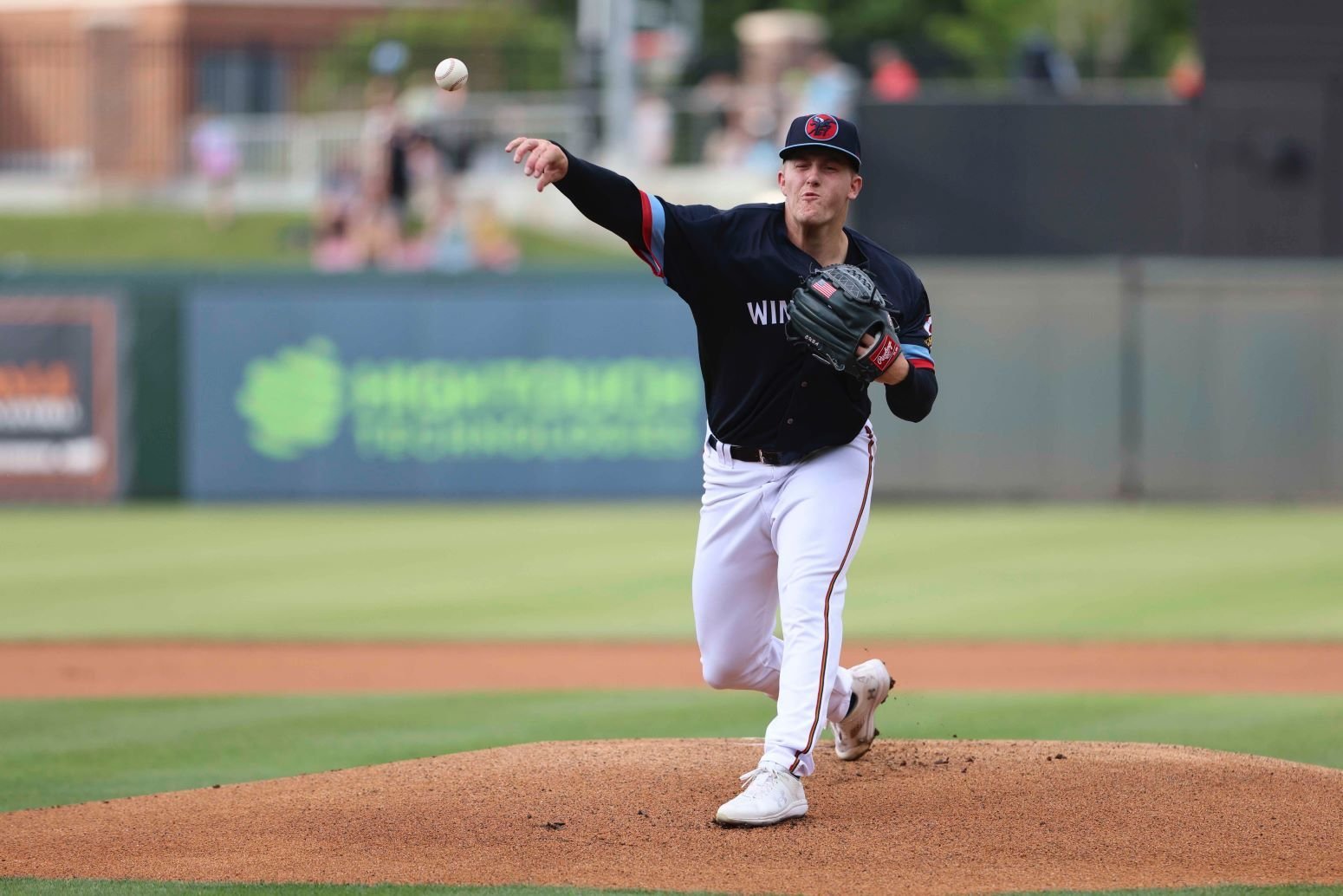 Who is Zebby Matthews? Why should we be psyched? What might he struggle with? Let’s dig in. Matthews is a right-handed pitcher with a frame ideally suited to start. Standing at 6’5, 225 pounds, he cuts an imposing figure on the mound. An eighth-round pick out of Western Carolina in 2022, Matthews is the second member of that draft class to make their MLB debut, after Brooks Lee. Matthews is also part of a quartet of highly-regarded starting pitchers from that draft, including fourth-rounder Andrew Morris, ninth-rounder Cory Lewis, and 13th-rounder C.J. Culpepper. Before we dig into Matthews’s strengths and improvement opportunities on the mound, it’s worth stamping how monumental a win his promotion is for the Twins scouting and player development teams. For a pitcher drafted just over two years ago to make their MLB debut after surging into top-100 prospect consideration is a testament to the ability of the organization to identify and develop pitching talent. Matthews has a solid case to make as the best pitcher in all of minor-league baseball in 2024. In 97 innings, he’s posted a 2.60 ERA, 2.12 FIP, and 2.51 xFIP, while striking out 30.5% of hitters, and walking just 1.9%. That’s absolute dominance, folks. The Twins and Matthews made some tweaks to his pitch mix prior to the 2024 season. He previously threw a sweeper, which the organization ditched. Matthews split his cutter into two distinct pitches, a higher-vert cutter he throws primarily against left-handed hitters, and a gyro slider he throws to right-handed hitters. Matthews’s pitch mix is reminiscent of Gerrit Cole. (Yes, really.) In addition to tweaks to his arsenal, it’s worth highlighting a few other welcome developments. Matthews's velocity has continued to trend up. He hit 99 mph with his fastball in one of his final Double-A starts. His 90th-percentile fastball velocity in 2024 has been 96.6 mph. That's hard to believe, for a prospect who came into the system throwing 91-92 mph. Matthews’s other major asset is elite strike-throwing. Matthews has thrown strikes 70% of the time in 2024. Were he qualified and in MLB, that would rank him first, right ahead of Tarik Skubal (69.9%), and George Kirby (69%). If you combine this strike-throwing ability with a revamped five-pitch mix and burgeoning velocity. It’s easy to see how Matthews blew through the minor leagues so fast. Many hitters were down 0-2 before they got settled in the batter's box Matthews’ greatest strength has become opponents greatest opportunity to do anything against him. You can expect opposing hitters to be aggressive with strikes early in the count, where Matthews lives in the zone seeking to gain leverage. There’s also a misconception Twins fandom has foisted on Matthews. You could see it in the tweet in which Jeff Passan broke the news of Matthews's call-up. Zebby has elite control; he doesn’t yet have elite command. He commands his fastball well up in the zone. His secondary offerings need work in terms of location, and his ability to know how, when, and where to leave the zone with them. For Matthews to have sustainable success as an MLB starter, he’ll need to throw fewer strikes, leave the strike zone with strike-to-ball offerings more, and generate more chase. I’d encourage folks to temper their expectations for Tuesday night, without dampening them for the long run. Matthews will be making his big-league debut and seeing his fourth level of 2024. There will be nerves. I’d also point to the fact that there are still adjustments to be made for Matthews at Triple-A, to be sustainably successful for the Twins. However his first start goes, Matthews will be part of the rotation mix for the Twins for the next half-decade. That, in itself, is a remarkable story of player development.
 -
In the midst of a critical stretch, the Minnesota Twins are turning to Zebby Matthews, one of their top pitching prospects, to start on Tuesday against the Kansas City Royals. Unbelievably, Matthews’ started the season at High-A Cedar Rapids, and will see his fourth level of the season in a matchup against Seth Lugo. Image courtesy of Tim Grubbs, Wichita Wind Surge Who is Zebby Matthews? Why should we be psyched? What might he struggle with? Let’s dig in. Matthews is a right-handed pitcher with a frame ideally suited to start. Standing at 6’5, 225 pounds, he cuts an imposing figure on the mound. An eighth-round pick out of Western Carolina in 2022, Matthews is the second member of that draft class to make their MLB debut, after Brooks Lee. Matthews is also part of a quartet of highly-regarded starting pitchers from that draft, including fourth-rounder Andrew Morris, ninth-rounder Cory Lewis, and 13th-rounder C.J. Culpepper. Before we dig into Matthews’s strengths and improvement opportunities on the mound, it’s worth stamping how monumental a win his promotion is for the Twins scouting and player development teams. For a pitcher drafted just over two years ago to make their MLB debut after surging into top-100 prospect consideration is a testament to the ability of the organization to identify and develop pitching talent. Matthews has a solid case to make as the best pitcher in all of minor-league baseball in 2024. In 97 innings, he’s posted a 2.60 ERA, 2.12 FIP, and 2.51 xFIP, while striking out 30.5% of hitters, and walking just 1.9%. That’s absolute dominance, folks. The Twins and Matthews made some tweaks to his pitch mix prior to the 2024 season. He previously threw a sweeper, which the organization ditched. Matthews split his cutter into two distinct pitches, a higher-vert cutter he throws primarily against left-handed hitters, and a gyro slider he throws to right-handed hitters. Matthews’s pitch mix is reminiscent of Gerrit Cole. (Yes, really.) In addition to tweaks to his arsenal, it’s worth highlighting a few other welcome developments. Matthews's velocity has continued to trend up. He hit 99 mph with his fastball in one of his final Double-A starts. His 90th-percentile fastball velocity in 2024 has been 96.6 mph. That's hard to believe, for a prospect who came into the system throwing 91-92 mph. Matthews’s other major asset is elite strike-throwing. Matthews has thrown strikes 70% of the time in 2024. Were he qualified and in MLB, that would rank him first, right ahead of Tarik Skubal (69.9%), and George Kirby (69%). If you combine this strike-throwing ability with a revamped five-pitch mix and burgeoning velocity. It’s easy to see how Matthews blew through the minor leagues so fast. Many hitters were down 0-2 before they got settled in the batter's box Matthews’ greatest strength has become opponents greatest opportunity to do anything against him. You can expect opposing hitters to be aggressive with strikes early in the count, where Matthews lives in the zone seeking to gain leverage. There’s also a misconception Twins fandom has foisted on Matthews. You could see it in the tweet in which Jeff Passan broke the news of Matthews's call-up. Zebby has elite control; he doesn’t yet have elite command. He commands his fastball well up in the zone. His secondary offerings need work in terms of location, and his ability to know how, when, and where to leave the zone with them. For Matthews to have sustainable success as an MLB starter, he’ll need to throw fewer strikes, leave the strike zone with strike-to-ball offerings more, and generate more chase. I’d encourage folks to temper their expectations for Tuesday night, without dampening them for the long run. Matthews will be making his big-league debut and seeing his fourth level of 2024. There will be nerves. I’d also point to the fact that there are still adjustments to be made for Matthews at Triple-A, to be sustainably successful for the Twins. However his first start goes, Matthews will be part of the rotation mix for the Twins for the next half-decade. That, in itself, is a remarkable story of player development. View full article
-
Thanks so much, really appreciate it. Got a great editor :) Ivran's story was pretty amazing.
-
A few people asked about this on social media etc. so sharing here in the comments for a tangible way to help the Romero family if you are so moved. https://www.gofundme.com/f/support-for-felipe-romeros-family
-
Baseball stories aren’t always about fathers and sons, but this one is. Image courtesy of Ivran Romero When I asked Ivran Romero about his earliest baseball memories, his response was immediate. "They all include my father; he taught me the game." Romero, 22, is a right-handed pitcher and graduate of the University of San Diego. He’s also one of the newest members of the Minnesota Twins organization, having signed as an undrafted free agent on Jul. 25. Romero’s path to the Twins organization has been unique, haunting, and beautiful. The story doesn’t start with Ivran. It starts with his father, Felipe, in the small western city of Ures, in the state of Sonora, on the west side of Mexico. Felipe grew up the youngest of five siblings to a single mother. He came from very little. Life changed when he met Ivet, his eventual wife. The Romeros emigrated to Phoenix, before Ivran’s sister Giselle was born. When Ivran was in eighth grade, his family was on the move again—this time, to San Diego, where Giselle attended college at the University of San Diego. When Ivran showed an aptitude for baseball, Felipe, whom Ivran describes as ‘a baseball fanatic,’ did everything he could to ensure his son could play consistently at the highest level his talent would allow him. "My father didn’t just teach me how to throw and how to hit,” the younger Romero said. "He taught me the mental side of the game. He did the impossible to make sure I could play at a high level.” Felipe worked long hours to support his son’s baseball dreams. He built him a makeshift batting cage in their backyard with scrap from his labor jobs. He found Ivran a giant tractor tire that he would practice hitting against. He flipped Ivran bottle caps to hit with a stick, to simulate how breaking pitches would move. All this Felipe fit in, while often working from 2:00 am to 7:00 pm to support his family. Felipe Romero spent a lot of baseball hours with his son. Ivran emerged as a standout baseball player in his sophomore year of high school. After starting out as a shortstop and third baseman, he began to focus on the mound, performing well, racking up accolades and accomplishments. In the summer of his junior year, he was offered a scholarship by the University of San Diego. "It was a no-brainer," Romero said. As you might imagine, Felipe was there, every step of the way. "He was known at San Diego as the most energetic family member and fan in the stands. He gave everyone a high-five and a hug. He approached everyone with love and respect." In Romero’s final season at San Diego, things started to click. His fastball ticked up a few miles per hour, and the results were what he was looking for. Pitching mostly in relief, Romero posted 46 1/3 innings in 2024, managing a 3.11 ERA, striking out 60 and walking just 18 batters. It got him noticed. "I started getting more calls from teams (ahead of the draft)," Romero recalled. "It was amazing to receive that attention." What should have been the most exciting few weeks of Ivran’s life, leading up to the Draft, ended up turning his life upside down. The week of Jun. 24, Felipe started experiencing chest pains. After checking into a local hospital, he received stent procedures to address blocked arteries around his heart. The elder Romero was released from the hospital on Wed., Jun. 26, with his medical team satisfied that he was in good shape after preventative care. He passed away of a sudden heart attack on Jun. 29, just 17 days before his son would realize his lifelong baseball dream. Ivran’s best friend was gone. The Romero family was devastated. When I asked Ivran if he could summarize his father’s impact on his life, he spoke with a tone of conviction, pride, and deep love. "My father had the most infectious smile, the craziest laugh,” the son said. “He accepted everyone. "He was so full of discipline, love, and respect for everyone and everything around him. He gave his all to everything he did. He thrived when his back was against the wall; it’s the same for me." As the draft approached, Romero admits, "the anxiety kicked in." He sat with his mother, his sister, and a picture of his late father throughout Day 2 and Day 3 of the draft, waiting to hear his name called. Romero described a growing sense of tension as each round passed on Day 3. Near the end of the Draft, Ivet Romero said aloud: "Felipe, if you are really here with us, show us a sign." The 20th round came and went, and Romero was not selected. A few minutes later, though, the phone rang. It was John Leavitt, a long-time Twins area scout. He told Romero the organization would love for him to be a Minnesota Twin. Another no-brainer. "A couple of seconds later, I was crying and missing my dad," Romero said. Later that day, Felipe Romero was occupying Ivran’s thoughts. The son spent some time looking through his father’s baseball wardrobe, and spotted something out of place. "My father was a die-hard Yankees fan,” Ivran said. “His entire closet was Yankees hats, shirts, and jerseys." There was all that, plus plenty of University of San Diego gear. Then there was one other piece. It was a baseball jersey with pinstripes, but not Yankees ones. The stripes were a bit lighter blue, and the script across the front read ‘Twins’. "If that’s not a sign, I don’t know what is," Romero said. When I asked what the Minnesota Twins are getting in Ivran Romero, he paused, considering the question for a beat. "They are getting a dedicated, disciplined, hard-working person, who loves to play the game and loves to be around the game,” he said at last. “I enjoy every second of the ride. Off the field, I try to follow my father's footsteps and treat everyone with the love and respect that they deserve." In those few minutes between the close of the draft and the call from Leavitt, it was darkly possible that the Romero family’s baseball story was over. Instead, a new chapter is beginning, and while Felipe will not be able to embrace his son after his first professional outing, he’s still an indispensable, irremovable part of the story. View full article
-
The Jersey in the Closet: Ivran Romero, Fathers, Sons, and Signs
Jamie Cameron posted an article in MLB Draft
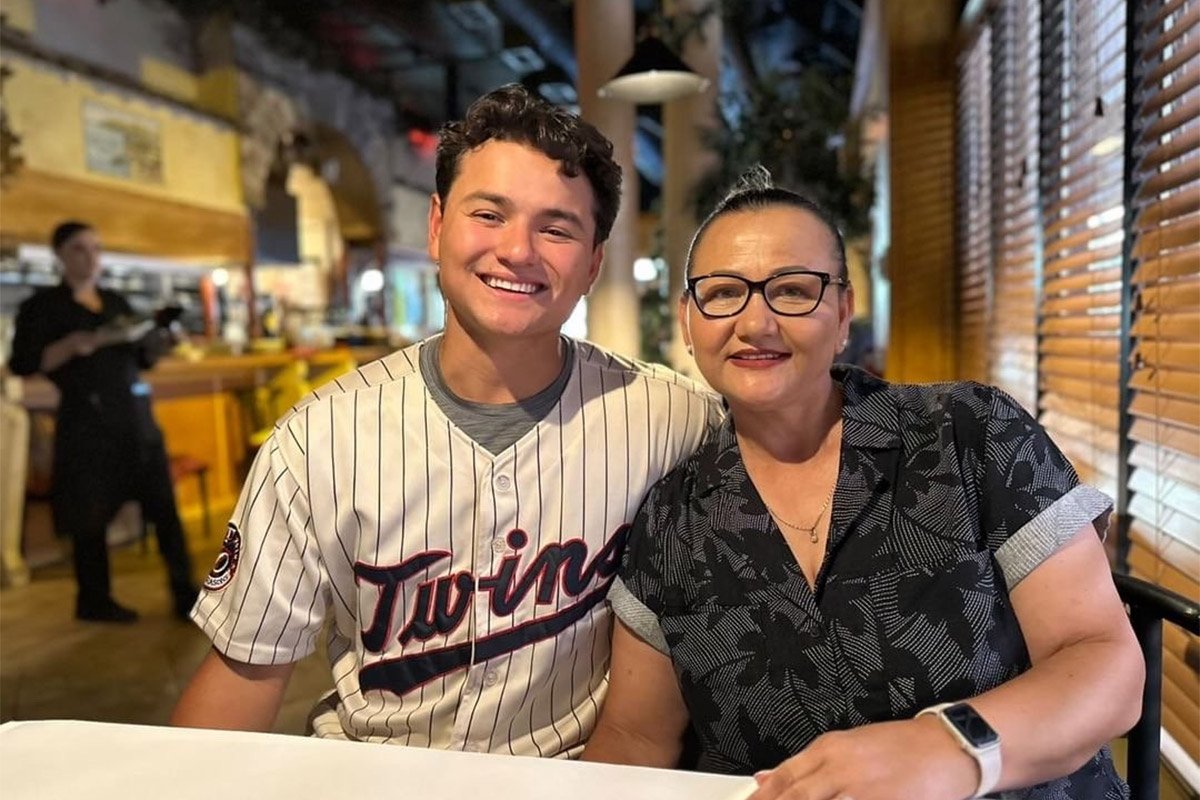 When I asked Ivran Romero about his earliest baseball memories, his response was immediate. "They all include my father; he taught me the game." Romero, 22, is a right-handed pitcher and graduate of the University of San Diego. He’s also one of the newest members of the Minnesota Twins organization, having signed as an undrafted free agent on Jul. 25. Romero’s path to the Twins organization has been unique, haunting, and beautiful. The story doesn’t start with Ivran. It starts with his father, Felipe, in the small western city of Ures, in the state of Sonora, on the west side of Mexico. Felipe grew up the youngest of five siblings to a single mother. He came from very little. Life changed when he met Ivet, his eventual wife. The Romeros emigrated to Phoenix, before Ivran’s sister Giselle was born. When Ivran was in eighth grade, his family was on the move again—this time, to San Diego, where Giselle attended college at the University of San Diego. When Ivran showed an aptitude for baseball, Felipe, whom Ivran describes as ‘a baseball fanatic,’ did everything he could to ensure his son could play consistently at the highest level his talent would allow him. "My father didn’t just teach me how to throw and how to hit,” the younger Romero said. "He taught me the mental side of the game. He did the impossible to make sure I could play at a high level.” Felipe worked long hours to support his son’s baseball dreams. He built him a makeshift batting cage in their backyard with scrap from his labor jobs. He found Ivran a giant tractor tire that he would practice hitting against. He flipped Ivran bottle caps to hit with a stick, to simulate how breaking pitches would move. All this Felipe fit in, while often working from 2:00 am to 7:00 pm to support his family. Felipe Romero spent a lot of baseball hours with his son. Ivran emerged as a standout baseball player in his sophomore year of high school. After starting out as a shortstop and third baseman, he began to focus on the mound, performing well, racking up accolades and accomplishments. In the summer of his junior year, he was offered a scholarship by the University of San Diego. "It was a no-brainer," Romero said. As you might imagine, Felipe was there, every step of the way. "He was known at San Diego as the most energetic family member and fan in the stands. He gave everyone a high-five and a hug. He approached everyone with love and respect." In Romero’s final season at San Diego, things started to click. His fastball ticked up a few miles per hour, and the results were what he was looking for. Pitching mostly in relief, Romero posted 46 1/3 innings in 2024, managing a 3.11 ERA, striking out 60 and walking just 18 batters. It got him noticed. "I started getting more calls from teams (ahead of the draft)," Romero recalled. "It was amazing to receive that attention." What should have been the most exciting few weeks of Ivran’s life, leading up to the Draft, ended up turning his life upside down. The week of Jun. 24, Felipe started experiencing chest pains. After checking into a local hospital, he received stent procedures to address blocked arteries around his heart. The elder Romero was released from the hospital on Wed., Jun. 26, with his medical team satisfied that he was in good shape after preventative care. He passed away of a sudden heart attack on Jun. 29, just 17 days before his son would realize his lifelong baseball dream. Ivran’s best friend was gone. The Romero family was devastated. When I asked Ivran if he could summarize his father’s impact on his life, he spoke with a tone of conviction, pride, and deep love. "My father had the most infectious smile, the craziest laugh,” the son said. “He accepted everyone. "He was so full of discipline, love, and respect for everyone and everything around him. He gave his all to everything he did. He thrived when his back was against the wall; it’s the same for me." As the draft approached, Romero admits, "the anxiety kicked in." He sat with his mother, his sister, and a picture of his late father throughout Day 2 and Day 3 of the draft, waiting to hear his name called. Romero described a growing sense of tension as each round passed on Day 3. Near the end of the Draft, Ivet Romero said aloud: "Felipe, if you are really here with us, show us a sign." The 20th round came and went, and Romero was not selected. A few minutes later, though, the phone rang. It was John Leavitt, a long-time Twins area scout. He told Romero the organization would love for him to be a Minnesota Twin. Another no-brainer. "A couple of seconds later, I was crying and missing my dad," Romero said. Later that day, Felipe Romero was occupying Ivran’s thoughts. The son spent some time looking through his father’s baseball wardrobe, and spotted something out of place. "My father was a die-hard Yankees fan,” Ivran said. “His entire closet was Yankees hats, shirts, and jerseys." There was all that, plus plenty of University of San Diego gear. Then there was one other piece. It was a baseball jersey with pinstripes, but not Yankees ones. The stripes were a bit lighter blue, and the script across the front read ‘Twins’. "If that’s not a sign, I don’t know what is," Romero said. When I asked what the Minnesota Twins are getting in Ivran Romero, he paused, considering the question for a beat. "They are getting a dedicated, disciplined, hard-working person, who loves to play the game and loves to be around the game,” he said at last. “I enjoy every second of the ride. Off the field, I try to follow my father's footsteps and treat everyone with the love and respect that they deserve." In those few minutes between the close of the draft and the call from Leavitt, it was darkly possible that the Romero family’s baseball story was over. Instead, a new chapter is beginning, and while Felipe will not be able to embrace his son after his first professional outing, he’s still an indispensable, irremovable part of the story.
 -
Draft tandem Jeremy Nygaard and JD Cameron team up for a podcast to discuss prospects on their way to the big leagues and the MLB draft, produced by Theo Tollefson. Image courtesy of Thieres Rabelo In episode 45 of Destination: The Show, Jeremy and Jamie review the 2024 MLB Draft classes for the Cubs, Brewers, and Twins. They talk through day one hauls in depth before digging into best value picks, under-the-radar names from day two and three, and their overall impressions of each class. The guys dig into some possible signability concerns for the Brewers, ask if the Twins class was underwhelming, and evaluate how the Cubs leveraged minimal picks and money from their bonus pool. Finally, they preview forthcoming content, including some final wrap up on the 2024 draft cycle, the looming trade deadline, and digging back into MiLB baseball. 0:00 Intro 9:17 Cubs Draft Review 23:40 Brewers Draft Review 39:09 Twins Draft Review 56:00 Listener Questions You can support the show by downloading it from wherever you get your podcasts, including iTunes and Spotify. If you enjoy the content, consider leaving us a five-star rating and review in addition to sharing or retweeting DTS-related content. You can follow us on Twitter @DTS_POD1, @Jeremynygaard, @J_D_Cameron, and @TheodoreTollef1. You can also find full episodes and clips of our shows on our YouTube page @DestinationTheShow. View full article
-
Destination: The Show, Episode 45. 2024 MLB Draft Review
Jamie Cameron posted an article in Podcasts
 In episode 45 of Destination: The Show, Jeremy and Jamie review the 2024 MLB Draft classes for the Cubs, Brewers, and Twins. They talk through day one hauls in depth before digging into best value picks, under-the-radar names from day two and three, and their overall impressions of each class. The guys dig into some possible signability concerns for the Brewers, ask if the Twins class was underwhelming, and evaluate how the Cubs leveraged minimal picks and money from their bonus pool. Finally, they preview forthcoming content, including some final wrap up on the 2024 draft cycle, the looming trade deadline, and digging back into MiLB baseball. 0:00 Intro 9:17 Cubs Draft Review 23:40 Brewers Draft Review 39:09 Twins Draft Review 56:00 Listener Questions You can support the show by downloading it from wherever you get your podcasts, including iTunes and Spotify. If you enjoy the content, consider leaving us a five-star rating and review in addition to sharing or retweeting DTS-related content. You can follow us on Twitter @DTS_POD1, @Jeremynygaard, @J_D_Cameron, and @TheodoreTollef1. You can also find full episodes and clips of our shows on our YouTube page @DestinationTheShow.
 -
Using the pick received for losing Sonny Gray, the Twins add another college infielder.
-
Using the pick received for losing Sonny Gray, the Twins add another college infielder. View full video
-
The Twins finally draft a pitcher in Dasan Hill, a tall, skinny southpaw.
-
The Twins finally draft a pitcher in Dasan Hill, a tall, skinny southpaw. View full video
-
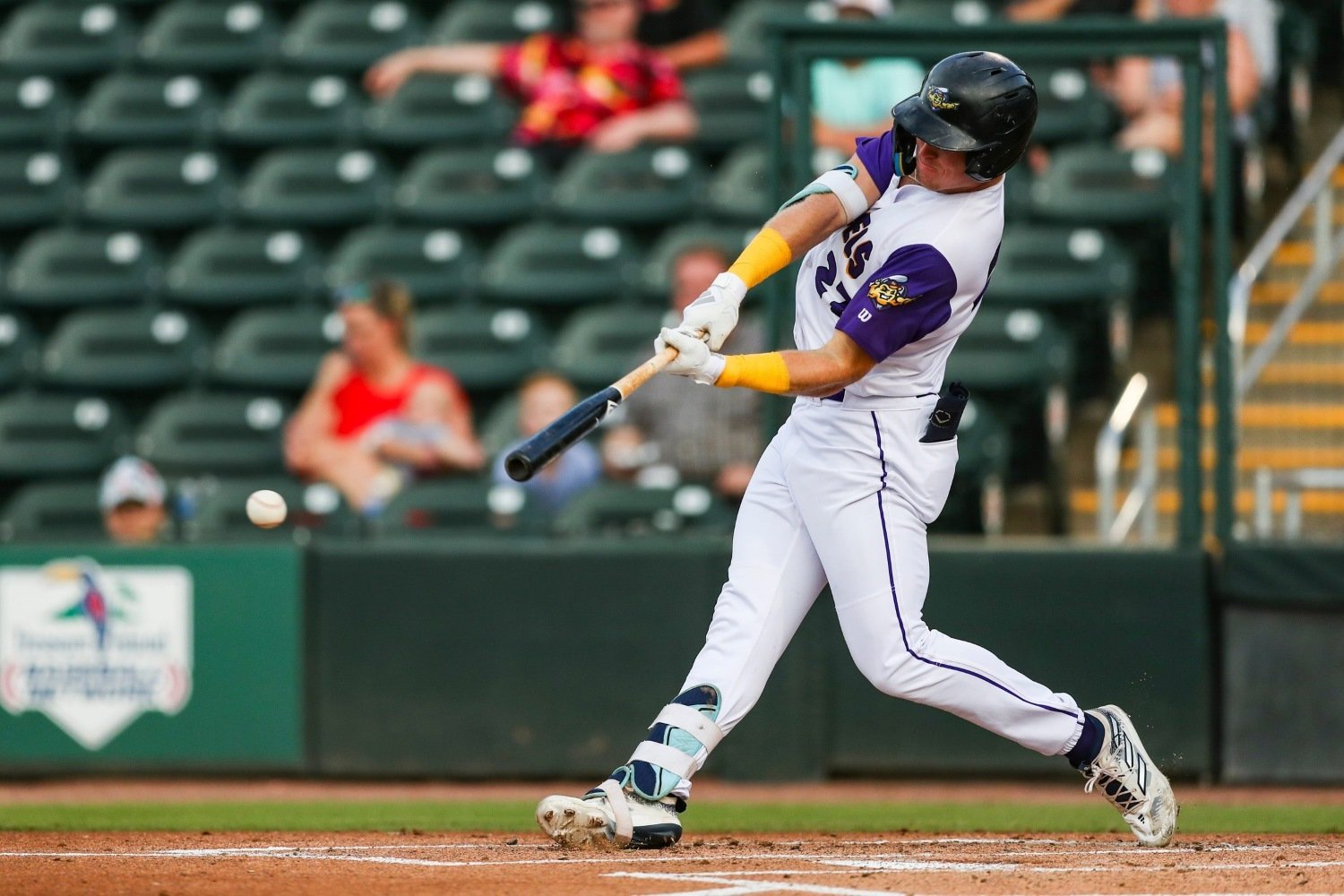 Walker Jenkins’s 2024 season has been full of interruptions. A hamstring strain sustained in his first game of the season sidelined him for six weeks, after just one at-bat. Even the Florida weather hasn’t cooperated. Jenkins has been back and playing since early June, though, so it’s time to dig into his 2024 data. What is he doing well? What’s left to work on? Let’s take a peek. Jenkins came roaring out of the blocks in 2023, making short work of the Florida Complex League and earning an end-of-season stint in the Florida State League. He continued to impress, hitting .392/.446/.608 in a tiny 12-game sample there. Jenkins hit everything in that short debut, posting an 82% contact rate and an absurd 9.5% in-zone whiff rate. He struck out just 10.7% of the time, but only walked 7.2% of the time. It was plenty to whet the appetites of Twins fans heading into 2024. Despite the setbacks, he's done everything in his power this year to deliver on that tantalizing promise. His counting stats look fairly ordinary. In 26 games, he’s hit .260/.385/.365, with 2 home runs. That line might be uninspiring, but there’s a lot going on under the hood that suggests Jenkins is on his way to becoming an elite professional hitter. We’ll start with his approach. I mentioned Jenkins’s excellent bat-to-ball skills in reviewing his 2023 debut. It was also noteworthy that he didn’t walk much, but then, you don’t need to walk much when you can hit everything. This year, his frequency of free passes has ballooned from 7.2% to 17.1% (around 6% above average for the level). His strikeout rate has remained excellent, at 12.8% (around 12% better than average for the level). Jenkins is patient in his approach. He swings slightly less than his peers overall, but slightly more within the zone. His chase rate (21.6%) is more than five percentage points better than the league average. This is indicative of a hitter who combines a great eye for the strike zone with great swing decisions, going into his at-bats with a clear plan of attack. What of Jenkins’s bat-to-ball skills? They’re still exceptional. Jenkins has improved on his contact rate from his short 2023 debut, up to 86%. That’s 16% above average for the level, folks. Within the zone, specifically, he's less than half as likely to whiff when he swings (9.7%) than the average FSL batter (20.8%). The closest MLB comparison to Jenkins’ combination of bat-to-ball skills, in-zone contact, and chase rate? Mookie Betts. After such an unfair comparison, let’s dial it back and examine how this stacks up against other hitters at the same rung on the ladder of pro baseball. Jenkins’s contact skills rank fourth in Low-A ball, among players with at least 50 plate appearances). The only other prospect of note on his level is Tigers standout infielder Kevin McGonigle. Jenkins can get his bat to anything. Additionally, he’s now operating with an uncommon level of patience that will serve him well as he progresses through the middle and upper levels of minor-league ball. Many of Jenkins’s pre-draft scouting reports made note of his potential for plus hitting ability and plus power. The power hasn’t shown up much. Is that a cause for concern? In short, no. It’s true that there’s been little in the way of home-run power or extra-base hits for Jenkins in 2024, but the underlying markers suggest more power is on the way. Jenkins’s 90th-percentile exit velocity on the season is 101.7 mph, right around average for the level (102.1 mph). He’ll grow into more of that. Players typically add more than 2 mph to their 90th-percentile exit velocity between the ages of 19 and 21. Additionally, Jenkins is hitting the ball 95 mph or harder 35.4% of the time, slightly better than the 32.1% league average, and hitting the ball between 10-30 degrees 29.3% of the time (28.2% league average). In other words, he’s hitting the ball hard consistently, on trajectories that will consistently lead to extra-base impact, all at a very early age. It’s also worth noting how complete a hitter Jenkins appears to be early in 2024. He doesn’t have stark splits by handedness, and seems to pick up spin and offspeed pitches well out of the pitcher's hand, as demonstrated by the consistency of his contact, and chase rates when broken down by pitcher handedness and pitch type. Swing% Contact% InZoneWhiff% Chase% LHP 41% 82.8% 16.7% 21.7% RHP 50% 86.6% 8.2% 21.6% FourSeam 47.5% 91.2% 7.2% 25.8% TwoSeam 42.2% 82.6% 12.5% 11.3% Slider 36.8% 81.3% 5% 25% Curveball 30.4% 83.7% 0% 21.4% Changeup 45% 86.1% 16% 22.4% Jenkins utilizes the whole field well, as we can see from a scatter of his batted ball events. My conjecture is that his ability to hit the ball the other way (in tandem with his growing but not-yet-maxed power) is what’s leading to a relatively low slugging average so far. A lot of his batted-ball events are longish fly ball outs to the opposite field. The tide will turn on those soon, as he continues to add strength (or starts to pull the ball a little more). For me, health is the only concern. Jenkins combines outstanding bat-to-ball skills and swing decisions with indications that he’ll continue to add offensive impact, in terms of extra-base hits. Don’t let the baseball card stats fool you; this 19-year-old is a global top-10 prospect in baseball Research assistance provided by TruMedia Sports
