



Jeremy Nygaard
-
Posts
4,552 -
Joined
-
Last visited
Content Type
Profiles
News
Minnesota Twins Videos
2026 Minnesota Twins Top Prospects Ranking
2022 Minnesota Twins Draft Picks
Minnesota Twins Free Agent & Trade Rumors, Notes, & Tidbits
Guides & Resources
2023 Minnesota Twins Draft Picks
The Minnesota Twins Players Project
2024 Minnesota Twins Draft Picks
2025 Minnesota Twins Draft Pick Tracker
2026 Minnesota Twins Draft Tracker: Picks & Bonuses
Forums
Blogs
Events
Store
Downloads
Gallery
Everything posted by Jeremy Nygaard
-
 Bold. And believable.
 -
The Rangers have been so Boras-heavy recently that I think that will play into it more than the smaller bonus pool. Last year they took Rocker earlier than expected and that allowed them to stretch their money far enough to also sign Brock Porter (MLB's 11th overall prospect) in the 4th round. I haven't heard who is repping the top guys this year, but it wouldn't be inconceivable to try to pull something similar off again. I would think the chances aren't very high that they would simply take a lesser player because they have a smaller bonus pool. A Boras package, though, I could totally see.
-
It's that time of year again: When the draft is only a few months around the corner and the ever-nerdy draft-lovers are excited by the words "bonus pools" and "draft slots." That's right. Major League Baseball released this information on Tuesday night and we can't wait to talk about it at Twins Daily. Image courtesy of Nathan Ray Seebeck-USA TODAY Sports The Twins will have a full bonus amount of $14,502,400, which ranks fourth in all of baseball. There was a significant increase in slot values - nearly 10% - which coincides with the significant increase in baseball revenue. The total bonus pool is determined by finding the sum of each individual pick in the Top 10 rounds. The Twins, by means of getting lucky in the lottery and jumping from the 13th pick to the 5th pick, will reap the benefits of the extra money. That jump gives them an extra $2.3 million to spent. In addition, this the Twins will have a Round A Competitive Balance pick at the end of the first round. That extra pick comes with nearly $2.5 million in additional pool money. The Twins' Top 10 round picks are as follows: - Round 1 (5th overall): $7,139,700 - Comp Round A (34th overall): $2,481,400 - Round 2 (49th overall): $1,741,500 - Round 3 (82nd overall): $859,700 - Round 4 (114th overall): $586,000 - Round 5 (150th overall): $412,600 - Round 6 (177th overall): $322,900 - Round 7 (207th overall): $252,500 - Round 8 (237th overall): $202,200 - Round 9 (267th overall): $179,000 - Round 10 (297th overall): $168,100 All picks in rounds 11-20 are "soft-capped" at $125,000. Any player signed for over that amount will have their overage count against the team's pool. (i.e. if a round 11 draftee signs for $150,000 then $25,000 will count towards the team's bonus pool). The most significant detail about the bonus pool and draft slots is that teams are free to use their money however they want. While some players will sign for slot, others (usually college seniors) will sign for significantly below slot, giving their teams more flexibility to use that money elsewhere. That money then is given to those signing over slot deals (often high schoolers) who may have slid down the draft. There is a lot of strategy when it comes to making the bonus pool stretch as far as possible. It's impossible to say what the Twins strategy will be this year. Have an idea? Leave it in the comments. View full article
-
 The Twins will have a full bonus amount of $14,502,400, which ranks fourth in all of baseball. There was a significant increase in slot values - nearly 10% - which coincides with the significant increase in baseball revenue. The total bonus pool is determined by finding the sum of each individual pick in the Top 10 rounds. The Twins, by means of getting lucky in the lottery and jumping from the 13th pick to the 5th pick, will reap the benefits of the extra money. That jump gives them an extra $2.3 million to spent. In addition, this the Twins will have a Round A Competitive Balance pick at the end of the first round. That extra pick comes with nearly $2.5 million in additional pool money. The Twins' Top 10 round picks are as follows: - Round 1 (5th overall): $7,139,700 - Comp Round A (34th overall): $2,481,400 - Round 2 (49th overall): $1,741,500 - Round 3 (82nd overall): $859,700 - Round 4 (114th overall): $586,000 - Round 5 (150th overall): $412,600 - Round 6 (177th overall): $322,900 - Round 7 (207th overall): $252,500 - Round 8 (237th overall): $202,200 - Round 9 (267th overall): $179,000 - Round 10 (297th overall): $168,100 All picks in rounds 11-20 are "soft-capped" at $125,000. Any player signed for over that amount will have their overage count against the team's pool. (i.e. if a round 11 draftee signs for $150,000 then $25,000 will count towards the team's bonus pool). The most significant detail about the bonus pool and draft slots is that teams are free to use their money however they want. While some players will sign for slot, others (usually college seniors) will sign for significantly below slot, giving their teams more flexibility to use that money elsewhere. That money then is given to those signing over slot deals (often high schoolers) who may have slid down the draft. There is a lot of strategy when it comes to making the bonus pool stretch as far as possible. It's impossible to say what the Twins strategy will be this year. Have an idea? Leave it in the comments.
 -
Jorge Polanco and Alex Kirilloff are expected to begin the season on the injured list. What does that mean for the Twins infield?
-
Jorge Polanco and Alex Kirilloff are expected to begin the season on the injured list. What does that mean for the Twins infield? View full video
-
Maeda may have a stipulation in his contract that doesn't allow him to be QO'd. Almost always Japanese players have it written that they become a free agent when their contract expires. Usually that's as protection in case they get sent down and don't get to 6 years of service, but it *could* also include not being tied to QO. I'm not positive if Maeda's does or doesn't.
- 30 replies
-
- 3
-

-
- kenta maeda
- sonny gray
- (and 2 more)
-
Langford's bat is going to carry him. I'd say there's a slim-to-none chance that any team would even consider slowing his bat down by years by trying to develop him as a catcher. It would be the exact opposite in reality. If he were catching now, a team would draft him and convert him to outfield to accelerate the bat a la Bryce Harper.
-
Initial Baseball America Mock Draft: Twins Take Prep Hitter
Jeremy Nygaard posted an article in Twins
 As you're scrolling through the story, you're going to read one of the most Twins-iest things you could think of when Collazo says this, "Currently it feels like a good year to have a top-four pick." Of course it does. The Twins fall right outside of that range and is there anything more Minnesotan than that!? But don't overreact just yet. If you've been following college baseball at all to this point, you're probably pretty familiar with LSU's Dylan Crews and Florida's Wyatt Langford separating themselves from the pack as hitters and LSU's Paul Skenes (ascending) and Tennessee's Chase Dollander (coming back) in their own tier as pitchers. It should be relatively easy right now to project them as the first four picks as Collazo does. This is where I remind you that funny things - like Kumar Rocker getting drafted third out of nowhere last year - tend to happen. And, worse case scenario, nothing funny happens and the Twins have their pick of the litter outside of the top four in a what is considered to be a very strong draft. In the event those four are gone, Baseball America has the Twins selecting Indiana prep outfielder Max Clark. Collazo says of Clark: The thing about drafting fifth in a "four-man draft" and settling for Clark is that Clark is... a stud. Which parts of his scouting profile don't you like: Vanderbilt commit (ok, you might not love that... some times Vandy guys are hard to sign. But they're also one of the best programs in all of the country. Plus to plus-plus hitting ability Plus-plus running ability No doubt center fielder with plus-plus arm Excellent make-up Projectable power That's a not-yet-19-year-old who is going to be a Top 100 prospect for the next handful of years. Projecting how much power is the biggest question make surrounding Clark. If it comes, you're looking at a middle-of-the lineup hitter who plays premium defense at a premium position. Jacoby Ellsbury is a comparison that you may hear on Clark. Aside from one year where he hit 32 home runs, Ellsbury did most damage with his legs, stealing 50 or more bases three times. It wasn't a highly-decorated career, but Ellsbury was Rookie of the Year, a one-time All-Star, Golden Glover and Silver Slugger. He twice received MVP votes. At any rate, Clark projects to be a difference-maker. It's also important to remember that college players get a head-start on their season - and to make an impression in their draft season. Clark still has plenty of time to play himself out of the Twins range. Which other players would you like to see play their way into the Twins draft discussion? --- You'll be able to see how things change through the mock draft season. TWINS MOCK DRAFTS Baseball America BA Staff Mayo TwinsDaily McDaniel Callis Law Max Clark, OF, Indiana HS (V1.0 3/16 Brayden Taylor, 3B, TCU (V1.0 3/2) STORY
 -
The Twins made the biggest jump in the first-ever draft lottery. As a result, they'll draft in the Top 5 - not only higher than they expected, but this also gives them more money to spend on their draft class. How is the draft projected to shake out in four months? Carlos Collazo takes his first shot in Baseball America's first mock draft of the season. As you're scrolling through the story, you're going to read one of the most Twins-iest things you could think of when Collazo says this, "Currently it feels like a good year to have a top-four pick." Of course it does. The Twins fall right outside of that range and is there anything more Minnesotan than that!? But don't overreact just yet. If you've been following college baseball at all to this point, you're probably pretty familiar with LSU's Dylan Crews and Florida's Wyatt Langford separating themselves from the pack as hitters and LSU's Paul Skenes (ascending) and Tennessee's Chase Dollander (coming back) in their own tier as pitchers. It should be relatively easy right now to project them as the first four picks as Collazo does. This is where I remind you that funny things - like Kumar Rocker getting drafted third out of nowhere last year - tend to happen. And, worse case scenario, nothing funny happens and the Twins have their pick of the litter outside of the top four in a what is considered to be a very strong draft. In the event those four are gone, Baseball America has the Twins selecting Indiana prep outfielder Max Clark. Collazo says of Clark: The thing about drafting fifth in a "four-man draft" and settling for Clark is that Clark is... a stud. Which parts of his scouting profile don't you like: Vanderbilt commit (ok, you might not love that... some times Vandy guys are hard to sign. But they're also one of the best programs in all of the country. Plus to plus-plus hitting ability Plus-plus running ability No doubt center fielder with plus-plus arm Excellent make-up Projectable power That's a not-yet-19-year-old who is going to be a Top 100 prospect for the next handful of years. Projecting how much power is the biggest question make surrounding Clark. If it comes, you're looking at a middle-of-the lineup hitter who plays premium defense at a premium position. Jacoby Ellsbury is a comparison that you may hear on Clark. Aside from one year where he hit 32 home runs, Ellsbury did most damage with his legs, stealing 50 or more bases three times. It wasn't a highly-decorated career, but Ellsbury was Rookie of the Year, a one-time All-Star, Golden Glover and Silver Slugger. He twice received MVP votes. At any rate, Clark projects to be a difference-maker. It's also important to remember that college players get a head-start on their season - and to make an impression in their draft season. Clark still has plenty of time to play himself out of the Twins range. Which other players would you like to see play their way into the Twins draft discussion? --- You'll be able to see how things change through the mock draft season. TWINS MOCK DRAFTS Baseball America BA Staff Mayo TwinsDaily McDaniel Callis Law Max Clark, OF, Indiana HS (V1.0 3/16 Brayden Taylor, 3B, TCU (V1.0 3/2) STORY View full article
-
A little over three weeks until Opening Day and the infield remains clouded with uncertainty. The projected first baseman hasn't played yet. The third baseman can't throw. The super utility player went down with an injury. One particular player may be the beneficiary. View full video
-
A little over three weeks until Opening Day and the infield remains clouded with uncertainty. The projected first baseman hasn't played yet. The third baseman can't throw. The super utility player went down with an injury. One particular player may be the beneficiary.
-
Once the college season gets underway, it’s only a matter of time before we enter Mock Draft SZN. The good folks over at Baseball America aren’t necessarily kicking that off yet, but they’re definitely getting the pump primed with their first Staff Draft. Image courtesy of Chris Jones-USA TODAY Sports They carefully explain it’s not a mock draft, per se. They aren’t using any intel to try and determine who these teams are taking. They are instead taking on the role of what they would do if they were in these positions. In this first version, they have the two stud college pitchers (Paul Skenes and Chase Dollander), the best college hitter (Dylan Crews) and the best high school hitter (Max Clark) off the board. This could very well be the reality the Twins face when they go on the clock at pick #5 in July. In this iteration, Tom Lipari selects TCU third baseman Brayden Taylor for the Twins. Lipari says Taylor is “perhaps the best pure college bat in the country” and that he “will continue to add size and strength with time.” A left-handed hitting third baseman, Taylor has certainly looked the part in the batter's box in his two-plus years with the Horned Frogs. He has hit at a .324/.457/.577 (1.034) clip in his career including getting off to a blistering .384/.548/.613 (1.161) start through eight games this season. Impressively, Taylor has always walked more than he has struck out. The knock on Taylor is that he doesn’t project to have a carrying tool. He may silence some critics, though, if he continues to tear the cover off the ball this spring. And there's been evident improvement already. It’s not a well-kept secret that the Twins love to draft (and sometimes trade) hitters. Adding another really good hitter to a stable of them provides the depth that all organizations should love. But who are the Twins passing on? Taylor isn’t the biggest name (at this point) that was available to them. This scenario would have them passing on Florida OF Wyatt Langford as well as Ole Miss SS Jacob Gonzalez, both of whom could be really good options for the Twins at #5. (You can watch Gonzalez, Ole Miss, and other prospects at this weekend's Cambria Classic at US Bank Stadium.) So much can (and ultimately will) change in the next four months. If the draft were today, would you take Taylor? View full article
-
Baseball America Staff Draft (Version 1.0): Twins Draft College Hitter
Jeremy Nygaard posted an article in Twins
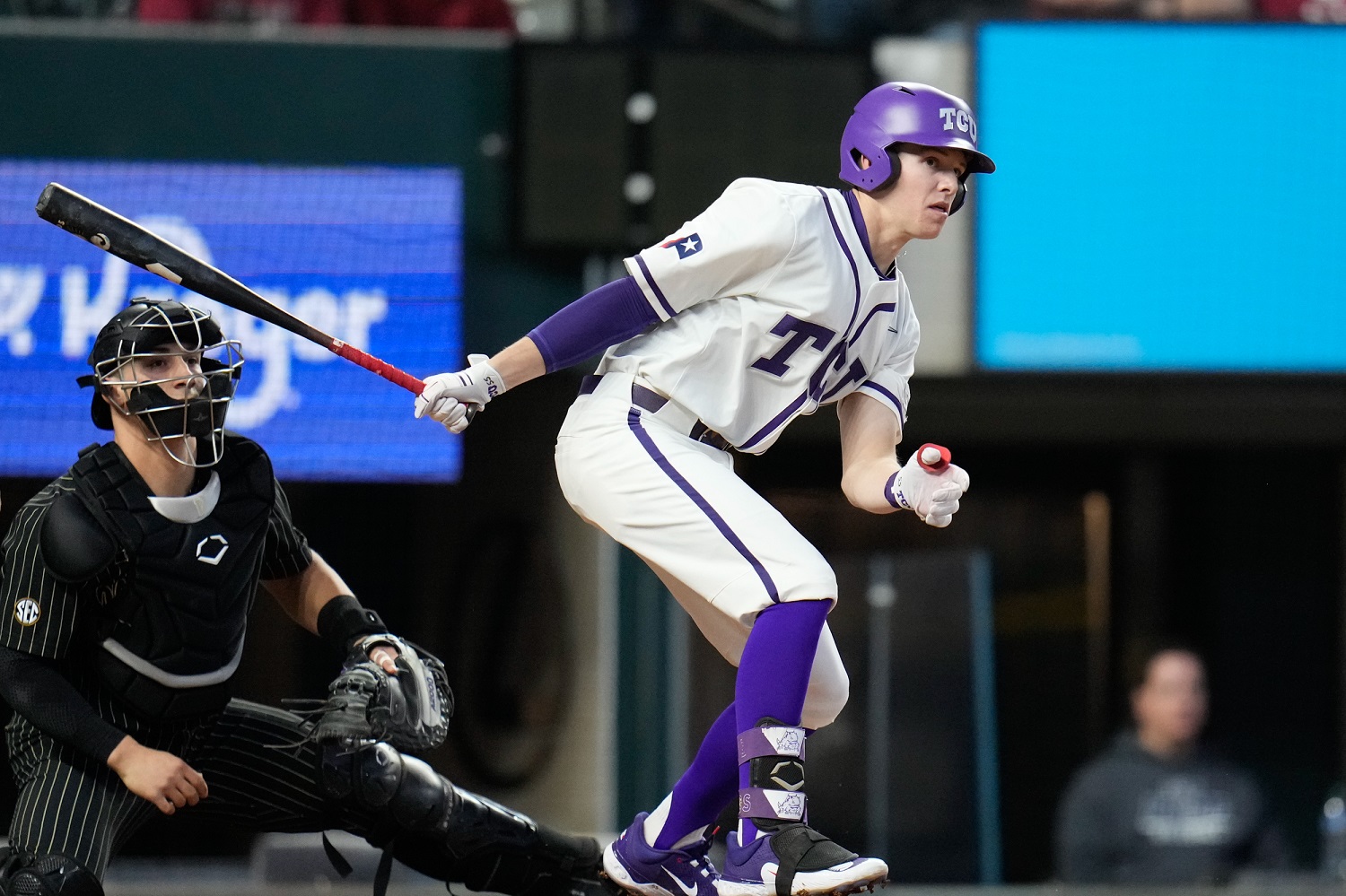 They carefully explain it’s not a mock draft, per se. They aren’t using any intel to try and determine who these teams are taking. They are instead taking on the role of what they would do if they were in these positions. In this first version, they have the two stud college pitchers (Paul Skenes and Chase Dollander), the best college hitter (Dylan Crews) and the best high school hitter (Max Clark) off the board. This could very well be the reality the Twins face when they go on the clock at pick #5 in July. In this iteration, Tom Lipari selects TCU third baseman Brayden Taylor for the Twins. Lipari says Taylor is “perhaps the best pure college bat in the country” and that he “will continue to add size and strength with time.” A left-handed hitting third baseman, Taylor has certainly looked the part in the batter's box in his two-plus years with the Horned Frogs. He has hit at a .324/.457/.577 (1.034) clip in his career including getting off to a blistering .384/.548/.613 (1.161) start through eight games this season. Impressively, Taylor has always walked more than he has struck out. The knock on Taylor is that he doesn’t project to have a carrying tool. He may silence some critics, though, if he continues to tear the cover off the ball this spring. And there's been evident improvement already. It’s not a well-kept secret that the Twins love to draft (and sometimes trade) hitters. Adding another really good hitter to a stable of them provides the depth that all organizations should love. But who are the Twins passing on? Taylor isn’t the biggest name (at this point) that was available to them. This scenario would have them passing on Florida OF Wyatt Langford as well as Ole Miss SS Jacob Gonzalez, both of whom could be really good options for the Twins at #5. (You can watch Gonzalez, Ole Miss, and other prospects at this weekend's Cambria Classic at US Bank Stadium.) So much can (and ultimately will) change in the next four months. If the draft were today, would you take Taylor?
 -
In fairness, US Bank looks funky in general.
- 5 replies
-
- 5
-

-
-
- minnesota gophers
- us bank stadium
- (and 3 more)
-
The college season is underway, but most of those games are happening where the weather is much more pleasant. That will change this coming weekend as US Bank Stadium is hosting a three-day, six-team, nine-game round robin tournament. In an even better bit of news, this year's field will feature a number of draft prospects. The Gophers will host five other teams, including two Big Ten teams and two SEC teams. Ole Miss (#4) is the highest-profile team, but Vanderbilt (#10) and Maryland (#13) are also teams who could make a run at the College World Series. And you can catch as many as nine games at US Bank Stadium over three days starting on Friday. The inaugural event was hosted in 2020 and returned in 2022. The three Big Ten teams will rotate playing the non-Big Ten teams over the weekend. Friday, March 3 11:00 am Vanderbilt vs Nebraska 3:00 pm Ole Miss vs Maryland 7:00 pm Hawaii vs. Minnesota Saturday, March 4 11:00 am Maryland vs Vanderbilt 3:00 pm Nebraska vs Hawaii 7:00 pm Ole Miss vs Minnesota Sunday, March 5 9:30 am Hawaii vs Maryland 1:30 pm Nebraska vs Ole Miss 6:00 pm Vanderbilt vs. Minnesota Ole Miss will feature the top prospect in shortstop Jacob Gonzalez. Gonzalez helped lead Ole Miss to a 2022 College World Series championship and has also played for Team USA's Collegiate National Team for two years. There are a lot of similar traits to 2022 first round pick Brooks Lee. Gonzalez consistently puts together good plate appearances, walking more than he strikes out and also has home run power. Whereas Lee is a switch-hitter, Gonzalez is strictly a left-handed hitter. On the flip side, Lee will likely move off of shortstop while Gonzalez is seen as more likely to remain there (though he could play third base or second base). This will give the Twins brass an easy look at the potential Top 5 pick. Catcher Calvin Harris also sneaks into Baseball America's Top 200 at #199. Harris hasn't gotten a ton of time behind the plate in the his first two years at Ole Miss, but he figures to be the man this year and has shown traits in the past that make him a catching prospect to follow. LHP Hunter Elliott was exceptional as a freshman and figures to be a top prospect in the 2024 draft, though he's currently dealing with some forearm tightness and his availability for the weekend is in question. Vanderbilt also brings a potential Top 10 pick in centerfielder Enrique Bradfield Jr. Though he struggled in his debut weekend, Bradfield does things on the base paths and in the outfield that are rarely seen thanks to his speed. Not a lot of guys are tagged with 80-grade speed, but Bradfield has it. He's also going to have to be the rare prospect with 20- to 30-grade power. But if you love watching players make a difference with their legs, Bradfield is your guy. Patrick Reilly is a big right-hander who throws in the high-90s with a wild fastball and also features a nice slider and developing change-up. A good year could propel him up boards, while another year of demonstrating poor control could point him directly into a bullpen role. LHP Hunter Owen (#178) and C/OF Jack Bulger (#194) also make appearances towards the back of BA's Top 200. Two other players who figure to be in the conversation in the first round of the 2024 draft are LHP Carter Holton and RHP Andrew Dutkanych. Holton was drafted by the Brewers out of high school but made it to campus and has been very good and features a four-pitch mix and projects to start despite being undersized. Dutkanych is interesting because he withdrew from the 2022 draft when he had a chance to be a first-day pick (due to the lack of pitching depth). There isn't much for a college track record yet, but he will be draft-eligible after his sophomore season. Maryland is not your perennial college baseball powerhouse, but they do boast a first-round prospect of their own in shortstop Matt Shaw. Shaw was extremely impressive in 2022 (.985 OPS with 22 home runs) and then showed out in the Cape Cod League, where he also demonstrated his ability to steal bases (21-of-24). Shaw likely figures to be a second baseman as a professional as he's on the smaller side (5-11, 185). Like Shaw, teammate Luke Shliger also had an impressive 2022 backed up by a good showing in the Cape. Also on the smaller size, Shliger projects as a two-way catcher. RHP Jason Savacool leads the starting staff, but may profile best as a reliever professionally. Minnesota's RHP George Klassen (#173) and Nebraska's 3B Max Anderson (#91) both appear on BA's Top 200 because of power. Klassen with his powerful right arm that reaches triple-digits and Anderson because of the power potential in his bat. There are plenty of questions with both - Can Klassen harness the fastball? Can Klassen put the ball in the air? - but both are enough to tease scouts at this early point of the season. You'll be able to follow Gophers baseball more closely this year as former Gopher Alex Boswell will be writing about the program. Hawaii does not have any notable draft prospects. Tickets for this weekend's event are available here. View full article
-
US Bank to Host Cambria Classic and Many Draft Prospect (March 3-5)
Jeremy Nygaard posted an article in Twins
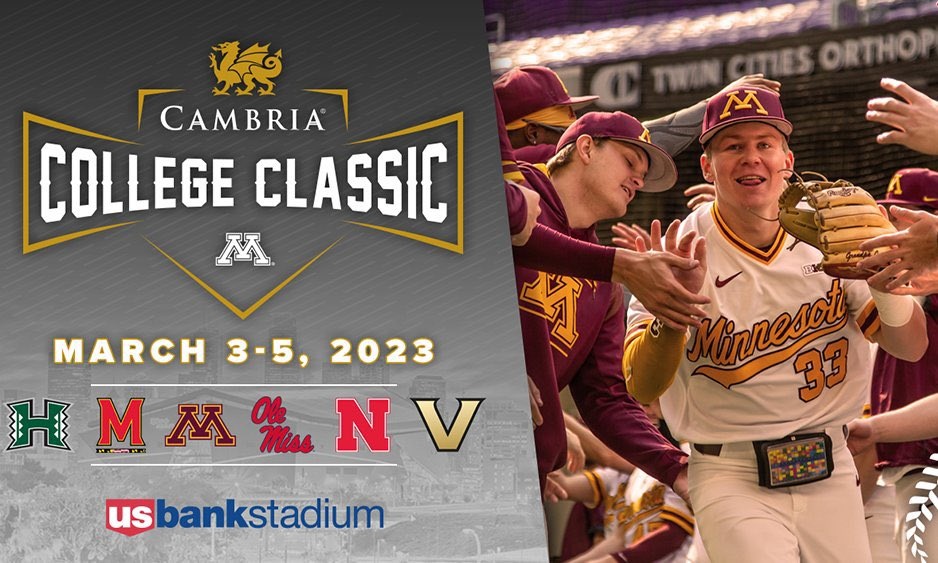 The Gophers will host five other teams, including two Big Ten teams and two SEC teams. Ole Miss (#4) is the highest-profile team, but Vanderbilt (#10) and Maryland (#13) are also teams who could make a run at the College World Series. And you can catch as many as nine games at US Bank Stadium over three days starting on Friday. The inaugural event was hosted in 2020 and returned in 2022. The three Big Ten teams will rotate playing the non-Big Ten teams over the weekend. Friday, March 3 11:00 am Vanderbilt vs Nebraska 3:00 pm Ole Miss vs Maryland 7:00 pm Hawaii vs. Minnesota Saturday, March 4 11:00 am Maryland vs Vanderbilt 3:00 pm Nebraska vs Hawaii 7:00 pm Ole Miss vs Minnesota Sunday, March 5 9:30 am Hawaii vs Maryland 1:30 pm Nebraska vs Ole Miss 6:00 pm Vanderbilt vs. Minnesota Ole Miss will feature the top prospect in shortstop Jacob Gonzalez. Gonzalez helped lead Ole Miss to a 2022 College World Series championship and has also played for Team USA's Collegiate National Team for two years. There are a lot of similar traits to 2022 first round pick Brooks Lee. Gonzalez consistently puts together good plate appearances, walking more than he strikes out and also has home run power. Whereas Lee is a switch-hitter, Gonzalez is strictly a left-handed hitter. On the flip side, Lee will likely move off of shortstop while Gonzalez is seen as more likely to remain there (though he could play third base or second base). This will give the Twins brass an easy look at the potential Top 5 pick. Catcher Calvin Harris also sneaks into Baseball America's Top 200 at #199. Harris hasn't gotten a ton of time behind the plate in the his first two years at Ole Miss, but he figures to be the man this year and has shown traits in the past that make him a catching prospect to follow. LHP Hunter Elliott was exceptional as a freshman and figures to be a top prospect in the 2024 draft, though he's currently dealing with some forearm tightness and his availability for the weekend is in question. Vanderbilt also brings a potential Top 10 pick in centerfielder Enrique Bradfield Jr. Though he struggled in his debut weekend, Bradfield does things on the base paths and in the outfield that are rarely seen thanks to his speed. Not a lot of guys are tagged with 80-grade speed, but Bradfield has it. He's also going to have to be the rare prospect with 20- to 30-grade power. But if you love watching players make a difference with their legs, Bradfield is your guy. Patrick Reilly is a big right-hander who throws in the high-90s with a wild fastball and also features a nice slider and developing change-up. A good year could propel him up boards, while another year of demonstrating poor control could point him directly into a bullpen role. LHP Hunter Owen (#178) and C/OF Jack Bulger (#194) also make appearances towards the back of BA's Top 200. Two other players who figure to be in the conversation in the first round of the 2024 draft are LHP Carter Holton and RHP Andrew Dutkanych. Holton was drafted by the Brewers out of high school but made it to campus and has been very good and features a four-pitch mix and projects to start despite being undersized. Dutkanych is interesting because he withdrew from the 2022 draft when he had a chance to be a first-day pick (due to the lack of pitching depth). There isn't much for a college track record yet, but he will be draft-eligible after his sophomore season. Maryland is not your perennial college baseball powerhouse, but they do boast a first-round prospect of their own in shortstop Matt Shaw. Shaw was extremely impressive in 2022 (.985 OPS with 22 home runs) and then showed out in the Cape Cod League, where he also demonstrated his ability to steal bases (21-of-24). Shaw likely figures to be a second baseman as a professional as he's on the smaller side (5-11, 185). Like Shaw, teammate Luke Shliger also had an impressive 2022 backed up by a good showing in the Cape. Also on the smaller size, Shliger projects as a two-way catcher. RHP Jason Savacool leads the starting staff, but may profile best as a reliever professionally. Minnesota's RHP George Klassen (#173) and Nebraska's 3B Max Anderson (#91) both appear on BA's Top 200 because of power. Klassen with his powerful right arm that reaches triple-digits and Anderson because of the power potential in his bat. There are plenty of questions with both - Can Klassen harness the fastball? Can Klassen put the ball in the air? - but both are enough to tease scouts at this early point of the season. You'll be able to follow Gophers baseball more closely this year as former Gopher Alex Boswell will be writing about the program. Hawaii does not have any notable draft prospects. Tickets for this weekend's event are available here.
- 5 comments
-
- 3
-
-
- minnesota gophers
- us bank stadium
- (and 3 more)
-
Rules are changing for the upcoming season. But that doesn't necessarily mean what we think it does. Do the Twins have the personnel to employ a shift very similar to previous years?
-
Rules are changing for the upcoming season. But that doesn't necessarily mean what we think it does. Do the Twins have the personnel to employ a shift very similar to previous years? View full video
-
The Twins made a surprise addition on Tuesday afternoon adding INF Donovan Solano. How will that impact the 40-man? Where will he fit on the team's depth chart? Which player is pushed off of the Opening Day roster? View full video
-
The Twins made a surprise addition on Tuesday afternoon adding INF Donovan Solano. How will that impact the 40-man? Where will he fit on the team's depth chart? Which player is pushed off of the Opening Day roster?
-
This is always a hard question to answer (unless it's a definite "no"). At this point last year, there were very few pitchers that weren't question marks. And even fewer high-end guys. So at the very top of the draft, it's certainly better. There's also considerably better depth in the next tier. Two SEC pitchers that would figure into the top couple of rounds are already done for the year. But the next few months will give more definitive answers. I think at this point, the pitching class is going to be viewed favorably by teams as far as quality and depth (but that might be skewed by the lack of it last year). I also think that the hitting class is pretty good, too. But so much can change in five months. Last year, by draft day, it felt like the Twins were drafting one spot too low. And lucked out that teams reached for pitchers and Lee fell into their laps. This year, on February 21, it doesn't feel like a 4-man class yet... so I really like the Twins chances of drafting a stud. Even if you like Crews and Dollander the most and they're gone, you still have a college pitcher (Skenes) and both demographics of hitters (Clark and Langford/Gonzalez/Wilson). I'd still lean the Twins going hitter, but it's going to be a tough call!
-
...and that means "Draft Season" is now upon us. The Twins have the 5th overall pick in the upcoming draft, so the biggest names in the sport are all prime candidates to be future Twins. Throughout the next five months, we'll be doing all we can to help keep your informed on the player pool for the MLB Draft. The Twins were the biggest movers in the new lottery system and are now bound to select a player that should immediately become a Top 100 prospect in baseball. Last year's draft was especially hitter-heavy at the top as only four pitchers went in the top 19 picks, which included a huge surprise at #3 (Kumar Rocker) and another huge surprise at #7 (Cade Horton). This year's draft has a better mix. And that should be a lot of fun for Twins fans. Chase Dollander, RHP, Tennessee Dollander enters the season as most pundit's top collegiate pitching prospect and a likely Top 5 pick. As we've seen repeatedly in the past, trajectories of college pitchers can change in a hurry. In his debut this past weekend, Dollander threw 81 pitches (only 47 strikes), but recorded seven strikeouts. His numbers weren't great in 4 2/3 innings, as he allowed two runs (including a home run) and walked and hit a batter. His impressive fastball was reportedly in the mid-90s consistently but never hit triple figures like it can. It's only his first start, though, so there is plenty of time left. "Time" has been a huge friend to Dollander. As a 6' 3", 180 pound high-schooler, Dollander went undrafted and pitched his freshman year for Georgia Southern. That time as an Eagle taught Dollander how to eat and lift weights properly, improving his body (adding 20 pounds) and striking out 64 in 49 innings. He did walk 28, but got plenty of interest in the transfer portal, including from the team he shut down in his collegiate debut, Tennessee. Now entering his second season as a Volunteer, Dollander is considered by some to be the college pitching prospect since Stephen Strasburg and that's high praise. The comp list beyond that is impressive: Gerrit Cole, Trevor Bauer, Jack Leiter. Any time you have the ability to add a potential top-of-the-rotation starter, you have to strongly consider it. Paul Skenes, RHP LSU Like Doogie says below, Skenes struck out 12 in six innings in his season debut. Skenes (6'6", 235) also has a big mid-90s fastball which nearly reaches triple-digits. Since arriving at LSU, Skenes has changed his slider by working with noted slider-guy Wes Johnson (sound familiar?) and it's getting rave reviews. Skenes, like current Twin Griffin Jax, attended the Air Force out of high school. While Jax remained at the academy through graduation and his commitment to the military delayed and interrupted his professional career, Skenes will not have any extenuating commitments. Cadets are allowed to leave before beginning classes their junior year without penalty. His professional future is brightest on the mound, but Skenes is also pretty good in the batters box. In those two years at Air Force, Skenes hit .367 while smacking 24 home runs with 81 RBI. You're probably thinking, "oh, so he plays first base too" and you're not completely wrong, because he's only done a little bit of that. Aside from pitching, he's been primarily a catcher(!) who committed to college to do just that. There is no doubt it will be interesting to follow Skenes through this season at LSU. If all goes well, there's no reason he wouldn't be in the conversation for the 5th pick (or the 1st pick for that matter). Hurston Waldrep, RHP, Florida The final pitcher that will be mentioned today struck out six in five innings over the weekend, while allowing two runs on four hits and two walks. Waldrep transferred to Florida from Southern Miss and has an electric fastball (96-99 mph), a high-80s slider and a mid-80s 12-to-6 curveball. Waldrep helped lead Southern Miss to the Super Regionals before fleeing to the SEC. An All-American, Waldrep struck out 156 in 106 1/3 innings in two seasons (one as a starter) as a Golden Eagle. Slightly smaller than Dollander and much smaller than Skenes, Waldrep still has good size (6' 2, 205) and hails from the noted hot-bed state of Georgia. Pitching for a Top-10 team, there's no reason to think that Waldrep won't get plenty of opportunities to pitch in front of big crowds, lots of scouts and in big games for the Gators this year. We could certainly see his trajectory trend upwards. While these are just three names to follow for the season, there will be many, many more. The SEC, specifically and as seen above, is littered with potential top-10 picks. Dylan Crews, OF, LSU and Wyatt Langford, OF, Florida are largely considered to be the two best draft-eligible college hitting prospects. Jacob Gonzalez, SS, Ole Miss is arguably the top shortstop prospect. Enrique Bradfield Jr., OF, Vanderbilt is the most exciting prospect in all of college baseball with elite speed and the ability to put bat on ball, but Ben Revere-type power. (Heck, that might not be a terrible floor comp for Bradfield). The whole conference seems abnormally loaded (and not just for the 2023 draft either). Twins Daily will keep pumping out draft content through the spring and into the summer leading up to the mid-July draft. View full article
-
 Throughout the next five months, we'll be doing all we can to help keep your informed on the player pool for the MLB Draft. The Twins were the biggest movers in the new lottery system and are now bound to select a player that should immediately become a Top 100 prospect in baseball. Last year's draft was especially hitter-heavy at the top as only four pitchers went in the top 19 picks, which included a huge surprise at #3 (Kumar Rocker) and another huge surprise at #7 (Cade Horton). This year's draft has a better mix. And that should be a lot of fun for Twins fans. Chase Dollander, RHP, Tennessee Dollander enters the season as most pundit's top collegiate pitching prospect and a likely Top 5 pick. As we've seen repeatedly in the past, trajectories of college pitchers can change in a hurry. In his debut this past weekend, Dollander threw 81 pitches (only 47 strikes), but recorded seven strikeouts. His numbers weren't great in 4 2/3 innings, as he allowed two runs (including a home run) and walked and hit a batter. His impressive fastball was reportedly in the mid-90s consistently but never hit triple figures like it can. It's only his first start, though, so there is plenty of time left. "Time" has been a huge friend to Dollander. As a 6' 3", 180 pound high-schooler, Dollander went undrafted and pitched his freshman year for Georgia Southern. That time as an Eagle taught Dollander how to eat and lift weights properly, improving his body (adding 20 pounds) and striking out 64 in 49 innings. He did walk 28, but got plenty of interest in the transfer portal, including from the team he shut down in his collegiate debut, Tennessee. Now entering his second season as a Volunteer, Dollander is considered by some to be the college pitching prospect since Stephen Strasburg and that's high praise. The comp list beyond that is impressive: Gerrit Cole, Trevor Bauer, Jack Leiter. Any time you have the ability to add a potential top-of-the-rotation starter, you have to strongly consider it. Paul Skenes, RHP LSU Like Doogie says below, Skenes struck out 12 in six innings in his season debut. Skenes (6'6", 235) also has a big mid-90s fastball which nearly reaches triple-digits. Since arriving at LSU, Skenes has changed his slider by working with noted slider-guy Wes Johnson (sound familiar?) and it's getting rave reviews. Skenes, like current Twin Griffin Jax, attended the Air Force out of high school. While Jax remained at the academy through graduation and his commitment to the military delayed and interrupted his professional career, Skenes will not have any extenuating commitments. Cadets are allowed to leave before beginning classes their junior year without penalty. His professional future is brightest on the mound, but Skenes is also pretty good in the batters box. In those two years at Air Force, Skenes hit .367 while smacking 24 home runs with 81 RBI. You're probably thinking, "oh, so he plays first base too" and you're not completely wrong, because he's only done a little bit of that. Aside from pitching, he's been primarily a catcher(!) who committed to college to do just that. There is no doubt it will be interesting to follow Skenes through this season at LSU. If all goes well, there's no reason he wouldn't be in the conversation for the 5th pick (or the 1st pick for that matter). Hurston Waldrep, RHP, Florida The final pitcher that will be mentioned today struck out six in five innings over the weekend, while allowing two runs on four hits and two walks. Waldrep transferred to Florida from Southern Miss and has an electric fastball (96-99 mph), a high-80s slider and a mid-80s 12-to-6 curveball. Waldrep helped lead Southern Miss to the Super Regionals before fleeing to the SEC. An All-American, Waldrep struck out 156 in 106 1/3 innings in two seasons (one as a starter) as a Golden Eagle. Slightly smaller than Dollander and much smaller than Skenes, Waldrep still has good size (6' 2, 205) and hails from the noted hot-bed state of Georgia. Pitching for a Top-10 team, there's no reason to think that Waldrep won't get plenty of opportunities to pitch in front of big crowds, lots of scouts and in big games for the Gators this year. We could certainly see his trajectory trend upwards. While these are just three names to follow for the season, there will be many, many more. The SEC, specifically and as seen above, is littered with potential top-10 picks. Dylan Crews, OF, LSU and Wyatt Langford, OF, Florida are largely considered to be the two best draft-eligible college hitting prospects. Jacob Gonzalez, SS, Ole Miss is arguably the top shortstop prospect. Enrique Bradfield Jr., OF, Vanderbilt is the most exciting prospect in all of college baseball with elite speed and the ability to put bat on ball, but Ben Revere-type power. (Heck, that might not be a terrible floor comp for Bradfield). The whole conference seems abnormally loaded (and not just for the 2023 draft either). Twins Daily will keep pumping out draft content through the spring and into the summer leading up to the mid-July draft.
- 20 comments
-
- 10
-
-
“Je vais être de retour!!” -- Edouard Julien in a since-deleted tweet sent on June 24, 2019. And with that - which translates to “I will be back!!” - Julien’s Twins career appeared to be over before it started as the draft-eligible sophomore announced his intentions to return to Auburn for his junior season. Oh, how things change in a hurry. At the time, it made perfect sense. Even Auburn couldn’t figure out exactly where to play Edouard Julien on the field. As a freshman, he started 59 games between designated hitter, first base, and second base. As a sophomore, he started 62 games at third base. There was no question about his bat, though. That belonged in the lineup. His final game as a Tiger saw these worlds collide. Against Mississippi State in the College World Series, Julien hit a massive two-run home run in the top of the second inning to give the Tigers a 2-0 lead. It was a 429-foot blast to right field that, at the time, was tied for the longest in the history of TD Ameritrade Park. He later singled in another run to push the lead to 3-0. In the bottom of the final frame, the Tigers gave up two run, but still had the lead. One out away. Tying run 90 feet from home. And a routine ground ball to third base. Three batters later, Mississippi State was celebrating their walk-off victory. No one would have blamed Julien for going back to Auburn to try to help his team back to Omaha. But money - nearly a half million dollars - talks and the Twins now have one of the best guys at getting on base in all the minor leagues. Age: 23 (DOB: 4/30/1999)2022 Stats: (AA): 508 PA, .300/.441/.490, 17 HR, 67 RBI, 19 SB, 98 BB, 125K. (AFL) 96 PA, .400/.563/.686, 5 HR, 17 RBI, 6 SB, 23 BB, 22K.ETA: 20232022 Ranking: 19National Top 100 RankingsBA: NR | MLB: NR | ATH: NR | BP: NR What's To Like The bat. The eye. The legs. Julien's entire offensive arsenal is loaded. In an offseason that saw the Twins offload Luis Arraez, the organization has a ready-made replacement. Julien has been able to get on base in almost 44% of his minor-league plate appearances. You could make a pretty good argument that no one is better suited to bat lead-off. He's stolen 53 bases over the last two seasons. He has slugged nearly .500, you could argue that his bat belongs right in the middle of the lineup. You could literally make any argument you wanted about getting Julien in the lineup because he is prolific with the bat in his hands and a lineup with him in it is better than one without. What's Left to Work OnIf you're talking about someone with an elite offensive package and he's only #5 on the team's prospect rankings, you've either got the best system in baseball (it's not that) or there is something significant that sticks out that needs to be talked about here. The Twins - like Auburn - have used Julien all over defensively. He's started double-digit games in his career at first base, second base, third base, and left field. And as you slide down the defensive totem pole as Julien has (and Arraez did), it makes the presence of elite offensive skills even more important. Because the last stop is as a designated hitter. Ideally, Julien either finds a comfortable home (second base? left field?), but the most likely scenario involves him being used all over the infield and in left field. There's a lot of work to do here yet, but the reality remains that Julien is a low-ceiling defender. What's Next After a successful full-season run at Wichita followed by an outstanding fall in Arizona, Julien will almost assuredly start his season in St. Paul. From there, what happens in 2023 is going to be dependent on a handful of things. Assuming the bat doesn't regress, Julien will get ample opportunities to hone his defensive skills in the infield and, likely, in the outfield. But the performance and health of those above him will be the biggest factor. Before all that, though, Julien will compete for Team Canada in the WBC. Julien figures to get plenty of plate appearances and will likely find himself playing second base. Will he use this opportunity as a springboard for his upcoming season? Luis Arraez got an opportunity and ran with it all the way to a batting title. Maybe that's all Julien needs too... and the defensive side will sort itself out in time. Previous InstallmentsHonorable Mention Prospects 21-30 Prospects 16-20 Prospects 11-15 Prospect #10: Austin Martin, SS Prospect #9: Louie Varland, RHP Prospect #8: Jose Salas, INF Prospect #7: Connor Prielipp, LHP Prospect #6: Simeon Woods Richardson, RHP Prospect #5: Edouard Julien, 2B View full article
