



Eric Blonigen
-
Posts
377 -
Joined
-
Last visited
-
Days Won
1
Content Type
Profiles
News
Minnesota Twins Videos
2026 Minnesota Twins Top Prospects Ranking
2022 Minnesota Twins Draft Picks
Minnesota Twins Free Agent & Trade Rumors, Notes, & Tidbits
Guides & Resources
2023 Minnesota Twins Draft Picks
The Minnesota Twins Players Project
2024 Minnesota Twins Draft Picks
2025 Minnesota Twins Draft Pick Tracker
2026 Minnesota Twins Draft Tracker: Picks & Bonuses
Forums
Blogs
Events
Store
Downloads
Gallery
Everything posted by Eric Blonigen
-
 I don’t think they would have traded for Mendez if they didn’t intend to protect him…
- 51 replies
-
- 3
-

-
- royce lewis
- trevor larnach
- (and 5 more)
-
Image courtesy of © John E. Sokolowski-Imagn Images On Tuesday, MLB’s Joint Competition Committee voted to implement the ABS Challenge System that teams and fans saw in spring training this season. Something of a compromise between true robo-umps and the system baseball uses today, the arrangement will allow hitters, catchers, or pitchers to challenge a ball/strike call made by a human umpire. The player will tap their helmet, and the pitch will be reviewed within 15 seconds or so; there shouldn’t be a significant change to the pace of play. Each team starts the game with two challenges. Any pitch call can be challenged, but teams aren’t charged one of their challenges unless they are unsuccessful. Why It’s Being Introduced Now that we have discussed what the ABS Challenge System actually is, you might be asking yourself why it exists, and why it's being implemented now. Over the past decade and change, with the advent of high-speed cameras, advanced analytics, and massive improvements to biomechanics training, pitchers have gotten better, faster, and filthier. Pitches like the sweeper, kick-change, and splinker are recent additions that have been invented based on a better understanding of concepts like spin and induced vertical break. As a result, offense has been suppressed league-wide, and teams have largely embraced the three true outcomes as strategies to defeat advances in pitching. After all, the likelihood of scoring multiple runs from singles off of pitchers who can do things that only lived in dreams 20 years ago is low. This dynamic shift directly led to other recent changes: pitch clocks, larger bases, and limitations on shifts, all of which were meant to pace up the game and give hitters a fighting chance. The advent of the challenge system will further tip the scales back toward hitters. Teams with the best pitch framers will give up additional walks and runs. Pitchers may be forced to attempt to nibble in the shadow band around the edges of the zone less often, and leave more pitches over the fat part of the plate when they can’t afford a walk. Ryan Jeffers, speaking as a catcher but also as a hitter during January's Twins Daily Winter Meltdown, articulated that aspect of the rationale. "I think it adds a level of excitement to the game that MLB wants … you’re going to eliminate the big time misses, the big calls that 90% of the ballpark knew were wrong,” Jeffers said. Of course, things can swing the other way, too—albeit to a lesser extent. The strike zone shrank slightly this year, due not to any anticipatory move toward an automated zone but to a change in the way MLB grades umpires. A patient hitter might find themselves taking a borderline pitch, only to have it flipped from a ball to a strike. How Will The Twins Utilize Their Challenges? Data has shown that catchers, not pitchers, are the most reliable judges of what’s actually in the zone or out of it. This makes perfect sense, as catchers are closer to the pitch as it crosses the plane of the plate. Their heads are also much more still, and their eyes are more directly fixed on the ball. Plus, pitchers have a very vested interest in getting additional strikes, and may not be the most clear-minded about the broader team interest. Some Twins pitchers see this as something that makes their job a bit harder. After the news broke, Audra Martin interviewed several members of the Twins. Kody Funderburk said the zone called by ABS "looks a little small,” and Joe Ryan called it “a little inconsistent." Sounds like bias to me. This isn’t to say that all pitchers see the introduction as a negative. Pablo López told Cory Provus during Tuesday’s game that the new system keeps hurlers honest. "I went three-for-three [with challenges] in spring training, [but] in a rehab game, I challenged once but I was way off. It adds pressure, for sure,” López said. Really, what it does is enforce a strike zone the way it’s laid out in the rule book. Rocco Baldelli has been clear that it will be the catching staff that makes the majority of challenges. “The catchers, as a whole, have such a great view of this," Baldelli said during the spring experiment. "We heard that from all the minor-league coaches that operated under this previously. They say to just let the catchers do their thing … they have been right significantly more than they have been off.” What Does This Mean For Catchers Going Forward? Jeffers, again at the Meltdown, spoke about how this will further alter the role of a catcher. “Our jobs are still going to be important back there," he said. "The skills might shift a little bit, but I think there’s an additional level of responsibility that we take on knowing what pitches to challenge or what not to.” Beyond that, teams will be incentivized to continue developing the pitch framing skillset. Most teams will only challenge pitches they are certain were incorrect, or those that could make a material impact on the game. While a team could theoretically make 30 challenges a game, as long as they are successful, no team will want to be without challenges when they matter most. This is borne out by data, as well: spring training games showed that roughly four pitches per game were challenged. The good news is that what can be measured can be improved. In recent years, pitch framing became the hot new thing, a way for catchers to impact the game in an additional way that gives their team an advantage. With the introduction of ABS, challenge success rates will likely be a metric that shows up in Baseball Savant next season, and a new way to grade catchers. For those (like Jeffers) who take a cerebral approach to the game, it’s likely to be a new source of positive value. "I’m excited, it’s been rumored for a while," Jeffers said Tuesday. "We used it in spring training and the majority of guys liked it … it gives everybody a safety net”. The Impact Maybe, just maybe, this will create true balance, and make it easier for teams to be successful when following the approach the Brewers and Guardians have used. That style of play certainly fits into the Twins' budget a bit better than the current environment necessitates. Speaking of how this may benefit the Twins: 2026 will almost certainly feature the debuts of (and hopefully extended run for) Walker Jenkins, Emmanuel Rodriguez, Gabriel Gonzalez, and Kaelen Culpepper. Add Luke Keaschall to that group, and it’s a core of players who have already experienced ABS in the minors. Hopefully, this will give them a leg up over some divisional foes who are less likely to experience the sort of roster turnover that the Twins will heading into the season. It could also give a bit more life to Edouard Julien, patient to a fault, but with an elite understanding of the strike zone. What will his game look like when some of the looking strikeouts are removed? Or will he succumb even more often, as he tries to keep a small zone but catchers challenge borderline calls and reclaim some of them? Even Byron Buxton, as his plate discipline improves, has been called out on strikes out of the zone a handful of times recently. What impact will a few more walks (or a pitcher throwing a meatball to avoid a walk) have for them? I, for one, am all for this implementation. It will make the game slightly more efficient, and hopefully Jeffers is right about it adding another level of excitement. View full article
-
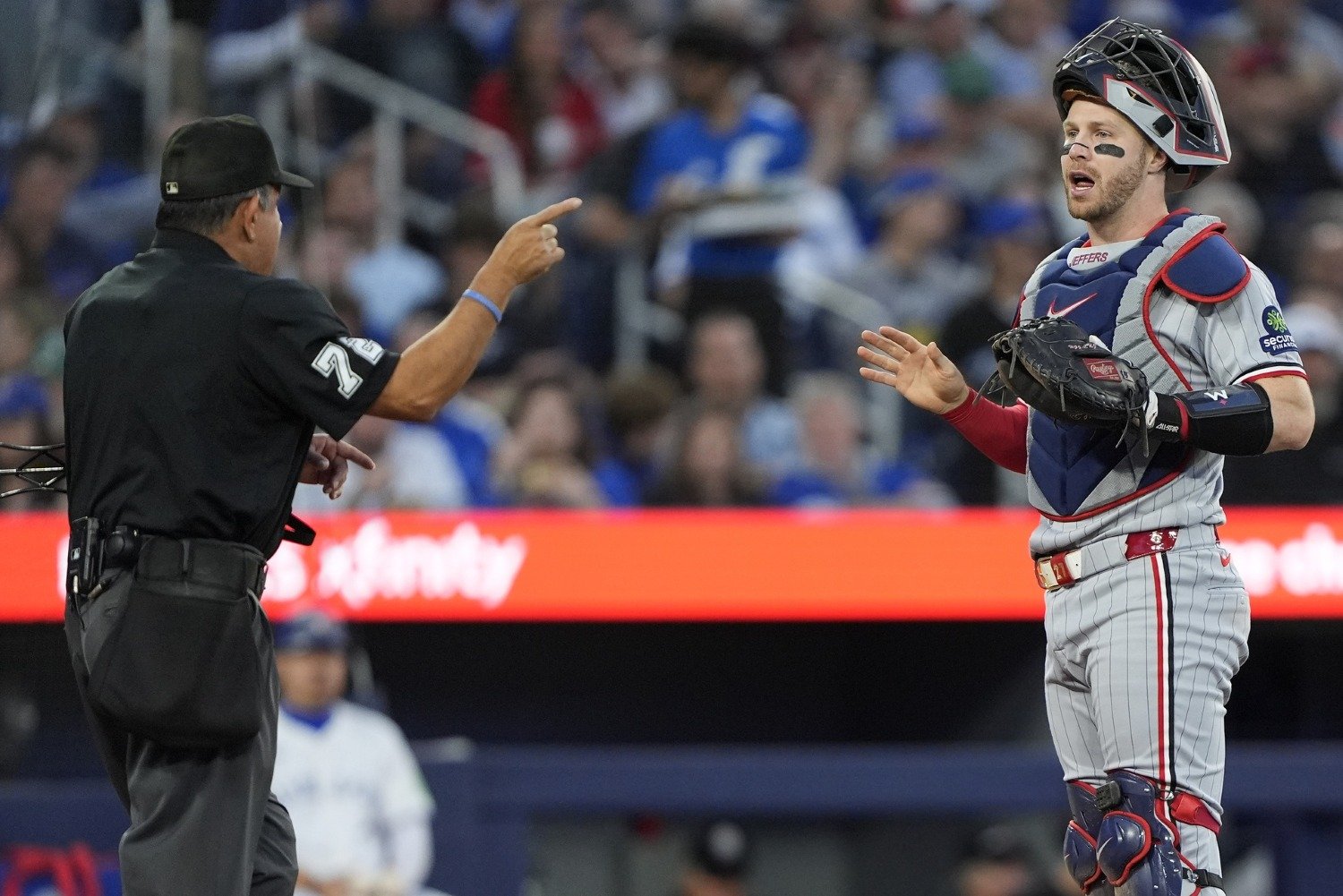 On Tuesday, MLB’s Joint Competition Committee voted to implement the ABS Challenge System that teams and fans saw in spring training this season. Something of a compromise between true robo-umps and the system baseball uses today, the arrangement will allow hitters, catchers, or pitchers to challenge a ball/strike call made by a human umpire. The player will tap their helmet, and the pitch will be reviewed within 15 seconds or so; there shouldn’t be a significant change to the pace of play. Each team starts the game with two challenges. Any pitch call can be challenged, but teams aren’t charged one of their challenges unless they are unsuccessful. Why It’s Being Introduced Now that we have discussed what the ABS Challenge System actually is, you might be asking yourself why it exists, and why it's being implemented now. Over the past decade and change, with the advent of high-speed cameras, advanced analytics, and massive improvements to biomechanics training, pitchers have gotten better, faster, and filthier. Pitches like the sweeper, kick-change, and splinker are recent additions that have been invented based on a better understanding of concepts like spin and induced vertical break. As a result, offense has been suppressed league-wide, and teams have largely embraced the three true outcomes as strategies to defeat advances in pitching. After all, the likelihood of scoring multiple runs from singles off of pitchers who can do things that only lived in dreams 20 years ago is low. This dynamic shift directly led to other recent changes: pitch clocks, larger bases, and limitations on shifts, all of which were meant to pace up the game and give hitters a fighting chance. The advent of the challenge system will further tip the scales back toward hitters. Teams with the best pitch framers will give up additional walks and runs. Pitchers may be forced to attempt to nibble in the shadow band around the edges of the zone less often, and leave more pitches over the fat part of the plate when they can’t afford a walk. Ryan Jeffers, speaking as a catcher but also as a hitter during January's Twins Daily Winter Meltdown, articulated that aspect of the rationale. "I think it adds a level of excitement to the game that MLB wants … you’re going to eliminate the big time misses, the big calls that 90% of the ballpark knew were wrong,” Jeffers said. Of course, things can swing the other way, too—albeit to a lesser extent. The strike zone shrank slightly this year, due not to any anticipatory move toward an automated zone but to a change in the way MLB grades umpires. A patient hitter might find themselves taking a borderline pitch, only to have it flipped from a ball to a strike. How Will The Twins Utilize Their Challenges? Data has shown that catchers, not pitchers, are the most reliable judges of what’s actually in the zone or out of it. This makes perfect sense, as catchers are closer to the pitch as it crosses the plane of the plate. Their heads are also much more still, and their eyes are more directly fixed on the ball. Plus, pitchers have a very vested interest in getting additional strikes, and may not be the most clear-minded about the broader team interest. Some Twins pitchers see this as something that makes their job a bit harder. After the news broke, Audra Martin interviewed several members of the Twins. Kody Funderburk said the zone called by ABS "looks a little small,” and Joe Ryan called it “a little inconsistent." Sounds like bias to me. This isn’t to say that all pitchers see the introduction as a negative. Pablo López told Cory Provus during Tuesday’s game that the new system keeps hurlers honest. "I went three-for-three [with challenges] in spring training, [but] in a rehab game, I challenged once but I was way off. It adds pressure, for sure,” López said. Really, what it does is enforce a strike zone the way it’s laid out in the rule book. Rocco Baldelli has been clear that it will be the catching staff that makes the majority of challenges. “The catchers, as a whole, have such a great view of this," Baldelli said during the spring experiment. "We heard that from all the minor-league coaches that operated under this previously. They say to just let the catchers do their thing … they have been right significantly more than they have been off.” What Does This Mean For Catchers Going Forward? Jeffers, again at the Meltdown, spoke about how this will further alter the role of a catcher. “Our jobs are still going to be important back there," he said. "The skills might shift a little bit, but I think there’s an additional level of responsibility that we take on knowing what pitches to challenge or what not to.” Beyond that, teams will be incentivized to continue developing the pitch framing skillset. Most teams will only challenge pitches they are certain were incorrect, or those that could make a material impact on the game. While a team could theoretically make 30 challenges a game, as long as they are successful, no team will want to be without challenges when they matter most. This is borne out by data, as well: spring training games showed that roughly four pitches per game were challenged. The good news is that what can be measured can be improved. In recent years, pitch framing became the hot new thing, a way for catchers to impact the game in an additional way that gives their team an advantage. With the introduction of ABS, challenge success rates will likely be a metric that shows up in Baseball Savant next season, and a new way to grade catchers. For those (like Jeffers) who take a cerebral approach to the game, it’s likely to be a new source of positive value. "I’m excited, it’s been rumored for a while," Jeffers said Tuesday. "We used it in spring training and the majority of guys liked it … it gives everybody a safety net”. The Impact Maybe, just maybe, this will create true balance, and make it easier for teams to be successful when following the approach the Brewers and Guardians have used. That style of play certainly fits into the Twins' budget a bit better than the current environment necessitates. Speaking of how this may benefit the Twins: 2026 will almost certainly feature the debuts of (and hopefully extended run for) Walker Jenkins, Emmanuel Rodriguez, Gabriel Gonzalez, and Kaelen Culpepper. Add Luke Keaschall to that group, and it’s a core of players who have already experienced ABS in the minors. Hopefully, this will give them a leg up over some divisional foes who are less likely to experience the sort of roster turnover that the Twins will heading into the season. It could also give a bit more life to Edouard Julien, patient to a fault, but with an elite understanding of the strike zone. What will his game look like when some of the looking strikeouts are removed? Or will he succumb even more often, as he tries to keep a small zone but catchers challenge borderline calls and reclaim some of them? Even Byron Buxton, as his plate discipline improves, has been called out on strikes out of the zone a handful of times recently. What impact will a few more walks (or a pitcher throwing a meatball to avoid a walk) have for them? I, for one, am all for this implementation. It will make the game slightly more efficient, and hopefully Jeffers is right about it adding another level of excitement.
 -
Image courtesy of © Raymond Carlin III-Imagn Images At some point in late November each year, teams need to decide whether to tender contracts to their arbitration-eligible players, or whether they will allow them to become free agents immediately. Heading into 2026, the Minnesota Twins will have decisions to make on no fewer than 10 players. I will look at each of these 10 players, and speculate on which of them will—or at least should—be tendered. Before I do that, let's run through a quick primer on the process. By tendering a contract, teams begin a process whereby they agree to financial terms on a one-year deal with each of these players—or buy time for negotiations on a multi-year pact. If they are unable to reach terms, the two sides head to an arbitration hearing. Typically speaking, good players are tendered contracts in each of their three arbitration-eligible seasons. Middling players typically get deals for their first year or two of arbitration, before they get expensive because of the guaranteed raises built into the system and are cast off a year early. Players who have struggled to find consistency or look overmatched at the big-league level are often non-tendered before their first or second arbitration-eligible season. Sometimes, if a player no longer fits into a team’s plans but has value, they can be tendered and then traded. Then, the new team is responsible for agreeing to terms. From a salary standpoint, for an average-ish player, they will typically receive $2-3 million in their first turn through arbitration; perhaps $4-5 million their second time; and $8-10 million their third and final time. Better players earn more, and lesser players earn less. So, without further ado, let’s look at the players by group. The No-Brainers This group will almost certainly be in the Twins' plans next year—or at the very least, traded, if the front office tears the team down fully. It would make no sense to non-tender them. Ryan Jeffers - Arb-3, 2.0 fWAR, 112 wRC+, .747 OPS, -5 catching runs Hey, he’s the only catcher (who’s a clear major leaguer) on their roster. Someone needs to catch 162 games next season. He’s been an above-average hitter at an offensively weak position. Plus, he certainly has decent trade value and may even be an extension candidate. Plus, he’s been preparing for the advent of the ABS challenge system all season. This is $8 million or so well spent. Joe Ryan - Arb-2, 3.0 fWAR, 3.47 ERA, 27.7 K%, 5.7% BB% Despite yet another late-season fade, Ryan is a great starting pitcher controlled for two more seasons, and he has tremendous trade value. Perhaps more than any other player, Ryan is likely to be tendered and then traded this offseason. If, somehow, the front office decides not to trade him, he’s a clear rotational building block. This one is written in pen. Cole Sands - Arb-1, 0.7 fWAR, 3.64 FIP, 94th percentile off-speed run value The Twins, after trading their five high-leverage relievers in the deadline fire sale, have a ton of spots to fill in the bullpen next season. Sands is the likeliest option currently on the roster to be the closer and will be in his first season of arbitration eligibility. While his results regressed mightily in 2025, he has looked better of late. He's rediscovered some velocity, and it’s entirely possible the Twins can get him back to his 2024 ways. The Likely-To-Be-Tendered These guys still have a great chance to take a step forward, will be relatively cheap, and if it were me, would absolutely be tendered contracts. Famously, though, the Twins are run by not-me. Bailey Ober - Arb-2, 0.9 fWAR, 3.74 FIP from 2022-2024 Ober is the tiniest bit tricky to peg. On one hand, he had been great each of the past three seasons—a playoff-caliber starter with obvious trade value. On the other hand, he’s been bad this season. Most (if not all) of that can be traced to a mechanical issue, perhaps stemming from lingering hip soreness. If the Twins feel that an offseason of rest will get him right again, he is certain to be tendered. If the Twins move Ryan and Pablo López in the offseason, they will need a veteran who can eat innings with at least average results. Royce Lewis - Arb-2 (Super-2 player), 1.2 fWAR, 90 wRC+, 12 SB, struggling against the fastball Lewis has had an enigmatic start to his professional career. Between the injuries, the endless grand slams, the slumps (even though he doesn’t do the whole slump thing), the emergent proclivity to run, and the snarky comments about those around him, he’s tough to figure out. He has all the upside in the world, as a former No. 1 overall pick, and he's shown that he can carry the offense for stretches. He’s also been ice-cold for (longer) stretches, and one could argue that his saltiness could be counterproductive to club dynamics. He could be the sort of guy who would benefit from a different mentor, or a different club entirely. I can’t envision the Twins being ready to cut bait with him, though. Kody Clemens - Arb-1, 1.4 fWAR, 99 wRC+, positional flexibility, good power Clemens is one of those guys who is likely to earn less than the $2 million arb-1 estimate I gave earlier, based on lack of playing time, age, and previously sluggish performance. He has shown some positional versatility, logging innings at first, second, left field, and right field. He has 25-homer power, but is very streaky. Depending on which prospects (if any) the Twins are planning on bringing north out of spring training in 2026, he seems like a guy worth paying for at least one season. On The Bubble This is a tougher group to peg. They may not have proven themselves yet, could be Quad-A guys, or may be on the downswing. Anthony Misiewicz - Arb-1, -0.1 fWAR, 8.92 FIP (4 1/3 innings), lefty reliever Despite throwing just a few innings this season and being (generally speaking) a replacement-level arm, he does have one thing going for him: he’s a lefty. Depending on how the Twins feel about Kody Funderburk, they may choose to tender Misiewicz under the assumption they can unlock at least a little more out of him for a likely salary near the league minimum. After suffering a pectoral strain that has sidelined him for months, Misiewicz is finishing the season by getting back on a mound and facing some hitters. That's a good sign as he enters the offseason. Michael Tonkin - Arb-3, -0.1 fWAR, 4.97 FIP, rubber-armed veteran Tonkin is entering his final year of arbitration in his age-36 season. He agreed to terms at just $1 million in 2025, but will probably be due at least a small raise. He has been replacement-level, but has a rubber arm, and that holds at least a small amount of value. The Twins can probably do better at a similar price point. The only thing that could go in his favor is his veteran status. Likely To Be Non-Tendered This group has negative value compared to their expected salary; may clog up the pipeline; and would not net much of anything in trade. Trevor Larnach - Arb-2, 0.2 fWAR, 102 wRC+, best as DH but doesn’t hit well enough for it Trevor Larnach has been a roughly replacement-level player this season. He's an average-ish hitter who offers no defensive value. He hasn’t been one of the many players adding speed on the base paths to their game down the stretch, and ultimately, he will be in the way of top prospects like Walker Jenkins and Emmanuel Rodriguez—not to mention Luke Keaschall, should he need to be moved to the outfield. The Twins supposedly attempted to trade Larnach at the deadline and couldn’t find takers. Now that he will he more expensive, there doesn’t seem to be a path for him to remain with the team, especially more than $4 million. Thomas Hatch - Arb-1, -0.3 fWAR, 6.03 FIP, walks too many and doesn’t strike enough out Nothing against Hatch: he has eaten some innings as a long reliever down the stretch, seems cerebral and data-driven, and has been clear that he strives to grow as a pitcher. However, he has been replacement-level for his Twins tenure. There are plenty of pitchers in the organization who can throw a couple innings at a time when the game is already out of hand, and they all would make the league minimum. In a different organization, he might get tendered, but I don’t see the Twins wanting to spend an extra (say) $500,000 that they don’t need to. So there you have it: 10 players, and what I think will happen with each. What do you think? Anyone you disagree with? View full article
-
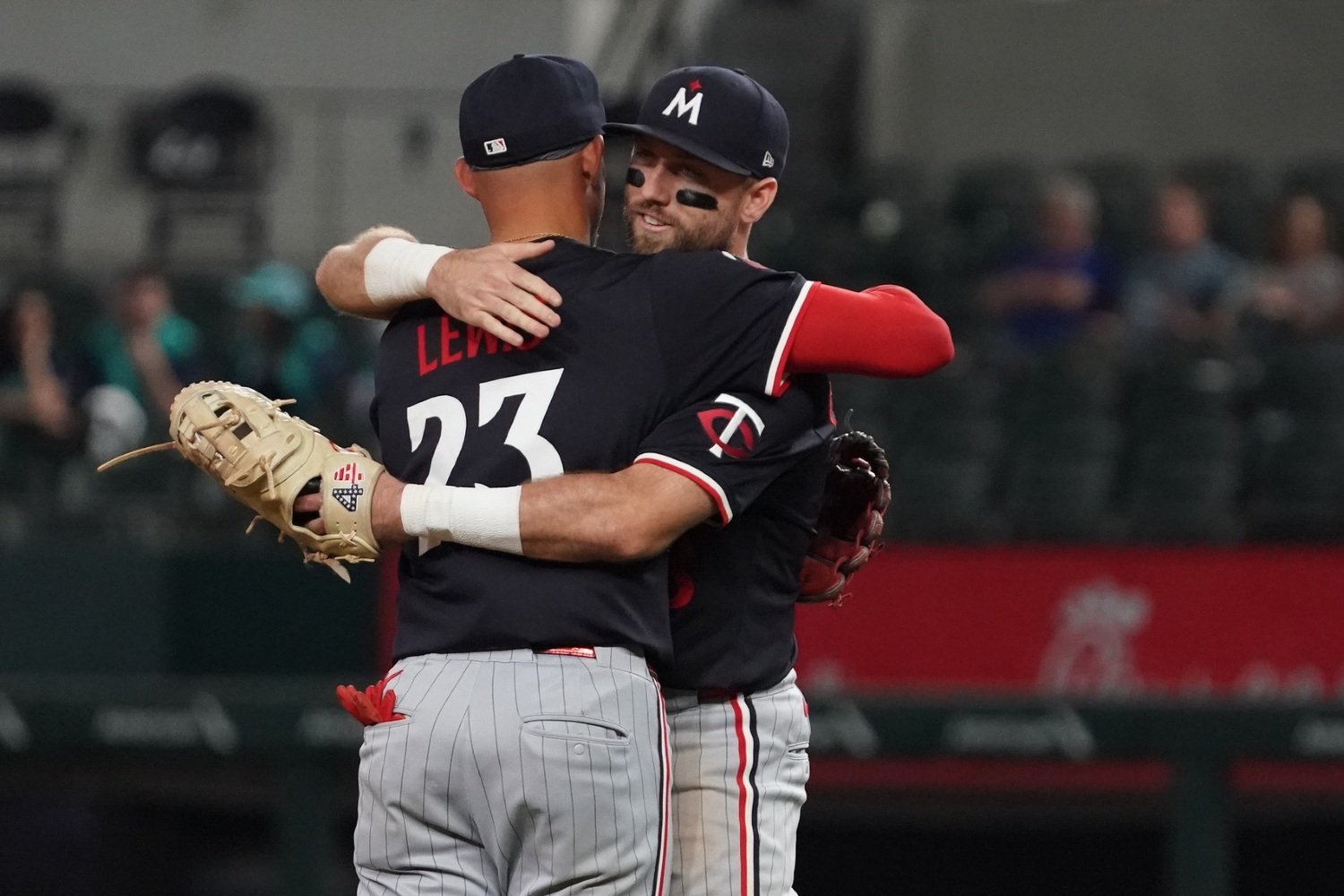 At some point in late November each year, teams need to decide whether to tender contracts to their arbitration-eligible players, or whether they will allow them to become free agents immediately. Heading into 2026, the Minnesota Twins will have decisions to make on no fewer than 10 players. I will look at each of these 10 players, and speculate on which of them will—or at least should—be tendered. Before I do that, let's run through a quick primer on the process. By tendering a contract, teams begin a process whereby they agree to financial terms on a one-year deal with each of these players—or buy time for negotiations on a multi-year pact. If they are unable to reach terms, the two sides head to an arbitration hearing. Typically speaking, good players are tendered contracts in each of their three arbitration-eligible seasons. Middling players typically get deals for their first year or two of arbitration, before they get expensive because of the guaranteed raises built into the system and are cast off a year early. Players who have struggled to find consistency or look overmatched at the big-league level are often non-tendered before their first or second arbitration-eligible season. Sometimes, if a player no longer fits into a team’s plans but has value, they can be tendered and then traded. Then, the new team is responsible for agreeing to terms. From a salary standpoint, for an average-ish player, they will typically receive $2-3 million in their first turn through arbitration; perhaps $4-5 million their second time; and $8-10 million their third and final time. Better players earn more, and lesser players earn less. So, without further ado, let’s look at the players by group. The No-Brainers This group will almost certainly be in the Twins' plans next year—or at the very least, traded, if the front office tears the team down fully. It would make no sense to non-tender them. Ryan Jeffers - Arb-3, 2.0 fWAR, 112 wRC+, .747 OPS, -5 catching runs Hey, he’s the only catcher (who’s a clear major leaguer) on their roster. Someone needs to catch 162 games next season. He’s been an above-average hitter at an offensively weak position. Plus, he certainly has decent trade value and may even be an extension candidate. Plus, he’s been preparing for the advent of the ABS challenge system all season. This is $8 million or so well spent. Joe Ryan - Arb-2, 3.0 fWAR, 3.47 ERA, 27.7 K%, 5.7% BB% Despite yet another late-season fade, Ryan is a great starting pitcher controlled for two more seasons, and he has tremendous trade value. Perhaps more than any other player, Ryan is likely to be tendered and then traded this offseason. If, somehow, the front office decides not to trade him, he’s a clear rotational building block. This one is written in pen. Cole Sands - Arb-1, 0.7 fWAR, 3.64 FIP, 94th percentile off-speed run value The Twins, after trading their five high-leverage relievers in the deadline fire sale, have a ton of spots to fill in the bullpen next season. Sands is the likeliest option currently on the roster to be the closer and will be in his first season of arbitration eligibility. While his results regressed mightily in 2025, he has looked better of late. He's rediscovered some velocity, and it’s entirely possible the Twins can get him back to his 2024 ways. The Likely-To-Be-Tendered These guys still have a great chance to take a step forward, will be relatively cheap, and if it were me, would absolutely be tendered contracts. Famously, though, the Twins are run by not-me. Bailey Ober - Arb-2, 0.9 fWAR, 3.74 FIP from 2022-2024 Ober is the tiniest bit tricky to peg. On one hand, he had been great each of the past three seasons—a playoff-caliber starter with obvious trade value. On the other hand, he’s been bad this season. Most (if not all) of that can be traced to a mechanical issue, perhaps stemming from lingering hip soreness. If the Twins feel that an offseason of rest will get him right again, he is certain to be tendered. If the Twins move Ryan and Pablo López in the offseason, they will need a veteran who can eat innings with at least average results. Royce Lewis - Arb-2 (Super-2 player), 1.2 fWAR, 90 wRC+, 12 SB, struggling against the fastball Lewis has had an enigmatic start to his professional career. Between the injuries, the endless grand slams, the slumps (even though he doesn’t do the whole slump thing), the emergent proclivity to run, and the snarky comments about those around him, he’s tough to figure out. He has all the upside in the world, as a former No. 1 overall pick, and he's shown that he can carry the offense for stretches. He’s also been ice-cold for (longer) stretches, and one could argue that his saltiness could be counterproductive to club dynamics. He could be the sort of guy who would benefit from a different mentor, or a different club entirely. I can’t envision the Twins being ready to cut bait with him, though. Kody Clemens - Arb-1, 1.4 fWAR, 99 wRC+, positional flexibility, good power Clemens is one of those guys who is likely to earn less than the $2 million arb-1 estimate I gave earlier, based on lack of playing time, age, and previously sluggish performance. He has shown some positional versatility, logging innings at first, second, left field, and right field. He has 25-homer power, but is very streaky. Depending on which prospects (if any) the Twins are planning on bringing north out of spring training in 2026, he seems like a guy worth paying for at least one season. On The Bubble This is a tougher group to peg. They may not have proven themselves yet, could be Quad-A guys, or may be on the downswing. Anthony Misiewicz - Arb-1, -0.1 fWAR, 8.92 FIP (4 1/3 innings), lefty reliever Despite throwing just a few innings this season and being (generally speaking) a replacement-level arm, he does have one thing going for him: he’s a lefty. Depending on how the Twins feel about Kody Funderburk, they may choose to tender Misiewicz under the assumption they can unlock at least a little more out of him for a likely salary near the league minimum. After suffering a pectoral strain that has sidelined him for months, Misiewicz is finishing the season by getting back on a mound and facing some hitters. That's a good sign as he enters the offseason. Michael Tonkin - Arb-3, -0.1 fWAR, 4.97 FIP, rubber-armed veteran Tonkin is entering his final year of arbitration in his age-36 season. He agreed to terms at just $1 million in 2025, but will probably be due at least a small raise. He has been replacement-level, but has a rubber arm, and that holds at least a small amount of value. The Twins can probably do better at a similar price point. The only thing that could go in his favor is his veteran status. Likely To Be Non-Tendered This group has negative value compared to their expected salary; may clog up the pipeline; and would not net much of anything in trade. Trevor Larnach - Arb-2, 0.2 fWAR, 102 wRC+, best as DH but doesn’t hit well enough for it Trevor Larnach has been a roughly replacement-level player this season. He's an average-ish hitter who offers no defensive value. He hasn’t been one of the many players adding speed on the base paths to their game down the stretch, and ultimately, he will be in the way of top prospects like Walker Jenkins and Emmanuel Rodriguez—not to mention Luke Keaschall, should he need to be moved to the outfield. The Twins supposedly attempted to trade Larnach at the deadline and couldn’t find takers. Now that he will he more expensive, there doesn’t seem to be a path for him to remain with the team, especially more than $4 million. Thomas Hatch - Arb-1, -0.3 fWAR, 6.03 FIP, walks too many and doesn’t strike enough out Nothing against Hatch: he has eaten some innings as a long reliever down the stretch, seems cerebral and data-driven, and has been clear that he strives to grow as a pitcher. However, he has been replacement-level for his Twins tenure. There are plenty of pitchers in the organization who can throw a couple innings at a time when the game is already out of hand, and they all would make the league minimum. In a different organization, he might get tendered, but I don’t see the Twins wanting to spend an extra (say) $500,000 that they don’t need to. So there you have it: 10 players, and what I think will happen with each. What do you think? Anyone you disagree with?
- 51 comments
-
- 6
-
-
- royce lewis
- trevor larnach
- (and 5 more)
-
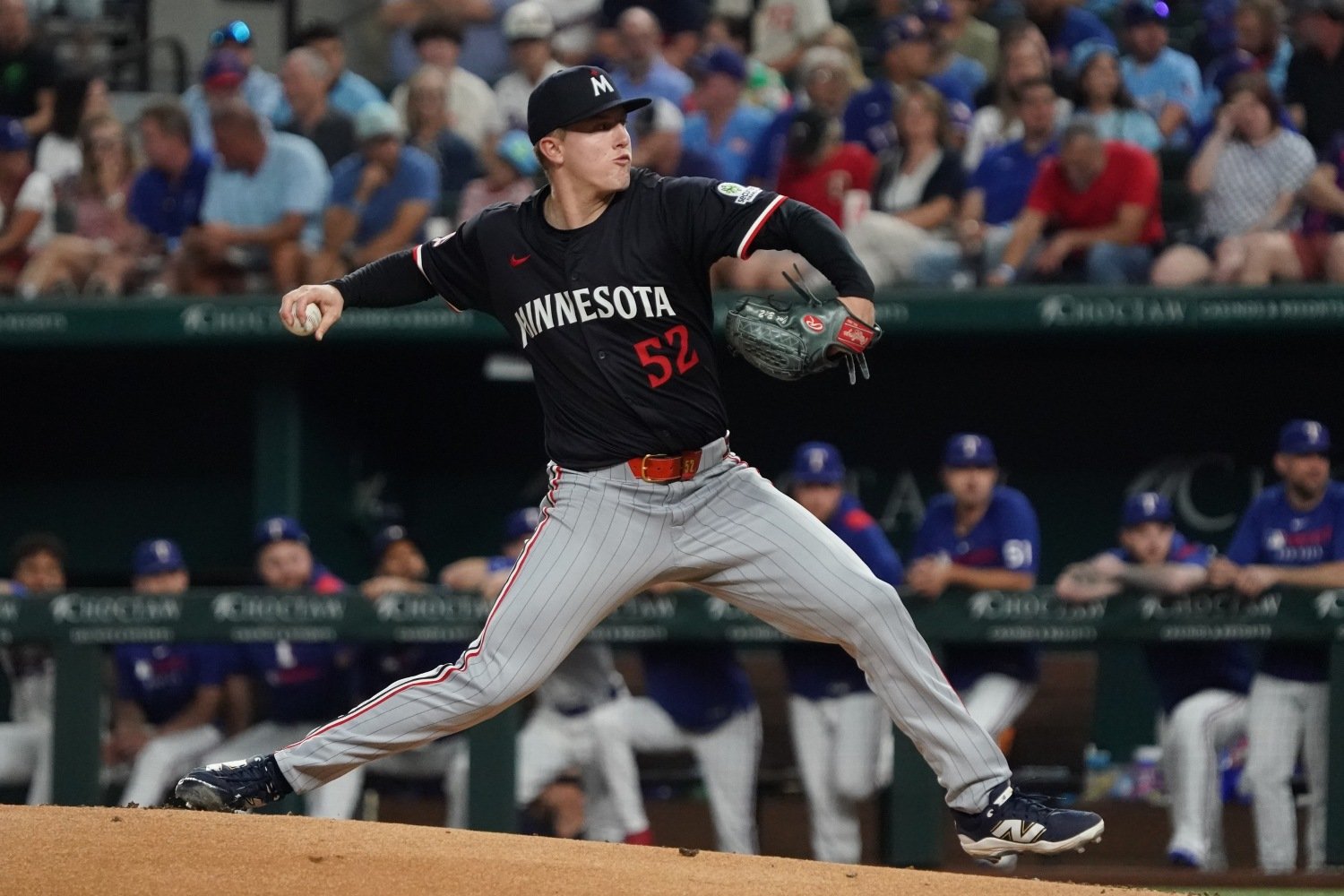 A baseball game broke out as the Twins headed to Arlington for the penultimate series of the year. With just six games remaining, the Twins sought to gain any remaining perspective they can on the late-season callups, potential future bullpen stalwarts, and the Byron Buxton 30-25 watch continued. The Rangers attempted to stop a seven-game skid. The game itself? It had some speed, some shoddy defense, and some good pitching. In fact, it was a downright fun one. Box Score Zebby Matthews: 7 IP, 4 H, 1 ER, 0 BB, 6 K Home Runs: None by the Twins Top 3 WPA: Matthews (.283), Christian Vázquez (.150), Kody Clemens (.125) Win Probability Chart (via FanGraphs) The Pitchers Zebby Matthews took the mound for the Twins, desperate to end the season on a high note. He has struggled with consistency throughout the year, reinforcing that he has good stuff, but that it doesn’t get good results. He has struggled mightily with control, leaving too many pitches over the fat part of the plate. This has made him prone to allowing big innings, and generally, he has had a tough time getting the third out of innings. He could be a candidate for a bullpen role next season, unless he can show the ability to locate the way he needs to. How did he do tonight? Well, he gave up a leadoff homer to Joc Pederson, but after that, he settled in to pitch a great game. Matthews allowed just three hits the rest of the night. The Rangers sent lefty Patrick Corbin to the mound. He has had a bit of a late-career resurgence, as 2025 has been mediocre—as opposed to downright bad. He sported an ERA north of 5.00 in each of the past four seasons, but brought a 4.33 mark into tonight’s game. He gets good results with his fastball, gets decent chase and some swinging strikes, but his secondary offerings don’t get consistent results. Surprisingly for this Twins team, they knocked him out in the fourth inning after throwing just 65 pitches. He allowed six baserunners and gave up two runs in that stretch. Themes of the Game Return of the Catchers Today’s game featured the return of both starting catchers from the injured list. Christian Vázquez missed 43 games, and has been out since August 5 with an elbow infection that traveled to his shoulder and became a serious threat to his overall health. Ryan Jeffers had been out with a concussion suffered on September 4th. It’s great to see them both healthy and back in action. The duo celebrated their return by immediately impacting the game. Scrappy Play Continues In the second, Luke Keaschall stole second. In the third, Kody Clemens hit a hustle double, Byron Buxton beat out what would have been a grounder into a double play, then advanced two bases on a deflected liner to short hit by Austin Martin, who immediately stole second. In the same inning, Keaschall attempted a bunt twice. James Outman, in the sixth inning, scored from second on a bloop single that barely left the infield. Vázquez stole his first base of the season in the eighth, and let me tell you, he’s not a fast runner. Not to be outdone, Jeffers attempted his first steal of the year in the ninth, but was thrown out on a close play. Also in the ninth, Ryan Fitzgerald stole third, becoming the 17th different player stealing a base for the Twins this season. Per Cory Provus, that's one off the team record. Despite not running much until after the deadline, the Twins have now stolen their most bases since 2012. Since the deadline, the Twins have stolen the second most in baseball behind the Yankees. Struggles With Runners in Scoring Position In the sixth inning, the Twins loaded the bases with nobody out. The run expectancy in that situation is 2.7 runs. So what happened? Well, Buxton struck out, Austin Martin grounded out (Brooks Lee scored on the play), and Jeffers grounded out as well, with a solitary run crossing the plate in the inning. This result has been emblematic of the Twins’ struggles with the bases loaded this season. The problem goes a bit deeper, in fact, as they are hitting just .242 with runners in scoring position, 25th in baseball. In today’s game, they were just 3-19 in this situation. Luckily, they did string enough together to get a few runs on the board. Game Notes Somehow, a 4-1 game went over three hours. That's a pretty rare event in the pitch clock era -- especially when the Yankees involved. The Twins played spoiler for the Rangers, officially eliminating them from postseason contention Keaschall left the game with a left thumb injury, suffered when sliding hard head-first into second on the stolen base. He will receive an X-ray after the game. Hopefully it’s nothing serious, but it wouldn't be a surprise if this marks the end of his impressive rookie campaign. Vázquez also briefly looked injured, after getting hit by a pitch, but he shook it off and remained in the game. What’s Next? The Twins play the middle game of their set against the Rangers, and it should be a fun matchup. Taj Bradley faces off against Jacob deGrom. First pitch is at 7:05 PM CT. Postgame Interviews Bullpen Usage
 -
Image courtesy of © Raymond Carlin III-Imagn Images A baseball game broke out as the Twins headed to Arlington for the penultimate series of the year. With just six games remaining, the Twins sought to gain any remaining perspective they can on the late-season callups, potential future bullpen stalwarts, and the Byron Buxton 30-25 watch continued. The Rangers attempted to stop a seven-game skid. The game itself? It had some speed, some shoddy defense, and some good pitching. In fact, it was a downright fun one. Box Score Zebby Matthews: 7 IP, 4 H, 1 ER, 0 BB, 6 K Home Runs: None by the Twins Top 3 WPA: Matthews (.283), Christian Vázquez (.150), Kody Clemens (.125) Win Probability Chart (via FanGraphs) The Pitchers Zebby Matthews took the mound for the Twins, desperate to end the season on a high note. He has struggled with consistency throughout the year, reinforcing that he has good stuff, but that it doesn’t get good results. He has struggled mightily with control, leaving too many pitches over the fat part of the plate. This has made him prone to allowing big innings, and generally, he has had a tough time getting the third out of innings. He could be a candidate for a bullpen role next season, unless he can show the ability to locate the way he needs to. How did he do tonight? Well, he gave up a leadoff homer to Joc Pederson, but after that, he settled in to pitch a great game. Matthews allowed just three hits the rest of the night. The Rangers sent lefty Patrick Corbin to the mound. He has had a bit of a late-career resurgence, as 2025 has been mediocre—as opposed to downright bad. He sported an ERA north of 5.00 in each of the past four seasons, but brought a 4.33 mark into tonight’s game. He gets good results with his fastball, gets decent chase and some swinging strikes, but his secondary offerings don’t get consistent results. Surprisingly for this Twins team, they knocked him out in the fourth inning after throwing just 65 pitches. He allowed six baserunners and gave up two runs in that stretch. Themes of the Game Return of the Catchers Today’s game featured the return of both starting catchers from the injured list. Christian Vázquez missed 43 games, and has been out since August 5 with an elbow infection that traveled to his shoulder and became a serious threat to his overall health. Ryan Jeffers had been out with a concussion suffered on September 4th. It’s great to see them both healthy and back in action. The duo celebrated their return by immediately impacting the game. Scrappy Play Continues In the second, Luke Keaschall stole second. In the third, Kody Clemens hit a hustle double, Byron Buxton beat out what would have been a grounder into a double play, then advanced two bases on a deflected liner to short hit by Austin Martin, who immediately stole second. In the same inning, Keaschall attempted a bunt twice. James Outman, in the sixth inning, scored from second on a bloop single that barely left the infield. Vázquez stole his first base of the season in the eighth, and let me tell you, he’s not a fast runner. Not to be outdone, Jeffers attempted his first steal of the year in the ninth, but was thrown out on a close play. Also in the ninth, Ryan Fitzgerald stole third, becoming the 17th different player stealing a base for the Twins this season. Per Cory Provus, that's one off the team record. Despite not running much until after the deadline, the Twins have now stolen their most bases since 2012. Since the deadline, the Twins have stolen the second most in baseball behind the Yankees. Struggles With Runners in Scoring Position In the sixth inning, the Twins loaded the bases with nobody out. The run expectancy in that situation is 2.7 runs. So what happened? Well, Buxton struck out, Austin Martin grounded out (Brooks Lee scored on the play), and Jeffers grounded out as well, with a solitary run crossing the plate in the inning. This result has been emblematic of the Twins’ struggles with the bases loaded this season. The problem goes a bit deeper, in fact, as they are hitting just .242 with runners in scoring position, 25th in baseball. In today’s game, they were just 3-19 in this situation. Luckily, they did string enough together to get a few runs on the board. Game Notes Somehow, a 4-1 game went over three hours. That's a pretty rare event in the pitch clock era -- especially when the Yankees involved. The Twins played spoiler for the Rangers, officially eliminating them from postseason contention Keaschall left the game with a left thumb injury, suffered when sliding hard head-first into second on the stolen base. He will receive an X-ray after the game. Hopefully it’s nothing serious, but it wouldn't be a surprise if this marks the end of his impressive rookie campaign. Vázquez also briefly looked injured, after getting hit by a pitch, but he shook it off and remained in the game. What’s Next? The Twins play the middle game of their set against the Rangers, and it should be a fun matchup. Taj Bradley faces off against Jacob deGrom. First pitch is at 7:05 PM CT. Postgame Interviews Bullpen Usage View full article
-
Pablo Lopez Is Injured. Was It Worth Bringing Him Back This Season?
Eric Blonigen posted an article in Twins
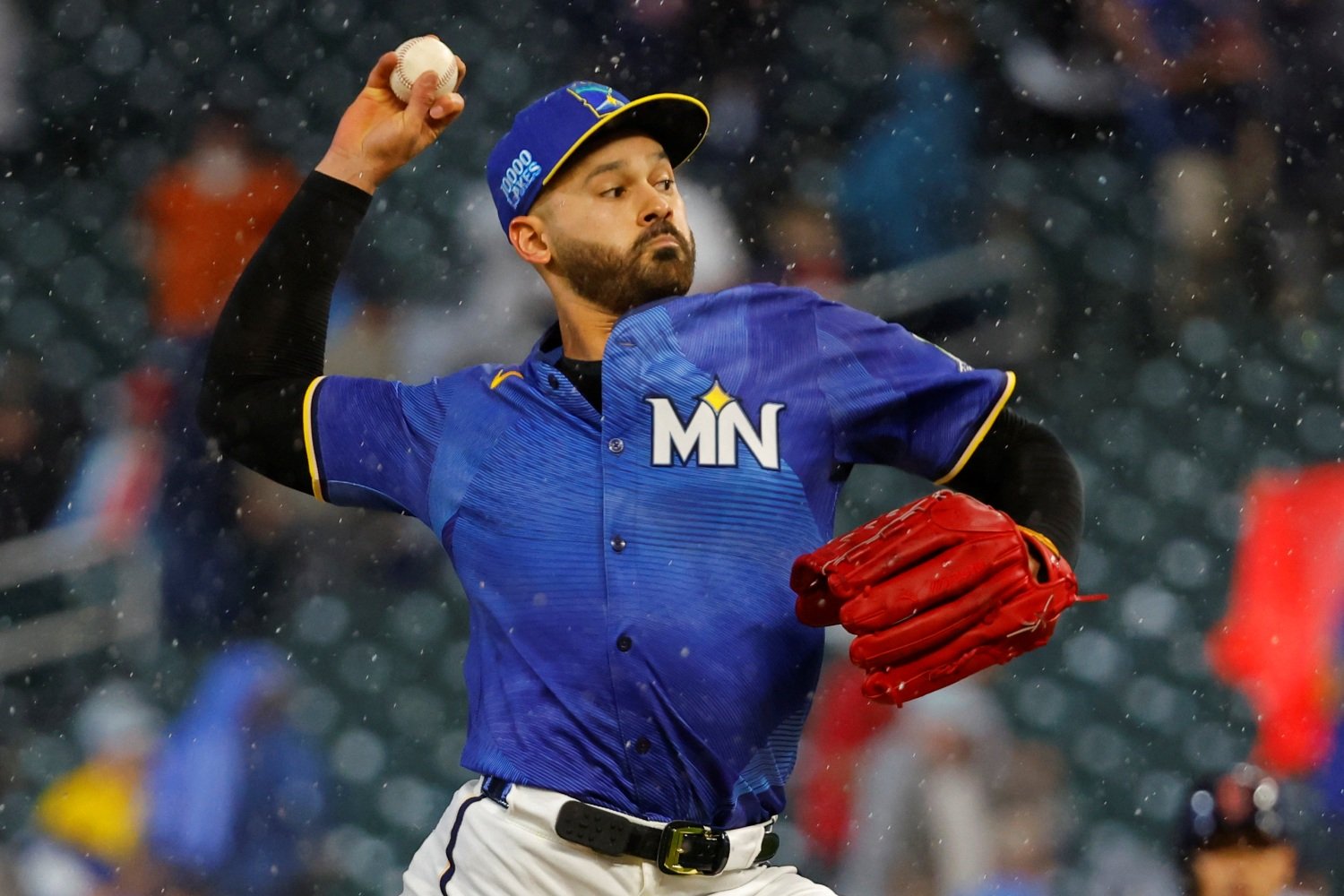 Under the Pohlads' penurious ownership, the Minnesota Twins have frequently made decisions on the business side that are pennywise but pound-foolish. In recent months, this has extended to the on-field product. The latest example of this is the chain of events that led to staff ace Pablo López injuring himself in a game that didn't matter. In his June 3 start, López tore his teres major while pitching in a minor-league ballpark with a mound that’s (shall we say) suboptimal. He didn’t return until September 5. That’s 13 and a half weeks on the shelf. By the time he was ready to pitch in live games, the season had unofficially been over for six weeks. Many reasonable organizations would look at the factors at play and shut their most expensive player, their ace, and their leader down for the season. Giving him a full offseason to prepare would have been the prudent move. The Twins, however, brought him back, risks be damned. To be fair, López wanted to do that, too. Still, there it was: in López’s third start back from the IL, he took a comebacker off his shin, then sprinted and dove to gobble up the deflected ball to flip it to first for the out. He stayed in for six more batters, but his velocity trended down across the board. He only threw two more fastballs the rest of the night. After the game, he talked about mentally comparing how his arm feels now to how it felt when he blew it out in 2013. This is potentially devastating, and necessitates the question: why was he brought back this season? After all, these games don’t matter. The season is lost. What is to be gained by López accumulating 15-20 more innings in September? What advantage is there to not giving those innings to someone who could be on the bubble—in danger of being left off the 40-man roster this offseason? Someone like, say, Christian MacLeod could have filled that gap. Sure, Mick Abel has been shelled so far, but so what? Why not give him five more starts down the stretch? Again, it doesn't really matter who pitches those frames. Abel came back to replace López, anyway, so clearly, that was at least an option. Again, this didn't need to be sold to López. In fact, they'd have had to do a bit of selling to talk him out of taking the mound, once he was healthy. He wanted to take the mound, to go into the offseason on a good note and to be there for his teammates. Still, it's hard not to think that the team accommodated his wishes in part with an eye toward boosting his trade value this winter. If not for being injured at the time, he might well have been traded at the deadline, as the front office tore the team down to the studs. Since the fire sale, rumors and expectations have persisted that he will be dealt in the offseason, as the Pohlads further constrict the front office’s ability to field a competitive major-league roster. Clubs who may be interested in acquiring him probably wanted to see him down the stretch. Thus, a bet was made—and, as happens so often with the Twins, the dice came up snake eyes. Now, imaging came back clean between doubleheader games on Saturday. Despite that, López's season is over. He didn't necessarily show off that he's fully back, and he ended the season injured, anyway. So, what was accomplished? And how much worse could this have been? This worst-case scenario would have had serious implications for the Twins. It would, for starters, have significantly limited Derek Falvey and Jeremy Zoll’s ability to build a roster that‘s even somewhat complete in 2026. Additionally, it would have prevented the front office from trading López during the offseason, something that otherwise seems likely. Finally, it would have removed one of the final remaining veteran presences from the clubhouse, which would undoubtedly have had a knock-on effect in a season where the roster is set to get younger and less experienced. These are all bad things. And, none of those things even factor in the human element of a guy who struggled for months to return from injury hitting the shelf once again, to begin his rehab journey anew. Look, this is an uncharitable assessment. López all but insisted on returning this season. It could be that he wanted to prove to himself that he is back. Maybe he wanted to set an example for the younger players on the roster. López, like Byron Buxton, is a player others should emulate, look up to, and learn from. Hopefully, he's one fans appreciate—for his preparation, his dedication to his craft, and his ability to give his all in a meaningless game in a lost season. Like Buxton, López is a player the Twins (the corporation) don’t deserve at this point. Hopefully, the front office learned a valuable lesson with this near miss.
 -
Image courtesy of © Bruce Kluckhohn-Imagn Images Under the Pohlads' penurious ownership, the Minnesota Twins have frequently made decisions on the business side that are pennywise but pound-foolish. In recent months, this has extended to the on-field product. The latest example of this is the chain of events that led to staff ace Pablo López injuring himself in a game that didn't matter. In his June 3 start, López tore his teres major while pitching in a minor-league ballpark with a mound that’s (shall we say) suboptimal. He didn’t return until September 5. That’s 13 and a half weeks on the shelf. By the time he was ready to pitch in live games, the season had unofficially been over for six weeks. Many reasonable organizations would look at the factors at play and shut their most expensive player, their ace, and their leader down for the season. Giving him a full offseason to prepare would have been the prudent move. The Twins, however, brought him back, risks be damned. To be fair, López wanted to do that, too. Still, there it was: in López’s third start back from the IL, he took a comebacker off his shin, then sprinted and dove to gobble up the deflected ball to flip it to first for the out. He stayed in for six more batters, but his velocity trended down across the board. He only threw two more fastballs the rest of the night. After the game, he talked about mentally comparing how his arm feels now to how it felt when he blew it out in 2013. This is potentially devastating, and necessitates the question: why was he brought back this season? After all, these games don’t matter. The season is lost. What is to be gained by López accumulating 15-20 more innings in September? What advantage is there to not giving those innings to someone who could be on the bubble—in danger of being left off the 40-man roster this offseason? Someone like, say, Christian MacLeod could have filled that gap. Sure, Mick Abel has been shelled so far, but so what? Why not give him five more starts down the stretch? Again, it doesn't really matter who pitches those frames. Abel came back to replace López, anyway, so clearly, that was at least an option. Again, this didn't need to be sold to López. In fact, they'd have had to do a bit of selling to talk him out of taking the mound, once he was healthy. He wanted to take the mound, to go into the offseason on a good note and to be there for his teammates. Still, it's hard not to think that the team accommodated his wishes in part with an eye toward boosting his trade value this winter. If not for being injured at the time, he might well have been traded at the deadline, as the front office tore the team down to the studs. Since the fire sale, rumors and expectations have persisted that he will be dealt in the offseason, as the Pohlads further constrict the front office’s ability to field a competitive major-league roster. Clubs who may be interested in acquiring him probably wanted to see him down the stretch. Thus, a bet was made—and, as happens so often with the Twins, the dice came up snake eyes. Now, imaging came back clean between doubleheader games on Saturday. Despite that, López's season is over. He didn't necessarily show off that he's fully back, and he ended the season injured, anyway. So, what was accomplished? And how much worse could this have been? This worst-case scenario would have had serious implications for the Twins. It would, for starters, have significantly limited Derek Falvey and Jeremy Zoll’s ability to build a roster that‘s even somewhat complete in 2026. Additionally, it would have prevented the front office from trading López during the offseason, something that otherwise seems likely. Finally, it would have removed one of the final remaining veteran presences from the clubhouse, which would undoubtedly have had a knock-on effect in a season where the roster is set to get younger and less experienced. These are all bad things. And, none of those things even factor in the human element of a guy who struggled for months to return from injury hitting the shelf once again, to begin his rehab journey anew. Look, this is an uncharitable assessment. López all but insisted on returning this season. It could be that he wanted to prove to himself that he is back. Maybe he wanted to set an example for the younger players on the roster. López, like Byron Buxton, is a player others should emulate, look up to, and learn from. Hopefully, he's one fans appreciate—for his preparation, his dedication to his craft, and his ability to give his all in a meaningless game in a lost season. Like Buxton, López is a player the Twins (the corporation) don’t deserve at this point. Hopefully, the front office learned a valuable lesson with this near miss. View full article
-
Oh, he has all the leverage in the world. He’s not going anywhere though unless he decides he wants out. With Buck’s no-trade clause, affinity for MN, and loyalty (remember, he took the new deadline teammates out to dinner to smooth tensions, and has spoken kind words towards the Pohlad family) he would need to be the one to decide to go. Personally, I don’t see it happening.
- 46 replies
-
- 2
-
-
- byron buxton
- joe ryan
- (and 1 more)
-
Yeah, he has looked pretty good to the eye test, and with adding speed, is becoming a more complete player. Now, if he can get back towards having 30 homer power too, then look out.
- 46 replies
-
- 2
-
-
- byron buxton
- joe ryan
- (and 1 more)
-
100%. Hitting for consistent power is great, and wins a ton of ballgames. If that’s not the team you have, though, you gotta do something to give the team a chance of scoring runs. Ideally, they would have a roster that can do both.
- 46 replies
-
- 4
-
-
- byron buxton
- joe ryan
- (and 1 more)
-
The absolutely should. What a message that would send to fans. They will need to do something, for sure, to regain fans’ trust.
- 46 replies
-
- 1
-
-
- byron buxton
- joe ryan
- (and 1 more)
-
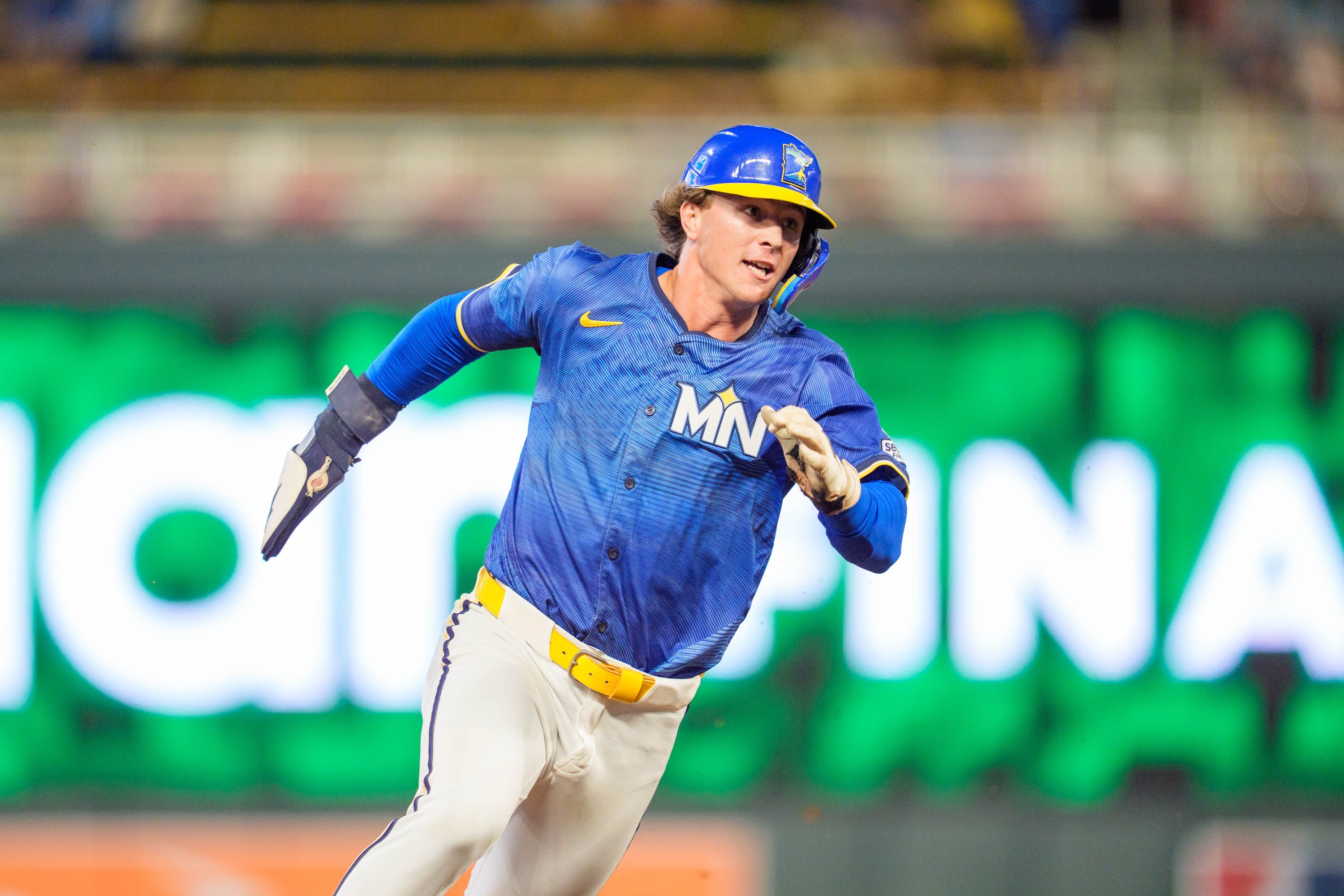 Okay. Before I get pilloried in the comments section, a note: 2025 has been an incredibly disappointing season, with a second straight second-half collapse, a wildly underperforming lineup, a bad record, and calls for everyone to be fired — from the owners, to the front office, to the manager and coaching staff, to the players themselves. Many of the games haven’t been fun to watch. It’s been tough remaining engaged at times. Despite all that, there have been a handful of things worth celebrating throughout the 2025 season, and many of them hint at a brighter tomorrow. Byron Buxton’s Health and Production Did you really thing I would start anywhere else? Nah. Buxton has had the season true believers always knew he was capable of. Not only has he stayed relatively healthy despite some injury scares, the games he has missed have been to normal baseball injuries — a concussion, bruised rib cartilage, soreness — rather than the sort of snakebit, multi-month soft tissue or knee issues that have cost him nearly half his playing career so far. On top of the healthy year, he crossed 100 games for the second straight season, and is having a career year offensively, even as his defense slips a bit with age. He still has a real chance at a 30-30 season, and a 30-25 season is all but a lock. The last time a member of the Twins put up even a 30-20 season was Kirby Puckett in 1986. That’s, um, good company. The best part? There’s no reason to think Buck can’t be counted on to be a star again next season. Luke Keaschall Showed He Belongs Luke Keaschall has taken a similar path as many other Twins top prospects — by which, I mean, he got almost immediately injured after being called up. Despite the broken forearm in within his first week in the bigs, Keaschall has done a little bit of everything: he’s popped a handful of homers, stolen a bunch of bases, shown the sort of grit and hustle that can jumpstart an offense and undoubtedly sets an example for his peers. In fact, Keaschall had one of the best offensive starts to his career in Twins history. With his short swing, he is capable of overcoming his limited power and lack of bat speed. His pitch selection and patience at the plate elevates his on base rate, and one can hope that being a full year removed from Tommy John surgery on his throwing arm will help him cement himself as the Twins everyday second baseman in 2026 and beyond. The Twins Learned To Get Frisky Dating back to the Bomba Squad, the Twins have embodied a slow, station-To-station, plodding style on the bases. That works well when you hit home runs in bunches, and less well when the power disappears. Luckily, since the trade deadline fire sale, the Twins have been running at will. Such speedsters as Matt Wallner, Trevor Larnach, and Royce Lewis have been stealing bases at an exciting and unexpected clip. Dating back to August 1, the Twins are second in baseball in bags swiped. Since September 1, they are first, and it’s not close. There’s no reason for this style of play to be discontinued after the season, particularly with James Outman, Alan Roden, and likely Austin Martin part of the 2026 plans. Joe Ryan Elevated to Near-Ace Status Joe Ryan, first-time All Star, was having a Cy Young type season until very recently. He didn’t had a real chance at the award itself, because, you know, Tarik Skubal and Garret Crochet exist in the same timeline, but he has still been incredible. Now, over the past few starts, he has suffered from an illness, and that has impacted his results significantly. But, looking at his season through August 15, he had a 2.72 ERA, was walking about one guy a game, was striking out nearly 10 per nine innings, and was even limiting the home runs that have plagued him throughout his career. If the Twins don’t trade him in the offseason, he remains a pitcher to front a quality rotation. The Farm System Got Deeper Were the moves at the deadline popular. Certainly not, and I think you would be hard-pressed to find many fans that would disagree. What they did, though, was deepen an already strong farm system. Adding Eduardo Tait and Enrique Jimenez bolstered the catching future. Mick Abel should be a legit major leaguer, brief Twins debut notwithstanding. Kendry Rojas has real potential as a lefty starter, and has a real chance to stick as a starter. Even Ryan Gallagher and Hendry Mendez, not quite lauded prospects, slot in among the Twins top-25, per MLB.com. Depth Pieces Made Their Cases Taj Bradley, former Rays top prospect, has frontline starter upside, with relief ace a fallback plan. He’s reading scouting reports for the first time in his career, and his heater is touching 99 now. With a little progress in pitch sequencing and mix, the future is bright. Austin Martin has been putting up roughly a .400 OBP while hitting nearly .300 over his 26 games so far this season. While the power may never develop at this stage of his game, a guy that can put up an OPS close to .800 with speed on the bases has a future, and at the league minimum. Similar to Outman, that has value and makes roster construction a bit easier next year. So, that’s six bright spots in an otherwise gloomy season. Did I miss anything? And, are you more hopeful for 2026 after thinking about these things?
- 46 comments
-
- 11
-
-
- byron buxton
- joe ryan
- (and 1 more)
-
Okay. Before I get pilloried in the comments section, a note: 2025 has been an incredibly disappointing season, with a second straight second-half collapse, a wildly underperforming lineup, a bad record, and calls for everyone to be fired — from the owners, to the front office, to the manager and coaching staff, to the players themselves. Many of the games haven’t been fun to watch. It’s been tough remaining engaged at times. Despite all that, there have been a handful of things worth celebrating throughout the 2025 season, and many of them hint at a brighter tomorrow. Byron Buxton’s Health and Production Did you really thing I would start anywhere else? Nah. Buxton has had the season true believers always knew he was capable of. Not only has he stayed relatively healthy despite some injury scares, the games he has missed have been to normal baseball injuries — a concussion, bruised rib cartilage, soreness — rather than the sort of snakebit, multi-month soft tissue or knee issues that have cost him nearly half his playing career so far. On top of the healthy year, he crossed 100 games for the second straight season, and is having a career year offensively, even as his defense slips a bit with age. He still has a real chance at a 30-30 season, and a 30-25 season is all but a lock. The last time a member of the Twins put up even a 30-20 season was Kirby Puckett in 1986. That’s, um, good company. The best part? There’s no reason to think Buck can’t be counted on to be a star again next season. Luke Keaschall Showed He Belongs Luke Keaschall has taken a similar path as many other Twins top prospects — by which, I mean, he got almost immediately injured after being called up. Despite the broken forearm in within his first week in the bigs, Keaschall has done a little bit of everything: he’s popped a handful of homers, stolen a bunch of bases, shown the sort of grit and hustle that can jumpstart an offense and undoubtedly sets an example for his peers. In fact, Keaschall had one of the best offensive starts to his career in Twins history. With his short swing, he is capable of overcoming his limited power and lack of bat speed. His pitch selection and patience at the plate elevates his on base rate, and one can hope that being a full year removed from Tommy John surgery on his throwing arm will help him cement himself as the Twins everyday second baseman in 2026 and beyond. The Twins Learned To Get Frisky Dating back to the Bomba Squad, the Twins have embodied a slow, station-To-station, plodding style on the bases. That works well when you hit home runs in bunches, and less well when the power disappears. Luckily, since the trade deadline fire sale, the Twins have been running at will. Such speedsters as Matt Wallner, Trevor Larnach, and Royce Lewis have been stealing bases at an exciting and unexpected clip. Dating back to August 1, the Twins are second in baseball in bags swiped. Since September 1, they are first, and it’s not close. There’s no reason for this style of play to be discontinued after the season, particularly with James Outman, Alan Roden, and likely Austin Martin part of the 2026 plans. Joe Ryan Elevated to Near-Ace Status Joe Ryan, first-time All Star, was having a Cy Young type season until very recently. He didn’t had a real chance at the award itself, because, you know, Tarik Skubal and Garret Crochet exist in the same timeline, but he has still been incredible. Now, over the past few starts, he has suffered from an illness, and that has impacted his results significantly. But, looking at his season through August 15, he had a 2.72 ERA, was walking about one guy a game, was striking out nearly 10 per nine innings, and was even limiting the home runs that have plagued him throughout his career. If the Twins don’t trade him in the offseason, he remains a pitcher to front a quality rotation. The Farm System Got Deeper Were the moves at the deadline popular. Certainly not, and I think you would be hard-pressed to find many fans that would disagree. What they did, though, was deepen an already strong farm system. Adding Eduardo Tait and Enrique Jimenez bolstered the catching future. Mick Abel should be a legit major leaguer, brief Twins debut notwithstanding. Kendry Rojas has real potential as a lefty starter, and has a real chance to stick as a starter. Even Ryan Gallagher and Hendry Mendez, not quite lauded prospects, slot in among the Twins top-25, per MLB.com. Depth Pieces Made Their Cases Taj Bradley, former Rays top prospect, has frontline starter upside, with relief ace a fallback plan. He’s reading scouting reports for the first time in his career, and his heater is touching 99 now. With a little progress in pitch sequencing and mix, the future is bright. Austin Martin has been putting up roughly a .400 OBP while hitting nearly .300 over his 26 games so far this season. While the power may never develop at this stage of his game, a guy that can put up an OPS close to .800 with speed on the bases has a future, and at the league minimum. Similar to Outman, that has value and makes roster construction a bit easier next year. So, that’s six bright spots in an otherwise gloomy season. Did I miss anything? And, are you more hopeful for 2026 after thinking about these things? View full article
-
Image courtesy of © Matt Krohn-Imagn Images Box Score SP: Bailey Ober: 5 IP, 8 H, 6 ER, 2 BB, 1 K Home Runs: None, by either team Bottom 3 WPA: Bailey Ober (-.240), Mickey Gasper (-.090), Austin Martin (-.80) Win Probability Chart (via FanGraphs) The Pitchers Bailey Ober took the mound for the Twins. He has been slightly more effective since returning from his IL stint for a hip issue, but he velo is still noticeably down. From a pure results standpoint, he has looked more like a fringy, backend starter than the playoff-caliber guy we have seen over the past few seasons. His last start was good, getting 17 whiffs, and he looked to build on that today. However, if we are being honest with ourselves: like Joe Ryan, he would probably benefit from being shut down to focus on recovery and building for next season. The only explanation I can come up with is that the Twins feel it’s important for them to know whether they can pencil him into the third spot in the rotation (or first or second, depending on offseason trades) or not, so he continues to go every fifth day. The Guardians sent lefty Logan Allen to the mound. Even by lefty standards, he’s missing a few ticks on his pitches compared to average. On the positive, he also doesn’t strike anyone out, isn’t crafty, and walks too many. Surely the Twins could beat up on a pitcher like that, right. Right?!? Well, no. He’s exactly the sort of soft-tossing lefty that so often gives the Twins fits, and he went eight strong innings. By the way, that’s the deepest Allen has ever gone in his career. Themes of the Game Guardians? More Like Piranhas. Is it possible that Guardians are really just a not-quite-right portmanteau of the Gardy-era piranhas? In the fifth inning, they hit six singles, a double, stole a base, and had a sac bunt before Ober finally escaped the inning. The good news? He allowed just six runs in the inning. Of course, the Guardians hit seven of their nine hits all clustered together to maximize the runs. The Twins Continue To Not Hit The Guardians have 21 consecutive scoreless innings against the Twins. through the eighth inning. The Twins had just five baserunners all game, and the first three were erased — two by double play, and the other when Carson McCusker attempted to steal second. Byron Buxton and Royce Lewis were the only other baserunners Allen allowed, and both were stranded, not making it past second. Fans have seen brutal stretches like this before, and it’s frustrating to watch every time it happens. Mick Abel Flashes, But Can’t Find Consistency Mick Abel, recalled Saturday to take Pablo Lopez’ spot on the roster, came in in relief of Ober. Many fans have been down on the return for Jhoan Duran based on his first two appearances, but tonight, he turned a corner - for a while. Abel sat 98 on his fastball and hit 99 multiple times. His stuff looked sharp, Guardians couldn’t square up against him, and he was hitting his spots for the most part. In fact, he was perfect through his first two innings. He lost his control with two outs in his third inning of work, walking three straight hitters before giving up a two-run single to Steven Kwan. He settled back down in his fourth inning of work and ended with six strikeouts in four innings. If he can limit the innings where he can’t throw strikes, he can be a legitimate weapon, perhaps even a frontline starter. If not, he’s likely destined for the bullpen. Game Notes Tomorrow is a new day. That’s about the most relevant thing to discuss. What’s Next? The Twins play the final game of their four-game series against the Guardians and conclude their season series. They hope to avoid the four-game sweep. Simeon Woods Richardson faces off against yet another lefty — Joey Cantillo. First pitch is at 1:10 PM. Postgame Interviews Stay tuned! Bullpen Usage View full article
-
Game 2: Guardians 8, Twins 0 - Shut Out For The Second Time Today
Eric Blonigen posted an article in Twins
 Box Score SP: Bailey Ober: 5 IP, 8 H, 6 ER, 2 BB, 1 K Home Runs: None, by either team Bottom 3 WPA: Bailey Ober (-.240), Mickey Gasper (-.090), Austin Martin (-.80) Win Probability Chart (via FanGraphs) The Pitchers Bailey Ober took the mound for the Twins. He has been slightly more effective since returning from his IL stint for a hip issue, but he velo is still noticeably down. From a pure results standpoint, he has looked more like a fringy, backend starter than the playoff-caliber guy we have seen over the past few seasons. His last start was good, getting 17 whiffs, and he looked to build on that today. However, if we are being honest with ourselves: like Joe Ryan, he would probably benefit from being shut down to focus on recovery and building for next season. The only explanation I can come up with is that the Twins feel it’s important for them to know whether they can pencil him into the third spot in the rotation (or first or second, depending on offseason trades) or not, so he continues to go every fifth day. The Guardians sent lefty Logan Allen to the mound. Even by lefty standards, he’s missing a few ticks on his pitches compared to average. On the positive, he also doesn’t strike anyone out, isn’t crafty, and walks too many. Surely the Twins could beat up on a pitcher like that, right. Right?!? Well, no. He’s exactly the sort of soft-tossing lefty that so often gives the Twins fits, and he went eight strong innings. By the way, that’s the deepest Allen has ever gone in his career. Themes of the Game Guardians? More Like Piranhas. Is it possible that Guardians are really just a not-quite-right portmanteau of the Gardy-era piranhas? In the fifth inning, they hit six singles, a double, stole a base, and had a sac bunt before Ober finally escaped the inning. The good news? He allowed just six runs in the inning. Of course, the Guardians hit seven of their nine hits all clustered together to maximize the runs. The Twins Continue To Not Hit The Guardians have 21 consecutive scoreless innings against the Twins. through the eighth inning. The Twins had just five baserunners all game, and the first three were erased — two by double play, and the other when Carson McCusker attempted to steal second. Byron Buxton and Royce Lewis were the only other baserunners Allen allowed, and both were stranded, not making it past second. Fans have seen brutal stretches like this before, and it’s frustrating to watch every time it happens. Mick Abel Flashes, But Can’t Find Consistency Mick Abel, recalled Saturday to take Pablo Lopez’ spot on the roster, came in in relief of Ober. Many fans have been down on the return for Jhoan Duran based on his first two appearances, but tonight, he turned a corner - for a while. Abel sat 98 on his fastball and hit 99 multiple times. His stuff looked sharp, Guardians couldn’t square up against him, and he was hitting his spots for the most part. In fact, he was perfect through his first two innings. He lost his control with two outs in his third inning of work, walking three straight hitters before giving up a two-run single to Steven Kwan. He settled back down in his fourth inning of work and ended with six strikeouts in four innings. If he can limit the innings where he can’t throw strikes, he can be a legitimate weapon, perhaps even a frontline starter. If not, he’s likely destined for the bullpen. Game Notes Tomorrow is a new day. That’s about the most relevant thing to discuss. What’s Next? The Twins play the final game of their four-game series against the Guardians and conclude their season series. They hope to avoid the four-game sweep. Simeon Woods Richardson faces off against yet another lefty — Joey Cantillo. First pitch is at 1:10 PM. Postgame Interviews Stay tuned! Bullpen Usage
 -
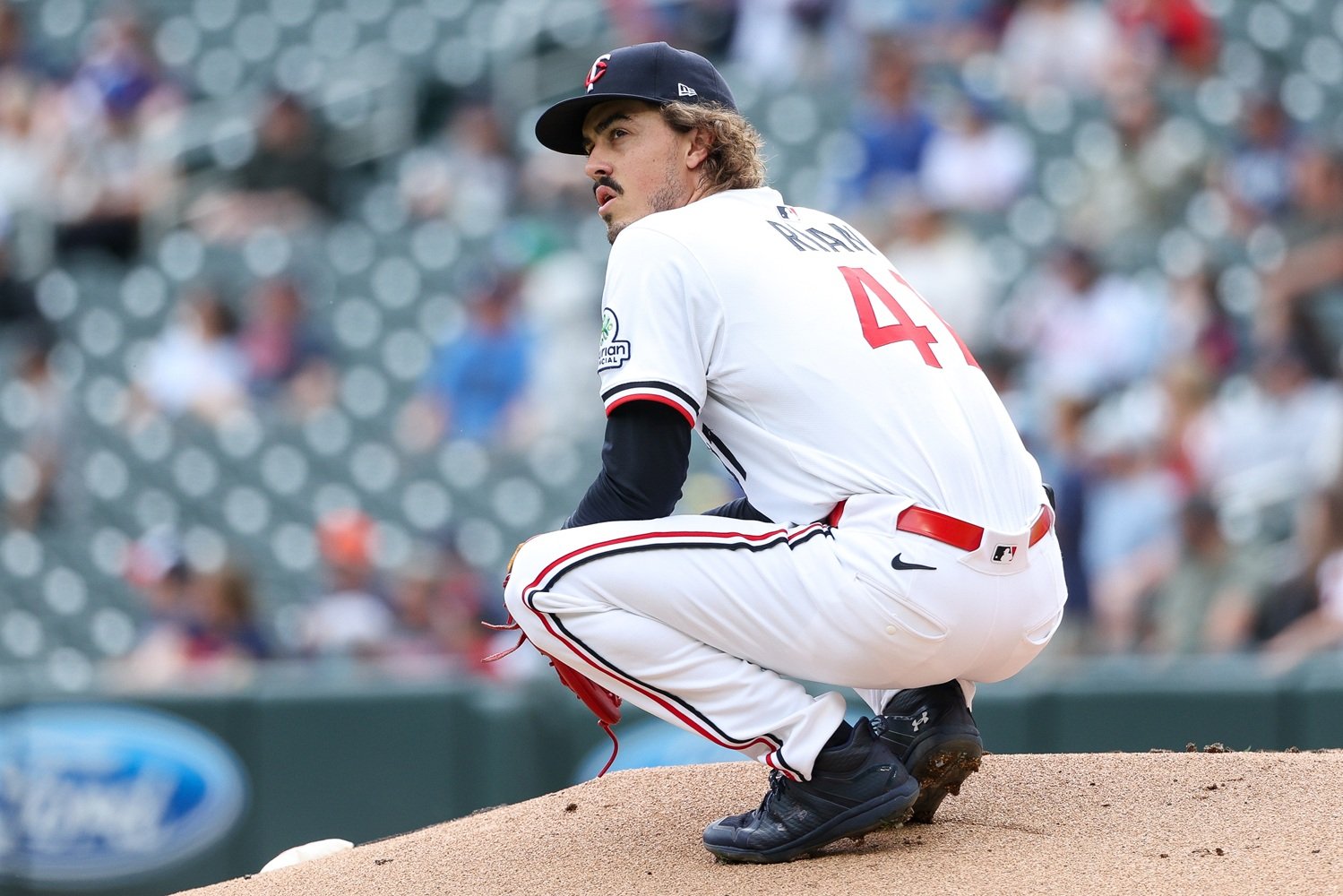 Box Score SP: Joe Ryan: 5 IP, 6 H, 4 ER, 2 BB, 5 K Home Runs: None by the Twins, a bunch by the Guardians Bottom 3 WPA: Joe Ryan (-.232), Trevor Larnach (-.080), Royce Lewis (-.065) Win Probability Chart (via FanGraphs) Look, the Guardians are basically the Yankees at this point — at least when it comes to facing the Twins. Over the past four seasons, the Twins record is 18-37 when facing the Guardians coming into today. That record got worse today. Are you surprised? I’m not. The Pitchers Joe Ryan took the mound and looked to reverse the uncharacteristically shaky stretch of ball. Across his last seven games, he has a 6.15 ERA. After today’s game, it’s clear that something is off. He gave up three home runs in his first 20 pitches and added another in the top of the fifth. This set a season high and was one off his career mark. He also walked a pair, which is unlike him. Ryan was absolute nails for the first 75% of the season, and had even limited damage from homers, something that has plagued him sporadically throughout his career. Since battling an illness a few weeks ago, Ryan has looked like a husk of himself. While he may benefit from being shut down for the last handful of games, I suppose the Twins want to showcase him for offseason suitors. They certainly aren’t doing him or themselves any favors. The Guardians sent Slade Cecconi — trade acquisition, and he of the career 5.14 ERA — to the mound. While this season has gone better for him, he still came into the game with a 4.35 ERA and a worse 4.82 WHIP. He throws six pitches, and only the curve rates well. In fact, he doesn’t do much well aside from limiting walks and going deep in games. You know, he is the sort of guy who would have felt right at home on a Rick Anderson coached and Ron Gardenhire managed pitching staff. Naturally, the Twins did Twins things against him as he somehow looked great, going seven strong, allowing just three baserunners and striking out eight. Themes of the Game You Have to Hit If You Want to Win It turns out, you need to have baserunners if you want to win a ballgame. How’s that for analysis? In this one, the Twins had just two baserunners make it as far as second base. Luke Keaschall actually made it all the way to third but couldn’t take the final 90 feet — you know, the ones that matter most. The Twins had just three hits in this one. Austin Martin had a “double” of his own when the game was already out of hand in the bottom of the ninth, but it likely should have been caught. To be fair, the Twins also took two walks, both by Ryan Fitzgerald who has one of the Twins’ highest OPS over the past month or so. Neither mattered. Thomas Hatch Continues to Make His Case Thomas Hatch probably won’t be an impact guy, but you know what? When you trade all of your good relievers at the deadline, you need some arms. Hatch hasn’t been super reliable, but he has demonstrated an ability to give them length. Today, he went the final four innings, allowing just one run, striking out two, and generally looked pretty good. He also preserved the bullpen, always important when in a doubleheader situation. At this point, with the number of unknowns heading into 2026, he has probably done enough to pencil himself in as a long man for next year. It’s a little telling, however, that this is the second-most noteworthy thing to discuss from this game. Game Notes Jose Ramirez is very good at baseball. In the first inning, he hit a home run that solidified his third 30-30 campaign. Reminder: the Twins have never had a single 30-30 season. Byron Buxton’s plate discipline continues to improve before our very eyes. For the second game in a row, his leadoff plate appearance was a strikeout that wasn’t actually a strikeout. The Twins ended their stolen base streak at seven games. It was, however, their longest streak since 2004. Despite the failure to steal, the Twins have still stolen 20% more bases in September than any other team. Austin Martin continues to look pretty good, and he may have saved his Twins career over the past month and a half. This stretch, and Simeon Woods Richardson’s last start, has made the Jose Berrios trade look better. What’s Next? The Twins play the second half of their doubleheader. Bailey Ober faces off against lefty Logan Allen. First pitch is at 6:10 PM. Stay tuned, ‘cuz it almost has to be a better game than this one. Postgame Interviews Stay tuned! Bullpen Usage
- 16 comments
-
- 1
-
-
- joe ryan
- luke keaschall
- (and 2 more)
-
Image courtesy of © Matt Krohn-Imagn Images Box Score SP: Joe Ryan: 5 IP, 6 H, 4 ER, 2 BB, 5 K Home Runs: None by the Twins, a bunch by the Guardians Bottom 3 WPA: Joe Ryan (-.232), Trevor Larnach (-.080), Royce Lewis (-.065) Win Probability Chart (via FanGraphs) Look, the Guardians are basically the Yankees at this point — at least when it comes to facing the Twins. Over the past four seasons, the Twins record is 18-37 when facing the Guardians coming into today. That record got worse today. Are you surprised? I’m not. The Pitchers Joe Ryan took the mound and looked to reverse the uncharacteristically shaky stretch of ball. Across his last seven games, he has a 6.15 ERA. After today’s game, it’s clear that something is off. He gave up three home runs in his first 20 pitches and added another in the top of the fifth. This set a season high and was one off his career mark. He also walked a pair, which is unlike him. Ryan was absolute nails for the first 75% of the season, and had even limited damage from homers, something that has plagued him sporadically throughout his career. Since battling an illness a few weeks ago, Ryan has looked like a husk of himself. While he may benefit from being shut down for the last handful of games, I suppose the Twins want to showcase him for offseason suitors. They certainly aren’t doing him or themselves any favors. The Guardians sent Slade Cecconi — trade acquisition, and he of the career 5.14 ERA — to the mound. While this season has gone better for him, he still came into the game with a 4.35 ERA and a worse 4.82 WHIP. He throws six pitches, and only the curve rates well. In fact, he doesn’t do much well aside from limiting walks and going deep in games. You know, he is the sort of guy who would have felt right at home on a Rick Anderson coached and Ron Gardenhire managed pitching staff. Naturally, the Twins did Twins things against him as he somehow looked great, going seven strong, allowing just three baserunners and striking out eight. Themes of the Game You Have to Hit If You Want to Win It turns out, you need to have baserunners if you want to win a ballgame. How’s that for analysis? In this one, the Twins had just two baserunners make it as far as second base. Luke Keaschall actually made it all the way to third but couldn’t take the final 90 feet — you know, the ones that matter most. The Twins had just three hits in this one. Austin Martin had a “double” of his own when the game was already out of hand in the bottom of the ninth, but it likely should have been caught. To be fair, the Twins also took two walks, both by Ryan Fitzgerald who has one of the Twins’ highest OPS over the past month or so. Neither mattered. Thomas Hatch Continues to Make His Case Thomas Hatch probably won’t be an impact guy, but you know what? When you trade all of your good relievers at the deadline, you need some arms. Hatch hasn’t been super reliable, but he has demonstrated an ability to give them length. Today, he went the final four innings, allowing just one run, striking out two, and generally looked pretty good. He also preserved the bullpen, always important when in a doubleheader situation. At this point, with the number of unknowns heading into 2026, he has probably done enough to pencil himself in as a long man for next year. It’s a little telling, however, that this is the second-most noteworthy thing to discuss from this game. Game Notes Jose Ramirez is very good at baseball. In the first inning, he hit a home run that solidified his third 30-30 campaign. Reminder: the Twins have never had a single 30-30 season. Byron Buxton’s plate discipline continues to improve before our very eyes. For the second game in a row, his leadoff plate appearance was a strikeout that wasn’t actually a strikeout. The Twins ended their stolen base streak at seven games. It was, however, their longest streak since 2004. Despite the failure to steal, the Twins have still stolen 20% more bases in September than any other team. Austin Martin continues to look pretty good, and he may have saved his Twins career over the past month and a half. This stretch, and Simeon Woods Richardson’s last start, has made the Jose Berrios trade look better. What’s Next? The Twins play the second half of their doubleheader. Bailey Ober faces off against lefty Logan Allen. First pitch is at 6:10 PM. Stay tuned, ‘cuz it almost has to be a better game than this one. Postgame Interviews Stay tuned! Bullpen Usage View full article
-
Image courtesy of © Kiyoshi Mio-Imagn Images In a recent fan survey in The Athletic, more than 5,000 respondents were asked to assign blame for the Twins' collapse in back-to-back seasons. According to readers, the three primary culprits were ownership (78.7% of responses), the front office (11.1%), and the hitters (7.3%). Manager Rocco Baldelli ranked fourth, with just 2.4% feeling he’s the biggest factor in the Twins’ struggles. And yet, in Cody Christie’s evaluation of Rocco’s standing amongst the best managers in Twins history, the overwhelming sentiment in the comments section is some version of “Fire Rocco.” While this disconnect is interesting, and worthy of analysis, this piece is going to examine what history tells us could come as a result of implementing a new manager for the 2026 season. First, though, it’s important to be cognizant that the Twins picked up Baldelli’s 2026 option. An organization that just fired 80% of its scouting department, supposedly in a cost-saving measure, is unlikely to want to pay two managers a couple million dollars each for a season. But, it’s clear change is needed to try to jumpstart the team before we as fans are forced to write off yet another season. Maybe a new manager would accomplish this very thing. But why? What would it accomplish? And would it really help the Twins win more games next season? Often, changing managers is more about tone than approach. Replacing a players’ manager with a disciplinarian can focus attention on the message and create a culture of accountability for one’s actions, level of play, and even the decisions made in individual at bats. Similarly, replacing a “red ass” with a players’ manager can provide the mental and emotional support players may benefit from as they strive to deal with adversity, make adjustments in real time, and develop on the fly. For the past several seasons, fans have largely perceived Rocco as a players’ manager, and also one that leads through analytics only. It’s probably true that his clubhouse became lax at times, and he was specific with his words during Spring Training, hinting that he may need to hold players more accountable. Has it worked? Not really. Still, perhaps it’s a question of authenticity. If Rocco is not truly a red-ass, then asking him to play one just may not work. Perhaps, a real one would accomplish what Baldelli has been unable to. One final thing to note: it has been very important to this front office to take a modern, data-centric approach. They have specifically sought leaders that are able to translate date into the sort of accessible nuggets that players can digest, regardless of their aptitude and appetite for data and analytics. It’s clear that any manager going forward will likely make at least similar decisions to Baldelli, and ones that are similarly informed by analytics. So, the changes are more likely to be centered around how the manager interacts with the players and with the media. Still, if a new manager were to get similar results, then it would be apparent beyond a reasonable doubt that the respondents to the fan survey in The Athletic were correct, and the issue actually rests with the front office. All of that said, irrespective of management styles, the first year, at least, of a new manager’s tenure does tend to feature a performance spike. Each of the past three Twins managerial changes have experienced notable, statistically significant jumps in win totals. Ron Gardenhire Ron Gardenhire took over for Tom Kelly beginning with the 2002 season. In his first season, he won 94 games and the Twins reached the ALCS. This is coming off of a stretch in which Kelly led the Twins to eight losing seasons in nine years, before finally getting above .500 in his final season by finishing 85-77. Beginning with this nine-game bump, Gardy had five straight winning seasons to start his career, showing that a new voice (and of course, a young and promising core maturing) could make all the difference in the world. Of course, things didn’t end well for Gardenhire. He was widely perceived to have let the game pass him by, and his loyalty to an inept coaching staff may have proven to be his downfall. From 2011-2014, his high-water mark was 70 wins. This led to his firing, and replacement by Paul Molitor. Paul Molitor Paul Molitor is a baseball legend, and the vibe at the time was that he would teach the Twins speed, defense, and work ethic. In 2015, his first season, the Twins saw a 13-game jump and finished 83-79. This was, of course, a Pyrrhic victory, as the following season the Twins experienced their Total System Failure season en route to losing 103 games. 2017 brought a slightly better than .500 record, and Molitor won Manager of the Year simply because of the improvement from terrible to mediocre. As it turns out, Molitor did not lead the team to sustained success, things were torn down, a new front office was brought in, and when the opportunity presented itself, Derek Falvey fired Molitor and replaced him with Rocco Baldelli. Rocco Baldelli In his first season as Twins manager, Baldelli led the 2019 Bomba Squad to a 101-win season as they set a record for most home runs in a season. This was a year-over-year improvement of 23 wins, and led to Baldelli being voted in as Manager of the Year. By his own admission, he didn’t have to do a ton of managing that season as the Twins scored So. Many. Runs. Fast forward, and Baldelli has a winning record in four of his seven seasons as Manager. On average, the Twins have seen a 15-game jump in their win column each of the last three times they have changed managers. They are currently on pace to win 70.3 games headed into Friday’s opener against the Guardians. Speaking of the Guardians, they got a 16-game bump last year under new manager Stephen Vogt, who was replacing a World Series-winning Hall of Famer in Terry Francona. Sometimes, it's simply about bringing in a new voice. That doesn't assure anything, especially if the front office is resigned to rebuilding, but history shows it can make a difference. Is it worth it, Twins fans, to chase the unknown in the hopes that next season, at least, could see a return to relevance even if the future beyond remains murky? I would love to hear from you View full article
-
If the Minnesota Twins Fire Rocco Baldelli, What Can Fans Expect?
Eric Blonigen posted an article in Twins
 In a recent fan survey in The Athletic, more than 5,000 respondents were asked to assign blame for the Twins' collapse in back-to-back seasons. According to readers, the three primary culprits were ownership (78.7% of responses), the front office (11.1%), and the hitters (7.3%). Manager Rocco Baldelli ranked fourth, with just 2.4% feeling he’s the biggest factor in the Twins’ struggles. And yet, in Cody Christie’s evaluation of Rocco’s standing amongst the best managers in Twins history, the overwhelming sentiment in the comments section is some version of “Fire Rocco.” While this disconnect is interesting, and worthy of analysis, this piece is going to examine what history tells us could come as a result of implementing a new manager for the 2026 season. First, though, it’s important to be cognizant that the Twins picked up Baldelli’s 2026 option. An organization that just fired 80% of its scouting department, supposedly in a cost-saving measure, is unlikely to want to pay two managers a couple million dollars each for a season. But, it’s clear change is needed to try to jumpstart the team before we as fans are forced to write off yet another season. Maybe a new manager would accomplish this very thing. But why? What would it accomplish? And would it really help the Twins win more games next season? Often, changing managers is more about tone than approach. Replacing a players’ manager with a disciplinarian can focus attention on the message and create a culture of accountability for one’s actions, level of play, and even the decisions made in individual at bats. Similarly, replacing a “red ass” with a players’ manager can provide the mental and emotional support players may benefit from as they strive to deal with adversity, make adjustments in real time, and develop on the fly. For the past several seasons, fans have largely perceived Rocco as a players’ manager, and also one that leads through analytics only. It’s probably true that his clubhouse became lax at times, and he was specific with his words during Spring Training, hinting that he may need to hold players more accountable. Has it worked? Not really. Still, perhaps it’s a question of authenticity. If Rocco is not truly a red-ass, then asking him to play one just may not work. Perhaps, a real one would accomplish what Baldelli has been unable to. One final thing to note: it has been very important to this front office to take a modern, data-centric approach. They have specifically sought leaders that are able to translate date into the sort of accessible nuggets that players can digest, regardless of their aptitude and appetite for data and analytics. It’s clear that any manager going forward will likely make at least similar decisions to Baldelli, and ones that are similarly informed by analytics. So, the changes are more likely to be centered around how the manager interacts with the players and with the media. Still, if a new manager were to get similar results, then it would be apparent beyond a reasonable doubt that the respondents to the fan survey in The Athletic were correct, and the issue actually rests with the front office. All of that said, irrespective of management styles, the first year, at least, of a new manager’s tenure does tend to feature a performance spike. Each of the past three Twins managerial changes have experienced notable, statistically significant jumps in win totals. Ron Gardenhire Ron Gardenhire took over for Tom Kelly beginning with the 2002 season. In his first season, he won 94 games and the Twins reached the ALCS. This is coming off of a stretch in which Kelly led the Twins to eight losing seasons in nine years, before finally getting above .500 in his final season by finishing 85-77. Beginning with this nine-game bump, Gardy had five straight winning seasons to start his career, showing that a new voice (and of course, a young and promising core maturing) could make all the difference in the world. Of course, things didn’t end well for Gardenhire. He was widely perceived to have let the game pass him by, and his loyalty to an inept coaching staff may have proven to be his downfall. From 2011-2014, his high-water mark was 70 wins. This led to his firing, and replacement by Paul Molitor. Paul Molitor Paul Molitor is a baseball legend, and the vibe at the time was that he would teach the Twins speed, defense, and work ethic. In 2015, his first season, the Twins saw a 13-game jump and finished 83-79. This was, of course, a Pyrrhic victory, as the following season the Twins experienced their Total System Failure season en route to losing 103 games. 2017 brought a slightly better than .500 record, and Molitor won Manager of the Year simply because of the improvement from terrible to mediocre. As it turns out, Molitor did not lead the team to sustained success, things were torn down, a new front office was brought in, and when the opportunity presented itself, Derek Falvey fired Molitor and replaced him with Rocco Baldelli. Rocco Baldelli In his first season as Twins manager, Baldelli led the 2019 Bomba Squad to a 101-win season as they set a record for most home runs in a season. This was a year-over-year improvement of 23 wins, and led to Baldelli being voted in as Manager of the Year. By his own admission, he didn’t have to do a ton of managing that season as the Twins scored So. Many. Runs. Fast forward, and Baldelli has a winning record in four of his seven seasons as Manager. On average, the Twins have seen a 15-game jump in their win column each of the last three times they have changed managers. They are currently on pace to win 70.3 games headed into Friday’s opener against the Guardians. Speaking of the Guardians, they got a 16-game bump last year under new manager Stephen Vogt, who was replacing a World Series-winning Hall of Famer in Terry Francona. Sometimes, it's simply about bringing in a new voice. That doesn't assure anything, especially if the front office is resigned to rebuilding, but history shows it can make a difference. Is it worth it, Twins fans, to chase the unknown in the hopes that next season, at least, could see a return to relevance even if the future beyond remains murky? I would love to hear from you
 -
Control is the ability to throw strikes, command is hitting your spots in the zone (or out of it, if that’s the goal). Long story short, Zebby throws too many crushable pitches that are strikes, but where hitters can do damage.
-
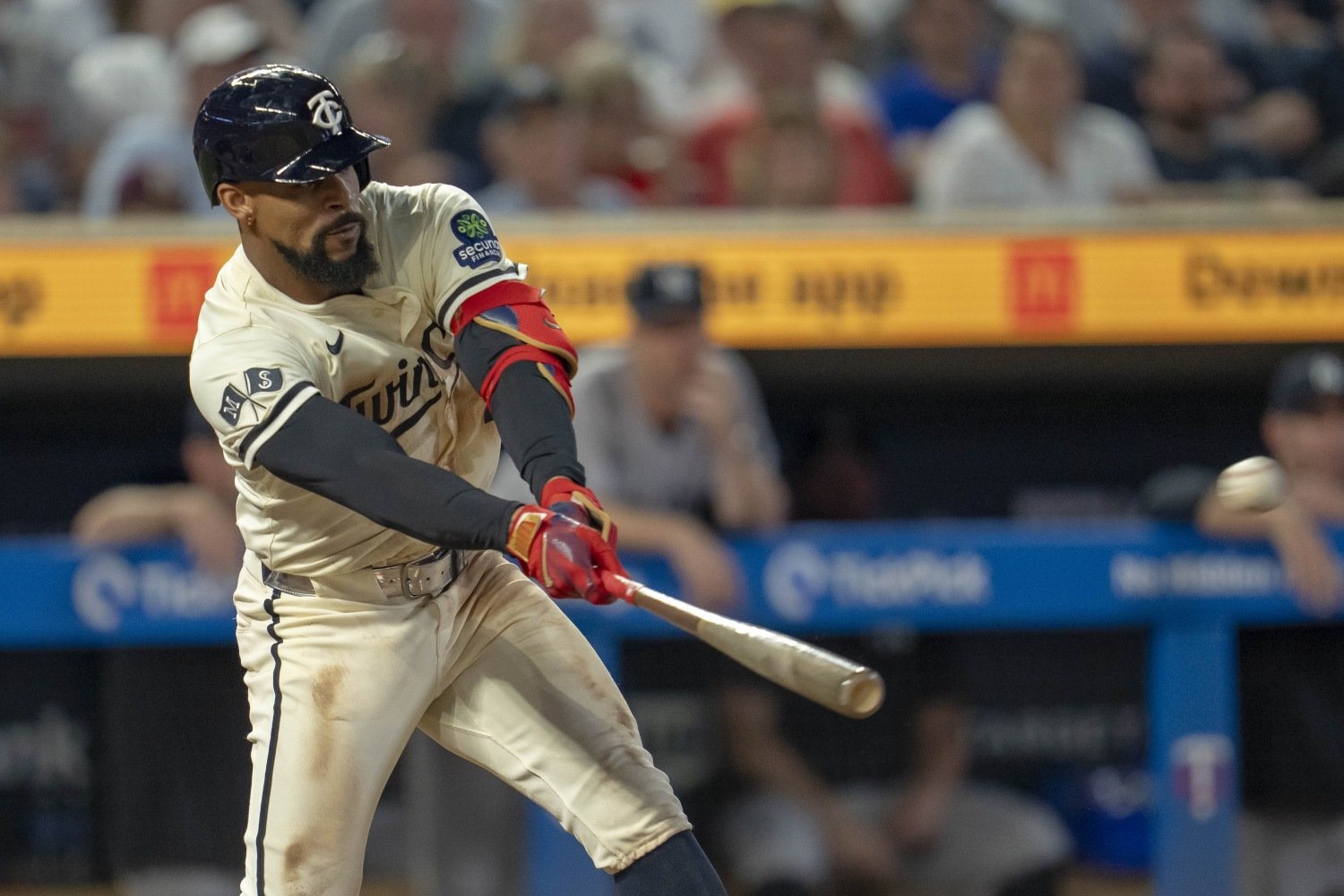 Box Score Zebby Matthews: 3 IP, 11 H, 9 ER, 2 BB, 2 K Home Runs: Outman (5), Fitzgerald (3), Trevor Larnach (17) Bottom 3 WPA: Zebby Matthews (-.492), Matt Wallner (-.069), James Outman (-.050) Win Probability Chart (via FanGraphs) The results of Twins games, on an individual level, ceased mattering at the trade deadline. More crucial, at this point, is looking for windows into the future — portents of the shape of the 2026 team that can hopefully get back on the rails. And, of course, watching a more interesting brand of baseball, sometimes featuring fun on the basepaths and new players doing good things, and sometimes taking the form of torturous defensive gaffes and middling pitching that prolong innings and leave fans wishing for the good old days. Like June. Today’s game featured both versions of the post-fire-sale Twins. Before we get into that, though, let's look at the pitching matchup. The Pitchers Zebby Matthews entered the game, continuing his extended audition for the 2026 rotation. Sporting excellent control, his command is still a work in progress. This has led to struggles with finishing innings. Despite getting strikeouts at a good clip and possessing swing and miss stuff, his results have been mediocre, with flashes of brilliance punctuated by rough innings that all too often let the game slip away. The Yankees sent 2022 seventh-rounder Cam Schlittler to the mound in Minneapolis. The rookie righty, making his 12th career start, entered the game with a sparkling 3.05 ERA and a respectable 3.74 FIP. He has struck out nearly 27% of hitters faced, averages 98 on his heater, and has a full arsenal of secondary pitches. He has walked too many, with over 10% of hitters taking a free pass. Spoiler: that actually increased tonight. Themes of the Game 1. Mediocre Pitching Well, this one was effectively over before the Twins took an at-bat in the second inning. I mentioned above that Zebby has had difficulty in finishing innings. Today, he struggled to get outs at all, allowing six runs in his first two innings of work. In the first, he allowed three singles, a stolen base, and a sac fly. Then, in the second, it was two more singles, two doubles, a walk, and a home run. Yeah, that’s nine baserunners in two innings. Not. Great. Luckily, it got better in the third. Assuming, of course, you turned the game off. For Matthews, it actually continued with more of the same, as he loaded the bases with nobody out, then gave up back-to-back sac flies and a double to make the score 9-1. You know what? I think the Yankees remembered that they have and likely always will own the Twins. At least it was time for the bullpen to be activated, and they gave up just one more run across the next five innings. 2. Chaos on the basepaths Royce Lewis stole another base, his 11th of the season. For a guy who needed to slowly jog around the bases for most of last season, it’s great to see. Even if he is no longer the grand slam king, his ability to add another dimension to his game undoubtedly helps him produce more, and helps the Twins win. Byron Buxton stole his 23rd of the season, and a 30-25 season is well within reach. He did attempt to steal his 24th by swiping third immediately in the same Austin Martin at-bat, and had it dead to rights, before he had to trot back to second on a foul ball. No matter, because a batter later, he stole third again. Make it a double steal, because Trevor Larnach took off at the same time (and was helped by a Schlittler wild pitch). Austin Martin also had a bunt base hit. 3. Never Say Die Sure, the Twins lost. You know what, though? The Twins, in most games over the past 13 months, when facing a run deficit of even a few runs would go meekly into the night. Tonight? They made a game of it. They made up eight runs while the bullpen was fairly lights out, all things considered (this was the Twins post-deadline bullpen, and they were facing the Yankees, after all). Did they win? No. But it was fun, and there aren't too many more chances for ball before the long Minnesota winter sets in. Game Notes Watching the game, the best Provus call of the night was “and the Twins pull within seven," after James Outman hit a two-run blast. What a game. Speaking of Outman, he quietly has three homers and an OPS north of 1.100 over the past seven games. Reclaiming his 2023 magic? Too early to tell, but it’s at least promising. Speaking of promising, Ryan Fitzgerald is sporting an OPS in the .800s over the past 15 games Buxton looked to injure his hand after stealing third, but stayed in the game and hit a double in his next plate appearance. Truly, a magical season for Buck. What’s Next? The Twins finish their season series with the Yankees before an off day on Thursday. Taj Bradley will face former Twins prospect Luis Gil. First pitch is at 6:40 PM. Postgame Interviews Bullpen Usage
 -
Image courtesy of © Jesse Johnson-Imagn Images Box Score Zebby Matthews: 3 IP, 11 H, 9 ER, 2 BB, 2 K Home Runs: Outman (5), Fitzgerald (3), Trevor Larnach (17) Bottom 3 WPA: Zebby Matthews (-.492), Matt Wallner (-.069), James Outman (-.050) Win Probability Chart (via FanGraphs) The results of Twins games, on an individual level, ceased mattering at the trade deadline. More crucial, at this point, is looking for windows into the future — portents of the shape of the 2026 team that can hopefully get back on the rails. And, of course, watching a more interesting brand of baseball, sometimes featuring fun on the basepaths and new players doing good things, and sometimes taking the form of torturous defensive gaffes and middling pitching that prolong innings and leave fans wishing for the good old days. Like June. Today’s game featured both versions of the post-fire-sale Twins. Before we get into that, though, let's look at the pitching matchup. The Pitchers Zebby Matthews entered the game, continuing his extended audition for the 2026 rotation. Sporting excellent control, his command is still a work in progress. This has led to struggles with finishing innings. Despite getting strikeouts at a good clip and possessing swing and miss stuff, his results have been mediocre, with flashes of brilliance punctuated by rough innings that all too often let the game slip away. The Yankees sent 2022 seventh-rounder Cam Schlittler to the mound in Minneapolis. The rookie righty, making his 12th career start, entered the game with a sparkling 3.05 ERA and a respectable 3.74 FIP. He has struck out nearly 27% of hitters faced, averages 98 on his heater, and has a full arsenal of secondary pitches. He has walked too many, with over 10% of hitters taking a free pass. Spoiler: that actually increased tonight. Themes of the Game 1. Mediocre Pitching Well, this one was effectively over before the Twins took an at-bat in the second inning. I mentioned above that Zebby has had difficulty in finishing innings. Today, he struggled to get outs at all, allowing six runs in his first two innings of work. In the first, he allowed three singles, a stolen base, and a sac fly. Then, in the second, it was two more singles, two doubles, a walk, and a home run. Yeah, that’s nine baserunners in two innings. Not. Great. Luckily, it got better in the third. Assuming, of course, you turned the game off. For Matthews, it actually continued with more of the same, as he loaded the bases with nobody out, then gave up back-to-back sac flies and a double to make the score 9-1. You know what? I think the Yankees remembered that they have and likely always will own the Twins. At least it was time for the bullpen to be activated, and they gave up just one more run across the next five innings. 2. Chaos on the basepaths Royce Lewis stole another base, his 11th of the season. For a guy who needed to slowly jog around the bases for most of last season, it’s great to see. Even if he is no longer the grand slam king, his ability to add another dimension to his game undoubtedly helps him produce more, and helps the Twins win. Byron Buxton stole his 23rd of the season, and a 30-25 season is well within reach. He did attempt to steal his 24th by swiping third immediately in the same Austin Martin at-bat, and had it dead to rights, before he had to trot back to second on a foul ball. No matter, because a batter later, he stole third again. Make it a double steal, because Trevor Larnach took off at the same time (and was helped by a Schlittler wild pitch). Austin Martin also had a bunt base hit. 3. Never Say Die Sure, the Twins lost. You know what, though? The Twins, in most games over the past 13 months, when facing a run deficit of even a few runs would go meekly into the night. Tonight? They made a game of it. They made up eight runs while the bullpen was fairly lights out, all things considered (this was the Twins post-deadline bullpen, and they were facing the Yankees, after all). Did they win? No. But it was fun, and there aren't too many more chances for ball before the long Minnesota winter sets in. Game Notes Watching the game, the best Provus call of the night was “and the Twins pull within seven," after James Outman hit a two-run blast. What a game. Speaking of Outman, he quietly has three homers and an OPS north of 1.100 over the past seven games. Reclaiming his 2023 magic? Too early to tell, but it’s at least promising. Speaking of promising, Ryan Fitzgerald is sporting an OPS in the .800s over the past 15 games Buxton looked to injure his hand after stealing third, but stayed in the game and hit a double in his next plate appearance. Truly, a magical season for Buck. What’s Next? The Twins finish their season series with the Yankees before an off day on Thursday. Taj Bradley will face former Twins prospect Luis Gil. First pitch is at 6:40 PM. Postgame Interviews Bullpen Usage View full article


