Cody Christie
-
Posts
7,515 -
Joined
-
Last visited
-
Days Won
5
Content Type
Profiles
News
Minnesota Twins Videos
2026 Minnesota Twins Top Prospects Ranking
2022 Minnesota Twins Draft Picks
Minnesota Twins Free Agent & Trade Rumors, Notes, & Tidbits
Guides & Resources
2023 Minnesota Twins Draft Picks
The Minnesota Twins Players Project
2024 Minnesota Twins Draft Picks
2025 Minnesota Twins Draft Pick Tracker
2026 Minnesota Twins Draft Tracker: Picks & Bonuses
Forums
Blogs
Events
Store
Downloads
Gallery
Everything posted by Cody Christie
-

Where Are They Now? The Twins Last 10 First-Round Draft Picks
Cody Christie posted an article in Twins
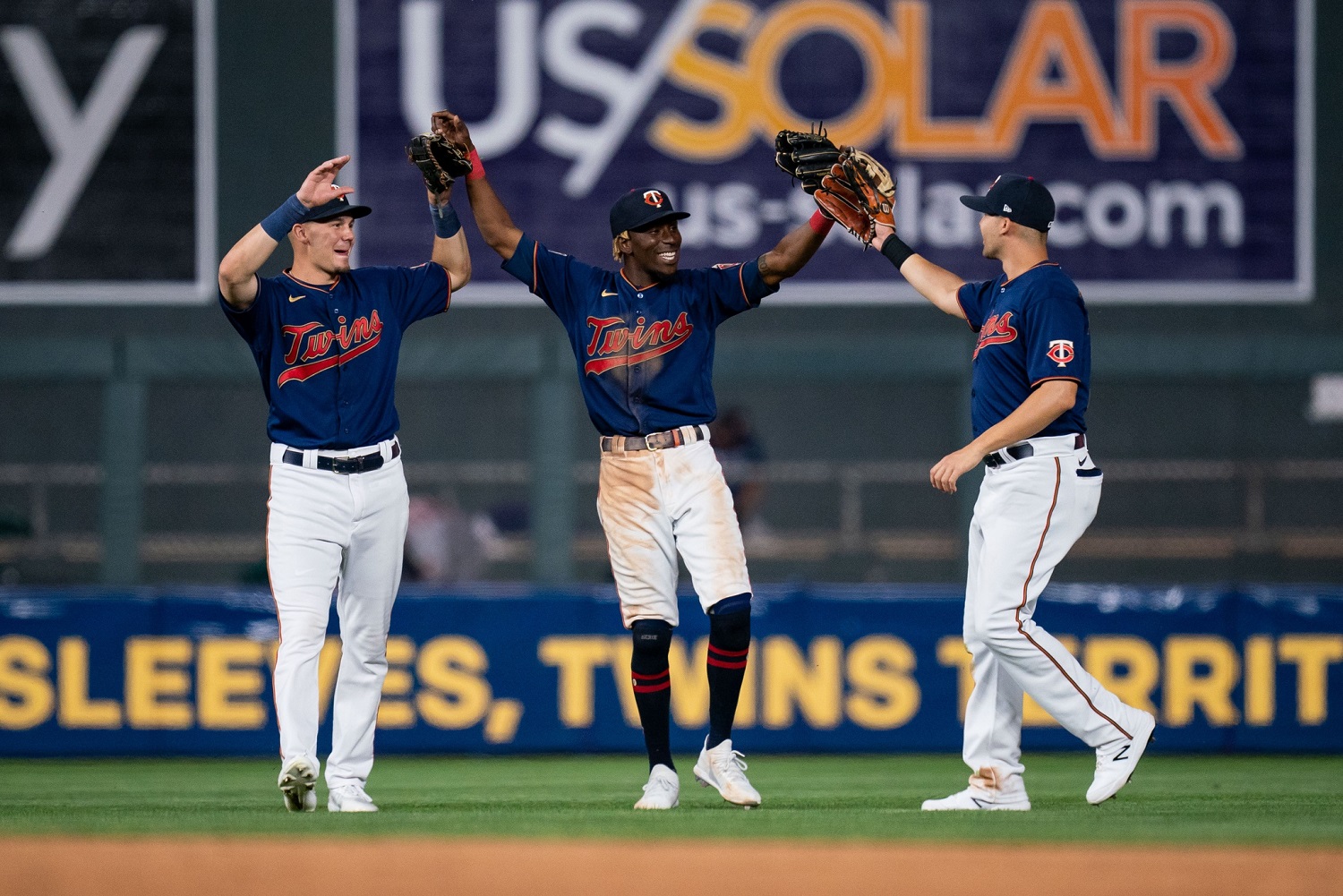 Many first-round picks quickly move into the organization’s top prospect lists. Minnesota has seen some successes and failures in recent drafts, with multiple top prospects on the way to Target Field. Derek Falvey and Thad Levine have focused on certain types of players in the draft, which might help the team keep its winning window open as long as possible. Here’s a look at the last decade of first-round picks for the Twins. 2022: Brooks Lee (8th overall) Lee is one of the most exciting hitting prospects to come through the Twins organization in quite some time. Some evaluators thought he could be the number one overall pick, but he fell to the Twins with the eighth pick. Last season, he played at three levels and hit .303/.389/.451 (.839) with six doubles and four home runs. The Twins don’t need to rush things with Lee, and he will probably spend most of the season at Double-A. If he performs well, there is a chance he will make his debut in 2023 and is a top-25 global prospect by this time next year. 2021: Chase Petty (26th overall) It can take a long time for high school pitchers to develop in the minor leagues. Minnesota thought Petty had enough upside to take on that risk before drafting him late in the first round. Leading into last season, the Twins traded him to the Reds organization for Sonny Gray. In his age-19 season, the Reds pushed him to High-A, and he compiled a 3.48 ERA with a 1.17 WHIP and 8.8 K/9. For 2023, Petty should get a full season at High-A with a chance to pitch over 100 innings for the first time in his career. 2020: Aaron Sabato (27th overall) The 2020 MLB Draft will be interesting to analyze in the years ahead. College teams saw limited action before the shutdown, and many high school players never stepped on the field that spring. Sabato destroyed the ball in college (1.158 OPS) before being drafted by the Twins. In 2022, he hit .215/.336/.438 (.774) with 17 doubles and 22 home runs while reaching Double-A. Sabato was over a year younger than the average age of the competition in the Texas League, so he should spend most of 2022 at that level. 2019: Keoni Cavaco (13th overall) Cavaco has spent the last two seasons at Fort Myers while shifting from shortstop to third base. Last season, he hit .231/.275/.397 (.672) with 18 doubles, five triples, and 11 home runs. His OPS jumped 74 points compared to 2021, and he was roughly the same age as the average competition at his level. He will be pushed to Cedar Rapids in 2023 with a chance to reach Double-A by the season’s end. 2018: Trevor Larnach (20th overall) Larnach has averaged fewer than 80 games per season over the last two years. He’s been a streaky hitter during his big-league career, but some of his performance might be tied to his injury history. He posted a 104 OPS+ in 2022 and destroyed the ball in May with a 1.077 OPS. Minnesota has a plethora of left-handed power-hitting bats, which might make Larnach expendable as part of a trade. 2017: Royce Lewis (1st overall) It looked like the Twins might be willing to turn shortstop over to Royce Lewis before the team signed Carlos Correa to a long-term deal. Now, Lewis will need to shift to other defensive positions if Correa continues to stay healthy. During the 2023 season, Lewis isn’t expected to return to action until mid-season while recovering from his second ACL tear over the last two seasons. 2016: Alex Kirilloff (15th overall) Kirilloff has battled through wrist issues during his first two big-league seasons, and the Twins hope his latest surgery helps him in the long term. There have been glimpses of the strong hitter Kirilloff was at the start of his professional career, but his nagging wrist has slowed down his development. He will get regular time at first base and in a corner outfield spot for the 2023 Twins. 2015: Tyler Jay (6th overall) Jay never made it to the big leagues with the Twins organization. He topped out at the Double-A level in four seasons in the organization. The Twins traded Jay to the Reds organization during the 2019 season for cash considerations, but he only spent part of a season pitching for that organization. Last year, he made 22 appearances with a 1.64 ERA and 9.8 K/9 for the Joliet Slammers in the independent Frontier League. It seems likely that he can get another job in independent baseball if he wants to continue pitching. 2014: Nick Gordon (5th overall) It may have taken longer than expected, but Gordon found a niche with the 2022 Twins. He became an everyday player for a team struggling through injuries and posted a 113 OPS+ in 136 games. Minnesota has plenty of corner outfield options on the 40-man roster, so it will be interesting to see how the Twins will use Gordon in 2023. He is out of MLB options, so he needs to be kept on the Opening Day roster. 2013: Kohl Stewart (4th overall) Stewart played eight seasons in the Twins organization and made six appearances at the big-league level. He struggled in the upper minors with a 4.65 ERA and a 1.36 WHIP in over 160 innings at Triple-A. For 2023, the Royals signed Stewart to a minor league deal, but he isn’t expected in big-league camp as he continues to rehab from an elbow injury. Which players will have the most significant impact on the 2023 roster? Which player was the biggest disappointment? Leave a COMMENT and start the discussion.
- 22 comments
-
- 1
-

-
- alex kirilloff
- nick gordon
- (and 3 more)
-
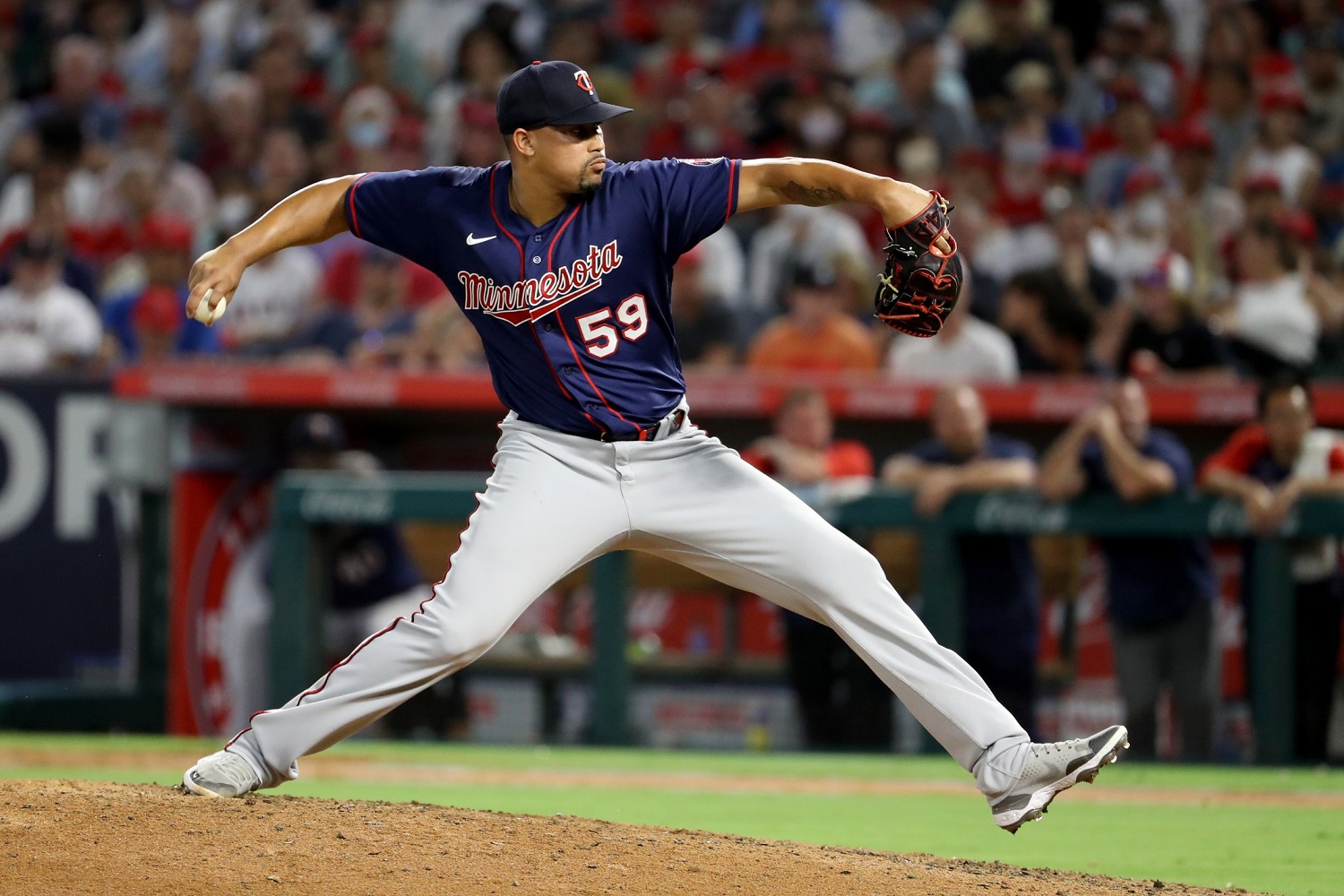 It's truly amazing to consider what Jhoan Duran was able to accomplish during his rookie campaign. The Twins used him as a starter throughout his professional career, but he transitioned to reliever last spring. Minnesota surprised many by dealing away Taylor Rogers shortly before Opening Day, but that could be a sign of the front office's confidence in Duran. He went on to lead all AL pitchers in Win Probability Added, but there are still areas for him to improve in 2023. Keep the Ball in the Park Every reliever attempts to keep the ball in the park, but Duran's dominant strikeout totals should allow him to do an even better job at limiting home runs. In 67 2/3 innings, Duran allowed 50 hits, with six being long balls. Toronto's Tim Mayza (25.9%) and Minnesota's Emilio Pagan (18.5%) were the only qualified AL relievers to allow more HR/FB than Duran (17.6%). Twins fans don't want to see Duran's name on any leaderboard with Pagan. Duran's split-finger fastball was his worst pitch in 2022, as it was responsible for half of his home runs and a .462 SLG. He threw his splitter less than 16% of the time, so it will be interesting to see if the Twins encourage him to use this pitch less often in 2023. Increase Multi-Inning Appearances Duran dealt with injury concerns during his minor league, which was one reason Minnesota moved him to a reliever role. There was some thought that Duran may be able to handle multi-inning appearances because of his previous starting experience. In 57 appearances, Duran pitched more than one inning 14 times, including ten appearances of two innings. However, only two of his multi-inning appearances came after July 16, corresponding to when the Twins fell out of contention. Duran's second-half numbers were significantly better in the second half with a 1.05 ERA and 13.3 K/9, but he pitched over 16 fewer innings after the All-Star Game. In his sophomore season, Rocco Baldelli should feel more comfortable utilizing him in a multi-inning role throughout the 2023 campaign. Another Player Takes the Closer Role Bullpen usage has evolved recently, with some teams not adhering to a traditional closer role. Managers often turn to their best reliever in the highest leverage situations, which is only sometimes in the ninth inning. Last season, Duran was at his best in high-leverage situations. In 39 games, he held batters to a .180/.246/.243 (.489) with six GDPs and a 39 to 6 strikeout-to-walk ratio. The Twins added Jorge Lopez at the trade deadline to fill a more traditional closer's role, but he struggled in the second half. The Twins hope that Lopez made some adjustments this winter and he can reestablish himself as a late-inning weapon. Minnesota also hopes relievers like Griffin Jax, Jovani Moran, and Jorge Alcala are prepared to take on more significant roles. Duran will need help to replicate his numbers from his rookie campaign. However, the Twins can put him into some situations that help to boost his overall performance. If he finds a way to improve in 2023, the rest of the American League better watch out. What do you think Duran can do to reach another level in 2023? Leave a COMMENT and start the discussion.
 -
Jhoan Duran had one of the best rookie seasons in the Twins' history, but is there a way for him to reach another level in 2023? Image courtesy of Kiyoshi Mio-USA TODAY Sports It's truly amazing to consider what Jhoan Duran was able to accomplish during his rookie campaign. The Twins used him as a starter throughout his professional career, but he transitioned to reliever last spring. Minnesota surprised many by dealing away Taylor Rogers shortly before Opening Day, but that could be a sign of the front office's confidence in Duran. He went on to lead all AL pitchers in Win Probability Added, but there are still areas for him to improve in 2023. Keep the Ball in the Park Every reliever attempts to keep the ball in the park, but Duran's dominant strikeout totals should allow him to do an even better job at limiting home runs. In 67 2/3 innings, Duran allowed 50 hits, with six being long balls. Toronto's Tim Mayza (25.9%) and Minnesota's Emilio Pagan (18.5%) were the only qualified AL relievers to allow more HR/FB than Duran (17.6%). Twins fans don't want to see Duran's name on any leaderboard with Pagan. Duran's split-finger fastball was his worst pitch in 2022, as it was responsible for half of his home runs and a .462 SLG. He threw his splitter less than 16% of the time, so it will be interesting to see if the Twins encourage him to use this pitch less often in 2023. Increase Multi-Inning Appearances Duran dealt with injury concerns during his minor league, which was one reason Minnesota moved him to a reliever role. There was some thought that Duran may be able to handle multi-inning appearances because of his previous starting experience. In 57 appearances, Duran pitched more than one inning 14 times, including ten appearances of two innings. However, only two of his multi-inning appearances came after July 16, corresponding to when the Twins fell out of contention. Duran's second-half numbers were significantly better in the second half with a 1.05 ERA and 13.3 K/9, but he pitched over 16 fewer innings after the All-Star Game. In his sophomore season, Rocco Baldelli should feel more comfortable utilizing him in a multi-inning role throughout the 2023 campaign. Another Player Takes the Closer Role Bullpen usage has evolved recently, with some teams not adhering to a traditional closer role. Managers often turn to their best reliever in the highest leverage situations, which is only sometimes in the ninth inning. Last season, Duran was at his best in high-leverage situations. In 39 games, he held batters to a .180/.246/.243 (.489) with six GDPs and a 39 to 6 strikeout-to-walk ratio. The Twins added Jorge Lopez at the trade deadline to fill a more traditional closer's role, but he struggled in the second half. The Twins hope that Lopez made some adjustments this winter and he can reestablish himself as a late-inning weapon. Minnesota also hopes relievers like Griffin Jax, Jovani Moran, and Jorge Alcala are prepared to take on more significant roles. Duran will need help to replicate his numbers from his rookie campaign. However, the Twins can put him into some situations that help to boost his overall performance. If he finds a way to improve in 2023, the rest of the American League better watch out. What do you think Duran can do to reach another level in 2023? Leave a COMMENT and start the discussion. View full article
-
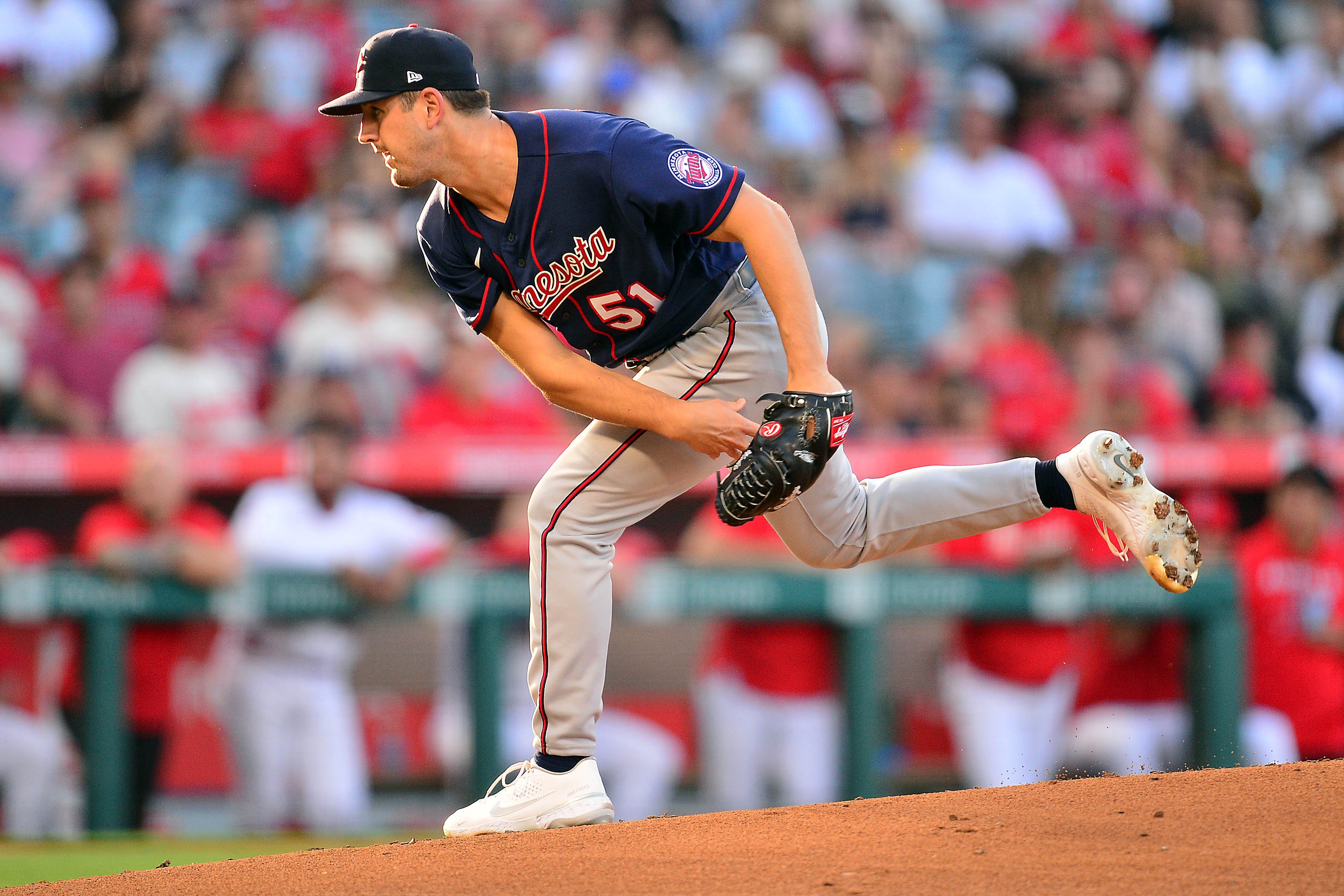 Derek Falvey and Thad Levine have followed different trends since taking the Twins' front office reins. Those trends include the types of players they target in the draft process, using a patient approach in the offseason, and acquiring players that some may consider distressed assets. Some distressed assets have provided value for the Twins, but others have been unmitigated disasters. Can the Twins find a way to be successful while following this player acquisition trend? Reasons for this Trend The current front office has placed a premium value on acquiring players on good contracts or with multiple years of team control. There is risk involved with long-term deals for free-agent players, and the Twins typically aren't swimming in the deep end of the free-agent market. However, there have been multiple instances when a player's value had dropped enough that the Twins were comfortable offering multi-year deals. Minnesota was willing to make the highest offer because the front office felt the player would provide enough value in the contract's early years to make up for the back end. On the pitching side, Minnesota has recently traded for multiple arms, and there have been injury concerns with some of those acquisitions. Trading for any pitching asset comes with some level of trepidation. Last season, Twins fans clamored for the team to acquire Frankie Montas, but he was traded to the Yankees and will start the 2023 season on the injured list because of a shoulder injury. Only some pitchers can perform at a high level after a trade. Also, the Twins value the prospects this regime has accumulated, so they have shown a hesitancy to deal top prospects for pitching assets. That made last year's trade deadline so intriguing because it looked like the front office was putting the team in the best position to win. Unfortunately, recent seasons haven't played out in the team's favor. Distressed Assets: Pitchers Sam Dyson was one of this front office's first significant trade deadline deals in 2019. His Twins' tenure was disastrous as he allowed nine earned runs in 11 1/3 innings while making multiple trips to the Injured List. Eventually, he revealed that he had been pitching through shoulder discomfort for multiple weeks. The Twins tried to investigate if the Giants knew anything about his injury before the trade. There were no signs of his injury or poor performance before the trade, so this deal looks like bad luck for the Twins. He hasn't pitched in professional baseball since 2019 because of sexual assault allegations and a suspension. Leading into the 2020 season, the Twins traded for Kenta Maeda from the Dodgers. Los Angeles expressed concerns about Maeda's elbow when he initially signed in 2016, and that's why he signed an incentive-laden contract. He pitched nearly 590 innings with the Dodgers before being traded and showed no signs of his elbow being an issue. His first season in Minnesota couldn't have gone much better, as he posted a 2.70 ERA while leading baseball with a 0.75 WHIP. Maeda's performance declined in 2021, forcing him to undergo Tommy John surgery. He pitched over 760 big-league innings before his elbow gave out, so this wasn't a red flag before the trade. Minnesota recently finished an extension with Chris Paddack to keep him with the organization through the 2025 season and delay free agency by one year. The Twins acquired Paddack leading into the 2022 season after he dealt with a sprained UCL at the end of the 2021 season. He pitched well in limited action last season, and the Twins are hoping he can return in 2023 following his second Tommy John surgery. His extension gives the Twins some cost certainty and has the potential for Paddack to provide the team upside over the next three seasons. Tyler Mahle was arguably the Twins' most prominent trade deadline acquisition in 2022. The front office attempted to add a playoff-caliber starter to the rotation, but it came at a cost. Shortly before the trade, Mahle missed time with a shoulder injury, and those issues continued with the Twins. He couldn't help the team down the stretch, and now there are questions about his health entering the 2023 campaign. Mahle is a free agent at season's end, and the Twins hope his off-season regime has built up his shoulder enough to provide value at the rotation's front end. Distressed Assets: Position Players Entering the 2020 season, the Twins planned to target free-agent starting pitching, but the market didn't work out in the club's favor. Instead, Josh Donaldson was still available because of lingering injury concerns and the fact that he was in his mid-30s. Minnesota hoped that Donaldson could be an asset to help push the team to postseason success. However, he didn't appear in either playoff game during his Twins tenure. Luckily, the Twins were able to trade Donaldson, which helped pave the way for signing Carlos Correa. Carlos Correa 's free agent journey has been well documented in recent weeks, but there's no question he remains with the Twins because of long-term health concerns. Minnesota offered a front-loaded contract that is very team friendly, but there are risks involved with any free-agent signing. Even Byron Buxton 's extension can be viewed as a distressed asset, because of his long-running injury concerns. The Twins' success is now tied to Correa and Buxton staying healthy. Minnesota's line-up should have two of baseball's best hitters if both players perform up to expectations. Are you concerned with Minnesota's trend of acquiring distressed assets? Leave a COMMENT and start the discussion.
- 23 comments
-
- 4
-
-
- tyler mahle
- kenta maeda
- (and 3 more)
-
Minnesota's front office continues to collect players with injury concerns. Will these distressed assets come back to haunt the Twins? Image courtesy of Gary A. Vasquez-USA TODAY Sports Derek Falvey and Thad Levine have followed different trends since taking the Twins' front office reins. Those trends include the types of players they target in the draft process, using a patient approach in the offseason, and acquiring players that some may consider distressed assets. Some distressed assets have provided value for the Twins, but others have been unmitigated disasters. Can the Twins find a way to be successful while following this player acquisition trend? Reasons for this Trend The current front office has placed a premium value on acquiring players on good contracts or with multiple years of team control. There is risk involved with long-term deals for free-agent players, and the Twins typically aren't swimming in the deep end of the free-agent market. However, there have been multiple instances when a player's value had dropped enough that the Twins were comfortable offering multi-year deals. Minnesota was willing to make the highest offer because the front office felt the player would provide enough value in the contract's early years to make up for the back end. On the pitching side, Minnesota has recently traded for multiple arms, and there have been injury concerns with some of those acquisitions. Trading for any pitching asset comes with some level of trepidation. Last season, Twins fans clamored for the team to acquire Frankie Montas, but he was traded to the Yankees and will start the 2023 season on the injured list because of a shoulder injury. Only some pitchers can perform at a high level after a trade. Also, the Twins value the prospects this regime has accumulated, so they have shown a hesitancy to deal top prospects for pitching assets. That made last year's trade deadline so intriguing because it looked like the front office was putting the team in the best position to win. Unfortunately, recent seasons haven't played out in the team's favor. Distressed Assets: Pitchers Sam Dyson was one of this front office's first significant trade deadline deals in 2019. His Twins' tenure was disastrous as he allowed nine earned runs in 11 1/3 innings while making multiple trips to the Injured List. Eventually, he revealed that he had been pitching through shoulder discomfort for multiple weeks. The Twins tried to investigate if the Giants knew anything about his injury before the trade. There were no signs of his injury or poor performance before the trade, so this deal looks like bad luck for the Twins. He hasn't pitched in professional baseball since 2019 because of sexual assault allegations and a suspension. Leading into the 2020 season, the Twins traded for Kenta Maeda from the Dodgers. Los Angeles expressed concerns about Maeda's elbow when he initially signed in 2016, and that's why he signed an incentive-laden contract. He pitched nearly 590 innings with the Dodgers before being traded and showed no signs of his elbow being an issue. His first season in Minnesota couldn't have gone much better, as he posted a 2.70 ERA while leading baseball with a 0.75 WHIP. Maeda's performance declined in 2021, forcing him to undergo Tommy John surgery. He pitched over 760 big-league innings before his elbow gave out, so this wasn't a red flag before the trade. Minnesota recently finished an extension with Chris Paddack to keep him with the organization through the 2025 season and delay free agency by one year. The Twins acquired Paddack leading into the 2022 season after he dealt with a sprained UCL at the end of the 2021 season. He pitched well in limited action last season, and the Twins are hoping he can return in 2023 following his second Tommy John surgery. His extension gives the Twins some cost certainty and has the potential for Paddack to provide the team upside over the next three seasons. Tyler Mahle was arguably the Twins' most prominent trade deadline acquisition in 2022. The front office attempted to add a playoff-caliber starter to the rotation, but it came at a cost. Shortly before the trade, Mahle missed time with a shoulder injury, and those issues continued with the Twins. He couldn't help the team down the stretch, and now there are questions about his health entering the 2023 campaign. Mahle is a free agent at season's end, and the Twins hope his off-season regime has built up his shoulder enough to provide value at the rotation's front end. Distressed Assets: Position Players Entering the 2020 season, the Twins planned to target free-agent starting pitching, but the market didn't work out in the club's favor. Instead, Josh Donaldson was still available because of lingering injury concerns and the fact that he was in his mid-30s. Minnesota hoped that Donaldson could be an asset to help push the team to postseason success. However, he didn't appear in either playoff game during his Twins tenure. Luckily, the Twins were able to trade Donaldson, which helped pave the way for signing Carlos Correa. Carlos Correa 's free agent journey has been well documented in recent weeks, but there's no question he remains with the Twins because of long-term health concerns. Minnesota offered a front-loaded contract that is very team friendly, but there are risks involved with any free-agent signing. Even Byron Buxton 's extension can be viewed as a distressed asset, because of his long-running injury concerns. The Twins' success is now tied to Correa and Buxton staying healthy. Minnesota's line-up should have two of baseball's best hitters if both players perform up to expectations. Are you concerned with Minnesota's trend of acquiring distressed assets? Leave a COMMENT and start the discussion. View full article
- 23 replies
-
- 1
-
-
- tyler mahle
- kenta maeda
- (and 3 more)
-
Unfortunately, the pandemic impacted multiple highly ranked prospects, who were forced to spend a season training away from team facilities. One former top prospect is attempting to live up to his lofty expectations and put himself back on the prospect map. Image courtesy of William Parmeter / Mighty Mussels Some teams are better than others when it comes to evaluating and signing players from the international market. These players can be as young as 16 years old when they sign, and it takes a long-term development approach for them to reach their full potential. On the Twins' current 40-man roster, there are multiple players the Twins signed from the international market, including Luis Arraez, Jorge Polanco, and Max Kepler. One prospect attempts to follow those players' footsteps to the big-league level. The Twins signed Misael Urbina on July 2, 2018. At the time, he was considered one of the best prospects in the signing class, and Minnesota gave him a $2.75 million signing bonus. At the time, scouts called him an advanced hitter with an above-average hit tool and plus speed. MLB.com ranked him as the third overall prospect in his international class, and they have plenty of positive things to say about him. He is a "line-drive hitter with a high baseball IQ." They said, "he's already an advanced defender for his age." They praised his instincts and makeup. Urbina showcased many tools during his professional debut in the Dominican Summer League. In 50 games, he hit .279/.383/.443 (.825) with 14 doubles, five triples, and two home runs. He went 19-for-27 in stolen base attempts and had more walks (23) than strikeouts (14). He was showcasing all of the tools the Twins saw in him as an amateur. It was a tremendous start to his career, but things have not gone as smoothly since that point. Coming out of the pandemic, the Twins were aggressive with Urbina by sending him to Fort Myers. The 19-year-old struggled in his first taste of full-season ball by hitting .191/.299/.286 (.585) with 82 strikeouts in 101 games. All but four of his plate appearances came against older pitchers, so Minnesota was attempting to see if he could play up to the competition level. It seemed likely for Urbina to start the 2022 season at Fort Myers before hopefully being promoted later in the season. Unfortunately, visa issues delayed his debut until late June. There were some positive signs, even though his season started late. Reports are that his offseason regimen added more weight to his frame, resulting in a .730 OPS, which was 145 points higher than the previous season. He dropped his strikeout rate to 18.7% and collected 26 extra-base hits in 60 games. Two-thirds of his defensive innings have come in center field, but he has played over 500 innings in left field. If he bulks up and loses a step in the outfield, he might be destined for a corner outfield spot. Urbina's offensive improvements last year make it exciting to project what he might be able to accomplish in Cedar Rapids this year, especially since he is still only 21 years old. There was some question about whether or not the Twins would add Urbina to the 40-man roster leading into the 2022 Rule 5 Draft. Minnesota left him unprotected, but no other teams selected him because he was unlikely to stick on a big-league roster for an entire season. MLB Pipeline is still high on Urbina by ranking him the 8th-best prospect in the Twins organization. Twins Daily currently has Urbina ranked 17th. His two seasons in Fort Myers could have been better, but he still has a ton of upside, and he may be destined for a breakout campaign. What are your thoughts on Urbina? Can he take the next step in 2023? Leave a COMMENT and start the discussion. View full article
-
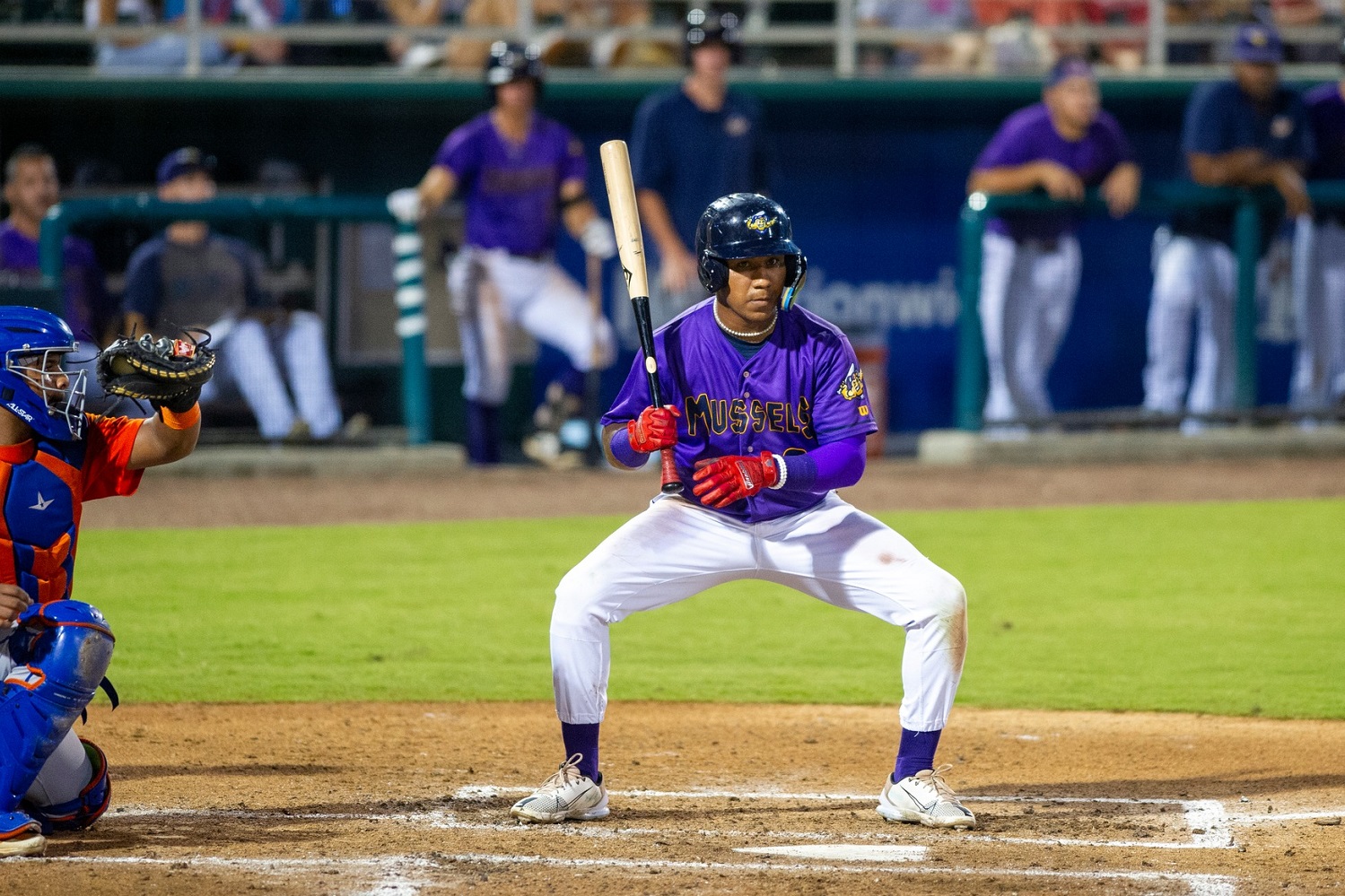 Some teams are better than others when it comes to evaluating and signing players from the international market. These players can be as young as 16 years old when they sign, and it takes a long-term development approach for them to reach their full potential. On the Twins' current 40-man roster, there are multiple players the Twins signed from the international market, including Luis Arraez, Jorge Polanco, and Max Kepler. One prospect attempts to follow those players' footsteps to the big-league level. The Twins signed Misael Urbina on July 2, 2018. At the time, he was considered one of the best prospects in the signing class, and Minnesota gave him a $2.75 million signing bonus. At the time, scouts called him an advanced hitter with an above-average hit tool and plus speed. MLB.com ranked him as the third overall prospect in his international class, and they have plenty of positive things to say about him. He is a "line-drive hitter with a high baseball IQ." They said, "he's already an advanced defender for his age." They praised his instincts and makeup. Urbina showcased many tools during his professional debut in the Dominican Summer League. In 50 games, he hit .279/.383/.443 (.825) with 14 doubles, five triples, and two home runs. He went 19-for-27 in stolen base attempts and had more walks (23) than strikeouts (14). He was showcasing all of the tools the Twins saw in him as an amateur. It was a tremendous start to his career, but things have not gone as smoothly since that point. Coming out of the pandemic, the Twins were aggressive with Urbina by sending him to Fort Myers. The 19-year-old struggled in his first taste of full-season ball by hitting .191/.299/.286 (.585) with 82 strikeouts in 101 games. All but four of his plate appearances came against older pitchers, so Minnesota was attempting to see if he could play up to the competition level. It seemed likely for Urbina to start the 2022 season at Fort Myers before hopefully being promoted later in the season. Unfortunately, visa issues delayed his debut until late June. There were some positive signs, even though his season started late. Reports are that his offseason regimen added more weight to his frame, resulting in a .730 OPS, which was 145 points higher than the previous season. He dropped his strikeout rate to 18.7% and collected 26 extra-base hits in 60 games. Two-thirds of his defensive innings have come in center field, but he has played over 500 innings in left field. If he bulks up and loses a step in the outfield, he might be destined for a corner outfield spot. Urbina's offensive improvements last year make it exciting to project what he might be able to accomplish in Cedar Rapids this year, especially since he is still only 21 years old. There was some question about whether or not the Twins would add Urbina to the 40-man roster leading into the 2022 Rule 5 Draft. Minnesota left him unprotected, but no other teams selected him because he was unlikely to stick on a big-league roster for an entire season. MLB Pipeline is still high on Urbina by ranking him the 8th-best prospect in the Twins organization. Twins Daily currently has Urbina ranked 17th. His two seasons in Fort Myers could have been better, but he still has a ton of upside, and he may be destined for a breakout campaign. What are your thoughts on Urbina? Can he take the next step in 2023? Leave a COMMENT and start the discussion.
 -
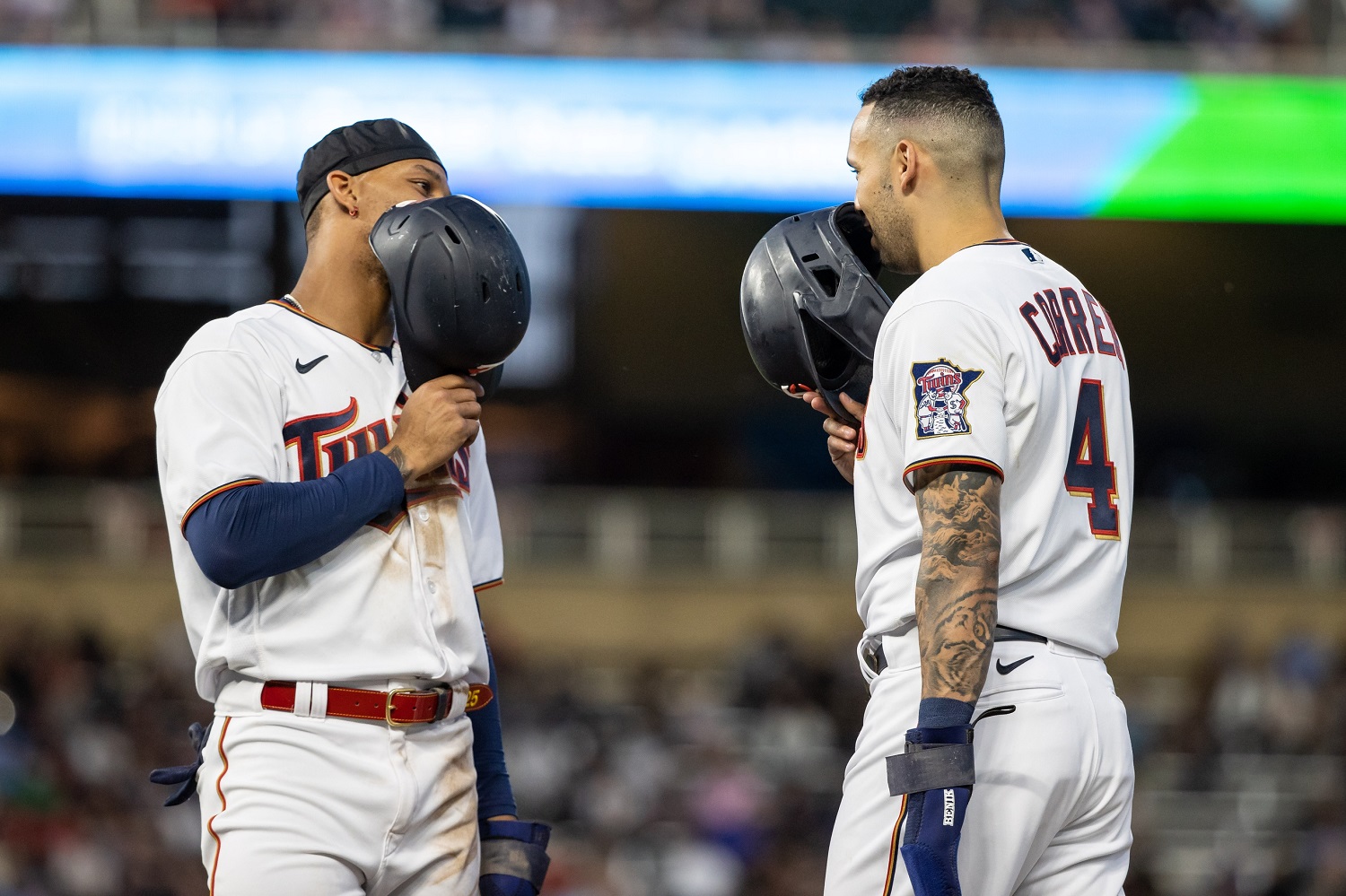 Twins fans can take a breath after the Carlos Correa free-agent saga ended with him returning to Minnesota. There will be fans that feel that Minnesota was Correa's fallback option. Other fans are going to be frustrated by the way the process played out over the last month. Still, Correa is signed with the Twins and will be part of this organization for a minimum of six more seasons. His process of ending up in Minnesota can be an afterthought, especially if it leads to more on-field success for the Twins. Correa and Byron Buxton have been tied to one another since they were amateurs leading into the 2012 MLB Draft. Their bond has grown over the years from the draft process to playing in the Midwest League and culminating with the 2022 season. Now, the Twins superstar duo will attempt to end a playoff losing streak that stretches back to when they were each in elementary school. The elephant in the room is the long-term health of both players. Buxton's health concerns have been well documented in recent years, and it's one of the main reasons Minnesota signed him to a team-friendly deal. Buxton and the Twins did everything they could to keep him on the field last season, resulting in his first All-Star selection and his third season with 4.0 WAR or more. Unfortunately, he was limited to fewer than 100 games and played only 19 games in the second half. Minnesota knew Buxton provides value while playing fewer games, but keeping him on the field will be a focus for the club over the next decade. Correa joined the Twins last winter, and plenty was known about his injury history. During his big-league career, Correa has missed time with hand injuries and back issues. His biggest long-term injury concern has become his lower leg, which was surgically repaired in 2014. Correa's contracts with the Giants and Mets didn't get done because of concerns about how this injury would hold up over the next decade. It is important to note that Correa's guaranteed portion of his contract is significantly fewer years than what was offered by San Francisco and New York. Any long-term deal comes with risks, and the Twins and their doctors are comfortable with the injury risk involved with both of these players because of what they bring to the team. Buxton and Correa show leadership in very different ways. Buxton has become more vocal in recent years, but he has always been a leader by example. He also spends significant time before games getting himself ready, so he can't always be around the other players in the clubhouse. He leads through his play on the field and can only do that if he is preparing his body for the rigors of a 162-game season. Correa's persona is to be front and center because he is a natural-born leader. Many of the players in the Twins clubhouse look up to him, and that trend will continue with younger players being added to Minnesota's roster. Correa won the Twins' "Media Good Guy" Award for his clubhouse leadership and willingness to address the press no matter the circumstances. Together with Buxton, they form a perfect personality duo to lead the Twins into the future. Both players are not getting any younger. Buxton may lose a step in the outfield, and he will eventually need to move to a corner outfield position. Correa will continue to play shortstop, but he will likely move to third base in the back half of his contract. Minnesota sports fans have dealt with heartache in the past, but the Twins hope Buxton and Correa can avoid injury concerns and help the team keep their winning window open as long as possible. Are you worried about injuries with Buxton and Correa? Leave a COMMENT and start the discussion.
 -
For any team, the health of top players will be crucial to their success. That adage is even more true for the Twins because it's clear that the team's long-term outcome is tied to the health of the club's biggest stars. Image courtesy of Jordan Johnson-USA TODAY Sports Twins fans can take a breath after the Carlos Correa free-agent saga ended with him returning to Minnesota. There will be fans that feel that Minnesota was Correa's fallback option. Other fans are going to be frustrated by the way the process played out over the last month. Still, Correa is signed with the Twins and will be part of this organization for a minimum of six more seasons. His process of ending up in Minnesota can be an afterthought, especially if it leads to more on-field success for the Twins. Correa and Byron Buxton have been tied to one another since they were amateurs leading into the 2012 MLB Draft. Their bond has grown over the years from the draft process to playing in the Midwest League and culminating with the 2022 season. Now, the Twins superstar duo will attempt to end a playoff losing streak that stretches back to when they were each in elementary school. The elephant in the room is the long-term health of both players. Buxton's health concerns have been well documented in recent years, and it's one of the main reasons Minnesota signed him to a team-friendly deal. Buxton and the Twins did everything they could to keep him on the field last season, resulting in his first All-Star selection and his third season with 4.0 WAR or more. Unfortunately, he was limited to fewer than 100 games and played only 19 games in the second half. Minnesota knew Buxton provides value while playing fewer games, but keeping him on the field will be a focus for the club over the next decade. Correa joined the Twins last winter, and plenty was known about his injury history. During his big-league career, Correa has missed time with hand injuries and back issues. His biggest long-term injury concern has become his lower leg, which was surgically repaired in 2014. Correa's contracts with the Giants and Mets didn't get done because of concerns about how this injury would hold up over the next decade. It is important to note that Correa's guaranteed portion of his contract is significantly fewer years than what was offered by San Francisco and New York. Any long-term deal comes with risks, and the Twins and their doctors are comfortable with the injury risk involved with both of these players because of what they bring to the team. Buxton and Correa show leadership in very different ways. Buxton has become more vocal in recent years, but he has always been a leader by example. He also spends significant time before games getting himself ready, so he can't always be around the other players in the clubhouse. He leads through his play on the field and can only do that if he is preparing his body for the rigors of a 162-game season. Correa's persona is to be front and center because he is a natural-born leader. Many of the players in the Twins clubhouse look up to him, and that trend will continue with younger players being added to Minnesota's roster. Correa won the Twins' "Media Good Guy" Award for his clubhouse leadership and willingness to address the press no matter the circumstances. Together with Buxton, they form a perfect personality duo to lead the Twins into the future. Both players are not getting any younger. Buxton may lose a step in the outfield, and he will eventually need to move to a corner outfield position. Correa will continue to play shortstop, but he will likely move to third base in the back half of his contract. Minnesota sports fans have dealt with heartache in the past, but the Twins hope Buxton and Correa can avoid injury concerns and help the team keep their winning window open as long as possible. Are you worried about injuries with Buxton and Correa? Leave a COMMENT and start the discussion. View full article
-
Every year, injuries impact the development timeline of multiple top prospects. Here are three Twins prospects looking to have a healthier 2023 campaign. Image courtesy of Rob Thompson, St. Paul Saints Last season, three notable names returned from injury at the top of the Twins' prospect rankings. Royce Lewis was returning from a torn ACL, while Matt Canterino and Jhoan Duran were recovering from strained elbows. Lewis had a tremendous season before tearing his ACL for the second straight season. Canterino was limited to 37 innings before requiring Tommy John surgery. Thankfully, during his rookie campaign, Jhoan Duran became one of baseball's most dominant relievers. Entering the 2023 season, the Twins hope these three prospects can get back on track to prove they are healthy. Royce Lewis, SS 2022 Injury: Torn ACL Lewis didn't want to be on this list in two consecutive off-seasons. However, he has already proven that he can return from this injury and not lose a beat. There was some question last year if Lewis would need time to adjust to the Triple-A level after not appearing in a competitive game since 2019. It certainly didn't look like he missed a beat. He posted a .993 OPS in 24 games before being called up for his big-league debut. Then Lewis went 12-for-39 (.308) with six extra-base hits in his first 11 MLB games with the Twins. With Carlos Correa signed, Lewis doesn't need to be rushed back in 2023. He can take his time to prove he is healthy again at Triple-A before being being called up. Still, the Twins need Lewis to become a player that impacts both sides of the ball for the next decade. Emmanuel Rodriguez, OF 2022 Injury: Torn Meniscus Last season, Rodriguez showed why the Twins were so high on him when they signed him in July 2019. He was considered a top-10 international prospect in the class. Unfortunately, the pandemic postponed his professional debut to 2021, where he hit .214/.346/.524 (.870) with five doubles, two triples, and ten home runs. Rodriguez spent the 2022 season in Fort Myers, where he was over two years younger than the average age of the competition. In 47 games, he hit .272/.493/.552 (1.044) with more walks (57) than strikeouts (52). His season ended in June after he tore his meniscus and needed surgery. Minnesota can start Rodriguez in Fort Myers while the weather is colder, but he should spend most of the season in Cedar Rapids. He's out to prove that his breakout season wasn't a fluke. Jordan Balazovic, SP 2022 Injury: Left Knee Strain Balazovic's 2022 season was delayed until mid-May due to a left knee strain, and he went on to have the worst season of his professional career. In 72 2/3 innings, he posted a 7.68 ERA with a 1.97 WHIP with a 77-to-37 strikeout-to-walk ratio. Lucas wrote extensively on ways to fix Jordan Balazovic, saying, "It's possible that the lingering pain caused him to diminish his knee extension after foot plant, impacting his velocity and command." The Twins don't need to rush Balazovic to the big leagues with other pitchers ahead of him on the team's depth chart, including Louie Varland and Simeon Woods Richardson. Balazovic can spend the beginning of the season proving he is healthy at Triple-A before a potential mid-season call-up. Which has the most to prove this season? Can all three stay healthy? Leave a COMMENT and start the discussion. View full article
-
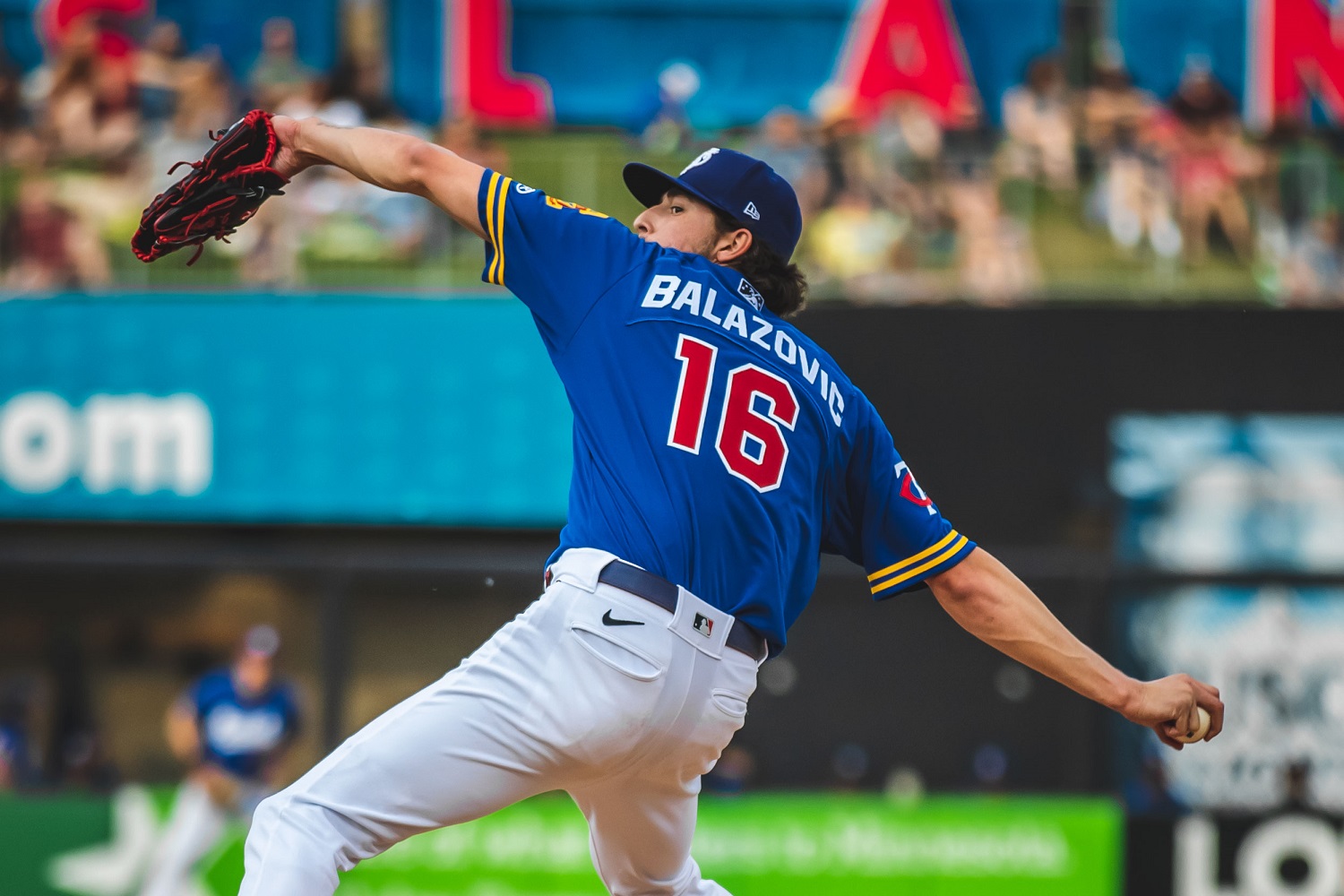 Last season, three notable names returned from injury at the top of the Twins' prospect rankings. Royce Lewis was returning from a torn ACL, while Matt Canterino and Jhoan Duran were recovering from strained elbows. Lewis had a tremendous season before tearing his ACL for the second straight season. Canterino was limited to 37 innings before requiring Tommy John surgery. Thankfully, during his rookie campaign, Jhoan Duran became one of baseball's most dominant relievers. Entering the 2023 season, the Twins hope these three prospects can get back on track to prove they are healthy. Royce Lewis, SS 2022 Injury: Torn ACL Lewis didn't want to be on this list in two consecutive off-seasons. However, he has already proven that he can return from this injury and not lose a beat. There was some question last year if Lewis would need time to adjust to the Triple-A level after not appearing in a competitive game since 2019. It certainly didn't look like he missed a beat. He posted a .993 OPS in 24 games before being called up for his big-league debut. Then Lewis went 12-for-39 (.308) with six extra-base hits in his first 11 MLB games with the Twins. With Carlos Correa signed, Lewis doesn't need to be rushed back in 2023. He can take his time to prove he is healthy again at Triple-A before being being called up. Still, the Twins need Lewis to become a player that impacts both sides of the ball for the next decade. Emmanuel Rodriguez, OF 2022 Injury: Torn Meniscus Last season, Rodriguez showed why the Twins were so high on him when they signed him in July 2019. He was considered a top-10 international prospect in the class. Unfortunately, the pandemic postponed his professional debut to 2021, where he hit .214/.346/.524 (.870) with five doubles, two triples, and ten home runs. Rodriguez spent the 2022 season in Fort Myers, where he was over two years younger than the average age of the competition. In 47 games, he hit .272/.493/.552 (1.044) with more walks (57) than strikeouts (52). His season ended in June after he tore his meniscus and needed surgery. Minnesota can start Rodriguez in Fort Myers while the weather is colder, but he should spend most of the season in Cedar Rapids. He's out to prove that his breakout season wasn't a fluke. Jordan Balazovic, SP 2022 Injury: Left Knee Strain Balazovic's 2022 season was delayed until mid-May due to a left knee strain, and he went on to have the worst season of his professional career. In 72 2/3 innings, he posted a 7.68 ERA with a 1.97 WHIP with a 77-to-37 strikeout-to-walk ratio. Lucas wrote extensively on ways to fix Jordan Balazovic, saying, "It's possible that the lingering pain caused him to diminish his knee extension after foot plant, impacting his velocity and command." The Twins don't need to rush Balazovic to the big leagues with other pitchers ahead of him on the team's depth chart, including Louie Varland and Simeon Woods Richardson. Balazovic can spend the beginning of the season proving he is healthy at Triple-A before a potential mid-season call-up. Which has the most to prove this season? Can all three stay healthy? Leave a COMMENT and start the discussion.
- 10 comments
-
- 2
-
-
- royce lewis
- jordan balazovic
- (and 1 more)
-
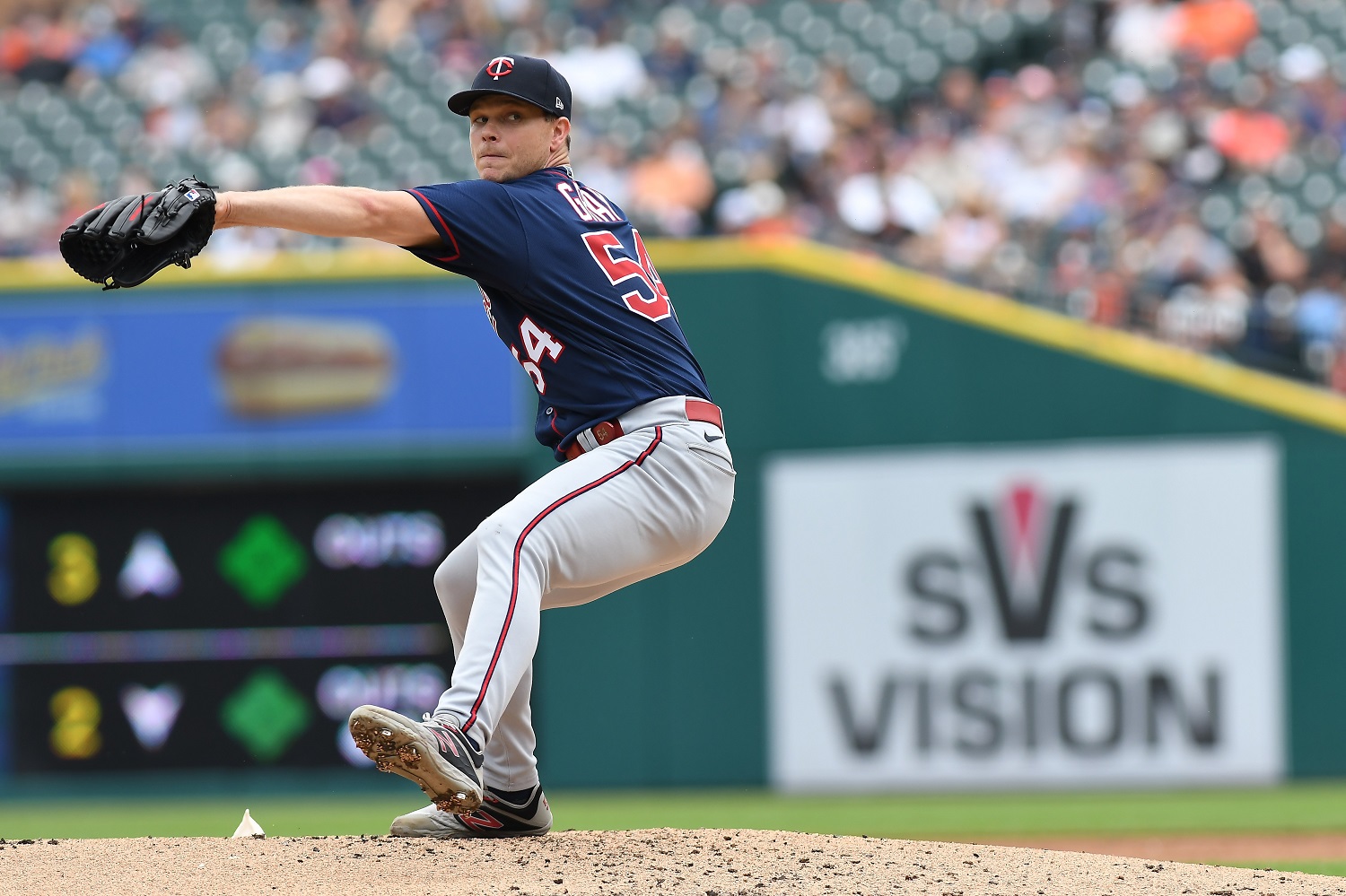 Derek Falvey and Thad Levine have done this before to Twins fans. Their offseason mantra is to show patience before making multiple moves closer to the start of spring training. Last year, the lockout impacted the organization's ability to make moves, but the Twins traded for Sonny Gray and signed Carlos Correa in March. Few top free-agent targets remain available, so the Twins need to make trades to supplement the roster. Here are five players the Twins are most likely to trade in the coming weeks. 5. <Insert Utility Infielder Name> Correa's signing to a long-term deal means the Twins can afford to move one of their infielders. The Twins traded for Kyle Farmer to add to the shortstop depth chart, but he is now expendable with Correa in the fold. Nick Gordon is out of minor league options, so the Twins might not see a place for him on the 2023 roster. Neither player would warrant a large return, but the club doesn't need both of them on the Opening Day roster. 4. <Insert Corner Outfielder Not Named Max Kepler> One corner outfielder is the team's most likely trade chip (see below), but the Twins also have plenty of other options at these positions. Trevor Larnach, Alex Kirilloff, and Matt Wallner are of similar ages and fit a similar skill set. Larnach and Kirilloff suffered injuries during the 2022 season, which may give Wallner the highest trade value. Teams have also inquired about Gilberto Celestino , but the Twins might need him to be Byron Buxton's insurance. 3. Luis Arraez , Utility Arraez's name has been tied to trade rumors this winter for various reasons. He's coming off a year where he won the AL Batting Title, and Twins Daily named him the team MVP. His trade value may never be higher based on his 2022 performance. Arraez has dealt with injuries in the past, and the Twins may look to capitalize on trading him for controllable starting pitching. Multiple members of the starting rotation have one year of team control remaining. Reports have Miami open to trading multiple pieces from their starting rotation, so that is a possible landing spot for Arraez. 2. Sonny Gray, SP It may seem counterproductive for the Twins to trade their best-starting pitcher if the club wants to contend in 2023. However, Gray is entering his final year of team control, and the Twins might not be interested in signing him to a long-term deal. Other members of the starting staff are returning from injury, so it seems more likely for Gray to be traded over Kenta Maeda or Tyler Mahle . If Gray isn't part of the team's long-term plans, this winter might be the best opportunity to maximize his trade value before he hits free agency. 1. Max Kepler, RF The writing was on the wall when the Twins signed Joey Gallo to a one-year deal; Minnesota will trade Max Kepler . Minnesota has multiple left-handed hitting corner outfield options, and the Twins have two years of team control over Kepler. Offensively, Kepler has failed to replicate his breakout performance from 2019, but he continues to be an elite defensive outfielder. The Twins should be able to get something of value in return for Kepler; surprisingly, he is still on the roster. Who else should be included in the rankings? Will Kepler be the only player traded? Leave a COMMENT and start the discussion.
- 59 comments
-
- 2
-
-
- max kepler
- sonny gray
- (and 3 more)
-
With many top free agents off the market, trading players is the best way for the Twins to impact the 2023 roster. Here are the team's most likely trade chips before the season begins. Image courtesy of Lon Horwedel, USA Today Sports Derek Falvey and Thad Levine have done this before to Twins fans. Their offseason mantra is to show patience before making multiple moves closer to the start of spring training. Last year, the lockout impacted the organization's ability to make moves, but the Twins traded for Sonny Gray and signed Carlos Correa in March. Few top free-agent targets remain available, so the Twins need to make trades to supplement the roster. Here are five players the Twins are most likely to trade in the coming weeks. 5. <Insert Utility Infielder Name> Correa's signing to a long-term deal means the Twins can afford to move one of their infielders. The Twins traded for Kyle Farmer to add to the shortstop depth chart, but he is now expendable with Correa in the fold. Nick Gordon is out of minor league options, so the Twins might not see a place for him on the 2023 roster. Neither player would warrant a large return, but the club doesn't need both of them on the Opening Day roster. 4. <Insert Corner Outfielder Not Named Max Kepler> One corner outfielder is the team's most likely trade chip (see below), but the Twins also have plenty of other options at these positions. Trevor Larnach, Alex Kirilloff, and Matt Wallner are of similar ages and fit a similar skill set. Larnach and Kirilloff suffered injuries during the 2022 season, which may give Wallner the highest trade value. Teams have also inquired about Gilberto Celestino , but the Twins might need him to be Byron Buxton's insurance. 3. Luis Arraez , Utility Arraez's name has been tied to trade rumors this winter for various reasons. He's coming off a year where he won the AL Batting Title, and Twins Daily named him the team MVP. His trade value may never be higher based on his 2022 performance. Arraez has dealt with injuries in the past, and the Twins may look to capitalize on trading him for controllable starting pitching. Multiple members of the starting rotation have one year of team control remaining. Reports have Miami open to trading multiple pieces from their starting rotation, so that is a possible landing spot for Arraez. 2. Sonny Gray, SP It may seem counterproductive for the Twins to trade their best-starting pitcher if the club wants to contend in 2023. However, Gray is entering his final year of team control, and the Twins might not be interested in signing him to a long-term deal. Other members of the starting staff are returning from injury, so it seems more likely for Gray to be traded over Kenta Maeda or Tyler Mahle . If Gray isn't part of the team's long-term plans, this winter might be the best opportunity to maximize his trade value before he hits free agency. 1. Max Kepler, RF The writing was on the wall when the Twins signed Joey Gallo to a one-year deal; Minnesota will trade Max Kepler . Minnesota has multiple left-handed hitting corner outfield options, and the Twins have two years of team control over Kepler. Offensively, Kepler has failed to replicate his breakout performance from 2019, but he continues to be an elite defensive outfielder. The Twins should be able to get something of value in return for Kepler; surprisingly, he is still on the roster. Who else should be included in the rankings? Will Kepler be the only player traded? Leave a COMMENT and start the discussion. View full article
-
Minnesota shocked the baseball world and signed Carlos Correa to a long-term deal. So, what does that mean for the team's projected Opening Day roster? Image courtesy of Lindsey Wasson-USA TODAY Sports Last season, the lockout forced MLB to allow teams to begin the year with 28-man rosters. The lockout forced a shortened spring training, and baseball was worried about an increased chance of player injuries. For 2023, teams must narrow their final roster to 26 players. Players listed below with the ** are on the bubble for the final roster spots. Catchers (2): Christian Vazquez, Ryan Jeffers Entering the offseason, Ryan Jeffers was the lone catcher on the team's 40-man roster. Adding Christian Vazquez helps bolster the organization's catching depth. Last winter, the Twins traded Mitch Garver to allow Ryan Jeffers to become the primary catcher. However, many teams utilize a multi-catcher approach to keep players healthy and help their offensive production. Minnesota also signed veteran catcher Tony Wolters to a minor league deal, but he likely won't make the Opening Day roster. The Twins will need Walters during the season, and he has caught over 2800 innings at the big-league level. Infielders (6): Luis Arraez, Carlos Correa, Kyle Farmer, Alex Kirilloff**, Jose Miranda, Jorge Polanco Adding Correa to this group changes the entire look of the infield. Farmer can now shift to a utility role and play all over the diamond. He was penciled in as the team's starting shortstop until Royce Lewis returned from his ACL injury. Minnesota is handing Miranda the starting third base job after the team traded Gio Urshela to the Angels. All the projected infielders can be used at multiple defensive positions, which will help Rocco Baldelli create the best line-ups on any given day. Minnesota was in the driver's seat for the AL Central last season before injuries ravaged the roster. Correa's return puts the Twins back in the conversation as a playoff team in 2023 and beyond. The depth here comes from the likes of Royce Lewis, when he returns (hopefully in June or July), who can play all over the diamond. Austin Martin can get whatever time he needs in St. Paul. The team can be patient with Brooks Lee rather than push him up too quickly. Outfielders (5): Byron Buxton, Gilberto Celestino, Joey Gallo, Nick Gordon**, Max Kepler Correa's signing also pushes other players off the 26-man roster. In my initial roster projection, Trevor Larnach was on the bubble, and now he will be in St. Paul's outfield with Matt Wallner. Both players will get playing time in 2023, but there needs to be room to keep them on the Opening Day roster. Kyle Garlick is also an interesting player because there might be other right-handed free-agent upgrades. Joey Gallo and Max Kepler fill similar roles for the Twins, so the Twins will likely trade Kepler, allowing them to carry a right-handed bench bat. Nick Gordon is out of minor-league options so the Twins will keep him based on his breakout performance in 2022. Rotation (5): Sonny Gray, Tyler Mahle, Kenta Maeda, Joe Ryan, Bailey Ober On paper, this starting five is a group that can win the AL Central, but there are health concerns with multiple pitchers on the roster. Mahle struggled with shoulder issues after the Twins acquired him, Maeda is returning from Tommy John surgery, and Ober dealt with various injuries last season. The Twins have starting pitching depth on the 40-man roster, with Louie Varland and Simeon Woods Richardson ready to contribute at the big-league level. Jordan Balazovic is also an interesting name to consider if he is healthy to start the year. Minnesota has also been rumored to be interested in some of the remaining veteran free agents, but the club may want to rely on its pitching pipeline. Bullpen (8): Jhoan Duran, Jorge Lopez, Griffin Jax, Caleb Thielbar, Emilio Pagan, Jorge Alcala**, Jovani Moran**, Trevor Megill** Minnesota hopes Lopez can return to his previous form and combine with Duran to be a dominant back-end duo. ZiPS projects feel like the Twins' bullpen is top-heavy, which makes sense considering the recent track record of players expected to be on the roster. Jax could be a breakout reliever and fill a fireman role that Tyler Duffey had previously occupied. Pagan continues to be a question mark, but the Twins offered him arbitration, so they hope his performance improves in 2023. The Twins have also shown a tendency to move relievers up and down from Triple-A, a trend likely to continue next year. Minnesota will have some decisions at the bullpen's backend with other 40-man roster options like Ronny Henriquez and Cole Sands. What changes will happen to the team's roster before Opening Day? Where do the Twins rank compared to other AL Central squads? Leave a COMMENT and start the discussion. View full article
-
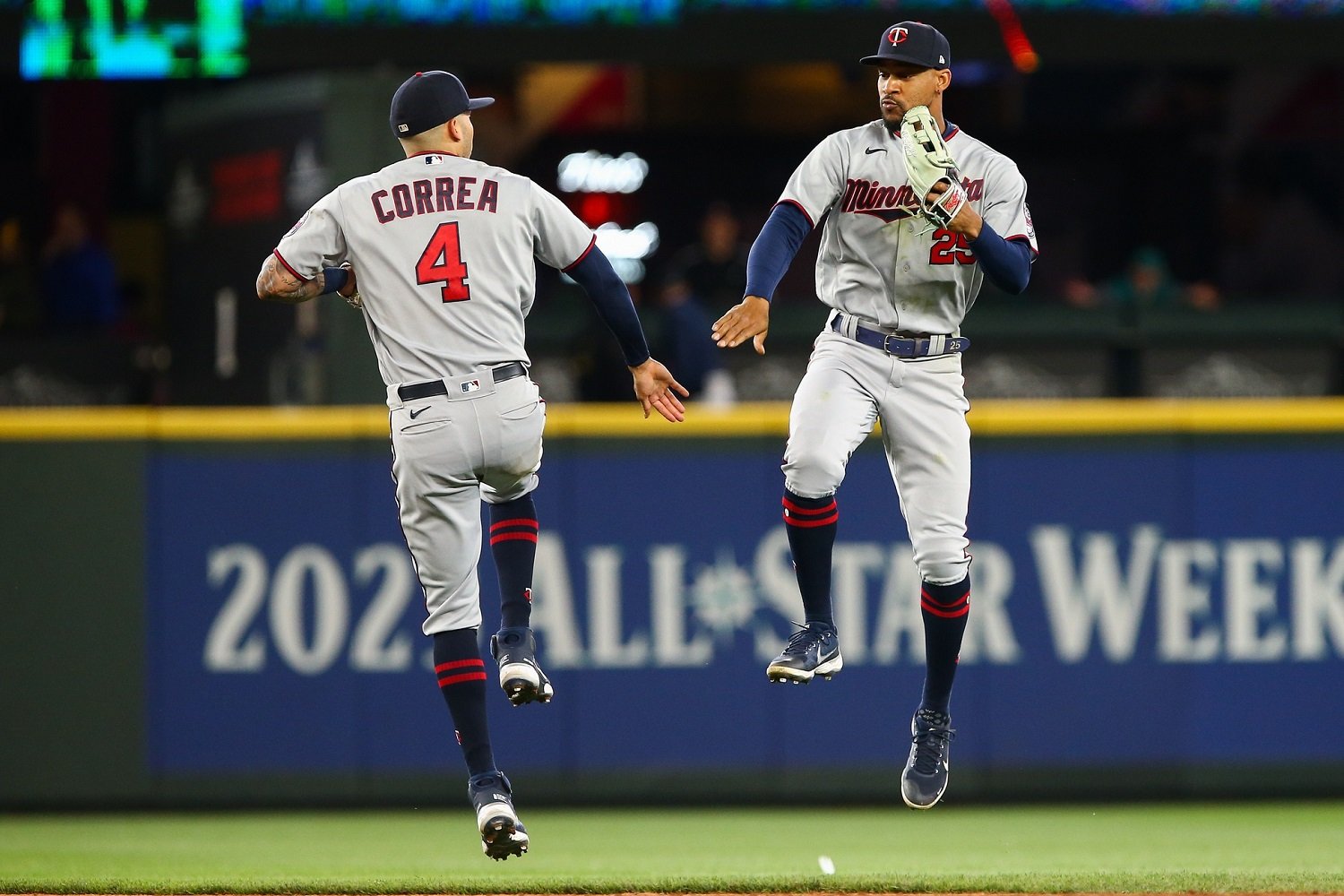 Last season, the lockout forced MLB to allow teams to begin the year with 28-man rosters. The lockout forced a shortened spring training, and baseball was worried about an increased chance of player injuries. For 2023, teams must narrow their final roster to 26 players. Players listed below with the ** are on the bubble for the final roster spots. Catchers (2): Christian Vazquez, Ryan Jeffers Entering the offseason, Ryan Jeffers was the lone catcher on the team's 40-man roster. Adding Christian Vazquez helps bolster the organization's catching depth. Last winter, the Twins traded Mitch Garver to allow Ryan Jeffers to become the primary catcher. However, many teams utilize a multi-catcher approach to keep players healthy and help their offensive production. Minnesota also signed veteran catcher Tony Wolters to a minor league deal, but he likely won't make the Opening Day roster. The Twins will need Walters during the season, and he has caught over 2800 innings at the big-league level. Infielders (6): Luis Arraez, Carlos Correa, Kyle Farmer, Alex Kirilloff**, Jose Miranda, Jorge Polanco Adding Correa to this group changes the entire look of the infield. Farmer can now shift to a utility role and play all over the diamond. He was penciled in as the team's starting shortstop until Royce Lewis returned from his ACL injury. Minnesota is handing Miranda the starting third base job after the team traded Gio Urshela to the Angels. All the projected infielders can be used at multiple defensive positions, which will help Rocco Baldelli create the best line-ups on any given day. Minnesota was in the driver's seat for the AL Central last season before injuries ravaged the roster. Correa's return puts the Twins back in the conversation as a playoff team in 2023 and beyond. The depth here comes from the likes of Royce Lewis, when he returns (hopefully in June or July), who can play all over the diamond. Austin Martin can get whatever time he needs in St. Paul. The team can be patient with Brooks Lee rather than push him up too quickly. Outfielders (5): Byron Buxton, Gilberto Celestino, Joey Gallo, Nick Gordon**, Max Kepler Correa's signing also pushes other players off the 26-man roster. In my initial roster projection, Trevor Larnach was on the bubble, and now he will be in St. Paul's outfield with Matt Wallner. Both players will get playing time in 2023, but there needs to be room to keep them on the Opening Day roster. Kyle Garlick is also an interesting player because there might be other right-handed free-agent upgrades. Joey Gallo and Max Kepler fill similar roles for the Twins, so the Twins will likely trade Kepler, allowing them to carry a right-handed bench bat. Nick Gordon is out of minor-league options so the Twins will keep him based on his breakout performance in 2022. Rotation (5): Sonny Gray, Tyler Mahle, Kenta Maeda, Joe Ryan, Bailey Ober On paper, this starting five is a group that can win the AL Central, but there are health concerns with multiple pitchers on the roster. Mahle struggled with shoulder issues after the Twins acquired him, Maeda is returning from Tommy John surgery, and Ober dealt with various injuries last season. The Twins have starting pitching depth on the 40-man roster, with Louie Varland and Simeon Woods Richardson ready to contribute at the big-league level. Jordan Balazovic is also an interesting name to consider if he is healthy to start the year. Minnesota has also been rumored to be interested in some of the remaining veteran free agents, but the club may want to rely on its pitching pipeline. Bullpen (8): Jhoan Duran, Jorge Lopez, Griffin Jax, Caleb Thielbar, Emilio Pagan, Jorge Alcala**, Jovani Moran**, Trevor Megill** Minnesota hopes Lopez can return to his previous form and combine with Duran to be a dominant back-end duo. ZiPS projects feel like the Twins' bullpen is top-heavy, which makes sense considering the recent track record of players expected to be on the roster. Jax could be a breakout reliever and fill a fireman role that Tyler Duffey had previously occupied. Pagan continues to be a question mark, but the Twins offered him arbitration, so they hope his performance improves in 2023. The Twins have also shown a tendency to move relievers up and down from Triple-A, a trend likely to continue next year. Minnesota will have some decisions at the bullpen's backend with other 40-man roster options like Ronny Henriquez and Cole Sands. What changes will happen to the team's roster before Opening Day? Where do the Twins rank compared to other AL Central squads? Leave a COMMENT and start the discussion.
- 53 comments
-
- 4
-
-
- carlos correa
- kyle farmer
- (and 3 more)
-
Time is running out for the Twins to add to the team's 2023 roster. So, do any of the top remaining free agents fit with the Twins? Image courtesy of Matt Marton-USA TODAY Sports Ranking free agents can be a challenging exercise, especially at this point in the off-season when many of the top names are off the board. On Sunday, MLB Trade Rumors updated their list of the best remaining free agents at each position, which includes some players that are potential fits for the Twins. Here is a rundown of that list and how each player fits with Minnesota's 2023 roster. Starting Pitcher: Johnny Cueto Minnesota showed some interest in Cueto last winter but went in a different direction to sign Chris Archer. At the time, the Twins wanted someone ready to jump into the rotation, and Cueto didn't make an appearance until May 16. In 2022, he made 25 starts for the White Sox and posted a 3.35 ERA with a 1.23 WHIP. There are rumors the Twins might be interested in Michael Wacha, who would be the next best free-agent starter. Teams can never have too much starting pitching, but the club's younger arms offer more upside. Relief Pitcher: Andrew Chafin The Twins have done little to add to the bullpen, and a few reliable relievers are left on the market. Chafin is intriguing because he is left-handed, and Minnesota's only lefty relievers are Caleb Thielbar and Jovani Moran. He posted a 10.5 K/9 last season with a 2.83 ERA and a 1.17 WHIP. He's shown the ability to be effective against righties and lefties, which should secure him a late-inning role with a contending club. Former Twin Michael Fulmer is the best right-handed reliever, and that move makes sense for Minnesota if Chafin signs elsewhere. Catcher: Gary Sanchez Catcher was one of Minnesota's most significant needs this winter, but the club already signed Christian Vazquez to a multi-year deal. The Twins saw plenty of Sanchez during the 2022 campaign, and the team was looking for a better defensive option. It seems highly unlikely for Sanchez to be back in a Twins uniform. First Base: Trey Mancini Last week, I wrote about Mancini being a target for the Twins because he gets some time in the outfield and bats right-handed. However, he posted reverse splits last season, so he might not be the best candidate for this role. Minnesota likely has enough options for first base, with Luis Arraez and Alex Kirilloff getting most of the reps and other players filling in as needed. Signing Mancini makes more sense if the Twins traded any of their other first-base options. Second Base: Josh Harrison Harrison posted a 94 OPS+ in 119 games for the White Sox last season while providing plenty of value on the defensive side. He can fill a veteran utility player role, especially since he ranked in the 84th percentile for Outs Above Average. Minnesota's second base depth chart is already full with Jorge Polanco, Luis Arraez, and Edouard Julien. Shortstop: Elvis Andrus Obviously, Carlos Correa is not officially signed with the New York Mets, and MLBTR was assuming his deal will have a pen to paper. Andrus might be a slight upgrade over current Twins shortstop Kyle Farmer, but they offer similar overall value. Andrus likely wants to play for a team where he will get regular playing time, and the Twins might not be that place for him. Minnesota can add him as another infield option if his market continues to be cold, but that seems unlikely. Third Base: Brian Anderson Earlier this winter, the Twins traded Gio Urshela to open up a regular third base job for Jose Miranda. Anderson's defense declined at third base last season, and he's averaged a 90 OPS+ over the last two seasons. He has some experience in the outfield, so the Twins may be interested in him being a right-handed bench bat. Corner Outfield: Jurickson Profar Besides Correa, Profar is the best free agent left on the market. Last season, he hit .243/.331/.391 (.723) with a 111 OPS+ and a career-high 36 doubles. Profar could fit with the Twins because he is a switch hitter and played exclusively in left field last season. Minnesota has Byron Buxton and Joey Gallo penciled into two outfield spots, while Profar could occupy left. It seems more likely for the Twins to use other internal options in the outfield, with the club already having too many corner outfield options. Center Field: Albert Almora Almora is tremendous as a defensive center fielder, but he is substantially below average at the plate. The Twins hope to have Byron Buxton start more than 51 games in center this year. Also, Gilberto Celestino has plenty of upside, even though he still needs to put it all together at the big-league level. Almora isn't signing with the Twins. Designated Hitter: Nelson Cruz Twins fans can dream of Cruz returning to the middle of the team's line-up, but he isn't the same hitter he was two years ago. In 2022, he hit .234/.313/.337 (.651) with a 90 OPS+. He's also entering his age 42 season, so there are no guarantees he will rediscover his swing. Cruz had plenty of memorable moments for the Twins, but the club was lucky to move on from him. Which of these players is the best fit with the Twins? Leave a COMMENT and start the discussion. View full article
-
Do Any of the Top Remaining Free Agents Fit with the Twins?
Cody Christie posted an article in Twins
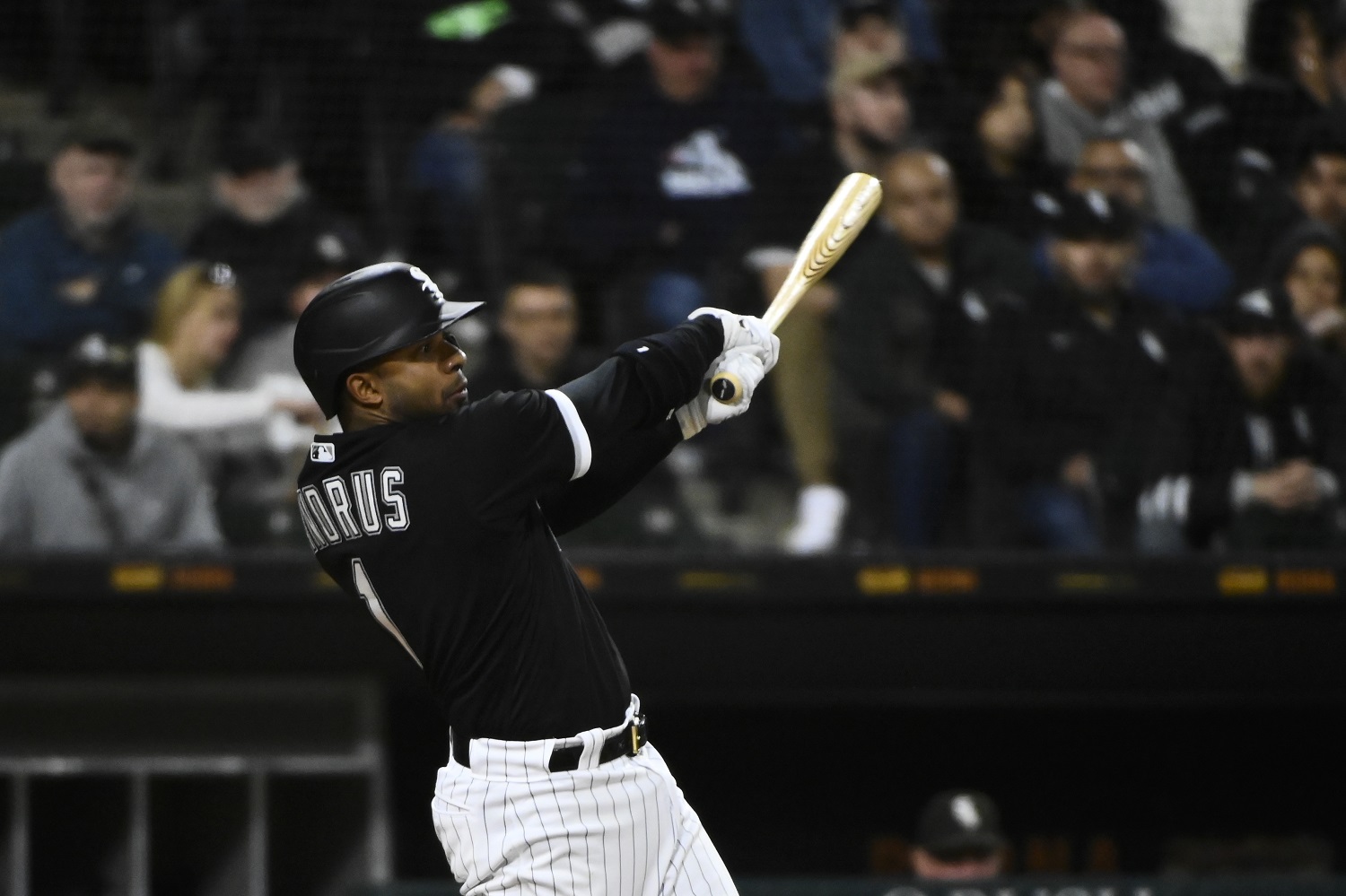 Ranking free agents can be a challenging exercise, especially at this point in the off-season when many of the top names are off the board. On Sunday, MLB Trade Rumors updated their list of the best remaining free agents at each position, which includes some players that are potential fits for the Twins. Here is a rundown of that list and how each player fits with Minnesota's 2023 roster. Starting Pitcher: Johnny Cueto Minnesota showed some interest in Cueto last winter but went in a different direction to sign Chris Archer. At the time, the Twins wanted someone ready to jump into the rotation, and Cueto didn't make an appearance until May 16. In 2022, he made 25 starts for the White Sox and posted a 3.35 ERA with a 1.23 WHIP. There are rumors the Twins might be interested in Michael Wacha, who would be the next best free-agent starter. Teams can never have too much starting pitching, but the club's younger arms offer more upside. Relief Pitcher: Andrew Chafin The Twins have done little to add to the bullpen, and a few reliable relievers are left on the market. Chafin is intriguing because he is left-handed, and Minnesota's only lefty relievers are Caleb Thielbar and Jovani Moran. He posted a 10.5 K/9 last season with a 2.83 ERA and a 1.17 WHIP. He's shown the ability to be effective against righties and lefties, which should secure him a late-inning role with a contending club. Former Twin Michael Fulmer is the best right-handed reliever, and that move makes sense for Minnesota if Chafin signs elsewhere. Catcher: Gary Sanchez Catcher was one of Minnesota's most significant needs this winter, but the club already signed Christian Vazquez to a multi-year deal. The Twins saw plenty of Sanchez during the 2022 campaign, and the team was looking for a better defensive option. It seems highly unlikely for Sanchez to be back in a Twins uniform. First Base: Trey Mancini Last week, I wrote about Mancini being a target for the Twins because he gets some time in the outfield and bats right-handed. However, he posted reverse splits last season, so he might not be the best candidate for this role. Minnesota likely has enough options for first base, with Luis Arraez and Alex Kirilloff getting most of the reps and other players filling in as needed. Signing Mancini makes more sense if the Twins traded any of their other first-base options. Second Base: Josh Harrison Harrison posted a 94 OPS+ in 119 games for the White Sox last season while providing plenty of value on the defensive side. He can fill a veteran utility player role, especially since he ranked in the 84th percentile for Outs Above Average. Minnesota's second base depth chart is already full with Jorge Polanco, Luis Arraez, and Edouard Julien. Shortstop: Elvis Andrus Obviously, Carlos Correa is not officially signed with the New York Mets, and MLBTR was assuming his deal will have a pen to paper. Andrus might be a slight upgrade over current Twins shortstop Kyle Farmer, but they offer similar overall value. Andrus likely wants to play for a team where he will get regular playing time, and the Twins might not be that place for him. Minnesota can add him as another infield option if his market continues to be cold, but that seems unlikely. Third Base: Brian Anderson Earlier this winter, the Twins traded Gio Urshela to open up a regular third base job for Jose Miranda. Anderson's defense declined at third base last season, and he's averaged a 90 OPS+ over the last two seasons. He has some experience in the outfield, so the Twins may be interested in him being a right-handed bench bat. Corner Outfield: Jurickson Profar Besides Correa, Profar is the best free agent left on the market. Last season, he hit .243/.331/.391 (.723) with a 111 OPS+ and a career-high 36 doubles. Profar could fit with the Twins because he is a switch hitter and played exclusively in left field last season. Minnesota has Byron Buxton and Joey Gallo penciled into two outfield spots, while Profar could occupy left. It seems more likely for the Twins to use other internal options in the outfield, with the club already having too many corner outfield options. Center Field: Albert Almora Almora is tremendous as a defensive center fielder, but he is substantially below average at the plate. The Twins hope to have Byron Buxton start more than 51 games in center this year. Also, Gilberto Celestino has plenty of upside, even though he still needs to put it all together at the big-league level. Almora isn't signing with the Twins. Designated Hitter: Nelson Cruz Twins fans can dream of Cruz returning to the middle of the team's line-up, but he isn't the same hitter he was two years ago. In 2022, he hit .234/.313/.337 (.651) with a 90 OPS+. He's also entering his age 42 season, so there are no guarantees he will rediscover his swing. Cruz had plenty of memorable moments for the Twins, but the club was lucky to move on from him. Which of these players is the best fit with the Twins? Leave a COMMENT and start the discussion.
- 34 comments
-
- 2
-
-
- nelson cruz
- elvis andrus
- (and 3 more)
-
Every season top prospects climb the organizational ladder and reach the big leagues. Here are four Twins prospects that fans can get excited about debuting in 2023. Image courtesy of Mark J. Rebilas, USA TODAY Sports Prospect development is not a linear path. Some prospects reach the higher levels of the minor leagues and struggle, while others move quickly to the big-league level. Two of the prospects outlined below had a chance to reach the big leagues in 2022, but their performance didn't warrant a promotion. Injuries and poor performance can hurt a prospect's long-term outlook, but these players have the potential to impact the Twins in 2023. Brooks Lee TD Top Prospect Rank: 2 Debut Prediction: September Minnesota selected Lee as the team's top pick in the 2022 MLB Draft. He flew through three levels in the Twins system and ended the year at Double-A. In 31-games, he hit .303/.389/.451 (.839) with six doubles and four home runs. He likely spends most of 2023 at the Double-A level, but his performance will dictate his ultimate landing spot. There is no need to rush Lee to the big leagues, but his college experience and advanced bat can put him on track to be a late-season call-up. Austin Martin TD Top Prospect Rank: 6 Debut Prediction: July Martin entered the 2022 campaign as one of the Twins' top prospects, but his season went differently than planned. There was an opportunity for him to make his big-league debut in 2022 since he was repeating the Double-A level. Unfortunately, he struggled offensively with a .685 OPS while also dealing with a wrist injury. Martin ended September on a strong note and carried his hot hitting into the Arizona Fall League. If healthy, Martin is still part of the team's long-term plans while offering plenty of upside. Edouard Julien TD Top Prospect Rank: 10 Debut Prediction: May While Martin struggled in Wichita, Julien was one of the organization's breakout prospects in 2022. In 113 games, he hit .300/.441/.490 (.931) with 19 doubles, three triples, and 17 home runs. He posted an eye-popping 1.248 OPS this fall on the way to being named the AFL's Breakout Prospect. Julien is close to big-league-ready when it comes to his prospect development. He will play the year in the upper minors waiting for an opportunity to arise at the big-league level. Since he's on the 40-man roster, one injury is all it will take for a call-up. Jordan Balazovic TD Top Prospect Rank: 15 Debut Prediction: June Balazovic struggled through much of 2022 but ended the year on a high note. Minnesota needed many starting pitchers last season, but Balazovic never got the call. In 22 appearances (70.2 IP), he posted a 7.39 ERA with a 1.94 WHIP and a 76-to-35 strikeout-to-walk ratio. Multiple starting pitchers have passed him on the organizational depth chart, but there have been times when he was considered one of the team's best pitching prospects. His September might signify that he is ready to take the next step, which can set him up for a bounce back year in 2023. Will all of these prospects debut in 2023? Can Martin and Balazovic bounce back? Who are you most excited to see? Leave a COMMENT and start the discussion. View full article
-
4 Twins Prospect Debuts to Be Excited About in 2023
Cody Christie posted an article in Minor Leagues
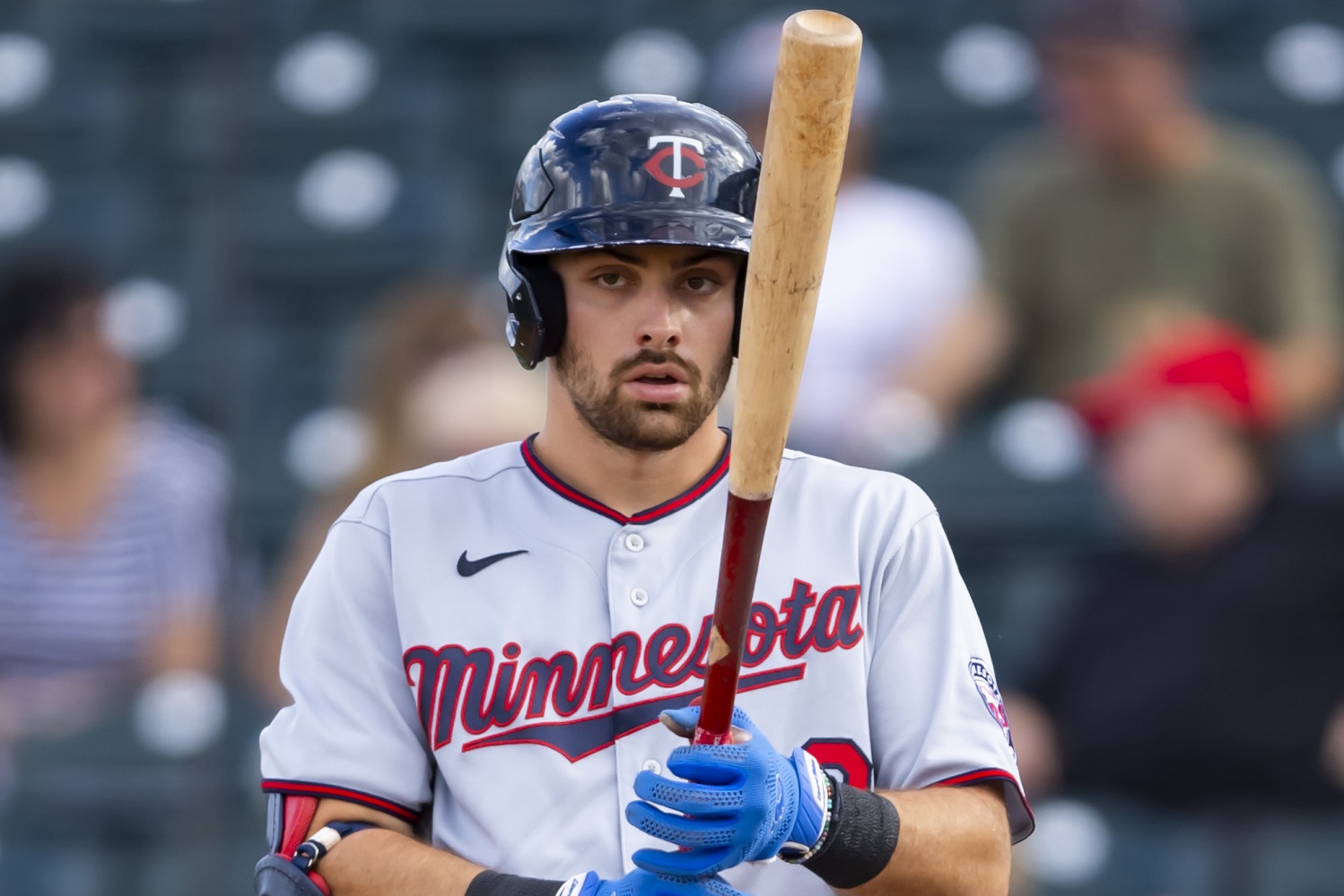 Prospect development is not a linear path. Some prospects reach the higher levels of the minor leagues and struggle, while others move quickly to the big-league level. Two of the prospects outlined below had a chance to reach the big leagues in 2022, but their performance didn't warrant a promotion. Injuries and poor performance can hurt a prospect's long-term outlook, but these players have the potential to impact the Twins in 2023. Brooks Lee TD Top Prospect Rank: 2 Debut Prediction: September Minnesota selected Lee as the team's top pick in the 2022 MLB Draft. He flew through three levels in the Twins system and ended the year at Double-A. In 31-games, he hit .303/.389/.451 (.839) with six doubles and four home runs. He likely spends most of 2023 at the Double-A level, but his performance will dictate his ultimate landing spot. There is no need to rush Lee to the big leagues, but his college experience and advanced bat can put him on track to be a late-season call-up. Austin Martin TD Top Prospect Rank: 6 Debut Prediction: July Martin entered the 2022 campaign as one of the Twins' top prospects, but his season went differently than planned. There was an opportunity for him to make his big-league debut in 2022 since he was repeating the Double-A level. Unfortunately, he struggled offensively with a .685 OPS while also dealing with a wrist injury. Martin ended September on a strong note and carried his hot hitting into the Arizona Fall League. If healthy, Martin is still part of the team's long-term plans while offering plenty of upside. Edouard Julien TD Top Prospect Rank: 10 Debut Prediction: May While Martin struggled in Wichita, Julien was one of the organization's breakout prospects in 2022. In 113 games, he hit .300/.441/.490 (.931) with 19 doubles, three triples, and 17 home runs. He posted an eye-popping 1.248 OPS this fall on the way to being named the AFL's Breakout Prospect. Julien is close to big-league-ready when it comes to his prospect development. He will play the year in the upper minors waiting for an opportunity to arise at the big-league level. Since he's on the 40-man roster, one injury is all it will take for a call-up. Jordan Balazovic TD Top Prospect Rank: 15 Debut Prediction: June Balazovic struggled through much of 2022 but ended the year on a high note. Minnesota needed many starting pitchers last season, but Balazovic never got the call. In 22 appearances (70.2 IP), he posted a 7.39 ERA with a 1.94 WHIP and a 76-to-35 strikeout-to-walk ratio. Multiple starting pitchers have passed him on the organizational depth chart, but there have been times when he was considered one of the team's best pitching prospects. His September might signify that he is ready to take the next step, which can set him up for a bounce back year in 2023. Will all of these prospects debut in 2023? Can Martin and Balazovic bounce back? Who are you most excited to see? Leave a COMMENT and start the discussion.
- 32 comments
-
- 5
-
-
- brooks lee
- austin martin
- (and 2 more)
-
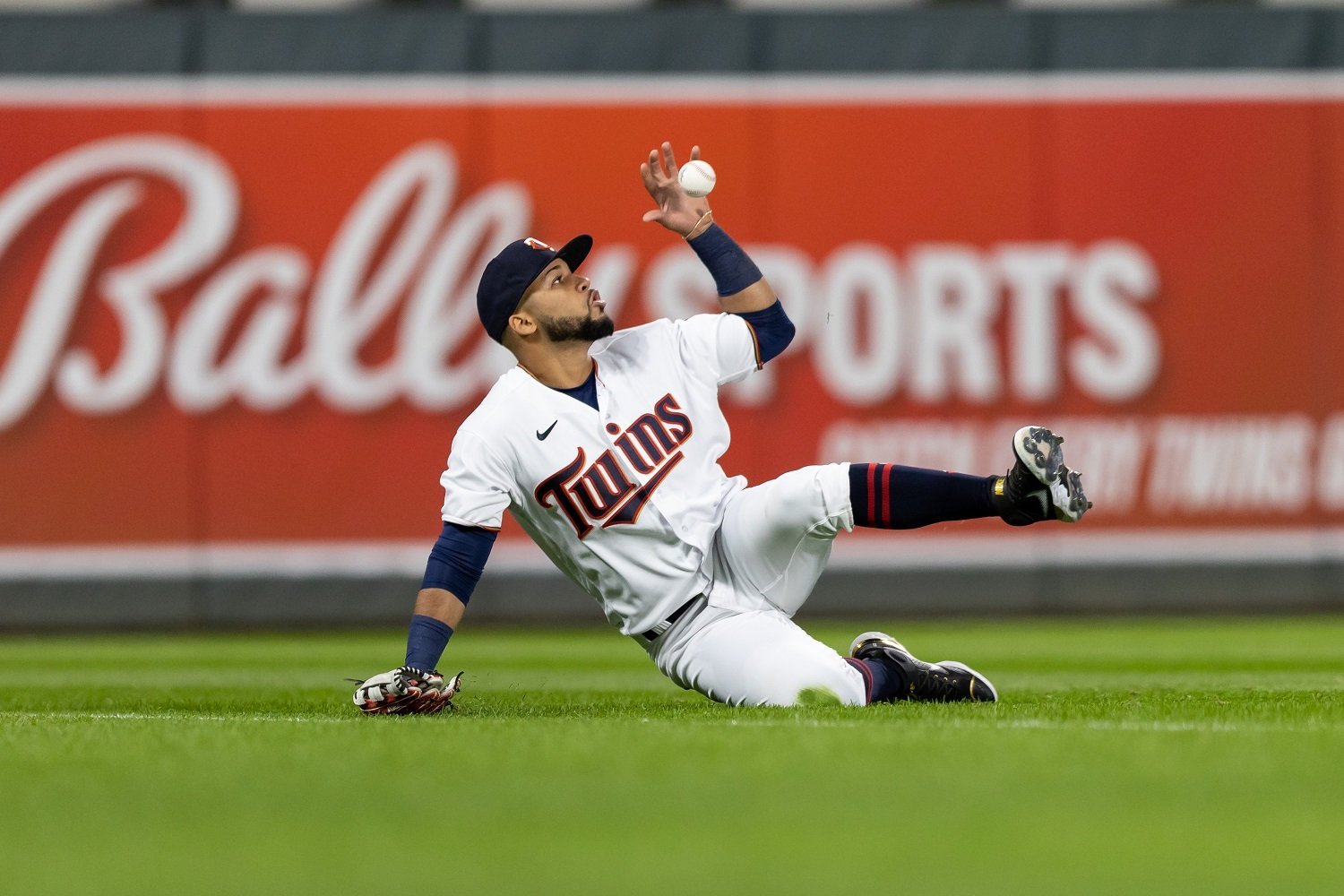 The Houston Astros originally signed Gilberto Celestino as a teenager out of the Dominican Republic in 2015. He played his first three professional seasons in the Astros organization before being traded to the Twins along with Jorge Alcala for Ryan Pressly at the 2018 trade deadline. His first full season in the Twins organization was spent at the Low-A level, where he posted a .759 OPS in 117 games. He was over a year younger than the average age of the competition, so signs pointed to even more potential. In 2021, Minnesota was aggressive with Celestino coming out of the pandemic by sending him to Double-A. He made brief stops at Double-A (34 games), but the club was forced to promote him to the big-league level because of a lack of outfield options on the 40-man roster. He struggled in 23 games by hitting .136/.177/.288 (.466) before being demoted to Triple-A, a level he had never experienced in his professional career. His performance dramatically improved in St. Paul as he posted an .827 OPS over the season’s final 49 games. Despite his struggles, Celestino looked like a long-term outfield option for the Twins. Minnesota wanted Celestino to get more experience at Triple-A to start the 2022 season, but the club needed him again in the big leagues. He went on to play over 120 games for the Twins and only logged seven total minor-league at-bats in 2022. Celestino showed some of his true potential in May when he hit .364/.426/.418 (.844) with three doubles. Those numbers are far from his minor-league track record, and he only had one other month during the season with an OPS above .600. He was inconsistent, but he was only 23 years old with little experience in the upper minors. Last season, Celestino played all three outfield positions, with most of his playing time coming in center field. Baseball Savant ranked him well in Outs Above Average (79th percentile) and Arm Strength (93rd percentile). His Outfield Jump ranked slightly above average and is the most significant area he can improve. He’s had minimal experience in the corner outfield spots throughout his professional career, which might be one reason his Outfield Jump was lower this year. As he gets more experience in the corners, he can get a better read on the ball and see better defensive numbers. Celestino ranked in the 20th percentile or lower in average exit velocity, hard hit %, xwOBA, xBA, xSLG, and Barrel %. Those numbers are certainly lower than the Twins would like, but his lack of experience in the upper minors is tied to some of his struggles. There are positive signs in his offensive profile. He ranked in the 63rd percentile for BB% and the 86th percentile for chase rate. Celestino has a good eye at the plate, so he needs to translate that into making solid contact on a more regular basis. Across baseball, the average OPS has dropped by over 50 points since 2019. During the 2019 season, the league average for OPS was .706, but the Twins posted a .718 OPS, which ranked fifth in the American League. Celestino has been an above-average hitter during his professional career. He has posted a .753 OPS in over 1,600 plate appearances in the minors. It will be up to the Twins and hitting coach David Popkins to unlock Celestino’s power at the big-league level. Celestino could benefit from more time in Triple-A, but that might not be a luxury the Twins can afford. Byron Buxton needs regular time at the DH spot, and Celestino is the best back-up centerfield option on the 40-man roster. The Twins also mentioned that Joey Gallo has the potential to play sometime in center, but he’s made less than 50 starts at the position during his big-league career. Celestino needs to be on the roster as Buxton insurance. There is more to unlock with Celestino in the years ahead. He’s only 23 years old, and he’s still entering the prime of his career. The Twins need someone who can play centerfield regularly with a bat that stands up when the player has to fit into a corner outfield spot. Celestino will continue to improve on both sides of the ball, which makes it exciting to think about his long-term upside. What is Celestino’s ceiling? Can he improve his power numbers at the big-league level? Leave a COMMENT and start the discussion.
 -
Gilberto Celestino has had a rocky start to his big-league career. However, the former top prospect offers plenty of long-term upside if he continues to develop. Image courtesy of Jordan Johnson-USA TODAY Sports The Houston Astros originally signed Gilberto Celestino as a teenager out of the Dominican Republic in 2015. He played his first three professional seasons in the Astros organization before being traded to the Twins along with Jorge Alcala for Ryan Pressly at the 2018 trade deadline. His first full season in the Twins organization was spent at the Low-A level, where he posted a .759 OPS in 117 games. He was over a year younger than the average age of the competition, so signs pointed to even more potential. In 2021, Minnesota was aggressive with Celestino coming out of the pandemic by sending him to Double-A. He made brief stops at Double-A (34 games), but the club was forced to promote him to the big-league level because of a lack of outfield options on the 40-man roster. He struggled in 23 games by hitting .136/.177/.288 (.466) before being demoted to Triple-A, a level he had never experienced in his professional career. His performance dramatically improved in St. Paul as he posted an .827 OPS over the season’s final 49 games. Despite his struggles, Celestino looked like a long-term outfield option for the Twins. Minnesota wanted Celestino to get more experience at Triple-A to start the 2022 season, but the club needed him again in the big leagues. He went on to play over 120 games for the Twins and only logged seven total minor-league at-bats in 2022. Celestino showed some of his true potential in May when he hit .364/.426/.418 (.844) with three doubles. Those numbers are far from his minor-league track record, and he only had one other month during the season with an OPS above .600. He was inconsistent, but he was only 23 years old with little experience in the upper minors. Last season, Celestino played all three outfield positions, with most of his playing time coming in center field. Baseball Savant ranked him well in Outs Above Average (79th percentile) and Arm Strength (93rd percentile). His Outfield Jump ranked slightly above average and is the most significant area he can improve. He’s had minimal experience in the corner outfield spots throughout his professional career, which might be one reason his Outfield Jump was lower this year. As he gets more experience in the corners, he can get a better read on the ball and see better defensive numbers. Celestino ranked in the 20th percentile or lower in average exit velocity, hard hit %, xwOBA, xBA, xSLG, and Barrel %. Those numbers are certainly lower than the Twins would like, but his lack of experience in the upper minors is tied to some of his struggles. There are positive signs in his offensive profile. He ranked in the 63rd percentile for BB% and the 86th percentile for chase rate. Celestino has a good eye at the plate, so he needs to translate that into making solid contact on a more regular basis. Across baseball, the average OPS has dropped by over 50 points since 2019. During the 2019 season, the league average for OPS was .706, but the Twins posted a .718 OPS, which ranked fifth in the American League. Celestino has been an above-average hitter during his professional career. He has posted a .753 OPS in over 1,600 plate appearances in the minors. It will be up to the Twins and hitting coach David Popkins to unlock Celestino’s power at the big-league level. Celestino could benefit from more time in Triple-A, but that might not be a luxury the Twins can afford. Byron Buxton needs regular time at the DH spot, and Celestino is the best back-up centerfield option on the 40-man roster. The Twins also mentioned that Joey Gallo has the potential to play sometime in center, but he’s made less than 50 starts at the position during his big-league career. Celestino needs to be on the roster as Buxton insurance. There is more to unlock with Celestino in the years ahead. He’s only 23 years old, and he’s still entering the prime of his career. The Twins need someone who can play centerfield regularly with a bat that stands up when the player has to fit into a corner outfield spot. Celestino will continue to improve on both sides of the ball, which makes it exciting to think about his long-term upside. What is Celestino’s ceiling? Can he improve his power numbers at the big-league level? Leave a COMMENT and start the discussion. View full article
-
Now reports are coming out that the Mets are frustrated and considering walking away from Correa https://www.sny.tv/articles/source-mets-very-frustrated-carlos-correa-2023
-
Carlos Correa's free agent saga continues to take new turns. Reports surfaced Thursday night that the Twins contacted Scott Boras about Correa. Image courtesy of Brad Rempel-USA TODAY Sports So you're telling me there's a chance? That might not be entirely true, but the Twins are doing their due diligence regarding Carlos Correa. The New York Post's Jon Heyman reported that "Carlos Correa's camp has been in contact with at least one other team" as his talks with the Mets haven't made progress. In the story, he specifically mentions the Twins as one team that has contacted Boras, but there may be others. Those talks might not be serious, but this negotiation could have other layers. Earlier tonight, Nick wrote extensively about the Twins' offseason up to this point. Part of that story focused on the ongoing Correa saga. Correa and Boras walked away from a contract with the Giants because of concerns with his physical, and the Mets' doctors have flagged the same issue. Minnesota's last known offer to Correa was for ten years and $285 million. There is no guarantee that the offer is still on the table, and the Twins would need to complete their own physical before a deal of this magnitude. Boras is also likely using this type of story to put extra pressure on the Mets to complete the deal. Steve Cohen, the Mets owner, has been outspoken about his desire for Correa to be added to the club's line-up. Heyman quotes someone in the Mets organization that said, "Ultimately, I don't think Mr. Cohen is going to let him go." There have been other reports that the Mets were trying to alter parts of the contract to get the deal done. Correa is unlikely to want to return to the open market after everything that has happened to him. From Correa's perspective, the free agent process has been frustrating over the last two seasons. Last winter, he turned down a 10-year offer from the Detroit Tigers and fired his agent before hiring Boras. The MLB Lockout didn't help his first taste of free agency, as there was a rush to sign players after the completed deal. He signed a creative contract with the Twins, so he could have the opportunity to be a free agent again this winter. There has been a lot of money handed out to the top free agents this offseason, and Correa was expecting to be in that group. Carlos Correa Free Agent Timeline March 22, 2022: Signs with the Twins for three years, $105.3 million, including opt-outs after each season. November 7, 2022: Opts out of Twins contract. December 13, 2022: Reports surface that Correa agrees to a 13-year, $350 million deal with the Giants. December 20, 2022: Giants postponed Correa's introductory press conference. December 21, 2022: Correa agrees to deal with the Mets for 12 years, $315 million. December 24, 2022: Mets doctors flag a similar issue to what was found by Giants doctors. Moving forward, the Mets are still the frontrunners to sign Correa. His family is already in a New York state of mind as he has posted pictures to social media of his child wearing a New York-themed outfit. Boras has previously worked out contracts with injury language for players like JD Martinez, JD Drew, Ivan Rodriguez, and Magglio Ordonez. However, Correa's reported contract is significantly longer and for a more significant amount of money. No matter where Correa plays next season, this type of contract provision will be a requirement. Could the Twins wind up with Correa after all or is this a ploy from Boras to get the Mets deal done? Leave a COMMENT and start the discussion. View full article
-
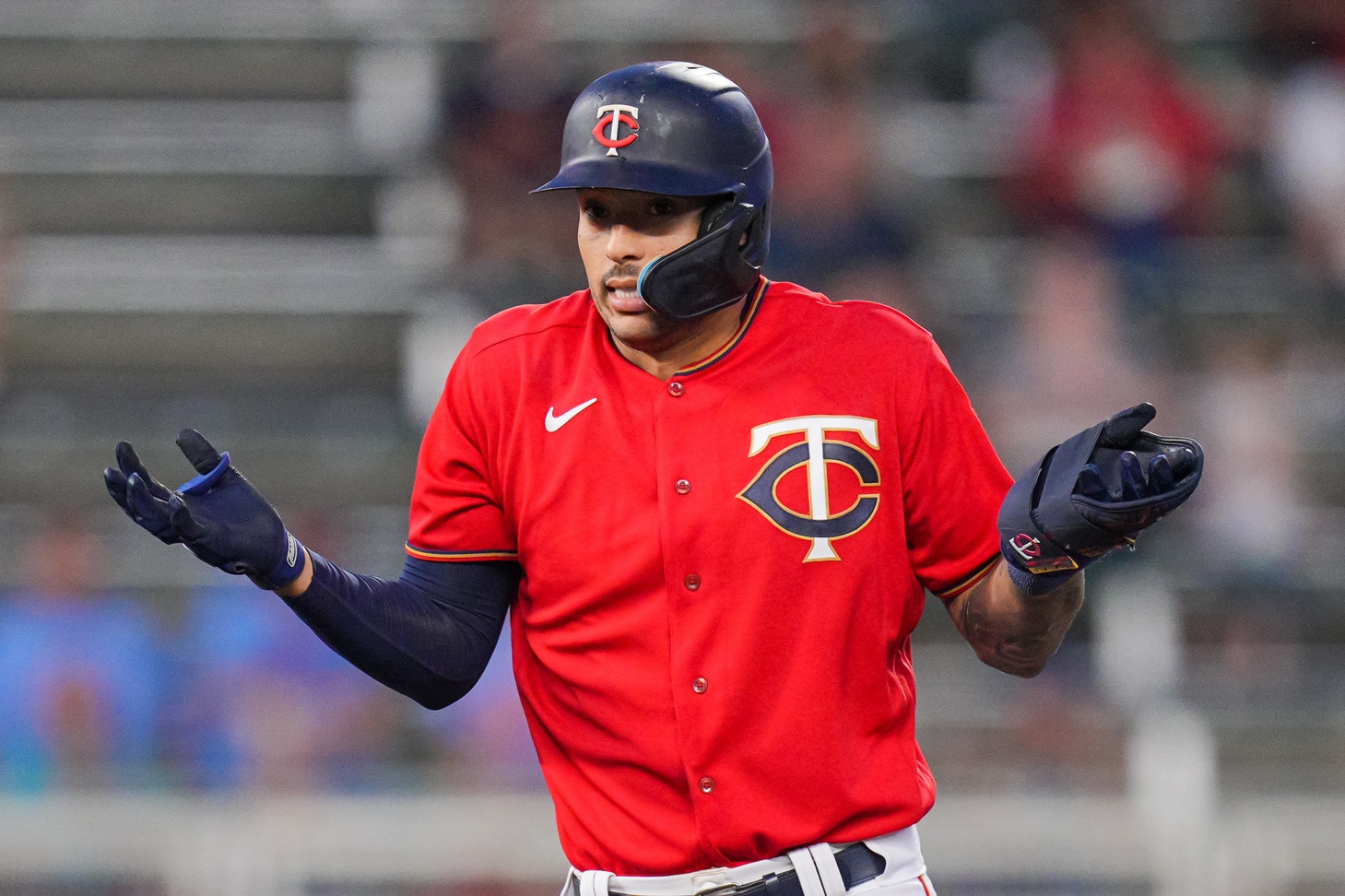 So you're telling me there's a chance? That might not be entirely true, but the Twins are doing their due diligence regarding Carlos Correa. The New York Post's Jon Heyman reported that "Carlos Correa's camp has been in contact with at least one other team" as his talks with the Mets haven't made progress. In the story, he specifically mentions the Twins as one team that has contacted Boras, but there may be others. Those talks might not be serious, but this negotiation could have other layers. Earlier tonight, Nick wrote extensively about the Twins' offseason up to this point. Part of that story focused on the ongoing Correa saga. Correa and Boras walked away from a contract with the Giants because of concerns with his physical, and the Mets' doctors have flagged the same issue. Minnesota's last known offer to Correa was for ten years and $285 million. There is no guarantee that the offer is still on the table, and the Twins would need to complete their own physical before a deal of this magnitude. Boras is also likely using this type of story to put extra pressure on the Mets to complete the deal. Steve Cohen, the Mets owner, has been outspoken about his desire for Correa to be added to the club's line-up. Heyman quotes someone in the Mets organization that said, "Ultimately, I don't think Mr. Cohen is going to let him go." There have been other reports that the Mets were trying to alter parts of the contract to get the deal done. Correa is unlikely to want to return to the open market after everything that has happened to him. From Correa's perspective, the free agent process has been frustrating over the last two seasons. Last winter, he turned down a 10-year offer from the Detroit Tigers and fired his agent before hiring Boras. The MLB Lockout didn't help his first taste of free agency, as there was a rush to sign players after the completed deal. He signed a creative contract with the Twins, so he could have the opportunity to be a free agent again this winter. There has been a lot of money handed out to the top free agents this offseason, and Correa was expecting to be in that group. Carlos Correa Free Agent Timeline March 22, 2022: Signs with the Twins for three years, $105.3 million, including opt-outs after each season. November 7, 2022: Opts out of Twins contract. December 13, 2022: Reports surface that Correa agrees to a 13-year, $350 million deal with the Giants. December 20, 2022: Giants postponed Correa's introductory press conference. December 21, 2022: Correa agrees to deal with the Mets for 12 years, $315 million. December 24, 2022: Mets doctors flag a similar issue to what was found by Giants doctors. Moving forward, the Mets are still the frontrunners to sign Correa. His family is already in a New York state of mind as he has posted pictures to social media of his child wearing a New York-themed outfit. Boras has previously worked out contracts with injury language for players like JD Martinez, JD Drew, Ivan Rodriguez, and Magglio Ordonez. However, Correa's reported contract is significantly longer and for a more significant amount of money. No matter where Correa plays next season, this type of contract provision will be a requirement. Could the Twins wind up with Correa after all or is this a ploy from Boras to get the Mets deal done? Leave a COMMENT and start the discussion.
 -
Minnesota’s roster is full of corner outfield options, but most of those players are left-handed. Can the team find a way to upgrade the outfield with a veteran bat? Image courtesy of Jamie Sabau-USA TODAY Sports Over the last two seasons, the Twins have used Kyle Garlick as the team’s primary right-handed hitting outfielder. He has hit .233/.283/.446 (.728) with a 103 OPS+ in 102 games. Garlick performed even better when put into favorable match-ups. Against left-handed pitching, he posted an .805 OPS with seven extra-base hits in 74 at-bats last season. Garlick has dealt with injuries over the last two seasons, so multiple free-agent outfielders might be an upgrade in the outfield. AJ Pollock 2022 Stats: .245/.292/.389 (.681), 26 2B, 14 HR, 91 OPS+, 138 G Pollock has been a strong offensive player with a career 113 OPS+, including a 133 OPS+ from 2020-21. Most of his defensive innings have come in center field, but he has shifted to left field in recent years. Byron Buxton and Joey Gallo are penciled in as the team’s starters in center field and right field, which could allow Pollock to slide into left field. Even in an offensive down year, he dominated lefties with a .935 OPS and 20 extra-base hits in 126 at-bats. The Twins have three young outfielders projected to get significant playing time this season, so Pollock would have to agree to a backup role. Andrew McCutchen 2022 Stats: .237/.316/.384 (.700), 25 2B, 17 HR, 99 OPS+, 134 G McCutchen is well known as a five-time All-Star and a former NL MVP, but he hasn’t been that caliber of player in multiple seasons. He spent 2022 with the Milwaukee Brewers and finished with an OPS+ below 100 for the first time in his career. Over 60% of his starts came as a designated hitter, and the Twins like to be able to rotate players through that role. For this reason, he might make him less of a fit for the club. His OPS (.738) was 53 points higher when facing left-handed pitching. His veteran presence would be a welcome addition to the clubhouse, but he might need to be willing to take on a lesser role on the field. Trey Mancini 2022 Stats: .239/.319/.391 (.710), 23 2B, 18 HR, 101 OPS+, 143 G Mancini started the 2022 season strongly with a 113 OPS+ in 92 games for the Orioles. The Astros acquired him for their World Series run, but he struggled after the deal. In 51 games, he hit .176/.258/.364 (.622) with seven doubles and eight home runs. Houston used him sparingly in the postseason as he went 1-for-21 (.048 BA) with eight strikeouts. Last season, Mancini had reverse splits with an OPS that was 88 points lower against lefties. He has posted almost identical splits against righties (.786 OPS) and lefties (.790 OPS) for his career. Mancini had a solid start to the 2022 season, so a team adding him will be looking for him to return to his previous form. Entering the offseason, I planned a perfect offseason for the Twins, and little has gone favorably for the club. One of the pieces of that plan was to add a right-handed power bat to the bench. I identified Mancini as a target for the team, and he might have the highest upside. However, McCutchen and Pollock can provide an upgrade compared to Garlick if put into the right situation. Do any of these players make sense for the Twins? Leave a COMMENT and start the discussion. View full article